EP1345837B1 - Hebeband - Google Patents
Hebeband Download PDFInfo
- Publication number
- EP1345837B1 EP1345837B1 EP01271322A EP01271322A EP1345837B1 EP 1345837 B1 EP1345837 B1 EP 1345837B1 EP 01271322 A EP01271322 A EP 01271322A EP 01271322 A EP01271322 A EP 01271322A EP 1345837 B1 EP1345837 B1 EP 1345837B1
- Authority
- EP
- European Patent Office
- Prior art keywords
- band
- sling
- warp threads
- overlapping areas
- sling band
- Prior art date
- Legal status (The legal status is an assumption and is not a legal conclusion. Google has not performed a legal analysis and makes no representation as to the accuracy of the status listed.)
- Expired - Lifetime
Links
Images


Classifications
-
- B—PERFORMING OPERATIONS; TRANSPORTING
- B66—HOISTING; LIFTING; HAULING
- B66C—CRANES; LOAD-ENGAGING ELEMENTS OR DEVICES FOR CRANES, CAPSTANS, WINCHES, OR TACKLES
- B66C1/00—Load-engaging elements or devices attached to lifting or lowering gear of cranes or adapted for connection therewith for transmitting lifting forces to articles or groups of articles
- B66C1/10—Load-engaging elements or devices attached to lifting or lowering gear of cranes or adapted for connection therewith for transmitting lifting forces to articles or groups of articles by mechanical means
- B66C1/12—Slings comprising chains, wires, ropes, or bands; Nets
- B66C1/18—Band-type slings
-
- D—TEXTILES; PAPER
- D03—WEAVING
- D03D—WOVEN FABRICS; METHODS OF WEAVING; LOOMS
- D03D1/00—Woven fabrics designed to make specified articles
- D03D1/0005—Woven fabrics for safety belts
-
- D—TEXTILES; PAPER
- D03—WEAVING
- D03D—WOVEN FABRICS; METHODS OF WEAVING; LOOMS
- D03D3/00—Woven fabrics characterised by their shape
- D03D3/04—Endless fabrics
-
- D—TEXTILES; PAPER
- D10—INDEXING SCHEME ASSOCIATED WITH SUBLASSES OF SECTION D, RELATING TO TEXTILES
- D10B—INDEXING SCHEME ASSOCIATED WITH SUBLASSES OF SECTION D, RELATING TO TEXTILES
- D10B2401/00—Physical properties
- D10B2401/04—Heat-responsive characteristics
- D10B2401/041—Heat-responsive characteristics thermoplastic; thermosetting
Definitions
- the invention relates to a lifting strap according to claim 1 and uses the same according to patent claims 6 to 8.
- Lifting belts are used in transportation and especially in the construction industry Application.
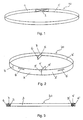
- Fig. 1 shows the View of a known, single-layer endless lifting belt according to EN 1492-1. This Textile tapes are sewn together so that they are for the user receive the appropriate delivery form.
- this task is carried out with a lifting strap according to the wording solved according to claim 1 and with uses according to the wording Claims 6 to 8.
- Fig. 1 shows the perspective view of a known, single-layer endless lifting belt.
- the two ends 1 and 1 'of a band 10 are in an overlap area 2 superimposed and sewn, what in different ways can be done.
- a band 20 consists of two layers 3 and 3 ', which were woven as a two-layer band, the weaving points 4 and 4' being superimposed during the weaving.
- the belt 20 has a weaving point 5, from which the two warp sheets of the layers 3 and 3 'are combined, which results in an overlap region 7 of the warp sheets up to a further weaving point 6, in which the two warp sheets are interwoven with one another by means of a special weaving construction ,
- the first band 3 has first warp threads 8 and the second band 3 'has second warp threads 8', the warp threads 8, 8 'forming a first and a second weave with weft threads.
- the warp threads 8, 8 ' are brought together in the overlap regions 7, 7', where they form a weave construction with the weft threads, which has at least one further third weave, which differs from the first and second weave.
- a two-layer tape is formed in the overlap area 7, which is characterized by particular strength.
- the weaving point 6 is also an interface at which the tape is cut.
- the band 20 has a weaving point 5 ', a weaving point 6' and an overlap area 7 'with the difference that the weaving process, starting with the weaving point 6', initially creates a two-layer band in the overlapping area 7 ', and then at the weaving point split warp webs to continue weaving in two layers, whereby layers 3 and 3 'are formed.
- the endless lifting belt according to the invention is thus created by simply cutting off or separating it from an endless woven material which alternately consists of a two-layer belt 3, 3 'and single-layer overlap areas 7, 7'. Since the weave constructions used in the overlap regions 7, 7 'have sufficient strength in many cases, endless lifting straps can thus advantageously be produced by bypassing any sewing process. If a fiber with a lower melting point is selected for some of the warp threads 8, 8 'than is the case for the other warp threads, increased strength can then be achieved in the interweaving overlap regions 7, 7' by welding.
- FIG. 3 shows a plan view of an endless lifting belt according to the invention. recognizable are the two-layer tape 3, the single-layer overlap areas 7, 7 'with the Web sites 5, 5 'and the web sites 6, 6', which are also the interfaces of the Represent endless belt 20.
- Fig. 4 shows a first embodiment of an endless lifting belt with a breaking force of 800 kg.
- a 25 mm wide band made of high-strength polyester fibers was woven in two layers to create a light width of 20 cm.
- the fiber strength was greater than 80 cN / Tex. In the overlap areas, the two layers were woven over a length of 2.5 cm.
- Fig. 5 shows a second embodiment of a lifting strap as a lanyard for a ski binding in plan view.
- a 12 mm wide band made of polyamide fibers was woven in two layers to create a light width of 22 cm. In the overlap areas, the two layers were woven over a length of 1.5 cm. After the tape had been cut off, it was turned and additionally sewn in the overlap areas. The load capacity was more than 200 daN.
- FIG. 6 shows a third embodiment of a lifting strap with overmolded clamping element as a lashing strap.
- a lifting strap 10 which essentially corresponds to FIG. 4, is here designed for a load capacity of 300 kg. It will now be in an injection mold inserted with which a clamping element 30 with a clamping bracket 31 molded from plastic can be. The woven overlap areas are 3.5 cm long.
- Fig. 7 shows a fourth embodiment of a multiple arrangement of a lifting strap as a material loop in plan view.
- a 19 mm wide band of polyamide fibers is woven in such a way that four openings 32, 32 ', 32 "of 8 cm are created, each of which is delimited by overlapping areas 7, 7'. The latter are each 18 mm long.
- a lifting strap of this type is predominantly used for technical climbing use, the material loop is used to hold carabiners 34 and similar equipment.
Landscapes
- Engineering & Computer Science (AREA)
- Textile Engineering (AREA)
- Mechanical Engineering (AREA)
- Load-Engaging Elements For Cranes (AREA)
- Woven Fabrics (AREA)
- Measurement And Recording Of Electrical Phenomena And Electrical Characteristics Of The Living Body (AREA)
- Auxiliary Devices For And Details Of Packaging Control (AREA)
Description
Eine weitere Aufgabe besteht in der Beschreibung verschiedener Verwendungen von derartigen Hebebändern.
- Fig. 1
- Perspektivische Ansicht eines bekannten, einlagigen Endloshebebandes
- Fig. 2
- Perspektivische Ansicht eines erfindungsgemässen Endloshebebandes
- Fig. 3
- Draufsicht eines erfindungsgemässen Endloshebebandes
- Fig. 4
- Erstes Ausführungsbeispiel eines Endloshebebandes
- Fig. 5
- Zweites Ausführungsbeispiel eines Hebebandes als Fangriemen
- Fig. 6
- Drittes Ausführungsbeispiel eines Hebebandes mit umspritztem Spannelement als Zurrgurt
- Fig. 7
- Viertes Ausführungsbeispiel einer Mehrfachanordnung eines Hebebandes als Anschlagmittel, bzw. als Verbindungsmittel
Wird für einen Teil der Kettfäden 8, 8' eine Faser mit einem tieferen Schmelzpunkt gewählt als dies für die übrigen Kettfäden der Fall ist, kann in den verwobenden Überlappungsbereichen 7, 7' anschliessend mit einer Verschweissung eine erhöhte Festigkeit erzielt werden.
Ein 25 mm breites Band aus hochfesten Polyesterfasern wurde zweilagig gewoben, dass eine Lichtweite von 20 cm entstand. Die Faserfestigkeit war grösser als 80 cN/Tex. In den Überlappungsbereichen wurden die beiden Lagen verwoben über eine Länge von 2,5 cm.
Ein 12 mm breites Band aus Polyamidfasern wurde zweilagig gewoben, dass eine Lichtweite von 22 cm entstand. In den Überlappungsbereichen wurden die beiden Lagen über eine Länge von 1,5 cm verwoben. Nach dem Abtrennen des Bandes wurde dieses gewendet und in den Überlappungsbereichen zusätzlich vernäht. Es resultierte eine Tragkraft von mehr als 200 daN.
Ein 19 mm breites Band aus Polyamidfasern wird so gewoben, dass vier Öffnungen 32, 32', 32" von 8 cm entstehen, die jeweils von Überlappungsbereichen 7, 7' begrenzt werden. Letztere sind jeweils 18 mm lang. Ein Hebeband dieser Art findet vorwiegend für technisches Klettern Verwendung, wobei die Materialschlinge der Aufnahme von Karabinern 34 und ähnlichen Gerätschaften dient.
Claims (8)
- Hebeband zum Heben von Lasten, dadurch gekennzeichnet, dass das Hebeband (20) aus einem ersten Band (3) und einem zweiten Band (3') und den Überlappungsbereichen (7, 7') besteht, wobei die Bänder (3, 3') mit ihren Enden in die Überlappungsbereiche (7,7') münden, dass das erste Band (3) erste Kettfäden (8) und das zweite Band (3') zweite Kettfäden (8') aufweisen, wobei die Kettfäden (8, 8') mit Schussfäden eine erste und eine zweite Bindung bilden, dass in den Überlappungsbereichen (7, 7') die Kettfäden (8, 8') zusammengeführt vorliegen, wo sie mit den Schussfäden eine Webkonstruktion bilden, die mindestens eine weitere dritte Bindung aufweist, die sich von der ersten und zweiten Bindung unterscheidet und dass die Überlappungsbereiche (7, 7') mit einer Schnittstelle (6, 6') begrenzt sind, wodurch das Hebeband (20) als Teil einer Kette mit Kettfäden (8, 8') vorliegt.
- Hebeband nach Anspruch 1, dadurch gekennzeichnet, dass die Überlappungsbereiche (7, 7') mehrheitlich übereinander liegend angeordnet sind, wodurch ein weiterer Überlappungsbereich entsteht, in dem das Hebeband vernäht vorliegt und einen Fangriemen für eine Skibindung bildet.
- Hebeband nach Anspruch 1, dadurch gekennzeichnet, dass es für den Einbau in ein Spritzwerkzeug für ein Spannelement (30, 31) vorgesehen ist und dass es nach erfolgtem Spritzvorgang einen integrierenden Bestandteil des Spannelementes (30, 31 ) bildet.
- Hebeband nach Anspruch 1, dadurch gekennzeichnet, dass es in einer Mehrfachanordnung vorliegt, bei der N Überlappungsbereiche (7, 7') eine Anzahl N - 1 Hebeeinheiten, bzw. Öffnungen (32, 32', 32") bilden, von denen nur die erste (32') und die letzte (32") Schnittstellen (6, 6') aufweisen.
- Hebeband nach einem der Ansprüche 1 - 4, dadurch gekennzeichnet, dass ein Teil der Kettfäden (8, 8') einen tieferen Schmelzpunkt als die übrigen Kettfäden aufweisen, und dass die verwobenden Überlappungsbereiche (7, 7') anschliessend für eine Verschweissung vorgesehen sind, wodurch eine erhöhte Festigkeit resultiert.
- Verwendung des Hebebandes nach den Ansprüchen 1, 2 und 5 als Fangriemen einer Skibindung im Skisport.
- Verwendung des Hebebandes nach den Ansprüchen 1, 3 und 5 in einem Zurrgurt.
- Verwendung des Hebebandes nach den Ansprüchen 1, 4 und 5 als Materialschlinge im Klettersport.
Applications Claiming Priority (3)
| Application Number | Priority Date | Filing Date | Title |
|---|---|---|---|
| CH24832000 | 2000-12-20 | ||
| CH248300 | 2000-12-20 | ||
| PCT/CH2001/000730 WO2002049952A1 (de) | 2000-12-20 | 2001-12-20 | Hebeband |
Publications (2)
| Publication Number | Publication Date |
|---|---|
| EP1345837A1 EP1345837A1 (de) | 2003-09-24 |
| EP1345837B1 true EP1345837B1 (de) | 2004-12-01 |
Family
ID=4569555
Family Applications (1)
| Application Number | Title | Priority Date | Filing Date |
|---|---|---|---|
| EP01271322A Expired - Lifetime EP1345837B1 (de) | 2000-12-20 | 2001-12-20 | Hebeband |
Country Status (6)
| Country | Link |
|---|---|
| US (1) | US7357433B2 (de) |
| EP (1) | EP1345837B1 (de) |
| AT (1) | ATE283824T1 (de) |
| DE (1) | DE50104721D1 (de) |
| ES (1) | ES2234772T3 (de) |
| WO (1) | WO2002049952A1 (de) |
Families Citing this family (8)
| Publication number | Priority date | Publication date | Assignee | Title |
|---|---|---|---|---|
| FR2870686B1 (fr) * | 2004-05-27 | 2006-07-21 | Techni Sangles Soc Par Actions | Boucle ou anneau pour attacher ou porter une charge |
| US7661737B2 (en) * | 2005-05-23 | 2010-02-16 | Slingmax, Inc. | Sling with predictable pre-failure warning indicator |
| US20080277952A1 (en) * | 2006-11-15 | 2008-11-13 | Produits Belt-Tech Inc. | Textile sling combining multiple types of fibers and method of manufacturing same |
| DE102007051675B4 (de) * | 2007-10-26 | 2011-11-24 | Hoffmann Air Cargo Equipment Gmbh | Verfahren zur Herstellung von Nahtverbindungen an Gurtbändern für technische Zwecke |
| FR2979830B1 (fr) * | 2011-09-13 | 2013-11-29 | Zedel | Procede de fabrication d'un anneau de sangle pour activites d'escalade, a partir d'un tissu tubulaire qui est axialement debite |
| DE202013103169U1 (de) * | 2013-07-16 | 2014-10-20 | Winfried Brunner | Tragevorrichtung für Ski |
| FR3026649B1 (fr) * | 2014-10-07 | 2019-05-17 | Zedel | Harnais d 'encordement |
| US9907389B2 (en) | 2015-11-09 | 2018-03-06 | Kammok Holdings, Llc | Single piece hammock strap with integral woven eyelets |
Family Cites Families (15)
| Publication number | Priority date | Publication date | Assignee | Title |
|---|---|---|---|---|
| US3290083A (en) * | 1965-05-19 | 1966-12-06 | Wear Flex Corp | Fabric load lifting sling |
| US3368837A (en) * | 1967-02-06 | 1968-02-13 | Wear Flex Corp | Fabric load lifting sling |
| US3466080A (en) * | 1967-10-05 | 1969-09-09 | Wear Flex Corp | Fabric load lifting sling and similar flexible tension member having increased ability to withstand shock loads |
| US3463534A (en) * | 1967-10-05 | 1969-08-26 | Wear Flex Corp | Load lifting sling with built-in load indicator |
| US4052095A (en) * | 1975-11-05 | 1977-10-04 | Buffalo Weaving And Belting Co. | Synthetic organic polymeric sling protected by vulcanized or cured elastomeric laminate at load contacting area thereof |
| US4200325A (en) * | 1975-11-05 | 1980-04-29 | Buffalo Weaving And Belting Co. | Synthetic organic polymeric plastic sling protected by vulcanized or cured elastomeric laminate at load contacting area thereof |
| US4022507A (en) * | 1976-03-17 | 1977-05-10 | Marino Systems, Inc. | Self-cinching cargo sling |
| DE2719382C3 (de) * | 1977-04-30 | 1980-04-10 | 7070 Schwaebisch Gmuend | Verfahren und Nadel-Bandwebmaschine zur Herstellung eines Gurtbandes mit Hohlkanten |
| US4856837A (en) * | 1988-02-16 | 1989-08-15 | Woven Electronics Corporation | Reinforced cargo sling and method |
| US5419951A (en) * | 1991-04-19 | 1995-05-30 | Murdock Webbing Company, Inc. | Cut and abrasion resistant webbing and multifilament bicomponent yarn used in the manufacturing thereof |
| US5238279A (en) * | 1992-03-26 | 1993-08-24 | Anteau Paul D | Encapsulated sling |
| DE9306743U1 (de) | 1993-05-06 | 1994-09-22 | Spanset Inter Ag, Oetwil Am See | Textiles Hebeband mit Verstärkung |
| US5492383A (en) * | 1993-09-30 | 1996-02-20 | Bc Industrial Supply, Inc. | Sling assembly for hoisting traction motor/wheel units and method |
| US5415449A (en) * | 1993-09-30 | 1995-05-16 | Bc Industrial Supply, Inc. | Draw bar sling |
| US6331024B1 (en) * | 1997-11-18 | 2001-12-18 | William F. Gulley | Lifting sling system with spaced, bi-directional loops |
-
2001
- 2001-12-20 EP EP01271322A patent/EP1345837B1/de not_active Expired - Lifetime
- 2001-12-20 DE DE50104721T patent/DE50104721D1/de not_active Expired - Lifetime
- 2001-12-20 WO PCT/CH2001/000730 patent/WO2002049952A1/de not_active Ceased
- 2001-12-20 ES ES01271322T patent/ES2234772T3/es not_active Expired - Lifetime
- 2001-12-20 US US10/450,817 patent/US7357433B2/en not_active Expired - Fee Related
- 2001-12-20 AT AT01271322T patent/ATE283824T1/de not_active IP Right Cessation
Also Published As
| Publication number | Publication date |
|---|---|
| US7357433B2 (en) | 2008-04-15 |
| EP1345837A1 (de) | 2003-09-24 |
| DE50104721D1 (de) | 2005-01-05 |
| HK1059074A1 (en) | 2004-06-18 |
| US20040094981A1 (en) | 2004-05-20 |
| ATE283824T1 (de) | 2004-12-15 |
| WO2002049952A1 (de) | 2002-06-27 |
| ES2234772T3 (es) | 2005-07-01 |
Similar Documents
| Publication | Publication Date | Title |
|---|---|---|
| EP0116945B1 (de) | Verbund-Gewebe als Bespannung für den Blattbildungsteil einer Papiermaschine | |
| DE3301810C2 (de) | Verbund-Gewebe als Bespannung für den Blattbildungsteil einer Papiermaschine | |
| DE69815680T2 (de) | Multiaxiales Pressgewebe mit Kettelnaht | |
| DE3880542T2 (de) | Papiermachergewebe. | |
| DE69619771T3 (de) | Mehrschichtstoff aus einem zu einem Träger geklebten Ketten- oder Schuss-Schlingengestrick und Verfahren zu dessen Herstellung | |
| DE1561662A1 (de) | Papiermaschinenlangsieb | |
| DE3607613A1 (de) | Saumverbindung zum endlosmachen von papiermaschinen-bespannungen | |
| DE2510051A1 (de) | Reifencordgewebe fuer guertelreifen | |
| DE3224187A1 (de) | Verbund-gewebe als bespannung fuer papiermaschinen | |
| EP0144529A2 (de) | Mehrlagige Bespannung für Papiermaschinen | |
| DE2700390A1 (de) | Gewebeverbindungsnaht und gewebeverbindungsnahthaelfte | |
| DE60203833T2 (de) | Nahtkonstruktion eines Papiermachergewebes | |
| DE60220132T2 (de) | Verbesserte Naht für Papiermachergewebe mit Naht | |
| DE60104523T2 (de) | Technisches gewebe mit stecknaht | |
| EP1345837A1 (de) | Hebeband | |
| DE3041162C2 (de) | Gewebtes Reißverschlußtragband | |
| DE2455185A1 (de) | Gewebe zur herstellung von papier | |
| DE102005032779C5 (de) | Sicherheitseinlage, insbesondere Schnittschutzeinlage | |
| DE3626634A1 (de) | Webstoff fuer papiermaschinen oder dergleichen | |
| EP1723278B1 (de) | Multiaxialkomplex | |
| DE2727441A1 (de) | Container fuer fliess- oder schuettfaehige gueter | |
| DE3413253C2 (de) | ||
| DE69503597T2 (de) | Herstellung eines flexiblen Schüttgutbehälters | |
| DE102006028210B3 (de) | Gewebtes Befestigungsband | |
| EP0156314B1 (de) | Papiermaschinen-Sieb |
Legal Events
| Date | Code | Title | Description |
|---|---|---|---|
| PUAI | Public reference made under article 153(3) epc to a published international application that has entered the european phase |
Free format text: ORIGINAL CODE: 0009012 |
|
| 17P | Request for examination filed |
Effective date: 20030716 |
|
| AK | Designated contracting states |
Kind code of ref document: A1 Designated state(s): AT BE CH CY DE DK ES FI FR GB GR IE IT LI LU MC NL PT SE TR |
|
| RIN1 | Information on inventor provided before grant (corrected) |
Inventor name: HESS, RUEDI Inventor name: COLIJN, JOOP |
|
| REG | Reference to a national code |
Ref country code: HK Ref legal event code: DE Ref document number: 1059074 Country of ref document: HK |
|
| GRAP | Despatch of communication of intention to grant a patent |
Free format text: ORIGINAL CODE: EPIDOSNIGR1 |
|
| GRAS | Grant fee paid |
Free format text: ORIGINAL CODE: EPIDOSNIGR3 |
|
| GRAA | (expected) grant |
Free format text: ORIGINAL CODE: 0009210 |
|
| AK | Designated contracting states |
Kind code of ref document: B1 Designated state(s): AT BE CH CY DE DK ES FI FR GB GR IE IT LI LU MC NL PT SE TR |
|
| PG25 | Lapsed in a contracting state [announced via postgrant information from national office to epo] |
Ref country code: TR Free format text: LAPSE BECAUSE OF FAILURE TO SUBMIT A TRANSLATION OF THE DESCRIPTION OR TO PAY THE FEE WITHIN THE PRESCRIBED TIME-LIMIT Effective date: 20041201 Ref country code: IE Free format text: LAPSE BECAUSE OF FAILURE TO SUBMIT A TRANSLATION OF THE DESCRIPTION OR TO PAY THE FEE WITHIN THE PRESCRIBED TIME-LIMIT Effective date: 20041201 Ref country code: SE Free format text: LAPSE BECAUSE OF FAILURE TO SUBMIT A TRANSLATION OF THE DESCRIPTION OR TO PAY THE FEE WITHIN THE PRESCRIBED TIME-LIMIT Effective date: 20041201 Ref country code: FI Free format text: LAPSE BECAUSE OF FAILURE TO SUBMIT A TRANSLATION OF THE DESCRIPTION OR TO PAY THE FEE WITHIN THE PRESCRIBED TIME-LIMIT Effective date: 20041201 Ref country code: CY Free format text: LAPSE BECAUSE OF FAILURE TO SUBMIT A TRANSLATION OF THE DESCRIPTION OR TO PAY THE FEE WITHIN THE PRESCRIBED TIME-LIMIT Effective date: 20041201 |
|
| REG | Reference to a national code |
Ref country code: GB Ref legal event code: FG4D Free format text: NOT ENGLISH |
|
| REG | Reference to a national code |
Ref country code: CH Ref legal event code: EP |
|
| REG | Reference to a national code |
Ref country code: IE Ref legal event code: FG4D Free format text: GERMAN |
|
| PG25 | Lapsed in a contracting state [announced via postgrant information from national office to epo] |
Ref country code: MC Free format text: LAPSE BECAUSE OF NON-PAYMENT OF DUE FEES Effective date: 20041231 |
|
| REF | Corresponds to: |
Ref document number: 50104721 Country of ref document: DE Date of ref document: 20050105 Kind code of ref document: P |
|
| PG25 | Lapsed in a contracting state [announced via postgrant information from national office to epo] |
Ref country code: LU Free format text: LAPSE BECAUSE OF NON-PAYMENT OF DUE FEES Effective date: 20050201 |
|
| REG | Reference to a national code |
Ref country code: CH Ref legal event code: NV Representative=s name: DILTEC AG |
|
| PG25 | Lapsed in a contracting state [announced via postgrant information from national office to epo] |
Ref country code: DK Free format text: LAPSE BECAUSE OF FAILURE TO SUBMIT A TRANSLATION OF THE DESCRIPTION OR TO PAY THE FEE WITHIN THE PRESCRIBED TIME-LIMIT Effective date: 20050301 Ref country code: GR Free format text: LAPSE BECAUSE OF FAILURE TO SUBMIT A TRANSLATION OF THE DESCRIPTION OR TO PAY THE FEE WITHIN THE PRESCRIBED TIME-LIMIT Effective date: 20050301 |
|
| GBT | Gb: translation of ep patent filed (gb section 77(6)(a)/1977) |
Effective date: 20050214 |
|
| REG | Reference to a national code |
Ref country code: HK Ref legal event code: GR Ref document number: 1059074 Country of ref document: HK |
|
| REG | Reference to a national code |
Ref country code: ES Ref legal event code: FG2A Ref document number: 2234772 Country of ref document: ES Kind code of ref document: T3 |
|
| REG | Reference to a national code |
Ref country code: IE Ref legal event code: FD4D |
|
| ET | Fr: translation filed | ||
| PLBE | No opposition filed within time limit |
Free format text: ORIGINAL CODE: 0009261 |
|
| STAA | Information on the status of an ep patent application or granted ep patent |
Free format text: STATUS: NO OPPOSITION FILED WITHIN TIME LIMIT |
|
| 26N | No opposition filed |
Effective date: 20050902 |
|
| PG25 | Lapsed in a contracting state [announced via postgrant information from national office to epo] |
Ref country code: PT Free format text: LAPSE BECAUSE OF NON-PAYMENT OF DUE FEES Effective date: 20050501 |
|
| REG | Reference to a national code |
Ref country code: CH Ref legal event code: NV Representative=s name: GACHNANG AG PATENTANWAELTE |
|
| PGFP | Annual fee paid to national office [announced via postgrant information from national office to epo] |
Ref country code: AT Payment date: 20091229 Year of fee payment: 9 Ref country code: ES Payment date: 20091118 Year of fee payment: 9 |
|
| PGFP | Annual fee paid to national office [announced via postgrant information from national office to epo] |
Ref country code: GB Payment date: 20091117 Year of fee payment: 9 |
|
| PGFP | Annual fee paid to national office [announced via postgrant information from national office to epo] |
Ref country code: BE Payment date: 20100104 Year of fee payment: 9 |
|
| PGFP | Annual fee paid to national office [announced via postgrant information from national office to epo] |
Ref country code: IT Payment date: 20100423 Year of fee payment: 9 |
|
| BERE | Be: lapsed |
Owner name: *MAMMUT TEC A.G. Effective date: 20101231 |
|
| GBPC | Gb: european patent ceased through non-payment of renewal fee |
Effective date: 20101220 |
|
| PG25 | Lapsed in a contracting state [announced via postgrant information from national office to epo] |
Ref country code: AT Free format text: LAPSE BECAUSE OF NON-PAYMENT OF DUE FEES Effective date: 20101220 |
|
| PG25 | Lapsed in a contracting state [announced via postgrant information from national office to epo] |
Ref country code: BE Free format text: LAPSE BECAUSE OF NON-PAYMENT OF DUE FEES Effective date: 20101231 |
|
| PG25 | Lapsed in a contracting state [announced via postgrant information from national office to epo] |
Ref country code: GB Free format text: LAPSE BECAUSE OF NON-PAYMENT OF DUE FEES Effective date: 20101220 |
|
| PG25 | Lapsed in a contracting state [announced via postgrant information from national office to epo] |
Ref country code: IT Free format text: LAPSE BECAUSE OF NON-PAYMENT OF DUE FEES Effective date: 20101220 |
|
| REG | Reference to a national code |
Ref country code: ES Ref legal event code: FD2A Effective date: 20120206 |
|
| PG25 | Lapsed in a contracting state [announced via postgrant information from national office to epo] |
Ref country code: ES Free format text: LAPSE BECAUSE OF NON-PAYMENT OF DUE FEES Effective date: 20101221 |
|
| PGFP | Annual fee paid to national office [announced via postgrant information from national office to epo] |
Ref country code: DE Payment date: 20121129 Year of fee payment: 12 Ref country code: CH Payment date: 20121228 Year of fee payment: 12 |
|
| PGFP | Annual fee paid to national office [announced via postgrant information from national office to epo] |
Ref country code: FR Payment date: 20121219 Year of fee payment: 12 |
|
| PGFP | Annual fee paid to national office [announced via postgrant information from national office to epo] |
Ref country code: NL Payment date: 20121228 Year of fee payment: 12 |
|
| REG | Reference to a national code |
Ref country code: DE Ref legal event code: R119 Ref document number: 50104721 Country of ref document: DE |
|
| REG | Reference to a national code |
Ref country code: NL Ref legal event code: V1 Effective date: 20140701 |
|
| REG | Reference to a national code |
Ref country code: CH Ref legal event code: PL |
|
| REG | Reference to a national code |
Ref country code: DE Ref legal event code: R119 Ref document number: 50104721 Country of ref document: DE Effective date: 20140701 |
|
| REG | Reference to a national code |
Ref country code: FR Ref legal event code: ST Effective date: 20140829 |
|
| PG25 | Lapsed in a contracting state [announced via postgrant information from national office to epo] |
Ref country code: CH Free format text: LAPSE BECAUSE OF NON-PAYMENT OF DUE FEES Effective date: 20131231 Ref country code: DE Free format text: LAPSE BECAUSE OF NON-PAYMENT OF DUE FEES Effective date: 20140701 Ref country code: LI Free format text: LAPSE BECAUSE OF NON-PAYMENT OF DUE FEES Effective date: 20131231 Ref country code: NL Free format text: LAPSE BECAUSE OF NON-PAYMENT OF DUE FEES Effective date: 20140701 |
|
| PG25 | Lapsed in a contracting state [announced via postgrant information from national office to epo] |
Ref country code: FR Free format text: LAPSE BECAUSE OF NON-PAYMENT OF DUE FEES Effective date: 20131231 |