EP1357747A2 - Sich auf Prioritätsregeln beziehende Verwaltung von Inhalts-Aufnahme und -Speicherung - Google Patents
Sich auf Prioritätsregeln beziehende Verwaltung von Inhalts-Aufnahme und -Speicherung Download PDFInfo
- Publication number
- EP1357747A2 EP1357747A2 EP03007692A EP03007692A EP1357747A2 EP 1357747 A2 EP1357747 A2 EP 1357747A2 EP 03007692 A EP03007692 A EP 03007692A EP 03007692 A EP03007692 A EP 03007692A EP 1357747 A2 EP1357747 A2 EP 1357747A2
- Authority
- EP
- European Patent Office
- Prior art keywords
- content
- conversion
- storage
- identified
- storage space
- Prior art date
- Legal status (The legal status is an assumption and is not a legal conclusion. Google has not performed a legal analysis and makes no representation as to the accuracy of the status listed.)
- Withdrawn
Links
- 238000006243 chemical reaction Methods 0.000 claims abstract description 37
- 238000000034 method Methods 0.000 claims description 16
- 238000007726 management method Methods 0.000 description 8
- 230000006835 compression Effects 0.000 description 6
- 238000007906 compression Methods 0.000 description 6
- 230000006870 function Effects 0.000 description 4
- 230000000977 initiatory effect Effects 0.000 description 2
- 230000003111 delayed effect Effects 0.000 description 1
- 238000012217 deletion Methods 0.000 description 1
- 230000037430 deletion Effects 0.000 description 1
- 238000010586 diagram Methods 0.000 description 1
- 238000012544 monitoring process Methods 0.000 description 1
- 230000003287 optical effect Effects 0.000 description 1
- 230000000737 periodic effect Effects 0.000 description 1
- 238000012913 prioritisation Methods 0.000 description 1
- 239000004065 semiconductor Substances 0.000 description 1
Images
Classifications
-
- H—ELECTRICITY
- H04—ELECTRIC COMMUNICATION TECHNIQUE
- H04N—PICTORIAL COMMUNICATION, e.g. TELEVISION
- H04N5/00—Details of television systems
- H04N5/76—Television signal recording
-
- H—ELECTRICITY
- H04—ELECTRIC COMMUNICATION TECHNIQUE
- H04N—PICTORIAL COMMUNICATION, e.g. TELEVISION
- H04N5/00—Details of television systems
- H04N5/76—Television signal recording
- H04N5/78—Television signal recording using magnetic recording
- H04N5/781—Television signal recording using magnetic recording on disks or drums
-
- H—ELECTRICITY
- H04—ELECTRIC COMMUNICATION TECHNIQUE
- H04N—PICTORIAL COMMUNICATION, e.g. TELEVISION
- H04N5/00—Details of television systems
- H04N5/76—Television signal recording
- H04N5/84—Television signal recording using optical recording
- H04N5/85—Television signal recording using optical recording on discs or drums
-
- H—ELECTRICITY
- H04—ELECTRIC COMMUNICATION TECHNIQUE
- H04N—PICTORIAL COMMUNICATION, e.g. TELEVISION
- H04N9/00—Details of colour television systems
- H04N9/79—Processing of colour television signals in connection with recording
- H04N9/80—Transformation of the television signal for recording, e.g. modulation, frequency changing; Inverse transformation for playback
- H04N9/804—Transformation of the television signal for recording, e.g. modulation, frequency changing; Inverse transformation for playback involving pulse code modulation of the colour picture signal components
- H04N9/8042—Transformation of the television signal for recording, e.g. modulation, frequency changing; Inverse transformation for playback involving pulse code modulation of the colour picture signal components involving data reduction
Definitions
- the present invention relates to storage of content for later viewing by a user, and in particular to prioritizing content recording and storage management.
- Recording systems for recording content such as video programs received in the home are becoming more prevalent. Such systems allow a user in the home to select programs to record for later playback. Some of the systems provide for automated recording of a currently viewed program, allowing the user to stop viewing of the program, and resuming viewing of the program at a later time, from minutes to hours later. A user may delay viewing a program for several minutes, and then begin viewing the program. A sufficient amount of the program is recorded, allowing the user to skip portions of the program or advertising, yet continue viewing the program without delay.
- a storage management system for programming content selectively reduces a quality level of previously stored content. When storage in the system is becoming full, selected content is converted to a lower quality based at least one of priority or age.
- three levels of content or video program quality levels are provided; low, medium and high.
- the low level requires the least amount of storage, while the high quality level provides the highest quality and also requires the most amount of storage, as it is compressed the least.
- a selected video program identified as the least likely to be used is converted to one or more lower quality levels. Such conversion is performed in a computing background to minimize interference with programs being currently viewed. In further embodiments, conversion is performed when the system is not in use, or upon initiation of the user. In yet further embodiments, a user directly identifies programs to be converted, and the level of quality desired.
- system provides the user with a list of programs that are candidates for conversion.
- the user selects programs to be converted or deleted to create additional storage for the new programs.
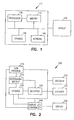
- An entertainment system is shown generally at 110, in Figure 1, and includes a display device 120 for viewing video programs, and other content.
- the entertainment system 110 comprises a processor 130 such as a microprocessor or other electronic circuitry capable of being programmed or executing program instructions stored on a memory 140.
- a personal computer provides such a processor and memory in one embodiment.
- a set top box for television is used in a further embodiment.
- Video programs are stored on a storage device 150.
- Storage device 150 comprises one or more devices utilizing tape, magnetic disk, optical disk, semiconductor storage, or other type of storage having a large enough capacity and high enough retrieval rate for providing video programs to be displayed.
- a network module 160 provides a connection to one or more sources of video programming or other content. Such sources include broadcast, satellite, cable, Ethernet or other high speed data services.
- video programming is stored in storage device 150 and played back via display 120 under control of the processor.
- a bus system comprising one or more busses couples the processor 130, memory 140, storage 150 and network 160 in a known manner.
- Other elements in common personal computers and set top boxes are not shown as they are well known in the art.
- a storage management system 200 in Figure 2 selectively reduces a quality level of previously stored content to free storage space for new content.
- selected content is converted to a lower quality based at least one of priority or age.
- a determining module 215 monitors storage levels in a storage 220 to determine if there is sufficient storage space for the video program.
- the video program indicates how much storage space it requires.
- the determining module has a minimum space requirement set to handle a largest size video.
- an identifier module is used to determine which videos qualify for quality reduction. This is based on the length of time a video has been stored, frequency of viewing of the video, when it was last viewed, or based on a user defined priority for the video. Users may specify one of various rating systems to indicate the importance of keeping each video, such as a scale of 1, 2 or 3, with 1 being videos that are never converted to lower quality, and 3 being the videos that are first converted to lower quality as needed.
- a decoder 230 and encoder 235 are used to convert the quality of the video and restore it to storage. The higher quality copy of the video is then deleted from storage.
- the determining module ensures that sufficient storage is available to perform the conversion. Different known conversion routines may require varying amounts of available storage to perform a conversion.
- the decoder and encoder operate together in one embodiment, or the encoder directly performs the conversion without need for decoding in a further embodiment.
- the decoder is also used to decode programs in storage 220, or programs received, to permit a display-I/O controller 240 to display the video programs on display 250.
- the display-I/O controller is used to provide a user interface to the storage management system.
- the display-I/O controller 240 passes user selections back to the identifier module 225 for identification of video programs to be converted as needed, or as specified by the user.
- three levels of content or video program quality levels are provided; low, medium and high.
- the low level requires the least amount of storage, while the high quality level provides the highest quality and also requires the most amount of storage, as it is compressed the least.
- One such compression scheme is well known and set forth in MPEG/2 standards for video compression. Further compression schemes will also operate with the present invention.
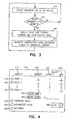
- a flowchart illustrating video program storage management is provided in Figure 3.
- Available storage is monitored at 310. If the space available is less than a threshold, T, a next low priority video program is identified, along with a desired compression or quality level.
- T is derived from the length of time a video has been stored, frequency of viewing of the video, when it was last viewed, or based on a user defined priority for the video. It is also directly specified as a time or space indication corresponding approximately to a desired length of recording time a user desires. Since different video programs may compress at different compression ratios for a specified quality, there may be a desire to select T larger than thought to be required.
- the next low priority video is converted to lower quality, normally corresponding to a higher compression rate and therefore less storage.
- Such conversion is performed in a computing background to minimize interference with programs being currently viewed.
- conversion is performed when the system is not in use, or upon initiation of the user.
- a user directly identifies programs to be converted, and the level of quality desired.
- system provides the user with a list of programs that are candidates for conversion.
- the user selects programs to be converted or deleted to create additional storage for the new programs.
- space is monitored again at 310, and a second check is performed at 320 to determine if enough space was freed up. If it was, processing returns to monitoring and checking at periodic intervals, or when a request to receive new content is received. If insufficient space was freed up, the next low priority video content is identified, and converted. This process is repeated until sufficient space is available.
- the functions described herein are implemented in software in one embodiment, where the software comprises computer executable instructions stored on computer readable media such as memory or other type of storage devices.
- computer readable media such as memory or other type of storage devices.
- computer readable media is also used to represent carrier waves on which the software is transmitted.
- modules which are software, hardware, firmware of any combination thereof. Multiple functions are performed in one or more modules as desired, and the embodiments described are merely examples.
- Figure 4 shows a representation of a user interface 410 that provide users with the ability to control the storage management system in a desired manner.
- Multiple columns of information are provided to the user, such as a content column 415, priority column 420 and current and new quality level columns, 425 and 430 respectively.
- These columns provide users with the ability to select a video by use of a check box, or other common user interface construct, and to specify both a priority and a quality level for conversion.
- video 1 at 435 currently has a quality level of 1, the highest.
- a default new quality level is set at a medium level, 2.
- Video 2 at 440 is set to decrease in quality from 2 to 3, a low level.
- the user has modified the quality level of video 450 from 1 to 3, a two levels down in quality.
- the priority column is optional, and provides an indication of previously identified value of the video program by the user or another user in this manual mode of video selection, or the ability to set a new priority level.
- videos to be converted Once a user selects videos to be converted, they have the option of beginning the conversion immediately at 455, or later at a time specified at 460. Further options provided to the user include asking the system to provide the list of videos in prioritized order 465, alphabetical order 470, or to just automatically apply the prioritization and conversion processes as needed.
- An optional estimate of the amount of time freed for high quality video to be recorded is shown at 485.
- the user may select other quality levels.
- the time increases with lower quality levels. This estimate enables the user to make better decisions about how many video programs need conversion and the levels of conversion required to obtain sufficient space for a new video program or programs.
- Yet further embodiments provide the user the ability to select that a program be deleted.
Landscapes
- Engineering & Computer Science (AREA)
- Multimedia (AREA)
- Signal Processing (AREA)
- Information Retrieval, Db Structures And Fs Structures Therefor (AREA)
- Television Signal Processing For Recording (AREA)
- Two-Way Televisions, Distribution Of Moving Picture Or The Like (AREA)
Applications Claiming Priority (2)
| Application Number | Priority Date | Filing Date | Title |
|---|---|---|---|
| US10/127,889 US7787741B2 (en) | 2002-04-23 | 2002-04-23 | Prioritized content recording and storage management |
| US127889 | 2002-04-23 |
Publications (1)
| Publication Number | Publication Date |
|---|---|
| EP1357747A2 true EP1357747A2 (de) | 2003-10-29 |
Family
ID=28790947
Family Applications (1)
| Application Number | Title | Priority Date | Filing Date |
|---|---|---|---|
| EP03007692A Withdrawn EP1357747A2 (de) | 2002-04-23 | 2003-04-03 | Sich auf Prioritätsregeln beziehende Verwaltung von Inhalts-Aufnahme und -Speicherung |
Country Status (3)
| Country | Link |
|---|---|
| US (2) | US7787741B2 (de) |
| EP (1) | EP1357747A2 (de) |
| JP (1) | JP2004005472A (de) |
Families Citing this family (17)
| Publication number | Priority date | Publication date | Assignee | Title |
|---|---|---|---|---|
| US7787741B2 (en) * | 2002-04-23 | 2010-08-31 | Gateway, Inc. | Prioritized content recording and storage management |
| US7976169B2 (en) * | 2003-05-14 | 2011-07-12 | Sun Innovations, Inc. | Waveguide display |
| KR100954397B1 (ko) * | 2003-08-20 | 2010-04-26 | 삼성전자주식회사 | 저장된 데이터를 재압축하여 재기록하는 영상기록/재생장치 및 그의 데이터 재압축 기록방법 |
| US7840112B2 (en) * | 2003-10-08 | 2010-11-23 | Intel Corporation | Gradually degrading multimedia recordings |
| US20060133775A1 (en) * | 2004-12-22 | 2006-06-22 | Ju Chi-Cheng | Method of storage medium management and video recording system and storage system thereof |
| US7593621B2 (en) * | 2005-03-07 | 2009-09-22 | Mediatek Incorporation | Method of reserving space on a storage medium for recording audio and video content and recofding device thereof |
| JP2006286060A (ja) * | 2005-03-31 | 2006-10-19 | Matsushita Electric Ind Co Ltd | 記録再生装置、およびコンテンツ管理方法 |
| JP4664191B2 (ja) * | 2005-11-16 | 2011-04-06 | 富士通株式会社 | ディスクコントローラ |
| US7818775B2 (en) * | 2005-12-21 | 2010-10-19 | At&T Intellectual Property I, L.P. | System and method for recording and time-shifting programming in a television distribution system with limited content retention |
| JP4914235B2 (ja) * | 2007-01-31 | 2012-04-11 | キヤノン株式会社 | 映像記録再生装置及びその制御方法 |
| JP2008204568A (ja) * | 2007-02-21 | 2008-09-04 | Matsushita Electric Ind Co Ltd | 記録装置 |
| US9232263B2 (en) * | 2009-09-01 | 2016-01-05 | International Business Machines Corporation | Renderable content partitioning and portability |
| JP5589571B2 (ja) * | 2010-06-07 | 2014-09-17 | ソニー株式会社 | 情報処理装置、情報処理方法およびプログラム |
| US9298741B1 (en) * | 2014-06-26 | 2016-03-29 | Amazon Technologies, Inc. | Context-specific electronic media processing |
| CN110022429B (zh) * | 2018-01-09 | 2022-03-11 | 昆山纬绩资通有限公司 | 影像撷取装置、储存空间调整方法与计算机可读记录媒体 |
| WO2021144004A1 (en) * | 2020-01-14 | 2021-07-22 | Telefonaktiebolaget Lm Ericsson (Publ) | Storing data items |
| US11372543B2 (en) * | 2020-04-10 | 2022-06-28 | Western Digital Technologies, Inc. | Zone-append command scheduling based on zone state |
Family Cites Families (20)
| Publication number | Priority date | Publication date | Assignee | Title |
|---|---|---|---|---|
| DE3044624A1 (de) | 1980-11-27 | 1982-06-24 | Robert Bosch Gmbh, 7000 Stuttgart | Verfahren zur digitalen aufzeichnung von videosignalen |
| US4730222A (en) | 1985-04-22 | 1988-03-08 | Eastman Kodak Company | Video recording apparatus having low and high resolution operational modes |
| JPH01278183A (ja) | 1988-04-28 | 1989-11-08 | Canon Inc | デイジタル画像記録及び又は再生装置 |
| US5594598A (en) | 1992-10-19 | 1997-01-14 | Canon Kabushiki Kaisha | Information recording apparatus having variable compression ratio |
| US5717816A (en) | 1993-01-13 | 1998-02-10 | Hitachi America Ltd. | Method and apparatus for the selection of data for use in VTR trick playback operation in a system using intra-coded video frames |
| EP0694245A4 (de) | 1993-04-16 | 1996-05-08 | Data Translation Inc | Adaptive videokompromierung mit variabeler quantisierung |
| JPH08205066A (ja) | 1995-01-26 | 1996-08-09 | Canon Inc | 画像形成装置及びシステム |
| US6026232A (en) * | 1995-07-13 | 2000-02-15 | Kabushiki Kaisha Toshiba | Method and system to replace sections of an encoded video bitstream |
| US5819004A (en) | 1995-05-08 | 1998-10-06 | Kabushiki Kaisha Toshiba | Method and system for a user to manually alter the quality of previously encoded video frames |
| US5982373A (en) | 1996-11-12 | 1999-11-09 | Chromatic Research, Inc. | Dynamic enhancement/reduction of graphical image data resolution |
| US6229850B1 (en) | 1997-07-22 | 2001-05-08 | C-Cube Semiconductor Ii, Inc. | Multiple resolution video compression |
| US6232974B1 (en) | 1997-07-30 | 2001-05-15 | Microsoft Corporation | Decision-theoretic regulation for allocating computational resources among components of multimedia content to improve fidelity |
| EP1003301A3 (de) * | 1998-11-19 | 2000-06-07 | NEC Corporation | Vorrichtung zur Lieferung von Programminformation und Aufnahme-/Wiedergabesteuervorrichtung |
| JP4863540B2 (ja) * | 2000-07-31 | 2012-01-25 | ソニー株式会社 | 録画再生装置およびコンテンツ管理方法 |
| GB0024114D0 (en) * | 2000-10-03 | 2000-11-15 | Pace Micro Tech Plc | Recompression of data for PVRs (Personal Video Recorders) |
| CA2666635C (en) * | 2001-02-21 | 2016-03-22 | United Video Properties, Inc. | Systems and methods for interactive program guides with personal video recording features |
| US6947598B2 (en) * | 2001-04-20 | 2005-09-20 | Front Porch Digital Inc. | Methods and apparatus for generating, including and using information relating to archived audio/video data |
| US20030066084A1 (en) * | 2001-09-28 | 2003-04-03 | Koninklijke Philips Electronics N. V. | Apparatus and method for transcoding data received by a recording device |
| US7221857B2 (en) * | 2002-01-31 | 2007-05-22 | Sony Corporation | System and method for efficiently performing a storage management procedure |
| US7787741B2 (en) * | 2002-04-23 | 2010-08-31 | Gateway, Inc. | Prioritized content recording and storage management |
-
2002
- 2002-04-23 US US10/127,889 patent/US7787741B2/en active Active
-
2003
- 2003-03-12 JP JP2003066683A patent/JP2004005472A/ja active Pending
- 2003-04-03 EP EP03007692A patent/EP1357747A2/de not_active Withdrawn
-
2010
- 2010-05-04 US US12/773,022 patent/US20100254683A1/en not_active Abandoned
Also Published As
| Publication number | Publication date |
|---|---|
| US20030198458A1 (en) | 2003-10-23 |
| US20100254683A1 (en) | 2010-10-07 |
| JP2004005472A (ja) | 2004-01-08 |
| US7787741B2 (en) | 2010-08-31 |
Similar Documents
| Publication | Publication Date | Title |
|---|---|---|
| US20100254683A1 (en) | Prioritized content recording and storage management | |
| US7840112B2 (en) | Gradually degrading multimedia recordings | |
| KR100982516B1 (ko) | 영상 컨텐츠 기록 장치에 포함된 데이터 저장 매체의 관리방법 및 그 영상 컨텐츠 기록 장치 | |
| US8548295B2 (en) | Method and system for replaying video images | |
| KR100694152B1 (ko) | 디지털 멀티미디어 기기에서 저장된 멀티미디어 컨텐츠를관리하는 방법 및 장치 | |
| US20030231867A1 (en) | Programmable video recorder having flexiable trick play | |
| EP1982265B1 (de) | Schnelles Umschalten von Kanälen basierend auf der automatischen Pufferung des vorher angezeigten Kanals und vorhergesagter Kanäle | |
| JP2004524627A (ja) | マルチメディア・アイテムの格納 | |
| US8594481B2 (en) | Managing synchronization of media programs to portable devices | |
| US20100107196A1 (en) | Information processing apparatus and information processing method | |
| US20080141309A1 (en) | Retrieving Lost Content for a Scheduled Program | |
| US20080115171A1 (en) | Detecting Interruptions in Scheduled Programs | |
| US9015583B2 (en) | Editing apparatus and an editing method | |
| US7646960B2 (en) | Determining chapters based on presentation of a program | |
| JPH10162507A (ja) | 同時リード−ライト要求用ビデオサーバスケジューリング | |
| WO2004057610A1 (en) | Method and apparatus for storing a stream of audio-visual data | |
| US20090028529A1 (en) | Managing Recording of Television Programs | |
| US7542655B2 (en) | Saving presented clips of a program | |
| US20040013060A1 (en) | Information recording and reproduction apparatus, information recording and reproduction method, and broadcast receiving apparatus | |
| JP2003235009A (ja) | 情報記録再生装置および情報記録再生方法 | |
| US8655139B2 (en) | Video recording and reproducing system and reading method of video data | |
| KR20060043257A (ko) | 기록 재생 장치 | |
| JP2010049729A (ja) | 情報処理装置 | |
| US20050158038A1 (en) | Lowering the quality level of a selected program | |
| JP4679232B2 (ja) | 記録装置 |
Legal Events
| Date | Code | Title | Description |
|---|---|---|---|
| PUAI | Public reference made under article 153(3) epc to a published international application that has entered the european phase |
Free format text: ORIGINAL CODE: 0009012 |
|
| AK | Designated contracting states |
Kind code of ref document: A2 Designated state(s): AT BE BG CH CY CZ DE DK EE ES FI FR GB GR HU IE IT LI LU MC NL PT RO SE SI SK TR |
|
| AX | Request for extension of the european patent |
Extension state: AL LT LV MK RO |
|
| STAA | Information on the status of an ep patent application or granted ep patent |
Free format text: STATUS: THE APPLICATION IS DEEMED TO BE WITHDRAWN |
|
| 18D | Application deemed to be withdrawn |
Effective date: 20071101 |