EP1363184A2 - Sélection avec lasso - Google Patents
Sélection avec lasso Download PDFInfo
- Publication number
- EP1363184A2 EP1363184A2 EP03007906A EP03007906A EP1363184A2 EP 1363184 A2 EP1363184 A2 EP 1363184A2 EP 03007906 A EP03007906 A EP 03007906A EP 03007906 A EP03007906 A EP 03007906A EP 1363184 A2 EP1363184 A2 EP 1363184A2
- Authority
- EP
- European Patent Office
- Prior art keywords
- lasso
- selecting
- enclosure
- encompassed
- selection
- Prior art date
- Legal status (The legal status is an assumption and is not a legal conclusion. Google has not performed a legal analysis and makes no representation as to the accuracy of the status listed.)
- Withdrawn
Links
Images



Classifications
-
- G—PHYSICS
- G06—COMPUTING OR CALCULATING; COUNTING
- G06F—ELECTRIC DIGITAL DATA PROCESSING
- G06F3/00—Input arrangements for transferring data to be processed into a form capable of being handled by the computer; Output arrangements for transferring data from processing unit to output unit, e.g. interface arrangements
- G06F3/01—Input arrangements or combined input and output arrangements for interaction between user and computer
- G06F3/048—Interaction techniques based on graphical user interfaces [GUI]
- G06F3/0481—Interaction techniques based on graphical user interfaces [GUI] based on specific properties of the displayed interaction object or a metaphor-based environment, e.g. interaction with desktop elements like windows or icons, or assisted by a cursor's changing behaviour or appearance
-
- G—PHYSICS
- G06—COMPUTING OR CALCULATING; COUNTING
- G06V—IMAGE OR VIDEO RECOGNITION OR UNDERSTANDING
- G06V30/00—Character recognition; Recognising digital ink; Document-oriented image-based pattern recognition
- G06V30/10—Character recognition
- G06V30/14—Image acquisition
- G06V30/142—Image acquisition using hand-held instruments; Constructional details of the instruments
- G06V30/1423—Image acquisition using hand-held instruments; Constructional details of the instruments the instrument generating sequences of position coordinates corresponding to handwriting
Definitions
- the present invention relates to apparatus and methods that allow a user to conveniently select a plurality of objects, even if the objects are not arranged in a straight line or have irregular shapes. More particularly, the invention relates to a self-closing lasso selection tool that can be flexibly drawn by a user to encircle one or more desired graphical objects.
- graphical user interfaces to manipulate software through graphical objects has even been expanded to allow a user to input data through handwriting.
- a user may employ a stylus to write on a digitizer, and the data points measured by the digitizer are then collected and rendered as lines on a display. Because the lines rendered from these data points resemble actual ink written with a pen, the data points are often referred to as electronic ink, and the characters, words and drawings formed with this electronic ink are often referred to as electronic ink objects.
- Some software applications even recognize when the shapes of these lines of electronic ink objects correspond to characters, and convert the recognized shapes into text data. This recognition ability conveniently allows the user to input text data into the computer using the natural, familiar, process of handwriting.
- Various tools have been developed to assist a user in selecting specific graphical objects for manipulation. For example, some software applications allow a user to form a "rubber band" rectangle around one or more adjacent graphical objects. With this rubber band rectangle tool, a user activates the selection function, places a cursor at a first location, , and then drags the cursor to a second location. As the cursor is being dragged, the tool forms a rectangular selection box with the first location of the cursor and the current location of the cursor as opposite vertices of the selection box. By continuing to drag the cursor, a user can change the dimensions of the selection box to encompass one or more graphical objects. When the user releases the selection function, the graphical objects completely encompassed by the selection box are selected for subsequent manipulation.
- this type of selection tool provides some ability for a user to select individual graphical objects
- this tool has several drawbacks.
- a user may wish to select multiple graphical objects that cannot be bounded by a single rectangular selection box without that box also encompassing graphical objects that the user does not wish to select. This is a particularly significant drawback when the graphical objects are handwritten words, and a user may often want to simultaneously select words at one end of a line of writing and words at the opposite end of the next line of writing.
- the selection box must completely encompass that object.
- this tool requires the selection box to encompass only a designated center of a graphical object, but the user may still encircle a large portion of a desired object without actually selecting that object. Thus, the use of this tool requires an inconvenient amount of precision from the user. Further, when using a stylus to form the selection box, the user is unable to add or subtract parts of the selection.
- the conventional lasso select tool Another tool that has been developed to help a user select graphical objects is the lasso select tool.
- the user activates the selection function, and then draws a freeform line of selection ink about any object the user wishes to select.
- the tool calculates a straight connection line between the two ends of the selection line to form a "lasso" enclosure around the enclosed objects. Only the objects (or portions therefore) that are entirely enclosed within the lasso enclosure are then selected for manipulation.
- the conventional lasso select tool also has its disadvantages, however. First, the conventional lasso select tool selects only a portion of an object encompassed by the lasso enclosure.
- the tool does not change the appearance of selected objects until after the selection process has been completed.
- the user thus cannot judge with certainty how much of an object has been selected when forming the lasso, and must wait until the lasso is complete (that is, until it is too late to change the shape of the lasso) before being able to ascertain what objects are selected with the lasso.
- the conventional lasso select tool therefore also requires an inconvenient amount of precision from the user.
- a selection tool that will allow a user to conveniently select one or more graphical objects in their entirety, without requiring an inconvenient amount of precision from the user. Further, there is a need for a selection tool that clearly indicates to the user when one or more objects actually are selected during the selection process, while the lasso is still being drawn.
- the invention provides a lasso select tool that allows a user to flexibly select a plurality of graphical objects that are not arranged in a straight line. Moreover. the lasso select tool of the invention allows the user to select a graphical object simply by enclosing a substantial portion of the object with the lasso enclosure. It does not require the lasso enclosure to encompass the entire object or even a center of the object. For example, the lasso select tool of the invention may allow a user to select an entire object simply by encircling 60% or more of that object with the lasso enclosure. Still further.
- the invention provides a lasso select tool that continuously displays the area enclosed by the selection lasso, so that the user can clearly identify objects that will be selected through the lasso.
- the lasso select tool of the invention changes the appearance of objects that have been selected by the current form of the lasso enclosure.
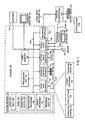
- Figure 1 shows a schematic diagram of a general-purpose digital computing environment that can be used to implement various aspects of the invention.
- Figures 2A-C illustrate the formation of a lasso enclosure according to an embodiment of the invention.
- Figures 3A and 3B illustrate the formation of another lasso enclosure according to an embodiment of the invention.
- Figure 4 shows a schematic diagram of a lasso select tool according to one embodiment of the invention.
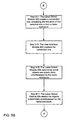
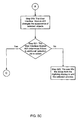
- Figures 5A-5C and 6 illustrate flowcharts describing the operation of the lasso select tool shown in Figure 4.
- the lasso select tool of the present invention allows a user to draw a flexible line of selection ink in order to select one or more graphical objects for manipulation. As the user draws this selection line, the lasso select tool continuously redraws a connection line connecting one end of the selection line with the opposite end of the selection line. This connection line thus graphically demonstrates to the user the area that is presently encompassed by the resulting lasso enclosure. Further. the lasso select tool will change the appearance of any object selected with the lasso enclosure. For example, the lasso select tool may give a selected ink object a hollow appearance.
- the lasso select tool By creating a connection line between two ends of the lasso's selection line, and by changing the appearance of objects substantially encircled by the lasso, the lasso select tool provides a user a direct feedback as to which objects have been selected by the lasso enclosure before the selection process is completed.
- the lasso select tool selects an object when the lasso enclosure encircles just a substantial portion of the object.
- the lasso tool may select an ink object when the lasso enclosure encircles 60% or more of its ink.
- the lasso select tool of the invention allows a user to select desired objects without requiring a great deal of precision. This feature is also very beneficial when the user wants to select a graphical object that has a small overlap with another graphical object, such as when a letter in one ink word object overlaps a letter in another ink word object.
- the user can form the lasso enclosure around most of the desired ink word object to select that object. without having to enclose the part of that object which overlaps the other ink word object.
- the lasso select tool of the invention may be described in the general context of computer-executable instructions, such as program modules, executed by one or more computers or other devices.
- program modules include routines, programs, objects, components, data structures, etc. that perform particular tasks or implement particular abstract data types.
- functionality of the program modules may be combined or distributed as desired in various embodiments.
- the system includes a general-purpose computing device 120.
- This computing device 120 may take the form of a conventional personal digital assistant, a tablet, desktop or laptop personal computer, network server or the like.
- Computer readable media can be any available media that can be accessed by the computing device 120.
- Computer readable media may comprise computer storage media and communication media.
- Computer storage media includes volatile and nonvolatile, removable and non-removable media implemented in any method or technology for storage of information such as computer readable instructions, data structures, program modules or other data.
- Computer storage media includes, but is not limited to, RAM, ROM, EEPROM, flash memory or other memory technology, CD-ROM, digital versatile disks (DVD) or other optical storage. magnetic cassettes, magnetic tape, magnetic disk storage or other magnetic storage devices, or any other medium which can be used to store the desired information and which can accessed by the computing device 120.
- Communication media typically embodies computer readable instructions, data structures, program modules or other data in a modulated data signal such as a carrier wave or other transport mechanism and includes any information delivery media.
- modulated data signal means a signal that has one or more of its characteristics set or changed in such a manner as to encode information in the signal.
- communication media includes wired media such as a wired network or direct-wired connection, and wireless media such as acoustic. RF. infrared and other wireless media. Combinations of any of the above should also be included within the scope of computer readable media.
- the computing device 120 will typically include a processing unit 121, a system memory 122, and a system bus 123 that couples various system components including the system memory 122 to the processing unit 121.
- the system bus 123 may be any of several types of bus structures including a memory bus or memory controller, a peripheral bus, and a local bus using any of a variety of bus architectures.
- the system memory includes computer storage media devices, such as a read-only memory (ROM) 124 and random access memory (RAM) 125.
- ROM read-only memory
- RAM random access memory
- a basic input/output system 126 (BIOS) containing the basic routines that help to transfer information between elements within the personal computer 120, such as during startup, is stored in ROM 124.
- the personal computer or network server 120 may further include additional computer storage media devices, such as a hard disk drive 127 for reading from and writing to a hard disk (not shown), a magnetic disk drive 128 for reading from or writing to a removable magnetic disk (not shown), and an optical disk drive 130 for reading from or writing to a removable optical disk (not shown) such as a CD-ROM or other optical media.
- the hard disk drive 127, magnetic disk drive 128, and optical disk drive 130 are connected to the system bus 123 by a hard disk drive interface 132, a magnetic disk drive interface 133, and an optical drive interface 134, respectively.
- the drives and their associated computer-readable media provide non-volatile storage of computer readable instructions, data structures, program modules and other data for the computing device 120.
- exemplary environment described herein employs a hard disk drive 127, a removable magnetic disk drive 128 and a removable optical disk drive 130
- other types of computer readable media which can store data that is accessible by a computer, such as magnetic cassettes, flash memory cards, digital video disks, Bernoulli cartridges, random access memories (RAMs). read-only memories (ROMs) and the like may also be used in the exemplary operating environment.
- more portable embodiments of the computing device 120 such as a tablet personal computer or personal digital assistant, may omit one or more of the computer storage media devices discussed above.
- a number of program modules may be stored on the hard disk drive 127, magnetic disk drive 128, optical disk drive 130, ROM 124 or RAM 125, including an operating system 135 (e.g., the Windows CE, Windows® 2000, Windows NT®, or Windows 95/98 operating system), one or more application programs 136 (e.g. Word. Access,, Pocket Outlook, etc.), other program modules 137 and program data 138.
- an operating system 135 e.g., the Windows CE, Windows® 2000, Windows NT®, or Windows 95/98 operating system
- application programs 136 e.g. Word. Access,, Pocket Outlook, etc.
- other program modules e.g. Word. Access,, Pocket Outlook, etc.
- the computing device 120 may also include one or more additional input devices, other than keyboard 140, through which electronic ink may be written.
- these other input devices may include, for example, a digitizer 144, through which a user can input data by writing the input data onto the digitizer 144 with a stylus.
- the digitizer 144 may be an individual standalone device. Alternately, as with a personal digital assistant or a tablet personal computer, it may be integrated into a display for the computing device 120.
- Still other input devices may include, e.g., a microphone, a joystick, game pad, satellite dish, scanner, touch pad, touch screen, or the like.
- serial port interface 146 that is coupled to the system bus 123, but may be connected by other interfaces, such as a parallel port, game port, universal serial bus (USB), or a 1394 high-speed serial port.
- a monitor 147 or other type of display device is also connected to the system bus 123 via an interface, such as a video adapter 148. As discussed above, the monitor 147 may be integrated with the digitizer 144 to form a digitizing display.
- the computing device 120 may typically include other peripheral output devices (not shown), such as speakers and printers.
- the computing device 120 may operate in a networked environment using logical connections to one or more remote computers, such as a remote computing device 149.
- the remote computing device 149 may be another personal digital assistant, personal computer or network server, a router, a network PC, a peer device or other common network node, and typically includes many or all of the elements described above relative to the computing device 120, although only a memory storage device 150 has been illustrated in Fig. 1.
- the logical connections depicted in Fig. 1 include a local area network (LAN) 151 and a wide area network (WAN) 152.
- LAN local area network
- WAN wide area network
- Such networking environments are commonplace in offices, enterprise-wide computer networks. Intranets and the Internet.
- the computing device 120 When used in a LAN networking environment, the computing device 120 is connected to the local area network 151 through a network interface or adapter 153. As will be appreciated by those of ordinary skill in the art, the network interface or adapter 153 may provide a connection to the LAN 151 through a wire or other tangible medium. or it may be a wireless network interface or adapter. When used in a WAN networking environment, the computing device 120 typically includes a modem 154 or other means for establishing communications over the wide area network 152, such as the Internet. The modem 154, which may be internal or external, is connected to the system bus 123 via the serial port interface 146.
- program modules depicted relative to the computing device 120, or portions thereof, may be stored in the remote memory storage device 150. It will be appreciated that the network connections shown are exemplary and other means of establishing a communications link between the computers may be used.
- Figs. 2A-2C illustrate one use of the lasso select tool of the invention. More particularly. these figures illustrate the use of the lasso select tool to select two lines of text 201 in the two-dimensional space of a user interface rendered on a digitizing display 203.
- the text 201 is made up of ink word graphical objects, such as the word object 201a ("This"), the word object 201b ("information") and the word object 201c ("is').
- the user first activates the lasso select tool.
- the lasso select tool may be active by default. or a user may choose the lasso select tool from a menu of one or more available tools.
- the user then contacts a stylus 205 to a desired location on the digitizing display 203.
- Contacting the stylus 205 with the digitizing display 203 creates the starting point 207a of a selection line 207.
- To draw the selection line 207. the user continues to hold the stylus 205 against the digitizing display 203 while dragging the point of the stylus 205 across the display 203. In this manner, the user begins to form a lasso enclosure around both the upper word object 201a ("This") of the text 201 and the lower word object 201b ("information") of the text 201.
- this technique may also be used to smoothen the selection line 207.
- other techniques may be employed to smooth inadvertent jitters and loopbacks from the selection line 207.
- the lasso select tool draws a connection line 209 between the starting point 207a of the selection line 207 and the current end point 207b of the selection line 207 (that is, the point where the stylus 205 is currently contacting the digitizer display 203b).
- the tool continuously deletes and redraws the connection line 209 to connect the most recent endpoint with the starting point.
- the continuous redrawing of the connection line 209 forms a self-closing lasso enclosure with the selection line 207.
- the lasso enclosure formed by the selection line 207 and the current connection line 209 does not substantially enclose any word object in the text 201.
- none of the text 201 is selected by the lasso enclosure in this figure.
- the connection line 209 continues to be redrawn to connect the starting point 207a of the selection line 207 with the current end point 207b of the selection line 207 (that is. where the stylus 205 is currently contacting the digitizing display 203).
- This allows the user to view the entire perimeter of the lasso enclosure formed by the selection line 207 and the connection line 209, and thus to more easily identify the graphical objects encompassed by the lasso enclosure.
- the selection line 207 has been drawn to expand the lasso enclosure to encompass a substantial amount of both the word objects 201a ("this") and 201b ("information") of the text 201. By encompassing a substantial amount of these word objects, the lasso enclosure selects these objects for manipulation.
- connection line 209 has the same appearance as the selection line 207. It should be noted, however, that with alternate embodiments of the invention, the connection line 209 may appear differently than the selection line 207.
- the connection line 209 may, for example, be formed of a different line type, such as a lighter weight line type, or even have a different color.
- the tool may change the appearance of an object in the two-dimensional space rendered by the digitizing display when that object is selected.
- the electronic ink in both of the word objects 201a ("this") and 201b ("information'') is displayed with a hollow appearance when those objects have been selected.
- This change of appearance conveniently helps the user determine whether an object has been selected before the user has finalized the shape of the lasso enclosure, thereby allowing the user to modify the enclosure to ensure that a desired object is selected.
- One technique for providing objects with a hollow appearance is described in a copending U.S.
- the lasso select tool of the invention selects an ink object when the lasso enclosure substantially encompasses the object.
- the tool selects a word when the lasso enclosure encompasses 60% or more of the object.
- the tool will thus select the word object 201a ("This") when the lasso enclosure encompasses 60% or more of this ink object.
- This conveniently allows the user to select an ink objects without requiring that the user exercise high level of precision necessary to enclose the entire ink object or a designated center of ink the object.
- this percentage may vary between embodiments of the lasso select tool, depending upon the amount of precision desired from the user.
- some embodiments of the invention may select an ink object only after the lasso enclosure has encompassed 80% or more of that graphical object.
- the tool may select an ink object when only 40% (or even less, if desired) of the object is encompassed by the lasso enclosure.
- a lasso select tool may also require that different amounts of an object be encompassed for selection depending upon the type of the graphical object. For example, with the illustrated embodiment, the tool selects a graphical object formed of electronic ink when the lasso enclosure encompasses 60% or more of the ink in that object.
- The, same lasso select tool may require, however, that a lasso enclosure encompass 80% or more of an image object, such as a GIF image, before selecting that image.
- the amount of an object that must be contained within the lasso enclosure before the object is selected can be variable. This feature permits the lasso select tool to require additional precision for the selection of some types of graphical objects and less precision for the selection of other types of graphical objects.
- Fig. 2C it can be seen that, as the user has continued to draw the selection line 207, the tool has also continued to redraw the connection line 209 to connect the starting point 207a of the selection line 207 with the most recent end point 207b.
- the lasso enclosure formed by the selection line 207 and the connection line 209 encompasses a substantial amount of each word object in the text 201.
- the appearance of the electronic ink in each word object of the text 201 is changed to appear hollow, thereby indicating that the current shape of the lasso enclosure has selected each word object of the text 201.
- other techniques may be employed to indicate when an object will be substantially encompassed by the lasso enclosure.
- the user may how simply lift the stylus 205 from the digitizing display 203 to complete the selection process.
- the lasso enclosure will disappear, but the selected text will continue to be displayed in a special manner (for example, with a hollow effect) to indicate its selection.
- a special manner for example, with a hollow effect
- still other embodiments of the invention may maintain the appearance of the lasso enclosure.
- Fig. 3A and 3B show yet another use of the lasso select tool according to the invention.
- the selection line 207 is approximately straight.
- selection lines 207 that are approximately straight are not treated as part of a lasso enclosure. Instead, the tool considers straight selection lines 207 to be encounter selection lines.
- the tool selects each object encountered (that is, intersected) by the selection line 207 in the two-dimensional space rendered by the digitizing display 203.
- the tool has selected the word objects 201a ("This") and 201c ("is") through which the selection line 207 passes.
- the selection line 207 does not intersect the word object 201b ("information"), so the word object 201b is not selected.
- the user has continued to draw the selection line 207 so that it no longer is approximately straight. Instead, the selection line 207 has curved around the word object 201b ("information").
- the lasso select tool of the invention stops treating the selection line 207 as an encounter selection line. Instead, the tool creates the connection line 209 between the starting point of the selection line 207 and the current end point of the selection line 207, so that the selection line 207 and the connection line 209 together form a lasso enclosure.
- the word objects 201a (“This") and 201c ("information") are deselected.
- the selection line 207 continues to intersect these word objects, but they are not substantially encompassed by the lasso enclosure formed by the selection line 207 and the connection line 209.
- the tool selects the word object 201b ("information") because it is substantially encompassed by the lasso enclosure. It should be noted that. while the selection line 207 still intersects the word objects 201a ("This") and 201c ("information"), it does not intersect the selected word object 201b ("information"). As will be appreciated from this example, a user may thus conveniently use the lasso select tool of the invention to select a word object written in electronic ink without having to avoid intersecting surrounding word objects with the selection line 207.
- selection 207 shown in Figs. 2A-3B have been shown as being drawn with a stylus 205 on digitizing display 203, those of ordinary skill in the art will appreciate that other techniques can be used to employ the lasso select tool of the invention.
- another pointing device such as a mouse, touchpad, or pointing stick, can be used to draw the selection line 207 in the two-dimensional space containing the desired graphical objects to be selected.
- a non-digitizing display may be used to render the two-dimensional space containing the selection line and the graphical objects to be selected.
- Fig. 4 illustrates the components of a lasso select tool 401 according to one embodiment of the invention.
- the lasso select tool 401 includes a user interface module 403. a selection line shape determining module 405, an encounter select module 407. and a lasso select module 409. The function of each of these components will be described with reference to Figs. 5A-5C and Fig. 6, which illustrate flowcharts showing the operation of the lasso select tool 401.
- the user starts the operation of the lasso select tool 401 in step 501.
- the user may, for example, select the lasso select tool from a list of various tools and functions.
- the user interlace module 403 provides a user interface in a two-dimensional space rendered by a display.
- This two-dimensional space contains the graphical objects that can be selected by the lasso select tool 401, and may be, for example, a workspace containing the user interface of another software application, such as Microsoft Word or Notepad.
- the user interface module 403 allows a user to both write selection ink and view the results of the selection process in the two-dimensional space. Accordingly, in step 503, the user interface module 403 collects selection ink drawn by a user to form the selection line 207. Based upon the collected selection ink, the user interface module 403 displays the selection line 207 drawn with the selection ink in the two-dimensional space. In addition, the user interface module 403 provides the collected selection ink to the selection line shape determining module 405.
- the selection line shape determining module 405 receives the selection ink collected by the user interface module 403, and, in step 505, determines the shape of the selection line formed by the selection ink. If the selection ink has been drawn in an approximately straight line, then the selection line shape determining module 405 passes the collected selection ink onto the encounter select module 407, which treats the selection line as an encounter selection line. On the other hand, if the selection ink does not form an approximately straight line, then the collected selection ink is passed to the lasso select module 409, which treats the selection ink as part of a lasso enclosure.
- the degree to which a selection line must be non-linear before the selection line shape determining module 405 passes the collected selection ink onto the lasso select module 409 may vary. In some instances, it may be desirable to have a lasso tool that favors selection with a lasso enclosure. This tool may therefore require that the selection line be very straight before treating the selection as an encounter selection line. Alternately, it may be desirable to have a lasso selection tool that favors selection with an encounter selection line. This tool will then require the user to significantly curve or notch the selection line before passing the selection ink onto the lasso select module 409.
- the encounter select module 407 receives the selection ink, it treats the resulting selection line as an encounter selection line as previously noted. The encounter select module 407 thus determines each object in the two-dimensional space through which the selection line passes, and selects these objects for manipulation in step 507. The encounter select module 407 then identifies the selected objects to the user interface module 403, so that the user interface module 403 may change the appearance of the selected objects in step 519.
- the lasso select module 409 treats the selection line as part of a lasso enclosure. That is, if the selection line shape determining module 405 determines that the selection line is not straight, it concludes that the user is attempting to form a lasso enclosure to select graphical objects rather than an encounter select line.
- the lasso select module 409 first deselects all of the objects that the lasso select tool 401 has previously selected. Any objects that were selected by the encounter select module 503 when the selection line was approximately straight are thus deselected when the selection line begins to be drawn non-linear (for example, drawn with a curve or notch).
- the lasso select line 409 creates a connection line between the two ends of the selection line, to thereby form a lasso enclosure.
- the lasso selection module 409 can simply plot a set of data points forming a straight line between the first selection ink point and the most recently created selection ink point.
- the lasso selection module 409 then provides the data points forming the connection line to the user interface module 503 so that, in step 513. the user interface module 503 can display the connection line to the user in the two-dimensional space.
- the lasso select module 409 determines which graphical objects rendered in the two-dimensional space are substantially encompassed by the lasso enclosure. This process is illustrated in Fig. 6.
- the lasso select module 409 creates a bounding box for each object in the two-dimensional space that is available for selection by the tool. For example, if the lasso select tool 401 is being used to manipulate objects in a rendered Microsoft Word document, then the lasso select module creates a bounding box for each selectable graphical object in that document.
- a bounding box is a rectangular boundary around a graphical object where each side of the box is offset from the graphical object by a predetermined distance.
- the lasso select module 409 defines a boundary for the lasso enclosure.
- the defined boundary of the lasso enclosure will be a bounding box created for the lasso enclosure.
- the boundary of the lasso enclosure may be defined as the perimeter of the lasso enclosure itself.
- the lasso select module 409 identifies those objects having boundary boxes that intersect the defined boundary of the lasso enclosure. Then, for the identified objects, the lasso select module 409 determines what amount of each of those objects is actually encompassed within the lasso enclosure in step 607. Then, in step 609, the lasso select module 409 selects those objects that are encompassed by the lasso enclosure more than a designated threshold amount.
- steps 601-605 are optional. and may be omitted. That is, the lasso select module 409 can analyze every object available for selection by the lasso select tool 401, to determine how much of each available object is encompassed by the lasso enclosure. This process may be very time consuming for a large number of graphical objects, however. By forming boundary boxes around each available object and a boundary for the lasso enclosure. the lasso select module 409 can more quickly eliminate objects that cannot have any portion encompassed within the lasso enclosure.
- the bounding box for each object provides a maximum x-coordinate value and a maximum y-coordinate value for the location of that object in the two-dimensional space, as well as a minimum x-coordinate and a minimum y coordinate.
- the boundary for the lasso enclosure provides a range of x-coordinates and a range of y-coordinates for the location of the lasso enclosure in the two-dimensional space. Overlap of these ranges can quickly be determined. If the x-coordinate value range for an object does not overlap with the x-coordinate value range for the lasso enclosure. and the y-coordinate value range for an object does not overlap with the y-coordinate value range for the lasso enclosure, the lasso select module 409 can efficiently eliminate any further consideration of that object.
- the lasso select tool 401 may determine the amount of the object encompassed by the lasso enclosure using a number of different techniques.
- the lasso select tool 401 may determine the amount of an ink object encompassed by the lasso enclosure based upon the number of ink data points falling within the lasso enclosure.
- an ink object may be a handwritten letter "H," with the first vertical ink stroke consisting of 6 ink data points. the second vertical ink stroke consisting of 7 ink data points, and the joining horizontal ink stroke consisting of 3 ink data points.
- this ink object would have a total of 16 data points.
- ink objects can be a collection of one or more individual ink strokes formed by ink data points.
- the ink strokes can be manually grouped into an ink object by a user, or automatically grouped by a recognition engine. such as a handwriting recognition engine.
- the ink data points have locations within the two-dimensional space, they typically are not the same as the pixels displayed in the two-dimensional space to represent an ink line. Instead, the data points correspond to the location of a pointing device obtained at a periodic sampling rate. Thus, if a user begins writing an ink line very quickly at the beginning of the line, and slows down at the end of the ink line, the end of the ink line will consist of more data points than the beginning of the ink line.
- the density of ink data points within an ink object therefore may not be an accurate reflection of the total size of the object.
- the first vertical stroke may have a length of 12 units.
- the second vertical stroke may have a length of 14 vertical units, and the joining horizontal stroke may have a length of 7 units, for a total of 34 units. If the lasso enclosure encompasses a more than 60% of the total length of strokes in the letter (that is. 21 or more units of strokes), then the entire letter is selected.
- the overall size of an ink object can be determined, for example, based upon the amount of the segments between ink points forming the object. For example, an ink object formed of n data points will have n-1 line segments connecting the data points (one segment between two points). If a lasso enclosure extends between two data points, it may encompass a large amount of the segment between the two data points without actually encompassing either data point. Accordingly, it may be desirable to select an ink object based, upon the percentage of the cumulative length of its segments encompassed by the lasso enclosure. Thus, if the total length of segments between data points in an ink object is 34 units, and the lasso enclosure encompasses 21 units or more of those segments, then the ink object will be selected. Of course, alternate techniques for determining the overall size of an ink object may also be employed.
- ink data points may have different properties affecting the pixels used to represent the ink line formed by the data points. For example. if the user creates ink data points by pressing a stylus against a digitizer, the amount of pixels representing each data point may be based upon the force at which the stylus was depressed against the digitizer when creating that point. Thus. it may alternately be desirable to select an ink object based upon the total number of pixels displaying that object. For example, if a handwritten letter "H" is displayed with 30 pixels, the entire letter may be selected if 60% or more (that is, more than 18 pixels) are encompassed by the lasso enclosure. Of course, some embodiments of the lasso select tool 401 may alternately provide ink objects with boundary boxes, and then determine the selection of ink objects based upon the amount of area within each boundary box encompassed by the lasso enclosure.
- the lasso select tool 401 may determine whether an image object is selected based upon the number of pixels in the image. As previously noted, some embodiments of the lasso select tool 401 may not select an image unless 80% or more of that image is encompassed by the lasso enclosure. In order to simplify this determination. however, the lasso select tool 401 may divide an image object into a more granular grid before determining how much of the image object is encompassed by the lasso enclosure. For example, if an image has a size of 800x1000 pixels, the lasso select module 409 may divide the image into a grid of 80 units x 100 units, and then determine whether the lasso enclosure encompasses 80% or more of these units. This granulation reduces the calculations necessary to determine if an image object has been selected by a lasso enclosure.
- the lasso select module 409 may select a text box if 80% or more of the text box is encompassed by the lasso enclosure. Further, the determination of whether a text box is selected may be based upon the amount of the area defined by the box that is encompassed by the lasso enclosure. This criterion avoids a situation where. for example, a text box may not be selected if a user draws a lasso enclosure within the text box without actually contacting the boundaries of the box. As with an image object. various embodiments of the lasso tool 401 may divide the area of a text box into a more granular grid to simplify the selection determination.
- the lasso select module 409 may divide the area defined by the text box into a grid of 4x6 units, and then determine whether the lasso enclosure encompasses 80% or more of these units.
- the user interface module 403 may change the appearance of text boxes available for selection when the tool 401 is activated. Changing the appearance of the text boxes can assist a user in determining how much of the text box exists and therefore must be encompassed by the lasso enclosure for selection. For example, the user interface module 403 may display an outline of the text box, or provide a faint highlight to the area within the text box.
- the lasso select tool 401 may alternately allow a user to select individual text objects within a text box.
- the lasso select tool 401 may provide a "best-fit" text box feature that automatically shrinks the size of a text box to closely bound its contained text, in order to make the selection of the text box more convenient.
- ASCII text may be selected based upon native points in the text, a normalized size of the text, or upon the pixel screen area covered by the text.
- the amount of an object that must be encompassed by the lasso enclosure before that object is selected can vary as desired.
- the lasso select module 409 identifies those selected objects to the user interface module 403. Then, in step 519, the user interface module 403 changes the appearance of the selected objects, so that the user can identify which objects have been selected before the selection process is completed.
- the user interface module 403 determines if the user has created any new selection ink points for collection. If there are newly created selection ink points (that is. if the user is still in the process of drawing the selection line), then steps 503 to 521 are repeated to process the new selection ink points. If the user has not created new selection ink. then the selection operation ends in step 523. For example, if the user has drawn the lasso enclosure with a stylus on a digitizing display, the user can end the selection operation by lifting the stylus from the digitizing display in step 523.
- the lasso select tool 401 may treat the most recently created intersection point as the starting point of the selection line, and thus draw the connection line from this intersection point to the end point of the selection line to form the lasso enclosure.
- the area enclosed by the intersection may be treated as the lasso enclosure.
- an intersection may automatically delete the selection line in its entirety, or just the portion drawn before the intersection.
- the lasso select tool of the invention provides a flexible and convenient tool for selecting graphical objects. More particularly. the tool allows a user to select a graphical object simply by enclosing a substantial portion of the object, without have to worry about enclosing the entirety of the object, the designated center of the object, or avoiding contact with any adjacent objects. Moreover. the tool provides an immediate indication when an object has been selected. without waiting until the selection process is completed.
- the lasso select tool of the invention provides a convenient selection tool for both irregularly shaped objects, such as ink objects. Further, the tool conveniently allows for the selection of irregularly positioned objects, such as objects that are not arranged in a straight line.
- various embodiments of the invention may employ another type of selection enclosure, such as a rubber band rectangular enclosure, rather than a lasso enclosure, that selects an object substantially enclosed by the selection enclosure.
- various embodiments of the invention may require the lasso enclosure to encompass an entire object or designated center of an object in order to select that object.
- the tool will display the connection line forming the enclosure and immediately change the appearance of selected objects, in order to indicate to the user which objects have been selected before the selection process is complete.
- the tool may select objects that are substantially encompassed by the lasso enclosure, but may omit continuously redrawing the connection line.
Landscapes
- Engineering & Computer Science (AREA)
- Theoretical Computer Science (AREA)
- Physics & Mathematics (AREA)
- General Physics & Mathematics (AREA)
- General Engineering & Computer Science (AREA)
- Computer Vision & Pattern Recognition (AREA)
- Multimedia (AREA)
- Human Computer Interaction (AREA)
- Processing Or Creating Images (AREA)
- User Interface Of Digital Computer (AREA)
Applications Claiming Priority (2)
| Application Number | Priority Date | Filing Date | Title |
|---|---|---|---|
| US10/146,705 US7299424B2 (en) | 2002-05-14 | 2002-05-14 | Lasso select |
| US146705 | 2002-05-14 |
Publications (2)
| Publication Number | Publication Date |
|---|---|
| EP1363184A2 true EP1363184A2 (fr) | 2003-11-19 |
| EP1363184A3 EP1363184A3 (fr) | 2010-03-24 |
Family
ID=29269761
Family Applications (1)
| Application Number | Title | Priority Date | Filing Date |
|---|---|---|---|
| EP03007906A Withdrawn EP1363184A3 (fr) | 2002-05-14 | 2003-04-07 | Sélection avec lasso |
Country Status (2)
| Country | Link |
|---|---|
| US (3) | US7299424B2 (fr) |
| EP (1) | EP1363184A3 (fr) |
Cited By (2)
| Publication number | Priority date | Publication date | Assignee | Title |
|---|---|---|---|---|
| EP2172837A2 (fr) | 2008-10-02 | 2010-04-07 | Samsung Electronics Co., Ltd. | Dispositif d'entrée tactile et procédé pour dispositif portable |
| EP2706450A3 (fr) * | 2012-09-05 | 2017-10-18 | Samsung Electronics Co., Ltd | Appareil et procédé pour modifier une image dans un terminal portable |
Families Citing this family (104)
| Publication number | Priority date | Publication date | Assignee | Title |
|---|---|---|---|---|
| US6639583B1 (en) * | 2000-04-06 | 2003-10-28 | Hewlett-Packard Development Company, L.P. | User interface utilizing a computer pointing device with infrared bridge |
| US7246321B2 (en) * | 2001-07-13 | 2007-07-17 | Anoto Ab | Editing data |
| US7299424B2 (en) * | 2002-05-14 | 2007-11-20 | Microsoft Corporation | Lasso select |
| US7218330B1 (en) * | 2003-01-07 | 2007-05-15 | Microsoft Corporation | Method and system for selecting elements in a graphical user interface |
| US7505048B2 (en) * | 2003-04-25 | 2009-03-17 | Microsoft Corporation | Estimation of overlap of polygons |
| US20040257346A1 (en) * | 2003-06-20 | 2004-12-23 | Microsoft Corporation | Content selection and handling |
| US10201753B2 (en) * | 2004-07-16 | 2019-02-12 | Universal Entertainment Corporation | Gaming machine and program thereof |
| US7421441B1 (en) * | 2005-09-20 | 2008-09-02 | Yahoo! Inc. | Systems and methods for presenting information based on publisher-selected labels |
| US7603349B1 (en) * | 2004-07-29 | 2009-10-13 | Yahoo! Inc. | User interfaces for search systems using in-line contextual queries |
| US8972856B2 (en) | 2004-07-29 | 2015-03-03 | Yahoo! Inc. | Document modification by a client-side application |
| US7409402B1 (en) * | 2005-09-20 | 2008-08-05 | Yahoo! Inc. | Systems and methods for presenting advertising content based on publisher-selected labels |
| US7856441B1 (en) | 2005-01-10 | 2010-12-21 | Yahoo! Inc. | Search systems and methods using enhanced contextual queries |
| JP4388878B2 (ja) | 2004-10-19 | 2009-12-24 | 任天堂株式会社 | 入力処理プログラムおよび入力処理装置 |
| US7561740B2 (en) * | 2004-12-10 | 2009-07-14 | Fuji Xerox Co., Ltd. | Systems and methods for automatic graphical sequence completion |
| US20060136406A1 (en) * | 2004-12-17 | 2006-06-22 | Erika Reponen | Spatial search and selection feature |
| WO2006090406A1 (fr) * | 2005-02-23 | 2006-08-31 | Hewlett-Packard Development Company, L.P. | Systeme, procede et appareil pour la segmentation automatique et l’analyse de flux d’encre |
| US7499058B2 (en) * | 2005-04-22 | 2009-03-03 | Microsoft Corporation | Programmatical access to handwritten electronic ink in a tree-based rendering environment |
| JP4322225B2 (ja) * | 2005-04-26 | 2009-08-26 | 任天堂株式会社 | ゲームプログラムおよびゲーム装置 |
| JP4260770B2 (ja) * | 2005-05-09 | 2009-04-30 | 任天堂株式会社 | ゲームプログラムおよびゲーム装置 |
| JP2006314349A (ja) * | 2005-05-10 | 2006-11-24 | Nintendo Co Ltd | ゲームプログラムおよびゲーム装置 |
| JP4807999B2 (ja) * | 2005-09-16 | 2011-11-02 | 株式会社リコー | 画像表示装置、画像表示方法、画像形成装置、画像形成方法、および、それらの方法をコンピュータに実行させるプログラム |
| US8552988B2 (en) * | 2005-10-31 | 2013-10-08 | Hewlett-Packard Development Company, L.P. | Viewing device having a touch pad |
| KR100724956B1 (ko) * | 2005-12-13 | 2007-06-04 | 삼성전자주식회사 | 이동 통신 단말의 배경화면 표시 방법 |
| TW200825881A (en) * | 2006-12-04 | 2008-06-16 | Ulead Systems Inc | Method and apparatus for selecting digital items |
| JP4533943B2 (ja) * | 2008-04-28 | 2010-09-01 | 株式会社東芝 | 情報処理装置、表示制御方法およびプログラム |
| US8826174B2 (en) * | 2008-06-27 | 2014-09-02 | Microsoft Corporation | Using visual landmarks to organize diagrams |
| US8739074B2 (en) * | 2008-08-28 | 2014-05-27 | Kyocera Corporation | User interface generation apparatus for generating user interfaces of mobile terminals |
| KR20100028344A (ko) * | 2008-09-04 | 2010-03-12 | 삼성전자주식회사 | 휴대단말의 영상 편집 방법 및 장치 |
| US8423916B2 (en) * | 2008-11-20 | 2013-04-16 | Canon Kabushiki Kaisha | Information processing apparatus, processing method thereof, and computer-readable storage medium |
| US8762869B2 (en) * | 2008-12-23 | 2014-06-24 | Intel Corporation | Reduced complexity user interface |
| US20100229129A1 (en) * | 2009-03-04 | 2010-09-09 | Microsoft Corporation | Creating organizational containers on a graphical user interface |
| US20100241955A1 (en) * | 2009-03-23 | 2010-09-23 | Microsoft Corporation | Organization and manipulation of content items on a touch-sensitive display |
| US8885977B2 (en) * | 2009-04-30 | 2014-11-11 | Apple Inc. | Automatically extending a boundary for an image to fully divide the image |
| US8473862B1 (en) * | 2009-05-21 | 2013-06-25 | Perceptive Pixel Inc. | Organizational tools on a multi-touch display device |
| KR101622196B1 (ko) * | 2009-09-07 | 2016-05-18 | 삼성전자주식회사 | 휴대용 단말기에서 피오아이 정보 제공 방법 및 장치 |
| US8799775B2 (en) * | 2009-09-25 | 2014-08-05 | Apple Inc. | Device, method, and graphical user interface for displaying emphasis animations for an electronic document in a presentation mode |
| JP5668365B2 (ja) * | 2009-11-20 | 2015-02-12 | 株式会社リコー | 描画処理システム、サーバ装置、ユーザ端末、描画処理方法、プログラム及び記録媒体 |
| JP4472778B2 (ja) * | 2009-12-24 | 2010-06-02 | 任天堂株式会社 | ゲームプログラムおよびゲーム装置 |
| US8621380B2 (en) | 2010-01-06 | 2013-12-31 | Apple Inc. | Apparatus and method for conditionally enabling or disabling soft buttons |
| US9141345B2 (en) * | 2010-01-27 | 2015-09-22 | Microsoft Technology Licensing, Llc | Simplified user controls for authoring workflows |
| US9542091B2 (en) | 2010-06-04 | 2017-01-10 | Apple Inc. | Device, method, and graphical user interface for navigating through a user interface using a dynamic object selection indicator |
| US9760650B2 (en) * | 2010-08-13 | 2017-09-12 | Sony Corporation | Automatic notification |
| US9779168B2 (en) | 2010-10-04 | 2017-10-03 | Excalibur Ip, Llc | Contextual quick-picks |
| WO2012050251A1 (fr) * | 2010-10-14 | 2012-04-19 | 엘지전자 주식회사 | Terminal mobile et procédé de commande correspondant |
| US9323807B2 (en) * | 2010-11-03 | 2016-04-26 | Sap Se | Graphical manipulation of data objects |
| GB2485221A (en) * | 2010-11-05 | 2012-05-09 | Promethean Ltd | Selection method in dependence on a line traced between contact points |
| US8587547B2 (en) | 2010-11-05 | 2013-11-19 | Apple Inc. | Device, method, and graphical user interface for manipulating soft keyboards |
| US8547354B2 (en) | 2010-11-05 | 2013-10-01 | Apple Inc. | Device, method, and graphical user interface for manipulating soft keyboards |
| KR20120062297A (ko) * | 2010-12-06 | 2012-06-14 | 삼성전자주식회사 | 디스플레이 장치 및 그 ui 제공 방법 |
| US9785335B2 (en) * | 2010-12-27 | 2017-10-10 | Sling Media Inc. | Systems and methods for adaptive gesture recognition |
| US10365819B2 (en) | 2011-01-24 | 2019-07-30 | Apple Inc. | Device, method, and graphical user interface for displaying a character input user interface |
| US9092132B2 (en) | 2011-01-24 | 2015-07-28 | Apple Inc. | Device, method, and graphical user interface with a dynamic gesture disambiguation threshold |
| US10338672B2 (en) * | 2011-02-18 | 2019-07-02 | Business Objects Software Ltd. | System and method for manipulating objects in a graphical user interface |
| WO2012147799A1 (fr) * | 2011-04-26 | 2012-11-01 | 京セラ株式会社 | Dispositif électronique |
| KR20130034747A (ko) * | 2011-09-29 | 2013-04-08 | 삼성전자주식회사 | 휴대 단말기의 사용자 인터페이스 제공 방법 및 장치 |
| US8890827B1 (en) | 2011-10-05 | 2014-11-18 | Google Inc. | Selected content refinement mechanisms |
| US8825671B1 (en) | 2011-10-05 | 2014-09-02 | Google Inc. | Referent determination from selected content |
| US9032316B1 (en) | 2011-10-05 | 2015-05-12 | Google Inc. | Value-based presentation of user-selectable computing actions |
| US9305108B2 (en) | 2011-10-05 | 2016-04-05 | Google Inc. | Semantic selection and purpose facilitation |
| US8930393B1 (en) | 2011-10-05 | 2015-01-06 | Google Inc. | Referent based search suggestions |
| US8878785B1 (en) | 2011-10-05 | 2014-11-04 | Google Inc. | Intent determination using geometric shape input |
| US10013152B2 (en) | 2011-10-05 | 2018-07-03 | Google Llc | Content selection disambiguation |
| US20130093668A1 (en) * | 2011-10-12 | 2013-04-18 | Samsung Electronics Co., Ltd. | Methods and apparatus for transmitting/receiving calligraphed writing message |
| US9207951B2 (en) | 2011-11-17 | 2015-12-08 | Prezi, Inc. | Grouping with frames to transform display elements within a zooming user interface |
| US9304656B2 (en) * | 2012-03-30 | 2016-04-05 | Google Inc. | Systems and method for object selection on presence sensitive devices |
| KR102070013B1 (ko) * | 2012-08-27 | 2020-01-30 | 삼성전자주식회사 | 컨텐츠 활용 기능 지원 방법 및 이를 지원하는 단말기 |
| CA2836137C (fr) | 2012-12-05 | 2020-12-01 | Braeburn Systems Llc | Panneau de controle du climat dote d'un ecran non-planaire |
| US20140188894A1 (en) * | 2012-12-27 | 2014-07-03 | Google Inc. | Touch to search |
| JP6201488B2 (ja) * | 2013-07-29 | 2017-09-27 | 富士通株式会社 | 選択文字特定プログラム、選択文字特定方法、及び、選択文字特定装置 |
| KR102122793B1 (ko) | 2013-08-22 | 2020-06-15 | 삼성전자주식회사 | 전자 디바이스 및 전자 디바이스에서 이미지 처리 방법 |
| CN104574454B (zh) * | 2013-10-29 | 2020-06-02 | 阿里巴巴集团控股有限公司 | 图像的处理方法及装置 |
| US10146424B2 (en) * | 2014-02-28 | 2018-12-04 | Dell Products, Lp | Display of objects on a touch screen and their selection |
| JP2015172831A (ja) * | 2014-03-11 | 2015-10-01 | 東芝テック株式会社 | 配布システムおよび配布データの処理プログラム |
| JP6287498B2 (ja) * | 2014-04-01 | 2018-03-07 | 日本電気株式会社 | 電子ホワイトボード装置、電子ホワイトボードの入力支援方法、及びプログラム |
| US10078411B2 (en) | 2014-04-02 | 2018-09-18 | Microsoft Technology Licensing, Llc | Organization mode support mechanisms |
| US9485132B2 (en) * | 2014-05-08 | 2016-11-01 | Dell Products, Lp | Automated SAN network topological diagram and point-to-point cabling creation for customers environments |
| US10275050B2 (en) | 2014-05-23 | 2019-04-30 | Microsoft Technology Licensing, Llc | Ink for a shared interactive space |
| US10761704B2 (en) * | 2014-06-16 | 2020-09-01 | Braeburn Systems Llc | Graphical highlight for programming a control |
| CN105204794B (zh) * | 2014-06-16 | 2020-04-14 | 中兴通讯股份有限公司 | 视图显示处理方法、装置及投影设备 |
| MX2015014860A (es) | 2014-10-22 | 2017-03-13 | Braeburn Systems Llc | Sistema de entrada del codigo de termostato y metodo para el mismo que utiliza el identificador del conjunto de servicios. |
| CA2910884C (fr) | 2014-10-30 | 2023-05-23 | Braeburn Systems Llc | Systeme de modification rapide pour la programmation d'un thermostat |
| US10055323B2 (en) | 2014-10-30 | 2018-08-21 | Braeburn Systems Llc | System and method for monitoring building environmental data |
| CA2920281C (fr) | 2015-02-10 | 2021-08-03 | Daniel S. Poplawski | Systeme de duplication de configuration de thermostat |
| US10755029B1 (en) | 2016-01-05 | 2020-08-25 | Quirklogic, Inc. | Evaluating and formatting handwritten input in a cell of a virtual canvas |
| US10324618B1 (en) * | 2016-01-05 | 2019-06-18 | Quirklogic, Inc. | System and method for formatting and manipulating digital ink |
| US10317867B2 (en) | 2016-02-26 | 2019-06-11 | Braeburn Systems Llc | Thermostat update and copy methods and systems |
| US9940513B2 (en) | 2016-03-11 | 2018-04-10 | Microsoft Technology Licensing, Llc | Intuitive selection of a digital stroke grouping |
| US20170285931A1 (en) * | 2016-03-29 | 2017-10-05 | Microsoft Technology Licensing, Llc | Operating visual user interface controls with ink commands |
| US10317919B2 (en) | 2016-06-15 | 2019-06-11 | Braeburn Systems Llc | Tamper resistant thermostat having hidden limit adjustment capabilities |
| MX2017011987A (es) | 2016-09-19 | 2018-09-26 | Braeburn Systems Llc | Sistema de gestion de control que tiene calendario perpetuo con excepciones. |
| US10871880B2 (en) * | 2016-11-04 | 2020-12-22 | Microsoft Technology Licensing, Llc | Action-enabled inking tools |
| US20180284953A1 (en) * | 2017-03-28 | 2018-10-04 | Osram Sylvania Inc. | Image-Based Lighting Controller |
| US10970476B2 (en) * | 2017-05-17 | 2021-04-06 | Microsoft Technology Licensing, Llc | Augmenting digital ink strokes |
| US11579744B2 (en) * | 2017-06-21 | 2023-02-14 | Navitaire Llc | Systems and methods for seat selection in virtual reality |
| US10802673B2 (en) * | 2017-08-11 | 2020-10-13 | Salesforce.Com, Inc. | Multi-selection on a chart |
| US10921008B1 (en) | 2018-06-11 | 2021-02-16 | Braeburn Systems Llc | Indoor comfort control system and method with multi-party access |
| US10802513B1 (en) | 2019-05-09 | 2020-10-13 | Braeburn Systems Llc | Comfort control system with hierarchical switching mechanisms |
| US11205286B2 (en) | 2019-07-16 | 2021-12-21 | Microsoft Technology Licensing, Llc | Techniques for optimizing creation of digital diagrams |
| JP7423951B2 (ja) * | 2019-09-19 | 2024-01-30 | 富士フイルムビジネスイノベーション株式会社 | 画像処理装置及び画像処理プログラム |
| EP3842911B1 (fr) * | 2019-12-26 | 2023-04-05 | Dassault Systèmes | Interface 3d dotée d'une meilleure sélection d'objets |
| US11714531B2 (en) * | 2020-03-03 | 2023-08-01 | Adobe Inc. | Glyph-aware text selection |
| US11631206B2 (en) * | 2021-06-10 | 2023-04-18 | Adobe Inc. | Glyph selection tool for digital text content |
| US11925260B1 (en) | 2021-10-19 | 2024-03-12 | Braeburn Systems Llc | Thermostat housing assembly and methods |
| US12197719B2 (en) * | 2022-01-31 | 2025-01-14 | Kyndryl, Inc. | Masked overlay for custom repositioning of interactive objects on a touchscreen of a computing device |
Citations (3)
| Publication number | Priority date | Publication date | Assignee | Title |
|---|---|---|---|---|
| EP0566294A2 (fr) | 1992-04-15 | 1993-10-20 | Xerox Corporation | Procédés et systèmes d'édition et dessin graphique |
| US5523775A (en) | 1992-05-26 | 1996-06-04 | Apple Computer, Inc. | Method for selecting objects on a computer display |
| US5694532A (en) | 1996-01-26 | 1997-12-02 | Silicon Graphics, Inc. | Method for selecting a three-dimensional object from a graphical user interface |
Family Cites Families (17)
| Publication number | Priority date | Publication date | Assignee | Title |
|---|---|---|---|---|
| US5455901A (en) * | 1991-11-12 | 1995-10-03 | Compaq Computer Corporation | Input device with deferred translation |
| US5652806A (en) * | 1992-01-10 | 1997-07-29 | Compaq Computer Corporation | Input device with data targeting to determine an entry field for a block of stroke data |
| US5583542A (en) * | 1992-05-26 | 1996-12-10 | Apple Computer, Incorporated | Method for deleting objects on a computer display |
| US5428805A (en) * | 1992-12-22 | 1995-06-27 | Morgan; Michael W. | Method and apparatus for recognizing and performing handwritten calculations |
| US5528743A (en) * | 1993-05-27 | 1996-06-18 | Apple Computer, Inc. | Method and apparatus for inserting text on a pen-based computer system |
| US5479596A (en) * | 1993-05-27 | 1995-12-26 | Apple Computer, Inc. | Method and apparatus for formatting paragraphs |
| US5485565A (en) * | 1993-08-04 | 1996-01-16 | Xerox Corporation | Gestural indicators for selecting graphic objects |
| US6021218A (en) * | 1993-09-07 | 2000-02-01 | Apple Computer, Inc. | System and method for organizing recognized and unrecognized objects on a computer display |
| US5583946A (en) * | 1993-09-30 | 1996-12-10 | Apple Computer, Inc. | Method and apparatus for recognizing gestures on a computer system |
| US5592608A (en) * | 1993-10-15 | 1997-01-07 | Xerox Corporation | Interactively producing indices into image and gesture-based data using unrecognized graphical objects |
| US5471578A (en) * | 1993-12-30 | 1995-11-28 | Xerox Corporation | Apparatus and method for altering enclosure selections in a gesture based input system |
| US6687876B1 (en) * | 1998-12-30 | 2004-02-03 | Fuji Xerox Co., Ltd. | Method and system for maintaining freeform ink annotations on changing views |
| US20020141643A1 (en) * | 2001-02-15 | 2002-10-03 | Denny Jaeger | Method for creating and operating control systems |
| US20040054701A1 (en) * | 2002-03-01 | 2004-03-18 | Garst Peter F. | Modeless gesture driven editor for handwritten mathematical expressions |
| US6903751B2 (en) * | 2002-03-22 | 2005-06-07 | Xerox Corporation | System and method for editing electronic images |
| US7086013B2 (en) * | 2002-03-22 | 2006-08-01 | Xerox Corporation | Method and system for overloading loop selection commands in a system for selecting and arranging visible material in document images |
| US7299424B2 (en) | 2002-05-14 | 2007-11-20 | Microsoft Corporation | Lasso select |
-
2002
- 2002-05-14 US US10/146,705 patent/US7299424B2/en not_active Expired - Fee Related
-
2003
- 2003-04-07 EP EP03007906A patent/EP1363184A3/fr not_active Withdrawn
-
2005
- 2005-04-26 US US11/115,592 patent/US7890890B2/en not_active Expired - Fee Related
- 2005-04-26 US US11/115,595 patent/US8037417B2/en not_active Expired - Fee Related
Patent Citations (3)
| Publication number | Priority date | Publication date | Assignee | Title |
|---|---|---|---|---|
| EP0566294A2 (fr) | 1992-04-15 | 1993-10-20 | Xerox Corporation | Procédés et systèmes d'édition et dessin graphique |
| US5523775A (en) | 1992-05-26 | 1996-06-04 | Apple Computer, Inc. | Method for selecting objects on a computer display |
| US5694532A (en) | 1996-01-26 | 1997-12-02 | Silicon Graphics, Inc. | Method for selecting a three-dimensional object from a graphical user interface |
Cited By (6)
| Publication number | Priority date | Publication date | Assignee | Title |
|---|---|---|---|---|
| EP2172837A2 (fr) | 2008-10-02 | 2010-04-07 | Samsung Electronics Co., Ltd. | Dispositif d'entrée tactile et procédé pour dispositif portable |
| CN101714057A (zh) * | 2008-10-02 | 2010-05-26 | 三星电子株式会社 | 用于便携式装置的触摸输入装置和方法 |
| EP2172837A3 (fr) * | 2008-10-02 | 2012-09-05 | Samsung Electronics Co., Ltd. | Dispositif de saisie tactile et méthode pour dispositif portable |
| US9047003B2 (en) | 2008-10-02 | 2015-06-02 | Samsung Electronics Co., Ltd. | Touch input device and method for portable device |
| US9600108B2 (en) | 2008-10-02 | 2017-03-21 | Samsung Electronics Co., Ltd. | Touch input device and method for portable device |
| EP2706450A3 (fr) * | 2012-09-05 | 2017-10-18 | Samsung Electronics Co., Ltd | Appareil et procédé pour modifier une image dans un terminal portable |
Also Published As
| Publication number | Publication date |
|---|---|
| US8037417B2 (en) | 2011-10-11 |
| US20030214536A1 (en) | 2003-11-20 |
| US20050198591A1 (en) | 2005-09-08 |
| US20050198590A1 (en) | 2005-09-08 |
| US7890890B2 (en) | 2011-02-15 |
| US7299424B2 (en) | 2007-11-20 |
| EP1363184A3 (fr) | 2010-03-24 |
Similar Documents
| Publication | Publication Date | Title |
|---|---|---|
| US7299424B2 (en) | Lasso select | |
| US8132125B2 (en) | Freeform encounter selection tool | |
| CN101305363B (zh) | 自由抹移器 | |
| US5220649A (en) | Script/binary-encoded-character processing method and system with moving space insertion mode | |
| US5231698A (en) | Script/binary-encoded-character processing method and system | |
| US9207858B2 (en) | Method and apparatus for drawing and erasing calligraphic ink objects on a display surface | |
| AU2010219367B2 (en) | Ink collection and rendering | |
| US6487570B1 (en) | Script character processing method for automatically supplementing blank writing space | |
| US6434581B1 (en) | Script character processing method for interactively adjusting space between writing element | |
| US7028256B2 (en) | Adding white space to a document generating adjusted page sizing | |
| US7870501B2 (en) | Method for hollow selection feedback | |
| US7864195B2 (en) | Space tool feedback by changing the displayed visual apperance of objects to be moved before insertion of space | |
| JP2003303047A (ja) | 画像入力及び表示システム、ユーザインタフェースの利用方法並びにコンピュータで使用可能な媒体を含む製品 | |
| JP2004185478A (ja) | イラスト作成プログラムと描線プログラム | |
| KR100952562B1 (ko) | 스타일러스-기반 입력 시스템 및 그를 위한 컴퓨터-구현 프로세스 |
Legal Events
| Date | Code | Title | Description |
|---|---|---|---|
| PUAI | Public reference made under article 153(3) epc to a published international application that has entered the european phase |
Free format text: ORIGINAL CODE: 0009012 |
|
| AK | Designated contracting states |
Kind code of ref document: A2 Designated state(s): AT BE BG CH CY CZ DE DK EE ES FI FR GB GR HU IE IT LI LU MC NL PT RO SE SI SK TR |
|
| AX | Request for extension of the european patent |
Extension state: AL LT LV MK |
|
| PUAL | Search report despatched |
Free format text: ORIGINAL CODE: 0009013 |
|
| AK | Designated contracting states |
Kind code of ref document: A3 Designated state(s): AT BE BG CH CY CZ DE DK EE ES FI FR GB GR HU IE IT LI LU MC NL PT RO SE SI SK TR |
|
| AX | Request for extension of the european patent |
Extension state: AL LT LV MK |
|
| 17P | Request for examination filed |
Effective date: 20100826 |
|
| AKX | Designation fees paid |
Designated state(s): AT BE BG CH CY CZ DE DK EE ES FI FR GB GR HU IE IT LI LU MC NL PT RO SE SI SK TR |
|
| 17Q | First examination report despatched |
Effective date: 20110525 |
|
| RAP1 | Party data changed (applicant data changed or rights of an application transferred) |
Owner name: MICROSOFT TECHNOLOGY LICENSING, LLC |
|
| RIC1 | Information provided on ipc code assigned before grant |
Ipc: G06K 9/22 20060101ALI20150924BHEP Ipc: G06F 3/0481 20130101AFI20150924BHEP |
|
| GRAP | Despatch of communication of intention to grant a patent |
Free format text: ORIGINAL CODE: EPIDOSNIGR1 |
|
| INTG | Intention to grant announced |
Effective date: 20151126 |
|
| STAA | Information on the status of an ep patent application or granted ep patent |
Free format text: STATUS: THE APPLICATION IS DEEMED TO BE WITHDRAWN |
|
| 18D | Application deemed to be withdrawn |
Effective date: 20160407 |