EP1365349A2 - Instrument de reconnaissance d'entrée naturelle - Google Patents
Instrument de reconnaissance d'entrée naturelle Download PDFInfo
- Publication number
- EP1365349A2 EP1365349A2 EP03007499A EP03007499A EP1365349A2 EP 1365349 A2 EP1365349 A2 EP 1365349A2 EP 03007499 A EP03007499 A EP 03007499A EP 03007499 A EP03007499 A EP 03007499A EP 1365349 A2 EP1365349 A2 EP 1365349A2
- Authority
- EP
- European Patent Office
- Prior art keywords
- text
- recognized
- recognition
- natural input
- input object
- Prior art date
- Legal status (The legal status is an assumption and is not a legal conclusion. Google has not performed a legal analysis and makes no representation as to the accuracy of the status listed.)
- Granted
Links
Images



Classifications
-
- G—PHYSICS
- G06—COMPUTING OR CALCULATING; COUNTING
- G06V—IMAGE OR VIDEO RECOGNITION OR UNDERSTANDING
- G06V30/00—Character recognition; Recognising digital ink; Document-oriented image-based pattern recognition
- G06V30/10—Character recognition
- G06V30/14—Image acquisition
- G06V30/142—Image acquisition using hand-held instruments; Constructional details of the instruments
- G06V30/1423—Image acquisition using hand-held instruments; Constructional details of the instruments the instrument generating sequences of position coordinates corresponding to handwriting
Definitions
- the present invention relates to a recognition tool for improving a user's experience in recognizing text from natural input, such as speech or handwriting input. More particularly, the present invention relates to a recognition tool that improves the user's recognition experience both before and after text recognized from a natural input object is inserted into a target application.
- Some of the most desired input tools are those that allow a user to enter data using natural input techniques rather than typing on a physical or software QWERTY keyboard.
- natural input techniques which include handwriting and speech, offer users the promise of a familiar and convenient method of creating data that requires no special skills.
- great strides have been made in developing applications that recognize text from such natural input. For example, some voice recognition applications will accurately transcribe text from a user's speech. Similarly, some handwriting recognition applications will recognize text from both block print and cursive handwriting.
- natural input offers the potential for high throughput in theory, in actuality the inherent inaccuracies of natural input can significantly reduce that potential.
- the voice recognition application may be unable to distinguish the spoken word “they're” from “there.”
- a handwriting recognition application may similarly be unable to distinguish the handwritten word “clog” from the handwritten word “ dog.”
- natural input recognition engines provide recognition candidates based only upon the natural input object to be recognized. The destination or intended use of the recognized text has no influence over how a recognition engine selects a recognition candidate to recognize a natural input object.
- some recognition engines include an automatic spacing feature that automatically provides spacing for recognized text.
- the solution has not worked very well, however. For example, if an automatic spacing process always inserts a space after recognized text, then when the user inserts a correction into an existing word, the automatic spacing process will create and unwanted space in the middle of the resulting word. On the other hand, when the user adds a word at a location where a space already exists, the automatic spacing process will create an extra, unwanted space.
- the recognition tool intelligently recognizes natural input before it is passed to a destination or target application. More particularly, the recognition tool according to the invention provides better formatting for text recognized from natural input, based upon the context in which the text is being inserted into a target application.
- the recognition tool creates a model object that includes the alternate text candidates identified for each natural input object in a document.
- the recognition engine can create a lattice of the different text candidates according to, for example, a natural language model. If a user then definitively selects a text candidate corresponding to one natural input object, the lattice can be used to correctly select text candidates for other natural input objects.
- the recognition tool also provides various tools for correcting inaccurately recognized text.
- the recognition tool allows a user to select only a part of an inaccurate text, and then identifies alternate text candidates based upon the selected portion of the inaccurate text. Further, when the user selects text containing multiple words for correction, the recognition tool provides cross combinations of alternate text candidates for the user's selection. Still further, if the user replaces inaccurate text by submitting a new natural input object, the recognition tool ensures that the text recognized from the new natural input object is different from the inaccurate text been replaced.
- Figure 1 shows a schematic diagram of a general-purpose digital computing environment that can be used to implement various aspects of the invention.
- Figure 2 illustrates components of a recognition tool according to an embodiment of the invention.
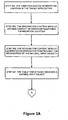
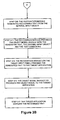
- Figures 3A and 3B illustrate flowcharts showing a method of operation for the recognition tool according to an embodiment of the invention.
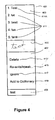
- Figure 4 illustrates one embodiment of a correction interface that the recognition tool of the invention may provide for correcting inaccurately recognized text.
- Figure 6 illustrates components of a recognition tool according to an embodiment of the invention.
- the present invention relates to a recognition tool for more accurately recognizing and formatting text from natural input.
- a recognition tool according to the invention may be implemented with instructions that can be executed on a computing device. Accordingly, an exemplary computing environment for executing such instructions will be described. The components and functions of a recognition tool according to the invention will be described in detail as well, along with a correction interface that maybe employed by the recognition tool according to the invention.
- the text recognition tool of the invention may be implemented using software. That is, the recognition tool may be described in the general context of computer-executable instructions, such as program modules, executed by one or more computing devices.
- program modules include routines, programs, objects, components, data structures, etc. that perform particular tasks or implement particular abstract data types.
- functionality of the program modules may be combined or distributed as desired in various embodiments.
- the system includes a general-purpose computer 100.
- This computer 100 may take the form of a conventional personal digital assistant, a tablet, desktop or laptop personal computer, network server or the like.
- Computer 100 typically includes at least some form of computer readable media.
- Computer readable media can be any available media that can be accessed by the computer 100.
- Computer readable media may comprise computer storage media and communication media.
- Computer storage media includes volatile and nonvolatile, removable and non-removable media implemented in any method or technology for storage of information such as computer readable instructions, data structures, program modules or other data.
- Computer storage media includes, but is not limited to, RAM, ROM, EEPROM, flash memory or other memory technology, CD-ROM, digital versatile disks (DVD) or other optical storage, magnetic cassettes, magnetic tape, magnetic disk storage or other magnetic storage devices, or any other medium which can be used to store the desired information and which can be accessed by the computer 100.
- Communication media typically embodies computer readable instructions, data structures, program modules or other data in a modulated data signal such as a carrier wave or other transport mechanism and includes any information delivery media.
- modulated data signal means a signal that has one or more of its characteristics set or changed in such a manner as to encode information in the signal.
- communication media includes wired media such as a wired network or direct-wired connection, and wireless media such as acoustic, RF, infrared and other wireless media. Combinations of any of the above should also be included within the scope of computer readable media.
- the computer 100 typically includes a processing unit 110, a system memory 120, and a system bus 130 that couples various system components including the system memory to the processing unit 110.
- the system bus 130 may be any of several types of bus structures including a memory bus or memory controller, a peripheral bus, and a local bus using any of a variety of bus architectures.
- the system memory 120 includes read only memory (ROM) 140 and random access memory (RAM) 150.
- ROM read only memory
- RAM random access memory
- a basic input/output system 160 (BIOS) containing the basic routines that help to transfer information between elements within the computer 100, such as during start-up, is stored in the ROM 140.
- exemplary environment described herein employs a hard disk drive 170, a removable magnetic disk drive 180 and a removable optical disk drive 191
- other types of computer readable media which can store data that is accessible by a computer, such as magnetic cassettes, flash memory cards, digital video disks, Bernoulli cartridges, random access memories (RAMs), read-only memories (ROMs) and the like may also be used in the exemplary operating environment.
- RAMs random access memories
- ROMs read-only memories
- more portable embodiments of the computer 100 such as a tablet personal computer or personal digital assistant, may omit one or more of the computer storage media devices discussed above.
- a number of program modules may be stored on the hard disk drive 170, magnetic disk 190, optical disk 192, ROM 140, or RAM 150, including an operating system 195, one or more application programs 196, other program modules 197, and program data 198.
- a user may enter commands and information into the computer 100 through various input devices, such as a keyboard 101 and a pointing device 102 (for example, a mouse, touchpad, or pointing stick).
- the invention is directed to a correction tool that is very useful for correcting text inaccurately recognized from a natural input technique.
- the computing device 120 will typically also include input devices for accepting natural input.
- the computer 100 may include a digitizer 165 and a stylus 166, with a user may employ to create handwriting data.
- the computer 100 may also include a microphone 167, through which a user can input speech information for recognition by a voice recognition process.
- the computer 100 may also have additional input devices, such as a joystick, game pad, satellite dish, scanner, touch screen, or the like.
- serial port interface 106 that is coupled to the system bus 130, but may be connected by other interfaces, such as a parallel port, game port, or a universal serial bus (USB). Further still, these devices may be coupled directly to the system bus 130 via an appropriate interface (not shown).
- a monitor 107 or other type of display device is also connected to the system bus 130 via an interface, such as a video adapter 108.
- personal computers typically include other peripheral output devices (not shown), such as speakers and printers.
- the monitor 107 may incorporate the digitizer 165. This arrangement conveniently allows a user to employ the stylus 166 to point directly to objects displayed on the monitor 107.
- the computer 100 When used in a LAN networking environment, the computer 100 is connected to the local network 112 through a network interface or adapter 114.
- the personal computer 100 When used in a WAN networking environment, the personal computer 100 typically includes a modem 115 or other means for establishing a communications link over the wide area network 113, e.g., to the Internet.
- the modem 115 which may be internal or external, may be connected to the system bus 130 via the serial port interface 106.
- program modules depicted relative to the personal computer 100, or portions thereof may be stored in a remote memory storage device.
- the network connections shown are exemplary and other techniques for establishing a communications link between the computers may be used.
- FIG 2 illustrates the components of a recognition tool according to one embodiment of the invention, together with the components of the environment in which it operates. More particularly, this figure illustrates a tablet input panel 201, the natural input recognition module 203 according to the invention, a text services framework module 205 and a target application 207.
- the environment in which the recognition tool of the invention that is, the natural input recognition module 203 operates will first be described. The components and operation of the natural input recognition module 203 will then be discussed.
- This context information may include, for example, the text, if any, that already exists on either side of the insertion location. Further, it may include the length of the insertion location (the insertion location may be a single insertion point, for example, or a selection of existing text). It may also include any existing text that will be replaced by the insertion of new text at the insertion location.
- One particularly useful type of context information that may be obtained by the text services framework tool is the type of field in which the insertion location is positioned. More particularly, the field type for a field, conventionally referred to as a "factoid,” describes the type of data that should be inserted into that field. For example, the address field for a browser application will typically have the field type or factoid "WEB,” because the only data that should be inserted into the address field will take the form of "http://www.microsoft.com.”
- each field type definition listed above may be expanded or narrowed, as desired. It should also be appreciated that various embodiments of the invention may employ additional or alternate field types than those listed above, and that the number of field types that can be identified by the text services framework module 205 can vary from the list above. Further, any other suitable tool than the text services framework tool provided in the Microsoft Windows® XP operating system can be employed as the text services framework module 205. For example, a tool could be employed that only obtains context information from the target application 207, and does not provide a variety of features for inserting text from multiple sources in to the target application 207.
- the recognition context module 211 provides context information to the recognition module 213 regarding the insertion of text recognized by the recognition module 213 from natural input. This context information allows the recognition module 213 to intelligently recognize text from natural input based upon the destination of the recognized text. For example, the recognition context module 211 receives the context information identified through the text services framework module 205. From this context information, the recognition context module 211 categorizes the field in which the insertion location is positioned. In the illustrated example, the recognition context module 211 will categorize a field in the target application 207 into one of three different categories.
- the first category of fields are "controlled" fields that fully support the text services framework module 205.
- a field in this category will provide the text services framework module 205 with all applicable context information.
- the text services framework module 205 can control the content of the field, so that the text services framework module 205 can intelligently insert text into the field.
- the text services framework module 205 can be used to implement automatic spacing heuristics that delete existing spaces from a controlled field, in addition to adding space.
- the next category of field is the "smart" field.
- This field provides context information to the recognition context module 211, but does not offer control to the text services framework module 205. Instead, the text services framework module 205 inserts text to this type of field simply by sending key data.
- a smart field may provide context information to the recognition context module 211 through the text services framework module 205, as described above.
- the target application 207 may implement a smart field may using an edit control, rich edit control, or other data structure that will allow the recognition context module 211 to directly obtain the field's context information from the target application.
- the third category of field is the "dumb" field, which provides no context information to the recognition context module 211. An example if this category of field is a custom drawn, non-windowed control, such as an edit box drawn in a Web page.
- Simpler automatic spacing heuristics can be employed for "dumb" fields. Because these fields do not provide context information identifying the text (if any) around the insertion location, and each erroneously created space presents a burden for the user to correct, space typically is only inserted after sent text. Thus, the context recognition module 211 can implement the following automatic spacing heuristics for such "dumb" fields:
- the recognition context module 211 may implement the following automatic spacing rules for text being sent to a controlled field in the target application 207:
- the recognition context module 211 may determine that the insertion location is within a field of the type "UPPERCHAR,” and thus should only receive data in capitalized characters. The recognition context module 211 would then generate heuristics requiring the recognition module 213 to capitalize recognized text being inserted into this field.
- the recognition context module 211 can generate heuristics instructing the recognition module 213 to provide punctuation for recognized text. For example, if the recognition context module 211 determines that the insertion location is within a field of the type "TELEPHONE" and thus should receive only data corresponding to telephone numbers, then the recognition context module 211 can generate heuristics instructing the recognition module 213 to provide dashes between groups of recognized text. For example, the recognition context module 211 could generate heuristics instructing the recognition module 213 to insert dashes after the third and sixth numbers in recognized text for this field. Thus, if the user handwrote 1234567890, the recognition module would insert dashes to generate the text 123-456-7890.
- the recognition context module 211 may prevent the recognition module 213 from replacing existing text with identical recognized text. For example, a user may be correcting text that already exists in the target application 207. In this situation, the user will not want the recognition module 213 to generate recognized text identical to the existing text that the user intends to correct. By identifying the existing text through the text services framework module 205, the recognition context module 211 can provide instructions to the recognition module 213 that will prevent the recognition module 213 from replacing existing text with identical recognized text.
- the recognition module 213 generates text from natural input objects. More particularly, the recognition module 213 identifies one or more text candidates corresponding to a natural input object from a natural input recognition dictionary. For example, if the natural input object is a handwriting input, the recognition module 213 will identify text candidates in a handwriting recognition dictionary that have handwriting stroke characteristics matching the handwriting input. Similarly, if the natural input object is a speech input, the recognition module 213 will identify text candidates in a voice recognition dictionary that have phonemes matching the speech input. The recognition module 213 will then select or recognize the text candidate most closely corresponding to the natural input object. It should be noted that a handwriting recognition dictionary and a voice recognition may optionally be combined into a single recognition dictionary.
- the recognition module 213 may identify a list of words in the recognition dictionary that correspond to the shape of the handwritten letters, such as the words “test,” “tat,” “best,” “tux,” “tent,” and “tot.” The recognition module 213 then assigns a ranking to each of these text candidates based upon its correspondence to the natural input, and selects the highest-ranked text candidate to be the text recognized from the natural input. Thus, the recognition module 213 does not typically identify only a single word corresponding to a natural input object, but instead identifies a list of alternate text candidates in addition to the selected text candidate recognized from the natural input.
- the recognition module 213 may format the selected'text candidate to provide spacing, capitalization, punctuation or other formatting. As previously noted, the recognition module 213 may select a text candidate or format a recognized text candidates according to heuristics generated by the recognition context module 211. Once the recognition module 213 has generated recognized text from an actual input object, it then forwards the generated text to the target application 207 through the text services framework module 205. The recognition module 213 also forwards the generated text to the object model module 215, along with the original natural input object and the text candidates matching the original natural input object.
- the object model created by the object model module 215 can advantageously be used to improve the user's recognition experience by allowing for easier correction of inaccurately recognized natural input.
- the object model can be used to create a lattice of the alternate text candidates.
- the lattice may be arranged using, for example, a natural language model or other known technique for correlating text. If the user then subsequently corrects inaccurately recognized text by selecting one of the alternate text candidates in the lattice, the relational connections defined by the lattice can be used to correct other inaccurately recognized text.
- the object model can be employed by the user to correct inaccurately recognized text. If the user selects multiple words for correction, the object model can be employed to provide the user with combinations of alternate text candidates corresponding to the selected words. For example, if the spoken words "hello world" are incorrectly recognized as “halo walled,” then the object model can be employed to provide the user with combinations of the top alternate text candidates for each inaccurately recognized word. Thus, the user might be presented with the eight combinations "halo world,” “halo whirled,” “hello walled,” “hello world,” “hello whirled,” “yellow walled,” “yellow world,” and “yellow world.” The user could then select the correct combination of alternate text candidates.
- the object model module 215 provides the object model to the target application 207, such as by way of the text services framework module 205, for example.
- the object model can then be stored by the text services framework module interface 209 in the target application 207.
- the object model can be employed even after the target application 207 is no longer communicating with the natural input recognition module 203. Further, because the object model includes the original natural input object, a user can subsequently replace recognized text with the original input object from which it was recognized.
- the natural input recognition module 203 also includes a correction module 217.
- the correction module 217 provides a correction interface through which a user can correct text, as will be discussed in detail below. Moreover, if the user employs the correction interface to submit a natural input object for replacing text that already exists in the target application 207, the correction module 217 will notify the recognition context module 211 of the existing text that is being replaced. As previously discussed, the recognition context module 211 can then generate heuristics that will prevent the recognition module 213 from generating text identical to the existing text being replaced.
- the user designates an insertion location in the target application 207.
- the insertion location may be a single insertion point, or it may be a selection of existing text.
- the recognition context module 211 obtains context information regarding the insertion location through the text services framework module 205.
- the recognition context module 211 then generates heuristics for controlling the recognition of the natural input objects in step 305.
- the tablet input panel 201 receives a natural input object, which it forwards to the recognition module 213.
- the recognition module 213 generates recognized text from the natural input object based upon the heuristics provided by the recognition context module 211. As previously noted, the recognition module 213 may format the recognized text according to the provided heuristics.
- the recognition module 213 provides the generated text to the object model module 215, along with the original input object and the text candidates identified by the recognition module 213 as matching the original input object.
- the recognition module 213 (or, with some embodiments of the invention, the tablet input panel 201) provides the generated text to the target application 207 by way of the text services framework module 205.
- the object model module 215 provides the object model to the target application 207 through the text services framework module 205.
- the recognition module 213 can provide the information contained in the object model directly to the text services framework module 205.
- the target application 207 displays the recognized text received from the recognition module 213.
- the correction module 217 may provide a user interface for correcting text in the target application 207.
- Figure 4 illustrates such a correction interface 401 according to one embodiment of the invention.
- the correction interface 401 includes an alternate list area 403, and an original input object area 405.
- the correction interface 401 also includes a command menu area 407 and a selected text area 409.
- the alternate list area 403 will include alternate text choices 411 that also correspond to the natural input object. More particularly, as explained in detail above, when recognizing text corresponding to a natural input object, the recognition module 213 may additionally determine a list of one or more alternate text choices that also correspond to the natural input object. Thus, the alternate list area 403 displays the alternate text choices 411 that were the next highest-ranked by the recognition module 213 below the selected text. If the user determines that an alternate text choice 411 accurately corresponds to the natural input object, the user may select that correct alternate text choice 411. In response to the user selecting one of the alternate text choices 411 displayed in the alternate list area 403, the correction module 217 replaces the existing text with the selected alternate text choice 411.
- the alternate list area 403 displays only five alternate text choices 411, regardless of the total number of alternate text choices identified by the recognition module 213 as possibly corresponding with the natural input object.
- the correction interface 401 significantly reduces the amount of reading time required by the user to identify the accurate alternate text choice 411.
- the correction interface 401 substantially increases the probability that the accurate alternate text choice 411 will be displayed in the alternate list area 403.
- the initial alternate text choice 411 displayed in the alternate list area 403 may always be the reverse capitalization of the existing text.
- a handwriting recognition process may have difficulty distinguishing the lower-case form of a letter from its upper-case form.
- a voice recognition process usually will be unable to distinguish between text that should begin with an upper case letter and text that should begin with a lower-case letter.
- the correction interface 401 allows a user to very quickly correct this common type of recognition error.
- the alternate text choices 411 may be displayed in the alternate list area 403 based upon the confidence that the recognition module 211 has in their accuracy. For example, alternate text choices 411 for which the recognition module 211 has a high level of confidence can be displayed in green, while alternate text choices for which the recognition module 211 has a low-level of confidence can be displayed in red.
- the alternate list area 403 can display the alternate text choices 411 according to a variety of different confidence levels. Techniques for determining such confidence levels are disclosed in the copending U.S. Patent Application No. 10/120,153, filed April 9, 2002, entitled "Assignment And Use Of Confidence Levels For Recognized Text," naming Manish Goyal et al. as inventors, which application is incorporated entirely herein by reference.
- the original input object area 405 displays the original input object from which the inaccurate text was recognized.
- the original input object was the handwritten word "text.” This conveniently allows the user to review the original input object before correcting the inaccurate text.
- the original input object area 405 may also serve as a command button for replacing the inaccurate text with the original input object.
- activating the original input object area 405 would replace the inaccurate text shown in the target application 207 with the hand written word "test" as displayed and the original input object area 405.
- the original input object was a voice input
- the original input object area 405 could be implemented as a button that, when activated, audibly played back the original voice input object.
- the command menu area 407 displays various commands for editing the inaccurate text.
- the command menu area 407 includes the command “delete” 413, which the user may activate to delete the inaccurate text.
- the command menu area 407 also includes the command "re-write/speak” 415.
- the correction module 217 summons the tablet input panel 201, and transfers focus from the command menu area 407 to the user interface provided by the tablet input panel 201.
- the user can then subsequently write or speak the desired text employing the tablet input panel 201, and the recognition module 213 will recognize the text to replace the inaccurate text.
- the recognition context module 211 will ensure that the recognition module 213 does not select a text candidate identical to the inaccurate text.
- the command menu area 407 further includes the command "ignore” 417. This command may be used when, for example, the target application 207 has indicated that the inaccurate text is misspelled or grammatically incorrect, and the user disagrees with the application's assessment.
- the command menu area 407 includes the command "add to dictionary” 419. Again, this command may be used when the designated text is not actually inaccurate, but the target application 207 has indicated that the existing text is misspelled, and the user disagrees with the application's assessment. This command adds the existing text to the recognition dictionary employed by the recognition module 211.
- activating the command 219 may add the existing text to both the recognition dictionary for the voice recognition process and the recognition dictionary for these handwriting recognition process.
- the command 419 may add the existing text to a recognition dictionary shared between the voice recognition process and the handwriting recognition process.
- the selected text area 409 displays the inaccurate (or otherwise designated) text.
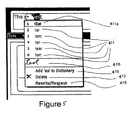
- the user may conveniently employ the selected text area 409 to search for and display an accurate alternate text choice 411 in the alternate list area 403. More particularly, the user may select one or more characters of the text displayed in the selected text area 409. Alternately, as shown in Figure 5, the user may select only a portion of the existing text displayed in the target application 207.
- the recognition module 213 will provide only those text candidates it identified that correspond to the selected text. Thus, the recognition module 213 may identify only text candidates that differ by the selected characters.
- the recognition module 211 when the characters "es" are selected, the recognition module 211 only provides the correction module 217 with the alternates “tat,” tent,” “tot,” “teat,” and “tort.”
- the correction interface 401 thus omits the alternates "best” and "tux” shown in Figure 4.”
- the selected text area 409 provides the user with a powerful tool for allowing the recognition module 213 to quickly eliminate alternate text choices 411 that contained inaccurately recognized characters.
- the recognition context module 211 obtains context information from the target application 207 through the text services framework module 205. As will be appreciated by those of ordinary skill in the art, however, not all applications will support the use of the text services framework module 205. With these target applications 207, the recognition context module 211 can instead obtain context information regarding the target application 207 from its edit control/or rich edit control objects 601 or other data structures, as previously noted. An illustration of this configuration, omitting the text services framework module 205, is shown in Figure 6. As known in the art, an edit control is a rectangular control window typically used in a dialog box to permit the user to enter and edit text.
- a rich edit control is a window in which the user can enter, edit, format, print, and save text, which can be assigned character and paragraph formatting, and which can include embedded COM objects.
- the characteristics of edit controls and rich edit controls in the target application 207 will typically be stored in tables that can be accessed by the recognition context module 211.
- the recognition context module 211 will determine that the software application does not support the use of the text services framework module 205. In response, the recognition context module 211 can look up the characteristics of this field in the appropriate table of the browser application, and thereby determine that this control is a universal resource locator (URL) address bar. The recognition context module 211 will then generate heuristics for the recognition module 213 requiring that generated text being inserted into this field have no spaces.
- URL universal resource locator
Landscapes
- Engineering & Computer Science (AREA)
- Computer Vision & Pattern Recognition (AREA)
- Physics & Mathematics (AREA)
- General Physics & Mathematics (AREA)
- Multimedia (AREA)
- Theoretical Computer Science (AREA)
- Character Discrimination (AREA)
- Holo Graphy (AREA)
- Character Input (AREA)
Applications Claiming Priority (2)
| Application Number | Priority Date | Filing Date | Title |
|---|---|---|---|
| US10/146,486 US7380203B2 (en) | 2002-05-14 | 2002-05-14 | Natural input recognition tool |
| US146486 | 2002-05-14 |
Publications (3)
| Publication Number | Publication Date |
|---|---|
| EP1365349A2 true EP1365349A2 (fr) | 2003-11-26 |
| EP1365349A3 EP1365349A3 (fr) | 2005-01-12 |
| EP1365349B1 EP1365349B1 (fr) | 2009-06-03 |
Family
ID=29400471
Family Applications (1)
| Application Number | Title | Priority Date | Filing Date |
|---|---|---|---|
| EP03007499A Expired - Lifetime EP1365349B1 (fr) | 2002-05-14 | 2003-04-07 | Instrument de reconnaissance d'entrée naturelle |
Country Status (4)
| Country | Link |
|---|---|
| US (1) | US7380203B2 (fr) |
| EP (1) | EP1365349B1 (fr) |
| AT (1) | ATE433167T1 (fr) |
| DE (1) | DE60327822D1 (fr) |
Cited By (9)
| Publication number | Priority date | Publication date | Assignee | Title |
|---|---|---|---|---|
| EP1538549A1 (fr) * | 2003-12-03 | 2005-06-08 | Microsoft Corporation | Remplacement d'encre numérique par texte mise à l'échelle |
| US6986106B2 (en) | 2002-05-13 | 2006-01-10 | Microsoft Corporation | Correction widget |
| EP1657665A1 (fr) * | 2004-11-12 | 2006-05-17 | Microsoft Corporation | Alternatives d'analyse dans des arbres des contextes |
| WO2006090405A1 (fr) * | 2005-02-23 | 2006-08-31 | Hewlett-Packard Development Company, L.P. | Procede et systeme destines a la correction d'erreurs en reconnaissance d'ecriture |
| US7137076B2 (en) | 2002-07-30 | 2006-11-14 | Microsoft Corporation | Correcting recognition results associated with user input |
| WO2008000739A3 (fr) * | 2006-06-26 | 2008-06-26 | Uiq Technology Ab | Prédiction cotextuelle |
| US7506271B2 (en) | 2003-12-15 | 2009-03-17 | Microsoft Corporation | Multi-modal handwriting recognition correction |
| US7831423B2 (en) | 2006-05-25 | 2010-11-09 | Multimodal Technologies, Inc. | Replacing text representing a concept with an alternate written form of the concept |
| EP2717259A3 (fr) * | 2012-10-08 | 2014-04-30 | Samsung Electronics Co., Ltd | Procédé et appareil permettant d'effectuer un mode de fonctionnement prédéfini utilisant la reconnaissance vocale |
Families Citing this family (197)
| Publication number | Priority date | Publication date | Assignee | Title |
|---|---|---|---|---|
| US6904405B2 (en) | 1999-07-17 | 2005-06-07 | Edwin A. Suominen | Message recognition using shared language model |
| US8645137B2 (en) | 2000-03-16 | 2014-02-04 | Apple Inc. | Fast, language-independent method for user authentication by voice |
| US8725505B2 (en) * | 2004-10-22 | 2014-05-13 | Microsoft Corporation | Verb error recovery in speech recognition |
| US7561677B2 (en) * | 2005-02-25 | 2009-07-14 | Microsoft Corporation | Communication conversion between text and audio |
| US10699593B1 (en) * | 2005-06-08 | 2020-06-30 | Pearson Education, Inc. | Performance support integration with E-learning system |
| US20060285749A1 (en) * | 2005-06-17 | 2006-12-21 | Microsoft Corporation | User-initiated reporting of handwriting recognition errors over the internet |
| US20060293890A1 (en) * | 2005-06-28 | 2006-12-28 | Avaya Technology Corp. | Speech recognition assisted autocompletion of composite characters |
| US8249873B2 (en) * | 2005-08-12 | 2012-08-21 | Avaya Inc. | Tonal correction of speech |
| US7827484B2 (en) * | 2005-09-02 | 2010-11-02 | Xerox Corporation | Text correction for PDF converters |
| US8677377B2 (en) | 2005-09-08 | 2014-03-18 | Apple Inc. | Method and apparatus for building an intelligent automated assistant |
| JP4757599B2 (ja) * | 2005-10-13 | 2011-08-24 | 日本電気株式会社 | 音声認識システムと音声認識方法およびプログラム |
| US20070094024A1 (en) * | 2005-10-22 | 2007-04-26 | International Business Machines Corporation | System and method for improving text input in a shorthand-on-keyboard interface |
| US9318108B2 (en) | 2010-01-18 | 2016-04-19 | Apple Inc. | Intelligent automated assistant |
| US8977255B2 (en) | 2007-04-03 | 2015-03-10 | Apple Inc. | Method and system for operating a multi-function portable electronic device using voice-activation |
| US8116570B2 (en) * | 2007-04-19 | 2012-02-14 | Microsoft Corporation | User interface for providing digital ink input and correcting recognition errors |
| US8688508B1 (en) * | 2007-06-15 | 2014-04-01 | Amazon Technologies, Inc. | System and method for evaluating correction submissions with supporting evidence |
| US8661340B2 (en) * | 2007-09-13 | 2014-02-25 | Apple Inc. | Input methods for device having multi-language environment |
| US10002189B2 (en) | 2007-12-20 | 2018-06-19 | Apple Inc. | Method and apparatus for searching using an active ontology |
| US9330720B2 (en) | 2008-01-03 | 2016-05-03 | Apple Inc. | Methods and apparatus for altering audio output signals |
| US8232973B2 (en) | 2008-01-09 | 2012-07-31 | Apple Inc. | Method, device, and graphical user interface providing word recommendations for text input |
| US8289283B2 (en) | 2008-03-04 | 2012-10-16 | Apple Inc. | Language input interface on a device |
| US8908973B2 (en) * | 2008-03-04 | 2014-12-09 | Apple Inc. | Handwritten character recognition interface |
| US8996376B2 (en) | 2008-04-05 | 2015-03-31 | Apple Inc. | Intelligent text-to-speech conversion |
| US8949743B2 (en) * | 2008-04-22 | 2015-02-03 | Apple Inc. | Language input interface on a device |
| US20090278848A1 (en) * | 2008-05-12 | 2009-11-12 | Microsoft Corporation | Drawing familiar graphs while system determines suitable form |
| US10496753B2 (en) | 2010-01-18 | 2019-12-03 | Apple Inc. | Automatically adapting user interfaces for hands-free interaction |
| US9355090B2 (en) * | 2008-05-30 | 2016-05-31 | Apple Inc. | Identification of candidate characters for text input |
| US8285049B2 (en) * | 2008-06-06 | 2012-10-09 | Microsoft Corporation | Corrections for recognizers |
| ATE547785T1 (de) * | 2008-07-03 | 2012-03-15 | Mobiter Dicta Oy | Verfahren und einrichtung zum umsetzen von sprache |
| US20100030549A1 (en) | 2008-07-31 | 2010-02-04 | Lee Michael M | Mobile device having human language translation capability with positional feedback |
| US8373703B2 (en) * | 2008-09-24 | 2013-02-12 | Penny Beckwith | System and method for incorporating a personalized writing style into a word program |
| US8676904B2 (en) | 2008-10-02 | 2014-03-18 | Apple Inc. | Electronic devices with voice command and contextual data processing capabilities |
| US9959870B2 (en) | 2008-12-11 | 2018-05-01 | Apple Inc. | Speech recognition involving a mobile device |
| US8564541B2 (en) * | 2009-03-16 | 2013-10-22 | Apple Inc. | Zhuyin input interface on a device |
| US10241752B2 (en) | 2011-09-30 | 2019-03-26 | Apple Inc. | Interface for a virtual digital assistant |
| US10255566B2 (en) | 2011-06-03 | 2019-04-09 | Apple Inc. | Generating and processing task items that represent tasks to perform |
| US10241644B2 (en) | 2011-06-03 | 2019-03-26 | Apple Inc. | Actionable reminder entries |
| US9858925B2 (en) | 2009-06-05 | 2018-01-02 | Apple Inc. | Using context information to facilitate processing of commands in a virtual assistant |
| US9431006B2 (en) | 2009-07-02 | 2016-08-30 | Apple Inc. | Methods and apparatuses for automatic speech recognition |
| WO2011004367A1 (fr) * | 2009-07-09 | 2011-01-13 | Eliyahu Mashiah | Système et procédé sensibles au contenu pour la sélection automatique d'une langue de saisie |
| JP5487208B2 (ja) * | 2009-08-27 | 2014-05-07 | 株式会社東芝 | 情報検索装置 |
| US10705794B2 (en) | 2010-01-18 | 2020-07-07 | Apple Inc. | Automatically adapting user interfaces for hands-free interaction |
| US10679605B2 (en) | 2010-01-18 | 2020-06-09 | Apple Inc. | Hands-free list-reading by intelligent automated assistant |
| US10276170B2 (en) | 2010-01-18 | 2019-04-30 | Apple Inc. | Intelligent automated assistant |
| US10553209B2 (en) | 2010-01-18 | 2020-02-04 | Apple Inc. | Systems and methods for hands-free notification summaries |
| US8682667B2 (en) | 2010-02-25 | 2014-03-25 | Apple Inc. | User profiling for selecting user specific voice input processing information |
| US8704783B2 (en) | 2010-03-24 | 2014-04-22 | Microsoft Corporation | Easy word selection and selection ahead of finger |
| US9292161B2 (en) * | 2010-03-24 | 2016-03-22 | Microsoft Technology Licensing, Llc | Pointer tool with touch-enabled precise placement |
| US8719014B2 (en) * | 2010-09-27 | 2014-05-06 | Apple Inc. | Electronic device with text error correction based on voice recognition data |
| US10762293B2 (en) | 2010-12-22 | 2020-09-01 | Apple Inc. | Using parts-of-speech tagging and named entity recognition for spelling correction |
| US9262612B2 (en) | 2011-03-21 | 2016-02-16 | Apple Inc. | Device access using voice authentication |
| US10057736B2 (en) | 2011-06-03 | 2018-08-21 | Apple Inc. | Active transport based notifications |
| US20120323574A1 (en) * | 2011-06-17 | 2012-12-20 | Microsoft Corporation | Speech to text medical forms |
| US8209183B1 (en) | 2011-07-07 | 2012-06-26 | Google Inc. | Systems and methods for correction of text from different input types, sources, and contexts |
| US9317196B2 (en) | 2011-08-10 | 2016-04-19 | Microsoft Technology Licensing, Llc | Automatic zooming for text selection/cursor placement |
| US8994660B2 (en) | 2011-08-29 | 2015-03-31 | Apple Inc. | Text correction processing |
| US10134385B2 (en) | 2012-03-02 | 2018-11-20 | Apple Inc. | Systems and methods for name pronunciation |
| US9483461B2 (en) | 2012-03-06 | 2016-11-01 | Apple Inc. | Handling speech synthesis of content for multiple languages |
| US9411799B2 (en) * | 2012-04-05 | 2016-08-09 | Siemens Aktiengesellschaft | Methods, apparatuses, systems and computer readable mediums to create documents and templates using domain ontology concepts |
| US8957869B2 (en) | 2012-04-11 | 2015-02-17 | Blackberry Limited | Electronic device and method for dynamically formatting monetary expressions |
| US9275636B2 (en) * | 2012-05-03 | 2016-03-01 | International Business Machines Corporation | Automatic accuracy estimation for audio transcriptions |
| US9280610B2 (en) | 2012-05-14 | 2016-03-08 | Apple Inc. | Crowd sourcing information to fulfill user requests |
| US9721563B2 (en) | 2012-06-08 | 2017-08-01 | Apple Inc. | Name recognition system |
| US9495129B2 (en) | 2012-06-29 | 2016-11-15 | Apple Inc. | Device, method, and user interface for voice-activated navigation and browsing of a document |
| US9576574B2 (en) | 2012-09-10 | 2017-02-21 | Apple Inc. | Context-sensitive handling of interruptions by intelligent digital assistant |
| US9547647B2 (en) | 2012-09-19 | 2017-01-17 | Apple Inc. | Voice-based media searching |
| US8601359B1 (en) * | 2012-09-21 | 2013-12-03 | Google Inc. | Preventing autocorrect from modifying URLs |
| US9147275B1 (en) * | 2012-11-19 | 2015-09-29 | A9.Com, Inc. | Approaches to text editing |
| US9043349B1 (en) | 2012-11-29 | 2015-05-26 | A9.Com, Inc. | Image-based character recognition |
| DE112014000709B4 (de) | 2013-02-07 | 2021-12-30 | Apple Inc. | Verfahren und vorrichtung zum betrieb eines sprachtriggers für einen digitalen assistenten |
| US10652394B2 (en) | 2013-03-14 | 2020-05-12 | Apple Inc. | System and method for processing voicemail |
| US9368114B2 (en) | 2013-03-14 | 2016-06-14 | Apple Inc. | Context-sensitive handling of interruptions |
| WO2014144579A1 (fr) | 2013-03-15 | 2014-09-18 | Apple Inc. | Système et procédé pour mettre à jour un modèle de reconnaissance de parole adaptatif |
| WO2014144949A2 (fr) | 2013-03-15 | 2014-09-18 | Apple Inc. | Entraînement d'un système à commande au moins partiellement vocale |
| US9672818B2 (en) | 2013-04-18 | 2017-06-06 | Nuance Communications, Inc. | Updating population language models based on changes made by user clusters |
| FR3005175B1 (fr) | 2013-04-24 | 2018-07-27 | Myscript | Systeme de synchronisation permanente pour la saisie manuscrite |
| WO2014197336A1 (fr) | 2013-06-07 | 2014-12-11 | Apple Inc. | Système et procédé pour détecter des erreurs dans des interactions avec un assistant numérique utilisant la voix |
| US9582608B2 (en) | 2013-06-07 | 2017-02-28 | Apple Inc. | Unified ranking with entropy-weighted information for phrase-based semantic auto-completion |
| WO2014197334A2 (fr) | 2013-06-07 | 2014-12-11 | Apple Inc. | Système et procédé destinés à une prononciation de mots spécifiée par l'utilisateur dans la synthèse et la reconnaissance de la parole |
| WO2014197335A1 (fr) | 2013-06-08 | 2014-12-11 | Apple Inc. | Interprétation et action sur des commandes qui impliquent un partage d'informations avec des dispositifs distants |
| KR101959188B1 (ko) | 2013-06-09 | 2019-07-02 | 애플 인크. | 디지털 어시스턴트의 둘 이상의 인스턴스들에 걸친 대화 지속성을 가능하게 하기 위한 디바이스, 방법 및 그래픽 사용자 인터페이스 |
| US10176167B2 (en) | 2013-06-09 | 2019-01-08 | Apple Inc. | System and method for inferring user intent from speech inputs |
| KR101809808B1 (ko) | 2013-06-13 | 2017-12-15 | 애플 인크. | 음성 명령에 의해 개시되는 긴급 전화를 걸기 위한 시스템 및 방법 |
| KR101749009B1 (ko) | 2013-08-06 | 2017-06-19 | 애플 인크. | 원격 디바이스로부터의 활동에 기초한 스마트 응답의 자동 활성화 |
| US10296160B2 (en) | 2013-12-06 | 2019-05-21 | Apple Inc. | Method for extracting salient dialog usage from live data |
| US20150169537A1 (en) * | 2013-12-13 | 2015-06-18 | Nuance Communications, Inc. | Using statistical language models to improve text input |
| US9620105B2 (en) | 2014-05-15 | 2017-04-11 | Apple Inc. | Analyzing audio input for efficient speech and music recognition |
| US10592095B2 (en) | 2014-05-23 | 2020-03-17 | Apple Inc. | Instantaneous speaking of content on touch devices |
| US9502031B2 (en) | 2014-05-27 | 2016-11-22 | Apple Inc. | Method for supporting dynamic grammars in WFST-based ASR |
| US9734193B2 (en) | 2014-05-30 | 2017-08-15 | Apple Inc. | Determining domain salience ranking from ambiguous words in natural speech |
| US9842101B2 (en) | 2014-05-30 | 2017-12-12 | Apple Inc. | Predictive conversion of language input |
| US9760559B2 (en) | 2014-05-30 | 2017-09-12 | Apple Inc. | Predictive text input |
| US9715875B2 (en) | 2014-05-30 | 2017-07-25 | Apple Inc. | Reducing the need for manual start/end-pointing and trigger phrases |
| WO2015184186A1 (fr) | 2014-05-30 | 2015-12-03 | Apple Inc. | Procédé d'entrée à simple énoncé multi-commande |
| US10289433B2 (en) | 2014-05-30 | 2019-05-14 | Apple Inc. | Domain specific language for encoding assistant dialog |
| US10170123B2 (en) | 2014-05-30 | 2019-01-01 | Apple Inc. | Intelligent assistant for home automation |
| US10078631B2 (en) | 2014-05-30 | 2018-09-18 | Apple Inc. | Entropy-guided text prediction using combined word and character n-gram language models |
| US9785630B2 (en) | 2014-05-30 | 2017-10-10 | Apple Inc. | Text prediction using combined word N-gram and unigram language models |
| US9430463B2 (en) | 2014-05-30 | 2016-08-30 | Apple Inc. | Exemplar-based natural language processing |
| US9633004B2 (en) | 2014-05-30 | 2017-04-25 | Apple Inc. | Better resolution when referencing to concepts |
| US10659851B2 (en) | 2014-06-30 | 2020-05-19 | Apple Inc. | Real-time digital assistant knowledge updates |
| US9338493B2 (en) | 2014-06-30 | 2016-05-10 | Apple Inc. | Intelligent automated assistant for TV user interactions |
| US10446141B2 (en) | 2014-08-28 | 2019-10-15 | Apple Inc. | Automatic speech recognition based on user feedback |
| US9818400B2 (en) | 2014-09-11 | 2017-11-14 | Apple Inc. | Method and apparatus for discovering trending terms in speech requests |
| US10789041B2 (en) | 2014-09-12 | 2020-09-29 | Apple Inc. | Dynamic thresholds for always listening speech trigger |
| US9668121B2 (en) | 2014-09-30 | 2017-05-30 | Apple Inc. | Social reminders |
| US10127911B2 (en) | 2014-09-30 | 2018-11-13 | Apple Inc. | Speaker identification and unsupervised speaker adaptation techniques |
| US10074360B2 (en) | 2014-09-30 | 2018-09-11 | Apple Inc. | Providing an indication of the suitability of speech recognition |
| US9646609B2 (en) | 2014-09-30 | 2017-05-09 | Apple Inc. | Caching apparatus for serving phonetic pronunciations |
| US9886432B2 (en) | 2014-09-30 | 2018-02-06 | Apple Inc. | Parsimonious handling of word inflection via categorical stem + suffix N-gram language models |
| US10552013B2 (en) | 2014-12-02 | 2020-02-04 | Apple Inc. | Data detection |
| US9711141B2 (en) | 2014-12-09 | 2017-07-18 | Apple Inc. | Disambiguating heteronyms in speech synthesis |
| US9865280B2 (en) | 2015-03-06 | 2018-01-09 | Apple Inc. | Structured dictation using intelligent automated assistants |
| US10152299B2 (en) | 2015-03-06 | 2018-12-11 | Apple Inc. | Reducing response latency of intelligent automated assistants |
| US9886953B2 (en) | 2015-03-08 | 2018-02-06 | Apple Inc. | Virtual assistant activation |
| US10567477B2 (en) | 2015-03-08 | 2020-02-18 | Apple Inc. | Virtual assistant continuity |
| US9721566B2 (en) | 2015-03-08 | 2017-08-01 | Apple Inc. | Competing devices responding to voice triggers |
| US9899019B2 (en) | 2015-03-18 | 2018-02-20 | Apple Inc. | Systems and methods for structured stem and suffix language models |
| US9842105B2 (en) | 2015-04-16 | 2017-12-12 | Apple Inc. | Parsimonious continuous-space phrase representations for natural language processing |
| US10083688B2 (en) | 2015-05-27 | 2018-09-25 | Apple Inc. | Device voice control for selecting a displayed affordance |
| US10127220B2 (en) | 2015-06-04 | 2018-11-13 | Apple Inc. | Language identification from short strings |
| US10101822B2 (en) | 2015-06-05 | 2018-10-16 | Apple Inc. | Language input correction |
| US9578173B2 (en) | 2015-06-05 | 2017-02-21 | Apple Inc. | Virtual assistant aided communication with 3rd party service in a communication session |
| US10255907B2 (en) | 2015-06-07 | 2019-04-09 | Apple Inc. | Automatic accent detection using acoustic models |
| US10186254B2 (en) | 2015-06-07 | 2019-01-22 | Apple Inc. | Context-based endpoint detection |
| US11025565B2 (en) | 2015-06-07 | 2021-06-01 | Apple Inc. | Personalized prediction of responses for instant messaging |
| US10671428B2 (en) | 2015-09-08 | 2020-06-02 | Apple Inc. | Distributed personal assistant |
| US10747498B2 (en) | 2015-09-08 | 2020-08-18 | Apple Inc. | Zero latency digital assistant |
| US9697820B2 (en) | 2015-09-24 | 2017-07-04 | Apple Inc. | Unit-selection text-to-speech synthesis using concatenation-sensitive neural networks |
| US10366158B2 (en) | 2015-09-29 | 2019-07-30 | Apple Inc. | Efficient word encoding for recurrent neural network language models |
| US11010550B2 (en) | 2015-09-29 | 2021-05-18 | Apple Inc. | Unified language modeling framework for word prediction, auto-completion and auto-correction |
| US11587559B2 (en) | 2015-09-30 | 2023-02-21 | Apple Inc. | Intelligent device identification |
| US10691473B2 (en) | 2015-11-06 | 2020-06-23 | Apple Inc. | Intelligent automated assistant in a messaging environment |
| US11157166B2 (en) * | 2015-11-20 | 2021-10-26 | Felt, Inc. | Automove smart transcription |
| US10049668B2 (en) | 2015-12-02 | 2018-08-14 | Apple Inc. | Applying neural network language models to weighted finite state transducers for automatic speech recognition |
| US10223066B2 (en) | 2015-12-23 | 2019-03-05 | Apple Inc. | Proactive assistance based on dialog communication between devices |
| US10416868B2 (en) | 2016-02-29 | 2019-09-17 | Myscript | Method and system for character insertion in a character string |
| US10248635B2 (en) * | 2016-02-29 | 2019-04-02 | Myscript | Method for inserting characters in a character string and the corresponding digital service |
| US10446143B2 (en) | 2016-03-14 | 2019-10-15 | Apple Inc. | Identification of voice inputs providing credentials |
| US9934775B2 (en) | 2016-05-26 | 2018-04-03 | Apple Inc. | Unit-selection text-to-speech synthesis based on predicted concatenation parameters |
| US9972304B2 (en) | 2016-06-03 | 2018-05-15 | Apple Inc. | Privacy preserving distributed evaluation framework for embedded personalized systems |
| US10249300B2 (en) | 2016-06-06 | 2019-04-02 | Apple Inc. | Intelligent list reading |
| US10049663B2 (en) | 2016-06-08 | 2018-08-14 | Apple, Inc. | Intelligent automated assistant for media exploration |
| DK179588B1 (en) | 2016-06-09 | 2019-02-22 | Apple Inc. | INTELLIGENT AUTOMATED ASSISTANT IN A HOME ENVIRONMENT |
| US10586535B2 (en) | 2016-06-10 | 2020-03-10 | Apple Inc. | Intelligent digital assistant in a multi-tasking environment |
| US10490187B2 (en) | 2016-06-10 | 2019-11-26 | Apple Inc. | Digital assistant providing automated status report |
| US10067938B2 (en) | 2016-06-10 | 2018-09-04 | Apple Inc. | Multilingual word prediction |
| US10192552B2 (en) | 2016-06-10 | 2019-01-29 | Apple Inc. | Digital assistant providing whispered speech |
| US10509862B2 (en) | 2016-06-10 | 2019-12-17 | Apple Inc. | Dynamic phrase expansion of language input |
| DK179343B1 (en) | 2016-06-11 | 2018-05-14 | Apple Inc | Intelligent task discovery |
| DK179049B1 (en) | 2016-06-11 | 2017-09-18 | Apple Inc | Data driven natural language event detection and classification |
| DK201670540A1 (en) | 2016-06-11 | 2018-01-08 | Apple Inc | Application integration with a digital assistant |
| DK179415B1 (en) | 2016-06-11 | 2018-06-14 | Apple Inc | Intelligent device arbitration and control |
| US10474753B2 (en) | 2016-09-07 | 2019-11-12 | Apple Inc. | Language identification using recurrent neural networks |
| US10043516B2 (en) | 2016-09-23 | 2018-08-07 | Apple Inc. | Intelligent automated assistant |
| US11281993B2 (en) | 2016-12-05 | 2022-03-22 | Apple Inc. | Model and ensemble compression for metric learning |
| US10593346B2 (en) | 2016-12-22 | 2020-03-17 | Apple Inc. | Rank-reduced token representation for automatic speech recognition |
| US11204787B2 (en) | 2017-01-09 | 2021-12-21 | Apple Inc. | Application integration with a digital assistant |
| US10417266B2 (en) | 2017-05-09 | 2019-09-17 | Apple Inc. | Context-aware ranking of intelligent response suggestions |
| DK201770383A1 (en) | 2017-05-09 | 2018-12-14 | Apple Inc. | USER INTERFACE FOR CORRECTING RECOGNITION ERRORS |
| DK201770439A1 (en) | 2017-05-11 | 2018-12-13 | Apple Inc. | Offline personal assistant |
| US10726832B2 (en) | 2017-05-11 | 2020-07-28 | Apple Inc. | Maintaining privacy of personal information |
| US10395654B2 (en) | 2017-05-11 | 2019-08-27 | Apple Inc. | Text normalization based on a data-driven learning network |
| US11301477B2 (en) | 2017-05-12 | 2022-04-12 | Apple Inc. | Feedback analysis of a digital assistant |
| DK179745B1 (en) | 2017-05-12 | 2019-05-01 | Apple Inc. | SYNCHRONIZATION AND TASK DELEGATION OF A DIGITAL ASSISTANT |
| DK179496B1 (en) | 2017-05-12 | 2019-01-15 | Apple Inc. | USER-SPECIFIC Acoustic Models |
| DK201770428A1 (en) | 2017-05-12 | 2019-02-18 | Apple Inc. | LOW-LATENCY INTELLIGENT AUTOMATED ASSISTANT |
| DK201770431A1 (en) | 2017-05-15 | 2018-12-20 | Apple Inc. | Optimizing dialogue policy decisions for digital assistants using implicit feedback |
| DK201770432A1 (en) | 2017-05-15 | 2018-12-21 | Apple Inc. | Hierarchical belief states for digital assistants |
| US10403278B2 (en) | 2017-05-16 | 2019-09-03 | Apple Inc. | Methods and systems for phonetic matching in digital assistant services |
| US10303715B2 (en) | 2017-05-16 | 2019-05-28 | Apple Inc. | Intelligent automated assistant for media exploration |
| DK179560B1 (en) | 2017-05-16 | 2019-02-18 | Apple Inc. | FAR-FIELD EXTENSION FOR DIGITAL ASSISTANT SERVICES |
| US10311144B2 (en) | 2017-05-16 | 2019-06-04 | Apple Inc. | Emoji word sense disambiguation |
| US10657328B2 (en) | 2017-06-02 | 2020-05-19 | Apple Inc. | Multi-task recurrent neural network architecture for efficient morphology handling in neural language modeling |
| US10445429B2 (en) | 2017-09-21 | 2019-10-15 | Apple Inc. | Natural language understanding using vocabularies with compressed serialized tries |
| US10755051B2 (en) | 2017-09-29 | 2020-08-25 | Apple Inc. | Rule-based natural language processing |
| US10636424B2 (en) | 2017-11-30 | 2020-04-28 | Apple Inc. | Multi-turn canned dialog |
| US10733982B2 (en) | 2018-01-08 | 2020-08-04 | Apple Inc. | Multi-directional dialog |
| US10733375B2 (en) | 2018-01-31 | 2020-08-04 | Apple Inc. | Knowledge-based framework for improving natural language understanding |
| US10789959B2 (en) | 2018-03-02 | 2020-09-29 | Apple Inc. | Training speaker recognition models for digital assistants |
| US10592604B2 (en) | 2018-03-12 | 2020-03-17 | Apple Inc. | Inverse text normalization for automatic speech recognition |
| US10818288B2 (en) | 2018-03-26 | 2020-10-27 | Apple Inc. | Natural assistant interaction |
| US10909331B2 (en) | 2018-03-30 | 2021-02-02 | Apple Inc. | Implicit identification of translation payload with neural machine translation |
| US10928918B2 (en) | 2018-05-07 | 2021-02-23 | Apple Inc. | Raise to speak |
| US11145294B2 (en) | 2018-05-07 | 2021-10-12 | Apple Inc. | Intelligent automated assistant for delivering content from user experiences |
| US10984780B2 (en) | 2018-05-21 | 2021-04-20 | Apple Inc. | Global semantic word embeddings using bi-directional recurrent neural networks |
| US10892996B2 (en) | 2018-06-01 | 2021-01-12 | Apple Inc. | Variable latency device coordination |
| DK180639B1 (en) | 2018-06-01 | 2021-11-04 | Apple Inc | DISABILITY OF ATTENTION-ATTENTIVE VIRTUAL ASSISTANT |
| US11386266B2 (en) | 2018-06-01 | 2022-07-12 | Apple Inc. | Text correction |
| DK179822B1 (da) | 2018-06-01 | 2019-07-12 | Apple Inc. | Voice interaction at a primary device to access call functionality of a companion device |
| DK201870355A1 (en) | 2018-06-01 | 2019-12-16 | Apple Inc. | VIRTUAL ASSISTANT OPERATION IN MULTI-DEVICE ENVIRONMENTS |
| US10504518B1 (en) | 2018-06-03 | 2019-12-10 | Apple Inc. | Accelerated task performance |
| CN110489727B (zh) * | 2019-07-12 | 2023-07-07 | 深圳追一科技有限公司 | 人名识别方法及相关装置 |
| US12277190B2 (en) | 2021-04-29 | 2025-04-15 | Karan Walia | Web task automation with vectorization |
| WO2023278980A1 (fr) * | 2021-06-28 | 2023-01-05 | ACADEMIC MERIT LLC d/b/a FINETUNE LEARNING | Interface de générateur de langage naturel pour la génération d'éléments d'évaluation de connaissances |
| US12236191B2 (en) | 2021-08-05 | 2025-02-25 | Karan Walia | Workflow instruction interpretation for web task automation |
| US12282801B2 (en) * | 2021-08-05 | 2025-04-22 | Karan Walia | Instruction interpretation for web task automation |
Family Cites Families (44)
| Publication number | Priority date | Publication date | Assignee | Title |
|---|---|---|---|---|
| US593666A (en) * | 1897-11-16 | Signors to the o | ||
| US4829576A (en) * | 1986-10-21 | 1989-05-09 | Dragon Systems, Inc. | Voice recognition system |
| US4994966A (en) * | 1988-03-31 | 1991-02-19 | Emerson & Stern Associates, Inc. | System and method for natural language parsing by initiating processing prior to entry of complete sentences |
| US5070478A (en) * | 1988-11-21 | 1991-12-03 | Xerox Corporation | Modifying text data to change features in a region of text |
| US5434777A (en) * | 1992-05-27 | 1995-07-18 | Apple Computer, Inc. | Method and apparatus for processing natural language |
| JPH0689302A (ja) * | 1992-09-08 | 1994-03-29 | Hitachi Ltd | 辞書メモリ |
| US6101468A (en) * | 1992-11-13 | 2000-08-08 | Dragon Systems, Inc. | Apparatuses and methods for training and operating speech recognition systems |
| US5710831A (en) * | 1993-07-30 | 1998-01-20 | Apple Computer, Inc. | Method for correcting handwriting on a pen-based computer |
| US5500937A (en) * | 1993-09-08 | 1996-03-19 | Apple Computer, Inc. | Method and apparatus for editing an inked object while simultaneously displaying its recognized object |
| DE69423838T2 (de) * | 1993-09-23 | 2000-08-03 | Xerox Corp., Rochester | Semantische Gleichereignisfilterung für Spracherkennung und Signalübersetzungsanwendungen |
| WO1995015535A1 (fr) * | 1993-12-01 | 1995-06-08 | Motorola Inc. | Procede de reconnaissance de l'ecriture manuscrite associant un dictionnaire et une chaine de probabilite de caracteres |
| US5748841A (en) * | 1994-02-25 | 1998-05-05 | Morin; Philippe | Supervised contextual language acquisition system |
| US5617488A (en) * | 1995-02-01 | 1997-04-01 | The Research Foundation Of State University Of New York | Relaxation word recognizer |
| US6064959A (en) * | 1997-03-28 | 2000-05-16 | Dragon Systems, Inc. | Error correction in speech recognition |
| US5799279A (en) * | 1995-11-13 | 1998-08-25 | Dragon Systems, Inc. | Continuous speech recognition of text and commands |
| US5805775A (en) * | 1996-02-02 | 1998-09-08 | Digital Equipment Corporation | Application user interface |
| US6684188B1 (en) * | 1996-02-02 | 2004-01-27 | Geoffrey C Mitchell | Method for production of medical records and other technical documents |
| US5850480A (en) * | 1996-05-30 | 1998-12-15 | Scan-Optics, Inc. | OCR error correction methods and apparatus utilizing contextual comparison |
| US5999896A (en) * | 1996-06-25 | 1999-12-07 | Microsoft Corporation | Method and system for identifying and resolving commonly confused words in a natural language parser |
| US5933531A (en) * | 1996-08-23 | 1999-08-03 | International Business Machines Corporation | Verification and correction method and system for optical character recognition |
| GB2302199B (en) * | 1996-09-24 | 1997-05-14 | Allvoice Computing Plc | Data processing method and apparatus |
| US6122613A (en) * | 1997-01-30 | 2000-09-19 | Dragon Systems, Inc. | Speech recognition using multiple recognizers (selectively) applied to the same input sample |
| EP1078323A4 (fr) * | 1997-04-22 | 2007-04-25 | Greg Hetherington | Procede et appareil pour traiter des donnees non structurees |
| US6138098A (en) * | 1997-06-30 | 2000-10-24 | Lernout & Hauspie Speech Products N.V. | Command parsing and rewrite system |
| US6081774A (en) * | 1997-08-22 | 2000-06-27 | Novell, Inc. | Natural language information retrieval system and method |
| US6061646A (en) * | 1997-12-18 | 2000-05-09 | International Business Machines Corp. | Kiosk for multiple spoken languages |
| US6434526B1 (en) * | 1998-06-29 | 2002-08-13 | International Business Machines Corporation | Network application software services containing a speech recognition capability |
| US6457031B1 (en) * | 1998-09-02 | 2002-09-24 | International Business Machines Corp. | Method of marking previously dictated text for deferred correction in a speech recognition proofreader |
| US6260015B1 (en) * | 1998-09-03 | 2001-07-10 | International Business Machines Corp. | Method and interface for correcting speech recognition errors for character languages |
| US6839669B1 (en) * | 1998-11-05 | 2005-01-04 | Scansoft, Inc. | Performing actions identified in recognized speech |
| US6246981B1 (en) * | 1998-11-25 | 2001-06-12 | International Business Machines Corporation | Natural language task-oriented dialog manager and method |
| US6175820B1 (en) * | 1999-01-28 | 2001-01-16 | International Business Machines Corporation | Capture and application of sender voice dynamics to enhance communication in a speech-to-text environment |
| US6514201B1 (en) * | 1999-01-29 | 2003-02-04 | Acuson Corporation | Voice-enhanced diagnostic medical ultrasound system and review station |
| US6510453B1 (en) * | 1999-02-26 | 2003-01-21 | Microsoft Corporation | System and method for creating and inserting multiple data fragments into an electronic mail message |
| US6327566B1 (en) * | 1999-06-16 | 2001-12-04 | International Business Machines Corporation | Method and apparatus for correcting misinterpreted voice commands in a speech recognition system |
| US6904405B2 (en) * | 1999-07-17 | 2005-06-07 | Edwin A. Suominen | Message recognition using shared language model |
| US6434547B1 (en) * | 1999-10-28 | 2002-08-13 | Qenm.Com | Data capture and verification system |
| US20040205671A1 (en) * | 2000-09-13 | 2004-10-14 | Tatsuya Sukehiro | Natural-language processing system |
| US20020072914A1 (en) * | 2000-12-08 | 2002-06-13 | Hiyan Alshawi | Method and apparatus for creation and user-customization of speech-enabled services |
| WO2002080143A1 (fr) * | 2001-03-29 | 2002-10-10 | Koninklijke Philips Electronics N.V. | Synchronisation d'un curseur audio et d'un curseur de texte au cours de la correction |
| US20020188452A1 (en) * | 2001-06-11 | 2002-12-12 | Howes Simon L. | Automatic normal report system |
| US7284191B2 (en) * | 2001-08-13 | 2007-10-16 | Xerox Corporation | Meta-document management system with document identifiers |
| US6990445B2 (en) * | 2001-12-17 | 2006-01-24 | Xl8 Systems, Inc. | System and method for speech recognition and transcription |
| US6986106B2 (en) * | 2002-05-13 | 2006-01-10 | Microsoft Corporation | Correction widget |
-
2002
- 2002-05-14 US US10/146,486 patent/US7380203B2/en not_active Expired - Fee Related
-
2003
- 2003-04-07 DE DE60327822T patent/DE60327822D1/de not_active Expired - Lifetime
- 2003-04-07 AT AT03007499T patent/ATE433167T1/de not_active IP Right Cessation
- 2003-04-07 EP EP03007499A patent/EP1365349B1/fr not_active Expired - Lifetime
Cited By (15)
| Publication number | Priority date | Publication date | Assignee | Title |
|---|---|---|---|---|
| US7562296B2 (en) | 2002-05-13 | 2009-07-14 | Microsoft Corporation | Correction widget |
| US6986106B2 (en) | 2002-05-13 | 2006-01-10 | Microsoft Corporation | Correction widget |
| US7263657B2 (en) | 2002-05-13 | 2007-08-28 | Microsoft Corporation | Correction widget |
| US7137076B2 (en) | 2002-07-30 | 2006-11-14 | Microsoft Corporation | Correcting recognition results associated with user input |
| EP1538549A1 (fr) * | 2003-12-03 | 2005-06-08 | Microsoft Corporation | Remplacement d'encre numérique par texte mise à l'échelle |
| US7848573B2 (en) | 2003-12-03 | 2010-12-07 | Microsoft Corporation | Scaled text replacement of ink |
| US7506271B2 (en) | 2003-12-15 | 2009-03-17 | Microsoft Corporation | Multi-modal handwriting recognition correction |
| EP1657665A1 (fr) * | 2004-11-12 | 2006-05-17 | Microsoft Corporation | Alternatives d'analyse dans des arbres des contextes |
| EP2009579A1 (fr) | 2004-11-12 | 2008-12-31 | Microsoft Corporation | Alternatives d'analyse dans des arbres des contextes |
| US7518749B2 (en) | 2004-11-12 | 2009-04-14 | Microsoft Corporation | Analysis alternates in context trees |
| WO2006090405A1 (fr) * | 2005-02-23 | 2006-08-31 | Hewlett-Packard Development Company, L.P. | Procede et systeme destines a la correction d'erreurs en reconnaissance d'ecriture |
| US7831423B2 (en) | 2006-05-25 | 2010-11-09 | Multimodal Technologies, Inc. | Replacing text representing a concept with an alternate written form of the concept |
| WO2008000739A3 (fr) * | 2006-06-26 | 2008-06-26 | Uiq Technology Ab | Prédiction cotextuelle |
| EP2717259A3 (fr) * | 2012-10-08 | 2014-04-30 | Samsung Electronics Co., Ltd | Procédé et appareil permettant d'effectuer un mode de fonctionnement prédéfini utilisant la reconnaissance vocale |
| US10825456B2 (en) | 2012-10-08 | 2020-11-03 | Samsung Electronics Co., Ltd | Method and apparatus for performing preset operation mode using voice recognition |
Also Published As
| Publication number | Publication date |
|---|---|
| US7380203B2 (en) | 2008-05-27 |
| ATE433167T1 (de) | 2009-06-15 |
| DE60327822D1 (de) | 2009-07-16 |
| EP1365349A3 (fr) | 2005-01-12 |
| US20030216913A1 (en) | 2003-11-20 |
| EP1365349B1 (fr) | 2009-06-03 |
Similar Documents
| Publication | Publication Date | Title |
|---|---|---|
| US7380203B2 (en) | Natural input recognition tool | |
| US6986106B2 (en) | Correction widget | |
| US7137076B2 (en) | Correcting recognition results associated with user input | |
| US6356866B1 (en) | Method for converting a phonetic character string into the text of an Asian language | |
| US7149970B1 (en) | Method and system for filtering and selecting from a candidate list generated by a stochastic input method | |
| EP0686286B1 (fr) | Systeme de translitteration de textes entres | |
| US6182099B1 (en) | Multiple language computer-interface input system | |
| EP1530122A2 (fr) | Système et méthode pour reconnaissance de caractères | |
| US20030189603A1 (en) | Assignment and use of confidence levels for recognized text | |
| HUP0000451A2 (hu) | Gyors gépelési szerkezet és módszer | |
| CN104866469A (zh) | 具有第二语言模式的输入法编辑器 | |
| JP2006276911A (ja) | 電子機器およびプログラム | |
| JPH10124505A (ja) | 文字入力装置 | |
| JP2024003769A (ja) | 文字認識システム、コンピュータによる文字の認識方法、および文字検索システム | |
| JP2000057134A (ja) | 文書作成装置 | |
| JPH0562008A (ja) | 文字認識方法 | |
| JP3103179B2 (ja) | 文書作成装置及び文書作成方法 | |
| JP2874815B2 (ja) | 日本語文字読取装置 | |
| JPH06333083A (ja) | 光学式文字読取装置 | |
| JPH08161320A (ja) | 文書作成装置及びその表示処理方法 | |
| JP3441546B2 (ja) | 文字処理装置及び文字処理装置における変換制御方法 | |
| JPH0962672A (ja) | 日本語入力装置 | |
| JPH10198672A (ja) | 文書作成装置およびシフトミス訂正方法 | |
| JPH05298495A (ja) | 文字認識装置と誤認識文字修正方法並びに欧文文書処理装置 | |
| JPH06325202A (ja) | 文字列修正装置 |
Legal Events
| Date | Code | Title | Description |
|---|---|---|---|
| PUAI | Public reference made under article 153(3) epc to a published international application that has entered the european phase |
Free format text: ORIGINAL CODE: 0009012 |
|
| AK | Designated contracting states |
Kind code of ref document: A2 Designated state(s): AT BE BG CH CY CZ DE DK EE ES FI FR GB GR HU IE IT LI LU MC NL PT RO SE SI SK TR |
|
| AX | Request for extension of the european patent |
Extension state: AL LT LV MK |
|
| PUAL | Search report despatched |
Free format text: ORIGINAL CODE: 0009013 |
|
| AK | Designated contracting states |
Kind code of ref document: A3 Designated state(s): AT BE BG CH CY CZ DE DK EE ES FI FR GB GR HU IE IT LI LU MC NL PT RO SE SI SK TR |
|
| AX | Request for extension of the european patent |
Extension state: AL LT LV MK |
|
| RIC1 | Information provided on ipc code assigned before grant |
Ipc: 7G 06F 3/033 B Ipc: 7G 06K 9/22 A Ipc: 7G 06K 9/72 B Ipc: 7G 10L 15/26 B |
|
| 17P | Request for examination filed |
Effective date: 20050616 |
|
| AKX | Designation fees paid |
Designated state(s): AT BE BG CH CY CZ DE DK EE ES FI FR GB GR HU IE IT LI LU MC NL PT RO SE SI SK TR |
|
| 17Q | First examination report despatched |
Effective date: 20050721 |
|
| GRAP | Despatch of communication of intention to grant a patent |
Free format text: ORIGINAL CODE: EPIDOSNIGR1 |
|
| GRAS | Grant fee paid |
Free format text: ORIGINAL CODE: EPIDOSNIGR3 |
|
| GRAA | (expected) grant |
Free format text: ORIGINAL CODE: 0009210 |
|
| AK | Designated contracting states |
Kind code of ref document: B1 Designated state(s): AT BE BG CH CY CZ DE DK EE ES FI FR GB GR HU IE IT LI LU MC NL PT RO SE SI SK TR |
|
| REG | Reference to a national code |
Ref country code: GB Ref legal event code: FG4D |
|
| REG | Reference to a national code |
Ref country code: CH Ref legal event code: EP |
|
| REG | Reference to a national code |
Ref country code: IE Ref legal event code: FG4D |
|
| REF | Corresponds to: |
Ref document number: 60327822 Country of ref document: DE Date of ref document: 20090716 Kind code of ref document: P |
|
| PG25 | Lapsed in a contracting state [announced via postgrant information from national office to epo] |
Ref country code: AT Free format text: LAPSE BECAUSE OF FAILURE TO SUBMIT A TRANSLATION OF THE DESCRIPTION OR TO PAY THE FEE WITHIN THE PRESCRIBED TIME-LIMIT Effective date: 20090603 Ref country code: FI Free format text: LAPSE BECAUSE OF FAILURE TO SUBMIT A TRANSLATION OF THE DESCRIPTION OR TO PAY THE FEE WITHIN THE PRESCRIBED TIME-LIMIT Effective date: 20090603 |
|
| NLV1 | Nl: lapsed or annulled due to failure to fulfill the requirements of art. 29p and 29m of the patents act | ||
| PG25 | Lapsed in a contracting state [announced via postgrant information from national office to epo] |
Ref country code: SI Free format text: LAPSE BECAUSE OF FAILURE TO SUBMIT A TRANSLATION OF THE DESCRIPTION OR TO PAY THE FEE WITHIN THE PRESCRIBED TIME-LIMIT Effective date: 20090603 Ref country code: SE Free format text: LAPSE BECAUSE OF FAILURE TO SUBMIT A TRANSLATION OF THE DESCRIPTION OR TO PAY THE FEE WITHIN THE PRESCRIBED TIME-LIMIT Effective date: 20090903 Ref country code: NL Free format text: LAPSE BECAUSE OF FAILURE TO SUBMIT A TRANSLATION OF THE DESCRIPTION OR TO PAY THE FEE WITHIN THE PRESCRIBED TIME-LIMIT Effective date: 20090603 |
|
| PG25 | Lapsed in a contracting state [announced via postgrant information from national office to epo] |
Ref country code: EE Free format text: LAPSE BECAUSE OF FAILURE TO SUBMIT A TRANSLATION OF THE DESCRIPTION OR TO PAY THE FEE WITHIN THE PRESCRIBED TIME-LIMIT Effective date: 20090603 Ref country code: ES Free format text: LAPSE BECAUSE OF FAILURE TO SUBMIT A TRANSLATION OF THE DESCRIPTION OR TO PAY THE FEE WITHIN THE PRESCRIBED TIME-LIMIT Effective date: 20090914 Ref country code: RO Free format text: LAPSE BECAUSE OF FAILURE TO SUBMIT A TRANSLATION OF THE DESCRIPTION OR TO PAY THE FEE WITHIN THE PRESCRIBED TIME-LIMIT Effective date: 20090603 Ref country code: CZ Free format text: LAPSE BECAUSE OF FAILURE TO SUBMIT A TRANSLATION OF THE DESCRIPTION OR TO PAY THE FEE WITHIN THE PRESCRIBED TIME-LIMIT Effective date: 20090603 |
|
| PG25 | Lapsed in a contracting state [announced via postgrant information from national office to epo] |
Ref country code: SK Free format text: LAPSE BECAUSE OF FAILURE TO SUBMIT A TRANSLATION OF THE DESCRIPTION OR TO PAY THE FEE WITHIN THE PRESCRIBED TIME-LIMIT Effective date: 20090603 Ref country code: BE Free format text: LAPSE BECAUSE OF FAILURE TO SUBMIT A TRANSLATION OF THE DESCRIPTION OR TO PAY THE FEE WITHIN THE PRESCRIBED TIME-LIMIT Effective date: 20090603 |
|
| PG25 | Lapsed in a contracting state [announced via postgrant information from national office to epo] |
Ref country code: PT Free format text: LAPSE BECAUSE OF FAILURE TO SUBMIT A TRANSLATION OF THE DESCRIPTION OR TO PAY THE FEE WITHIN THE PRESCRIBED TIME-LIMIT Effective date: 20091003 Ref country code: BG Free format text: LAPSE BECAUSE OF FAILURE TO SUBMIT A TRANSLATION OF THE DESCRIPTION OR TO PAY THE FEE WITHIN THE PRESCRIBED TIME-LIMIT Effective date: 20090903 |
|
| PLBE | No opposition filed within time limit |
Free format text: ORIGINAL CODE: 0009261 |
|
| STAA | Information on the status of an ep patent application or granted ep patent |
Free format text: STATUS: NO OPPOSITION FILED WITHIN TIME LIMIT |
|
| PG25 | Lapsed in a contracting state [announced via postgrant information from national office to epo] |
Ref country code: DK Free format text: LAPSE BECAUSE OF FAILURE TO SUBMIT A TRANSLATION OF THE DESCRIPTION OR TO PAY THE FEE WITHIN THE PRESCRIBED TIME-LIMIT Effective date: 20090603 |
|
| PGFP | Annual fee paid to national office [announced via postgrant information from national office to epo] |
Ref country code: MC Payment date: 20100329 Year of fee payment: 8 |
|
| 26N | No opposition filed |
Effective date: 20100304 |
|
| PGFP | Annual fee paid to national office [announced via postgrant information from national office to epo] |
Ref country code: IE Payment date: 20100416 Year of fee payment: 8 Ref country code: LU Payment date: 20100506 Year of fee payment: 8 |
|
| PG25 | Lapsed in a contracting state [announced via postgrant information from national office to epo] |
Ref country code: GR Free format text: LAPSE BECAUSE OF FAILURE TO SUBMIT A TRANSLATION OF THE DESCRIPTION OR TO PAY THE FEE WITHIN THE PRESCRIBED TIME-LIMIT Effective date: 20090904 |
|
| PGFP | Annual fee paid to national office [announced via postgrant information from national office to epo] |
Ref country code: CH Payment date: 20100414 Year of fee payment: 8 |
|
| PG25 | Lapsed in a contracting state [announced via postgrant information from national office to epo] |
Ref country code: MC Free format text: LAPSE BECAUSE OF NON-PAYMENT OF DUE FEES Effective date: 20110430 |
|
| REG | Reference to a national code |
Ref country code: CH Ref legal event code: PL |
|
| PG25 | Lapsed in a contracting state [announced via postgrant information from national office to epo] |
Ref country code: LI Free format text: LAPSE BECAUSE OF NON-PAYMENT OF DUE FEES Effective date: 20110430 Ref country code: CH Free format text: LAPSE BECAUSE OF NON-PAYMENT OF DUE FEES Effective date: 20110430 |
|
| REG | Reference to a national code |
Ref country code: IE Ref legal event code: MM4A |
|
| PG25 | Lapsed in a contracting state [announced via postgrant information from national office to epo] |
Ref country code: IE Free format text: LAPSE BECAUSE OF NON-PAYMENT OF DUE FEES Effective date: 20110407 |
|
| PGFP | Annual fee paid to national office [announced via postgrant information from national office to epo] |
Ref country code: DE Payment date: 20120419 Year of fee payment: 10 |
|
| PG25 | Lapsed in a contracting state [announced via postgrant information from national office to epo] |
Ref country code: CY Free format text: LAPSE BECAUSE OF FAILURE TO SUBMIT A TRANSLATION OF THE DESCRIPTION OR TO PAY THE FEE WITHIN THE PRESCRIBED TIME-LIMIT Effective date: 20090603 |
|
| PGFP | Annual fee paid to national office [announced via postgrant information from national office to epo] |
Ref country code: GB Payment date: 20120404 Year of fee payment: 10 Ref country code: FR Payment date: 20120504 Year of fee payment: 10 |
|
| PG25 | Lapsed in a contracting state [announced via postgrant information from national office to epo] |
Ref country code: HU Free format text: LAPSE BECAUSE OF FAILURE TO SUBMIT A TRANSLATION OF THE DESCRIPTION OR TO PAY THE FEE WITHIN THE PRESCRIBED TIME-LIMIT Effective date: 20091204 |
|
| PGFP | Annual fee paid to national office [announced via postgrant information from national office to epo] |
Ref country code: IT Payment date: 20120419 Year of fee payment: 10 |
|
| PG25 | Lapsed in a contracting state [announced via postgrant information from national office to epo] |
Ref country code: TR Free format text: LAPSE BECAUSE OF FAILURE TO SUBMIT A TRANSLATION OF THE DESCRIPTION OR TO PAY THE FEE WITHIN THE PRESCRIBED TIME-LIMIT Effective date: 20090603 |
|
| PG25 | Lapsed in a contracting state [announced via postgrant information from national office to epo] |
Ref country code: LU Free format text: LAPSE BECAUSE OF NON-PAYMENT OF DUE FEES Effective date: 20110407 |
|
| GBPC | Gb: european patent ceased through non-payment of renewal fee |
Effective date: 20130407 |
|
| PG25 | Lapsed in a contracting state [announced via postgrant information from national office to epo] |
Ref country code: DE Free format text: LAPSE BECAUSE OF NON-PAYMENT OF DUE FEES Effective date: 20131101 Ref country code: GB Free format text: LAPSE BECAUSE OF NON-PAYMENT OF DUE FEES Effective date: 20130407 |
|
| REG | Reference to a national code |
Ref country code: FR Ref legal event code: ST Effective date: 20131231 |
|
| REG | Reference to a national code |
Ref country code: DE Ref legal event code: R119 Ref document number: 60327822 Country of ref document: DE Effective date: 20131101 |
|
| PG25 | Lapsed in a contracting state [announced via postgrant information from national office to epo] |
Ref country code: IT Free format text: LAPSE BECAUSE OF NON-PAYMENT OF DUE FEES Effective date: 20130407 Ref country code: FR Free format text: LAPSE BECAUSE OF NON-PAYMENT OF DUE FEES Effective date: 20130430 |
|
| REG | Reference to a national code |
Ref country code: GB Ref legal event code: 732E Free format text: REGISTERED BETWEEN 20150312 AND 20150318 |