EP1366176B1 - Cpg-freie synthetische gene und bakterielle plasmide - Google Patents
Cpg-freie synthetische gene und bakterielle plasmide Download PDFInfo
- Publication number
- EP1366176B1 EP1366176B1 EP02722336A EP02722336A EP1366176B1 EP 1366176 B1 EP1366176 B1 EP 1366176B1 EP 02722336 A EP02722336 A EP 02722336A EP 02722336 A EP02722336 A EP 02722336A EP 1366176 B1 EP1366176 B1 EP 1366176B1
- Authority
- EP
- European Patent Office
- Prior art keywords
- cpg
- dna
- artificial sequence
- oligo
- assembly
- Prior art date
- Legal status (The legal status is an assumption and is not a legal conclusion. Google has not performed a legal analysis and makes no representation as to the accuracy of the status listed.)
- Expired - Lifetime
Links
- 230000001580 bacterial effect Effects 0.000 title claims abstract description 18
- 239000013612 plasmid Substances 0.000 title claims description 140
- 108700005078 Synthetic Genes Proteins 0.000 title abstract description 14
- 241000588724 Escherichia coli Species 0.000 claims abstract description 68
- 108090000623 proteins and genes Proteins 0.000 claims description 118
- 230000010076 replication Effects 0.000 claims description 52
- 239000012634 fragment Substances 0.000 claims description 41
- 239000013598 vector Substances 0.000 claims description 34
- 238000000034 method Methods 0.000 claims description 28
- 108020004705 Codon Proteins 0.000 claims description 23
- 102000004169 proteins and genes Human genes 0.000 claims description 18
- 101710190786 PI protein Proteins 0.000 claims description 15
- 238000004519 manufacturing process Methods 0.000 claims description 15
- 230000011987 methylation Effects 0.000 claims description 14
- 238000007069 methylation reaction Methods 0.000 claims description 14
- 101150092993 dcm gene Proteins 0.000 claims description 13
- 230000002103 transcriptional effect Effects 0.000 claims description 13
- 102000004190 Enzymes Human genes 0.000 claims description 8
- 108090000790 Enzymes Proteins 0.000 claims description 8
- OPTASPLRGRRNAP-UHFFFAOYSA-N cytosine Chemical compound NC=1C=CNC(=O)N=1 OPTASPLRGRRNAP-UHFFFAOYSA-N 0.000 claims description 8
- 230000002068 genetic effect Effects 0.000 claims description 8
- 150000001413 amino acids Chemical class 0.000 claims description 6
- 108700008625 Reporter Genes Proteins 0.000 claims description 5
- 238000013518 transcription Methods 0.000 claims description 5
- 230000035897 transcription Effects 0.000 claims description 5
- 229940104302 cytosine Drugs 0.000 claims description 4
- 239000002773 nucleotide Substances 0.000 claims description 4
- 125000003729 nucleotide group Chemical group 0.000 claims description 4
- 125000003275 alpha amino acid group Chemical group 0.000 claims description 3
- 102000040430 polynucleotide Human genes 0.000 claims description 3
- 108091033319 polynucleotide Proteins 0.000 claims description 3
- 239000002157 polynucleotide Substances 0.000 claims description 3
- 230000002950 deficient Effects 0.000 claims description 2
- 102000039446 nucleic acids Human genes 0.000 claims description 2
- 108020004707 nucleic acids Proteins 0.000 claims description 2
- 150000007523 nucleic acids Chemical class 0.000 claims description 2
- 241000237519 Bivalvia Species 0.000 claims 1
- 235000020639 clam Nutrition 0.000 claims 1
- 230000008030 elimination Effects 0.000 claims 1
- 238000003379 elimination reaction Methods 0.000 claims 1
- 239000013600 plasmid vector Substances 0.000 abstract description 4
- 108020004414 DNA Proteins 0.000 description 406
- 102000053602 DNA Human genes 0.000 description 401
- 108091034117 Oligonucleotide Proteins 0.000 description 51
- 238000010276 construction Methods 0.000 description 51
- JLCPHMBAVCMARE-UHFFFAOYSA-N [3-[[3-[[3-[[3-[[3-[[3-[[3-[[3-[[3-[[3-[[3-[[5-(2-amino-6-oxo-1H-purin-9-yl)-3-[[3-[[3-[[3-[[3-[[3-[[5-(2-amino-6-oxo-1H-purin-9-yl)-3-[[5-(2-amino-6-oxo-1H-purin-9-yl)-3-hydroxyoxolan-2-yl]methoxy-hydroxyphosphoryl]oxyoxolan-2-yl]methoxy-hydroxyphosphoryl]oxy-5-(5-methyl-2,4-dioxopyrimidin-1-yl)oxolan-2-yl]methoxy-hydroxyphosphoryl]oxy-5-(6-aminopurin-9-yl)oxolan-2-yl]methoxy-hydroxyphosphoryl]oxy-5-(6-aminopurin-9-yl)oxolan-2-yl]methoxy-hydroxyphosphoryl]oxy-5-(6-aminopurin-9-yl)oxolan-2-yl]methoxy-hydroxyphosphoryl]oxy-5-(6-aminopurin-9-yl)oxolan-2-yl]methoxy-hydroxyphosphoryl]oxyoxolan-2-yl]methoxy-hydroxyphosphoryl]oxy-5-(5-methyl-2,4-dioxopyrimidin-1-yl)oxolan-2-yl]methoxy-hydroxyphosphoryl]oxy-5-(4-amino-2-oxopyrimidin-1-yl)oxolan-2-yl]methoxy-hydroxyphosphoryl]oxy-5-(5-methyl-2,4-dioxopyrimidin-1-yl)oxolan-2-yl]methoxy-hydroxyphosphoryl]oxy-5-(5-methyl-2,4-dioxopyrimidin-1-yl)oxolan-2-yl]methoxy-hydroxyphosphoryl]oxy-5-(6-aminopurin-9-yl)oxolan-2-yl]methoxy-hydroxyphosphoryl]oxy-5-(6-aminopurin-9-yl)oxolan-2-yl]methoxy-hydroxyphosphoryl]oxy-5-(4-amino-2-oxopyrimidin-1-yl)oxolan-2-yl]methoxy-hydroxyphosphoryl]oxy-5-(4-amino-2-oxopyrimidin-1-yl)oxolan-2-yl]methoxy-hydroxyphosphoryl]oxy-5-(4-amino-2-oxopyrimidin-1-yl)oxolan-2-yl]methoxy-hydroxyphosphoryl]oxy-5-(6-aminopurin-9-yl)oxolan-2-yl]methoxy-hydroxyphosphoryl]oxy-5-(4-amino-2-oxopyrimidin-1-yl)oxolan-2-yl]methyl [5-(6-aminopurin-9-yl)-2-(hydroxymethyl)oxolan-3-yl] hydrogen phosphate Polymers Cc1cn(C2CC(OP(O)(=O)OCC3OC(CC3OP(O)(=O)OCC3OC(CC3O)n3cnc4c3nc(N)[nH]c4=O)n3cnc4c3nc(N)[nH]c4=O)C(COP(O)(=O)OC3CC(OC3COP(O)(=O)OC3CC(OC3COP(O)(=O)OC3CC(OC3COP(O)(=O)OC3CC(OC3COP(O)(=O)OC3CC(OC3COP(O)(=O)OC3CC(OC3COP(O)(=O)OC3CC(OC3COP(O)(=O)OC3CC(OC3COP(O)(=O)OC3CC(OC3COP(O)(=O)OC3CC(OC3COP(O)(=O)OC3CC(OC3COP(O)(=O)OC3CC(OC3COP(O)(=O)OC3CC(OC3COP(O)(=O)OC3CC(OC3COP(O)(=O)OC3CC(OC3COP(O)(=O)OC3CC(OC3COP(O)(=O)OC3CC(OC3CO)n3cnc4c(N)ncnc34)n3ccc(N)nc3=O)n3cnc4c(N)ncnc34)n3ccc(N)nc3=O)n3ccc(N)nc3=O)n3ccc(N)nc3=O)n3cnc4c(N)ncnc34)n3cnc4c(N)ncnc34)n3cc(C)c(=O)[nH]c3=O)n3cc(C)c(=O)[nH]c3=O)n3ccc(N)nc3=O)n3cc(C)c(=O)[nH]c3=O)n3cnc4c3nc(N)[nH]c4=O)n3cnc4c(N)ncnc34)n3cnc4c(N)ncnc34)n3cnc4c(N)ncnc34)n3cnc4c(N)ncnc34)O2)c(=O)[nH]c1=O JLCPHMBAVCMARE-UHFFFAOYSA-N 0.000 description 44
- 101150084954 bsr gene Proteins 0.000 description 34
- 101150111388 pac gene Proteins 0.000 description 34
- 239000000243 solution Substances 0.000 description 26
- 241000894006 Bacteria Species 0.000 description 15
- 108020005091 Replication Origin Proteins 0.000 description 15
- 210000004027 cell Anatomy 0.000 description 14
- 230000006870 function Effects 0.000 description 14
- 101150038013 PIR gene Proteins 0.000 description 12
- 239000000203 mixture Substances 0.000 description 9
- 230000009466 transformation Effects 0.000 description 9
- 238000004458 analytical method Methods 0.000 description 8
- RXWNCPJZOCPEPQ-NVWDDTSBSA-N puromycin Chemical compound C1=CC(OC)=CC=C1C[C@H](N)C(=O)N[C@H]1[C@@H](O)[C@H](N2C3=NC=NC(=C3N=C2)N(C)C)O[C@@H]1CO RXWNCPJZOCPEPQ-NVWDDTSBSA-N 0.000 description 8
- 230000000717 retained effect Effects 0.000 description 8
- XLYOFNOQVPJJNP-UHFFFAOYSA-N water Substances O XLYOFNOQVPJJNP-UHFFFAOYSA-N 0.000 description 8
- 230000008901 benefit Effects 0.000 description 7
- 108010005774 beta-Galactosidase Proteins 0.000 description 7
- 108091033380 Coding strand Proteins 0.000 description 6
- 230000000694 effects Effects 0.000 description 6
- CWCMIVBLVUHDHK-ZSNHEYEWSA-N phleomycin D1 Chemical compound N([C@H](C(=O)N[C@H](C)[C@@H](O)[C@H](C)C(=O)N[C@@H]([C@H](O)C)C(=O)NCCC=1SC[C@@H](N=1)C=1SC=C(N=1)C(=O)NCCCCNC(N)=N)[C@@H](O[C@H]1[C@H]([C@@H](O)[C@H](O)[C@H](CO)O1)O[C@@H]1[C@H]([C@@H](OC(N)=O)[C@H](O)[C@@H](CO)O1)O)C=1N=CNC=1)C(=O)C1=NC([C@H](CC(N)=O)NC[C@H](N)C(N)=O)=NC(N)=C1C CWCMIVBLVUHDHK-ZSNHEYEWSA-N 0.000 description 6
- 238000012163 sequencing technique Methods 0.000 description 6
- 241001465754 Metazoa Species 0.000 description 5
- 108010084455 Zeocin Proteins 0.000 description 5
- 102000005936 beta-Galactosidase Human genes 0.000 description 5
- 230000015572 biosynthetic process Effects 0.000 description 5
- 101150038738 ble gene Proteins 0.000 description 5
- 238000012217 deletion Methods 0.000 description 5
- 230000037430 deletion Effects 0.000 description 5
- UYTPUPDQBNUYGX-UHFFFAOYSA-N guanine Chemical compound O=C1NC(N)=NC2=C1N=CN2 UYTPUPDQBNUYGX-UHFFFAOYSA-N 0.000 description 5
- 238000003786 synthesis reaction Methods 0.000 description 5
- 238000012546 transfer Methods 0.000 description 5
- 229920001817 Agar Polymers 0.000 description 4
- 108091081062 Repeated sequence (DNA) Proteins 0.000 description 4
- 239000008272 agar Substances 0.000 description 4
- 229930027917 kanamycin Natural products 0.000 description 4
- 229960000318 kanamycin Drugs 0.000 description 4
- SBUJHOSQTJFQJX-NOAMYHISSA-N kanamycin Chemical compound O[C@@H]1[C@@H](O)[C@H](O)[C@@H](CN)O[C@@H]1O[C@H]1[C@H](O)[C@@H](O[C@@H]2[C@@H]([C@@H](N)[C@H](O)[C@@H](CO)O2)O)[C@H](N)C[C@@H]1N SBUJHOSQTJFQJX-NOAMYHISSA-N 0.000 description 4
- 229930182823 kanamycin A Natural products 0.000 description 4
- 229950010131 puromycin Drugs 0.000 description 4
- 108091008146 restriction endonucleases Proteins 0.000 description 4
- 108091035707 Consensus sequence Proteins 0.000 description 3
- 230000030933 DNA methylation on cytosine Effects 0.000 description 3
- YQYJSBFKSSDGFO-UHFFFAOYSA-N Epihygromycin Natural products OC1C(O)C(C(=O)C)OC1OC(C(=C1)O)=CC=C1C=C(C)C(=O)NC1C(O)C(O)C2OCOC2C1O YQYJSBFKSSDGFO-UHFFFAOYSA-N 0.000 description 3
- 241001646716 Escherichia coli K-12 Species 0.000 description 3
- 241001045988 Neogene Species 0.000 description 3
- 108091028043 Nucleic acid sequence Proteins 0.000 description 3
- 230000003115 biocidal effect Effects 0.000 description 3
- 230000002759 chromosomal effect Effects 0.000 description 3
- 238000009826 distribution Methods 0.000 description 3
- 230000002255 enzymatic effect Effects 0.000 description 3
- 101150029559 hph gene Proteins 0.000 description 3
- 230000000977 initiatory effect Effects 0.000 description 3
- 101150091879 neo gene Proteins 0.000 description 3
- 230000008488 polyadenylation Effects 0.000 description 3
- 238000011160 research Methods 0.000 description 3
- FWMNVWWHGCHHJJ-SKKKGAJSSA-N 4-amino-1-[(2r)-6-amino-2-[[(2r)-2-[[(2r)-2-[[(2r)-2-amino-3-phenylpropanoyl]amino]-3-phenylpropanoyl]amino]-4-methylpentanoyl]amino]hexanoyl]piperidine-4-carboxylic acid Chemical compound C([C@H](C(=O)N[C@H](CC(C)C)C(=O)N[C@H](CCCCN)C(=O)N1CCC(N)(CC1)C(O)=O)NC(=O)[C@H](N)CC=1C=CC=CC=1)C1=CC=CC=C1 FWMNVWWHGCHHJJ-SKKKGAJSSA-N 0.000 description 2
- GFFGJBXGBJISGV-UHFFFAOYSA-N Adenine Chemical compound NC1=NC=NC2=C1N=CN2 GFFGJBXGBJISGV-UHFFFAOYSA-N 0.000 description 2
- 229930024421 Adenine Natural products 0.000 description 2
- 108020000946 Bacterial DNA Proteins 0.000 description 2
- 108091029523 CpG island Proteins 0.000 description 2
- 108090000695 Cytokines Proteins 0.000 description 2
- 102000004127 Cytokines Human genes 0.000 description 2
- 101100536354 Drosophila melanogaster tant gene Proteins 0.000 description 2
- 108700039691 Genetic Promoter Regions Proteins 0.000 description 2
- 102000003960 Ligases Human genes 0.000 description 2
- 108090000364 Ligases Proteins 0.000 description 2
- 102000008300 Mutant Proteins Human genes 0.000 description 2
- 108010021757 Polynucleotide 5'-Hydroxyl-Kinase Proteins 0.000 description 2
- 102000008422 Polynucleotide 5'-hydroxyl-kinase Human genes 0.000 description 2
- 229960000643 adenine Drugs 0.000 description 2
- 230000003321 amplification Effects 0.000 description 2
- 210000004102 animal cell Anatomy 0.000 description 2
- 238000010171 animal model Methods 0.000 description 2
- 239000003242 anti bacterial agent Substances 0.000 description 2
- 238000003556 assay Methods 0.000 description 2
- 230000003915 cell function Effects 0.000 description 2
- 108091092356 cellular DNA Proteins 0.000 description 2
- 230000008859 change Effects 0.000 description 2
- 229960005091 chloramphenicol Drugs 0.000 description 2
- WIIZWVCIJKGZOK-RKDXNWHRSA-N chloramphenicol Chemical compound ClC(Cl)C(=O)N[C@H](CO)[C@H](O)C1=CC=C([N+]([O-])=O)C=C1 WIIZWVCIJKGZOK-RKDXNWHRSA-N 0.000 description 2
- 239000002299 complementary DNA Substances 0.000 description 2
- 230000007812 deficiency Effects 0.000 description 2
- 230000006801 homologous recombination Effects 0.000 description 2
- 238000002744 homologous recombination Methods 0.000 description 2
- 238000009396 hybridization Methods 0.000 description 2
- 230000028993 immune response Effects 0.000 description 2
- 230000003308 immunostimulating effect Effects 0.000 description 2
- 238000000338 in vitro Methods 0.000 description 2
- 230000006698 induction Effects 0.000 description 2
- 230000001939 inductive effect Effects 0.000 description 2
- 238000012423 maintenance Methods 0.000 description 2
- 230000004048 modification Effects 0.000 description 2
- 238000012986 modification Methods 0.000 description 2
- 238000003199 nucleic acid amplification method Methods 0.000 description 2
- 230000026731 phosphorylation Effects 0.000 description 2
- 238000006366 phosphorylation reaction Methods 0.000 description 2
- 210000001236 prokaryotic cell Anatomy 0.000 description 2
- RWQNBRDOKXIBIV-UHFFFAOYSA-N thymine Chemical compound CC1=CNC(=O)NC1=O RWQNBRDOKXIBIV-UHFFFAOYSA-N 0.000 description 2
- 238000011144 upstream manufacturing Methods 0.000 description 2
- QRBLKGHRWFGINE-UGWAGOLRSA-N 2-[2-[2-[[2-[[4-[[2-[[6-amino-2-[3-amino-1-[(2,3-diamino-3-oxopropyl)amino]-3-oxopropyl]-5-methylpyrimidine-4-carbonyl]amino]-3-[(2r,3s,4s,5s,6s)-3-[(2s,3r,4r,5s)-4-carbamoyl-3,4,5-trihydroxy-6-(hydroxymethyl)oxan-2-yl]oxy-4,5-dihydroxy-6-(hydroxymethyl)- Chemical compound N=1C(C=2SC=C(N=2)C(N)=O)CSC=1CCNC(=O)C(C(C)=O)NC(=O)C(C)C(O)C(C)NC(=O)C(C(O[C@H]1[C@@]([C@@H](O)[C@H](O)[C@H](CO)O1)(C)O[C@H]1[C@@H]([C@](O)([C@@H](O)C(CO)O1)C(N)=O)O)C=1NC=NC=1)NC(=O)C1=NC(C(CC(N)=O)NCC(N)C(N)=O)=NC(N)=C1C QRBLKGHRWFGINE-UGWAGOLRSA-N 0.000 description 1
- 108020005345 3' Untranslated Regions Proteins 0.000 description 1
- 108700028369 Alleles Proteins 0.000 description 1
- 101100224748 Caenorhabditis elegans pir-1 gene Proteins 0.000 description 1
- 108020004635 Complementary DNA Proteins 0.000 description 1
- 108010041986 DNA Vaccines Proteins 0.000 description 1
- 230000004543 DNA replication Effects 0.000 description 1
- 229940021995 DNA vaccine Drugs 0.000 description 1
- 102000004163 DNA-directed RNA polymerases Human genes 0.000 description 1
- 108090000626 DNA-directed RNA polymerases Proteins 0.000 description 1
- 101100437498 Escherichia coli (strain K12) uidA gene Proteins 0.000 description 1
- 241000206602 Eukaryota Species 0.000 description 1
- 108700024394 Exon Proteins 0.000 description 1
- 108700007698 Genetic Terminator Regions Proteins 0.000 description 1
- 241000282412 Homo Species 0.000 description 1
- GRRNUXAQVGOGFE-UHFFFAOYSA-N Hygromycin-B Natural products OC1C(NC)CC(N)C(O)C1OC1C2OC3(C(C(O)C(O)C(C(N)CO)O3)O)OC2C(O)C(CO)O1 GRRNUXAQVGOGFE-UHFFFAOYSA-N 0.000 description 1
- 108091029795 Intergenic region Proteins 0.000 description 1
- 102000000588 Interleukin-2 Human genes 0.000 description 1
- 108010002350 Interleukin-2 Proteins 0.000 description 1
- 108010021466 Mutant Proteins Proteins 0.000 description 1
- 101100301239 Myxococcus xanthus recA1 gene Proteins 0.000 description 1
- 229930193140 Neomycin Natural products 0.000 description 1
- 108091005461 Nucleic proteins Proteins 0.000 description 1
- LTQCLFMNABRKSH-UHFFFAOYSA-N Phleomycin Natural products N=1C(C=2SC=C(N=2)C(N)=O)CSC=1CCNC(=O)C(C(O)C)NC(=O)C(C)C(O)C(C)NC(=O)C(C(OC1C(C(O)C(O)C(CO)O1)OC1C(C(OC(N)=O)C(O)C(CO)O1)O)C=1NC=NC=1)NC(=O)C1=NC(C(CC(N)=O)NCC(N)C(N)=O)=NC(N)=C1C LTQCLFMNABRKSH-UHFFFAOYSA-N 0.000 description 1
- 108010035235 Phleomycins Proteins 0.000 description 1
- 241000288906 Primates Species 0.000 description 1
- 102000001218 Rec A Recombinases Human genes 0.000 description 1
- 108010055016 Rec A Recombinases Proteins 0.000 description 1
- 241000283984 Rodentia Species 0.000 description 1
- 101100464174 Schizosaccharomyces pombe (strain 972 / ATCC 24843) pir2 gene Proteins 0.000 description 1
- 238000012300 Sequence Analysis Methods 0.000 description 1
- 108091081024 Start codon Proteins 0.000 description 1
- 241000187747 Streptomyces Species 0.000 description 1
- 229930006000 Sucrose Natural products 0.000 description 1
- CZMRCDWAGMRECN-UGDNZRGBSA-N Sucrose Chemical compound O[C@H]1[C@H](O)[C@@H](CO)O[C@@]1(CO)O[C@@H]1[C@H](O)[C@@H](O)[C@H](O)[C@@H](CO)O1 CZMRCDWAGMRECN-UGDNZRGBSA-N 0.000 description 1
- 108700026226 TATA Box Proteins 0.000 description 1
- 108091023040 Transcription factor Proteins 0.000 description 1
- 102000040945 Transcription factor Human genes 0.000 description 1
- 241000209140 Triticum Species 0.000 description 1
- 235000021307 Triticum Nutrition 0.000 description 1
- 108091023045 Untranslated Region Proteins 0.000 description 1
- 230000023445 activated T cell autonomous cell death Effects 0.000 description 1
- 230000003213 activating effect Effects 0.000 description 1
- 230000004913 activation Effects 0.000 description 1
- 230000000890 antigenic effect Effects 0.000 description 1
- 210000003578 bacterial chromosome Anatomy 0.000 description 1
- 230000010310 bacterial transformation Effects 0.000 description 1
- 239000012620 biological material Substances 0.000 description 1
- -1 blasticidine Natural products 0.000 description 1
- 230000032823 cell division Effects 0.000 description 1
- 230000007248 cellular mechanism Effects 0.000 description 1
- 239000003795 chemical substances by application Substances 0.000 description 1
- 210000000349 chromosome Anatomy 0.000 description 1
- 238000010367 cloning Methods 0.000 description 1
- 210000004748 cultured cell Anatomy 0.000 description 1
- 238000012258 culturing Methods 0.000 description 1
- 230000006735 deficit Effects 0.000 description 1
- 230000001419 dependent effect Effects 0.000 description 1
- 230000029087 digestion Effects 0.000 description 1
- 238000005516 engineering process Methods 0.000 description 1
- 239000003623 enhancer Substances 0.000 description 1
- 210000003527 eukaryotic cell Anatomy 0.000 description 1
- 239000013604 expression vector Substances 0.000 description 1
- 239000000284 extract Substances 0.000 description 1
- 230000002349 favourable effect Effects 0.000 description 1
- 238000010353 genetic engineering Methods 0.000 description 1
- 210000003917 human chromosome Anatomy 0.000 description 1
- GRRNUXAQVGOGFE-NZSRVPFOSA-N hygromycin B Chemical compound O[C@@H]1[C@@H](NC)C[C@@H](N)[C@H](O)[C@H]1O[C@H]1[C@H]2O[C@@]3([C@@H]([C@@H](O)[C@@H](O)[C@@H](C(N)CO)O3)O)O[C@H]2[C@@H](O)[C@@H](CO)O1 GRRNUXAQVGOGFE-NZSRVPFOSA-N 0.000 description 1
- 229940097277 hygromycin b Drugs 0.000 description 1
- 210000000987 immune system Anatomy 0.000 description 1
- 230000001976 improved effect Effects 0.000 description 1
- 238000001727 in vivo Methods 0.000 description 1
- 230000002779 inactivation Effects 0.000 description 1
- 238000002347 injection Methods 0.000 description 1
- 239000007924 injection Substances 0.000 description 1
- 238000007918 intramuscular administration Methods 0.000 description 1
- 238000001990 intravenous administration Methods 0.000 description 1
- 238000011835 investigation Methods 0.000 description 1
- 101150066555 lacZ gene Proteins 0.000 description 1
- 238000013332 literature search Methods 0.000 description 1
- 239000003550 marker Substances 0.000 description 1
- 230000007246 mechanism Effects 0.000 description 1
- 108020004999 messenger RNA Proteins 0.000 description 1
- 125000002496 methyl group Chemical group [H]C([H])([H])* 0.000 description 1
- 230000003387 muscular Effects 0.000 description 1
- 230000035772 mutation Effects 0.000 description 1
- 229960004927 neomycin Drugs 0.000 description 1
- 210000004940 nucleus Anatomy 0.000 description 1
- 238000002360 preparation method Methods 0.000 description 1
- 108090000765 processed proteins & peptides Proteins 0.000 description 1
- 230000000750 progressive effect Effects 0.000 description 1
- 230000006798 recombination Effects 0.000 description 1
- 238000005215 recombination Methods 0.000 description 1
- 230000009467 reduction Effects 0.000 description 1
- 230000001105 regulatory effect Effects 0.000 description 1
- 230000008439 repair process Effects 0.000 description 1
- 241000894007 species Species 0.000 description 1
- 239000007858 starting material Substances 0.000 description 1
- 239000000126 substance Substances 0.000 description 1
- 239000005720 sucrose Substances 0.000 description 1
- 239000004094 surface-active agent Substances 0.000 description 1
- 230000002194 synthesizing effect Effects 0.000 description 1
- 238000012360 testing method Methods 0.000 description 1
- 238000002560 therapeutic procedure Methods 0.000 description 1
- 229940113082 thymine Drugs 0.000 description 1
- 230000005026 transcription initiation Effects 0.000 description 1
- 238000001890 transfection Methods 0.000 description 1
- 239000013603 viral vector Substances 0.000 description 1
Images





Classifications
-
- C—CHEMISTRY; METALLURGY
- C07—ORGANIC CHEMISTRY
- C07K—PEPTIDES
- C07K14/00—Peptides having more than 20 amino acids; Gastrins; Somatostatins; Melanotropins; Derivatives thereof
- C07K14/195—Peptides having more than 20 amino acids; Gastrins; Somatostatins; Melanotropins; Derivatives thereof from bacteria
- C07K14/24—Peptides having more than 20 amino acids; Gastrins; Somatostatins; Melanotropins; Derivatives thereof from bacteria from Enterobacteriaceae (F), e.g. Citrobacter, Serratia, Proteus, Providencia, Morganella, Yersinia
- C07K14/245—Escherichia (G)
-
- C—CHEMISTRY; METALLURGY
- C12—BIOCHEMISTRY; BEER; SPIRITS; WINE; VINEGAR; MICROBIOLOGY; ENZYMOLOGY; MUTATION OR GENETIC ENGINEERING
- C12N—MICROORGANISMS OR ENZYMES; COMPOSITIONS THEREOF; PROPAGATING, PRESERVING, OR MAINTAINING MICROORGANISMS; MUTATION OR GENETIC ENGINEERING; CULTURE MEDIA
- C12N15/00—Mutation or genetic engineering; DNA or RNA concerning genetic engineering, vectors, e.g. plasmids, or their isolation, preparation or purification; Use of hosts therefor
- C12N15/09—Recombinant DNA-technology
- C12N15/63—Introduction of foreign genetic material using vectors; Vectors; Use of hosts therefor; Regulation of expression
- C12N15/70—Vectors or expression systems specially adapted for E. coli
-
- C—CHEMISTRY; METALLURGY
- C12—BIOCHEMISTRY; BEER; SPIRITS; WINE; VINEGAR; MICROBIOLOGY; ENZYMOLOGY; MUTATION OR GENETIC ENGINEERING
- C12N—MICROORGANISMS OR ENZYMES; COMPOSITIONS THEREOF; PROPAGATING, PRESERVING, OR MAINTAINING MICROORGANISMS; MUTATION OR GENETIC ENGINEERING; CULTURE MEDIA
- C12N9/00—Enzymes; Proenzymes; Compositions thereof; Processes for preparing, activating, inhibiting, separating or purifying enzymes
- C12N9/10—Transferases (2.)
- C12N9/1003—Transferases (2.) transferring one-carbon groups (2.1)
- C12N9/1007—Methyltransferases (general) (2.1.1.)
Definitions
- the present application relates to synthetic genes and plasmids entirely devoid of CpG.
- Plasmids are genetic elements essentially found in bacteria, formed by a molecule of deoxyribonucleic acid, usually circular whose replication is autonomous and independent of that of genomic DNA.
- Natural plasmids isolated from a very wide variety of bacteria are able to perform several cellular functions. The first, vital for all plasmids, is the one responsible for their replication, usually performed in synchrony with the replication of genomic DNA and cell division. In addition to the region necessary for the replication of the plasmid, all the natural plasmids carry genes that code for proteins whose function is most often not known by lack of specific investigation on these genes. The number of genes present on a plasmid determines the size of this plasmid, the smallest natural plasmids containing only two to three genes.
- plasmids have early attracted researchers to make vehicles for transporting and expressing genes in prokaryotic cells such as eukaryotes.
- prokaryotic cells such as eukaryotes.
- the rapid progress observed in the molecular biology of nucleic acids and proteins over the past two decades is in part attributable to the exploitation of recombinant plasmids constructed from natural DNA fragments of plasmidic or other origin. Cellular DNA, and even synthesized chemically.
- the four bases adenine (A), guanine (G), cytosine (C) and thymine (T) which constitute deoxyribonucleic acid (DNA) are divided into 16 dinucleotide configurations ie CG, GC, TA, AT, CC, GG , TT, AA, TG, CA, AG, CT, AC, GT, GA and TC.
- A adenine
- G guanine
- C cytosine
- T thymine
- the analysis of the qualitative distribution of DNA dinucleotides of the thousands of plasmids whose sequences are known reveals that the 16 dinucleotides are always present in all natural plasmids or built in the laboratory.
- mammalian DNA is naturally methylated at the level of the cytosine of all CG dinucleotides (hereinafter CpG) except for short areas of high density CpG called CpG islands present in functional regions at the level of some promoters.
- CpG cytosine of all CG dinucleotides
- the DNA extracted from E. coli does not exhibit this type of methylation due to the absence of the enzymatic activity capable of accomplishing this modification in this bacterium. It is nonetheless possible to methylate the CpGs of the plasmid DNA extracted from E. coli in a test tube by an appropriate enzyme. Under these conditions the in vitro methylated DNA loses much of its immunostimulatory activity compared to the unmethylated control DNA.
- coli K12 strain from which almost all the mutant strains used for the production of plasmidic DNAs contain an enzymatic activity (DNA methylase dcm ( Palmer BR and Marinus MG (1994) Gene 143, 1-12 ) leading to cytosine methylation in the CC (A / T) GG nucleic context. All plasmid gene transfer vectors contain this variable number sequence and thus their DNA molecule contains methylated cytosines that are not found in mammalian DNA. This form of E. coli- specific methylation thus introduces another difference in cytosine methylations between bacterial and mammalian DNA that could contribute to the immunostimulatory power of plasmid DNA.
- the CpG frequency of primate and rodent DNAs is generally much lower than that expected based on the frequency of cytosines and guanines.
- the CpG deficiency is dependent on a given DNA fragment of the biological role of this fragment, the intergenic regions only contain one fifth of the expected frequency while the exons have a less marked deficit and at the other extreme some promoters containing a large CpG island have a CpG percentage close to the expected one.
- Analysis of cDNA and human chromosome sequencing data however, reveals large heterogeneities in CpG frequency for promoter regions and cDNAs. This observation is illustrated by the cDNA of the human gene coding for interleukin 2 which has only one CpG.
- a part of the promoter of this gene containing the TATA box does not contain CpG but against the upstream part rich in transcription factor recognition sites contains CpG.
- the 3 'regions of the genes formed by the 3' UTRs (untranslated regions) and the polyadenylation and end of transcription sequences are rather poor in CpG. It is not unusual to find in human regions immediately downstream genes lacking CpG.
- the data of the human sequencing available at the end of the year 2000 did not make it possible to highlight a single transcriptional unit formed by the transcriptional promoter regions, a gene with or without an intron and the polyadenylation region which is entirely devoid of CpG. The situation of CpGs in E.
- coli is quite different from that of animal cells since the frequency of CpG in the genomic DNA of this bacterium is slightly in excess of the calculated frequency. It is the same for the CpGs of the natural plasmids isolated from hospital strains of E. coli.
- the present invention provides products and methods for synthesizing plasmid DNA in E. coli that is completely CpG-free and whose cytosines placed in the CC (A / T) GG context are unmethylated. To the knowledge of the Applicant, this is the first description of such products that have such a structure while having retained their function.
- the present invention provides means for producing plasmids that are functional in a prokaryotic organism such as Escherichia coli, and yet are completely devoid of CpG. More particularly, it provides means for producing plasmids that are completely devoid of CpG and that are further free of cytosine methylation in the CC (A / T) GG nucleic context.
- the present application thus relates to methods for the production of such plasmids, as well as to the constitutive elements of these plasmids, namely genes lacking CpG that can be expressed in E. coli, promoters lacking CpG adapted to the plasmid.
- the present application also relates to the biotechnological and medical applications of these products. Each of these products has the particular characteristic of being completely devoid of CpG, while having retained its functionality in a prokaryote such as E. coli.
- the present application also provides an E. coli strain specially adapted to the production of the plasmids according to the invention, this strain having the particular characteristic of allowing the stable replication of these plasmids and the genetic material they carry, without altering their function, and without inducing methylation at the CC (A / T) GG sites (strain comprising an inactivated dcm gene).
- One of the common concepts linking the various aspects of the invention is therefore to allow the production of plasmids which are completely devoid of CpG and which still retain their functional properties in a prokaryote such as E. coli. To the knowledge of the Applicant, this is the first description of such means.
- the present application thus relates to a method for the production of a plasmid which is vector of at least one gene, and which is entirely devoid of CpG, characterized in that a plasmid is constructed by assembling by enzymatic ligation fragments of DNA all lacking CpG corresponding to an origin of replication of the plasmid and to the elements constituting a transcriptional unit for said at least one gene, and in that the plasmid is transferred to an Escherichia coli strain expressing the pi protein for replication of the plasmid.
- Plasmids isolated from wild-type strains of bacteria generally perform three replication-related functions, namely initiation of DNA replication, replication control, and stable maintenance of the plasmid during successive divisions. Plasmids built in the laboratory do not always have all of these functions. For example, the copy number of the plasmids is often increased relative to the parent plasmid denoting that elements of the control of replication have been modified.
- the plasmid R6K contains three origins of alpha, gamma and beta replication , linked on the same DNA fragment ( Filutowicz M. and Rakowski SA (1998) Gene 223, 195-204 ). Each of the origins is activated by the R6K-specific pi initiation protein, encoded by the R6K pir gene .
- the three origins need, in order to be functional, a sequence of 277 bp, known to those skilled in the art under the name of core, located in the center of the fragment carrying the three origins, and also of a fragment additional single positioned in cis that is to say present on the same molecule of DNA.
- the sequences of the alpha and beta origins are deleted, the remaining gamma origin allows autonomous duplication of the plasmid provided that the pir gene is present in cis on the plasmid or in trans on the chromosome of the bacterium.
- the inventors have chosen to focus more particularly on the smaller of the three origins, namely the gamma origin , which has the advantage of containing all the elements necessary for controlled replication of the plasmid, namely the core and an adjacent activating sequence.
- the core is formed by a sequence of attachment of the pi protein repeated 7 times and a sequence rich in AT.
- the enhancer region contains binding sites for several bacterial cell proteins required for stable maintenance of the plasmid.
- the number of copies of plasmids containing the gamma origin only depends on the pi protein , mutant forms of pi leading to a large increase in the number of copies of the plasmid have been isolated and characterized.
- the inventors have succeeded in constructing from the origin of replication of the plasmid R6K gamma replication origins that no longer have any CpG, while having retained their functionality intact.
- R6K gamma as the starting material, namely the choice of a small replicon with only a small number of CpGs, is a particularly relevant choice, since when From other plasmids such as those of the pUC series, it is not possible to obtain plasmids without CpG that remain functional: all the attempts made by the inventors to reconstitute the minimal pUC sequence chemically by replacing the cytosines of the CpG by guanine or adenine resulted in DNA fragments having lost any functional replication activity.
- Plasmids which comprise a CpG-free origin of replication according to the invention have in turn retained their capacity to replicate in a stable manner within a prokaryotic cell such as E. coli, and E. coli K12 in particular, insofar course they are provided with the pi protein necessary for activation of replication (pir or pir mutated wild such as pir 116 in cis or in trans).
- An origin of plasmid replication according to the invention is characterized in that its sequence corresponds to that of the R6K gamma origin of replication in which each G of the CpGs of the repeated region of the core has been replaced by an A, a C or a T, or each C of the CpG has been replaced by a G, an A or a T.
- the pi binding sequence may not be repeated 7 times, as seen in the standard R6K gamma origin with CpG, but that the number may be limited to 5 or 6, without altering the functions of the origin of replication.
- the present application thus aims at any origin of replication according to the invention as above defined, which would include only 5 or 6 repetitions of the pi attachment sequence. Thanks to these functional origins of replication without CpG, the inventors were able to construct different plasmids, which remarkably retained their functions as transfection vectors.
- the codons whose frequencies are low in the proteins of human origin will also be eliminated from said choice: the codons ATA (Ile), CTA (Leu), GTA (Val) and TTA are concerned. (Leu).
- the set of possible codons then corresponds, according to this variant, to the following set: GCA (Ala), GCC (Ala), GCT (Ala), AGA (Arg), AGG (Arg), AAC (Asn), AAT (Asn), GAC (Asp), GAT (Asp), TGC (Cys), TGT (Cys), CAA (Gln), CAG (Gln), GAA (Glu), GAG (Glu), GGA (Gly), GGC (Gly), GGG (Gly), GGT (Gly), CAC (His), CAT (His), ATC (Ile), ATT (Ile), CTC (Leu), CTG (Leu), CTT (Leu), TTG (Leu), AAA (Lys
- said codon choice will also be made so as to avoid structures that are not favorable for messenger RNA, such as the presence of splicing sequences, direct or inverse repeated sequences, hairpin structures or signal structures. polyadenylation.
- the number and the variety of size of the genes synthesized by this method are illustrated in the examples below, which show that it is thus possible to conceive the synthesis of genes entirely devoid of CpG which remain none the less functional in E. coli.
- a reference protein one can choose any protein that can be expressed by E.
- coli for example, a protein encoded by a resistance gene to an antibiotic such as genes for resistance to Zeocin ® (phleomycin), hygromycin , blasticidine, puromycin, or a protein encoded by a reporter gene such as lac Z.
- an antibiotic such as genes for resistance to Zeocin ® (phleomycin), hygromycin , blasticidine, puromycin, or a protein encoded by a reporter gene such as lac Z.
- the inventors have succeeded, by random PCR assembly of fragments having short consensus sequences devoid of CpG pulsed among several strong promoters, to develop novel promoters which are adapted to the expression of genes without CpG in E. coli, and which have the particular advantage of being very strong constitutive promoters and of being entirely devoid of CpG.
- Example 6 illustrates the construction of the novel EM2K promoter by this technology.
- the present application is directed more particularly to any promoter whose sequence comprises the sequence SEQ ID NO: 11 ( see FIG.
- the characterized transcription terminators in E.coli are formed by short sequences, many of which do not have CpG, and the inventors have been able to verify that such terminators effectively perform their function when they are associated in E.
- the present application thus aims at any transcriptional unit which comprises at least one gene without CpG according to the invention, and at least one promoter without CpG according to the invention.
- a transcriptional unit may further comprise at least one terminator without CpG.
- the invention thus provides, for the first time, a nucleotide set which is completely devoid of CpG, and which can nonetheless be expressed in E. coli by performing its normal functions therein.
- the present application thus aims at any plasmid which comprises an origin of replication according to the invention.
- Such plasmids may further comprise a gene without CpG according to the invention and / or a promoter without CpG according to the invention and / or a transcription terminator without CpG, or a transcriptional unit according to the invention.
- the plasmids according to the invention thus have the advantage of being able to present no CpG in their structure, while still being able to perform the functions of expression vectors. Examples of such plasmids are given in the examples below.
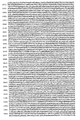
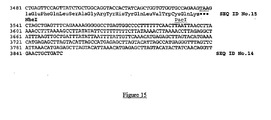
- the present application relates more particularly to any plasmid of SEQ ID NO: 14 (FIG. 15).
- a transformed cell according to the invention is an I cell. coli.
- E. coli K12 which are conventionally used for plasmid replication.
- the original K12 strain of E. coli has a methylase of DNA, which introduces a methyl group on all cytosines placed in the CC (A / T) GG context of the genomic and plasmidic DNAs of the bacterium.
- All the various strains of the K12 line have this activity because of a methylase encoded by the dcm gene ( Palmer BR and Marinus MG (1994) Gene 143, 1-12 ). Since the methylation of the plasmid DNAs prepared from E.
- coli dcm + strains results in a modification of the unwanted DNA molecule for the transfer of genes into eukaryotic cells, the inventors have developed a strain which allows both the operation of the plasmids with the origin R6K gamma without CpG according to the invention, and obtaining plasmid DNA lacking methylation sites dcm .
- a new gene was constructed by the inventors by deleting the dcm gene position 3 after the ATG at position -14 before TGA dcm gene in a pir116 strain (see Example 10 below below).
- the dcm gene is located in a chromosomal region whose sequence can be obtained via GenBank with accession number D90835 (clone Kohara # 344: 43.5-43.9 min).
- a deletion in the (-) gene brings the additional advantage of avoiding any reversion of the gene to the wild form.
- Mutant dcm strains have thus been produced by the inventors; they have no negative phenotype that could alter the growth of bacteria or change the quality and quantity of plasmid DNA.
- an optimized strain of E. coli was constructed by targeted inactivation of the dcm gene from a parent strain expressing a mutated pi protein at one site leading to increased copy number of plasmids without CpG. This optimized strain allows high quality and abundant production of the plasmid DNAs of this invention devoid of CpG and free from methylation on the cytosines dcm sites .
- the present application therefore relates to any cell comprising a gene coding for the pi protein, which is transformed by the dcm gene deleted according to the invention, and any plasmid replication method which comprises the transformation of such a cell by a plasmid, and culturing the transformed cell under conditions adapted to the replication of this plasmid.
- the present application thus relates to a method for the production of a plasmid completely devoid of CpG and free of methylation at the level of cytosine in the CC (A / T) GG nucleic context, characterized in that a plasmid is produced according to the invention by replication in a strain of Escherichia coli expressing the deficient pi protein for the methylation system dcm.
- kits which comprise at least one cell according to the invention.
- These kits are particularly adapted to the replication of plasmids according to the invention, in order to prevent these plasmids whose structure is devoid of CpG or else, during their replication, methylated in CC (A / T) GG.
- the invention thus provides a complete set of transformation means devoid of CpG: CpG-free genes, CpG-free promoters, CpG-free transcriptional units, replication origins for CpG-free plasmid, CpG-free plasmids, cells specially adapted for replication of plasmids without CpG methylation of cytosines.
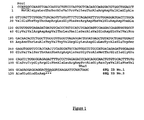
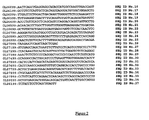
- the Sh wheat gene ⁇ CpG whose sequence shown in FIG. 1 (position 3 to 377 of SEQ ID NO: 1) was synthesized from an assembly of overlapping oligonucleotides (size 20-40 bp) whose sequences are given in FIG. FIG. 2.
- the assembly method is carried out in three steps, the first consists in the phosphorylation of the oligonucleotides of the coding strand, in a second step all the oligonucleotides of the two strands are associated by hybridization and ligation, and in the last step, the gene is amplified by PCR. This method has been used successfully for the synthesis of all the synthetic genes mentioned in Examples 1, 2, 3, 4, 5.
- the method is detailed for the Sh ble gene ⁇ CpG:
- the oligonucleotides of OL26199 to OL27099 (FIG. 2) corresponding to the coding strand are phosphorylated according to the following procedure: 1 .mu.l of each of the oligonucleotides taken up in water at 250 .mu.M are mixed in a microtube containing 15 .mu.l of water to bring the final solution at a concentration of 100 picomoles per microliter.
- solution A A solution of the oligonucleotides of the non-coding strand is formed by mixing 1 .mu.l of each oligonucleotide (OL27199 to OL28199, see FIG. 2) and 1 .mu.l of the OL26099 oligonucleotide (FIG.
- solution B in which 43 .mu.l of water is added in order to obtain a final solution at 54 picomoles per ⁇ l (solution B).
- the assembly of the gene is carried out firstly by mixing 10 ⁇ l of solution A, 1 ⁇ l of solution B, 6 ⁇ l of a 100 mM solution of KCl, 3 ⁇ l of a solution of NP-40 at 0 , 5%, 4 ⁇ l of a 50 mM solution of MgCl 2, 3 ⁇ l of a solution of 10 mM ATP and 7.5 ⁇ l of Pfu ligase (30 units) and the mixture is then heated in a programmable thermal cycler 3 minutes at 95 ° C then 3 minutes at 80 ° C before undergoing 3 cycles of one minute at 95 ° C, followed by a passage of 95 ° C to 70 ° C in 1 minute, then a passage of 70 ° C at 55 ° C in 1 hour and finally 2 hours at 55 ° C.
- the mixture of the assembled oligonucleotides is amplified with primers OL26099 and OL27199.
- the amplification product is purified on a Promega column, digested with the restriction enzymes NcoI and NheI and cloned into the plasmid pMOD1LacZ (wt) linearized with NcoI and NheI.
- the plasmid DNA sequences of 2 zeocin-resistant clones that appeared after transformation of the E. coli GT100 strain (available from Invivogen) by mixing the ligation between the vector fragment and the PCR fragment were found. in accordance with the desired sequence shown in FIG. 1.
- This synthetic gene placed under the control of the bacterial EM7 promoter confers zeocin resistance identical to that provided by the same vector containing the native Sh ble gene with the d Receiver E.coli GT100.
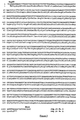
- the synthetic gene Hph ⁇ CpG (SEQ ID NO: 3 sequence shown in FIG. 3) was constructed according to the method described in Example 1.
- the two strands were synthesized using oligonucleotides of 60 bases plus two oligonucleotides of 30 bases with an overlapping region of 30 bases.
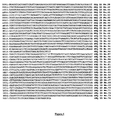
- the assembly of the different oligonucleotides shown in FIG. 4 was carried out by a final PCR with the sense oligonucleotides TTCAGCTGAGGAGGCACATC (SEQ ID NO: 299) and reverse CTCAGGATCCGCTAGCTAAT (SEQ ID NO: 300) according to the experimental conditions mentioned in the previous example.
- the amplified and purified fragment (1068 bp) was then digested with the BspHI and NheI restriction enzymes and cloned into the pMOD2 LacZ (wt) vector in which the NcoI site of pMOD1 was replaced by the BspHI site.
- the selection of E. coli clones containing this recombinant vector was carried out on FastMedia TM Hygro Agar (Cayla) medium.
- the sequence SEQ ID NO: 3 of FIG. 3 was confirmed by sequencing on both strands of the plasmid DNA of two hygromycin-resistant clones.
- This synthetic gene placed under the control of the bacterial promoter EM7 (vector pMOD2 Hph ⁇ CpG) confers a resistance to hygromycin B at least equal to that provided by the same vector containing the native gene Hph with the strain of E. coli receptor GT100 .
- the Bsr ⁇ CpG gene whose sequence is shown in FIG. 5 was synthesized from the oligonucleotides indicated in 6 following the method described in Example 1.
- the mixture of the assembled oligonucleotides was amplified with the OL64 and OL76 primers (see Figure 6).
- the amplified and purified fragment was then digested with the BspHI and NheI restriction enzymes and cloned into the pMOD2 LacZ (wt) vector.
- the selection of E.coli clones containing this recombinant vector was performed on FastMedia TM Blasti Agar (Cayla) medium.
- the BspHI-NheI fragment (Pac gene ⁇ CpG, SEQ ID NO: 7), the sequence of which is presented in FIG. 7, was synthesized by an assembly of the oligonucleotides indicated in FIG. The mixture of the assembled oligonucleotides was amplified with the pure sense primers (AGGACCATCATGACTGAG, SEQ ID NO: 301) and reverse pur (ATCATGTCGAGCTAGCTC, SEQ ID NO: 302). The purified BspHI-NheI fragment was cloned into the plasmid pMOD2LacZ (wt) between the BspHI and NheI sites.
- the sequences of the plasmid DNA of 2 puromycin-resistant GT100 strain clones that appeared on the FastMedia TM puro Agar medium (Cayla) after transformation by the product of the ligation between the vector fragment and the PCR fragment were found to be compliant. to the desired sequence shown in FIG. 7.
- the synthetic Pac gene ⁇ CpG placed under the control of the bacterial promoter EM7 confers a resistance to puromycin slightly higher than that provided by the same vector containing the native gene pac with the Receptor strain GT100 of E. coli.
- the LacZ synthetic gene ⁇ CpG (SEQ ID NO: 9 shown in FIG. 9) was constructed according to the method described in the preceding examples. Given the size of the gene to be produced (more than 3000 bp), the construction was carried out in three distinct parts, keeping the EcoRV and SacI restriction sites at the same sites as on the native sequence of the lac Z gene. In part, both strands were synthesized using 40 base oligonucleotides plus two 20 base oligonucleotides with an overlapping region of 20 bases. The first region corresponds to the NcoI-EcoRV fragment (Part I), the second region corresponds to the EcoRV-SacI fragment (Part II) and the third region corresponds to the SacI-NheI fragment.
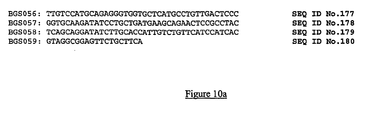
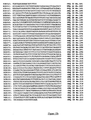
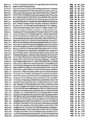
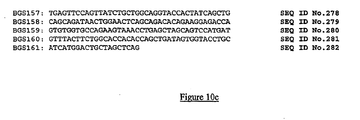
- FIGS. 10A The assembly of the various oligonucleotides shown in FIGS. 10A (oligonucleotides used for the assembly of part I), 10B (oligonucleotides used for the assembly of part II), 10C (oligonucleotides used for the assembly of part III ), was performed by PCR according to the same experimental conditions set forth in the preceding examples.
- the progressive cloning of the three parts of the synthetic gene was carried out in the vector pMOD1 LacZ (wt).
- the bacterial EM7 promoter present on the pMOD1 type vectors is a synthetic, constitutive and strong promoter in E. coli. Its sequence which contains 3 CpG (SEQ ID NO: 297 in FIG. 11) was used as a reference to elaborate a bacterial promoter devoid of CpG. We made degenerate "linker" oligonucleotides at 4 locations (indicated W, D, W and H on the sequence SEQ ID NO: 298 in Figure 11) and compatible with the AseI and NcoI restriction sites. These different oligos were hybridized and cloned into pMOD1 Sht ⁇ CpG between the AseI and NcoI restriction sites of the EM7 promoter.
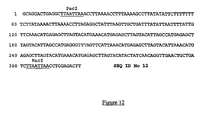
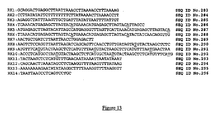
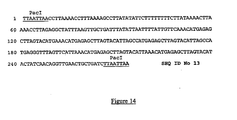
- the PacI DNA fragment containing the R6K gamma M2A origin (SEQ ID NO: 12 in Figure 12) was synthesized by PCR from the assembly of the oligonucleotides indicated in Figure 13.
- the assembly of the R6K gamma M2A fragment a was amplified with primers RK15 (GCAGGACTGAGGC TTAATTAA ACCTTAAAAC, SEQ ID NO: 303) and RK16 (AAGTCTCCAGG TTAATTAA GATCAGCAGTTC, SEQ ID NO: 304), and fragments after digestion with PacI enzyme were cloned into a plasmid (pGTCMVneo) containing the kanamycin resistance gene and the origin of pUC replication bounded by 2 PacI sites.
- pGTCMVneo plasmid
- This amplified fragment was then purified and cut with PacI and then assembled with the PacI fragment containing the R6K gamma ⁇ CpG origin described in Example 7.
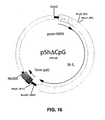
- the analysis of the recombinant clones obtained revealed two possible orientations of the PacI-PacI fragment containing the R6K gamma ⁇ CpG origin. The orientation retained in the pSh ⁇ CpG is shown in Figure 16.
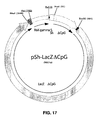
- the pSh ⁇ CpG vector described in Example 8 (FIG. 16) was used to insert the LacZ synthetic gene lacking CpG between the EcoRI and NheI sites.
- "linker" oligonucleotides, compatible EcoRI and NcoI, containing an E.coli ribosome binding site consensus sequence were hybridized and cloned with the LacZ ⁇ CpG NcoI-NheI fragment of pMOD1 LacZ ⁇ CpG between the EcoRI and NheI sites of vector pMOD1 EM2K Sh ⁇ CpG.
- EXAMPLE 10 Obtaining a strain of E. coli expressing the pi116 mutant protein and carrying a deletion in the dcm gene .
- the pir gene encoding the pi protein essential for the initiation of replication of the R6K gamma origin as well as the pir116 mutated gene leading to an increase in the number of R6K gamma plasmid copies were introduced in a functional form in various E.coli K12 strains by different groups. Strains of this type can be obtained from the E. coli Genetic Stock Center (http://cgsc.biology.yale.edu), and are also commercially available from companies specializing in the supply of biological material for research. This is the case, for example, of pir1 ( pir116 ) and pir2 ( wild pir ) strains proposed by Invitrogen, the products of which can be purchased in all European countries.
- the introduction of a deletion in the dcm gene of strain GT 97 was carried out as follows: Two 1.8 kb and 1.5 kb DNA regions, flanking the ATG initiation codon (fragment A) and the TGA stop codon (fragment B) respectively, of the dcm gene were amplified by PCR.
- Fragment A was amplified with the OLdcmAF primer pair (TTTT GCGGCCGCT TGCTGCGCCAGCAACTAATAACG, SEQ ID NO: 311) and OLdcmAR (CCTT GGATCC TGGTAAACACGCACTGTCCGCCAATCGATTC, SEQ ID NO: 312) and fragment B was amplified with the primer pair.
- OLdcmBF TTTT GGATCC TCAGCAAGAGGCACAACATG, SEQ ID NO: 313
- OLdcmBR CTCGAGA TTTT AACGGCAGCTCTGATACTTGCTTC; SEQ ID NO: 314).
- pKO3 ⁇ dcm a vector developed for the replacement of allele in heat-sensitive replication Escherichia coli between the NotI and SalI sites to give the plasmid designated pKO3 ⁇ dcm.
- This plasmid was cotransformed in strain GT97 with a plasmid that expresses RecA protein (pFL352).
- a transformant containing both plasmids was cultured at a non-permissive temperature (42 ° C) in the presence of chloramphenicol to select clones that integrated pKO3 ⁇ dcm into the bacterial chromosome by homologous recombination.
- a chloramphenicol-resistant subclone at 42 ° C was then grown at 30 ° C on medium containing a high concentration of sucrose (5%) to counter-select strains which after a second homologous recombination event exchanged the chromosomal region. of the dcm gene with the homologous fragment cloned into the plasmid.
- the deletion introduced into the retained clone was verified by PCR with the OldcmAF and OldcmBR pair of primers generating a fragment of a size smaller than that obtained with the parental strain and by a PCR with the OldcmBR primer and a primer positioned outside the exchanged region (OldcmCF TTTTGCGGCCGCGTTGCGGTATTACCCTTGTC; SEQ ID NO: 315).
- the dcm genotype of strain GT106 was confirmed by introducing into it and in GT106 a plasmid containing a restriction site of the SexAI enzyme subject to dcm methylation.
- the plasmid purified from GT106 is cleaved by SexAI while it is resistant to the enzyme when purified from GT97.
- the latter strain designated GT106 has the same growth characteristics of the parental strain GT97 and as expected no negative change in the amount of DNA R6K gamma plasmids was observed, only the quality of the DNA estimated by the lack of methylation of cytosines dcm sites has been improved.
- the strain GT106 will be available from Invivogen from the day of filing of this patent application.
- the assembly method is carried out in three steps, the first consists in the phosphorylation of the oligonucleotides of the coding strand, in a second step, the all oligonucleotides of both strands are associated by hybridization and ligation and, in the last step, the gene is amplified by PCR.
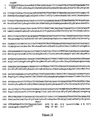
- the oligonucleotides of SEQ ID NO: 319 to SEQ ID NO: 338 (FIG. 19) corresponding to the coding strand are phosphorylated according to the following procedure: 1 .mu.l of each of the oligonucleotides taken up in water at 250 .mu.M are mixed in a microtube containing 50 ⁇ l of water to bring the final solution to a concentration of 100 picomoles per microliter.
- a solution of the oligonucleotides of the non-coding strand is constituted by mixing 1 .mu.l of each oligonucleotide (SEQ ID NO: 339 to SEQ ID NO: 360; FIG.
- the amplification product is purified on a Promega column, digested with restriction enzymes BspHI and NheI and cloned into the plasmid pMOD2LacZ (wt) linearized with BspHI and NheI.
- This synthetic gene placed under the control of the bacterial EM7 promoter confers kanamycin resistance identical to that provided by the same vector containing the native neo gene with the strain of E. receiving coli GT100.
- the neo BspHI-NheI fragment of the plasmid pMOD2Neo ⁇ CpG was then introduced into the plasmid pSh ⁇ CpG of Figure 16 linearized with NcoI-NheI to give after ligation and transformation in E. coli the pNéo ⁇ CpG plasmid.
Landscapes
- Health & Medical Sciences (AREA)
- Chemical & Material Sciences (AREA)
- Life Sciences & Earth Sciences (AREA)
- Genetics & Genomics (AREA)
- Organic Chemistry (AREA)
- Engineering & Computer Science (AREA)
- Zoology (AREA)
- Wood Science & Technology (AREA)
- Bioinformatics & Cheminformatics (AREA)
- General Health & Medical Sciences (AREA)
- Biotechnology (AREA)
- Molecular Biology (AREA)
- Biochemistry (AREA)
- General Engineering & Computer Science (AREA)
- Biomedical Technology (AREA)
- Biophysics (AREA)
- Medicinal Chemistry (AREA)
- Microbiology (AREA)
- Plant Pathology (AREA)
- Proteomics, Peptides & Aminoacids (AREA)
- Physics & Mathematics (AREA)
- Gastroenterology & Hepatology (AREA)
- Micro-Organisms Or Cultivation Processes Thereof (AREA)
- Preparation Of Compounds By Using Micro-Organisms (AREA)
- Medicines Containing Antibodies Or Antigens For Use As Internal Diagnostic Agents (AREA)
- Saccharide Compounds (AREA)
Claims (21)
- Verfahren zur Herstellung eines Plasmids, das Vektor wenigstens eines Gens ist und das vollständig frei von CpG ist, dadurch gekennzeichnet, dass man ein Plasmid konstruiert, indem man durch enzymatische Ligation der DNA-Fragmente, die alle frei von CpG sind, die einem Replikationsursprung und den Elementen, die eine Transkriptionseinheit für das wenigstens eine Gen bilden, entsprechen, zusammenfügt und dass man dieses Plasmid in einen Stamm von Escherichia coli, der das Protein pi exprimiert, für die Replikation des Plasmids transferiert.
- Verfahren nach Anspruch 1, dadurch gekennzeichnet, dass der Replikationsursprung des Plasmids der Replikationsursprung R6K-gamma, der durch die Eliminierung der CpG modifiziert ist, ist.
- Replikationsursprung für Plasmid, dadurch gekennzeichnet, dass seine Sequenz derjenigen des Replikationsursprungs R6K-gamma entspricht, in dem jedes G der CpG der wiederholten Region des Kerns durch ein A, ein C oder ein T ersetzt wurde, oder jedes C der CpG durch ein G, ein A oder ein T ersetzt wurde.
- Replikationsursprung nach Anspruch 3, dadurch gekennzeichnet, dass seine Sequenz die Sequenz SEQ ID NO:12 oder die Sequeuenz SEQ ID NO:13 umfasst.
- Replikationsursprung nach Anspruch 3 oder 4, dadurch gekennzeichnet, dass die Sequenz zur Fixierung des Proteins pi fünfmal oder sechsmal wiederholt ist.
- Verfahren nach Anspruch 1, dadurch gekennzeichnet, dass die Transkriptionseinheit einen bakteriellen Promotor, der frei von CpG ist, umfasst.
- Promotor, dadurch gekennzeichnet, dass seine Sequenz die SEQ ID N0:11 umfasst.
- Verfahren nach Anspruch 1, dadurch gekennzeichnet, dass die Transkriptionseinheit einen bakteriellen Transkriptionsterminator, der frei von CpG ist, umfasst.
- Verfahren nach Anspruch 1, dadurch gekennzeichnet, dass die Transkriptionseinheit ein Resistenzgen, das frei von CpG ist, umfasst.
- Verfahren nach Anspruch 1, dadurch gekennzeichnet, dass die Transkriptionseinheit ein Reportergen, das frei von CpG ist, umfasst.
- Plasmid, das einen Replikationsursprung nach einem der Ansprüche 3 bis 5 umfasst.
- Plasmid nach Anspruch 11, dadurch gekennzeichnet, dass es außerdem ein Gen umfasst, ausgewählt aus der Gruppe, bestehend aus:a) einem Gen aus wenigstens 250 bp, das durch ein Verfahren zur Herstellung eines Gens, das frei von GpG ist, obgleich es in E. coli exprimierbar ist, erhalten werden kann, dadurch gekennzeichnet, dass man eine Polynukleotidkette synthetisiert, indem man der Aminosäurekette eines Proteins folgt, das durch E. coli exprimiert werden kann, und indem man jeder Aminosäure einen Nukleotid-Codon zuordnet, ausgewählt unter denen, die entsprechend dem genetischen Code und unter Berücksichtigung der Degeneriertheit dieses Codes dieser Aminosäure entsprechen, indem man jedoch von dieser Wahl eliminiert:- die Codons ACG (Thr), CCG (Pro), GCG (Ala), TCG (Ser), CGA (Arg), CGC (Arg), CGG (Arg), CGT (Arg), die ein CpG umfassen, und- die Codons, die mit einem C enden, wenn das Codon, das direkt darauf folgt, mit einem G beginnt;b) einem Gen mit wenigstens 250 bp, das durch ein Verfahren zur Herstellung eines Gens, das frei von CpG ist, jedoch in E. coli exprimierbar ist, erhalten werden kann, dadurch gekennzeichnet, dass man eine Polynukleotidkette synthetisiert, indem man der Aminosäurekette eines Proteins, das durch E. coli exprimiert werden kann, folgt und indem man jeder Aminosäure ein Nukleotid-Codon zuordnet, ausgewählt unter denen, die nach dem genetischen Code und unter Berücksichtigung der Degeneriertheit dieses Codes dieser Aminosäure entsprechen, indem man jedoch von dieser Wahl eliminiert:- die Codons AGC (Thr), CCG (Pro), GCG (Ala), TCG (Ser), CGA (Arg), CGC (Arg), CGG (Arg), CGT (Arg), die ein CpG umfassen, und- die Codons, die mit einem C enden, wenn das Codon, das direkt darauf folgt, mit einem G beginnt,wobei das Verfahren dadurch gekennzeichnet, ist, dass man außerdem von der Wahl die Codons ATA (lle), CTA (Leu), GTA (Val) und TTA (Leu) eliminiert;c) einem Gen, dessen Sequenz die Sequenz SEQ ID NO:1 von der Position 3 bis zu der Position 374, die Sequenz SEQ ID NO:3 von der Position 3 bis zu der Position 1025, die Sequenz SEQ ID NO:5 von der Position 3 bis zu der Position 422, die Sequenz SEQ ID NO:7 von der Position 7 bis zu der Position 599 umfasst;d) einem Gen, dessen Sequenz der Sequenz SEQ ID NO:9 von der Position 3 bis zu der Position 3056 entspricht; unde) einem Gen, dessen Sequenz der Sequenz SEQ ID NO:316 entspricht.
- Plasmid nach Anspruch 11 oder 12, dadurch gekennzeichnet, dass es außerdem einen Promotor nach Anspruch 7 umfasst.
- Plasmid nach einem der Ansprüche 11 bis 13, dadurch gekennzeichnet, dass es außerdem einen Transkriptionsterminator ohne CpG umfasst.
- Plasmid nach einem der Ansprüche 11 bis 14, dadurch gekennzeichnet, dass es vollständig frei von CpG ist.
- Plasmid der SEQ ID NO:14.
- Verfahren für die Herstellung eines Plasmids, das vollständig frei von CpG ist und ohne Methylierung auf der Ebene des Cytosins im Nukleinsäure-Kontext CC(A/T)GG ist, dadurch gekennzeichnet, dass man ein Plasmid nach einem der Ansprüche 11 bis 16 durch Replikation in einem Escherichia coli-Stamm produziert, der das Protein pi, das bezüglich des Methylierungssystems dcm defizient ist, exprimiert.
- Escherichia coli-Zelle, transformiert durch wenigstens eines der Plasmide nach einem der Ansprüche 11 bis 16.
- Transformierte Escherichia coli-Zelle nach Anspruch 18, dadurch gekennzeichnet, dass sie ein Gen exprimiert, das für ein Protein pi codiert.
- Transformierte Escherichia coli-Zelle nach Anspruch 19, dadurch gekennzeichnet, dass sie außerdem ein inaktiviertes dcm-Gen umfasst.
- Kit zur Herstellung von Plasmiden, wie sie in einem der Ansprüche 11 bis 16 definiert sind, dadurch gekennzeichnet, dass er wenigstens eine Zelle nach einem der Ansprüche 18 bis 20 umfasst.
Priority Applications (1)
| Application Number | Priority Date | Filing Date | Title |
|---|---|---|---|
| DE60221801T DE60221801T3 (de) | 2001-03-09 | 2002-03-11 | Cpg-freie synthetische gene und bakterielle plasmide |
Applications Claiming Priority (3)
| Application Number | Priority Date | Filing Date | Title |
|---|---|---|---|
| FR0103274A FR2821855B1 (fr) | 2001-03-09 | 2001-03-09 | Genes synthetiques et plasmides bacteriens depourvus de cpg |
| FR0103274 | 2001-03-09 | ||
| PCT/FR2002/000862 WO2002072846A2 (fr) | 2001-03-09 | 2002-03-11 | Genes synthetiques et plasmides bacteriens depourvus de cpg |
Publications (3)
| Publication Number | Publication Date |
|---|---|
| EP1366176A2 EP1366176A2 (de) | 2003-12-03 |
| EP1366176B1 true EP1366176B1 (de) | 2007-08-15 |
| EP1366176B2 EP1366176B2 (de) | 2011-10-19 |
Family
ID=8860962
Family Applications (1)
| Application Number | Title | Priority Date | Filing Date |
|---|---|---|---|
| EP02722336A Expired - Lifetime EP1366176B2 (de) | 2001-03-09 | 2002-03-11 | Cpg-freie synthetische gene und bakterielle plasmide |
Country Status (9)
| Country | Link |
|---|---|
| US (1) | US7244609B2 (de) |
| EP (1) | EP1366176B2 (de) |
| JP (1) | JP4264703B2 (de) |
| AT (1) | ATE370238T1 (de) |
| AU (1) | AU2002253226B2 (de) |
| CA (1) | CA2440195C (de) |
| DE (1) | DE60221801T3 (de) |
| FR (1) | FR2821855B1 (de) |
| WO (1) | WO2002072846A2 (de) |
Families Citing this family (37)
| Publication number | Priority date | Publication date | Assignee | Title |
|---|---|---|---|---|
| FR2821855B1 (fr) † | 2001-03-09 | 2004-04-02 | Cayla | Genes synthetiques et plasmides bacteriens depourvus de cpg |
| AU2002317771A1 (en) * | 2001-06-05 | 2002-12-16 | Cellectis | Methods for modifying the cpg content of polynucleotides |
| ATE354645T1 (de) * | 2002-12-20 | 2007-03-15 | Chromagenics Bv | Mittel und methoden zur produktion eines proteins durch chromatin-öffner, die chromatin zugänglicher für transkriptionsfaktoren machen können |
| US20060195935A1 (en) * | 2004-11-08 | 2006-08-31 | Chromagenics B.V. | Selection of host cells expressing protein at high levels |
| US20100136616A1 (en) * | 2004-11-08 | 2010-06-03 | Chromagenics B.V. | Selection of Host Cells Expressing Protein at High Levels |
| US8039230B2 (en) * | 2004-11-08 | 2011-10-18 | Chromagenics B.V. | Selection of host cells expressing protein at high levels |
| KR101271884B1 (ko) * | 2004-11-08 | 2013-06-05 | 크로마제닉스 비.브이. | 고수준으로 단백질을 발현하는 숙주세포의 선택 |
| ES2384391T3 (es) | 2004-11-08 | 2012-07-04 | Chromagenics B.V. | Selección de células hospedantes que expresan proteína a altos niveles |
| US8999667B2 (en) * | 2004-11-08 | 2015-04-07 | Chromagenics B.V. | Selection of host cells expressing protein at high levels |
| GB0606190D0 (en) | 2006-03-28 | 2006-05-10 | Isis Innovation | Construct |
| US8318482B2 (en) | 2008-06-06 | 2012-11-27 | Aurora Algae, Inc. | VCP-based vectors for algal cell transformation |
| US20100022393A1 (en) * | 2008-07-24 | 2010-01-28 | Bertrand Vick | Glyphosate applications in aquaculture |
| US8314228B2 (en) | 2009-02-13 | 2012-11-20 | Aurora Algae, Inc. | Bidirectional promoters in Nannochloropsis |
| US8809046B2 (en) | 2011-04-28 | 2014-08-19 | Aurora Algae, Inc. | Algal elongases |
| US8865468B2 (en) * | 2009-10-19 | 2014-10-21 | Aurora Algae, Inc. | Homologous recombination in an algal nuclear genome |
| US9029137B2 (en) | 2009-06-08 | 2015-05-12 | Aurora Algae, Inc. | ACP promoter |
| US8709765B2 (en) * | 2009-07-20 | 2014-04-29 | Aurora Algae, Inc. | Manipulation of an alternative respiratory pathway in photo-autotrophs |
| US20120213848A1 (en) * | 2010-11-16 | 2012-08-23 | Hanley Brian P | Treatment of Infection Using Single Chain Antibody Gene Therapy |
| US8722359B2 (en) | 2011-01-21 | 2014-05-13 | Aurora Algae, Inc. | Genes for enhanced lipid metabolism for accumulation of lipids |
| MX2013012565A (es) | 2011-04-28 | 2013-11-21 | Aurora Algae Inc | Desaturasas de algas. |
| US8435777B1 (en) | 2012-01-20 | 2013-05-07 | Cayla | CPG-free gene for a new secreted reporter protein |
| US10612034B2 (en) * | 2012-06-01 | 2020-04-07 | Exxonmobil Research And Engineering Company | Promoters and terminators for use in eukaryotic cells |
| AU2013309488A1 (en) | 2012-08-29 | 2015-03-05 | Nature Technology Corporation | DNA plasmids with improved expression |
| WO2014077863A1 (en) | 2012-11-19 | 2014-05-22 | Nature Technology Corporation | Replicative minicircle vectors with improved expression |
| US11124845B2 (en) | 2014-03-18 | 2021-09-21 | The Johns Hopkins University | PSMA-based molecular-genetic reporter system |
| MX375361B (es) | 2014-03-26 | 2025-03-06 | Univ Maryland | Edicion de genoma dirigida en cigotos de animales grandes domesticos. |
| US10086089B2 (en) | 2015-09-18 | 2018-10-02 | DNARx | Systems and methods for nucleic acid expression in vivo |
| CN116392609A (zh) | 2017-03-23 | 2023-07-07 | Dnarx公司 | 用于体内核酸表达的系统和方法 |
| GB201714330D0 (en) * | 2017-09-06 | 2017-10-18 | Järver Peter | Oligonucleotides |
| WO2019057774A1 (en) | 2017-09-19 | 2019-03-28 | Deutsches Krebsforschungszentrum | NON-INTEGRATING DNA VECTORS FOR THE GENETIC MODIFICATION OF CELLS |
| DK3456821T4 (da) | 2017-09-19 | 2024-04-15 | Deutsches Krebsforsch | Ikke-integrerende dna-vektorer til genetisk modifikation af celler |
| DK3768846T5 (da) | 2018-03-21 | 2024-08-19 | Aldevron L L C | Virale og ikke-virale nanoplasmidvektorer med forbedret produktion |
| CN113943688B (zh) * | 2019-07-05 | 2023-10-20 | 苏州华赛生物工程技术有限公司 | 生产胞嘧啶的重组微生物及生产胞嘧啶的方法 |
| KR20220128607A (ko) | 2019-09-18 | 2022-09-21 | 인터갈락틱 테라퓨틱스, 인크. | 합성 dna 벡터 및 사용 방법 |
| FR3111913A1 (fr) | 2020-06-30 | 2021-12-31 | Eyevensys | Construction d’adn pour le traitement de pathologies oculaires |
| WO2025144938A1 (en) | 2023-12-26 | 2025-07-03 | Emmune, Inc. | Systems for nucleic acid transfer |
| WO2025231315A2 (en) | 2024-05-03 | 2025-11-06 | Aldevron, L.L.C. | Bacterial host strains |
Family Cites Families (5)
| Publication number | Priority date | Publication date | Assignee | Title |
|---|---|---|---|---|
| FR2738842B1 (fr) † | 1995-09-15 | 1997-10-31 | Rhone Poulenc Rorer Sa | Molecule d'adn circulaire a origine de replication conditionnelle, leur procede de preparation et leur utilisation en therapie genique |
| US20020065236A1 (en) † | 1998-09-09 | 2002-05-30 | Yew Nelson S. | CpG reduced plasmids and viral vectors |
| EP1109924A2 (de) † | 1998-09-09 | 2001-06-27 | Genzyme Corporation | Methylierung von plasmid-vektoren |
| CA2291367A1 (en) * | 1999-12-06 | 2001-06-06 | Isabelle Henry | Genetic constructions having a reduced or an increased number of epigenetic control regions and methods of use thereof |
| FR2821855B1 (fr) † | 2001-03-09 | 2004-04-02 | Cayla | Genes synthetiques et plasmides bacteriens depourvus de cpg |
-
2001
- 2001-03-09 FR FR0103274A patent/FR2821855B1/fr not_active Expired - Lifetime
-
2002
- 2002-03-11 DE DE60221801T patent/DE60221801T3/de not_active Expired - Lifetime
- 2002-03-11 JP JP2002571897A patent/JP4264703B2/ja not_active Expired - Fee Related
- 2002-03-11 US US10/469,851 patent/US7244609B2/en not_active Expired - Lifetime
- 2002-03-11 CA CA2440195A patent/CA2440195C/fr not_active Expired - Fee Related
- 2002-03-11 AT AT02722336T patent/ATE370238T1/de not_active IP Right Cessation
- 2002-03-11 EP EP02722336A patent/EP1366176B2/de not_active Expired - Lifetime
- 2002-03-11 AU AU2002253226A patent/AU2002253226B2/en not_active Ceased
- 2002-03-11 WO PCT/FR2002/000862 patent/WO2002072846A2/fr not_active Ceased
Non-Patent Citations (1)
| Title |
|---|
| None * |
Also Published As
| Publication number | Publication date |
|---|---|
| CA2440195A1 (fr) | 2002-09-19 |
| JP2004524031A (ja) | 2004-08-12 |
| US7244609B2 (en) | 2007-07-17 |
| DE60221801T2 (de) | 2008-05-08 |
| EP1366176A2 (de) | 2003-12-03 |
| FR2821855A1 (fr) | 2002-09-13 |
| WO2002072846A9 (fr) | 2003-03-20 |
| CA2440195C (fr) | 2011-07-12 |
| WO2002072846A2 (fr) | 2002-09-19 |
| ATE370238T1 (de) | 2007-09-15 |
| EP1366176B2 (de) | 2011-10-19 |
| DE60221801T3 (de) | 2012-05-31 |
| FR2821855B1 (fr) | 2004-04-02 |
| US20040219677A1 (en) | 2004-11-04 |
| DE60221801D1 (de) | 2007-09-27 |
| AU2002253226B2 (en) | 2007-11-15 |
| JP4264703B2 (ja) | 2009-05-20 |
| WO2002072846A3 (fr) | 2003-02-27 |
Similar Documents
| Publication | Publication Date | Title |
|---|---|---|
| EP1366176B1 (de) | Cpg-freie synthetische gene und bakterielle plasmide | |
| AU2016380351B2 (en) | Novel CRISPR-associated transposases and uses thereof | |
| KR102253223B1 (ko) | 식물 내 담배 특이 니트로사민 감소 | |
| AU2016334225B2 (en) | Novel RNA-guided nucleases and uses thereof | |
| JP2023145691A (ja) | 遺伝子操作のためのヌクレアーゼシステム | |
| CN102282262B (zh) | 用于转化植物的营养缺陷型农杆菌和其方法 | |
| EP1311670B1 (de) | Verfahren zur ortspezifischen massenmutagenese | |
| WO1999050402A1 (en) | Systematic identification of essential genes by in vitro transposon mutagenesis | |
| KR20170020416A (ko) | 식물 내의 질산염 함량 조절 | |
| AU2018242633B2 (en) | Methods for improving traits in plants | |
| KR20200136924A (ko) | 식물 내 환원당 함량 조절 | |
| CN110819620B (zh) | 一种对类球红细菌进行基因突变的方法 | |
| TW202309291A (zh) | 用於室內空氣修復之組合物及方法 | |
| WO1991011518A1 (fr) | Polypeptides impliques dans la biosynthese des cobalamines et/ou des cobamides, sequences d'adn codant pour ces polypeptides, procede de preparation, et leur utilisation | |
| Mackenzie et al. | DNA repair mutants of Rhodobacter sphaeroides | |
| FR3016888A1 (fr) | Synthetases de la colistine et cluster de genes correspondants | |
| EP1544296B1 (de) | Verfahren zur ortspezifischen Massenmutagenese | |
| CN113166741A (zh) | Dna文库的多重确定性组装 | |
| WO2001025458A1 (fr) | Nouvelle classe de proteines et leurs applications a la resistance de plantes a divers agents pathogenes | |
| WO1993001293A1 (fr) | Origine de replication plasmidique augmentant le nombre de copies du plasmide comprenant ladite origine | |
| US20040175705A1 (en) | Systems for expression of heterologous proteins in m capsulatus | |
| WO2024181386A1 (ja) | ゲノムへのランダム変異導入法 | |
| JP2000102388A (ja) | 軟腐病菌のバクテリオシン遺伝子 | |
| CN114502733A (zh) | 花期基因及其使用方法 | |
| EP1280890A1 (de) | Mutantenstämme geeignet zur herstellung von chemisch unterschiedlichen proteinen, die nicht-konventionelle aminosäuren enthalten |
Legal Events
| Date | Code | Title | Description |
|---|---|---|---|
| PUAI | Public reference made under article 153(3) epc to a published international application that has entered the european phase |
Free format text: ORIGINAL CODE: 0009012 |
|
| 17P | Request for examination filed |
Effective date: 20030829 |
|
| AK | Designated contracting states |
Kind code of ref document: A2 Designated state(s): AT BE CH CY DE DK ES FI FR GB GR IE IT LI LU MC NL PT SE TR |
|
| AX | Request for extension of the european patent |
Extension state: AL LT LV MK RO SI |
|
| 17Q | First examination report despatched |
Effective date: 20041214 |
|
| 17Q | First examination report despatched |
Effective date: 20041214 |
|
| GRAP | Despatch of communication of intention to grant a patent |
Free format text: ORIGINAL CODE: EPIDOSNIGR1 |
|
| GRAS | Grant fee paid |
Free format text: ORIGINAL CODE: EPIDOSNIGR3 |
|
| GRAA | (expected) grant |
Free format text: ORIGINAL CODE: 0009210 |
|
| AK | Designated contracting states |
Kind code of ref document: B1 Designated state(s): AT BE CH CY DE DK ES FI FR GB GR IE IT LI LU MC NL PT SE TR |
|
| REG | Reference to a national code |
Ref country code: GB Ref legal event code: FG4D Free format text: NOT ENGLISH |
|
| REG | Reference to a national code |
Ref country code: CH Ref legal event code: EP |
|
| REG | Reference to a national code |
Ref country code: IE Ref legal event code: FG4D Free format text: LANGUAGE OF EP DOCUMENT: FRENCH |
|
| REF | Corresponds to: |
Ref document number: 60221801 Country of ref document: DE Date of ref document: 20070927 Kind code of ref document: P |
|
| GBT | Gb: translation of ep patent filed (gb section 77(6)(a)/1977) |
Effective date: 20071031 |
|
| PG25 | Lapsed in a contracting state [announced via postgrant information from national office to epo] |
Ref country code: ES Free format text: LAPSE BECAUSE OF FAILURE TO SUBMIT A TRANSLATION OF THE DESCRIPTION OR TO PAY THE FEE WITHIN THE PRESCRIBED TIME-LIMIT Effective date: 20071126 Ref country code: FI Free format text: LAPSE BECAUSE OF FAILURE TO SUBMIT A TRANSLATION OF THE DESCRIPTION OR TO PAY THE FEE WITHIN THE PRESCRIBED TIME-LIMIT Effective date: 20070815 Ref country code: NL Free format text: LAPSE BECAUSE OF FAILURE TO SUBMIT A TRANSLATION OF THE DESCRIPTION OR TO PAY THE FEE WITHIN THE PRESCRIBED TIME-LIMIT Effective date: 20070815 |
|
| NLV1 | Nl: lapsed or annulled due to failure to fulfill the requirements of art. 29p and 29m of the patents act | ||
| PG25 | Lapsed in a contracting state [announced via postgrant information from national office to epo] |
Ref country code: AT Free format text: LAPSE BECAUSE OF FAILURE TO SUBMIT A TRANSLATION OF THE DESCRIPTION OR TO PAY THE FEE WITHIN THE PRESCRIBED TIME-LIMIT Effective date: 20070815 |
|
| PG25 | Lapsed in a contracting state [announced via postgrant information from national office to epo] |
Ref country code: GR Free format text: LAPSE BECAUSE OF FAILURE TO SUBMIT A TRANSLATION OF THE DESCRIPTION OR TO PAY THE FEE WITHIN THE PRESCRIBED TIME-LIMIT Effective date: 20071116 Ref country code: DK Free format text: LAPSE BECAUSE OF FAILURE TO SUBMIT A TRANSLATION OF THE DESCRIPTION OR TO PAY THE FEE WITHIN THE PRESCRIBED TIME-LIMIT Effective date: 20070815 |
|
| PLBI | Opposition filed |
Free format text: ORIGINAL CODE: 0009260 |
|
| PG25 | Lapsed in a contracting state [announced via postgrant information from national office to epo] |
Ref country code: PT Free format text: LAPSE BECAUSE OF FAILURE TO SUBMIT A TRANSLATION OF THE DESCRIPTION OR TO PAY THE FEE WITHIN THE PRESCRIBED TIME-LIMIT Effective date: 20080115 |
|
| 26 | Opposition filed |
Opponent name: MACLEAN, MARTIN ROBERT Effective date: 20080515 |
|
| PG25 | Lapsed in a contracting state [announced via postgrant information from national office to epo] |
Ref country code: SE Free format text: LAPSE BECAUSE OF FAILURE TO SUBMIT A TRANSLATION OF THE DESCRIPTION OR TO PAY THE FEE WITHIN THE PRESCRIBED TIME-LIMIT Effective date: 20071115 |
|
| BERE | Be: lapsed |
Owner name: CAYLA Effective date: 20080331 |
|
| PLAX | Notice of opposition and request to file observation + time limit sent |
Free format text: ORIGINAL CODE: EPIDOSNOBS2 |
|
| PG25 | Lapsed in a contracting state [announced via postgrant information from national office to epo] |
Ref country code: MC Free format text: LAPSE BECAUSE OF NON-PAYMENT OF DUE FEES Effective date: 20080331 |
|
| PLBB | Reply of patent proprietor to notice(s) of opposition received |
Free format text: ORIGINAL CODE: EPIDOSNOBS3 |
|
| PG25 | Lapsed in a contracting state [announced via postgrant information from national office to epo] |
Ref country code: BE Free format text: LAPSE BECAUSE OF NON-PAYMENT OF DUE FEES Effective date: 20080331 |
|
| PG25 | Lapsed in a contracting state [announced via postgrant information from national office to epo] |
Ref country code: CY Free format text: LAPSE BECAUSE OF FAILURE TO SUBMIT A TRANSLATION OF THE DESCRIPTION OR TO PAY THE FEE WITHIN THE PRESCRIBED TIME-LIMIT Effective date: 20070815 |
|
| PG25 | Lapsed in a contracting state [announced via postgrant information from national office to epo] |
Ref country code: LU Free format text: LAPSE BECAUSE OF NON-PAYMENT OF DUE FEES Effective date: 20080311 |
|
| PG25 | Lapsed in a contracting state [announced via postgrant information from national office to epo] |
Ref country code: TR Free format text: LAPSE BECAUSE OF FAILURE TO SUBMIT A TRANSLATION OF THE DESCRIPTION OR TO PAY THE FEE WITHIN THE PRESCRIBED TIME-LIMIT Effective date: 20070815 |
|
| PG25 | Lapsed in a contracting state [announced via postgrant information from national office to epo] |
Ref country code: IT Free format text: LAPSE BECAUSE OF NON-PAYMENT OF DUE FEES Effective date: 20080331 |
|
| PUAH | Patent maintained in amended form |
Free format text: ORIGINAL CODE: 0009272 |
|
| STAA | Information on the status of an ep patent application or granted ep patent |
Free format text: STATUS: PATENT MAINTAINED AS AMENDED |
|
| 27A | Patent maintained in amended form |
Effective date: 20111019 |
|
| AK | Designated contracting states |
Kind code of ref document: B2 Designated state(s): AT BE CH CY DE DK ES FI FR GB GR IE IT LI LU MC NL PT SE TR |
|
| REG | Reference to a national code |
Ref country code: DE Ref legal event code: R102 Ref document number: 60221801 Country of ref document: DE |
|
| REG | Reference to a national code |
Ref country code: CH Ref legal event code: AEN Free format text: BREVET MAINTENU DANS UNE FORME MODIFIEE |
|
| REG | Reference to a national code |
Ref country code: DE Ref legal event code: R102 Ref document number: 60221801 Country of ref document: DE Effective date: 20111019 |
|
| REG | Reference to a national code |
Ref country code: FR Ref legal event code: PLFP Year of fee payment: 14 |
|
| REG | Reference to a national code |
Ref country code: FR Ref legal event code: PLFP Year of fee payment: 15 |
|
| REG | Reference to a national code |
Ref country code: FR Ref legal event code: PLFP Year of fee payment: 16 |
|
| REG | Reference to a national code |
Ref country code: FR Ref legal event code: PLFP Year of fee payment: 17 |
|
| REG | Reference to a national code |
Ref country code: CH Ref legal event code: PCAR Free format text: NEW ADDRESS: HOLEESTRASSE 87, 4054 BASEL (CH) |
|
| PGFP | Annual fee paid to national office [announced via postgrant information from national office to epo] |
Ref country code: IE Payment date: 20180216 Year of fee payment: 17 |
|
| PG25 | Lapsed in a contracting state [announced via postgrant information from national office to epo] |
Ref country code: IE Free format text: LAPSE BECAUSE OF NON-PAYMENT OF DUE FEES Effective date: 20190311 |
|
| PGFP | Annual fee paid to national office [announced via postgrant information from national office to epo] |
Ref country code: FR Payment date: 20210126 Year of fee payment: 20 Ref country code: CH Payment date: 20210322 Year of fee payment: 20 |
|
| PGFP | Annual fee paid to national office [announced via postgrant information from national office to epo] |
Ref country code: DE Payment date: 20210310 Year of fee payment: 20 Ref country code: GB Payment date: 20210318 Year of fee payment: 20 |
|
| REG | Reference to a national code |
Ref country code: DE Ref legal event code: R071 Ref document number: 60221801 Country of ref document: DE |
|
| REG | Reference to a national code |
Ref country code: CH Ref legal event code: PL |
|
| REG | Reference to a national code |
Ref country code: GB Ref legal event code: PE20 Expiry date: 20220310 |
|
| PG25 | Lapsed in a contracting state [announced via postgrant information from national office to epo] |
Ref country code: GB Free format text: LAPSE BECAUSE OF EXPIRATION OF PROTECTION Effective date: 20220310 |