EP1381673B1 - Composition et methodes aproprie de l'infection par le vhc - Google Patents
Composition et methodes aproprie de l'infection par le vhc Download PDFInfo
- Publication number
- EP1381673B1 EP1381673B1 EP20020753872 EP02753872A EP1381673B1 EP 1381673 B1 EP1381673 B1 EP 1381673B1 EP 20020753872 EP20020753872 EP 20020753872 EP 02753872 A EP02753872 A EP 02753872A EP 1381673 B1 EP1381673 B1 EP 1381673B1
- Authority
- EP
- European Patent Office
- Prior art keywords
- cells
- hcv
- composition
- media
- cell
- Prior art date
- Legal status (The legal status is an assumption and is not a legal conclusion. Google has not performed a legal analysis and makes no representation as to the accuracy of the status listed.)
- Expired - Lifetime
Links
- 239000000203 mixture Substances 0.000 title claims abstract description 119
- 238000000034 method Methods 0.000 title claims abstract description 72
- 208000015181 infectious disease Diseases 0.000 title claims abstract description 42
- 150000001875 compounds Chemical class 0.000 claims abstract description 28
- 238000004519 manufacturing process Methods 0.000 claims abstract description 21
- 238000012258 culturing Methods 0.000 claims abstract description 11
- 210000004027 cell Anatomy 0.000 claims description 246
- 241000711549 Hepacivirus C Species 0.000 claims description 171
- 238000010240 RT-PCR analysis Methods 0.000 claims description 45
- 241000710780 Bovine viral diarrhea virus 1 Species 0.000 claims description 33
- HZAXFHJVJLSVMW-UHFFFAOYSA-N 2-Aminoethan-1-ol Chemical compound NCCO HZAXFHJVJLSVMW-UHFFFAOYSA-N 0.000 claims description 22
- NOESYZHRGYRDHS-UHFFFAOYSA-N insulin Chemical compound N1C(=O)C(NC(=O)C(CCC(N)=O)NC(=O)C(CCC(O)=O)NC(=O)C(C(C)C)NC(=O)C(NC(=O)CN)C(C)CC)CSSCC(C(NC(CO)C(=O)NC(CC(C)C)C(=O)NC(CC=2C=CC(O)=CC=2)C(=O)NC(CCC(N)=O)C(=O)NC(CC(C)C)C(=O)NC(CCC(O)=O)C(=O)NC(CC(N)=O)C(=O)NC(CC=2C=CC(O)=CC=2)C(=O)NC(CSSCC(NC(=O)C(C(C)C)NC(=O)C(CC(C)C)NC(=O)C(CC=2C=CC(O)=CC=2)NC(=O)C(CC(C)C)NC(=O)C(C)NC(=O)C(CCC(O)=O)NC(=O)C(C(C)C)NC(=O)C(CC(C)C)NC(=O)C(CC=2NC=NC=2)NC(=O)C(CO)NC(=O)CNC2=O)C(=O)NCC(=O)NC(CCC(O)=O)C(=O)NC(CCCNC(N)=N)C(=O)NCC(=O)NC(CC=3C=CC=CC=3)C(=O)NC(CC=3C=CC=CC=3)C(=O)NC(CC=3C=CC(O)=CC=3)C(=O)NC(C(C)O)C(=O)N3C(CCC3)C(=O)NC(CCCCN)C(=O)NC(C)C(O)=O)C(=O)NC(CC(N)=O)C(O)=O)=O)NC(=O)C(C(C)CC)NC(=O)C(CO)NC(=O)C(C(C)O)NC(=O)C1CSSCC2NC(=O)C(CC(C)C)NC(=O)C(NC(=O)C(CCC(N)=O)NC(=O)C(CC(N)=O)NC(=O)C(NC(=O)C(N)CC=1C=CC=CC=1)C(C)C)CC1=CN=CN1 NOESYZHRGYRDHS-UHFFFAOYSA-N 0.000 claims description 22
- JYGXADMDTFJGBT-VWUMJDOOSA-N hydrocortisone Chemical compound O=C1CC[C@]2(C)[C@H]3[C@@H](O)C[C@](C)([C@@](CC4)(O)C(=O)CO)[C@@H]4[C@@H]3CCC2=C1 JYGXADMDTFJGBT-VWUMJDOOSA-N 0.000 claims description 20
- 241000700605 Viruses Species 0.000 claims description 18
- 210000004185 liver Anatomy 0.000 claims description 17
- 235000021588 free fatty acids Nutrition 0.000 claims description 16
- 102000015779 HDL Lipoproteins Human genes 0.000 claims description 14
- 108010010234 HDL Lipoproteins Proteins 0.000 claims description 14
- 239000001963 growth medium Substances 0.000 claims description 13
- 102100031573 Hematopoietic progenitor cell antigen CD34 Human genes 0.000 claims description 11
- 101000777663 Homo sapiens Hematopoietic progenitor cell antigen CD34 Proteins 0.000 claims description 11
- 102000004877 Insulin Human genes 0.000 claims description 11
- 108090001061 Insulin Proteins 0.000 claims description 11
- 102000007330 LDL Lipoproteins Human genes 0.000 claims description 11
- 108010007622 LDL Lipoproteins Proteins 0.000 claims description 11
- 239000000627 Thyrotropin-Releasing Hormone Substances 0.000 claims description 11
- 102400000336 Thyrotropin-releasing hormone Human genes 0.000 claims description 11
- 101800004623 Thyrotropin-releasing hormone Proteins 0.000 claims description 11
- 108010035879 albumin-bilirubin complex Proteins 0.000 claims description 11
- 239000000872 buffer Substances 0.000 claims description 11
- 229940125396 insulin Drugs 0.000 claims description 11
- 210000005229 liver cell Anatomy 0.000 claims description 11
- XNSAINXGIQZQOO-SRVKXCTJSA-N protirelin Chemical compound NC(=O)[C@@H]1CCCN1C(=O)[C@@H](NC(=O)[C@H]1NC(=O)CC1)CC1=CN=CN1 XNSAINXGIQZQOO-SRVKXCTJSA-N 0.000 claims description 11
- 239000004017 serum-free culture medium Substances 0.000 claims description 11
- 102000051325 Glucagon Human genes 0.000 claims description 10
- 108060003199 Glucagon Proteins 0.000 claims description 10
- MASNOZXLGMXCHN-ZLPAWPGGSA-N glucagon Chemical compound C([C@@H](C(=O)N[C@H](C(=O)N[C@@H](CCC(N)=O)C(=O)N[C@@H](CC=1C2=CC=CC=C2NC=1)C(=O)N[C@@H](CC(C)C)C(=O)N[C@@H](CCSC)C(=O)N[C@@H](CC(N)=O)C(=O)N[C@@H]([C@@H](C)O)C(O)=O)C(C)C)NC(=O)[C@H](CC(O)=O)NC(=O)[C@H](CCC(N)=O)NC(=O)[C@H](C)NC(=O)[C@H](CCCNC(N)=N)NC(=O)[C@H](CCCNC(N)=N)NC(=O)[C@H](CO)NC(=O)[C@H](CC(O)=O)NC(=O)[C@H](CC(C)C)NC(=O)[C@H](CC=1C=CC(O)=CC=1)NC(=O)[C@H](CCCCN)NC(=O)[C@H](CO)NC(=O)[C@H](CC=1C=CC(O)=CC=1)NC(=O)[C@H](CC(O)=O)NC(=O)[C@H](CO)NC(=O)[C@@H](NC(=O)[C@H](CC=1C=CC=CC=1)NC(=O)[C@@H](NC(=O)CNC(=O)[C@H](CCC(N)=O)NC(=O)[C@H](CO)NC(=O)[C@@H](N)CC=1NC=NC=1)[C@@H](C)O)[C@@H](C)O)C1=CC=CC=C1 MASNOZXLGMXCHN-ZLPAWPGGSA-N 0.000 claims description 10
- 229960004666 glucagon Drugs 0.000 claims description 10
- 229960000890 hydrocortisone Drugs 0.000 claims description 10
- VBEQCZHXXJYVRD-GACYYNSASA-N uroanthelone Chemical compound C([C@@H](C(=O)N[C@H](C(=O)N[C@@H](CS)C(=O)N[C@@H](CC(N)=O)C(=O)N[C@@H](CS)C(=O)N[C@H](C(=O)N[C@@H]([C@@H](C)CC)C(=O)NCC(=O)N[C@@H](CC=1C=CC(O)=CC=1)C(=O)N[C@@H](CO)C(=O)NCC(=O)N[C@@H](CC(O)=O)C(=O)N[C@@H](CCCNC(N)=N)C(=O)N[C@@H](CS)C(=O)N[C@@H](CCC(N)=O)C(=O)N[C@@H]([C@@H](C)O)C(=O)N[C@@H](CCCNC(N)=N)C(=O)N[C@@H](CC(O)=O)C(=O)N[C@@H](CC(C)C)C(=O)N[C@@H](CCCNC(N)=N)C(=O)N[C@@H](CC=1C2=CC=CC=C2NC=1)C(=O)N[C@@H](CC=1C2=CC=CC=C2NC=1)C(=O)N[C@@H](CCC(O)=O)C(=O)N[C@@H](CC(C)C)C(=O)N[C@@H](CCCNC(N)=N)C(O)=O)C(C)C)[C@@H](C)O)NC(=O)[C@H](CO)NC(=O)[C@H](CC(O)=O)NC(=O)[C@H](CC(C)C)NC(=O)[C@H](CO)NC(=O)[C@H](CCC(O)=O)NC(=O)[C@@H](NC(=O)[C@H](CC=1NC=NC=1)NC(=O)[C@H](CCSC)NC(=O)[C@H](CS)NC(=O)[C@@H](NC(=O)CNC(=O)CNC(=O)[C@H](CC(N)=O)NC(=O)[C@H](CC(C)C)NC(=O)[C@H](CS)NC(=O)[C@H](CC=1C=CC(O)=CC=1)NC(=O)CNC(=O)[C@H](CC(O)=O)NC(=O)[C@H](CC=1C=CC(O)=CC=1)NC(=O)[C@H](CO)NC(=O)[C@H](CO)NC(=O)[C@H]1N(CCC1)C(=O)[C@H](CS)NC(=O)CNC(=O)[C@H]1N(CCC1)C(=O)[C@H](CC=1C=CC(O)=CC=1)NC(=O)[C@H](CO)NC(=O)[C@@H](N)CC(N)=O)C(C)C)[C@@H](C)CC)C1=CC=C(O)C=C1 VBEQCZHXXJYVRD-GACYYNSASA-N 0.000 claims description 10
- OYPRJOBELJOOCE-UHFFFAOYSA-N Calcium Chemical compound [Ca] OYPRJOBELJOOCE-UHFFFAOYSA-N 0.000 claims description 9
- 102000029816 Collagenase Human genes 0.000 claims description 9
- 108060005980 Collagenase Proteins 0.000 claims description 9
- 102000004338 Transferrin Human genes 0.000 claims description 9
- 108090000901 Transferrin Proteins 0.000 claims description 9
- 239000011575 calcium Substances 0.000 claims description 9
- 229910052791 calcium Inorganic materials 0.000 claims description 9
- 229960002424 collagenase Drugs 0.000 claims description 9
- 210000002744 extracellular matrix Anatomy 0.000 claims description 9
- 239000011573 trace mineral Substances 0.000 claims description 9
- 235000013619 trace mineral Nutrition 0.000 claims description 9
- 239000012581 transferrin Substances 0.000 claims description 9
- 102000010834 Extracellular Matrix Proteins Human genes 0.000 claims description 8
- 108010037362 Extracellular Matrix Proteins Proteins 0.000 claims description 8
- DFPAKSUCGFBDDF-ZQBYOMGUSA-N [14c]-nicotinamide Chemical compound N[14C](=O)C1=CC=CN=C1 DFPAKSUCGFBDDF-ZQBYOMGUSA-N 0.000 claims description 8
- 210000003743 erythrocyte Anatomy 0.000 claims description 8
- 102000028180 Glycophorins Human genes 0.000 claims description 7
- 108091005250 Glycophorins Proteins 0.000 claims description 7
- 108020000999 Viral RNA Proteins 0.000 claims description 7
- 108010026331 alpha-Fetoproteins Proteins 0.000 claims description 7
- 230000002458 infectious effect Effects 0.000 claims description 7
- 239000004615 ingredient Substances 0.000 claims description 7
- 102400001368 Epidermal growth factor Human genes 0.000 claims description 6
- 101800003838 Epidermal growth factor Proteins 0.000 claims description 6
- 229940116977 epidermal growth factor Drugs 0.000 claims description 6
- 239000008188 pellet Substances 0.000 claims description 6
- 108010088751 Albumins Proteins 0.000 claims description 5
- 210000003958 hematopoietic stem cell Anatomy 0.000 claims description 5
- 238000005406 washing Methods 0.000 claims description 4
- 238000010186 staining Methods 0.000 claims description 2
- 102100027211 Albumin Human genes 0.000 claims 2
- 102000013529 alpha-Fetoproteins Human genes 0.000 claims 2
- DEFVIWRASFVYLL-UHFFFAOYSA-N ethylene glycol bis(2-aminoethyl)tetraacetic acid Chemical compound OC(=O)CN(CC(O)=O)CCOCCOCCN(CC(O)=O)CC(O)=O DEFVIWRASFVYLL-UHFFFAOYSA-N 0.000 claims 2
- 238000010166 immunofluorescence Methods 0.000 claims 1
- 238000005259 measurement Methods 0.000 claims 1
- 108091032973 (ribonucleotides)n+m Proteins 0.000 description 60
- 239000000523 sample Substances 0.000 description 44
- 150000007523 nucleic acids Chemical class 0.000 description 40
- 108020004707 nucleic acids Proteins 0.000 description 37
- 102000039446 nucleic acids Human genes 0.000 description 37
- 238000003556 assay Methods 0.000 description 31
- 230000001605 fetal effect Effects 0.000 description 15
- 239000013642 negative control Substances 0.000 description 15
- 210000002966 serum Anatomy 0.000 description 15
- NWIBSHFKIJFRCO-WUDYKRTCSA-N Mytomycin Chemical compound C1N2C(C(C(C)=C(N)C3=O)=O)=C3[C@@H](COC(N)=O)[C@@]2(OC)[C@@H]2[C@H]1N2 NWIBSHFKIJFRCO-WUDYKRTCSA-N 0.000 description 13
- 210000001519 tissue Anatomy 0.000 description 11
- 239000002609 medium Substances 0.000 description 10
- 238000006243 chemical reaction Methods 0.000 description 9
- 238000004458 analytical method Methods 0.000 description 8
- 239000012228 culture supernatant Substances 0.000 description 8
- 108091003079 Bovine Serum Albumin Proteins 0.000 description 7
- 229940098773 bovine serum albumin Drugs 0.000 description 7
- 238000004113 cell culture Methods 0.000 description 7
- 102000004169 proteins and genes Human genes 0.000 description 7
- 108090000623 proteins and genes Proteins 0.000 description 7
- 239000000243 solution Substances 0.000 description 7
- 102100023635 Alpha-fetoprotein Human genes 0.000 description 6
- 239000006144 Dulbecco’s modified Eagle's medium Substances 0.000 description 6
- 102000009027 Albumins Human genes 0.000 description 5
- 239000013614 RNA sample Substances 0.000 description 5
- 239000000284 extract Substances 0.000 description 5
- 239000003112 inhibitor Substances 0.000 description 5
- 229960004857 mitomycin Drugs 0.000 description 5
- 239000013595 supernatant sample Substances 0.000 description 5
- 241001227713 Chiron Species 0.000 description 4
- DFPAKSUCGFBDDF-UHFFFAOYSA-N Nicotinamide Chemical compound NC(=O)C1=CC=CN=C1 DFPAKSUCGFBDDF-UHFFFAOYSA-N 0.000 description 4
- 230000003321 amplification Effects 0.000 description 4
- 210000002950 fibroblast Anatomy 0.000 description 4
- IPCSVZSSVZVIGE-UHFFFAOYSA-N hexadecanoic acid Chemical compound CCCCCCCCCCCCCCCC(O)=O IPCSVZSSVZVIGE-UHFFFAOYSA-N 0.000 description 4
- 238000012744 immunostaining Methods 0.000 description 4
- 238000011534 incubation Methods 0.000 description 4
- 239000010410 layer Substances 0.000 description 4
- 238000003199 nucleic acid amplification method Methods 0.000 description 4
- SECPZKHBENQXJG-FPLPWBNLSA-N palmitoleic acid Chemical compound CCCCCC\C=C/CCCCCCCC(O)=O SECPZKHBENQXJG-FPLPWBNLSA-N 0.000 description 4
- 239000006228 supernatant Substances 0.000 description 4
- BZTDTCNHAFUJOG-UHFFFAOYSA-N 6-carboxyfluorescein Chemical compound C12=CC=C(O)C=C2OC2=CC(O)=CC=C2C11OC(=O)C2=CC=C(C(=O)O)C=C21 BZTDTCNHAFUJOG-UHFFFAOYSA-N 0.000 description 3
- 108010035532 Collagen Proteins 0.000 description 3
- 102000008186 Collagen Human genes 0.000 description 3
- LYCAIKOWRPUZTN-UHFFFAOYSA-N Ethylene glycol Chemical compound OCCO LYCAIKOWRPUZTN-UHFFFAOYSA-N 0.000 description 3
- WQZGKKKJIJFFOK-GASJEMHNSA-N Glucose Natural products OC[C@H]1OC(O)[C@H](O)[C@@H](O)[C@@H]1O WQZGKKKJIJFFOK-GASJEMHNSA-N 0.000 description 3
- 108091028043 Nucleic acid sequence Proteins 0.000 description 3
- 108010020713 Tth polymerase Proteins 0.000 description 3
- 230000003196 chaotropic effect Effects 0.000 description 3
- 239000003153 chemical reaction reagent Substances 0.000 description 3
- 229920001436 collagen Polymers 0.000 description 3
- 235000014113 dietary fatty acids Nutrition 0.000 description 3
- 238000000605 extraction Methods 0.000 description 3
- 239000000194 fatty acid Substances 0.000 description 3
- 229930195729 fatty acid Natural products 0.000 description 3
- 150000004665 fatty acids Chemical class 0.000 description 3
- 239000012737 fresh medium Substances 0.000 description 3
- 239000008103 glucose Substances 0.000 description 3
- 239000002054 inoculum Substances 0.000 description 3
- 210000001161 mammalian embryo Anatomy 0.000 description 3
- 239000011159 matrix material Substances 0.000 description 3
- 239000013641 positive control Substances 0.000 description 3
- 230000010076 replication Effects 0.000 description 3
- WRIDQFICGBMAFQ-UHFFFAOYSA-N (E)-8-Octadecenoic acid Natural products CCCCCCCCCC=CCCCCCCC(O)=O WRIDQFICGBMAFQ-UHFFFAOYSA-N 0.000 description 2
- JKMHFZQWWAIEOD-UHFFFAOYSA-N 2-[4-(2-hydroxyethyl)piperazin-1-yl]ethanesulfonic acid Chemical compound OCC[NH+]1CCN(CCS([O-])(=O)=O)CC1 JKMHFZQWWAIEOD-UHFFFAOYSA-N 0.000 description 2
- LQJBNNIYVWPHFW-UHFFFAOYSA-N 20:1omega9c fatty acid Natural products CCCCCCCCCCC=CCCCCCCCC(O)=O LQJBNNIYVWPHFW-UHFFFAOYSA-N 0.000 description 2
- QSBYPNXLFMSGKH-UHFFFAOYSA-N 9-Heptadecensaeure Natural products CCCCCCCC=CCCCCCCCC(O)=O QSBYPNXLFMSGKH-UHFFFAOYSA-N 0.000 description 2
- RYGMFSIKBFXOCR-UHFFFAOYSA-N Copper Chemical compound [Cu] RYGMFSIKBFXOCR-UHFFFAOYSA-N 0.000 description 2
- AHCYMLUZIRLXAA-SHYZEUOFSA-N Deoxyuridine 5'-triphosphate Chemical compound O1[C@H](COP(O)(=O)OP(O)(=O)OP(O)(O)=O)[C@@H](O)C[C@@H]1N1C(=O)NC(=O)C=C1 AHCYMLUZIRLXAA-SHYZEUOFSA-N 0.000 description 2
- 102000016359 Fibronectins Human genes 0.000 description 2
- 108010067306 Fibronectins Proteins 0.000 description 2
- 239000007995 HEPES buffer Substances 0.000 description 2
- 239000012981 Hank's balanced salt solution Substances 0.000 description 2
- 208000005176 Hepatitis C Diseases 0.000 description 2
- 102000007547 Laminin Human genes 0.000 description 2
- 108010085895 Laminin Proteins 0.000 description 2
- OYHQOLUKZRVURQ-HZJYTTRNSA-N Linoleic acid Chemical compound CCCCC\C=C/C\C=C/CCCCCCCC(O)=O OYHQOLUKZRVURQ-HZJYTTRNSA-N 0.000 description 2
- 239000004677 Nylon Substances 0.000 description 2
- 239000005642 Oleic acid Substances 0.000 description 2
- ZQPPMHVWECSIRJ-UHFFFAOYSA-N Oleic acid Natural products CCCCCCCCC=CCCCCCCCC(O)=O ZQPPMHVWECSIRJ-UHFFFAOYSA-N 0.000 description 2
- 235000021314 Palmitic acid Nutrition 0.000 description 2
- 235000021319 Palmitoleic acid Nutrition 0.000 description 2
- BUGBHKTXTAQXES-UHFFFAOYSA-N Selenium Chemical compound [Se] BUGBHKTXTAQXES-UHFFFAOYSA-N 0.000 description 2
- HCHKCACWOHOZIP-UHFFFAOYSA-N Zinc Chemical compound [Zn] HCHKCACWOHOZIP-UHFFFAOYSA-N 0.000 description 2
- 108010090535 alpha-albumin Proteins 0.000 description 2
- DTOSIQBPPRVQHS-PDBXOOCHSA-N alpha-linolenic acid Chemical compound CC\C=C/C\C=C/C\C=C/CCCCCCCC(O)=O DTOSIQBPPRVQHS-PDBXOOCHSA-N 0.000 description 2
- 235000020661 alpha-linolenic acid Nutrition 0.000 description 2
- 239000003443 antiviral agent Substances 0.000 description 2
- 210000000234 capsid Anatomy 0.000 description 2
- 239000006143 cell culture medium Substances 0.000 description 2
- SECPZKHBENQXJG-UHFFFAOYSA-N cis-palmitoleic acid Natural products CCCCCCC=CCCCCCCCC(O)=O SECPZKHBENQXJG-UHFFFAOYSA-N 0.000 description 2
- 229910052802 copper Inorganic materials 0.000 description 2
- 239000010949 copper Substances 0.000 description 2
- 210000004748 cultured cell Anatomy 0.000 description 2
- SUYVUBYJARFZHO-RRKCRQDMSA-N dATP Chemical compound C1=NC=2C(N)=NC=NC=2N1[C@H]1C[C@H](O)[C@@H](COP(O)(=O)OP(O)(=O)OP(O)(O)=O)O1 SUYVUBYJARFZHO-RRKCRQDMSA-N 0.000 description 2
- SUYVUBYJARFZHO-UHFFFAOYSA-N dATP Natural products C1=NC=2C(N)=NC=NC=2N1C1CC(O)C(COP(O)(=O)OP(O)(=O)OP(O)(O)=O)O1 SUYVUBYJARFZHO-UHFFFAOYSA-N 0.000 description 2
- RGWHQCVHVJXOKC-SHYZEUOFSA-J dCTP(4-) Chemical compound O=C1N=C(N)C=CN1[C@@H]1O[C@H](COP([O-])(=O)OP([O-])(=O)OP([O-])([O-])=O)[C@@H](O)C1 RGWHQCVHVJXOKC-SHYZEUOFSA-J 0.000 description 2
- HAAZLUGHYHWQIW-KVQBGUIXSA-N dGTP Chemical compound C1=NC=2C(=O)NC(N)=NC=2N1[C@H]1C[C@H](O)[C@@H](COP(O)(=O)OP(O)(=O)OP(O)(O)=O)O1 HAAZLUGHYHWQIW-KVQBGUIXSA-N 0.000 description 2
- 230000003247 decreasing effect Effects 0.000 description 2
- 238000002224 dissection Methods 0.000 description 2
- 241001493065 dsRNA viruses Species 0.000 description 2
- 230000000694 effects Effects 0.000 description 2
- 230000007717 exclusion Effects 0.000 description 2
- 238000002474 experimental method Methods 0.000 description 2
- 230000005764 inhibitory process Effects 0.000 description 2
- QXJSBBXBKPUZAA-UHFFFAOYSA-N isooleic acid Natural products CCCCCCCC=CCCCCCCCCC(O)=O QXJSBBXBKPUZAA-UHFFFAOYSA-N 0.000 description 2
- 235000020778 linoleic acid Nutrition 0.000 description 2
- OYHQOLUKZRVURQ-IXWMQOLASA-N linoleic acid Natural products CCCCC\C=C/C\C=C\CCCCCCCC(O)=O OYHQOLUKZRVURQ-IXWMQOLASA-N 0.000 description 2
- 229960004488 linolenic acid Drugs 0.000 description 2
- KQQKGWQCNNTQJW-UHFFFAOYSA-N linolenic acid Natural products CC=CCCC=CCC=CCCCCCCCC(O)=O KQQKGWQCNNTQJW-UHFFFAOYSA-N 0.000 description 2
- 239000012139 lysis buffer Substances 0.000 description 2
- 229940071125 manganese acetate Drugs 0.000 description 2
- UOGMEBQRZBEZQT-UHFFFAOYSA-L manganese(2+);diacetate Chemical compound [Mn+2].CC([O-])=O.CC([O-])=O UOGMEBQRZBEZQT-UHFFFAOYSA-L 0.000 description 2
- 238000002844 melting Methods 0.000 description 2
- 230000008018 melting Effects 0.000 description 2
- 238000012544 monitoring process Methods 0.000 description 2
- WQEPLUUGTLDZJY-UHFFFAOYSA-N n-Pentadecanoic acid Natural products CCCCCCCCCCCCCCC(O)=O WQEPLUUGTLDZJY-UHFFFAOYSA-N 0.000 description 2
- 239000011570 nicotinamide Substances 0.000 description 2
- 229960003966 nicotinamide Drugs 0.000 description 2
- 235000005152 nicotinamide Nutrition 0.000 description 2
- 229920001778 nylon Polymers 0.000 description 2
- QIQXTHQIDYTFRH-UHFFFAOYSA-N octadecanoic acid Chemical compound CCCCCCCCCCCCCCCCCC(O)=O QIQXTHQIDYTFRH-UHFFFAOYSA-N 0.000 description 2
- ZQPPMHVWECSIRJ-KTKRTIGZSA-N oleic acid Chemical compound CCCCCCCC\C=C/CCCCCCCC(O)=O ZQPPMHVWECSIRJ-KTKRTIGZSA-N 0.000 description 2
- 230000003362 replicative effect Effects 0.000 description 2
- 239000011669 selenium Substances 0.000 description 2
- 229910052711 selenium Inorganic materials 0.000 description 2
- 241000894007 species Species 0.000 description 2
- UCSJYZPVAKXKNQ-HZYVHMACSA-N streptomycin Chemical compound CN[C@H]1[C@H](O)[C@@H](O)[C@H](CO)O[C@H]1O[C@@H]1[C@](C=O)(O)[C@H](C)O[C@H]1O[C@@H]1[C@@H](NC(N)=N)[C@H](O)[C@@H](NC(N)=N)[C@H](O)[C@H]1O UCSJYZPVAKXKNQ-HZYVHMACSA-N 0.000 description 2
- 230000003612 virological effect Effects 0.000 description 2
- XLYOFNOQVPJJNP-UHFFFAOYSA-N water Substances O XLYOFNOQVPJJNP-UHFFFAOYSA-N 0.000 description 2
- 239000011701 zinc Substances 0.000 description 2
- 229910052725 zinc Inorganic materials 0.000 description 2
- GXVUZYLYWKWJIM-UHFFFAOYSA-N 2-(2-aminoethoxy)ethanamine Chemical compound NCCOCCN GXVUZYLYWKWJIM-UHFFFAOYSA-N 0.000 description 1
- COCMHKNAGZHBDZ-UHFFFAOYSA-N 4-carboxy-3-[3-(dimethylamino)-6-dimethylazaniumylidenexanthen-9-yl]benzoate Chemical compound C=12C=CC(=[N+](C)C)C=C2OC2=CC(N(C)C)=CC=C2C=1C1=CC(C([O-])=O)=CC=C1C(O)=O COCMHKNAGZHBDZ-UHFFFAOYSA-N 0.000 description 1
- 108020003589 5' Untranslated Regions Proteins 0.000 description 1
- 102000002260 Alkaline Phosphatase Human genes 0.000 description 1
- 108020004774 Alkaline Phosphatase Proteins 0.000 description 1
- 101710083889 Alpha-fetoprotein Proteins 0.000 description 1
- UXVMQQNJUSDDNG-UHFFFAOYSA-L Calcium chloride Chemical compound [Cl-].[Cl-].[Ca+2] UXVMQQNJUSDDNG-UHFFFAOYSA-L 0.000 description 1
- 102000012422 Collagen Type I Human genes 0.000 description 1
- 108010022452 Collagen Type I Proteins 0.000 description 1
- 102000004266 Collagen Type IV Human genes 0.000 description 1
- 108010042086 Collagen Type IV Proteins 0.000 description 1
- 108020004414 DNA Proteins 0.000 description 1
- 102000004641 Fetal Proteins Human genes 0.000 description 1
- 108010003471 Fetal Proteins Proteins 0.000 description 1
- 241000710831 Flavivirus Species 0.000 description 1
- 241000282412 Homo Species 0.000 description 1
- 238000009015 Human TaqMan MicroRNA Assay kit Methods 0.000 description 1
- 102100034343 Integrase Human genes 0.000 description 1
- 241001465754 Metazoa Species 0.000 description 1
- 108091034117 Oligonucleotide Proteins 0.000 description 1
- 229930182555 Penicillin Natural products 0.000 description 1
- JGSARLDLIJGVTE-MBNYWOFBSA-N Penicillin G Chemical compound N([C@H]1[C@H]2SC([C@@H](N2C1=O)C(O)=O)(C)C)C(=O)CC1=CC=CC=C1 JGSARLDLIJGVTE-MBNYWOFBSA-N 0.000 description 1
- 108010067787 Proteoglycans Proteins 0.000 description 1
- 102000016611 Proteoglycans Human genes 0.000 description 1
- 238000002123 RNA extraction Methods 0.000 description 1
- 108010092799 RNA-directed DNA polymerase Proteins 0.000 description 1
- 239000012980 RPMI-1640 medium Substances 0.000 description 1
- 239000006146 Roswell Park Memorial Institute medium Substances 0.000 description 1
- VYPSYNLAJGMNEJ-UHFFFAOYSA-N Silicium dioxide Chemical compound O=[Si]=O VYPSYNLAJGMNEJ-UHFFFAOYSA-N 0.000 description 1
- 210000001744 T-lymphocyte Anatomy 0.000 description 1
- 239000003242 anti bacterial agent Substances 0.000 description 1
- 229940088710 antibiotic agent Drugs 0.000 description 1
- 238000013459 approach Methods 0.000 description 1
- 210000003719 b-lymphocyte Anatomy 0.000 description 1
- 230000001580 bacterial effect Effects 0.000 description 1
- 239000001110 calcium chloride Substances 0.000 description 1
- 229910001628 calcium chloride Inorganic materials 0.000 description 1
- 239000013592 cell lysate Substances 0.000 description 1
- 239000013553 cell monolayer Substances 0.000 description 1
- 230000001413 cellular effect Effects 0.000 description 1
- 239000003795 chemical substances by application Substances 0.000 description 1
- 229940096422 collagen type i Drugs 0.000 description 1
- 230000000295 complement effect Effects 0.000 description 1
- 238000010276 construction Methods 0.000 description 1
- 238000012937 correction Methods 0.000 description 1
- 230000000593 degrading effect Effects 0.000 description 1
- 238000001514 detection method Methods 0.000 description 1
- 230000009977 dual effect Effects 0.000 description 1
- 210000001671 embryonic stem cell Anatomy 0.000 description 1
- 239000003623 enhancer Substances 0.000 description 1
- 210000003754 fetus Anatomy 0.000 description 1
- 238000001914 filtration Methods 0.000 description 1
- -1 for example Proteins 0.000 description 1
- 239000000499 gel Substances 0.000 description 1
- 239000003365 glass fiber Substances 0.000 description 1
- 239000003102 growth factor Substances 0.000 description 1
- 210000003494 hepatocyte Anatomy 0.000 description 1
- 238000001727 in vivo Methods 0.000 description 1
- 238000002955 isolation Methods 0.000 description 1
- 210000005228 liver tissue Anatomy 0.000 description 1
- 239000006166 lysate Substances 0.000 description 1
- 108010082117 matrigel Proteins 0.000 description 1
- 229940126619 mouse monoclonal antibody Drugs 0.000 description 1
- 230000003287 optical effect Effects 0.000 description 1
- 239000002245 particle Substances 0.000 description 1
- 229940049954 penicillin Drugs 0.000 description 1
- 210000003819 peripheral blood mononuclear cell Anatomy 0.000 description 1
- 239000004033 plastic Substances 0.000 description 1
- 238000003752 polymerase chain reaction Methods 0.000 description 1
- 238000002360 preparation method Methods 0.000 description 1
- 239000000047 product Substances 0.000 description 1
- 238000011002 quantification Methods 0.000 description 1
- 238000011160 research Methods 0.000 description 1
- 150000003839 salts Chemical class 0.000 description 1
- 238000012216 screening Methods 0.000 description 1
- 239000007787 solid Substances 0.000 description 1
- 238000009987 spinning Methods 0.000 description 1
- 239000011550 stock solution Substances 0.000 description 1
- 229960005322 streptomycin Drugs 0.000 description 1
- 239000000126 substance Substances 0.000 description 1
- 239000000758 substrate Substances 0.000 description 1
- 230000001629 suppression Effects 0.000 description 1
- 208000001608 teratocarcinoma Diseases 0.000 description 1
- 230000029812 viral genome replication Effects 0.000 description 1
- 238000001262 western blot Methods 0.000 description 1
Images




Classifications
-
- C—CHEMISTRY; METALLURGY
- C12—BIOCHEMISTRY; BEER; SPIRITS; WINE; VINEGAR; MICROBIOLOGY; ENZYMOLOGY; MUTATION OR GENETIC ENGINEERING
- C12N—MICROORGANISMS OR ENZYMES; COMPOSITIONS THEREOF; PROPAGATING, PRESERVING, OR MAINTAINING MICROORGANISMS; MUTATION OR GENETIC ENGINEERING; CULTURE MEDIA
- C12N5/00—Undifferentiated human, animal or plant cells, e.g. cell lines; Tissues; Cultivation or maintenance thereof; Culture media therefor
- C12N5/10—Cells modified by introduction of foreign genetic material
-
- C—CHEMISTRY; METALLURGY
- C12—BIOCHEMISTRY; BEER; SPIRITS; WINE; VINEGAR; MICROBIOLOGY; ENZYMOLOGY; MUTATION OR GENETIC ENGINEERING
- C12Q—MEASURING OR TESTING PROCESSES INVOLVING ENZYMES, NUCLEIC ACIDS OR MICROORGANISMS; COMPOSITIONS OR TEST PAPERS THEREFOR; PROCESSES OF PREPARING SUCH COMPOSITIONS; CONDITION-RESPONSIVE CONTROL IN MICROBIOLOGICAL OR ENZYMOLOGICAL PROCESSES
- C12Q1/00—Measuring or testing processes involving enzymes, nucleic acids or microorganisms; Compositions therefor; Processes of preparing such compositions
- C12Q1/70—Measuring or testing processes involving enzymes, nucleic acids or microorganisms; Compositions therefor; Processes of preparing such compositions involving virus or bacteriophage
-
- C—CHEMISTRY; METALLURGY
- C12—BIOCHEMISTRY; BEER; SPIRITS; WINE; VINEGAR; MICROBIOLOGY; ENZYMOLOGY; MUTATION OR GENETIC ENGINEERING
- C12N—MICROORGANISMS OR ENZYMES; COMPOSITIONS THEREOF; PROPAGATING, PRESERVING, OR MAINTAINING MICROORGANISMS; MUTATION OR GENETIC ENGINEERING; CULTURE MEDIA
- C12N5/00—Undifferentiated human, animal or plant cells, e.g. cell lines; Tissues; Cultivation or maintenance thereof; Culture media therefor
- C12N5/0018—Culture media for cell or tissue culture
- C12N5/0031—Serum-free culture media
-
- C—CHEMISTRY; METALLURGY
- C12—BIOCHEMISTRY; BEER; SPIRITS; WINE; VINEGAR; MICROBIOLOGY; ENZYMOLOGY; MUTATION OR GENETIC ENGINEERING
- C12N—MICROORGANISMS OR ENZYMES; COMPOSITIONS THEREOF; PROPAGATING, PRESERVING, OR MAINTAINING MICROORGANISMS; MUTATION OR GENETIC ENGINEERING; CULTURE MEDIA
- C12N5/00—Undifferentiated human, animal or plant cells, e.g. cell lines; Tissues; Cultivation or maintenance thereof; Culture media therefor
- C12N5/0018—Culture media for cell or tissue culture
- C12N5/0037—Serum-free medium, which may still contain naturally-sourced components
-
- C—CHEMISTRY; METALLURGY
- C12—BIOCHEMISTRY; BEER; SPIRITS; WINE; VINEGAR; MICROBIOLOGY; ENZYMOLOGY; MUTATION OR GENETIC ENGINEERING
- C12N—MICROORGANISMS OR ENZYMES; COMPOSITIONS THEREOF; PROPAGATING, PRESERVING, OR MAINTAINING MICROORGANISMS; MUTATION OR GENETIC ENGINEERING; CULTURE MEDIA
- C12N5/00—Undifferentiated human, animal or plant cells, e.g. cell lines; Tissues; Cultivation or maintenance thereof; Culture media therefor
- C12N5/06—Animal cells or tissues; Human cells or tissues
- C12N5/0602—Vertebrate cells
- C12N5/067—Hepatocytes
-
- C—CHEMISTRY; METALLURGY
- C12—BIOCHEMISTRY; BEER; SPIRITS; WINE; VINEGAR; MICROBIOLOGY; ENZYMOLOGY; MUTATION OR GENETIC ENGINEERING
- C12N—MICROORGANISMS OR ENZYMES; COMPOSITIONS THEREOF; PROPAGATING, PRESERVING, OR MAINTAINING MICROORGANISMS; MUTATION OR GENETIC ENGINEERING; CULTURE MEDIA
- C12N7/00—Viruses; Bacteriophages; Compositions thereof; Preparation or purification thereof
-
- C—CHEMISTRY; METALLURGY
- C12—BIOCHEMISTRY; BEER; SPIRITS; WINE; VINEGAR; MICROBIOLOGY; ENZYMOLOGY; MUTATION OR GENETIC ENGINEERING
- C12N—MICROORGANISMS OR ENZYMES; COMPOSITIONS THEREOF; PROPAGATING, PRESERVING, OR MAINTAINING MICROORGANISMS; MUTATION OR GENETIC ENGINEERING; CULTURE MEDIA
- C12N2500/00—Specific components of cell culture medium
- C12N2500/05—Inorganic components
- C12N2500/10—Metals; Metal chelators
- C12N2500/20—Transition metals
-
- C—CHEMISTRY; METALLURGY
- C12—BIOCHEMISTRY; BEER; SPIRITS; WINE; VINEGAR; MICROBIOLOGY; ENZYMOLOGY; MUTATION OR GENETIC ENGINEERING
- C12N—MICROORGANISMS OR ENZYMES; COMPOSITIONS THEREOF; PROPAGATING, PRESERVING, OR MAINTAINING MICROORGANISMS; MUTATION OR GENETIC ENGINEERING; CULTURE MEDIA
- C12N2500/00—Specific components of cell culture medium
- C12N2500/05—Inorganic components
- C12N2500/10—Metals; Metal chelators
- C12N2500/20—Transition metals
- C12N2500/24—Iron; Fe chelators; Transferrin
- C12N2500/25—Insulin-transferrin; Insulin-transferrin-selenium
-
- C—CHEMISTRY; METALLURGY
- C12—BIOCHEMISTRY; BEER; SPIRITS; WINE; VINEGAR; MICROBIOLOGY; ENZYMOLOGY; MUTATION OR GENETIC ENGINEERING
- C12N—MICROORGANISMS OR ENZYMES; COMPOSITIONS THEREOF; PROPAGATING, PRESERVING, OR MAINTAINING MICROORGANISMS; MUTATION OR GENETIC ENGINEERING; CULTURE MEDIA
- C12N2500/00—Specific components of cell culture medium
- C12N2500/30—Organic components
- C12N2500/36—Lipids
-
- C—CHEMISTRY; METALLURGY
- C12—BIOCHEMISTRY; BEER; SPIRITS; WINE; VINEGAR; MICROBIOLOGY; ENZYMOLOGY; MUTATION OR GENETIC ENGINEERING
- C12N—MICROORGANISMS OR ENZYMES; COMPOSITIONS THEREOF; PROPAGATING, PRESERVING, OR MAINTAINING MICROORGANISMS; MUTATION OR GENETIC ENGINEERING; CULTURE MEDIA
- C12N2500/00—Specific components of cell culture medium
- C12N2500/30—Organic components
- C12N2500/46—Amines, e.g. putrescine
-
- C—CHEMISTRY; METALLURGY
- C12—BIOCHEMISTRY; BEER; SPIRITS; WINE; VINEGAR; MICROBIOLOGY; ENZYMOLOGY; MUTATION OR GENETIC ENGINEERING
- C12N—MICROORGANISMS OR ENZYMES; COMPOSITIONS THEREOF; PROPAGATING, PRESERVING, OR MAINTAINING MICROORGANISMS; MUTATION OR GENETIC ENGINEERING; CULTURE MEDIA
- C12N2500/00—Specific components of cell culture medium
- C12N2500/90—Serum-free medium, which may still contain naturally-sourced components
-
- C—CHEMISTRY; METALLURGY
- C12—BIOCHEMISTRY; BEER; SPIRITS; WINE; VINEGAR; MICROBIOLOGY; ENZYMOLOGY; MUTATION OR GENETIC ENGINEERING
- C12N—MICROORGANISMS OR ENZYMES; COMPOSITIONS THEREOF; PROPAGATING, PRESERVING, OR MAINTAINING MICROORGANISMS; MUTATION OR GENETIC ENGINEERING; CULTURE MEDIA
- C12N2501/00—Active agents used in cell culture processes, e.g. differentation
- C12N2501/10—Growth factors
- C12N2501/11—Epidermal growth factor [EGF]
-
- C—CHEMISTRY; METALLURGY
- C12—BIOCHEMISTRY; BEER; SPIRITS; WINE; VINEGAR; MICROBIOLOGY; ENZYMOLOGY; MUTATION OR GENETIC ENGINEERING
- C12N—MICROORGANISMS OR ENZYMES; COMPOSITIONS THEREOF; PROPAGATING, PRESERVING, OR MAINTAINING MICROORGANISMS; MUTATION OR GENETIC ENGINEERING; CULTURE MEDIA
- C12N2501/00—Active agents used in cell culture processes, e.g. differentation
- C12N2501/10—Growth factors
- C12N2501/12—Hepatocyte growth factor [HGF]
-
- C—CHEMISTRY; METALLURGY
- C12—BIOCHEMISTRY; BEER; SPIRITS; WINE; VINEGAR; MICROBIOLOGY; ENZYMOLOGY; MUTATION OR GENETIC ENGINEERING
- C12N—MICROORGANISMS OR ENZYMES; COMPOSITIONS THEREOF; PROPAGATING, PRESERVING, OR MAINTAINING MICROORGANISMS; MUTATION OR GENETIC ENGINEERING; CULTURE MEDIA
- C12N2501/00—Active agents used in cell culture processes, e.g. differentation
- C12N2501/10—Growth factors
- C12N2501/18—Liver cell growth factor (LCGF, Gly-His-Lys)
-
- C—CHEMISTRY; METALLURGY
- C12—BIOCHEMISTRY; BEER; SPIRITS; WINE; VINEGAR; MICROBIOLOGY; ENZYMOLOGY; MUTATION OR GENETIC ENGINEERING
- C12N—MICROORGANISMS OR ENZYMES; COMPOSITIONS THEREOF; PROPAGATING, PRESERVING, OR MAINTAINING MICROORGANISMS; MUTATION OR GENETIC ENGINEERING; CULTURE MEDIA
- C12N2501/00—Active agents used in cell culture processes, e.g. differentation
- C12N2501/30—Hormones
- C12N2501/335—Glucagon; Glucagon-like peptide [GLP]; Exendin
-
- C—CHEMISTRY; METALLURGY
- C12—BIOCHEMISTRY; BEER; SPIRITS; WINE; VINEGAR; MICROBIOLOGY; ENZYMOLOGY; MUTATION OR GENETIC ENGINEERING
- C12N—MICROORGANISMS OR ENZYMES; COMPOSITIONS THEREOF; PROPAGATING, PRESERVING, OR MAINTAINING MICROORGANISMS; MUTATION OR GENETIC ENGINEERING; CULTURE MEDIA
- C12N2501/00—Active agents used in cell culture processes, e.g. differentation
- C12N2501/30—Hormones
- C12N2501/375—Thyroid stimulating hormone [TSH]
-
- C—CHEMISTRY; METALLURGY
- C12—BIOCHEMISTRY; BEER; SPIRITS; WINE; VINEGAR; MICROBIOLOGY; ENZYMOLOGY; MUTATION OR GENETIC ENGINEERING
- C12N—MICROORGANISMS OR ENZYMES; COMPOSITIONS THEREOF; PROPAGATING, PRESERVING, OR MAINTAINING MICROORGANISMS; MUTATION OR GENETIC ENGINEERING; CULTURE MEDIA
- C12N2501/00—Active agents used in cell culture processes, e.g. differentation
- C12N2501/30—Hormones
- C12N2501/38—Hormones with nuclear receptors
- C12N2501/39—Steroid hormones
-
- C—CHEMISTRY; METALLURGY
- C12—BIOCHEMISTRY; BEER; SPIRITS; WINE; VINEGAR; MICROBIOLOGY; ENZYMOLOGY; MUTATION OR GENETIC ENGINEERING
- C12N—MICROORGANISMS OR ENZYMES; COMPOSITIONS THEREOF; PROPAGATING, PRESERVING, OR MAINTAINING MICROORGANISMS; MUTATION OR GENETIC ENGINEERING; CULTURE MEDIA
- C12N2502/00—Coculture with; Conditioned medium produced by
- C12N2502/11—Coculture with; Conditioned medium produced by blood or immune system cells
-
- C—CHEMISTRY; METALLURGY
- C12—BIOCHEMISTRY; BEER; SPIRITS; WINE; VINEGAR; MICROBIOLOGY; ENZYMOLOGY; MUTATION OR GENETIC ENGINEERING
- C12N—MICROORGANISMS OR ENZYMES; COMPOSITIONS THEREOF; PROPAGATING, PRESERVING, OR MAINTAINING MICROORGANISMS; MUTATION OR GENETIC ENGINEERING; CULTURE MEDIA
- C12N2770/00—MICROORGANISMS OR ENZYMES; COMPOSITIONS THEREOF; PROPAGATING, PRESERVING, OR MAINTAINING MICROORGANISMS; MUTATION OR GENETIC ENGINEERING; CULTURE MEDIA ssRNA viruses positive-sense
- C12N2770/00011—Details
- C12N2770/24011—Flaviviridae
Definitions
- HCV Hepatitis C Virus
- compositions comprising cells that can effectively reproduce HCV, methods for making the composition of cells, media for culturing cells, methods for infecting cells with HCV, methods for assaying HCV infection, and methods for evaluating the ability of a compound to affect the production of an HCV using the compositions and methods of this invention.
- the present invention provides methods for making compositions comprising high HCV producing culture cells.
- the present invention provides compositions comprising cell mixtures comprising cells from the liver of a human aged three months or older after conception which can be efficiently and effectively infected with an HCV.
- the present invention also provides compositions comprising cells prepared by the methods of this invention.
- the compositions of this invention comprise cell mixtures comprise cells that express alpha fetoprotein, cells that express albumin, cells that express glycophorin, but are substantially free of cells that express CD34 protein.
- the cells in the cell mixture can pass through a filter about 40 microns in size.
- the composition is used in conjunction with or further comprises a feeder cell.
- the feeder cell is a STO(Reid-99) cell.
- compositions for culturing cells comprise: serum-free media comprising calcium, free fatty acids (FFA), high density lipoprotein (HDL), nicotinamide, trace elements, epidermal growth factor (EGF), insulin, transferrin and hydrocortisone.
- FFA free fatty acids
- HDL high density lipoprotein
- nicotinamide trace elements
- EGF epidermal growth factor
- insulin transferrin and hydrocortisone
- the above compositions do not comprise low density lipoprotein.
- the composition further comprises any one, combination, or all of the following ingredients: glucagon, liver growth factor, ethanolamine and thyrotropin releasing factor.
- the present invention provides methods for infecting a cell mixture by administering an HCV to compositions of this invention.
- the HCV is RNA898.
- the HCV virus is initially incubated with the composition (innoculum) for about 24 hours at about 37 degrees C in a volume of about 0.52ml per cm 2 prior to washing the cells in the composition or replacing the innoculum with cell culture media.
- the present invention provides a method for assaying HCV infection by incubating a composition of this invention with a feeder cell, contacting the cells in the composition with an HCV; and measuring the HCV associated with the cells and/or media in which the cells are cultured.
- the present invention provides a method for evaluating the ability of a compound to affect the production of HCV, i.e, affect the ability of the composition of cells to produce more HCV, comprising the steps of incubating a composition of this invention with a feeder cell, contacting the cells in the composition with an HCV virus and administering the compound before or after contact with HCV.
- the method is used to screen for cells that inhibit HCV production.
- the method is used to screen a plurality of compounds simultaneously for their ability to inhibit HCV production.
- presence of HCV is determined by measuring the quantity of HCV RNA by reverse-transcriptase polymerase chain reaction (RT-PCR).
- RT-PCR reverse-transcriptase polymerase chain reaction
- the HCV RNA in the sample is compared to an amount of RNA from a second virus that is used as an internal control.
- the second virus is the Bovine Viral Diarrhea Virus ("BVDV").
- a composition of this invention comprises a cell mixture comprising cells released from the liver of a human aged three months or older after conception.
- the human is aged between and including three months after conception up to 1 year after birth.
- the human is aged three to six months after conception.
- the human is aged between 18 to 22 weeks after conception.
- the cells comprise fetal liver and hematopoietic cells.
- the liver and hematopoietic cells can express alpha fetoprotein, albumin and/or glycophorin.
- the human liver is healthy.
- a composition of this invention comprises cells that express alpha fetoprotein, cells that express albumin, and cells that express glycophorin, but is substantially free of cells that express CD34 protein.
- the cells of the cell mixture are immunostainable with antibodies specifically directed against alpha fetoprotein, albumin or glycophorin, but the cell mixture is substantially free of cells that are immunostainable with an antibody specifically directed against CD34 protein.
- the term "substantially free of cells that express CD34 protein” means that the cells in the cell mixture display little or no observable immunostaining with the CD34 antibody when immunobinding is detected using an alkaline phosphatase-dye detection system (e.g., Harlow et al., Antibodies: A Laboratory Manual (1988) Cold Spring Harbor Laboratory, pp. 349, 406-407 ; LSAB2 kit of DAKO Corporation).
- an alkaline phosphatase-dye detection system e.g., Harlow et al., Antibodies: A Laboratory Manual (1988) Cold Spring Harbor Laboratory, pp. 349, 406-407 ; LSAB2 kit of DAKO Corporation.
- less than 2% of the cell population of the cell mixture would be stainable with an anti-CD34 specific antibody.
- less than 1% of the cell population of the cell mixture would be stainable with anti-CD34 specific antibody.
- the present invention includes a composition comprising cells which are significantly better host cells for the infection and replication of the HCV virus, RNA898 (hereinafter, "RNA898").
- RNA898 was deposited on March 27, 2001, in the American Type Culture Collection ("ATCC"), 10801 University Boulevard, Manassas, VA 20110-2209) (ATCC Deposit No: PTA-3237) under the conditions of the Budapest Treaty.
- ATCC American Type Culture Collection
- a composition of this invention is capable of producing more than about 5,000 copies; more than about 10,000 copies; or more than about 50,000 copies of hepatitis C viral RNA in the media seventy-two hours after administering the virus if there are 4 x 10 5 cells in the composition.
- composition prepared according to the methods of this invention and assayed according to the methods described in Examples 2 and 4 would be capable of producing more than about 5,000, more than about 10,000 copies, or more than about 50,000 copies of hepatitis C viral RNA in the media seventy-two hours after administering the virus.
- compositions comprising less or more than 4 x 10 5 cells which would proportionally produce the same number of copies of HCV RNA are contemplated.
- the compositions according to this invention are capable of producing 5,000-55,000 copies of HCV RNA; 10,000-55,000 copies of HCV RNA and 25,000-55,000 copies of HCV RNA seventy-two hours after administration of the virus to the composition.
- antibodies that are useful for immunostaining according to this invention are known in the art.
- the anti-alpha fetoprotein antibodies from DAKO Corporation, Carpinteria, CA the anti-glycophorin antibodies (32591) from PharMingen, San Diego, CA
- the anti-albumin antibodies (YM5024) from Accurate Chemical Corp., Westbury, NY can be used.
- the cell mixture in a composition of this invention can pass through a filter about 40 microns in size.
- compositions of this invention are used in conjunction with or further comprise feeder cells.
- Feeder cells provide extracelluar matrix and diffusable factors such as growth factors.
- the feeder cell has little or no ability to be infected with HCV.
- the feeder cells are fibroblast cells.
- the feeder cells are embryonic mesenchymal fibroblast cells.
- feeder cells are mouse embryo fibroblasts (MEF) such as STO cells and rat embryo fibroblasts (REF), e.g, Brigid Hogan et al., Manipulating The Mouse Embryo : A Laboratory Manual, 2nd ed. Plainview, N.Y.: Cold Spring Harbor Laboratory Press, 1994 ; Robertson, E.J. (1987) Teratocarcinomas and Embryonic Stem Cells: A Practical Approach, ed. Robertson, E.J. (IRS, Oxford), pp. 71-112 .
- STO(Reid-99) cells are one type of feeder cells that are useful.
- STO(Reid-99) cells were deposited on March 27, 2001, in the American Type Culture Collection, 10801 University Boulevard, Manassas, VA 20110-2209 under the conditions of the Budapest Treaty (ATCC Deposit No: PTA-3236). Methods for culturing and maintaining feeder cells are known in the art. See, for example, in Methods for Tissue Engineering, Ed. Robert Lanza, Academic Press, NY (2002), pp. 151-202 .
- the feeder cells can be growth arrested according to methods known in the art. For example, STO cells can be allowed to adhere for 2-48 hours on a cell culture plate. Next, the medium in which the STO cells are incubating would be removed and replaced with medium containing 2ug/ml Mitomycin C. Then, the STO cells would be incubated at about 37 degrees C for about 2 hours. After the incubation, the medium containing the Mitomycin C would be removed. The cells would be washed twice, and then the STO cell cultures would be maintained from 0-48 hours before addition of the cell mixtures of this invention.
- the cell mixture of the compositions according to this invention can be prepared according to the steps that comprise:
- the media of step (e) or (f) can optionally further comprise any one, combination or all of glucagon, liver growth factor, ethanolamine and thyrotropin releasing factor.
- the media further comprises glucagon, liver growth factor, ethanolamine and thyrotropin releasing factor.
- the media does not comprise low density lipoprotein (LDL).
- LDL low density lipoprotein
- the EGTA buffer comprises 0.1mM to 1.0mM of ethylene glycol bis( ⁇ -aminoethyl ether)-N,N,N',N-tetraacetate (EGTA).
- the EGTA concentration is 0.5mM.
- the collagenase buffer comprises 0.1 to 5.0 mg/ml of collagenase. In another embodiment of this invention, the concentration of the collagenase is 2 mg/ml.
- the size exclusion step according to this invention is meant to remove objects such as tissue, debris and aggregates of cells which cannot pass through a filter of about 40 microns in size.
- filters approximately 40 microns in size up to 100 microns in size and other methods for removing debris greater than 40 microns in size are contemplated.
- the filtration step removes objects that cannot pass through a filter that is greater than about 40 microns in size.
- filters according to this invention include nylon filters (e.g., "Cell strainer,” from Falcon (catalogue nos. 2034, 2350 or 2360)).
- the methods of preparing compositions of this invention include the step of removing red blood cells from the cell mixture.
- the red blood cells can be removed at any stage during the preparation process after the cells are separated from the liver. Methods for removing red blood cells are known in the art.
- the red blood cells are removed by successive low speed spins in a centrifuge. For example, the separated cells that were passed through the filters can be spun at 50xg (450rpm) for 4 minutes, the cell pellet can be resuspended and the same process repeated several times.
- the culture media comprises serum-free media, calcium, FFA, HDL, nicotinamide, trace elements, EGF, insulin, transferrin and hydrocortisone.
- the culture media can further comprises any one, combination or all of the following ingredients: glucagon, liver growth factor, ethanolamine and thyrotropin releasing factor.
- the culture media does not comprise low density lipoprotein (LDL).
- the cells should be cultured in a media suitable for sustaining the cells and, if necessary, the feeder cells.
- the media is optimized for a cell mixture that is to be used in an HCV infection.
- serum free media e.g., (Dulbecco's modified Eagle's medium (DMEM)
- BSA bovine serum albumin
- FAA free fatty acids
- HDL high density lipoprotein
- nicotinamide trace elements
- EGF epidermal growth factor
- insulin transferrine
- hydrocortisone optionally, and any one, combination or all of the following ingredients: glucagon, liver growth factor, ethanolamine, and thyrotropin releasing factor.
- the culturing media does not comprise low density lipoprotein (LDL).
- LDL low density lipoprotein
- the concentration of calcium in the culturing media is between 0.1mM to 0.6mM. In another embodiment, the calcium concentration is approximately 0.5mM. In one embodiment, the concentration of the BSA is 500ug/ml. In another embodiment, the concentration of the nicotinamide is 5mM. In one embodiment, the concentration of the insulin is 10ng/ml. In one embodiment, the concentration of the free fatty acids is 7.6uEq/L. In one embodiment, the concentration of EGF is 100ng/ml. In one embodiment, the concentration of the liver growth factor is 20ug/ml. In one embodiment, the concentration of the ethanolamine is 10 -6 M. In one embodiment, the concentration of the thyrotropin releasing factor is 10 -6 M. In one embodiment, the concentration of the HDL is 5ug/ml. In one embodiment, the concentration of the hydrocortisone is 10 -6 M.
- the media is IM-HDM media, which comprises DMEM (high glucose), 500ug/ml BSA, 7.6uEq/L free fatty acids (FAA), 5ug/ml HDL, 5mM nicotinamide, 1x trace elements [1x10 -7 M copper, 5x10 -11 M zinc, 3x10 -10 M selenium], 100ng/ml EGF, 10 ng/ml insulin, 5ug/ml transferrin, 10 -6 M hydrocortisone, 2ug/ml glucagon, 20ug/ml liver growth factor, 10 -6 M ethanolamine, 10 -6 M thyrotropin releasing factor].
- DMEM high glucose
- BSA 7.6uEq/L free fatty acids
- FAA free fatty acids
- 5ug/ml HDL 5mM nicotinamide
- 1x trace elements [1x10 -7 M copper, 5x10 -11 M zinc, 3x10 -10 M selenium]
- the 7.6uEq/L of total FFAs comprises a mixture 2.36uM palmitic acid(16:0), 0.21uM palmitoleic acid(cis-16:1 n-7), 0.88uM steric acid(18:0), 1.02uM oleic acid(cis-18:1 n-9), 2.71uM linoleic acid(cis-18:2 n-6), and 0.43uM linolenic acid(cis 18:3 n-3).
- the media can also comprise antibiotics to deter bacterial growth, for example, 1x penicillin/streptomycin.
- the cell mixtures of the compositions of this invention can be plated on plastic substrates coated with extracellular matrix.
- extracellular matrix components include, but are not limited to collagen, such as, for example, collagen Type IV, or the adhesion proteins, fibronectin and laminin, or Matrigel (ICN Biochemicals Inc.).
- the collagen when employed, can be used alone or in combination with laminin or fibronectin, or in combination with proteoglycans, or with tissue extracts enriched in extracellular matrix materials.
- Extracellular matrixes can also be provided by the feeder cells describe above. Such cellular mixtures and extracellular matrix combinations can be used in HCV assay methods according to this invention.
- compositions of this invention can be contacted with RNA898 or an HCV infectious equivalent of RNA898.
- An RNA898 infectious equivalent is an HCV strain, other than RNA898 that is capable of producing greater than about 5,000 copies, greater than about 10,000 copies or greater than about 50,000 copies of HCV RNA at seventy-two hours after contacting 4x10 5 cells of the compositions prepared according to the methods of this invention with said HCV virus.
- the cells are infected by contacting the composition of this invention with RNA898 or its infectious equivalent for about 24 hours at about 37 degrees C in a volume of about 0.52ml per cm 2 .
- the cells being infected with HCV are cultured with an extracellular matrix.
- the extracellular matrix is provided by feeder cells (e.g., STO-(Reid-99) cells).
- the amount of HCV produced from the cells in the compositions of this invention can be determined by measuring, e.g., HCV protein or nucleic acid production. For example, the number of copies of HCV RNA found associated with the cells (i.e., in or attached thereto) and/or in the media in which the cells are cultured can be quantified. There are techniques known in the art that can be used for observing whether HCV protein or nucleic acid molecules have been produced. For example, western blot of the proteins probed with antibodies directed against HCV proteins or blots of gels probed labeled nucleic acids molecules that are complementary to HCV nucleic acid sequence. Methods for extracting protein and nucleic acid molecules from cells and cell culture media are well known in the art and such kits for this purpose are commercially available.
- RT-PCR reverse-transcriptase polymerase chain reaction
- the RT-PCR method is modified such that the number of copies of HCV RNA are determined by comparing its value to a second nucleic acid molecule of known amount that is added to the samples of cells, cell extracts and/or media to be assayed either in the form of a second virus or a second nucleic acid molecule. It is desirable that the second virus is closely related to HCV or that the second nucleic acid molecule is closely related to HCV RNA (i.e., similar in length, in nucleic acid composition and in viral capsid structure).
- the second nucleic acid molecule is in a flavivirus capsid.
- the second RNA molecule is the RNA from Bovine Viral Diarrhea Virus ("BVDV”), e.g., the BVDV NADL strain (ATCC Deposit No: VR-534).
- BVDV Bovine Viral Diarrhea Virus
- the presence of the second virus or nucleic acid molecule is advantageous in that it serves as an internal control for the quantification of the first nucleic acid molecule. This internal control allows for the monitoring and correction of random fluctuations and assay variability.
- the present invention provides the method comprising the steps of:
- the above method comprises the additional step of adjusting said calculated amount of said first nucleic acid determined in step (f) by a factor determined by comparing said calculated amount of said second nucleic acid in step (f) with said known amount of said second nucleic acid used in step (a).
- the present invention provides a method of determining the affect of a compound on the production of an HCV, comprising the steps of adding a compound before or after administering the HCV to the compositions of this invention and subsequently determining the presence of HCV associated with the cells in the compositions and/or media in which the infected cells are cultivated. If it is desired that the compound is administered after the HCV is contacted with the composition, then it is preferable that the compound be administered within 10 days after the HCV is contacted with the composition.
- the compounds to be tested according to this invention can inhibit or activate the production of HCV. Accordingly, a compound can inhibit any stage of the life cycle of the HCV to achieve its effect.
- Examples of such compounds include, but are not limited to, synthetic or purified chemical compounds, proteins and nucleic acid molecules.
- the samples to which the compounds were added can be compared to other samples treated under the same conditions but have not been exposed to the compound or have been exposed to another compound that is known to have little or no effect on HCV production.
- the above method is used to simultaneously screen the affect of a plurality of compounds on HCV production.
- each well of a 96-well plate could contain a different compound to be screened according to the methods of this invention.
- the methods of this invention are used to identify compounds that inhibit the production of HCV.
- the primers and probe used in the methods of this invention are designed based upon most conserved regions of HCV strains.
- the probe can also be constructed based upon the following additional criteria: a) the melting temperature of the probe is 8°C to 10°C higher than that of the primers; b) no G's are present at the 5' end; c) there is not a stretch of more than 4 G's; and/or d) the probe does not form internal structures with high melting temperatures or form a duplex with itself or with any of the primers.
- the entire PCR region was about 150 base pairs in length.
- Useful primers and probe for the 5' UTR of BVDV can be designed based on the same set of criteria. In addition, care was taken to ensure that the primers or probe of HCV has the least amount of homology to those of BVDV.
- Primers and probes can be obtained from commercial sources that synthesize and prepare modified nucleic acid molecules (e.g, Oligo and PE Applied Biosystems). BVDV can be maintained by infection of MDBK cells.
- each fluorogenic probe typically has a reporter dye at the 5'-end and a quencher dye at the 3' end.
- the two different fluorogenic probes are selected such that they give distinct fluorescence peaks that can be detected without cross-interference between the two peaks.
- the 5' end of the first detectable probe can be labeled with a reporter dye such as 6-carboxy-fluorescein (“6-FAM”)
- the 5' end of the second detectable probe can be labeled with a reporter dye such as VIC.
- the 3' end of both detectable probes can be labeled with a quencher dye such as 6-carboxymethyl-rhodamine ("6-TAMRA").
- a quencher dye such as 6-carboxymethyl-rhodamine (“6-TAMRA"
- 6-TAMRA 6-carboxymethyl-rhodamine
- the quencher is removed from the probe by the action of the 5'-3' exo, thereby degrading the fluorogenic probe. This results in a fluorescence emission, which is recorded as a function of the amplification cycle.
- monitoring the fluorescence emission provides a basis for measuring real time amplification kinetics.
- Examples of useful primers and probes for HCV genotype 1 are: (SEQ ID NO:1) 5'-CCATGAATCACTCCCCTGTG-3' (forward primer), (SEQ ID NO:2) 5'-CCGGTCGTCCTGGCAATTC-3' (reverse primer), and the HCV probe, (SEQ ID NO:5) 5'-6-FAM CCTGGAGGCTGCACGACACTCA-TAMRA-3'.
- the primers and probe for BVDV comprised the forward primer, (SEQ ID NO:3) 5'-CAGGGTAGTCGTCAGTGGTTCG-3', the reverse primer, (SEQ ID NO:4) 5'-GGCCTCTGCAGCACCCTATC-3', and the probe, 5'-VIC (SEQ ID NO: 6) CCCTCGTCCACGTGGCATCTCGA-TAMRA-3'.
- RT and the PCR reactions can be carried in the same wells of a 96 well plate optical tray with caps (PE Applied Biosystems, Foster City, CA).
- a multiplex RT-PCR reaction is used (i.e., a RT-PCR reaction that amplifies and measures two different RNA species simultaneously, e.g., HCV RNA and BVDV RNA, in the same tube).
- the multiplex reactions has the advantage of allowing the practitioner to determine if an HCV negative result was due to the fact that the culture was truly negative or some technical failure in the extraction or RT-PCR steps.
- Ten or twenty ul of viral RNA or RNA standard can be amplified in a 50 ul RT-PCR reaction with 1XTaqman EZ buffer (PE Applied Biosystems), 3mM manganese acetate, 300 mM each of dATP, dCTP, dGTP, and dUTP, 5 units Tth polymerase (Epicentre), 4.0% enhancer (Epicenter), some concentration of probes and primers.
- the Taqman RT-PCR assay can be run for 25 min at 60°C (RT), 5 min at 95°C, and followed by 45 cycles of two-step PCR reaction (60°C for 1 min and 95°C for 15 sec).
- the amount of HCV and BVDV primers can be optimized using a matrix mixture of various concentration of both sets of primers.
- the final assay condition includes 200 nM of both 6-FAM-labeled HCV probe and VIC-labeled BVDV probe, 400 nM of both HCV primers, and 45 nM of both BVDV primers.
- HBSS Cellgro cat no 21-022-cv
- 0.5mM EGTA 0.5mM EGTA
- 0.2mM MaSO 4 10mM HEPES
- the minced tissue was incubated in collagenase solution (2mg/ml collagenase (Sigma C-5138) in collagenase buffer [HBSS, 1mM CaCl 2 , 10mM HEPES]) for 30 minutes at 37 degrees C.
- the detached cells suspended above the minced tissue were collected and passed through a 40 micron nylon filter (Falcon nos. 2034, 2350 or 2360).
- the minced tissue was washed with IM-wash solution [DMEM (high glucose JRH-51444), 500ug/ml BSA (Sigma A8806), 7.6uEq/L total free fatty acids (FAA), 1x Penn/Strep, 10 ng/ml insulin, 5ug/ml transferrin].
- the solutions containing the cells that were passed through the filters were pooled and spun at 1000 rpm for eight minutes. The supernatant was discarded. The pellet was resuspended in 50 mls of IM-wash solution and spun at 50xg (450rpm) for 4 minutes. The supernatant was discarded. The process of resuspending the pellet in IM-wash solution, spinning the resuspension at 50xg for 4 minutes and discarding the supernatant was repeated 2-3 times.
- IM-HDM media [DMEM (high glucose JRH-51444), 500ug/ml BSA (Sigma A8806), 7.6uEq/L of free fatty acids (FFAs) [2.36uM palmitic acid(16:0, Sigma, P0500), 0.21 uM palmitoleic acid(cis-16:1 n-7, Sigma, P9417), 0.88uM steric acid(18:0, Sigma, S4751), 1.02uM oleic acid(cis-18:1 n-9, Sigma, 01008), 2.71uM linoleic acid(cis-15:2 n-6, Sigma, L1376), and 0.43uM linolenic acid(cis 18:3 n-3, Sigma, L2376)], 5ug/ml HDL (Sigma L2014), 5mM nicotinamide (Sigma N0636), 1x Penn/Strep (Gibco 1x),
- the pelleted cells were plated in IM-HDM media at a density of 3x10 5 cells/cm 2 .
- the pelleted cells grew well on an extracellular matrix.
- the pelleted cells can grow on plates that have been coated with collagen.
- the method of Salas-Prato, Invitro Cell. Dev. Biol 24:230, 1988 was used to coat the plates.
- a plate was incubated with a collagen type I stock solution (30ug/ml in DMEM at 37C for 30 minutes - 1hour, rinsed twice with PBS, covered with PBS, and stored under PBS until needed.
- the plates can be coated with feeder cells prior to adding the pelleted cells.
- feeder cells For example, STO(Reid-99) cells that were Mitomycin C treated were used as feeder cells. The Mitomycin C growth arrests the STO cells yet the cells remain alive and provide a surface for the liver cells to attach.
- STO cells were plated in 1.9cm 2 wells (1.2x10 5 /well for 24-well plates, 2.2x10 4 /well for 96-well plates) in normal STO medium (RPMI-1640, 10%FCS) and allowed to adhere for 2-48 hours. The media was removed and replaced with media containing 2ug/ml Mitomycin C and then incubated at 37 degrees C for 2 hours. The media was removed, the STO cells were washed twice with normal STO medium, and the cultures are maintained from 0-48 hours before addition of fetal cells.
- normal STO medium RPMI-1640, 10%FCS
- non-attached fetal cells were removed using gentle pipetting.
- the media is generally changed every 2-7 days.
- the cells have been maintained at least 28 days with solid cell attachment and good cell morphology.
- Immunostaining of the cell mixture was performed in wells of 24-well plates or 96-well plates at day 11 after infection with HCV.
- Alpha-1-Fetoprotein antibody and negative control antibody were obtained from DAKO Corporation (DAKO), Carpinteria, CA.
- Anti-human CD34 (34371A) and anti-glycophorin (32591A) mouse monoclonal antibodies were obtained from PharMingen, San Diego CA and used with mouse negative control (N1537) antibody from DAKO.
- Staining was performed using the LSAB2 or K0676 (alkaline phosphatase) kit of DAKO according to the manufacturer's instructions. The immunostaining indicated that the cell mixture has cells that express alpha fetoprotein, cells that express glycophorin, cells that express albumin, but does not have cells that express CD34.
- Example 1 Ninety-six or 24-well plates were coated with the STO(Reid-99) feeder cells of Example 1.
- the cells prepared as described in Example 1 were plated over the STO(Reid-99) cells in the 24-well plate.
- the cells were infected with 9.3x10 6 Chiron bDNA Eq/ml titer of hepatitis C virus, RNA898, per well purchased from ProMed Dx.
- the inocula were selected so as to make the final concentration in the well 20%-30% of added serum, or 1.2 x 10 6 to 2.8 x 10 6 Chiron bDNA Eq/ml.
- HCV infection and replication was generally observed over a period of 20 days. During the incubation before assaying the HCV production, the media was replaced every 2-3 days. The amount of HCV infection and replication was quantitated by measuring the number of copies of the HCV RNA in the cells and media by RT-PCR.
- HCV RNA was extracted from the cells by using the Rneasy-96 method or from cell culture supernatants using QIAamp 96 Extraction method (reagents from Qiagen, Valencia CA). Both procedures employ small-scale isolation and concentration of viral RNA using a chaotropic agent together with silica glass, which is capable of binding nucleic acids in presence of chaotropic salt.
- Bovine Viral Diarrhea Virus (BVDV) is added as to the cell lysates (approximately 10 6 BVDV copies/sample) before the chaotropic solution is added. Glass fiber columns are arranged in a 96-well format.
- BVDV was originally obtained from the ATCC (ATCC Deposit No: VR-534). The BVDV control was constant from assay to assay using these protocols.
- RT-PCR reactions i.e., those RT-PCR reactions that amplify and measure two or more different RNA species simultaneously, in the same tube, were used for these experiments.
- the HCV RT-PCR assay used herein was sensitive to less than 10 copies per reaction and linear over a range from 100 to 10 7 copies. Ten to twenty ul of extracted HCV RNA sample was tested in each RT-PCR assay.
- RT-PCR was performed using the following reagents, EZ RT-PCR core reagent kit (Applied Biosystems); 3mM manganese acetate; 300 uM each of dATP, dCTP, dGTP, dUTP; 400nM HCV forward primer (SEQ ID NO:1) 5'-ccatgaatcactcccctgtg -3'; 400nM HCV reverse primer (SEQ ID NO:2) 5'-ccggtcgtcctggcaattc -3' ; 45uM BVDV forward primer (SEQ ID NO:3) 5'-cagggtagtcgtcagtggttcg - 3'; and 45uM BVDV reverse primer (SEQ ID NO:4) 5'-ggcctctgcagcaccctatc - 3', and 0.1U/ul of Tth polymerase (Epicentre).
- DNA oligos tagged with a dye and containing nucleic acid sequence derived from HCV RNA and BVDV RNA were used as probes for the nucleic acid products generated from the RT-PCR (i.e., 200uM FAM HCV probe (SEQ ID NO:5) 5' - FAM cctggaggctgcacgacactca - TAMRA - 3' and 200uM VIC BVDV probe (SEQ ID NO: 6) 5' - VIC - ccctcgtccacgtggcatctcga - TAMRA - 3').
- the reverse transcriptase and polymerase chain reactions were carried out in the same well in a ABI 7700 thermal cycler (Applied Biosystems).
- An RT-PCR assay was performed on a set of known amounts of HCV RNA simultaneously with the samples were being assayed by RT-PCR and a standard curve was generated from those results.
- the limit of quantitation was determined. The limit of quantitation is determined by measuring the lowest concentration of RNA that, after extraction and analysis in the RT-PCR procedure, produces an output value that is within the linear portion of the standard curve. Generally, all the negative controls (i.e., demonstrating little or no HCV production) should be below the LOQ.
- FIG 1 depicts the results of the RT-PCR assay of the cell culture supernatant.
- FIG 1 shows that RNA898 showed evidence of high infection.
- the negative control serum yielded no HCV RNA production. All negative controls were below the LOQ.
- Cultures of human fetal cells were prepared as described in Example 1 and plated over a feeder layer of Mytomycin C treated STO(Reid-99) cells. The number of cells plated were 4x10 5 / well.
- Sera from a human patient infected with HCV (RNA898) and not infected with HCV was purchased from ProMed Dx (negative control serum).
- a 200 ul aliquot of HCV patient sera was added to a separate 0.8 ml of culture medium. This represents approximately 1.9 x 10 6 Chiron bDNA Eq/well.
- the cell culture was incubated with the virus for 24 hours at 37 degrees C. The inoculum was removed, the cultures were washed with 1ml of medium, and then cultured in fresh medium.
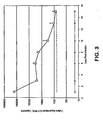
- FIG 2 and FIG 3 depict the results of the RT-PCR assays of the cell culture supernatants. RNA898 showed evidence of high infection. The negative control culture showed no HCV RNA production. Figures 2 and 3 are examples of the high level of reproducibility of this HCV assay, not obtainable using similar HCV assays.
- Cultures of human fetal cells were prepared as described in Example 1 and plated over a feeder layer of mytomycin C treated STO(Reid-99) cells. The number of cells plated were 4x10 5 / well. This represents approximately 1.9 x 10 6 Chiron bDNA Eq/well. A 200ul aliquot of serum RNA898 (or negative control serum, not shown) was added to 0.8 ml of culture medium. The culture was incubated with the virus for 24 hours at 37°C. The inoculum was removed, the cultures were washed twice with 1ml of IM-wash media, and then the cultures were either fed with fresh IM-HDM medium or harvested by disruption with lysis buffer.
- RNA samples were similarly washed, then fed or harvested on day 2, day 3, day 6, and day 8 after infection.
- the total RNA was extracted from the stored lysates using the Rneasy method (Qiagen).
- HCV RNA in the samples was measured using a quantitative multiplex HCV specific RT-PCR assay.
- the limit of quantitation (----LOQ) of the RT-PCR assay for cell associated RNA samples was 100 HCV RNA copies/sample. All negative control cultures showed no HCV RNA (data not shown).
- FIG 4 depicts the results of the RT-PCR assay of the cell-associated RNA.
- the highest levels of cell-associated HCV RNA were observed on days 2 and 3 after infection and significant HCV RNA was still present day 6 after infection.
- the increase in HCV RNA from day 1 to day 3 occurred after removal of the external inoculum, thus indicating the HCV is replicating within the cells.
- Cultures of human fetal cells were prepared as described in Example 1 and plated over a feeder layer ofmytomycin C treated STO(Reid-99) cells. The number of cells plated were 4x10 5 / well.
- a 200ul aliquot of serum RNA898 (or negative control serum, not shown) were added to 0.8 ml of culture medium and incubation performed for 24 hours at 37°C. After 24 hours, the media was removed, the cultures were washed, and the culture medium replaced with IM-HDM containing different concentrations of the compound VRT-106866 (from 0 to 10uM). Each inhibitor concentration was tested in triplicate and the positive control (no inhibitor) was performed in sextuplicate.
- HCV RNA in the samples was measured using a quantitative multiplex HCV specific RT-PCR assay. The limit of quantitation of the RT-PCR assay for cell associated RNA samples was 100 HCV RNA copies/sample.
- FIG.5 graphically depicts the results which are presented as mean and standard deviation of "% of control HCV RNA" (sample value/mean of positive control values) from the triplicate cultures.
- FIG.5 shows that VRT-106866 is an effective inhibitor of HCV infection.
Landscapes
- Health & Medical Sciences (AREA)
- Life Sciences & Earth Sciences (AREA)
- Engineering & Computer Science (AREA)
- Chemical & Material Sciences (AREA)
- Organic Chemistry (AREA)
- Zoology (AREA)
- Biomedical Technology (AREA)
- Wood Science & Technology (AREA)
- Genetics & Genomics (AREA)
- Biotechnology (AREA)
- Bioinformatics & Cheminformatics (AREA)
- General Engineering & Computer Science (AREA)
- Biochemistry (AREA)
- General Health & Medical Sciences (AREA)
- Microbiology (AREA)
- Cell Biology (AREA)
- Immunology (AREA)
- Virology (AREA)
- Medicinal Chemistry (AREA)
- Proteomics, Peptides & Aminoacids (AREA)
- Gastroenterology & Hepatology (AREA)
- Physics & Mathematics (AREA)
- Biophysics (AREA)
- Analytical Chemistry (AREA)
- Molecular Biology (AREA)
- Measuring Or Testing Involving Enzymes Or Micro-Organisms (AREA)
- Micro-Organisms Or Cultivation Processes Thereof (AREA)
- Medicines That Contain Protein Lipid Enzymes And Other Medicines (AREA)
- Peptides Or Proteins (AREA)
- Investigating Or Analysing Biological Materials (AREA)
- Semiconductor Lasers (AREA)
Claims (34)
- Composition comprenant un mélange de cellules comprenant des cellules hépatiques, des cellules hématopoïétiques libérées par le foie d'un humain âgé de trois mois ou plus après conception, et de cellules nourricières non humaines, laquelle composition peut produire plus d'environ 5 000 copies d'ARN du virus de l'hépatite C (HCV) dans le milieu soixante-douze heures après administration du virus HCV RNA898 (« RNA898 » déposé le 27 mars 2001 à l'American Type Culture Collection, 10801 University Boulevard, Manassas, VA 20110-2209; numéro de dépôt ATCC : PTA-3237) pour un mélange de cellules qui est constitué de 4 x 10⁵ cellules.
- Composition selon la revendication 1, laquelle composition est capable de produire plus d'environ 10 000 copies d'ARN de HCV soixante-douze heures après administration de RNA898 pour un mélange de cellules qui est constitué de 4 x 10⁵ cellules.
- Composition selon l'une quelconque des revendications 1 et 2, laquelle composition est capable de produire plus d'environ 50 000 copies d'ARN de HCV soixante-douze heures après administration de RNA898 pour un mélange de cellules qui est constitué de 4 x 10⁵ cellules.
- Composition comprenant un mélange de cellules préparé par les étapes suivantes(a) disséquer un foie d'un humain âgé de trois mois ou plus après conception dans un tampon comprenant de l'EGTA ;(b) incuber le foie disséqué dans un tampon comprenant de la collagénase pour séparer les cellules du foie ;(c) enlever les objets de 40 micromètres ou plus des cellules séparées ;(d) enlever les globules rouges des cellules séparées ;(e) resuspendre les cellules de l'étape (d) dans un milieu sans sérum, comprenant du calcium, des acides gras libres (FFA), de la lipoprotéine de haute densité (HDL), du nicotinamide, des oligo-éléments, du facteur de croissance épidermique (EGF), de l'insuline, de la transferrine et de l'hydrocortisone et, optionnellement, n'importe lequel des ingrédients choisis dans le groupe constitué par le glucagon, le facteur de croissance hépatique, l'éthanolamine et le facteur libérant la thyrotropine ; et(f) cultiver les cellules dans le milieu sans sérum de l'étape (e) ;laquelle composition comprend en outre des cellules nourricières non humaines.
- Composition selon la revendication 1, dans laquelle les cellules nourricières non humaines sont les cellules STO(Reid-99) (« STO(Reid-99) », déposées le 27 mars 2001 à l'American Type Culture Collection, 10801 University Boulevard, Manassas, VA 20110-2209 ; numéro de dépôt ATCC : PTA-3236).
- Composition selon la revendication 4, dans laquelle les cellules nourricières non humaines comprennent les cellules STO(Reid-99).
- Composition selon la revendication 1 ou la revendication 4, dans laquelle les cellules dans le mélange de cellules peuvent passer à travers un filtre de 40 micromètres.
- Composition selon la revendication 1 ou la revendication 4, dans laquelle le mélange de cellules comprend des cellules qui expriment la fétoprotéine alpha, des cellules qui expriment l'albumine, et des cellules qui expriment la glycophorine, mais est substantiellement exempt de cellules qui expriment la protéine CD34.
- Composition comprenant un mélange de cellules comprenant des cellules hépatiques, des cellules hématopoïétiques libérées par le foie d'un humain âgé de trois mois ou plus après conception, et de cellules nourricières non humaines, laquelle composition comprend des cellules qui expriment la fétoprotéine alpha, des cellules qui expriment l'albumine, et des cellules qui expriment la glycophorine, mais est substantiellement exempte de cellules qui expriment la protéine CD34.
- Composition selon l'une quelconque des revendications 1, 4 ou 9, comprenant en outre un milieu de culture comprenant les ingrédients suivants : milieu sans sérum, calcium, FFA, HDL, nicotinamide, oligo-éléments, EGF, insuline, transferrine et hydrocortisone et, optionnellement, n'importe lequel des ingrédients choisis dans le groupe constitué par le glucagon, le facteur de croissance hépatique, l'éthanolamine et le facteur libérant la thyrotropine.
- Composition selon la revendication 10, dans laquelle le milieu de culture ne comprend pas de lipoprotéine de basse densité (LDL).
- Composition selon l'une quelconque des revendications 1, 4 ou 9, comprenant en outre une matrice extracellulaire.
- Composition selon la revendication 9, dans laquelle la présence de la protéine CD34 est détectée par un procédé choisi dans le groupe constitué par une immunofluorescence ou une immunocoloration à la peroxydase.
- Composition selon l'une quelconque des revendications 1, 4 ou 9, comprenant en outre un HCV.
- Composition selon la revendication 14, dans laquelle le HCV est RNA898.
- Procédé pour isoler et cultiver un mélange de cellules, comprenant les étapes suivantes :(a) disséquer un foie d'un humain âgé de trois mois ou plus après conception dans un tampon comprenant de l'EGTA ;(b) incuber le foie disséqué dans un tampon comprenant de la collagénase pour séparer les cellules du foie ;(c) enlever les objets de 40 micromètres ou plus des cellules séparées ;(d) enlever les globules rouges des cellules séparées ;(e) resuspendre les cellules de l'étape (d) dans un milieu sans sérum, comprenant du calcium, des FFA, de la HDL, du nicotinamide, des oligo-éléments, de l'EGF, de l'insuline, de la transferrine, de l'hydrocortisone et, optionnellement, comprenant en outre n'importe lequel des ingrédients choisis dans le groupe constitué par : le glucagon, le facteur de croissance hépatique, l'éthanolamine et le facteur libérant la thyrotropine ; et(f) cultiver les cellules dans le milieu sans sérum de l'étape (e) et en présence de cellules nourricières non humaines.
- Procédé selon la revendication 16, dans lequel les globules rouges sont enlevés par centrifugation des cellules suspendues à une basse vitesse (50 x g) pour former un culot des cellules plus grandes pendant environ 3 à 4 minutes, lavage des cellules qui forment le culot et répétition des étapes de centrifugation et de lavage.
- Procédé selon la revendication 16, dans lequel le milieu sans sérum ne contient pas de lipoprotéine de basse densité (LDL).
- Procédé pour infecter des cellules avec HCV, comprenant l'étape de mise en contact de la composition de l'une quelconque des revendications 1, 4 ou 9 ou le mélange de cellules préparé conformément au procédé de la revendication 16 ou 18 avec le virus HCV RNA898 ou son équivalent infectieux.
- Procédé selon la revendication 19, dans lequel le virus HCV est ajouté à la composition et incubé pendant environ 24 heures à environ 37 °C dans un volume d'environ 0,52 ml par cm2 avant lavage des cellules dans la composition.
- Procédé pour analyser une infection par HCV, comprenant les étapes suivantes :(a) incuber la composition selon l'une quelconque des revendications 1, 4 ou 9 ou un mélange de cellules préparé conformément au procédé de la revendication 16 ou 18 avec des cellules nourricières non humaines ;(b) mettre en contact les cellules dans la composition avec du RNA898 ou son équivalent infectieux ; et(c) mesurer la présence d'ARN de HCV associé aux cellules de la composition, au milieu dans lequel les cellules sont cultivées, ou à la fois aux cellules et au milieu.
- Procédé selon la revendication 21, dans lequel les cellules nourricières non humaines sont les cellules STO(Reid-99).
- Procédé selon la revendication 21, dans lequel la quantité d'ARN de HCV est mesurée par comparaison de (a) la quantité d'ARN de HCV présent associé aux cellules ou au milieu dans lequel les cellules sont cultivées avec (b) une quantité d'ARN provenant d'un deuxième virus qui est utilisé comme contrôle interne.
- Procédé selon la revendication 23, dans lequel le deuxième ARN viral provient du virus de la diarrhée virale bovine (BVDV).
- Procédé pour évaluer l'aptitude d'un composé à affecter la production d'un HCV, comprenant les étapes suivantes :(a) incuber la composition selon l'une quelconque des revendications 1, 4 ou 9 ou un mélange de cellules préparé conformément au procédé de la revendication 16 ou 18 avec des cellules nourricières non humaines ;(b) mettre en contact les cellules dans la composition avec du RNA898 ;(c) administrer le composé à la composition avant ou après mise en contact des cellules avec du RNA898 ou son équivalent infectieux ;(d) mesurer le HCV associé aux cellules, au milieu dans lequel les cellules sont cultivées, ou à la fois aux cellules et au milieu.
- Procédé selon la revendication 25, dans lequel le composé inhibe la production de HCV.
- Procédé selon la revendication 25, dans lequel une pluralité de composés sont criblés simultanément pour leur aptitude à inhiber la production de HCV.
- Procédé selon la revendication 25, comprenant l'étape supplémentaire consistant à comparer la mesure de l'étape (d) avec la quantité de HCV associé aux cellules contrôles, au milieu dans lequel les cellules contrôles sont cultivées ou à la fois aux cellules contrôles et au milieu, dans lequel les cellules contrôles ont été soumises aux étapes (a) à (d), sauf qu'aucun composé n'a été administré ou qu'un composé inactif connu a été administré.
- Procédé selon la revendication 25, dans lequel les cellules nourricières non humaines sont les cellules STO(Reid-99).
- Procédé selon la revendication 25, dans lequel la présence de HCV est mesurée par détermination de la quantité d'ARN de HCV associé aux cellules ou au milieu dans lequel les cellules sont cultivées.
- Procédé selon la revendication 30, dans lequel la quantité d'ARN de HCV est déterminée par une réaction d'amplification en chaîne par polymérase et transcriptase inverse (RT-PCR).
- Procédé selon la revendication 31, dans lequel la quantité d'ARN de HCV est mesurée par comparaison de (a) la quantité d'ARN de HCV associé aux cellules ou au milieu dans lequel les cellules sont cultivées avec (b) une quantité d'ARN provenant d'un deuxième virus qui est utilisé comme contrôle interne.
- Procédé selon la revendication 32, dans lequel le deuxième virus est le virus de la diarrhée virale bovine (BVDV).
- Procédé selon la revendication 16, dans lequel les cellules nourricières non humaines comprennent des cellules STO(Reid-99).
Applications Claiming Priority (3)
| Application Number | Priority Date | Filing Date | Title |
|---|---|---|---|
| US27917401P | 2001-03-27 | 2001-03-27 | |
| US279174P | 2001-03-27 | ||
| PCT/US2002/009685 WO2002077206A1 (fr) | 2001-03-27 | 2002-03-27 | Composition et methodes de traitement de l'infection par le vhc |
Publications (3)
| Publication Number | Publication Date |
|---|---|
| EP1381673A1 EP1381673A1 (fr) | 2004-01-21 |
| EP1381673A4 EP1381673A4 (fr) | 2004-11-10 |
| EP1381673B1 true EP1381673B1 (fr) | 2009-05-13 |
Family
ID=23067944
Family Applications (1)
| Application Number | Title | Priority Date | Filing Date |
|---|---|---|---|
| EP20020753872 Expired - Lifetime EP1381673B1 (fr) | 2001-03-27 | 2002-03-27 | Composition et methodes aproprie de l'infection par le vhc |
Country Status (14)
| Country | Link |
|---|---|
| US (3) | US7879606B2 (fr) |
| EP (1) | EP1381673B1 (fr) |
| JP (2) | JP4499990B2 (fr) |
| KR (1) | KR100947911B1 (fr) |
| CN (1) | CN100362095C (fr) |
| AT (1) | ATE431396T1 (fr) |
| CA (1) | CA2441688C (fr) |
| DE (1) | DE60232322D1 (fr) |
| ES (1) | ES2328466T3 (fr) |
| MX (1) | MXPA03008882A (fr) |
| NO (1) | NO20034278L (fr) |
| NZ (1) | NZ528462A (fr) |
| WO (1) | WO2002077206A1 (fr) |
| ZA (1) | ZA200307373B (fr) |
Families Citing this family (17)
| Publication number | Priority date | Publication date | Assignee | Title |
|---|---|---|---|---|
| AP1019A (en) | 1996-10-18 | 2001-10-16 | Vertex Pharma | Inhibitors of serinre proteases, particularly hepatitis C virus NS3 protease. |
| SV2003000617A (es) | 2000-08-31 | 2003-01-13 | Lilly Co Eli | Inhibidores de la proteasa peptidomimetica ref. x-14912m |
| US8323897B2 (en) * | 2002-12-04 | 2012-12-04 | Applied Biosystems, Llc | Multiplex amplification of polynucleotides |
| UY28500A1 (es) | 2003-09-05 | 2005-04-29 | Vertex Pharma | Inhibidores de proteasas de serina, en particular proteasa ns3-ns4a del vhc. |
| WO2005054450A1 (fr) * | 2003-12-01 | 2005-06-16 | Vertex Pharmaceuticals Incorporated | Compositions renfermant des cellules hepatiques foetales, et procedes utiles pour le traitement de l'infection par le vhc |
| US8399615B2 (en) | 2005-08-19 | 2013-03-19 | Vertex Pharmaceuticals Incorporated | Processes and intermediates |
| US7964624B1 (en) | 2005-08-26 | 2011-06-21 | Vertex Pharmaceuticals Incorporated | Inhibitors of serine proteases |
| AR055395A1 (es) | 2005-08-26 | 2007-08-22 | Vertex Pharma | Compuestos inhibidores de la actividad de la serina proteasa ns3-ns4a del virus de la hepatitis c |
| AU2007217355B2 (en) | 2006-02-27 | 2012-06-21 | Vertex Pharmaceuticals Incorporated | Co-crystals comprising VX-950 and pharmaceutical compositions comprising the same |
| WO2007109080A2 (fr) | 2006-03-16 | 2007-09-27 | Vertex Pharmaceuticals Incorporated | Inhibiteurs de protéase de l'hépatite c deutérés |
| WO2008106058A2 (fr) | 2007-02-27 | 2008-09-04 | Vertex Pharmaceuticals Incorporated | Inhibiteurs de sérine protéases |
| HRP20120330T1 (hr) | 2007-02-27 | 2012-05-31 | Vertex Pharmaceuticals Incorporated | Sukristali i farmaceutski pripravci koji ih sadrže |
| NZ583699A (en) | 2007-08-30 | 2012-04-27 | Vertex Pharma | Co-crystals of vx-950 (telaprevir) other components and pharmaceutical compositions comprising the same |
| NZ585259A (en) | 2007-12-04 | 2011-12-22 | Prionics Ag | Method for detecting bovine viral diarrhea virus (bvdv) in tissue samples using collagenase |
| CN101906487A (zh) * | 2010-08-05 | 2010-12-08 | 中国兽医药品监察所 | 一种猪瘟病毒核酸标准物质的制备方法 |
| DK2890779T3 (da) * | 2012-08-31 | 2017-11-27 | Univ Alberta | Fremgangsmåder til fremstilling af celler med en fænotype af primære humane hepatocytter og sammensætninger |
| EP3289074B1 (fr) | 2015-04-28 | 2023-10-04 | Université de Strasbourg | Modèle de culture de cellules humaines sur la base de signatures génétiques cliniques |
Family Cites Families (19)
| Publication number | Priority date | Publication date | Assignee | Title |
|---|---|---|---|---|
| US5529920A (en) * | 1988-12-14 | 1996-06-25 | The United States Of America As Represented By The Secretary Of The Department Of Health And Human Services | Human liver epithelial cell line and culture media therefor |
| US5849686A (en) | 1991-03-11 | 1998-12-15 | Creative Biomolecules, Inc. | Morphogen-induced liver regeneration |
| US6069005A (en) | 1991-08-07 | 2000-05-30 | Albert Einstein College Of Medicine Of Yeshwa University | Hapatoblasts and method of isolating same |
| AU667680B2 (en) | 1991-08-07 | 1996-04-04 | Albert Einstein College Of Medicine Of Yeshiva University | Proliferation of hepatocyte precursors |
| ES2260759T3 (es) | 1993-11-19 | 2006-11-01 | Albert Einstein College Of Medicine Of Yeshiva University, A Division Of Yeshiva University | Hepatoblastos y metodo de aislamiento de los mismos. |
| EP0841942B2 (fr) * | 1995-08-01 | 2007-12-12 | Sanofi Pasteur | Procede de production industrielle d'un vaccin contre l'encephalite japonaise et vaccin obtenu |
| US6127116A (en) * | 1995-08-29 | 2000-10-03 | Washington University | Functional DNA clone for hepatitis C virus (HCV) and uses thereof |
| ES2278399T3 (es) * | 1996-11-20 | 2007-08-01 | Introgen Therapeutics, Inc. | Metodo mejorado para la produccion y purificacion de vectores adenovirales. |
| US6133030A (en) * | 1997-05-14 | 2000-10-17 | The General Hospital Corporation | Co-cultivation of cells in a micropatterned configuration |
| FR2775983B1 (fr) * | 1998-03-13 | 2000-11-10 | Pasteur Merieux Serums Vacc | Milieu et procede de propagation et de multiplication virales |
| EP0972828A1 (fr) | 1998-06-24 | 2000-01-19 | Institut National De La Sante Et De La Recherche Medicale (Inserm) | Procés pour la réplication in vitro du HCV |
| JP4498614B2 (ja) * | 1998-12-07 | 2010-07-07 | デューク ユニバーシティ | 幹細胞の単離方法 |
| HK1046930B (zh) | 1999-01-19 | 2012-08-10 | 查珀尔希尔北卡罗来纳大学 | 人肝脏祖先 |
| US20020187133A1 (en) | 1999-10-01 | 2002-12-12 | Hiroshi Kubota | Methods of isolating bipotent hepatic progenitor cells |
| WO2001053462A1 (fr) | 2000-01-19 | 2001-07-26 | University Of North Carolina At Chapel Hill | Source de tissu hepatique |
| CA2424779C (fr) | 2000-10-03 | 2016-08-23 | University Of North Carolina At Chapel Hill | Procede de multiplication par clonage de cellules souches hepathiques |
| WO2002028997A2 (fr) | 2000-10-03 | 2002-04-11 | University Of North Carolina | Procedes permettant d'isoler des cellules souches hepatiques bipotentes |
| CN1592794A (zh) | 2001-03-09 | 2005-03-09 | 加利福尼亚大学董事会 | 用于合成感染性丙型肝炎病毒的细胞培养系统 |
| EP1565552A4 (fr) * | 2002-07-01 | 2006-05-10 | Pharmacia Corp | Gene esm-1 exprime differentiellement dans l'angiogenese, antagonistes de dernier et methodes d'utilisation correspondantes |
-
2002
- 2002-03-27 EP EP20020753872 patent/EP1381673B1/fr not_active Expired - Lifetime
- 2002-03-27 JP JP2002576649A patent/JP4499990B2/ja not_active Expired - Fee Related
- 2002-03-27 CA CA 2441688 patent/CA2441688C/fr not_active Expired - Fee Related
- 2002-03-27 ES ES02753872T patent/ES2328466T3/es not_active Expired - Lifetime
- 2002-03-27 DE DE60232322T patent/DE60232322D1/de not_active Expired - Lifetime
- 2002-03-27 MX MXPA03008882A patent/MXPA03008882A/es active IP Right Grant
- 2002-03-27 NZ NZ528462A patent/NZ528462A/en not_active IP Right Cessation
- 2002-03-27 KR KR20037012663A patent/KR100947911B1/ko not_active Expired - Fee Related
- 2002-03-27 CN CNB028074181A patent/CN100362095C/zh not_active Expired - Fee Related
- 2002-03-27 WO PCT/US2002/009685 patent/WO2002077206A1/fr not_active Ceased
- 2002-03-27 AT AT02753872T patent/ATE431396T1/de not_active IP Right Cessation
- 2002-03-27 US US10/109,298 patent/US7879606B2/en not_active Expired - Fee Related
-
2003
- 2003-09-22 ZA ZA2003/07373A patent/ZA200307373B/en unknown
- 2003-09-25 NO NO20034278A patent/NO20034278L/no not_active Application Discontinuation
-
2010
- 2010-02-19 JP JP2010034585A patent/JP2010142249A/ja active Pending
-
2011
- 2011-01-25 US US13/013,758 patent/US8211696B2/en not_active Expired - Fee Related
-
2012
- 2012-06-29 US US13/538,777 patent/US20130071834A1/en not_active Abandoned
Also Published As
| Publication number | Publication date |
|---|---|
| MXPA03008882A (es) | 2003-12-08 |
| ZA200307373B (en) | 2005-06-29 |
| JP2010142249A (ja) | 2010-07-01 |
| HK1063334A1 (en) | 2004-12-24 |
| JP2004529637A (ja) | 2004-09-30 |
| NO20034278D0 (no) | 2003-09-25 |
| KR100947911B1 (ko) | 2010-03-17 |
| NO20034278L (no) | 2003-11-25 |
| WO2002077206A1 (fr) | 2002-10-03 |
| CN1511190A (zh) | 2004-07-07 |
| US8211696B2 (en) | 2012-07-03 |
| NZ528462A (en) | 2005-11-25 |
| US7879606B2 (en) | 2011-02-01 |
| CN100362095C (zh) | 2008-01-16 |
| EP1381673A1 (fr) | 2004-01-21 |
| ES2328466T3 (es) | 2009-11-13 |
| CA2441688A1 (fr) | 2002-10-03 |
| JP4499990B2 (ja) | 2010-07-14 |
| US20020142449A1 (en) | 2002-10-03 |
| ATE431396T1 (de) | 2009-05-15 |
| DE60232322D1 (de) | 2009-06-25 |
| KR20040012739A (ko) | 2004-02-11 |
| US20110229874A1 (en) | 2011-09-22 |
| US20130071834A1 (en) | 2013-03-21 |
| EP1381673A4 (fr) | 2004-11-10 |
| WO2002077206A9 (fr) | 2004-02-19 |
| CA2441688C (fr) | 2014-01-21 |
Similar Documents
| Publication | Publication Date | Title |
|---|---|---|
| US8211696B2 (en) | Method useful for HCV RNA898 infection | |
| US7575911B2 (en) | Hepatocyte bioreactor system for long term culture of functional hepatocyte spheroids | |
| US20050287514A1 (en) | Compositions and methods useful for HCV infection | |
| JP2004529637A5 (fr) | ||
| Fukaya et al. | Establishment of a human hepatocyte line (OUMS-29) having CYP 1A1 and 1A2 activities from fetal liver tissue by transfection of SV40 LT | |
| AU2008201814B2 (en) | Compositions and Methods Useful for HCV Infection | |
| HK1063334B (en) | Compositions and methods useful for hcv infection | |
| AU2002306946A1 (en) | Compositiona and methods useful for HCV infection | |
| Kano et al. | Establishment of hepatic stem-like cell lines from normal adult porcine liver in a poly-D-lysine-coated dish with NAIR-1 medium | |
| US20040029153A1 (en) | Method for estimating metabolic function of xenobiotic and induction thereof | |
| JP2009153383A (ja) | 成熟肝細胞様細胞の製造方法 | |
| Morel-Chany et al. | Progression of spontaneous malignant transformation of epithelial rat liver cell lines | |
| HK1100226B (en) | Compositions comprising fetal liver cells and methods useful for hcv infection |
Legal Events
| Date | Code | Title | Description |
|---|---|---|---|
| PUAI | Public reference made under article 153(3) epc to a published international application that has entered the european phase |
Free format text: ORIGINAL CODE: 0009012 |
|
| 17P | Request for examination filed |
Effective date: 20031008 |
|
| AK | Designated contracting states |
Kind code of ref document: A1 Designated state(s): AT BE CH CY DE DK ES FI FR GB GR IE IT LI LU MC NL PT SE TR |
|
| AX | Request for extension of the european patent |
Extension state: AL LT LV MK RO SI |
|
| A4 | Supplementary search report drawn up and despatched |
Effective date: 20040929 |
|
| REG | Reference to a national code |
Ref country code: HK Ref legal event code: DE Ref document number: 1063334 Country of ref document: HK |
|
| 17Q | First examination report despatched |
Effective date: 20041222 |
|
| GRAP | Despatch of communication of intention to grant a patent |
Free format text: ORIGINAL CODE: EPIDOSNIGR1 |
|
| GRAS | Grant fee paid |
Free format text: ORIGINAL CODE: EPIDOSNIGR3 |
|
| GRAA | (expected) grant |
Free format text: ORIGINAL CODE: 0009210 |
|
| AK | Designated contracting states |
Kind code of ref document: B1 Designated state(s): AT BE CH CY DE DK ES FI FR GB GR IE IT LI LU MC NL PT SE TR |
|
| AX | Request for extension of the european patent |
Extension state: AL LT LV MK RO SI |
|
| REG | Reference to a national code |
Ref country code: GB Ref legal event code: FG4D |
|
| REG | Reference to a national code |
Ref country code: CH Ref legal event code: EP |
|
| REG | Reference to a national code |
Ref country code: IE Ref legal event code: FG4D |
|
| REF | Corresponds to: |
Ref document number: 60232322 Country of ref document: DE Date of ref document: 20090625 Kind code of ref document: P |
|
| REG | Reference to a national code |
Ref country code: SE Ref legal event code: TRGR |
|
| LTIE | Lt: invalidation of european patent or patent extension |
Effective date: 20090513 |
|
| PG25 | Lapsed in a contracting state [announced via postgrant information from national office to epo] |
Ref country code: AT Free format text: LAPSE BECAUSE OF FAILURE TO SUBMIT A TRANSLATION OF THE DESCRIPTION OR TO PAY THE FEE WITHIN THE PRESCRIBED TIME-LIMIT Effective date: 20090513 Ref country code: PT Free format text: LAPSE BECAUSE OF FAILURE TO SUBMIT A TRANSLATION OF THE DESCRIPTION OR TO PAY THE FEE WITHIN THE PRESCRIBED TIME-LIMIT Effective date: 20090913 Ref country code: FI Free format text: LAPSE BECAUSE OF FAILURE TO SUBMIT A TRANSLATION OF THE DESCRIPTION OR TO PAY THE FEE WITHIN THE PRESCRIBED TIME-LIMIT Effective date: 20090513 |
|
| REG | Reference to a national code |
Ref country code: CH Ref legal event code: NV Representative=s name: BOVARD AG PATENTANWAELTE |
|
| REG | Reference to a national code |
Ref country code: ES Ref legal event code: FG2A Ref document number: 2328466 Country of ref document: ES Kind code of ref document: T3 |
|
| REG | Reference to a national code |
Ref country code: HK Ref legal event code: GR Ref document number: 1063334 Country of ref document: HK |
|
| PG25 | Lapsed in a contracting state [announced via postgrant information from national office to epo] |
Ref country code: DK Free format text: LAPSE BECAUSE OF FAILURE TO SUBMIT A TRANSLATION OF THE DESCRIPTION OR TO PAY THE FEE WITHIN THE PRESCRIBED TIME-LIMIT Effective date: 20090513 |
|
| PLBE | No opposition filed within time limit |
Free format text: ORIGINAL CODE: 0009261 |
|
| STAA | Information on the status of an ep patent application or granted ep patent |
Free format text: STATUS: NO OPPOSITION FILED WITHIN TIME LIMIT |
|
| 26N | No opposition filed |
Effective date: 20100216 |
|
| PG25 | Lapsed in a contracting state [announced via postgrant information from national office to epo] |
Ref country code: MC Free format text: LAPSE BECAUSE OF NON-PAYMENT OF DUE FEES Effective date: 20100331 Ref country code: GR Free format text: LAPSE BECAUSE OF FAILURE TO SUBMIT A TRANSLATION OF THE DESCRIPTION OR TO PAY THE FEE WITHIN THE PRESCRIBED TIME-LIMIT Effective date: 20090814 |
|
| REG | Reference to a national code |
Ref country code: CH Ref legal event code: PFA Owner name: VERTEX PHARMACEUTICALS INCORPORATED Free format text: VERTEX PHARMACEUTICALS INCORPORATED#130 WAVERLY STREET#CAMBRIDGE, MA 02139-4242 (US) -TRANSFER TO- VERTEX PHARMACEUTICALS INCORPORATED#130 WAVERLY STREET#CAMBRIDGE, MA 02139-4242 (US) |
|
| PG25 | Lapsed in a contracting state [announced via postgrant information from national office to epo] |
Ref country code: CY Free format text: LAPSE BECAUSE OF FAILURE TO SUBMIT A TRANSLATION OF THE DESCRIPTION OR TO PAY THE FEE WITHIN THE PRESCRIBED TIME-LIMIT Effective date: 20090513 |
|
| PG25 | Lapsed in a contracting state [announced via postgrant information from national office to epo] |
Ref country code: LU Free format text: LAPSE BECAUSE OF NON-PAYMENT OF DUE FEES Effective date: 20100327 |
|
| PG25 | Lapsed in a contracting state [announced via postgrant information from national office to epo] |
Ref country code: TR Free format text: LAPSE BECAUSE OF FAILURE TO SUBMIT A TRANSLATION OF THE DESCRIPTION OR TO PAY THE FEE WITHIN THE PRESCRIBED TIME-LIMIT Effective date: 20090513 |
|
| PGFP | Annual fee paid to national office [announced via postgrant information from national office to epo] |
Ref country code: IE Payment date: 20140327 Year of fee payment: 13 Ref country code: CH Payment date: 20140327 Year of fee payment: 13 Ref country code: SE Payment date: 20140327 Year of fee payment: 13 Ref country code: NL Payment date: 20140326 Year of fee payment: 13 |
|
| PGFP | Annual fee paid to national office [announced via postgrant information from national office to epo] |
Ref country code: IT Payment date: 20140321 Year of fee payment: 13 Ref country code: FR Payment date: 20140317 Year of fee payment: 13 Ref country code: ES Payment date: 20140326 Year of fee payment: 13 |
|
| PGFP | Annual fee paid to national office [announced via postgrant information from national office to epo] |
Ref country code: GB Payment date: 20140327 Year of fee payment: 13 |
|
| PGFP | Annual fee paid to national office [announced via postgrant information from national office to epo] |
Ref country code: BE Payment date: 20140328 Year of fee payment: 13 |
|
| PGFP | Annual fee paid to national office [announced via postgrant information from national office to epo] |
Ref country code: DE Payment date: 20140327 Year of fee payment: 13 |
|
| REG | Reference to a national code |
Ref country code: DE Ref legal event code: R119 Ref document number: 60232322 Country of ref document: DE |
|
| REG | Reference to a national code |
Ref country code: CH Ref legal event code: PL |
|
| GBPC | Gb: european patent ceased through non-payment of renewal fee |
Effective date: 20150327 |
|
| PG25 | Lapsed in a contracting state [announced via postgrant information from national office to epo] |
Ref country code: SE Free format text: LAPSE BECAUSE OF NON-PAYMENT OF DUE FEES Effective date: 20150328 |
|
| REG | Reference to a national code |
Ref country code: SE Ref legal event code: EUG |
|
| REG | Reference to a national code |
Ref country code: NL Ref legal event code: MM Effective date: 20150401 |
|
| PG25 | Lapsed in a contracting state [announced via postgrant information from national office to epo] |
Ref country code: IT Free format text: LAPSE BECAUSE OF NON-PAYMENT OF DUE FEES Effective date: 20150327 |
|
| REG | Reference to a national code |
Ref country code: FR Ref legal event code: ST Effective date: 20151130 |
|
| REG | Reference to a national code |
Ref country code: IE Ref legal event code: MM4A |
|
| PG25 | Lapsed in a contracting state [announced via postgrant information from national office to epo] |
Ref country code: DE Free format text: LAPSE BECAUSE OF NON-PAYMENT OF DUE FEES Effective date: 20151001 Ref country code: CH Free format text: LAPSE BECAUSE OF NON-PAYMENT OF DUE FEES Effective date: 20150331 Ref country code: LI Free format text: LAPSE BECAUSE OF NON-PAYMENT OF DUE FEES Effective date: 20150331 Ref country code: IE Free format text: LAPSE BECAUSE OF NON-PAYMENT OF DUE FEES Effective date: 20150327 Ref country code: GB Free format text: LAPSE BECAUSE OF NON-PAYMENT OF DUE FEES Effective date: 20150327 |
|
| PG25 | Lapsed in a contracting state [announced via postgrant information from national office to epo] |
Ref country code: FR Free format text: LAPSE BECAUSE OF NON-PAYMENT OF DUE FEES Effective date: 20150331 |
|
| REG | Reference to a national code |
Ref country code: ES Ref legal event code: FD2A Effective date: 20160426 |
|
| PG25 | Lapsed in a contracting state [announced via postgrant information from national office to epo] |
Ref country code: ES Free format text: LAPSE BECAUSE OF NON-PAYMENT OF DUE FEES Effective date: 20150328 |
|
| PG25 | Lapsed in a contracting state [announced via postgrant information from national office to epo] |
Ref country code: NL Free format text: LAPSE BECAUSE OF NON-PAYMENT OF DUE FEES Effective date: 20150401 |
|
| PG25 | Lapsed in a contracting state [announced via postgrant information from national office to epo] |
Ref country code: BE Free format text: LAPSE BECAUSE OF NON-PAYMENT OF DUE FEES Effective date: 20150331 |