EP1388990A2 - Sichere Übertragung digitaler Wertmarken - Google Patents
Sichere Übertragung digitaler Wertmarken Download PDFInfo
- Publication number
- EP1388990A2 EP1388990A2 EP03017946A EP03017946A EP1388990A2 EP 1388990 A2 EP1388990 A2 EP 1388990A2 EP 03017946 A EP03017946 A EP 03017946A EP 03017946 A EP03017946 A EP 03017946A EP 1388990 A2 EP1388990 A2 EP 1388990A2
- Authority
- EP
- European Patent Office
- Prior art keywords
- token
- digital
- dth2
- encrypted
- digital token
- Prior art date
- Legal status (The legal status is an assumption and is not a legal conclusion. Google has not performed a legal analysis and makes no representation as to the accuracy of the status listed.)
- Granted
Links
Images

Classifications
-
- H—ELECTRICITY
- H04—ELECTRIC COMMUNICATION TECHNIQUE
- H04L—TRANSMISSION OF DIGITAL INFORMATION, e.g. TELEGRAPHIC COMMUNICATION
- H04L63/00—Network architectures or network communication protocols for network security
- H04L63/04—Network architectures or network communication protocols for network security for providing a confidential data exchange among entities communicating through data packet networks
- H04L63/0407—Network architectures or network communication protocols for network security for providing a confidential data exchange among entities communicating through data packet networks wherein the identity of one or more communicating identities is hidden
- H04L63/0414—Network architectures or network communication protocols for network security for providing a confidential data exchange among entities communicating through data packet networks wherein the identity of one or more communicating identities is hidden during transmission, i.e. party's identity is protected against eavesdropping, e.g. by using temporary identifiers, but is known to the other party or parties involved in the communication
-
- G—PHYSICS
- G06—COMPUTING OR CALCULATING; COUNTING
- G06Q—INFORMATION AND COMMUNICATION TECHNOLOGY [ICT] SPECIALLY ADAPTED FOR ADMINISTRATIVE, COMMERCIAL, FINANCIAL, MANAGERIAL OR SUPERVISORY PURPOSES; SYSTEMS OR METHODS SPECIALLY ADAPTED FOR ADMINISTRATIVE, COMMERCIAL, FINANCIAL, MANAGERIAL OR SUPERVISORY PURPOSES, NOT OTHERWISE PROVIDED FOR
- G06Q20/00—Payment architectures, schemes or protocols
- G06Q20/02—Payment architectures, schemes or protocols involving a neutral party, e.g. certification authority, notary or trusted third party [TTP]
-
- G—PHYSICS
- G06—COMPUTING OR CALCULATING; COUNTING
- G06Q—INFORMATION AND COMMUNICATION TECHNOLOGY [ICT] SPECIALLY ADAPTED FOR ADMINISTRATIVE, COMMERCIAL, FINANCIAL, MANAGERIAL OR SUPERVISORY PURPOSES; SYSTEMS OR METHODS SPECIALLY ADAPTED FOR ADMINISTRATIVE, COMMERCIAL, FINANCIAL, MANAGERIAL OR SUPERVISORY PURPOSES, NOT OTHERWISE PROVIDED FOR
- G06Q20/00—Payment architectures, schemes or protocols
- G06Q20/04—Payment circuits
- G06Q20/06—Private payment circuits, e.g. involving electronic currency used among participants of a common payment scheme
-
- G—PHYSICS
- G06—COMPUTING OR CALCULATING; COUNTING
- G06Q—INFORMATION AND COMMUNICATION TECHNOLOGY [ICT] SPECIALLY ADAPTED FOR ADMINISTRATIVE, COMMERCIAL, FINANCIAL, MANAGERIAL OR SUPERVISORY PURPOSES; SYSTEMS OR METHODS SPECIALLY ADAPTED FOR ADMINISTRATIVE, COMMERCIAL, FINANCIAL, MANAGERIAL OR SUPERVISORY PURPOSES, NOT OTHERWISE PROVIDED FOR
- G06Q20/00—Payment architectures, schemes or protocols
- G06Q20/22—Payment schemes or models
- G06Q20/29—Payment schemes or models characterised by micropayments
-
- G—PHYSICS
- G06—COMPUTING OR CALCULATING; COUNTING
- G06Q—INFORMATION AND COMMUNICATION TECHNOLOGY [ICT] SPECIALLY ADAPTED FOR ADMINISTRATIVE, COMMERCIAL, FINANCIAL, MANAGERIAL OR SUPERVISORY PURPOSES; SYSTEMS OR METHODS SPECIALLY ADAPTED FOR ADMINISTRATIVE, COMMERCIAL, FINANCIAL, MANAGERIAL OR SUPERVISORY PURPOSES, NOT OTHERWISE PROVIDED FOR
- G06Q20/00—Payment architectures, schemes or protocols
- G06Q20/38—Payment protocols; Details thereof
- G06Q20/382—Payment protocols; Details thereof insuring higher security of transaction
- G06Q20/3823—Payment protocols; Details thereof insuring higher security of transaction combining multiple encryption tools for a transaction
-
- G—PHYSICS
- G06—COMPUTING OR CALCULATING; COUNTING
- G06Q—INFORMATION AND COMMUNICATION TECHNOLOGY [ICT] SPECIALLY ADAPTED FOR ADMINISTRATIVE, COMMERCIAL, FINANCIAL, MANAGERIAL OR SUPERVISORY PURPOSES; SYSTEMS OR METHODS SPECIALLY ADAPTED FOR ADMINISTRATIVE, COMMERCIAL, FINANCIAL, MANAGERIAL OR SUPERVISORY PURPOSES, NOT OTHERWISE PROVIDED FOR
- G06Q20/00—Payment architectures, schemes or protocols
- G06Q20/38—Payment protocols; Details thereof
- G06Q20/382—Payment protocols; Details thereof insuring higher security of transaction
- G06Q20/3829—Payment protocols; Details thereof insuring higher security of transaction involving key management
-
- H—ELECTRICITY
- H04—ELECTRIC COMMUNICATION TECHNIQUE
- H04L—TRANSMISSION OF DIGITAL INFORMATION, e.g. TELEGRAPHIC COMMUNICATION
- H04L63/00—Network architectures or network communication protocols for network security
- H04L63/08—Network architectures or network communication protocols for network security for authentication of entities
- H04L63/0823—Network architectures or network communication protocols for network security for authentication of entities using certificates
Definitions
- the present invention relates to a system for securely transferring digital tokens by electronic means and a method for conducting the same.
- the present invention seeks to provide a solution that does not suffer from at least one of these disadvantages.
- token is used to mean a representation of something having value.
- a token may represent cash, tickets, gift vouchers, reward/loyalty points etc.
- a token can be a discrete item that may only be exchanged intact, such as a ticket.
- a token can be an item that is transient and merely representative of the value of the item, such as the amount of currency being transferred.
- a system for securely transferring digital tokens by electronic means comprising at least:
- a digital token holder comprising at least:
- the means for said token holders to communicate within the digital token handling domain is in the form of a digital cashier that resides in each token holder.
- the means for said token holders to communicate outside the digital token handling domain is in the form of a digital cashier that resides within the token holder.
- the means for encrypting and decrypting secure communications is in the form of a control means resident within each token holder.
- each control means operates according to a pre-programmed method of encrypting and decrypting communication to and from the respective digital cashier.
- control means controls stores digital tokens according to a pre-programmed method based on information encrypted within communications with other token holders and predetermined trusted parties.
- each type of digital token within the secure digital token handling domain remains constant except where digital tokens are added to the secure digital token handling domain by a source predetermined trusted third party or digital tokens are removed from the secure digital token handling domain by a sink trusted third party.
- the one or more trusted authorities provide each token holder with a decryption key for use in decrypting encrypted communication with other token holders.
- each token handler has a unique identification.
- the decryption key provided by each trusted authority is a private key capable of decrypting a message encrypted with a public key derived from the identification of the respective token holder.
- a method of exchange of digital tokens including the steps of:
- the digital token is for the transfer of a currency
- the token including an amount of currency transferred
- transfer of the digital token according to the encrypted message includes adding the amount to a store of currency in the second token holder.
- DTH1 is provided with an identification ID1.
- DTH2 is provided with an identification ID2.
- the method further includes the step of a first trusted authority providing the DTH1 with a first private key capable of decrypting a message encrypted with a public key derived from ID1
- a first public key includes or is derived from a temporal value. More preferably the first private key is capable of decrypting a message encrypted with the first public key.
- the method includes the step of providing the DTH2 with a second private key capable of decrypting a message encrypted with a public key derived from ID2.
- the second public key includes or is derived from a temporal value.
- the second private key is capable of decrypting a message encrypted with the second public key.
- the method includes the step of providing the DTH2 with a symmetrical encryption key capable of encrypting a message that can be decrypted using the symmetrical encryption key or a decryption key derived from the symmetrical key (hereafter symmetrical decryption key).
- a symmetrical encryption key capable of encrypting a message that can be decrypted using the symmetrical encryption key or a decryption key derived from the symmetrical key (hereafter symmetrical decryption key).
- the symmetrical encryption key is permanently stored in the DTH2.
- the symmetrical encryption key is generated by DTH2.
- the symmetrical decryption key is permanently stored in DTK2.
- the symmetrical decryption key is generated by DTH2.
- the method includes the step of DTH1 providing DTH2 with ID1.
- the method further includes the step of DTH2 encrypting the symmetrical encryption key and ID2 using a public key derived from ID1 to provide a first encrypted message. More preferably the public key is also derived from a temporal value.
- DTH2 provides DTH1 with the first encrypted message.
- the method further includes the step of DTH1 using the first decryption key to decrypt the first encrypted message to obtain the symmetrical encryption key and ID2.
- DTH1 displays ID2 and the amount of token to be transferred to DTH2.
- DTH1 receives confirmation to proceed with the transfer of the digital token.
- the digital token is encrypted with a public key derived from ID2. More preferably the public key is also derived from a temporal value.
- the decryption key is used to decrypt the encrypted message sent from DTH1 to DTH2 to obtain a second encrypted message.
- DTH2 uses the symmetrical decryption key to decrypt the second encrypted message to obtain the digital token to be transferred.
- DTH2 displays the information contained in digital token transferred-Preferably DTH2 acknowledges receipt of the digital token to DTH1.
- DTH1 displays the receipt
- a fourth aspect of the present invention there is provided a method of exchange of digital tokens including the steps of:
- the information received concerning the digital token to be transferred is an identification of the token.
- the information received concerning the digital token is the amount of a currency to be transferred, the amount forming the token.
- Preferably removing the digital token from the store of digital tokens involves deducting the amount of currency transferred to DTH2 from the store of currency held as a token in the store for holding digital tokens of DTH1.
- Preferably adding a digital token to the store of digital tokens involved adding the amount of currency transferred to a token representing the amount of currency currently stored.
- the public key derived from ID2 may also be derived from a temporal value.
- a method of exchange of digital tokens in the form of digital cash including the steps of:
- DCH2 displaying the amount of digital cash transferred.
- DCH2 acknowledging receipt of the digital cash to DCH1.
- DCH1 displays the receipt.
- a method of controlling a first digital token holder (DTH1) to transfer a digital token to a second digital token holder (DTH2) said DTH1 having a communication means for communicating with DTH2, a store for holding digital tokens and a first identification (ID1), said DTh2 having a second identification (ID2); receiving a private decryption key capable of decrypting a message encrypted with a public key derived from ID1; sending ID1 to DTH2 using the communication means; receiving a first encrypted message from DTH2 using the communication means; decrypting the first encrypted message using the private decryption key to obtain a symmetrical key capable of encrypting a message that can be decrypted using the symmetrical key or a decryption key based on the symmetrical key and ID2; receiving information concerning the digital token to be transferred to DTH2; encrypting the digital token with the symmetrical key to produce a second encrypted message; encrypting the second
- a seventh aspect of the present invention there is provided a method of controlling a fast digital token holder (DTH1) to receive a digital token from a second digital token holder (DTH2), said DTH1 having a communication means for communicating with DTH2, a store for holding digital tokens and a first identification (ID 1), said DTH2 having a second identification (ID2); receiving a private decryption key capable of decrypting a message encrypted with a public key derived from ID1; receiving ID2 from DTH2 using the communication means; encrypting a symmetrical key capable of encrypting a message that can be decrypted using the symmetrical key or a decryption key based on the symmetrical key and ID1 using a public key derived from ID2 to provide a first encrypted message: sending the first encrypted message to DTH2 using the communication means receiving a second encrypted message from DTH2 using the communication means; using the private decryption key to decrypt the second encrypted message to obtain a third encrypted message; using
- a method of controlling a first digital token holder (DTH1) to transfer a digital token to a second digital token holder (DTH2) said DTH1 having a communication means for communicating with DTH2, a store for holding digital token and a first identification (ID1), said DTH2 having a second identification (ID2); receiving a private decryption key capable of decrypting a message encrypted with a public key derived from ID1; sending ID1 to DTH2 using the communication means: receiving a first encrypted message from DTH2 using the communication means; decrypting the first encrypted message using the private decryption key to obtain ID2; receiving an amount of digital token to be transferred to DTH2; encrypting the amount of digital token with a public key derived from ID2 to provide a second encrypted message; sending the second encrypted message to DTH2 using the communication means; and deducting the amount from the store of digital token.
- a ninth aspect of the present invention there is provided a method of controlling a first digital token holder (DTH1) to receive a digital token from a second digital token holder (DTH2), said DTH1 having a communication means for communicating with DTH2, a store for holding digital tokens and a first identification (ID1), said DTH2 having a second identification (ID2); receiving a private decryption key capable of decrypting a message encrypted with a public key derived from ID1; receiving ID2 from DTH2 using the communication means; encrypting ID1 using a public key derived from ID2 to provide a first encrypted message; sending the first encrypted message to DTH2 using the communication means receiving a second encrypted message from DTH2 using the communication means; using the private decryption key to decrypt the second encrypted message to obtain an amount of digital token transferred from DTH2; and adding the amount to the store of digital tokens.
- DTH1 digital token holder
- DTH2 digital token holder
- ID1 digital token holder
- ID1
- the system 10 includes a secure token handling domain 12, one or more trusted authorities 16 and one or more trusted third parties 20. Trusted authorities 16 are also trusted third parties.
- the token handling domain 12 includes a plurality of secure tamper resistant electronic token holders 14. In Figure 1 there are a plurality of trusted authorities 18.
- the trusted third parties 20 include at least one token source 22 and at least one token sink 24.
- the token handling domain 12 is configured to enable digital tokens to be passed only between token holders 14 within the token handling domain 12. Thus, subject to the exception described below, the number or value of each type of digital token remains constant. Where the digital token represents a currency, the amount of tokens within the token handling domain 12 remains constant. The only manner in which a token is added to or removed from the token handling domain 12 is by one of the trusted third parties 20. If a person wishes to add money to the pool of funds in their token holder 14, it is taken from a conventional money source and added to their token holder 14 within the token handling domain 12 through one of the token sources 22, such as a machine similar to an Automatic Teller Machine.
- token handling domain 12 Likewise cash is removed from the token handling domain 12 by removing it from one of the token holders 14, it is provided to a token sink 24 where it is converted to a conventional form, such as cash or an electronic deposit into a bank account. If a person purchases a digital ticket from an electronic ticket vendor, the number of tickets of the type purchased remains constant within a new token handling domain 12 until a new ticket is purchased and transferred to one of the token holders 14.
- the token holder 14 includes a digital cashier 26 for interfacing with other token holders 14 within the token handling domain 12 or trusted third parties 20 or a trusted authority 18.
- the token holder 14 also includes a token slot 30 for holding digital tokens.
- the token slot 30 may also hold one or more encryption/decryption keys. Alternatively the keys may be stored in another secure memory of the token holder.
- the token slot 30 may be, for example, non volatile memory with error correction.
- the digital cashier 26 and token slot 30 are controlled by a control means 28 in the form of a microprocessor.
- the microprocessor encrypts and decrypts the communications of the digital cashier 26.
- the control means 28 controls the digital tokens stored in the token slot 30 according to a pre-programmed method involving encrypted communication with other token holders 14 within the digital token domain 12 and pre-detetmined trusted third parties 16 or 20 to ensure secure exchange of digital tokens.
- the digital token holder 14 is made physically tamper resistant so as to reduce the possibility of interference and fraud occurring.
- the token holder 14 may be in the form of a mobile/cellular telephone SIM card with the telephone that the SIM card is within acting as an interface between the user and the token holder 14.
- the telephone may also provide the communication means between the digital cashier 26 and other the token holders 14. Alternatively the telephone could function as the cashier 26.
- the digital token holder 14 may take some other suitable form, such as for example a key ring.
- the transfer of information between the token holders 14 will preferably use a wireless communication such as the infra-red communication or radio frequency communication such as using the Bluetooth standard. Alternatively it may be modulated communication over a telephone network, including a mobile/cellular network.
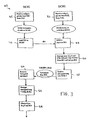
- Figure 3 shows a method 40 for the exchange of digital tokens in the form of digital cash between a first cash/token holder (DTH1) and a second cash/token holder (DTH2).
- Each digital cash holder, DCH1 and DCH2 receives a respective private key PrK1 and PrK2, specific to that digital cash holder from a respective trusted authority TA1 and TA2, respectively.
- Each cash holder has a respective identification, ID1 and ID2.
- the private keys, PrK1 and PrK2 are derived from the respective identification, ID1 and ID2 of the cash holders DCH1 and DCH2 and a temporal value such as the current date.
- Steps 42 and 44 show me respective cash holder DCH1 and DCH2 receiving today's private key PrK1 and PrK2, respectively, from the respective trusted authority TA1 and TA2.
- Each of the cash holders store the respective private key PrK1 and PrK2 for the duration of the day or other period of time or until a new private key is sent from the respective trusted authority.
- the method of providing the private key may be for example; on powering up of the cash holder, communication is established with its respective trusted authority, whereupon it downloads and stores the private key. It is preferred that the communication for the downloading of the private key is encrypted. This may be for example by the trusted authority using a public key to encrypt the private key PrK1 or PrK2, the encrypted private key then being sent to the respective cash holder, whereupon it is decrypted using a fixed private key held within the respective token holder.
- step 46 DCH1 sends its identification ID1 to DCH2.
- step 48 DCH2 receives ID1. It is not essential that ID1 be encrypted, although it is preferred that at least a basic level of encryption be used. This may be for example to use a public key and private key set common to all digital cash handlers within the cash handling domain 12. In addition to the cash holder's identification, the name of the respective trusted authority may be provided.
- Each cash holder can generate or has stored a symmetrical encryption key and symmetrical decryption key.
- the symmetrical decryption key is the same as or is derived from the symmetrical encryption key.
- the symmetrical keys may be fixed for each holder or may be generated each time a symmetrical key set is required.
- the symmetrical encryption key (Sym.Key2) and the identification of DCH2, ID2 are encrypted using a public key derived from the identification of DCH1, ID1 and the current date to form a first encrypted message (MSG1).
- the first encrypted message, MSG1 is sent to the first cash holder DCH1.
- the public key derived from ID1 and today's date is written as PuK (ID1, date).
- the first cash holder DCH1 receives the first encrypted message MSG1.
- DCH1 decrypts the first encrypted message using private key PrK1 to obtain, at step 58, the symmetrical key, Sym.Key2 and the identification of DCH2, ID2.
- step 60 the user of DCH1 enters the amount of digital cash to be transferred to the second cash holder DCH2, such as by keying the amount into a key pad of DCH1. This step may occur earlier in the process, such as prior to step 46.
- step 62 the amount of digital cash entered is displayed to the user to receive confirmation of the transfer. Confirmation may simply be in the form of pressing an OK button or may involve the entry of a personal identification number.
- DCH1 encrypts the amount using the symmetrical key SymKey2 obtained from the second cash holder, to produce a second encrypted message (MSG2) at step 64,
- the second encrypted message MSG2 is then encrypted using a public key derived from ID2 and the current date (PuK (ID2), date)), at step 66, to produce a third encrypted message MSG3.
- the third encrypted message MSG3 is sent to a second cash holder DCH2.
- the amount is deducted from the store of digital token within the d-cash slot 30.
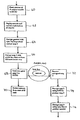
- Second cash holder DCH2 receives the third encrypted message MSG3 at step 72.
- the second cash handler decrypts the message MSG3 using second cash holder's private key PrK2 to produce the second encrypted message MSG2 at step 74.
- the private key may be deleted if the system is configured to download a new private key every time it is used (or as determined). This way private keys are only used once, which provided added security. A private key may not be destroyed immediately upon receipt of a new key, but may be stored for a period of time. This can avoid problems caused by instantaneous key destruction and communication failures.
- the second encrypted message MSG2 is decrypted using the second symmetrical key or second symmetrical decryption key to produce the amount. Now that the amount has been received by DCH2 this amount can be added to the store of digital cash kept in DCH2's d-token slot at step 78.
- the amount of token received is displayed to the user at 80 to confirm that the transfer of d-cash has occurred.
- the second cash handler DCH2 sends an acknowledgment of the receipt at step 82.
- the receipt may be encrypted using the same level of encryption as transfer of ID1 from DCH1 to DCH2.
- the receipt is received at step 84 and displayed by DCH1 at step 86.
- the amount of d-cash transferred may only be deducted from the store of e-cash once the receipt has been received.
- a first variation may be where the user of DCH2 enters the amount in a "please pay me this amount request".
- the procedure is substantially the same with the differences being listed as follows.
- DCH2 may initiate the process by asking for the ID of DCH1. The process then proceeds with step 46.
- step 50 the amount way be encrypted within the first encrypted message along with Sym.Key2 and ID2. Step 60 is therefore not required as the amount has been sent by DCH2, although the confirmation of the transfer of the amount is still required at step 62. The process then continues as described above.
- Another variation may be where it is desired to asynchronously send token from DCH1 to DCH2.
- This procedure occurs as follows.
- the identification of DCH2 must be known to the user of DCH1. This may be, for example, in the form of a mobile phone number if the cash handler is in the form of a mobile telephone.
- Steps 46 to 58 are omitted from the process.
- ID2 will have to either be entered by the user or, for example, recalled from the telephone or SIM card's memory.
- Step 64 is omitted in this process, as is step 76.
- Step 74 is varied in that the message sent from DCH1 is decrypted using PrK2 to produce the amount as the symmetrical key is not used in this process.
- the transfer of information in this manner may occur by text transfer, such as using short message service (SMS).
- SMS short message service
- the method of deriving the identity specific private key (PrK1 and PrK2) and public key PuK1 and PuK2 may be, for example, are derived from the token holder's identification use the algorithm/method described in the identity directory-less public key cryptographic system described in UK Patent Application GB2370471.
- a description of this (IDPKC) is also provided at the URL www.cesg.gov.uk/technology/id-pkc/.
- This cryptography method allows for the generation of the cash holder (identity) specific private key by the trusted authorities and the public key derived from a cash holder identification and the current date by the cash holder.
- Another identity based encryption method that may be used is described at the URL http://crypto-stanford.edu/ibe/.
- the exchange of digital tokens other than cash is similar to the method outlined above.
- the tokens are non-cash currencies such as air mileage points, loyalty or reward points, redemption points, bonus points, etc. the manner is identical to handling cash except instead of amounts of cash being exchanged amounts of points are being exchanged.
- a digital token holder is capable of storing more than one type of token, a record of each type of token, is stored against or within the token so that for example, loyalty points are not added to cash.
- the currencies are different national currencies, such as for example US dollars and Singapore dollars, these forms of currency are kept separate by using an identifier identifying the type of token, ic. US dollar cash and Singapore dollar cash.
- tokens are tickets, gift vouchers etc. that are discrete items that can only be exchanged intact
- the method is similar to those outlined above, with the exception that each digital token is kept separate from other digital tokens so that the value of each token is discrete and intact.
- each token may contain a digital signature so that the authenticity of the item represented by the token can be verified when it is exchanged at a token sink for the item it represents. Furthermore, when a digital token is transferred to a second digital token holder, it may be desirable to look inside the token so that the user of the second digital token holder can confirm what the token represents. It may also be desirable to protect the digital token from damage/interference, in which case a fixed symmetrical key may be stored within each digital token holder in a tamper resistant manner so that the contents of each token can be encrypted. A hash can be taken of the encrypted token and kept in the hardware. The encrypted version of the token can then be stored anywhere inside the cash holder or left with a service provider.
- the hash of the encrypted token can be matched against the record stored in the token holder as proof of authenticity. The hash record will then be removed when the digital token is transferred out. Should there be any replication of the encrypted digital token the replication is sent to the same digital cash holder, the replication will not be considered valid due to its hash not being there anymore.
- the authenticity of a token can be checked using its digital signature, where if the digital signature is invalid the token will not be accepted. Upon verification of the authenticity of a token, it is added to the digital token slot. At this point an acknowledgment may be sent confirming that the digital token can be removed from the first digital token holders token slot.
- the method is similar to that outlined above.
- the second digital token holder requests a specific digital token.
- the first digital token holder looks up a list of tokens its possesses and finds the appropriate digital token and requests confirmation of the transfer of the token. The rest of the procedure is the same with the amount of digital cash being transferred substituted with the token.
- This process can be further enhanced by the sender rendering the token invalid by damaging data contained within the digital token, such as by modification of the digital signature. If the damage is conducted in a known manner, the validity of the token can still be assessed but it can also be determined that it has been handed over/used. If, for example, the token is used as entrance to an event, the damaged digital token can be used to allow re-entry into the event without having to pass a new entry token to the person leaving. Once the event is over the entire digital token can be deleted.
- a token is valid for multiple redemptions, it can be represented as a number of single use digital tokens. In this case the redemption process is identical to that of a single token.
- Conditions associated with the token can be represented as information in accompanying the token. For example, if a season ticket is represented then the digital token can include an appropriate accompanying condition. Other conditions might include a digital token that is non-transferable, a digital token that represents single entry for a group of people, or a digital token with conditions on the entrants such as age, membership or some other qualification of the token holder etc.
- the digital token with an associated set of conditions can represent the conditions as additional data, for example, using XML, RDF or simply name and value pairs.
- the token will include a representation of the requirement prior to digital signing.
- non-transferable condition may be represented by the inclusion of the identity of the digital token holder.
- a check is conducted to ascertain the token transferability. Only the digital token holder with a correct identity or a special redemption device (such as a specific digital token sink) is allowed to accept the transfer.
- condition relates to attributes of the owner of the token
- a digitally signed age certificate way be provided if the token represents entrance to an event which is restricted by age.
- the token holder may show their drivers licence or some other form of physical identification to satisfy this requirement.
- the request and response can take the form of inspection of a document by a person or a machine scanning a magnetic strip of a card or smart card reader reading the information within a smart card or so forth.
- Modifications and variations may be made to the present invention without departing from the basic inventive concept.
- Such modification may include the timing of receiving the private key from the trusted authority. Rather than it being downloaded at the start of the day or upon power-up of the token holder, it may be downloaded as and when required and/or at predetermined intervals.
Landscapes
- Engineering & Computer Science (AREA)
- Business, Economics & Management (AREA)
- Accounting & Taxation (AREA)
- Computer Security & Cryptography (AREA)
- General Physics & Mathematics (AREA)
- Strategic Management (AREA)
- Theoretical Computer Science (AREA)
- General Business, Economics & Management (AREA)
- Physics & Mathematics (AREA)
- Computing Systems (AREA)
- Computer Networks & Wireless Communication (AREA)
- General Engineering & Computer Science (AREA)
- Computer Hardware Design (AREA)
- Signal Processing (AREA)
- Finance (AREA)
- Storage Device Security (AREA)
- Multi Processors (AREA)
- Small-Scale Networks (AREA)
- Computer And Data Communications (AREA)
Applications Claiming Priority (2)
| Application Number | Priority Date | Filing Date | Title |
|---|---|---|---|
| SG200204781-9A SG145524A1 (en) | 2002-08-07 | 2002-08-07 | Secure transfer of digital tokens |
| SG200204781 | 2002-08-07 |
Publications (3)
| Publication Number | Publication Date |
|---|---|
| EP1388990A2 true EP1388990A2 (de) | 2004-02-11 |
| EP1388990A3 EP1388990A3 (de) | 2004-03-03 |
| EP1388990B1 EP1388990B1 (de) | 2007-04-11 |
Family
ID=30439763
Family Applications (1)
| Application Number | Title | Priority Date | Filing Date |
|---|---|---|---|
| EP03017946A Expired - Lifetime EP1388990B1 (de) | 2002-08-07 | 2003-08-06 | Sichere Übertragung digitaler Wertmarken |
Country Status (5)
| Country | Link |
|---|---|
| US (1) | US20040104097A1 (de) |
| EP (1) | EP1388990B1 (de) |
| AT (1) | ATE359653T1 (de) |
| DE (1) | DE60313087T2 (de) |
| SG (1) | SG145524A1 (de) |
Families Citing this family (15)
| Publication number | Priority date | Publication date | Assignee | Title |
|---|---|---|---|---|
| CA2458123C (en) * | 2003-03-13 | 2012-05-15 | New Era Technology, Inc. | Remote sensing of gas leaks |
| EP1519530A1 (de) * | 2003-09-29 | 2005-03-30 | STMicroelectronics S.r.l. | Verfahren zum Erzeugen einer verschlüsselten Kommunikation mittels Schlüssel |
| EP1533971A1 (de) * | 2003-11-18 | 2005-05-25 | STMicroelectronics S.r.l. | Vorrichtung und Verfahren zum Aufbau einer sicheren Kommunikation |
| DE60315853D1 (de) | 2003-12-24 | 2007-10-04 | St Microelectronics Srl | Verfahren zur Entschlüsselung einer Nachricht |
| US7924709B2 (en) * | 2004-05-12 | 2011-04-12 | Hewlett-Packard Development Company, L.P. | Access control of resources using tokens |
| US7882089B1 (en) * | 2005-07-13 | 2011-02-01 | Adobe Systems Incorporated | Caching database information |
| US7764945B2 (en) * | 2006-03-08 | 2010-07-27 | Cisco Technology, Inc. | Method and apparatus for token distribution in session for future polling or subscription |
| AU2012227330B2 (en) * | 2006-05-09 | 2014-04-10 | Ticketmaster | Apparatus for access control and processing |
| AU2007282165B2 (en) * | 2006-05-09 | 2012-07-26 | Ticketmaster | Apparatus for access control and processing |
| US20080137859A1 (en) * | 2006-12-06 | 2008-06-12 | Ramanathan Jagadeesan | Public key passing |
| US8045995B2 (en) * | 2007-05-31 | 2011-10-25 | Yahoo! Inc. | Centralized location broker |
| US9219714B2 (en) * | 2011-05-31 | 2015-12-22 | Samsung Sds Co., Ltd. | ID-based encryption and signature method and terminal |
| US9715602B1 (en) * | 2016-03-18 | 2017-07-25 | Conduent Business Services, Llc | System authenticating ticketholder at re-entry |
| WO2019191908A1 (zh) * | 2018-04-03 | 2019-10-10 | 深圳市沃特沃德股份有限公司 | 语音翻译方法和装置 |
| CN111937019A (zh) * | 2018-04-10 | 2020-11-13 | 松田良成 | 虚拟货币管理系统以及虚拟货币管理程序 |
Family Cites Families (77)
| Publication number | Priority date | Publication date | Assignee | Title |
|---|---|---|---|---|
| US4977595A (en) * | 1989-04-03 | 1990-12-11 | Nippon Telegraph And Telephone Corporation | Method and apparatus for implementing electronic cash |
| US5557518A (en) * | 1994-04-28 | 1996-09-17 | Citibank, N.A. | Trusted agents for open electronic commerce |
| US6415271B1 (en) * | 1993-02-10 | 2002-07-02 | Gm Network Limited | Electronic cash eliminating payment risk |
| US5983207A (en) * | 1993-02-10 | 1999-11-09 | Turk; James J. | Electronic cash eliminating payment risk |
| FR2702066B1 (fr) * | 1993-02-25 | 1995-10-27 | Campana Mireille | Procede de gestion de cles secretes entre deux cartes a memoire. |
| NL9301348A (nl) * | 1993-08-02 | 1995-03-01 | Stefanus Alfonsus Brands | Elektronisch betalingssysteem. |
| US5511121A (en) * | 1994-02-23 | 1996-04-23 | Bell Communications Research, Inc. | Efficient electronic money |
| US5604805A (en) * | 1994-02-28 | 1997-02-18 | Brands; Stefanus A. | Privacy-protected transfer of electronic information |
| US5799087A (en) * | 1994-04-28 | 1998-08-25 | Citibank, N.A. | Electronic-monetary system |
| EP0704785B1 (de) * | 1994-09-30 | 2003-11-19 | Mitsubishi Corporation | Datenurheberrechtsverwaltungssystem |
| US6449717B1 (en) * | 1994-09-30 | 2002-09-10 | Mitsubishi Corporation | Data copyright management system |
| US5748737A (en) * | 1994-11-14 | 1998-05-05 | Daggar; Robert N. | Multimedia electronic wallet with generic card |
| JP3614480B2 (ja) * | 1994-11-18 | 2005-01-26 | 株式会社日立製作所 | 電子チケット販売・払戻システム及びその販売・払戻方法 |
| US5930363A (en) * | 1995-03-17 | 1999-07-27 | Transmo Limited | Card charging systems |
| SE506506C2 (sv) * | 1995-04-11 | 1997-12-22 | Au System | Elektronisk transaktionsterminal, telekommunikationssystem innefattande en elektronisk transaktionsterminal, smart kort som elektronisk transaktionsterminal samt metod för överföring av elektroniska krediter |
| US5832089A (en) * | 1995-06-07 | 1998-11-03 | Sandia Corporation | Off-line compatible electronic cash method and system |
| WO1997002539A1 (en) * | 1995-07-06 | 1997-01-23 | Hitachi, Ltd. | Electronic money sending system |
| US5889862A (en) * | 1995-07-17 | 1999-03-30 | Nippon Telegraph And Telephone Corporation | Method and apparatus for implementing traceable electronic cash |
| US5768385A (en) * | 1995-08-29 | 1998-06-16 | Microsoft Corporation | Untraceable electronic cash |
| US5805702A (en) * | 1995-09-29 | 1998-09-08 | Dallas Semiconductor Corporation | Method, apparatus, and system for transferring units of value |
| US5901229A (en) * | 1995-11-06 | 1999-05-04 | Nippon Telegraph And Telephone Corp. | Electronic cash implementing method using a trustee |
| US5870473A (en) * | 1995-12-14 | 1999-02-09 | Cybercash, Inc. | Electronic transfer system and method |
| US5943423A (en) * | 1995-12-15 | 1999-08-24 | Entegrity Solutions Corporation | Smart token system for secure electronic transactions and identification |
| US6945457B1 (en) * | 1996-05-10 | 2005-09-20 | Transaction Holdings Ltd. L.L.C. | Automated transaction machine |
| EP0807910B1 (de) * | 1996-05-16 | 2008-06-04 | Nippon Telegraph And Telephone Corporation | Verfahren zum Einführen elektronischen Geldes mit einer Überwachungseinrichtung, Gebrauchervorrichtung und Überwachungseinrichtung zum Durchführen desselben |
| JP3329432B2 (ja) * | 1996-05-29 | 2002-09-30 | 日本電信電話株式会社 | 階層型電子現金実施方法およびこれに用いられる装置 |
| US5897621A (en) * | 1996-06-14 | 1999-04-27 | Cybercash, Inc. | System and method for multi-currency transactions |
| US6324525B1 (en) * | 1996-06-17 | 2001-11-27 | Hewlett-Packard Company | Settlement of aggregated electronic transactions over a network |
| US5839119A (en) * | 1996-09-27 | 1998-11-17 | Xerox Corporation | Method of electronic payments that prevents double-spending |
| US5913203A (en) * | 1996-10-03 | 1999-06-15 | Jaesent Inc. | System and method for pseudo cash transactions |
| IL119486A0 (en) * | 1996-10-24 | 1997-01-10 | Fortress U & T Ltd | Apparatus and methods for collecting value |
| GB9624127D0 (en) * | 1996-11-20 | 1997-01-08 | British Telecomm | Transaction system |
| WO1998037655A1 (en) * | 1996-12-20 | 1998-08-27 | Financial Services Technology Consortium | Method and system for processing electronic documents |
| US6085168A (en) * | 1997-02-06 | 2000-07-04 | Fujitsu Limited | Electronic commerce settlement system |
| US6112984A (en) * | 1997-03-14 | 2000-09-05 | Snavely; John D. | Electronic wallet or purse with means for funds transfer |
| JP4307564B2 (ja) * | 1997-03-26 | 2009-08-05 | ブリティッシュ・テレコミュニケーションズ・パブリック・リミテッド・カンパニー | トランザクションシステム |
| US6467685B1 (en) * | 1997-04-01 | 2002-10-22 | Cardis Enterprise International N.V. | Countable electronic monetary system and method |
| US6125185A (en) * | 1997-05-27 | 2000-09-26 | Cybercash, Inc. | System and method for encryption key generation |
| US6073125A (en) * | 1997-06-26 | 2000-06-06 | Pitney Bowes Inc. | Token key distribution system controlled acceptance mail payment and evidencing system |
| US6510983B2 (en) * | 1997-07-03 | 2003-01-28 | Citicorp Development Center, Inc. | System and method for transferring value to a magnetic stripe on a transaction card |
| US6311171B1 (en) * | 1997-07-11 | 2001-10-30 | Ericsson Inc. | Symmetrically-secured electronic communication system |
| US5974146A (en) * | 1997-07-30 | 1999-10-26 | Huntington Bancshares Incorporated | Real time bank-centric universal payment system |
| JPH1166193A (ja) * | 1997-08-14 | 1999-03-09 | Hitachi Ltd | 電子マネーの管理方法、電子マネーの管理装置および電子マネー管理プログラムを記憶した記憶媒体 |
| JP3542895B2 (ja) * | 1997-08-22 | 2004-07-14 | インターナショナル・ビジネス・マシーンズ・コーポレーション | 時間制約暗号システム |
| US6292789B1 (en) * | 1997-08-26 | 2001-09-18 | Citibank, N.A. | Method and system for bill presentment and payment |
| US6128391A (en) * | 1997-09-22 | 2000-10-03 | Visa International Service Association | Method and apparatus for asymetric key management in a cryptographic system |
| FI973788A7 (fi) * | 1997-09-25 | 1999-03-26 | Nokia Telecommunications Oy | Elektroninen maksujärjestelmä |
| JPH11110461A (ja) * | 1997-10-01 | 1999-04-23 | Fujitsu Ltd | 二重財布を有する電子財布システム、その電子財布システムに適用されるicカード、二重財布を有するicカード取引装置、二重財布を有するicカード取引システムおよびそのicカード取引システムに適用されるicカード |
| US6125357A (en) * | 1997-10-03 | 2000-09-26 | Pitney Bowes Inc. | Digital postal indicia employing machine and human verification |
| US6157920A (en) * | 1997-11-19 | 2000-12-05 | Lucent Technologies Inc. | Executable digital cash for electronic commerce |
| DE69829938T2 (de) * | 1997-12-26 | 2006-02-23 | Nippon Telegraph And Telephone Corp. | Verfahren zum Einführen von elektronischem Geld für einen Emittent mit elektronischen Saldo-Zählern, entsprechende Vorrichtung und Speicherelement mit gespeichertem Programm zur Durchführung des Verfahrens |
| US6081790A (en) * | 1998-03-20 | 2000-06-27 | Citibank, N.A. | System and method for secure presentment and payment over open networks |
| CA2235359C (en) * | 1998-03-23 | 2012-04-10 | Certicom Corp. | Implicit certificate scheme with ca chaining |
| US6418420B1 (en) * | 1998-06-30 | 2002-07-09 | Sun Microsystems, Inc. | Distributed budgeting and accounting system with secure token device access |
| KR100358426B1 (ko) * | 1998-08-18 | 2003-01-29 | 한국전자통신연구원 | 전자현금거래방법 |
| US6788788B1 (en) * | 1998-09-16 | 2004-09-07 | Murata Kikai Kabushiki Kaisha | Cryptographic communication method, encryption method, and cryptographic communication system |
| JP2000113085A (ja) * | 1998-10-08 | 2000-04-21 | Sony Corp | 電子現金システム |
| US7113927B1 (en) * | 1998-10-09 | 2006-09-26 | Victor Company Of Japan, Limited | Data distribution system, data distribution method, portable terminal with data receiving capability, portable terminal with data transmitting/receiving capability, recording medium onto which data content is recorded, encoding apparatus, and decoding apparatus |
| US6820202B1 (en) * | 1998-11-09 | 2004-11-16 | First Data Corporation | Account authority digital signature (AADS) system |
| US7047416B2 (en) * | 1998-11-09 | 2006-05-16 | First Data Corporation | Account-based digital signature (ABDS) system |
| US6970852B1 (en) * | 1999-04-28 | 2005-11-29 | Imx Solutions, Inc. | Methods and apparatus for conducting secure, online monetary transactions |
| WO2000070516A1 (en) * | 1999-05-15 | 2000-11-23 | Ogilvie, John, W., L. | Automatic broker tools and techniques |
| US6629081B1 (en) * | 1999-12-22 | 2003-09-30 | Accenture Llp | Account settlement and financing in an e-commerce environment |
| US7233926B2 (en) * | 2000-03-07 | 2007-06-19 | Thomson Licensing | Electronic wallet system with secure inter-purses operations |
| EP1132873A1 (de) * | 2000-03-07 | 2001-09-12 | THOMSON multimedia | Elektronisches Börsensystem |
| JP2001344537A (ja) * | 2000-05-31 | 2001-12-14 | Ntt Docomo Inc | 電子バリューシステム、通信端末及びサーバ |
| US7124087B1 (en) * | 2000-11-03 | 2006-10-17 | International Business Machines Corporation | System and method for updating user home automation systems |
| EP1229467A1 (de) * | 2001-02-06 | 2002-08-07 | Wincor Nixdorf GmbH & Co KG | Bezahlsystem mit einem mobilen Gerät |
| US7181017B1 (en) * | 2001-03-23 | 2007-02-20 | David Felsher | System and method for secure three-party communications |
| US20020161997A1 (en) * | 2001-04-26 | 2002-10-31 | Fujitsu Limited | Content distribution system |
| EP1282089B1 (de) * | 2001-08-03 | 2009-12-16 | Telefonaktiebolaget LM Ericsson (publ) | Verfahren und Vorrichtungen für Bezahlungen zwischen Endgeräten |
| US7113594B2 (en) * | 2001-08-13 | 2006-09-26 | The Board Of Trustees Of The Leland Stanford University | Systems and methods for identity-based encryption and related cryptographic techniques |
| JP2003099693A (ja) * | 2001-09-20 | 2003-04-04 | Fujitsu Ltd | 電子決済方法 |
| US7103576B2 (en) * | 2001-09-21 | 2006-09-05 | First Usa Bank, Na | System for providing cardless payment |
| US7069250B2 (en) * | 2001-10-15 | 2006-06-27 | Payformance Corporation | Check based online payment and verification system and method |
| GB0215524D0 (en) * | 2002-07-05 | 2002-08-14 | Hewlett Packard Co | Method and apparatus for generating a cryptographic key |
| CN101002424A (zh) * | 2004-07-22 | 2007-07-18 | 松下电器产业株式会社 | 电子价值、电子钱包装置及其利用系统 |
-
2002
- 2002-08-07 SG SG200204781-9A patent/SG145524A1/en unknown
-
2003
- 2003-08-06 EP EP03017946A patent/EP1388990B1/de not_active Expired - Lifetime
- 2003-08-06 AT AT03017946T patent/ATE359653T1/de not_active IP Right Cessation
- 2003-08-06 DE DE60313087T patent/DE60313087T2/de not_active Expired - Lifetime
- 2003-08-07 US US10/638,223 patent/US20040104097A1/en not_active Abandoned
Also Published As
| Publication number | Publication date |
|---|---|
| DE60313087D1 (de) | 2007-05-24 |
| ATE359653T1 (de) | 2007-05-15 |
| EP1388990B1 (de) | 2007-04-11 |
| SG145524A1 (en) | 2008-09-29 |
| DE60313087T2 (de) | 2008-01-03 |
| EP1388990A3 (de) | 2004-03-03 |
| US20040104097A1 (en) | 2004-06-03 |
Similar Documents
| Publication | Publication Date | Title |
|---|---|---|
| JP3802074B2 (ja) | 携帯可能な身分証明要素でのトランザクション方法 | |
| US7254561B1 (en) | Method and device for performing electronic transactions | |
| US8122489B2 (en) | Secure handling of stored-value data objects | |
| US7979353B2 (en) | Electronic transaction method using an electronic coupon | |
| CA2256881C (en) | An automatic safe public communication system | |
| Hassinen et al. | An open, PKI-based mobile payment system | |
| EP1388990B1 (de) | Sichere Übertragung digitaler Wertmarken | |
| US20030093695A1 (en) | Secure handling of stored-value data objects | |
| WO2005069236A1 (en) | Emv transactions in mobile terminals | |
| US20150254669A1 (en) | System and method for securely store and transfer electronic money | |
| JP2004295502A (ja) | Ic媒体を用いたセキュリティシステム | |
| JP2002312725A (ja) | Icカードの更新方法及びシステム | |
| CN116349198B (zh) | 用于认证凭证的方法和系统 | |
| JP4148465B2 (ja) | 電子価値流通システムおよび電子価値流通方法 | |
| JP2003244129A (ja) | 携帯端末による電子署名システム | |
| HK1026286B (en) | Electronic transaction and smart card for a electronic transaction |
Legal Events
| Date | Code | Title | Description |
|---|---|---|---|
| PUAI | Public reference made under article 153(3) epc to a published international application that has entered the european phase |
Free format text: ORIGINAL CODE: 0009012 |
|
| PUAL | Search report despatched |
Free format text: ORIGINAL CODE: 0009013 |
|
| AK | Designated contracting states |
Kind code of ref document: A2 Designated state(s): AT BE BG CH CY CZ DE DK EE ES FI FR GB GR HU IE IT LI LU MC NL PT RO SE SI SK TR |
|
| AX | Request for extension of the european patent |
Extension state: AL LT LV MK |
|
| AK | Designated contracting states |
Kind code of ref document: A3 Designated state(s): AT BE BG CH CY CZ DE DK EE ES FI FR GB GR HU IE IT LI LU MC NL PT RO SE SI SK TR |
|
| AX | Request for extension of the european patent |
Extension state: AL LT LV MK |
|
| 17P | Request for examination filed |
Effective date: 20040902 |
|
| AKX | Designation fees paid |
Designated state(s): AT BE BG CH CY CZ DE DK EE ES FI FR GB GR HU IE IT LI LU MC NL PT RO SE SI SK TR |
|
| 17Q | First examination report despatched |
Effective date: 20041209 |
|
| RAP1 | Party data changed (applicant data changed or rights of an application transferred) |
Owner name: MOBILASTIC TECHNOLOGIES PTE LTD |
|
| RIN1 | Information on inventor provided before grant (corrected) |
Inventor name: GOH, CHEH NGEE |
|
| GRAP | Despatch of communication of intention to grant a patent |
Free format text: ORIGINAL CODE: EPIDOSNIGR1 |
|
| GRAS | Grant fee paid |
Free format text: ORIGINAL CODE: EPIDOSNIGR3 |
|
| GRAA | (expected) grant |
Free format text: ORIGINAL CODE: 0009210 |
|
| AK | Designated contracting states |
Kind code of ref document: B1 Designated state(s): AT BE BG CH CY CZ DE DK EE ES FI FR GB GR HU IE IT LI LU MC NL PT RO SE SI SK TR |
|
| PG25 | Lapsed in a contracting state [announced via postgrant information from national office to epo] |
Ref country code: CH Free format text: LAPSE BECAUSE OF FAILURE TO SUBMIT A TRANSLATION OF THE DESCRIPTION OR TO PAY THE FEE WITHIN THE PRESCRIBED TIME-LIMIT Effective date: 20070411 Ref country code: FI Free format text: LAPSE BECAUSE OF FAILURE TO SUBMIT A TRANSLATION OF THE DESCRIPTION OR TO PAY THE FEE WITHIN THE PRESCRIBED TIME-LIMIT Effective date: 20070411 Ref country code: LI Free format text: LAPSE BECAUSE OF FAILURE TO SUBMIT A TRANSLATION OF THE DESCRIPTION OR TO PAY THE FEE WITHIN THE PRESCRIBED TIME-LIMIT Effective date: 20070411 Ref country code: SI Free format text: LAPSE BECAUSE OF FAILURE TO SUBMIT A TRANSLATION OF THE DESCRIPTION OR TO PAY THE FEE WITHIN THE PRESCRIBED TIME-LIMIT Effective date: 20070411 |
|
| REG | Reference to a national code |
Ref country code: GB Ref legal event code: FG4D |
|
| REG | Reference to a national code |
Ref country code: CH Ref legal event code: EP |
|
| REG | Reference to a national code |
Ref country code: IE Ref legal event code: FG4D |
|
| REF | Corresponds to: |
Ref document number: 60313087 Country of ref document: DE Date of ref document: 20070524 Kind code of ref document: P |
|
| PG25 | Lapsed in a contracting state [announced via postgrant information from national office to epo] |
Ref country code: SE Free format text: LAPSE BECAUSE OF FAILURE TO SUBMIT A TRANSLATION OF THE DESCRIPTION OR TO PAY THE FEE WITHIN THE PRESCRIBED TIME-LIMIT Effective date: 20070711 |
|
| PG25 | Lapsed in a contracting state [announced via postgrant information from national office to epo] |
Ref country code: ES Free format text: LAPSE BECAUSE OF FAILURE TO SUBMIT A TRANSLATION OF THE DESCRIPTION OR TO PAY THE FEE WITHIN THE PRESCRIBED TIME-LIMIT Effective date: 20070722 |
|
| PG25 | Lapsed in a contracting state [announced via postgrant information from national office to epo] |
Ref country code: PT Free format text: LAPSE BECAUSE OF FAILURE TO SUBMIT A TRANSLATION OF THE DESCRIPTION OR TO PAY THE FEE WITHIN THE PRESCRIBED TIME-LIMIT Effective date: 20070911 |
|
| NLV1 | Nl: lapsed or annulled due to failure to fulfill the requirements of art. 29p and 29m of the patents act | ||
| REG | Reference to a national code |
Ref country code: CH Ref legal event code: PL |
|
| PG25 | Lapsed in a contracting state [announced via postgrant information from national office to epo] |
Ref country code: AT Free format text: LAPSE BECAUSE OF FAILURE TO SUBMIT A TRANSLATION OF THE DESCRIPTION OR TO PAY THE FEE WITHIN THE PRESCRIBED TIME-LIMIT Effective date: 20070411 |
|
| EN | Fr: translation not filed | ||
| PG25 | Lapsed in a contracting state [announced via postgrant information from national office to epo] |
Ref country code: BE Free format text: LAPSE BECAUSE OF FAILURE TO SUBMIT A TRANSLATION OF THE DESCRIPTION OR TO PAY THE FEE WITHIN THE PRESCRIBED TIME-LIMIT Effective date: 20070411 |
|
| PG25 | Lapsed in a contracting state [announced via postgrant information from national office to epo] |
Ref country code: CZ Free format text: LAPSE BECAUSE OF FAILURE TO SUBMIT A TRANSLATION OF THE DESCRIPTION OR TO PAY THE FEE WITHIN THE PRESCRIBED TIME-LIMIT Effective date: 20070411 Ref country code: BG Free format text: LAPSE BECAUSE OF FAILURE TO SUBMIT A TRANSLATION OF THE DESCRIPTION OR TO PAY THE FEE WITHIN THE PRESCRIBED TIME-LIMIT Effective date: 20070711 Ref country code: DK Free format text: LAPSE BECAUSE OF FAILURE TO SUBMIT A TRANSLATION OF THE DESCRIPTION OR TO PAY THE FEE WITHIN THE PRESCRIBED TIME-LIMIT Effective date: 20070411 Ref country code: NL Free format text: LAPSE BECAUSE OF FAILURE TO SUBMIT A TRANSLATION OF THE DESCRIPTION OR TO PAY THE FEE WITHIN THE PRESCRIBED TIME-LIMIT Effective date: 20070411 |
|
| PLBE | No opposition filed within time limit |
Free format text: ORIGINAL CODE: 0009261 |
|
| STAA | Information on the status of an ep patent application or granted ep patent |
Free format text: STATUS: NO OPPOSITION FILED WITHIN TIME LIMIT |
|
| PG25 | Lapsed in a contracting state [announced via postgrant information from national office to epo] |
Ref country code: SK Free format text: LAPSE BECAUSE OF FAILURE TO SUBMIT A TRANSLATION OF THE DESCRIPTION OR TO PAY THE FEE WITHIN THE PRESCRIBED TIME-LIMIT Effective date: 20070411 |
|
| 26N | No opposition filed |
Effective date: 20080114 |
|
| PG25 | Lapsed in a contracting state [announced via postgrant information from national office to epo] |
Ref country code: IT Free format text: LAPSE BECAUSE OF FAILURE TO SUBMIT A TRANSLATION OF THE DESCRIPTION OR TO PAY THE FEE WITHIN THE PRESCRIBED TIME-LIMIT Effective date: 20070411 Ref country code: GR Free format text: LAPSE BECAUSE OF FAILURE TO SUBMIT A TRANSLATION OF THE DESCRIPTION OR TO PAY THE FEE WITHIN THE PRESCRIBED TIME-LIMIT Effective date: 20070712 Ref country code: MC Free format text: LAPSE BECAUSE OF NON-PAYMENT OF DUE FEES Effective date: 20070831 Ref country code: FR Free format text: LAPSE BECAUSE OF FAILURE TO SUBMIT A TRANSLATION OF THE DESCRIPTION OR TO PAY THE FEE WITHIN THE PRESCRIBED TIME-LIMIT Effective date: 20071207 |
|
| PG25 | Lapsed in a contracting state [announced via postgrant information from national office to epo] |
Ref country code: RO Free format text: LAPSE BECAUSE OF FAILURE TO SUBMIT A TRANSLATION OF THE DESCRIPTION OR TO PAY THE FEE WITHIN THE PRESCRIBED TIME-LIMIT Effective date: 20070411 |
|
| PG25 | Lapsed in a contracting state [announced via postgrant information from national office to epo] |
Ref country code: IE Free format text: LAPSE BECAUSE OF NON-PAYMENT OF DUE FEES Effective date: 20070807 |
|
| PG25 | Lapsed in a contracting state [announced via postgrant information from national office to epo] |
Ref country code: FR Free format text: LAPSE BECAUSE OF FAILURE TO SUBMIT A TRANSLATION OF THE DESCRIPTION OR TO PAY THE FEE WITHIN THE PRESCRIBED TIME-LIMIT Effective date: 20070411 |
|
| PG25 | Lapsed in a contracting state [announced via postgrant information from national office to epo] |
Ref country code: EE Free format text: LAPSE BECAUSE OF FAILURE TO SUBMIT A TRANSLATION OF THE DESCRIPTION OR TO PAY THE FEE WITHIN THE PRESCRIBED TIME-LIMIT Effective date: 20070411 |
|
| PG25 | Lapsed in a contracting state [announced via postgrant information from national office to epo] |
Ref country code: CY Free format text: LAPSE BECAUSE OF FAILURE TO SUBMIT A TRANSLATION OF THE DESCRIPTION OR TO PAY THE FEE WITHIN THE PRESCRIBED TIME-LIMIT Effective date: 20070411 |
|
| PG25 | Lapsed in a contracting state [announced via postgrant information from national office to epo] |
Ref country code: LU Free format text: LAPSE BECAUSE OF NON-PAYMENT OF DUE FEES Effective date: 20070806 |
|
| PG25 | Lapsed in a contracting state [announced via postgrant information from national office to epo] |
Ref country code: HU Free format text: LAPSE BECAUSE OF FAILURE TO SUBMIT A TRANSLATION OF THE DESCRIPTION OR TO PAY THE FEE WITHIN THE PRESCRIBED TIME-LIMIT Effective date: 20071012 Ref country code: TR Free format text: LAPSE BECAUSE OF FAILURE TO SUBMIT A TRANSLATION OF THE DESCRIPTION OR TO PAY THE FEE WITHIN THE PRESCRIBED TIME-LIMIT Effective date: 20070411 |
|
| PGFP | Annual fee paid to national office [announced via postgrant information from national office to epo] |
Ref country code: DE Payment date: 20130807 Year of fee payment: 11 |
|
| PGFP | Annual fee paid to national office [announced via postgrant information from national office to epo] |
Ref country code: GB Payment date: 20130731 Year of fee payment: 11 |
|
| REG | Reference to a national code |
Ref country code: DE Ref legal event code: R119 Ref document number: 60313087 Country of ref document: DE |
|
| GBPC | Gb: european patent ceased through non-payment of renewal fee |
Effective date: 20140806 |
|
| REG | Reference to a national code |
Ref country code: DE Ref legal event code: R119 Ref document number: 60313087 Country of ref document: DE Effective date: 20150303 |
|
| PG25 | Lapsed in a contracting state [announced via postgrant information from national office to epo] |
Ref country code: GB Free format text: LAPSE BECAUSE OF NON-PAYMENT OF DUE FEES Effective date: 20140806 Ref country code: DE Free format text: LAPSE BECAUSE OF NON-PAYMENT OF DUE FEES Effective date: 20150303 |