EP1406642B1 - Verfahren zur herstellung polyvalenter bakteriophagenpräparationen zur behandlung bakterieller infektionen - Google Patents
Verfahren zur herstellung polyvalenter bakteriophagenpräparationen zur behandlung bakterieller infektionen Download PDFInfo
- Publication number
- EP1406642B1 EP1406642B1 EP02751919A EP02751919A EP1406642B1 EP 1406642 B1 EP1406642 B1 EP 1406642B1 EP 02751919 A EP02751919 A EP 02751919A EP 02751919 A EP02751919 A EP 02751919A EP 1406642 B1 EP1406642 B1 EP 1406642B1
- Authority
- EP
- European Patent Office
- Prior art keywords
- pcm
- pcmf
- bacteriophage strain
- bacteria
- genus
- Prior art date
- Legal status (The legal status is an assumption and is not a legal conclusion. Google has not performed a legal analysis and makes no representation as to the accuracy of the status listed.)
- Expired - Lifetime
Links
- 241001515965 unidentified phage Species 0.000 title claims abstract description 105
- 238000000034 method Methods 0.000 title claims abstract description 40
- 238000011282 treatment Methods 0.000 title claims abstract description 37
- 238000002360 preparation method Methods 0.000 title claims description 30
- 208000035143 Bacterial infection Diseases 0.000 title abstract description 19
- 208000022362 bacterial infectious disease Diseases 0.000 title abstract description 19
- 239000003814 drug Substances 0.000 claims abstract description 44
- 229940079593 drug Drugs 0.000 claims abstract description 39
- 230000001580 bacterial effect Effects 0.000 claims abstract description 38
- 201000003883 Cystic fibrosis Diseases 0.000 claims abstract description 23
- 241000894006 Bacteria Species 0.000 claims description 43
- 241000589516 Pseudomonas Species 0.000 claims description 37
- 241000191940 Staphylococcus Species 0.000 claims description 30
- 208000015181 infectious disease Diseases 0.000 claims description 30
- 230000002101 lytic effect Effects 0.000 claims description 23
- 239000002158 endotoxin Substances 0.000 claims description 22
- 239000006166 lysate Substances 0.000 claims description 21
- 230000002265 prevention Effects 0.000 claims description 16
- 239000000758 substrate Substances 0.000 claims description 14
- 239000001913 cellulose Substances 0.000 claims description 13
- 229920002678 cellulose Polymers 0.000 claims description 13
- 239000001963 growth medium Substances 0.000 claims description 11
- 238000004519 manufacturing process Methods 0.000 claims description 11
- 244000052616 bacterial pathogen Species 0.000 claims description 9
- 239000000872 buffer Substances 0.000 claims description 8
- 239000002609 medium Substances 0.000 claims description 8
- 239000012528 membrane Substances 0.000 claims description 8
- 239000011148 porous material Substances 0.000 claims description 8
- 238000009631 Broth culture Methods 0.000 claims description 7
- 238000010828 elution Methods 0.000 claims description 7
- 239000000203 mixture Substances 0.000 claims description 7
- 239000000243 solution Substances 0.000 claims description 7
- 241000894007 species Species 0.000 claims description 7
- CSCPPACGZOOCGX-UHFFFAOYSA-N Acetone Chemical compound CC(C)=O CSCPPACGZOOCGX-UHFFFAOYSA-N 0.000 claims description 6
- ZMXDDKWLCZADIW-UHFFFAOYSA-N N,N-Dimethylformamide Chemical compound CN(C)C=O ZMXDDKWLCZADIW-UHFFFAOYSA-N 0.000 claims description 6
- FAPWRFPIFSIZLT-UHFFFAOYSA-M Sodium chloride Chemical compound [Na+].[Cl-] FAPWRFPIFSIZLT-UHFFFAOYSA-M 0.000 claims description 6
- 239000000706 filtrate Substances 0.000 claims description 6
- 239000007787 solid Substances 0.000 claims description 6
- WQZGKKKJIJFFOK-GASJEMHNSA-N Glucose Natural products OC[C@H]1OC(O)[C@H](O)[C@@H](O)[C@@H]1O WQZGKKKJIJFFOK-GASJEMHNSA-N 0.000 claims description 5
- 239000008103 glucose Substances 0.000 claims description 5
- KFZMGEQAYNKOFK-UHFFFAOYSA-N Isopropanol Chemical compound CC(C)O KFZMGEQAYNKOFK-UHFFFAOYSA-N 0.000 claims description 4
- NBIIXXVUZAFLBC-UHFFFAOYSA-N Phosphoric acid Chemical compound OP(O)(O)=O NBIIXXVUZAFLBC-UHFFFAOYSA-N 0.000 claims description 4
- 238000002955 isolation Methods 0.000 claims description 4
- 239000003960 organic solvent Substances 0.000 claims description 4
- 230000001717 pathogenic effect Effects 0.000 claims description 4
- 238000000746 purification Methods 0.000 claims description 4
- 239000000126 substance Substances 0.000 claims description 4
- 239000000725 suspension Substances 0.000 claims description 4
- XLYOFNOQVPJJNP-UHFFFAOYSA-N water Substances O XLYOFNOQVPJJNP-UHFFFAOYSA-N 0.000 claims description 4
- 101100011509 Drosophila melanogaster Baldspot gene Proteins 0.000 claims description 3
- 238000009826 distribution Methods 0.000 claims description 3
- 238000011081 inoculation Methods 0.000 claims description 3
- QTBSBXVTEAMEQO-UHFFFAOYSA-N Acetic acid Chemical compound CC(O)=O QTBSBXVTEAMEQO-UHFFFAOYSA-N 0.000 claims description 2
- IAZDPXIOMUYVGZ-UHFFFAOYSA-N Dimethylsulphoxide Chemical compound CS(C)=O IAZDPXIOMUYVGZ-UHFFFAOYSA-N 0.000 claims description 2
- GRYLNZFGIOXLOG-UHFFFAOYSA-N Nitric acid Chemical compound O[N+]([O-])=O GRYLNZFGIOXLOG-UHFFFAOYSA-N 0.000 claims description 2
- LSNNMFCWUKXFEE-UHFFFAOYSA-N Sulfurous acid Chemical compound OS(O)=O LSNNMFCWUKXFEE-UHFFFAOYSA-N 0.000 claims description 2
- 229910000147 aluminium phosphate Inorganic materials 0.000 claims description 2
- 230000001419 dependent effect Effects 0.000 claims description 2
- 229960001760 dimethyl sulfoxide Drugs 0.000 claims description 2
- 239000012535 impurity Substances 0.000 claims description 2
- 150000007522 mineralic acids Chemical class 0.000 claims description 2
- 150000007524 organic acids Chemical class 0.000 claims description 2
- 102100034362 E3 ubiquitin-protein ligase KCMF1 Human genes 0.000 claims 20
- 101000994641 Homo sapiens E3 ubiquitin-protein ligase KCMF1 Proteins 0.000 claims 20
- AHTYDUCWNMCQQP-UHFFFAOYSA-N [3-(5-fluoro-2,4-dioxopyrimidin-1-yl)-2-methylphenyl] hydrogen carbonate Chemical compound CC1=C(OC(O)=O)C=CC=C1N1C(=O)NC(=O)C(F)=C1 AHTYDUCWNMCQQP-UHFFFAOYSA-N 0.000 claims 20
- 239000007864 aqueous solution Substances 0.000 claims 1
- 239000000047 product Substances 0.000 claims 1
- 150000003839 salts Chemical class 0.000 claims 1
- 241000701553 Myoviridae Species 0.000 description 13
- 238000001066 phage therapy Methods 0.000 description 9
- 241000702202 Siphoviridae Species 0.000 description 8
- 244000005700 microbiome Species 0.000 description 8
- 238000002560 therapeutic procedure Methods 0.000 description 8
- 239000003242 anti bacterial agent Substances 0.000 description 7
- 241000191967 Staphylococcus aureus Species 0.000 description 6
- 229940088710 antibiotic agent Drugs 0.000 description 6
- 239000000463 material Substances 0.000 description 6
- 230000003115 biocidal effect Effects 0.000 description 5
- 229920001817 Agar Polymers 0.000 description 4
- 239000008272 agar Substances 0.000 description 4
- 238000004458 analytical method Methods 0.000 description 4
- 238000010790 dilution Methods 0.000 description 4
- 239000012895 dilution Substances 0.000 description 4
- 239000002245 particle Substances 0.000 description 4
- 206010052428 Wound Diseases 0.000 description 3
- 208000027418 Wounds and injury Diseases 0.000 description 3
- 238000004587 chromatography analysis Methods 0.000 description 3
- 230000009089 cytolysis Effects 0.000 description 3
- 201000010099 disease Diseases 0.000 description 3
- 208000037265 diseases, disorders, signs and symptoms Diseases 0.000 description 3
- 239000000499 gel Substances 0.000 description 3
- 238000002483 medication Methods 0.000 description 3
- 238000007619 statistical method Methods 0.000 description 3
- 230000001225 therapeutic effect Effects 0.000 description 3
- LFQSCWFLJHTTHZ-UHFFFAOYSA-N Ethanol Chemical compound CCO LFQSCWFLJHTTHZ-UHFFFAOYSA-N 0.000 description 2
- 241000702072 Podoviridae Species 0.000 description 2
- 241000589517 Pseudomonas aeruginosa Species 0.000 description 2
- 206010040047 Sepsis Diseases 0.000 description 2
- 239000013543 active substance Substances 0.000 description 2
- 230000008901 benefit Effects 0.000 description 2
- 230000006378 damage Effects 0.000 description 2
- 230000000694 effects Effects 0.000 description 2
- 239000012530 fluid Substances 0.000 description 2
- 244000052769 pathogen Species 0.000 description 2
- BASFCYQUMIYNBI-UHFFFAOYSA-N platinum Chemical compound [Pt] BASFCYQUMIYNBI-UHFFFAOYSA-N 0.000 description 2
- 108090000623 proteins and genes Proteins 0.000 description 2
- 102000004169 proteins and genes Human genes 0.000 description 2
- 230000003362 replicative effect Effects 0.000 description 2
- 239000010865 sewage Substances 0.000 description 2
- 238000001228 spectrum Methods 0.000 description 2
- 241000193830 Bacillus <bacterium> Species 0.000 description 1
- 208000014181 Bronchial disease Diseases 0.000 description 1
- 206010006458 Bronchitis chronic Diseases 0.000 description 1
- 206010011224 Cough Diseases 0.000 description 1
- 208000019693 Lung disease Diseases 0.000 description 1
- RJQXTJLFIWVMTO-TYNCELHUSA-N Methicillin Chemical compound COC1=CC=CC(OC)=C1C(=O)N[C@@H]1C(=O)N2[C@@H](C(O)=O)C(C)(C)S[C@@H]21 RJQXTJLFIWVMTO-TYNCELHUSA-N 0.000 description 1
- 239000001888 Peptone Substances 0.000 description 1
- 108010080698 Peptones Proteins 0.000 description 1
- 206010035664 Pneumonia Diseases 0.000 description 1
- 229920002684 Sepharose Polymers 0.000 description 1
- CDBYLPFSWZWCQE-UHFFFAOYSA-L Sodium Carbonate Chemical compound [Na+].[Na+].[O-]C([O-])=O CDBYLPFSWZWCQE-UHFFFAOYSA-L 0.000 description 1
- 241000295644 Staphylococcaceae Species 0.000 description 1
- 108010059993 Vancomycin Proteins 0.000 description 1
- 241000700605 Viruses Species 0.000 description 1
- 238000009825 accumulation Methods 0.000 description 1
- 230000009471 action Effects 0.000 description 1
- 210000000621 bronchi Anatomy 0.000 description 1
- 206010006451 bronchitis Diseases 0.000 description 1
- 208000007451 chronic bronchitis Diseases 0.000 description 1
- 230000001684 chronic effect Effects 0.000 description 1
- 230000010485 coping Effects 0.000 description 1
- 230000034994 death Effects 0.000 description 1
- 230000006735 deficit Effects 0.000 description 1
- 239000000645 desinfectant Substances 0.000 description 1
- 230000004064 dysfunction Effects 0.000 description 1
- 230000008030 elimination Effects 0.000 description 1
- 238000003379 elimination reaction Methods 0.000 description 1
- 239000012149 elution buffer Substances 0.000 description 1
- 238000005516 engineering process Methods 0.000 description 1
- 230000032050 esterification Effects 0.000 description 1
- 238000005886 esterification reaction Methods 0.000 description 1
- 230000002349 favourable effect Effects 0.000 description 1
- 210000004907 gland Anatomy 0.000 description 1
- 239000011521 glass Substances 0.000 description 1
- 239000011491 glass wool Substances 0.000 description 1
- 230000036541 health Effects 0.000 description 1
- 238000000338 in vitro Methods 0.000 description 1
- 238000001727 in vivo Methods 0.000 description 1
- 230000002779 inactivation Effects 0.000 description 1
- 238000011534 incubation Methods 0.000 description 1
- 150000002605 large molecules Chemical class 0.000 description 1
- 230000005923 long-lasting effect Effects 0.000 description 1
- 230000001320 lysogenic effect Effects 0.000 description 1
- 229920002521 macromolecule Polymers 0.000 description 1
- 235000012054 meals Nutrition 0.000 description 1
- 229960003085 meticillin Drugs 0.000 description 1
- 238000002156 mixing Methods 0.000 description 1
- 239000002808 molecular sieve Substances 0.000 description 1
- 230000035772 mutation Effects 0.000 description 1
- 238000006386 neutralization reaction Methods 0.000 description 1
- 210000000056 organ Anatomy 0.000 description 1
- 231100000915 pathological change Toxicity 0.000 description 1
- 230000036285 pathological change Effects 0.000 description 1
- 235000019319 peptone Nutrition 0.000 description 1
- 239000008363 phosphate buffer Substances 0.000 description 1
- 229910052697 platinum Inorganic materials 0.000 description 1
- 230000002028 premature Effects 0.000 description 1
- 230000008569 process Effects 0.000 description 1
- 238000011321 prophylaxis Methods 0.000 description 1
- 230000009467 reduction Effects 0.000 description 1
- 210000002345 respiratory system Anatomy 0.000 description 1
- 238000007789 sealing Methods 0.000 description 1
- 230000003248 secreting effect Effects 0.000 description 1
- 230000035945 sensitivity Effects 0.000 description 1
- URGAHOPLAPQHLN-UHFFFAOYSA-N sodium aluminosilicate Chemical compound [Na+].[Al+3].[O-][Si]([O-])=O.[O-][Si]([O-])=O URGAHOPLAPQHLN-UHFFFAOYSA-N 0.000 description 1
- 230000001954 sterilising effect Effects 0.000 description 1
- 238000004659 sterilization and disinfection Methods 0.000 description 1
- 210000002784 stomach Anatomy 0.000 description 1
- 239000013589 supplement Substances 0.000 description 1
- 208000024891 symptom Diseases 0.000 description 1
- 230000009885 systemic effect Effects 0.000 description 1
- 229960005486 vaccine Drugs 0.000 description 1
- 229960003165 vancomycin Drugs 0.000 description 1
- MYPYJXKWCTUITO-UHFFFAOYSA-N vancomycin Natural products O1C(C(=C2)Cl)=CC=C2C(O)C(C(NC(C2=CC(O)=CC(O)=C2C=2C(O)=CC=C3C=2)C(O)=O)=O)NC(=O)C3NC(=O)C2NC(=O)C(CC(N)=O)NC(=O)C(NC(=O)C(CC(C)C)NC)C(O)C(C=C3Cl)=CC=C3OC3=CC2=CC1=C3OC1OC(CO)C(O)C(O)C1OC1CC(C)(N)C(O)C(C)O1 MYPYJXKWCTUITO-UHFFFAOYSA-N 0.000 description 1
- MYPYJXKWCTUITO-LYRMYLQWSA-O vancomycin(1+) Chemical compound O([C@@H]1[C@@H](O)[C@H](O)[C@@H](CO)O[C@H]1OC1=C2C=C3C=C1OC1=CC=C(C=C1Cl)[C@@H](O)[C@H](C(N[C@@H](CC(N)=O)C(=O)N[C@H]3C(=O)N[C@H]1C(=O)N[C@H](C(N[C@@H](C3=CC(O)=CC(O)=C3C=3C(O)=CC=C1C=3)C([O-])=O)=O)[C@H](O)C1=CC=C(C(=C1)Cl)O2)=O)NC(=O)[C@@H](CC(C)C)[NH2+]C)[C@H]1C[C@](C)([NH3+])[C@H](O)[C@H](C)O1 MYPYJXKWCTUITO-LYRMYLQWSA-O 0.000 description 1
Images



Classifications
-
- C—CHEMISTRY; METALLURGY
- C12—BIOCHEMISTRY; BEER; SPIRITS; WINE; VINEGAR; MICROBIOLOGY; ENZYMOLOGY; MUTATION OR GENETIC ENGINEERING
- C12N—MICROORGANISMS OR ENZYMES; COMPOSITIONS THEREOF; PROPAGATING, PRESERVING, OR MAINTAINING MICROORGANISMS; MUTATION OR GENETIC ENGINEERING; CULTURE MEDIA
- C12N7/00—Viruses; Bacteriophages; Compositions thereof; Preparation or purification thereof
-
- A—HUMAN NECESSITIES
- A61—MEDICAL OR VETERINARY SCIENCE; HYGIENE
- A61K—PREPARATIONS FOR MEDICAL, DENTAL OR TOILETRY PURPOSES
- A61K35/00—Medicinal preparations containing materials or reaction products thereof with undetermined constitution
- A61K35/66—Microorganisms or materials therefrom
- A61K35/76—Viruses; Subviral particles; Bacteriophages
-
- A—HUMAN NECESSITIES
- A61—MEDICAL OR VETERINARY SCIENCE; HYGIENE
- A61P—SPECIFIC THERAPEUTIC ACTIVITY OF CHEMICAL COMPOUNDS OR MEDICINAL PREPARATIONS
- A61P11/00—Drugs for disorders of the respiratory system
-
- A—HUMAN NECESSITIES
- A61—MEDICAL OR VETERINARY SCIENCE; HYGIENE
- A61P—SPECIFIC THERAPEUTIC ACTIVITY OF CHEMICAL COMPOUNDS OR MEDICINAL PREPARATIONS
- A61P31/00—Antiinfectives, i.e. antibiotics, antiseptics, chemotherapeutics
- A61P31/04—Antibacterial agents
-
- C—CHEMISTRY; METALLURGY
- C12—BIOCHEMISTRY; BEER; SPIRITS; WINE; VINEGAR; MICROBIOLOGY; ENZYMOLOGY; MUTATION OR GENETIC ENGINEERING
- C12N—MICROORGANISMS OR ENZYMES; COMPOSITIONS THEREOF; PROPAGATING, PRESERVING, OR MAINTAINING MICROORGANISMS; MUTATION OR GENETIC ENGINEERING; CULTURE MEDIA
- C12N7/00—Viruses; Bacteriophages; Compositions thereof; Preparation or purification thereof
- C12N7/02—Recovery or purification
-
- C—CHEMISTRY; METALLURGY
- C12—BIOCHEMISTRY; BEER; SPIRITS; WINE; VINEGAR; MICROBIOLOGY; ENZYMOLOGY; MUTATION OR GENETIC ENGINEERING
- C12N—MICROORGANISMS OR ENZYMES; COMPOSITIONS THEREOF; PROPAGATING, PRESERVING, OR MAINTAINING MICROORGANISMS; MUTATION OR GENETIC ENGINEERING; CULTURE MEDIA
- C12N2795/00—Bacteriophages
- C12N2795/00011—Details
- C12N2795/00032—Use of virus as therapeutic agent, other than vaccine, e.g. as cytolytic agent
Definitions
- the present invention concerns multivalent strains of bacteriophages, methods of obtaining these, and their application in the treatment of bacterial infections, particularly those of drug-resistant strains of bacteria.
- the bacteriophages are a diverse group of viruses whose life cycle is connected exclusively with bacteria cells. Bacteriophages are characterized by a lysogenic or lytic life cycle. As anti-bacterial agents, lytic bacteriophages are especially useful which, after infection by bacteria cells to which they are sensitive, they replicate within them, leading to their total destruction (by lysis) and the release of new phages which attack and destroy subsequent bacteria cells. This process may occur both in vitro and in vivo.
- bacteriophages One of the essential characteristics of bacteriophages is the well-known high specificity of their lytic activity. This feature is exploited in, for example, species determination (phage typing) of various bacteria (see, for example, patent descriptions GB 2285684, US 5824468 and SU 543260, as well as the international patent notifications WO 0100786 and WO 0109370).
- species determination phage typing
- Other known applications of bacteriophages include their usefulness as tools in molecular biology, for example in the expression and selection of specific proteins (e.g. patent description US 6027930), and in sterilization and cleansing media (e.g. patent descriptions EP 0414304, EP 0290295 and GB 2253859, as well as the international patent notifications WO 9808944 and WO 9003122).
- Modified phages are used in the production of vaccines (e.g. WO 9505454). Certain proteins of bacteriophage origin are also used (e.g. EP 0510907, US 5470573, WO 9607329). The methods of isolating bacteriophages and obtaining phage preparations are well known and are constantly being perfected (e.g. GB 829266, CS 192212, RU 2109055).
- Phage therapy has been employed on a wide scale since the Second World War at the Institute of Microbiology and Virology of Tbilisi, Georgia. A bank of various phage preparations is used there in the treatment of bacterial infections and in prophylaxis. Available data indicate a great effectiveness of phage therapy. Similar research has been conducted in Tru for over 25 years.
- Phage therapy on a broad scale cannot be carried out with the procedure employed thus far.
- Infections accompanying mucoviscidosis present a particular problem. This is a hereditary, systemic disease consisting of dysfunction of mucous-secreting glands, predisposing the patient to chronic bronchial and pulmonary diseases. Secreted mucous is thick and sticky, making its elimination by natural routes (coughing) difficult. The accumulation and lingering of mucous in the bronchi and the impairment in clearing it create favorable conditions for bacterial infections, leading to chronic bronchitis and pneumonia. The most threatening pathogens causing infections accompanying mucoviscidosis are Staphylococcus aureus and bacilli of the genus Pseudonomas.
- this invention is an elaboration of a method of obtaining multivalent phage strains which can be used in the production of preparations of guaranteed effectiveness in the treatment of bacterial infections without the necessity of individual phage selection in each instance.
- the goal of the invention is the presentation of a way which allows obtaining phage preparations of high purity, in particular free of endotoxin.
- a particular goal of the invention is to obtain polyvalent phage preparations which may be effectively employed in the treatment of bacterial infections connected with mucoviscidosis without the necessity of individual phage selection in each instance.
- the present invention provides a method of obtaining multivalent bacteriophage strain, by which:
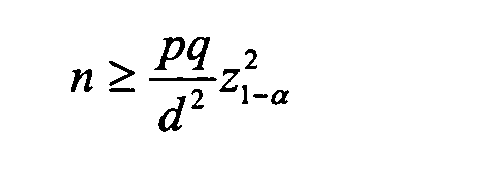
- n the size of a sample must have so that it can be regarded as representative of the general population of the strains of the given genus (e.g. Pseudomonas or Staphylococcus ).
- the probability that the absolute value of the difference between the sample frequency ⁇ and the probability of success p is less than the pre-assigned value of d is 1 - ⁇ , which corresponds with a confidence level of 1 - ⁇ .
- the value of 1 - ⁇ is usually set at 0.95 or 0.98.
- n n ⁇ pq d 2 ⁇ z 1 - ⁇ 2
- z 1- ⁇ is a random variable of the normal distribution.
- z 1- ⁇ 0.95
- z 1- ⁇ 1.96
- z 1- ⁇ 0.98
- the strain of bacteriophages is preferably isolated in step b) from a sample originating from the environment by passing it through a membrane filter of pore size 0.2 - 0.4 ⁇ m, adding culture medium to the filtrate and mixing it with a broth culture of bacteria of the defined genus, incubating this at a temperature of about 37°C for approximately one hour, removing a portion of the suspension and smearing it onto plates with solid culture medium, incubating at approx.
- the bacterial strains in step c) are preferably inoculated onto solid culture medium, onto which a portion of the bacteriophage preparation obtained in step b) is deposited, incubated at about 37 °C for around 4 hours, after which the temperature is set at about 4 °C for around 2 to 24 hours, by which the lytic activity of the bacteriophage strain is evidenced by the appearance of, at least, individual bald spots.
- the mixture containing bacteriophages is in contact with a substrate containing cellulose or a partially esterified derivative of it, then rinsed with a solution that removes impurities, especially endotoxin, after which the purified bacteriophages are washed out.
- the endotoxin can be effectively eluted with water, a solution of a non-dissociating substance, or a saline solution of concentration no greater than 0.1 M, possibly buffered.
- the bacteriophage fraction can also be effectively eluted with a solution of a non-dissociating substance, or any buffer, or a saline solution of concentration greater than 0.05 M, possibly buffered.
- elution of endotoxin and bacteriophages are carried out at temperatures between -25 °C and +100 °C.
- the endotoxin and bacteriophage elution can be done using an aqueous saline solution containing organic solvent.
- the organic solvent is best selected from a group comprising dimethyl sulphoxide, dimethylformamide, isopropanol and acetone, and as a substrate cellulose partially esterified with organic or inorganic acid can be used.
- cellulose may be used as a substrate of which 0.01 to 5 % of the glucose molecules have been esterified, preferably 0.25 to 1%, more preferably from 0.5 to 1% of the glucose molecules.
- the pathogenic bacterial strains are of the genera Staphylococcus or Pseudomonas.
- a further aspect of the invention is a medication for the treatment or prevention of infections caused by bacterial pathogens which contains an active agent and a possible pharmaceutically admissible carrier, such that the active agent is comprised of a multivalent bacteriophage strain specific to the bacteria of the genus and obtained using the method of this invention.
- the medication may have the characteristic that, as a multivalent bacteriophage strain specific to bacteria of the genus Staphylococcus, it contains at least one strain of bacteriophages selected from among S1 (PCM F/00001), S2 (PCM F/00002), S3 (PCM F/00003), S4 (PCM F/00004), S5 (PCM F/00006), S6 (PCM F/00006) and S7 (PCM F/00007), preferably the phages S1, S2, and S4 or S5.
- S1 PCM F/00001
- S2 PCM F/00002
- S3 PCM F/00003
- S4 PCM F/00004
- S5 PCM F/00006
- S6 PCM F/00006
- S7 PCM F/00007
- This medication produced in accordance with the one aspect of the invention is to serve in the treatment or prevention of infections arising in persons afflicted with mucoviscidosis and, as a multivalent bacteriophage strain specific to bacteria of the genus Staphylococcus, it contains at least one bacteriophage strain selected from among F/00002, F/00004 and F/00007.
- the medication should have the characteristic that, as a multivalent bacteriophage strain specific to bacteria of the genus Pseudomonas, it contains at least one strain of bacteriophages selected from among P1 (PCM F/00008), P2 (PCM F/00009), P3 (PCM F/00010), P4 (PCM F/00011), P5 (PCM F/00012), P6 (PCM F/00013), P7 (PCM F/00014), P8 (PCM F/00015), P9 (PCM F/00016), P10 (PCM F/00017), P11 (PCM F/00018), P12 (PCM F/00019), P13 (PCM F/00020), P14 (PCM F/00021), P15 (PCM F/00022), P16 (PCM F/00023), P17 (PCM F/00024), P18 (PCM F/00025), P19 (PCM F/00026), and P20 (PCM F/00008), P2
- the medication produced in accordance with certain aspect of the invention is to serve in the treatment or prevention of infections arising in persons afflicted with mucoviscidosis and, as a multivalent bacteriophage strain specific to bacteria of the genus Pseudomonas, it contains at least one bacteriophage strain selected from among F/00010, F/00013 and F/00018.
- a further object of this invention is the application of a multivalent bacteriophage strain obtained according to the method of the invention to the development of a medication for the treatment or prevention of bacterial infections caused by bacterial pathogens.
- bacteriophage strain selected from among S1 (PCM F/00001), S2 (PCM F/00002), S3 (PCM F/00003), S4 (PCM F/00004), S5 (PCM F/00006), S6 (PCM F/00006) and S7 (PCM F/00007), optimally phages S1, S2, and S4 or S5.
- bacteriophage strain chosen from among F/00002, F/00004 and F/00007.
- bacteriophage strain selected from among P1 (PCM F/00008), P2 (PCM F/00009), P3 (PCM F/00010), P4 (PCM F/00011), P5 (PCM F/00012), P6 (PCM F/00013), P7 (PCM F/00014), P8 (PCM F/00015), P9 (PCM F/00016), P10 (PCM F/00017), P11 (PCM F/00018), P12 (PCM F/00019), P13 (PCM F/00020), P14 (PCM F/00021), P15 (PCM F/00022), P16 (PCM F/00023), P17 (PCM F/00024), P18 (PCM F/00025), P19 (PCM F/00026), and P20 (PCM F/00027), optimally the phage
- bacteriophage strain chosen from among F/00010, F/00013 and F/00018.
- a further object of the invention is a multivalent bacteriophage strain specific to bacteria of the genus Staphylococcus selected from among S 1 (PCM F/00001), S2 (PCM F/00002), S3 (PCM F/00003), S4 (PCM F/00004), S5 (PCM F/00006), S6 (PCM F/00006) and S7 (PCM F/00007), optimally from among S1, S2, S4 and S5.
- An object of the invention is also a multivalent bacteriophage strain specific to bacteria of the genus Pseudomonas, selected from among P1 (PCM F/00008), P2 (PCM F/00009), P3 (PCM F/00010), P4 (PCM F/00011), P5 (PCM F/00012), P6 (PCM F/00013), P7 (PCM F/00014), P8 (PCM F/00015), P9 (PCM F/00016), P10 (PCM F/00017), P11 (PCM F/00018), P12 (PCM F/00019), P13 (PCM F/00020), P14 (PCM F/00021), P15 (PCM F/00022), P16 (PCM F/00023), P17 (PCM F/00024), P18 (PCM F/00025), P19 (PCM F/00026), and P20 (PCM F/00027), optimally from among P7, P20 and P6.
- the broad range of lytic phage preparations composed of several multivalent phages obtained by means of the method of this invention is a very important advantage from the viewpoint of their application in the treatment of bacterial infections. It is well known that within a bacterial population, forms resistant to a bacteriophage can appear with a frequency of about 1x10 -7 . In the presence of two phages, the frequency of such mutation is about 1x10 -4 , and with three phages only 1x10 -21 . With such an arrangement, the problem of bacterial strain resistance to phages practically does not exist.
- phages obtained in accordance with this invention in the preparation of medications for external use, employing them, for example, in the treatment and prevention of dermatological infections. It has been found that oral administration of phage lysates obtained according to this invention increases resistance to possible future bacterial infection.
- phage therapy can be used in conjunction with antibiotic therapy.
- Polyvalent phage preparations used in the treatment of bacterial infections have been show to be highly effective. Particular effectiveness has been observed in the treatment of sepsis (88% cure rate) and in the treatment of infections in patients with mucoviscidosis.
- Example 1 Bacteriophage isolation
- Bacteriophages for Staphylococcus and Pseudomonas were isolated from municipal sewage. The sewage was passed through a membrane filter with a pore size of 0.2 - 0.4 ⁇ m, which captures the bacteria but allows the bacteriophages to pass through. From the resultant filtrate, concentrated fluid culture medium was added and different dilutions of filtrate were mixed with young broth cultures of bacteria ( Staphylococcus aureus or Pseudomonas aeruginosa ).
- the samples were incubated at 37 °C for 1 hour, after which 0.2 ml of suspension was extracted from each sample with a pipette and smeared onto plates containing agar medium using a glass rod and the plates were incubated overnight at 37°C.
- a uniform (nebulous) growth of bacteria and separate, transparent small fields, the so-called bald spots were observed, which usually contained several million phage particles.
- the individual bald spot together with the agar surrounding it were cut out with the aid of a platinum loop, then transferred to a fresh broth culture of bacteria and incubated until the culture cleared.
- the filtrate contained only bacteriophages.
- the inoculation of different dilutions of the obtained phages with the respective bacteria on agar medium, and the re-isolation of the bald spots was carried out 5 times, which allowed obtaining a pure line of phages.
- Example 2 Determining the susceptibility of Staphylococcus aureus strains to bacteriophage microorganisms specific to them.
- Susceptibility was determined using the culture medium described by Wahl. Plates with this medium were dried at a temperature of 37 °C for 30 minutes, covered with a young, 4-hour broth culture of Staphylococcus aureus which was mixed by shaking, the excess of the suspension was removed with a pipette and again dried for 30 minutes at 37 °C. On one plate, divided into 6 segments, the susceptibilities of the strain under study was determined to 6 different but specific bacteriophages. One drop of a 1/10 bacteriophage dilution was placed onto the surface of each segment. The plates were incubated in an oven at 37 °C for about 4 hours, after which they were placed in a refrigerator until the following day.
- Example 3 Determining the susceptibility of strains of Pseudomonas to bacteriophage microorganisms specific to them.
- the method of determining the sensitivity was similar to that described in Example 2. In this case, though, the stock medium was agar with a phosphate buffer supplement and the incubation time of the plates deposited phage was 5 hours.
- Example 4 Selecting phages with the broadest spectrum of activity with regard to Staphylococcus and Pseudomonas strains - obtaining multivalent phage strains.
- Bacteriophages were isolated according to the method described in Example 1. The susceptibilities of 845 drug-resistant clinical strains of various species of Staphylococcus isolated from all over Tru to phages from the collection of bacteriophages specific to Staphylococcus, and the susceptibilities of 880 drug-resistant clinical strains of different species of Pseudomonas to phages from the collection of bacteriophages specific to Pseudomonas were determined.
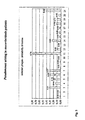
- phages S1-S7 and P1-P20 were submitted to statistical analysis in order to determine whether the p values obtained for the particular phages may be considered correct for the general populations of the respective genera of bacteria.
- the results are presented in Figures 1 and 2.
- the calculated values of n for most of the bacteriophages were lower than the number of bacterial strains of the research samples, which suggests that the ranges of the lytic spectra are at least correct with regard to the clinical strains appearing in Poland.
- the phages listed in Tables 1 and 2 may be regarded as multivalent phages with regard to this invention.
- phages for Staphylococcus 3 of the 7 most active, i.e. S1, S2 and S4 or S5, displayed lytic activity on 95% of the Staphylococus strains studied. Also, 3 of the 21 selected phages for Pseudomonas, i.e. P7, P20 and P6, displayed lytic activity on 87% of the Pseudomonas strains studied.
- phages for Staphylococcus 3 i.e. F/00002, F/00004 and F/00007
- Example 5 Replicating phages to Staphylococcus and phages to Gram-negative bacilli, obtaining phage lysates.
- phage lysate was added to young, 4-hour cultures of Staphylococcus aureus (logarithmic phase) in broth medium supplemented by glucose.
- the test tubes or bottles were mixed by shaking and incubated for 3 hours at 37 °C. After the appearance of a clear culture (lysis), the samples were kept cold until the following day.
- the lysate was passed through a membrane filter of pore size 0.2-04 ⁇ m to remove any remaining unlysed bacteria cells.
- the concentration of live phage particles was determined by the two-layer method of Gratia. An incubated culture without the addition of phage lysate served as a control.
- Replicating phages to Gram-negative bacilli Pseudomonas .
- Peptone water was used to replicate phages to Pseudomonas.
- 5% phage lysate was added to a young, 4-hour culture of Pseudomonas aeurginosa, the test tubes or bottles were mixed by shaking and the samples were incubated for 5 hours at 37 °C. After the culture had cleared up, the samples were left until the following day in a refrigerator, after which they were filtered through a membrane filter with pore size as above. The number of live phage particles in the lysate was determined by the method of Gratia.
- the sterile broth phage lysates show long-lasting lytic activity. When kept cold, they maintain their vitality for several years, in some cases over 10 years.
- Example 6 The production and application of polyvalent phage preparations.
- the exemplified polyvalent phage preparation to Staphylococcus is a mixture containing different amounts of the lysates of phages S1, S2 and S4 or S5, or derivatives of these lysates.
- preparations from phages F/00002, F/00004 and F/00007 should be used.
- the exemplified polyvalent phage preparation to Pseudomonas is a mixture containing different amounts of the lysates of phages P7, P20 and P6, or derivatives of these lysates.
- preparations from phages F/00010, F/00013 and F/00018 should be used.
- the medication is administered orally 3 times daily, in quantities corresponding to 10 ml of lysate, 30 minutes before meals, after previous neutralization of stomach fluids (e.g. with Gel Alumini phosphorici, purified soda or VIchy water).
- stomach fluids e.g. with Gel Alumini phosphorici, purified soda or VIchy water.
- the wound should not be cleansed with disinfectant, as this may lead to inactivation of the phages. If necessary, wounds may be cleansed with a sterile culture medium or a 0.9% NaCl physiological solution.
- phage therapy may be employed in conjunction with antibiotic therapy.
- the polyvalent phage preparations used in the treatment of bacterial infections have displayed high effectiveness. Particular efficacy has been observed in the treatment of sepsis (88% cure rate) and infections arising in mucoviscidosis patients.
- Example 7 Further purification of bacteriophage preparations, removing endotoxin from mixtures containing bacteriophages.
- bacteriophage preparations of high purity are required, in particular that they be devoid of bacterial endotoxin.
- affinity of bacteriophages to a substrate containing cellulose or, optimally, an esterified derivative of it was used.
- a commercially available sulphated derivative of cellulose was used in this example, which was characterized by a low level of esterification (8 ⁇ mole/ml of gel).
- the substrate was used to remove endotoxin from the mixture containing bacteriophages. After rinsing the substrate and removing the endotoxin, the next step of purification is the elution of the adsorbed bacteriophages.
- the solutions were prepared using distilled apyrogenic water.
- the column was prepared for the actual chromatography by rinsing it with 10 ml buffer I.
- 0.2 ml of the bacteriophage mixture was transferred to a chromatograph column containing 1 ml substrate containing the sulphated derivative of cellulose. A fraction of 0.2 ml volume was taken. The first fraction was eluted with 3 ml of buffer I. Under these conditions, non-associated endotoxin flowed out from the column. The second fraction was eluted with buffer II. Fraction II contained purified bacteriophages.
- the material submitted to chromatography on a substrate containing a sulphated derivative of cellulose contained 2500 units of endotoxin/ml.
- the fraction eluted with buffor I contained 600 - 1000 units of endotoxin/ml, and that eluted with buffer II contained bacteriophages devoid of endotoxin (about 1 unit/ml).
- the content of endotoxin in the bacteriophage preparations was determined using the gel method of the company Charles River Endosafe, Charleston, USA.
- the multivalent bacteriophage strains of the present invention are deposited under the provisions of the Budapest Treaty and their details are set out in the following Table 3 Table 3: deposit of bacteriophage strains PHAGE DESIGNATION POLISH COLLECTION OF MICROORGANISMS (PCM) DEPOSIT ACCESS NUMBER DATE OF DEPOSIT PROPOSED TAXONIMIC DESIGNATION S1 F/00001 18.07.2001 Siphoviridae SI19 S2 F/00002 18.07.2001 Siphoviridae SI9 S3 F/00003 18.07.2001 Siphoviridae SI19 S4 F/00004 18.07.2001 Siphoviridae SI10 S5 F/00005 18.07.2001 Siphoviridae SI19 S6 F/00006 18.07.2001 Siphoviridae SI19 S7 F/00007 18.07.2001 Siphoviridae SI19 P1 F/00008 18.07.2001 Myoviridae MI1 P2 F/00009 18.07.2001 Myoviridae MI3 P3 F/
Landscapes
- Health & Medical Sciences (AREA)
- Life Sciences & Earth Sciences (AREA)
- Chemical & Material Sciences (AREA)
- Organic Chemistry (AREA)
- Engineering & Computer Science (AREA)
- Bioinformatics & Cheminformatics (AREA)
- Zoology (AREA)
- Medicinal Chemistry (AREA)
- General Health & Medical Sciences (AREA)
- Genetics & Genomics (AREA)
- Wood Science & Technology (AREA)
- Virology (AREA)
- Microbiology (AREA)
- Biomedical Technology (AREA)
- Public Health (AREA)
- General Engineering & Computer Science (AREA)
- Biotechnology (AREA)
- Immunology (AREA)
- Biochemistry (AREA)
- Pharmacology & Pharmacy (AREA)
- Veterinary Medicine (AREA)
- Animal Behavior & Ethology (AREA)
- Mycology (AREA)
- Epidemiology (AREA)
- Chemical Kinetics & Catalysis (AREA)
- General Chemical & Material Sciences (AREA)
- Nuclear Medicine, Radiotherapy & Molecular Imaging (AREA)
- Pulmonology (AREA)
- Communicable Diseases (AREA)
- Oncology (AREA)
- Medicines Containing Material From Animals Or Micro-Organisms (AREA)
- Micro-Organisms Or Cultivation Processes Thereof (AREA)
Claims (29)
- Verfahren zum Erhalt eines multivalenten Bakteriophagenstamms, dadurch gekennzeichnet, dass:a) eine ausreichende Zahl (n) pathogener bakterieller Stämme einer bestimmten Art, die statistisch in einem bestimmten gegebenen Bereich auftreten, angehäuft wird, wodurch die isolierten bakteriellen Stämme vermutlich arzneimittelresistente Stämme sind,b) eine ausreichende Zahl von Bakteriophagenstämmen, die für mindestens einen der bakteriellen Stämme der gegebenen Art spezifisch sind, angehäuft wird,c) die lytische Aktivität der angehäuften Bakteriophagenstämme auf jeden angehäuften bakteriellen Stamm bestimmt wird, der Wert p, der das Verhältnis der Zahl von Stämmen, lysiert durch einen gegebenen Phagen, zu der Zahl aller angehäuften bakteriellen Stämme ist, geschätzt wird,d) aus dem resultierenden Wert für p getestet wird, ob n die folgende Bedingung erfüllt:
 d ist eine Konstante, die nicht größer ist als 0,1, optimal nicht größer als 10% p,z1-α ist eine statistische Variable der normalen Verteilung, abhängig vom Konfidenz-Faktor 1-α, was nicht weniger 0,95 ist,e) der Bakteriophagenstamm wird selektiert, der das Kriterium gemäß d) erfüllt und einen Wert für p von nicht weniger als 2/n aufweist, optimal nicht weniger als 0,5.
 - Verfahren gemäß Anspruch 1, worin in Schritt b) der Bakteriophagenstamm aus einer Probe isoliert wird, die aus der Umwelt abstammt, indem diese durch einen Membranfilter mit einer Porengröße von 0,2 bis 0,4 µm geführt wird, dem erhaltenen Filtrat Kulturmedium zugefügt wird und mit einer Broth-Kultur von Bakterien einer definierten Gattung vermischt wird, bei einer Temperatur von ungefähr 37°C für ungefähr eine Stunde inkubiert wird, ein Teil der Suspension entfernt und auf Platten mit einem Festkulturmedium aufgebracht wird, bei ungefähr 37°C für 2 bis 24 Stunden inkubiert wird, eine Probe des Mediums, umgebend einen individuellen kahlen Punkt, isoliert wird, in die Broth-Kultur von Bakterien der definierten Gattung übertragen wird und inkubiert wird, bis sich die Kultur aufhellt und das Bakteriophagenprodukt erhalten wird, indem das Lysat durch einen Membranfilter mit einer Porengröße von 0,2-0,4 µm geführt wird, wobei vorzugsweise die Inokulation des Festkulturmediums und die Re-Isolation der kahlen Flecken fünfmal wiederholt wird.
- Verfahren gemäß Anspruch 1 oder 2, wobei in Schritt c) der untersuchte bakterielle Stamm auf das jeweilige feste Medium inokuliert wird, worauf ein Teil der in Schritt b) erhaltenen Bakteriophagenpräparation übertragen wird, bei einer Temperatur von ungefähr 37°C für ungefähr 4 Stunden inkubiert wird, woraufhin man dies bei einer Temperatur von ungefähr 4°C für ungefähr 2 bis 24 Stunden stehen lässt, woraufhin die lytische Aktivität des Bakteriophagenstamms durch das Auftreten von mindestens individuellen kahlen Flecken evident wird.
- Verfahren gemäß Anspruch 1, wobei die pathogenen bakteriellen Stämme zu den Gattungen Staphylococcus oder Pseudomonas gehören.
- Verfahren gemäß Anspruch 1 oder 4, wobei in Schritt e) der selektierte multivalente Bakteriophagenstamm, der für arzneimittelresistente bakterielle Stämme der Gattung Staphylococcus, die in Polen auftreten, spezifisch ist, der Bakteriophagenstamm S1 (PCM F/00001), S2 (PCM F/00002), S3 (PCM F/00003), S4 (PCM F/00004), S5 (PCM F/00005), S6 (PCM F/00006) oder S7 (PCM F/00007) ist.
- Verfahren gemäß Anspruch 5, wobei in Schritt e) der selektierte multivalente Bakteriophagenstamm, der für arzneimittelresistente bakterielle Stämme der Gattung Staphylococcus, die bei Mucoviscidose-Patienten auftreten, spezifisch ist, der Bakteriophagenstamm S2 (PCM F/00002), S4 (PCM F/00004) oder S7 (PCM F/00007) ist.
- Verfahren gemäß Anspruch 1 oder 4, wobei in Schritt e) der selektierte multivalente Bakteriophagenstamm, der für arzneimittelresistente bakterielle Stämme der Gattung Pseudomonas, die in Polen auftreten, spezifisch ist, der Bakteriophagenstamm P1 (PCM F/00008), P2 (PCM F/00009), P3 (PCM F/00010), P4 (PCM F/00011), P5 (PCM F/00012), P6 (PCM F/00013), P7 (PCM F/00014), P8 (PCM F/00015), P9 (PCM F/00016), P10 (PCM F/00017), P11 (PCM F/00018), P12 (PCM F/00019), P13 (PCM F/00020), P14 (PCM F/00021), P15 (PCM F/00022), P16 (PCM F/00023), P17 (PCM F/00024), P18 (PCM F/00025), P19 (PCM F/00026) oder P20 (PCM F/00027) ist.
- Verfahren gemäß Anspruch 7, wobei in Schritt e) der selektierte multivalente Bakteriophagenstamm, der für arzneimittelresistente bakterielle Stämme der Gattung Pseudomonas, die bei Mucoviscidose-Patienten auftreten, spezifisch ist, der Bakteriophagenstamm P3 (PCM F/00010), P6 (PCM F/00013) oder P11 (PCM F/00018) ist.
- Verfahren gemäß Anspruch 1 oder 2, umfassend die weitere Reinigung des Lysats, insbesondere von Endotoxin, wobei die Mischung, enthaltend die Bakteriophagen, mit einem Substrat kontaktiert wird, enthaltend Cellulose oder ein mindestens teilweise verestertes Derivat davon, was dann mit einer Lösung gewaschen wird, die Unreinheiten entfernt, insbesondere Endotoxin, woraufhin gereinigte Bakteriophagen eluiert werden.
- Verfahren gemäß Anspruch 9, wobei die Elution von Endotoxin durch Wasser, eine Lösung einer nicht dissoziierenden Substanz, oder Salzlösung mit einer Konzentration von nicht mehr als 0,1 M, insbesondere gepuffert, durchgeführt wird.
- Verfahren gemäß Anspruch 9, wobei die Elution der Bakteriophagen durch eine Lösung einer nicht dissoziierenden Substanz oder irgendeinen Puffer oder eine Salzlösung mit einer Konzentration von mehr als 0,05 M, insbesondere gepuffert, durchgeführt wird.
- Verfahren gemäß Anspruch 9, wobei die Elution von Endotoxin und Bakteriophagen bei Temperaturen von -25 bis 100°C durchgeführt wird.
- Verfahren gemäß Anspruch 9, wobei die Elution von Endotoxin und Bakteriophagen unter Verwendung einer wässrigen Lösung eines salzhaltigen organischen Lösungsmittels durchgeführt wird.
- Verfahren gemäß Anspruch 13, wobei das organische Lösungsmittel gewählt wird aus der Gruppe, umfassend Dimethylsulphoxid, Dimethylformamid, Isopropanol und Aceton.
- Verfahren gemäß Anspruch 9, wobei eine Cellulose, die teilweise mit organischen oder anorganischen Säuren verestert ist, als Substrat verwendet wird.
- Verfahren gemäß Anspruch 9, wobei eine Cellulose verwendet wird, die teilweise mit Essigsäure, schwefelige Säure, Salpetersäure oder Phosphorsäure verestert ist.
- Verfahren gemäß Anspruch 9, dadurch gekennzeichnet, dass Cellulose, worin 0,01 bis 5% der Glukosemoleküle, insbesondere 0,25 bis 1% der Glukosemoleküle, verestert sind, verwendet wird.
- Medikament für eine Behandlung oder Prävention einer Infektion, die sich aus einem bakteriellen Pathogen ergibt, umfassend den durch das Verfahren gemäß einem der Ansprüche 1-17 erhältlichen multivalenten Bakteriophagenstamm, spezifisch für Bakterien, die zu der Gattung des bakteriellen Pathogens gehören.
- Medikament gemäß Anspruch 18, wobei der multivalente Bakteriophagenstamm, der für Bakterien der Gattung Staphylococcus, möglicherweise arzneimittelresistente bakterielle Stämme der Gattung Staphylococcus, die in Polen auftreten, spezifisch ist, ein Bakteriophagenstamm ist, gewählt aus S1 (PCM F/00001), S2 (PCM F/00002), S3 (PCM F/00003), S4 (PCM F/00004), S5 (PCM F/00005), S6 (PCM F/00006) und S7 (PCM F/00007), insbesondere die Phagen S1, S2 und S4 oder S5.
- Medikament gemäß Anspruch 18, dadurch gekennzeichnet, dass es für die Behandlung oder Prävention von Infektionen dient, die sich bei Mucoviscidose-Patienten ergeben, und als multivalenten Bakteriophagenstamm, spezifisch für Bakterien der Gattung Staphylococcus, mindestens einen Bakteriophagenstamm aus F/00002, F/00004 und F/00007 enthält.
- Medikament gemäß Anspruch 18, wobei der multivalente Bakteriophagenstamm, der für Bakterien der Gattung Pseudomonas spezifisch ist, möglicherweise arzneimittelresistente bakterielle Stämme der Gattung Pseudomonas, die in Polen auftreten, ein Bakteriophagenstamm ist, gewählt aus P1 (PCM F/00008), P2 (PCM F/00009), P3 (PCM F/00010), P4 (PCM F/00011), P5 (PCM F/00012), P6 (PCM F/00013), P7 (PCM F/00014), P8 (PCM F/00015), P9 (PCM F/00016), P10 (PCM F/00017), P11 (PCM F/00018), P12 (PCM F/00019), P13 (PCM F/00020), P14 (PCM F/00021), P15 (PCM F/00022), P16 (PCM F/00023), P17 (PCM F/00024), P18 (PCM F/00025), P19 (PCM F/00026) und P20 (PCM F/00027), insbesondere den Phagen P7, P20 und P6.
- Medikament gemäß Anspruch 18, das dadurch gekennzeichnet ist, dass es der Behandlung oder Prävention von Infektionen dient, die sich bei Mucoviscidose-Patienten ergeben, und als multivalenten Bakteriophagenstamm, der für Bakterien der Gattung Pseudomonas spezifisch ist, mindestens einen Bakteriophagenstamm enthält, gewählt aus F/00010, F/00013 und F/00018.
- Verwendung eines multivalente Bakteriophagenstamms, erhalten durch das Verfahren gemäß den Ansprüchen 1-17 für die Herstellung einer Medikation für die Behandlung oder Prävention von Infektionen, die sich durch pathogene Bakterien ergeben.
- Verwendung gemäß Anspruch 23, wobei für die Herstellung der Medikation für die Behandlung oder Prävention von Infektionen, ausgelöst durch Bakterien der Gattung Staphylococcus, möglicherweise ausgelöst durch arzneimittelresistente bakterielle Stämme der Gattung Staphylococcus, die in Polen auftreten, mindestens ein Bakteriophagenstamm verwendet wird, gewählt aus S1 (PCM F/00001), S2 (PCM F/00002), S3 (PCM F/00003), S4 (PCM F/00004), S5 (PCM F/00005), S6 (PCM F/00006) und S7 (PCM F/00007), insbesondere den Phagen S1, S2 und S4 oder S5.
- Verwendung gemäß Anspruch 23, worin für die Produktion der Medikation für die Behandlung oder Prävention von Infektionen, die sich bei Mucoviscidose-Patienten ergeben, ausgelöst durch Bakterien der Gattung Staphylococcus, mindestens ein Bakteriophagenstamm verwendet wird, gewählt aus F/00002, F/00004 und F/00007.
- Verwendung gemäß Anspruch 23, wobei für die Produktion der Medikation für die Behandlung oder Prävention von Infektionen, die sich durch Bakterien der Gattung Pseudomonas ergeben, möglicherweise ausgelöst durch arzneimittelresistente bakterielle Stämme der Gattung Pseudomonas, die in Polen auftreten, mindestens ein Bakteriophagenstamm verwendet wird, gewählt aus P1 (PCM F/00008), P2 (PCM F/00009), P3 (PCM F/00010), P4 (PCM F/00011), P5 (PCM F/00012), P6 (PCM F/00013), P7 (PCM F/00014), P8 (PCM F/00015), P9 (PCM F/00016), P10 (PCM F/00017), P11 (PCM F/00018), P12 (PCM F/00019), P13 (PCM F/00020), P14 (PCM F/00021), P15 (PCM F/00022), P16 (PCM F/00023), P17 (PCM F/00024), P18 (PCM F/00025), P19 (PCM F/00026) und P20 (PCM F/00027), insbesondere den Phagen P7, P20 und P6.
- Verwendung gemäß Anspruch 23, worin für die Produktion der Medikation für die Behandlung oder Prävention von Infektionen, die sich bei Mucoviscidose-Patienten ergeben, ausgelöst durch Bakterien der Gattung Pseudomonas, mindestens ein Bakteriophagenstamm verwendet wird, gewählt aus F/00010, F/00013 und F/00018.
- Multivalenter Bakteriophagenstamm, gewählt aus S1 (PCM F/00001), S2 (PCM F/00002), S3 (PCM F/00003), S4 (PCM F/00004), S5 (PCM F/00005), S6 (PCM F/00006) und S7 (PCM F/00007), wobei der Stamm dadurch gekennzeichnet ist, dass er für Bakterien der Gattung Staphylococcus spezifisch ist, möglicherweise spezifisch für arzneimittelresistente bakterielle Stämme der Gattung Staphylococcus, die in Polen auftreten.
- Multivalenter Bakteriophagenstamm, gewählt aus P1 (PCM F/00008), P2 (PCM F/00009), P3 (PCM F/00010), P4 (PCM F/00011), P5 (PCM F/00012), P6 (PCM F/00013), P7 (PCM F/00014), P8 (PCM F/00015), P9 (PCM F/00016), P10 (PCM F/00017), P11 (PCM F/00018), P12 (PCM F/00019), P13 (PCM F/00020), P14 (PCM F/00021), P15 (PCM F/00022), P16 (PCM F/00023), P17 (PCM F/00024), P18 (PCM F/00025), P19 (PCM F/00026) und P20 (PCM F/00027), wobei der Stamm dadurch gekennzeichnet ist, dass er für Bakterien der Gattung Pseudomonas spezifisch ist, möglicherweise spezifisch für arzneimittelresistente bakterielle Stämme der Gattung Pseudomonas, die in Polen auftreten.
Applications Claiming Priority (5)
| Application Number | Priority Date | Filing Date | Title |
|---|---|---|---|
| PL348740A PL195437B1 (pl) | 2001-07-18 | 2001-07-18 | Sposób przygotowania poliwalentnych preparatów fagowych do leczenia zakażeń bakteryjnych |
| PL34874001 | 2001-07-18 | ||
| PL35482202 | 2002-06-30 | ||
| PL02354822A PL354822A1 (en) | 2002-06-30 | 2002-06-30 | Method of receiving purified bacteriophage preparations and new applications of polysaccharide or its esterificated derivative |
| PCT/PL2002/000053 WO2003008564A2 (en) | 2001-07-18 | 2002-07-18 | Methods of polyvalent bacteriophage preparation for the treatment of bacterial infections |
Publications (2)
| Publication Number | Publication Date |
|---|---|
| EP1406642A2 EP1406642A2 (de) | 2004-04-14 |
| EP1406642B1 true EP1406642B1 (de) | 2007-02-28 |
Family
ID=26653403
Family Applications (1)
| Application Number | Title | Priority Date | Filing Date |
|---|---|---|---|
| EP02751919A Expired - Lifetime EP1406642B1 (de) | 2001-07-18 | 2002-07-18 | Verfahren zur herstellung polyvalenter bakteriophagenpräparationen zur behandlung bakterieller infektionen |
Country Status (12)
| Country | Link |
|---|---|
| US (1) | US7232564B2 (de) |
| EP (1) | EP1406642B1 (de) |
| JP (1) | JP4723807B2 (de) |
| KR (1) | KR100874888B1 (de) |
| CN (1) | CN1260353C (de) |
| AT (1) | ATE355069T1 (de) |
| AU (1) | AU2002354900A1 (de) |
| DE (1) | DE60218473T2 (de) |
| DK (1) | DK1406642T3 (de) |
| EA (1) | EA007472B1 (de) |
| ES (1) | ES2283581T3 (de) |
| WO (1) | WO2003008564A2 (de) |
Families Citing this family (15)
| Publication number | Priority date | Publication date | Assignee | Title |
|---|---|---|---|---|
| PL354822A1 (en) * | 2002-06-30 | 2004-01-12 | Instytut Immunologii i Terapii Doświadczalnej PANwe Wrocławiu | Method of receiving purified bacteriophage preparations and new applications of polysaccharide or its esterificated derivative |
| ES2527994T3 (es) | 2003-07-23 | 2015-02-03 | Biocontrol Limited | Agentes terapéuticos que contienen bacteriófagos frente a P. aeruginosa |
| WO2006092629A1 (en) * | 2005-03-04 | 2006-09-08 | Blaze Venture Technologies Limited | Method and device for bacterial sampling |
| CN100413962C (zh) * | 2005-06-16 | 2008-08-27 | 华中科技大学同济医学院附属同济医院 | 一种作用于产超广谱β-内酰胺酶大肠杆菌噬菌体 |
| EP1907534B2 (de) * | 2005-07-12 | 2024-04-10 | Micreos B.V. | Bakteriophagen und deren verwendungen |
| US20070292397A1 (en) * | 2006-06-19 | 2007-12-20 | Mcnulty Amy K | Method for the detection and neutralization of bacteria |
| GB0704553D0 (en) | 2007-03-09 | 2007-04-18 | Harper David R | Beneficial effects of bacteriophage treatments |
| JP5720045B2 (ja) * | 2008-12-26 | 2015-05-20 | 国立大学法人東京工業大学 | スタフィロコッカス・アウレウス溶菌性バクテリオファージ |
| KR100935387B1 (ko) | 2009-07-10 | 2010-01-06 | 주식회사 엘에스텍 | 레이저를 이용한 패턴형성장치 |
| KR100952201B1 (ko) | 2009-07-10 | 2010-04-09 | 주식회사 엘에스텍 | 레이저를 이용한 패턴형성장치 |
| KR100952202B1 (ko) | 2009-09-11 | 2010-04-09 | 주식회사 엘에스텍 | 도광판용 패턴형성장치 |
| RU2474431C1 (ru) * | 2011-08-09 | 2013-02-10 | Татьяна Николаевна Зарипова | Способ лечения острых и обострений хронического ларингита |
| CN103555673B (zh) * | 2013-10-23 | 2016-01-20 | 靳静 | 体外筛选体内抗菌活性噬菌体的方法 |
| RU2664681C1 (ru) * | 2017-09-06 | 2018-08-21 | Андрей Владимирович Алешкин | Способ лечения инфекции, связанной с оказанием медицинской помощи, вызванной возбудителем или возбудителями с множественной лекарственной устойчивостью |
| KR102774411B1 (ko) * | 2021-10-27 | 2025-02-27 | 전북대학교산학협력단 | 재증식 풀 컬쳐 기반 박테리오파지 스크리닝 방법 |
Family Cites Families (32)
| Publication number | Priority date | Publication date | Assignee | Title |
|---|---|---|---|---|
| GB829266A (en) * | 1957-03-20 | 1960-03-02 | Biogena | A method of manufacturing bacteriophages in solid dry form |
| SU543260A1 (ru) | 1975-07-25 | 1984-04-15 | Всесоюзный Ордена Трудового Красного Знамени Научно-Исследовательский Противочумный Институт "Микроб" | Способ получени холерных бактериофагов дл дифференциации вибрионов Эль-Тор на вирулентные и авирулентные |
| CS192212B1 (en) | 1977-04-22 | 1979-08-31 | Miloslav Mazacek | Method of producing dry form bacteriophages |
| US4118315A (en) * | 1977-04-28 | 1978-10-03 | Nasa | Water system virus detection |
| US4797363A (en) * | 1984-03-19 | 1989-01-10 | Board Of Trustees, University Of Illinois | Bacteriophages as recognition and identification agents |
| US4828999A (en) * | 1986-07-21 | 1989-05-09 | Jackson Le Roy E | Bacteriophage prevention and control of harmful plant bacteria |
| EP0290295B1 (de) | 1987-05-07 | 1992-08-05 | Microbial Developments Limited | Antimikrobische Zubereitungen |
| WO1990003122A1 (en) | 1988-09-26 | 1990-04-05 | Microbial Developments Limited | Antimicrobial preparations |
| US5846604A (en) * | 1988-03-14 | 1998-12-08 | Nextec Applications, Inc. | Controlling the porosity and permeation of a web |
| GB8918983D0 (en) | 1989-08-21 | 1989-10-04 | Unilever Plc | Composition for hygiene purposes |
| DE4005874A1 (de) | 1990-02-24 | 1991-11-07 | Boehringer Mannheim Gmbh | Traegergebundene rekombinante proteine, verfahren zur herstellung und verwendung als immunogene und vakzine |
| GB2253859A (en) | 1991-02-28 | 1992-09-23 | Microbial Dev Ltd | Use of bacteriophages to prevent microbial infestation |
| GB2255561B (en) | 1991-04-20 | 1995-06-21 | Agricultural & Food Res | Lysins from bacteriophages |
| WO1995005454A1 (en) | 1992-02-22 | 1995-02-23 | Cambridge Bacteriophage Technologies Ltd. | Engineered bacteriophages and vaccines containing them |
| GB9220027D0 (en) | 1992-09-22 | 1992-11-04 | Mini Agriculture & Fisheries | Method and kits for detection of bacteria |
| CA2199478A1 (en) | 1994-09-09 | 1996-03-14 | Allan L. Delisle | Bacteriophage-encoded enzymes for the treatment and prevention of dental caries and periodontal diseases |
| GB9500851D0 (en) | 1995-01-17 | 1995-03-08 | Bionvent International Ab | Method of selecting specific bacteriophages |
| DE19517940A1 (de) | 1995-05-18 | 1996-11-21 | Merck Patent Gmbh | Nachweis von Listerien mittels rekombinanter Bakteriophagen |
| EP0895534A1 (de) * | 1996-04-15 | 1999-02-10 | Nymox Corporation | Bakteriophagen enthaltende zusammensetzungen und methoden zur verwendung von bakteriophagen zur behandlung von infektionen |
| WO1998008944A1 (fr) | 1996-08-26 | 1998-03-05 | Bio Venture Bank Co., Ltd. | Nouveau bacteriophage et procede de criblage associe, nouvelles matieres biobactericides preparees avec ledit bacteriophage et reactif utilise pour detecter celui-ci |
| US6322783B1 (en) | 1996-08-26 | 2001-11-27 | Seishi Takahashi | Bacteriophages, method for screening same and bactericidal compositions using same, and detection kits using same |
| RU2109055C1 (ru) * | 1996-11-27 | 1998-04-20 | Дочернее предприятие "Биофаг" Научно-производственного объединения "Иммунопрепарат" | Способ выделения бактериофагов |
| DE19828596A1 (de) * | 1997-06-26 | 1999-02-11 | A Daniela Dr Nodar | Wirksames Arzneimittel gegen bakterielle Erkrankungen und Herstellung desselben |
| US6982153B1 (en) * | 1998-12-03 | 2006-01-03 | Targanta Therapeutics, Inc. | DNA sequences from staphylococcus aureus bacteriophage 77 that encode anti-microbial polypeptides |
| US6245504B1 (en) * | 1999-03-26 | 2001-06-12 | The University Of Georgia Research Foundation, Inc. | Transducing phages of Actinomycetales |
| US6482632B1 (en) * | 1999-03-29 | 2002-11-19 | Council Of Scientic And Industrial Research | Bacteriophage, a process for the isolation thereof, and a universal growth medium useful in the process thereof |
| WO2000061804A1 (en) * | 1999-04-14 | 2000-10-19 | Musc Foundation For Research Development | Tissue-specific and pathogen-specific toxic agents and ribozymes |
| AU5423400A (en) | 1999-06-25 | 2001-01-31 | Spring Diagnostics Ltd. | Bacteriophage library useful for typing bacteria and system and method utilizingsame |
| DE50012134D1 (de) | 1999-07-30 | 2006-04-13 | Profos Ag | Nachweis und identifikation von bakterienstämmen |
| CA2430501A1 (en) * | 2000-01-11 | 2001-07-19 | Intralytix, Inc. | Method for produce sanitation using bacteriophages |
| ES2252263T3 (es) * | 2000-07-25 | 2006-05-16 | The Government Of The Usa, As Represented By The Secretary, Department Of Health And Human Services | Bacteriofago que tiene una gama de hospedadores multiple. |
| US6461608B1 (en) * | 2000-11-22 | 2002-10-08 | Nymox Pharmaceutical Corporation | Bacteriophage composition useful in treating food products to prevent bacterial contamination |
-
2002
- 2002-07-18 AT AT02751919T patent/ATE355069T1/de active
- 2002-07-18 JP JP2003514881A patent/JP4723807B2/ja not_active Expired - Lifetime
- 2002-07-18 US US10/484,236 patent/US7232564B2/en not_active Expired - Lifetime
- 2002-07-18 EA EA200400197A patent/EA007472B1/ru not_active IP Right Cessation
- 2002-07-18 AU AU2002354900A patent/AU2002354900A1/en not_active Abandoned
- 2002-07-18 DK DK02751919T patent/DK1406642T3/da active
- 2002-07-18 ES ES02751919T patent/ES2283581T3/es not_active Expired - Lifetime
- 2002-07-18 DE DE60218473T patent/DE60218473T2/de not_active Expired - Lifetime
- 2002-07-18 KR KR1020047000763A patent/KR100874888B1/ko not_active Expired - Fee Related
- 2002-07-18 WO PCT/PL2002/000053 patent/WO2003008564A2/en not_active Ceased
- 2002-07-18 EP EP02751919A patent/EP1406642B1/de not_active Expired - Lifetime
- 2002-07-18 CN CNB028158334A patent/CN1260353C/zh not_active Expired - Fee Related
Also Published As
| Publication number | Publication date |
|---|---|
| EA007472B1 (ru) | 2006-10-27 |
| AU2002354900A1 (en) | 2003-03-03 |
| CN1260353C (zh) | 2006-06-21 |
| WO2003008564A2 (en) | 2003-01-30 |
| DE60218473D1 (de) | 2007-04-12 |
| DE60218473T2 (de) | 2007-11-08 |
| US7232564B2 (en) | 2007-06-19 |
| DK1406642T3 (da) | 2007-07-02 |
| WO2003008564A3 (en) | 2003-11-06 |
| JP4723807B2 (ja) | 2011-07-13 |
| KR20040029372A (ko) | 2004-04-06 |
| CN1541101A (zh) | 2004-10-27 |
| ES2283581T3 (es) | 2007-11-01 |
| EA200400197A1 (ru) | 2004-06-24 |
| US20050032036A1 (en) | 2005-02-10 |
| JP2004535812A (ja) | 2004-12-02 |
| ATE355069T1 (de) | 2006-03-15 |
| KR100874888B1 (ko) | 2008-12-19 |
| EP1406642A2 (de) | 2004-04-14 |
Similar Documents
| Publication | Publication Date | Title |
|---|---|---|
| EP1406642B1 (de) | Verfahren zur herstellung polyvalenter bakteriophagenpräparationen zur behandlung bakterieller infektionen | |
| AU734420B2 (en) | Compositions containing bacteriophages and methods of using bacteriophages to treat infections | |
| US20120328576A1 (en) | Defined dose therapeutic phage | |
| US12006517B2 (en) | Method for purification of bacteriophage particles | |
| Kelishomi et al. | Evaluation of the therapeutic effect of a novel bacteriophage in the healing process of infected wounds with Klebsiella pneumoniae in mice | |
| CN115125216A (zh) | 一种耐甲氧西林金黄色葡萄球菌的噬菌体及其应用 | |
| RU2112800C1 (ru) | Штамм пилеспецифического бактериофага pseudomonas aeruginosa гнцпм n 03, используемый для приготовления лечебного препарата против синегнойной палочки | |
| KR100949389B1 (ko) | 박테리오파지 kctc11120bp를 함유하는 세균증식 억제 또는 사멸용 제제 | |
| Esmat et al. | Antibiotics and phage sensitivity as interventions for controlling Escherichia coli isolated from clinical specimens | |
| Teklemariam et al. | Isolation and characterization of a novel lytic phage, VB_PseuP-SA22, and its efficacy against carbapenem-resistant Pseudomonas aeruginosa. Antibiotics 2023; 12: 497 | |
| CN119120395B (zh) | 一种克雷伯菌属噬菌体及其应用 | |
| PL201750B1 (pl) | Sposób przygotowania poliwalentnych preparatów fagowych do leczenia zakażeń bakteryjnych | |
| Evran et al. | Fighting Fire Blight: Characterization of Novel Bacteriophages Against Erwinia amylovora in Turkiye Genomic and Biological Characterization of Two Novel Erwinia amylovora Phages from Türkiye | |
| Lin et al. | An experimental study on the lytic bacteriophage MSP15 with wide-spectrum targeting methicillin-resistant Staphylococcus aureus | |
| CN119082086A (zh) | 噬菌体解聚酶Dep46、肺炎克雷伯氏菌噬菌株JSP3及应用 | |
| KR20250114974A (ko) | 아시네토박터 바우마니에 대한 항균능력을 가지는 박테리오파지 vB_AbaSi_W9 및 항생제를 유효성분으로 포함하는 항균용 조성물 | |
| CN116808082A (zh) | 一种异绿原酸盐与噬菌体联合在清除沙门菌生物被膜中的应用 | |
| CN120608027A (zh) | 一种新型裂解型噬菌体及其应用 | |
| CN120796202A (zh) | 一种丙酸杆菌噬菌体、裂解酶及其应用 | |
| CN119432773A (zh) | 一株可以清除多重耐药肠球菌的噬菌体efh1 | |
| CN119530173A (zh) | 一株结肠弯曲菌噬菌体及其应用 | |
| PL195437B1 (pl) | Sposób przygotowania poliwalentnych preparatów fagowych do leczenia zakażeń bakteryjnych |
Legal Events
| Date | Code | Title | Description |
|---|---|---|---|
| PUAI | Public reference made under article 153(3) epc to a published international application that has entered the european phase |
Free format text: ORIGINAL CODE: 0009012 |
|
| 17P | Request for examination filed |
Effective date: 20040120 |
|
| AK | Designated contracting states |
Kind code of ref document: A2 Designated state(s): AT BE BG CH CY CZ DE DK EE ES FI FR GB GR IE IT LI LU MC NL PT SE SK TR |
|
| AX | Request for extension of the european patent |
Extension state: AL LT LV MK RO SI |
|
| GRAP | Despatch of communication of intention to grant a patent |
Free format text: ORIGINAL CODE: EPIDOSNIGR1 |
|
| GRAS | Grant fee paid |
Free format text: ORIGINAL CODE: EPIDOSNIGR3 |
|
| GRAA | (expected) grant |
Free format text: ORIGINAL CODE: 0009210 |
|
| AK | Designated contracting states |
Kind code of ref document: B1 Designated state(s): AT BE BG CH CY CZ DE DK EE ES FI FR GB GR IE IT LI LU MC NL PT SE SK TR |
|
| AX | Request for extension of the european patent |
Extension state: AL LT LV MK RO SI |
|
| REG | Reference to a national code |
Ref country code: GB Ref legal event code: FG4D |
|
| REG | Reference to a national code |
Ref country code: CH Ref legal event code: EP |
|
| REF | Corresponds to: |
Ref document number: 60218473 Country of ref document: DE Date of ref document: 20070412 Kind code of ref document: P |
|
| REG | Reference to a national code |
Ref country code: IE Ref legal event code: FG4D |
|
| PG25 | Lapsed in a contracting state [announced via postgrant information from national office to epo] |
Ref country code: BG Free format text: LAPSE BECAUSE OF THE APPLICANT RENOUNCES Effective date: 20070529 |
|
| REG | Reference to a national code |
Ref country code: SE Ref legal event code: TRGR |
|
| REG | Reference to a national code |
Ref country code: CH Ref legal event code: NV Representative=s name: ISLER & PEDRAZZINI AG |
|
| REG | Reference to a national code |
Ref country code: DK Ref legal event code: T3 |
|
| PG25 | Lapsed in a contracting state [announced via postgrant information from national office to epo] |
Ref country code: PT Free format text: LAPSE BECAUSE OF FAILURE TO SUBMIT A TRANSLATION OF THE DESCRIPTION OR TO PAY THE FEE WITHIN THE PRESCRIBED TIME-LIMIT Effective date: 20070730 |
|
| LTIE | Lt: invalidation of european patent or patent extension |
Effective date: 20070228 |
|
| ET | Fr: translation filed | ||
| REG | Reference to a national code |
Ref country code: CH Ref legal event code: PCAR Free format text: ISLER & PEDRAZZINI AG;POSTFACH 1772;8027 ZUERICH (CH) |
|
| REG | Reference to a national code |
Ref country code: ES Ref legal event code: FG2A Ref document number: 2283581 Country of ref document: ES Kind code of ref document: T3 |
|
| PG25 | Lapsed in a contracting state [announced via postgrant information from national office to epo] |
Ref country code: SK Free format text: LAPSE BECAUSE OF FAILURE TO SUBMIT A TRANSLATION OF THE DESCRIPTION OR TO PAY THE FEE WITHIN THE PRESCRIBED TIME-LIMIT Effective date: 20070228 |
|
| PLBE | No opposition filed within time limit |
Free format text: ORIGINAL CODE: 0009261 |
|
| STAA | Information on the status of an ep patent application or granted ep patent |
Free format text: STATUS: NO OPPOSITION FILED WITHIN TIME LIMIT |
|
| 26N | No opposition filed |
Effective date: 20071129 |
|
| PG25 | Lapsed in a contracting state [announced via postgrant information from national office to epo] |
Ref country code: GR Free format text: LAPSE BECAUSE OF FAILURE TO SUBMIT A TRANSLATION OF THE DESCRIPTION OR TO PAY THE FEE WITHIN THE PRESCRIBED TIME-LIMIT Effective date: 20070529 Ref country code: MC Free format text: LAPSE BECAUSE OF NON-PAYMENT OF DUE FEES Effective date: 20070731 |
|
| PG25 | Lapsed in a contracting state [announced via postgrant information from national office to epo] |
Ref country code: EE Free format text: LAPSE BECAUSE OF FAILURE TO SUBMIT A TRANSLATION OF THE DESCRIPTION OR TO PAY THE FEE WITHIN THE PRESCRIBED TIME-LIMIT Effective date: 20070228 |
|
| PG25 | Lapsed in a contracting state [announced via postgrant information from national office to epo] |
Ref country code: CY Free format text: LAPSE BECAUSE OF FAILURE TO SUBMIT A TRANSLATION OF THE DESCRIPTION OR TO PAY THE FEE WITHIN THE PRESCRIBED TIME-LIMIT Effective date: 20070228 |
|
| PG25 | Lapsed in a contracting state [announced via postgrant information from national office to epo] |
Ref country code: LU Free format text: LAPSE BECAUSE OF NON-PAYMENT OF DUE FEES Effective date: 20070718 |
|
| PG25 | Lapsed in a contracting state [announced via postgrant information from national office to epo] |
Ref country code: TR Free format text: LAPSE BECAUSE OF FAILURE TO SUBMIT A TRANSLATION OF THE DESCRIPTION OR TO PAY THE FEE WITHIN THE PRESCRIBED TIME-LIMIT Effective date: 20070228 |
|
| PG25 | Lapsed in a contracting state [announced via postgrant information from national office to epo] |
Ref country code: IT Free format text: LAPSE BECAUSE OF NON-PAYMENT OF DUE FEES Effective date: 20090718 |
|
| PGRI | Patent reinstated in contracting state [announced from national office to epo] |
Ref country code: IT Effective date: 20110616 |
|
| PGFP | Annual fee paid to national office [announced via postgrant information from national office to epo] |
Ref country code: FI Payment date: 20130718 Year of fee payment: 12 Ref country code: ES Payment date: 20130729 Year of fee payment: 12 Ref country code: SE Payment date: 20130726 Year of fee payment: 12 Ref country code: AT Payment date: 20130726 Year of fee payment: 12 Ref country code: DK Payment date: 20130725 Year of fee payment: 12 Ref country code: CH Payment date: 20130726 Year of fee payment: 12 |
|
| PGFP | Annual fee paid to national office [announced via postgrant information from national office to epo] |
Ref country code: IT Payment date: 20130717 Year of fee payment: 12 |
|
| REG | Reference to a national code |
Ref country code: DK Ref legal event code: EBP Effective date: 20140731 |
|
| REG | Reference to a national code |
Ref country code: CH Ref legal event code: PL |
|
| REG | Reference to a national code |
Ref country code: SE Ref legal event code: EUG |
|
| REG | Reference to a national code |
Ref country code: AT Ref legal event code: MM01 Ref document number: 355069 Country of ref document: AT Kind code of ref document: T Effective date: 20140718 |
|
| PG25 | Lapsed in a contracting state [announced via postgrant information from national office to epo] |
Ref country code: FI Free format text: LAPSE BECAUSE OF NON-PAYMENT OF DUE FEES Effective date: 20140718 Ref country code: CH Free format text: LAPSE BECAUSE OF NON-PAYMENT OF DUE FEES Effective date: 20140731 Ref country code: LI Free format text: LAPSE BECAUSE OF NON-PAYMENT OF DUE FEES Effective date: 20140731 Ref country code: IT Free format text: LAPSE BECAUSE OF NON-PAYMENT OF DUE FEES Effective date: 20140718 |
|
| PG25 | Lapsed in a contracting state [announced via postgrant information from national office to epo] |
Ref country code: SE Free format text: LAPSE BECAUSE OF NON-PAYMENT OF DUE FEES Effective date: 20140719 Ref country code: AT Free format text: LAPSE BECAUSE OF NON-PAYMENT OF DUE FEES Effective date: 20140718 |
|
| PG25 | Lapsed in a contracting state [announced via postgrant information from national office to epo] |
Ref country code: DK Free format text: LAPSE BECAUSE OF NON-PAYMENT OF DUE FEES Effective date: 20140731 |
|
| PGFP | Annual fee paid to national office [announced via postgrant information from national office to epo] |
Ref country code: CZ Payment date: 20150612 Year of fee payment: 14 |
|
| PGFP | Annual fee paid to national office [announced via postgrant information from national office to epo] |
Ref country code: NL Payment date: 20150721 Year of fee payment: 14 |
|
| PGFP | Annual fee paid to national office [announced via postgrant information from national office to epo] |
Ref country code: IE Payment date: 20150717 Year of fee payment: 14 |
|
| PGFP | Annual fee paid to national office [announced via postgrant information from national office to epo] |
Ref country code: BE Payment date: 20150721 Year of fee payment: 14 |
|
| REG | Reference to a national code |
Ref country code: FR Ref legal event code: PLFP Year of fee payment: 15 |
|
| PG25 | Lapsed in a contracting state [announced via postgrant information from national office to epo] |
Ref country code: ES Free format text: LAPSE BECAUSE OF NON-PAYMENT OF DUE FEES Effective date: 20140719 |
|
| PG25 | Lapsed in a contracting state [announced via postgrant information from national office to epo] |
Ref country code: BE Free format text: LAPSE BECAUSE OF NON-PAYMENT OF DUE FEES Effective date: 20160731 |
|
| REG | Reference to a national code |
Ref country code: NL Ref legal event code: MM Effective date: 20160801 |
|
| PG25 | Lapsed in a contracting state [announced via postgrant information from national office to epo] |
Ref country code: NL Free format text: LAPSE BECAUSE OF NON-PAYMENT OF DUE FEES Effective date: 20160801 |
|
| REG | Reference to a national code |
Ref country code: IE Ref legal event code: MM4A |
|
| PG25 | Lapsed in a contracting state [announced via postgrant information from national office to epo] |
Ref country code: CZ Free format text: LAPSE BECAUSE OF NON-PAYMENT OF DUE FEES Effective date: 20160718 |
|
| REG | Reference to a national code |
Ref country code: FR Ref legal event code: PLFP Year of fee payment: 16 |
|
| PG25 | Lapsed in a contracting state [announced via postgrant information from national office to epo] |
Ref country code: IE Free format text: LAPSE BECAUSE OF NON-PAYMENT OF DUE FEES Effective date: 20160718 |
|
| REG | Reference to a national code |
Ref country code: FR Ref legal event code: PLFP Year of fee payment: 17 |
|
| PGFP | Annual fee paid to national office [announced via postgrant information from national office to epo] |
Ref country code: DE Payment date: 20190730 Year of fee payment: 18 Ref country code: FR Payment date: 20190717 Year of fee payment: 18 |
|
| PGFP | Annual fee paid to national office [announced via postgrant information from national office to epo] |
Ref country code: GB Payment date: 20190715 Year of fee payment: 18 |
|
| REG | Reference to a national code |
Ref country code: DE Ref legal event code: R119 Ref document number: 60218473 Country of ref document: DE |
|
| GBPC | Gb: european patent ceased through non-payment of renewal fee |
Effective date: 20200718 |
|
| PG25 | Lapsed in a contracting state [announced via postgrant information from national office to epo] |
Ref country code: GB Free format text: LAPSE BECAUSE OF NON-PAYMENT OF DUE FEES Effective date: 20200718 Ref country code: FR Free format text: LAPSE BECAUSE OF NON-PAYMENT OF DUE FEES Effective date: 20200731 |
|
| PG25 | Lapsed in a contracting state [announced via postgrant information from national office to epo] |
Ref country code: DE Free format text: LAPSE BECAUSE OF NON-PAYMENT OF DUE FEES Effective date: 20210202 |