EP1408473A2 - System zur spektralen Multiplexierung, Wiedergabe und Demultiplexierung von Quellenbildern - Google Patents
System zur spektralen Multiplexierung, Wiedergabe und Demultiplexierung von Quellenbildern Download PDFInfo
- Publication number
- EP1408473A2 EP1408473A2 EP03022946A EP03022946A EP1408473A2 EP 1408473 A2 EP1408473 A2 EP 1408473A2 EP 03022946 A EP03022946 A EP 03022946A EP 03022946 A EP03022946 A EP 03022946A EP 1408473 A2 EP1408473 A2 EP 1408473A2
- Authority
- EP
- European Patent Office
- Prior art keywords
- image
- source
- composite image
- illuminant
- source images
- Prior art date
- Legal status (The legal status is an assumption and is not a legal conclusion. Google has not performed a legal analysis and makes no representation as to the accuracy of the status listed.)
- Withdrawn
Links
Images




Classifications
-
- H—ELECTRICITY
- H04—ELECTRIC COMMUNICATION TECHNIQUE
- H04N—PICTORIAL COMMUNICATION, e.g. TELEVISION
- H04N1/00—Scanning, transmission or reproduction of documents or the like, e.g. facsimile transmission; Details thereof
- H04N1/44—Secrecy systems
- H04N1/4446—Hiding of documents or document information
Definitions
- the present invention relates to a system or systems for spectrally multiplexing a plurality of source images so as to provide a composite image, rendering the composite image, and demultiplexing of such a composite image to recover one or more of the source images.
- Spectral multiplexing refers to a process for encoding plural source images in a composite image.
- Composite image rendering refers to a process for rendering the composite image in a physical form.
- Spectral demultiplexing refers to a process for recovering at least one of the encoded source images from the rendered composite image, such that the recovered source image is made distinguishable from, or within, the composite image, by subjecting the rendered composite image to a narrow-band illuminant that is preselected to reveal the source image.
- the present invention is directed to methods and apparatus for spectrally-encoding plural source images and for providing the spectrally-encoded plural source images in a composite image, for rendering the composite image in a physical form, or for recovering at least one of the encoded source images from the rendered composite image such that the recovered source image is made distinguishable. That is, when the rendered composite image is subjected to illumination by one of the narrow band illuminants for which a source image was encoded, the source image becomes visually detectable by an observer.
- An illuminant that is designed to particularly interact with a given colorant is said to be complementary, and vice versa.
- the step of encoding of the plural source images includes encoding at least a first source image that is encoded so as to be a background image having image content that is visually discernible on the substrate during a plurality of modes of intended illumination, and a second source image that is encoded so as to be a narrow band image having image content that is visually discernible on the substrate during a single mode of intended illumination, and the embodiment further comprises the step of:
- the step of encoding of the plural source images further comprises the step of encoding the plurality of source images in a composite image according to an image-dependent dynamic range determination so as to provide a maximum usable contrast in at least one recovered source image.
- the eye Under normal viewing illumination, the eye adapts to the white-point, which usually corresponds to blank paper with the highest reflectance and different colors can be seen by the eye for prints made with different colorant combinations.
- relatively narrow band illumination such as that obtained from a phosphor excited by a single gun of a CRT monitor, the eye is unable to distinguish color. Images viewed under narrow band illumination therefore appear to have only varying levels of gray and little or no chroma. Since the absorption characteristics of each of a plurality of colorants will differ in different spectral bands, the respective reflectance (or density) of each colorant when subjected to a series of differing narrow band illuminants will also appear to have varying levels of gray.
- the present invention accordingly exploits the interaction between certain narrow band illuminants and their corresponding (complementary) colorants (especially the colorants typically used for printing), and the manner in which the eye detects images illuminated with illuminants having narrow band spectral power distributions.
- the methodology described herein may be generalized to apply to an arbitrary number of illuminants and colorants, and for the purpose of simplicity the invention is described with reference to the cyan, magenta, yellow, and black colorants commonly used in color printing applications, and to the narrow-band red, green, and blue illuminants commonly generated by CRT-based light sources.
- the composite image may be defined in a spectrally multiplexed (SM) image plane.
- This plane may have any number of different patterns of pixels, with a primary characteristic being that the plane is spectrally multiplexed.
- a pixel value one or more spectral components may be present, and which spectral component is present depends on the gray level of the corresponding pixel in one of the source image planes.
- the invention may also have applications to SM planes in which each pixel includes color values representative of color separation image data from more than one source image plane.
- the general theory of the invention may be understood with reference to a rendering device in the form of a color hardcopy output device, such as a printer, and to a mathematical framework that employs nomenclature similar to that used in conventional color imaging.
- luminance characterization alone, because under narrow band illumination the eye primarily sees differences of luminance and is unable to distinguish most color differences.
- luminance as described here agrees in concept with its standard usage, i.e., as a measure of the perceived light energy; however, it's definition is not limited to the conventional usage and is expanded to comprehend the special viewing situations also described herein.
- specific visual effects may influence the perception of a source image.
- Purkinje effect that causes increased sensitivity in the blue region of the spectrum at low light levels, which may be of particular relevance for viewing under blue light and CRT illumination in general.
- the methods of the present invention are directed to the multiplexing, rendering, and recovery via demultiplexing of a source image encoded in a composite image.
- the one or more source images to be recovered are described by the spatial luminance distributions desired under each of the illuminants (although, in the alternative, any other equivalent specification that can be transformed to luminance/density may be used.)
- Y i ( x , y ) being the desired luminance values that we wish to produce under the ith illuminant L i where x, y denote the two spatial coordinates.
- the spatial dependence is sometimes dropped in the following description with the understanding that the discussion applies to each pixel location independently.
- d R ( x , y ) d C R ( x , y ) + d Y R ( x , y ) ⁇ d C R ( x , y )
- d B ( x , y ) d C B ( x , y ) + d Y B ( x , y ) ⁇ d Y B ( x , y )
- this methodology exploits the characteristically low density of a colorant when subjected to a first illuminant and the characteristically high density exhibited by the same colorant when subjected to a second, differing illuminant.
- at least one perceptibly distinct source image (that is encoded in the rendered composite image by use of the particular colorant), will be imperceptible (or nearly so) to an observer when subjected to the first illuminant, but perceptibly distinguishable to an observer when illuminated by the second illuminant.
- the source image may be comprehended and the information embedded in the composite image, or the composite image itself, is thereby readily comprehended.
- a first source image may be recovered primarily from the cyan component of a composite image, and a second source image may be recovered primarily from the magenta component; however, unwanted absorption by these colorants are preferably compensated to avoid artifacts discernible by an observer.
- d M R (x,y) and d C G (x,y) represent the unwanted absorption.
- a colorant's absorption under its complementary illuminant is used for two purposes: 1 ) to recover the desired image and 2) to compensate for unwanted absorption by the other colorant(s) present in the composite image.
- a magenta colorant may be used to produce the desired image to be seen under green illumination and to compensate for the unwanted absorption of the cyan colorant;
- a cyan colorant may be used to produce the desired image under red illumination and to compensate for unwanted absorption of magenta under red illumination.
- the overall visual density under red illumination corresponds a constant background density of q R with the spatially varying density pattern of d2 C R (x,y) superimposed.
- This spatially varying pattern is the one that is seen under red illumination and should therefore represent the first multiplexed image that is to be seen under red illumination.
- the overall visual density under green illumination corresponds to a constant background density of K G with the spatially varying density pattern of d2 C R (x,y) superimposed.
- This spatially varying pattern is the one that is seen under red illumination and should therefore represent the second multiplexed image that is to be seen under green illumination.
- the range achievable for the desired spatially varying pattern d2 C R (x,y) under red illumination is between q R and d C R (x,y) with a total density variation or dynamic range of d C R (x,y) - q R .
- the total density range available under green illumination is d M G (x,y) - q G .
- the background density under red light q R is equal to the maximum unwanted density that one can have from Magenta.
- the Cyan density component d1 C R (x,y) is designed carefully so that the combination of Cyan and Magenta at each pixel has a density q R , this can be achieved by putting no Cyan where Magenta is 100% (255 digital count) and appropriate amounts of Cyan to make up the density to q R at pixels which have less than 100% Magenta.
- Magenta density component d1 M G (x,y) that compensates for the unwanted absorption of Cyan under red illumination.
- N -tuples of luminance values within the gamut G there is a set of realizable control values such that a pixel printed with the control values produces the required luminance values under the given illuminants.
- N-tuples of luminance values outside the gamut G cannot be created using any realizable control values.
- the situation is analogous to the limited color gamut encountered in color reproduction. It is necessary to include a gamut mapping step in the spectral multiplexing described herein to ensure that the source images are limited to the gamut of the system before attempting to reproduce them.
- the gamut mapping may be image independent or image dependent, where the term image is used to imply the set of desired source images recoverable under the different illuminants.
- the set of images to be multiplexed may be designed to take into account the gamut limitations and produce the best results with those gamut limitations.
- the problem of reproduction reduces to the determination of the control values for each of the M colorants for each pixel.
- This corresponds to an inversion of the system of equations in (1) and in a manner similar to color calibration, the inverse could be pre-computed and stored in N -dimensional look-up tables (LUTs), with one LUT one per colorant (or alternately, a single N-dimensional LUT with M outputs).
- LUTs N -dimensional look-up tables
- the function in (1) itself needs to be determined through measurements of the device response by printing a number of patches with different M-tuples of control values and measuring them suitably to obtain the luminance under the different illuminants.
- the full spectrum of the patches may be measured for instance on a spectrophotometer from which the luminances may be computed using the spectral power distribution of the different illuminants and the visual luminance sensitivity function.
- the visual luminance sensitivity function might incorporate adjustments for the appropriate light level that account for visual phenomena such as the Purkinje effect. See for instance, G. Wyszecki and W. S.
- the achievable gamut is the product set of these individual luminance intervals.
- the assumption in Eq. (6) is that the complete interval between the max and min limits can be realized without any "gaps" which would typically be expected with physical colorants. (For a definition of a product set, see for instance, Friedman, The Foundations of Modern Analysis , Dover, 1982, New York, NY.)
- the multi-illuminant imaging characterization problem reduces significantly. Instead of requiring N -dimensional LUTs only one-dimensional LUTs - one per colorant are needed. The value of each colorant may be determined by the luminance under the corresponding illumination alone.
- Black may, however, be used with other colorants in special situations (as is described in the examples below) and can help improve achievable gamut (i.e., improve dynamic range), simplify computation, and reduce cost.
- the general technique described earlier requires a measurement of the device response in the M-dimensional input space of device control values, and the final characterization may be embodied in the form of multi-dimensional LUTs with N-dimensional inputs.
- the measurement and storage/computation requirements for multi-illuminant color imaging can be significantly reduced by using simple models of the output processes.
- the additive model for visual densities is motivated by the Beer-Bouguer law for transparent colorant materials and the assumption of relatively narrow band illumination, for which the additive nature of spectral density implies the approximation above is a valid one.
- the model also often provides a reasonable approximation for halftone media where the assumptions do not strictly hold. (For a more detailed background, see: F. Grum and C. J. Bartleson, Ed., Optical Radiation Measurements: Color Measurement, vol. 2, 1983, Academic Press, New York, NY or G. Sharma and H.J. Trussell, "Digital Color Imaging", IEEE Transactions on Image Processing, vol. 6, No. 7, pp. 901-932, July 1997.) Full computations using a spectral density model might be performed if necessary to improve the model accuracy, this would be potentially advantageous in a situation where the illuminating lights are not strictly narrow band.
- the equations in (9) represent a system of K nonlinear equations in M variables ( B 1 , B 2 ,... B M ).
- the functions d i ( A j ) are available from the measurements of the "step-wedges" and the above equations can be solved for the control values B j for luminance values within the gamut G , which was defined earlier.
- the equations may be solved in an approximate sense providing a (less-controlled) form of gamut mapping.
- Equation (10) is that the density of the j th colorant under all other illuminants is referenced to its density under the j th illuminant itself, which is not strictly a requirement of our model but is chosen because it results in a simplification of the notation alternate conventions could also be equivalently used. Equation (10) is also motivated by the Beer-Bouguer law for transparent colorant materials and the assumption of relatively narrow band illuminants. (For a more detailed background, refer to: F. Grum and C. J. Bartleson, Ed., Optical Radiation Measurements: Color Measurement, vol. 2, 1983, Academic Press, New York, NY or G. Sharma and H.J. Trussell, "Digital Color Imaging", IEEE Transactions on Image Processing, vol.
- the system of linear equations can be solved to determine a value of d , which provides the desired luminance values under the different illuminants (corresponding to the multiplexed images).
- the individual components of d i.e., the d j ( B j ) values can then be used with the visual density response for the j th colorant under the j th illuminant to determine the control value corresponding to the j th colorant, i.e., B j .
- the above set of equations has a unique solution provided A is invertable, which is normally the case for typical colorants and illuminants.
- the solution in this case is obtained simply by inverting the matrix A .
- M>N the system of equations will have multiple mathematical solutions, and the choice of a particular solution may be governed by additional criteria.
- One example of a criterion for choosing among the multiple mathematical solutions is feasibility, a feasible solution being a set of density values that can be realized with the range of colorant control values exercisable.
- the model inherent in Eq. (12) can also be used to determine suitable approximations to the achievable gamut G and can be of assistance in performing gamut mapping.
- the achievable gamut assuming the model of Eq.
- the N images to be produced under the N illuminants provide a N -tuple for each pixel location corresponding to the desired luminance values at that pixel location under the N illuminants.
- the N -tuples corresponding to all the pixel locations must lie within the gamut G defined earlier in order for the image to be producible using the given colorants and illuminants. If images specified for multiplexing do not satisfy this constraint some form of gamut mapping is necessary.
- a simple image-independent gamut mapping scheme may be defined as follows. First, ranges of luminance values under the different illuminants are determined such that all possible values within these ranges lie within the gamut G.
- f () Y max / i / Y min / i
- density range f ( S i ) log( Y max / i / Y min / i )
- CIE lightness range f ( S i ) L *( Y max / i )- L *( Y max / i ), where L *() is the CIE lightness function.
- the method proposed above is independent of the images to be used in creating a composite image; this method however is based on worst case assumptions and may sacrifice some dynamic range in the recovered image.
- the aforementioned methods for encoding and rendering of composite images may also utilize an image-dependent mapping that avoids such a loss in dynamic range.
- the dynamic range of the recovered source image can be improved.
- regions of a particular rendered composite image that are intended to appear dark under plural illuminants will, in most instances, need little or no compensation for unwanted absorptions. Accordingly, a better overlap between the dark regions under plural illuminants can be achieved through suitable design of the source images, or by shifting the images appropriately.
- q R max over all (x,y) ( d M R ( i G (x,y) ) - d C R ( i R (x,y) ), 0 )
- q G max over all (x,y) ( d C G (i R (x,y)) - d M G ( i G (x,y)), 0 )
- i R (x,y) represents the digital count for the image desired under red illumination
- i G (x,y) represents the digital count for the image desired under green illumination
- d U V ( t ) represents the visual density under illuminant V for colorant U at a digital count t.
- q R and q G in Eq. (2) are guaranteed to be smaller than the values in Eq. (1) thereby ensuring a higher dynamic range for the desired density variations d2 C R (x,y) and d2 M G (x,y) corresponding to the rendered composite images, a condition that may be advantageous to image quality to design or shift the rendered composite images to have overlapping dark regions, which can minimize contrast degradation.
- This spatial effect can be seen in Eq. (2), where a spatial transformation of an image i can yield a reduced constant floor density K. Spatial optimization can be performed either computationally or by design.
- Such dynamic range determinations relevant to the production of rendered composite images that employ cyan and yellow colorants, and of rendered composite images that employ cyan, yellow, and black colorants can be developed in a manner similar to the above determinations for the rendered composite images that employ cyan and magenta colorants and rendered composite images that employ cyan, magenta, and black colorants.
- the determinations for the production of rendered composite images that employ cyan and yellow colorants is made simpler because the unwanted absorptions of yellow can be neglected.
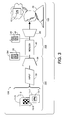
- Figure 3 illustrates a system 100 operable in a first mode for spectrally multiplexing a plurality of source images to form a composite image, in a second mode for rendering the composite image, or in a third mode for demultiplexing the spectrally multiplexed composite image so as to recover at least one of the plurality of source images for advantageous viewing by an observer.
- Image input device 20 may be equipped to receive plural monochromatic images or a combination of monochromatic and multichromatic images.
- Image input device 20 may include an image capture device such as a digital scanner coupled to a random access memory, or any type of analog or digital camera coupled to a storage means such as a computer memory or a magnetic or optical recording medium.
- Image input device 20 may also include means for receiving an image that had previously been stored in a random access memory, on video tape, or a laser-encoded disk, etc., or for receiving an image created by a computer image generator, or an image encoded in an appropriate format and transmitted on a network.
- the illustrative representation of the plural source images in respective image arrays received by the image input device 20 in this example includes a first source image 12-1 represented in a first source image array 11-1 and a second source image 12-2 represented in a second source image array 11-2.
- the system 101 can optionally receive N source images which are represented in a respective image arrays.
- disparate pictorial source images are employed and at least one of the plural source images is intended for ultimate recovery (via spectral demultiplexing) from a composite image.
- the source image data is received in the input image device 20, it is presented to a spectral multiplexer 30, which encodes a data representation of a composite of at least the first and second source images, so as to provide a composite image 32 on an spectrally multiplexed (SM) image plane.
- SM spectrally multiplexed
- a composite image rendering system 102 data representative of the composite image is provided to a rendering device 40, which can be connected to the spectral multiplexer 30 by any one of a variety of suitable means for transmitting or storing electronic information.
- the rendering device 40 records the composite image 32 on a substrate 44 with use of a predetermined array of narrow band colorants, so as to form a rendered composite image 42.
- the rendered composite image 42 is thereby fixed on the substrate 44.
- the rendered composite image 42 is available for viewing in ambient light by an observer 70.
- the rendered composite image 42 is representative of data encoded in the spectrally multiplexed plane using the method of the invention, the rendered composite image 42 typically exhibits a confused appearance under conventional ambient lighting conditions; at least one of the source images 12-1, 12-2, etc. is thus difficult or impossible to distinguish under conventional ambient lighting conditions.
- a particular source image is made difficult or impossible to distinguish until a demultiplexer 50 is operated to selectively illuminate the composite image 42 in a manner sufficient to reveal the desired source image.
- one or more of the source images may be encoded so as avoid visual confusion and therefore be visually apparent in the rendered composite image when the rendered composite image is subjected to ambient or wide band illumination, and become confused or difficult to detect when the rendered composite image is subjected to a complementary narrow band illuminant.
- a particular source image (as shown in Figure 3, source image 12-1) may be recovered and made distinguishable within the composite image 42.
- the output of the demultiplexer 50 is directed to an observer 70 using the method of the invention.
- the recovered image is then distinguishable by the observer 70 as one substantially identical with, or a close approximation of, the particular source image 12-1 initially provided to the image input device 20.
- the substrate 44 is positioned with respect to an illuminant source operable within the demultiplexer 50, such that a narrow band illuminant generated by the demultiplexer 50 illuminates the composite image 42 so as to subject the array of colorants in the rendered composite image 42 to the selected illuminant.
- a desired source image is then detectable.
- the desired source image is made visually distinguishable to an observer 70.
- the desired source image 12-1, now recovered, is thereby susceptible to comprehension by an observer 70.
- each encoded source image may be present as a confused, or distinguishable, image depending upon the objective of the demultiplexing operation.
- FIG 4 is a simplified schematic diagram of exemplary embodiments of spectral multiplexing, rendering, and spectral demultiplexing methods 61, 62, 63, respectively.
- a first source image 71 and a second source image 72 are provided to the multiplexer 30, which outputs a composite image data file to a rendering device 40.
- the output of the rendering device 40 is substrate 90 which has incorporated therein a composite image 92.
- the original source image 71 is rendered as a pattern using a first colorant; in the illustrated embodiment, a cyan ink or toner is chosen.
- the second source image 72 is rendered as a pattern using a second colorant; in the illustrated embodiment, a magenta ink or toner is chosen.
- the two source images are preferably encoded in step 61 to account for the absorption that will occur when plural colorants are utilized to produce the composite image.
- the composite image specifies patterns in cyan and magenta colorants that are accordingly rendered on a substrate 90 to form the rendered composite image 92.
- the two patterns may be co-located and other portions are relatively spatially distinct. Nonetheless, in certain embodiments of the present invention, visual recognition of at least one of the source images in the composite image may be made difficult or impossible due to the confusion between source images that are encoded in the composite image.
- step 63 for demultiplexing the rendered composite image 92 the substrate 90 having the rendered composite image 92 fixed thereon is illuminated by the demultiplexer 50.
- Controlled illumination of the substrate 90 according to a first mode 51 of illumination causes the first source image 71 to achieve a particular level of density with respect to the remainder of the composite image and thus the first source image 71 becomes detectable on the substrate 90.
- controlled illumination of the substrate 90 according to a second mode 52 of illumination causes the second source image 72 to be similarly detectable on the substrate 90.
- the first source image 71 and the second source image 72 are therefore selectably distinguishable on the substrate 90.
- FIG. 5 illustrates a schematic simplified representation of the spectral multiplexing system 101 of Figure 3, in which an image processing unit 130 and associated peripheral devices and subsystems are employed.
- An image input terminal 120 may include an image capture device 122 such as a scanner, digital camera, or image sensor array; a computer image generator 124 or similar device that converts 2-D data to an image; or an image storage device 126 such as a semiconductor memory or a magnetic, optical, or magneto-optical data storage device.
- the image input terminal 120 derives or delivers digital image data in the form of, for example, plural monochromatic image files, wherein the picture elements or "pixels" of each image are defined at some gray value.
- the input terminal 120 may be employed to derive an electronic representation of, for example a document or photograph from image capture device 122, in a format related to the physical characteristics of the device, and commonly with pixels defined at m bits per pixel. If a color document, the image is defined with two or more separation bitmaps, usually with identical resolution and pixel depth.
- Image data from the input terminal 120 is directed to an image processing unit (IPU) 130 for processing so as to be encoded to create a composite image. It will be recognized that the data representing one or more source images is spectrally encoded by the image processing unit 130 to provide secondary image data representative of a composite image suitable for subsequent rendering.
- IPU image processing unit
- the image processing unit 130 may include image memory 132 which receives input image data from image input terminal 120 or from another suitable image data source, such as an appropriately programmed general purpose computer (not shown) and stores the input image data in suitable devices such as random access memory (RAM).
- Image processing unit 130 commonly includes processor 134.
- the input image data may be processed via a processor 134 to provide image data representative of plural source images defined on respective source image planes in accordance with the present invention.
- image data signals in the form of RGB or black and white (B/W) images may be processed, and the luminance information derived therefrom may be used to provide data representative of a source image.
- Image data signals presented in other formats are similarly processed: image data signals in, for example the L*a*b format, may be processed to obtain data representing a source image from the lightness channel.
- Image data signals that are already formatted in grayscale are generally usable without further processing.
- Operation of the image processing unit 130 may proceed according to one or more image processing functions 138, 139 so as to encode the source image data into the composite image file as described hereinabove.
- Processing may include a color conversion which, if necessary, may be implemented to convert a three component color description to the printer-specific four or more component color description, and may include a halftoner which converts a c bit digital image signals to d bit digital image signals, suitable for driving a particular printer, where c and d are integer values.
- additional functions may include one or more of color space transformation, color correction, gamut mapping, and under color removal (UCR)/gray component replacement (GCR) functions. Control signals and composite image output data are provided to an interface 136 for output from the image processing unit 130.
- the image processing unit 130 may be embodied as an embedded processor, or as part of a general purpose computer. It may include special purpose hardware such as for accomplishing digital signal processing, or merely represent appropriate programs running on a general purpose computer. It may also represent one or more special purpose programs running on a remote computer.
- Figure 6 is a simplified schematic representation of the spectral demultiplexing system 103 of Figure 3, in which a controller and associated peripheral devices and subsystems are employed to present one or more recovered source images 171, 172.
- Figure 6 shows a controller 150 connected to a illuminant source 160 that is operable for subjecting the composite image 42 on substrate 44 to first and second predefined illuminants 161, 162.
- illuminant source 160 operable for subjecting the composite image 42 on substrate 44 to first and second predefined illuminants 161, 162.
- the recovered source image 171 becomes detectable to an observer 170.
- the mode of operation of the source 160 may be switched so as to provide a second predefined illuminant 162, whereupon the composite image 42 is instead subjected to the second illuminant 162, and the recovered source image 172 becomes detectable.
- the controller 150 may be constructed as a manually-operable illuminant selector switch.
- the controller 150 may be provided in the form of a computer-based control device having an interface 156 connected to source 160, which offers programmable control of the operation of the illuminant source 160.
- the controller 150 may thus be operated to cause selective activation and deactivation of the illuminant source 160 so as to provide one or more selected fields of illumination 162.
- Such control may, for example, the accomplished via manual operation of the illuminant source 160 by a human operator, or by programmable control afforded by a computer or similar means.
- the controller 150 is operable for accomplishing tasks such as activation, deactivation, or sequencing of the illuminant source 160, setting illuminant intensity, illuminant frequency, etc.. Embodiments of the controller 150 benefit from operation of a programmable control system comprising standard memory 152 and processor 154.
- the controller 150 may be employed, for example, for supplying uniform R or G or B screen images to the interface 156 for subsequent display on the illuminant source 160 when the latter is constructed in the form of a CRT monitor.
- Operation of the illuminant source 160 by the controller 150 may proceed according to certain sequenced control functions so as to provide, for example, controlled operation of the illuminant source 160 to afford a field of illumination that varies according to selective characteristics such as a sequential activation and deactivation of selected narrow band illuminants, or of controlled operation of the intensity of same; or with interactive control according to intervention by an operator of the particular sequence, intensity, or duration of the illuminants.
- the rendered composite image may be constructed to have a plurality of source images encoded therein; for example, of at least first and second patterns of respective first and second colorants.
- the rendered composite image may be subjected to a temporal sequencing of illumination by respective first and second narrow band illuminants, thus allowing a respective one of the first and second recovered source images 171, 172 to be sequentially distinguishable.
- the illuminant source 160 may be provided in the form of a CRT monitor having a screen positionable with respect to the substrate 44 for generating the requisite field of illumination sufficient to illuminate the rendered composite image 42.
- a CRT monitor having a screen positionable with respect to the substrate 44 for generating the requisite field of illumination sufficient to illuminate the rendered composite image 42.
- the following description gives an example of control settings for generating a controlled field of illumination from a CRT monitor under the control of a desktop computer using a document presentation application, such as Microsoft PowerPoint.
- a rectangle object is created that completely covers the extent of the landscape page.
- the user selects "Format AutoShape", then "Colors and Lines".
- a custom slide color may be specified. For example, to create a red slide, set Red to 255, Green to 0, Blue to 0. To create a green slide, set Red to 0, Green to 255, Blue to 0. To create a blue slide, set Red to 0, Green to 0, Blue to 255.
- a gray component replacement technique may be applied to the darkness in a recovered image in the areas common to the different colorants when subjected to their complementary illuminants.
- black can be used to replace a portion of the cyan colorant in the areas of the common darkness that appear under red light and to the yellow colorant in the areas of the common darkness that appear under blue light.
- Common image darkness produced with this black component will be more perceptible under white light in comparison to the darkness observed under illumination by a cyan illuminant or a yellow illuminant.
- Inclusion of GCR in the encoding and rendering of a composite image will provide a rendered composite image having a more confused appearance under white light.
- the GCR fraction employed in this process can be modulated spatially to still further increase or decrease the desired level of confusion in the composite image.
- the GCR fraction employed in this process can be modulated spatially so as to encode an additional, low resolution source image in the composite image.
- the additional, low-resolution image is visually discernible.
- Cyan has a much higher density under white light compared to the density of yellow under white light, so the cyan image may be understood to dominate the appearance of a rendered composite image under white light.
- the contemplated method for implementing GCR in the encoding and rendering of a composite image uses the common density of colorants under different illuminants. This common density is considered herein to the cross-illuminant-common density.
- Example 1 uses cyan and yellow in a manner similar to the above first-order description, and Example 2 uses cyan and magenta.
- the aforementioned GCR method may be implemented to encode and render an additional, low-resolution source image by use of a black (K) colorant.
- the fractional GCR component frac is given a spatial dependence according to the additional low-resolution source image.
- Example 3 discusses such a low-resolution image encoded according to the fraction of GCR that is applied.
- a key consideration is that a colorant will absorb some light from a non-complementary illuminant, and thus it will be somewhat discernible under that illuminant. To effectively suppress this appearance of a residual image, one may calibrate the perceived density for each colorant and illuminant, and one may encode the source images so as to compensate for such spurious absorption.
- Figure 9 is a rendered composite image wherein two source images are encoded in cyan and yellow that are respectively designed for viewing under red and blue illumination.
- the image uses a small amount of black (K) to compensate for unwanted absorptions by cyan (C) in the blue region (so as to make the cyan image less than discernible under blue illumination and to recover the source image in the presence of a yellow illuminant).
- K black
- the use of K greatly increases the dynamic range available for encoding the source image. Note that when this rendered composite image is viewed under white light, the image in cyan (C) dominates the other confused images and the source image encoded in yellow (Y) is hardly visible.
- Figure 10 is a rendered composite image created with a 80% GCR fraction, wherein the appearance of the rendered composite image under red and blue illumination is substantially identical to the appearance of the rendered composite image provided in Figure 9, but the rendered composite image in Figure 10 under white light is more confused due to the application of GCR.
- Figures 11 and 12 are rendered composite images having encoded therein first and second source images intended for recovery under red and blue illuminants, respectively.
- Figure 11 was rendered in cyan and magenta colorants without the application of GCR.
- Figure 12 was rendered in cyan, magenta, and black colorants with the application of GCR. In comparing Figures 11 and 12 under white light, one may see that rendered composite image in Figure 12 appears more confused under white light in comparison to the rendered composite image in Figure 11.
- Figure 13 is a composite image having encoded therein first and second source images intended for recovery under blue and red illumination wherein GCR has been utilized in the rendering of a composite image in cyan and yellow colorants, and a third source image that is encoded in the composite image for recovery under white light illumination.
- the amount of GCR is spatially varied in accordance with the image content of the third source image.
- the image content of the third source image is a binary pattern in the shape of the "digital X" (a trademark of Xerox Corporation), with use of a 80% GCR fraction in the regions of the composite image that correspond to the image content of the third source image, and no GCR was implemented in the remaining regions of the composite image.
- the image is subjected to red or blue light, a respective one of the first and second source images is recovered. Under white light, the third source image is discernible.
- the contemplated third source image may include or be restricted to image content that is encoded for detection primarily or exclusively by automated instrumentation (i.e. image content that is designed to be machine-readable rather than human-readable).
- the third source image may be encoded as a grayscale image by use of a suitable halftoning technique.
- Figure 14 is a rendered composite image that exemplifies an additional application of the contemplated GCR technique, wherein the GCR fraction was varied randomly between 0 and 80% over square blocks of pixels.
- the resulting rendered composite image will reveal the encoded source images under illumination by red and blue illuminants but image confusion is evident in the rendered composite image when subjected to white light.
- the level of image confusion may be further optimized by choosing the image alignments with respect to the particular application of the GCR technique.
- the image confusion may be increased when the frequency content of the GCR matches that of the dominant image and the dark regions in the two encoded images align so as to allow a selected amount of variation in GCR.
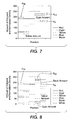
- Figure 15 exemplifies an embodiment of a rendered composite image wherein the rendered composite image includes at least first and second source images, wherein the first source image is encoded in a black (K) colorant so as to be a "background” source image discemible on the substrate during plural modes of intended illumination, and at least a second, narrow band source image that is encoded and rendered with use of a narrow band colorant.
- the background source image is discernible during the plural modes of intended illumination, and especially during a white light mode of illumination.
- the image content of the narrow band source image is spatially separate from the image content of the background source image.
- the second source image is made to exhibit a contrast that is substantially equal to that of the background image or to that of the substrate.
- the image content of the narrow band source image thus respectively becomes apparent alongside the image content of the background image, or becomes less discernible than the image content of the background image, depending upon the particular intensity of the narrow band illuminant.
- the colorants selected for rendering the composite image may be chosen for imparting a "tinted" or "hand-colored” appearance under white light to the rendered composite image, such that the rendered composite image offers visual interest to an observer even before the onset of the mode of illumination of the narrow band illuminant.
- a third source image, in the form of an additional narrow band source image is optionally included for still more visual interest.
- yellow tinted image Y B (i, j) + K Y (i, j)
- cyan colorant will be expected to appear as a cyan tint under white illuminant, and neutral under a red illuminant.
- black (K) is used as the colorant for the background image, but this example is not limiting, as other colorants can be selected for use in the composite image for generating the background image.
- Embodiments of the rendering system 102 include apparatus capable of depositing or integrating a defined array of colorants in a substrate, according to the composite image, such that the array of colorants is susceptible to selective reflection or transmission of a selected narrow band illuminant incident thereon.
- the composite image may be rendered on a transparent film and a desired source image may be recovered when the substrate is backlit by a suitable narrow band illuminant.
- Examples include hardcopy reprographic devices such as inkjet, dye sublimation, and xerographic printers, lithographic printing systems, silk-screening systems, and photographic printing apparatus; systems for imagewise deposition of discrete quantities of a color on a substrate surface, such as paint, chemical, and film deposition systems; and systems for integration of colorant materials in an exposed surface of a substrate, such as textile printing systems.
- hardcopy reprographic devices such as inkjet, dye sublimation, and xerographic printers, lithographic printing systems, silk-screening systems, and photographic printing apparatus
- systems for imagewise deposition of discrete quantities of a color on a substrate surface such as paint, chemical, and film deposition systems
- systems for integration of colorant materials in an exposed surface of a substrate such as textile printing systems.
- Embodiments of exemplary substrates include, but are not limited to, materials such as paper, cardboard, and other pulp-based and printed packaging products, glass; plastic; laminated or fibrous compositions; and textiles. Narrow band colorants other than basic CMYK colorants may also be used for this invention.
- the field of illumination for illuminating a rendered composite image may be provided by a variety of illuminant sources that include a narrow band light source responsive to manual control or to program control according to an illuminant source control signal.
- Various narrow band light sources may include apparatus for providing filtered sunlight, filtered incandescent, or filtered fluorescent light; coherent light sources such as a solid-state laser or laser diode; projection or image display devices such as those incorporating a cathode ray tube (CRT), flat-panel display (FPD), liquid crystal display (LCD), plasma display, or light emitting diode (LED) and organic light emitting (OLED) arrays.
- Light sources incorporating a cathode ray tube are advantageous in that they have phosphors that exhibit stable and well-understood spectral characteristics that are sufficiently narrow and complementary to common CMY colorants. In addition, such displays are widely available.
Landscapes
- Engineering & Computer Science (AREA)
- Multimedia (AREA)
- Signal Processing (AREA)
- Facsimile Image Signal Circuits (AREA)
- Image Processing (AREA)
- Color Image Communication Systems (AREA)
Applications Claiming Priority (6)
| Application Number | Priority Date | Filing Date | Title |
|---|---|---|---|
| US268246 | 2002-10-09 | ||
| US10/268,575 US7215792B2 (en) | 2002-10-09 | 2002-10-09 | Systems for spectral multiplexing of source images to provide a composite image with gray component replacement, for rendering the composite image, and for spectral demultiplexing of the composite image |
| US268575 | 2002-10-09 | ||
| US10/268,246 US7376264B2 (en) | 2002-10-09 | 2002-10-09 | Systems for spectral multiplexing of a source image and a background image to provide a composite image, for rendering the composite image, and for spectral demultiplexing of the composite images |
| US268271 | 2002-10-09 | ||
| US10/268,271 US7155068B2 (en) | 2002-10-09 | 2002-10-09 | Systems for spectral multiplexing of source images to provide a composite image, for rendering the composite image, and for spectral demultiplexing the composite image, which achieve increased dynamic range in a recovered source image |
Publications (2)
| Publication Number | Publication Date |
|---|---|
| EP1408473A2 true EP1408473A2 (de) | 2004-04-14 |
| EP1408473A3 EP1408473A3 (de) | 2010-02-10 |
Family
ID=32034177
Family Applications (1)
| Application Number | Title | Priority Date | Filing Date |
|---|---|---|---|
| EP03022946A Withdrawn EP1408473A3 (de) | 2002-10-09 | 2003-10-09 | System zur spektralen Multiplexierung, Wiedergabe und Demultiplexierung von Quellenbildern |
Country Status (3)
| Country | Link |
|---|---|
| US (3) | US7376264B2 (de) |
| EP (1) | EP1408473A3 (de) |
| JP (1) | JP4252418B2 (de) |
Cited By (2)
| Publication number | Priority date | Publication date | Assignee | Title |
|---|---|---|---|---|
| JP2004133932A (ja) * | 2002-10-09 | 2004-04-30 | Xerox Corp | 動画ソース画像を形成するためのソース画像のスペクトル多重化及びレンダリング、及びスペクトル逆多重化のためのシステム |
| WO2013135512A1 (de) | 2012-03-14 | 2013-09-19 | Henkel Ag & Co. Kgaa | Bestäubte, wasserlösliche verpackung |
Families Citing this family (59)
| Publication number | Priority date | Publication date | Assignee | Title |
|---|---|---|---|---|
| GB2372135B (en) * | 2001-01-31 | 2004-10-13 | Nokia Mobile Phones Ltd | Improved liquid crystal display device |
| CA2628028C (en) * | 2001-05-15 | 2009-09-15 | Research In Motion Limited | Light source system for a color flat panel display |
| US7821675B2 (en) * | 2003-04-04 | 2010-10-26 | Angstrom Technologies, Inc. | Methods and ink compositions for invisibly printed security images having multiple authentication features |
| US7133201B2 (en) * | 2003-06-26 | 2006-11-07 | Hewlett-Packard Development Company, L.P. | Compensating display surface |
| FR2859857A1 (fr) * | 2003-09-17 | 2005-03-18 | Thomson Licensing Sa | Procedes de traitement et d'affichage d'images et appareil d 'affichage utilisant les procedes |
| US7269297B2 (en) * | 2003-11-25 | 2007-09-11 | Xerox Corporation | Illuminant-neutral gray component replacement in systems for spectral multiplexing of source images to provide a composite image, for rendering the composite image, and for spectral demultiplexing of the composite image |
| US7379588B2 (en) * | 2003-11-25 | 2008-05-27 | Xerox Corporation | Systems for spectral multiplexing of source images to provide a composite image, for rendering the composite image, and for spectral demultiplexing the composite image to obtain a normalized color image |
| US8406341B2 (en) * | 2004-01-23 | 2013-03-26 | The Nielsen Company (Us), Llc | Variable encoding and detection apparatus and methods |
| US7646517B2 (en) * | 2004-02-27 | 2010-01-12 | Seiko Epson Corporation | Image processing system and image processing method |
| US7895020B2 (en) * | 2004-04-01 | 2011-02-22 | General Dynamics Advanced Information Systems, Inc. | System and method for multi-perspective collaborative modeling |
| JP2006085506A (ja) * | 2004-09-16 | 2006-03-30 | Fuji Xerox Co Ltd | 画像処理装置 |
| WO2007051842A1 (de) * | 2005-11-04 | 2007-05-10 | Christian Hogl | Verfahren und system zum übertragen von daten von einer ersten datenverarbeitungseinrichtung an eine zweite datenverarbeitungseinrichtung |
| US7525704B2 (en) * | 2005-12-20 | 2009-04-28 | Xerox Corporation | System for providing depth discrimination of source images encoded in a rendered composite image |
| US7996173B2 (en) | 2006-07-31 | 2011-08-09 | Visualant, Inc. | Method, apparatus, and article to facilitate distributed evaluation of objects using electromagnetic energy |
| US8081304B2 (en) | 2006-07-31 | 2011-12-20 | Visualant, Inc. | Method, apparatus, and article to facilitate evaluation of objects using electromagnetic energy |
| WO2008016590A2 (en) | 2006-07-31 | 2008-02-07 | Visualant, Inc. | System and method of evaluating an object using electromagnetic energy |
| JP2010514261A (ja) * | 2006-12-15 | 2010-04-30 | トムソン ライセンシング | 対話型視覚効果合成のためのシステムおよび方法 |
| US10885543B1 (en) | 2006-12-29 | 2021-01-05 | The Nielsen Company (Us), Llc | Systems and methods to pre-scale media content to facilitate audience measurement |
| WO2008091611A1 (en) * | 2007-01-23 | 2008-07-31 | Monte Ramstad | Wide color gamut anaglyphs |
| EP1971157A1 (de) * | 2007-03-13 | 2008-09-17 | Thomson Licensing | Verfahren zur Anzeige von Bildern mit Verwendung einer metamerischen Störung als Schutz vor illegaler Kopie |
| US8520936B2 (en) * | 2007-05-02 | 2013-08-27 | The Regents Of The University Of California | Method and apparatus for use of an universal color index (UCI): a color appearance system calibrated to reflectance spectra |
| US8194119B2 (en) * | 2007-05-10 | 2012-06-05 | Chroma3D Systems, Inc. | Display of generalized anaglyphs without retinal rivalry |
| US20080297530A1 (en) * | 2007-05-31 | 2008-12-04 | Monte Jerome Ramstad | Four primary color display apparatus and method |
| EP2179331A4 (de) | 2007-08-21 | 2011-11-16 | Angstrom Technologies Inc | System und verfahren für stabile emittierende tonerzusammensetzung |
| JP4433017B2 (ja) * | 2007-08-31 | 2010-03-17 | ブラザー工業株式会社 | 画像処理装置及び画像処理プログラム |
| JP4793356B2 (ja) * | 2007-08-31 | 2011-10-12 | ブラザー工業株式会社 | 画像処理装置及び画像処理プログラム |
| US8094343B2 (en) * | 2007-08-31 | 2012-01-10 | Brother Kogyo Kabushiki Kaisha | Image processor |
| US8159716B2 (en) * | 2007-08-31 | 2012-04-17 | Brother Kogyo Kabushiki Kaisha | Image processing device performing image correction by using a plurality of sample images |
| US8174731B2 (en) * | 2007-08-31 | 2012-05-08 | Brother Kogyo Kabushiki Kaisha | Image processing device outputting image for selecting sample image for image correction |
| JP4442664B2 (ja) * | 2007-08-31 | 2010-03-31 | ブラザー工業株式会社 | 画像処理装置、画像処理方法、画像処理プログラム |
| CN101394475A (zh) * | 2007-09-18 | 2009-03-25 | 鸿富锦精密工业(深圳)有限公司 | 影像撷取及处理装置和方法 |
| JP5122920B2 (ja) * | 2007-11-19 | 2013-01-16 | オリンパス株式会社 | 色再現システム、色再現装置、色再現方法、および、色再現プログラム |
| US8310483B2 (en) * | 2007-11-20 | 2012-11-13 | Dreamworks Animation Llc | Tinting a surface to simulate a visual effect in a computer generated scene |
| US20090267891A1 (en) * | 2008-04-25 | 2009-10-29 | Bamidele Ali | Virtual paper |
| JP5383798B2 (ja) * | 2008-06-13 | 2014-01-08 | トムソン ライセンシング | 立体フィルムにマーク付けするシステム及び方法 |
| US20100046790A1 (en) * | 2008-08-22 | 2010-02-25 | Koziol Anthony R | Method and system for generating a symbol identification challenge |
| JP2010124460A (ja) * | 2008-10-23 | 2010-06-03 | Canon Inc | 画像読み取り装置及び画像形成装置 |
| JP5590847B2 (ja) * | 2008-11-13 | 2014-09-17 | キヤノン株式会社 | 画像読み取り装置及び画像形成装置 |
| CN101751714A (zh) * | 2008-12-05 | 2010-06-23 | 深圳富泰宏精密工业有限公司 | 多功能便携式电子装置 |
| US8422103B2 (en) * | 2008-12-23 | 2013-04-16 | Ricoh Production Print Solutions LLC | Optimization of gray component replacement |
| US8593698B2 (en) * | 2009-02-26 | 2013-11-26 | Hewlett-Packard Development Company, L.P. | Void pantographs and methods for generating the same using at least one test void pantograph |
| EP2401162A4 (de) * | 2009-02-26 | 2012-08-15 | Hewlett Packard Development Co | Verfahren zur verwendung von void-pantographen |
| JP5678584B2 (ja) * | 2009-12-16 | 2015-03-04 | 株式会社リコー | 画像処理装置、画像処理方法、およびプログラム |
| US9218680B2 (en) * | 2010-09-01 | 2015-12-22 | K-Nfb Reading Technology, Inc. | Systems and methods for rendering graphical content and glyphs |
| US20120069197A1 (en) | 2010-09-16 | 2012-03-22 | Stephen Michael Maloney | Method and process of making camouflage patterns |
| US8804122B2 (en) * | 2011-09-22 | 2014-08-12 | Brightex Bio-Photonics Llc | Systems and methods for determining a surface profile using a plurality of light sources |
| WO2013119824A1 (en) | 2012-02-10 | 2013-08-15 | Visualant, Inc. | Systems, methods and articles related to machine-readable indicia and symbols |
| US10872619B2 (en) * | 2012-06-29 | 2020-12-22 | Speech Technology & Applied Research Corporation | Using images and residues of reference signals to deflate data signals |
| US10540992B2 (en) * | 2012-06-29 | 2020-01-21 | Richard S. Goldhor | Deflation and decomposition of data signals using reference signals |
| US9316581B2 (en) | 2013-02-04 | 2016-04-19 | Visualant, Inc. | Method, apparatus, and article to facilitate evaluation of substances using electromagnetic energy |
| US9041920B2 (en) | 2013-02-21 | 2015-05-26 | Visualant, Inc. | Device for evaluation of fluids using electromagnetic energy |
| WO2014165003A1 (en) | 2013-03-12 | 2014-10-09 | Visualant, Inc. | Systems and methods for fluid analysis using electromagnetic energy |
| US9245310B2 (en) * | 2013-03-15 | 2016-01-26 | Qumu Corporation | Content watermarking |
| US9508110B2 (en) | 2014-05-15 | 2016-11-29 | Elwha Llc | Unobtrusive audio messages |
| US10600213B2 (en) * | 2016-02-27 | 2020-03-24 | Focal Sharp, Inc. | Method and apparatus for color-preserving spectrum reshape |
| FR3085519B1 (fr) * | 2018-09-04 | 2023-01-13 | Centre Nat Rech Scient | Procede de mesure d'un espace de couleur propre a un individu et procede de correction d'images numeriques en fonction de l'espace de couleur propre a l'individu |
| US11636293B2 (en) | 2021-03-31 | 2023-04-25 | Kyocera Document Solutions Inc. | Methods and system for updating color management resources based on verification operations |
| US11405530B1 (en) | 2021-03-31 | 2022-08-02 | Kyocera Document Solutions Inc. | Methods and system for managing color management resources |
| US11323593B1 (en) | 2021-03-31 | 2022-05-03 | Kyocera Document Solutions Inc. | Methods and system for managing icc profiles within a color printing system |
Family Cites Families (35)
| Publication number | Priority date | Publication date | Assignee | Title |
|---|---|---|---|---|
| US1768812A (en) * | 1926-11-27 | 1930-07-01 | William J Whiting | Method of producing light effects |
| US3234663A (en) | 1963-04-01 | 1966-02-15 | Bausch & Lomb | Film coding method |
| US3287825A (en) * | 1965-02-18 | 1966-11-29 | John W Ryan | Code game |
| US3969830A (en) | 1972-12-01 | 1976-07-20 | Grasham James A | Color encoding-decoding method |
| US4189353A (en) * | 1976-11-18 | 1980-02-19 | Harriman Russell H | Method and device for transmitting confidential information through the mail |
| US4290675A (en) | 1978-12-04 | 1981-09-22 | Leo Beiser | Anaglyph stereoscopy |
| US4586711A (en) | 1983-05-10 | 1986-05-06 | Glenn E. Weeks | Matching card game employing randomly-coded monochromatic images |
| US4824144A (en) | 1987-04-10 | 1989-04-25 | Tasma Gerald W | Color identification system |
| GB9019784D0 (en) * | 1990-09-10 | 1990-10-24 | Amblehurst Ltd | Security device |
| CA2122919A1 (en) | 1991-11-05 | 1993-05-13 | Richard Steenblik | Optical image encryption and decryption processes |
| GB2261789B (en) | 1991-11-20 | 1995-07-19 | Stephen Peter Ehrmann Erskine | Improvements in or relating to the production of anaglyphs |
| US5369261A (en) * | 1992-02-12 | 1994-11-29 | Shamir; Harry | Multi-color information encoding system |
| US5398131A (en) | 1992-08-13 | 1995-03-14 | Hall; Dennis R. | Stereoscopic hardcopy methods |
| US5371627A (en) | 1992-10-23 | 1994-12-06 | N.E. Thing Enterprises, Inc. | Random dot stereogram and method for making the same |
| US5312656A (en) * | 1993-02-05 | 1994-05-17 | Mattel, Inc. | Toy picnic set having latent image placemat |
| US5401032A (en) * | 1993-10-04 | 1995-03-28 | Cassette Productions Unlimited, Inc. | Mystery puzzle game |
| US6111598A (en) | 1993-11-12 | 2000-08-29 | Peveo, Inc. | System and method for producing and displaying spectrally-multiplexed images of three-dimensional imagery for use in flicker-free stereoscopic viewing thereof |
| JP3359134B2 (ja) * | 1993-12-27 | 2002-12-24 | キヤノン株式会社 | 色信号処理装置 |
| US5594841A (en) | 1993-12-27 | 1997-01-14 | Schutz; Stephen A. | Stereogram and method of constructing the same |
| US6002498A (en) * | 1994-06-15 | 1999-12-14 | Konica Corporation | Image processing method and image forming method |
| US5537476A (en) * | 1994-11-21 | 1996-07-16 | International Business Machines Corporation | Secure viewing of display units by image superposition and wavelength separation |
| US5576528A (en) * | 1994-12-23 | 1996-11-19 | Symbol Technologies, Inc. | Color processing for bar code symbol compaction |
| US5999703A (en) * | 1997-03-27 | 1999-12-07 | Eastman Kodak Company | Computer program product for modifying the black channel of an output device profile without altering its colorimetric accuracy |
| US6104812A (en) * | 1998-01-12 | 2000-08-15 | Juratrade, Limited | Anti-counterfeiting method and apparatus using digital screening |
| US5984367A (en) * | 1998-05-20 | 1999-11-16 | Thomas L. Barnhart | Hidden image game piece |
| US6155491A (en) * | 1998-05-29 | 2000-12-05 | Welch Allyn Data Collection, Inc. | Lottery game ticket processing apparatus |
| US6301044B1 (en) | 2000-03-30 | 2001-10-09 | Disney Enterprises, Inc. | Apparel color and image effect system |
| US6763124B2 (en) * | 2000-04-19 | 2004-07-13 | Digimarc Corporation | Embedding digital watermarks in spot colors |
| US6891959B2 (en) * | 2000-04-19 | 2005-05-10 | Digimarc Corporation | Hiding information out-of-phase in color channels |
| US6993149B2 (en) * | 2001-09-25 | 2006-01-31 | Digimarc Corporation | Embedding digital watermarks in spot colors |
| US6832729B1 (en) * | 2001-03-23 | 2004-12-21 | Zih Corp. | Portable data collection device for reading fluorescent indicia |
| US6980177B2 (en) * | 2001-08-03 | 2005-12-27 | Waterstrike Incorporated | Sequential inverse encoding apparatus and method for providing confidential viewing of a fundamental display image |
| WO2003025845A1 (en) * | 2001-09-17 | 2003-03-27 | Codemagic | Machine-readable symbol and related method |
| US6766045B2 (en) * | 2002-03-11 | 2004-07-20 | Digital Verification Ltd. | Currency verification |
| US6722066B1 (en) * | 2002-03-25 | 2004-04-20 | James Cheung | Single and multiple illuminated images |
-
2002
- 2002-10-09 US US10/268,246 patent/US7376264B2/en not_active Expired - Fee Related
- 2002-10-09 US US10/268,575 patent/US7215792B2/en not_active Expired - Fee Related
- 2002-10-09 US US10/268,271 patent/US7155068B2/en not_active Expired - Fee Related
-
2003
- 2003-10-02 JP JP2003344716A patent/JP4252418B2/ja not_active Expired - Fee Related
- 2003-10-09 EP EP03022946A patent/EP1408473A3/de not_active Withdrawn
Cited By (3)
| Publication number | Priority date | Publication date | Assignee | Title |
|---|---|---|---|---|
| JP2004133932A (ja) * | 2002-10-09 | 2004-04-30 | Xerox Corp | 動画ソース画像を形成するためのソース画像のスペクトル多重化及びレンダリング、及びスペクトル逆多重化のためのシステム |
| WO2013135512A1 (de) | 2012-03-14 | 2013-09-19 | Henkel Ag & Co. Kgaa | Bestäubte, wasserlösliche verpackung |
| DE102012204014A1 (de) | 2012-03-14 | 2013-09-19 | Henkel Ag & Co. Kgaa | Bestäubte, wasserlösliche Verpackung |
Also Published As
| Publication number | Publication date |
|---|---|
| US7215792B2 (en) | 2007-05-08 |
| EP1408473A3 (de) | 2010-02-10 |
| US20040071310A1 (en) | 2004-04-15 |
| JP4252418B2 (ja) | 2009-04-08 |
| US20040071339A1 (en) | 2004-04-15 |
| JP2004135327A (ja) | 2004-04-30 |
| US7376264B2 (en) | 2008-05-20 |
| US20040071366A1 (en) | 2004-04-15 |
| US7155068B2 (en) | 2006-12-26 |
Similar Documents
| Publication | Publication Date | Title |
|---|---|---|
| EP1408473A2 (de) | System zur spektralen Multiplexierung, Wiedergabe und Demultiplexierung von Quellenbildern | |
| EP1408472A2 (de) | System zur spektralen Multiplexierung von Quellenbildern zur Erzeugung eines zusammengesetzten Bildes, zur Wiedergabe und zur spektralen Demultiplexierung des zusammengesetzten Bildes | |
| Sharma et al. | Digital color imaging | |
| EP1536627B1 (de) | Spektrales Multiplexen von Bildern zur Erzeugung eines zusammengesetzten Bildes | |
| Kasson et al. | An analysis of selected computer interchange color spaces | |
| EP0658044B1 (de) | Bildwiedergabe unter Verwendung von Farbfehlerdiffusion | |
| JP4920866B2 (ja) | 動画ソース画像を形成するためのソース画像のスペクトル多重化及びレンダリング、及びスペクトル逆多重化のためのシステム | |
| US7379588B2 (en) | Systems for spectral multiplexing of source images to provide a composite image, for rendering the composite image, and for spectral demultiplexing the composite image to obtain a normalized color image | |
| US20050185200A1 (en) | Systems, methods, and computer program products for converting between color gamuts associated with different image processing devices | |
| EP0696865A2 (de) | Farbbildverarbeitung | |
| US7230738B2 (en) | System for spectral multiplexing of source image to provide a composite image with noise encoding to increase image confusion in the composite image, for rendering the composite image, and for spectral demultiplexing of the composite image | |
| US7130488B2 (en) | Systems for spectral multiplexing of source images including a textured source image to provide a composite image, for rendering the composite image, and for spectral demultiplexing of the composite image | |
| US7548341B2 (en) | Image processing device, image reading device, image forming device, and image processing method | |
| Katoh et al. | Applying non-linear compression to the three-dimensional gamut mapping | |
| EP1069761A2 (de) | Verfahren und Vorrichtung zur Erzeugung von hochqualitativen digitalen Photos von Diapositiven | |
| Allebach | Processing digital color images: From capture to display | |
| MacDonald | Color fidelity issues in image reproduction for print | |
| Zhang et al. | i, United States Patent (10) Patent No.: US 7.269. 297 B2 | |
| Dilawari et al. | Reproduction of images by gamut mapping and creation of new test charts in prepress process | |
| Green | Modifying CIECAM97s surround parameters for complex images in graphic arts viewing conditions | |
| JPH10215384A (ja) | 色信号処理方法 | |
| BERNS | Design and Evaluation of Image Quality. Color Gamut Mapping Techniques for Color Hard Copy Images. | |
| HOSHINO et al. | for Color Hard Copy Images | |
| JP2014236477A (ja) | 画像処理システム、画像処理装置および画像処理方法 |
Legal Events
| Date | Code | Title | Description |
|---|---|---|---|
| PUAI | Public reference made under article 153(3) epc to a published international application that has entered the european phase |
Free format text: ORIGINAL CODE: 0009012 |
|
| AK | Designated contracting states |
Kind code of ref document: A2 Designated state(s): AT BE BG CH CY CZ DE DK EE ES FI FR GB GR HU IE IT LI LU MC NL PT RO SE SI SK TR |
|
| AX | Request for extension of the european patent |
Extension state: AL LT LV MK |
|
| PUAL | Search report despatched |
Free format text: ORIGINAL CODE: 0009013 |
|
| AK | Designated contracting states |
Kind code of ref document: A3 Designated state(s): AT BE BG CH CY CZ DE DK EE ES FI FR GB GR HU IE IT LI LU MC NL PT RO SE SI SK TR |
|
| AX | Request for extension of the european patent |
Extension state: AL LT LV MK |
|
| 17P | Request for examination filed |
Effective date: 20100810 |
|
| 17Q | First examination report despatched |
Effective date: 20100824 |
|
| AKX | Designation fees paid |
Designated state(s): DE FR GB |
|
| GRAP | Despatch of communication of intention to grant a patent |
Free format text: ORIGINAL CODE: EPIDOSNIGR1 |
|
| RIC1 | Information provided on ipc code assigned before grant |
Ipc: G09C 5/00 20060101AFI20150728BHEP Ipc: H04N 1/44 20060101ALN20150728BHEP Ipc: H04N 1/32 20060101ALN20150728BHEP |
|
| INTG | Intention to grant announced |
Effective date: 20150813 |
|
| STAA | Information on the status of an ep patent application or granted ep patent |
Free format text: STATUS: THE APPLICATION IS DEEMED TO BE WITHDRAWN |
|
| 18D | Application deemed to be withdrawn |
Effective date: 20151224 |