EP1409654B1 - Immunologische kontrolle des beta-amyloid gehaltes in vivo - Google Patents
Immunologische kontrolle des beta-amyloid gehaltes in vivo Download PDFInfo
- Publication number
- EP1409654B1 EP1409654B1 EP00942851A EP00942851A EP1409654B1 EP 1409654 B1 EP1409654 B1 EP 1409654B1 EP 00942851 A EP00942851 A EP 00942851A EP 00942851 A EP00942851 A EP 00942851A EP 1409654 B1 EP1409654 B1 EP 1409654B1
- Authority
- EP
- European Patent Office
- Prior art keywords
- amyloid
- antibodies
- antibody
- animal
- transition state
- Prior art date
- Legal status (The legal status is an assumption and is not a legal conclusion. Google has not performed a legal analysis and makes no representation as to the accuracy of the status listed.)
- Expired - Lifetime
Links
Images




Classifications
-
- A—HUMAN NECESSITIES
- A61—MEDICAL OR VETERINARY SCIENCE; HYGIENE
- A61K—PREPARATIONS FOR MEDICAL, DENTAL OR TOILETRY PURPOSES
- A61K39/00—Medicinal preparations containing antigens or antibodies
- A61K39/0005—Vertebrate antigens
- A61K39/0007—Nervous system antigens; Prions
-
- C—CHEMISTRY; METALLURGY
- C07—ORGANIC CHEMISTRY
- C07K—PEPTIDES
- C07K16/00—Immunoglobulins [IG], e.g. monoclonal or polyclonal antibodies
- C07K16/18—Immunoglobulins [IG], e.g. monoclonal or polyclonal antibodies against material from animals or humans
-
- A—HUMAN NECESSITIES
- A61—MEDICAL OR VETERINARY SCIENCE; HYGIENE
- A61K—PREPARATIONS FOR MEDICAL, DENTAL OR TOILETRY PURPOSES
- A61K39/00—Medicinal preparations containing antigens or antibodies
- A61K39/395—Antibodies; Immunoglobulins; Immune serum, e.g. antilymphocytic serum
- A61K39/39533—Antibodies; Immunoglobulins; Immune serum, e.g. antilymphocytic serum against materials from animals
- A61K39/3955—Antibodies; Immunoglobulins; Immune serum, e.g. antilymphocytic serum against materials from animals against proteinaceous materials, e.g. enzymes, hormones, lymphokines
-
- A—HUMAN NECESSITIES
- A61—MEDICAL OR VETERINARY SCIENCE; HYGIENE
- A61P—SPECIFIC THERAPEUTIC ACTIVITY OF CHEMICAL COMPOUNDS OR MEDICINAL PREPARATIONS
- A61P25/00—Drugs for disorders of the nervous system
- A61P25/28—Drugs for disorders of the nervous system for treating neurodegenerative disorders of the central nervous system, e.g. nootropic agents, cognition enhancers, drugs for treating Alzheimer's disease or other forms of dementia
-
- C—CHEMISTRY; METALLURGY
- C12—BIOCHEMISTRY; BEER; SPIRITS; WINE; VINEGAR; MICROBIOLOGY; ENZYMOLOGY; MUTATION OR GENETIC ENGINEERING
- C12N—MICROORGANISMS OR ENZYMES; COMPOSITIONS THEREOF; PROPAGATING, PRESERVING, OR MAINTAINING MICROORGANISMS; MUTATION OR GENETIC ENGINEERING; CULTURE MEDIA
- C12N9/00—Enzymes; Proenzymes; Compositions thereof; Processes for preparing, activating, inhibiting, separating or purifying enzymes
- C12N9/0002—Antibodies with enzymatic activity, e.g. abzymes
-
- A—HUMAN NECESSITIES
- A61—MEDICAL OR VETERINARY SCIENCE; HYGIENE
- A61K—PREPARATIONS FOR MEDICAL, DENTAL OR TOILETRY PURPOSES
- A61K38/00—Medicinal preparations containing peptides
-
- C—CHEMISTRY; METALLURGY
- C07—ORGANIC CHEMISTRY
- C07K—PEPTIDES
- C07K2317/00—Immunoglobulins specific features
- C07K2317/30—Immunoglobulins specific features characterized by aspects of specificity or valency
- C07K2317/34—Identification of a linear epitope shorter than 20 amino acid residues or of a conformational epitope defined by amino acid residues
-
- Y—GENERAL TAGGING OF NEW TECHNOLOGICAL DEVELOPMENTS; GENERAL TAGGING OF CROSS-SECTIONAL TECHNOLOGIES SPANNING OVER SEVERAL SECTIONS OF THE IPC; TECHNICAL SUBJECTS COVERED BY FORMER USPC CROSS-REFERENCE ART COLLECTIONS [XRACs] AND DIGESTS
- Y10—TECHNICAL SUBJECTS COVERED BY FORMER USPC
- Y10S—TECHNICAL SUBJECTS COVERED BY FORMER USPC CROSS-REFERENCE ART COLLECTIONS [XRACs] AND DIGESTS
- Y10S977/00—Nanotechnology
- Y10S977/70—Nanostructure
- Y10S977/724—Devices having flexible or movable element
- Y10S977/727—Devices having flexible or movable element formed from biological material
- Y10S977/729—From protein or unit thereof, e.g. enzyme or carboxyl group
-
- Y—GENERAL TAGGING OF NEW TECHNOLOGICAL DEVELOPMENTS; GENERAL TAGGING OF CROSS-SECTIONAL TECHNOLOGIES SPANNING OVER SEVERAL SECTIONS OF THE IPC; TECHNICAL SUBJECTS COVERED BY FORMER USPC CROSS-REFERENCE ART COLLECTIONS [XRACs] AND DIGESTS
- Y10—TECHNICAL SUBJECTS COVERED BY FORMER USPC
- Y10S—TECHNICAL SUBJECTS COVERED BY FORMER USPC CROSS-REFERENCE ART COLLECTIONS [XRACs] AND DIGESTS
- Y10S977/00—Nanotechnology
- Y10S977/84—Manufacture, treatment, or detection of nanostructure
- Y10S977/895—Manufacture, treatment, or detection of nanostructure having step or means utilizing chemical property
- Y10S977/896—Chemical synthesis, e.g. chemical bonding or breaking
-
- Y—GENERAL TAGGING OF NEW TECHNOLOGICAL DEVELOPMENTS; GENERAL TAGGING OF CROSS-SECTIONAL TECHNOLOGIES SPANNING OVER SEVERAL SECTIONS OF THE IPC; TECHNICAL SUBJECTS COVERED BY FORMER USPC CROSS-REFERENCE ART COLLECTIONS [XRACs] AND DIGESTS
- Y10—TECHNICAL SUBJECTS COVERED BY FORMER USPC
- Y10S—TECHNICAL SUBJECTS COVERED BY FORMER USPC CROSS-REFERENCE ART COLLECTIONS [XRACs] AND DIGESTS
- Y10S977/00—Nanotechnology
- Y10S977/902—Specified use of nanostructure
- Y10S977/904—Specified use of nanostructure for medical, immunological, body treatment, or diagnosis
- Y10S977/915—Therapeutic or pharmaceutical composition
-
- Y—GENERAL TAGGING OF NEW TECHNOLOGICAL DEVELOPMENTS; GENERAL TAGGING OF CROSS-SECTIONAL TECHNOLOGIES SPANNING OVER SEVERAL SECTIONS OF THE IPC; TECHNICAL SUBJECTS COVERED BY FORMER USPC CROSS-REFERENCE ART COLLECTIONS [XRACs] AND DIGESTS
- Y10—TECHNICAL SUBJECTS COVERED BY FORMER USPC
- Y10S—TECHNICAL SUBJECTS COVERED BY FORMER USPC CROSS-REFERENCE ART COLLECTIONS [XRACs] AND DIGESTS
- Y10S977/00—Nanotechnology
- Y10S977/902—Specified use of nanostructure
- Y10S977/904—Specified use of nanostructure for medical, immunological, body treatment, or diagnosis
- Y10S977/918—Immunological
Definitions
- Alzheimer's disease is a progressive and ultimately fatal form of dementia that affects a substantial portion of the elderly population.
- Definitive diagnosis at autopsy relies on the presence of neuropathological brain lesions marked by a high density of senile plaques. These extracellular deposits are found in the neo-cortex, hippocampus and amygdala as well as in the walls of the meningeal and cerebral blood vessels. The principal component of these plaques is a 39 to 43 residue ⁇ -amyloid peptide. Each plaque contains approximately 20 fmole (80 picograms) of this 4 kDa peptide ( Selkoe et al., J. of Neurochemistry 46: 1820 (1986 )). Apolipoprotein E and neurofibrillary tangles formed by the microtubule-associated tau protein are also often associated with Alzheimer's disease.
- ⁇ -amyloid is proteolytically cleaved from an integral membrane protein called the ⁇ -amyloid precursor protein.
- the gene which codes for this protein in humans is found on chromosome 21 ( St George-Hyslop et al., Science 235: 885 (1987 ), Kang et al., Nature 325: 733 (1987 )).
- Numerous cultured cells and tissues eg. brain, heart, spleen, kidney and muscle express this ⁇ -amyloid precursor protein and also secrete the 4 kDa ⁇ -amyloid fragment into culture media, apparently as part of a normal processing pathway.
- amyloid plaque formation may proceed by a crystallization type mechanism ( Jarrett et al., Cell 73: 1055 (1993 )).
- the seed that initiates plaque nucleation is an ⁇ -amyloid which is 42 or 43 amino acids long (A ⁇ 1-43 ).
- the rate-determining nucleus formed by A ⁇ 1-43 or A ⁇ 1-42 allows peptides A ⁇ 1-40 or shorter to contribute to the rapid growth of an amyloid deposit. This nucleation phenomenon was demonstrated in vitro by the ability of A ⁇ 1-42 to cause the instantaneous aggregation of a kinetically stable, supersaturated solution of A ⁇ 1-40 .
- a ⁇ 1-40 might be relatively harmless in the absence of the nucleation peptides A ⁇ 1-42 or A ⁇ 1-43 .
- elevated levels of these long peptides have been found in the blood of patients with familial Alzheimer's disease ( Scheuner et al., Nature Med. 2: 864 (1996 )).
- a ⁇ 1-42 or A ⁇ 1-43 was found to be the predominant form deposited in the brain plaques of many Alzheimer's disease patients ( Gravina et al., J. of Biol. Chem. 270: 7013 (1995 )).
- ⁇ -amyloid Given the central role played by ⁇ -amyloid, it has become increasingly important to understand the interrelationship between the different pools of these molecules in the body. Free ⁇ -amyloid present in the blood most likely arises from peptide released by proteolytic cleavage of ⁇ -amyloid precursor protein present on cells in the peripheral tissues. Likewise most of the free ⁇ -amyloid found in the brain and cerebrospinal fluid is probably derived from peptide released by secretase cleavage of ⁇ -amyloid precursor protein expressed on brain cells. The peptides are identical regardless of origin, and the results from several studies suggest an intercommunication between these pools.
- One aspect of the present invention is a bispecific antibody which catalyzes hydrolysis of ⁇ -amyloid at a predetermined amide linkage as defined in claim 1.
- the antibody preferentially binds a transition state analog which mimics the transition state adopted by ⁇ -amyloid during hydrolysis at a predetermined amide linkage and also binds to natural ⁇ -amyloid with sufficient affinity to detect using an ELISA.
- the antibody preferentially binds a transition state analog which mimics the transition state adopted by ⁇ -amyloid during hydrolysis at a predetermined amide linkage, and does not bind natural ⁇ -amyloid with sufficient affinity to detect using an ELISA.
- Antibodies generated are characterized by the amide linkage which they hydrolyze. Specific antibodies include those which catalyze the hydrolysis at the amyloid linkages between residues 39 and 40, 40 and 41, and 41 and 42, of ⁇ -amyloid.
- Another aspect of the present invention is a vectorized antibody which is characterized by the ability to cross the blood brain barrier and is also characterized by the ability to catalyze the hydrolysis of ⁇ -amyloid at a predetermined amide linkage.
- the vectorized antibody is a bispecific antibody and the vectorized antibody has a first specificity for the transferrin receptor and a second specificity for a transition state adopted by ⁇ -amyloid during hydrolysis.
- Specific vectorized antibodies include those which catalyze the hydrolysis at the amyloid linkages between residues 39 and 40, 40 and 41, and 41 and 42, of ⁇ -amyloid.
- the antibodies of the present invention may be used in a method for sequestering free ⁇ -amyloid in the bloodstream of an animal by intravenously administering antibodies specific for ⁇ -amyloid to the animal in an amount sufficient to increase retention of ⁇ -amyloid in the circulation.
- Therapeutic applications include treating patients diagnosed with, or at risk for Alzheimer's disease.
- the antibodies of the present invention may be used in a method for reducing levels of ⁇ -amyloid in the brain of an animal by intravenously administering the antibodies which are specific for endogenous ⁇ -amyloid to the animal in an amount sufficient to increase retention of ⁇ -amyloid in the circulation of the animal.
- the antibodies are catalytic antibodies which catalyze hydrolysis of ⁇ -amyloid at a predetermined amide linkage.
- the antibodies may be either monoclonal or polyclonal. In one embodiment, the antibodies specifically recognize epitopes on the C-terminus of ⁇ -amyloid 1-43 .
- the antigen is a transition state analog which mimics the transition state adopted by ⁇ -amyloid during hydrolysis at a predetermined amide linkage.
- the antigen is comprised of A ⁇ 10-25 .
- the antibodies generated have a higher affinity for the transition state analog than for natural ⁇ -amyloid, and catalyze hydrolysis of endogenous ⁇ -amyloid.
- Similar methods which utilize or generate antibodies which catalyze the hydrolysis of ⁇ -amyloid for reducing levels of circulating ⁇ -amyloid in an animal, and also for preventing the formation of amyloid plaques in the brain of an animal, are also provided. Also, methods for disaggregating amyloid plaques present in the brain of an animal by utilizing or generating antibodies which catalyze the hydrolysis of ⁇ -amyloid are provided.
- Antibodies of the present invention may be used for disaggregating amyloid plaques present in the brain of an animal by intravenously administering vectorized bispecific antibodies to the animal in an amount sufficient to cause significant reduction in ⁇ -amyloid levels in the brain of the animal.
- the vectorized bispecific antibodies are competent to transcytose across the blood brain barrier, and have the ability to catalyze hydrolysis of endogenous ⁇ -amyloid at a predetermined amide linkage upon binding.
- the vectorized bispecific antibodies specifically bind the transferrin receptor.
- This method can be used to generate catalytic antibodies to ⁇ -amyloid.
- a similar method, which utilizes reduced peptide bond analogs to mimic the conformation of a hydrolysis transition state of a polypeptide, is also provided.
- the present invention relates to immunologically based methods for controlling levels of ⁇ -amyloid in the body of an animal.
- the invention is based on the finding that antibodies specific for ⁇ -amyloid are able to bind ⁇ -amyloid in the presence of a physiological level of human serum albumin.
- the invention is also based on the finding that an animal can tolerate the presence of antibodies specific for ⁇ -amyloid in amounts sufficient to sequester ⁇ -amyloid in the bloodstream.
- One aspect of the present invention relates to a method for sequestering free ⁇ -amyloid in the bloodstream of an animal.
- the soluble and insoluble forms of ⁇ -amyloid present within an animal are in dynamic equilibrium. Soluble ⁇ -amyloid is thought to translocate between blood and cerebrospinal fluid. Insoluble ⁇ -amyloid aggregates deposit from the soluble pool in the brain, as amyloid plaques. Results detailed in the Exemplification section below indicate that intravenous administration of antibodies specific for ⁇ -amyloid to an animal impedes the passage of soluble ⁇ -amyloid out of the peripheral circulation.
- ⁇ -amyloid specific antibodies which are restricted to the peripheral circulation, bind to ⁇ -amyloid and sequester it in the circulation.
- sequestration is accomplished through intravenous administration of an appropriate amount of antibodies specific for ⁇ -amyloid to the animal.
- the amount of antibody which is sufficient to produce sequestration is dependent upon various factors (e.g., specific characteristics of the antibody to be delivered, the size, metabolism, and overall health of the animal) and are to be determined on a case by case basis.
- Administered antibodies can be monoclonal antibodies, a mixture of different monoclonal antibodies, polyclonal antibodies, or any combination therein.
- the antibodies bind to the C-terminal region of ⁇ -amyloid.
- Such antibodies specifically bind the less abundant, but more noxious A ⁇ 1-43 species in the blood as opposed to the smaller and less detrimental A ⁇ 1-40 .
- a combination of antibodies having specificity for various regions of ⁇ -amyloid are administered.
- antibodies which catalyze the hydrolysis of ⁇ -amyloid, discussed in more detail below are administered either alone or in combination with other anti- ⁇ -amyloid antibodies.
- the animal to which the antibodies are administered is any animal which has circulating soluble ⁇ -amyloid.
- the animal is a human.
- the human may be a healthy individual, or alternatively, may be suffering from or at risk for a disease in which elevated ⁇ -amyloid levels are thought to play a role, for example a neurodegenerative disease such as Alzheimer's disease.
- a method for sequestering free ⁇ -amyloid in the bloodstream of an animal by stimulating an immune response within the animal to endogenous ⁇ -amyloid is also disclosed.
- the results detailed in the Exemplification below indicate that an animal can tolerate the induction of an immune response which produces antibodies to endogenous ⁇ -amyloid, and that the presence of such antibodies will alter the distribution of ⁇ -amyloid in the body, in a similar manner as the above described method of administering ⁇ -amyloid binding antibodies.
- the immune response to endogenous ⁇ -amyloid is generated by immunizing the animal with one or more antigens comprised of epitopes present on the endogenous ⁇ -amyloid.
- Epitopes present on the inoculated antigens can correspond to epitopes present on any region of the ⁇ -amyloid molecule.
- epitopes found on the C-terminal region of ⁇ -amyloid are used to generate antibodies which specifically bind the A ⁇ 1-43 species as opposed to the smaller A ⁇ 1-40 .
- a combination of different epitopes are administered to generate a variety of antibodies to ⁇ -amyloid.
- a more generalized immune response is generated by immunizing either with a mixture of different small peptide antigens or with the full-length 43 residue ⁇ -amyloid peptide.
- antigens used for inoculation include transition state analogs of ⁇ -amyloid peptides to induce antibodies which have catalytic activity directed towards ⁇ -amyloid hydrolysis, described in detail below.
- the immunoreactivity of the antigens can be enhanced by a variety of methods, many of which involve coupling the antigen to an immunogenic carrier.
- various methods are known and available to one of skill in the art for specifically enhancing the immunogenicity of endogenous molecules or the epitopes contained therein.
- Various modifications can be made to the ⁇ -amyloid antigen(s) described herein to render it more compatible for human use.
- the peptide(s) can be genetically engineered into appropriate antigenic carriers, or DNA vaccines can be designed.
- the above techniques for sequestering ⁇ -amyloid in the circulation are also useful for reducing the levels of ⁇ -amyloid in the brain. Because the formation of amyloid plaques in the brain is dependent, at least in part, on the levels of free ⁇ -amyloid present in the brain, reducing brain ⁇ -amyloid levels of an animal will, in turn, reduce the formation of amyloid plaques in the brain. Therefore, the above techniques are useful for preventing the formation of amyloid plaques in the brain of an animal. This is especially applicable to an animal which is considered at risk for the development of amyloid plaques; a risk which may result from a genetic predisposition or from environmental factors.
- Administration of antibodies, or immunization of the animal to produce endogenous antibodies, to ⁇ -amyloid can be of therapeutic benefit to such an animal (e.g., a human who has a family history of Alzheimer's disease, or who is diagnosed with the disease).
- Another aspect of the present invention relates to antibodies which are characterized by the ability to catalyze the hydrolysis of ⁇ -amyloid at a predetermined amide linkage.
- Such antibodies are generated by immunizing an animal with an antigen which is a transition state analog of the ⁇ -amyloid peptide.
- a transition state analog mimics the transition state that ⁇ -amyloid adopts during hydrolysis of a predetermined amide linkage.
- Transition state analogs useful for generating the catalytic antibodies include, without limitation, statine, phenylalanine statine, phosphonate, phosphonamidate, and reduced peptide bond transition state analogs.
- Antibodies generated to epitopes unique to the transition state preferentially bind ⁇ -amyloid in the transition state. Binding of these antibodies stabilizes the transition state, which leads to hydrolysis of the corresponding amide bond.
- the particular amide linkage to be hydrolyzed is chosen based upon the desired cleavage product. For example, cleavage of full length ⁇ -amyloid into two peptide fragments which cannot aggregate into amyloid plaques would be of therapeutic use in the methods disclosed herein.
- Antibodies may be either monoclonal or polyclonal. Several such transition state mimics have been made and used as antigen in the generation of monoclonal antibodies which catalyze the cleavage at the indicated linkage.
- Antibodies generated to antigens which have transition state mimics incorporated at a specific amide linkage should bind the natural hydrolysis transition states of these linkages in native ⁇ -amyloid, stabilizing the transition state and catalyzing cleavage at that linkage.
- At least two different classes of antibodies are generated by the above methods.
- the first class preferentially binds the transition state analog, and also detectably cross reacts with natural ⁇ -amyloid using the ELISA detailed in the Exemplification section, to detect binding.
- the second class binds the transition state analog, and does not detectably cross react with natural ⁇ -amyloid using the ELISA procedure detailed in the Exemplification section to detect binding.
- Both classes of antibodies have potential value as catalytic antibodies. The respective binding affinities of an anti-transition state antibody is likely to reflect its activity at catalyzing hydrolysis.
- an antibody in order for an antibody to have activity at catalyzing hydrolysis of a protein, it must possess at least a minimal ability to bind the natural (non-transition) state of the protein.
- Antibodies which retain significant binding for ⁇ -amyloid, (that strongly cross react with natural ⁇ -amyloid) may be more efficient at catalyzing hydrolysis due to a higher efficiency of binding the ⁇ -amyloid. Once bound, these antibodies force the protein into a transition state conformation for hydrolytic cleavage.
- antibodies which only minimally cross react with natural ⁇ -amyloid, although less efficient at binding native ⁇ -amyloid are likely to be more efficient at forcing the bound ⁇ -amyloid into the transition state conformation for hydrolytic cleavage.
- Antibodies which have substantial affinity for the predicted cleavage products of the native ⁇ -amyloid peptide may be subject to product inhibition and might therefore exhibit low turnover. Such undesirable antibodies can be identified by secondary screening using peptides which contain epitopes of the predicted cleavage products (e.g., via ELISA).
- the antibodies are monoclonal.
- Monoclonal antibodies are produced by immunizing an animal (e.g., mouse, guinea pig, or rat) with the transition state analog antigen, and subsequently producing hybridomas from the animal, by standard procedures. Hybridomas which produce the desired monoclonal antibodies are identified by screening. One example of a screening method is presented in the Exemplification section which follows.
- the antibodies are polyclonal. Polyclonal antibodies are generated by immunizing an animal (e.g., a rabbit, chicken, or goat) with antigen and obtaining sera from the animal. Polyclonal antibodies which have the desired binding specificities can be further purified from the sera by one of skill in the art through the course of routine experimentation.
- Catalytic antibodies specific for ⁇ -amyloid can alternatively be generated in an individual through the use of anti-idiotype vaccines designed to elicit the production of catalytic antibodies.
- anti-idiotype vaccines designed to elicit the production of catalytic antibodies.
- Such vaccines are described in the disclosure of Raso and Paulus ( U.S. Patent Application 09/102,451 , ANTI-IDIOTYPE VACCINES TO ELICIT CATALYTIC ANTIBODIES, filed by Applicants June 22, 1998, currently pending), the contents of which are incorporated herein by reference.
- statine and reduced peptide bond analogs to elicit catalytic antibodies having proteolytic activity.
- the Exemplification section below details methods for using statine analogs as antigen in the production of catalytic antibodies, and also lists examples of anti-transition-state antibodies generated using these methods.
- the "statyl" moiety is derived from naturally evolved protease transition state inhibitors like amastatin, pepstatin, and bestatin. These naturally-occurring statine-based inhibitors have been used to effectively block the activity of aminopeptidases, aspartic proteases and the HIV protease. Synthetic peptides containing a statine residue offer novel features for the induction of catalytic antibodies.
- the statyl moiety has a tetrahedral bond geometry, its length is extended by two CH 2 units, it has a strategically placed OH group and the structure has no charge.
- the presence of the additional CH 2 units is expected to elicit a more elongated antibody combining site, and antibodies possessing this extended site will induce extra strain on the peptide substrate, producing an accelerated catalysis.
- the -OH group in these statine analogs is thought to better approximate the position and chemistry of the true transition state.
- Statine-based transition-state analogs should therefore elicit a class of antibodies which is significantly different from those obtained from the more commonly used negatively charged phosphonate analogs.
- Reduced peptide bond analogs introduce a tetrahedral configuration, without increasing the distance between amino acid residues. This feature should more closely approximate the true transition state geometry, than previously used analogs.
- a positively charged secondary amine replaces the amide nitrogen of the natural polypeptide and should elicit a complementary negatively charged side chain at a proximal locus in the antibody combining site.
- the presence of such ancillary glutamyl or aspartyl groups on the antibody will assist antibody-mediated catalysis of peptide cleavage via acid-base exchange.
- Reduced peptide bond-based transition-state analogs should therefore elicit a class of antibodies which is significantly different from those obtained from using the more commonly used negatively charged phosphonate analogs.
- Reduced peptide bond analogs and statine analogs can be used to produce specific transition state analog antigens for a wide variety of proteins or polypeptides. These antigens can in turn be used to generate the respective catalytic antibodies.
- ⁇ -amyloid catalytic antibodies described above can be used in the methods described above for 1) sequestering free ⁇ -amyloid in the bloodstream of an animal, 2) reducing levels of ⁇ -amyloid in the brain of an animal, and 3) preventing the formation of amyloid plaques in the brain of an animal, to generate the analogous results.
- Experiments presented in the Exemplification demonstrate that immunization of an animal with a transition state analog results in the generation of an immune response to produce antibodies which recognize the transition state, and which catalyze hydrolysis of the ⁇ -amyloid protein. This indicates that the transition state analogs can be used as antigens in these methods to induce the production of antibodies in the animal which recognize and catalyze cleavage of endogenous ⁇ -amyloid.
- the present invention provides a method for reducing levels of circulating ⁇ -amyloid in an animal by introducing the above described catalytic antibodies into the animal.
- Administration of the antibodies to the animal is preferably via intravenous administration.
- Such antibodies are either monoclonal, mixed monoclonal, polyclonal or any mixture thereof.
- the origin of the antibody may affect the half-life of the antibody in the animal; antibodies from less related species are more likely to be recognized as foreign by the animal's immune system.
- administered antibodies are derived from a species closely related to the animal, to maximize half-life and minimize adverse reactions by the host.
- Administration of isolated variable region antibody fragments may produce beneficial results in this regard.
- the present invention also provides a method for reducing levels of circulating ⁇ -amyloid in an animal by immunizing the animal with a ⁇ -amyloid transition state analog to induce endogenous catalytic antibody production.
- a method for reducing levels of circulating ⁇ -amyloid in an animal by immunizing the animal with a ⁇ -amyloid transition state analog to induce endogenous catalytic antibody production.
- the use and design of such vaccines is described above, and detailed in the Exemplification section below.
- the present invention provides methods for reducing the levels of ⁇ -amyloid in the brain of an animal, by either administering catalytic antibodies to the animal, or by administering a transition state analog to induce endogenous antibody production. It follows that these procedures also have value as methods for preventing the formation of amyloid plaques in the brain of an animal, since the resulting reduction in the levels of ⁇ -amyloid in the brain of an animal should prevent the formation of amyloid plaques. These procedures also have value as methods for disaggregating amyloid plaques present in the brain of an animal, since evidence indicates that lower brain ⁇ -amyloid levels can lead to the disaggregation of plaques.
- Another aspect of the present invention provides a more direct method of altering the distribution of ⁇ -amyloid in the brain by actually delivering anti- ⁇ -amyloid antibodies to the brain.
- Methods described above for reducing levels of ⁇ -amyloid in the brain and for preventing aggregation of amyloid plaques depend upon exchange between ⁇ -amyloid pools in the blood, tissues, cerebrospinal fluid and the brain, the exchange being driven by an antibody-mediated disruption of the equilibrium between these different pools.
- delivery of anti- ⁇ -amyloid antibodies to the brain will directly affect ⁇ -amyloid aggregation.
- Vectorized antibodies are produced by covalently linking an antibody to an agent which promotes delivery from the circulation to a predetermined destination in the body.
- vectorized molecules which can traverse the blood-brain barrier are found in the prior art ( Bickel et al., Proc. Natl. Acad. Sci. USA 90: 2618-2622 (1993 ); Broadwell et al., Exp. Neurol. 142: 47-65 (1996 )).
- antibodies are linked to another macromolecule, the antibodies being the agent which promotes delivery of the macromolecules.
- a cell surface component such as a receptor
- antibodies which confer the ability to trancytose the blood-brain barrier include, without limitation, anti-insulin receptor antibodies, and also anti-transferrin receptors ( Saito et al., Proc. Natl. Acad. Sci. USA 92: 10227-31 (1995 ); Pardridge et al., Pharm. Res. 12: 807-816 (1995 ); Broadwell et al., Exp. Neurol. 142: 47-65 (1996 )).
- This first antibody is covalently linked to an antibody which binds ⁇ -amyloid.
- ⁇ -amyloid antibodies to ligands which bind these receptors (e.g., insulin, transferrin, or low density lipoprotein) will also produce a vectorized antibody competent for delivery to the brain from the circulation ( Descamps et al., Am. J. Physiol. 270: H1149-H1158 (1996 ); Duffy et al., Brain Res. 420: 32-38 (1987 ); Dehouck et al., J. Cell Biol. 138: 877-889 (1997 )).
- ligands which bind these receptors e.g., insulin, transferrin, or low density lipoprotein
- a vector moiety can be chemically attached to the anti- ⁇ -amyloid antibody to facilitate its delivery into the central nervous system.
- the moiety can be genetically engineered into the antibody as an integral component.
- This vector component can be for example, an anti-transferrin receptor antibody or anti-insulin receptor antibody which binds the receptors present on the brain capillary endothelial cells ( Bickel et al., Proc. Natl. Acad. Sci. USA 90: 2618-22 (1993 ); Pardridge et al., J. Pharmacol. Exp. Ther. 259: 66-70 (1991 ); Saito et al., Proc. Natl. Acad. Sci.
- the Exemplification details the production of vectorized bispecific antibodies which bind ⁇ -amyloid.
- the bispecific antibodies transcytose across the blood brain barrier via a first specificity which binds the transferrin receptor.
- Use of antibodies which bind the transferrin receptor for delivery of agents across the blood brain barrier is described by Friden et al. in U.S. Patent No. 5,182,107 ; No. 5,154,924 ; No. 5,833,988 ; and No. 5,527,527 ; the contents of which are incorporated herein by reference.
- bispecific antibodies have been described for genetically engineering bispecific reagents or for producing them intracellularly by fusing the two different hybridoma clones ( Holliger et al., Proc. Natl. Acad. Sci. 90: 6444-6448 (1993 ); Milstein et al., Nature 305: 537 (1983 ); Mallander et al., J. Biol. Chem. 269: 199-206 (1994 )). Vectorized bispecific antibodies produced by these techniques can also be used in the methods of the present invention.
- F(ab') 2 or Fv 2 reagents may provide for intracerebral delivery.
- the two types of vectorized molecules may have different biodistribution and plasma half-life characteristics ( Spiegelberg et al., J. Exp. Med. 121: 323 (1965 )).
- anti- ⁇ -amyloid bispecific antibodies in the brain can reduce soluble ⁇ -amyloid and ⁇ -amyloid deposits by three potential mechanisms.
- An anti- ⁇ -amyloid bispecific antibody that tightly binds soluble ⁇ -amyloid will not only sequester the peptide but, due to efflux of vectorized molecules from the central nervous system ( Kang et al., J. Pharm. Exp. Ther. 269: 344-350 (1994 )), may also carry the bound ⁇ -amyloid out of the brain, releasing it into the blood stream. Such a clearance mechanism would lead to a continuous cycling of ⁇ -amyloid out of the brain.
- the antibodies have catalytic activity, they will directly reduce the levels of harmful ⁇ -amyloid by degradation. Since catalytic antibodies exhibit turnover, each antibody can inactivate many ⁇ -amyloid molecules. Thus much less vectorized bispecific antibody has to be delivered into the brain to achieve the desired depletion of ⁇ -amyloid.
- the anti- ⁇ -amyloid sites of a bispecific antibody must be empty before passage out of the blood and into the brain. Therefore the concentration of bispecific antibody in animals must exceed the level of ⁇ -amyloid circulating in the blood. Calculations performed based upon known ⁇ -amyloid levels ( Scheuner et al., Nature Med. 2: 864-870 (1996 )) and a medium-range plasma level of bispecific antibody expected in a treated animal indicated 99.9% of the bispecific antibodies that enter the brain will have unoccupied anti- ⁇ -amyloid combining sites.
- Another way of delivering antibodies to the brain is via direct infusion of anti- ⁇ -amyloid antibodies into the brain of an animal. This technique gives these antibodies immediate access to ⁇ -amyloid in the brain without having to cross the blood-brain barrier.
- Direct infusion can be accomplished via direct parenchymal or intracerebroventricular infusion ( Knopf et al., J. Immunol. 161: 692-701 (1998 )). Briefly, the animal is anesthetized and placed in a stereotaxic frame. A midsagittal incision is made on the scalp to expose the skull and the underlying fascia is scraped away.
- a hole is drilled to accept a sterilized length of stainless steel hypodermic tubing, which is stereotaxically advanced so that its tip is appropriately located in the brain.
- a guide cannula is then attached to the skull and sealed. The cannula remains in place for multiple infusions of antibody into the brain.
- a bolus of a sterile 50 mg/ml solution of a monoclonal anti- ⁇ -amyloid can be infused over a 2-8 minute period into an immobilized animal via an injection cannula.
- catalytic antibodies into the brain of an animal via one of the above described methods can also be used to disaggregate amyloid plaques present in the brain.
- the advantage of delivering an ⁇ -amyloid-specific catalytic antibody into the brain is two-fold.
- the ⁇ -amyloid peptide is permanently destroyed by such antibodies and, since catalysis is continuous, each antibody inactivates many target ⁇ -amyloid molecules in the brain. Thus much less antibody has to be infused into the central nervous system to achieve the desired depletion of ⁇ -amyloid.
- the amount of antibody to be administered or delivered to the animal should be sufficient to cause a significant reduction in ⁇ -amyloid levels in the brain of the animal.
- the appropriate amount will depend upon various parameters (e.g., the particular antibody used, the size and metabolism of the animal, and the levels of endogenous ⁇ -amyloid) and is to be determined on a case by case basis. Such determination is within the means of one of average skill in the art through no more than routine experimentation.
- a ⁇ The amino acid sequence of the 43 residue ⁇ -amyloid peptide (A ⁇ ) is listed in Figure 1 . To determine which sites on this A ⁇ peptide were best suited for antibody-mediated therapy, three key regions (amino-terminal, central and carboxy-terminal) of the A ⁇ 43-mer were chosen to generate epitope-specific vaccines. These shortened peptides served as antigenic epitopes to induce a highly specific antibody response.
- a peptide encompassing the central region of A ⁇ was also synthesized (shown in Figure 3 and listed in SEQ ID NO: 3).
- a Cys residue was placed at the N-terminus of the A ⁇ sequence to provide a sulfhydryl linkage group for coupling the peptide to antigenic carrier proteins such as maleimide-activated KLH.
- a multivalent A ⁇ vaccine was also produced by simultaneously linking all three of these peptides to maleimide-activated KLH.
- the full-length A ⁇ 43-mer was linked to KLH using glutaraldehyde.
- mice Normal BALB/c mice were immunized by standard procedures with the KLH-linked A ⁇ vaccines described above. The mice were either bled or sacrificed for removal of the spleen for hybridoma production. Sera and monoclonal antibodies obtained were characterized for binding to A ⁇ .
- Table 1 shows the results from an ELISA run with 1/100 diluted serum from two non-immunized control mice versus 1/100 and 1/1000 diluted serum from a mouse that was immunized with a central region A ⁇ peptide-KLH vaccine. The free A ⁇ peptide was adsorbed directly onto the microtitre plate to avoid detection of anti-KLH antibodies in the serum.
- Table 1 ELISA for Binding to the Central Region A ⁇ Peptide Bound Addition Antibody (O.D. 450 nm) Control Serum A 1/100 0.666 Control Serum B 1/100 0.527 Mouse 1 antiserum 1/100 3.465 Mouse 1 antiserum 1/1000 2.764
- Monoclonal antibodies raised against this central region A ⁇ peptide and produced by hybridoma fusion were identified using the above described ELISA assay.
- a binding assay was performed to determine whether the monoclonal anti-A ⁇ antibodies identified also bound to the full length A ⁇ peptides.
- 125 I-A ⁇ 1-43 probe was incubated with hybridoma secretions from the indicated clones.
- a standard polyethylene glycol separation method was used to detect 125 I-A ⁇ 1-43 bound antibody (Table 2). Results presented in Table 2 indicate that the antibodies generated to the peptide fragments also bound full length A ⁇ 1-43 .
- a mouse was immunized with a KLH conjugate of the central region A ⁇ 10-25 peptide (This peptide antigen had a phenylalanine statine transition state analog at an amide linkage, discussed further in Section II, below).
- a hybridoma fusion was performed and the resulting monoclonal antibodies analyzed to characterize the specificity of the immune response to the vaccine.
- Hybridoma supernatants produced in the fusion were screened using ELISA to assess their binding to the A ⁇ 1-43 peptide.
- the monoclonal antibodies produced were determined to bind to the A ⁇ 1-43 peptide adsorbed directly onto an ELISA plate. Strong color reactions were obtained in this ELISA using only 10 ⁇ l of hybridoma supernatant while the addition of media alone produced low background color. These results indicate that the antibodies not only bound to the small peptide immunogen but they were also reactive with the full-length A ⁇ 1-43 . Importantly, antibodies bound to the carrier-free A ⁇ peptide adsorbed directly onto microtitre plates, showing their specificity for the peptide rather than the immunogenic carrier. The high affinity 5A11 monoclonal antibody (Table 3) was obtained from this hybridoma fusion.
- Monoclonal antibodies from hybridoma clones generated above were screened for binding to the small carboxy-terminal peptide A ⁇ 35-43 and the full-length A ⁇ 1-43 . Results are presented in Figure 5 .
- the monoclonal antibodies bound to the carboxy-terminal locus on each of these carrier-free A ⁇ peptides adsorbed directly to the microtitre plate, confirming their specificity for the peptide rather than the immunogenic carrier.
- the clones were also tested with A ⁇ 1-40 to identify antibodies which do not react with this shortened, 40 amino acid residue version of A ⁇ and thus will specifically bind to the carboxy-terminus of A ⁇ 1-43 ( Fig. 5 ). Used therapeutically, this vaccine should elicit antibodies which will preferentially bind the less abundant, but more noxious A ⁇ 1-43 species in the blood as opposed to the smaller and less detrimental A ⁇ 1-40 .
- mice were immunized with a vaccine comprised of a cocktail of the three distinct KLH-peptide antigens ( Figs. 2-4 ) representing the distinct regions of ⁇ -amyloid ( Fig. 1 ).
- Control mice were immunized with KLH alone.
- the antigens were emulsified in complete Freunds adjuvant prior to the first injection and in incomplete Freunds adjuvant for subsequent injections.
- Tests were performed on diluted serum from these A ⁇ -KLH immunized mice to determine the presence of specific anti-A ⁇ antibodies.
- the A ⁇ 1-16 , A ⁇ 14-25 , A ⁇ 34-43 , A ⁇ 1-40 , and A ⁇ 1-43 peptides were used to identify antibody specificity.
- mice immunized with the cocktail of the three peptide antigens produced serum containing antibodies which react with the amino-terminal, central region, and carboxyl-terminal peptides, as well as with the full-length A ⁇ 40-mer and 43-mer.
- the constant presence of this spectrum of anti-A ⁇ antibodies will be very effective in binding all of the soluble A ⁇ in the peripheral circulation of a vaccinated animal.
- ⁇ -amyloid vaccine therapy for human patients of Alzheimer's disease, a human-compatible, alum-based A ⁇ peptide vaccine preparation has been tested in non-human primates.
- Antibody production and safety studies for the human-compatible ⁇ -amyloid vaccines have commenced in Cynomolgus monkeys ( Macaca fascicularis ). This animal system is highly relevant to human applications since the predicted amino acid sequence of ⁇ -amyloid in these primates is identical to humans, and their basic physiology and immunological systems closely approximate those which will be encountered in a clinical situation. Cynomolgus monkeys were vaccinated monthly and were periodically bled to monitor anti-A ⁇ levels in the serum. The monkeys were also observed for any ill effects.
- the Cynomolgus monkeys mounted a strong immune response to a single injection of the simplest vaccine preparation composed of the full length ⁇ -amyloid peptide adsorbed to an aluminum hydroxide gel.
- the specificity of those early anti- ⁇ -amyloid antibodies was characterized by ELISA using various A ⁇ peptide fragments (Table 6). This analysis indicated that the monkeys produced antibodies that bind to the full-length peptide and react with its amino-terminal, central and carboxyl-terminal regions.
- Table 6 ELISA to Measure the Serum Antibodies Present in A ⁇ Vaccinated Macaca fascicularis ELISA READING (O.D.
- the vaccinated monkeys are perfectly healthy and appear compatible with the anti-A ⁇ antibodies that have been circulating in their body for over three months.
- the anti-A ⁇ antibodies that have been circulating in their body for over three months.
- these animals were closely observed by a veterinarian, and have exhibited no signs of autoimmune disease, immune complex disease or any other adverse/toxic reaction to the vaccination.
- Anti-A ⁇ antibodies in the circulation cannot cross the blood-brain barrier to a significant extent and therefore should act as a sink that prevents 125 I-A ⁇ 1-40 from reaching the brain. This retention effect was demonstrated by measuring the blood levels in mice 4 h after injecting them with equal amounts of 125 I-A ⁇ 1-40 either alone or along with our 5A11 anti-A ⁇ monoclonal antibody (Table 7). The passage of 125 I-A ⁇ 1-40 out of the peripheral circulation was greatly curtailed in animals which concomitantly received the specific anti-A ⁇ antibody. That finding extends the in vitro results obtained with the 5A11 antibody (Table 3) by demonstrating the antibody can effectively bind A ⁇ in an experimental animal.
- ⁇ -amyloid antigen vaccines for use in humans are currently being developed in order to induce protective levels of anti- ⁇ -amyloid antibodies.
- ⁇ -amyloid fragments will be engineered into chimeric A ⁇ vaccines which incorporate highly immunogenic carrier moieties to increase the appropriate antigenic response in a human patient.
- Carrier moieties suitable for use include diphtheria toxoid (DT) and the hepatitis B core antigen (HBcAg). These represent powerful delivery systems for ⁇ -amyloid peptides, and are known to induce an excellent, high titer immune response when used with alum as an adjuvant.
- DT is licensed for use as a conjugate vaccine for H. influenzae type B and renders this immunogen T-cell dependent.
- the expression of DT in recombinant E. coli is high.
- One or more of the above described ⁇ -amyloid peptides will be fused at the C-terminus of the catalytic domain of DT, or at either end of the combined transmembrane/receptor binding domains of DT.
- the produced fusions will be used with an aluminum hydroxide gel adjuvant to generate potent vaccines.
- HBcAg High titers of antibody directed against heterologous epitopes have been produced using the HBcAg delivery systems and aluminum hydroxide gel adjuvant.
- HBcAg has several distinct advantages as a fusion partner for A ⁇ peptides.
- the immunodominant internal site between amino acids 75 and 81 can accommodate heterologous sequences up to 45 amino acids.
- the core self-assembles into larger 27nm particles that are highly immunogenic.
- HBcAg can be produced in recombinant E. coli at elevated levels.
- the genetically engineered vaccines produced will be tested for effectiveness in depleting or preventing plaques using mouse and other relevant animal models. Antibody production and safety trials for the vaccines will be conducted in Cynomolgus monkeys.
- the small A ⁇ peptides were linked to the KLH carrier protein in order to render them antigenic.
- a Cys residue was strategically placed at the N- or C-terminal end of these A ⁇ peptides to provide a suitable linkage group for coupling them via a thioether bond to maleimide activated carrier proteins. This linkage is stable and attaches the peptide in a defined orientation. Addition of ⁇ 20 peptides/KLH is typically obtained by this conjugation method.
- the longer, full length A ⁇ peptides were linked to carrier proteins using a glutaraldehyde coupling procedure.
- ⁇ -amyloid Antigen Cocktail The three A ⁇ peptides shown in Figs. 2-4 were each individually conjugated to KLH. 20 ⁇ g of each of these three conjugates was then mixed together. This mixture was emulsified with complete Freunds adjuvant and injected i.p. into mice. Subsequent monthly i.p. booster injections used the same cocktail mixture emulsified in incomplete Freunds adjuvant. Control mice received a similar immunization protocol but using KLH which had not been conjugated with the A ⁇ peptides.
- mice Normal BALB/c mice were immunized by standard procedures with the KLH-linked A ⁇ vaccines described above. Briefly, mice were injected i.p. with antigen emulsified in complete Freunds adjuvant, followed by a second course in incomplete Freunds adjuvant. The mice were i.v. boosted with antigen in PBS three days prior to bleeding them or removing the spleen for hybridoma fusions to produce monoclonal antibodies.
- mice immunized with A ⁇ vaccines or the anti-A ⁇ ascites-producing mice displayed ill effects even though some of the antibodies cross-reacted with mouse A ⁇ and mouse amyloid precursor protein.
- Binding Assay Both A ⁇ 1-43 and A ⁇ 1-40 were radiolabeled with 125 I. The iodinated peptide was separated from unlabeled material by HPLC to give essentially quantitative specific activity ( ⁇ 2000 Ci/mmol) (Maggio et al., Proc. Natl. Acad. Sci . 89: 5462 (1992)). 125 I-A ⁇ 1-43 probe was incubated for 1h at 23 ° C with Hy media taken from hybridoma clones producing monoclonal anti-A ⁇ antibodies. A standard polyethylene glycol separation method was used to detect the amount of 125 I-A ⁇ 1-43 bound to antibody.
- the immunogen used was a sytheticA ⁇ peptide encompassing amino acids 1-41 of the A ⁇ protein. This peptide was purified by HPLC and freeze-dryed and then resuspended in sterile water at a concentration of 1.5 mg/ml.
- the vaccine was prepared by mixing 7.5 ml of a 2% aluminum hydroxide gel adjuvant (Alhydrogel, Superfos Biosector, Denmark), referred to herein as alum gel, with 7.5 ml of the peptide. Tests showed that all of the peptide was adsorbed to the alum gel after mixing for 12 hours at 25°C.
- Monkeys were initially vaccinated by intramuscular (i.m.) injection of 0.5 ml of the alum-adsorbed peptide. A second vaccination (boost) of the same vaccine preparation (0.5 ml) was administered a month later. Subsequent identical monthly injections (boosts) will be given until the experiment is terminated.
- Highly immunogenic carrier moieties will be used to construct chimeric A ⁇ vaccines.
- Moieties used will include diphtheria toxoid (DT) and the hepatitis B core antigen (HBcAg).
- DT diphtheria toxoid
- HBcAg hepatitis B core antigen
- the HBcAg expression system will be utilized ( Schodel et al., Infect. and Immun. 57: 1347-1350 (1989 ); Schodel et al., J. of Exper. Med. 180: 1037-1046 (1994 ); Schodel et al., J. of Virology 66: 106-114 (1992 ); Milich et al., Annals New York Academy of Sciences: 187-201 (1993 )).
- the amino terminal end of the catalytic domain of HBcAg has a signal sequence which should allow the A ⁇ fusion protein to be secreted into the culture medium.
- the culture medium will be concentrated using a large Amicon ultrafiltration device, and the concentrate then chromatographed on a large Superdex 75 column. Recombinant products obtained from within lysed cells will be separated from bacterial protein using a combination of anion exchange and size exclusion FPLC.
- transition state peptide antigens were synthesized to use in the generation of antibodies which preferentially recognize (hydrolysis) transition states of A ⁇ at a predetermined amide linkage position.
- a series of statine (Sta) transition state analogs encompassing the carboxy-terminal region of A ⁇ (Cys-Met-Val-Gly-Gly-Val/Sta-Val/Sta-Ile/Sta-Ala-Thr) were synthesized.
- Replacement of the proposed scissile peptide linkage between Val 39 and Val 40 , Val 40 and Ile 41 , and Ile 41 and Ala 42 , with a "statyl” moiety (-CHOH-CH 2 -CO-NH-) was designed to elicit catalytic antibodies that hydrolytically cleave A ⁇ at one of these sites ( Fig. 6 ).
- a Cys residue was placed at the N-terminal position of these peptides to provide a suitable linkage group for coupling to a maleimide-activated carrier protein.
- FIG. 8 A structural comparison ( Fig. 8 ) was made between the native A ⁇ peptide and the transition state phenylalanine statine A ⁇ peptide using a graphics workstation. An energy minimization algorithm (2000 iterations) was applied to arrange each peptide in its most favorable conformation.
- the peptide link (-CO-NH-) between Phe 19 and Phe 20 was replaced with an elongated "statyl” moiety (-CHOH-CH 2 -CO-NH-) and an energy minimization was applied.
- This orientation shows the difference between the planar peptide link (-CO-NH-) of natural A ⁇ (left) versus the extended, tetrahedral "statyl” moiety (-CHOH-CH 2 -CO-NH-) in the transition state peptide (right).
- An antibody combining site complementary to a tetrahedral statine transition state analog will force the planar peptide bond of the A ⁇ substrate into a transition state-like conformation. Such distortion should catalyze the cleavage of A ⁇ at that locus in the peptide sequence.
- a reduced peptide bond linkage can be easily placed at almost any site in the A ⁇ molecule to produce a reduced peptide bond transition state analog. This analog can also be used to elicit catalytic antibodies that will hydrolytically cleave A ⁇ at the chosen site.
- the reduced peptide bond transition state A ⁇ analog made was the (Gln-Lys-Leu-Val-Phe-CH 2 -NH 2 + -Phe-Ala-Glu-Asp-Val-Gly-Cys-amide) central region peptide; [calculated 1,342 (M+1); observed 1,344].
- FIG. 9 A structural comparison ( Fig. 9 ) was made between the native A ⁇ peptide and the reduced peptide bond transition state A ⁇ analog using a graphics workstation.
- the peptide link (-CO-NH-) between Phe 19 and Phe 20 was replaced with a reduced peptide bond (-CH 2 -NH 2 + -) and an energy minimization was applied.
- the orientation shown indicates the difference between the planar peptide link (-CO-NH-) of natural A ⁇ (left) versus the corresponding tetrahedral moiety (-CH 2 -NH 2 + -) in the reduced peptide bond transition state analog (right).
- An energy minimization algorithm 2000 iterations was applied to arrange each peptide in its most favorable conformation.
- a phosphonamidate transition state analog of the carboxy-terminal region of A ⁇ has also been synthesized ( Fig. 10 ).
- Replacement of the proposed scissile peptide linkage between Gly 38 and Val 39 with a phosphonamidate moiety (-PO 2 - -NH-) was designed to elicit catalytic antibodies that will hydrolytically cleave A ⁇ at this site.
- the N-acetyl-Cys residue was placed at the position of Leu 34 to provide a suitable linkage group for coupling this peptide to an antigenic carrier protein.
- the structures in Figure 11 represent the putative transition state for peptide hydrolysis by zinc peptidases, versus structure of and the phosphonate and phosphonamidate mimics. Similar tetrahedral transition state intermediates are known to be formed by reaction with each of the four classes of proteolytic enzymes, the serine-, cysteine-, aspartic- and metallo-peptidases.
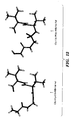
- FIG. 12 A structural comparison was made between the native A ⁇ peptide and the transition state phosphonamidate A ⁇ peptide ( Fig. 12 ) using a graphics workstation.
- the peptide link (-CO-NH-) between Gly 38 and Val 39 was replaced with a phosphonamidate bond (-PO 2 - -NH-) and an energy minimization was applied.
- the orientation shown in Figure 12 illustrates the difference between the planar peptide link (-CO-NH-) of native A ⁇ (left) versus the corresponding tetrahedral phosphonamidate bond (-PO 2 - -NH-) in the transition state peptide (right).
- Peptide antigens were coupled to the immunogenic carrier KLH prior to immunization of mice. Standard protocols were used to immunize BALB/c mice with the KLH-linked A ⁇ peptides described in the preceding sections. Briefly this procedure used i.p. injection of the different antigens emulsified in complete Freunds adjuvant, followed by a second course in incomplete Freunds adjuvant. Three days prior to hybridoma fusion, the BALB/c mice were boosted i.v. with antigen in PBS.
- a hybridoma fusion was performed using the spleen of a mouse immunized with either a mixture of the phenylalanine statine transition state antigens generated ( Fig. 7 ), a mixture of the statine (Sta) transition state A ⁇ antigens generated ( Fig. 6 ), the reduced peptide bond transition state A ⁇ antigen generated (transition state mimic located between Phe 19 -Phe 20 ), or the phosphoamidate transition state A ⁇ antigen generated (transition state mimic located between Gly 38 -Val 39 ).
- Monoclonal antibodies listed in Table 8 were generated from these mice. Table 8.
- a ⁇ 1-40 and A ⁇ 1-43 were radiolabeled with 125 I and the iodinated peptide was then separated from unlabeled material by HPLC. Probe was incubated with either purified anti-A ⁇ antibodies or media taken from hybridoma clones producing anti-A ⁇ antibodies. The amount of 125 I-A ⁇ 1-43 bound to antibody was determined using a polyethylene glycol separation method. Results of the experiment are presented in Table 3.
- Table 3 demonstrate the ability of the purified 5A11 monoclonal anti-A ⁇ antibody to bind a high percent of 125 I-A ⁇ 1-40 .
- This binding assay was used to screen clones and purified antibodies (Table 3) for their ability to bind A ⁇ . Similar procedures can also serve as the basis for a competitive displacement assay to measure the relative binding strength of different unlabeled A ⁇ peptides. (Note: with very efficient catalytic antibodies this binding assay may have to be performed on ice to ensure that no cleavage of A ⁇ occurs during the 1h incubation time.) The assay rapidly identified clones producing high affinity anti-A ⁇ antibodies.
- Monoclonal antibodies from hybridomas obtained using the phenylalanine statine transition state A ⁇ -KLH antigen were screened by ELISA to assess their binding to both the normal A ⁇ 1-43 peptide and to the phenylalanine statine transition state A ⁇ peptide. Two major patterns were found ( Fig. 13 ).
- One group of antibodies (the left portion of Fig. 13 ) bound to the immunizing transition state peptide and cross-reacted strongly with the native A ⁇ 1-43 peptide (each was adsorbed directly onto the ELISA plate).
- the second group (the right portion) showed a high binding preference for the phenylalanine statine transition state A ⁇ peptide and reacted minimally with native A ⁇ 1-43 .
- ELISAs were also performed to investigate the binding of anti-statine analog antibodies to both the normal A ⁇ 1-43 peptide and to the statine transition state A ⁇ peptide ( Fig. 14 ).
- the antibodies bound to the C-terminal locus on these carrier-free A ⁇ peptides (adsorbed directly to the microtitre plate) confirming their anti-peptide specificity.
- Most of the antibodies preferentially recognized the statine A ⁇ transition state, but cross-reacted with native A ⁇ 1-43 . This indicates that these new antibodies are able to force the native A ⁇ peptide into a conformation resembling the transition state for hydrolytic cleavage of its C-terminal amino acids. Such cleavage is predicted to convert A ⁇ 1-43 into potentially less harmful shorter peptides, like A ⁇ 1-40 or A ⁇ 1-39 .
- Clone 11E9 had the strongest preference for the statine analog and may be the most likely to have catalytic activity ( Fig. 14 ).
- Several clones displayed no difference in their reactivity with the native versus statine transition state A ⁇ peptide.
- the clones were also tested with A ⁇ 1-40 to identify antibodies which do not react with this shortened, 40 amino acid version of A ⁇ ( Fig. 14 ). Used therapeutically, such antibodies should preferentially bind/cleave the less abundant, but more noxious A ⁇ 1-43 species in the blood as opposed to the smaller and less detrimental A ⁇ 1-40 .
- a solid phase 125 I-labeled A ⁇ assay was developed to screen anti-transition state antibody hybridoma supernatants for specific proteolytic activity.
- the peptide Cys-His-Gln-Lys-Leu-Val-Phe-Phe-Ala-Glu-Asp-Val-Gly-Tyr-amide (SEQ ID NO: 5) which encompasses amino acids 14-25 of A ⁇ was radiolabeled and coupled to a thiol-reactive, iodoacetyl-Sepharose gel to form an irreversible linkage.
- the product was incubated with anti-transition state antibody and assayed for the progressive release of soluble 125 I-peptide from the solid phase matrix.
- a thin layer chromatography-based autoradiography assay was devised to obtain more definitive evidence for antibody-mediated cleavage of A ⁇ .
- Selected anti-phenylalanine statine A ⁇ transition state clones were expanded and ascites production induced.
- the different monoclonal antibodies were isolated using protein A-Sepharose.
- Two 125 I-labeled peptides, A ⁇ 1-40 and a 17-mer, encompassing amino acids 9-25 of A ⁇ , were used to test for peptide cleavage.
- the antibodies were added to the 125 I-peptides, allowed to incubate and the reaction mix spotted onto polyamide thin layer sheets which were then developed in different solvents.
- a radioactive assay was used to quickly screen the different monoclonal antibodies produced by the present experiments for an ability to dissolve preformed A ⁇ aggregates, made with 125 I-labeled and unlabeled soluble A ⁇ peptide.
- An aliquot of the labeled aggregate was incubated with either PBS, the 5A11 anti-A ⁇ antibody or an equal amount of an irrelevant mouse antibody (7D3, anti-human transferrin receptor), and the level of released radioactivity was subsequently measured (Table 9).
- the A ⁇ -specific 5A11 antibody solubilized 80% of the A ⁇ aggregates while an equal amount of the control antibody had only a minor effect, suggesting that the equilibrium was displaced by antibody-mediated binding of soluble A ⁇ .
- Anti-A ⁇ antibodies were linked to anti-transferrin receptor antibodies (anti-TfR) which served as vectors for delivery of the anti-A ⁇ antibodies into the brain.
- anti-TfR anti-transferrin receptor antibodies
- the 7D3 mouse monoclonal antibody was used as the anti-TfR part of the construct. 7D3 is specific for the human receptor and selectively immunostains cortical capillaries in normal human brain tissue ( Recht et al., J. Neurosurg. 72: 941-945 (1990 )). Antibody attachment to the receptor is not blocked by an excess of human transferrin. The epitope recognized by this antibody is therefore distant from the receptor-ligand binding site. Bispecific antibodies constructed with this 7D3 antibody and an anti-A ⁇ antibody are predicted to be useful for therapy in patients with Alzheimer's disease.
- the vectorized bispecific antibody composed of a rat monoclonal antibody directed against the mouse transferrin receptor plus the 5A11 mouse anti-A ⁇ monoclonal antibody, was tested for the ability to attach to transferrin receptor bearing mouse cells. Both components of the bispecific antibody were detected on the cell membrane by cytofluorimetry ( Fig. 16 ) when this duplex was reacted with transferrin receptor positive mouse cells and probed using either a rat IgG-specific or mouse IgG-specific fluorescent secondary antibody reagent.
- transferrin receptor positive cells were treated with the hybrid reagent, unbound material was washed away, and then the cells with bound antibody was exposed to 125 I-A ⁇ 1-40 . After washing away unbound A ⁇ , the cell-bound radioactivity was compared to control cells which had been identically prepared except for omission of pretreatment with bispecific antibody. The results are presented in Table 11, and verify the dual specificity of this bispecific antibody by clearly showing that it can simultaneously attach to the cell membrane and bind 125 I-A ⁇ 1-40 .
- a rat monoclonal anti-mouse transferrin receptor antibody was coupled to a mouse monoclonal antibody (obtained from American Type Culture Collection (ATCC TIB 219), also designated R17 217.1.3 ( Cell. Immunol. 83: 14-25 (1984 )), so that the entry of this new vectorized bispecific construct into brain could be monitored.
- the bispecific antibody was labeled with 125 I and injected i.v. into normal mice. After different lengths of time the mice were sacrificed and the amount of 125 I-bispecific antibody that crossed the blood-brain barrier and entered the brain was gauged by a mouse capillary depletion method ( Friden et al., J. Pharm. Exper. Ther. 278: 1491-1498 (1996 ); Triguero et al., J. Neurochem. 54: 1882-1888 (1990 )).
- the amount of vectorized bispecific antibody found in the brain parenchyma or brain capillary fractions was measured following differential density centrifugation of the brain homogenate. These values were plotted as a function of time after i.v. injection ( Fig. 17 ).
- the time-dependent redistribution of radiolabeled bispecific antibody from the capillaries and into the parenchyma was consistent with its passage across the cerebral endothelial blood-brain barrier ( Joachim et al., Nature 341: 6239:226-30 (1989 )). Even greater accumulation in the parenchyma is expected to occur if the antibodies attach to A ⁇ in the cerebral plaques of plaque-bearing mice.
- F(ab') 2 or Fv 2 reagents provide for intracerebral delivery.
- modified bispecific agents can be prepared and compared to full-sized hybrid antibodies for their relative effectiveness in reaching the brain, crossing the blood-brain barrier, and affecting A ⁇ plaque development, by the methods described herein. It is important to note, however, that only minor differences were found when the capacity of differently-sized anti-transferrin receptor bispecific reagents for delivering toxins into cells by receptor-mediated endocytosis was compared ( Raso et al., J. Biol. Chem. 272: 27623-27628 (1997 )).
- statine and phenylalanine statine transition state peptides were synthesized using automated Fmoc chemistry.
- Fmoc-statine (Sta), [N-Fmoc-(3S,4S)-4-amino-3-hydroxy-6-methyl heptanoic acid] and Fmoc-"phenylalanine statine" (PhSta), [N-Fmoc-(3S,4S)-4-amino-3-hydroxy-5-phenylpentanoic acid] were purchased commercially.
- Each peptide was tested for purity by HPLC and its composition was verified by mass spectral and amino acid analysis.
- mice Immunization of Mice . Standard protocols were used to immunize mice with the KLH-linked A ⁇ peptides described in the preceding sections. Briefly this procedure used i.p. injection of the different antigens emulsified in complete Freunds adjuvant, followed by a second course in incomplete Freunds adjuvant. Three days prior to the hybridoma fusion, the BALB/c mice were boosted i.v. with antigen in PBS.
- mice After -1 month animals were given a boost i.p. using the antigen emulsified with incomplete adjuvant. Serum from these animals was analyzed for anti-peptide antibodies by ELISA. BALB/c mice showing abundant antibody production were boosted by an i.v. injection with antigen and three days later they were used to generate hybridoma clones that secrete monoclonal antibodies.
- mice immunized with A ⁇ vaccines or the anti-A ⁇ ascites-producing mice displayed ill effects even though some of those induced antibodies cross-react with mouse A ⁇ and mouse amyloid precursor protein.
- Hybridoma Production I A hybridoma fusion was performed using the spleen of a mouse immunized with the phenylalanine statine transition state A ⁇ -KLH antigen. Spleen cells from mice with the highest titre were fused with mouse myeloma NS-1 cells to establish hybridomas according to standard procedures ( Köhler et al., Nature 256: 495 (1975 ); R.H. Kennett, Fusion Protocols. Monoclonal Antibodies, eds. R.H. Kennett, T.J. McKearn and K.B. Bechtol. Plenum Press, New York. 365-367 pp. (1980 )).
- 125 I-A ⁇ Binding Assay A ⁇ 1-40 and A ⁇ 1-43 were radiolabeled with 125 I and the iodinated peptide then separated from unlabeled material by HPLC to give quantitative specific activity (-2000 Ci/mmol) ( Maggio et al., Proc. Natl. Acad. Sci. 89: 5462-5466 (1992 )). This probe was incubated for 1h at 23°C with either purified anti-A ⁇ antibodies or media taken from hybridoma clones producing anti-A ⁇ antibodies. A polyethylene glycol separation method was used to detect the amount of 125 I-A ⁇ 1-43 bound to antibody. By using serial dilution, this assay can provide relative binding affinities for the different hybridoma supernatants or purified antibodies.
- Solid Phase A ⁇ Proteolytic Assay A solid phase 125 I-labeled A ⁇ assay was developed to screen anti-transition state antibody hybridoma supernatants for specific proteolytic activity.
- the highly radioactive A ⁇ peptide was coupled to a thiol-reactive, iodoacetyl-Sepharose gel to form an irreversible linkage.
- Antibodies were added to the labeled A ⁇ , which was then assayed for progressive release of soluble 125 I-peptide from the solid phase matrix at pH 7, 25°C. This assay was verified by the ability of several different proteases in to rapidly hydrolyze this Sepharose-linked A ⁇ substrate. Release of soluble 125 I-peptide increased with incubation time.
- TLC A ⁇ Proteolytic Assay A thin layer chromatography-based autoradiography assay was used to obtain more definitive evidence for antibody-mediated cleavage of A ⁇ . Selected anti-phenylalanine statine A ⁇ transition state clones were expanded and ascites production induced. The different monoclonal antibodies were isolated using protein A-Sepharose. The cleavage assay used 125 I-A ⁇ 1-40 and an 125 I-labeled 17-mer, encompassing amino acids 9-25 of A ⁇ . Binding of the two 125 I-labeled peptides to the purified monoclonal antibodies 5A11 and 6E2 was examined using either a PEG precipitation assay or by a co-electrophoresis method.
- Peptide cleavage was tested by adding the antibodies to the 125 I-peptides, incubating and then spotting the reaction mix onto polyamide thin layer sheets.
- the chromatographs were developed in different solvents (eg. 0.5 N HCl, 0.5 N NaOH or pH 7 phosphate buffer) and the migration of 125 I-products was followed by exposing the sheet using a quantitative phosphoimager system.
- aggregates were formed by bringing the solution to pH 5 or by stirring it overnight in PBS. An aliquot of the labeled aggregate was incubated for 1 hr with either PBS, the 5A11 anti-A ⁇ antibody or an equal amount of an irrelevant mouse antibody (7D3, anti-human transferrin receptor). After centrifugation, the level of radioactivity in the precipitate was measured.
- the anti-A ⁇ antibodies were chemically coupled to anti-human transferrin receptor and anti-mouse transferrin receptor antibodies by different methods ( Raso et al., J. Biol. Chem. 272: 27623-27628 (1997 ); Raso et al., Monoclonal antibodies as cell targeted carriers of covalently and non-covalently attached toxins.
- Raso et al. Monoclonal antibodies as cell targeted carriers of covalently and non-covalently attached toxins.
- Receptor mediated targeting of drugs vol. 82. G. Gregoriadis, G. Post, J. Senior and A. Trouet, editors. NATO Advanced Studies Inst., New York. 119-138 (1984 )).
- Non-targeted control hybrids were formed by linking a nonspecific MOPC antibody to the anti-A ⁇ antibody. This hybrid antibody does bind A ⁇ , but, being non-reactive with transferrin receptors, should not cross the blood-brain barrier.
- F(ab') 2 fragments of the two different antibody types can similarly be thioether-linked to form Fc-devoid reagents that cannot bind complement which might otherwise cause neurotoxic effects.
- These smaller bispecific hybrids (100 kDa) can be formed by reducing the intrinsic disulfides which link the heavy chains of F(ab') 2 fragments ( Raso et al., J. Immunol. 125: 2610-2616 (1980 )).
- the thiols generated are stabilized and Ellman's reagent (E) is used to activate these groups on one of the components ( Brennan et al., Science 229: 81-83 (1985 )).
- Purification on an S-200 column will isolate hybrids with one site for binding A ⁇ and one site for interaction with the target epitope on the brain capillary endothelial cells.
- Fv A -SS-Fv B 50 kDa
- Soluble Fvs can be constructed to possess a carboxyl-terminal cysteine to facilitate the disulfide exchange shown in the reaction below, and create 50 kDa heterodimers exclusively: Fv A - SH + Fv B - SS - E ⁇ Fv A - SS - Fv B + E - SH
- bispecific antibodies to attach to transferrin receptor bearing human or mouse cells was confirmed by cytofluorimetry.
- the bispecific antibody was reacted with transferrin receptor positive human or mouse cells and probed using either a rat IgG-specific or mouse IgG-specific fluorescent secondary antibody reagent.
- hybrid reagents were tested for a capacity to mediate the attachment of 125 I-A ⁇ to receptor-bearing cells. Transferrin receptor positive cells were treated with the hybrid reagent, washed away unbound material and then exposed these cells to 125 I-A ⁇ 1-40 . The cells were washed and the amount of cell-bound radioactivity was compared to control cells which had been identically prepared except that pretreatment with bispecific antibody was omitted.
- the bispecific antibody was labeled with 125 I and injected i.v. into normal mice. After different lengths of time the mice were sacrificed and the amount of 125 I-bispecific antibody that crossed the blood-brain barrier and entered the brain was gauged by a mouse capillary depletion method ( Friden et al., J. Pharm. Exper. Ther. 278: 1491-1498 (1996 ); Triguero et al., J. Neurochem. 54: 1882-1888 (1990 )). The amount of vectorized bispecific antibody found in the brain parenchyma or brain capillary fractions was measured following differential density centrifugation of the brain homogenate. These values were plotted as a function of time after i.v. injection. Progressive passage from capillaries into the parenchyma indicates active transcytosis across the blood-brain barrier.
- Immunoscintigraphy A non-invasive method for monitoring intracerebral delivery process which involves visualizing the entry of a radiolabeled bispecific antibody into the brain of live mice, can also be used.
- Radiolabeled vectorized bispecific antibody 125 I-R17/5A11
- a non-vectorized control bispecific antibody were administered to separate mice.
- Sequential brain images were accumulated at 1, 6, 24 and 48 hours following i.v. administration of the 125 I-labeled bispecific antibody probes.
- the animals were chemically immobilized during exposure using ketamine/xylazine anesthesia. This imaging technology could be very useful for determining if circulating anti-A ⁇ antibodies will prevent i.v. administered 125 I-A ⁇ from entering the brain.
- Digital scintigraphy data was quantified using standards and the integration functions provided in the analysis software.
Landscapes
- Health & Medical Sciences (AREA)
- Chemical & Material Sciences (AREA)
- Life Sciences & Earth Sciences (AREA)
- Engineering & Computer Science (AREA)
- Medicinal Chemistry (AREA)
- General Health & Medical Sciences (AREA)
- Organic Chemistry (AREA)
- Bioinformatics & Cheminformatics (AREA)
- Immunology (AREA)
- Biomedical Technology (AREA)
- Genetics & Genomics (AREA)
- Microbiology (AREA)
- Veterinary Medicine (AREA)
- Pharmacology & Pharmacy (AREA)
- Public Health (AREA)
- Animal Behavior & Ethology (AREA)
- Wood Science & Technology (AREA)
- Zoology (AREA)
- Neurology (AREA)
- Neurosurgery (AREA)
- Molecular Biology (AREA)
- Mycology (AREA)
- Biochemistry (AREA)
- Epidemiology (AREA)
- General Engineering & Computer Science (AREA)
- Biotechnology (AREA)
- Endocrinology (AREA)
- Proteomics, Peptides & Aminoacids (AREA)
- Biophysics (AREA)
- Psychiatry (AREA)
- Chemical Kinetics & Catalysis (AREA)
- Hospice & Palliative Care (AREA)
- General Chemical & Material Sciences (AREA)
- Nuclear Medicine, Radiotherapy & Molecular Imaging (AREA)
- Peptides Or Proteins (AREA)
- Medicines Containing Antibodies Or Antigens For Use As Internal Diagnostic Agents (AREA)
- Medicines Containing Material From Animals Or Micro-Organisms (AREA)
- Steroid Compounds (AREA)
- Enzymes And Modification Thereof (AREA)
Claims (10)
- Bispezifischer Antikörper, der durch seine Fähigkeit gekennzeichnet ist, die Blut-Him-Schranke zu durchqueren, mit einer ersten Spezifität für den Transferrin-Rezeptor und mit einer zweiten Spezifität für einen vom β-Amyloid während einer Hydrolyse eingenommenen Übergangszustand, wobei der Antikörper sich an ein Analoges des Übergangszustandes bindet, welches den vom β-Amyloid während der Hydrolyse an einer vorbestimmten Amidbindung eingenommenen Übergangszustand nachahmt und die Hydrolyse des β-Amyloids an der vorbestimmten Amidbindung katalysiert.
- Antikörper nach Anspruch 1, der ferner durch seine Fähigkeit charakterisiert ist,a) die Hydrolyse der Amidbinding zwischen den Resten 39 und 40 des β-Amyloids zu katalysieren oderb) die Hydrolyse der Amidbinding zwischen den Resten 40 und 41 des β-Amyloids zu katalysieren oderc) die Hydrolyse der Amidbinding zwischen den Resten 41 und 42 des β-Amyloids zu katalysieren oderd) sich vorzugsweise an ein Analoges des Übergangszustandes bindet, welches den vom β-Amyloid während einer Hydrolyse an einer vorbestimmten Amidbindung eingenommenen Übergangszustand nachahmt, und sich auch an natürliches β-Amyloid mit einer ausreichenden Affinität bindet, um es mit Hilfe eines ELISA nachzuweisen, odere) sich vorzugsweise an ein Analoges des Übergangszustandes bindet, welches den vom β-Amyloid während einer Hydrolyse an einer vorbestimmten Amidbindung eingenommenen Übergangszustand nachahmt, und sich nicht an natürliches β-Amyloid mit einer für einen Nachweis mit einem ELISA ausreichenden Affinität bindet.
- Antikörper nach Anspruch 1, wobei das Analoge des Übergangszustands ausgewählt ist aus der Gruppe Statin, Phenylalanin-Statin, Phosphonat, Phosphonamidat, Analoges des reduzierten Amidbindungs-Übergangszustands.
- Antikörper nach jedem der vorhergehenden Ansprüche zur Verwendung in der Therapie.
- Antikörper nach Anspruch 4, wobei die Therapie die Therapie der Alzheimer-Krankheit ist.
- Antikörper nach Anspruch 4 oder 5, welcher die Hydrolyse von für ein Tier endogenem β-Amyloid katalysiert und so die Konzentrationen von in dem Tier zirkulierendem β-Amyloid herabsetzt, indem die Antikörper dem Tier intravenös verabreicht werden.
- Antikörper nach Anspruch 4 oder 5 zur Verhinderung der Bildung von Amyloid-Plaques im Hirn eines Tieres durch Verabreichzng der Antikörper an das Tier in einer Menge, die ausreicht, um eine signifikante Herabsetzung der β-Amyloidkonzentrationen im Blut des Tieres zu verursachen.
- Antikörper nach Anspruch 4 oder 5 zur Herrabsetzung der Konzentrationen von β-Amyloid im Hirn eines Tieres durch intravenöse Verabreichung der Antikörper an das Tier.
- Antikörper nach Anspruch 4 oder 5 zur Auflösung von im Hirn eines Tieres vorkommenden Amyloid-Plaques durch intravenöse Verabreichung des Antikörpers an das Tier in einer Menge, die ausreicht, um eine signifikante VHerabsetzung der β-Amyloidkonzentrationen im Hirn des Tieres zu verursachen.
- Antikörper nach Anspruch 4 zur Auflösung von im Hirn eines Tieres vorkommenden Amyloid-Plaques.
Priority Applications (1)
| Application Number | Priority Date | Filing Date | Title |
|---|---|---|---|
| CY20081101312T CY1108566T1 (el) | 1999-06-16 | 2008-11-14 | Ανοσολογικος ελεγχος των επιπεδων του b-αμυλοειδους in vivo |
Applications Claiming Priority (3)
| Application Number | Priority Date | Filing Date | Title |
|---|---|---|---|
| US13940899P | 1999-06-16 | 1999-06-16 | |
| US139408P | 1999-06-16 | ||
| PCT/US2000/016551 WO2000077178A1 (en) | 1999-06-16 | 2000-06-15 | IMMUNOLOGICAL CONTROL OF β-AMYLOID LEVELS IN VIVO |
Publications (3)
| Publication Number | Publication Date |
|---|---|
| EP1409654A1 EP1409654A1 (de) | 2004-04-21 |
| EP1409654A4 EP1409654A4 (de) | 2004-12-29 |
| EP1409654B1 true EP1409654B1 (de) | 2008-08-20 |
Family
ID=22486496
Family Applications (1)
| Application Number | Title | Priority Date | Filing Date |
|---|---|---|---|
| EP00942851A Expired - Lifetime EP1409654B1 (de) | 1999-06-16 | 2000-06-15 | Immunologische kontrolle des beta-amyloid gehaltes in vivo |
Country Status (12)
| Country | Link |
|---|---|
| US (9) | US6582945B1 (de) |
| EP (1) | EP1409654B1 (de) |
| JP (1) | JP5249482B2 (de) |
| AT (1) | ATE405636T1 (de) |
| AU (1) | AU780474B2 (de) |
| CA (1) | CA2376693C (de) |
| CY (1) | CY1108566T1 (de) |
| DE (1) | DE60040024D1 (de) |
| DK (1) | DK1409654T3 (de) |
| ES (1) | ES2312348T3 (de) |
| PT (1) | PT1409654E (de) |
| WO (1) | WO2000077178A1 (de) |
Families Citing this family (121)
| Publication number | Priority date | Publication date | Assignee | Title |
|---|---|---|---|---|
| US6913745B1 (en) | 1997-12-02 | 2005-07-05 | Neuralab Limited | Passive immunization of Alzheimer's disease |
| US6787523B1 (en) | 1997-12-02 | 2004-09-07 | Neuralab Limited | Prevention and treatment of amyloidogenic disease |
| TWI239847B (en) * | 1997-12-02 | 2005-09-21 | Elan Pharm Inc | N-terminal fragment of Abeta peptide and an adjuvant for preventing and treating amyloidogenic disease |
| US6710226B1 (en) | 1997-12-02 | 2004-03-23 | Neuralab Limited | Transgenic mouse assay to determine the effect of Aβ antibodies and Aβ Fragments on alzheimer's disease characteristics |
| US6750324B1 (en) | 1997-12-02 | 2004-06-15 | Neuralab Limited | Humanized and chimeric N-terminal amyloid beta-antibodies |
| US6905686B1 (en) | 1997-12-02 | 2005-06-14 | Neuralab Limited | Active immunization for treatment of alzheimer's disease |
| US6761888B1 (en) * | 2000-05-26 | 2004-07-13 | Neuralab Limited | Passive immunization treatment of Alzheimer's disease |
| US6923964B1 (en) | 1997-12-02 | 2005-08-02 | Neuralab Limited | Active immunization of AScr for prion disorders |
| US7179892B2 (en) | 2000-12-06 | 2007-02-20 | Neuralab Limited | Humanized antibodies that recognize beta amyloid peptide |
| US7964192B1 (en) | 1997-12-02 | 2011-06-21 | Janssen Alzheimer Immunotherapy | Prevention and treatment of amyloidgenic disease |
| US7588766B1 (en) | 2000-05-26 | 2009-09-15 | Elan Pharma International Limited | Treatment of amyloidogenic disease |
| US20080050367A1 (en) * | 1998-04-07 | 2008-02-28 | Guriq Basi | Humanized antibodies that recognize beta amyloid peptide |
| US7790856B2 (en) | 1998-04-07 | 2010-09-07 | Janssen Alzheimer Immunotherapy | Humanized antibodies that recognize beta amyloid peptide |
| US20050059802A1 (en) * | 1998-04-07 | 2005-03-17 | Neuralab Ltd | Prevention and treatment of amyloidogenic disease |
| US20030147882A1 (en) | 1998-05-21 | 2003-08-07 | Alan Solomon | Methods for amyloid removal using anti-amyloid antibodies |
| US6787637B1 (en) | 1999-05-28 | 2004-09-07 | Neuralab Limited | N-Terminal amyloid-β antibodies |
| UA81216C2 (en) * | 1999-06-01 | 2007-12-25 | Prevention and treatment of amyloid disease | |
| DE1257584T1 (de) | 2000-02-24 | 2003-05-28 | Lilly Co Eli | Humanisierte antikörper, die amyloid beta peptid demarkieren |
| PE20020574A1 (es) | 2000-12-06 | 2002-07-02 | Wyeth Corp | Anticuerpos humanizados que reconocen el peptido amiloideo beta |
| US7700751B2 (en) | 2000-12-06 | 2010-04-20 | Janssen Alzheimer Immunotherapy | Humanized antibodies that recognize β-amyloid peptide |
| US6815175B2 (en) | 2001-03-16 | 2004-11-09 | Cornell Research Foundation, Inc. | Anti-amyloid peptide antibody based diagnosis and treatment of a neurological disease or disorder |
| EP2165714B1 (de) | 2001-04-30 | 2013-10-23 | Eli Lilly And Company | Humanisierte Antikörper die das Beta-Amyloid Peptid erkennen |
| EP1385544B1 (de) | 2001-04-30 | 2008-09-24 | Eli Lilly And Company | Humanisierte antikörper |
| WO2003015691A2 (en) * | 2001-08-17 | 2003-02-27 | Eli Lilly And Company | RAPID IMPROVEMENT OF COGNITION IN CONDITIONS RELATED TO A$g(b) |
| CA2451998A1 (en) * | 2001-08-17 | 2003-02-27 | Eli Lilly And Company | Anti-a.beta. antibodies |
| PT1944040E (pt) | 2001-08-17 | 2012-10-31 | Univ Washington | Método de avaliação para a doença de alzheimer |
| CA2504349A1 (en) * | 2001-11-02 | 2003-05-15 | Diagenics International Corporation | Monoclonal antibodies specific for beta-amyloid |
| MY139983A (en) | 2002-03-12 | 2009-11-30 | Janssen Alzheimer Immunotherap | Humanized antibodies that recognize beta amyloid peptide |
| AU2003223474B2 (en) * | 2002-04-25 | 2008-09-04 | Eli Lilly And Company | Method for treating anxiety and mood disorders in older subjects |
| EP1380290A1 (de) * | 2002-07-09 | 2004-01-14 | Universitair Medisch Centrum Utrecht | Cross-Beta-Strukturweg und seine therapeutische Relevanz |
| RU2353389C2 (ru) * | 2002-10-09 | 2009-04-27 | Ринат Ньюросайенс Корп. | Способы лечения болезни альцгеймера с использованием антител, направленных против пептида амилоида-бета, и их композиций |
| US20040146512A1 (en) * | 2002-10-09 | 2004-07-29 | Arnon Rosenthal | Methods of treating Alzheimer's disease using antibodies directed against amyloid beta peptide and compositions thereof |
| DE10303974A1 (de) | 2003-01-31 | 2004-08-05 | Abbott Gmbh & Co. Kg | Amyloid-β(1-42)-Oligomere, Verfahren zu deren Herstellung und deren Verwendung |
| NZ567324A (en) * | 2003-02-01 | 2009-08-28 | Wyeth Corp | Active immunization to generate antibodies to soluble A-beta |
| ATE468886T1 (de) | 2003-02-10 | 2010-06-15 | Applied Molecular Evolution | Abeta-bindende moleküle |
| TWI306458B (en) | 2003-05-30 | 2009-02-21 | Elan Pharma Int Ltd | Humanized antibodies that recognize beta amyloid peptide |
| WO2005014041A2 (en) * | 2003-07-24 | 2005-02-17 | Novartis Ag | Use of an amyloid beta dna vaccine for the treatment and/or prevention of amyloid diseases |
| CA2556923A1 (en) * | 2004-02-20 | 2005-09-09 | Rinat Neuroscience Corp. | Methods of treating obesity or diabetes using nt-4/5 |
| US20050225165A1 (en) * | 2004-04-13 | 2005-10-13 | Naik Sanjeev M | Brake by-wire control system |
| MX2007000998A (es) * | 2004-07-30 | 2007-07-11 | Rinat Neuroscience Corp | Anticuerpos dirigidos peptido beta-amiloide y procedimientos que usan los mismos. |
| WO2007001448A2 (en) | 2004-11-04 | 2007-01-04 | Massachusetts Institute Of Technology | Coated controlled release polymer particles as efficient oral delivery vehicles for biopharmaceuticals |
| US7625560B2 (en) | 2004-12-15 | 2009-12-01 | Janssen Alzheimer Immunotherapy | Humanized antibodies that recognize beta amyloid peptide |
| EP1838348B1 (de) | 2004-12-15 | 2013-06-26 | Janssen Alzheimer Immunotherapy | Humanisierte amyloid-beta-antikörper zur verbesserung der kognition |
| CA2589017A1 (en) * | 2004-12-15 | 2006-06-22 | Neuralab Limited | Amyloid beta antibodies for use in improving cognition |
| GT200600031A (es) * | 2005-01-28 | 2006-08-29 | Formulacion anticuerpo anti a beta | |
| UY29504A1 (es) * | 2005-04-29 | 2006-10-31 | Rinat Neuroscience Corp | Anticuerpos dirigidos contra el péptido amiloide beta y métodos que utilizan los mismos. |
| US8114832B2 (en) * | 2005-07-13 | 2012-02-14 | Crossbeta Biosciences B.V. | Method for detecting and/or removing a protein comprising a cross-beta structure from a pharmaceutical composition |
| US8741260B2 (en) * | 2005-10-07 | 2014-06-03 | Armagen Technologies, Inc. | Fusion proteins for delivery of GDNF to the CNS |
| HRP20140240T4 (hr) | 2005-11-30 | 2017-02-24 | Abbvie Inc. | Monoklonalna antitijela protiv amiloidnih beta proteina i njihova upotreba |
| US8691224B2 (en) | 2005-11-30 | 2014-04-08 | Abbvie Inc. | Anti-Aβ globulomer 5F7 antibodies |
| EP1959996A2 (de) * | 2005-12-12 | 2008-08-27 | AC Immune S.A. | Monoklonaler antikörper |
| MY155286A (en) | 2005-12-12 | 2015-09-30 | Hoffmann La Roche | Antibodies against amyloid beta 4 with glycosylated in the variable region |
| WO2007070682A2 (en) | 2005-12-15 | 2007-06-21 | Massachusetts Institute Of Technology | System for screening particles |
| CN101400367A (zh) * | 2006-02-02 | 2009-04-01 | 瑞纳神经科学公司 | 施用trkb激动剂治疗不希望的重量减轻或进食障碍的方法 |
| JP2009525319A (ja) * | 2006-02-02 | 2009-07-09 | ライナット ニューロサイエンス コーポレイション | trkBアンタゴニストを投与することにより肥満を治療する方法 |
| DE602007011727D1 (de) * | 2006-02-09 | 2011-02-17 | Alain Dibie | System zur behandlung von läsionen an einer blutgefässgabelung |
| US8992928B2 (en) * | 2006-02-11 | 2015-03-31 | Victor Raso | Isolated monoclonal antibody or antigen-binding fragment that cleaves octanoylated native ghrelin |
| CA2648099C (en) | 2006-03-31 | 2012-05-29 | The Brigham And Women's Hospital, Inc | System for targeted delivery of therapeutic agents |
| US8784810B2 (en) | 2006-04-18 | 2014-07-22 | Janssen Alzheimer Immunotherapy | Treatment of amyloidogenic diseases |
| JP5630998B2 (ja) | 2006-05-15 | 2014-11-26 | マサチューセッツ インスティテュート オブ テクノロジー | 機能的粒子のためのポリマー |
| WO2007150030A2 (en) | 2006-06-23 | 2007-12-27 | Massachusetts Institute Of Technology | Microfluidic synthesis of organic nanoparticles |
| EP2046833B9 (de) * | 2006-07-14 | 2014-02-19 | AC Immune S.A. | Humanisierter antikörper gegen amyloid beta |
| US8759297B2 (en) * | 2006-08-18 | 2014-06-24 | Armagen Technologies, Inc. | Genetically encoded multifunctional compositions bidirectionally transported between peripheral blood and the cns |
| US20100303723A1 (en) * | 2006-11-20 | 2010-12-02 | Massachusetts Institute Of Technology | Drug delivery systems using fc fragments |
| US8455626B2 (en) | 2006-11-30 | 2013-06-04 | Abbott Laboratories | Aβ conformer selective anti-aβ globulomer monoclonal antibodies |
| US7749966B2 (en) * | 2006-12-21 | 2010-07-06 | Boston Biomedical Research Institute | Immunological modulation of insulin-like growth factor 1 for cancer prevention/treatment and prolonging longevity |
| DK2121754T3 (en) | 2007-01-18 | 2015-02-23 | Lilly Co Eli | Pegylated amyloid BETA FAB |
| EP2134830A2 (de) | 2007-02-09 | 2009-12-23 | Massachusetts Institute of Technology | Oszillations-zellkultur-bioreaktor |
| US8895004B2 (en) | 2007-02-27 | 2014-11-25 | AbbVie Deutschland GmbH & Co. KG | Method for the treatment of amyloidoses |
| JP5930573B2 (ja) | 2007-03-01 | 2016-06-15 | プロビオドルグ エージー | グルタミニルシクラーゼ阻害剤の新規使用 |
| WO2008124634A1 (en) * | 2007-04-04 | 2008-10-16 | Massachusetts Institute Of Technology | Polymer-encapsulated reverse micelles |
| JP2010523595A (ja) | 2007-04-04 | 2010-07-15 | マサチューセッツ インスティテュート オブ テクノロジー | ポリ(アミノ酸)ターゲッティング部分 |
| EP2142514B1 (de) | 2007-04-18 | 2014-12-24 | Probiodrug AG | Thioharnstoffderivate als glutaminylcyclaseinhibitoren |
| US8003097B2 (en) | 2007-04-18 | 2011-08-23 | Janssen Alzheimer Immunotherapy | Treatment of cerebral amyloid angiopathy |
| WO2008141321A1 (en) * | 2007-05-14 | 2008-11-20 | Medtronic, Inc. | Methods and device to neutralize soluble toxic agents in the brain |
| US8323654B2 (en) * | 2007-05-14 | 2012-12-04 | Medtronic, Inc. | Anti-amyloid beta antibodies conjugated to sialic acid-containing molecules |
| US8613923B2 (en) | 2007-06-12 | 2013-12-24 | Ac Immune S.A. | Monoclonal antibody |
| ES2529174T3 (es) * | 2007-06-12 | 2015-02-17 | Ac Immune S.A. | Anticuerpos humanizados para amiloide beta |
| US8048420B2 (en) * | 2007-06-12 | 2011-11-01 | Ac Immune S.A. | Monoclonal antibody |
| DK2182983T3 (da) | 2007-07-27 | 2014-07-14 | Janssen Alzheimer Immunotherap | Behandling af amyloidogene sygdomme med humaniserede anti-abeta antistoffer |
| AU2008282496B2 (en) | 2007-07-27 | 2013-04-04 | Armagen Technologies, Inc. | Methods and compositions for increasing alpha-iduronidase activity in the CNS |
| EP2023143A1 (de) * | 2007-08-06 | 2009-02-11 | Boehringer Ingelheim Vetmedica Gmbh | Immunogene Streptokokkus-Proteine |
| BRPI0818623A2 (pt) * | 2007-10-05 | 2017-05-23 | Ac Immune Sa | composição farmacêutica, e, métodos para reduzir a carga da placa na camada de célula de gânglio retinal de um animal, para reduzir a quantidade de placas na camada de célula de gânglio retinal de um animal, para diminuir a quantidade total de amilóide-beta solúvel na camada de célula de gânglio retinal de um animal, para prevenir, tratar e/ou aliviar os efeitos de uma doença ocular associada com anormalidades patológicas/mudanças no tecido do sistema visual, para monitorar doença ocular residual mínima associada com anormalidades patológicas/mudanças nos tecidos do sistema visual, para predizer responsividade de um paciente, e para reter ou diminuir a pressão ocular nos olhos de um animal |
| AU2008311367B2 (en) * | 2007-10-05 | 2014-11-13 | Ac Immune S.A. | Use of anti-amyloid beta antibody in ocular diseases |
| US20100297013A1 (en) * | 2007-10-05 | 2010-11-25 | Andrea Pfeifer | Humanized antibody |
| JP2011500569A (ja) | 2007-10-12 | 2011-01-06 | マサチューセッツ インスティテュート オブ テクノロジー | ワクチンナノテクノロジー |
| JO3076B1 (ar) | 2007-10-17 | 2017-03-15 | Janssen Alzheimer Immunotherap | نظم العلاج المناعي المعتمد على حالة apoe |
| CN101531703B (zh) * | 2008-03-13 | 2013-04-24 | 天津医科大学 | 用于预防和/或治疗阿尔茨海默病的β片层阻断肽 |
| JP5219168B2 (ja) * | 2008-03-13 | 2013-06-26 | 天津医科大学 | アルツハイマー病の予防および/または治療用βシート破壊ペプチド |
| EP2149380A1 (de) * | 2008-07-29 | 2010-02-03 | Medivet Pharma, S.L. | Tierärztliche Immuntherapiezusammensetzung für altersbedingte kognitive Dysfunktion |
| US8591905B2 (en) | 2008-10-12 | 2013-11-26 | The Brigham And Women's Hospital, Inc. | Nicotine immunonanotherapeutics |
| US8277812B2 (en) | 2008-10-12 | 2012-10-02 | Massachusetts Institute Of Technology | Immunonanotherapeutics that provide IgG humoral response without T-cell antigen |
| US8343497B2 (en) | 2008-10-12 | 2013-01-01 | The Brigham And Women's Hospital, Inc. | Targeting of antigen presenting cells with immunonanotherapeutics |
| US8343498B2 (en) | 2008-10-12 | 2013-01-01 | Massachusetts Institute Of Technology | Adjuvant incorporation in immunonanotherapeutics |
| US9067981B1 (en) | 2008-10-30 | 2015-06-30 | Janssen Sciences Ireland Uc | Hybrid amyloid-beta antibodies |
| CA2748889A1 (en) | 2009-03-18 | 2010-09-23 | Armagen Technologies, Inc. | Compositions and methods for blood-brain barrier delivery of igg-decoy receptor fusion proteins |
| JP5934645B2 (ja) | 2009-09-11 | 2016-06-15 | プロビオドルグ エージー | グルタミニルシクラーゼ阻害剤としてのヘテロ環式誘導体 |
| EP2485761B1 (de) | 2009-10-09 | 2019-02-27 | Armagen, Inc. | Verfahren und zusammensetzungen für erhöhte iduronat-2-sulfatase-aktivität im zns |
| JP6026284B2 (ja) | 2010-03-03 | 2016-11-16 | プロビオドルグ エージー | グルタミニルシクラーゼの阻害剤 |
| NZ602312A (en) | 2010-03-10 | 2014-02-28 | Probiodrug Ag | Heterocyclic inhibitors of glutaminyl cyclase (qc, ec 2.3.2.5) |
| US8987419B2 (en) | 2010-04-15 | 2015-03-24 | AbbVie Deutschland GmbH & Co. KG | Amyloid-beta binding proteins |
| WO2011131748A2 (en) | 2010-04-21 | 2011-10-27 | Probiodrug Ag | Novel inhibitors |
| EP2598882B1 (de) | 2010-07-30 | 2017-07-26 | AC Immune S.A. | Sichere und funktionelle humanisierte antikörper für die verwendung in der behandlung von einer amyloidose |
| EP3533803B1 (de) | 2010-08-14 | 2021-10-27 | AbbVie Inc. | Anti-amyloid-beta antikörper |
| CA2818173C (en) | 2010-11-30 | 2022-05-03 | Genentech, Inc. | Low affinity blood brain barrier receptor antibodies and uses therefor |
| EP2686313B1 (de) | 2011-03-16 | 2016-02-03 | Probiodrug AG | Benzimidazolderivate als glutaminylcyclase-hemmer |
| AU2012346448B2 (en) | 2011-12-02 | 2017-09-14 | Armagen, Inc. | Methods and compositions for increasing arylsulfatase A activity in the CNS |
| WO2013177062A2 (en) | 2012-05-21 | 2013-11-28 | Genentech, Inc. | Methods for improving safety of blood-brain barrier transport |
| HUE045144T2 (hu) * | 2012-08-29 | 2019-12-30 | Hoffmann La Roche | Véragygát-shuttle |
| ES2503516B1 (es) * | 2013-04-03 | 2015-09-09 | Inmunotek, S.L. | Complejo inmunogénico para vacunación y método de obtención |
| CA2944402A1 (en) | 2014-04-08 | 2015-10-15 | Prothena Biosciences Limited | Blood-brain barrier shuttles containing antibodies recognizing alpha-synuclein |
| WO2015165961A1 (en) | 2014-04-29 | 2015-11-05 | Affiris Ag | Treatment and prevention of alzheimer's disease (ad) |
| US10538589B2 (en) | 2015-01-14 | 2020-01-21 | Armagen Inc. | Methods and compositions for increasing N-acetylglucosaminidase (NAGLU) activity in the CNS using a fusion antibody comprising an anti-human insulin receptor antibody and NAGLU |
| HUE057952T2 (hu) | 2015-06-24 | 2022-06-28 | Hoffmann La Roche | Anti-transzferrin receptor antitestek testreszabott affinitással |
| TWI873952B (zh) | 2015-10-02 | 2025-02-21 | 瑞士商赫孚孟拉羅股份公司 | 雙特異性抗‐人類cd20/人類轉鐵蛋白受體抗體及使用方法 |
| AR106189A1 (es) | 2015-10-02 | 2017-12-20 | Hoffmann La Roche | ANTICUERPOS BIESPECÍFICOS CONTRA EL A-b HUMANO Y EL RECEPTOR DE TRANSFERRINA HUMANO Y MÉTODOS DE USO |
| ES2812698T3 (es) | 2017-09-29 | 2021-03-18 | Probiodrug Ag | Inhibidores de glutaminil ciclasa |
| CN114026109A (zh) * | 2019-07-05 | 2022-02-08 | 株式会社岛津制作所 | β淀粉样蛋白的单克隆抗体、和使用该抗体的β淀粉样蛋白相关肽的测定方法 |
| KR102674098B1 (ko) * | 2021-01-14 | 2024-06-12 | (주)옵토레인 | 스위칭 펩티드 및 이를 이용한 멀티플렉스 면역분석 방법 |
| CN114478762B (zh) * | 2022-02-15 | 2024-06-04 | 武汉天德生物科技有限公司 | 一种β-淀粉样多肽1-42单克隆抗体、ELISA试剂盒及其应用 |
| CN121620524A (zh) | 2023-08-09 | 2026-03-06 | 豪夫迈·罗氏有限公司 | 抗A-β蛋白抗体、方法及其用途 |
Family Cites Families (29)
| Publication number | Priority date | Publication date | Assignee | Title |
|---|---|---|---|---|
| US4444878A (en) * | 1981-12-21 | 1984-04-24 | Boston Biomedical Research Institute, Inc. | Bispecific antibody determinants |
| US5900237A (en) * | 1983-11-29 | 1999-05-04 | Igen International, Inc. | Catalytic antibodies which hydrolyze primary amides and methods for eliciting such antibodies |
| US5187153A (en) * | 1986-11-17 | 1993-02-16 | Scios Nova Inc. | Methods of treatment using Alzheimer's amyloid polypeptide derivatives |
| EP0273696A2 (de) * | 1987-01-02 | 1988-07-06 | Merck & Co. Inc. | Renin-Inhibitoren, in denen Histidin ersetzt ist |
| US6702705B1 (en) * | 1988-05-04 | 2004-03-09 | Igen International, Inc. | Prodrugs activated by targeted catalytic proteins |
| ZA893284B (en) * | 1988-05-04 | 1990-03-28 | Igen Inc | Peptide analogs and their use as haptens to elicit catalytic antibodies |
| US5190865A (en) * | 1988-11-18 | 1993-03-02 | The Regents Of The University Of California | Antibody-enhanced stereospecific hydrolyses |
| US6329508B1 (en) * | 1989-09-07 | 2001-12-11 | Alkermes, Inc. | Transferrin receptor reactive chimeric antibodies |
| DE69126304T2 (de) * | 1990-04-27 | 1997-09-04 | Mcmichael, John, Delanson, N.Y. | Verfahren und zusammensetzung zur behandlung von erkrankungen des zns hervorgerufen durch abnormales beta-amyloid-protein |
| US5439812A (en) | 1992-04-08 | 1995-08-08 | The Pennsylvania Research Corporation | Antibodies catalyzing deamidation of proteins |
| AU679675B2 (en) * | 1992-05-11 | 1997-07-10 | Bayer Corporation | Methods for detecting beta amyloid precursor protein processing enzymes |
| US5766846A (en) * | 1992-07-10 | 1998-06-16 | Athena Neurosciences | Methods of screening for compounds which inhibit soluble β-amyloid peptide production |
| US5955317A (en) * | 1993-01-25 | 1999-09-21 | Takeda Chemical Industries, Ltd. | Antibodies to β-amyloids or their derivatives and use thereof |
| ATE239797T1 (de) * | 1993-01-25 | 2003-05-15 | Takeda Chemical Industries Ltd | Antikörper gegen beta-amyloid oder derivative davon und seine verwendung |
| AU6942394A (en) * | 1993-04-23 | 1994-11-21 | Igen, Inc. | Catalytic antibodies which hydrolyze primary amides and methods for eliciting such antibodies |
| US6136548A (en) * | 1994-11-22 | 2000-10-24 | Rutgers, The State University Of New Jersey | Methods for identifying useful T-PA mutant derivatives for treatment of vascular hemorrhaging |
| US5786180A (en) * | 1995-02-14 | 1998-07-28 | Bayer Corporation | Monoclonal antibody 369.2B specific for β A4 peptide |
| CA2249455A1 (en) * | 1996-03-26 | 1997-10-02 | Amrad Operations Pty. Ltd. | Precursors of catalytic antibodies |
| US6140091A (en) * | 1997-06-20 | 2000-10-31 | Boston Biomedical Research Institute | Anti-idiotype vaccines to elicit catalytic antibodies |
| IT1293511B1 (it) | 1997-07-30 | 1999-03-01 | Gentili Ist Spa | Anticorpi monoclonali catalitici ad attivita' proteasica per la lisi selettiva della componente proteica di placche e aggregati correlati |
| IT1293510B1 (it) * | 1997-07-30 | 1999-03-01 | Gentili Ist Spa | Anticorpi monoclonali catalitici per la trasformazione in vivo di profarmaci di corticosteroidi |
| US6710226B1 (en) * | 1997-12-02 | 2004-03-23 | Neuralab Limited | Transgenic mouse assay to determine the effect of Aβ antibodies and Aβ Fragments on alzheimer's disease characteristics |
| US6905686B1 (en) * | 1997-12-02 | 2005-06-14 | Neuralab Limited | Active immunization for treatment of alzheimer's disease |
| TWI239847B (en) | 1997-12-02 | 2005-09-21 | Elan Pharm Inc | N-terminal fragment of Abeta peptide and an adjuvant for preventing and treating amyloidogenic disease |
| US6750324B1 (en) | 1997-12-02 | 2004-06-15 | Neuralab Limited | Humanized and chimeric N-terminal amyloid beta-antibodies |
| US6787523B1 (en) * | 1997-12-02 | 2004-09-07 | Neuralab Limited | Prevention and treatment of amyloidogenic disease |
| US6761888B1 (en) * | 2000-05-26 | 2004-07-13 | Neuralab Limited | Passive immunization treatment of Alzheimer's disease |
| US6294374B1 (en) * | 1999-10-08 | 2001-09-25 | The Scripps Research Institute | Use of catalytic antibodies for synthesizing epothilone |
| DE1257584T1 (de) | 2000-02-24 | 2003-05-28 | Lilly Co Eli | Humanisierte antikörper, die amyloid beta peptid demarkieren |
-
2000
- 2000-06-15 AU AU57421/00A patent/AU780474B2/en not_active Ceased
- 2000-06-15 DK DK00942851T patent/DK1409654T3/da active
- 2000-06-15 WO PCT/US2000/016551 patent/WO2000077178A1/en not_active Ceased
- 2000-06-15 EP EP00942851A patent/EP1409654B1/de not_active Expired - Lifetime
- 2000-06-15 AT AT00942851T patent/ATE405636T1/de active
- 2000-06-15 CA CA2376693A patent/CA2376693C/en not_active Expired - Fee Related
- 2000-06-15 JP JP2001503623A patent/JP5249482B2/ja not_active Expired - Fee Related
- 2000-06-15 PT PT00942851T patent/PT1409654E/pt unknown
- 2000-06-15 DE DE60040024T patent/DE60040024D1/de not_active Expired - Lifetime
- 2000-06-15 ES ES00942851T patent/ES2312348T3/es not_active Expired - Lifetime
- 2000-06-15 US US09/594,366 patent/US6582945B1/en not_active Expired - Lifetime
-
2001
- 2001-11-06 US US09/992,994 patent/US20020136718A1/en not_active Abandoned
- 2001-11-06 US US09/992,800 patent/US6872554B2/en not_active Expired - Lifetime
-
2003
- 2003-03-10 US US10/385,065 patent/US7413884B2/en not_active Expired - Lifetime
-
2005
- 2005-02-23 US US11/063,350 patent/US7906626B2/en not_active Expired - Fee Related
-
2006
- 2006-01-03 US US11/324,500 patent/US20060228371A1/en not_active Abandoned
-
2008
- 2008-04-28 US US12/150,455 patent/US20090074748A1/en not_active Abandoned
- 2008-11-14 CY CY20081101312T patent/CY1108566T1/el unknown
-
2013
- 2013-04-11 US US13/860,966 patent/US20140086937A1/en not_active Abandoned
-
2015
- 2015-04-16 US US14/688,449 patent/US20160039915A1/en not_active Abandoned
Also Published As
| Publication number | Publication date |
|---|---|
| US20060228371A1 (en) | 2006-10-12 |
| US20030235897A1 (en) | 2003-12-25 |
| AU5742100A (en) | 2001-01-02 |
| EP1409654A4 (de) | 2004-12-29 |
| US7906626B2 (en) | 2011-03-15 |
| US6582945B1 (en) | 2003-06-24 |
| WO2000077178A1 (en) | 2000-12-21 |
| DE60040024D1 (de) | 2008-10-02 |
| US20160039915A1 (en) | 2016-02-11 |
| ES2312348T3 (es) | 2009-03-01 |
| PT1409654E (pt) | 2008-11-25 |
| US20140086937A1 (en) | 2014-03-27 |
| US20020102261A1 (en) | 2002-08-01 |
| EP1409654A1 (de) | 2004-04-21 |
| CY1108566T1 (el) | 2014-04-09 |
| AU780474B2 (en) | 2005-03-24 |
| US20090074748A1 (en) | 2009-03-19 |
| US7413884B2 (en) | 2008-08-19 |
| CA2376693C (en) | 2013-09-10 |
| JP2003506321A (ja) | 2003-02-18 |
| JP5249482B2 (ja) | 2013-07-31 |
| CA2376693A1 (en) | 2000-12-21 |
| US20020136718A1 (en) | 2002-09-26 |
| US6872554B2 (en) | 2005-03-29 |
| DK1409654T3 (da) | 2008-12-08 |
| US20050147613A1 (en) | 2005-07-07 |
| ATE405636T1 (de) | 2008-09-15 |
Similar Documents
| Publication | Publication Date | Title |
|---|---|---|
| EP1409654B1 (de) | Immunologische kontrolle des beta-amyloid gehaltes in vivo | |
| JP6022636B2 (ja) | ApoE状態に依存する免疫療法レジメ | |
| JP6041917B2 (ja) | 疾患を治療するための化合物 | |
| JP5889529B2 (ja) | アミロイド原性疾患の処置 | |
| RU2390350C2 (ru) | Активная иммунизация для создания антител к растворимому а-бета | |
| JP2005532276A (ja) | 免疫化組成物およびアミロイド前駆体タンパク質のβ−セクレターゼ開裂部位に対する免疫応答を誘発する方法 | |
| US20150353631A1 (en) | C-terminal and central epitope a-beta antibodies | |
| MX2010013647A (es) | Compuestos para tratar sintomas asociados con la enfermedad de parkinson. | |
| AU4159499A (en) | Immunotherapeutic composition and method for the treatment of prostate cancer | |
| RU2253655C2 (ru) | Антиидиотипическое антитело к антителам, ингибирующим связывание иммуноглобулина с его высокоаффинным рецептором | |
| CN116438191A (zh) | 治疗阿尔茨海默病之多表位疫苗 | |
| AU2005201687B2 (en) | Immunological control of beta-amyloid levels in vivo | |
| US20100254994A1 (en) | Compositions and Methods for Binding or Inactivating Ghrelin | |
| US20190275125A1 (en) | Abeta variants, assay, method and treatment of alzheimer's disease | |
| CN1863555A (zh) | 操作哺乳动物中抗原特异性抗体的水平的组合物和方法 |
Legal Events
| Date | Code | Title | Description |
|---|---|---|---|
| PUAI | Public reference made under article 153(3) epc to a published international application that has entered the european phase |
Free format text: ORIGINAL CODE: 0009012 |
|
| 17P | Request for examination filed |
Effective date: 20020110 |
|
| AK | Designated contracting states |
Kind code of ref document: A1 Designated state(s): AT BE CH CY DE DK ES FI FR GB GR IE IT LI LU MC NL PT SE |
|
| A4 | Supplementary search report drawn up and despatched |
Effective date: 20041105 |
|
| 17Q | First examination report despatched |
Effective date: 20050614 |
|
| GRAP | Despatch of communication of intention to grant a patent |
Free format text: ORIGINAL CODE: EPIDOSNIGR1 |
|
| GRAS | Grant fee paid |
Free format text: ORIGINAL CODE: EPIDOSNIGR3 |
|
| GRAA | (expected) grant |
Free format text: ORIGINAL CODE: 0009210 |
|
| AK | Designated contracting states |
Kind code of ref document: B1 Designated state(s): AT BE CH CY DE DK ES FI FR GB GR IE IT LI LU MC NL PT SE |
|
| REG | Reference to a national code |
Ref country code: GB Ref legal event code: FG4D |
|
| REG | Reference to a national code |
Ref country code: CH Ref legal event code: EP |
|
| REG | Reference to a national code |
Ref country code: IE Ref legal event code: FG4D |
|
| REF | Corresponds to: |
Ref document number: 60040024 Country of ref document: DE Date of ref document: 20081002 Kind code of ref document: P |
|
| REG | Reference to a national code |
Ref country code: SE Ref legal event code: TRGR Ref country code: PT Ref legal event code: SC4A Free format text: AVAILABILITY OF NATIONAL TRANSLATION Effective date: 20081114 |
|
| REG | Reference to a national code |
Ref country code: DK Ref legal event code: T3 |
|
| REG | Reference to a national code |
Ref country code: GR Ref legal event code: EP Ref document number: 20080403215 Country of ref document: GR |
|
| REG | Reference to a national code |
Ref country code: CH Ref legal event code: NV Representative=s name: PATENTANWAELTE SCHAAD, BALASS, MENZL & PARTNER AG |
|
| REG | Reference to a national code |
Ref country code: ES Ref legal event code: FG2A Ref document number: 2312348 Country of ref document: ES Kind code of ref document: T3 |
|
| PLBE | No opposition filed within time limit |
Free format text: ORIGINAL CODE: 0009261 |
|
| STAA | Information on the status of an ep patent application or granted ep patent |
Free format text: STATUS: NO OPPOSITION FILED WITHIN TIME LIMIT |
|
| 26N | No opposition filed |
Effective date: 20090525 |
|
| PG25 | Lapsed in a contracting state [announced via postgrant information from national office to epo] |
Ref country code: MC Free format text: LAPSE BECAUSE OF NON-PAYMENT OF DUE FEES Effective date: 20090630 |
|
| REG | Reference to a national code |
Ref country code: DE Ref legal event code: R082 Ref document number: 60040024 Country of ref document: DE Representative=s name: MAI DOERR BESIER PATENTANWAELTE, DE |
|
| PGFP | Annual fee paid to national office [announced via postgrant information from national office to epo] |
Ref country code: GB Payment date: 20140627 Year of fee payment: 15 Ref country code: IE Payment date: 20140627 Year of fee payment: 15 |
|
| PGFP | Annual fee paid to national office [announced via postgrant information from national office to epo] |
Ref country code: IT Payment date: 20140625 Year of fee payment: 15 Ref country code: CH Payment date: 20140627 Year of fee payment: 15 Ref country code: LU Payment date: 20140702 Year of fee payment: 15 Ref country code: ES Payment date: 20140626 Year of fee payment: 15 Ref country code: FI Payment date: 20140627 Year of fee payment: 15 Ref country code: PT Payment date: 20140521 Year of fee payment: 15 Ref country code: AT Payment date: 20140521 Year of fee payment: 15 Ref country code: GR Payment date: 20140627 Year of fee payment: 15 |
|
| PGFP | Annual fee paid to national office [announced via postgrant information from national office to epo] |
Ref country code: DK Payment date: 20140625 Year of fee payment: 15 |
|
| PGFP | Annual fee paid to national office [announced via postgrant information from national office to epo] |
Ref country code: NL Payment date: 20140626 Year of fee payment: 15 Ref country code: DE Payment date: 20140627 Year of fee payment: 15 Ref country code: CY Payment date: 20140521 Year of fee payment: 15 Ref country code: BE Payment date: 20140630 Year of fee payment: 15 |
|
| PGFP | Annual fee paid to national office [announced via postgrant information from national office to epo] |
Ref country code: SE Payment date: 20140627 Year of fee payment: 15 Ref country code: FR Payment date: 20140617 Year of fee payment: 15 |
|
| REG | Reference to a national code |
Ref country code: PT Ref legal event code: MM4A Free format text: LAPSE DUE TO NON-PAYMENT OF FEES Effective date: 20151215 |
|
| REG | Reference to a national code |
Ref country code: DE Ref legal event code: R119 Ref document number: 60040024 Country of ref document: DE |
|
| REG | Reference to a national code |
Ref country code: DK Ref legal event code: EBP Effective date: 20150630 |
|
| PG25 | Lapsed in a contracting state [announced via postgrant information from national office to epo] |
Ref country code: IT Free format text: LAPSE BECAUSE OF NON-PAYMENT OF DUE FEES Effective date: 20150615 Ref country code: FI Free format text: LAPSE BECAUSE OF NON-PAYMENT OF DUE FEES Effective date: 20150615 |
|
| REG | Reference to a national code |
Ref country code: CH Ref legal event code: PL |
|
| REG | Reference to a national code |
Ref country code: SE Ref legal event code: EUG |
|
| REG | Reference to a national code |
Ref country code: AT Ref legal event code: MM01 Ref document number: 405636 Country of ref document: AT Kind code of ref document: T Effective date: 20150615 |
|
| GBPC | Gb: european patent ceased through non-payment of renewal fee |
Effective date: 20150615 |
|
| PG25 | Lapsed in a contracting state [announced via postgrant information from national office to epo] |
Ref country code: LU Free format text: LAPSE BECAUSE OF NON-PAYMENT OF DUE FEES Effective date: 20150615 Ref country code: SE Free format text: LAPSE BECAUSE OF NON-PAYMENT OF DUE FEES Effective date: 20150616 Ref country code: PT Free format text: LAPSE BECAUSE OF NON-PAYMENT OF DUE FEES Effective date: 20151215 Ref country code: CY Free format text: LAPSE BECAUSE OF NON-PAYMENT OF DUE FEES Effective date: 20150615 |
|
| REG | Reference to a national code |
Ref country code: NL Ref legal event code: MM Effective date: 20150701 |
|
| REG | Reference to a national code |
Ref country code: IE Ref legal event code: MM4A |
|
| REG | Reference to a national code |
Ref country code: FR Ref legal event code: ST Effective date: 20160229 |
|
| PG25 | Lapsed in a contracting state [announced via postgrant information from national office to epo] |
Ref country code: DE Free format text: LAPSE BECAUSE OF NON-PAYMENT OF DUE FEES Effective date: 20160101 Ref country code: CH Free format text: LAPSE BECAUSE OF NON-PAYMENT OF DUE FEES Effective date: 20150630 Ref country code: LI Free format text: LAPSE BECAUSE OF NON-PAYMENT OF DUE FEES Effective date: 20150630 Ref country code: GB Free format text: LAPSE BECAUSE OF NON-PAYMENT OF DUE FEES Effective date: 20150615 Ref country code: IE Free format text: LAPSE BECAUSE OF NON-PAYMENT OF DUE FEES Effective date: 20150615 Ref country code: NL Free format text: LAPSE BECAUSE OF NON-PAYMENT OF DUE FEES Effective date: 20150701 |
|
| PG25 | Lapsed in a contracting state [announced via postgrant information from national office to epo] |
Ref country code: AT Free format text: LAPSE BECAUSE OF NON-PAYMENT OF DUE FEES Effective date: 20150615 Ref country code: GR Free format text: LAPSE BECAUSE OF NON-PAYMENT OF DUE FEES Effective date: 20160112 Ref country code: FR Free format text: LAPSE BECAUSE OF NON-PAYMENT OF DUE FEES Effective date: 20150630 |
|
| REG | Reference to a national code |
Ref country code: GR Ref legal event code: ML Ref document number: 20080403215 Country of ref document: GR Effective date: 20160112 |
|
| REG | Reference to a national code |
Ref country code: ES Ref legal event code: FD2A Effective date: 20160729 |
|
| PG25 | Lapsed in a contracting state [announced via postgrant information from national office to epo] |
Ref country code: DK Free format text: LAPSE BECAUSE OF NON-PAYMENT OF DUE FEES Effective date: 20150630 |
|
| PG25 | Lapsed in a contracting state [announced via postgrant information from national office to epo] |
Ref country code: ES Free format text: LAPSE BECAUSE OF NON-PAYMENT OF DUE FEES Effective date: 20150616 |
|
| PG25 | Lapsed in a contracting state [announced via postgrant information from national office to epo] |
Ref country code: BE Free format text: LAPSE BECAUSE OF NON-PAYMENT OF DUE FEES Effective date: 20150630 |