EP1415006B1 - Verfahren zur identifizierung von hiv rt-dimerisation-inhibitoren - Google Patents
Verfahren zur identifizierung von hiv rt-dimerisation-inhibitoren Download PDFInfo
- Publication number
- EP1415006B1 EP1415006B1 EP02750730A EP02750730A EP1415006B1 EP 1415006 B1 EP1415006 B1 EP 1415006B1 EP 02750730 A EP02750730 A EP 02750730A EP 02750730 A EP02750730 A EP 02750730A EP 1415006 B1 EP1415006 B1 EP 1415006B1
- Authority
- EP
- European Patent Office
- Prior art keywords
- affinity
- test compound
- subunits
- hiv
- buffer
- Prior art date
- Legal status (The legal status is an assumption and is not a legal conclusion. Google has not performed a legal analysis and makes no representation as to the accuracy of the status listed.)
- Expired - Lifetime
Links
- 238000006471 dimerization reaction Methods 0.000 title abstract description 25
- 239000003112 inhibitor Substances 0.000 title abstract description 13
- 238000003556 assay Methods 0.000 title description 26
- 150000001875 compounds Chemical class 0.000 claims abstract description 93
- 238000000034 method Methods 0.000 claims abstract description 64
- 238000012360 testing method Methods 0.000 claims abstract description 49
- 239000000872 buffer Substances 0.000 claims abstract description 43
- 239000000523 sample Substances 0.000 claims abstract description 31
- 238000010494 dissociation reaction Methods 0.000 claims abstract description 30
- 230000005593 dissociations Effects 0.000 claims abstract description 28
- 230000000694 effects Effects 0.000 claims abstract description 23
- 239000003795 chemical substances by application Substances 0.000 claims abstract description 21
- 238000005734 heterodimerization reaction Methods 0.000 claims abstract description 21
- 101800000007 p51 RT Proteins 0.000 claims abstract description 15
- 230000009918 complex formation Effects 0.000 claims abstract description 13
- 239000013068 control sample Substances 0.000 claims abstract description 13
- 101800003471 Helicase Proteins 0.000 claims description 137
- 102100022340 SHC-transforming protein 1 Human genes 0.000 claims description 137
- XSQUKJJJFZCRTK-UHFFFAOYSA-N urea group Chemical group NC(=O)N XSQUKJJJFZCRTK-UHFFFAOYSA-N 0.000 claims description 54
- TWRXJAOTZQYOKJ-UHFFFAOYSA-L Magnesium chloride Chemical compound [Mg+2].[Cl-].[Cl-] TWRXJAOTZQYOKJ-UHFFFAOYSA-L 0.000 claims description 32
- 102100037486 Reverse transcriptase/ribonuclease H Human genes 0.000 claims description 31
- 101800000958 Reverse transcriptase/ribonuclease H Proteins 0.000 claims description 31
- 239000004202 carbamide Substances 0.000 claims description 28
- 239000000243 solution Substances 0.000 claims description 19
- 229910001629 magnesium chloride Inorganic materials 0.000 claims description 16
- 239000000833 heterodimer Substances 0.000 claims description 15
- QKNYBSVHEMOAJP-UHFFFAOYSA-N 2-amino-2-(hydroxymethyl)propane-1,3-diol;hydron;chloride Chemical compound Cl.OCC(N)(CO)CO QKNYBSVHEMOAJP-UHFFFAOYSA-N 0.000 claims description 11
- 239000007832 Na2SO4 Substances 0.000 claims description 11
- PMZURENOXWZQFD-UHFFFAOYSA-L Sodium Sulfate Chemical compound [Na+].[Na+].[O-]S([O-])(=O)=O PMZURENOXWZQFD-UHFFFAOYSA-L 0.000 claims description 11
- 150000003839 salts Chemical class 0.000 claims description 11
- 229910052938 sodium sulfate Inorganic materials 0.000 claims description 11
- YBJHBAHKTGYVGT-ZKWXMUAHSA-N (+)-Biotin Chemical compound N1C(=O)N[C@@H]2[C@H](CCCCC(=O)O)SC[C@@H]21 YBJHBAHKTGYVGT-ZKWXMUAHSA-N 0.000 claims description 8
- 230000001965 increasing effect Effects 0.000 claims description 8
- 239000000463 material Substances 0.000 claims description 8
- 239000007790 solid phase Substances 0.000 claims description 8
- 239000003398 denaturant Substances 0.000 claims description 7
- RWSXRVCMGQZWBV-WDSKDSINSA-N glutathione Chemical compound OC(=O)[C@@H](N)CCC(=O)N[C@@H](CS)C(=O)NCC(O)=O RWSXRVCMGQZWBV-WDSKDSINSA-N 0.000 claims description 7
- WEVYAHXRMPXWCK-UHFFFAOYSA-N Acetonitrile Chemical compound CC#N WEVYAHXRMPXWCK-UHFFFAOYSA-N 0.000 claims description 6
- 239000007850 fluorescent dye Substances 0.000 claims description 6
- 238000005406 washing Methods 0.000 claims description 6
- 108010093488 His-His-His-His-His-His Proteins 0.000 claims description 5
- VGIRNWJSIRVFRT-UHFFFAOYSA-N 2',7'-difluorofluorescein Chemical compound OC(=O)C1=CC=CC=C1C1=C2C=C(F)C(=O)C=C2OC2=CC(O)=C(F)C=C21 VGIRNWJSIRVFRT-UHFFFAOYSA-N 0.000 claims description 4
- 108010090804 Streptavidin Proteins 0.000 claims description 4
- 229960002685 biotin Drugs 0.000 claims description 4
- 235000020958 biotin Nutrition 0.000 claims description 4
- 239000011616 biotin Substances 0.000 claims description 4
- 230000003247 decreasing effect Effects 0.000 claims description 4
- 230000002708 enhancing effect Effects 0.000 claims description 4
- 230000002255 enzymatic effect Effects 0.000 claims description 4
- 230000002452 interceptive effect Effects 0.000 claims description 4
- 108010004729 Phycoerythrin Proteins 0.000 claims description 3
- GNBHRKFJIUUOQI-UHFFFAOYSA-N fluorescein Chemical compound O1C(=O)C2=CC=CC=C2C21C1=CC=C(O)C=C1OC1=CC(O)=CC=C21 GNBHRKFJIUUOQI-UHFFFAOYSA-N 0.000 claims description 3
- 229960003180 glutathione Drugs 0.000 claims description 3
- PJJJBBJSCAKJQF-UHFFFAOYSA-N guanidinium chloride Chemical compound [Cl-].NC(N)=[NH2+] PJJJBBJSCAKJQF-UHFFFAOYSA-N 0.000 claims description 3
- HNDVDQJCIGZPNO-UHFFFAOYSA-N histidine Natural products OC(=O)C(N)CC1=CN=CN1 HNDVDQJCIGZPNO-UHFFFAOYSA-N 0.000 claims description 3
- 239000003550 marker Substances 0.000 claims description 3
- 230000002285 radioactive effect Effects 0.000 claims description 3
- PYWVYCXTNDRMGF-UHFFFAOYSA-N rhodamine B Chemical compound [Cl-].C=12C=CC(=[N+](CC)CC)C=C2OC2=CC(N(CC)CC)=CC=C2C=1C1=CC=CC=C1C(O)=O PYWVYCXTNDRMGF-UHFFFAOYSA-N 0.000 claims description 3
- MPLHNVLQVRSVEE-UHFFFAOYSA-N texas red Chemical compound [O-]S(=O)(=O)C1=CC(S(Cl)(=O)=O)=CC=C1C(C1=CC=2CCCN3CCCC(C=23)=C1O1)=C2C1=C(CCC1)C3=[N+]1CCCC3=C2 MPLHNVLQVRSVEE-UHFFFAOYSA-N 0.000 claims description 3
- JKMHFZQWWAIEOD-UHFFFAOYSA-N 2-[4-(2-hydroxyethyl)piperazin-1-yl]ethanesulfonic acid Chemical compound OCC[NH+]1CCN(CCS([O-])(=O)=O)CC1 JKMHFZQWWAIEOD-UHFFFAOYSA-N 0.000 claims description 2
- 108010024636 Glutathione Proteins 0.000 claims description 2
- 239000007995 HEPES buffer Substances 0.000 claims description 2
- OWMVSZAMULFTJU-UHFFFAOYSA-N bis-tris Chemical compound OCCN(CCO)C(CO)(CO)CO OWMVSZAMULFTJU-UHFFFAOYSA-N 0.000 claims description 2
- 125000000151 cysteine group Chemical group N[C@@H](CS)C(=O)* 0.000 claims description 2
- 125000001500 prolyl group Chemical group [H]N1C([H])(C(=O)[*])C([H])([H])C([H])([H])C1([H])[H] 0.000 claims description 2
- 108010092799 RNA-directed DNA polymerase Proteins 0.000 description 86
- 102100034343 Integrase Human genes 0.000 description 81
- 101000987003 Homo sapiens Tumor protein 63 Proteins 0.000 description 41
- 102100027881 Tumor protein 63 Human genes 0.000 description 41
- 241000725303 Human immunodeficiency virus Species 0.000 description 18
- 239000000710 homodimer Substances 0.000 description 15
- 108090000623 proteins and genes Proteins 0.000 description 14
- 241000713772 Human immunodeficiency virus 1 Species 0.000 description 13
- 208000031886 HIV Infections Diseases 0.000 description 12
- 235000018102 proteins Nutrition 0.000 description 12
- 102000004169 proteins and genes Human genes 0.000 description 12
- PXHVJJICTQNCMI-UHFFFAOYSA-N Nickel Chemical compound [Ni] PXHVJJICTQNCMI-UHFFFAOYSA-N 0.000 description 11
- 230000008569 process Effects 0.000 description 10
- 102220470467 Adenosine 5'-monophosphoramidase HINT2_C38S_mutation Human genes 0.000 description 9
- 101800001641 NTPase Proteins 0.000 description 9
- 101800001064 Protein 2C Proteins 0.000 description 9
- 230000015572 biosynthetic process Effects 0.000 description 9
- 239000000178 monomer Substances 0.000 description 8
- 239000013522 chelant Substances 0.000 description 7
- 238000010790 dilution Methods 0.000 description 7
- 239000012895 dilution Substances 0.000 description 7
- 239000000539 dimer Substances 0.000 description 7
- 239000003446 ligand Substances 0.000 description 7
- PEDCQBHIVMGVHV-UHFFFAOYSA-N Glycerine Chemical compound OCC(O)CO PEDCQBHIVMGVHV-UHFFFAOYSA-N 0.000 description 6
- FAPWRFPIFSIZLT-UHFFFAOYSA-M Sodium chloride Chemical compound [Na+].[Cl-] FAPWRFPIFSIZLT-UHFFFAOYSA-M 0.000 description 6
- 230000008859 change Effects 0.000 description 6
- 239000003153 chemical reaction reagent Substances 0.000 description 6
- 230000014509 gene expression Effects 0.000 description 6
- 239000000203 mixture Substances 0.000 description 5
- 238000000746 purification Methods 0.000 description 5
- 102000004190 Enzymes Human genes 0.000 description 4
- 108090000790 Enzymes Proteins 0.000 description 4
- 102000005720 Glutathione transferase Human genes 0.000 description 4
- 108010070675 Glutathione transferase Proteins 0.000 description 4
- 238000011534 incubation Methods 0.000 description 4
- 230000005764 inhibitory process Effects 0.000 description 4
- 238000002156 mixing Methods 0.000 description 4
- NQDJXKOVJZTUJA-UHFFFAOYSA-N nevirapine Chemical compound C12=NC=CC=C2C(=O)NC=2C(C)=CC=NC=2N1C1CC1 NQDJXKOVJZTUJA-UHFFFAOYSA-N 0.000 description 4
- 229910052759 nickel Inorganic materials 0.000 description 4
- FWEOQOXTVHGIFQ-UHFFFAOYSA-N 8-anilinonaphthalene-1-sulfonic acid Chemical compound C=12C(S(=O)(=O)O)=CC=CC2=CC=CC=1NC1=CC=CC=C1 FWEOQOXTVHGIFQ-UHFFFAOYSA-N 0.000 description 3
- 108020004414 DNA Proteins 0.000 description 3
- IAZDPXIOMUYVGZ-UHFFFAOYSA-N Dimethylsulphoxide Chemical compound CS(C)=O IAZDPXIOMUYVGZ-UHFFFAOYSA-N 0.000 description 3
- 241000588724 Escherichia coli Species 0.000 description 3
- QPCDCPDFJACHGM-UHFFFAOYSA-N N,N-bis{2-[bis(carboxymethyl)amino]ethyl}glycine Chemical compound OC(=O)CN(CC(O)=O)CCN(CC(=O)O)CCN(CC(O)=O)CC(O)=O QPCDCPDFJACHGM-UHFFFAOYSA-N 0.000 description 3
- 239000011324 bead Substances 0.000 description 3
- 210000004027 cell Anatomy 0.000 description 3
- 238000006243 chemical reaction Methods 0.000 description 3
- 238000004925 denaturation Methods 0.000 description 3
- 230000036425 denaturation Effects 0.000 description 3
- 230000001419 dependent effect Effects 0.000 description 3
- 238000012203 high throughput assay Methods 0.000 description 3
- 238000013537 high throughput screening Methods 0.000 description 3
- BPHPUYQFMNQIOC-NXRLNHOXSA-N isopropyl beta-D-thiogalactopyranoside Chemical compound CC(C)S[C@@H]1O[C@H](CO)[C@H](O)[C@H](O)[C@H]1O BPHPUYQFMNQIOC-NXRLNHOXSA-N 0.000 description 3
- 238000002372 labelling Methods 0.000 description 3
- 229910052751 metal Inorganic materials 0.000 description 3
- 239000002184 metal Substances 0.000 description 3
- 229960003330 pentetic acid Drugs 0.000 description 3
- 102000004196 processed proteins & peptides Human genes 0.000 description 3
- 108090000765 processed proteins & peptides Proteins 0.000 description 3
- 239000011780 sodium chloride Substances 0.000 description 3
- 239000000126 substance Substances 0.000 description 3
- 125000000430 tryptophan group Chemical group [H]N([H])C(C(=O)O*)C([H])([H])C1=C([H])N([H])C2=C([H])C([H])=C([H])C([H])=C12 0.000 description 3
- PBVAJRFEEOIAGW-UHFFFAOYSA-N 3-[bis(2-carboxyethyl)phosphanyl]propanoic acid;hydrochloride Chemical compound Cl.OC(=O)CCP(CCC(O)=O)CCC(O)=O PBVAJRFEEOIAGW-UHFFFAOYSA-N 0.000 description 2
- 239000012625 DNA intercalator Substances 0.000 description 2
- 102000016928 DNA-directed DNA polymerase Human genes 0.000 description 2
- 108010014303 DNA-directed DNA polymerase Proteins 0.000 description 2
- 108010010369 HIV Protease Proteins 0.000 description 2
- XEEYBQQBJWHFJM-UHFFFAOYSA-N Iron Chemical compound [Fe] XEEYBQQBJWHFJM-UHFFFAOYSA-N 0.000 description 2
- 101710175625 Maltose/maltodextrin-binding periplasmic protein Proteins 0.000 description 2
- 238000001042 affinity chromatography Methods 0.000 description 2
- 238000005804 alkylation reaction Methods 0.000 description 2
- 230000000840 anti-viral effect Effects 0.000 description 2
- 210000004899 c-terminal region Anatomy 0.000 description 2
- 238000005119 centrifugation Methods 0.000 description 2
- 239000000470 constituent Substances 0.000 description 2
- 230000007423 decrease Effects 0.000 description 2
- 238000011161 development Methods 0.000 description 2
- 239000003623 enhancer Substances 0.000 description 2
- 208000015181 infectious disease Diseases 0.000 description 2
- 230000002458 infectious effect Effects 0.000 description 2
- 230000000670 limiting effect Effects 0.000 description 2
- 238000005259 measurement Methods 0.000 description 2
- 230000007246 mechanism Effects 0.000 description 2
- 229960000689 nevirapine Drugs 0.000 description 2
- 238000005457 optimization Methods 0.000 description 2
- 239000012071 phase Substances 0.000 description 2
- 229920001184 polypeptide Polymers 0.000 description 2
- 230000009465 prokaryotic expression Effects 0.000 description 2
- 238000000159 protein binding assay Methods 0.000 description 2
- 230000006337 proteolytic cleavage Effects 0.000 description 2
- 238000004153 renaturation Methods 0.000 description 2
- 239000011347 resin Substances 0.000 description 2
- 229920005989 resin Polymers 0.000 description 2
- 238000000926 separation method Methods 0.000 description 2
- 238000002741 site-directed mutagenesis Methods 0.000 description 2
- 238000001542 size-exclusion chromatography Methods 0.000 description 2
- 239000002904 solvent Substances 0.000 description 2
- 239000000758 substrate Substances 0.000 description 2
- LENZDBCJOHFCAS-UHFFFAOYSA-N tris Chemical compound OCC(N)(CO)CO LENZDBCJOHFCAS-UHFFFAOYSA-N 0.000 description 2
- 210000002845 virion Anatomy 0.000 description 2
- 230000029302 virus maturation Effects 0.000 description 2
- KZKYYGSZDVZKNJ-XDSPWSPCSA-N 1-[(5r,6r,8r,9r)-4-amino-9-[tert-butyl(dimethyl)silyl]oxy-6-[[tert-butyl(dimethyl)silyl]oxymethyl]-2,2-dioxo-1,7-dioxa-2$l^{6}-thiaspiro[4.4]non-3-en-8-yl]-3,5-dimethylpyrimidine-2,4-dione Chemical compound O=C1N(C)C(=O)C(C)=CN1[C@H]1[C@H](O[Si](C)(C)C(C)(C)C)[C@@]2(C(=CS(=O)(=O)O2)N)[C@@H](CO[Si](C)(C)C(C)(C)C)O1 KZKYYGSZDVZKNJ-XDSPWSPCSA-N 0.000 description 1
- OWEGMIWEEQEYGQ-UHFFFAOYSA-N 100676-05-9 Natural products OC1C(O)C(O)C(CO)OC1OCC1C(O)C(O)C(O)C(OC2C(OC(O)C(O)C2O)CO)O1 OWEGMIWEEQEYGQ-UHFFFAOYSA-N 0.000 description 1
- 208000030507 AIDS Diseases 0.000 description 1
- 241000894006 Bacteria Species 0.000 description 1
- 102100026189 Beta-galactosidase Human genes 0.000 description 1
- RYGMFSIKBFXOCR-UHFFFAOYSA-N Copper Chemical compound [Cu] RYGMFSIKBFXOCR-UHFFFAOYSA-N 0.000 description 1
- XPOQHMRABVBWPR-UHFFFAOYSA-N Efavirenz Natural products O1C(=O)NC2=CC=C(Cl)C=C2C1(C(F)(F)F)C#CC1CC1 XPOQHMRABVBWPR-UHFFFAOYSA-N 0.000 description 1
- 108010001336 Horseradish Peroxidase Proteins 0.000 description 1
- 101900297506 Human immunodeficiency virus type 1 group M subtype B Reverse transcriptase/ribonuclease H Proteins 0.000 description 1
- 101710203526 Integrase Proteins 0.000 description 1
- 108060001084 Luciferase Proteins 0.000 description 1
- 239000005089 Luciferase Substances 0.000 description 1
- GUBGYTABKSRVRQ-PICCSMPSSA-N Maltose Natural products O[C@@H]1[C@@H](O)[C@H](O)[C@@H](CO)O[C@@H]1O[C@@H]1[C@@H](CO)OC(O)[C@H](O)[C@H]1O GUBGYTABKSRVRQ-PICCSMPSSA-N 0.000 description 1
- 101710145242 Minor capsid protein P3-RTD Proteins 0.000 description 1
- 229940124821 NNRTIs Drugs 0.000 description 1
- 229920001213 Polysorbate 20 Polymers 0.000 description 1
- 240000004808 Saccharomyces cerevisiae Species 0.000 description 1
- 239000007983 Tris buffer Substances 0.000 description 1
- HCHKCACWOHOZIP-UHFFFAOYSA-N Zinc Chemical compound [Zn] HCHKCACWOHOZIP-UHFFFAOYSA-N 0.000 description 1
- 244000126002 Ziziphus vulgaris Species 0.000 description 1
- 235000008529 Ziziphus vulgaris Nutrition 0.000 description 1
- 230000006978 adaptation Effects 0.000 description 1
- 239000007801 affinity label Substances 0.000 description 1
- 230000002776 aggregation Effects 0.000 description 1
- 238000004220 aggregation Methods 0.000 description 1
- 230000029936 alkylation Effects 0.000 description 1
- 238000004458 analytical method Methods 0.000 description 1
- 230000036436 anti-hiv Effects 0.000 description 1
- 238000013459 approach Methods 0.000 description 1
- 239000003125 aqueous solvent Substances 0.000 description 1
- PYMYPHUHKUWMLA-WDCZJNDASA-N arabinose Chemical compound OC[C@@H](O)[C@@H](O)[C@H](O)C=O PYMYPHUHKUWMLA-WDCZJNDASA-N 0.000 description 1
- PYMYPHUHKUWMLA-UHFFFAOYSA-N arabinose Natural products OCC(O)C(O)C(O)C=O PYMYPHUHKUWMLA-UHFFFAOYSA-N 0.000 description 1
- 238000002820 assay format Methods 0.000 description 1
- 230000001580 bacterial effect Effects 0.000 description 1
- 230000008901 benefit Effects 0.000 description 1
- SRBFZHDQGSBBOR-UHFFFAOYSA-N beta-D-Pyranose-Lyxose Natural products OC1COC(O)C(O)C1O SRBFZHDQGSBBOR-UHFFFAOYSA-N 0.000 description 1
- 108010005774 beta-Galactosidase Proteins 0.000 description 1
- 239000000337 buffer salt Substances 0.000 description 1
- 238000012512 characterization method Methods 0.000 description 1
- 238000002983 circular dichroism Methods 0.000 description 1
- 238000003776 cleavage reaction Methods 0.000 description 1
- 229910017052 cobalt Inorganic materials 0.000 description 1
- 239000010941 cobalt Substances 0.000 description 1
- GUTLYIVDDKVIGB-UHFFFAOYSA-N cobalt atom Chemical compound [Co] GUTLYIVDDKVIGB-UHFFFAOYSA-N 0.000 description 1
- 230000000295 complement effect Effects 0.000 description 1
- 229910052802 copper Inorganic materials 0.000 description 1
- 239000010949 copper Substances 0.000 description 1
- 230000009089 cytolysis Effects 0.000 description 1
- 230000002939 deleterious effect Effects 0.000 description 1
- 238000001514 detection method Methods 0.000 description 1
- 230000001627 detrimental effect Effects 0.000 description 1
- 239000003814 drug Substances 0.000 description 1
- 229960003804 efavirenz Drugs 0.000 description 1
- XPOQHMRABVBWPR-ZDUSSCGKSA-N efavirenz Chemical compound C([C@]1(C2=CC(Cl)=CC=C2NC(=O)O1)C(F)(F)F)#CC1CC1 XPOQHMRABVBWPR-ZDUSSCGKSA-N 0.000 description 1
- 230000001516 effect on protein Effects 0.000 description 1
- 238000010828 elution Methods 0.000 description 1
- 230000005284 excitation Effects 0.000 description 1
- 238000002474 experimental method Methods 0.000 description 1
- 239000013613 expression plasmid Substances 0.000 description 1
- 239000013604 expression vector Substances 0.000 description 1
- 238000000605 extraction Methods 0.000 description 1
- 108020001507 fusion proteins Proteins 0.000 description 1
- 102000037865 fusion proteins Human genes 0.000 description 1
- 230000002068 genetic effect Effects 0.000 description 1
- 238000001114 immunoprecipitation Methods 0.000 description 1
- 239000000138 intercalating agent Substances 0.000 description 1
- 229910052742 iron Inorganic materials 0.000 description 1
- 239000006166 lysate Substances 0.000 description 1
- 230000035800 maturation Effects 0.000 description 1
- 238000012544 monitoring process Methods 0.000 description 1
- 108010087904 neutravidin Proteins 0.000 description 1
- 229940042402 non-nucleoside reverse transcriptase inhibitor Drugs 0.000 description 1
- 239000002726 nonnucleoside reverse transcriptase inhibitor Substances 0.000 description 1
- 239000002777 nucleoside Substances 0.000 description 1
- 229940127073 nucleoside analogue Drugs 0.000 description 1
- 150000003833 nucleoside derivatives Chemical class 0.000 description 1
- 239000002773 nucleotide Substances 0.000 description 1
- 125000003729 nucleotide group Chemical group 0.000 description 1
- 230000037361 pathway Effects 0.000 description 1
- 229920002704 polyhistidine Polymers 0.000 description 1
- 238000006116 polymerization reaction Methods 0.000 description 1
- 239000000256 polyoxyethylene sorbitan monolaurate Substances 0.000 description 1
- 235000010486 polyoxyethylene sorbitan monolaurate Nutrition 0.000 description 1
- 239000013615 primer Substances 0.000 description 1
- 239000002987 primer (paints) Substances 0.000 description 1
- 230000001566 pro-viral effect Effects 0.000 description 1
- 230000000750 progressive effect Effects 0.000 description 1
- 230000001737 promoting effect Effects 0.000 description 1
- 238000000751 protein extraction Methods 0.000 description 1
- 230000009145 protein modification Effects 0.000 description 1
- 102000005962 receptors Human genes 0.000 description 1
- 230000009467 reduction Effects 0.000 description 1
- 230000002829 reductive effect Effects 0.000 description 1
- 230000010076 replication Effects 0.000 description 1
- 230000004044 response Effects 0.000 description 1
- 230000007017 scission Effects 0.000 description 1
- 238000007423 screening assay Methods 0.000 description 1
- 238000003998 size exclusion chromatography high performance liquid chromatography Methods 0.000 description 1
- 239000007787 solid Substances 0.000 description 1
- 239000011550 stock solution Substances 0.000 description 1
- 230000003319 supportive effect Effects 0.000 description 1
- WGTODYJZXSJIAG-UHFFFAOYSA-N tetramethylrhodamine chloride Chemical compound [Cl-].C=12C=CC(N(C)C)=CC2=[O+]C2=CC(N(C)C)=CC=C2C=1C1=CC=CC=C1C(O)=O WGTODYJZXSJIAG-UHFFFAOYSA-N 0.000 description 1
- 229940124597 therapeutic agent Drugs 0.000 description 1
- 230000001225 therapeutic effect Effects 0.000 description 1
- 238000002560 therapeutic procedure Methods 0.000 description 1
- 210000003813 thumb Anatomy 0.000 description 1
- 231100000419 toxicity Toxicity 0.000 description 1
- 230000001988 toxicity Effects 0.000 description 1
- 230000009466 transformation Effects 0.000 description 1
- PIEPQKCYPFFYMG-UHFFFAOYSA-N tris acetate Chemical compound CC(O)=O.OCC(N)(CO)CO PIEPQKCYPFFYMG-UHFFFAOYSA-N 0.000 description 1
- 241001430294 unidentified retrovirus Species 0.000 description 1
- 239000013598 vector Substances 0.000 description 1
- 230000029812 viral genome replication Effects 0.000 description 1
- 239000011534 wash buffer Substances 0.000 description 1
- 239000013579 wash concentrate Substances 0.000 description 1
- XLYOFNOQVPJJNP-UHFFFAOYSA-N water Substances O XLYOFNOQVPJJNP-UHFFFAOYSA-N 0.000 description 1
- 229910052725 zinc Inorganic materials 0.000 description 1
- 239000011701 zinc Substances 0.000 description 1
Images

Classifications
-
- C—CHEMISTRY; METALLURGY
- C12—BIOCHEMISTRY; BEER; SPIRITS; WINE; VINEGAR; MICROBIOLOGY; ENZYMOLOGY; MUTATION OR GENETIC ENGINEERING
- C12Q—MEASURING OR TESTING PROCESSES INVOLVING ENZYMES, NUCLEIC ACIDS OR MICROORGANISMS; COMPOSITIONS OR TEST PAPERS THEREFOR; PROCESSES OF PREPARING SUCH COMPOSITIONS; CONDITION-RESPONSIVE CONTROL IN MICROBIOLOGICAL OR ENZYMOLOGICAL PROCESSES
- C12Q1/00—Measuring or testing processes involving enzymes, nucleic acids or microorganisms; Compositions therefor; Processes of preparing such compositions
- C12Q1/48—Measuring or testing processes involving enzymes, nucleic acids or microorganisms; Compositions therefor; Processes of preparing such compositions involving transferase
-
- G—PHYSICS
- G01—MEASURING; TESTING
- G01N—INVESTIGATING OR ANALYSING MATERIALS BY DETERMINING THEIR CHEMICAL OR PHYSICAL PROPERTIES
- G01N2333/00—Assays involving biological materials from specific organisms or of a specific nature
- G01N2333/90—Enzymes; Proenzymes
- G01N2333/91—Transferases (2.)
- G01N2333/912—Transferases (2.) transferring phosphorus containing groups, e.g. kinases (2.7)
- G01N2333/91205—Phosphotransferases in general
- G01N2333/91245—Nucleotidyltransferases (2.7.7)
- G01N2333/9125—Nucleotidyltransferases (2.7.7) with a definite EC number (2.7.7.-)
-
- G—PHYSICS
- G01—MEASURING; TESTING
- G01N—INVESTIGATING OR ANALYSING MATERIALS BY DETERMINING THEIR CHEMICAL OR PHYSICAL PROPERTIES
- G01N2500/00—Screening for compounds of potential therapeutic value
- G01N2500/02—Screening involving studying the effect of compounds C on the interaction between interacting molecules A and B (e.g. A = enzyme and B = substrate for A, or A = receptor and B = ligand for the receptor)
Definitions
- the present invention relates to a new assay to measure the process of HIV-1 reverse transcriptase (RT) dimerization.
- This invention particularly relates to a new method suitable for adaptation to high-throughput screening for inhibitors of this process.
- RT Reverse transcriptase of the human immunodeficiency virus type 1 (HIV-1) plays a key role in the replication of HIV by converting single-stranded genomic RNA into double-stranded proviral DNA and represents one of the main targets for the development of AIDS therapy.
- the biologically relevant and active form of HIV RT found in infectious virions is a heterodimer containing two polypeptides, p66 and p51; the latter derived from the former by proteolytic cleavage of its C-terminal domain during viral maturation.
- the two subunits of 66 and 51 kDa form are present in a 1 to 1 ratio.
- This heterodimeric RT is produced in a two-step dimerization process, the kinetics of which involve the rapid association of the two subunits into an immature dimer, followed by a slow conformational change yielding the fully active form (p66 + p51 ⁇ p66/p51 immature ⁇ p66/p51active; Divita et al., 1995, J. Mol. Biol. 245, 508-52112, 13).
- association-dissociation assays for measuring the kinetics of the p51-p66 dimerization process (Cabodevilla et al., 2001, Eur. J. Biochem. 2681163-1172; Morris et al., 1999, J. Biol. Chem. 274(35), 24941-24946; Divita et al., 1995, Biochemistry 34, 16337-16346; Divita et al., 1994, J. Biol. Chem. 269(18), 13080-13083; Divita et al., 1993, FEBS Letters 324(2), 153-158; Becerra et al., 1991, Biochemistry 30, 11707-11719).
- Tachedjian et al., 2000 disclose a yeast 2-hybrid system to study the association-dissociation process of RT dimerization.
- this system is not easily amenable to a high throughput assay for assessing large numbers of potential inhibitors.
- the present invention provides a high-throughput assay suitable for assessing large numbers of compounds for their activity against the dimerization of HIV RT.
- the general principle of the assay of the present invention involves dissociating a p66/p66 RT homodimer (appropriately labeled with a detectable moiety and/or affinity tagged) in the presence of limiting concentrations of a dissociation agent (i.e. a denaturant such as urea), contacting it with the p51 RT subunit and incubating the mixture in the presence of an excess denaturant-free (or denaturant reduced) buffer to allow re-association of the RT subunits, with subsequent affinity capture of any reconstituted p51/p66 RT heterodimer.
- a dissociation agent i.e. a denaturant such as urea
- the amount of affinity-associated material is assessed by measuring the level of a detectable moiety (or alternatively, by measuring the reconstituted RT polymerase activity in which case the p66 subunit does not necessarily require labeling), and is proportional to the amount of labeled p66/p51 RT heterodimer bound by affinity.
- This assay is performed in the presence or absence of a test compound whereby a modulation (decrease/increase) in binding of p66 monomer subunit to p51 subunit in the presence of the test compound compared to the control is indicative that the test compound is a modulator of RT dimerization.
- a method for measuring heterodimerization of HIV RT which comprises the steps of:
- a method for identifying compounds capable of modulating the HIV RT heterodimerization comprising:
- a method for identifying compounds capable of interfering with the HIV RT heterodimerization comprising:
- a method for identifying compounds capable of enhancing the HIV RT heterodimerization comprising:
- a method for measuring homodimerization of HIV RT which comprises the steps of:
- a method for identifying compounds capable of modulating the HIV RT homodimerization comprising:
- a method for identifying compounds capable of interfering with the HIV RT homodimerization comprising:
- a method for identifying compounds capable of enhancing the HIV RT homodimerization comprising:
- kits for testing compounds potentially modulating the HIV RT heterodimerization comprising a plurality of affinity-tagged p66 subunit homodimers, a plurality of labeled-p51 RT subunits, a dissociation agent, a reassociation buffer, an affinity medium.
- kits for testing compounds potentially modulating the HIV RT homodimerization comprising a plurality of affinity-tagged p66 subunit homodimers, a plurality of labeled-p66 RT subunits, a dissociation agent, a reassociation buffer, an affinity medium.
- label detectable label or “detectable marker” refer to any group that may be linked to the p66 or p51 to allow recognition either directly or indirectly of the subunit such that it can be detected, measured and quantified.
- labels include, but are not limited to, fluorescent labels, chemiluminescent labels, colorimetric labels, enzymatic markers, radioactive isotopes and affinity tags such as biotin.
- labels are attached to the p66 or p51 by well known methods.
- a label, or multiple labels, of the present invention can be introduced at any position on the p66 or the p51, for example, the label can be at either the C- or N-termini or within the main chain of the protein.
- affinity label or "affinity tag” as used herein refers to a label, which is specifically trapped by a complementary affinity ligand.
- pairs of affinity tag/affinity ligand include but are not limited to: Maltose-Binding Protein (MBP)/maltose; Glutathione S Transferase (GST)/ glutathione; streptavidin tag/streptavidin or neutravidin, or histidine (His)/ metal.
- MBP Maltose-Binding Protein
- GST Glutathione S Transferase
- streptavidin tag/streptavidin or neutravidin or histidine (His)/ metal.
- the metal used as affinity ligand may be selected from the group consisting of: cobalt, zinc, copper, iron, and nickel (Wong et al. (1991) Separation and Purification Methods, 20(1), 49-106).
- the affinity tag of the present invention can be introduced at any position on the p66 or the p51, for example, the tag can be at either the C- or N-termini or within the main chain of the protein, but preferably on the N-terminus of the protein.
- the metal selected is nickel.
- the affinity ligand can be set up in solid phase such as: beads, microplate wells or columns to facilitate separation by affinity chromatography.
- affinity tags may be introduced recombinantly to p66 or p51 by well-known methods.
- the terms “monomer” and “monomeric” p66 or “monomeric” subunit refer to a single subunit of a dimeric p66.
- the monomeric subunit may be an exact copy of the naturally occurring monomeric subunit or it may be either a biologically active analog or a biologically inactive analog (negative dominant).
- subunit when referring to either p66 or p51, is intended to mean one or two constituents of homodimeric RT (p66/p66) or heterodimeric RT (p66/p51).
- homodimer refers to a dimeric molecule wherein both subunits are the same, for example p66/p66.
- homodimerization refers to the process by which same subunits, namely p66, dimerize.
- heterodimer refers to a dimeric molecule wherein the two subunit constituents are different, for example p66 and p51.
- heterodimerization refers to the process by which two different subunits, namely p66 and p51, dimerize.
- dissociation agent refers to a substance that is capable of dissociating a multicomponent complex into its individual subunits.
- association buffer refers to a buffer that favors association of the individual subunits into a multicomponent complex.
- the term “denaturant free” refers to conditions in which the dissociation agent is no longer present in quantities sufficient to prevent association of the majority of subunits.
- affinity medium is intended to mean a solid support such as microplate wells, beads, or column which are coated with an affinity ligand that is suitable to capture an affinity tag.
- the first solution in step a) comprises a buffer selected from Tris-HCl, HEPES or bis-Tris. More preferably, the buffer is Tris-HCl at a concentration of between 0mM and 50mM. Most preferably, the buffer is Tris-HCl at a concentration of 25mM.
- the first solution in step a) further comprises a salt selected from Na 2 SO 4 or MgCl 2 . More preferably, the salt is MgCl 2 at a concentration of between 0mM and 100mM.
- the dissociation agent is selected from urea, guanidinium-HCl or acetonitrile. More preferably, the dissociation agent is urea at a concentration from 1 to 3.5 M.
- the re-association buffer in step b) is the same buffer used to dissociate the p66/p66 subunits but is preferably denaturant-free. More preferably, the re-association buffer is present in excess amount to the denaturant buffer to dilute the dissociation agent sufficiently to allow re-association of p66 and p51 subunits. Most preferably, the re-association buffer is added in a 10-fold excess over the dissociation buffer.
- the re-association buffer in step b) further comprises a salt selected from Na 2 SO 4 or MgCl 2 . More preferably, the salt is Na 2 SO 4 at a concentration of between 0mM and 100mM. Most preferably, the salt is Na 2 SO 4 at a concentration of 50mM.
- the p51 in step b) is affinity-tagged or has a detectable label. More preferably, the p51 in step b) is affinity-tagged.
- the p66 in step b) has a detectable label or is affinity-tagged. More preferably, the p66 in step b) has a detectable label.
- the affinity-tag in step b) is selected from the group consisting of: a hexa-histidine tag, FLAG, T7, HA, GST, or biotin. More preferably, the affinity tag is hexa-histidine.
- the detectable label is selected from the group consisting of: a fluorescent label (such as fluorescein, Oregon green, rhodamine, Texas-red, phycoerythrin or Eu 3+ ), a radioactive atom (such as 3 H or 125 I), a chemiluminescent label (such as luciferase), a detectable antibody specific to p66 or specific to a tag attached to p66 (preferably, the tag on p66 is selected from the group consisting of: a hexa-histidine tag, FLAG, T7, HA, GST, or biotin), and an enzymatic marker (such as ⁇ -galactosidase or horseradish peroxidase).
- a fluorescent label such as fluorescein, Oregon green, rhodamine, Texas-red, phycoerythrin or Eu 3+
- a radioactive atom such as 3 H or 125 I
- a chemiluminescent label such as lucifer
- the label is a fluorescent label selected from the group consisting of: fluorescein, Oregon green, rhodamine, Texas-red, phycoerythrin and Eu 3+ ). Most preferably, the fluorescent label is Eu 3+ .
- the detectable label in step b) is added to a cysteine residue that is introduced recombinantly in place of a proline residue at the N-terminus of p66.
- the detectable label is measured by appropriate means such as fluorometer, radioactivity counter, colorimeter or chemiluminometer as will be readily recognized by a person of skill in the art.
- the affinity medium is a solid phase such as microplate wells or beads coated with an affinity-ligand that is suitable to capture the affinity tag.
- the microplate wells are coated with a receptor selected from the group consisting of: Ni 2+ , anti-tag antibodies, glutathione or streptavidin.
- the microplate wells are coated with Ni 2+ , and preferably the affinity tag is a histidine tag.
- step d) further comprises the step of washing to remove unbound material, the amount of affinity medium-associated label being measured in an appropriate fashion (or the polymerase activity of the reconstituted RT being measured), wherein material bound to said affinity medium is proportional to the amount of labeled p51/p66 RT heterodimer.
- the sequence of events in the assay leading to the incubation of p66 monomer and p51 can be modified with the same outcome.
- the p51 RT subunit can be immobilized to a solid-phase prior to its incubation with p66 subunit.
- the dilution of buffer promoting subunit association can take place at the same time as mixing of the p66 and p51 subunits or after the p66 solution has been contacted with p51.
- the contacting of the test compound can be carried out in a different sequence without affecting the principle of the assay.
- the test compound can be added to the p66 homodimer solution prior to addition of the dissociation agent; prior to the mixing with the p51 subunit; prior to the dilution with the re-association buffer; or at the same time as dilution with the re-association buffer.
- the gene for the 51 kDa subunit of HIV-1 RT was cloned into the pBAD HisB prokaryotic expression system (Invitrogen) between the Xhol and HindIII restriction sites, to give pBAD-HisRT51.
- This construct allows for the arabinose-inducible expression of the p51 subunit of RT as an N-terminal polyhistidine (6xHis) fusion protein following transformation of an appropriate bacterial strain (e.g., E. coli JM109).
- site-directed mutagenesis was carried out using Quick Change TM Site-directed Mutagenesis Kit (Stratagene) to produce P2C/C38S/C280S RT. This eliminated the two Cys residues of WT (Wild Type) RT (C38, C280) and inserted a single Cys residue near the N-terminus of the subunit.
- the genes for the WT and the P2C/C38S/C280S (SEQ ID NO. 1) 66 kDa subunit of HIV-1 RT were cloned into the pKK223-3 prokaryotic expression vector (Amersham Pharmacia Biotech) between the Eco R1 and Hind III restriction sites, to yield pKK-RT66WT and pKK-RT66-P2C, respectively.
- These vectors provide for the IPTG-dependent expression of the non-HIS-tagged 66 kDa RT subunit.
- Delfia Eu-N1-iodoacetomido chelate and Eu 3+ Standard, Delfia Enhancement solution and Delfia wash concentrate were purchased from Perkin Elmer.
- Ultrapure urea, tris(hydroxymethyl)aminomethane and water were acquired from Fluka.
- Magnesium chloride (SigmaUltra) and diethylenetriamine-pentaacetic acid (DTPA) were from Sigma.
- 96-well Ni-NTA HisSorb plates (white) were purchased from Qiagen or Pierce. Fluorescence measurements were made with a SpectraMAX GeminiXS microplate fluorometer (Molecular Devices).
- E. coli JM109 transformed with pBAD-HisRT51 were grown at 37°C in "Terrific broth” to mid-log phase (OD 600 of 0.5). Expression of p51 RT was then induced by the addition of 1% arabinose. After further incubation for 3h, cells were harvested by centrifugation and lysed using BugBuster TM protein extraction reagent (Novagen). The p51 RT was purified from the lysate by Ni 2+ -NTA affinity chromatography, using His-Bind Resin (Novagen). Both lysis and extraction were carried out according to the manufacturer's specifications.
- p51 RT was buffer-exchanged into 50mM Tris-HCl (pH 7.5, 4°C) containing 60mM MgCl 2 and 50% glycerol, by two passages through NAP TM 25 column (Amersham Pharmacia Biotech). The final protein sample was stored in aliquots at -80°C. Purified p51 RT exists predominantly as a monomer.
- Purified P2C/C38S/C280S p66/p66 RT was concentrated to approximately 20 ⁇ M ( ⁇ 2.5mg/ml) in 50 mM Tris-HCl buffer (pH7.9 at 20°C) containing 100 mM NaCl and 1 mM TCEP-HCl (Tris(2-carboxyethyl)phosphine hydrochloride (Pierce)) at room temperature.
- An aliquot of Eu-N1-iodoacetamido chelate protein-modification reagent was added to provide an approximately 20-fold molar excess relative to the p66 subunit concentration.
- the alkylation reaction was allowed to proceed for up to 6 hours at room temperature. Alternatively, the reaction may be carried out overnight at 4°C. Upon completion of the reaction, an excess of DTT was added to consume unreacted Eu-N1-iodoacetamido chelate.
- the alkylated p66/p66 RT was separated from the DTT-reagent conjugate by two passages through a NAP TM 25 column equilibrated with a 25 mM Tris-HCl buffer (pH 7.5, 20°C) containing 60mM MgCl 2 and 50% glycerol.
- the stoichiometry of labeling was generally found to be between 0.7 - 1 mol of Eu-N1-iodoacetamide per mol of p66 RT subunit (i.e., 1.5 - 2 mol/mol p66/p66 RT homodimer).
- the general principle of the assay involves mixing of His6x-p51 with fluorophore-labeled p66 RT in solution, with subsequent solid-phase capture of resulting His6x-p51/ fluorophore-labeled p66 RT heterodimer on Ni 2+ -NTA microplates. After washing to remove unbound material, the amount of microplate-associated fluorescence is measured in an appropriate fluorescence plate reader.
- the polymerase activity of the reconstituted RT can be determined by using a fluorescent RNA/DNA intercalator such as PicoGreen TM .
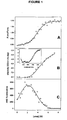
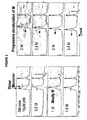
- Figure 2 shows the change in the dimerization state of p66/p66 RT as a function of urea as determined by size-exclusion chromatography. In this case, dissociation of the homodimer appears essentially complete at 2M urea and a progressive denaturation/aggregation of the p66 monomer appears to take place as the peak slowly shifts toward higher molecular weights with increasing urea concentrations.
- Figure 3 shows the signal obtained in the time-resolved RT subunit reassociation assay when labeled RT p66/p66 homodimer and His-tagged p51 monomer were incubated in urea concentrations between 0 -6 M, prior to addition of the mixture to the Nickel-coated microplates. Thus, 1-3.5M urea was selected as the concentration range likely to provide the highest level of re-association with the least detrimental effect on RT secondary structure.
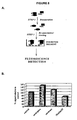
- FIG. 5A The concept of the assay is shown in Figure 5A.
- a total volume of 20 ⁇ l mix 100 pmol of purified His6x-p51 RT subunit and 200 pmol of Eu-N1-iodoacetamido chelate labeled p66 RT subunit (i.e., 100 pmol RT p66/p66 homodimer) with urea (prepared in 25 mM Tris-HCl pH 7.5, 20°C, containing 100 mM MgCl 2 ) to provide a final concentration of 3.5 M urea. Incubate this mixture for 1 h at room temperature.
- urea prepared in 25 mM Tris-HCl pH 7.5, 20°C, containing 100 mM MgCl 2
- the dilution step provides a 10-fold dilution to reduce the urea concentration from 3.5M to 0.35M, thereby allowing formation of the RT p66/p51 heterodimer. Dimer formation is allowed to proceed for 6 h, then the plates are washed 3x with Delfia wash buffer containing 200 ⁇ M DTPA. After washing, 200 ⁇ L of the Delfia enhancement solution is added to each well, followed by incubation at room temperature for 30 minutes. Fluorescence measurements are made using a Molecular Devices SpectraMAX GeminiXS instrument, using excitation, emission and cutoff wavelengths of 335nm, 615nm and 530nm, respectively.
- TSAOm 3 T decreases the signal in the assay of the invention ( Figure 5B).
- TSAOm 3 T is part of the TSAO family and is thought to inhibit RT dimerization to a similar degree as TSAOe 3 T.
- nevirapine and efavirenz are two non-nucleoside reverse transcriptase inhibitors that do not inhibit the enzyme via RT dimerization.
- these two NNRT inhibitors are chemical enhancers of dimerization of the HIV-1 RT causing inhibition of the polymerase activity through deleterious conformational changes (Tachedjian et al ., 2001, PNAS, 7188-7193).
- the % signal relative to control presented in Figure 5B is supportive of this hypothesis and supports the usefulness of the present assay to identify inhibitors / enhancers of the HIV RT dimerization process.
- the polymerase activity of the reconstituted p66/p51 reverse transcriptase can be measured.
- the necessary substrates template primer, nucleotide, magnesium chloride
- an appropriate buffer Tris pH 7.8 containing DTT, GSH & Chaps
- the homodimer p66/p66 (10-20 pmols) is incubated in the presence of HIS-p51 (25-50 pmols) in 1 M urea (prepared in 20 mM Tris-HCl pH 8.0 containing 250 mM NaCl) in a final volume of 10 ⁇ L for 1 hour to allow dissociation of the homodimer.
- re-association buffer 50 mM Tris-acetate, pH 8.0, 500 mM NaCl, 0.05% Tween-20, 0.01% BSA
- the final step consists of capturing the reconstituted His-tagged heterodimers by transferring the sample in the wells of a nickel plate containing 100 ⁇ L of re-association buffer and incubating for 1 hour. After 3 washing cycles, a polymerase assay cocktail is added and the reaction is allowed to proceed for 1-2 hours at 37° C before the elongated RNA/DNA products are detected with the fluorescent intercalator PicoGreen TM .
- the biologically relevant and active form of HIV RT found in infectious virions is a heterodimer containing two polypeptides, p66 and p51; the latter derived from the former by proteolytic cleavage of its C-terminal domain by HIV protease during viral maturation.
- the two subunits of 66 and 51 kDa form are present in a 1 to 1 ratio.
- This heterodimeric RT is believed to be produced in a two-step dimerization process, the kinetics of which involve the rapid association of the p66 and p51 subunits into an immature dimer, followed by a slow conformational change yielding the fully active form (p66 + p51 ⁇ p66/p51 immature ⁇ p66/p51 active; Divita et al., 1995, J. Mol. Biol. 245, 508-52112, 13).
Landscapes
- Chemical & Material Sciences (AREA)
- Organic Chemistry (AREA)
- Life Sciences & Earth Sciences (AREA)
- Health & Medical Sciences (AREA)
- Wood Science & Technology (AREA)
- Proteomics, Peptides & Aminoacids (AREA)
- Zoology (AREA)
- Engineering & Computer Science (AREA)
- Immunology (AREA)
- Biochemistry (AREA)
- Microbiology (AREA)
- Molecular Biology (AREA)
- Analytical Chemistry (AREA)
- Biotechnology (AREA)
- Physics & Mathematics (AREA)
- Biophysics (AREA)
- Bioinformatics & Cheminformatics (AREA)
- General Engineering & Computer Science (AREA)
- General Health & Medical Sciences (AREA)
- Genetics & Genomics (AREA)
- Measuring Or Testing Involving Enzymes Or Micro-Organisms (AREA)
- Medicines That Contain Protein Lipid Enzymes And Other Medicines (AREA)
- Investigating Or Analysing Biological Materials (AREA)
- Investigating Or Analysing Materials By The Use Of Chemical Reactions (AREA)
Claims (40)
- Verfahren zum Messen der Heterodimerisierung von HIV-RT, umfassend die folgenden Stufen:a) Bereitstellen einer ersten Lösung, die p66-Untereinheit-Homodimere in Gegenwart eines Dissoziationsmititels umfasst;b) Kontaktieren der ersten Lösung mit p51-RT-Untereinheiten und Inkubieren in Gegenwart eines Reassoziationspuffers, um die Assoziation eines rekonstituierten RT-Komplexes von p66/p51-RT-Untereinheiten zu ermöglichen, wobei eine der Untereinheiten eine Affinitätsmarklierung umfasst und die andere der Untereinheiten eine detektierbare Markierung umfasst;c) Kontaktieren des Inkulbationsgemisches von Stufe b) mit einem Affinitätsmedium unter Bedingungen, die es dem p66/p51-Komplex ermöglichen, an das Affinitätsmedium zu binden; undd) Bestimmen der Menge des gebildeten Komplexes durch Messen der Konzentration der an das Affinitätsmedium gebundenen detektierbaren Markierung.
- Verfahren nach Anspruch 1, wobei in Stufe d) die Menge des Komplexes durch Messen der Polymerase-Aktivität des rekonstituierten RT-Komplexes bestimmt wird.
- Verfahren nach Anspruch 1, wobei die erste Lösung in Stufe a) einen Puffer umfasst, der aus Tris-HCl, HEPES oder bis-Tris ausgewählt ist.
- Verfahren nach Anspruch 2, wobei es sich beim Puffer um Tris-HCl in einer Konzentration von 0 mM bis 50 mM handelt.
- Verfahren nach Anspruch 1, wobei die erste Lösung in Stufe a) ferner ein Salz umfasst, das aus Na2SO4 oder MgCl2 ausgewählt ist.
- Verfahren nach Anspruch 5, wobei es sich bei dem Salz um MgCl2 in einer Konzentration von 0 mM bis 100 mM handelt.
- Verfahren nach Anspruch 1, wobei in Stufe a) das Dissoziationsmittel aus Harnstoff, Guanidinium-HCl oder Acetonitril ausgewählt ist.
- Verfahren nach Anspruch 7, wobei es sich beim Dissoziationsmittel um Harnstoff in einer Konzentration von 1 bis 3,5 M handelt.
- Verfahren nach Anspruch 1, wobei es sich beim Reassoziationspuffer in Stufe b) um den gleichen Puffer handelt, der zur Dissoziation der p66/p66-Untereinheiten verwendet wird, wobei der Reassoziationspuffer frei von Denaturierungsmittel ist.
- Verfahren nach Anspruch 1, wobei der Reassoziationspuffer in einer überschüssigen Menge im Verhältnis zum Denaturierungspuffer vorliegt, um das Dissoziationsmittel in ausreichendem Maße zu verdünnen, um eine Reassoziation von p66- und p51-Untereinheiten zu ermöglichen.
- Verfahren nach Anspruch 10, wobei der Reassoziationspuffer in einem 10-fachen Überschuss zum Dissoziationspuffer zugegeben wird.
- Verfahren nach Anspruch 1, wobei der Reassoziationspuffer in Stufe b) ein Salz umfasst, das aus Na2SO4 oder MgCl2 ausgewählt ist.
- Verfahren nach Anspruch 12, wobei es sich beim Salz um Na2SO4 in einer Konzentration von 0 mM bis 100 mM handelt.
- Verfahren nach Anspruch 13, wobei es sich beim Salz um Na2SO4 in einer Konzentration von 50 mM handelt.
- Verfahren nach Anspruch 1, wobei das p51 in Stufe b) affinitätsmarkiert ist oder eine detektierbare Markierung aufweist.
- Verfahren nach Anspruch 15, wobei das p51 in Stufe b) affinitätsmarkiert ist.
- Verfahren nach Anspruch 1, wobei das p66 in Stufe b) eine detektierbare Markierung aufweist oder affinitätsmarkiert ist.
- Verfahren nach Anspruch 17, wobei das p66 in Stufe b) eine detektierbare Markierung aufweist.
- Verfahren nach Anspruch 15 oder 17, wobei die Affinitätsmarkierung in Stufe b) aus der Gruppe ausgewählt ist, die aus einer Hexahistidin-Markierung, FLAG, T7, HA, GST und Biotin besteht.
- Verfahren nach Anspruch 19, wobei es sich bei der Affinitätsmarkierung um Hexahistidin handelt.
- Verfahren nach den Ansprüchen 15 oder 17, wobei die detektierbare Markierung aus der Gruppe ausgewählt ist, die aus einer fluoreszierenden Markierung, einem radioaktiven Atom, einer chemilumineszierenden Markierung, einem detektierbaren Antikörper, der spezifisch für p66 oder spezifisch für eine an p66 gebundene Markierung ist, und einem enzymatischen Marker besteht.
- Verfahren nach Anspruch 21, wobei es sich bei der detektierbaren Markierung um eine fluoreszierende Markierung handelt, die aus der Gruppe ausgewählt ist, die aus Fluorescein, Oregon-Grün, Rhodamin, Texas-Rot, Phycoerythrin und Eu3+ besteht.
- Verfahren nach Anspruch 22, wobei es sich bei der fluoreszierenden Markierung um Eu3+ handelt.
- Verfahren nach Anspruch 1, wobei die detektierbare Markierung in Stufe b) an einen Cysteinrest addiert wird, der in rekombinanter Weise anstelle eines Prolinrestes am N-Terminus von p66 eingeführt worden ist.
- Verfahren nach Anspruch 1, wobei das Affinitätsmedium in Stufe c) etwaiges rekonstituiertes, markiertes p66/Markierung-p51/RT-Heterodimeres abfängt.
- Verfahren nach Anspruch 1, wobei es sich in Stufe c) beim Affinitätsmedium um eine feste Phase handelt, die mit einem Rezeptor beschichtet ist, der zum Abfangen der Affinitätsmarkierung geeignet ist.
- Verfahren nach Anspruch 26, wobei die feste Phase mit einem Rezeptor beschichtet ist, der aus der Gruppe ausgewählt ist, die aus Ni2+, anti-Markierung-Antikörper, Glutathion und Streptavidin besteht.
- Verfahren nach Anspruch 27, wobei die feste Phase mit Ni2+ beschichtet ist.
- Verfahren nach Anspruch 26, wobei es sich bei der Affinitätsmarkierung um Histidin handelt.
- Verfahren nach Anspruch 26, wobei es sich bei der festen Phase um eine Mikroplatte handelt.
- Verfahren nach Anspruch 1, wobei die Stufe d) ferner die Stufe des Waschens zum Entfernen von ungebundenem Material umfasst, wobei die Menge an mit Affinitätsmedium assoziierter Markierung in geeigneter Weise gemessen wird (oder die Polymerase-Aktivität des rekonstituierten RT gemessen wird), wobei das an das Affinitätsmedium gebundene Material proportional zur Menge an markiertem p51/p66-RT-Heterodimeren ist.
- Verfahren zum Identifizieren von Verbindungen, die zur Modulation der HIV-RT-Heterodimerisierung befähigt sind, umfassend:das Ausführen der Stufen a) bis d) nach Anspruch 1 in Gegenwart oder Abwesenheit einer Testverbindung; unde) das Vergleichen der Testverbindungsprobe mit einer Kontrollprobe, in der diese Verbindung fehlt, wobei die Bildung des modulierten p66/p51-Komplexes in der Testverbindungsprobe ein Anzeichen für die Fähigkeit dieser Verbindung zur Modulation der Heterodimerisierung ist.
- Verfahren zum Identifizieren von Verbindungen, die zur Störung der HIV-RT-Heterodimerisierung befähigt sind, umfassend:das Durchführen der Stufen a) bis d) nach Anspruch 1 in Gegenwart oder Abwesenheit einer Testverbindung; unde) das Vergleichen der Testverbindungsprobe mit einer Kontrollprobe, in der diese Verbindung fehlt, wobei eine verringerte Bildung des p66/p51-Komplexes in der Testverbindungsprobe ein Anzeichen für die Fähigkeit dieser Verbindung zur Hemmung der Heterodimerisierung ist.
- Verfahren zum Identifizieren von Verbindungen, die zur Verstärkung der HIV-RT-Heterodimerisierung befähigt sind, umfassend:das Durchführen der Stufen a) bis d) nach Anspruch 1 in Gegenwart oder Abwesenheit einer Testverbindung; unde) das Vergleichen der Testverbindungsprobe mit einer Kontrollprobe, in der diese Verbindung fehlt, wobei die erhöhte Bildung des p66/p51-Komplexes in der Testverbindungsprobe ein Anzeichen für die Fähigkeit dieser Verbindung zur Verstärkung der Heterodimerisierung ist.
- Verfahren zur Messung der Homodimerisierung von HIV-RT, das die folgenden Stufen umfasst:a) Bereitstellen einer ersten Lösung, die erste p66-Untereinheit-Homodimere in Gegenwart eines Dissoziationsmittels umfasst;b) Kontaktieren der ersten Lösung mit zweiten p66-Untereinheit-Homodimeren in Gegenwart eines Dissoziationsmittels und Inkubieren in Gegenwart eines Reassozationspuffers, um die Assoziation eines rekonstituierten RT-Komplexes von p66/p66-RT-Untereinheiten zu ermöglichen, wobei eine der Untereinheiten eine Affinitätsmarkierung umfasst und die andere der Untereinheiten eine detektierbare Markierung umfasst;c) Kontaktieren des Inkubationsgemisches von Stufe b) mit einem Affinitätsmedium unter Bedingungen, die es dem p66/p66-Komplex ermöglichen, an das Affinitätsmedium zu binden; undd) Bestimmen der Menge des gebildeten Komplexes durch Messen der Konzentration der an das Affinitätsmedium gebundenen detektierbaren Markierung (oder durch Messen der rekonstituierten RT-Polymerase-Aktivität).
- Verfahren zum Identifizieren von Verbindungen, die zur Modulation der HIV-RT-Homodimerisation befähigt sind, umfassend:das Durchführen der Stufen a) bis d) nach Anspruch 35 in Gegenwart oder Abwesenheit einer Testverbindung; unde) das Vergleichen der Testverbindungsprobe mit einer Kontrollprobe, in der diese Verbindung fehlt, wobei die Bildung des modulierten p66/p66-Komplexes in der Testverbindungsprobe ein Anzeichen für die Fähigkeit dieser Verbindung zur Modulation der Homodimerisierung ist.
- Verfahren zum Identifizieren von Verbindungen, die zur Störung der HIV-RT-Homodimerisierung befähigt sind, umfassend:das Durchführen der Stufen a) bis d) nach Anspruch 35 in Gegenwart oder Abwesenheit einer Testverbindung; unde) das Vergleichen der Testverbindungsprobe mit einer Kontrollprobe, in der diese Verbindung fehlt, wobei eine verringerte Bildung des p66/p66-Komplexes in der Testverbindungsprobe ein Anzeichen für die Fähigkeit dieser Verbindung zur Hemmung der Homodimerisierung ist.
- Verfahren zum Identifizieren von Verbindungen, die zur Verstärkung der HIV-RT-Homodimerisierung befähigt sind, umfassend:das Durchführen der Stufen a) bis d) nach Anspruch 35 in Gegenwart oder Abwesenheit einer Testverbindung; unde) das Vergleichen der Testverbindungsprobe mit einer Kontrollprobe, in der diese Verbindung fehlt, wobei die erhöhte Bildung des p66/p66-Komplexes in der Testverbindungsprobe ein Anzeichen für die Fähigkeit dieser Verbindung zur Verstärkung der Homodimerisierung ist.
- Kit zum Testen von Verbindungen, die potentiell die HIV-RT-Heterodimerisierung modulieren, wobei das Kit eine Mehrzahl von affinitätsmarkierten p66-Untereinheit-Homodimeren, eine Mehrzahl von markierten p51-RT-Untereinheiten, ein Dissoziationsmittel, einen Reassoziationspuffer und ein Affinitätsmedium umfasst.
- Kit zum Testen von Verbindungen, die potentiell die HIV-RT-Homodimerisierung modulieren, wobei das Kit eine Mehrzahl von affinitätsmarkierten p66-Untereinheit-Homodimeren, eine Mehrzahl von markierten p66-RT-Untereinheiten, ein Dissoziationsmittel, einen Reassoziationspuffer und ein Affinitätsmedium umfasst.
Applications Claiming Priority (3)
| Application Number | Priority Date | Filing Date | Title |
|---|---|---|---|
| US30788301P | 2001-07-27 | 2001-07-27 | |
| US307883P | 2001-07-27 | ||
| PCT/CA2002/001162 WO2003012127A2 (en) | 2001-07-27 | 2002-07-26 | Assay for identifying inhibitors of hiv rt dimerization |
Publications (2)
| Publication Number | Publication Date |
|---|---|
| EP1415006A2 EP1415006A2 (de) | 2004-05-06 |
| EP1415006B1 true EP1415006B1 (de) | 2007-05-16 |
Family
ID=23191565
Family Applications (1)
| Application Number | Title | Priority Date | Filing Date |
|---|---|---|---|
| EP02750730A Expired - Lifetime EP1415006B1 (de) | 2001-07-27 | 2002-07-26 | Verfahren zur identifizierung von hiv rt-dimerisation-inhibitoren |
Country Status (10)
| Country | Link |
|---|---|
| US (1) | US6811970B2 (de) |
| EP (1) | EP1415006B1 (de) |
| JP (1) | JP4409287B2 (de) |
| AT (1) | ATE362550T1 (de) |
| AU (1) | AU2002355761A1 (de) |
| CA (1) | CA2450871C (de) |
| DE (1) | DE60220168T2 (de) |
| DK (1) | DK1415006T3 (de) |
| ES (1) | ES2284893T3 (de) |
| WO (1) | WO2003012127A2 (de) |
Families Citing this family (3)
| Publication number | Priority date | Publication date | Assignee | Title |
|---|---|---|---|---|
| US20120003667A1 (en) * | 2007-06-14 | 2012-01-05 | Soumi Gupta | Electrophoretic tag-based in vitro assay to quantify dimerization of p66 and p51 sub-units of hiv-1 reverse transcriptase (rt) |
| JP2016052799A (ja) * | 2016-01-21 | 2016-04-14 | 大日本印刷株式会社 | 生体分子印刷物、及びその製造方法 |
| WO2017211799A1 (en) | 2016-06-09 | 2017-12-14 | Radiometer Turku Oy | Background blockers for binding assays |
-
2002
- 2002-07-25 US US10/205,641 patent/US6811970B2/en not_active Expired - Lifetime
- 2002-07-26 JP JP2003517301A patent/JP4409287B2/ja not_active Expired - Fee Related
- 2002-07-26 CA CA2450871A patent/CA2450871C/en not_active Expired - Fee Related
- 2002-07-26 AT AT02750730T patent/ATE362550T1/de active
- 2002-07-26 DK DK02750730T patent/DK1415006T3/da active
- 2002-07-26 EP EP02750730A patent/EP1415006B1/de not_active Expired - Lifetime
- 2002-07-26 AU AU2002355761A patent/AU2002355761A1/en not_active Abandoned
- 2002-07-26 WO PCT/CA2002/001162 patent/WO2003012127A2/en not_active Ceased
- 2002-07-26 DE DE60220168T patent/DE60220168T2/de not_active Expired - Lifetime
- 2002-07-26 ES ES02750730T patent/ES2284893T3/es not_active Expired - Lifetime
Also Published As
| Publication number | Publication date |
|---|---|
| JP4409287B2 (ja) | 2010-02-03 |
| CA2450871C (en) | 2010-09-07 |
| AU2002355761A1 (en) | 2003-02-17 |
| CA2450871A1 (en) | 2003-02-13 |
| JP2004535832A (ja) | 2004-12-02 |
| US20030087379A1 (en) | 2003-05-08 |
| DE60220168T2 (de) | 2008-01-17 |
| WO2003012127A2 (en) | 2003-02-13 |
| ATE362550T1 (de) | 2007-06-15 |
| DE60220168D1 (de) | 2007-06-28 |
| WO2003012127A3 (en) | 2003-10-16 |
| EP1415006A2 (de) | 2004-05-06 |
| US6811970B2 (en) | 2004-11-02 |
| ES2284893T3 (es) | 2007-11-16 |
| DK1415006T3 (da) | 2007-09-10 |
Similar Documents
| Publication | Publication Date | Title |
|---|---|---|
| US6900304B2 (en) | Emission ratiometric indicators of phosphorylation | |
| US20030108862A1 (en) | Direct binding assay for identifying inhibitors of HCV polymerase | |
| US8669074B2 (en) | Chimeric phosphorylation indicator | |
| AU2002312149A1 (en) | Emission ratiometric indicators of phosphorylation | |
| CN113699212B (zh) | 一种筛选新冠病毒主蛋白酶小分子抑制剂的方法及筛选模型 | |
| WO2021108765A1 (en) | Multipartite luciferase peptides and polypeptides | |
| Avila et al. | Development and optimization of a useful assay for determining Hsp90’s inherent ATPase activity | |
| US7329485B2 (en) | Methods for detecting compounds that interfere with protein aggregation utilizing an in vitro fluorescence-based assay | |
| US20040048283A1 (en) | Novel method for screening bacterial transcription modulators | |
| Park et al. | Tetrameric architecture of an active phenol-bound form of the AAA+ transcriptional regulator DmpR | |
| EP1415006B1 (de) | Verfahren zur identifizierung von hiv rt-dimerisation-inhibitoren | |
| US8192947B2 (en) | Detection of specific binding reactions using magnetic labels | |
| Deo et al. | Bioluminescence detection of proteolytic bond cleavage by using recombinant aequorin | |
| Leifert et al. | Measurement of heterotrimeric G-protein and regulators of G-protein signaling interactions by time-resolved fluorescence resonance energy transfer | |
| EP1507869B1 (de) | Verbesserter rezeptornachweis | |
| Bhat et al. | High-throughput screening of RNA polymerase inhibitors using a fluorescent UTP analog | |
| JP5350800B2 (ja) | 環状ヌクレオチド決定のための方法 | |
| Gevi et al. | A scintillation proximity assay amenable for screening and characterization of DNA gyrase B subunit inhibitors | |
| EP1294929B1 (de) | Verfahren zur erkennung von modulatoren der vegf-kinase-domäne | |
| US20050260661A1 (en) | Assays for the identification of modulators of MHC class II expression | |
| Steinkühler et al. | A scintillation proximity active site binding assay for the hepatitis C virus serine protease |
Legal Events
| Date | Code | Title | Description |
|---|---|---|---|
| PUAI | Public reference made under article 153(3) epc to a published international application that has entered the european phase |
Free format text: ORIGINAL CODE: 0009012 |
|
| AK | Designated contracting states |
Kind code of ref document: A2 Designated state(s): AT BE BG CH CY CZ DE DK EE ES FI FR GB GR IE IT LI LU MC NL PT SE SK TR |
|
| AX | Request for extension of the european patent |
Extension state: AL LT LV MK RO SI |
|
| 17P | Request for examination filed |
Effective date: 20040416 |
|
| GRAP | Despatch of communication of intention to grant a patent |
Free format text: ORIGINAL CODE: EPIDOSNIGR1 |
|
| GRAS | Grant fee paid |
Free format text: ORIGINAL CODE: EPIDOSNIGR3 |
|
| GRAA | (expected) grant |
Free format text: ORIGINAL CODE: 0009210 |
|
| AK | Designated contracting states |
Kind code of ref document: B1 Designated state(s): AT BE BG CH CY CZ DE DK EE ES FI FR GB GR IE IT LI LU MC NL PT SE SK TR |
|
| PG25 | Lapsed in a contracting state [announced via postgrant information from national office to epo] |
Ref country code: FI Free format text: LAPSE BECAUSE OF FAILURE TO SUBMIT A TRANSLATION OF THE DESCRIPTION OR TO PAY THE FEE WITHIN THE PRESCRIBED TIME-LIMIT Effective date: 20070516 |
|
| REG | Reference to a national code |
Ref country code: GB Ref legal event code: FG4D |
|
| REG | Reference to a national code |
Ref country code: CH Ref legal event code: EP |
|
| REG | Reference to a national code |
Ref country code: IE Ref legal event code: FG4D |
|
| REF | Corresponds to: |
Ref document number: 60220168 Country of ref document: DE Date of ref document: 20070628 Kind code of ref document: P |
|
| REG | Reference to a national code |
Ref country code: CH Ref legal event code: NV Representative=s name: SCHMAUDER & PARTNER AG PATENTANWALTSBUERO |
|
| REG | Reference to a national code |
Ref country code: SE Ref legal event code: TRGR |
|
| REG | Reference to a national code |
Ref country code: DK Ref legal event code: T3 |
|
| ET | Fr: translation filed | ||
| REG | Reference to a national code |
Ref country code: ES Ref legal event code: FG2A Ref document number: 2284893 Country of ref document: ES Kind code of ref document: T3 |
|
| PG25 | Lapsed in a contracting state [announced via postgrant information from national office to epo] |
Ref country code: BE Free format text: LAPSE BECAUSE OF FAILURE TO SUBMIT A TRANSLATION OF THE DESCRIPTION OR TO PAY THE FEE WITHIN THE PRESCRIBED TIME-LIMIT Effective date: 20070516 |
|
| PG25 | Lapsed in a contracting state [announced via postgrant information from national office to epo] |
Ref country code: CZ Free format text: LAPSE BECAUSE OF FAILURE TO SUBMIT A TRANSLATION OF THE DESCRIPTION OR TO PAY THE FEE WITHIN THE PRESCRIBED TIME-LIMIT Effective date: 20070516 Ref country code: BG Free format text: LAPSE BECAUSE OF FAILURE TO SUBMIT A TRANSLATION OF THE DESCRIPTION OR TO PAY THE FEE WITHIN THE PRESCRIBED TIME-LIMIT Effective date: 20070816 Ref country code: PT Free format text: LAPSE BECAUSE OF FAILURE TO SUBMIT A TRANSLATION OF THE DESCRIPTION OR TO PAY THE FEE WITHIN THE PRESCRIBED TIME-LIMIT Effective date: 20071016 |
|
| PG25 | Lapsed in a contracting state [announced via postgrant information from national office to epo] |
Ref country code: SK Free format text: LAPSE BECAUSE OF FAILURE TO SUBMIT A TRANSLATION OF THE DESCRIPTION OR TO PAY THE FEE WITHIN THE PRESCRIBED TIME-LIMIT Effective date: 20070516 |
|
| PLBE | No opposition filed within time limit |
Free format text: ORIGINAL CODE: 0009261 |
|
| STAA | Information on the status of an ep patent application or granted ep patent |
Free format text: STATUS: NO OPPOSITION FILED WITHIN TIME LIMIT |
|
| 26N | No opposition filed |
Effective date: 20080219 |
|
| PG25 | Lapsed in a contracting state [announced via postgrant information from national office to epo] |
Ref country code: GR Free format text: LAPSE BECAUSE OF FAILURE TO SUBMIT A TRANSLATION OF THE DESCRIPTION OR TO PAY THE FEE WITHIN THE PRESCRIBED TIME-LIMIT Effective date: 20070817 Ref country code: MC Free format text: LAPSE BECAUSE OF NON-PAYMENT OF DUE FEES Effective date: 20070731 |
|
| PG25 | Lapsed in a contracting state [announced via postgrant information from national office to epo] |
Ref country code: IE Free format text: LAPSE BECAUSE OF NON-PAYMENT OF DUE FEES Effective date: 20070726 |
|
| PG25 | Lapsed in a contracting state [announced via postgrant information from national office to epo] |
Ref country code: EE Free format text: LAPSE BECAUSE OF FAILURE TO SUBMIT A TRANSLATION OF THE DESCRIPTION OR TO PAY THE FEE WITHIN THE PRESCRIBED TIME-LIMIT Effective date: 20070516 |
|
| PG25 | Lapsed in a contracting state [announced via postgrant information from national office to epo] |
Ref country code: CY Free format text: LAPSE BECAUSE OF FAILURE TO SUBMIT A TRANSLATION OF THE DESCRIPTION OR TO PAY THE FEE WITHIN THE PRESCRIBED TIME-LIMIT Effective date: 20070516 |
|
| REG | Reference to a national code |
Ref country code: CH Ref legal event code: PCAR Free format text: SCHMAUDER & PARTNER AG PATENT- UND MARKENANWAELTE VSP;ZWAENGIWEG 7;8038 ZUERICH (CH) |
|
| PG25 | Lapsed in a contracting state [announced via postgrant information from national office to epo] |
Ref country code: LU Free format text: LAPSE BECAUSE OF NON-PAYMENT OF DUE FEES Effective date: 20070726 |
|
| PG25 | Lapsed in a contracting state [announced via postgrant information from national office to epo] |
Ref country code: TR Free format text: LAPSE BECAUSE OF FAILURE TO SUBMIT A TRANSLATION OF THE DESCRIPTION OR TO PAY THE FEE WITHIN THE PRESCRIBED TIME-LIMIT Effective date: 20070516 |
|
| PGFP | Annual fee paid to national office [announced via postgrant information from national office to epo] |
Ref country code: DK Payment date: 20110720 Year of fee payment: 10 Ref country code: CH Payment date: 20110725 Year of fee payment: 10 |
|
| PGFP | Annual fee paid to national office [announced via postgrant information from national office to epo] |
Ref country code: SE Payment date: 20120725 Year of fee payment: 11 Ref country code: GB Payment date: 20120719 Year of fee payment: 11 |
|
| PGFP | Annual fee paid to national office [announced via postgrant information from national office to epo] |
Ref country code: DE Payment date: 20120720 Year of fee payment: 11 Ref country code: FR Payment date: 20120806 Year of fee payment: 11 Ref country code: IT Payment date: 20120723 Year of fee payment: 11 Ref country code: ES Payment date: 20120726 Year of fee payment: 11 |
|
| PGFP | Annual fee paid to national office [announced via postgrant information from national office to epo] |
Ref country code: NL Payment date: 20120719 Year of fee payment: 11 |
|
| PGFP | Annual fee paid to national office [announced via postgrant information from national office to epo] |
Ref country code: AT Payment date: 20120711 Year of fee payment: 11 |
|
| REG | Reference to a national code |
Ref country code: NL Ref legal event code: V1 Effective date: 20140201 |
|
| REG | Reference to a national code |
Ref country code: DK Ref legal event code: EBP Effective date: 20130731 |
|
| REG | Reference to a national code |
Ref country code: CH Ref legal event code: PL |
|
| REG | Reference to a national code |
Ref country code: SE Ref legal event code: EUG |
|
| REG | Reference to a national code |
Ref country code: AT Ref legal event code: MM01 Ref document number: 362550 Country of ref document: AT Kind code of ref document: T Effective date: 20130726 |
|
| GBPC | Gb: european patent ceased through non-payment of renewal fee |
Effective date: 20130726 |
|
| REG | Reference to a national code |
Ref country code: FR Ref legal event code: ST Effective date: 20140331 |
|
| PG25 | Lapsed in a contracting state [announced via postgrant information from national office to epo] |
Ref country code: NL Free format text: LAPSE BECAUSE OF NON-PAYMENT OF DUE FEES Effective date: 20140201 Ref country code: CH Free format text: LAPSE BECAUSE OF NON-PAYMENT OF DUE FEES Effective date: 20130731 Ref country code: GB Free format text: LAPSE BECAUSE OF NON-PAYMENT OF DUE FEES Effective date: 20130726 Ref country code: LI Free format text: LAPSE BECAUSE OF NON-PAYMENT OF DUE FEES Effective date: 20130731 Ref country code: DE Free format text: LAPSE BECAUSE OF NON-PAYMENT OF DUE FEES Effective date: 20140201 Ref country code: SE Free format text: LAPSE BECAUSE OF NON-PAYMENT OF DUE FEES Effective date: 20130727 |
|
| REG | Reference to a national code |
Ref country code: DE Ref legal event code: R119 Ref document number: 60220168 Country of ref document: DE Effective date: 20140201 |
|
| PG25 | Lapsed in a contracting state [announced via postgrant information from national office to epo] |
Ref country code: FR Free format text: LAPSE BECAUSE OF NON-PAYMENT OF DUE FEES Effective date: 20130731 Ref country code: AT Free format text: LAPSE BECAUSE OF NON-PAYMENT OF DUE FEES Effective date: 20130726 Ref country code: IT Free format text: LAPSE BECAUSE OF NON-PAYMENT OF DUE FEES Effective date: 20130726 |
|
| REG | Reference to a national code |
Ref country code: ES Ref legal event code: FD2A Effective date: 20140807 |
|
| PG25 | Lapsed in a contracting state [announced via postgrant information from national office to epo] |
Ref country code: DK Free format text: LAPSE BECAUSE OF NON-PAYMENT OF DUE FEES Effective date: 20130731 |
|
| PG25 | Lapsed in a contracting state [announced via postgrant information from national office to epo] |
Ref country code: ES Free format text: LAPSE BECAUSE OF NON-PAYMENT OF DUE FEES Effective date: 20130727 |