EP1420340A1 - Fernobjektaufrufsystem und -verfahren - Google Patents
Fernobjektaufrufsystem und -verfahren Download PDFInfo
- Publication number
- EP1420340A1 EP1420340A1 EP02354178A EP02354178A EP1420340A1 EP 1420340 A1 EP1420340 A1 EP 1420340A1 EP 02354178 A EP02354178 A EP 02354178A EP 02354178 A EP02354178 A EP 02354178A EP 1420340 A1 EP1420340 A1 EP 1420340A1
- Authority
- EP
- European Patent Office
- Prior art keywords
- remote
- remote object
- data
- invocation
- proxy
- Prior art date
- Legal status (The legal status is an assumption and is not a legal conclusion. Google has not performed a legal analysis and makes no representation as to the accuracy of the status listed.)
- Withdrawn
Links
Images




Classifications
-
- G—PHYSICS
- G06—COMPUTING OR CALCULATING; COUNTING
- G06F—ELECTRIC DIGITAL DATA PROCESSING
- G06F9/00—Arrangements for program control, e.g. control units
- G06F9/06—Arrangements for program control, e.g. control units using stored programs, i.e. using an internal store of processing equipment to receive or retain programs
- G06F9/46—Multiprogramming arrangements
- G06F9/54—Interprogram communication
- G06F9/547—Remote procedure calls [RPC]; Web services
- G06F9/548—Object oriented; Remote method invocation [RMI]
Definitions
- the present invention relates to a remote object invocation system and method and, more particularly, to a distributed object computing system and method.
- DOC middleware facilitates integration and collaboration between local and remote application objects or components within a heterogeneous distributed environment.
- One of the aims of distributed object computing is to mitigate adverse consequences of the often tedious, error-prone and non-portable aspects of developing and evolving distributed applications and services.
- Distributed object computing environments are, at least in part, directed to automating network programming tasks such as, for example, object location, implementation start-up, that is, server and object activation, encapsulation of byte-ordering and parameter type size differences across dissimilar architectures (parameter marshalling) as well as recovery and security.
- network programming tasks such as, for example, object location, implementation start-up, that is, server and object activation, encapsulation of byte-ordering and parameter type size differences across dissimilar architectures (parameter marshalling) as well as recovery and security.
- CORBA Common Object Request Broker Architecture
- IDL interface description language
- the IDL is used to define stubs and skeletons for use by the client and server respectively.
- the creation of an IDL skeleton requires an IDL compiler. It will be appreciated that the resulting compiled entities are static and cannot reflect, dynamically, any change to the underlying object from which the compiled IDL was derived.
- a first aspect of embodiments of the present invention provides a remote object invocation method for invoking a method of a remote object; the method comprising the steps of producing remote object data associated with the remote object; interpretatively establishing a proxy object using the remote object data; the proxy object bearing an associated proxy method corresponding to the method of remote object; invoking, in response to an action of client software, the proxy method; conveying invocation data associated with the invocation of the proxy method to the remote object; invoking, in response to the invocation data, the method of the remote object; and returning invocation result data to the client software via the proxy object.
- embodiments provide a method in which the step of producing the remote object data comprises the step of introspecting the remote object to produce introspection data and in which the remote object method data comprises the introspection data produced by said introspecting.
- the embodiments of the invention are more flexible as an IDL definition never needs to be generated manually for any of the remote objects.
- Preferred embodiments provide a method further comprising the step of creating an object descriptor for the remote object.
- the step of creating the object descriptor for the remote object comprises the step of storing the object descriptor in a cache for later retrieval; the later retrieval being responsive to a request to create an instance of the remote object.
- embodiments provide a method further comprising the step of determining whether or not an instance of the remote object has been created and in which the step of creating the object descriptor is responsive to a determination that an instance of the remote object has not been created.
- the cached object descriptor can be retrieved and forwarded to such clients if an object has already been instantiated thereby avoiding the need to create an new object descriptor for each instance of the object.
- embodiments provide a method further comprising the step of generating location data to facilitate location of a corresponding instance of the remote object.
- the step of generating the location data comprises the step of generating an identifier associated with the corresponding instance of the remote object.
- embodiments provide a method further comprising the step of instantiating the remote object.
- the step of instantiating the remote object is performed in response to a determination that the remote object has a predetermined characteristic.
- the predetermined characteristic is that the remote object is stateless or stateful.
- Stateless objects are preferably instantiated at initialisation of the system hosting them.
- preferred embodiments provide a method in which the step of instantiating is performed in response to initialisation of a system hosting the remote object.
- embodiments provide a method further comprising, prior to the step of instantiating, the step of determining whether or not instantiation of the remote object is permitted and in which the step of instantiating is performed in response to determining that instantiation of the remote object is permitted.
- embodiments of the present invention provide a method further comprising the step of encapsulating the remote object data within a data structure.
- Preferred embodiments provide a method in which the data structure is an XML file.
- An aspect of embodiments of the present invention provides a remote object invocation method for invoking a method of a remote object; the method comprising the steps of introspecting the remote object to produce introspection data associated with the object; interpretatively processing the introspection data to establish a proxy object bearing an associated proxy object method corresponding to the remote object method; invoking, in response to an action of client software, the proxy object method; conveying invocation data associated with the proxy object method to the remote object; invoking, in response to the invocation data, the method of the remote object; and returning invocation result data to the client software via the proxy object.
- a further aspect of embodiments of the present invention provides a remote object server hosting a remote object; the sever comprising means to generate introspection data associated with the remote object and means to output the introspection data for use by a client in interpretatively creating a proxy object using the introspection data.
- a still further aspect of embodiments of the present invention provides a client comprising means for receiving introspection data associated with a remote object and an interpreter for interpretatively creating a proxy object, using the introspection data, for invocation by an application executable at the client.
- a yet further aspect of embodiments of the present invention provides a computer program for implementing a method, system, client or server as described or claimed in this specification.
- embodiments provide a computer program product comprising computer readable storage storing such a computer program.
- the term computer program encompasses a complete computer program or a part of such a computer program.
- An aspect of embodiments of the present invention provides a method of invoking, from a first computer, a remote object located on a second computer, the method comprising the steps of introspecting, at the second computer, the remote object to identify at least one of a method, property and event thereof to produce introspection data that describes any such identified methods, properties and events; transmitting the introspection data, via a first transport mechanism, to the first computer; creating, at the first computer, a proxy object from the introspection data; invoking, at the first computer, a method of the proxy object; transmitting, from the first computer to the second computer, remote method invocation data, via a second transport mechanism; the remote method invocation data comprising at least an indication of the remote object and the method, property and event thereof to be invoked; receiving, at the second computer, via the second transport mechanism, the remote method invocation data, extracting, at the second computer, the remote method invocation data from the second transport data structure; invoking, at the second computer, the method, property or event of the remote object
- the transport mechanisms comprise a combination of an XML file bearing the information to be conveyed and the HTTP.
- the step of creating, at the first computer, the proxy object from the introspection data comprises the step of interpretatively parsing the introspection data and interpretatively constructing the proxy object. Therefore, due to the use of an interpreted language on the client side, the remote object descriptors do not need to be produced manually or compiled into remote proxies, but rather the client can dynamically produce these objects at run time.
- the combination of server side introspection and the use of an interpreter or an interpreted language on the client side for proxy construction provides a conceptually simpler distributing computing environment as compared with the prior art.
- CORBA Common Object Request Broker Architecture
- OMG Object Management Group
- CORBA automates many common network programming tasks, which, as described above, include object registration, object location and activation; request demultiplexing; framing and error-handling; parameter marshalling and demarshalling; and operation despatching.
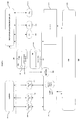
- the architecture comprises a client 102 that obtains references to objects and invokes operations on them to perform specific tasks in response to requests from an application (not shown).
- the objects may be local objects, that is, they may be stored within the client or on an associated HDD (not shown).
- the objects may be remote objects that are held by, or accessible via, a server 104. Clients access remote objects as they would a local object.
- Figure 1 illustrates how the underlying object request broker components transmit remote operation requests and receive remote operation result data transparently between the client and a remote object.
- the architecture 100 comprises an implementation repository 106, which stores a number of remote objects that are accessible by the client.
- An interface description language compiler 108 processes each of the objects (not shown) contained within the implementation repository 106 to produce corresponding IDL stubs and skeletons in a prescribed language such as, for example, C++ or Java.
- the IDL compiler 108 aims to eliminate common sources of network programming errors and to provide opportunities for automated compiler optimisations.
- the IDL compiler transforms the objects, or at least the object definitions contained within the implementation repository, into corresponding IDL stubs 110 and skeletons 112.
- the IDL stubs 110 are stored within an interface repository 114.
- the client uses the IDL stubs when invoking a corresponding remote object.
- a dynamic invocation interface 116 In response to a request to invoke a remote object, a dynamic invocation interface 116 allows the client 102 to generate both synchronous and asynchronous remote object invocation requests.
- a dynamic skeleton interface 118 is a server-side counterpart of the client-side dynamic invocation interface 116.
- the dynamic skeleton interface 118 allows the object request broker to deliver requests to a servant object 104 even though no compile-time knowledge of the IDL interface is provided. In effect, clients issuing requests do not need to concern themselves with whether or not the server object request broker uses static or dynamic skeletons. Similarly, servers do not need to concern themselves with whether not a client uses dynamic or static invocation interfaces.
- the IDL stubs and skeletons serve as the "glue" between the client 102, the servant 104 and the object request broker 120.
- the IDL stubs 110 implement a strongly-typed static invocation interface, which collates application parameters into a common message-level representation to assist the exchange of those parameters between the client 102 and server 104. It will be appreciated that the IDL skeletons 112 implement the converse operation.
- Each object is defined and accessed via an object reference 122, which associates, with that object, one or more paths via which the client 102 can access a server-side object.
- the object or servant 104 implements operations defined by an OMG IDL interface stored in the implementation repository 106. It will be appreciated that the client 102 never interacts directly with the remote objects. Their interaction is always via object references.
- the object request broker (ORB) core 120 Supporting the exchange between the client 102 and the server 104 is the object request broker (ORB) core 120; the functionality of which is accessed by an object request broker interface 124. It will be appreciated that when a client invokes an operation on an object, the ORB core 120 is responsible for delivering that invocation request to the object and for returning a response, if any, to the client 102.
- the ORB core 120 is implemented as a run-time library that is linked into client and server applications.
- a CORBA-compliant ORB core communicates via a version of a general inter-ORB protocol (GIOP), such as, for example, the Internet inter-ORB protocol (IIOP), which runs on top of the typically present TCP/IP protocol 126.
- GIOP general inter-ORB protocol
- IIOP Internet inter-ORB protocol
- the ORB interface 124 is an abstraction that allows applications to be decoupled from implementation detail.
- the ORB interface 124 provides standard operations to initialise and shutdown the ORB core 120, to convert object references to strings and visa versa and to create argument lists for requests issued via the dynamic invocation interface 116.
- implementation repository 106 comprises data that allows an ORB to activate servers to process so-called servants. It will be appreciated that the majority of the data contained within the implementation repository 106 is specific to an ORB or an operating system environment.
- the parameter list of in-arguments 128 is forwarded to the remote object together with an indication of that remote object 130.
- the remote object is represented by " operation() ".
- the object return value 132 and associated output arguments 134 are returned from the server 104 to the client 102 in the conventional manner.
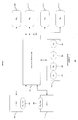
- a dynamic remote object protocol (DROP) or system 200 comprising a dynamic remote object protocol server 104' which processes a number of hosted objects 202 to 208 via introspection, as is known within a Java context, to produce corresponding object descriptors 210 to 216 respectively.
- the introspection data represents an embodiment of remote object data.
- the process of introspection carried out by the dynamic remote object protocol server 104' examines each of the hosted objects 202 to 208 to identify, preferably all of, the methods, properties and events of those objects 202 to 208.
- Each of the object descriptors 210 to 216 contains an indication of the methods, properties and events of a corresponding hosted object 202 to 208 from which it was derived.
- the process of introspection can be carried out at run-time.
- the object descriptors 210 to 216 should always represent the most up to-date interface description of the corresponding hosted objects 202 to 208.
- the use of introspection advantageously removes the need to produce manually an IDL compiled interface description as within CORBA. It can be appreciated that the run-time introspection provides significant flexibility over the pre-compiled interface description language definitions that are used in the prior art.
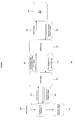
- the architecture 300 comprises a client 302 and a server 304.
- the server 304 executes a dynamic remote object protocol server application or servlet 306 that manages remote invocation requests and directs those remote object invocation requests to appropriate or corresponding remote objects or object instances 308, 310 and 312.
- the remote objects 308 to 312 may be stored in either volatile or non-volatile storage (not shown) associated with the server 304.
- the process of introspection as described above with reference to figure 2 creates object descriptors for each of the stateless remote objects 308 to 312.
- a client references one of these remote objects, it will make use of the appropriate object descriptor to produce a corresponding proxy object 314, 316 and 318 for each of the remote objects 308, 310 and 312 respectively.
- the objects descriptors are read by the client host environment, comprising an interpreter 302, and used to create appropriate client side proxy objects.
- the proxy objects 314 to 318 can be invoked in the conventional manner via software, such as, for example, an application 320 that executes at the client machine 302.
- each of the proxy objects 314 to 318 has an associated object reference.
- An object reference 322 for remote object RO N 312 is illustrated.
- the remote object reference 322 is used by the client 302 to identify the remote object of interest to the dynamic remote object protocol server application 306, that is, the remote object for which an invocation request has been received from the application 320.
- Data relating to the remote object invocation request received from the application 320 together with an identifier for the method of the remote object to be invoked and the associated parameters are transmitted to the dynamic remote object server application 306 from the client 302 in an XML file 324.
- the parameters are described as "in-args" 326, the object reference and the method of the remote object RO N 312 to be invoked are identified via the identifier operation() 328.
- the XML file 324 is carried by the HTTP 330.
- the use of an XML file 324 and the HTTP protocol 330 provides significant flexibility in remotely invoking an object.
- the activities of parameter marshalling and demarshalling as well as the order of presentation of those parameters, that is, the in-args 326 are significantly simplified as compared to the prior art.
- the results of the remote object invocation are transferred from the dynamic remote object protocol server to the client 302 via an appropriate transport data structure 332.
- the transport data structure 332 is an XML file that contains the invocation result data, preferably in the form of a return value or return object 334, produced by the method invocation.
- the XML file 332 is transferred using the HTTP protocol 330.
- the client 302 Upon receipt of the XML file 332, the client 302 extracts the data contained therein and forwards that data, via the appropriate proxy object 314, 316 or 318, for subsequent output to the application 320.
- a significant advantage of embodiments of the present invention is that the need to define an IDL and associated skeletons explicitly is eliminated. Stubs are still provided in the form of proxy objects. However, stubs according to the embodiments of the present invention do not require re-compilation and re-deployment in the event of a change to the interface of a remote object, as they are dynamically generated by the client.
- the need for an IDL is eliminated by using introspection to discover an object interface dynamically. The dynamically discovered interface is transmitted to the client, which dynamically or interpretatively creates, using the interpreter 302', a proxy object of the server-side object that can be used in subsequent invocations.
- the server application 306 returns an object descriptor to the client.
- the object descriptor is parsed by the client and, since the client runs in the context of an interpreted language, proxy objects representing the remote objects can be constructed at run-time from the object descriptors. These run-time generated client-side proxy objects emulate the exposed functionality of their server-side equivalents.
- the proxy object serves as a local representative for the server-side remote object and accepts requests from the application 320 for method invocations and returns the result of any such method invocations received from the server.
- embodiments of the present invention support both stateful and stateless objects.
- An object is classified as being stateful or stateless according to whether or not the same object, or at least the same instance of an object, is accessible by a number of clients or whether each client has their own instances of a remote object respectively. Whether or not a remote object is stateless or stateful determines when the remotely accessible objects should preferably be introspected.
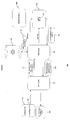
- FIG 4 there is shown schematically a portion 400 of the server-side element of the embodiment shown in figure 3 for the creation of stateless objects. It can be appreciated that the dynamic remote object protocol server/application 306 co-ordinates the operations for the creation and use of stateless remote objects.
- Object descriptors 402 to 408 are produced for corresponding remote object instances 308 to 312 and 410.
- An object instance implies a copy of the particular object along with its associated state. In the case of stateless objects, there may only be one object instance per object type. It can be appreciated in the example shown that there is only one remote object instance RO X , 410, despite the fact that first 416 and second 418 client machines have loaded applications that both require access to the remote object 410. It can be seen that each of the client machines 416 and 418 has an instance or proxy object representation 420 and 422 respectively of the remote object 410, RO X . Each of the proxy objects 420 and 422 uses the same object reference to invoke methods of the remote object 410. It will be appreciated that the changes to state data associated with the remote object 410 caused by invocations by client 416 will also be visible to the client 418 and visa versa.
- Stateless objects are typically used to perform operations that are independent of the client accessing them.
- An example may be an object that is responsible for validating credit card numbers.
- configuration data (not shown) is read, which contains the names of all stateless objects that should be made available to remote clients. At least one instance of each such stateless object 308, 310, 312 and 410 is created. Each of the newly created stateless objects 308, 310, 312 and 410 are introspected to produce the corresponding object descriptors 402, 404, 406, 408.
- the object descriptors are stored within locally accessible storage 424 for ease of reference and subsequent transmission to those clients that require them.
- the object descriptors 402 to 408 are downloaded to clients to allow clients, such as the first and second clients 416 and 418 respectively, to construct proxy objects 420 and 422 for the remote objects. It can be appreciated from figure 4 that both clients have obtained a reference to the same stateless object, that is, remote object 410. Since the remote object 410 is stateless, both clients will be able to communicate, or interact, with the same object instance.
- Figure 5 shows an example 500 of the creation and use of stateful objects.
- the DROP server/application 306 again, reads a configuration file (not shown) containing the names of the stateful objects supported by the server. This time, the configuration data is not used to instantiate and introspect objects but merely identifies objects supported by the server. Object instantiation and introspection take place only when required.
- instances of the objects 308, 410 and 502 do not exist. They are only instantiated as required by clients 416, 418 and 506. Again, for each of the remote objects 308, 410 and 502 corresponding object descriptors 406, 510 and 408 are stored in the storage region 424 of the server (not shown). Preferably, the storage 424 is non-volatile.
- object descriptors are only created as required.
- the object descriptor 406 that was created for the remote object instance 308 will be reused for the remote object instance 502 given that the object type is the same.
- the first client 416 has instructed the server to create the remote object 308.
- the first client 416 has then created an associated remote object proxy 420 for the newly created remote object RO x1 308.
- the information provided by the object descriptor OD X 406 was used to construct this proxy 420.
- the second client 418 has instructed the server to create a different type of remote object RO Y1 410.
- the second client 418 has then created a corresponding proxy 518 from the information in object descriptor 510 OD Y .
- the third client 506 has instructed the server to create a remote object 502 of the same type as that created for object 308.
- the third client 506 has then created a remote object proxy 422 using the information provided by the object descriptor OD X 406.
- clients 1 and 3 either share or use an equivalent proxy object (RO X Proxy).
- stateful objects are instantiated on demand. Furthermore, it may not be necessary to introspect stateful objects each time they are instantiated as it is unlikely that the stateful object will have changed in the time between initialisation of the dynamic remote object protocol server/application 306 and the use of the stateful objects by an application running on one of the client machines 416, 418 or 506.
- the object identifiers 522 to 526 are used by the dynamic remote object protocol server/application 306 to direct method invocations invoked on the proxy objects 420, 422 and 518 to corresponding instances of the remote objects.
- the dynamic remote object protocol server/application 306 maintains a cache (not shown) of object descriptors for remote objects that have already been introspected. Therefore, if a request is received from a client to create a new instance of an object for which an object descriptor has already been cached, the dynamic remote object protocol server/application 306 could merely instantiate a new copy of the object and return the previously cached object descriptor. This avoids the need for further introspection.
- the dynamic remote object protocol server/application 306 determines whether or not introspection has already been performed for that object. If introspection has already been performed, a corresponding object descriptor will already exist. However, if introspection has not been performed already, the dynamic remote object protocol server/application 306 instigates introspection of the object identified in the request to produce an associated object descriptor. The newly created object also receives an assigned unique object identifier. The object descriptor and the unique object identifier are returned to the client that requested the instantiation of the object for use in subsequent invocations. Therefore, using the object identifier, the dynamic remote object protocol server/application 306 can locate the method to be invoked of the correct or appropriate instance of the object.
- FIG 6 there is shown an example of a system 600 that uses embodiments of the present invention to support communication between JavaScript clients, running in the context of a web browser, and server-side Java objects.
- the system 600 comprises a client 602 running a browser 604.
- the browser 604 hosts a document 606, which complies with the Document Object Model standard.
- the behaviour of the document object can be modified using JavaScript and by invoking remote objects.
- the modifications to the document 606 are realised using, for example, LiveConnect 607 running under the control of a Java applet 608.
- the Java applet 608, Netscape LiveConnect and JavaScript enable a bridge to be realised between the Document Object Model 606 of the browser 604 and the server.
- the document 606 can invoke methods of the remote objects 610 to 616.
- the document 606 can be altered in light of, or can use, the results of any such method invocations. Accordingly, the web page displayed by the web browser 606, which is a reflection of the document 606, will be updated accordingly.
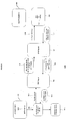
- FIG 7 there is shown a data flowchart 700 that depicts the data exchange between various elements of an embodiment of the present invention to allow a JavaScript client 702 to find an object, X, using a findObject method 704.
- the execution, or more accurately, interpretation and invocation, of the findObject method 704 causes a dynamic remote object protocol applet 706, which runs on top of the client 302 but underneath the application 320 (which corresponds to the JavaScript client 702), to encapsulate the findObject method request within an XML file 708.
- the XML file 708 is transmitted, via the HTTP 330, to the server, or, more accurately, to the dynamic remote object protocol server or servlet 306.
- the dynamic remote object protocol servlet 306 invokes the function findObject ("X") 704 to locate and retrieve the object descriptor for the object X from an object descriptor cache 424 as described above with reference to figures 4 and 5.
- the object descriptor 710 is returned from the object descriptor cache 424 to the dynamic remote object protocol servlet 306.
- the object descriptor 710 for the object X is encapsulated within an XML file 712 and transmitted to the dynamic remote object protocol applet 706.
- the dynamic remote object protocol applet 706 creates a JavaScript proxy object 714 for remote object X from the object descriptor 710 extracted from the XML file 712. It will be appreciated that the methods, properties and events of the remote object X can now be locally invoked using the JavaScript proxy object 714 for the remote object X.
- this command will execute the findObject method in the DROP applet, which sends the XML message or file 708 to the DROP servlet 306 running at the server.
- the XML file or message 708 simply contains a request to obtain a reference to and a description of the named object.
- the dynamic remote object protocol servlet 306 will seek to identify a corresponding object descriptor for the object "com.hp.cii.TestObject" and return it, in XML format, to the dynamic remote object protocol applet 706.
- the dynamic remote object protocol applet 706 will parse the returned object descriptor 710 and construct, at run time, a JavaScript proxy object 714 that has methods, properties and events that are equivalent to those specified in the object descriptor 710. It will be appreciated that these methods etc. are merely proxies for the real methods etc. of the object hosted by the server.
- the proxy object 714 is responsible for accepting input parameters of any invocation of a method of that proxy object 714 and converting those input parameters into an XML format, which can be understood by the dynamic remote object protocol servlet 306. It will use facilities provided by the DROP applet to assist it in this task.
- the dynamic remote object protocol applet preferably contains helper methods that are directed to achieving this aim.
- the helper methods reduce, significantly, the amount of JavaScript code that needs to be generated by the dynamic remote object protocol applet 706 when producing proxy objects. This results in a much faster implementation as most of the encoding work is performed natively in Java.
- FIG 8 there is shown a flowchart 800 of the invocation of a function or method getCompany() 802 using the JavaScript proxy object 714 for a remote object, X, (not shown).
- the JavaScript proxy object 714 identifies the object, X, and the method to be invoked to the dynamic remote of object protocol applet 706, via X.getCompany() 804, having checked to ensure that the parameters supplied were in the correct format.
- the dynamic remote object protocol applet 706 creates an XML file 806 that contains the method invocation request and associated parameters.
- the XML file 806 is transmitted, via HTTP, to the DROP servlet 306.
- the DROP servlet 306 parses the XML file 806 and invokes the method getcompany() of the remote Java object X 808. The invocation of that method is performed using the parameters that were initially supplied to the JavaScript proxy object 714 for the Java object X 808.
- the dynamic remote object servlet 306 receives the object 810 returned from the method invocation, that is, the results of the method invocation, and converts the returned object 810 into a corresponding XML file 812.
- the dynamic remote object protocol servlet 306 transmits that XML file 812 to the dynamic remote object protocol applet 706.
- the DROP applet 706 Upon receiving the XML file 812, the DROP applet 706 parses that file and dynamically creates a JavaScript version 814 of the returned object using direct access to the browser's document object model 606 that is provided by LiveConnect. The newly created JavaScript version of the returned object 814 is returned as a result of the function call or method invocation on the JavaScript proxy object 714 for remote object X 808. It can be appreciated from the above that the invocation of stateless remote objects as described above represents an elegant solution and uses the ubiquitous HTTP protocol as a transport protocol and XML files as a transport mechanism.
- the processing shown in the flowchart 900 of figure 9 may be undertaken.
- the JavaScript client 702 may first instruct the DROP servlet 306 to instantiate a new instance of the remote object 808. Since the instantiated object 808 is stateful, it will only be accessible by the JavaScript client 702 that created it. Furthermore, it will be destroyed when the JavaScript client 702 terminates its HTTP session.
- the command 902 createObject("X") will cause the DROP applet 706 to send an XML file (or message) 904 to the DROP servlet 306 running on the server.
- the XML file 904 contains a request for the server to instantiate a new version of the named object, X 808.
- the dynamic remote object protocol servlet 306 checks to ensure that the named object, X, is enabled for remote use since it is desirable that a server will not instantiate Java objects indiscriminately. Furthermore, the server or the DROP servlet 306 may have imposed a limit on the number of instantiations of the remote object 808. This may be particularly the case for remote objects that require or consume a large amount of local resources.
- the dynamic remote object protocol servlet 306 attempts to identify a corresponding object descriptor for object X in the object descriptor cache 424. If the object descriptor is located within the object descriptor cache 424, that object descriptor 906 is returned to the dynamic remote object protocol servlet 306.
- the DROP servlet 306 determines that the object descriptor cache 424 does not contain an object descriptor for the remote object 808, the DROP servlet 306 creates a new instance 908 of the remote object 808. Introspection is performed on the newly instantiated object 908 to produce a corresponding object descriptor 910. Furthermore, the newly instantiated object 908 is assigned an object identifier 912. In the present example, the object identifier, OID, is assigned the number 12. The object descriptor and the object identifier of the newly instantiated object 908 are encapsulated within an XML file 914 and transmitted, via the HTTP, to the dynamic remote object protocol applet 706.
- the object identifier is a combination of a client session ID and a current value of an object counter (not shown) that is incremented after each stateful object instantiation.
- the DROP applet 706 parses the returned object descriptor to construct a JavaScript proxy object 916 for the newly instantiated instance 908 of remote object X 808.
- the JavaScript proxy object 916 contains the unique object identifier 912 to allow the appropriate instance 908 of the remote object X 808 to be identified in any subsequent method invocations of the instance 908 of the remote object 808.
- FIG 10 there is shown a flowchart 1000 that depicts the flow of data during the remote invocation of the stateful instance 908 of the remote object X 808.
- the command: company obj.getCompany("HP"); could be used to invoke the getCompany method 1002 on the JavaScript proxy object 916.
- the method invocation 1004 is passed to the DROP applet 706, which parses that invocation 1004 into an XML file 1006 that contains the method invocation request for the instance 908 of the remote object 808 together with the object identifier for the instance 908 of the remote object 808.
- the XML file 1006 is transmitted to the DROP servlet 306.
- the dynamic remote object protocol servlet 306 invokes the identified method getCompany() 1004 on the instance 908 of the remote object 808 that has the appropriate object identifier 912 using an appropriate invocation 1008.
- the object 1010 that is returned as a consequence of the invocation 1008 of the getCompany() 1004 method is parsed by the DROP servlet 306 to produce a corresponding XML file 1012.
- the XML file 1012 is transmitted, via the HTTP, to the dynamic remote object applet 706.
- the dynamic remote object applet 706 produces a JavaScript version of the returned object 1014.
- the returned object 1014 is fed back to the JavaScript client 702 or some other application (not shown) as is appropriate.
Landscapes
- Engineering & Computer Science (AREA)
- Software Systems (AREA)
- Theoretical Computer Science (AREA)
- Physics & Mathematics (AREA)
- General Engineering & Computer Science (AREA)
- General Physics & Mathematics (AREA)
- Information Retrieval, Db Structures And Fs Structures Therefor (AREA)
- Stored Programmes (AREA)
Priority Applications (2)
| Application Number | Priority Date | Filing Date | Title |
|---|---|---|---|
| EP02354178A EP1420340A1 (de) | 2002-11-15 | 2002-11-15 | Fernobjektaufrufsystem und -verfahren |
| US10/706,452 US20040158843A1 (en) | 2002-11-15 | 2003-11-12 | Remote object invocation system and method |
Applications Claiming Priority (1)
| Application Number | Priority Date | Filing Date | Title |
|---|---|---|---|
| EP02354178A EP1420340A1 (de) | 2002-11-15 | 2002-11-15 | Fernobjektaufrufsystem und -verfahren |
Publications (1)
| Publication Number | Publication Date |
|---|---|
| EP1420340A1 true EP1420340A1 (de) | 2004-05-19 |
Family
ID=32116344
Family Applications (1)
| Application Number | Title | Priority Date | Filing Date |
|---|---|---|---|
| EP02354178A Withdrawn EP1420340A1 (de) | 2002-11-15 | 2002-11-15 | Fernobjektaufrufsystem und -verfahren |
Country Status (2)
| Country | Link |
|---|---|
| US (1) | US20040158843A1 (de) |
| EP (1) | EP1420340A1 (de) |
Cited By (5)
| Publication number | Priority date | Publication date | Assignee | Title |
|---|---|---|---|---|
| WO2007097679A1 (en) * | 2006-02-24 | 2007-08-30 | Abb Ab | Real world object control in connected systems |
| WO2008031754A3 (en) * | 2006-09-15 | 2008-05-08 | Ericsson Telefon Ab L M | Injecting proxy components using blueprints |
| US7984107B2 (en) * | 2005-09-09 | 2011-07-19 | Microsoft Corporation | Proxy assembly for simulating real assembly features on a remote device |
| CN104753709A (zh) * | 2013-12-30 | 2015-07-01 | 华为技术有限公司 | 一种设备管理的方法及控制服务器 |
| EP2894818A4 (de) * | 2013-12-05 | 2015-08-05 | Huawei Tech Co Ltd | Steuerungsverfahren, steuerungsvorrichtung und prozessor in einem softwaredefinierten netzwerk |
Families Citing this family (34)
| Publication number | Priority date | Publication date | Assignee | Title |
|---|---|---|---|---|
| US7386865B2 (en) * | 2004-06-24 | 2008-06-10 | Sap Ag | System and method for processing remote function calls |
| US20060248547A1 (en) * | 2005-04-14 | 2006-11-02 | International Business Machines Corporation | Multi-level cache apparatus and method for enhanced remote invocation performance |
| US8495664B2 (en) * | 2005-07-06 | 2013-07-23 | International Business Machines Corporation | System, method and program product for invoking a remote method |
| US9606846B2 (en) * | 2005-07-29 | 2017-03-28 | Sap Se | System and method for dynamic proxy generation |
| US8020177B2 (en) | 2007-07-27 | 2011-09-13 | Composite Ideas, Llc | Contained command invocation middleware framework |
| US8914774B1 (en) | 2007-11-15 | 2014-12-16 | Appcelerator, Inc. | System and method for tagging code to determine where the code runs |
| US8954989B1 (en) | 2007-11-19 | 2015-02-10 | Appcelerator, Inc. | Flexible, event-driven JavaScript server architecture |
| US8260845B1 (en) | 2007-11-21 | 2012-09-04 | Appcelerator, Inc. | System and method for auto-generating JavaScript proxies and meta-proxies |
| US8719451B1 (en) | 2007-11-23 | 2014-05-06 | Appcelerator, Inc. | System and method for on-the-fly, post-processing document object model manipulation |
| US8566807B1 (en) | 2007-11-23 | 2013-10-22 | Appcelerator, Inc. | System and method for accessibility of document object model and JavaScript by other platforms |
| US8756579B1 (en) | 2007-12-03 | 2014-06-17 | Appcelerator, Inc. | Client-side and server-side unified validation |
| US8806431B1 (en) | 2007-12-03 | 2014-08-12 | Appecelerator, Inc. | Aspect oriented programming |
| US8819539B1 (en) | 2007-12-03 | 2014-08-26 | Appcelerator, Inc. | On-the-fly rewriting of uniform resource locators in a web-page |
| US8938491B1 (en) | 2007-12-04 | 2015-01-20 | Appcelerator, Inc. | System and method for secure binding of client calls and server functions |
| US8527860B1 (en) | 2007-12-04 | 2013-09-03 | Appcelerator, Inc. | System and method for exposing the dynamic web server-side |
| US8639743B1 (en) | 2007-12-05 | 2014-01-28 | Appcelerator, Inc. | System and method for on-the-fly rewriting of JavaScript |
| US8335982B1 (en) | 2007-12-05 | 2012-12-18 | Appcelerator, Inc. | System and method for binding a document object model through JavaScript callbacks |
| US8285813B1 (en) | 2007-12-05 | 2012-10-09 | Appcelerator, Inc. | System and method for emulating different user agents on a server |
| US8291079B1 (en) | 2008-06-04 | 2012-10-16 | Appcelerator, Inc. | System and method for developing, deploying, managing and monitoring a web application in a single environment |
| US8880678B1 (en) | 2008-06-05 | 2014-11-04 | Appcelerator, Inc. | System and method for managing and monitoring a web application using multiple cloud providers |
| US8910112B2 (en) * | 2008-07-30 | 2014-12-09 | Sap Ag | Extended enterprise connector framework using direct web remoting (DWR) |
| US7596620B1 (en) | 2008-11-04 | 2009-09-29 | Aptana, Inc. | System and method for developing, deploying, managing and monitoring a web application in a single environment |
| US8214339B2 (en) | 2008-10-01 | 2012-07-03 | International Business Machines Corporation | Method and system for profile typing in batch loading documents into a service registry in a computing environment |
| US20100333115A1 (en) * | 2009-06-30 | 2010-12-30 | Sap Ag | System and method for a source-independent server interface accepting origin specific commands |
| US8572554B2 (en) * | 2009-07-17 | 2013-10-29 | Ebay Inc. | Method and system for integrating Java and JavaScript technologies |
| JP5682996B2 (ja) | 2010-02-04 | 2015-03-11 | インターナショナル・ビジネス・マシーンズ・コーポレーションInternational Business Machines Corporation | クライアントプログラム、端末、サーバ装置、サーバプログラム、システムおよび方法 |
| US8438220B2 (en) * | 2010-06-30 | 2013-05-07 | International Business Machines Corporation | Method for optimizing remote object implementations |
| US8881101B2 (en) | 2011-05-24 | 2014-11-04 | Microsoft Corporation | Binding between a layout engine and a scripting engine |
| JP5936103B2 (ja) * | 2011-10-04 | 2016-06-15 | インターナショナル・ビジネス・マシーンズ・コーポレーションInternational Business Machines Corporation | クライアントでJavaメソッドを呼び出すシステム、コンピュータ、方法及びプログラム |
| US9430452B2 (en) | 2013-06-06 | 2016-08-30 | Microsoft Technology Licensing, Llc | Memory model for a layout engine and scripting engine |
| US9875120B2 (en) * | 2013-06-24 | 2018-01-23 | Microsoft Technology Licensing, Llc | Virtualized components in computing systems |
| US10270735B2 (en) * | 2014-10-10 | 2019-04-23 | Microsoft Technology Licensing, Llc | Distributed components in computing clusters |
| US20180225163A1 (en) * | 2017-02-03 | 2018-08-09 | FinancialForce.com, Inc. | Custom connector for platforms |
| CN110083457A (zh) * | 2018-01-26 | 2019-08-02 | 北京京东尚科信息技术有限公司 | 一种数据获取方法、装置以及数据分析方法、装置 |
Citations (2)
| Publication number | Priority date | Publication date | Assignee | Title |
|---|---|---|---|---|
| US6157960A (en) * | 1997-05-07 | 2000-12-05 | International Business Machines Corporation | Technique for programmatically creating distributed object programs |
| US20020120793A1 (en) * | 1998-10-19 | 2002-08-29 | Objectspace, Inc., A Delaware Corporation | System and method for dynamic generation of remote proxies |
Family Cites Families (13)
| Publication number | Priority date | Publication date | Assignee | Title |
|---|---|---|---|---|
| US6289395B1 (en) * | 1997-11-24 | 2001-09-11 | International Business Machines Corporation | Generic Java-based event processor for scripting Java beans |
| US6993774B1 (en) * | 1998-10-19 | 2006-01-31 | Recursion Software, Inc. | System and method for remote enabling classes without interfaces |
| US6269373B1 (en) * | 1999-02-26 | 2001-07-31 | International Business Machines Corporation | Method and system for persisting beans as container-managed fields |
| JP4146983B2 (ja) * | 1999-02-26 | 2008-09-10 | インターナショナル・ビジネス・マシーンズ・コーポレーション | サーバ・オブジェクトのメソッドを呼び出すプロセス方法及びデータ処理システム |
| US7181745B1 (en) * | 2000-03-03 | 2007-02-20 | The Mathworks, Inc. | Method and system for accessing objects defined within an external object-oriented environment |
| US6542908B1 (en) * | 2000-03-22 | 2003-04-01 | International Business Machines Corporation | Technique for automatically and transparently transforming software components into software components capable of execution in a client/server computing environment |
| US6934709B2 (en) * | 2001-03-26 | 2005-08-23 | Matrixone, Inc. | Interface definition language compiler |
| US8065219B2 (en) * | 2001-06-13 | 2011-11-22 | Sungard Energy Systems Inc. | System architecture and method for energy industry trading and transaction management |
| US6766324B2 (en) * | 2001-07-20 | 2004-07-20 | International Business Machines Corporation | System and method for defining, configuring and using dynamic, persistent Java classes |
| EP1440367B1 (de) * | 2001-10-29 | 2014-11-26 | Accenture Global Services Limited | Verbindung einer anwendung mit einem enterprise java bean (ejb) konformen application programming interface (api) durch einen konnektor |
| US7051341B2 (en) * | 2001-12-14 | 2006-05-23 | International Business Machines Corporation | Method, system, and program for implementing a remote method call |
| US6912710B2 (en) * | 2002-01-31 | 2005-06-28 | International Business Machines Corporation | Round-trip maintenance of software configuration |
| US7840856B2 (en) * | 2002-11-07 | 2010-11-23 | International Business Machines Corporation | Object introspection for first failure data capture |
-
2002
- 2002-11-15 EP EP02354178A patent/EP1420340A1/de not_active Withdrawn
-
2003
- 2003-11-12 US US10/706,452 patent/US20040158843A1/en not_active Abandoned
Patent Citations (2)
| Publication number | Priority date | Publication date | Assignee | Title |
|---|---|---|---|---|
| US6157960A (en) * | 1997-05-07 | 2000-12-05 | International Business Machines Corporation | Technique for programmatically creating distributed object programs |
| US20020120793A1 (en) * | 1998-10-19 | 2002-08-29 | Objectspace, Inc., A Delaware Corporation | System and method for dynamic generation of remote proxies |
Non-Patent Citations (3)
| Title |
|---|
| "Creating CORBA C++ Server Applications", BEA WEBLOGIC ENTERPRISE, May 2000 (2000-05-01), XP002231698, Retrieved from the Internet <URL:http://edocs.bea.com/wle/pdf/cservers.pdf> [retrieved on 20030218] * |
| ORACLE TECHNICAL WHITE PAPER: "Business Components for Java : Configuring Performance and Scalability for HTML Clients", April 2001, XP002231699 * |
| RICHMOND M ET AL: "Reflections on remote reflection", COMPUTER SCIENCE CONFERENCE, 2001. ACSC 2001. PROCEEDINGS. 24TH AUSTRALASIAN GOLD COAST, QLD., AUSTRALIA 29 JAN.-4 FEB. 2001, LOS ALAMITOS, CA, USA,IEEE COMPUT. SOC, US, 29 January 2001 (2001-01-29), pages 163 - 170, XP010534705, ISBN: 0-7695-0963-0 * |
Cited By (14)
| Publication number | Priority date | Publication date | Assignee | Title |
|---|---|---|---|---|
| US7984107B2 (en) * | 2005-09-09 | 2011-07-19 | Microsoft Corporation | Proxy assembly for simulating real assembly features on a remote device |
| US9678504B2 (en) | 2006-02-24 | 2017-06-13 | Abb Ab | Real world object control in connected systems |
| WO2007097679A1 (en) * | 2006-02-24 | 2007-08-30 | Abb Ab | Real world object control in connected systems |
| DE112007000461B4 (de) | 2006-02-24 | 2023-02-02 | Abb Schweiz Ag | Verfahren, computerprogrammprodukt und erstes computerisiertes kontrollsystem, bzw. containerbereitstellendes gerät oder kontrollhandhabungsgerät in einem ersten computerisierten kontrollsystem, für das ermöglichen bzw. bereitstellen von kontrolle eines zweiten objekts der realen welt bereitgestellt in beziehung zu einem zweiten computerisierten kontrollsystem, sowie entsprechende verbundene systeme, die das erste und zweite computerisierte kontrollsystem umfassen |
| US7917913B2 (en) | 2006-09-15 | 2011-03-29 | Telefonaktiebolaget L M Ericsson (Publ) | Injecting proxy components using blueprints |
| WO2008031754A3 (en) * | 2006-09-15 | 2008-05-08 | Ericsson Telefon Ab L M | Injecting proxy components using blueprints |
| EP2894818A4 (de) * | 2013-12-05 | 2015-08-05 | Huawei Tech Co Ltd | Steuerungsverfahren, steuerungsvorrichtung und prozessor in einem softwaredefinierten netzwerk |
| US9344511B2 (en) | 2013-12-05 | 2016-05-17 | Huawei Technologies Co., Ltd. | Control method, control device, and process in software defined network |
| US9432474B2 (en) | 2013-12-05 | 2016-08-30 | Huawei Technologies Co., Ltd. | Control method, control device, and processor in software defined network |
| CN106452873A (zh) * | 2013-12-05 | 2017-02-22 | 华为技术有限公司 | 软件定义网络中的控制方法,控制设备和处理器 |
| EP3300315A1 (de) * | 2013-12-05 | 2018-03-28 | Huawei Technologies Co., Ltd. | Steuerungsverfahren, steuerungsvorrichtung und prozessor in einem softwaredefinierten netzwerk |
| CN106452873B (zh) * | 2013-12-05 | 2020-01-10 | 华为技术有限公司 | 软件定义网络中的控制方法,控制设备和处理器 |
| CN104753709A (zh) * | 2013-12-30 | 2015-07-01 | 华为技术有限公司 | 一种设备管理的方法及控制服务器 |
| CN104753709B (zh) * | 2013-12-30 | 2018-04-27 | 华为技术有限公司 | 一种设备管理的方法及控制服务器 |
Also Published As
| Publication number | Publication date |
|---|---|
| US20040158843A1 (en) | 2004-08-12 |
Similar Documents
| Publication | Publication Date | Title |
|---|---|---|
| US20040158843A1 (en) | Remote object invocation system and method | |
| US7971210B2 (en) | Interface for processing client-server method calls within a single virtual machine | |
| Stal | Web services: beyond component-based computing | |
| Volter et al. | Remoting patterns | |
| US7213049B2 (en) | System and method for transaction processing with transaction property feature | |
| US20020101448A1 (en) | Generating a declarative user interface | |
| Puder et al. | Distributed systems architecture: a middleware approach | |
| US20030037181A1 (en) | Method and apparatus for providing process-container platforms | |
| US20030105884A1 (en) | System and method for using Web services with an enterprise system | |
| KR100795765B1 (ko) | 사용자 인터페이스와 데이터 컴포넌트 간의 지능형 맵핑을이용한 무선 애플리케이션 구축 시스템 및 방법 | |
| US5787251A (en) | Method and apparatus for subcontracts in distributed processing systems | |
| AU2002318249A1 (en) | System and method for transaction processing with transaction property feature | |
| US20070288644A1 (en) | Systems and methods for developing and running applications in a web-based computing environment | |
| US6920636B1 (en) | Queued component interface passing for results outflow from queued method invocations | |
| US7673028B2 (en) | Method and system for container-managed configuration and administration | |
| US6944643B1 (en) | Method for deployment modification of transactional behavior in corba OTS | |
| US20040015835A1 (en) | Dynamic distribution and integration of computer code objects | |
| KR20040032876A (ko) | 인바운드 커넥터 | |
| Dünnweber et al. | Component-Based Grid Programming Using the HOC-Service Architecture. | |
| Smit et al. | J2EE Platforms and Microsoft .NET Technologies in Perspective | |
| Tao et al. | Framework for Flexible Connectors with Java Reflection Proxies | |
| Szpuszta et al. | Advanced. NET Remoting | |
| Zhang | A comparative study of DCOM/CORBA and. NET/J2EE | |
| Pfisterer | A Semantic Description Language for Platform Independent Graphical User Interfaces | |
| Ghaly et al. | Sams Teach Yourself EJB in 21 Days |
Legal Events
| Date | Code | Title | Description |
|---|---|---|---|
| PUAI | Public reference made under article 153(3) epc to a published international application that has entered the european phase |
Free format text: ORIGINAL CODE: 0009012 |
|
| AK | Designated contracting states |
Kind code of ref document: A1 Designated state(s): AT BE BG CH CY CZ DE DK EE ES FI FR GB GR IE IT LI LU MC NL PT SE SK TR |
|
| AX | Request for extension of the european patent |
Extension state: AL LT LV MK RO SI |
|
| 17P | Request for examination filed |
Effective date: 20041019 |
|
| AKX | Designation fees paid |
Designated state(s): AT BE BG CH CY CZ DE DK EE ES FI FR GB GR IE IT LI LU MC NL PT SE SK TR |
|
| 17Q | First examination report despatched |
Effective date: 20050308 |
|
| 17Q | First examination report despatched |
Effective date: 20050308 |
|
| STAA | Information on the status of an ep patent application or granted ep patent |
Free format text: STATUS: THE APPLICATION IS DEEMED TO BE WITHDRAWN |
|
| 18D | Application deemed to be withdrawn |
Effective date: 20061031 |