EP1440367B1 - Verbindung einer anwendung mit einem enterprise java bean (ejb) konformen application programming interface (api) durch einen konnektor - Google Patents
Verbindung einer anwendung mit einem enterprise java bean (ejb) konformen application programming interface (api) durch einen konnektor Download PDFInfo
- Publication number
- EP1440367B1 EP1440367B1 EP02773831.9A EP02773831A EP1440367B1 EP 1440367 B1 EP1440367 B1 EP 1440367B1 EP 02773831 A EP02773831 A EP 02773831A EP 1440367 B1 EP1440367 B1 EP 1440367B1
- Authority
- EP
- European Patent Office
- Prior art keywords
- event
- connector
- methods
- bean
- vitria
- Prior art date
- Legal status (The legal status is an assumption and is not a legal conclusion. Google has not performed a legal analysis and makes no representation as to the accuracy of the status listed.)
- Expired - Lifetime
Links
Images




Classifications
-
- G—PHYSICS
- G06—COMPUTING OR CALCULATING; COUNTING
- G06F—ELECTRIC DIGITAL DATA PROCESSING
- G06F9/00—Arrangements for program control, e.g. control units
- G06F9/06—Arrangements for program control, e.g. control units using stored programs, i.e. using an internal store of processing equipment to receive or retain programs
- G06F9/46—Multiprogramming arrangements
- G06F9/54—Interprogram communication
- G06F9/542—Event management; Broadcasting; Multicasting; Notifications
-
- G—PHYSICS
- G06—COMPUTING OR CALCULATING; COUNTING
- G06F—ELECTRIC DIGITAL DATA PROCESSING
- G06F2209/00—Indexing scheme relating to G06F9/00
- G06F2209/54—Indexing scheme relating to G06F9/54
- G06F2209/544—Remote
Definitions
- This invention relates to the field of computer systems. More particularly, the present invention relates to a method and system for using presentations of middleware data structures to represent how to interact with Enterprise Java Beans to permit dynamic bridging of a middleware application to an EJB API without knowledge of the underlying functionality.
- EJB Enterprise Java Bean
- API Application Program Interface
- US 6094688 discloses a modular application collaborator for providing inter-operability between applications including a plurality of connectors for communicating with a like plurality of applications and an interchange server.
- the interchange server includes an application collaboration module and service module.
- the service module transfers messages between connectors and the application collaboration module.
- the application collaboration defines the inter-operability between two or more applications.
- the interchange server service module includes a transaction service and an error service. Transactions are executed in the application collaboration module and the transaction service records each action and a compensating action for undoing an associated action.
- An error service monitors for errors in the interchange server, and, upon detection of an error, stops the execution of a transaction and initiates the execution of any required compensating actions to undo the interrupted transaction.
- the compensating transactions may be executed at the connectors and are not required to be overseen by the interchange server.
- the present invention provides a method in accordance with the claims.
- the present invention provides a solution to the needs described above through a system and method for using representations of middleware data structures to represent how to interact with an Enterprise Java Bean to permit dynamic bridging of a middleware application to an EJB API without knowledge of the underlying application functionality.
- An exemplary embodiment of the invention is described by means of a description of the installation and use of the Amdocs-Vitria Connector flow and an exemplary description of how to support Vitria connector models that use this flow.
- Terminology Acronym Description API Application Programming Interface COM Common Object ModelTM
- CORBA Common Object Request Broker Architecture
- EAI Enterprise Application Integration EJB Enterprise Java BeansTM
- EMT Error, Messaging, and Trace framework (Vitria)
- RMI Remote Method Invocation IDL Interface Definition Language J2EE Java 2 Platform Enterprise EditionTM
- CSM Customer Service Management JDNI Java Naming and Directory InterfacesTM JDBCTM Java API for executing SQL statements.
- FIG. 1 a typical BEATM Tuxedo product architecture 100 is displayed.
- a CORBA interface is shown allowing Remote CORBA clients 101 to connect to the CORBA interface system 105 for passing transaction event objects to the BEA tuxedo infrastructure 109.
- an application to transaction monitor interface (ATMI) 107 is also shown, whereby workstation clients 103 can pass event transaction objects to the BEA Tuxedo infrastructure 109.
- ATMI application to transaction monitor interface
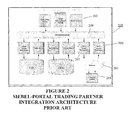
- a typical Vitria system architecture 200 is shown.
- a client/trading partner 201 receives and passes event objects through the Internet 203, generally passing an event notice to an application 211 , via the communicator 209, by means of a Source Connector 205.
- the client 201 will receive the results of the event or perhaps an error notice, from the application 211, via the communicator 209, by means of a Target Connector 207 and the Internet 203.
- Figure 3 discloses an exemplary embodiment of the present invention in the context of a VitriaTM system coupled to an AmdocsTM application system 313 via a connector of the type described in this invention.
- an event object 301 originating in the Vitria system is passed via the channel source part 305 to the connector 307.
- the connector 307 checks the event object 301 against the IDL structure in the BW repository 303 and determines which EJB of the Amdocs API 317 to invoke and which methods to invoke on it and in what order.
- the connector 307 invokes the methods found on the Amdocs API 317 that are part of the Weblogic component 315 of the Amdocs system.
- the Weblogic component 315 will process the invoked method either via Jolt 319 or via the Java API for executing SQL statements (JDBC), and will return the results of the invocation of the method to the connector 307.
- the connector 307 will collect the results of the various methods invoked as a result of the event object 301 which it received, and will transmit these results object 311 back to the source system (Vitria in this case) via the channel target process 309.
- Target-Source Connectors It is the creation and use of generalized Target-Source Connectors that is the subject of the current invention, which is described in more detail below.
- Such systems are typically constructed using Object Oriented Programming techniques and methods, using the Java language and system, related object systems, object IDL, Enterprise Java Beans (EJB), Java beans, and related technologies, all of which are known to those skilled in theses arts.
- a business event can be defined as an event that can have one or more system events interacting with an end system to achieve the overall transaction goal for the business event.
- a business event could be one of "create billing account” where several system events could be: "look for account already created, find parent account, create tentative account holder, add name, add address, add credit class, etc.”
- Vitria will contain the single business event to be fulfilled while the connector would process the event and handle each system event that is required to complete the overall transaction.
- the scope of this connector can handle an entire business event as long as it only has to interact with a single session bean. The methods of this session bean enable various system events to be executed as well as the final commit.
- Vitria connectors manage Vitria events as Java value objects (stubs generated from IDL definitions) with no methods, a design pattern is devised to allow this connector to traverse a hierarchy of these objects to determine the business logic needed to be executed.
- This logic includes which bean to call, the methods (i.e. system events) on the bean to call and the order of method invocation, the simple or complex (value data objects) parameter lists to be passed to these methods and any expected results to be processed and stored in the new event.
- the connector framework is broken into several object classes/areas:
- the Vitria-Amdocs connector enables manipulation of Amdocs APIs (Weblogic Enterprise Java Beans) by means of well-defined Vitria events. For each of these Vitria events, the connector will obtain a bean, invoke methods on the bean in a pre-defined order with data from the event, and collect the results from the method invocations to pass on to the next flow in the Vitria connector model. All of this is done without need of knowledge of the beans themselves by the connector, their methods or the business logic in how to use them. The details on these points are kept in the event definitions that are controlled in IDL specification used by Vitria.
- the connector "walks" through the Vitria event data object, attempting to match the fields and sub-fields against EJB methods, their parameters and return values. Business logic validation is performed by the EJBs themselves (such as used in Amdocs APILink) and data/requests that fail the validation are passed transparently back through the Vitria connector and into Vitria's error handling processes.
- APILink is a standardized interface for the Amdocs Ensemble products as it overlays on top of the Ensemble CSM Tuxedo services in the form of Weblogic EJBs using BEA's JOLT. This enables HTML web pages to perform the same operations as available in the CSM PowerBuilder client thus making a "thin" client version of the product(s) available.
- APILink can also be used for interfacing directly to other applications by use of its EJBs. Due to the highly customized nature of an Ensemble installation for each client, separate installations of APILink usually vary in available method calls, data types, etc. Additionally, the APILink interface has been going through revisions over time and it cannot be guaranteed that an existing client will be using the latest version of the interface- thus having different interfacing signatures.
- this connector handles these EJBs generically without need of specific knowledge of an implementation, provided that Amdocs continues to follow certain EJB framework guidelines.
- the connector uses details in the Vitria event data definition itself to walk through the population of method parameters and capturing of results from bean method invocations.
- APILink is currently running under Weblogic Application Server v5.1.
- Weblogic EJBs that form APILink are accessible via an environment context that is achieved once a client is logged into the Weblogic environment.
- Each API EJB has a home interface bean that is available through the context that can create remote (server-side) instances of the bean.
- the Weblogic environment handling is abstracted from the main Vitria connector logic (flow).
- This connector component enables the connector to log into a Weblogic) environment at start-up and each Vitria event causes the creation/process/removal of these EJB instances.
- a connector flow is an object used in a Vitria connector model to receive, process and send Vitria events through the connector model.
- a target flow is a flow that accepts a Vitria event and passes this information to an external application (usually by means of the application's API).
- the Vitria connector flow for connecting Vitria to Amdocs is a Target-Source flow which will accept specially designed events with data, manipulate the Amdocs API via Weblogic EJBs, and the results will be passed back into an event of the same format (IDL specification) to be further processed by the connection model.
- Vitria uses flows to encourage re-usability of components and work between connection models as they participate in the transaction of passing/changing/formatting the events without knowledge of the other flows operating in the same connection model.
- the connector handles all incoming Vitria events in a fashion that is not hard-coded into its logic. If defined correctly (in IDL), each event can specify which EJB to use, the methods to invoke on the EJB, and the data to be passed between Vitria and the EJB without need of coding. The use, ordering and data are all provided in the structure defined in the event itself. In addition to normal operations, the connector can also capture business-level data validation errors that are thrown as exception by the EJBs and perform special user-defined handling.
- Amdocs APILink does not currently implement a form of transaction control.
- the transaction boundary extends from the Ensemble database(s) to Tuxedo/Weblogic only where consistency is maintained from the Weblogic environment to the back-end database(s). Due to this limitation, external systems using their EJBs cannot guarantee transactional behaviour for the complete event nor each individual EJB method invocation that calls the database. Fundamental architecture changes are required by Amdocs to effectively address this issue.
- a potential problem that could arise is the failure during the process of creating an entity, between the store/commit and then calling methods to get the results. If this occurs, the key could be unknown and thus may require manual intervention.
- the connector enables certain behaviours to improve the manageability of such exception cases. These range from how the connector should behave when the machine(s) running Vitria Business Ware fail to record additional logging of the entire event itself. Some of these behaviours are controllable as parameters on the flow bean interface.
- EJBs could receive and return values of null in place of arrays, Java Strings, Java Dates and other complex data types (objects).
- Vitria event data are always initialised and therefore cannot hold null values.
- the connector facilitates handling of null in the data exchange between Vitria and the EJBs by a series of rules controllable as connection flow parameters. Based on the desired preferences, the connector will pass null and will handle values that return null from the EJB.
- the connector allows for "special" event handling that will identify the incoming events and call the corresponding plug-in class for handling this special case.
- This framework is intended to support Amdocs EJB's. However if other EJB vendors adhere to this framework this connector should be compatible.
- the EJBs are accessed first by obtaining an environment context via Weblogic methods. This is done using a URL for the Weblogic server, a user name and a password.
- the connector will support all beans with the same JNDI name prefix (i.e. "amdocsBeans” in amdocsBeans.NewCustomerConvHome, etc.). Beans available under different naming prefixes will require separate connector flows to be defined to handle beans in different namespaces. At least one JNDI prefix is mandatory in order to make the EJBs available thought the Amdocs connector. Examples of full valid JNDI names are:
- Access to the remote interface is achieved by invoking the "create" method on the EJB home object with no parameters .
- the create() method is a typically implemented by EJB application vendors though not required. When this method is present, it will invoke the standard "ejbCreate” method as dictated by the EJB Framework to obtain the remote interface/session.
- the connector only manipulates public methods on the bean. It will not attempt to access data members if available. Therefore all data members to be accessed on a bean require public accessory bean methods.
- the connector will call the "remove” method on the bean to attempt to clean up the server-side memory of the session.
- the connector uses the IDL/Vitria event data structure to understand the order of method invocation on a bean. In cases of method overloading where multiple EJB methods with the same name are available, the connector will try to isolate a match first by number parameters and if needed, parameter types. Parameter types are limited to identification of class names only (not the full qualifying name including its package).
- Bean methods supported can accept one or more input parameters, return values, or both.
- Bean methods are supported if they all input parameters and return values that follow the supported data types below.
- Java Strings and Dates are supported (java.lang.String and java.util.Date).
- Valid get accessory methods take no parameters and return the private member.
- the private member has to be a valid data type listed in this section.
- Valid set accessory methods return nothing (void), and accept only one parameter of the same type as the private member.
- the private member has to be a valid data type listed in this section.
- Valid data types can also be single -dimensional arrays of the mentioned data types in this section (i.e. primitive, String, Date, complex).
- the majority of the connector is built in Java and thus should be transparent between operating systems. Even though this is the case for most of the source code, the environment settings, variables, Java class paths, etc. differ slightly.
- the following sub-sections detail the process for both Windows NTTM and SolarisTM enviromnents as sanctioned by Vitria.
- Connector Java class files Files Added Java class files that implement the Connector in the package com.accenture.vitria.amdocs.connector and com.accenture.vitria.amdocs.connector.tools java ⁇ local or java/local Java file(s) generated by the Vitriajstubgen utility Files Generated This process is normal during the importing and registering IDL for events in Vitria. data ⁇ install or /data/install vtInstalled.cfg File Modified This file lists the connectors installed. On initial installation, this connect requires the line "AmdocsConnector" appended.
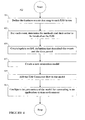
- FIG. 4 a general process of the present invention is depicted, for how to implement/configure a generalized connector for an object oriented business system environment, as in the exemplary Amdocs-Vitria connector 400.
- the following steps need to take place:
- IDL needs to be defined 405 .
- This IDL needs to be imported and stubs generated in the event generating sub-system (such as Vitria) so that the connector can successfully identify the business events, process the data against the related EJB and return the results.
- a series of Java tools provided with the connector automates most of this process.
- the following section(s) contain information on the IDL requirements and IDL tool generator.
- connection model 407 to be used with the application system environment's EJBs (such as the exemplary Amdocs APILink EJBs)
- EJBs such as the exemplary Amdocs APILink EJBs
- the basic connection model has a Vitria Channel Source 501, an Accenture-Amdocs APILink Flow 503, and a Vitria Channel Target 505 wired together as shown.
- the basic process is that an incoming event, properly defined, will be used by the APILink flow to process against a corresponding EJB, and the results and the flow then passes an event of the same kind as the incoming event that is essentially a copy of the original with results of method calls being added to the event data. This output event is then passed on to the next flow (which will be to a destination channel in the example above).
- APILink flow properties need to be configured as described in the following section. To do this, in the present invention one right-clicks on the flow selected (see Figure 5 ) and selects the option "Properties.”
- the diagram in Figure 6 shows the property sheet for the APILink 600 and the default values 601. At a minimum one needs to specify the Weblogic server URL 603 (if not already the default), User name 605 and Password 607. If desired, one can optionally provided a top-level module name 620 ( Allow only events that belong to module) that will cause the flow to filter and only process events that belong in the module to be.
- Property Description Default Accept values that are null from Bean Advanced Setting This setting indicates if the connector will accept null values from EJB data types. If an object that may be a String, Data, other data types or arrays is received as null, the Connector will treat them as preestablished default values in Vitria data as empty strings, empty arrays, etc. Please refer to section 4.5.2 (Accepting Null Return Values from Bean Methods) for more details.
- a setting of True passes to the bean null for the Date value.
- a value of False passes the current system date/time of the environment running the connector. Please refer to section 4.5.1 (Providing Null Parameter Values to Bean Methods from Vitria) for more details.
- True Password Password that the connector will use to gain access to the EJB environment. (None) Participates in transactions Advanced Setting : this setting allows the connector to either implement the "one-phase" transactions process or not implement any form of transaction control inside the connection model.
- a connection model can have only one source or target flow that uses a one-phase transaction resource. Therefore, if two Amdocs connectors are needed in the same connection model only one can have this property set to true.
- Tnie Prefix for names of Plug-In Events for Advanced Setting Prefix for identifying events that should be treated with a special plug-in class. Warning: modification to this setting should be done prior to any IDL and / or Java plug-in classes are developed. Please refer to section 5.2 (Process of Creating a New Plug-In) for more details. "spec_" Rollback events being processed during machine failure on start-up To guarantee that events are not lost, set to (true) else (false) will help avoid duplicate processing. Please refer to section 4.6 (Recovery Behaviour) for more details.
- False Send bean application errors to connector error model Flag to determine what happens when a bean throws an exception (usually when the bean's business/application logic determines invalid data, etc.) Setting to true will cause an error to be sent to the connector error model. False will treat it as normal (the status parameter in the event will still contain the error information for use later). Please refer to section 4.4.1 (Bean Application Errors) for more details. False Send data mapping errors to connector error model Flag to determine what happens if data mapping failures occur between an event and a bean. True sends the error to the connection error model (normal case). A value of false will cause the flow to ignore the error and instead pass-through the original event to the next flow in the connector model.
- APILink flow will send errors to this module of the following kind:
- the Error Model will "stop on” (i.e. stop the connection model execution) on all events sent to it. This behaviour can be changed, for example as per normal Vitria BusinessWare connector configuration steps specified in vendor documentation.
- Exceptions thrown by the EJBs during method invocations are handled as bean application errors (also known as "Bean Unhappy" errors). These exceptions are thrown when event data provided is invalid or for other reasons determined by the application business logic.
- the connector is transparent to application business logic and will not directly throw such exceptions. Instead the connector flow will capture these exceptions thrown, obtain the error details and pass the information back without treating the error.
- the connector flow is configurable on how to direct the application error. It can either treat the error as normal behaviour and record the error in an updated status parameter for the event that will be passed on to the next flow in the connection model (default) or send the error to the error model. This behaviour is dictated as a flow property called "Send bean application errors to connector error model" ( 609 in Figure 6 ) where true will send the event to the error model and false will not.
- Mapping errors occur when the connector fails to find proper EJBs, bean methods, data parameters, or method results using the Weblogic environment while processing an event. Most errors will be due to poorly defined IDL definitions or due to changes in EJBs on new deployments to the server.
- the handling of these errors is to send them to the Error Model (default) or to simply specify them in the status event parameter for another flow or recipient application to process. This behaviour can be specified with the flow property called "Send data mapping errors to connector error model" ( 611 in Figure 6 ) where true will send the error to the error model and false will not.
- the level of tolerance for what constitutes a "mismatch" is adjustable via advanced flow property settings (such as handling null values, etc). When such error occurs, no further method invocations will occur for the event.
- Vitria does not hold values of null in their event data structure. However there will be times where the connector expects null to be passed to its methods when its parameter(s) are optional or unused. Conversely, bean methods and/or bean data type accessory methods could return null that will need to be handled.
- the following sub-sections describe the options available that can be set on the connector flow to handle such behaviour. These behaviours can only be configurable at the flow level and not at the event level. To accommodate event-level behaviour, it is suggested that separate flows are used with different configuration settings and that the events requiring particular treatment be routed ahead of time to the specific flow. In the exemplary embodiment, in all cases, there will never be null values either required or returned by the EJB for primitive data types. Primitive data types will always be initialised (as per the Java specification).
- the connector can be configured to pass null to EJB methods by specially defined event data in Vitria.
- optional values are not provided, these usually exist as “null” (i.e. not initialised).
- These null values can be in place of bean method parameters or member fields of complex data types.
- the following table describes the behaviour of each data type supported by the connector to pass null: Data Type Vitria event format for passing null Default Behaviour Java primitive types (Not applicable) (Not applicable) Java String Objects (java.lang.
- connection flow property "String Values Can Be Passed As Null To Bean” is set to true and a Vitria event string data field equals the value of the connection flow property "String Value If Null" (such as "null"), the connector will ignore the Vitria and instead pass null in its place.
- String are always defined (non-null) Java Date Objects (java.Util.Date) Java Date objects are represented as strings in Vitria.
- connection flow property "No Dates Pass Null to Bean” is set to true, empty (“") string fields in Vitria event data will be passed as null in place of a Date object to the bean method. A value of false will default the Date object to the system date.
- the connector is configurable in behaviour in accepting return values from EJB method invocations to be passed back to Vitria. This capability is not symmetric due to the fact that the data types in Vitria and used by the EJB are not symmetric (i.e. no null vs. null).
- the flow property that dictates connector behaviour is called "Accept values that are null from Bean" (613 in Figure 6 ). When set to true (the default), the connector will handle null return values from EJB methods except in cases where null is present and the expected return is a Java primitive (indicating that the EJB data type was not primitive). A property setting of false will cause the connector to indicate a mapping error.
- Vitria Data Type Event Data for Returned Values Java primitive types (Not applicable. Will cause mapping error). Java String Objects (java.lang.String) Empty ("") string Java Date Objects (java.Util.Date) Empty ("") string since Vitria is representing these EJB data types as strings in its event data.
- Complex Data Objects (EJB data classes) Default value that was set on default on the new initialised Vitria event data object. This means the members of this default object are 0 for primitive members, empty (“") for strings, empty sequences (arrays) and initialised sub-event classes for complex (recursion process) Arrays (sequences) Empty []
- a transaction resource for all source and target flows in Vitria, they participate in transaction control via use of a transaction resource.
- an application system such as a BusinessWare server
- this transaction resource is queried for the last state known prior to failure.
- the resource can respond by telling Business Ware that the transaction was being prepared or was committed.
- the BusinessWare server will rollback and reattempt processing of the same event handled during the failure if the flow reports "Prepared”. BusinessWare will drop events that have been reported "Committed.”
- the normal behaviour for target flows is to report "Prepared” when the actual status is undetermined. This avoids loss of any events due to BusinessWare server failure. However, there may be important events where one would desire to "lose” the event rather than to send duplicates. This could be the case where duplicate information will cause damage to the application behaviour or require significant manual intervention. In this case "Committed" could be specified.
- the APILink/EJB connector flow allows for some flexibility in this participation and can be configured to support either "Prepared” or “Committed”. This configuration is done as a flow property called: "Rollback events being processed during machine failure on start-up” (615 in Figure 6 ). If this parameter is set to true, during such a failure the flow will report to BusinessWare "Prepared” (i.e. retry the event). Otherwise the flow will report "Committed,” thus avoiding the possibility of duplicates. The default setting is true (as conforming to standard target flows).
- the connector framework is extensible to allow for special cases to be processed as in the form of plug-ins.
- Plug-in concept is quite simple: allow the end user to build extensions to the connector flow for special-treatment of handling an EJB.
- Plug-in extensions use the same facilities as the general case handling (determining which bean to call, maintaining log-in to the Weblogic environment, etc) while enabling a developer to add some limited business logic to the bean handling. All that is required is for the Java plug-in to extend a provided base plug-in and to implement an abstract method specified on the base class. The implemented method on the plug in will access the EJB directly, invoking the methods, catching the exceptions, and collecting the return data from the APILink EJB methods. All logging, event system (such as for example Vitria) flow characteristics, application system (such as tor example Weblogic) environment, etc. will still be handled automatically as in the base case.
- event system such as for example Vitria
- application system such as tor example Weblogic
- the connector When encountering an event with the name that has the special-event prefix, the connector will attempt to re-use the corresponding plug-in class to handle the event if it has already been used once during the connector operation (for performance reasons). If not found, it will attempt to dynamically load the Java class. If the class is unavailable during runtime due to it not existing, bad CLASSPATH setting or invalid event name (misspelled) the connector will throw a system error (exception).
- the method "process” will be invoked with request input parameter of the Vitria event, for example, and the obtained bean.
- the implemented "process” method will then directly manipulate the bean, passing data available in the request parameter to the bean methods, capturing method results and assigning them back to the request object, and catching and handling bean exceptions.
- An available method for changing the status object of the Vitria event for example, is available to the "process” method for updating the status of the business event. Once completed, the "process” method will return the modified request object and control back to the connector flow.
- the connector relies on the module definition used for the incoming event to determine which bean and order of the bean method invocation to fulfil the business event, care on defining the IDL should be taken.
- a separate set of Java tools available with the connector can automate the process of creating the IDL to represent the EJBs, data structures and event processing that is mentioned below. Further details on these tools are described below along with a full example of an IDL file.
- Entity Description IDL At the top level, all business events used by the connector can neatly be organized within one top-level module.
- the Amdocs connection flow has a parameter that can be used to specify filtering of events/interfaces to those that belonging only to this module.
- the contents of this IDL module definition are: 1. Data types- struct definitions of data type classes usedby the beans to pass information other than primitivedata types 2. Sub-modules- used to separate and declare entities usedfor processing EJBs by each bean by module.
- sub-module definitions in the IDL. Included in the sub-module are supporting IDL struct definitions, an event interface, and all events that will use this bean.
- the struct definitions in the sub-module represent the bean's methods (see Method) and represent the ordering of the method invocation for each event (see Event). All events are grouped together into an event interface with the same name as the sub-module (and thus the bean home interface class name).
- Event Events are user- defined components of the IDL that define business events to a bean (EJB). Each event has a declared name that will be implemented by Vitria as a Vitria event. Each event is declared in the event interface (see Bean) and passes two parameters: request and status. The request is named “request” and the type is a special struct defined in the bean IDL sub-module.
- This special struct declares methods to be called by the event and is typically named the event name suffixed with "_Data” (ex. CreateAccount event would have a struct called CreateAccount_Data).
- the members of the struct have a naming convention like "m01_ --, "m02_ --, etc. and are suffixed with the name of the method to call.
- the type of each member is that represented by the corresponding struct that defines the bean method (found in the bean sub-module).
- Data Type Data types are represented as structs in the IDL at the top-level module. These data types represent an equivalent pattern to the bean's complex data types used for parameters and return values on each bean method. Complex data types can contain other complex data types that would also be declared in the IDL.
- Variable Variables represent the valid data members of the data type.
- Variable Variables are represented as data members on complex data types (structs) in IDL. These members can be of primitive type, Java strings (java.lang.String) and Java Dates (java.util.Date) and other complex data types. These members can be single instances or in an array. In pseudo text, the array is signified as "type[ ] name" and in IDL as "sequence ⁇ type> name”.
- the following process is used by the Vitria connector flow to execute a business event.
- IDL tools were built to facilitate the creation of IDL from beans available to a WebLogic client (such as Vitria). They consist of “getBeans” and “IDLBuild”. “getBeans” searches a Weblogic environment for available beans while “IDLBuild” will process the list generated by "getBeans” to begin completing the picture to represent valid events in IDL for these beans. For a complete start-to-finish using these tools, the "IDLBuild” tool will be executed several times with an input file containing pseudo-script like declarations of beans, data types, methods and events. An example is given below of this pseudo-IDL script after several iterations prior to final generation of the IDL. The final IDL is shown below.
- This input file can be mostly generated automatically except for declaring the business events and defining the order of method invocation on the bean for these events.
- the tool will output to the screen the partially completed file still in pseudo-language format (as shown above) that can be redirected to a new file (such as IDLBuild example1.txt > example2.txt).
- a new file such as IDLBuild example1.txt > example2.txt.
- IDLBuild IDL generation tool
- the file is segmented into four components: OPTIONS, MODULE, BEAN, and DATATYPE. Ordering of these reserved words are not important though their contents may be.
- the OPTION and MODULE section will be automatically defaulted if not specified.
- the input file requires a specific syntax for the tool to process the intended bean and data type configurations correctly.
- the syntax consists of keywords, braces (" ⁇ " and " ⁇ ") for sub-sectioning, name and value sets and other special tokens.
- the following syntax components are defined below by text file subsection:
- Option Description DataTypePackages This option defines the data type packages that all complex data type(s) used by the EJBs for method parameters and/or return values to be represented in IDL for the connector to operate. Commas (",") separate multiple class packages.
- JNDIBindingNamePrefix This option defines the prefix of the JNDI binding name for beans used by the connector. These prefixes are not needed when declaring each bean and this name prefix should be the same specified on the coimector's flow properties. AllowValidateMethodsOnData Types This Boolean option indicates if special void methods with no parameters are identified and represented on the bean complex data types.
- This top-level key word describes the module name for the top-level module to be defined in the final IDL output.
- the syntax is as follows:
- top level module name> is a valid module name to be used in the IDL specification.
- the bean declaration contains the following:
- the JNDI Binding name is used for specifying in the final IDL.
- the tool In order for the tool to perform bean analysis for automatic IDL generation, it uses the Home bean class name to investigate.
- the optional subsection specified by braces is used to associate method and event definitions that the tool should create for the bean in IDL. If the subsection is not specified, the tool will attempt to look up the bean home class and complete most of this section (the user still has to specify the event or events).
- Vitria events that should be associated to the bean are specified following the keyword "EVENTS”. Events names are specified in the same way as the methods and contain sub-sections.
- the sub-section defines not the bean methods to invoke but is a handle for sub-parameter(s) that will be passed as a special "struct" object in IDL to the specific plug-in handling the special event.
- the sub-parameter names, types and array (“[ ]") indicators are defined in the same way as DATATYPE members (see DATATYPES). Please refer to the section(s) in this document that discuss "Plug-Ins" or handling Special Cases for more information on this advanced use.
- the data type declaration contains the following:
- the data type declaration is used to represent EJB data classes in Vitria. These "representative" Vitria struct definitions will share the same name as the EJB data type (minus the package prefix). Each data type will have data members representing the EJB data class members. The subsection mentioned above will list these data members as follows:
- a member type and member name is required. If the member is an array of the declared member type, an array ("[ ]") indicator is placed between the type and name. When the tool generates the final IDL, the array would be represented as: sequence ⁇ type> name.
- EXTRA classpath does not contain jar file for WL Service Pack 10 (weblogic510sp10.jar) Java.lang.ClassCastException while attempting to create an instance of a Bean remote interface. Connection to the server is through t3. EXTRA classpath does not contain jar file for WL Service Pack 10 (weblogic510sp10.jar) Connection model stops when sending an event through. Field "JNDI Binding Name Prefix" in flow properties could be misspelled Log message is: Bean not defined in Weblogic Server, cannot process event.
- building a new Vitria target-source flow entails building the classes or interfaces represented in Figure 10 that are the building blocks of the Connector and must be implemented.
- the classes 1001, 1005, 1011 and 1017, and the Base FlowDef interface 1009 are Vitria defined classes that the connector implementation must extend. A more detail description of these classes is made below in the section titled "Basic Connector Classes”. All other classes ( 1003, 1006, 1007,1013 and 1015 ) are created for the connector.
- the Vitria SDK wizard generates some files automatically (labelled as "generated") ( 1003, 1006, 1007, and 1013).
- the AmdocsConnector Flow implementation 1006 is built from scratch.
- a connector definition defined as a Java interface lists the user configurable properties for the connector (i.e. any information for a user to enter before the connection model is started). It also defines the signature of setter and getter methods for these properties to be implemented by the FlowRep 1005.
- This interface 1009 is the common interface for all Flow definitions of any connector. It treats the logLevel property common to all flows and deals with the bad event routing.
- the AmdocsConnectorDef 1007 must extend this interface (See section “Amdocs Connector Classes” below for more details).
- the connector representation class implements the definition interface. Its primary responsibilities is handling and storing its listed properties and instantiating the corresponding flow implementation object when the connector model is started.
- This class is the base Rep for all Vitria connectors and implements the BaseFlowDef 1009.
- the AmdocsConnectorRep 1006 must extend this class (See section "Amdocs Connector Classes" below for more details).
- the flow's property sheet bean defines and displays information such as property names and descriptions and is responsible for the configuration of the flow.
- the purpose of the flow definitions, flow representations, and BeanInfo 1001 objects are to enable a human user to configure a flow. These objects are not involved in the processing of flow data and are only involved in the configuration of the Flow's properties.
- the SimpleBeanInfo 1001 the basic properties defined in Flow Def 1009 are configured and saved in Vitria's repository using the connector's tag, defined in FlowRep 1005 , to link this data to the correct connector.
- the processing of flow data is the sole domain of the flow implementation class. It's in the flow that all of the work of connecting to the external system and sending and receiving information (events) is accomplished.
- the Base Flow 1011 is simply responsible to guarantee that all the necessary methods are implemented by the child class, in this case the AmdocsConnectorBase 1013 and AmdocsConnector 1015, that will extend this class, and that the method signatures are correctly enforced.
- the following classes are needed to create the Amdocs Connector 1015. These files can be automatically generated by the Connector Wizard tool provided by Vitria's SDK if one defines a specific file with the parameters needed (see section "Wizard Files" below for the file name) or they can be implemented from scratch following the correct Vitria interfaces. As these classes mainly deal with the flow properties the tool easily generates them.
- the AmdocsConnectorDef 1007 is a Java interface that extends the BaseFlowDef 1009. It lists the entire user configurable properties defined for the Amdocs connector 1015. These properties and their description can be seen in the table of section on "Flow Properties" below. It sets out the signature of each property setter and getter methods that will be implemented by the AmdocConnectorRep 1006.
- the AmdocsConnectorRep 1006 extends the Base Representation class BaseFlowRep 1005 and implements all accessory methods for the Amdocs Connector properties.
- the AmdocsConnectorRep 1006 When the AmdocsConnectorRep 1006 is instantiated by the FlowManager, it reads all the properties saved in the repository and saves each of them in its correct member. It is the responsibility of this class to handle the flow's properties.
- the FlowManager must also call a method on this class to save the properties held by the AmdocsConnectorRepBeanInfo 1003.
- the AmdocsConnectorRepBeanInfo 1003 class extends the SimpleBeanInfo 1001. Its responsibility is defining and displaying the Amdocs Connector properties. By using the Amdocs Connector Flow's property sheet you're actually manipulating this Bean Class that will interact with AmdocsConnectorRep 1006 and save the properties defined in Vitria's repository.
- the AmdocsConnectorBase 1013 is a simple class that gets the flow's properties that will be provided to the AmdocsConnector 1015 class from the AmdocsConnectorRep 1006. As AmdocsConnector 1015 will extend the AmdocsConnectorBase 1013 we can then implement AmdocsConnector 1015 without knowledge of the calls to the AmdocsConnectorRep 1006.
- the AmdocsConnector 1015 class is the implementation class of the Vitria Flow. This class is responsible for connections to the external system one wishes to communicate with (Amdocs APILink) and of processing all events received from the connection model that interacts with the External System.
- FIG 11 shows the relationship of the AmdocsConnector class 1015 with other specific classes implemented in the Connector.
- the Amdocs Connector is designed to be reusable, flexible and modular. Each object defined separates dependencies of various application environments (Weblogic, Vitria, etc.) wherever possible. Based on this premise the AmdocsConnector class 1015 integrates these other objects together and controls their interaction.
- the AmdocsConnector class 1015 in Figure 11 contains five modular classes with dedicated functionality.
- the AmdocsResource class 1103 is this transaction resource. It handles the calls to the appropriate methods to handle transaction with the external system. It also implements Vitria's One-Phase Transaction Resource Interface 1104.
- This class is responsible for logging all the informational and error messages of the connector. It uses the Vitria Logger object provided by the Amdocs Connector Flow 1015 and the Error, Messaging and Tracing (EMT) framework API [described in section 7.1.6 and para 1205 below describes it's implementation] to create and log messages to the Error Model. After the flow creates this object during runtime, all the other classes to log their own messages use it. This class allows other participating generic classes to use Vitria's logger facilities without using any of Vitria's API.
- EMT Error, Messaging and Tracing
- This class is responsible for all the interactions between the flow and the external system such as the Amdocs APILink. No call is actually made to Weblogic server from the Amdocs flow directly. It is used to open and close a connection with the Weblogic server, to identify the EJB deployed in the server, and to create and remove running instance of these EJB for use by the Flow.
- This class is responsible for the default processing of the Amdocs Events. This class will use the Java Reflection API to parse the incoming event data object and invoke the correct methods on the EJB in the pre-defined order specified in this object. It parses through the Vitria event data object, attempting to match the fields and sub-fields against the EJB methods, their parameters and return values.
- This class also catches all business level exceptions (such like Validation or Invalid Date errors) and wraps them in a special defined exception called BeanUnhappyException that will be treated at the flow level or in the error model. All other failures related to mapping/parsing errors are wrapped in MappingFailureException and the unexpected internal errors are wrapped in a SystemFailureException.
- exceptions such like Validation or Invalid Date errors
- Each plug-in class extends the BaseEJBPlugIn class 1111 for obtaining basic processing functionalities and to conform to a specific method signature, allowing this way, the plug-in to be called by the Amdocs Flow.
- Plug-Ins 1113 were described above and more details about the Plug-In classes are given below.
- the AmdocsConnector class 1015 has an expected behaviour to Vitria and it must implement the following methods to conform to the BaseFlow signature.
- the init method is called during the initialisation of a runtime instance of the flow. This method is responsible for initialising the flow.
- the AmdocsConnector init method will then create an AmdocsResource object 1103 and set the duplicates field, which is the property "Rollback events being processed during machine failure on start-up " defined in the Flow Properties (See 615 in Figure 6 ) , and pass this object to the Transaction Service. It will also create the AmdocsLogger object 1105 to provide the flow with the logging facilities.
- connection model This method is called when the connection model is started. It is responsible to create the connection to the external system we wish to connect and prepare the flow to receive events. In startEvents the EJBEnvironment object is created. This opens a connection to APILink and retrieves information about all the beans deployed in Weblogic Server. An instance of class EventToBean 1109 is also created so that everything is prepared for receiving events.
- the doPush method is responsible for processing all the events received by the Flow. This method is called by the FlowManager to process the incoming events of the Amdocs Flow.
- connection model is paused or stopped. It is responsible to close the connection to the external system. This is achieved by calling a method in the EJBEnvironment object 1107 that closes the session with the Weblogic server.
- this Class is responsible for logging all the informational and error messages.
- This class contains a reference to the Vitria Logger 1203 that is passed in by the Amdocs Connector flow during its initialisation. It also receives the logLevel property, (See “Flow properties” for more details) defined during the configuration of the flow. It's according to the logLevel that the AmdocsLogger 1105 sends or not the correct messages to the EventLogger flow in the Error Model.
- the EventLogger flow accepts as event interfaces the DiagEventsInterface or the LoggerEventsInterface.
- the AmdocsLogger uses the DiagEventsInterface to send all messages to the EventLogger (See Logging & Messaging Framework below for more details).
- the AmdocsMessages class 1205 is used. This class is the messaging API defined by the Error, Messaging & Tracing Framework implemented. More details on this Framework are shown below.
- the Error Model can also be modified to treat these events accordingly to different methods that the Amdocs Connection Model developer must implement.
- the following table shows the relationship between Vitria's LogLevel and the AmdocsLogger methods to call. If the Flow's logLevel is lower than the one specified in this table the method would not create and send the message.
- Methods Log Level LogError 1 - Log major, serious errors LogException 1 - Log major, serious errors LogWarning 2 - Log warnings
- LogNormal 3 Log major normal occurrences
- LogVerbose 4 Log all occurrences
- LogDebug 5 Log full detail of occurrences
- LogObject 5 Log full detail of occurrences
- LogFieldNames 5 Log full detail of occurrences
- Amdocs Connector Flow all the classes implemented use the AmdocsLogger 1105. This class is intended to provide all the logging facilities to the Connector classes by wrapping all Vitria's Logger API and turning the logging in other class independent from Vitria.
- This object when used in the Vitria Environment logs messages, errors and exceptions to the Logger object that will then forward these messages to the EventLogger flow in the Error Model.
- the AmdocsLogger class 1105 provides a constructor method that does not need the Vitria Logger or logLevel. When this object is created with this constructor all the messages are sent to Standard out. This is very useful for testing or for tools purposes.
- Every connector that participates in transactions requires a transaction resource that handles the calls to the appropriate methods to handle transactions in the external system.
- the implementation of this transaction resource in the exemplary embodiment is class AmdocsResource 1103 in Figure 11 .
- Vitria or other Flows need to commit or abort a transaction, it sends a request to the Transaction Service, which serves the whole connection model.
- the Transaction Service does not have the functionality to implement transactions in the external system. Instead, it relies on the transaction resources of each flow in the connection model to execute the necessary methods when needed. These methods must call the appropriate methods in the external system's API to commit or abort.
- the AmdocsResource class 1103 implements Vitria's OnePhaseTransaction Interface. This enables the AmdocsConnector to participate in One Phase Transactions.
- the AmdocsResource implements the four required methods as defined in the Vitria's OnePhaseTransaction Interface.
- This method returns a transaction id that is then used by the commit resource method.
- Amdocs APILink doesn't have a transaction id, we use a DATETIME stamp as a transaction id.
- APILink Due to APILink's Transaction limitations (see below) this method always returns success. It cannot fully participate in Amdocs APILink transactions because we always default that the transaction is successful.
- Vitria BW 3.1 provides an Error, Messaging, and Tracing Framework (EMT) Framework (Please refer to Vitria document Connector Programming Guide, which is hereby incorporated fully herein by reference, for more details), that is a messaging infrastructure that facilitates the delivery of portable and easy to localize code.
- EMT Error, Messaging, and Tracing Framework
- This framework is used by Amdocs Logger 1105 to log messages, using Vitria's Diagnostic interface.
- the EMT Framework is Vitria's Messaging Framework that enables the localization of code.
- Implementing the EMT Framework involved creating a resource file, AmdocsRes.txt, (Please see section on "Wizard Files” below) that is a simple text file that contains all the text strings for the system, and then compiling the file using a special utility program called rescomp, or "resource compiler”.
- the resource compiler generates several other files that can be then compiled and linked with several other Vitria classes, producing the shared library file vtAmdocsLocale3_o2r.dll (in NT) or libvtAmdocsLocale3_o2r .so (in Solaris) called a "locale bundle.”
- This locale bundle essentially comprises a messaging API, called AmdocsMessages 1205 to which we can embed calls in our connector code.
- the Amdocs Resource File developed is a simple and flexible Framework. To simplify the development process only general messages and errors are logged in the exemplary embodiment. In alternative embodiments these messages can be extended and more detailed as needed.
- Message Name Category Message Description GenericError ERROR ERROR: “the message to log” GenericErrorWithN umb ERROR ERROR, code: “the error code”; severity: “the severity of the error”; msg: “the error message” GenericException EXCEPTIO N EXCEPTION CAUGHT: "The exception message” GenericWarning WARNING WARNING: "the warning message” GenericNormal TRACE MSG : “the message to log” GenericDebug TRACE DEBUG: "the debug information to log”
- the Amdocs Logger class 1105 uses the AmdocsMessages classes 1205 that is the messaging API for the locale defined, and the Vitria Logger to send Diagnostic and DiagError events to the Error Model.
- the Diagnostic messages will be logged to the log File defined in the EventLogger Flow and the DiagError can be dealt with by a user defined Error Connection Model.
- All the exceptions thrown by the Amdocs Connector classes 1015 are one of the following 3 types. These exceptions wrap up all other kinds of exceptions that can be thrown during the event processing. This is done to classify clearly the type of errors and to easily identify the type of error the exception has originated from (as already described in some detail above).
- This exception wraps all exceptions that are due to unexpected internal errors of the connector or to Weblogic enviromnent problems like connection failure, bad user name or password.
- This exception wraps all exceptions that are due to unexpected failures during the event processing. They represent mainly Event-EJB mismatches, data type mismatches, unavailability of a desired EJB, or mismatch errors that may arise from typos in Vitria's IDL creation.
- This exception is the more complex and deals with all the errors that are thrown from invoking the EJB object or the Amdocs Data types.
- these objects indicating invalid data or operation can throw exceptions.
- These are the exceptions that are wrapped in a BeanUnhappyException. Unlike the other two Amdocs Connector exceptions, this exception saves the original exception thrown by the EJB in one of its fields.
- connection model should handle these events in a different manner, probably in an automatic way.
- the EJBEnvironment class 1107 handles all interactions with the Weblogic environment (i.e. the Amdocs' EJB Container). This class is responsible for opening a connection to the Weblogic server, identifying all the beans deployed in the EJB container and obtain references to them.
- This class provides methods to open and close a session with Weblogic server and provides methods to control the life cycle of the bean's remote interface object: create and remove. It also logs relevant information about the number and which beans are currently deployed and accessible by the Vitria user.
- connection to the Weblogic Server is done in the startEvents phase of the flow.
- all the necessary information to connect to Weblogic will be inserted by the connection model designer. These properties are "URL”, “User” and “Password” ( 603, 605 and 607 in Figure 6 ). These properties will then be used by the strartEvents method of the flow to initialise the connection to the external application.
- stopEvents method the flow closes correctly the session with the Weblogic Container by using the stopSession method in the EJBEnvironment class.
- Another advantage of not handling the EJB Environment inside the flow is that one can modularise its tests and perform them without using the Vitria, Environment.
- EventToBean class 1109 The default mapping/processing of the Amdocs Events is performed in the EventToBean class 1109.
- This class uses the Java Reflection API to introspect the Vitria event data object. By using this API one can construct new class instances and new arrays, access and modify fields of objects, invoke methods on objects and access and modify elements of arrays based on the object's run-time class. This enables one to implement the EventToBean class to be used by different Vitria and Amdocs objects.
- the EventToBean 1109 will parse the incoming event data object and invoke the correct methods on the EJB in the pre-defined order specified in this object. It parses through the Vitria event data object, attempting to match the fields and sub-fields against the EJB methods, their parameters and return values.
- the behaviour of the class can be customized by user defined properties to allow null values to be passed to the Bean Data types and to represent null values in the Vitria Data objects.
- the first property allows String values to be passed as null (property "Strings Values Can Be Passed as Null To Bean "). If this property is set to true all strings that are equal to the property "String value for null" will be set to null during the Amdocs Data type creation.
- the other two properties related to the creation of the Amdocs Data type are "Allow to specify optional complex", that allow to set null to Amdocs Data types that are contained in other Data types and "No Date pass null to bean” that specifies if it is possible to pass null to Date object in the Amdocs Data types in case the string that represents them in Vitria is empty.
- the last property indicates if the EventToBean class should accept Amdocs Data types with null members as a result to the method invocation. If set to true, the default values of the members in the Vitria object are: Strings are empty, Strings representing Date are empty and the structures representing Amdocs Data types are initialised with default values.
- Each plug-in class extends the BaseEJBPlugIn class for obtaining basic processing functionalities, like logging, and to conform to a specific method signature, allowing this way, the plug-in to be called by the Amdocs Flow.
- the BaseEJBPlugIn class is an abstract class with several utility methods implemented and one abstract method. Each Plug-In class must extend this class and implement the abstract method.
- This method is called process. This is the method that will be invoked by the AmdocsConnector class 1015 in Figures 10 & 11 , in case a special event is received that should be processed by a plug in.
- the implementation of this method will directly manipulate the bean and the event "request” object. These objects can be cast to their correct class and be dealt as simple known classes. The implementation should then use the event object data to call the bean methods one wishes and the event "request” object should be updated with return data from the method calls.
- This object must be returned at the end of the process method because the output event of the Flow will be created with this object.
- the Amdocs exceptions may contain an error code, error text and severity code that are handled at the Flow level by the method treatBeanUnhappyException().
- Each connection model has a Transaction Service that handles transactions across all flows in the connection model.
- each flow that participates in the transaction creates an object called a Transaction Resource and passes it to the Transaction Service.
- the Transaction Service needs to commit or abort a transaction for the connection model, it calls the appropriate methods in each flow's transaction resource.
- the Transaction Service is needed because each individual flow is written as a reusable component and is not written to be aware of all the other flows in the connection model.
- Amdocs APILink does not implement a form of transaction control.
- APILink doesn't follow these conventions.
- the transaction boundary for an EJB call to Amdocs APILink extends from the Ensemble database(s) to Tuxedo/Weblogic only.
- the AmdocsResource implementation cannot guarantee an abort on APILink transactions. If the failure that caused the Connection to call an abort is due to other flows than the Amdocs Flow and if the event being processed involved a persistent transaction, the AmdocsResource cannot rollback the transaction. In the exemplary embodiment, the connection model designer is given the facility to treat that event in a different way because this event would be sent to the Error Model.
- AmdocsGenConnector.gen This file enables us to create automatically most of the classes needed for the Amdocs Connector. This file can be generated by using the Connector Wizard utility provided by the Vitria SDK You may define using this file the user configurable properties of you flow, the type of flow you wish to create (Source, Target, SourceTarget) and some other important properties. (see com.vitria.connectors.generator.ConnectorWizard utility in Vitria documentation for more information) AmdocsRes.txt This is your resource file used to define your log messages and text strings used in the implementation classes of your connector. With this file you'll create the local bundle and the messaging API needed to log messages through your connector. (see the section "Using the EMT Framework for Log Messages" in the BusinessWare Connector Programming Guide)
- ejbCreate() and ejbRemove() methods may be renamed, but should have the following signature:
- the Amdocs Connector in the exemplary embodiment doesn't support it.
- any Bean exception thrown due to business logic will have the error message text available in the return Vitria event. All exceptions have this text and it is assumed that Amdocs will use this value in all cases when defining their exceptions. Additionally, the connector looks for specific fields related to severity and "error_type" available on current Amdocs validation exceptions for additional data. However this cannot always be guaranteed.
- a different approach could be taken by using a similar approach used in discovering fields and methods on EJB data types already done for Vitria event to bean data exchanges.
- the connector could try to match members and/or fields via introspection to discover matches and then attempt to pass data.
- the difference with exceptions are that one "status" object in Vitria would have fields representing all possible fields of exceptions that could be thrown by the beans. In this case, missing fields would not produce additional errors.
- the Vitria object could represent a data type that would be "wider" in Java terms than the all but the widest type on the exceptions.
- the Vitria event could hold "integer" and the byte would be casted up in this example.
- String could be used to hold any type possible basic type on an exception.
- This approach could allow one to design the status object component in Vitria IDL to conform to a particular vendor exception list without need of changes to the code to have this connector framework support them.
Landscapes
- Engineering & Computer Science (AREA)
- Software Systems (AREA)
- Theoretical Computer Science (AREA)
- Multimedia (AREA)
- Physics & Mathematics (AREA)
- General Engineering & Computer Science (AREA)
- General Physics & Mathematics (AREA)
- Stored Programmes (AREA)
Claims (6)
- Ein Verfahren, das für ein objektorientiertes Programmsystem von einem Konnektor durchgeführt wird, dadurch gekennzeichnet, dass der Konnektor ein Verbinder zu einem Application Programming Interface ist, das als Satz von Enterprise Java Beans bereitgestellt wird, wobei das genannte Verfahren die folgenden Handlungen umfasst:verarbeiten eines eingehenden Ereignisses, das eine Ereignisspezifikation beinhaltet, wobei die Ereignisspezifikation einen Ereignis-Schnittstellennamen (event interface name), einen Submodulnamen (sub-module name) und einen Ereignisnamen (event name) umfasst;auswählen, aufgrund des Ereignis-Schnittstellennamens, eines Enterprise Java Beans aus einer Vielzahl an Enterprise Java Beans, die auf einem Server installiert sind;bestimmen einer Vielzahl an Methoden, die vom Enterprise Java Bean unterstützt werden;bestimmen einer Reihenfolge für die Vielzahl an Methoden, sodass das Aufrufen der Vielzahl an Methoden, die der gewählten Reihenfolge entsprechen, eine Funktionalität erfüllt, die ein übergeordnetes Transaktionsziel für das eingehende Ereignis erreicht; undaufrufen der genannten Vielzahl an Methoden im genannten Enterprise Java Bean, in der genannten bestimmten Reihenfolge, um die Funktionalität zu erfüllen,wobei die Vielzahl an Methoden und die Reihenfolge unter Verwendung einer Definitionsstruktur in der Interface Definition Language (IDL) in einem Repository bestimmt werden, wobei die IDL für jedes Ereignis definiert, welches Enterprise Java Bean aufzurufen ist und welche Methoden auf der Enterprise Java Bean aufzurufen sind und in welcher Reihenfolge, wobei die IDL Submodule umfasst,wobei ein Submodul struct-Definitionen umfasst,wobei jede Methode des Enterprise Java Beans in IDL dargestellt wird als eine erste struct,wobei members bzw. Mitglieder der ersten struct Parameter sind und/oder Rückgabewerte einer jeden Methode sind,wobei ein Ereignis in IDL als eine zweite struct dargestellt wird und Methoden deklariert, die durch das Ereignis aufzurufen sind,wobei members der zweiten struct einen Suffix mit dem Namen der aufzurufenden Methode beinhalten und einen Präfix, der die Reihenfolge der aufzurufenden Methode anzeigt,wobei das Bestimmen der Vielzahl an Methoden und der Reihenfolge der Vielzahl an Methoden durch Sortieren der members der zweiten struct und durch Parsen bzw. Syntaxanalyse des Suffixes eines jeden members der zweiten struct vollbracht wird,für jede Methode, die bestimmt wird, werden die entsprechenden members der ersten struct, die die Bean-Methode darstellen, verwendet, um die benötigten Eingabeparameter und/oder erwarteten Rückgabewerte zu bestimmen,wobei die members der ersten struct, die die Eingabeparameter darstellen, nach dessen Namen sortiert werden,wobei die Eingabeparameter und die erwarteten Rückgabewerte an die Bean-Methode während des Aufrufs der Methode als Parameter-Array weitergegeben werden,wobei die Ergebniswerte auf eine bzw. einer Kopie des eingehenden Ereignisses übertragen bzw. zugeordnet werden.
- Das Verfahren nach Anspruch 1, wobei der Konnektor des Weiteren konfiguriert ist, um die Resultate von jeder der aufgerufenen Vielzahl an Methoden zu empfangen und zu analysieren.
- Das Verfahren nach Anspruch 2, wobei der Konnektor des Weiteren konfiguriert ist, um Folgendes zu bewerkstelligen:identifizieren eines von einer der genannten aufgerufenen Methoden empfangenen Resultats;basierend auf dem genannten Resultat, bestimmen einer zusätzlichen Methode, die vom Enterprise Java Bean unterstützt wird; undaufrufen der zusätzlichen Methode zwischen zwei aus der Vielzahl an Methoden.
- Das Verfahren nach Anspruch 2, wobei der Konnektor des Weiteren konfiguriert ist, um Folgendes zu bewerkstelligen:identifizieren eines von einer der genannten aufgerufenen Methoden empfangenen Resultats; undbasierend auf dem genannten Resultat, erzeugen von Parametern für eine nachfolgende Ausführung einer Methode in der genannten Vielzahl an Methoden.
- Ein oder mehrere computerlesbare Träger, der von einem Computer ausführbare Befehle umfasst, die, wenn sie in einem Computersystem ausgeführt werden, die Verfahren nach einem der Ansprüche von 1 bis 4 durchführen.
- Ein System, das einen Prozessor und einen Speicher umfasst, wobei der genannte Speicher Befehle umfasst, die, wenn sie durch den genannten Prozessor ausgeführt werden, ein Verfahren implementieren, der von einem Konnektor für ein objektorientiertes Programmsystem durchgeführt wird, wobei der Konnektor ein Verbinder zu einem Application Programming Interface ist, das als Satz von Enterprise Java Beans bereitgestellt wird, wobei das genannte Verfahren Folgendes umfasst:verarbeiten eines eingehenden Ereignisses, das eine Ereignisspezifikation beinhaltet, wobei die Ereignisspezifikation einen Ereignis-Schnittstellennamen (event interface name), einen Submodulnamen (sub-module name) und einen Ereignisnamen (event name) umfasst;auswählen, aufgrund des Ereignis-Schnittstellennamens, eines Enterprise Java Beans aus einer Vielzahl an Enterprise Java Beans, die auf einem Server installiert sind;bestimmen einer Vielzahl an Methoden, die vom Enterprise Java Bean unterstützt werden;bestimmen einer Reihenfolge für die Vielzahl an Methoden, sodass das Aufrufen der Vielzahl an Methoden, die der gewählten Reihenfolge entsprechen, eine Funktionalität erfüllt, die ein übergeordnetes Transaktionsziel für das eingehende Ereignis erreicht; undaufrufen der genannten Vielzahl an Methoden im genannten Enterprise Java Bean, in der genannten bestimmten Reihenfolge, um die Funktionalität zu erfüllen,wobei die Vielzahl an Methoden und die Reihenfolge unter Verwendung einer Definitionsstruktur in der Interface Definition Language (IDL) in einem Repository bestimmt werden, wobei die IDL für jedes Ereignis definiert, welches Enterprise Java Bean aufzurufen ist und welche Methoden auf der Enterprise Java Bean aufzurufen sind und in welcher Reihenfolge, wobei die IDL Submodule umfasst,wobei ein Submodul struct- bzw. Struktur-Definitionen umfasst,wobei jede Methode des Enterprise Java Beans in IDL dargestellt wird als eine erste struct,wobei members bzw. Mitglieder der ersten struct Parameter sind und/oder Rückgabewerte einer jeden Methode sind,wobei ein Ereignis in IDL als eine zweite struct dargestellt wird und Methoden deklariert, die durch das Ereignis aufzurufen sind,wobei members der zweiten struct einen Suffix mit dem Namen der aufzurufenden Methode beinhalten und einen Präfix, der die Reihenfolge der aufzurufenden Methode anzeigt,wobei das Bestimmen der Vielzahl an Methoden und der Reihenfolge der Vielzahl an Methoden durch Sortieren der members der zweiten struct und durch Parsen bzw. Syntaxanalyse des Suffixes eines jeden members der zweiten struct vollbracht wird,für jede Methode, die bestimmt wird, werden die entsprechenden members der ersten struct, die die Bean-Methode darstellen, verwendet, um die benötigten Eingabeparameter und/oder erwarteten Rückgabewerte zu bestimmen,wobei die members der ersten struct, die die Eingabeparameter darstellen, nach dessen Namen sortiert werden,wobei die Eingabeparameter und die erwarteten Rückgabewerte an die Bean-Methode während des Aufrufs der Methode als Parameter-Array weitergegeben werden,wobei die Ergebniswerte auf eine bzw. einer Kopie des eingehenden Ereignisses übertragen bzw. zugeordnet werden.
Priority Applications (1)
| Application Number | Priority Date | Filing Date | Title |
|---|---|---|---|
| EP10184814A EP2309384A1 (de) | 2001-10-29 | 2002-10-21 | Generische Verbindung zwischen vitria und einer EJB konformen API für eine Anwendung |
Applications Claiming Priority (3)
| Application Number | Priority Date | Filing Date | Title |
|---|---|---|---|
| US34361401P | 2001-10-29 | 2001-10-29 | |
| US343614P | 2001-10-29 | ||
| PCT/US2002/033657 WO2003038608A1 (en) | 2001-10-29 | 2002-10-21 | A generic connector between vitria and an ejb compliant api for an application |
Related Child Applications (1)
| Application Number | Title | Priority Date | Filing Date |
|---|---|---|---|
| EP10184814A Division-Into EP2309384A1 (de) | 2001-10-29 | 2002-10-21 | Generische Verbindung zwischen vitria und einer EJB konformen API für eine Anwendung |
Publications (3)
| Publication Number | Publication Date |
|---|---|
| EP1440367A1 EP1440367A1 (de) | 2004-07-28 |
| EP1440367A4 EP1440367A4 (de) | 2005-12-28 |
| EP1440367B1 true EP1440367B1 (de) | 2014-11-26 |
Family
ID=23346823
Family Applications (2)
| Application Number | Title | Priority Date | Filing Date |
|---|---|---|---|
| EP02773831.9A Expired - Lifetime EP1440367B1 (de) | 2001-10-29 | 2002-10-21 | Verbindung einer anwendung mit einem enterprise java bean (ejb) konformen application programming interface (api) durch einen konnektor |
| EP10184814A Ceased EP2309384A1 (de) | 2001-10-29 | 2002-10-21 | Generische Verbindung zwischen vitria und einer EJB konformen API für eine Anwendung |
Family Applications After (1)
| Application Number | Title | Priority Date | Filing Date |
|---|---|---|---|
| EP10184814A Ceased EP2309384A1 (de) | 2001-10-29 | 2002-10-21 | Generische Verbindung zwischen vitria und einer EJB konformen API für eine Anwendung |
Country Status (5)
| Country | Link |
|---|---|
| US (1) | US7627853B2 (de) |
| EP (2) | EP1440367B1 (de) |
| AU (1) | AU2002337927B2 (de) |
| CA (1) | CA2464465C (de) |
| WO (1) | WO2003038608A1 (de) |
Families Citing this family (53)
| Publication number | Priority date | Publication date | Assignee | Title |
|---|---|---|---|---|
| US20030046266A1 (en) * | 2001-07-26 | 2003-03-06 | Ward Mullins | System, method and software for creating or maintaining distributed transparent persistence of complex data objects and their data relationships |
| US6957219B1 (en) | 2001-11-15 | 2005-10-18 | Microsoft Corporation | System and method of pipeline data access to remote data |
| US7562339B2 (en) * | 2002-01-15 | 2009-07-14 | Bea Systems, Inc. | System architecture for business process development and execution with introspection and generic components |
| US6912710B2 (en) * | 2002-01-31 | 2005-06-28 | International Business Machines Corporation | Round-trip maintenance of software configuration |
| US7257645B2 (en) * | 2002-05-01 | 2007-08-14 | Bea Systems, Inc. | System and method for storing large messages |
| US7519976B2 (en) * | 2002-05-01 | 2009-04-14 | Bea Systems, Inc. | Collaborative business plug-in framework |
| US6920449B2 (en) * | 2002-06-06 | 2005-07-19 | International Business Machines Corporation | Bean generated SQL for back-end management and configuration |
| US7171650B2 (en) * | 2002-08-23 | 2007-01-30 | Sbc Properties, L.P. | System and method for integrating resources in a network |
| US7698434B2 (en) * | 2002-08-29 | 2010-04-13 | Bea Systems, Inc. | J2EE connector architecture |
| EP1420340A1 (de) * | 2002-11-15 | 2004-05-19 | Hewlett-Packard Company | Fernobjektaufrufsystem und -verfahren |
| US20040122940A1 (en) * | 2002-12-20 | 2004-06-24 | Gibson Edward S. | Method for monitoring applications in a network which does not natively support monitoring |
| US7353506B2 (en) * | 2003-10-23 | 2008-04-01 | Computer Associates Think, Inc. | Accessing information at object creation |
| GB2408813A (en) * | 2003-12-04 | 2005-06-08 | Ibm | Monitoring a data processing system using event metadata |
| US7707588B2 (en) * | 2004-03-02 | 2010-04-27 | Avicode, Inc. | Software application action monitoring |
| GB0407150D0 (en) * | 2004-03-30 | 2004-05-05 | British Telecomm | Distributed computer |
| US8255502B2 (en) * | 2004-05-18 | 2012-08-28 | Oracle International Corporation | Dynamic domain administration utility |
| US7849085B2 (en) * | 2004-05-18 | 2010-12-07 | Oracle International Corporation | System and method for implementing MBSTRING in weblogic tuxedo connector |
| US7802260B1 (en) * | 2004-06-07 | 2010-09-21 | Oracle America, Inc. | Receiver-processor-dispatcher mechanism for inbound connectors |
| US7774776B2 (en) * | 2004-07-13 | 2010-08-10 | International Business Machines Corporation | Single port initial context access to enterprise java bean |
| US7526773B2 (en) * | 2004-08-31 | 2009-04-28 | Sap Ag | Parsing and handling events from .NET objects |
| US7571425B2 (en) * | 2004-11-18 | 2009-08-04 | Hewlett-Packard Development Company, L.P. | Automated binding for object oriented programming user interface components |
| US20060129560A1 (en) * | 2004-12-15 | 2006-06-15 | Adams Greg D | Architecture for enabling business components to access middleware application programming interfaces (APIs) in a runtime environment |
| US7797675B1 (en) * | 2005-05-25 | 2010-09-14 | Emc Corporation | Categorical approach for implementing a software component development architecture |
| US20070088798A1 (en) * | 2005-09-09 | 2007-04-19 | Microsoft Corporation | Encapsulation of complex business logic |
| EP2053552A3 (de) * | 2005-11-03 | 2011-02-02 | KTFreetel Co., Ltd. | Bestehende Kooperationsvorrichtung und Verarbeitungsverfahren |
| JP2007226743A (ja) * | 2006-02-27 | 2007-09-06 | Fujitsu Ltd | 仲介プログラム開発支援プログラム、仲介プログラム開発支援方法および仲介プログラム開発支援装置 |
| US20070214113A1 (en) * | 2006-03-13 | 2007-09-13 | Yang Lei | Method to support multiple data sources connecting to a persistent object |
| US7913264B2 (en) * | 2007-02-22 | 2011-03-22 | Amadeus Sas | Remote customisation module and system comprising said module |
| US20080270974A1 (en) * | 2007-04-30 | 2008-10-30 | Krasimir Topchiyski | Enterprise JavaBeans Metadata Model |
| US8321847B1 (en) | 2007-05-17 | 2012-11-27 | The Mathworks, Inc. | Dynamic function wizard |
| US8996394B2 (en) * | 2007-05-18 | 2015-03-31 | Oracle International Corporation | System and method for enabling decision activities in a process management and design environment |
| US8185916B2 (en) * | 2007-06-28 | 2012-05-22 | Oracle International Corporation | System and method for integrating a business process management system with an enterprise service bus |
| US20090018877A1 (en) * | 2007-07-10 | 2009-01-15 | Openconnect Systems Incorporated | System and Method for Modeling Business Processes |
| US7908610B2 (en) * | 2007-07-31 | 2011-03-15 | Microsoft Corporation | Multi-threaded business programming library |
| US8146103B2 (en) * | 2007-09-06 | 2012-03-27 | Sap Ag | Aggregation and evaluation of monitoring events from heterogeneous systems |
| WO2009042129A2 (en) * | 2007-09-24 | 2009-04-02 | Simio Llc | A system and method for creating intelligent simulation objects using graphical process descriptions |
| WO2009114615A1 (en) * | 2008-03-11 | 2009-09-17 | Virtual Agility, Inc. | Techniques for integrating parameterized information request into a system for collaborative work |
| US8117589B2 (en) * | 2008-06-26 | 2012-02-14 | Microsoft Corporation | Metadata driven API development |
| US8051332B2 (en) | 2008-07-15 | 2011-11-01 | Avicode Inc. | Exposing application performance counters for .NET applications through code instrumentation |
| US9104794B2 (en) * | 2008-07-15 | 2015-08-11 | Microsoft Technology Licensing, Llc | Automatic incremental application dependency discovery through code instrumentation |
| US20100275146A1 (en) * | 2009-04-24 | 2010-10-28 | Dell Products, Lp | System and method for managing devices in an information handling system |
| WO2012039677A1 (en) * | 2010-09-20 | 2012-03-29 | Empire Technology Development Llc | Dynamic mobile application quality-of-service monitor |
| WO2012123946A2 (en) * | 2011-03-14 | 2012-09-20 | Sharon Ido | Methods and apparatus for unique identification of account and for billing an activity in an open network |
| AT511334B1 (de) * | 2011-07-14 | 2012-11-15 | Fronius Int Gmbh | Schweissstromquelle und verfahren zu deren steuerung |
| US8914769B2 (en) * | 2011-11-11 | 2014-12-16 | Ricoh Production Print Solutions LLC | Source code generation for interoperable clients and server interfaces |
| US8818968B2 (en) * | 2012-07-17 | 2014-08-26 | Sap Ag | Generic lifecycle management of entity in hierarchy according to status |
| CN103218234A (zh) * | 2013-05-13 | 2013-07-24 | 浪潮集团山东通用软件有限公司 | 一种基于配置自动改变应用软件分层部署架构的实现方法 |
| US9329858B2 (en) * | 2014-09-30 | 2016-05-03 | Linkedin Corporation | Managing access to resource versions in shared computing environments |
| WO2017166166A1 (en) * | 2016-03-31 | 2017-10-05 | Oracle International Corporation | System and method for providing runtime tracing for web-based client accessing transactional middleware platform using extension interface |
| WO2017166172A1 (en) | 2016-03-31 | 2017-10-05 | Oracle International Corporation | System and method for integrating a transactional middleware platform with a centralized access manager for single sign-on in an enterprise-level computing environment |
| WO2017166154A1 (en) | 2016-03-31 | 2017-10-05 | Oracle International Corporation | System and method for integrating transactional middleware platform with centralized audit framework |
| US10599492B2 (en) * | 2017-10-27 | 2020-03-24 | International Buisness Machines Corporation | Context-aware connectors in integration |
| US11968204B2 (en) | 2022-02-17 | 2024-04-23 | Saudi Arabian Oil Company | Generic middleware system |
Family Cites Families (16)
| Publication number | Priority date | Publication date | Assignee | Title |
|---|---|---|---|---|
| US5873084A (en) * | 1996-01-18 | 1999-02-16 | Sun Microsystems, Inc. | Database network connectivity product |
| US5870605A (en) * | 1996-01-18 | 1999-02-09 | Sun Microsystems, Inc. | Middleware for enterprise information distribution |
| US5889995A (en) * | 1996-05-20 | 1999-03-30 | Sun Microsystems, Inc. | Using constant selectors for method identification |
| US5915253A (en) * | 1996-12-13 | 1999-06-22 | Novell, Inc. | Method and system for implementing objects in a storage system |
| US6094688A (en) | 1997-01-08 | 2000-07-25 | Crossworlds Software, Inc. | Modular application collaboration including filtering at the source and proxy execution of compensating transactions to conserve server resources |
| US5913065A (en) | 1997-01-31 | 1999-06-15 | Sun Microsystems, Inc. | System, method and article of manufacture for creating hierarchical folder components for use in a java application or applet |
| US6044218A (en) | 1997-01-31 | 2000-03-28 | Sun Microsystems, Inc. | System, method and article of manufacture for creating a live application or applet development environment |
| US6163776A (en) * | 1998-03-23 | 2000-12-19 | Software Tree, Inc. | System and method for exchanging data and commands between an object oriented system and relational system |
| US6088796A (en) * | 1998-08-06 | 2000-07-11 | Cianfrocca; Francis | Secure middleware and server control system for querying through a network firewall |
| KR100684680B1 (ko) * | 1998-11-18 | 2007-02-22 | 사가 소프트웨어, 인크. | 확장가능한 분산된 기업용 애플리케이션 통합 시스템 |
| US6298478B1 (en) * | 1998-12-31 | 2001-10-02 | International Business Machines Corporation | Technique for managing enterprise JavaBeans (™) which are the target of multiple concurrent and/or nested transactions |
| US6216158B1 (en) * | 1999-01-25 | 2001-04-10 | 3Com Corporation | System and method using a palm sized computer to control network devices |
| US6199195B1 (en) * | 1999-07-08 | 2001-03-06 | Science Application International Corporation | Automatically generated objects within extensible object frameworks and links to enterprise resources |
| US6351776B1 (en) * | 1999-11-04 | 2002-02-26 | Xdrive, Inc. | Shared internet storage resource, user interface system, and method |
| US6832238B1 (en) * | 2000-05-24 | 2004-12-14 | Sun Microsystems, Inc. | Local transaction management |
| US7096252B1 (en) * | 2000-10-05 | 2006-08-22 | Stmicroelectronics, Inc. | System and method for interfacing network station subsystems |
-
2002
- 2002-10-21 EP EP02773831.9A patent/EP1440367B1/de not_active Expired - Lifetime
- 2002-10-21 AU AU2002337927A patent/AU2002337927B2/en not_active Expired
- 2002-10-21 EP EP10184814A patent/EP2309384A1/de not_active Ceased
- 2002-10-21 CA CA2464465A patent/CA2464465C/en not_active Expired - Lifetime
- 2002-10-21 WO PCT/US2002/033657 patent/WO2003038608A1/en not_active Ceased
- 2002-10-21 US US10/278,171 patent/US7627853B2/en not_active Expired - Lifetime
Also Published As
| Publication number | Publication date |
|---|---|
| AU2002337927B2 (en) | 2009-05-07 |
| EP1440367A1 (de) | 2004-07-28 |
| EP1440367A4 (de) | 2005-12-28 |
| US7627853B2 (en) | 2009-12-01 |
| CA2464465C (en) | 2014-12-23 |
| CA2464465A1 (en) | 2003-05-08 |
| US20030195997A1 (en) | 2003-10-16 |
| EP2309384A1 (de) | 2011-04-13 |
| WO2003038608A1 (en) | 2003-05-08 |
Similar Documents
| Publication | Publication Date | Title |
|---|---|---|
| US7627853B2 (en) | Generic connector between a middleware layer and a server software object | |
| AU2002337927A1 (en) | A generic connector between vitria and an EJB compliant API for an application | |
| US11714665B2 (en) | Method and apparatus for composite user interface creation | |
| US8984534B2 (en) | Interfacing between a receiving component of a server application and a remote application | |
| Frølund et al. | Quality-of-service specification in distributed object systems | |
| Nicol et al. | Object orientation in heterogeneous distributed computing systems | |
| US6505228B1 (en) | Dynamic determination of execution sequence | |
| US6226788B1 (en) | Extensible network management system | |
| US6205465B1 (en) | Component extensible parallel execution of multiple threads assembled from program components specified with partial inter-component sequence information | |
| US8869140B2 (en) | Deploying software modules in computer system | |
| US20090300093A1 (en) | Server computer | |
| US20090276660A1 (en) | Server computer component | |
| US6507875B1 (en) | Modular application collaboration including filtering at the source and proxy execution of compensating transactions to conserve server resources | |
| US7890809B2 (en) | High level operational support system | |
| US20040172618A1 (en) | Systems and methods for a common runtime container framework | |
| US20030177412A1 (en) | Methods, apparatus and computer programs for monitoring and management of integrated data processing systems | |
| US20040199572A1 (en) | Architecture for distributed computing system and automated design, deployment, and management of distributed applications | |
| US20060004802A1 (en) | Apparatus and method for providing streaming data | |
| US20100275210A1 (en) | Execution engine for business processes | |
| US20070250839A1 (en) | Method and Apparatus for Composite User Interface Generation | |
| WO2000077631A1 (en) | Computer software management system | |
| Falcarin et al. | Software architecture evolution through dynamic aop | |
| Gschwind | Adaptation and composition techniques for component-based software engineering | |
| Falcarin et al. | Software Tampering Detection using AOP and mobile code | |
| Mykkänen et al. | Component and Service Technology Families |
Legal Events
| Date | Code | Title | Description |
|---|---|---|---|
| PUAI | Public reference made under article 153(3) epc to a published international application that has entered the european phase |
Free format text: ORIGINAL CODE: 0009012 |
|
| 17P | Request for examination filed |
Effective date: 20040423 |
|
| AK | Designated contracting states |
Kind code of ref document: A1 Designated state(s): AT BE BG CH CY CZ DE DK EE ES FI FR GB GR IE IT LI LU MC NL PT SE SK TR |
|
| AX | Request for extension of the european patent |
Extension state: AL LT LV MK RO SI |
|
| RAP1 | Party data changed (applicant data changed or rights of an application transferred) |
Owner name: ACCENTURE GLOBAL SERVICES GMBH |
|
| A4 | Supplementary search report drawn up and despatched |
Effective date: 20051110 |
|
| RAP1 | Party data changed (applicant data changed or rights of an application transferred) |
Owner name: ACCENTURE GLOBAL SERVICES LIMITED |
|
| GRAP | Despatch of communication of intention to grant a patent |
Free format text: ORIGINAL CODE: EPIDOSNIGR1 |
|
| INTG | Intention to grant announced |
Effective date: 20140515 |
|
| GRAS | Grant fee paid |
Free format text: ORIGINAL CODE: EPIDOSNIGR3 |
|
| GRAA | (expected) grant |
Free format text: ORIGINAL CODE: 0009210 |
|
| AK | Designated contracting states |
Kind code of ref document: B1 Designated state(s): AT BE BG CH CY CZ DE DK EE ES FI FR GB GR IE IT LI LU MC NL PT SE SK TR |
|
| REG | Reference to a national code |
Ref country code: GB Ref legal event code: FG4D |
|
| REG | Reference to a national code |
Ref country code: CH Ref legal event code: EP |
|
| REG | Reference to a national code |
Ref country code: AT Ref legal event code: REF Ref document number: 698552 Country of ref document: AT Kind code of ref document: T Effective date: 20141215 |
|
| REG | Reference to a national code |
Ref country code: IE Ref legal event code: FG4D |
|
| REG | Reference to a national code |
Ref country code: DE Ref legal event code: R096 Ref document number: 60246809 Country of ref document: DE Effective date: 20141231 |
|
| REG | Reference to a national code |
Ref country code: NL Ref legal event code: VDEP Effective date: 20141126 |
|
| REG | Reference to a national code |
Ref country code: AT Ref legal event code: MK05 Ref document number: 698552 Country of ref document: AT Kind code of ref document: T Effective date: 20141126 |
|
| PG25 | Lapsed in a contracting state [announced via postgrant information from national office to epo] |
Ref country code: FI Free format text: LAPSE BECAUSE OF FAILURE TO SUBMIT A TRANSLATION OF THE DESCRIPTION OR TO PAY THE FEE WITHIN THE PRESCRIBED TIME-LIMIT Effective date: 20141126 Ref country code: ES Free format text: LAPSE BECAUSE OF FAILURE TO SUBMIT A TRANSLATION OF THE DESCRIPTION OR TO PAY THE FEE WITHIN THE PRESCRIBED TIME-LIMIT Effective date: 20141126 Ref country code: PT Free format text: LAPSE BECAUSE OF FAILURE TO SUBMIT A TRANSLATION OF THE DESCRIPTION OR TO PAY THE FEE WITHIN THE PRESCRIBED TIME-LIMIT Effective date: 20150326 Ref country code: NL Free format text: LAPSE BECAUSE OF FAILURE TO SUBMIT A TRANSLATION OF THE DESCRIPTION OR TO PAY THE FEE WITHIN THE PRESCRIBED TIME-LIMIT Effective date: 20141126 |
|
| PG25 | Lapsed in a contracting state [announced via postgrant information from national office to epo] |
Ref country code: CY Free format text: LAPSE BECAUSE OF FAILURE TO SUBMIT A TRANSLATION OF THE DESCRIPTION OR TO PAY THE FEE WITHIN THE PRESCRIBED TIME-LIMIT Effective date: 20141126 Ref country code: AT Free format text: LAPSE BECAUSE OF FAILURE TO SUBMIT A TRANSLATION OF THE DESCRIPTION OR TO PAY THE FEE WITHIN THE PRESCRIBED TIME-LIMIT Effective date: 20141126 Ref country code: GR Free format text: LAPSE BECAUSE OF FAILURE TO SUBMIT A TRANSLATION OF THE DESCRIPTION OR TO PAY THE FEE WITHIN THE PRESCRIBED TIME-LIMIT Effective date: 20150227 Ref country code: SE Free format text: LAPSE BECAUSE OF FAILURE TO SUBMIT A TRANSLATION OF THE DESCRIPTION OR TO PAY THE FEE WITHIN THE PRESCRIBED TIME-LIMIT Effective date: 20141126 |
|
| PG25 | Lapsed in a contracting state [announced via postgrant information from national office to epo] |
Ref country code: EE Free format text: LAPSE BECAUSE OF FAILURE TO SUBMIT A TRANSLATION OF THE DESCRIPTION OR TO PAY THE FEE WITHIN THE PRESCRIBED TIME-LIMIT Effective date: 20141126 Ref country code: SK Free format text: LAPSE BECAUSE OF FAILURE TO SUBMIT A TRANSLATION OF THE DESCRIPTION OR TO PAY THE FEE WITHIN THE PRESCRIBED TIME-LIMIT Effective date: 20141126 Ref country code: CZ Free format text: LAPSE BECAUSE OF FAILURE TO SUBMIT A TRANSLATION OF THE DESCRIPTION OR TO PAY THE FEE WITHIN THE PRESCRIBED TIME-LIMIT Effective date: 20141126 Ref country code: DK Free format text: LAPSE BECAUSE OF FAILURE TO SUBMIT A TRANSLATION OF THE DESCRIPTION OR TO PAY THE FEE WITHIN THE PRESCRIBED TIME-LIMIT Effective date: 20141126 |
|
| REG | Reference to a national code |
Ref country code: DE Ref legal event code: R097 Ref document number: 60246809 Country of ref document: DE |
|
| PLBE | No opposition filed within time limit |
Free format text: ORIGINAL CODE: 0009261 |
|
| STAA | Information on the status of an ep patent application or granted ep patent |
Free format text: STATUS: NO OPPOSITION FILED WITHIN TIME LIMIT |
|
| 26N | No opposition filed |
Effective date: 20150827 |
|
| PG25 | Lapsed in a contracting state [announced via postgrant information from national office to epo] |
Ref country code: IT Free format text: LAPSE BECAUSE OF FAILURE TO SUBMIT A TRANSLATION OF THE DESCRIPTION OR TO PAY THE FEE WITHIN THE PRESCRIBED TIME-LIMIT Effective date: 20141126 |
|
| PG25 | Lapsed in a contracting state [announced via postgrant information from national office to epo] |
Ref country code: LU Free format text: LAPSE BECAUSE OF FAILURE TO SUBMIT A TRANSLATION OF THE DESCRIPTION OR TO PAY THE FEE WITHIN THE PRESCRIBED TIME-LIMIT Effective date: 20151021 |
|
| REG | Reference to a national code |
Ref country code: CH Ref legal event code: PL |
|
| PG25 | Lapsed in a contracting state [announced via postgrant information from national office to epo] |
Ref country code: MC Free format text: LAPSE BECAUSE OF FAILURE TO SUBMIT A TRANSLATION OF THE DESCRIPTION OR TO PAY THE FEE WITHIN THE PRESCRIBED TIME-LIMIT Effective date: 20141126 |
|
| PG25 | Lapsed in a contracting state [announced via postgrant information from national office to epo] |
Ref country code: LI Free format text: LAPSE BECAUSE OF NON-PAYMENT OF DUE FEES Effective date: 20151031 Ref country code: CH Free format text: LAPSE BECAUSE OF NON-PAYMENT OF DUE FEES Effective date: 20151031 |
|
| REG | Reference to a national code |
Ref country code: FR Ref legal event code: PLFP Year of fee payment: 15 |
|
| PG25 | Lapsed in a contracting state [announced via postgrant information from national office to epo] |
Ref country code: BG Free format text: LAPSE BECAUSE OF FAILURE TO SUBMIT A TRANSLATION OF THE DESCRIPTION OR TO PAY THE FEE WITHIN THE PRESCRIBED TIME-LIMIT Effective date: 20141126 |
|
| PG25 | Lapsed in a contracting state [announced via postgrant information from national office to epo] |
Ref country code: TR Free format text: LAPSE BECAUSE OF FAILURE TO SUBMIT A TRANSLATION OF THE DESCRIPTION OR TO PAY THE FEE WITHIN THE PRESCRIBED TIME-LIMIT Effective date: 20141126 |
|
| REG | Reference to a national code |
Ref country code: FR Ref legal event code: PLFP Year of fee payment: 16 |
|
| PG25 | Lapsed in a contracting state [announced via postgrant information from national office to epo] |
Ref country code: BE Free format text: LAPSE BECAUSE OF FAILURE TO SUBMIT A TRANSLATION OF THE DESCRIPTION OR TO PAY THE FEE WITHIN THE PRESCRIBED TIME-LIMIT Effective date: 20141126 |
|
| REG | Reference to a national code |
Ref country code: FR Ref legal event code: PLFP Year of fee payment: 17 |
|
| PGFP | Annual fee paid to national office [announced via postgrant information from national office to epo] |
Ref country code: IE Payment date: 20210923 Year of fee payment: 20 Ref country code: FR Payment date: 20210913 Year of fee payment: 20 |
|
| PGFP | Annual fee paid to national office [announced via postgrant information from national office to epo] |
Ref country code: GB Payment date: 20210914 Year of fee payment: 20 |
|
| PGFP | Annual fee paid to national office [announced via postgrant information from national office to epo] |
Ref country code: DE Payment date: 20210908 Year of fee payment: 20 |
|
| REG | Reference to a national code |
Ref country code: DE Ref legal event code: R071 Ref document number: 60246809 Country of ref document: DE |
|
| REG | Reference to a national code |
Ref country code: GB Ref legal event code: PE20 Expiry date: 20221020 |
|
| REG | Reference to a national code |
Ref country code: IE Ref legal event code: MK9A |
|
| PG25 | Lapsed in a contracting state [announced via postgrant information from national office to epo] |
Ref country code: IE Free format text: LAPSE BECAUSE OF EXPIRATION OF PROTECTION Effective date: 20221021 Ref country code: GB Free format text: LAPSE BECAUSE OF EXPIRATION OF PROTECTION Effective date: 20221020 |