EP1435877B1 - Beschichtung von stents zur verhinderung von restenose - Google Patents
Beschichtung von stents zur verhinderung von restenose Download PDFInfo
- Publication number
- EP1435877B1 EP1435877B1 EP02779166A EP02779166A EP1435877B1 EP 1435877 B1 EP1435877 B1 EP 1435877B1 EP 02779166 A EP02779166 A EP 02779166A EP 02779166 A EP02779166 A EP 02779166A EP 1435877 B1 EP1435877 B1 EP 1435877B1
- Authority
- EP
- European Patent Office
- Prior art keywords
- layer
- acid
- active agent
- coating
- biodegradable
- Prior art date
- Legal status (The legal status is an assumption and is not a legal conclusion. Google has not performed a legal analysis and makes no representation as to the accuracy of the status listed.)
- Expired - Lifetime
Links
Images


Classifications
-
- A—HUMAN NECESSITIES
- A61—MEDICAL OR VETERINARY SCIENCE; HYGIENE
- A61L—METHODS OR APPARATUS FOR STERILISING MATERIALS OR OBJECTS IN GENERAL; DISINFECTION, STERILISATION OR DEODORISATION OF AIR; CHEMICAL ASPECTS OF BANDAGES, DRESSINGS, ABSORBENT PADS OR SURGICAL ARTICLES; MATERIALS FOR BANDAGES, DRESSINGS, ABSORBENT PADS OR SURGICAL ARTICLES
- A61L27/00—Materials for grafts or prostheses or for coating grafts or prostheses
- A61L27/28—Materials for coating prostheses
- A61L27/34—Macromolecular materials
-
- A—HUMAN NECESSITIES
- A61—MEDICAL OR VETERINARY SCIENCE; HYGIENE
- A61L—METHODS OR APPARATUS FOR STERILISING MATERIALS OR OBJECTS IN GENERAL; DISINFECTION, STERILISATION OR DEODORISATION OF AIR; CHEMICAL ASPECTS OF BANDAGES, DRESSINGS, ABSORBENT PADS OR SURGICAL ARTICLES; MATERIALS FOR BANDAGES, DRESSINGS, ABSORBENT PADS OR SURGICAL ARTICLES
- A61L31/00—Materials for other surgical articles, e.g. stents, stent-grafts, shunts, surgical drapes, guide wires, materials for adhesion prevention, occluding devices, surgical gloves, tissue fixation devices
- A61L31/14—Materials characterised by their function or physical properties, e.g. injectable or lubricating compositions, shape-memory materials, surface modified materials
- A61L31/16—Biologically active materials, e.g. therapeutic substances
-
- A—HUMAN NECESSITIES
- A61—MEDICAL OR VETERINARY SCIENCE; HYGIENE
- A61B—DIAGNOSIS; SURGERY; IDENTIFICATION
- A61B17/00—Surgical instruments, devices or methods
- A61B17/12—Surgical instruments, devices or methods for ligaturing or otherwise compressing tubular parts of the body, e.g. blood vessels or umbilical cord
-
- A—HUMAN NECESSITIES
- A61—MEDICAL OR VETERINARY SCIENCE; HYGIENE
- A61F—FILTERS IMPLANTABLE INTO BLOOD VESSELS; PROSTHESES; DEVICES PROVIDING PATENCY TO, OR PREVENTING COLLAPSING OF, TUBULAR STRUCTURES OF THE BODY, e.g. STENTS; ORTHOPAEDIC, NURSING OR CONTRACEPTIVE DEVICES; FOMENTATION; TREATMENT OR PROTECTION OF EYES OR EARS; BANDAGES, DRESSINGS OR ABSORBENT PADS; FIRST-AID KITS
- A61F2/00—Filters implantable into blood vessels; Prostheses, i.e. artificial substitutes or replacements for parts of the body; Appliances for connecting them with the body; Devices providing patency to, or preventing collapsing of, tubular structures of the body, e.g. stents
- A61F2/82—Devices providing patency to, or preventing collapsing of, tubular structures of the body, e.g. stents
-
- A—HUMAN NECESSITIES
- A61—MEDICAL OR VETERINARY SCIENCE; HYGIENE
- A61L—METHODS OR APPARATUS FOR STERILISING MATERIALS OR OBJECTS IN GENERAL; DISINFECTION, STERILISATION OR DEODORISATION OF AIR; CHEMICAL ASPECTS OF BANDAGES, DRESSINGS, ABSORBENT PADS OR SURGICAL ARTICLES; MATERIALS FOR BANDAGES, DRESSINGS, ABSORBENT PADS OR SURGICAL ARTICLES
- A61L27/00—Materials for grafts or prostheses or for coating grafts or prostheses
- A61L27/50—Materials characterised by their function or physical properties, e.g. injectable or lubricating compositions, shape-memory materials, surface modified materials
- A61L27/54—Biologically active materials, e.g. therapeutic substances
-
- A—HUMAN NECESSITIES
- A61—MEDICAL OR VETERINARY SCIENCE; HYGIENE
- A61L—METHODS OR APPARATUS FOR STERILISING MATERIALS OR OBJECTS IN GENERAL; DISINFECTION, STERILISATION OR DEODORISATION OF AIR; CHEMICAL ASPECTS OF BANDAGES, DRESSINGS, ABSORBENT PADS OR SURGICAL ARTICLES; MATERIALS FOR BANDAGES, DRESSINGS, ABSORBENT PADS OR SURGICAL ARTICLES
- A61L31/00—Materials for other surgical articles, e.g. stents, stent-grafts, shunts, surgical drapes, guide wires, materials for adhesion prevention, occluding devices, surgical gloves, tissue fixation devices
- A61L31/08—Materials for coatings
- A61L31/10—Macromolecular materials
-
- A—HUMAN NECESSITIES
- A61—MEDICAL OR VETERINARY SCIENCE; HYGIENE
- A61L—METHODS OR APPARATUS FOR STERILISING MATERIALS OR OBJECTS IN GENERAL; DISINFECTION, STERILISATION OR DEODORISATION OF AIR; CHEMICAL ASPECTS OF BANDAGES, DRESSINGS, ABSORBENT PADS OR SURGICAL ARTICLES; MATERIALS FOR BANDAGES, DRESSINGS, ABSORBENT PADS OR SURGICAL ARTICLES
- A61L33/00—Antithrombogenic treatment of surgical articles, e.g. sutures, catheters, prostheses, or of articles for the manipulation or conditioning of blood; Materials for such treatment
- A61L33/0005—Use of materials characterised by their function or physical properties
- A61L33/0011—Anticoagulant, e.g. heparin, platelet aggregation inhibitor, fibrinolytic agent, other than enzymes, attached to the substrate
-
- A—HUMAN NECESSITIES
- A61—MEDICAL OR VETERINARY SCIENCE; HYGIENE
- A61L—METHODS OR APPARATUS FOR STERILISING MATERIALS OR OBJECTS IN GENERAL; DISINFECTION, STERILISATION OR DEODORISATION OF AIR; CHEMICAL ASPECTS OF BANDAGES, DRESSINGS, ABSORBENT PADS OR SURGICAL ARTICLES; MATERIALS FOR BANDAGES, DRESSINGS, ABSORBENT PADS OR SURGICAL ARTICLES
- A61L2300/00—Biologically active materials used in bandages, wound dressings, absorbent pads or medical devices
- A61L2300/40—Biologically active materials used in bandages, wound dressings, absorbent pads or medical devices characterised by a specific therapeutic activity or mode of action
- A61L2300/41—Anti-inflammatory agents, e.g. NSAIDs
-
- A—HUMAN NECESSITIES
- A61—MEDICAL OR VETERINARY SCIENCE; HYGIENE
- A61L—METHODS OR APPARATUS FOR STERILISING MATERIALS OR OBJECTS IN GENERAL; DISINFECTION, STERILISATION OR DEODORISATION OF AIR; CHEMICAL ASPECTS OF BANDAGES, DRESSINGS, ABSORBENT PADS OR SURGICAL ARTICLES; MATERIALS FOR BANDAGES, DRESSINGS, ABSORBENT PADS OR SURGICAL ARTICLES
- A61L2300/00—Biologically active materials used in bandages, wound dressings, absorbent pads or medical devices
- A61L2300/40—Biologically active materials used in bandages, wound dressings, absorbent pads or medical devices characterised by a specific therapeutic activity or mode of action
- A61L2300/416—Anti-neoplastic or anti-proliferative or anti-restenosis or anti-angiogenic agents, e.g. paclitaxel, sirolimus
-
- A—HUMAN NECESSITIES
- A61—MEDICAL OR VETERINARY SCIENCE; HYGIENE
- A61L—METHODS OR APPARATUS FOR STERILISING MATERIALS OR OBJECTS IN GENERAL; DISINFECTION, STERILISATION OR DEODORISATION OF AIR; CHEMICAL ASPECTS OF BANDAGES, DRESSINGS, ABSORBENT PADS OR SURGICAL ARTICLES; MATERIALS FOR BANDAGES, DRESSINGS, ABSORBENT PADS OR SURGICAL ARTICLES
- A61L2300/00—Biologically active materials used in bandages, wound dressings, absorbent pads or medical devices
- A61L2300/40—Biologically active materials used in bandages, wound dressings, absorbent pads or medical devices characterised by a specific therapeutic activity or mode of action
- A61L2300/42—Anti-thrombotic agents, anticoagulants, anti-platelet agents
-
- A—HUMAN NECESSITIES
- A61—MEDICAL OR VETERINARY SCIENCE; HYGIENE
- A61L—METHODS OR APPARATUS FOR STERILISING MATERIALS OR OBJECTS IN GENERAL; DISINFECTION, STERILISATION OR DEODORISATION OF AIR; CHEMICAL ASPECTS OF BANDAGES, DRESSINGS, ABSORBENT PADS OR SURGICAL ARTICLES; MATERIALS FOR BANDAGES, DRESSINGS, ABSORBENT PADS OR SURGICAL ARTICLES
- A61L2420/00—Materials or methods for coatings medical devices
- A61L2420/08—Coatings comprising two or more layers
Definitions
- the invention relates to stents according to claim 1 and to methods for producing these stents.
- restenosis A precise conceptual description of restenosis can not be found in the literature.
- the most commonly used morphological definition of restenosis is that, following successful PTA (percutaneous transluminal angioplasty), sets restenosis as a reduction in vessel diameter to less than 50% of normal. This is an empirically determined value whose hemodynamic significance and relationship to the clinical symptoms are lacking a solid scientific basis. In practice, the clinical deterioration of a patient is often considered to be a sign of restenosis of the formerly treated vessel segment.
- thrombosis Liistro F., Colombo A., Late acute thrombosis after paclitaxel eluting stent implantation. Heart 2001, 86, 262-264 ).
- One solution to this problem is the phosphorylcholine coating of Biocompatlbles ( WO 0101957 ) by generating phosphorylcholine, a cell membrane component of the erythrocytes, as a component of the applied non-biodegradable polymer layer on the stent, a non-thrombogenic surface.
- the active ingredient depends on Molecular weight absorbed by this polymer-containing phosphorylcholine layer or adsorbed on the surface.
- US-B-6 299 604 describes stents with multilayer coatings.
- the object of the present invention is to provide stents which permit a continuous controlled ingrowth of the stent into the vessel wall on the one hand by suppression of the cellular reactions in the first days and weeks after implantation with the aid of the selected active ingredients and combinations of active substances and on the other hand by the provision of an athrombogenic resp .
- inert or biocompatible surface ensures that with the decay of the active ingredient influence and degradation of the matrix no longer use reactions to the existing foreign surface, which can also lead in the long term to a reclosure of the blood vessel.
- the stents according to the invention are coated with a hemocompatible layer and have one or more further layers which contain at least one antiproliferative and / or antiinflammatory and if necessary also antithrombotic active ingredient.
- the hemocompatible coating of a stent provides the necessary blood compatibility, and the active ingredient (or drug combination), uniformly distributed throughout the stent surface, causes the fouling of the stent surface with cells, particularly smooth muscle and endothelial cells, to proceed in a controlled manner , There is thus no rapid colonization and overgrowth of the stent surface with cells, which could lead to restenosis, whereas the growth of the stent surface with cells but also not completely suppressed by a high drug concentration, which brings with it the risk of thrombosis.
- the incorporation of drugs ensures that the drug or drug combination, covalently and / or adhesively bound to the underlying layer or / and covalently and / or adhesively embedded in the layer, is released continuously and in small doses, so that not the colonization prevents the stent surface with cells, but over-population is prevented.
- This combination of both effects gives the stent according to the invention the ability to rapidly grow into the vessel wall and reduces both the risk of restenosis and the risk of thrombosis.
- the release of the active substance (s) extends over a period of 1 to 12 months, preferably over 1 to 2 months after implantation.
- the active substances used are antiproliferative substances, antiphlogistic substances and antithrombotic substances.
- antiproliferative agents cytostatic agents, macrolide antibiotics, and / or statins are preferably used.
- Applicable antiproliferative agents are sirolimus (rapamycin), everolimus, somatostatin, tacrolimus, roxithromycin, dunaimycin, ascomycin, bafilomycin, erythromycin, midecamycin, josamycin, concanamycin, clarithromycin, troleandomycin, folimycin, cerivastatin, simvastatin, lovastatin, fluvastatin, rosuvastatin, atorvastatin, pravastatin , Pitavastatin, vinblastine, vincristine, vindesine, vinorelbine, etoboside, teniposide, nimustine, carmustine, lomustine, cyclophosphamide, 4-hydroxyoxycyclo
- Plasminogen activator inhibitor-2 antisense oligonucleotides, VEGF inhibitors, called IGF-1. From the group of antibiotics also find cefadroxil, cefazolin, cefaclor. Cefotixin Tobramycin, Gentamycin application. Penicillins such as dicloxacillin, oxacillin, sulfonamides, metronidazole, antithrombotics such as argatroban, asprin, abciximab, synthetic antithrombin also have a positive influence on the postoperative phase.
- Bivalirudin coumadin, Enoxoparin, hemoparin, tissue plasminogen activator, GPIIb / IIIa platelet membrane receptor, factor X a inhibitor.
- Caspase inhibitors Apoptosis inhibitors, apoptosis regulators such as p65 NF-kB and Bcl-xL antisense oligonucleotides and prostacyclin, vapiprost, ⁇ , ⁇ - and ⁇ -interferon, histamine antagonists, serotonin blockers, halofuginone, nifedipine, tocopherol, tranirast, molsidomine, tea polyphenols, epiratechin gallate , Epigallocatechin gallate Boswellic acids and their derivatives, Leflunomide, Anakinra, Etanercept.
- apoptosis regulators such as p65 NF-kB and Bcl-xL antisense oligonucleotides and prostacyclin
- vapiprost ⁇ , ⁇ - and ⁇ -interferon
- histamine antagonists histamine antagonists
- serotonin blockers halofugin
- Sulfasalazine Sulfasalazine ,, etoposide, dicloxacylline, tetracycline.
- Other drugs include steroids (hydrocortisone, betamethasone, dexamethasone), non-steroidal drugs (NSAIDS) such as fenoporfen, ibuprofen, indomethacin, naproxen, phenylbutazone and others.
- Antiviral agents such as acyclovir, ganciclovir and zidovudine are also useful.
- antimycotics find application in this area. Examples are clotrimazole, flucytosine, griseofulvin, ketoconazole, miconazole, nystatin, terbinafine.
- Antiprozoal agents such as chloroquine, mefloquine, quinine are equally effective agents, as well as natural terpenoids Hippocaesculin, Baningtogenol-C21-angelate, 14-Dehydroagrostistachine, Agroscerin, Agrostistachin, 17-Hydroxyagrostistachin, Ovatodiolide, 4,7-Oxycycloanisomic Acid, Baccharinoids B1, B2, B3, Tudisposedoside, Bruceanole A, B, C, Bruceantinoside C, Yadanzioside N, and P, isadeoxyelephantopin, tomenphantopin A and B, coronarine A, B, C and D, ursolic acid, hyptate acid A, zeorine,
- the active substances are used individually or combined in the same or different concentrations. Particularly preferred are active ingredients which, in addition to their antiproliferative effect, also have immunosuppressive properties. Such agents include erythromycin, midecamycin, tacrolimus, sirolimus, paclitaxel and josamycin. Also preferred is a combination of several antiproliferative substances or antiproliferative agents with immunosuppressive agents. Preferred for the present invention are tacrolimus, paclitaxel and derivatives, trapidil, ⁇ - and ⁇ -estradiol, macrocyclic carbon suboxide (MCS) and their derivatives and sirolimus.
- MCS macrocyclic carbon suboxide
- the active ingredient is preferably contained in a pharmaceutically active concentration of 0.001-10 mg per cm 2 stent surface.
- Other active ingredients may be contained in similar concentration in the same or in further layers.
- the haemocompatible layer directly covering the stent preferably consists of synthetically produced heparin derivatives of different degrees of sulfation and degrees of acetylation of the pentasaccharide responsible for the antithrombotic effect to the standard molecular weight of the commercial heparin, heparan sulfates and its derivatives, oligosaccharides and polysaccharides of the erythrocyte glycol calyx
- the athrombogenic surface of the erythrocytes is reproduced because, in contrast to phosphorylcholine, the actual contact of blood and erythrocyte surface takes place completely desulfated and N-reacetylated heparin, desulfated and N-reacetylated heparin, N-carboxymethylated and / or partially N-acetylated chitosan and / or mixtures of these substances.
- These stents with a hemocompatible coating are prepared by providing conventional, generally uncoated stents and preferably covalently applying a hemocompatible layer which, after drug release and thus after the drug ingredient has decayed and the matrix degrades, permanently sequesters the surface of the implant.
- the conventional stents which can be coated according to the methods of the invention, are made of stainless steel, Nitinol or other metals and alloys or of synthetic polymers.
- the preferred embodiment of the stents according to the invention has a coating which consists of at least two layers. Multilayer systems are also used. In such multi-layer systems is referred to as the first layer which is applied directly to the stent. The second layer is the layer which is applied to the first layer, etc.
- the first layer consists of a hemocompatible layer which is substantially completely covered by a biodegradable layer containing at least one antiproliferative, anti-inflammatory and / or antithrombotic agent, covalently and / or adhesively bound.
- a biodegradable layer containing at least one antiproliferative, anti-inflammatory and / or antithrombotic agent, covalently and / or adhesively bound.
- drug combinations are used, which support and complement each other in their effect.
- biodegradable substances which can be used for the outer layer include polyvalerolactones, poly- ⁇ -decalactones, polylactic acid, polyglycolic acid polylactides.
- Polyglycolides copolymers of polylactides and polyglycolides, poly- ⁇ -caprolactone, polyhydroxybutyric acid, polyhydroxybutyrates, polyhydroxyvalerates, polyhydroxybutyrate-co-valerates, poly (1,4-dioxane-2,3-diones), poly (1,3-dioxane-2 -one), poly-p-dioxanones, polyanhydrides such as polymaleic anhydrides, polyhydroxymethacrylates, fibrin, polycyanoacrylates, polycaprolactone dimethyl acrylates, poly-b-maleic acid, polycaprolactone-butyl acrylates, multiblock polymers such as from oligocaprolactone diols and oligodioxanonediols, polyetherester multiblock polymers such as e.g.
- PEG and polybutylene terephthalate Polypivotolactones, polyglycolic acid trimethylcarbonates, polycaprolactone glycolides, poly-g-ethylglutamate, poly (DTH-iminocarbonate), poly (DTE-co-DT-carbonate).
- the drug-containing layer or layers is slowly degraded by blood components, so that the active ingredient is released according to the speed of degradation of the outer layer or itself
- the first haemocompatible layer ensures the necessary blood compatibility of the stent as soon as the biodegradable layer has been degraded. Due to this biological degradation of the outer layer and the corresponding release of active substance, growth of cells is only greatly reduced for a certain time and targeted controlled growth is made possible where the outer layer has already largely been degraded.
- the biodegradation of the outer layer advantageously extends over 1 to 36 months, but preferably 1-6 months, more preferably 1-2 months. It has been shown that in such stents restenoses prevented or at least greatly reduced. During this time the important healing processes take place. Finally, the hemocompatible layer remains preserved as an athrombogenic surface and masks the foreign surface in such a way that further no life-threatening reaction can occur.
- the coating principle offers a wide range of variations in terms of the requirements placed on the active substance and can be divided into different types of coating, which can also be combined with one another.
- a further advantageous embodiment is a stent with at least a three-layer coating, wherein the first layer covers the surface of the stent with the hemocompatible layer, the second layer contains the active substance and is not biodegradable and has been coated with a third haemocompatible layer.
- the outer layer gives the stent the necessary blood compatibility and the second layer serves as a drug reservoir.
- the active ingredient covalently bonded to the matrix as required via a hydrolysis-labile bond and / or attached to the matrix dissolved in solvent for the coating process, is therefore released continuously and in low concentrations from the second layer and diffuses freely through the outer hemocompatible Layer.
- This layer structure also provides the result that the growth of the stent surface with cells is not inhibited, but reduced to an ideal level.
- the first layer offers a risk minimization for any occurring damage to the coated stent surface during implantation, z. B. by abrasions by the existing plaque or in the preparations eg when crimping.
- a second safety guarantee results from the fact that even a biostable polymer will degrade in the body over a more or less long period of time and at least partially expose the stent surface Combinations especially with biodegradable material, as described in the coating principles, are also possible here.
- Such stents can be made by providing a conventional stent having a haemocompatible first layer applied to the surface thereof, a non-biodegradable layer containing at least one active agent as well as combinations with other drugs from other groups, covalently and / or adhesively bonded, and this layer substantially completely coats with another hemocompatible layer.
- Substances which are suitable for the biostable layer are all resistant materials used in medicine, including polyacrylic acid and polyacrylates such as polymethyl methacrylate, polybutyl methacrylate, polyacrylamide, polyacrylonitriles, polyamides, polyetheramides, polyethyleneamine, polyimides, polycarbonates, polycarbourethanes, polyvinyl ketones, polyvinyl halides, Polyvinylidene halides, polyvinyl ethers, polyvinyl aromatics, polyvinyl esters, polyvinylpyrollidones, polyoxymethylenes, polyethylene, polypropylene, polytetrafluoroethylene, polyurethanes, polyolefin elastomers, polyisobutylenes, EPDM rubbers, fluorosilicones, carboxymethyl chitosan, polyethylene terephthalate, polyvalerates, carboxymethyl cellulose, cellulose, rayon, rayon triacetates, Cellulose nitrates,
- the stents according to the invention solve both the problem of acute thrombosis and the problem of neolutimal hyperplasia following a stent implantation.
- the stents according to the invention are particularly suitable for the continuous release of one or more antiproliferative, immunosuppressive and / or active substances. Due to this ability of targeted continuous release of active ingredient in the required amount, the stents coated according to the invention almost completely prevent the risk of restenosis.
- the stent is weighed on the analytical balance and the weight noted.
- a small hydrolysis tube 0.5 g of polylactide are dissolved in 2 ml of CHCl 3 and heated to about 65 ° C. in a water bath. The solution is then cooled in the freezer compartment. 200 ⁇ g of toluidine blue in 200 ⁇ l of CHCl 3 are added. The stent is immersed in this solution. After a few minutes, the stent is removed from the solution with tweezers and the extractor is kept in air until the solvent has evaporated. Thereafter, the stent is immersed a second time. The stent is hung after drying in air for about 10 min to the freeze-drying. After drying, the stent is weighed again.
- the amount of immobilized polylactide is calculated with toluidine blue. (Sample 1). This experiment is repeated once more with the same solution (Sample 2). For sample 3, the dip solution (1.93 ml) resulting from test 1 (sample 1) and test 2 (sample 2) is mixed with 0.825 mg toluidine blue in 0.825 ml CHCl 3 and 250 mg polylactide. The polylactide is dissolved under heating. Then, a stent is dipped therein twice as described above.
- the untreated stents had a weight of 176.0 mg and 180.9 mg. After immersion in the polylactide solution, the stents weighed 200.9 and 205.2 mg.
- the dipping solution contains 500 mg of polylactide and 200 ⁇ g of toluidine blue from this ratio, the bound Toluidinblaumenge for samples 1 and 2 can be calculated.
- sample 3 2.755 ml solution contains 1 mg toluidine blue and 638.6 mg polylactide (sample consumption sample 1 + 2, ca: 50 mg).
- sample consumption sample 1 + 2, ca: 50 mg the bound Toluidinblaumenge for samples 1 and 2
- two stents are placed in one batch to obtain higher absorptions. Since the dipping solution was very viscous and thus gave a very thick coating, it was diluted from 2.625 ml with chloroform to 4 ml.
- sample Volume (ml) c polylactide mglml) c (toluidine blue ⁇ g / ml; 1 2.2 227.3 90.9 2 2.2 227.3 90.9 3 2,755 231.8 363.0 4 4.0 134.5 212.5
- sample tare total weight PL u. toluidine toluidine 1 176.0 mg 200.9 mg 24.9 mg 9.96 ⁇ g 2 180.9 mg 205.2 mg 24.3 mg 9.72 ⁇ g 3 317.2 mg 410.8 mg 93.6 mg 135.73 ⁇ g 4 180.8 mg 194.8 mg 14.8 mg 23.38 ⁇ g
- toluidine blue At concentrations of 90 ⁇ g toluidine blue per ml of dip solution, the quantities of toluidine blue released are so small that the absorbances are at the measuring limit of the spectrometer. At a concentration of 200 ⁇ g / ml, the values are within a measurable range after a few hours. It is recommended to place two samples in a beaker (elution vessel) for the measurement in order to obtain higher absorptions. At the highest polytactide / toluidine blue concentration, a saturation effect appears to be occurring. While the elution rate of the thinner samples is almost linear. On all stents the coating is still visible after several days.
- the dip solution must not be too thick and should be cooled so that the chloroform does not evaporate too quickly when the samples are withdrawn otherwise the thickness of the coating will be too large and too uneven.
- the polylactide concentration in sample 4 seems sufficient (134 mg / ml). Especially at higher concentrations, the solution is extremely viscous and the polylactide is very difficult to solve.
- Coating of stents with pure matrix Preparation of the spray solution: Weigh 176 mg of polylactide and make up to 20 g with chloroform. The stents are sprayed with 3 ml each of the spray solution before and after spraying and the resulting layer thickness is determined by measurement under the microscope at 100 ⁇ magnification. Stent no. Before coating After coating Mass coating layer thickness 1 0.0193 g 0.0205 g 1.2 mg 10.4 ⁇ m 2 0.0193 g 0.0205 g 1.2 mg 10.4 ⁇ m 3 0.0204 g 0.0216 g 1.2 mg 10.4 ⁇ m 4 0.0206 g 0.0217 g 1.1 mg 10.4 ⁇ m
- stent spray solution Weight (g) Weight after (g) Mass Beschich Mass of active ingredient Active ingredient ⁇ g / mm 2 Layer thickness 1 0.8 ml 0.02180 0.02215 0.35 mg 14.6 ⁇ g 1.97 7.9 ⁇ m 2 0.8 ml 0.02105 0.02142 0.37 mg 164 ⁇ g 2.08 6.7 ⁇ m 3 0.8 ml 0.02247 0.02285 0.38 mg 158 ⁇ g 2.14 9.8 ⁇ m 4 0.8 ml 0.02395 0.02432 0.37 mg 154 ⁇ g 2.08 11.0 ⁇ m 5 0.8 ml 0.02247 0.02286 0.39 mg 163 ⁇ g 2.20 9.1 ⁇ m 6 0.8 ml 0.02442 0.02482 0.40 mg 167 ⁇ g 2.26 12.2 ⁇ m
- stent Spray solution Weight (g) Weight after (g) Mass Beschich Mass of active ingredient Active ingredient ⁇ g / mm 2 Layer thickness 1 0.85 ml 0.0235 0.0238 0.30 mg 131 ⁇ g 1.56 9,7 ⁇ m 2 0.85 ml 0.0260 0.0264 0.40 mg 175 ⁇ g 2.09 10.1 ⁇ m
- Coating the stents with a hydrophilic active substance contained polylactide and a drug-free matrix as a topcoat ( FIG. 6 ) Spray solutions Base coat: 22 mg of polylactide and 22 mg of hydrophilic active substance are weighed out and made up to 5 g with chloroform. Topcoat: 22 mg polylactide and 22 mg polystyol are weighed and made up to 5 g with chloroform. spray solution Before coating After coating Mass coating Mass of active ingredient 0.85 ml 0.0135 g 0.0143 g 0.8 mg 200 ⁇ g
- Donor blood is taken up in 1.5 U / ml heparin.
- the 4 tubes (K3-K6) and two empty tubes (L1, L2) are isotonic with 7.5 ml each. Saline solution filled and rotated 15 minutes at 5 U / min at 37 ° C in the Chandler loop.
- the completely empty tubes are carefully filled with heparinized donor blood (7.5 ml) and rotated for 60 min. At 5 rpm.
- samples are taken in monovettes or sample vessels (PF4-CTAD, TAT-citrate, C5a-EDTA, BB-EDTA) and further processed.
- the determination of the platelet count shows no significant difference between the empty control tubes, the coated and uncoated stents.
- the released PF4 is at the same level for coated and uncoated tubes, the determination of the activated Complement factor 5 (C5a) shows less activation in the coated stents than in the uncoated stents.
- C5a Complement factor 5
Landscapes
- Health & Medical Sciences (AREA)
- Life Sciences & Earth Sciences (AREA)
- Public Health (AREA)
- Veterinary Medicine (AREA)
- General Health & Medical Sciences (AREA)
- Animal Behavior & Ethology (AREA)
- Engineering & Computer Science (AREA)
- Surgery (AREA)
- Epidemiology (AREA)
- Chemical & Material Sciences (AREA)
- Heart & Thoracic Surgery (AREA)
- Vascular Medicine (AREA)
- Biomedical Technology (AREA)
- Medicinal Chemistry (AREA)
- Molecular Biology (AREA)
- Oral & Maxillofacial Surgery (AREA)
- Transplantation (AREA)
- Dermatology (AREA)
- Materials Engineering (AREA)
- Hematology (AREA)
- Reproductive Health (AREA)
- Nuclear Medicine, Radiotherapy & Molecular Imaging (AREA)
- Medical Informatics (AREA)
- Cardiology (AREA)
- Materials For Medical Uses (AREA)
- Pharmaceuticals Containing Other Organic And Inorganic Compounds (AREA)
Description
- Die Erfindung betrifft Stents gemäß Anspruch 1 und Verfahren zur Herstellung dieser Stents.
- In den letzten Jahren hat das Einsetzen von Stents bei der Ballondilatation von verschlossenen Blutgefäßen immer weitere Verbreitung gefunden. Obwohl Stents das Risiko eines emeuten Gefäßverschlusses verkleinern, sind sie bisher nicht in der Lage, solche Restenosen vollständig zu verhindern.
- Eine genaue begriffliche Beschreibung der Restenose ist in der Fachliteratur nicht aufzufinden. Die am häufigsten verwendete morphologische Definition der Restenose ist diejenige, die nach erfolgreicher PTA (perkutane transluminale Angioplastie) die Restenose als eine Reduktion des Gefäßdurchmessers auf weniger als 50% des normalen festlegt. Hierbei handelt es sich um einen empirisch festgelegten Wert, dessen hämodynamische Bedeutung und Beziehung zur klinischen Symptomatik einer soliden wissenschaftlichen Basis entbehrt. In der Praxis wird häufig die klinische Verschlechterung eines Patienten als Zeichen einer Restenose des vormals behandelten Gefäßabschnitts angesehen.
- Für die durch den Stent verursachte Restenose gibt es zwei verschiedene Ursachen:
- a.) In der ersten Zeit nach der Implantation ist die Oberfläche des Stents dem Blut direkt ausgesetzt und es kann aufgrund der nun vorhandenen Fremdoberfläche zu einer akuten Thrombose kommen, die das Blutgefäß wieder verschließt
- b.) Mit Implantation des Stent werden Gefäßverletzungen verursacht, die neben der in oben genannten Thrombose, ebenfalls Entzündungsreaktionen hervorrufen, die für den Heilungsprozeß in den ersten sieben Tagen eine entscheidende Rolle spielen. Die hierbei ablaufenden Prozesse sind unter anderem mit der Ausschüttung von Wachstumsfaktoren verbunden, womit eine verstärkte Proliferation der glatten Muskelzellen eingeleitet wird und damit schon kurzfristig zu einem erneuten Verschluß des Gefäßes aufgrund unkontrollierten Wachstums führen.
- c.) Nach einigen Wochen beginnt der Stent in das Gewebe des Blutgefäßes einzuwachsen. Das heißt, daß der Stent vollständig von glatten Muskelzellen umhüllt wird und keinen Kontakt mehr zum Blut hat. Diese Vemarbung kann zu stark ausgeprägt sein (Neointimahyperplasie) und dazu führen, daß nicht nur die Stentoberfläche bedeckt, sondern der ganze Innenraum des Stents verschlossen wird.
- Man hat vergeblich versucht, das Problem der Restenose durch die Beschichtung der Stents mit Heparin zu lösen (J. Whörle et al, European Heart Journal 2001, 22, 1808-1816). Heparin adressiert als Antikoagulanz jedoch nur die erstgenannte Ursache und kann darüber hinaus nur in Lösung seine volle Wirkung entfalten. Dieses erste Problem läßt sich mittlerweile medikamentös durch die Gabe von Antikoagulantien fast vollständig vermeiden. Das zweite und dritte Problem versucht man zur Zeit zu lösen, indem man das Wachstum der glatten Muskelzellen lokal am Stent hemmt. Das wird z.B. mit radioaktiven Stents oder mit Stents versucht, welche pharmazeutische Wirkstoffe enthalten.
- So offenbart
US-A-5 891 108 beispielsweise einen hohl ausgeformten Stent, welcher in seinem Inneren pharmazeutische Wirkstoffe enthalten kann, welche durch eine Vielzahl von Öffnungen im Stent freigesetzt werden.EP-A-1 127 582 beschreibt hingegen einen Stent, der auf seiner Oberfläche Einbuchtungen von 0,1 - 1 mm Tiefe und 7 - 15 mm Länge aufweist, welche zur Aufnahme eines Wirkstoffes geeignet sind. Diese Wirkstoffreservoire setzen, vergleichbar der Öffnungen in dem hohlen Stent, den enthaltenen pharmazeutischen Wirkstoff punktuell in hoher Konzentration und über einen relativ langen Zeitraum frei, was aber dazu führt, daß die glatten Muskelzellen nicht mehr oder nur sehr verzögert in der Lage sind, den Stent zu umhüllen. Daher ist der Stent viel länger dem Blut ausgesetzt, was wieder vermehrt zu Gefäßverschlüssen durch Thrombosen führt (Liistro F., Colombo A., Late acute thrombosis after Paclitaxel eluting stent implantation. Heart 2001, 86, 262-264).
Ein Lösungsversuch für dieses Problem stellt die Phosphorylcholinbeschichtung von Biocompatlbles (WO 0101957 US-B-6 299 604 beschreibt Stents mit mehrlagigen Beschichtungen. - Aufgabe der vorliegenden Erfindung ist es, Stents bereitzustellen, welche ein kontinuierliches kontrolliertes Einwachsen des Stents in die Gefäßwand erlauben einerseits durch Unterdrückung der cellulären Reaktionen in den ersten Tagen und Wochen nach Implantation mit Hilfe der ausgewählten Wirkstoffe und Wirkstoffkombinationen und andererseits durch die Bereitstellung einer athrombogenen bzw. inerten bzw. biokompatiblen Oberfläche gewährleistet, dass mit Abklingen der Wirkstoffeinflusses und Abbau der Matrix keine Reaktionen auf die bestehende Fremdoberfläche mehr einsetzen, die langzeitlich ebenfalls zu einem Wiederverschluß des Blutgefäßes führen können.
Diese Aufgabe wird durch die technische Lehre der unabhängigen Ansprüche der vorliegenden Erfindung gelöst. Weitere vorteilhafte Ausgestaltungen der Erfindung ergeben sich aus den abhängigen Ansprüchen, der Beschreibung sowie den Beispielen. - Die erfindungsgemäßen Stents sind mit einer hämokompatiblen Schicht überzogen und besitzen eine oder mehrere weitere Schichten, die mindestens einen antiproliferativen oder/und entzündungshemmenden und bei Bedarf auch antithrombotischen Wirkstoff enthalten.
Die hämokompatible Beschichtung eines Stents sorgt für die notwendige Blutverträglichkeit und der Wirkstoff (oder Wirkstoffkombination), der über die Gesamtoberfläche des Stents gleichmäßig verteilt ist, bewirkt, daß der Bewuchs der Stentoberfläche mit Zellen, insbesondere glatte Muskel- und Endothelzellen, in einer kontrollierten Weise abläuft. Es findet somit keine rasche Besiedelung und Überwucherung der Stentoberfläche mit Zellen statt, was zu einer Restenose führen könnte, wohingegen der Bewuchs der Stentoberfläche mit Zellen aber auch nicht durch eine hohe Medikamentenkonzentration vollkommen unterbunden wird, was die Gefahr einer Thrombose mit sich bringt. - Somit gewährleistet die Einbettung von Wirkstoffen, dass der Wirkstoff oder die Wirkstoffkombination, kovalent oder/und adhäsiv an die darunterliegende Schicht gebunden oder/und kovalent oder/und adhäsiv in die Schicht eingelagert, kontinuierlich und in geringen Dosen freigesetzt wird, so dass nicht die Besiedelung der Stentoberfläche mit Zellen unterbunden, jedoch eine Überbesiedelung verhindert wird. Diese Kombination beider Effekte verleiht dem erfindungsgemäßen Stent die Fähigkeit, schnell in die Gefäßwand einzuwachsen und vermindert sowohl das Risiko einer Restenose als auch das Risiko einer Thrombose. Die Freisetzung des oder der Wirkstoffe erstreckt sich über einen Zeitraum von 1 bis 12 Monaten, bevorzugt über 1-2 Monate nach Implantation.
- Als Wirkstoffe werden antiproliferative Substanzen, antiphlogistische als auch antithrombotische Stoffe eingesetzt. Als antiproliferative Wirkstoffe werden bevorzugt Cytostatika, Makrolidantibiotika, und/oder Statine eingesetzt. Anwendbare antiproliferative Wirkstoffe sind Sirolimus (Rapamycin), Everolimus, Somatostatin, Tacrolimus, Roxithromycin, Dunaimycin, Ascomycin, Bafilomycin, Erythromycin, Midecamycin, Josamycin, Concanamycin, Clarithromycin, Troleandomycin, Folimycin, Cerivastatin, Simvastatin, Lovastatin, Fluvastatin, Rosuvastatin, Atorvastatin, Pravastatin, Pitavastatin, Vinblastin, Vincristin, Vindesin, Vinorelbin, Etobosid, Teniposid, Nimustin, Carmustin, Lomustin, Cyclophosphamid, 4-Hydroxyoxycyclophosphamid Estramustin, Melphalan, Betulinsäure, Camptothecin, Lapachol, β-Lapachon,Podophyllotoxin, Betulin, Tropfosfamid, Podophyllsäure-2-ethylhydrazid, Ifosfamid, Chlorambucil, Bendamustin, Dacarbazin, Busulfan, Procarbazin, Treosulfan, Tremozolomid, Thiotepa, Daunorubicin, Doxorubicin, Aclarubicin, Epirubicin, Mitoxantron, Idarubicin, Bleomycin, Mitomycin, Dactinomycin, Methotrexat, Fludarabin, Fludarabin-5'-dihydrogenphosphat, Mofebutazon, Acemetacin, Diclofenac, Lonazolac Dapson, o-Carbamoylphenoxyessigsäure, Lidocain, Ketoprofen, Mefenaminsäure, Piroxicam, Meloxicam, Chloroquinphosphat, Penicillamin, Hydroxychloroquin, Auranofin, Natriumaurothiomalat Oxaceprol, Celecoxib, β-Sitosterin, Ademetionin, Myrtecain, Polidocanol, Nonivamid, Levomenthol, Benzocain, Aescin, Cladribin, Mercaptopurin, Thioguanin, Cytarabin, Fluorouracil, Gemcitabin, Capecitabin, Docetaxel, Carboplatin, Cisplatin, Oxaliplatin. Amsacrin, Irinotecan, Topotecan, Hydroxycarbamid, Miltefosin, Pentostatin. Aldesleukin, Tretinoin, Asparaginase, Pegasparase, Anastrozol, Exemestan, Letrozol, Formestan, Aminoglutethemid, Adriamycin, Azithromycin, Spiramycin, Cepharantin, SMC-Proliferation-Inhibitor-2w, Epothilone A und B, Mitoxanthrone, Azathioprin, Mycophenolatmofetil, c-myc-Antisense, b-myc-Antisense Selectin (Cytokinantagonist) CETP-Inhibitor, Cadherine, Cytokininhibitoren, COX-2-Inhibitor, NFkB, Angiopeptin, Ciprofloxacin, Camptothecin, Fluroblastin, monoklonale Antikörper, die die Muskelzellproliferation hemmen, bFGF-Antagonisten" Probucol, Prostaglandine, Colchicin, NO-Donoren wie Pentaerythrityltetranitrat und Syndnoelmine, S-Nftrosoderivate, Tamoxifen, Staurosporin, ß-Estradiol, α-Estradiol, Estron, Estriol, Ethinylestradiol, Fosfestrol, Medroxyprogesteron, Estradiolcypionate, Estradiolbenzoate, Tranilast, Kamebakaurin und andere Terpenoide, die in der Krebstherapie eingesetzt werden, Verapamil, Tyrosin-Kinase-Inhibitoren (Tyrphostine), Cyclosporin A, Paclitaxel und dessen Derivate (6-α-Hydroxy-Paclitaxel, Baccatin, Taxotere u.a.), synthetisch hergestellte als auch aus nativen Quellen gewonnene macrocyclische Oligomere des Kohlensuboxids (MCS) und seine Derivate, Molgramostim (rhuGM-CSF), Peginterferon α-2b, Lanograstim (r-HuG-CSF), Filgrastim, Macrogol, Dacarbazin, Basiliximab, Daclizumab, Ellipticin, D-24851 (Calbiochem), Colcemid, Cytochalasin A-E, Indanocine, Nocadazole, S 100 Protein, Bacitracin Vitronectin-Rezeptor Antagonisten, Azelastin, Guanidylcyclase-Stimulator Gewebsinhibitor der Metallproteinase-1 und 2, freie Nukleinsäuren, Nukleinsäuren in Virenüberträger inkorporiert, DNA- und RNA-Fragmente. Plaminogen-Aktivator Inhibitor-1. Plasminogen-Aktivator Inhibitor-2, Antisense Oligonucleotide, VEGF-inhibitoren, IGF-1 genannt. Aus der Gruppe der Antibiotika finden des weiteren Cefadroxil, Cefazolin, Cefaclor. Cefotixin Tobramycin, Gentamycin Anwendung. Positiven Einfluß auf die postoperative Phase haben auch Penicilline wie Dicloxacillin, Oxacillin, Sulfonamide, Metronidazol, Antithrombotika wie Argatroban, Asprin, Abciximab, synthetisches Antithrombin. Bivalirudin, Coumadin, Enoxoparin, Hemoparin, Gewebe-Plasminogen-Aktivator, Gpllb/llla-Plättchenmembran-rezeptor, Faktor Xa-inhibitor. Antikörper, Heparin, Hirudin, r-Hirudin, PPACK, Protamin, Prourokinase, Streptokinase, Warfarin, Urokinase, Vasodilatoren wie Dipyramidol, Trapidil, Nitroprusside, PDGF-Antagonisten wie Triazolopyrimidin und Seramin, ACE-Inhibitoren wie Captopril, Cilazapril, Lisinopril, Enalapril, Losartan, Thioproteaseinhibitoren. Caspaseinhibitoren. Apoptoseinhibitoren, Apoptose-regulatoren wie p65 NF-kB und Bcl-xL-Antisense-Oligonukleotiden und Prostacyclin, Vapiprost, α,β- und γ-lnterferon, Histaminantagonisten, Serotoninblocker, , Halofuginon, Nifedipin, Tocopherol, Tranirast, Molsidomin, Teepolyphenole, Epiratechingallat, Epigallocatechingallat Boswellinsäuren und ihre Derivate, Leflunomid, Anakinra, Etanercept. Sulfasalazin,, Etoposid, Dicloxacyllin, Tetracyclin. Triamcinolon, Mutamycin, Procainimid, Retinolsäure, Quinidin, Disopyrimid, Flecainid, Propafenon, Sotolol, Amidoron. Weitere Wirkstoffe sind Steroide (Hydrocortison, Betamethason, Dexamethason), nichtsteroidale Substanzen (NSAIDS) wie Fenoporfen, Ibuprofen, Indomethacin, Naproxen, Phenylbutazon und andere. Antivirale Agentien wie Acyclovir, Ganciclovir und Zidovudin sind ebenfalls einsetzbar. Verschiedene Antimykotika finden Anwendung in diesem Bereich. Beispiele sind Clotrimazol, Flucytosin, Griseofulvin, Ketoconazol, Miconazol, Nystatin, Terbinafin. Antiprozoale Agentien wie Chloroquin, Mefloquin, Quinin sind gleichermassen wirksame Agentien, des weiteren natürliche Terpenoide wie Hippocaesculin, Baningtogenol-C21-angelat, 14-Dehydroagrostistachin, Agroskerin, Agrostistachin, 17-Hydroxyagrostistachin, Ovatodiolide, 4,7-Oxycycloanisomelsäure, Baccharinoide B1, B2, B3, Tubeimosid, Bruceanole A,B,C, Bruceantinoside C, Yadanzioside N, und P, Isadeoxyelephantopin, Tomenphantopin A und B, Coronarin A,B,C und D, Ursolsäure, Hyptatsäure A, Zeorin, Iso-Iridogermanal, Maytenfoliol, Effusantin A, Excisanin A und B, Longikaurin B, Sculponeatin C, Kamebaunin, Leukamenin A und B, 13,18-Dehydro-6-alpha-Senecioyloxychaparrin, 1,11-Dimethoxycanthin-6-on, 1-Hydroxy-11-Methoxycanthin-6-on, Scopolectin, Taxamairin A und B, Regenilol, Triptolid, des weiteren Cymarin, Apocymarin, Aristolochsäure, Anopterin, Hydroxyanopterin, Anemonin, Protoanemonin, Berberin, Cheliburinchlorid, Cictoxin, Sinococulin, Bombrestatin A und B, Cudraisoflavon A, Curcumin, Dihydronitidin, Nitidinchlorid, 12-beta-Hydroxypregnadien-4,16-dien 3,20-dion, Bilobol, Ginkgol, Ginkgolsäure, Helenalin, Indicin, Indicin-N-oxid. Lasiocarpin, Inotodiol, Glykosid 1a, Podophyllotoxin, Justicidin A und B, Larreatin, Malloterin, Mallotochromanol, Isobutyrylmallotochromanol, Maquirosid A, Marchantin A, Maytansin, Lycoridicin, Margetin, Pancratistatin, Liriodenin, Oxoushinsunin, Aristolactam-All, Bisparthenolidin, Periplocosid A, Ghalakinosid, Ursolsäure, Deoxypsorospermin, Psycorubin, Ricin A, Sanguinarin, Manwuweizsäure, Methylsorbifolin, Sphatheliachromen, Stizophyllin, Mansonin, Streblosid, Akagerin, Dihydrousambaraensin, Hydroxyusambarin, Strychnopentamin, Strychnophyllin, Usambarin, Usambarensin, Berberin, Liriodenin, Oxoushinsunin, Daphnoretin, Lariciresinol, Methoxylariciresinol, Syringaresinol, Umbelliferon, Afromoson, Acetylvismion B, Desacetylvismion A, Vismion A und B, weitere natürliche Terpenoide wie Hippocaesculin, 14-Dehydroagrostistachin, Agroskerin, Agrostistachin, 17-Hydroxyagrostistachin, Ovatodiolide, 4,7-Oxycycloanisomelsäure, Yadanzioside N und P, Isodeoxyelephantopin, Tomenphantopin A und B, Coronarin A,B,C und D, Ursolsäure, Hyptatsäure A, Zeorin, Iso-Iridogermanal, Maytenfoliol, Effusantin A, Excisanin A und B, Longikaurin B, Sculponeatin.
- Die Wirkstoffe werden einzeln oder kombiniert in gleicher oder unterschiedlicher Konzentration eingesetzt. Besonders bevorzugt sind Wirkstoffe, welche neben ihrer antiproliferativen Wirkung auch noch immunsuppressive Eigenschaften aufweisen. Zu derartigen Wirkstoffen zählen Erythromycin, Midecamycin, Tacrolimus, Sirolimus, Paclitaxel und Josamycin. Zudem bevorzugt ist eine Kombination von mehreren antiproliferativ wirkenden Substanzen oder von antiproliferativen Wirkstoffen mit immunsuppressiven Wirkstoffen. Bevorzugt für die vorliegende Erfindung sind Tacrolimus, Paclitaxel und Derivate, Trapidil, α-und ß-Estradiol, Macrocyclisches Kohlensuboxid (MCS) und deren Derivate und Sirolimus.
- Der Wirkstoff ist bevorzugt in einer pharmazeutisch aktiven Konzentration von 0,001-10 mg pro cm2 Stentoberfläche enthalten. Weitere Wirkstoffe können in ähnlicher Konzentration in derselben oder in weiteren Schichten enthalten sein.
- Die den Stent unmittelbar bedeckende hämokompatible Schicht besteht bevorzugt aus synthetisch hergestellten Heparinderivaten unterschiedlicher Sulfatierungsgrade und Acteylierungsgrade im Molekulargewichtsbereich von des für die antithrombotische Wirkung verantwortlichen Pentasaccharides bis zum Standard molekulargewicht des käuflichen Heparins, Heparansulfaten und dessen Derivate, Oligo- und Polysaccharide der Erythrocytenglycolcalix, die in perfekter Weise die athrombogene Oberfläche der Erythrocyten wiedergeben, da hier im Gegensatz zum Phosphorylcholin der tatsächliche Kontakt von Blut und Erythrocytenoberfläche stattfindet, vollständig desulfatiertem und N-reacetyliertem Heparin, desulfatiertem und N-reacetyliertem Heparin, N-carboxymethyliertem und/oder partiell N-acetyliertem Chitosan und/oder Mischungen dieser Substanzen. Diese Stents mit einer hämokompatiblen, Beschichtung werden hergestellt, indem man herkömmliche in der Regel unbeschichtete Stents bereitstellt und bevorzugt kovalent eine hämokompatible Schicht aufbringt, welche nach Wirkstofffreigabe und damit nach Abklingen des Wirkstoffeinflusses und Abbau der Matrix die Oberfläche des Implantates permanent maskiert.
Die herkömmlichen Stents, welche gemäß der erfindungsgemäßen Verfahren beschichtet werden können, bestehen aus Edelstahl, Nitinol oder anderen Metallen und Legierungen oder aus synthetischen Polymeren. - Die bevorzugte Ausführungsform der erfindungsgemäßen Stents weist eine Beschichtung auf, welche aus mindestens zwei Schichten besteht. Auch Multischichtsysteme finden Anwendung. Bei derartigen Mehrschichtsystemen wird als erste Schicht diejenige bezeichnet, welche direkt auf den Stent aufgebracht ist.
Als zweite Schicht wird diejenige Schicht bezeichnet, welche auf die erste Schicht aufgebracht wird, usw.. - Gemäß der Zweischichtausführung besteht die erste Schicht aus einer hämokompatiblen Schicht, welche im wesentlichen vollständig durch eine bioabbaubare Schicht überzogen ist, die mindestens einen antiproliferativen, antiphlogistischen und/oder antithrombotischen Wirkstoff, kovalent oder/und adhäsiv gebunden, enthält. Ebenso werden auch Wirkstoff-Kombinationen eingesetzt, die sich in ihrer Wirkung gegenseitig unterstützen und ergänzen. Als bioabbaubare Substanzen, welche für die äußere Schicht eingesetzt werden können, zählen Polyvalerolactone, Poly-ε-Decalactone, Polylactonsäure, Polyglycolsäure Polylactide. Polyglycolide, Copolymere der Polylactide und Polyglycolide, Poly-ε-caprolacton, Polyhydroxybuttersäure, Polyhydroxybutyrate, Polyhydroxyvalerate, Polyhydroxybutyrate-co-valerate, Poly(1,4-dioxan-2,3-dione), Poly(1,3-dioxan-2-one), Poly-p-dioxanone, Polyan-hydride wie Polymaleinsäureanhydride, Polyhydroxymethacrylate, Fibrin, Polycyanoacrylate, Polycaprolactondimethylacrylate, Poly-b-Maleinsäure Polycaprolactonbutyl-acrylate, Multiblockpolymere wie z.B. aus Oligocaprolactondiole und Oligodioxanondiole, Polyetherestermultiblockpolymere wie z.B. PEG und Polybutylenterephtalat. Polypivotolactone, Polyglycolsäuretrimethylcarbonate, Polycaprolactonglycolide, Poly-g-ethylglutamat, Poly(DTH-Iminocarbonat), Poly(DTE-co-DT-carbonat). Poly(Bisphenol A-iminocarbonat), Polyorthoester, Polyglycolsäuretrimethyl-carbonate, Polytrimethylcarbonate Polyiminocarbonate, Poly(N-vinyl)-Pyrolidon, Polyvinylalkohole, Polyesteramide, glycolierte Polyester, Polyphosphoester, Polyphosphazene, Poly[p-carboxyphenoxy)propan], Polyhydroxypentansäure, Polyanhydride, Polyethylenoxid-propylenoxid, weiche Polyurethane, Polyurethane mit Aminosäureresten im Backbone, Polyetherester wie das Polyethylanoxid, Polyalkenoxalate, Polyorthoester sowie deren Copolymere, Lipide, Carrageenane, Fibrinogen, Stärke, Kollagen, protein-basierende Polymere, Polyaminosäuren, synthetische Polyaminosäuren, Zein, modifiziertes Zein, Polyhydroxyalkanoate, Pectinsäure, Actinsäure, modifiziertes und unmodifiziertes Fibrin und Casein, Carboxymethylsulfat, Albumin, desweiteren Hyaluronsäure, Heparansulfat, Heparin, Chondroitinsulfat, Dextran, b-Cyctodextrine, und Copolymere mit PEG und Polypropylenglycol, Gummi arabicum, Guar, Gelatine, Collagen, Collagen-N-Hydroxysuccinimid, Lipide, Phospholipide, Modifikationen und Copolymere und/oder Mischungen der vorgenannten Substanzen eingesetzt.
- Die wirkstoffenthaltende Schicht bzw. Schichten wird langsam durch Blutbestandteile abgebaut, so daß der Wirkstoff entsprechend der Geschwindigkeit des Abbaus der äußeren Schicht freigesetzt wird oder sich entsprechend seines Elutionsverhalten aus der Matrix löst, Die erste hämokompatible Schicht gewährleistet die notwendige Blutverträglichkeit des Stents, sobald die bioabbaubare Schicht degradiert worden ist. Durch diesen biologischen Abbau der äußeren Schicht und die dementsprechende Wirkstofffreisetzung wird ein Anwachsen von Zellen nur für eine gewisse Zeit stark reduziert und ein gezieltes kontrolliertes Anwachsen dort ermöglicht, wo die äußere Schicht bereits weitgehend abgebaut worden ist. Der biologische Abbau der äußeren Schicht erstreckt sich vorteilhafterweise über 1 bis 36 Monate, bevorzugt aber 1-6 Monate, besonders bevorzugt 1-2 Monate. Es hat sich gezeigt, daß bei derartigen Stents Restenosen verhindert oder zumindest sehr stark reduziert werden. In dieser Zeit spielen sich die wichtigen Heilungsprozesse ab. Schlussendlich bleibt die hämokompatible Schicht als athrombogene Oberfläche erhalten und maskiert die Fremdoberfläche derart, dass weiterhin keine lebensbedrohliche Reaktion eintreten kann.
- Derartige Stents lassen sich durch ein Verfahren zur hämokompatiblen. Beschichtung von Stents herstellen, dem folgendes Prinzip zugrundeliegt:
- a. Bereitstellen eines unbeschichteten Stents
- b. Aufbringen einer bevorzugt kovalent gebundenen hämokompatiblen Schicht
- c. im wesentlichen vollständiges Überziehen der hämokompatiblen Schicht im Tauch- oder Sprühverfahren mit mindestens einen Wirkstoff. oder
- c. im wesentlichen vollständiges Überziehen oder/und unvollständiges Überziehen der hämokompatiblen Schicht im Tauch- oder Sprühverfahren mit mindestens einer bioabbaubaren oder/und biostabilen Schicht, welche mindestens einen Wirkstoff enthält oder/und den Wirkstoff selbst darstellt.
- Das Beschichtungsprinzip bietet eine große Variationsbreite bezüglich der gestellten Anforderungen an den Wirkstoff und lässt sich in verschiedene Beschichtungstypen aufteilen, die ebenfalls untereinander kombinierbar sind.
- Beschichtungsprinzip 1 :
- a.) Bereitstellen eines unbeschichteten Stents
- b.) Aufbringen einer hämokompatiblen Schicht;
- c.) Aufbringen eines Wirkstoffes oder einer Wirkstoffkombination auf die hämokompatible Schicht ohne Matrix.
- d.) Aufbringen eines Wirkstoffes oder einer Wirkstoffkombination auf die hämokompatible Schicht ohne Matrix und im wesentlichen vollständiges oder/und unvollständiges Überziehen der Schichten mit einem bioabbaubaren oder/und biostabilen Material zur Diffusionskontrolle.
- Beschichtungsprinzip II :
- a.) Bereitstellen eines unbeschichteten Stents
- b.) Aufbringen einer hämokompatiblen Schicht;
- c.) im wesentlichen vollständiges Überziehen oder/und unvollständiges Überziehen der hämokompatiblen Schicht mit mindestens einer bioabbaubaren oder/und bistabilen Schicht, welche mindestens einen Wirkstoff kovalent an die hämokompatible Schicht gebunden oder/und adhäsiv enthält
- d.) im wesentlichen vollständiges Überziehen der hämokompatiblen Schicht mit mindestens einer bioabbaubaren oder/und biostabilen Schicht, welche mindestens einen Wirkstoff kovalent an die Matrix gebunden oder/und adhäsiv enthält und eine weitere, die darunterliegende Schicht vollständig oder/und teilweise überdeckende bioabbaubare oder/und biostabile Schicht ohne Wirkstoff als Diffusionsbarriere.
- Beschichtungsprinzip III :
- a.) Bereitstellen eines unbeschichteten Stents
- b.) Aufbringen einer hämokompatiblen Schicht;
- c.) im wesentlichen vollständiges Überziehen der hämokompatiblen Schicht mit mindestens einer bioabbaubaren oder/und biostabilen Schicht, welche mindestens einen Wirkstoff kovalent gebunden oder/und adhäsiv enthält.
- d.) Aufbringen eines Wirkstoffes oder einer Wirkstoffkombination kovalent an die darunterliegende Schicht gebunden oder/und adhäsiv
- e.) im wesentlichen vollständiges Überziehen der hämokompatiblen Schicht mit mindestens einer bioabbaubaren oder/und biostabilen Schicht, welche mindestens einen Wirkstoff, kovalent gebunden oder/und adhäsiv, enthält, Aufbringen eines Wirkstoffes oder einer Wirkstoffkombination und eine weitere, die darunterliegende Schicht vollständig oder/und teilweise überdeckende bioabbaubare oder/und biostabile Schicht ohne Wirkstoff als Diffusionsbarriere
- Beschichtungsprinzip IV :
- a.) Bereitstellen eines unbeschichteten Stents
- b.) Aufbringen einer hämokompatiblen Schicht:
- c.) im wesentlichen vollständiges oder/und unvollständiges Überziehen der hämokompatiblen Schicht mit mindestens zwei bioabbaubaren oder/und biostabilen Schichten, welche mindestens, kovalent oder/und adhäsiv, einen Wirkstoff in unterschiedlicher Konzentration je Schicht enthalten.
- d.) im wesentlichen vollständiges oder/und unvollständiges Überziehen der hämokompatiblen Schicht mit mindestens zwei bioabbaubaren oder/und biostabilen Schichten, welche mindestens einen Wirkstoff kovalent oder/und adhäsiv in unterschiedlicher Konzentration je Schicht enthalten und mindestens eine weitere, die darunterliegende Schicht vollständig oder/und teilweise überdeckende, bioabbaubare oder/und biostabile Schicht ohne Wirkstoff als Diffusionsbarriere.
- e.) im wesentlichen vollständiges oder/und unvollständiges Überziehen der hämokompatiblen Schicht mit mindestens einer bioabbaubaren oder/und biostabilen Schicht, welche mindestens einen Wirkstoff oder/und mindestens einen weiteren Wirkstoff derselben Gruppe oder aus einer anderen Gruppe mit komplementären Eigenschaften in gleicher oder unterschiedlicher Konzentrationen in kovalenter oder/und adhäsiver Form enthält.
- f.) im wesentlichen vollständiges oder/und unvollständiges Überziehen der hämokompatiblen Schicht mit mindestens zwei bioabbaubaren oder/und biostabilen Schichten, welche mindestens einen Wirkstoff oder/und mindestens einen weiteren Wirkstoff derselben Gruppe oder aus einer anderen Gruppe mit komplementären Eigenschaften in gleicher oder unterschiedlicher Konzentrationen enthalten und mindestens eine weitere, die darunterliegende Schicht vollständig oder/und teilweise überdeckende, bioabbaubare oder/und biostabile Schicht ohne Wirkstoff als Diffusionsbarriere.
- g.) im wesentlichen vollständiges Überziehen der hämokompatiblen Schicht mit mindestens zwei bioabbaubaren oder/und biostabllen Schichten, welche mindestens einen Wirkstoffen, kovalent oder/und adhäsiv, in gleicher oder/und unterschiedlichen Konzentrationen enthalten und eine weitere, die darunterliegende Schicht vollständig oder auch nur teilweise überdeckende, bioabbaubare oder/und biostabile Schicht ohne Wirkstoff als Diffusionsbarriere und einer diese Schicht überziehenden Wirkstoffschicht bestehend aus mindestens einem Wirkstoff, kovalent oder/und adhäsiv gebunden, ohne Träger.
- Eine weitere vorteilhafte Ausführungsform stellt ein Stent mit einer mindestens dreilagigen Beschichtung dar, wobei die erste Schicht die Oberfläche des Stents mit der hämokompatiblen Schicht bedeckt, die zweite Schicht den Wirkstoff enthält und nicht bioabbaubar ist und mit einer dritten hämokompatiblen Schicht überzogen worden ist. Hierbei verleiht die äußere Schicht dem Stent die notwendige Blutverträglichkeit und die zweite Schicht dient als Wirkstoffreservoir. Der Wirkstoff, je nach Bedarf über eine hydrolyselabile Bindung kovalent an die Matrix gebunden oder/und der, für das Beschichtungsverfahren notwendig, in Lösungsmittel gelösten Matrix beigefügt, wird daher kontinuierlich und in geringen Konzentrationen aus der zweiten Schicht freigesetzt und diffundiert ungehindert durch die äußere hämokompatible Schicht. Auch dieser Schichtaufbau liefert das Resultat, dass der Bewuchs der Stentoberfläche mit Zellen nicht unterbunden, jedoch auf ein ideales Maß reduziert wird. Die erste Schicht bietet hierbei eine Risikominimierung für eventuelle eintretende Beschädigungen der beschichteten Stentoberfläche bei der Implantation, z. B. durch Abschürfungen durch die vorhandende Plaque oder in den Vorbereitungen z.B. beim Crimpen. Eine zweite Sicherheits-Gewährleistung ergibt sich durch die Tatsache, dass auch ein biostabiles Polymer sich im Körper durch eine mehr oder weniger langen Zeitraum abbauen wird und die Stentoberfläche zumindest teilweise freilegt
Kombinationen vor allem mit biodegradierbaren Material, wie in den Beschichtungsprinzipien beschrieben, sind hier ebenfalls möglich. - Derartige Stents lassen sich herstellen, indem man einen herkömmlichen Stent bereitstellt, auf dessen Oberfläche man eine hämokompatible erste Schicht aufbringt, eine nicht-bioabbaubare Schicht aufträgt, welche mindestens einen Wirkstoff als auch Kombinationen mit anderen Wirkstoffen aus anderen Gruppen enthält, kovalent oder/und adhäsiv gebunden, und diese Schicht im wesentlichen vollständig mit einer weiteren hämokompatiblen Schicht überzieht.
Substanzen, welche für die biostabile Schicht in Frage kommen, sind alle in der Medizin verwendeten beständigen Materialien, Dazu zählen Polyacrylsäure und Polyacrylate wie Polymethylmethacrylat, Polybutylmethacrylat, Polyacrylamid, Polyacrylonitrile, Polyamide, Polyetheramide, Polyethylenamin, Polyimide, Polycarbonate, Polycarbourethane, Polyvinylketone, Polyvinylhalogenide, Polyvinylidenhalogenide, Polyvinylether, Polyvinylaromaten, Polyvinylester, Polyvinylpyrollidone, Polyoxymethylene, Polyethylen, Polypropylen, Polytetrafluorethylen, Polyurethane, Polyolefin-Elastomere, Polyisobutylene, EPDM-Gummis, Fluorosilicone, Carboxymethylchitosan, Polyethylenterephtalat, Polyvalerate, Carboxymethylcellulose, Cellulose, Rayon, Rayontriacetate, Cellulosenitrate, Celluloseacetate, Hydroxyethylcellulose, Cellulosebutyrate, Celluloseacetat-butyrate, Ethylvinylacetat-copolymere, Polysulfone, Epoxyharze, ABS-Harze, EPDM-Gummis, Silicone wie Polysiloxane, Polyvinylhalogene und Copolymere, Celluloseether. Cellutosetriacetate. Chitosan und Copolymere und/oder Mischungen derselben.
Bei Mehrschichtsystemen überdeckt die neu aufgebrachte Schicht die darunterliegende Schicht im wesentlichen vollständig. - Die erfindungsgemäßen Stents lösen sowohl das Problem der akuten Thrombose als auch das Problem der Neolntimahyperplasie nach einer Stentimplantation. Zudem eignen sich die erfindungsgemäßen Stents aufgrund ihrer Beschichtung, ob als Einzelschicht oder als Mehrschichtsystem, besonders gut zur kontinuierlichen Freisetzung eines oder mehrerer antiproliferativer, immunsuppressiver und/oder Wirkstoffe. Aufgrund dieser Fähigkeit der gezielten kontinuierlichen Wirkstofffreisetzung in erforderlicher Menge verhindern die erfindungsgemäß beschichteten Stents die Gefahr der Restenose fast vollständig.
- Kovalente hämokompatible Beschichtung von Stents:
- Nicht expandierte Stents aus medizinischem Edelstahl LVM 316 wurden im Ultraschallbad 15 Minuten mit Aceton und Ethanol entfettet und bei 100°C im Trockenschrank getrocknet. Danach wurden sie für 5 Minuten in eine 2%ige Lösung von 3-Aminopropyltriethoxysilan in einem Gemisch Ethanol/Wasser (50/50 : (vlv)) getaucht und anschließend für 5 Minuten bei 100°C getrocknet. Anschließend wurden die Stents über Nacht mit demineralisiertem Wasser gewaschen.
- 3 mg desultatiertes und reacetyliertes Heparin wurden bei 4°C in 30 ml 0,1 M MES-Puffer (2-(N-Morpholino)ethansutfonsäure) pH 4,75 gelöst und mit 30 mg N-Cyclohexyl-N'-(2-morpholinoethyl)carbodiimid-methyl-p-toluolsulfonat versetzt. In dieser Lösung wurden 10 Stents für 15 Stunden bei 4°C gerührt. Anschließend wurde mit Wasser, 4M NaCl-Lösung und Wasser für je 2 Stunden gespült.
- Bestimmung des Glucosamingehaltes der beschichteten Stents mittels HPLC Hydrolyse : Die beschichteten Stents werden in kleine Hydrolyserohre gegeben und mit 3ml 3M HCl genau eine Minute bei Raumtemperatur stehengelassen. Die Metallproben werden entfernt und die Röhrchen nach dem Verschließen 16h im Trockenschrank bei 100°C inkubiert. Danach lässt man abkühlen, es wird dreimal zur Trockne eingedampft und in 1 ml entgastem und filtriertem Wasser aufgenommen und gegen einen ebenfalls hydrolysierten Standard in der HPLC vermessen:
Stent Fläche Probe desulfat+reacet. Heparin [g/Probe] Fläche [cm]2 desulfat+reacet. Heparin [g/cm2] desulfat+reacet. Heparin [pmol/cm2] 1 129.021 2,7064TE-07 0,74 3.65739E-07 41,92 2 125.615 2.63502E-07 0,74 3,56084E-07 40,82 3 98,244 1.93072E-07 0,74 2,60908E-07 29,91 4 105.455 2,07243E-07 0,74 2,80058E-07 32,10 5 119,061 2,33982E-07 0,74 3,16192E-07 36,24 6 129,202 2,539911E-07 0,74 3,43124E-07 39,33 7 125,766 2,53957E-07 0,74 3.43185E-07 39,34 - Versuche zur Beschichtung von Oberflächen mit Tacrolimus:
- Vorversuche mit Toluidinblau:
- Da Tacrolimus nur schlecht chemisch nachweisbar ist, werden erste Vorversuche mit Toluidinblau (Aldrich) durchgeführt.
-
Edelstahlröhrchen LVM 316 : 2,5 cm lang, 2 mm Durchmesser Polylaktid : Fluka, Lot. 398555/123500, HNr. 0409 Toluidinblau : Aldrich, Lot. 19,816-1, HNr. 0430 PBS-Puffer pH 7,4 : 14,24 g Na2HPO4, 2,72 g NaH2PO4 und 9 g NaCl - Der Stent wird auf der Analysenwaage abgewogen und das Gewicht notiert. In einem kleinen Hydrolyserohr werden 0,5 g Polylaktid in 2 ml CHCl3 gelöst und im Wasserbad auf ca. 65°C erwärmt. Die Lösung wird dann im Tiefkühlfach abgekühlt. Dazu werden 200 µg Toluidinblau in 200 µl CHCl3 gegeben, In diese Lösung wird der Stent getaucht. Nach einigen Minuten wird der Stent mit einer Pinzette aus der Lösung genommen und im Abzug solange an der Luft bewegt, bis das Lösungsmittel verdampft ist. Danach wird der Stent ein zweites mal eingetaucht. Der Stent wird nach dem Trocknen an der Luft noch für ca. 10 min an die Gefriertrocknung gehängt. Nach dem Trocknen wird der Stent erneut gewogen. Aus der Gewichtsdifferenz errechnet sich die Menge des immobilisierten Polylaktids mit Toluidinblau. (Probe 1).
Dieser Versuch wird mit derselben Lösung ein weiteres Mal wiederholt (Probe 2).
Für Probe 3 wird die aus Versuch 1 (Probe 1) und Versuch 2 (Probe 2) resultierende Tauchlösung (1,93 ml) mit 0,825 mg Toluidinblau in 0,825 ml CHCl3 und 250 mg Polylaktid versetzt. Das Polylaktid wird unter Erwärmung gelöst. Dann wird ein Stent zweimal darin wie oben beschrieben getaucht. - Die unbehandelten Stents hatten ein Gewicht von 176,0 mg und 180,9 mg. Nach dem Tauchen in die Polylaktidlösung wogen die Stents 200,9 und 205,2 mg.
- Die Tauchlösung enthält 500 mg Polylaktid und 200 µg Toluidinblau aus diesem Verhältnis läßt sich die gebundene Toluidinblaumenge für die Proben 1 und 2 berechnen. Bei Probe 3 enthalten 2,755 ml Lösung 1 mg Toluidinblau und 638,6 mg Polylaktid (Einwaage-Verbrauch Probe 1 + 2; ca: 50 mg). Hier werden zwei Stents in einen Ansatz gegeben, um höhere Absorptionen zu erhalten. Da die Tauchlösung sehr zähflüssig war und sich dadurch eine sehr dicke Beschichtung ergab, wurde sie von 2,625 ml mit Chloroform auf 4 ml verdünnt.
-
Probe Volumen (ml) c (Polylactid mglml) c (Toluidinblau µg/ml; 1 2,2 227,3 90,9 2 2,2 227,3 90,9 3 2,755 231,8 363,0 4 4,0 134,5 212,5 -
Probe Leergewicht Gesamtgewicht PL u. Toluidinblau Toluidinblau 1 176,0 mg 200,9 mg 24,9 mg 9,96 µg 2 180,9 mg 205,2 mg 24,3 mg 9,72 µg 3 317,2 mg 410,8 mg 93,6 mg 135,73 µg 4 180,8 mg 194,8 mg 14,8 mg 23,38 µg - Elutionsverhalten der Beschichtungen mit unterschiedlichen Konzentrationen:
Als Vorversuch wird ein UV-Vis Spektrum einer Toluidinblaulösung in Ethanol aufgenommen (C = 0,1 mg/ml) und das Absorptionsmaximum bestimmt. Die Toluidinblaukonzentration in der Lösung wird beim Absorptionsmaximum von 627 nm bestimmt. Dazu wird vorher eine Eichkurve erstellt.
Ein Stent wird in ein Becherglas mit 25 ml physiologischer Kochsalzlösung in einem Phosphatpuffer pH 7,4 (14,24 g NaH2PO4, 2,72 g K2HPO4 und 9 g NaCl) gehängt und vorsichtig bei Raumtemperatur gerührt. Nach 0,5, 1, 2, 3, 6, 24, 48 und 120 Stunden wird jeweils eine Probe von 3 ml entnommen, spektroskopisch vermessen und in den Ansatz zurückgegeben.Zeit/h Abs. P1 c(ng/ml) Abs- P2 c(ng/ml) Abs. P3 c (ng/ml) Abs. P4 c (ng/ml) 0 0,0002 0 -0,0002 0 0,0036 0 0,0063 0 0,5 -0.0011 0 0,0011 6.4 0,0095 29,2 0,0125 30,7 1 0,0003 0,5 0,0014 7,9 0,0164 63,3 0,0121 28,7 2 0,0007 2,5 0,0006 5,0 0,0256 108.9 0,0131 33,7 3 -0,0004 0 0.0006 4,0 0,0294 127,7 0,0136 36,1 6 0,0013 5.4 0.0015 8,4 0,0333 147,0 0,0142 39,1 24 0,0017 7.4 0,0020 10,8 0,0527 246,0 0,0239 176 48/96 0.0024 10,9 0.0033 17,3 0,1096 524,8 0,0147 41,6 120 0,0017 7,4 0,0038 19,8 0,1110 531,7 0,0161 48,5 - Absorption der Proben nach unterschiedlichen Zeiten. Zur Berechnung der Konzentration wird die Küvettendifferenz (Abs. bei T =0) vom Meßwert abgezogen.
- Nach 12 bzw. 13 Tagen wurde der Versuch abgebrochen. Auf allen Stents war nach Ablauf des Versuches noch eine Beschichtung vorhanden. Zur Bestimmung der in Lösung gegangenen Toluidinblau- bzw. Polylaktidmengen wurden die Stents mit Wasser und Ethanol gespült und danach für 1 h an die Gefriertrocknung gehängt, um sie dann zu wiegen.
P. Endgew. Anfangsgew. PL + Tb gel. PL + Tb gelöst Tolb. Rest. Tolb. 1 196,5 200,9 mg 24,9 mg 4,4 mg 1,76 µg 8,2 µg 2 199,4 205,2 24,3 mg 5,8 mg 2,32 µg 3,48 µg 3 385,4 410,8 93,6 mg 25,4 mg 36,83 µg 98,8 µg 4 191,3 194,8 14,8 mg 3,5 mg 5,52 µg 17,86 µg - Bei Konzentrationen von 90 µg Toluidinblau pro ml Tauchlösung sind die freigesetzten Mengen Toluidinblau so gering, daß die Absorptionen an der Meßgrenze des Spektrometers liegen. Bei einer Konzentration von 200 µg/ml liegen die Werte nach wenigen Stunden im meßbaren Bereich. Es empfiehlt sich für die Messung zwei Proben in ein Becherglas (Elutionsgefäß) zu geben, um höhere Absorptionen zu erhalten. Bei der höchsten Polytaktid/Toluidinblaukonzentration scheint sich ein Sättigungseffekt einzustellen. Während die Elutionsrate bei den dünneren Proben nahezu linear verläuft. Auf allen Stents ist nach mehreren Tagen die Beschichtung noch immer zu erkennen.
- Nach ca. 2 Wochen war im Mittel etwa 1/4 - 1/5 des gebunden Toluidinblau in Lösung gegangen. Daraus folgt,- daß die Proben noch ca. weitere 8 bis 10 Wochen Toluidinblau eluiert hätten.
- Die Tauchlösung darf nicht zu dick sein und sollte gekühlt werden, damit das Chloroform beim Herausziehen der Proben nicht zu schnell verdampft da sonst die Dicke der Beschichtung zu groß und zu ungleichmäßig wird. Hier scheint die Polylaktidkonzentration in Probe 4 ausreichend (134 mg/ml). Zumal bei höheren Konzentrationen die Lösung extrem viskos wird und sich das Polylaktid nur sehr schwer lösen läßt.
- Beschichtung der Stents nach dem Sprühverfahren
Die nach Beispiel 1 und Beispiel 2 vorbereiteten nicht expandierten Stents werden gewogen und horizontal auf eine dünne Metallstange (d= 0,2mm) gehängt, die auf die Rotationsachse der Rotations- und Vorschubanlage gesteckt ist und mit 28 U/min rotiert. Die Stents werden so aufgebracht, das die Innenseite des Stents die Stange nicht berührt. Bei einer Vorschubamplitude von 2,2,cm und einer Vorschubgeschwindigkeit von 4cm/s und einem Abstand von 6 cm zwischen Stent und Düse wird der Stent mit der jeweiligen Sprühlösung besprüht. Nach dem Trocknen (ca 15 min) bei Raumtemperatur und folgend im Abzug über Nacht wird erneut gewogen. - Beschichtung der Stents mit reiner Matrix
Herstellung der Sprühlösung :
176 mg Polylaktid wird eingewogen und mit Chloroform auf 20 g aufgefüllt.
Die Stents werden mit je 3 ml der Sprühlösung besprüht vor und nach dem Sprühen gewogen und die sich ergebende Schichtdicke durch Vermessung unter dem Mikroskop bei 100facher Vergrößerung ermittelt.Stent Nr. Vor Beschichtung Nach Beschichtung Masse Beschichtung Schichtdicke 1 0,0193 g 0,0205 g 1,2 mg 10,4 µm 2 0,0193 g 0,0205 g 1,2 mg 10,4 µm 3 0,0204 g 0,0216 g 1,2 mg 10,4 µm 4 0,0206 g 0,0217 g 1,1 mg 10,4 µm - Beschichtung der Stents mit reinem Wirkstoff ,
Herstellung der Sprühlösung : 44 mg Taxol werden in 6g Chloroform gelöst.
Die Stents werden vor und nach dem Sprühen gewogen.Stent Nr. Vor Beschichtung Nach Beschichtung Masse Beschichtung 1 0,0194 g 0,0197 g 0,30 mg - Ermittlung des Elutionsverhaltens in PBS-Puffer
Je ein Stent wird in einem genügend kleinen Gefäß mit 2 ml PBS-Puffer versetzt, mit Parafilm verschlossen und im Trockenschrank bei 37°C inkubiert. Nach Ablauf der gewählten Zeitintervalle wird jeweils der Überstand abpipettiert und dessen W-Absorption bei 306 nm gemessen. - Beschichtung der hämokompatibel ausgerüsteten Stents mit wirkstoffbeladener Matrix (
Figur 4 )
Sprühlösung : Polylaktid RG502/Taxol - Lösung wird aus 145,2 mg Polylaktid und 48,4 mg Taxol auf 22 g mit Chloroform aufgefüllt.Stent Sprühlösung Gewicht vorh (g) Gewicht nachher(g) Masse Beschich Masse Wirkstoff Wirkstoff µg/mm2 Schicht dicke 1 0,8 ml 0,02180 0,02215 0,35 mg 14.6 µg 1,97 7,9 µm 2 0,8 ml 0,02105 0,02142 0,37 mg 164 µg 2,08 6,7 µm 3 0,8 ml 0,02247 0,02285 0,38 mg 158 µg 2,14 9,8 µm 4 0,8 ml 0,02395 0,02432 0,37 mg 154 µg 2,08 11,0 µm 5 0,8 ml 0,02247 0,02286 0,39 mg 163 µg 2,20 9,1 µm 6 0,8 ml 0,02442 0,02482 0,40 mg 167 µg 2,26 12,2 µm - Beschichtung der Stents mit wirkstoffbeladener Matrix und Wirkstoff als Topcoat (
Figur 5 )
Basiscoat: 19,8 mg Polylakfid und 6,6 mg Taxol werden mit Chloroform auf 3 g aufgefüllt
Topcoat: 8,8 mg Taxol werden mit Chloroform auf 2 g aufgefüllt.Stent Sprüh-Lösung Gewicht vorh (g) Gewicht nachher(g) Masse Beschich Masse Wirkstoff Wirkstoff µg/mm2 Schicht dicke 1 0,85 ml 0,0235 0,0238 0,30 mg 131 µg 1,56 9,7µm 2 0,85 ml 0,0260 0,0264 0,40 mg 175 µg 2,09 10,1 µm - Beschichtung der Stents mit einen hydrophilen Wirkstoff enthaltenen Polylactid und einer wirkstofffreier Matrix als Topcoat (
Figur 6 )
Sprühlösungen
Basiscoat : 22 mg Polylaktid und 22 mg hydrophiler Wirkstoff werden eingewogen und mit Chloroform auf 5 g aufgefüllt.
Topcoat: 22 mg Polylaktid und 22 mg Polystyol werden eingewogen und mit Chloroform auf 5 g aufgefüllt.Sprühlösung Vor Beschichtung Nach Beschichtung Masse Beschichtung Masse Wirkstoff 0,85 ml 0,0135 g 0,0143 g 0,8 mg 200 µg - Hämokompatibilität der verwendeten Matrix
4 Coronarstents : 2 unbehandelt, 2 beschichtet, nicht sterilisiert
Kennzeichnung : K3, K4 sind beschichtet
K5, K6 sind unbehandelt
Es werden folgende Messparameter bestimmt: - Blutbild
- Plättchenfaktor 4 (PF4)
- Complementfaktor 5a (C5a)
- Thrombin-Antithrombin (TAT)
- Spenderblut wird in 1,5 U/ml Heparin aufgenommen. Die Stents werden in PVC-Schläuche (I.D. 3,5 mm, L=95cm) eingeführt und mittels Ballonkatheter fixiert. Die 4 Schläuche (K3-K6) und zwei Leerschläuche (L1, L2) werden mit jeweils 7,5 ml isoton. Kochsalzlösung gefülllt und 15 Minuten mit 5 U/min bei 37°C im Chandler-Loop rotiert. Die vollständig entleerten Schläuche werden mit heparinisiertem Spenderblut (7,5 ml) vorsichtig befüllt und 60 Min. bei 5 U/min rotiert. Entsprechend den Antikoagulantien werden Proben in Monovetten bzw. Probengefäßen entnommen (PF4 -CTAD, TAT-Citrat, C5a-EDTA, BB-EDTA) und weiterverarbeitet.
- Die Bestimmung der Thrombocytenzahl zeigt keinen signifikanten Unterschied zwischen den leeren Kontrollschläuchen, den beschichteten und unbeschichteten Stents. Der freigesetzte PF4 liegt bei beschichteten und unbeschichteten Schläuchen auf gleichem Niveau, Die Bestimmung des aktivierten Komplementfaktors 5 (C5a) zeigt bei den beschichteten Stents eine geringere Aktivierung als bei den unbeschichteten Stents. Die Messung der TAT-Werte steht aus organisatorischen Gründen noch aus, Diese Proben werden bei -80°C gelagert.
- Ermittlung der Restenoserate im Tierversuch (
Figur 10 )
Jungschweine im Alter von 6-8 Monaten wurden je mit 4 Stents ausgestattet.
Es wurde ein unbehandelter Stent mit einem Polyacrylsäure beschichteten Stent und mit 2 kovalent an die Stentoberfläche gebundene hämokompatible Substanzen verglichen. Bei der einen Substanz handelt es sich um ein semisynthetisches Heparinderlvat, die andere Substanz ist die der Erythrocytenoberfläche entnommenen Oligo- und Polysaccharide der Glycocalix. Nach 4 Wochen werden die Tiere euthanasiert und die Restenosis-Rate bestimmt. -
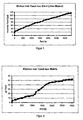
- Figur 1:
- Elutionsdiagramm von Paclitaxel vom Stent (ohne Trägermaterial)
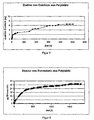
- Figur 2 :
- Elutionsdiagramm von Paclitaxel eingebettet in Matrix
- Figur 3 :
- Elutionsdiagramm von Paclitaxel eingebettet in Matrix und einer die Basisbeschichtung vollständig überziehender Schicht aus reinem Paclitaxel
- Figur 4 :
- Elutionsdiagramm eines hydrophilen Wirkstoffes, eingelagert in der Matrix, und einem darüberliegenden, die Basisbeschichtung vollständig überziehendem Polymer (Topcoat) zur Diffusionskontrolle
- Figur 5 :
- Elutionsdiagramm von Colchicin aus Matrix
- Figur 6 :
- Elutionsdiagramm von Simvastatin aus Matrix
- Figur 7 :
- Elutionsdiagramm eines Statins aus der Matrix mit Polystyrol als die Basisbeschichtung vollständig überziehende Diffusionskontrolle
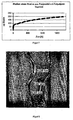
- Figur 8 :
- Aufnahme eines polymerbeschichteten Stents. Zur Kenntlichmachung der Beschichtung ist diese an einer Stelle aufgekratzt und es ist darunter deutlich die Oberfläche des Struts zu sehen.
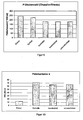
- Figur 8 :
- Vergleich der Thrombocytenzahl im Blut nach Chandler-Loop Zwischen beschichtetem (coated) und unbeschichtetem Stent (non coated) in Bezug zum Leerschlauch (Control), zur Plättchenzahl frisch entnommenen Blutes (Donor) und nach Lagerung von 60 Min in der Spritze (Syringe 60')
- Figur 10 :
- Vergleich des Plättchenfaktor 4-Gehaltes im frisch entnommenen Blut (Donor), im Leerschlauch (Control) nach 60 Minuten und unbeschichteten Stents (non coated) mit beschichtetem Stent (coated)
- Figur 11:
- Vergleichendes Diagramm zum aktivierter Complementfaktor C5a im frisch entnommenen Blut (Donor), im Leerschlauch (Control) nach 60 Minuten und unbeschichteten Stents (non coated) mit beschichtetem Stent (coated)
- Figur 12:
- Bildliche Darstellung der Restenose-Rate von mit vollständig desulfatiertem und N-reacetyliertem Heparin kovalent beschichteten Stents und mit Oligo- und Polysacchariden der Erythrocytenglycocalix beschichteten Stents im Vergleich zum unbeschichteten Stent und mit Polyacrylsäure beschichteten Stents (nach 4 Wochen Implantationszeit im Schwein)
Claims (16)
- Stent, der mit einer hämokompatiblen Schicht überzogen ist und mit mindestens einer zweiten, darüberliegenden Schicht, welche mindestens einen antiproliferativen, antiinflammatorischen und/oder antithrombotischen Wirkstoff kovalent und/oder adhäsiv gebunden enthält, dadurch gekennzeichnet, dass die hämokompatible Schicht aus regioselektiv hergestellten Heparin-Derivaten unterschiedlicher Sulfatierungsgrade und Acetylierungsgrade im Molekulargewichtsbereich von dem für die antithrombotische Wirkung verantwortlichen Pentasaccharid bis zum Standardmolekulargewicht des käuflichen Heparins von ca. 13kD, aus Oligo- und Polysacchariden der Erythrocytenglycolcalix, aus desulfatiertem und N-reacetyliertem Heparin, aus N-carboxymethyliertem oder partiell N-acetyliertem Chitosan oder aus Mischungen dieser Substanzen besteht.
- Stent gemäß Anspruch 1, dadurch gekennzeichnet, daß die Wirkstoffe aus der Gruppe ausgewählt werden, welche
Sirolimus, Rapamycin, Everolimus, Somatostatin, Tacrolimus, Roxithromycin, Dunaimycin, Ascomycin, Bafilomycin, Erythromycin, Midecamycin, Josamycin, Concanamycin, Clarithromycin, Troleandomycin, Folimycin, Cerivastatin, Simvastatin, Lovastatin, Fluvastatin, Rosuvastatin, Atorvastatin, Pravastatin, Pitavastatin, Vinblastin, Vincristin, Vindesin, Vinorelbin, Etobosid, Teniposid, Nimustin, Carmustin, Lomustin, Cyclophosphamid, 4-Hydroxyoxycyclophosphamid, Estramustin, Melphalan, Ifosfamid, Tropfosfamid, Chlorambucil, Bendamustin, Dacarbazin, Busulfan, Procarbazin, Treosulfan, Tremozolomid, Thiotepa, Daunorubicin, Doxorubicin, Aclarubicin, Epirubicin, Mitoxantron, Idarubicin, Bleomycin, Mitomycin, Dactinomycin, Methotrexat, Fludarabin, Fludarabin-5'-dihydrogenphosphat, Cladribin, Mercaptopurin, Thioguanin, Cytarabin, Fluorouracil, Gemcitabin, Capecitabin, Docetaxel, Carboplatin, Cisplatin, Oxaliplatin, Amsacrin, Irinotecan, Topotecan, Hydroxycarbamid, Miltefosin, Pentostatin, Aldesleukin, Tretinoin, Asparaginase, Pegasparase, Anastrozol, Exemestan, Letrozol, Formestan, Aminoglutethemid, Adriamycin, Azithromycin, Spiramycin, Cepharantin, SMC-Proliferation-Inhibitor-2w, Epothilone A und B, Mitoxanthrone, Azathioprin, Mycophenolatmofetil, c-myc-Antisense, b-myc-Antisense, Betulinsäure, Camptothecin, Lapachol, β-Lapachon,Podophyllotoxin, Betulin, Podophyllsäure-2-ethylhydrazid, Molgramostim, Peginterferon α-2b, Lanograstim, Filgrastim, Macrogol, Dacarbazin, Basiliximab, Daclizumab, Selectin, CETP-Inhibitor, Cadherine, Cytokininhibitoren, COX-2-Inhibitor, NFkB, Angiopeptin, Ciprofloxacin, Camptothecin, Fluroblastin, monoklonale Antikörper, die die Muskelzellproliferation hemmen, bFGF-Antagonisten, Probucol, Prostaglandine, 1,11-Dimethoxycanthin-6-on, 1-Hydroxy-11-Methoxycanthin-6-on, Scopolectin, Colchicin, NO-Donoren, Pentaerythrityltetranitrat, Syndnoeimine, S-Nitrosoderivate, Tamoxifen, Staurosporin, β-Estradiol, α-Estradiol, Estriol, Estron, Ethinylestradiol, Fosfestrol, Medroxyprogesteron, Estradiolcypionate, Estradiolbenzoate, Tranilast, Kamebakaurin und andere Terpenoide, die in der Krebstherapie eingesetzt werden, Verapamil, Tyrosin-Kinase-Inhibitoren, Tyrphostine, Cyclosporin A, Paclitaxel, 6-α-Hydroxy-Paclitaxel, Baccatin, Taxotere, synthetisch hergestellte als auch aus nativen Quellen gewonnene macrocyclische Oligomere des Kohlensuboxids (MCS) und seine Derivate, Mofebutazon, Acemetacin, Diclofenac, Lonazolac, Dapson, o-Carbamoylphenoxyessigsäure, Lidocain, Ketoprofen, Mefenaminsäure, Piroxicam, Meloxicam, Chloroquinphosphat, Penicillamin, Hydroxychloroquin, Auranofin, Natriumaurothiomalat, Oxaceprol, Celecoxib, β-Sitosterin, Ademetionin, Myrtecain, Polidocanol, Nonivamid, Levomenthol, Benzocain, Aescin, Ellipticin, D-24851 (Calbiochem), Colcemid, Cytochalasin A-E, Indanocine, Nocadazole, S 100 Protein, Bacitracin, Vitronectin-Rezeptor Antagonisten, Azelastin, Guanidylcyclase-Stimulator, Gewebsinhibitor der Metallproteinase-1 und 2, freie Nukleinsäuren, Nukleinsäuren in Virenüberträger inkorporiert, DNA- und RNA-Fragmente, Plaminogen-Aktivator Inhibitor-1, Plasminogen-Aktivator Inhibitor-2, Antisense Oligonucleotide, VEGF-Inhibitoren, IGF-1, Wirkstoffe aus der Gruppe der Antibiotika wie Cefadroxil, Cefazolin, Cefaclor, Cefotixin Tobramycin, Gentamycin, Penicilline, Dicloxacillin, Oxacillin, Sulfonamide, Metronidazol, Antithrombotika, Argatroban, Aspirin, Abciximab, synthetisches Antithrombin, Bivalirudin, Coumadin, Enoxoparin, desulfatiertens und N-reacetyliertes Heparin, Gewebe-Plasminogen-Aktivator, GpIIb/IIIa-Plättchenmembranrezeptor, Faktor Xa-Inhibitor Antikörper, Heparin, Hirudin, r-Hirudin, PPACK, Protamin, Prourokinase, Streptokinase, Warfarin, Urokinase, Vasodilatoren, Dipyramidol, Trapidil, Nitroprusside, PDGF-Antagonisten, Triazolopyrimidin und Seramin, ACE-Inhibitoren, Captopril, Cilazapril, Lisinopril, Enalapril, Losartan, Thioproteaseinhibitoren, Prostacyclin, Vapiprost, Interferon α, β und γ, Histaminantagonisten, Serotoninblocker, Apoptoseinhibitoren, Apoptoseregulatoren, p65 NF-kB, Bcl-xL-Antisense-Oligonukleotiden, Halofuginon, Nifedipin, Tocopherol Tranirast, Molsidomin, Teepolyphenole, Epicatechingallat, Epigallocatechingallat, Boswellinsäuren und ihre Derivate, Leflunomid, Anakinra, Etanercept, Sulfasalazin, Etoposid, Dicloxacyllin, Tetracyclin, Triamcinolon, Mutamycin, Procainimid, Retinolsäure, Quinidin, Disopyrimid, Flecainid, Propafenon, Sotolol, Amidoron, natürliche und synthetisch hergestellte Steroide, Bryophyllin A, Inotodiol, Maquirosid A, Ghalakinosid, Mansonin, Streblosid, Hydrocortison, Betamethason, Dexamethason, nichtsteroidale Substanzen, Fenoporfen, Ibuprofen, Indomethacin, Naproxen, Phenylbutazon, antivirale Agentien Acyclovir, Ganciclovir, Zidovudin, Antimykotika, Clotrimazol, Flucytosin, Griseofulvin, Ketoconazol, Miconazol, Nystatin, Terbinafin, antiprozoale Agentien Chloroquin, Mefloquin, Quinin, des weiteren natürliche Terpenoide, Hippocaesculin, Barringtogenol-C21-angelat, 14-Dehydroagrostistachin, Agroskerin, Agrostistachin, 17-Hydroxyagrostistachin, Ovatodiolide, 4,7-Oxycycloanisomelsäure, Baccharinoide B1, B2, B3 und B7, Tubeimosid, Bruceanole A,B und C, Bruceantinoside C, Yadanzioside N, und P, Isodeoxyelephantopin, Tomenphantopin A und B, Coronarin A,B,C und D, Ursolsäure, Hyptatsäure A, Zeorin, Iso-Iridogermanal. Maytenfoliol, Effusantin A, Excisanin A und B, Longikaurin B, Sculponeatin C, Kamebaunin, Leukamenin A und B, 13,18-Dehydro-6-alpha-Senecioyloxychaparrin, Taxamairin A und B, Regenilol, Triptolid, Cymarin, Apocymarin, Aristolochsäure, Anopterin, Hydroxyanopterin, Anemonin, Protoanemonin, Berberin, Cheliburinchlorid, Cictoxin, Sinococulin, Bombrestatin A und B, Cudraisoflavon A, Curcumin, Dihydronitidin, Nitidinchlorid, 12-beta-Hydroxypregnadien 3,20-dion, Bilobol, Ginkgol, Ginkgolsäure, Helenalin, Indicin, Indicin-N-oxid, Lasiocarpin, Inotodiol, Glykosid 1a, Podophyllotoxin, Justicidin A und B, Larreatin, Malloterin, Mallotochromanol, Isobutyrylmallotochromanol, Maquirosid A, Marchantin A, Maytansin, Lycoridicin, Margetin, Pancratistatin, Liriodenin, Bispsrthenolidin, Oxoushinsunin, Aristolactam-All, Bisparthenolidin, Periplocosid A, Ghalakinosid, Ursolsäure, Deoxypsorospermin, Psycorubin, Ricin A, Sanguinarin, Manwuweizsäure, Methylsorbifolin, Sphatheliachromen, Stizophyllin, Mansonin, Streblosid, Akagerin, Dihydrousambaraensin, Hydroxyusambarin, Strychnopentamin, Strychnophyllin, Usambarin, Usambarensin, Berberin, Liriodenin, Oxoushinsunin, Daphnoretin, Lariciresinol, Methoxylariciresinol, Syringaresinol, Umbelliferon, Afromoson, Acetylvismion B, Desacetylvismion A, Vismion A und B enthält. - Stent gemäß den vorangehenden Ansprüchen, dadurch gekennzeichnet, dass der antiproliferative, antiinflammatorische und/oder antithrombotische Wirkstoff in einer pharmazeutisch aktiven Konzentration von 0,001-10 mg pro cm2 Stentoberfläche enthalten ist.
- Stent gemäß Anspruch 1, wobei die hämokompatible Schicht adhäsiv oder bevorzugt kovalent an die Stentoberfläche gebunden ist.
- Stent gemäß den vorangehenden Ansprüche, dadurch gekennzeichnet, dass die Beschichtung aus zwei oder mehr Schichten besteht, wobei die erste Schicht direkt auf die Stentoberfläche aufgebracht wird.
- Stent gemäß Anspruch 5, dadurch gekennzeichnet, dass die erste Schicht aus einer hämokompatiblen Schicht besteht, welche vollständig oder unvollständig durch eine bioabbaubare und/oder biostabile Schicht überzogen ist, welche mindestens einen Wirkstoff gemäß Anspruch 2 in kovalent und/oder adhäsiv gebundener Form enthält.
- Stent gemäß Anspruch 5 oder 6, dadurch gekennzeichnet, daß die zweite Schicht aus einer mindestens einen Wirkstoff gemäß Anspruch 2, in kovalent und/oder adhäsiv gebundener Form, enthaltenden nichtbioabbaubaren Schicht besteht, welche im wesentlichen vollständig mit einer bevorzugt kovalent gebundenen hämokompatiblen Schicht überzogen ist.
- Stent gemäß Anspruch 6 oder 7, dadurch gekennzeichnet, dass als bioabbaubare Substanzen für die bioabbaubare Schicht Polyvalerolactone, Poly-ε-Decalactone, Polylactonsäure, Polyglycolsäure Polylactide, Polyglycolide, Copolymere der Polylactide und Polyglycolide, Poly-ε-caprolacton, Polyhydroxybuttersäure, Polyhydroxybutyrate, Polyhydroxyvalerate, Polyhydroxybutyrate-co-valerate, Poly(1,4-dioxan-2,3-dione), Poly(1,3-dioxan-2-one), Poly-para-dioxanone, Polyanhydride, Polymaleinsäure-anhydride, Polyhydroxymethacrylate, Fibrin, Polycyanoacrylate, Polycaprolactondimethylacrylate, Poly-b-Maleinsäure Polycaprolactonbutyl-acrylate, Multiblockpolymere aus Oligocaprolactondiole und Oligodioxanondiole, Polyetherestermultiblockpolymere aus PEG und Poly(butylenterephtalat), Polypivotolactone, Polyglycolsäuretrimethyl-carbonate Polycaprolacton-glycolide, Poly(g-ethylglutamat), Poly(DTH-Iminocarbonat), Poly(DTE-co-DT-carbonat), Poly(Bisphenol A-iminocarbonat), Polyorthoester, Polyglycol-säuretrimethylcarbonate, Polytrimethylcarbonate Polyiminocarbonate, Poly(N-vinyl)-Pyrolidon, Polyvinylalkohole, Polyesteramide, glycolierte Polyester, Polyphosphoester, Polyphosphazene, Poly[p-carboxyphenoxy)propan] Polyhydroxypentansäure, Polyanhydride, Polyethylenoxid-propylenoxid, weiche Polyurethane, Polyurethane mit Aminosäurereste im Backbone, Polyetherester, Polyethylenoxid, Polyalkenoxalate, Polyorthoester sowie deren Copolymere, Lipide, Carrageenane, Fibrinogen, Stärke, Kollagen, protein-basierende Polymere, Polyaminosäuren, synthetische Polyaminosäuren, Zein, modifiziertes Zein, Polyhydroxyalkanoate, Pectinsäure, Actinsäure, modifiziertes und unmodifiziertes Fibrin und Casein, Carboxymethylsulfat, Albumin, Hyaluronsäure, Heparansulfat, Heparin, Chondroitinsulfat, Dextran, β-Cyclodextrine, Copolymere mit PEG und Polypropylenglycol, Gummi arabicum, Guar, Gelatine, Collagen Collagen-N-Hydroxysuccinimid, Lipide, Phospholipide, Modifikationen und Copolymere und/oder Mischungen der vorgenannten Substanzen eingesetzt werden.
- Stent gemäß Anspruch 6, 7 oder 8, dadurch gekennzeichnet, dass als biostabile Substanzen für die biostabile Schicht Polyacrylsäure und Polyacrylate, Polymethylmethacrylat, Polybutylmethacrylat, Polyacrylamid, Polyacrylonitrile, Polyamide, Polyetheramide, Polyethylenamin, Polyimide, Polycarbonate, Polycarbourethane, Polyvinylketone, Polyvinylhalogenide, Polyvinylidenhalogenide, Polyvinylether, Polyisobutylene, Polyvinylaromaten, Polyvinylester, Polyvinylpyrollidone, Polyoxymethylene, Polytetramethylenoxid, Polyethylen, Polypropylen, Polytetrafluorethylen, Polyurethane, Polyetherurethane Silicon-Polyetherurethane, Silicon-Polyurethane, Silicon-Polycarbonat-Urethane, Polyolefin-Elastomere, Polyisobutylene, EPDM-Gummis, Fluorosilicone, Carboxymethylchitosan, Polyaryletheretherketone, Polyetheretherketone, Polyethylenterephtalat, Polyvalerate, Carboxymethylcellulose, Cellulose, Rayon, Rayontriacetate, Cellulosenitrate, Celluloseacetate, Hydroxyethylcellulose, Cellulosebutyrate, Celluloseacetatbutyrate, Ethylvinylacetat-copolymere, Polysulfone, Epoxyharze, ABS-Harze, EPDM-Gummis, Silicone, Polysiloxane, Polydimethylsiloxane, Polyvinylhalogene und Copolymere, Celluloseether, Cellulosetriacetate, Chitosan und Copolymere und/oder Mischungen derselben eingesetzt werden.
- Verfahren zur hämokompatiblen, antiproliferativen, antiinflammatorischen und/oder athrombogenen Beschichtung von Stents gemäß Anspruch 1 gekennzeichnet durch die Schritte:a) Bereitstellen eines unbeschichteten Stents;b) Aufbringen einer bevorzugt kovalent gebundenen hämokompatiblen Schicht,c) im wesentlichen vollständiges Überziehen der hämokompatiblen Schicht im Tauch- oder Sprühverfahren mit mindestens einem Wirkstoff und/oder durch kovalente Kopplung des Wirkstoffes an die darunterliegende Schicht, oderc') im wesentlichen vollständiges Überziehen oder unvollständiges Überziehen der hämokompatiblen Schicht im Tauch- oder Sprühverfahren mit mindestens einer bioabbaubaren und/oder biostabilen Schicht, welche mindestens einen Wirkstoff kovalent und/oder adhäsiv gebunden enthält.
- Verfahren nach Anspruch 10, gekennzeichnet durch die Schritte a), b), c') undd) im wesentlichen vollständiges Überziehen der hämokompatiblen Schicht mit mindestens einer bioabbaubaren und/oder biostabilen Schicht, welche mindestens einen Wirkstoff kovalent und/oder adhäsiv gebunden enthält und eine weitere, die darunterliegende Schicht vollständig und/oder teilweise überdeckende bioabbaubare und/oder biostabile Schicht ohne Wirkstoff als Diffusionsbarriere.
- Verfahren nach Anspruch 10, gekennzeichnet durch die Schritte a), b) undc') Aufbringen einer biostabilen Schicht, welche mindestens einen antiproliferativen, antiinflammatorschen und/oder antithrombotischen Wirkstoff kovalent und/oder adhäsiv gebunden enthält; undd) im wesentlichen vollständiges Überziehen der biostabilen Schicht mit einer hämokompatiblen Schicht.
- Verfahren nach Anspruch 10, gekennzeichnet durch die Schritte a), b), c') undd) Aufbringen eines Wirkstoffes oder einer Wirkstoffkombination, kovalent und/oder adhäsiv an die darunterliegende Schicht,e) im wesentlichen vollständiges Überziehen der hämokompatiblen Schicht mit mindestens einer bioabbaubaren und/oder biostabilen Schicht, welche mindestens einen Wirkstoff kovalent und/oder adhäsiv gebunden enthält,f) Aufbringen eines Wirkstoffes oder einer Wirkstoffkombination kovalent und/oder adhäsiv gebunden und eine weitere, die darunterliegende Schicht vollständig oder teilweise überdeckende bioabbaubare und/oder biostabile Schicht ohne Wirkstoff als Diffusionsbarriere.
- Verfahren nach Anspruch 10, gekennzeichnet durch die Schritte a), b) undc') im wesentlichen vollständiges oder unvollständiges Überziehen der hämokompatiblen Schicht mit mindestens zwei bioabbaubaren und/oder biostabilen Schichten, welche mindestens einen Wirkstoff kovalent und/oder adhäsiv gebunden in unterschiedlicher Konzentration je Schicht enthalten, oderd) im wesentlichen vollständiges oder unvollständiges Überziehen der hämokompatiblen Schicht mit mindestens zwei bioabbaubaren oder/und biostabilen Schichten, welche mindestens einen Wirkstoff kovalent und/oder adhäsiv gebunden in unterschiedlicher Konzentration je Schicht enthalten und mindestens eine weitere, die darunterliegende Schicht vollständig oder teilweise überdeckende, bioabbaubare und/oder biostabile Schicht ohne Wirkstoff als Diffusionsbarriere, odere) im wesentlichen vollständiges oder unvollständiges Überziehen der hämokompatiblen Schicht mit mindestens einer bioabbaubaren und/oder biostabilen Schicht, welche mindestens einen Wirkstoff und mindestens einen weiteren Wirkstoff derselben Gruppe oder aus einer anderen Gruppe mit komplementären Eigenschaften in gleicher oder unterschiedlicher Konzentrationen kovalent und/oder adhäsiv gebunden enthält, oderf) im wesentlichen vollständiges oder unvollständiges Überziehen der hämokompatiblen Schicht mit mindestens zwei bioabbaubaren und/oder biostabilen Schichten, welche mindestens einen Wirkstoff und mindestens einen weiteren Wirkstoff derselben Gruppe oder aus einer anderen Gruppe mit komplementären Eigenschaften in gleicher oder unterschiedlicher Konzentrationen kovalent und/oder adhäsiv gebunden enthalten und mindestens eine weitere, die darunterliegende Schicht vollständig und/oder teilweise überdeckende, bioabbaubare und/oder biostabile Schicht ohne Wirkstoff als Diffusionsbarriere, oderg) im wesentlichen vollständiges Überziehen der hämokompatiblen Schicht mit mindestens zwei bioabbaubaren und/oder biostabilen Schichten, welche mindestens einen Wirkstoff in gleichen und/oder unterschiedlichen Konzentrationen kovalent und/oder adhäsiv gebunden enthalten und einer weiteren, die darunterliegende Schicht vollständig oder auch nur teilweise überdeckende, bioabbaubare und/oder biostabile Schicht ohne Wirkstoff als Diffusionsbarriere und einer diese Schicht überziehenden Wirkstoffschicht, bestehend aus mindestens einem Wirkstoff kovalent und/oder adhäsiv an die darunterliegende Schicht gebunden.
- Verfahren nach einem der Ansprüche 10 - 14, dadurch gekennzeichnet, daß die hämokompatiblen Schichten aus Heparin nativen Ursprungs als auch regioselektiv hergestellter Derivate unterschiedlicher Sulfatierungsgrade und Acteylierungsgrade im Molekulargewichtsbereich von des für die antithrombotische Wirkung verantwortlichen Pentasaccharides bis zum Standardmolekulargewicht des käuflichen Heparins von ca. 13kD, Heparansulfate und seine Derivate, Oligo- und Polysaccharide der Erythrocytenglycolcalix, Oligosaccharide, Polysaccharide, vollständig desulfatiertes und N-reacetyliertes Heparin, desulfatiertes und N-reacetyliertes Heparin, N-carboxymethyliertes und/oder partiell N-acetyliertes Chitosan, Polyacrylsäure, Polyvinylpyrrolidon, und/oder Polyetheretherketon, Polyethylenglykol oder aus Mischungen dieser Substanzen bestehen.
- Verfahren nach einem der Ansprüche 10 - 15, dadurch gekennzeichnet, dass die hämokompatible erste Schicht bevorzugt kovalent an den Stent gebunden ist, die biostabile Schicht die erste Schicht vollständig oder unvollständig überzieht und die dritte hämokompatible Schicht bevorzugt kovalent an die zweite Schicht gebunden ist.
Applications Claiming Priority (5)
| Application Number | Priority Date | Filing Date | Title |
|---|---|---|---|
| DE10150340 | 2001-10-15 | ||
| DE10150340 | 2001-10-15 | ||
| DE10157610 | 2001-11-26 | ||
| DE10157610 | 2001-11-26 | ||
| PCT/DE2002/003941 WO2003034944A1 (de) | 2001-10-15 | 2002-10-15 | Beschichtung von stents zur verhinderung von restenose |
Publications (2)
| Publication Number | Publication Date |
|---|---|
| EP1435877A1 EP1435877A1 (de) | 2004-07-14 |
| EP1435877B1 true EP1435877B1 (de) | 2009-04-15 |
Family
ID=26010364
Family Applications (1)
| Application Number | Title | Priority Date | Filing Date |
|---|---|---|---|
| EP02779166A Expired - Lifetime EP1435877B1 (de) | 2001-10-15 | 2002-10-15 | Beschichtung von stents zur verhinderung von restenose |
Country Status (14)
| Country | Link |
|---|---|
| US (1) | US8679520B2 (de) |
| EP (1) | EP1435877B1 (de) |
| JP (1) | JP4549059B2 (de) |
| KR (1) | KR100679990B1 (de) |
| CN (1) | CN1568166A (de) |
| AT (1) | ATE428372T1 (de) |
| BR (1) | BR0213279A (de) |
| CA (1) | CA2462723C (de) |
| DE (2) | DE50213462D1 (de) |
| DK (1) | DK1435877T3 (de) |
| ES (1) | ES2327031T3 (de) |
| IL (2) | IL161335A0 (de) |
| WO (1) | WO2003034944A1 (de) |
| ZA (1) | ZA200402839B (de) |
Families Citing this family (159)
| Publication number | Priority date | Publication date | Assignee | Title |
|---|---|---|---|---|
| US6346510B1 (en) * | 1995-10-23 | 2002-02-12 | The Children's Medical Center Corporation | Therapeutic antiangiogenic endostatin compositions |
| US7399480B2 (en) * | 1997-09-26 | 2008-07-15 | Abbott Laboratories | Methods of administering tetrazole-containing rapamycin analogs with other therapeutic substances using medical devices |
| US7220276B1 (en) * | 2000-03-06 | 2007-05-22 | Surmodics, Inc. | Endovascular graft coatings |
| DK1435877T3 (da) | 2001-10-15 | 2009-08-03 | Hemoteq Ag | Overtrækning af stents for at forhindre restenose |
| DE50310322D1 (de) * | 2002-05-09 | 2008-09-25 | Hemoteq Ag | Hemokompatibel beschichtete medizinprodukte, deren herstellung und verwendung |
| KR100478671B1 (ko) * | 2002-07-15 | 2005-03-22 | 사회복지법인 삼성생명공익재단 | 클로트리마졸을 포함하는 혈관 재협착 예방 및 치료용약학 조성물, 및 스텐트 |
| US7407955B2 (en) | 2002-08-21 | 2008-08-05 | Boehringer Ingelheim Pharma Gmbh & Co., Kg | 8-[3-amino-piperidin-1-yl]-xanthines, the preparation thereof and their use as pharmaceutical compositions |
| WO2004087045A2 (en) * | 2003-03-28 | 2004-10-14 | Kosan Biosciences, Inc. | Devices, methods, and compositions to prevent restenosis |
| AU2004244962A1 (en) * | 2003-04-10 | 2004-12-16 | 3M Innovative Properties Company | Delivery of immune response modifier compounds using metal-containing particulate support materials |
| US20080215137A1 (en) * | 2003-04-30 | 2008-09-04 | Boston Scientific Scimed, Inc. | Therapeutic driving layer for a medical device |
| WO2004112864A2 (en) * | 2003-06-19 | 2004-12-29 | Vascular Therapies Llc | Medical devices and methods for regulating the tissue response to vascular closure devices |
| DE102004020856A1 (de) * | 2003-09-29 | 2005-04-14 | Hemoteq Gmbh | Biokompatible, biostabile Beschichtung von medizinischen Oberflächen |
| US20090232866A1 (en) * | 2003-10-07 | 2009-09-17 | Mariann Pavone-Gyongyosi | Oligopeptides as coating material for medical products |
| US20050129731A1 (en) * | 2003-11-03 | 2005-06-16 | Roland Horres | Biocompatible, biostable coating of medical surfaces |
| FR2861993B1 (fr) * | 2003-11-06 | 2006-01-21 | Jean Claude Rigaud | Complexe moleculaire anti restenose pour endoprothese intracoronaire |
| AU2004291062A1 (en) * | 2003-11-10 | 2005-06-02 | Angiotech International Ag | Medical implants and anti-scarring agents |
| WO2005075003A1 (en) * | 2004-01-21 | 2005-08-18 | Medtronic Vascular Inc. | Implantable medical devices for treating or preventing restenosis |
| US8828416B2 (en) * | 2004-03-09 | 2014-09-09 | Cordis Corporation | Local vascular delivery of topotecan in combination with rapamycin to prevent restenosis following vascular injury |
| US8685431B2 (en) * | 2004-03-16 | 2014-04-01 | Advanced Cardiovascular Systems, Inc. | Biologically absorbable coatings for implantable devices based on copolymers having ester bonds and methods for fabricating the same |
| EP1735024A1 (de) * | 2004-03-26 | 2006-12-27 | SurModics, Inc. | Verfahren und systeme für biokompatible oberflächen |
| CA2560507C (en) * | 2004-03-26 | 2011-08-16 | Surmodics, Inc. | Composition and method for preparing biocompatible surfaces |
| JP2008510726A (ja) * | 2004-08-20 | 2008-04-10 | エントレメッド インコーポレイテッド | プロテイナーゼ活性化受容体アンタゴニストを含む組成物および方法 |
| CN101052362A (zh) * | 2004-09-08 | 2007-10-10 | 株式会社钟化 | 生物体留置用支架 |
| CN101933923A (zh) * | 2004-11-05 | 2011-01-05 | 赛福伦公司 | 癌症治疗 |
| DE102004054054A1 (de) | 2004-11-05 | 2006-05-11 | Boehringer Ingelheim Pharma Gmbh & Co. Kg | Verfahren zur Herstellung chiraler 8-(3-Amino-piperidin-1-yl)-xanthine |
| US8436190B2 (en) | 2005-01-14 | 2013-05-07 | Cephalon, Inc. | Bendamustine pharmaceutical compositions |
| US20090130163A1 (en) * | 2005-02-18 | 2009-05-21 | Abraxis Bio Scoence, Inc. | Drugs With Improved Hydrophobicity For Incorporation in Medical Devices |
| EP1853278A4 (de) * | 2005-02-18 | 2011-12-28 | Cartilix Inc | Glucosaminmaterialien |
| US20060222627A1 (en) * | 2005-03-30 | 2006-10-05 | Andrew Carter | Optimizing pharmacodynamics of therapeutic agents for treating vascular tissue |
| US20090062909A1 (en) | 2005-07-15 | 2009-03-05 | Micell Technologies, Inc. | Stent with polymer coating containing amorphous rapamycin |
| KR101406415B1 (ko) | 2005-07-15 | 2014-06-19 | 미셀 테크놀로지즈, 인코포레이티드 | 제어된 형태의 약물 분말을 함유하는 중합체 코팅 |
| US7632304B2 (en) * | 2005-09-07 | 2009-12-15 | Rbkpark Llc | Coronary stent |
| US9233012B2 (en) | 2005-09-07 | 2016-01-12 | RBKPark, LLC | Medical stent |
| KR100778020B1 (ko) * | 2005-10-24 | 2007-11-28 | 사회복지법인 삼성생명공익재단 | 다중 약물 적재 및 보다 효과적인 약물 방출을 위한 혈관스텐트 |
| US20070104753A1 (en) * | 2005-11-04 | 2007-05-10 | Aiden Flanagan | Medical device with a coating comprising an active form and an inactive form of therapeutic agent(s) |
| EP1951332A1 (de) * | 2005-11-10 | 2008-08-06 | Schering Aktiengesellschaft | Reduzierung von restenose |
| DE602007009045D1 (de) | 2006-01-05 | 2010-10-21 | Med Inst Inc | Zein-beschichtete medizinische vorrichtung |
| KR100706032B1 (ko) * | 2006-01-07 | 2007-04-12 | 장양수 | 파클리탁셀 방출스텐트의 시술을 위한 유전자형 분석키트 |
| JP2009531474A (ja) * | 2006-03-31 | 2009-09-03 | エイオーテク バイオマテリアルズ プロプライアタリー リミティド | 生物学的に安定なポリウレタン |
| CA2996768C (en) | 2006-04-26 | 2020-12-08 | Micell Technologies, Inc. | Coatings containing multiple drugs |
| PE20080251A1 (es) | 2006-05-04 | 2008-04-25 | Boehringer Ingelheim Int | Usos de inhibidores de dpp iv |
| CN102838599A (zh) | 2006-05-04 | 2012-12-26 | 贝林格尔.英格海姆国际有限公司 | 多晶型 |
| EP1852108A1 (de) | 2006-05-04 | 2007-11-07 | Boehringer Ingelheim Pharma GmbH & Co.KG | Zusammensetzungen von DPP-IV-Inhibitoren |
| KR100778654B1 (ko) * | 2006-05-09 | 2007-11-28 | 전남대학교산학협력단 | 혈관용 스텐트의 치옥트산 코팅방법 |
| CA2653156C (en) * | 2006-06-13 | 2012-12-18 | Christophe Bureau | Drug eluting stent with a biodegradable release layer attached with an electro-grafted primer coating |
| US20080124404A1 (en) * | 2006-06-19 | 2008-05-29 | Jingwen Liu | Hypolipidemic and/or hypocholesteremic compounds obtainable from the goldenseal plant |
| CA2656635C (en) * | 2006-07-03 | 2013-05-28 | Hemoteq Ag | Stent with polymeric coating comprising rapamycin as an active agent |
| US20080181928A1 (en) * | 2006-12-22 | 2008-07-31 | Miv Therapeutics, Inc. | Coatings for implantable medical devices for liposome delivery |
| US11426494B2 (en) | 2007-01-08 | 2022-08-30 | MT Acquisition Holdings LLC | Stents having biodegradable layers |
| CN101711137B (zh) | 2007-01-08 | 2014-10-22 | 米歇尔技术公司 | 具有可生物降解层的支架 |
| JP5602432B2 (ja) * | 2007-01-11 | 2014-10-08 | ロバート ラマール ジュニア ビョーク | 経皮的冠動脈インターベンション用の多剤溶出冠動脈ステント |
| US8182890B2 (en) * | 2007-01-19 | 2012-05-22 | Elixir Medical Corporation | Biodegradable endoprostheses and methods for their fabrication |
| NZ578341A (en) | 2007-01-21 | 2011-06-30 | Hemoteq Ag | Method for producing a coated catheter balloon |
| CN101007187B (zh) * | 2007-01-26 | 2014-01-01 | 复旦大学附属华山医院 | 一种复合药物洗脱支架及其药物涂层的制备方法 |
| US20080241215A1 (en) * | 2007-03-28 | 2008-10-02 | Robert Falotico | Local vascular delivery of probucol alone or in combination with sirolimus to treat restenosis, vulnerable plaque, aaa and stroke |
| US9433516B2 (en) | 2007-04-17 | 2016-09-06 | Micell Technologies, Inc. | Stents having controlled elution |
| US20100129423A1 (en) * | 2007-04-19 | 2010-05-27 | Medovent Gmbh | Device made at least partially of n-acetylchitosan with controlled biodissolution |
| US8133553B2 (en) | 2007-06-18 | 2012-03-13 | Zimmer, Inc. | Process for forming a ceramic layer |
| US8309521B2 (en) | 2007-06-19 | 2012-11-13 | Zimmer, Inc. | Spacer with a coating thereon for use with an implant device |
| US9192697B2 (en) | 2007-07-03 | 2015-11-24 | Hemoteq Ag | Balloon catheter for treating stenosis of body passages and for preventing threatening restenosis |
| KR20100085179A (ko) | 2007-09-04 | 2010-07-28 | 가부시키가이샤 니혼 스텐토 테크놀로지 | 약제 서방성 스텐트 |
| WO2009036250A1 (en) | 2007-09-12 | 2009-03-19 | Cook Incorporated | Enhanced remodelable materials for occluding bodily vessels and related methods and systems |
| FR2921661B1 (fr) * | 2007-10-01 | 2013-05-31 | Centre Nat Rech Scient | Solide hybride organique inorganique a surface modifiee. |
| WO2009048780A1 (en) * | 2007-10-08 | 2009-04-16 | The University Of Kentucky Research Foundation | Polymer-metal chelator conjugates and uses thereof |
| US8608049B2 (en) * | 2007-10-10 | 2013-12-17 | Zimmer, Inc. | Method for bonding a tantalum structure to a cobalt-alloy substrate |
| CA2702183A1 (en) * | 2007-10-10 | 2009-04-16 | Miv Therapeutics Inc. | Lipid coatings for implantable medical devices |
| US20110230973A1 (en) * | 2007-10-10 | 2011-09-22 | Zimmer, Inc. | Method for bonding a tantalum structure to a cobalt-alloy substrate |
| US20100298928A1 (en) * | 2007-10-19 | 2010-11-25 | Micell Technologies, Inc. | Drug Coated Stents |
| EP2214747A2 (de) * | 2007-11-20 | 2010-08-11 | Cook Incorporated | Gesteuerte wirkstofffreisetzung mit anhand von lävulinsäure veränderter zeinschicht |
| US20090187256A1 (en) * | 2008-01-21 | 2009-07-23 | Zimmer, Inc. | Method for forming an integral porous region in a cast implant |
| US20090198286A1 (en) * | 2008-02-05 | 2009-08-06 | Zimmer, Inc. | Bone fracture fixation system |
| WO2009116750A2 (ko) * | 2008-03-17 | 2009-09-24 | 이화여자대학교 산학협력단 | 혈관 재협착방지 스텐트 코팅용 조성물 및 이를 이용해 제조된 스텐트 |
| AR072777A1 (es) * | 2008-03-26 | 2010-09-22 | Cephalon Inc | Formas solidas de clorhidrato de bendamustina |
| PE20091730A1 (es) | 2008-04-03 | 2009-12-10 | Boehringer Ingelheim Int | Formulaciones que comprenden un inhibidor de dpp4 |
| JP5608160B2 (ja) | 2008-04-17 | 2014-10-15 | ミセル テクノロジーズ、インコーポレイテッド | 生体吸収性の層を有するステント |
| KR20110008312A (ko) | 2008-05-06 | 2011-01-26 | 메타볼릭스 인코포레이티드 | 생분합성 폴리에스테르 블렌드 |
| AU2009244790B2 (en) * | 2008-05-09 | 2013-09-12 | Duke University | Treatment for diseases relying on discovery that thioredoxin mediates nitric oxide release in cells |
| EP2313122B1 (de) | 2008-07-17 | 2019-03-06 | Micell Technologies, Inc. | Medizinische wirkstofffreisetzungsvorrichtung |
| KR20200118243A (ko) | 2008-08-06 | 2020-10-14 | 베링거 인겔하임 인터내셔날 게엠베하 | 메트포르민 요법이 부적합한 환자에서의 당뇨병 치료 |
| WO2010036702A1 (en) * | 2008-09-25 | 2010-04-01 | Cephalon, Inc. | Liquid formulations of bendamustine |
| US20200155558A1 (en) | 2018-11-20 | 2020-05-21 | Boehringer Ingelheim International Gmbh | Treatment for diabetes in patients with insufficient glycemic control despite therapy with an oral antidiabetic drug |
| EA022310B1 (ru) | 2008-12-23 | 2015-12-30 | Бёрингер Ингельхайм Интернациональ Гмбх | Солевые формы органического соединения |
| UA109109C2 (uk) * | 2009-01-15 | 2015-07-27 | Сефалон, Інк. | Кристалічна форма вільної основи бендамустину (варіанти) та фармацевтична композиція для лікування раку (варіанти) |
| US20100209475A1 (en) * | 2009-02-19 | 2010-08-19 | Biomet Manufacturing Corp. | Medical implants having a drug delivery coating |
| US8968818B2 (en) * | 2009-02-21 | 2015-03-03 | Covidien Lp | Medical devices having activated surfaces |
| JP5597625B2 (ja) | 2009-03-02 | 2014-10-01 | 株式会社日本ステントテクノロジー | 薬剤溶出性ステント |
| JP2012522589A (ja) | 2009-04-01 | 2012-09-27 | ミシェル テクノロジーズ,インコーポレイテッド | 被覆ステント |
| EP2243501A1 (de) * | 2009-04-24 | 2010-10-27 | Eurocor Gmbh | Schellack- und paclitaxel-beschichtete Katheterballons |
| EP2944332B1 (de) | 2009-07-10 | 2016-08-17 | Boston Scientific Scimed, Inc. | Verwendung von nanokristallen für einen wirkstofffreisetzungsballon |
| EP2453834A4 (de) | 2009-07-16 | 2014-04-16 | Micell Technologies Inc | Medizinische wirkstofffreisetzungsvorrichtung |
| EP2453938B1 (de) * | 2009-07-17 | 2015-08-19 | Boston Scientific Scimed, Inc. | Nukleierung von wirkstofffreisetzungsballons für verbesserte kristallgrösse und -dichte |
| WO2011046757A2 (en) * | 2009-10-12 | 2011-04-21 | Rajabrata Sarkar | Accelerating thrombus resolution through augmentation of p53 activity |
| NZ599298A (en) | 2009-11-27 | 2014-11-28 | Boehringer Ingelheim Int | Treatment of genotyped diabetic patients with dpp-iv inhibitors such as linagliptin |
| US20110160645A1 (en) * | 2009-12-31 | 2011-06-30 | Boston Scientific Scimed, Inc. | Cryo Activated Drug Delivery and Cutting Balloons |
| EP2531140B1 (de) | 2010-02-02 | 2017-11-01 | Micell Technologies, Inc. | Stent und stenteinsatzsystem mit verbesserter einsetzbarkeit |
| US20130029030A1 (en) * | 2010-03-15 | 2013-01-31 | Kristian Larsen | Method for promotion of hemostasis and/or wound healing |
| US10232092B2 (en) | 2010-04-22 | 2019-03-19 | Micell Technologies, Inc. | Stents and other devices having extracellular matrix coating |
| WO2011138421A1 (en) | 2010-05-05 | 2011-11-10 | Boehringer Ingelheim International Gmbh | Combination therapy |
| US8920486B2 (en) | 2010-05-18 | 2014-12-30 | RBKPark, LLC | Medical device |
| NZ603319A (en) | 2010-06-24 | 2015-04-24 | Boehringer Ingelheim Int | Diabetes therapy |
| EP2593039B1 (de) | 2010-07-16 | 2022-11-30 | Micell Technologies, Inc. | Medizinische wirkstofffreisetzungsvorrichtung |
| EP2611476B1 (de) | 2010-09-02 | 2016-08-10 | Boston Scientific Scimed, Inc. | Beschichtungsverfahren für wirkstofffreisetzungsballons mit wärmeinduziertem rewrap-gedächtnis |
| AR083878A1 (es) | 2010-11-15 | 2013-03-27 | Boehringer Ingelheim Int | Terapia antidiabetica vasoprotectora y cardioprotectora, linagliptina, metodo de tratamiento |
| DK2683397T3 (en) * | 2011-03-09 | 2017-09-18 | Csl Behring Gmbh | FACTOR XII INHIBITORS FOR ADMINISTRATION OF MEDICAL PROCEDURES COMPREHENSIVE CONTACT WITH ARTIFICIAL SURFACES |
| KR101064214B1 (ko) * | 2011-04-08 | 2011-09-14 | 강원대학교산학협력단 | 키토산 코팅층을 구비한 약물 용출형 스텐트 및 그 제조방법 |
| KR20120135689A (ko) * | 2011-06-07 | 2012-12-17 | (주) 태웅메디칼 | 약물 방출 스텐트 코팅제의 제조방법 및 이에 의해 제조된 약물 방출 스텐트 코팅제 |
| CA2841360A1 (en) | 2011-07-15 | 2013-01-24 | Micell Technologies, Inc. | Drug delivery medical device |
| CA2841552C (en) | 2011-07-15 | 2020-06-23 | Boehringer Ingelheim International Gmbh | Substituted quinazolines, the preparation thereof and the use thereof in pharmaceutical compositions |
| WO2013022458A1 (en) | 2011-08-05 | 2013-02-14 | Boston Scientific Scimed, Inc. | Methods of converting amorphous drug substance into crystalline form |
| US9056152B2 (en) | 2011-08-25 | 2015-06-16 | Boston Scientific Scimed, Inc. | Medical device with crystalline drug coating |
| CN102499798A (zh) * | 2011-09-29 | 2012-06-20 | 微创医疗器械(上海)有限公司 | 一种介入医疗器械及其制备方法 |
| CN102397119A (zh) * | 2011-09-29 | 2012-04-04 | 微创医疗器械(上海)有限公司 | 一种介入医疗器械及其制备方法 |
| US10188772B2 (en) | 2011-10-18 | 2019-01-29 | Micell Technologies, Inc. | Drug delivery medical device |
| US9555001B2 (en) | 2012-03-07 | 2017-01-31 | Boehringer Ingelheim International Gmbh | Pharmaceutical composition and uses thereof |
| US20130303554A1 (en) | 2012-05-14 | 2013-11-14 | Boehringer Ingelheim International Gmbh | Use of a dpp-4 inhibitor in sirs and/or sepsis |
| EP3685839A1 (de) | 2012-05-14 | 2020-07-29 | Boehringer Ingelheim International GmbH | Linagliptin zur verwendung in der behandlung von albuminuria und nierenbedingten erkrankungen |
| WO2013174767A1 (en) | 2012-05-24 | 2013-11-28 | Boehringer Ingelheim International Gmbh | A xanthine derivative as dpp -4 inhibitor for use in modifying food intake and regulating food preference |
| CN104755538B (zh) | 2012-08-17 | 2018-08-31 | Cj 第一制糖株式会社 | 用于聚合物共混物的生物基橡胶改性剂 |
| CN102861364A (zh) * | 2012-10-16 | 2013-01-09 | 天津市第三中心医院 | 地塞米松磷酸钠-海藻酸钠复合缓释涂层的制备方法及其应用 |
| CN102872484A (zh) * | 2012-10-16 | 2013-01-16 | 天津市第三中心医院 | 一种地塞米松磷酸钠复合缓释涂层的制备方法及其应用 |
| KR102403299B1 (ko) | 2013-03-08 | 2022-06-03 | 체에스엘 베링 게엠베하 | 원격 허혈-재관류 손상의 치료 및 예방 |
| EP2967803B1 (de) | 2013-03-12 | 2023-12-27 | Micell Technologies, Inc. | Bioabsorbierbare biomedizinische implantate |
| US9545301B2 (en) | 2013-03-15 | 2017-01-17 | Covidien Lp | Coated medical devices and methods of making and using same |
| EP2996629B1 (de) | 2013-05-15 | 2021-09-22 | Micell Technologies, Inc. | Bioabsorbierbare biomedizinische implantate |
| EP3004225A1 (de) | 2013-05-30 | 2016-04-13 | Metabolix, Inc. | Rezyklatmischungen |
| WO2014198906A1 (en) * | 2013-06-14 | 2014-12-18 | Boehringer Ingelheim International Gmbh | Dpp-4 inhibitors for treating diabetes and its complications |
| EP3060174B1 (de) * | 2013-10-22 | 2020-05-27 | Concievalve LLC | Verfahren zur hemmung von stenose, obstruktionen oder verkalkung einer gestenteten herzklappe oder bioprothese |
| CN105899244B (zh) | 2013-11-14 | 2019-02-19 | pfm医用钛有限公司 | 具有抗血栓形成的涂层的聚氨酯 |
| US9668890B2 (en) | 2013-11-22 | 2017-06-06 | Covidien Lp | Anti-thrombogenic medical devices and methods |
| ES2950384T3 (es) | 2014-02-28 | 2023-10-09 | Boehringer Ingelheim Int | Uso médico de un inhibidor de DPP-4 |
| WO2015149029A1 (en) | 2014-03-27 | 2015-10-01 | Metabolix, Inc. | Highly filled polymer systems |
| US11406742B2 (en) | 2014-07-18 | 2022-08-09 | M.A. Med Alliance SA | Coating for intraluminal expandable catheter providing contact transfer of drug micro-reservoirs |
| US9492594B2 (en) | 2014-07-18 | 2016-11-15 | M.A. Med Alliance SA | Coating for intraluminal expandable catheter providing contact transfer of drug micro-reservoirs |
| CN104984412A (zh) * | 2015-05-12 | 2015-10-21 | 湘潭大学 | 一种药物球囊表面紫杉醇涂层的制备方法 |
| CN105386042B (zh) * | 2015-11-20 | 2019-07-09 | 广西中医药大学 | 一种制备具有抗菌抗癌性能的不锈钢的方法 |
| KR101786020B1 (ko) | 2015-12-24 | 2017-10-17 | 전남대학교병원 | 펨토초 레이저 가공을 통한 재협착 억제 및 재내피화 촉진용 스텐트 및 이의 제조 방법 |
| CN105561406A (zh) * | 2016-02-15 | 2016-05-11 | 丹阳纳瑞康纳米科技有限公司 | 一种含复合药物涂层的血管支架 |
| WO2017211979A1 (en) | 2016-06-10 | 2017-12-14 | Boehringer Ingelheim International Gmbh | Combinations of linagliptin and metformin |
| CN106822117B (zh) * | 2016-12-21 | 2019-09-17 | 陈绍良 | 小檗碱的医药用途 |
| CN108339159B (zh) * | 2017-01-24 | 2021-09-21 | 青岛智辰生物科技有限公司 | 一种药物涂层及其制备方法 |
| CN107158486A (zh) * | 2017-03-24 | 2017-09-15 | 陈绍良 | 小檗碱洗脱支架 |
| CN107233632B (zh) * | 2017-06-21 | 2020-05-15 | 青岛容商天下网络有限公司 | 可降解可收回4d打印线型有机人体支架及其制备方法 |
| CN107456611A (zh) * | 2017-07-23 | 2017-12-12 | 北京化工大学 | 一种抗凝血复合涂层的制备方法 |
| CN107670121A (zh) * | 2017-11-09 | 2018-02-09 | 北京赛铂医药科技有限公司 | 一种可吸收血管支架及其制备方法 |
| CN108186173A (zh) * | 2018-01-12 | 2018-06-22 | 付静 | 一种修复融合式心脏用支架及其制造方法 |
| CN108096624A (zh) * | 2018-01-22 | 2018-06-01 | 叶川 | 细胞支架材料的制备方法、材料及应用 |
| CN108816689B (zh) * | 2018-07-05 | 2020-07-07 | 四川大学 | 一种具有长效抗菌性能的超亲水涂层及其制备方法 |
| CA3114461A1 (en) | 2018-10-15 | 2020-04-23 | M.A. Med Alliance SA | Coating for intraluminal expandable catheter providing contact transfer of drug micro-reservoirs |
| RU2723588C1 (ru) * | 2019-01-17 | 2020-06-16 | Федеральное государственное бюджетное учреждение науки Институт металлургии и материаловедения им. А.А. Байкова Российской академии наук (ИМЕТ РАН) | Способ получения биомедицинского материала "никелид титана-полилактид" с возможностью контролируемой доставки лекарственных средств |
| US11931482B2 (en) | 2019-03-18 | 2024-03-19 | Brown University | Auranofin-releasing antibacterial and antibiofilm polyurethane intravascular catheter coatings |
| US12195755B2 (en) | 2019-05-20 | 2025-01-14 | Brown University | Placental lipid bilayer for cell-free molecular interaction studies |
| WO2021087008A1 (en) | 2019-10-28 | 2021-05-06 | Brown University | Bacterial beta-lactamase responsive hydrogels |
| RU2733708C1 (ru) * | 2020-01-31 | 2020-10-06 | Общество с ограниченной ответственностью «ЦЕНТР НОВЫХ МАТЕРИАЛОВ» | Способ получения композиционного биомедицинского материала «никелид титана-полилактид» с возможностью контролируемой доставки лекарственных средств |
| EP4103245B1 (de) | 2020-02-11 | 2026-04-01 | Klinikum der Technischen Universität München (TUM Klinikum) | Verabreichung von calciumkanal-trpc6-inhibitoren unter verwendung von ballons, stents oder anderen medizinischen vorrichtungen |
| CN111773440B (zh) * | 2020-05-22 | 2026-04-17 | 南京大学 | 一种基于类酶催化反应的抗凝血材料 |
| CN111839811B (zh) * | 2020-07-06 | 2022-04-12 | 南通纺织丝绸产业技术研究院 | 一种抗血栓/抗肿瘤功能血管覆膜支架及其制备方法 |
| CN114177365B (zh) * | 2021-12-13 | 2022-09-23 | 潢川县鹏升畜产品有限公司 | 一种肝素钠联合黄酮苷自组装药物涂层支架及其制备方法 |
| CN115245599B (zh) * | 2022-05-24 | 2023-12-26 | 上海微密医疗科技有限公司 | 一种抗凝润滑支架的制备以及应用 |
| CN119837841B (zh) * | 2024-03-13 | 2025-10-31 | 上海交通大学 | 一种用于皮肤抗炎的蓝萼甲素纳米透皮递送系统及其制备方法 |
Family Cites Families (19)
| Publication number | Priority date | Publication date | Assignee | Title |
|---|---|---|---|---|
| AR245455A1 (es) | 1989-08-18 | 1994-01-31 | Ajorca Sa | Procedimiento para la obtencion de derivados de heparina,parcial o totalmente n-acetilados en el resto glucosaminico y productos asi obtenidos excluidos sus usos farmaceuticos. |
| US5340932A (en) | 1989-08-18 | 1994-08-23 | Ajorca S.A. | Substances with heparin-like structure and their method of production |
| WO1991012779A1 (en) | 1990-02-28 | 1991-09-05 | Medtronic, Inc. | Intralumenal drug eluting prosthesis |
| US5464450A (en) | 1991-10-04 | 1995-11-07 | Scimed Lifesystems Inc. | Biodegradable drug delivery vascular stent |
| JP3185001B2 (ja) | 1992-12-02 | 2001-07-09 | 酒井重工業株式会社 | プレートコンパクタの起振方法およびその装置 |
| US5350800A (en) | 1993-01-19 | 1994-09-27 | Medtronic, Inc. | Method for improving the biocompatibility of solid surfaces |
| US5464650A (en) | 1993-04-26 | 1995-11-07 | Medtronic, Inc. | Intravascular stent and method |
| US5380299A (en) | 1993-08-30 | 1995-01-10 | Med Institute, Inc. | Thrombolytic treated intravascular medical device |
| AU6905696A (en) | 1995-09-01 | 1997-03-27 | Emory University | Endovascular support device and method of use |
| PT876165E (pt) * | 1995-12-18 | 2006-10-31 | Angiotech Biomaterials Corp | Composicoes de polimeros reticulados e processos para a sua utilizacao |
| JP2002515784A (ja) | 1996-06-24 | 2002-05-28 | セレクティブ ジェネティクス,インコーポレイテッド | ヘパリン結合増殖因子結合体を含有するヘパリン処理医療用デバイス |
| US6174326B1 (en) | 1996-09-25 | 2001-01-16 | Terumo Kabushiki Kaisha | Radiopaque, antithrombogenic stent and method for its production |
| JP3938418B2 (ja) * | 1996-09-25 | 2007-06-27 | テルモ株式会社 | ステント |
| US5980551A (en) * | 1997-02-07 | 1999-11-09 | Endovasc Ltd., Inc. | Composition and method for making a biodegradable drug delivery stent |
| CA2340652C (en) * | 1998-08-20 | 2013-09-24 | Cook Incorporated | Coated implantable medical device comprising paclitaxel |
| DE19908318A1 (de) | 1999-02-26 | 2000-08-31 | Michael Hoffmann | Hämokompatible Oberflächen und Verfahren zu deren Herstellung |
| IL137860A0 (en) | 2000-08-15 | 2001-10-31 | Baruch David | Coronary membrane covered stent |
| DK1435877T3 (da) | 2001-10-15 | 2009-08-03 | Hemoteq Ag | Overtrækning af stents for at forhindre restenose |
| US6702850B1 (en) * | 2002-09-30 | 2004-03-09 | Mediplex Corporation Korea | Multi-coated drug-eluting stent for antithrombosis and antirestenosis |
-
2002
- 2002-10-15 DK DK02779166T patent/DK1435877T3/da active
- 2002-10-15 JP JP2003537516A patent/JP4549059B2/ja not_active Expired - Fee Related
- 2002-10-15 WO PCT/DE2002/003941 patent/WO2003034944A1/de not_active Ceased
- 2002-10-15 CA CA2462723A patent/CA2462723C/en not_active Expired - Fee Related
- 2002-10-15 EP EP02779166A patent/EP1435877B1/de not_active Expired - Lifetime
- 2002-10-15 IL IL16133502A patent/IL161335A0/xx unknown
- 2002-10-15 ES ES02779166T patent/ES2327031T3/es not_active Expired - Lifetime
- 2002-10-15 BR BR0213279-6A patent/BR0213279A/pt not_active Application Discontinuation
- 2002-10-15 KR KR1020047005561A patent/KR100679990B1/ko not_active Expired - Fee Related
- 2002-10-15 US US10/493,157 patent/US8679520B2/en not_active Expired - Fee Related
- 2002-10-15 AT AT02779166T patent/ATE428372T1/de active
- 2002-10-15 CN CNA028203496A patent/CN1568166A/zh active Pending
- 2002-10-15 DE DE50213462T patent/DE50213462D1/de not_active Expired - Lifetime
- 2002-10-15 DE DE10294792T patent/DE10294792D2/de not_active Expired - Fee Related
-
2004
- 2004-04-08 IL IL161335A patent/IL161335A/en not_active IP Right Cessation
- 2004-04-15 ZA ZA2004/02839A patent/ZA200402839B/en unknown
Also Published As
| Publication number | Publication date |
|---|---|
| KR100679990B1 (ko) | 2007-02-08 |
| CN1568166A (zh) | 2005-01-19 |
| US20050060028A1 (en) | 2005-03-17 |
| CA2462723A1 (en) | 2003-05-01 |
| WO2003034944A1 (de) | 2003-05-01 |
| IL161335A0 (en) | 2004-09-27 |
| DE10294792D2 (de) | 2004-09-16 |
| BR0213279A (pt) | 2004-10-26 |
| US8679520B2 (en) | 2014-03-25 |
| EP1435877A1 (de) | 2004-07-14 |
| WO2003034944B1 (de) | 2003-10-09 |
| DK1435877T3 (da) | 2009-08-03 |
| CA2462723C (en) | 2012-05-01 |
| IL161335A (en) | 2010-12-30 |
| DE50213462D1 (de) | 2009-05-28 |
| ATE428372T1 (de) | 2009-05-15 |
| ZA200402839B (en) | 2005-06-29 |
| ES2327031T3 (es) | 2009-10-23 |
| JP4549059B2 (ja) | 2010-09-22 |
| KR20040050915A (ko) | 2004-06-17 |
| JP2005506146A (ja) | 2005-03-03 |
Similar Documents
| Publication | Publication Date | Title |
|---|---|---|
| EP1435877A1 (de) | Beschichtung von stents zur verhinderung von restenose | |
| EP1501565B1 (de) | Verbindungen und verfahren zur hemokompatiblen beschichtung von oberflächen | |
| EP2114481B1 (de) | Biologisch abbaubare gefässstütze | |
| EP2125060B1 (de) | Verfahren zur beladung von strukturierten oberflächen | |
| EP2136853B1 (de) | Medizinprodukt zur behandlung von verschlüssen von körperdurchgängen und zur prävention drohender wiederverschlüsse | |
| EP3562526B1 (de) | Stent aus einer biologisch abbaubaren magnesiumlegierung mit einer magnesiumfluorid-beschichtung und einer organischen beschichtung | |
| EP2046410B1 (de) | Herstellung, verfahren und verwendung von wirkstofffreisetzenden medizinprodukten zur permanenten offenhaltung von blutgefässen | |
| DE102005018356B4 (de) | Resorbierbare Implantate | |
| EP1718347B1 (de) | Biokompatible beschichtung, verfahren und verwendung von medizinischen oberflächen | |
| EP2682138A2 (de) | Verbesserte arzneimittelbeschichtete Medizinprodukte, deren Herstellung und Verwendung | |
| EP2125063A2 (de) | Bioresorbierbarer metallstent mit kontrollierter resorption | |
| WO2014008875A1 (de) | Katheterballon, verfahren zur herstellung eines beschichteten katheterballons sowie verwendung des pharmakologischen wirkstoffs | |
| DE102004020856A1 (de) | Biokompatible, biostabile Beschichtung von medizinischen Oberflächen | |
| DE102005039126A1 (de) | Parylene-beschichtete expandierbare Vorrichtung | |
| DE202013002567U1 (de) | NABP - Beschichtung | |
| DE102004046244A1 (de) | Beschichtetes Coronarstentsystem | |
| EP2213316A1 (de) | Iod-Beschichtete expandierbare Vorrichtung | |
| DE202011002713U1 (de) | Biologisch abbaubare medizinische Beschichtung und deren Verwendung | |
| DE202011106744U1 (de) | Bessere Bioverfügbarkeit von Shellac/Paclitaxel Beschichtungen |
Legal Events
| Date | Code | Title | Description |
|---|---|---|---|
| PUAI | Public reference made under article 153(3) epc to a published international application that has entered the european phase |
Free format text: ORIGINAL CODE: 0009012 |
|
| 17P | Request for examination filed |
Effective date: 20040430 |
|
| AK | Designated contracting states |
Kind code of ref document: A1 Designated state(s): AT BE BG CH CY CZ DE DK EE ES FI FR GB GR IE IT LI LU MC NL PT SE SK TR |
|
| AX | Request for extension of the european patent |
Extension state: AL LT LV MK RO SI |
|
| 17Q | First examination report despatched |
Effective date: 20061110 |
|
| RAP1 | Party data changed (applicant data changed or rights of an application transferred) |
Owner name: HEMOTEQ AG |
|
| RIC1 | Information provided on ipc code assigned before grant |
Ipc: A61F 2/06 20060101AFI20080609BHEP Ipc: A61L 27/00 20060101ALI20080609BHEP |
|
| GRAP | Despatch of communication of intention to grant a patent |
Free format text: ORIGINAL CODE: EPIDOSNIGR1 |
|
| GRAP | Despatch of communication of intention to grant a patent |
Free format text: ORIGINAL CODE: EPIDOSNIGR1 |
|
| GRAS | Grant fee paid |
Free format text: ORIGINAL CODE: EPIDOSNIGR3 |
|
| GRAA | (expected) grant |
Free format text: ORIGINAL CODE: 0009210 |
|
| AK | Designated contracting states |
Kind code of ref document: B1 Designated state(s): AT BE BG CH CY CZ DE DK EE ES FI FR GB GR IE IT LI LU MC NL PT SE SK TR |
|
| REG | Reference to a national code |
Ref country code: GB Ref legal event code: FG4D Free format text: NOT ENGLISH Ref country code: CH Ref legal event code: EP |
|
| REG | Reference to a national code |
Ref country code: IE Ref legal event code: FG4D |
|
| REF | Corresponds to: |
Ref document number: 50213462 Country of ref document: DE Date of ref document: 20090528 Kind code of ref document: P |
|
| REG | Reference to a national code |
Ref country code: SE Ref legal event code: TRGR |
|
| REG | Reference to a national code |
Ref country code: DK Ref legal event code: T3 |
|
| REG | Reference to a national code |
Ref country code: ES Ref legal event code: FG2A Ref document number: 2327031 Country of ref document: ES Kind code of ref document: T3 |
|
| PG25 | Lapsed in a contracting state [announced via postgrant information from national office to epo] |
Ref country code: PT Free format text: LAPSE BECAUSE OF FAILURE TO SUBMIT A TRANSLATION OF THE DESCRIPTION OR TO PAY THE FEE WITHIN THE PRESCRIBED TIME-LIMIT Effective date: 20090915 Ref country code: FI Free format text: LAPSE BECAUSE OF FAILURE TO SUBMIT A TRANSLATION OF THE DESCRIPTION OR TO PAY THE FEE WITHIN THE PRESCRIBED TIME-LIMIT Effective date: 20090415 |
|
| PG25 | Lapsed in a contracting state [announced via postgrant information from national office to epo] |
Ref country code: CZ Free format text: LAPSE BECAUSE OF FAILURE TO SUBMIT A TRANSLATION OF THE DESCRIPTION OR TO PAY THE FEE WITHIN THE PRESCRIBED TIME-LIMIT Effective date: 20090415 Ref country code: EE Free format text: LAPSE BECAUSE OF FAILURE TO SUBMIT A TRANSLATION OF THE DESCRIPTION OR TO PAY THE FEE WITHIN THE PRESCRIBED TIME-LIMIT Effective date: 20090415 |
|
| PLBE | No opposition filed within time limit |
Free format text: ORIGINAL CODE: 0009261 |
|
| STAA | Information on the status of an ep patent application or granted ep patent |
Free format text: STATUS: NO OPPOSITION FILED WITHIN TIME LIMIT |
|
| PG25 | Lapsed in a contracting state [announced via postgrant information from national office to epo] |
Ref country code: SK Free format text: LAPSE BECAUSE OF FAILURE TO SUBMIT A TRANSLATION OF THE DESCRIPTION OR TO PAY THE FEE WITHIN THE PRESCRIBED TIME-LIMIT Effective date: 20090415 |
|
| 26N | No opposition filed |
Effective date: 20100118 |
|
| PG25 | Lapsed in a contracting state [announced via postgrant information from national office to epo] |
Ref country code: BG Free format text: LAPSE BECAUSE OF FAILURE TO SUBMIT A TRANSLATION OF THE DESCRIPTION OR TO PAY THE FEE WITHIN THE PRESCRIBED TIME-LIMIT Effective date: 20090715 |
|
| PG25 | Lapsed in a contracting state [announced via postgrant information from national office to epo] |
Ref country code: MC Free format text: LAPSE BECAUSE OF NON-PAYMENT OF DUE FEES Effective date: 20091031 |
|
| PG25 | Lapsed in a contracting state [announced via postgrant information from national office to epo] |
Ref country code: GR Free format text: LAPSE BECAUSE OF FAILURE TO SUBMIT A TRANSLATION OF THE DESCRIPTION OR TO PAY THE FEE WITHIN THE PRESCRIBED TIME-LIMIT Effective date: 20090716 |
|
| PG25 | Lapsed in a contracting state [announced via postgrant information from national office to epo] |
Ref country code: LU Free format text: LAPSE BECAUSE OF NON-PAYMENT OF DUE FEES Effective date: 20091015 |
|
| PG25 | Lapsed in a contracting state [announced via postgrant information from national office to epo] |
Ref country code: CY Free format text: LAPSE BECAUSE OF FAILURE TO SUBMIT A TRANSLATION OF THE DESCRIPTION OR TO PAY THE FEE WITHIN THE PRESCRIBED TIME-LIMIT Effective date: 20090415 |
|
| REG | Reference to a national code |
Ref country code: FR Ref legal event code: PLFP Year of fee payment: 14 |
|
| REG | Reference to a national code |
Ref country code: FR Ref legal event code: PLFP Year of fee payment: 15 |
|
| REG | Reference to a national code |
Ref country code: FR Ref legal event code: PLFP Year of fee payment: 16 |
|
| PGFP | Annual fee paid to national office [announced via postgrant information from national office to epo] |
Ref country code: TR Payment date: 20171013 Year of fee payment: 16 Ref country code: DK Payment date: 20171024 Year of fee payment: 16 Ref country code: DE Payment date: 20170926 Year of fee payment: 16 Ref country code: FR Payment date: 20171023 Year of fee payment: 16 |
|
| PGFP | Annual fee paid to national office [announced via postgrant information from national office to epo] |
Ref country code: IT Payment date: 20171020 Year of fee payment: 16 Ref country code: ES Payment date: 20171103 Year of fee payment: 16 Ref country code: NL Payment date: 20171023 Year of fee payment: 16 Ref country code: GB Payment date: 20171024 Year of fee payment: 16 Ref country code: BE Payment date: 20171023 Year of fee payment: 16 Ref country code: IE Payment date: 20171020 Year of fee payment: 16 Ref country code: CH Payment date: 20171023 Year of fee payment: 16 Ref country code: SE Payment date: 20171024 Year of fee payment: 16 Ref country code: AT Payment date: 20171018 Year of fee payment: 16 |
|
| REG | Reference to a national code |
Ref country code: DE Ref legal event code: R119 Ref document number: 50213462 Country of ref document: DE |
|
| REG | Reference to a national code |
Ref country code: DK Ref legal event code: EBP Effective date: 20181031 |
|
| REG | Reference to a national code |
Ref country code: SE Ref legal event code: EUG |
|
| REG | Reference to a national code |
Ref country code: CH Ref legal event code: PL |
|
| REG | Reference to a national code |
Ref country code: NL Ref legal event code: MM Effective date: 20181101 |
|
| REG | Reference to a national code |
Ref country code: AT Ref legal event code: MM01 Ref document number: 428372 Country of ref document: AT Kind code of ref document: T Effective date: 20181015 |
|
| GBPC | Gb: european patent ceased through non-payment of renewal fee |
Effective date: 20181015 |
|
| REG | Reference to a national code |
Ref country code: BE Ref legal event code: MM Effective date: 20181031 |
|
| REG | Reference to a national code |
Ref country code: IE Ref legal event code: MM4A |
|
| PG25 | Lapsed in a contracting state [announced via postgrant information from national office to epo] |
Ref country code: DE Free format text: LAPSE BECAUSE OF NON-PAYMENT OF DUE FEES Effective date: 20190501 Ref country code: NL Free format text: LAPSE BECAUSE OF NON-PAYMENT OF DUE FEES Effective date: 20181101 Ref country code: SE Free format text: LAPSE BECAUSE OF NON-PAYMENT OF DUE FEES Effective date: 20181016 |
|
| PG25 | Lapsed in a contracting state [announced via postgrant information from national office to epo] |
Ref country code: BE Free format text: LAPSE BECAUSE OF NON-PAYMENT OF DUE FEES Effective date: 20181031 Ref country code: CH Free format text: LAPSE BECAUSE OF NON-PAYMENT OF DUE FEES Effective date: 20181031 Ref country code: LI Free format text: LAPSE BECAUSE OF NON-PAYMENT OF DUE FEES Effective date: 20181031 Ref country code: FR Free format text: LAPSE BECAUSE OF NON-PAYMENT OF DUE FEES Effective date: 20181031 |
|
| PG25 | Lapsed in a contracting state [announced via postgrant information from national office to epo] |
Ref country code: IE Free format text: LAPSE BECAUSE OF NON-PAYMENT OF DUE FEES Effective date: 20181015 Ref country code: IT Free format text: LAPSE BECAUSE OF NON-PAYMENT OF DUE FEES Effective date: 20181015 Ref country code: AT Free format text: LAPSE BECAUSE OF NON-PAYMENT OF DUE FEES Effective date: 20181015 Ref country code: GB Free format text: LAPSE BECAUSE OF NON-PAYMENT OF DUE FEES Effective date: 20181015 Ref country code: DK Free format text: LAPSE BECAUSE OF NON-PAYMENT OF DUE FEES Effective date: 20181031 |
|
| REG | Reference to a national code |
Ref country code: ES Ref legal event code: FD2A Effective date: 20191202 |
|
| PG25 | Lapsed in a contracting state [announced via postgrant information from national office to epo] |
Ref country code: ES Free format text: LAPSE BECAUSE OF NON-PAYMENT OF DUE FEES Effective date: 20181016 |
|
| PG25 | Lapsed in a contracting state [announced via postgrant information from national office to epo] |
Ref country code: TR Free format text: LAPSE BECAUSE OF NON-PAYMENT OF DUE FEES Effective date: 20181015 |