EP1437655A2 - Computer and/or software architecture using microkernel and multitier concepts with component techniques - Google Patents
Computer and/or software architecture using microkernel and multitier concepts with component techniques Download PDFInfo
- Publication number
- EP1437655A2 EP1437655A2 EP03102629A EP03102629A EP1437655A2 EP 1437655 A2 EP1437655 A2 EP 1437655A2 EP 03102629 A EP03102629 A EP 03102629A EP 03102629 A EP03102629 A EP 03102629A EP 1437655 A2 EP1437655 A2 EP 1437655A2
- Authority
- EP
- European Patent Office
- Prior art keywords
- server
- layer
- message
- client
- order
- Prior art date
- Legal status (The legal status is an assumption and is not a legal conclusion. Google has not performed a legal analysis and makes no representation as to the accuracy of the status listed.)
- Withdrawn
Links
Images




Classifications
-
- G—PHYSICS
- G06—COMPUTING OR CALCULATING; COUNTING
- G06F—ELECTRIC DIGITAL DATA PROCESSING
- G06F9/00—Arrangements for program control, e.g. control units
- G06F9/06—Arrangements for program control, e.g. control units using stored programs, i.e. using an internal store of processing equipment to receive or retain programs
- G06F9/46—Multiprogramming arrangements
- G06F9/54—Interprogram communication
- G06F9/544—Buffers; Shared memory; Pipes
-
- G—PHYSICS
- G06—COMPUTING OR CALCULATING; COUNTING
- G06F—ELECTRIC DIGITAL DATA PROCESSING
- G06F9/00—Arrangements for program control, e.g. control units
- G06F9/06—Arrangements for program control, e.g. control units using stored programs, i.e. using an internal store of processing equipment to receive or retain programs
- G06F9/46—Multiprogramming arrangements
- G06F9/54—Interprogram communication
- G06F9/546—Message passing systems or structures, e.g. queues
-
- H—ELECTRICITY
- H04—ELECTRIC COMMUNICATION TECHNIQUE
- H04L—TRANSMISSION OF DIGITAL INFORMATION, e.g. TELEGRAPHIC COMMUNICATION
- H04L67/00—Network arrangements or protocols for supporting network services or applications
- H04L67/01—Protocols
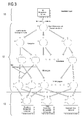
-
- H—ELECTRICITY
- H04—ELECTRIC COMMUNICATION TECHNIQUE
- H04L—TRANSMISSION OF DIGITAL INFORMATION, e.g. TELEGRAPHIC COMMUNICATION
- H04L67/00—Network arrangements or protocols for supporting network services or applications
- H04L67/01—Protocols
- H04L67/10—Protocols in which an application is distributed across nodes in the network
-
- H—ELECTRICITY
- H04—ELECTRIC COMMUNICATION TECHNIQUE
- H04L—TRANSMISSION OF DIGITAL INFORMATION, e.g. TELEGRAPHIC COMMUNICATION
- H04L9/00—Cryptographic mechanisms or cryptographic arrangements for secret or secure communications; Network security protocols
- H04L9/40—Network security protocols
-
- H—ELECTRICITY
- H04—ELECTRIC COMMUNICATION TECHNIQUE
- H04L—TRANSMISSION OF DIGITAL INFORMATION, e.g. TELEGRAPHIC COMMUNICATION
- H04L69/00—Network arrangements, protocols or services independent of the application payload and not provided for in the other groups of this subclass
- H04L69/30—Definitions, standards or architectural aspects of layered protocol stacks
- H04L69/32—Architecture of open systems interconnection [OSI] 7-layer type protocol stacks, e.g. the interfaces between the data link level and the physical level
- H04L69/322—Intralayer communication protocols among peer entities or protocol data unit [PDU] definitions
- H04L69/329—Intralayer communication protocols among peer entities or protocol data unit [PDU] definitions in the application layer [OSI layer 7]
Definitions
- the invention relates to the computer architecture for the Sequence of software applications and preferably a Method and system for control and / or organization an application process in a distributed system at least one client and at least one server where the system is organized according to a so-called multi-tier model and at least a first presentation layer, one comprises a second layer and a third data layer.
- the presentation layer represents the Database client and the data layer the database management System (DBMS).
- DBMS database management System
- the three layers communicate via interfaces by they make calls from "top to bottom” - from the first to to the third shift - edit.
- the respective responses are returned after processing as a so-called return Values passed from bottom to top.
- Thread active Part of the process of the calling component (a so-called Thread) of the first layer remains blocked until the result from the third shift, mostly that Result of a database query.
- This concept is used for operating systems and their processes, such as interprocess communication or File management strategies used. With regard to the It supports organization of application processes so far, however, not the decoupling required between the different layers.
- the object of the invention is therefore a software architecture for an application process to create the Advantages of the multi-tier concept and that of the micro kernel principle united.
- the second is according to the structure of the invention Layer or the middle tier only for routing of the server order and does not require a client-specific Knowledge.
- the server job which is generally in a request (to a database) and in a response (result of the database Query) is, according to the invention, a "question transaction" - starting from the client to the server - and in a “response transaction” - starting from the server the client - disassembled. These are physically different from each other decoupled so that the messages are completely asynchronous to each other being held.
- the Client of the first layer and the server of the second and / or third layer are configured to be the Client of the first layer and the server of the second and / or third layer.
- the server delivers a result after the order has been processed of the order to the calling client or another Destination address.
- the return address of the server order is in the Message included.
- the servers implement all services of the system.
- the message from a client from the first layer is always directly to a root component of the micro kernel second layer, which then sends the message to a processing component forwards.
- the micro kernel preferably comprises the second layer multiple subsystems, which in turn are in one or more components are divided. This advantageously leads to a high degree of modularity and makes the system so far flexible because the service of one server on several Components can be divided without the administrative burden in terms of addresses is increasing.
- One advantage is the transparent inter module communication.
- a developer involved does not have to take care of communication with other modules.
- the only comprehensive platform is the specification of the messages. This is colloquially oriented and does not require anything additional knowledge.
- the late routing makes the distributability and scalability the multi tier and micro kernel approaches improved. It is administrators with no knowledge of the inner workings of the Service server possible at any time, the distribution of Modify components across different servers.
- Another advantage of the message path is the potential use of identical commands for different service servers or with different data fields.
- New service servers may be added over time. These can then use all the services of the other servers via the existing infrastructure without the developers having to know the source texts in detail. By using the existing messages, they seamlessly adapt the innovations to the overall system.
- the binding interface specification in the form of a message is of the "string" type and is passed on through the arguments of the functions of the interfaces.
- a message is always passed in which the corresponding arguments of the function of the called interface are supplied by the caller. From the point of view of the caller, this means that message passing has been completed and completed.
- the content of the messages is the subject of the specification of the respective application. However, this must not only specify the content of the command and the data field, but also describe their syntax.
- the message has the following structure: "Category + Subsystem + Command Group + Command + timestamp + control panel + Origin + Source name + Name + target payload " Each string, separated by the plus sign, is a separate argument of the interface functions. This ensures that the string manipulations to obtain the information are reduced to a minimum.
- Figure 1 shows the basic, from the prior art well-known multi-tier model, which here consists of three layers (also called tiers) consists of: a first presentation layer 10, a second or middle layer 12 and a third data layer 13.
- the calls of the first in the second layer takes place in Microsoft-based systems via COM or DCOM interfaces.
- the responses take place via return values of the respective COM or DCOM Call.
- the second layer 12 is used to generate Database queries, e.g. SQL queries, and therefore must Know the structure of the third layer.
- the third layer 13 contains the data and a database management system.
- a disadvantage of this structure from the prior art is that an active part of a client process, a so-called Thread remains blocked until the database Access is complete. This leads to long waiting times and reduced performance of the overall system.
- the decoupling of the Processes between the respective tiers 10, 12, 13 also been maintained.
- the middle tier Layer 12 is different - namely according to a micro kernel Principle - organized.
- (modular) components used the at least parts of a server service realize.
- the micro kernel is more strict Client server architecture.
- the client C places an order in Form a message 14 and then ends the call. After that is the client C is free again and can process further processes.
- the order is processed by the selected subsystem without that the subsystem in question or middle layer 12 is still block because the job is to the executing subsystem was delivered. Is the requested subsystem with the processing the Message 14 finished, it is now in turn Questioner or Client C and calls a target subsystem exactly same way (e.g. the original questioner), in order to also send its results via a message passing.
- a target subsystem exactly same way (e.g. the original questioner), in order to also send its results via a message passing.
- the flexibility of the invention comes from the fact that Total communication from these two spurs / transactions exists, the question transaction and the Response transaction. There is only a logical one between the two Coupling.
- the response transaction usually goes to the original one Client Client C who issued the question transaction Has. However, it is also possible to initiate the response transaction to send another destination address.
- the routing is completely done by the micro kernel through the business logic, which is consistently implemented by components.
- the routing is carried out on the basis of a database, the routing database. It is even possible to adapt or expand the message passing during operation.
- a branch line / transaction must remain until the declared end.
- the division into a question / answer transaction creates two transactions. Their blocking time advantageously does not depend on the service requested, but only on technical conditions such as the network connections, the number of computers or the computing power.
- FIG. 5 shows a flow chart which explains the basic sequence of the method according to the invention: The actions of client C, a program part and the server S that relate to the question transaction are shown on the left side of this figure, while the actions that relate to the answer transaction are shown on the right side.
- a client C now requires certain data from the data layer 13 and generates a message 14 with these current arguments. This message relates to the question transaction at this time.
- the client C then pushes the message 14 into the send queue of the client C, which is organized according to the FIFO (first-in, first-out) principle, and returns.
- the addressed program part now picks up the uppermost element of the queue and routes the message 14 with the coded routing information through the second layer from server S to server S to a receive FIFO of server S and then returns.
- the server S can read the message 14 or the question part from the receive queue and process it. This completes the first section of the server order according to the invention. Now the result has to be sent back to the original client C or another destination address.
- the server S in turn generates a message 14 according to the same principle, which in this case encodes the response transaction and places it in the send FIFO of the server server S, in order to then return.
- the program part can read out the response transaction from the send FIFO and use the routing information to route it further to the receive FIFO of the client C within the second layer 12 in order to then return.
- the client C now fetches the message 14 from the receive FIFO of the client C and acquires the time stamp that uniquely identifies the message 14. Using the time stamp in the millisecond range, he can clearly determine the associated question transaction and, so to speak, put the two-part structure (question-answer) together in a one-part (order). The entire job is now complete.
- a component client only calls a component server via its public interface.
- the program is then implemented by an attached and encapsulated component class.
- the term "public" in connection with the interface means that it experiences a definition that can be viewed globally in every computer, is uniquely identified and can also be queried across computer boundaries. This is achieved by using GUIDs (Globally Unique Identifier) for the interface, the component class, resources and much more.
- An interface or the interface represents a collection of functions with call parameters. These can basically take any type.
- "string” is used as the general standard type. This provides a generic type that allows message passing for all conceivable developments. This is achieved by calling a component via one of its functions, which then blocks until it ends.
- the given message is converted and interpreted within this function. Only after this has been done does it return the program flow to the caller.
- the message passing is realized by "textual messages". It is implemented by the text code that is native to the respective target platform. For Windows and many UNIX platforms, this is UNICODE.
- a message consists of several areas, which differ in that they either appear as their own argument, or are composed as follows to form a string with a defined separator: "Category.Subsystem.command group.command + data field".
- the data field generally consists of the following string areas: Source Name
- a message 14 is therefore always composed of a message path and token.
- the message path implements a hierarchy that defines a relational relationship that clearly enables routing from the root to the destination. As is usual with relational relationships, uniqueness only applies from left to right in the message path or from top to bottom.
- the message path denotes a destination that is identical to a subsystem.
- the token is delivered to this.
- This hierarchy identifies the keys of a routing database.
- the key category represents the first level of the hierarchy If he is identified, is in the second level by the key subsystem set another branch.
- the command group branches off as a third level and enables the last branch by the instruction in the token itself is set.
- Each level is represented by a component in Middle Tier 12 or Micro kernel implemented. Under an identified key are all the information stored for a call a software component are necessary. For every key there is a component. The entirety of these routing components provides the business logic in the micro kernel or middle Tier 12. These components only need to be developed once become. There are several tools available. In the case of MS Com there is Visual Basic or Visual C ++ and ATL.
- New commands are added by adding a new entry in the routing database is made.
- the realization then takes place completely in the two subsystems, the want to talk to each other via Messages 14.
- the starting point is a questioning subsystem graphics, which should implement a mask.
- This mask asks for all information that is necessary to display a certain number of hits.
- the graphics subsystem uses them to generate an SQL select string for the data field and connects it with a previously specified command to form a token "Get.Grafik.0.SELECT ", where "graphics" is the name of the sending subsystem and " 0 "is the content of the control field.
- the message path is now set: "Example.Visual.Holen”. This is also the subject of the previous specifications. These are independent of the architecture described here.
- Example.Visual.Holen.Get.Grafik.0.SELECT A root component of the micro kernel is called with these strings. This is the standard interprocess communication, which is always the same for all transitions between the layers or from a subsystem to the micro kernel. The same root component is always called, which is always the standard entry point of a call chain or stub as described below. It is also the so-called transaction root, which is where the transaction begins. Your first action is to interpret the message path.
- the "Example” category serves as a key in order to be able to request the call information for the next lower component from the routing database. This is then called up immediately, whereby the message path and the token are simply passed on.
- This component of the category level works on the same principle as the root component: interpretation of the message path ("Visual"), retrieval of the key from the routing database and extraction of the call information. The result is the call of a component from the lower level called the subsystem.
- This component now works on the same principle and calls a "fetch" component from the command group level. Overall, an order is converted into recursive calls to the respective server S.
- Each level can contain any number of components. Therefore, the call path is only clear from top to bottom and not the other way around.
- the command group level is the direct call layer of the subsystems. It contains the clients C of the subsystems and is the boundary of the middle tier (or micro kernel) 12 with one subsystem.
- the rest of the subsystem runs in at least one worker thread in order to have its own execution path. This enables the component class to be terminated immediately and the transaction to be successfully completed. Once in the data subsystem, the branch line or transaction is completed and the components involved also successfully terminate.
- each subsystem can become a top level and send a command to the bottom level via message passing.
- the graphics subsystem that used to be the question.
- the question went from graphics to data about a transaction and the answer is now to be sent from data to graphics. If this second transaction has also ended, the recordset of the result set should have arrived in the graphics subsystem in order to be visualized. Nowhere was it necessary to stipulate that the source subsystem must again be the final target system.
- this component can also be integrated as such as standard.
- the old application receives all messages from the other subsystems, even if they were developed much later and therefore more optimally coordinated. Because of the micro kernel, this old application does not have to be positioned in the rigid multi-tier structure. In this way, NetManager could get a middle layer before version 5.X, which it can use as an object broker (MTS, COM +).
- MTS object broker
- a component Due to the use of components is patching easy to do. A component is considered defective recognized, it is the only object changed and new compiled. The key point is that you care respects the unique characteristics of a component, their GUIDs not to change. It is inserted again by simply overwriting the access path in the component management (in Windows in the registry) or by Overwrite the component on the hard disk. if it ensures that they are not called at this moment this can also be done during operation.
- the receiving function can be represented with a C pseudo code as follows: , where BSTR is an MS COM-specific data type that represents a string of a certain length.
Landscapes
- Engineering & Computer Science (AREA)
- Software Systems (AREA)
- Theoretical Computer Science (AREA)
- Computer Networks & Wireless Communication (AREA)
- Signal Processing (AREA)
- Physics & Mathematics (AREA)
- General Engineering & Computer Science (AREA)
- General Physics & Mathematics (AREA)
- Computer Security & Cryptography (AREA)
- Computer And Data Communications (AREA)
- Information Retrieval, Db Structures And Fs Structures Therefor (AREA)
Abstract
Description
Die Erfindung betrifft die Rechnerarchitektur für den Ablauf von Software Applikationen und vorzugsweise ein Verfahren und ein System zur Steuerung und/oder Organisation eines Applikationsprozesses in einem verteilten System mit mindestens einem Client und mindestens einem Server, bei dem das System nach einem sogenannten Multi-Tier-Modell organisiert ist und zumindest eine erste Präsentationsschicht, eine zweite Schicht und eine dritte Datenschicht umfaßt.The invention relates to the computer architecture for the Sequence of software applications and preferably a Method and system for control and / or organization an application process in a distributed system at least one client and at least one server where the system is organized according to a so-called multi-tier model and at least a first presentation layer, one comprises a second layer and a third data layer.
Da die Entwicklung von Software grundsätzlich teuer und schnellen Änderungen unterworfen ist, sollte eine Architektur gewählt werden, die folgende Punkte berücksichtigt:
- eine Modularisierung in Form von kleinen Software Komponenten unterstützt,
- einfache Kommunikation zwischen den Komponenten erlaubt,
- Ausrichtung an Industriestandards mit dem Ziel Drittsoftware mit verwenden zu können,
- Skalierung über eine variable Anzahl von Rechnern nur mit Administrationsaufwand und
- Anpassbarkeit an spezifische Kundenprofile nur mit Administrationsaufwand ist möglich,
- Sicherstellung der Funktion und Benutzbarkeit alten Codes und
- Unterstützung eines leistungsfähigen Patching-Konzepts.
- supports modularization in the form of small software components,
- easy communication between the components allowed,
- Alignment with industry standards with the aim of being able to use third-party software
- Scaling over a variable number of computers only with administration effort and
- Adaptability to specific customer profiles is only possible with administration effort,
- Ensuring the function and usability of old codes and
- Support for a powerful patching concept.
Deshalb sind bisher im Stand der Technik Architekturen vorgeschlagen worden, die diese Punkte möglichst weitgehend berücksichtigen.Therefore, architectures have been proposed in the prior art that take these points as far as possible into account.
Als ein älterer Ansatz ist hier die reine Client Server Struktur zu nennen. Die Darstellungsschicht stellt hier den Datenbank Client und die Datenschicht das Datenbank Management System (DBMS) dar. Hier führte die Trennung (Modularisierung) von Grafik und Datenverarbeitung dazu, dass in der Darstellungsebene mit SQL Statements gearbeitet wird und in der Datenebene mit Hilfe von Stored Procedures und Pass Through Techniken problemspezifischer Code implementiert werden muss.As an older approach here is the pure client server Structure. The presentation layer represents the Database client and the data layer the database management System (DBMS). Here the separation (modularization) of graphics and data processing that in the Presentation level is worked with SQL statements and in the data level with the help of stored procedures and passport Implemented problem-specific code through techniques must become.
Obwohl dies sehr schnelle Lösungen erlaubt, hat man bei Software Änderungen viele verschiedene Orte in den Programm Sourcen, an denen die Konsequenzen der Änderung (sogenannte side effects) beachtet werden müssen. Dies erweist sich als sehr fehleranfällig.Although this allows very quick solutions, one has at Software changes many different places in the program Sources on which the consequences of the change (so-called side effects) must be observed. This turns out to be very prone to errors.
Als unvorteilhaft erweist es sich in der Praxis nämlich, daß die jeweils miteinander kommunizierenden Prozesse von Client einerseits und Server andererseits sehr viel voneinander wissen müssen, so daß ein problemloser Datentransfer ermöglicht wird. Dies führt nachteiligerweise wiederum zu einer hohen Anzahl von expliziten Eingriffen bei Änderungen oder Anpassungen etwa hinsichtlich der Gültigkeit oder Zugriffsrechten.It turns out to be disadvantageous in practice that the processes of client communicating with each other on the one hand and servers on the other hand very much from each other need to know so that a problem-free data transfer is possible becomes. This, in turn, leads to a disadvantage high number of explicit interventions in the event of changes or Adjustments, for example with regard to validity or access rights.
Die asynchrone Rückantwort für eine Datenbank Anfrage kann über in diesem Modell nach dem Stand der Technik über eine Callback Schnittstelle realisiert werden. Hierbei wird über den client-seitigen Aufruf dem DBMS der Aufrufpunkt der Funktion mitgegeben, die dann die Ergebnisse erhält. Vorher muss aber das DBMS dem Aufrufer Informationen über den Typ der erwarteten Callback Schnittstelle liefern. Als nachteilig erweist es sich jedoch, dass das Einrichten einer Callback Funktion einen erheblichen Aufwand darstellt, der dann anwächst, falls es sich um eine verteilte Applikation handelt und Verweise bzw. Pointer noch über Rechnergrenzen hinweg verwaltet werden müssen. The asynchronous response for a database request can over in this state of the art model over a Callback interface can be realized. This is about the client-side call the DBMS the call point of the Given function, which then receives the results. Before however, the DBMS must provide the caller with information about the type the expected callback interface. As a disadvantage however, it turns out that setting up a callback Function represents a considerable effort, which then grows, if it is a distributed application and references or pointers across computer boundaries must be managed.
Alle diese Probleme führten in Stand der Technik zu einem weiteren Ansatz, dem Multi Tier Ansatz, der es erlaubt auf Callbacks zu verzichten.All of these problems have resulted in one in the prior art another approach, the multi-tier approach that allows it to Renounce callbacks.
Eine Multi Tier Architektur enthält mindestens 3 Schichten (hier Tiers genannt):
- eine erste Schicht, die Darstellungs- bzw. Präsentationsschicht mit den Grafikkomponenten,
- eine zweite, mittlere Schicht (auch Middle Tier genannt) mit der Business Logik und
- eine dritte Datenschicht mit den Datenbanken.
- a first layer, the presentation or presentation layer with the graphic components,
- a second, middle tier (also called middle tier) with the business logic and
- a third data layer with the databases.
Die drei Schichten kommunizieren über Schnittstellen, indem sie Aufrufe von "oben nach unten" - also von der ersten bis zur dritten Schicht - bearbeiten. Die jeweiligen Rückantworten werden nach Bearbeitung wieder als sogenannte Return Values von unten nach oben weitergereicht.The three layers communicate via interfaces by they make calls from "top to bottom" - from the first to to the third shift - edit. The respective responses are returned after processing as a so-called return Values passed from bottom to top.
Als problematisch hat es sich hier erwiesen, daß der aktive Teil des Prozesses der aufrufenden Komponente (ein sogenannter Thread) der ersten Schicht so lange blockiert bleibt, bis das Ergebnis aus der dritten Schicht, nämlich meistens das Ergebnis einer Datenbankabfrage, vorliegt.It has proven problematic here that the active Part of the process of the calling component (a so-called Thread) of the first layer remains blocked until the result from the third shift, mostly that Result of a database query.
Hier werden alle Prozesse, die die dritte Schicht betreffen,
nämlich Datenbank spezifischer Code, in die mittlere Schicht
herausgezogen und somit eine Entkopplung von dem DBMS zu
erreichen.
Der Nachteil ist, dass Änderungen beim Zugriff auf die Datenbank,
nun in mehreren Komponenten vorgenommen werden müssen.Here, all processes that relate to the third layer, namely database-specific code, are pulled out into the middle layer and thus decoupled from the DBMS.
The disadvantage is that changes to the database access must now be made in several components.
Ein weiterer Ansatz für eine Betriebssystem Architektur ist das theoretischen Arbeiten an der Carnegie Mellon University entstammende MACH Modell. Dieses Modell basiert auf einem Micro Kernel Ansatz und erfordert eine konsequente Client Server Struktur. Dabei enthält der Kernel bzw. Kern nur Clients, während die Peripherie die vollen Dienstleistungen, also die Server umfaßt. Benötigt ein Server die Dienstleistung eines anderen Servers, so sendet er eine Anfrage durch den Micro Kernel.Another approach to operating system architecture is theoretical work at Carnegie Mellon University originating MACH model. This model is based on a Micro kernel approach and requires a consistent client Server structure. The kernel or kernel only contains Clients, while the periphery provides full services, So the server includes. A server needs the service of another server, it sends a request through the micro kernel.
Dieses Konzept wird für Betriebssysteme und deren Prozesse, wie beispielsweise die Interprozess-Kommunikation oder Dateiverwaltungs-Strategien eingesetzt. In Hinblick auf die Organisation von Applikationsprozessen unterstützt es bislang allerdings nicht die erforderliche Entkopplung zwischen den verschiedenen Schichten.This concept is used for operating systems and their processes, such as interprocess communication or File management strategies used. With regard to the It supports organization of application processes so far, however, not the decoupling required between the different layers.
Zur Vermeidung der genannten Nachteile und unter Beibehaltung der vorteilhaften und gewünschten Entkopplung der jeweiligen Schichten des Multi-Tier-Modells, ist es wünschenswert, dieses insofern weiter zu entwickeln, als daß die mittlere Schicht über gleichrangige Software Komponenten dezentral organisiert ist.To avoid the disadvantages mentioned and while maintaining the advantageous and desired decoupling of respective layers of the multi-tier model, it is desirable to develop this further in that the middle layer about software components of equal rank is organized decentrally.
Aufgabe der Erfindung ist es deshalb, eine Software Architektur für einen Applikationsprozess zu schaffen, die die Vorteile des Multi-Tier-Konzeptes und die des Micro Kernel-Prinzips vereint.The object of the invention is therefore a software architecture for an application process to create the Advantages of the multi-tier concept and that of the micro kernel principle united.
Diese Aufgabe wird durch ein Verfahren der eingangs genannte Art gelöst, bei dem die zweite Schicht vorzugsweise zumindest einen Server umfaßt und vollständig als microkernel-basiertes Client/Server-System organisiert ist und bei dem zwischen der ersten und zweiten Schicht eine Schnittstelle in Form einer Message festgelegt ist, wobei ein Serverauftrag zumindest folgende Schritte umfaßt:
- der Client übersetzt den Serverauftrag in eine Message mit den jeweiligen Argumenten,
- der Client sendet die Message an den Server vorzugsweise aus der mittleren Schicht,
- der Auftrag wird gegebenenfalls weitergeleitet und vollständig abgearbeitet und
- das Ergebnis des Auftrages wird anhand der Message zurückgesendet.
- the client translates the server job into a message with the respective arguments,
- the client sends the message to the server, preferably from the middle layer,
- the order is forwarded if necessary and completely processed and
- the result of the order is sent back based on the message.
Weiterhin wird diese Aufgabe gelöst durch ein Client/Server-System nach Anspruch 18, ein Computerprogramm gemäß Anspruch 19, ein Computerprogrammprodukt gemäß Anspruch 20 und eine Vorrichtung nach Anspruch 21.Furthermore, this problem is solved by a Client / server system according to claim 18, a computer program according to claim 19, a computer program product according to claim 20 and an apparatus according to claim 21.
Entsprechend der erfindungsgemäßen Struktur ist die zweite Schicht bzw. das Middle-Tier ausschließlich für ein Routing des Serverauftrages ausgelegt und benötigt kein clientspezifisches Wissen.The second is according to the structure of the invention Layer or the middle tier only for routing of the server order and does not require a client-specific Knowledge.
Der Serverauftrag, der im allgemeinen in einer Anfrage (an eine Datenbank) und in einer Antwort (Ergebnis der Datenbank Query) besteht ist erfindungsgemäß in eine "Frage-Transaktion" - ausgehend von dem Client an den Server - und in eine "Antwort-Transaktion" - ausgehend von dem Server an den Client - zerlegt. Diese sind physikalisch voneinander entkoppelt, so dass die Messages vollständig asynchron zueinander gehalten werden.The server job, which is generally in a request (to a database) and in a response (result of the database Query) is, according to the invention, a "question transaction" - starting from the client to the server - and in a "response transaction" - starting from the server the client - disassembled. These are physically different from each other decoupled so that the messages are completely asynchronous to each other being held.
In einer bevorzugten Ausführungsform der Erfindung gehört der Client der ersten Schicht und der Server der zweiten und/oder dritten Schicht an.In a preferred embodiment of the invention, the Client of the first layer and the server of the second and / or third layer.
Der Server liefert nach Abarbeitung des Auftrages ein Ergebnis des Auftrages an den aufrufenden Client oder eine andere Zieladresse.The server delivers a result after the order has been processed of the order to the calling client or another Destination address.
Dabei ist die Rücksendeadresse des Serverauftrages in der Message enthalten.The return address of the server order is in the Message included.
Erfindungsgemäß wird das Middle-Tier vollständig im Micro Kernel realisiert. Die Server realisieren alle Dienstleistungen des Systems. According to the middle tier is completely in the micro Kernel implemented. The servers implement all services of the system.
Die Message eines Clients aus der ersten Schicht wird stets unmittelbar an eine Wurzelkomponente des Micro Kernels der zweiten Schicht gesendet, der die Message dann an eine Verarbeitungskomponente weiterleitet.The message from a client from the first layer is always directly to a root component of the micro kernel second layer, which then sends the message to a processing component forwards.
Bevorzugterweise umfaßt der Micro Kernel der zweiten Schicht mehrere Subsysteme, die ihrereits in eine oder mehrere Komponenten aufgeteilt sind. Dies führt vorteilhafterweise zu einem hohen Grad an Modularität und macht das System insofern flexibel, da die Dienstleistung eines Servers auf mehrere Komponenten aufgeteilt werden kann, ohne daß der Verwaltungsaufwand hinsichtlich der Adressen steigt.The micro kernel preferably comprises the second layer multiple subsystems, which in turn are in one or more components are divided. This advantageously leads to a high degree of modularity and makes the system so far flexible because the service of one server on several Components can be divided without the administrative burden in terms of addresses is increasing.
Ein wesentlicher Vorteil ist auch darin zu sehen, daß Dienstleistungen bzw. Dienstleisungsserver auch während des Betriebs entfernt, verändert oder hinzugefügt werden können und daß alter Applikations-Code ohne Einschränkungen in das System eingebunden werden kann.A major advantage can also be seen in the fact that Services or service server also during the Operating can be removed, changed or added and that old application code in the System can be integrated.
Ein Vorteil liegt in der transparenten Inter Modul Kommunikation. Durch das erfindungsgemäße Festlegen einer Schnittstelle, muß sich beispielsweise ein beteiligter Entwickler nicht um die Kommunikation mit anderen Modulen kümmern. Die einzige übergreifende Plattform ist die Spezifikation der Messages. Diese ist umgangssprachlich orientiert und verlangt kein zusätzliches Wissen.One advantage is the transparent inter module communication. By defining an interface according to the invention, For example, a developer involved does not have to take care of communication with other modules. The only comprehensive platform is the specification of the messages. This is colloquially oriented and does not require anything additional knowledge.
Ein wichtiger Punkt ist die Nutzung aller Vorteile der Asynchronität
bei der Kommunikation untereinander, ohne auf
Callbacks zurückgreifen zu müssen. Sie stellen einen fehlerträchtigen
Bereich dar, der dann auch immer nur mit tiefem
Wissen und komplizierten Entwicklungswerkzeugen bearbeitet
werden kann.
Bedingt durch die Asynchronität der Messages, sind viele
Message Passing Aktionen gleichzeitig möglich, um die Reaktivität
des Systems zu erhöhen. Dies führt aber zum gleichzei
tigen Aufruf der Komponenten durch verschiedene Threads.
Diese müssen im Normalfall synchronisiert werden.
Da in den Komponenten der zweiten Schicht bzw. in den sogenannten
Business Logik Komponenten nur eine lesende Anfrage
bei der Datenbank, der sogenannte Routing Datenbank, und das
Umkopieren der Argumente durchgeführt wird, ist in diesem
Fall keine Thread Synchronisierung nötig. Es werden nur
funktionslokale Daten verwendet, die zu einem Thread Kontext
gehören. Dies erlaubt in Windows-basierten Systemen den
Einsatz von COM Objekten im Multi Threaded Apartement (MTA).An important point is the use of all the advantages of asynchrony when communicating with each other without having to resort to callbacks. They represent an error-prone area that can only be worked on with in-depth knowledge and complicated development tools.
Due to the asynchrony of the messages, many message passing actions are possible at the same time in order to increase the reactivity of the system. However, this leads to the simultaneous call of the components by different threads. These usually have to be synchronized.
Since in the components of the second layer or in the so-called business logic components only a read request is made to the database, the so-called routing database, and the arguments are copied, no thread synchronization is necessary in this case. Only functionally local data that belongs to a thread context is used. This allows the use of COM objects in multi-threaded apartments (MTA) in Windows-based systems.
Durch das Festlegen des Message-Ziels schon im sendenden Dienstleistungsserver, ist keine weitere Stelle mehr involviert, was die Zielplanung anbetrifft. Es ist von jedem Server aus möglich eine Kommunikation zwischen zwei anderen Server auszulösen, da diese Informationen mit der Message transparent durch das System kopiert werden.By setting the message destination in the sending Service server, no further position is involved, as far as goal planning is concerned. It is from everyone Server from possible communication between two others Trigger server because this information with the message copied transparently through the system.
Durch das späte Routing wird die Verteilbarkeit und Skalierbarkeit der Multi Tier und Micro Kernel Ansätze verbessert. Es ist Administratoren ohne Kenntnisse des Innenlebens der Dienstleistungsserver jederzeit möglich, die Verteilung der Komponenten über verschiedene Server zu verändern.The late routing makes the distributability and scalability the multi tier and micro kernel approaches improved. It is administrators with no knowledge of the inner workings of the Service server possible at any time, the distribution of Modify components across different servers.
Ein weiterer Vorteil des Message-Pfades, liegt in dem potentiellen
Einsatz identischer Befehle für unterschiedliche
Dienstleistungsserver oder mit unterschiedlichen Datenfeldern.
Mit der Zeit können neue Dienstleistungsserver hinzukommen.
Diese können dann über die existierende Infrastruktur alle
Dienstleistungen der anderen Server nutzen, ohne dass die
Entwickler im Detail die Sourcetexte kennen müssen. Mit
Anwendung der existierenden Messages, passen sie die Neuerungen
nahtlos ins Gesamtsystem ein.Another advantage of the message path is the potential use of identical commands for different service servers or with different data fields.
New service servers may be added over time. These can then use all the services of the other servers via the existing infrastructure without the developers having to know the source texts in detail. By using the existing messages, they seamlessly adapt the innovations to the overall system.
Die verbindliche Interface Spezifikation in Form einer
Message ist in einer bevorzugten Ausführungsform der Erfin
dung vom Typ "String" und wird durch die Argumente der
Funktionen der Interfaces weitergegeben. Eine Message wird
immer übergeben, in dem die entsprechenden Argumente der
Funktion des aufgerufenen Interfaces vom Aufrufer versorgt
werden. Dadurch ist aus der Sicht des Aufrufers das Message-Passing
vollständig durchgeführt und abgeschlossen.
Der Inhalt der Messages ist Gegenstand der Spezifikation der
jeweiligen Applikation. Diese muss aber nicht nur den Inhalt
des Befehls und des Datenfeldes festlegen, sondern auch deren
Syntax beschreiben. In dieser Ausführungsform hat die Message
folgende Struktur:
The content of the messages is the subject of the specification of the respective application. However, this must not only specify the content of the command and the data field, but also describe their syntax. In this embodiment, the message has the following structure:
Weitere Vorteile, Merkmale und alternative, nicht einschränkend zu verstehende Ausführungsformen der Erfindung sind in der nachfolgenden, detaillierten Figurenbeschreibung zu finden, die in Zusammenhang mit der Zeichnung zu lesen ist und in der:
- Fig. 1
- eine schematische Darstellung einer bekannten Multi Tier Architektur aus dem Stand der Technik,
- Fig. 2
- eine schematische Darstellung von verschiedenen Komponenten einer zweiten Schicht eines erfindungsgemäßen Micro Kernels,
- Fig. 3
- eine schematische Darstellung einer erfindungsgemäßen Organisation,
- Fig. 4
- eine beispielhafte Darstellung einer Frage- und Antwort-Transaktion eines Dienstleistungs-ServerAuftrages und
- Fig. 5
- ein Ablauf Diagramm des erfindungsgemäßen Verfahrens zeigen.
- Fig. 1
- 1 shows a schematic representation of a known multi-tier architecture from the prior art,
- Fig. 2
- 1 shows a schematic representation of various components of a second layer of a micro kernel according to the invention,
- Fig. 3
- a schematic representation of an organization according to the invention,
- Fig. 4
- an exemplary representation of a question and answer transaction of a service server order and
- Fig. 5
- show a flow diagram of the method according to the invention.
Figur 1 zeigt das grundlegende, aus dem Stand der Technik
bekannte Mulit Tier Modell, das hier aus drei Schichten
(auch Tiers genannt) besteht: einer ersten Präsentationsschicht
10, einer zweiten bzw. mittleren Schicht 12 und
einer dritten Datenschicht 13. Die Aufrufe der ersten in
die zweite Schicht erfolgen bei Microsoft-basierten Systemen
über COM oder DCOM Schnittstellen. Die Rückantworten
erfolgen über Return Values des jeweiligen COM oder DCOM
Aufrufes. Die zweite Schicht 12 dient zur Generierung von
Datenbank-Abfragen, z.B. SQL Queries, und muß daher die
Struktur der dritten Schicht kennen. Die dritte Schicht 13
beinhaltet die Daten und ein Datenbank Management System.
Nachteilig bei diesem Aufbau aus dem Stand der Technik ist,
daß ein aktiver Teil eines Client-Prozesses, ein sogenannter
Thread, solange blockiert bleibt, bis der Datenbank
Zugriff abgeschlossen ist. Dies führt zu langen Wartezeiten
und zu verminderter Leistungsfähigkeit des Gesamtsystems.Figure 1 shows the basic, from the prior art
well-known multi-tier model, which here consists of three layers
(also called tiers) consists of: a
Bei der erfindungsgemäßen Lösung ist die Entkopplung der
Prozesse zwischen den jeweiligen Tiers 10, 12, 13 ebenfalls
beibehalten worden. Doch das Middle Tier bzw. die mittlere
Schicht 12 ist anders - nämlich nach einem Micro Kernel
Prinzip - organisiert. Dafür ist eine feste Schnittstelle
in Form einer Message 14 für das Middle Tier 12 entwickelt
worden. Weiterhin werden erfindungsgemäß (modulare) Komponenten
eingesetzt, die zumindest Teile einer Server-Dienstleistung
realisieren.In the solution according to the invention, the decoupling of the
Processes between the
Unter Bezugnahme auf Figur 2 wird nachstehend die grundlegende
erfindungsgemäße Struktur erläutert. Die Verbindung des
Multi Tier Ansatzes und des Micro Kernel Prinzips nutzt einen
kurzzeitigen Rollenwechsel (vom Empfänger zum Sender) zwischen
Client C und Server S . Das Middle Tier 12 wird komplett
im Micro Kernel realisiert, wobei die Satteliten darum
herum sowohl aus der ersten Schicht 10 als auch aus der
Datenschicht 13 stammen können und auch Subsysteme genannt
werden. Allgemein gesprochen realisieren sie alle Dienstleistungen.Referring to Figure 2, the basic one is as follows
structure according to the invention explained. The connection of the
Multi tier approach and the micro kernel principle uses one
brief change of roles (from receiver to sender) between
Client C and Server
Wie in Figur 3 gezeigt, beruht der Micro Kernel auf strikter
Client Server Architektur. Der Client C gibt einen Auftrag in
Form einer Message 14 und beendet dann den Aufruf. Danach ist
der Client C wieder frei und kann weitere Prozesse bearbeiten.As shown in Figure 3, the micro kernel is more strict
Client server architecture. The client C places an order in
Form a
Der Auftrag wird vom ausgewählten Subsystem bearbeitet, ohne
dass das fragende Subsystem oder die mittlere Schicht 12 noch
blockieren, da der Auftrag ja an das ausführende Subsystem
abgegeben wurde. Ist das angefragte Subsystem mit der Bearbeitung
der Message 14 fertig, wird es nun seinerseits zum
Frager bzw. Client C und ruft ein Zielsubsystem auf die genau
gleiche Art und Weise auf (z.B. den ursprünglichen Frager),
um seine Ergebnisse ebenfalls über ein Message Passing abzusenden.
Damit ist ein Informationsrundlauf beendet, der
erfindungsgemäß in zwei Transaktionen - einer Frage-Transaktion
und eine Antwort-Transaktion - zerlegt ist. Eine
Transkation ist bildlich als Stichleitung vorstellbar.The order is processed by the selected subsystem without
that the subsystem in question or
Die erfindungsgemäße Flexibilität kommt daher, dass die Gesamtkommunikation aus diesen zwei Stichleitungen/Transaktionen besteht, der Frage-Transaktion und der Antwort-Transaktion. Zwischen beiden besteht nur eine logische Kopplung.The flexibility of the invention comes from the fact that Total communication from these two spurs / transactions exists, the question transaction and the Response transaction. There is only a logical one between the two Coupling.
Die Antwort-Transkation geht üblicherweise an den ursprünglichen Client Client C, der die Frage-Transaktion abgesetzt hat. Es ist jedoch auch möglich, die Antwort-Transkation an eine andere Zieladresse zu senden.The response transaction usually goes to the original one Client Client C who issued the question transaction Has. However, it is also possible to initiate the response transaction to send another destination address.
Das Routing wird vollständig vom Micro Kernel durch die
Business Logik erledigt, die konsequent durch Komponenten
realisiert wird. Das Routing wird auf der Basis einer Datenbank,
der Routing Datenbank, durchgeführt. So ist sogar eine
Anpassung oder Erweiterung des Message Passing während des
Betriebs möglich.
Eine Stichleitung/Transaktion muss bis zum deklarierten Ende
bestehen bleiben. Durch die Zweiteilung in eine Frage/Antworttransaktion
entstehen zwei Transaktionen. Deren
Blockadezeit hängt vorteilhafterweise nicht von der angefragten
Dienstleistung ab, sondern nur von technischen Gegebenheiten
wie z.B. den Netzwerkverbindungen, der Anzahl der
Rechner oder der Rechenleistung.The routing is completely done by the micro kernel through the business logic, which is consistently implemented by components. The routing is carried out on the basis of a database, the routing database. It is even possible to adapt or expand the message passing during operation.
A branch line / transaction must remain until the declared end. The division into a question / answer transaction creates two transactions. Their blocking time advantageously does not depend on the service requested, but only on technical conditions such as the network connections, the number of computers or the computing power.
In Figur 5 ist ein Flow Chart gezeigt, das den grundlegenden
Ablauf des erfindungsgemäßen Verfahrens erläutert:
Dabei sind auf der linken Seite dieser Figur die Aktionen von
Client C, einem Programmteil und dem Server S dargestellt,
die die Frage-Transaktion betreffen, während auf der rechten
Seite die Aktionen gezeigt sind, die die Antwort-Transaktion
betreffen.FIG. 5 shows a flow chart which explains the basic sequence of the method according to the invention:
The actions of client C, a program part and the server S that relate to the question transaction are shown on the left side of this figure, while the actions that relate to the answer transaction are shown on the right side.
Ein Client C benötigt nun bestimmte Daten aus der Datenschicht
13 und generiert mit diesen aktuellen Argumenten eine
Message 14. Diese Message betrifft zu diesem Zeitpunkt die
Frage-Transaktion. Daraufhin schiebt der Client C die Message
14 in die Sende-Queue des Client C, die nach dem FIFO (First-In-First-Out)
Prinzip organisiert ist und kehrt zurück. Der
angesprochene Programmteil holt nun das oberste Element der
Queue ab und leitet die Message 14 mit den codierten Routing
Informationen durch die zweite Schicht von Server S zu Server
S bis in eine Empfangs-FIFO des Server S und kehrt dann
zurück. Nun kann der Server S die Message 14 bzw. den Frage-Teil
aus der Empfangs-Queue auslesen und diese bearbeiten.
Damit ist der erste Abschnitt des erfindungsgemäßen Serverauftrages
erledigt. Nun muß das Ergebnis wieder an den ursprünglichen
Client C oder eine andere Zieladresse zurück
gesendet werden. Hierzu generiert der Server S wiederum eine
Message 14 nach dem gleichen Prinzip, die in diesem Fall die
Antwort-Transaktion codiert und stellt sie in die Sende-FIFO
des Server Server S, um danach zurück zu kehren. Nun kann der
Programmteil die Antwort-Transaktion aus der Sende-FIFO
auslesen und anhand der Routing Informationen bis zur Empfangs-FIFO
des Client C innerhalb der zweiten Schicht 12
weiter routen, um danach zurück zu kehren.
Der Client C holt die Message 14 nun aus der Empfangs-FIFO
des Client C und erfaßt den Zeitstempel, der die Message 14
eineindeutig identifiziert. Über den Zeitstempel im Millisekunden
Bereich kann er eindeutig die dazugehörige Frage-Transaktion
bestimmen und sozusagen die zweiteilige Struktur
(Frage-Antwort) in eine einteilige (Auftrag) zusammensetzen.
Der gesamte Auftrag ist nun abgeschlossen.A client C now requires certain data from the
The client C now fetches the
Die Kommunikation hinsichtlich der Aufrufe ist mit der Komponententechnik
realisiert. Hierbei ruft ein Komponenten Client
einen Komponenten Server nur über dessen öffentliches Interface
auf. Das Programm wird dann durch eine angehängte und
abgekapselte Komponentenklasse realisiert. Der Begriff "Öffentlichkeit"
im Zusammenhang mit dem Interface bedeutet,
dass es eine Definition erfährt, die in jedem Rechner global
einsehbar, es eineindeutig identifiziert und auch über Rechnergrenzen
erfragbar ist. Erreicht wird dies durch Verwendung
von GUIDs (Globally Unique Identifier) für das Interface, die
Komponentenklasse, Ressourcen und vieles mehr.
Ein Interface bzw. die Schnittstelle stellt eine Sammlung von
Funktionen mit Aufrufparametern dar. Diese können grundsätzlich
jeden Typ annehmen. In der bevorzugten Ausführungsform
wird "String" als genereller Standardtyp verwendet. Damit
steht ein generischer Typ zur Verfügung, der ein Message
Passing für alle nur denkbaren Entwicklungen erlaubt. Dies
wird realisiert durch den Aufruf einer Komponente über eine
ihrer Funktionen, der dann bis zu seiner Beendigung blockiert.
Innerhalb dieser Funktion wird die mitgegebene Message
umgewandelt und interpretiert. Erst nachdem dies geschehen
ist, gibt sie den Programmfluss wieder an den Aufrufer zurück.
Das Message Passing wird realisiert durch "textuelle Messages".
Es wird durch denjenigen Textcode realisiert, der für
die jeweilige Zielplattform nativ ist. Bei Windows und vielen
UNIX Plattformen ist dies UNICODE.
Eine Message setzt sich aus mehreren Bereichen zusammen, die
sich darin unterscheiden, dass sie entweder als eigenes
Argument auftauchen, oder zu einem String mit definiertem
Trennzeichen wie folgt zusammengesetzt werden:
An interface or the interface represents a collection of functions with call parameters. These can basically take any type. In the preferred embodiment, "string" is used as the general standard type. This provides a generic type that allows message passing for all conceivable developments. This is achieved by calling a component via one of its functions, which then blocks until it ends. The given message is converted and interpreted within this function. Only after this has been done does it return the program flow to the caller.
The message passing is realized by "textual messages". It is implemented by the text code that is native to the respective target platform. For Windows and many UNIX platforms, this is UNICODE.
A message consists of several areas, which differ in that they either appear as their own argument, or are composed as follows to form a string with a defined separator:
Das Datenfeld setzt sich im allgemeinen aus den folgenden
Stringbereichen zusammen:
Quellname|Steuerfeld|Nutzdaten.The data field generally consists of the following string areas:
Source Name | Control Panel | User data.
Abkürzend wird folgendes vereinbart: Der "Kategorie.Subsystem.Befehlsgruppe" Teil der Message wird Message Pfad genannt. Der Teil "Befehl + Datenfeld" bekommt den Namen Token, da er unverändert durch das System durchgereicht wird.The following is agreed in abbreviated form: The "Category.Subsystem.Befehlsgruppe" Message becomes part of the message Called path. The part "Command + data field" gets the name Token because it is passed through the system unchanged.
Eine Message 14 setzt sich also immer aus Message Pfad und
Token zusammen.
Der Message Pfad realisiert eine Hierarchie, die eine relationale
Beziehung festlegt, die das Routing eindeutig von der
Wurzel bis zum Ziel ermöglicht. Wie bei relationalen Beziehungen
üblich, gilt die Eindeutigkeit nur von links nach
rechts im Message Pfad bzw. oben nach unten.A
The message path implements a hierarchy that defines a relational relationship that clearly enables routing from the root to the destination. As is usual with relational relationships, uniqueness only applies from left to right in the message path or from top to bottom.
Der Message Pfad bezeichnet ein Ziel, das mit einem Subsystem
identisch ist. An dieses wird der Token abgeliefert.
Diese Hierarchie identifiziert die Schlüssel einer Routing
Datenbank.The message path denotes a destination that is identical to a subsystem. The token is delivered to this.
This hierarchy identifies the keys of a routing database.
Der Schlüssel Kategorie stellt die erste Ebene der Hierarchie dar. Ist er identifiziert, wird in der zweiten Ebene durch den Schlüssel Subsystem eine weitere Verzweigung festgelegt. Die Befehlsgruppe verzweigt als dritte Ebene und ermöglicht die letzte Verzweigung, die durch den Befehl im Token selbst festgelegt wird. The key category represents the first level of the hierarchy If he is identified, is in the second level by the key subsystem set another branch. The command group branches off as a third level and enables the last branch by the instruction in the token itself is set.
So ergibt sich in Anlehnung an ein hierarchisches Filesystem
eine Art Directory, das eine eindeutige Identifizierung eines
Files erlaubt, das in dieser Analogie dem Token entspricht.
Die eindeutig identifizierbaren Schlüssel dienen zum Abspeichern
der jeweiligen Aufrufinformationen der verschiedenen
Komponenten der jeweils nächst tieferen Ebene.
Der Vorteil des Hinzufügens eines Message Pfades liegt in dem
potentiellen Einsatz gleicher Befehle für unterschiedliche
Subsysteme oder solche mit unterschiedlichen Datenfeldern.
Der Message Pfad kann über eine externe Datenbank realisiert
werden.Based on a hierarchical file system, this results in a kind of directory that allows a unique identification of a file that corresponds to the token in this analogy. The uniquely identifiable keys are used to store the respective call information of the various components of the next lower level.
The advantage of adding a message path lies in the potential use of the same commands for different subsystems or those with different data fields. The message path can be implemented via an external database.
Jede Ebene wird durch eine Komponente im Middle Tier 12 oder
Micro Kernel realisiert. Unter einem identifizierten Schlüssel
sind alle Informationen abgelegt, die für einen Aufruf
einer Software Komponente nötig sind. Für jeden Schlüssel
gibt es eine Komponente. Die Gesamtheit dieser Routing Komponenten
stellt die Business Logik im Micro Kernel oder Middle
Tier 12 dar. Diese Komponenten müssen nur einmal entwickelt
werden. Es bieten sich mehrere Tools dazu an. Im Fall von MS
Com gibt es Visual Basic oder Visual C++ und ATL.Each level is represented by a component in
Da parallel mehrere Stichleitungen betrieben werden, können
einige Routing Komponenten potentiell in verschiedenen
Threads gleichzeitig aufgerufen werden. Dies ist ein klassischer
Fall für eine Threadsynchronisierung. Im Falle der
erfindungsgemäßen Architektur entfällt sie komplett, indem
zum einen lokal erzeugte Daten und Ressourcen genutzt und
globale Daten nur gelesen werden. In C++ wären dies die
automatischen Variablen und die Klassenattribute.
Dies hat die Folge, dass bei MS Com der Multi Threaded Appartement
(MTA) Typ verwendet wird. Hierbei liegt es in der
Verantwortung der Komponente, ob sie ihre Attribute (komponenten-globale
Daten) synchronisiert, da jeder Thread auf
jeden Fall in die Komponente eintritt. Im Falle dieser Architektur
werden sie maximal lesend verwendet, also wird der
eintretende Thread nirgends blockiert. Dies führt zu einer
optimalen Granularität, die bis in die Threadwechselzeiten
hinabreicht.
Um die Arbeit von Object Request Broker wie MTS/Com+ oder
CORBA nutzen zu können, müssen die Komponenten des Micro
Kernel sich der "Just In Time Aktivierung" dieser Broker
bewusst sein. Dies hat zur Folge, dass die oben erwähnten
automatischen Variablen oder Ressourcen besonders erzeugt und
freigegeben werden müssen. Dies unterscheidet sich grundsätzlich
vom Konstruktor/Destruktor Ansatz des Klassenkonzepts.Since several stub lines are operated in parallel, some routing components can potentially be called up simultaneously in different threads. This is a classic case for thread synchronization. In the case of the architecture according to the invention, it is completely eliminated by using locally generated data and resources and only reading global data. In C ++, these would be the automatic variables and the class attributes.
This has the consequence that the Multi Threaded Apartment (MTA) type is used in MS Com. It is the responsibility of the component whether it synchronizes its attributes (component-global data), since every thread definitely enters the component. In the case of this architecture, they are used for maximum reading, so the incoming thread is not blocked anywhere. This leads to an optimal granularity that extends down to the thread change times.
In order to be able to use the work of Object Request Brokers like MTS / Com + or CORBA, the components of the Micro Kernel must be aware of the "Just In Time Activation" of these brokers. As a result, the automatic variables or resources mentioned above have to be specially created and released. This differs fundamentally from the constructor / destructor approach of the class concept.
Falls neue Routen hinzugefügt werden sollen, ist kein Programmtext
zu ändern, da erst zur Laufzeit der Komponenten die
Aufrufe über die Routing DB aufgelöst werden. Dies setzt eine
gelungene Absprache zwischen den Subsystemen voraus, da der
Token ganz konkrete Daten enthält, durch die Fehler ausgelöst
werden können. Aber auch hier kann die Middle Tier 12 mithelfen,
Fehler zu visualisieren. Da die ganze Message 14 aus dem
Datentyp Text besteht, ist sie zu jedem Zeitpunkt und in
jeder Ebene im Klartext, also unverschlüsselt, zu kontrollieren.
Belegt man z.B. das Datenfeld eines Tokens, der eine
Anfrage an eine Datenbank per "Select" durchführen soll, mit
dem kompletten Select String, so ist dieser aktuell erzeugte
dadurch im Klartext einzusehen.If new routes are to be added, there is no program text
to change, since the components only run at runtime
Calls via the routing DB are resolved. This sets one
successful agreement between the subsystems, because the
Token contains very specific data that triggered errors
can be. But
Neue Befehle werden hinzu gefügt, indem ein neuer Eintrag in
der Routing Datenbank vorgenommen wird. Die Realisierung
findet dann komplett in den beiden Subsystemen statt, die
über die Messages 14 miteinander reden wollen.New commands are added by adding a new entry in
the routing database is made. The realization
then takes place completely in the two subsystems, the
want to talk to each other via
Im folgenden soll im Zusammenhang mit Figur 4 beispielhaft gezeigt werden, wie das Message Passing bei der erfindungsgemäßen Architektur durchgeführt wird.The following is intended as an example in connection with FIG. 4 are shown how the message passing in the inventive Architecture is carried out.
Der Startpunkt ist ein fragendes Subsystem Grafik, das eine
Maske realisieren soll. Diese Maske erfragt alle Informationen,
die zur Darstellung einer gewissen Treffermenge notwendig
sind. Das Subsystem Grafik nutzt sie um einen SQL Select
String für das Datenfeld zu erzeugen und verbindet ihn mit
einem zuvor spezifizierten Befehl zu einem Token
"Get.Grafik.0.SELECT ... ", wobei "Grafik" der Name des sendenden
Subsystems und "0" der Inhalt des Steuerfeldes ist.
Um den Token zum richtigen Ziel führen zu können wird nun der
Message Pfad festgelegt: "Beispiel.Visual.Holen". Auch dieser
ist Gegenstand der vorausgehenden Spezifikationen. Diese sind
unabhängig von der hier beschriebenen Architektur.
Der komplette Aufruf lautet also
"Beispiel.Visual.Holen.Get.Grafik.0.SELECT ...".
Mit diesen Strings wird eine Wurzel Komponente des Micro
Kernel aufgerufen. Dies ist die Standard Interprozesskommunikation,
die bei allen Übergängen zwischen den Schichten bzw.
von einem Subsystem zum Micro Kernel immer gleich ist. Es
wird immer dieselbe Wurzel Komponente aufgerufen, die immer
der Standard Einsprungpunkt einer Aufrufkette oder Stichleitung
ist, wie sie im folgenden beschrieben wird. Auch ist sie
die sogenannte Transaktionswurzel, d.h. hier fängt die Transaktion
an.
Ihre erste Aktion besteht im Interpretieren des Message
Pfades. Hier dient die Kategorie "Beispiel" als Schlüssel, um
aus der Routing Datenbank die Aufrufinformationen für die
nächst tiefere Komponente erfragen zu können. Diese wird dann
auch sofort aufgerufen, wobei der Message Pfad und der Token
einfach durchgereicht werden.
Diese Komponente der Ebene Kategorie arbeitet nach demselben
Prinzip wie die Wurzel Komponente: Interpretation des Message
Pfades ("Visual"), Heraussuchen des Schlüssels aus der Routing
Datenbank und Gewinnen der Aufrufinformationen. Das
Ergebnis ist der Aufruf einer Komponente, aus der um eins
tiefer gelegenen Ebene namens Subsystem.
Diese Komponente arbeitet nun wiederum nach dem selben Prinzip
und ruft seinerseits eine Komponente "Holen" aus der
Ebene Befehlsgruppe auf.
Insgesamt wird eine Auftrag in rekursive Aufrufe an die
jeweiligen Server S umgesetzt. Jede Ebene kann beliebig viele
Komponenten enthalten. Deshalb ist der Aufrufpfad auch nur
von oben nach unten eindeutig und nicht umgekehrt.
Die Ebene Befehlsgruppe ist die direkte Aufrufschicht der
Subsysteme. Sie enthält die Clients C der Subsysteme und ist
die Grenze des Middle Tier (oder Micro Kernel) 12 zu einem
Subsystem.
In diesen Komponenten, im Gegensatz zu den obigen, wird der
Befehl nicht mehr weiter interpretiert. Der Token im Beispiel
"Get.Grafik.0.SELECT ..." wird so an das Subsystem weitergegeben.
Der Message Pfad muss deshalb sicherstellen, dass
mehrere, gleichartige Befehle von dem selben Subsystem abgearbeitet
werden. Diese letzte Komponente des Micro Kernel
weiß implizit, oder holt explizit die Information (GUID), wie
das spezielle Subsystem aufgerufen werden muss. Dies bedeutet,
dass es sinnvoll ist für jedes Subsystem nur eine korrespondierende
Komponente in der Ebene Befehlsgruppe zu
implementieren, da sie sich dann nicht mit einer Anfrage bei
der Routing Datenbank beschäftigen muss. In diesem Fall ist
implizites Wissen nötig, da im Token selbst keine Information
über das Ziel Subsystem enthalten ist. Diese steckt alleine
im Message Pfad. Deshalb ist bei der Implementierung einer
neuen Message in der mittleren Schicht 12 kein Code und in
den Subsystemen der ganze Code zu implementieren.
Der Befehl "Get.Grafik.0.SELECT ..." mit seinem Select String
im Datenfeld wird nun an das entsprechende Subsystem Data
weitergereicht. Falls es das falsche Subsystem sein sollte,
so liegt der Fehler im Message Pfad, der das Routing leistet.
Das Senden an das Subsystem läuft wieder über einen Komponenten
Aufruf ab. Aus der Komponente der Ebene Befehlsgruppe
wird das Subsystem als Server aufgerufen.
Dazu muss das Subsystem eine Komponente mit Interface sein.
Um eine Entkopplung zum Middle Tier 12 herzustellen, dient
die Komponenten Klasse, die über das Interface direkt aufgerufen
wird. Sie dient nur dazu, die empfangenen Informationen
in eine Queue abzulegen und dem restlichen Subsystem seine
Ankunft zu signalisieren. The starting point is a questioning subsystem graphics, which should implement a mask. This mask asks for all information that is necessary to display a certain number of hits. The graphics subsystem uses them to generate an SQL select string for the data field and connects it with a previously specified command to form a token "Get.Grafik.0.SELECT ...", where "graphics" is the name of the sending subsystem and " 0 "is the content of the control field.
In order to be able to lead the token to the correct destination, the message path is now set: "Example.Visual.Holen". This is also the subject of the previous specifications. These are independent of the architecture described here.
So the complete call is "Example.Visual.Holen.Get.Grafik.0.SELECT ...".
A root component of the micro kernel is called with these strings. This is the standard interprocess communication, which is always the same for all transitions between the layers or from a subsystem to the micro kernel. The same root component is always called, which is always the standard entry point of a call chain or stub as described below. It is also the so-called transaction root, which is where the transaction begins.
Your first action is to interpret the message path. Here, the "Example" category serves as a key in order to be able to request the call information for the next lower component from the routing database. This is then called up immediately, whereby the message path and the token are simply passed on.
This component of the category level works on the same principle as the root component: interpretation of the message path ("Visual"), retrieval of the key from the routing database and extraction of the call information. The result is the call of a component from the lower level called the subsystem.
This component now works on the same principle and calls a "fetch" component from the command group level.
Overall, an order is converted into recursive calls to the respective server S. Each level can contain any number of components. Therefore, the call path is only clear from top to bottom and not the other way around.
The command group level is the direct call layer of the subsystems. It contains the clients C of the subsystems and is the boundary of the middle tier (or micro kernel) 12 with one subsystem.
In these components, in contrast to the above, the command is no longer interpreted. The token in the example "Get.Grafik.0.SELECT ..." is passed on to the subsystem. The message path must therefore ensure that several identical commands are processed by the same subsystem. This last component of the micro kernel knows implicitly or explicitly fetches the information (GUID) on how the special subsystem has to be called. This means that it makes sense to implement only one corresponding component in the command group level for each subsystem, since it then does not have to deal with a request to the routing database. In this case, implicit knowledge is necessary because the token itself does not contain any information about the target subsystem. This is alone in the message path. Therefore, when implementing a new message, no code has to be implemented in the
The command "Get.Grafik.0.SELECT ..." with its select string in the data field is now passed on to the corresponding data subsystem. If it is the wrong subsystem, the error lies in the message path that performs the routing. Sending to the subsystem again takes place via a component call. The subsystem is called as a server from the component at the command group level.
To do this, the subsystem must be a component with an interface. The component class, which is called directly via the interface, is used to create a decoupling from
Das restliche Subsystem läuft in mindestens einem Worker
Thread, um einen eigenen Ausführungspfad zu besitzen.
Dadurch kann die Komponenten Klasse sofort terminieren und
die Transaktion damit erfolgreich beenden.
Einmal im Subsystem Data angekommen, ist die Stichleitung
oder Transaktion abgeschlossen und die beteiligten Komponenten
terminieren auch erfolgreich.The rest of the subsystem runs in at least one worker thread in order to have its own execution path.
This enables the component class to be terminated immediately and the transaction to be successfully completed.
Once in the data subsystem, the branch line or transaction is completed and the components involved also successfully terminate.
Da dies nur die halbe Aktion für die Abarbeitung des Auftrages
ist, muss nun eine Antwort wieder zurück geroutet werden.
Dies geschieht nun auf die exakt gleiche Weise wie die Frage
abgeliefert wurde.
An dieser Stelle kommt das Micro Kernel Prinzip zur Anwendung.
Im Gegensatz zum Multi Tier Modell kann hier jedes
Subsystem zum Top Level werden und per Message Passing einen
Befehl an den Bottom Level schicken. In dem vorstehend unter
Bezugnahme auf Figur 4 beschriebene Beispiel ist es das
ehemals fragende Subsystem Grafik. Die Frage ging von Grafik
nach Data über eine Transaktion und die Antwort soll nun von
Data nach Grafik geschickt werden. Ist diese zweite Transaktion
ebenfalls beendet, so sollte im Subsystem Grafik der
Recordset der Ergebnismenge angekommen sein um visualisiert
zu werden. Dabei wurde nirgends eine Festlegung notwendig,
dass das Quellsubsystem auch wieder das endgültige Zielsystem
sein muss. Vielmehr muss es als befehlsinhärente Information
bei Implementierung dieses Befehles abgesprochen und spezifiziert
worden sein. Als allgemeingültige Zusatzinformation
steht im Frage Token die Quelle zur Verfügung. Daraus kann
eine Bedingung abgeleitet werden, ob wieder zurück geroutet
werden soll, oder ein neues Ziel nötig wird. Daraus ist zu
erkennen, dass die Befehle genau die Stelle in dieser Architektur
sind, wo die Applikationsspezifika adressiert werden.
Deshalb ist es sinnvoll, für den Einsatz von Debugging oder
Case Tools, unter den Befehlsschlüsseln auch eine Spezifikation
mit abzulegen. Da der Datentyp String verwendet wird,
fällt es sehr leicht auch diese Information beim Aufruf der
Routing Datenbank weiterzuleiten. Since this is only half the action for processing the order, an answer must now be routed back again. This is now done in exactly the same way as the question was submitted.
This is where the micro kernel principle comes into play. In contrast to the multi-tier model, each subsystem can become a top level and send a command to the bottom level via message passing. In the example described above with reference to FIG. 4, it is the graphics subsystem that used to be the question. The question went from graphics to data about a transaction and the answer is now to be sent from data to graphics. If this second transaction has also ended, the recordset of the result set should have arrived in the graphics subsystem in order to be visualized. Nowhere was it necessary to stipulate that the source subsystem must again be the final target system. Rather, it must have been agreed upon and specified as instruction-inherent information when this instruction was implemented. The source is available in the Token question as general additional information. From this, a condition can be derived whether the route should be routed back again or whether a new destination is necessary. From this it can be seen that the commands are exactly the place in this architecture where the application specifics are addressed. Therefore, it makes sense to store a specification under the command keys for the use of debugging or case tools. Since the string data type is used, it is very easy to pass on this information when calling the routing database.
Da die Zeit, in der die Stichleitung existiert, im überwiegendem
Maße von der Zugriffsgeschwindigkeit auf die Routing
Datenbank abhängt, ist hier ein weites Feld für Design Entscheidungen.
Bei nicht so kostspieligen Systemen, kann man
z.B. einfache Files verwenden oder bei Windows 2000 die
InMemoryDataBase des Com+ Systems einsetzen. Geht es um
komplexe Befehlsstrukturen auf High Performance Systemen, so
kann auch eine Oracle DB eingesetzt werden.
Auf jeden Fall ist es von Bedeutung, dass der gesamte Ablauf
der Informationsbeschaffung durch das Middle Tier 12 streng
zweigeteilt ist. Es sind dann zwar auch zwei Transaktionen
beteiligt, aber keine von beiden ist in ihrer Blockadedauer
vom befehls-spezifischen Problem abhängig. Diese Zeit liegt
komplett zwischen den beiden Transaktionen und garantiert
somit die Asynchronität zwischen Frage und Antwort. Dies
verlagert die Aufgabe der Synchronisierung der beiden Transaktionen
komplett in die Subsysteme. Nur hier können zum
Beispiel gegenseitige Überholungen von Antworten wieder
bereinigt werden.
Dies ist sehr günstig für die Forderung nach hoher Skalierbarkeit.
Durch viele, kleine und determinierte Blockadezeiten
ist i. a. eine viel bessere Skalierung möglich, als durch die
wenigen und lang anhaltenden, die bei dem bekannte Multi Tier
Modell aus dem Stand der Technik auftreten. Dazu kommt noch
die Tatsache, dass die unterschiedlichen Leistungsanforderungen
immer mit ein und derselben Software erfüllt werden, da
ja die Architektur unverändert bleibt und nur die Rechenleistung
durch den Einsatz einer höheren Anzahl von Rechnern
erhöht wird.Since the time in which the stub line largely depends on the access speed to the routing database, here is a wide field for design decisions. For less expensive systems, you can use simple files or use the Com + system's InMemoryDataBase for Windows 2000. If it is a question of complex command structures on high performance systems, an Oracle DB can also be used.
In any case, it is important that the entire information gathering process by
This is very favorable for the demand for high scalability. With many, small and determined blockage times, a much better scaling is generally possible than with the few and long-lasting ones that occur in the known multi-tier model from the prior art. Added to this is the fact that the different performance requirements are always met with the same software, since the architecture remains unchanged and only the computing power is increased by using a higher number of computers.
Vorteilhafterweise ist eine Verteilung auf verschiedene Rechner von Teilen des Gesamtsystems bis herunter zu den Komponenten möglich.A distribution over different is advantageous Computer from parts of the overall system down to the Components possible.
Die Frage/Antwort-Transkationen müssen jedoch nicht notwendigerweise, wie hier im Beispiel geschildert, zeitlich nacheinander ablaufen. In jedem Moment kann jedes Subsystem von jedem anderen Dienste anfordern. Genau hier hat diese Architektur ihre Stärken. Durch die Zweiteilung der Transkationen, werden innerhalb einer Transaktion keine Daten gesperrt. Dies geschieht komplett in der Zeit dazwischen und nur im dienstleistenden Subsystem und nicht im Micro Kernel. Die Frage der Sicherung muss auf einer höheren Protokoll Ebene zwischen den Subsystemen ausgehandelt werden. Dazu sind spezielle Messages vorstellbar, die z.B. einen Drei Wege Handshake realisieren. Da aber keine Daten gegen andere Aufrufe geschützt werden müssen, darf jede Komponente mehrere Instanzen gleichzeitig aktiv halten.However, the question / answer transactions do not necessarily as described here in the example, one after the other expire. At any moment, any subsystem of request any other service. This is exactly where this architecture has her strengths. By dividing the transactions in two, no data is blocked within a transaction. This happens entirely in between and only in the service Subsystem and not in the micro kernel. The question of Backup must be at a higher protocol level between the Subsystems to be negotiated. There are special messages for this conceivable, e.g. realize a three way handshake. However, since no data is protected against other calls each component can have multiple instances at the same time keep active.
Ist, unter der Annahme eines linearen Anwachsens des Ressourcenverbrauchs mit der Anzahl der Messages, ein Engpass zu erwarten, so ist ein Objekt Broker wie MTS, COM+ oder CORBA einzusetzen. Sie reduzieren diese lineare Abhängigkeit mit der Hilfe von Just In Time Aktivierung, Objekt Pooling, Thread Pools und Load Balancing.Is, assuming a linear increase in resource consumption with the number of messages, a bottleneck too expect, so is an object broker like MTS, COM + or CORBA use. You reduce this linear dependency with the help of just in time activation, object pooling, Thread pools and load balancing.
Da der wichtigste Teil, die Kommunikation zwischen den Subsystemen,
mit dem Message Passing unverändert bleibt, bleibt
es für die Komponenten transparent, ob sie eine Dienstleistung
im selben Rechner erfragen, oder über Rechnergrenzen
hinaus (Bsp.: COM/DCOM). Der gleichzeitig verwendete Micro
Kernel erlaubt diesen skalierenden Ansatz sogar bis ins
Subsystem hinein. Da alle Features hier implementiert werden,
sind auch hier Performance Verbesserungen über den Ansatz der
Verteilung auf mehrere Rechner zu erreichen. Neue Features,
die meistens mit höherer Rechenzeitanforderungen einhergehen,
sind so ohne Neukompilierung anfügbar.
Eine Forderung nach leichter Anpassbarkeit ist durch das
Herausführen der spezifischen Befehle in die Routing Datenbank
erfüllt. Die unterschiedlichen Anforderungsprofile
werden durch die jeweilige Anpassung der Routing Datenbank
realisiert. Es ist auch vorstellbar ein eigenes Tool zu
entwickeln, das die abstrakte Information in der Routing
Datenbank visualisiert. Somit sind Erweiterungen und Wartungen
am System ohne Programmierkenntnisse möglich.Since the most important part, the communication between the subsystems, remains unchanged with the message passing, it remains transparent for the components whether they request a service on the same computer or across computer boundaries (e.g. COM / DCOM). The micro kernel used at the same time allows this scaling approach even into the subsystem. Since all features are implemented here, performance improvements can also be achieved here by using multiple computers. New features, which are usually associated with higher computing time requirements, can be added without recompilation.
A requirement for easy adaptability is met by executing the specific commands in the routing database. The different requirement profiles are realized by adapting the routing database. It is also conceivable to develop your own tool that visualizes the abstract information in the routing database. This means that extensions and maintenance on the system are possible without programming knowledge.
Da nur Komponenten als tragende Software Elemente verwendet
werden, und alle spezifischen Dinge wie Features und Algorithmen
in den Subsystemen konzentriert vorliegen, ist eine
evolutionäre Weiterentwicklung einfach möglich. Im jeweiligen
Subsystem liegen alle Software Module vor, die mit dem jeweiligen
Problemkreis zu tun haben. Also kann immer der alte
Code weiterverwendet werden, indem er vom neuen innerhalb des
Subsystems einfach direkt aufgerufen wird. Anschließend wird
das neue Subsystem ins System eingefügt, das ja wegen der
Beibehaltung der Architektur von den Änderungen nichts bemerkt.
Eine weitere Variante, alten Code weiter zu verwenden ist,
dass komplette Applikationen von einer Komponenten Hülle
umgeben werden, die für alle Daten Anpassungen sorgt, die
diese Applikation erwartet. Durch dieses Vorgehen ist sichergestellt,
dass die alte Applikation nach außen eine Komponente
darstellt und nach innen immer noch arbeitet, als ob sie
direkt vom Betriebssystem aufgerufen werden würde. Wenn man
nun diese Komponente mit dem Standard Interface der Architektur
für Subsysteme versieht, kann sie als solche auch standardmäßig
eingebunden werden. Dadurch erhält die alte Applikation
alle Messages von den anderen Subsystemen, auch wenn
diese viel später und deshalb optimaler abgestimmt entwickelt
wurden. Aufgrund des Micro Kernel ist auch keine Positionierung
dieser alten Applikation in der starren Multi Tier
Struktur nötig.
Auf diese Art und Weise könnte der NetManager vor der Version
5.X nachträglich eine mittlere Schicht bekommen, die er als
Objekt Broker (MTS,COM+) nutzen kann.Since only components are used as supporting software elements, and all specific things such as features and algorithms are concentrated in the subsystems, evolutionary further development is easily possible. In the respective subsystem there are all software modules that have to do with the respective problem area. So the old code can always be used by simply calling it directly from the new one within the subsystem. Then the new subsystem is inserted into the system, which does not notice any changes due to the retention of the architecture.
Another variant of continuing to use the old code is that complete applications are surrounded by a component shell, which ensures all the data adjustments that this application expects. This procedure ensures that the old application is a component on the outside and is still working on the inside as if it were being called directly by the operating system. If you now provide this component with the standard interface of the architecture for subsystems, it can also be integrated as such as standard. As a result, the old application receives all messages from the other subsystems, even if they were developed much later and therefore more optimally coordinated. Because of the micro kernel, this old application does not have to be positioned in the rigid multi-tier structure.
In this way, NetManager could get a middle layer before version 5.X, which it can use as an object broker (MTS, COM +).
Aufgrund der Verwendung von Komponenten ist ein Patching leicht durchführbar. Ist eine Komponente als fehlerhaft erkannt, so wird sie als einziges Objekt verändert und neu compiliert. Der entscheidende Punkt ist, dass man darauf achtet die eineindeutigen Charakteristika einer Komponente, ihre GUIDs, dabei nicht zu ändern. Wieder eingefügt wird sie durch einfaches Überschreiben des Zugriffpfades in der Komponentenverwaltung ( bei Windows in der Registry) oder durch Überschreiben der Komponente auf der Festplatte. Falls es sichergestellt ist, dass sie in diesem Moment nicht aufgerufen wird, kann dies auch im laufenden Betrieb geschehen.Due to the use of components is patching easy to do. A component is considered defective recognized, it is the only object changed and new compiled. The key point is that you care respects the unique characteristics of a component, their GUIDs not to change. It is inserted again by simply overwriting the access path in the component management (in Windows in the registry) or by Overwrite the component on the hard disk. if it ensures that they are not called at this moment this can also be done during operation.
In der erfindungsgemäß realisierten mittleren Schicht 12
werden die Argumente der Funktionen nur kopiert oder dazu
verwendet Routing Informationen abzuleiten. Die empfangende
Funktion kann mit einem C Pseudo Code wie folgt dargestellt
werden:

Es sei betont, dass die Beschreibung der für die Erfindung relevanten Komponenten des Netzes grundsätzlich nicht einschränkend zu verstehen ist. Für einen einschlägigen Fachmann ist insbesondere offensichtlich, dass die verwendeten Begrif fe funktional und nicht physikalisch zu verstehen sind. Somit können die Komponenten auch teilweise oder vollständig in Software und/oder über mehrere physikalische Einrichtungen verteilt realisiert werden.It should be emphasized that the description of the invention relevant components of the network are generally not restrictive is to be understood. For a relevant specialist it is particularly obvious that the terms used are functional and not to be understood physically. Consequently the components can also be partially or completely Software and / or across multiple physical devices distributed can be realized.
Claims (22)
dadurch gekennzeichnet, daß
die zweite Schicht (12) vollständig als micro-kernelbasiertes Client/Server-System organisiert ist und dass zwischen der ersten und zweiten Schicht (10, 12) eine Schnittstelle in Form einer Message (14) festgelegt ist, wobei ein Serverauftrag zumindest folgende Schritte umfaßt:
characterized in that
the second layer (12) is completely organized as a micro-kernel-based client / server system and that an interface in the form of a message (14) is defined between the first and second layers (10, 12), a server job comprising at least the following steps :
dadurch gekennzeichnet, daß
die zweite Schicht (12) und/oder dessen Komponenten ausschließlich für ein Routing des Serverautrages ausgelegt ist.Method according to claim 1,
characterized in that
the second layer (12) and / or its components is designed exclusively for routing the server order.
dadurch gekennzeichnet, daß
der Serverauftrag in eine "Frage-Transaktion" - ausgehend von dem Client (C) an den Server (S) - und in eine "Antwort-Transaktion" - ausgehend von dem Server (S) an den Client (C) - zerlegt ist, die physikalisch entkoppelt sind. Method according to at least one of claims 1 or 2,
characterized in that
the server order is broken down into a "question transaction" - starting from the client (C) to the server (S) - and into a "response transaction" - starting from the server (S) to the client (C), that are physically decoupled.
dadurch gekennzeichnet, daß
der Client (C) der ersten Schicht (10) und der Server (S) der zweiten und/oder dritten Schicht (12, 13) angehört.Method according to at least one of the preceding claims,
characterized in that
the client (C) belongs to the first layer (10) and the server (S) to the second and / or third layer (12, 13).
dadurch gekennzeichnet, daß
der Server (S) nach Abarbeitung des Auftrages ein Ergebnis des Auftrages an den aufrufenden Client (C) oder eine andere Zieladresse sendet.Method according to at least one of the preceding claims,
characterized in that
the server (S) after processing the order sends a result of the order to the calling client (C) or another destination address.
dadurch gekennzeichnet, daß
alle Adressen und/oder Rücksendeadressen für den Serverauftrag in der Message (14) - vorzugsweise dynamisch - codiert sind.Method according to at least one of the preceding claims,
characterized in that
all addresses and / or return addresses for the server job in the message (14) - preferably dynamically - are coded.
dadurch gekennzeichnet, daß
der Micro Kernel Subsysteme umfasst, die der zweiten Schicht (12) und/oder der dritten Schicht (13) angehören.Method according to at least one of the preceding claims,
characterized in that
the micro kernel comprises subsystems belonging to the second layer (12) and / or the third layer (13).
dadurch gekennzeichnet, daß
ein Serverauftrag weitere, vorzugsweise ineinander geschachtelte Serveraufträge umfassen kann.Method according to at least one of the preceding claims,
characterized in that
a server job can include further, preferably nested server jobs.
dadurch gekennzeichnet, daß
die Rücksendung des Ergebnisses des Auftrags anhand von in der Message (14) enthaltenen Routing-Informationen vorzugsweise bis zum aufrufenden Client (C) erfolgt.Method according to at least one of the preceding claims,
characterized in that
the return of the result of the order is preferably based on routing information contained in the message (14) to the calling client (C).
dadurch gekennzeichnet, daß
die Message (14) zumindest folgende Argumente umfaßt:
characterized in that
the message (14) includes at least the following arguments:
dadurch gekennzeichnet, daß
daß Ursprung und Zielname übereinstimmen oder unterschiedlich sind.A method according to claim 10,
characterized in that
that origin and destination name match or are different.
dadurch gekennzeichnet, daß
die Message (14) eines Clients (C) aus der ersten Schicht (10) stets unmittelbar an eine Wurzelkomponente des Micro Kernels der zweiten Schicht (12) gesendet wird, der die Message (14) dann an eine Verarbeitungskomponente weiterleitet.Method according to at least one of the preceding claims,
characterized in that
the message (14) from a client (C) from the first layer (10) is always sent directly to a root component of the micro kernel of the second layer (12), which then forwards the message (14) to a processing component.
dadurch gekennzeichnet, daß
die Verarbeitung in der zweiten Schicht (12) asynchron zu der Verarbeitung in der ersten und/oder dritten Schicht (12, 13) erfolgt.Method according to at least one of the preceding claims,
characterized in that
the processing in the second layer (12) takes place asynchronously to the processing in the first and / or third layer (12, 13).
dadurch gekennzeichnet, daß
daß ausschließlich ein Teil des Clients (C), der mit der zweiten Schicht (12) kommuniziert, für die Zeit zwischen dem Serveraufruf und der Absendung der Message (14) bzw. einem Empfang einer Bestätigung blockiert ist.Method according to at least one of the preceding claims,
characterized in that
that only part of the client (C), which communicates with the second layer (12), is blocked for the time between the server call and the sending of the message (14) or the receipt of a confirmation.
dadurch gekennzeichnet, daß
daß mehrere Aufrufe gegebenenfalls mehrerer Clients (C) in einer Queue gespeichert werden, die vorzugsweise nach dem FIFO-Prinzip arbeitet.Method according to at least one of the preceding claims,
characterized in that
that several calls, possibly several clients (C), are stored in a queue, which preferably works according to the FIFO principle.
dadurch gekennzeichnet, daß
der Micro Kernel der zweiten Schicht (12) mehrere Subsysteme umfaßt, die ihrerseits in eine oder mehrere Komponenten aufgeteilt sind.Method according to at least one of the preceding claims,
characterized in that
the micro kernel of the second layer (12) comprises several subsystems, which in turn are divided into one or more components.
dadurch gekennzeichnet, daß
der Server (S), vorzugsweise alle Server (S) der zweiten Schicht (12), keine auftragsbezogenen Adressinformationen verwalten muß/müssen.Method according to at least one of the preceding claims,
characterized in that
the server (S), preferably all servers (S) of the second layer (12), does not have to manage any order-related address information.
dadurch gekennzeichnet, daß
die zweite Schicht (12) vollständig als micro-kernelbasiertes Client/Server-System organisiert ist und dass zwischen der ersten und zweiten Schicht (10, 12) eine Schnittstelle in Form einer Message (14) angeordnet ist, wobei
die Vorrichtung zur Abarbeitung eines Serverauftrag zumindest folgendes umfaßt:
characterized in that
the second layer (12) is completely organized as a micro-kernel-based client / server system and that an interface in the form of a message (14) is arranged between the first and second layers (10, 12), wherein
the device for processing a server job comprises at least the following:
dadurch gekennzeichnet, daß
die Vorrichtung eine Rechnerarchitektur aufweist, die zur Ausführung des Verfahrens nach zumindest einem der Ansprüche 1 bis 17 ausgelegt ist.Device according to claim 21,
characterized in that
the device has a computer architecture which is designed to carry out the method according to at least one of claims 1 to 17.
Applications Claiming Priority (2)
| Application Number | Priority Date | Filing Date | Title |
|---|---|---|---|
| DE10244459 | 2002-09-24 | ||
| DE10244459A DE10244459A1 (en) | 2002-09-24 | 2002-09-24 | Method for control of application process in distributed system e.g. for sequencing computer software applications, uses system having second layer as micro-kernel based client/server |
Publications (2)
| Publication Number | Publication Date |
|---|---|
| EP1437655A2 true EP1437655A2 (en) | 2004-07-14 |
| EP1437655A3 EP1437655A3 (en) | 2007-03-14 |
Family
ID=31969528
Family Applications (1)
| Application Number | Title | Priority Date | Filing Date |
|---|---|---|---|
| EP03102629A Withdrawn EP1437655A3 (en) | 2002-09-24 | 2003-08-22 | Computer and/or software architecture using microkernel and multitier concepts with component techniques |
Country Status (3)
| Country | Link |
|---|---|
| US (1) | US20040139153A1 (en) |
| EP (1) | EP1437655A3 (en) |
| DE (1) | DE10244459A1 (en) |
Families Citing this family (8)
| Publication number | Priority date | Publication date | Assignee | Title |
|---|---|---|---|---|
| US7970801B1 (en) * | 2004-01-21 | 2011-06-28 | Computer Associates Think, Inc. | Data packaging system and method |
| US7516178B1 (en) | 2004-01-21 | 2009-04-07 | Computer Associates Think, Inc. | Communicating messages between components in a client/server environment using a object broker |
| US7953769B1 (en) * | 2004-01-21 | 2011-05-31 | Computer Associates Think, Inc. | XML data packaging system and method |
| US7924844B1 (en) | 2004-01-21 | 2011-04-12 | Computer Associates Think, Inc. | System and method for communicating messages among components in a computing environment |
| US7769569B2 (en) * | 2004-09-02 | 2010-08-03 | Logiccon Design Automation Ltd. | Method and system for designing a structural level description of an electronic circuit |
| CN101296176B (en) * | 2007-04-25 | 2010-12-22 | 阿里巴巴集团控股有限公司 | A cluster-based data processing method and device |
| US9043796B2 (en) * | 2011-04-07 | 2015-05-26 | Microsoft Technology Licensing, Llc | Asynchronous callback driven messaging request completion notification |
| CN110532072A (en) * | 2019-07-24 | 2019-12-03 | 中国科学院计算技术研究所 | Distributed streaming data processing method and system based on microkernel operating system |
Family Cites Families (10)
| Publication number | Priority date | Publication date | Assignee | Title |
|---|---|---|---|---|
| US5544320A (en) * | 1993-01-08 | 1996-08-06 | Konrad; Allan M. | Remote information service access system based on a client-server-service model |
| CA2149445A1 (en) * | 1994-07-27 | 1996-01-28 | Aziza Bushra Faruqi | Separation and transmission control method and apparatus for a microkernal data processing system |
| US6266666B1 (en) * | 1997-09-08 | 2001-07-24 | Sybase, Inc. | Component transaction server for developing and deploying transaction- intensive business applications |
| US6134594A (en) * | 1997-10-28 | 2000-10-17 | Microsoft Corporation | Multi-user, multiple tier distributed application architecture with single-user access control of middle tier objects |
| US6205498B1 (en) * | 1998-04-01 | 2001-03-20 | Microsoft Corporation | Method and system for message transfer session management |
| US6912588B1 (en) * | 1998-04-02 | 2005-06-28 | Intel Corporation | System and method for managing client requests in client-server networks |
| US6009455A (en) * | 1998-04-20 | 1999-12-28 | Doyle; John F. | Distributed computation utilizing idle networked computers |
| US6286104B1 (en) * | 1999-08-04 | 2001-09-04 | Oracle Corporation | Authentication and authorization in a multi-tier relational database management system |
| US20020019844A1 (en) * | 2000-07-06 | 2002-02-14 | Kurowski Scott J. | Method and system for network-distributed computing |
| US8346848B2 (en) * | 2001-08-16 | 2013-01-01 | Juniper Networks, Inc. | System and method for maintaining statefulness during client-server interactions |
-
2002
- 2002-09-24 DE DE10244459A patent/DE10244459A1/en not_active Withdrawn
-
2003
- 2003-08-22 EP EP03102629A patent/EP1437655A3/en not_active Withdrawn
- 2003-09-23 US US10/667,890 patent/US20040139153A1/en not_active Abandoned
Also Published As
| Publication number | Publication date |
|---|---|
| EP1437655A3 (en) | 2007-03-14 |
| US20040139153A1 (en) | 2004-07-15 |
| DE10244459A1 (en) | 2004-04-01 |
Similar Documents
| Publication | Publication Date | Title |
|---|---|---|
| DE60132901T2 (en) | INTERNET ACCESS TO APPLIED APPLICATIONS | |
| EP0825524B1 (en) | Method for naming of objects | |
| DE69030524T2 (en) | Remote application interface | |
| DE69904190T2 (en) | METHOD AND PROGRAM FOR PROCESSING THE MANAGEMENT REQUESTS OF A DISTRIBUTED NETWORK APPLICATION IN A GROUPED COMPUTER ENVIRONMENT | |
| DE69615978T2 (en) | Method and device for packaging and unpacking data in object reference-specific data formats using generic stubs | |
| EP0743595B1 (en) | Communication system with means for software exchange | |
| DE69329577T2 (en) | METHOD AND SYSTEM FOR IMPLEMENTATION-INDEPENDENT INTERFACE SPECIFICATION | |
| DE69719620T2 (en) | Device and method for determining server cluster topologies | |
| DE69637436T2 (en) | Object-oriented communication system with support for several remote machine types | |
| DE69736586T2 (en) | A method and computer program product for reducing inter-buffer data transfers between separate data processing components | |
| DE68919976T2 (en) | Process for producing current terminal addresses for system users who process distributed application programs in an SNA LU 6.2 network environment. | |
| DE69724877T2 (en) | Method and device for operating an aggregation of server computers using a dual-purpose proxy server | |
| DE69832354T2 (en) | Network management framework | |
| DE69228621T2 (en) | Object-oriented distributed computer system | |
| DE60025043T2 (en) | DEVICE AND METHOD USING APPLICATION DEFINITELY INFORMATION FOR A BACKUP PREPARATION IN A COMPUTER SYSTEM | |
| DE69734432T2 (en) | Method and apparatus for sending client method calls in a server computer system | |
| EP0825527B1 (en) | Method for supporting address interaction between two units | |
| EP0807883B1 (en) | Communications system with means for exchanging software processes | |
| DE69814697T2 (en) | DEVICE, METHOD AND COMPUTER PROGRAM PRODUCT FOR CLIENT / SERVER COMPUTERS WITH LOCALIZATION OF TRANSACTION OBJECTS SELECTABLE FROM THE CLIENT | |
| EP1437655A2 (en) | Computer and/or software architecture using microkernel and multitier concepts with component techniques | |
| EP3028182A1 (en) | Method and system for synchronising data | |
| DE19813883B4 (en) | Method, computer program product and document management system for accessing Internet information for closed user groups | |
| EP0825525B1 (en) | Method for supporting the creation of objects | |
| DE10152874B4 (en) | Communication arrangement and method for data exchange with addressing service | |
| EP1331789B1 (en) | Central configuration of active devices in a network |
Legal Events
| Date | Code | Title | Description |
|---|---|---|---|
| PUAI | Public reference made under article 153(3) epc to a published international application that has entered the european phase |
Free format text: ORIGINAL CODE: 0009012 |
|
| AK | Designated contracting states |
Kind code of ref document: A2 Designated state(s): AT BE BG CH CY CZ DE DK EE ES FI FR GB GR HU IE IT LI LU MC NL PT RO SE SI SK TR |
|
| AX | Request for extension of the european patent |
Extension state: AL LT LV MK |
|
| PUAL | Search report despatched |
Free format text: ORIGINAL CODE: 0009013 |
|
| RIC1 | Information provided on ipc code assigned before grant |
Ipc: G06F 9/54 20060101ALI20070131BHEP Ipc: G06F 9/46 20060101AFI20040525BHEP |
|
| AK | Designated contracting states |
Kind code of ref document: A3 Designated state(s): AT BE BG CH CY CZ DE DK EE ES FI FR GB GR HU IE IT LI LU MC NL PT RO SE SI SK TR |
|
| AX | Request for extension of the european patent |
Extension state: AL LT LV MK |
|
| RAP1 | Party data changed (applicant data changed or rights of an application transferred) |
Owner name: NOKIA SIEMENS NETWORKS GMBH & CO. KG |
|
| 17P | Request for examination filed |
Effective date: 20070914 |
|
| RAP3 | Party data changed (applicant data changed or rights of an application transferred) |
Owner name: NOKIA SIEMENS NETWORKS S.P.A. |
|
| AKX | Designation fees paid |
Designated state(s): AT CH DE GB IE LI |
|
| RAP3 | Party data changed (applicant data changed or rights of an application transferred) |
Owner name: NOKIA SIEMENS NETWORKS GMBH & CO. KG |
|
| 17Q | First examination report despatched |
Effective date: 20071220 |
|
| STAA | Information on the status of an ep patent application or granted ep patent |
Free format text: STATUS: THE APPLICATION IS DEEMED TO BE WITHDRAWN |
|
| 18D | Application deemed to be withdrawn |
Effective date: 20080503 |