EP1438983B2 - Modifizierte Elektroden und deren Herstellung - Google Patents
Modifizierte Elektroden und deren Herstellung Download PDFInfo
- Publication number
- EP1438983B2 EP1438983B2 EP04008955A EP04008955A EP1438983B2 EP 1438983 B2 EP1438983 B2 EP 1438983B2 EP 04008955 A EP04008955 A EP 04008955A EP 04008955 A EP04008955 A EP 04008955A EP 1438983 B2 EP1438983 B2 EP 1438983B2
- Authority
- EP
- European Patent Office
- Prior art keywords
- electro
- electrode
- layer
- polymer
- substituent
- Prior art date
- Legal status (The legal status is an assumption and is not a legal conclusion. Google has not performed a legal analysis and makes no representation as to the accuracy of the status listed.)
- Expired - Lifetime
Links
- 238000004519 manufacturing process Methods 0.000 title claims description 7
- 229920000642 polymer Polymers 0.000 claims abstract description 51
- 150000001875 compounds Chemical class 0.000 claims abstract description 47
- 125000000524 functional group Chemical group 0.000 claims abstract description 26
- 230000009257 reactivity Effects 0.000 claims abstract 4
- KAESVJOAVNADME-UHFFFAOYSA-N 1H-pyrrole Natural products C=1C=CNC=1 KAESVJOAVNADME-UHFFFAOYSA-N 0.000 claims description 26
- 125000001424 substituent group Chemical group 0.000 claims description 21
- YTPLMLYBLZKORZ-UHFFFAOYSA-N Thiophene Chemical class C=1C=CSC=1 YTPLMLYBLZKORZ-UHFFFAOYSA-N 0.000 claims description 16
- 238000006243 chemical reaction Methods 0.000 claims description 11
- 238000011065 in-situ storage Methods 0.000 claims description 9
- 150000003233 pyrroles Chemical class 0.000 claims description 9
- 229930192474 thiophene Chemical class 0.000 claims description 8
- 238000000034 method Methods 0.000 claims description 7
- 238000003487 electrochemical reaction Methods 0.000 claims description 6
- 230000000379 polymerizing effect Effects 0.000 claims description 5
- 230000006870 function Effects 0.000 claims description 4
- 239000012736 aqueous medium Substances 0.000 claims description 3
- 230000021164 cell adhesion Effects 0.000 claims description 3
- 229920001600 hydrophobic polymer Polymers 0.000 claims description 3
- 239000012466 permeate Substances 0.000 claims description 3
- 239000002243 precursor Substances 0.000 claims 1
- 229920000128 polypyrrole Polymers 0.000 abstract description 15
- 229920000123 polythiophene Polymers 0.000 abstract description 5
- 239000010410 layer Substances 0.000 description 74
- -1 poly(pyrrole) Polymers 0.000 description 23
- 229940079593 drug Drugs 0.000 description 12
- 239000003814 drug Substances 0.000 description 12
- 239000000243 solution Substances 0.000 description 10
- 150000007942 carboxylates Chemical group 0.000 description 9
- 125000002091 cationic group Chemical group 0.000 description 9
- OKKJLVBELUTLKV-UHFFFAOYSA-N methanol Substances OC OKKJLVBELUTLKV-UHFFFAOYSA-N 0.000 description 7
- BASFCYQUMIYNBI-UHFFFAOYSA-N platinum Chemical compound [Pt] BASFCYQUMIYNBI-UHFFFAOYSA-N 0.000 description 7
- 230000015572 biosynthetic process Effects 0.000 description 6
- 108090000765 processed proteins & peptides Proteins 0.000 description 6
- 241000894007 species Species 0.000 description 6
- WEVYAHXRMPXWCK-UHFFFAOYSA-N Acetonitrile Chemical compound CC#N WEVYAHXRMPXWCK-UHFFFAOYSA-N 0.000 description 5
- 125000000151 cysteine group Chemical group N[C@@H](CS)C(=O)* 0.000 description 5
- 239000000178 monomer Substances 0.000 description 5
- 238000006116 polymerization reaction Methods 0.000 description 5
- 125000001917 2,4-dinitrophenyl group Chemical group [H]C1=C([H])C(=C([H])C(=C1*)[N+]([O-])=O)[N+]([O-])=O 0.000 description 4
- QIGBRXMKCJKVMJ-UHFFFAOYSA-N Hydroquinone Chemical compound OC1=CC=C(O)C=C1 QIGBRXMKCJKVMJ-UHFFFAOYSA-N 0.000 description 4
- 125000000129 anionic group Chemical group 0.000 description 4
- 125000004185 ester group Chemical group 0.000 description 4
- OKTJSMMVPCPJKN-UHFFFAOYSA-N Carbon Chemical compound [C] OKTJSMMVPCPJKN-UHFFFAOYSA-N 0.000 description 3
- XEKOWRVHYACXOJ-UHFFFAOYSA-N Ethyl acetate Chemical compound CCOC(C)=O XEKOWRVHYACXOJ-UHFFFAOYSA-N 0.000 description 3
- 108010074122 Ferredoxins Proteins 0.000 description 3
- 150000001450 anions Chemical class 0.000 description 3
- 150000001732 carboxylic acid derivatives Chemical group 0.000 description 3
- 125000002470 cystinyl group Chemical group O=C([*])C(N([H])[H])([H])C([H])([H])SSC([H])([H])C([H])(C(O[H])=O)N([H])[H] 0.000 description 3
- 239000003792 electrolyte Substances 0.000 description 3
- 238000006056 electrooxidation reaction Methods 0.000 description 3
- 239000000706 filtrate Substances 0.000 description 3
- 238000005342 ion exchange Methods 0.000 description 3
- 150000008040 ionic compounds Chemical class 0.000 description 3
- 239000002609 medium Substances 0.000 description 3
- 230000004048 modification Effects 0.000 description 3
- 238000012986 modification Methods 0.000 description 3
- BQJCRHHNABKAKU-KBQPJGBKSA-N morphine Chemical compound O([C@H]1[C@H](C=C[C@H]23)O)C4=C5[C@@]12CCN(C)[C@@H]3CC5=CC=C4O BQJCRHHNABKAKU-KBQPJGBKSA-N 0.000 description 3
- VLKZOEOYAKHREP-UHFFFAOYSA-N n-Hexane Chemical compound CCCCCC VLKZOEOYAKHREP-UHFFFAOYSA-N 0.000 description 3
- 229910052697 platinum Inorganic materials 0.000 description 3
- 230000002441 reversible effect Effects 0.000 description 3
- 239000007787 solid Substances 0.000 description 3
- 230000037317 transdermal delivery Effects 0.000 description 3
- ADFXKUOMJKEIND-UHFFFAOYSA-N 1,3-dicyclohexylurea Chemical compound C1CCCCC1NC(=O)NC1CCCCC1 ADFXKUOMJKEIND-UHFFFAOYSA-N 0.000 description 2
- ADCUEPOHPCPMCE-UHFFFAOYSA-M 4-cyanobenzoate Chemical compound [O-]C(=O)C1=CC=C(C#N)C=C1 ADCUEPOHPCPMCE-UHFFFAOYSA-M 0.000 description 2
- IJGRMHOSHXDMSA-UHFFFAOYSA-N Atomic nitrogen Chemical compound N#N IJGRMHOSHXDMSA-UHFFFAOYSA-N 0.000 description 2
- 238000005033 Fourier transform infrared spectroscopy Methods 0.000 description 2
- HEFNNWSXXWATRW-UHFFFAOYSA-N Ibuprofen Chemical compound CC(C)CC1=CC=C(C(C)C(O)=O)C=C1 HEFNNWSXXWATRW-UHFFFAOYSA-N 0.000 description 2
- XBDQKXXYIPTUBI-UHFFFAOYSA-N Propionic acid Chemical compound CCC(O)=O XBDQKXXYIPTUBI-UHFFFAOYSA-N 0.000 description 2
- 230000003213 activating effect Effects 0.000 description 2
- 150000001408 amides Chemical class 0.000 description 2
- 235000001014 amino acid Nutrition 0.000 description 2
- 150000001413 amino acids Chemical class 0.000 description 2
- 239000007864 aqueous solution Substances 0.000 description 2
- 229910052799 carbon Inorganic materials 0.000 description 2
- 238000007385 chemical modification Methods 0.000 description 2
- 239000003153 chemical reaction reagent Substances 0.000 description 2
- 229920001940 conductive polymer Polymers 0.000 description 2
- 238000010586 diagram Methods 0.000 description 2
- VYFYYTLLBUKUHU-UHFFFAOYSA-N dopamine Chemical compound NCCC1=CC=C(O)C(O)=C1 VYFYYTLLBUKUHU-UHFFFAOYSA-N 0.000 description 2
- 230000000694 effects Effects 0.000 description 2
- 238000001914 filtration Methods 0.000 description 2
- 239000000017 hydrogel Substances 0.000 description 2
- 125000000687 hydroquinonyl group Chemical group C1(O)=C(C=C(O)C=C1)* 0.000 description 2
- 229960001680 ibuprofen Drugs 0.000 description 2
- TTWJBBZEZQICBI-UHFFFAOYSA-N metoclopramide Chemical compound CCN(CC)CCNC(=O)C1=CC(Cl)=C(N)C=C1OC TTWJBBZEZQICBI-UHFFFAOYSA-N 0.000 description 2
- 229960004503 metoclopramide Drugs 0.000 description 2
- 238000004452 microanalysis Methods 0.000 description 2
- 229920006254 polymer film Polymers 0.000 description 2
- 235000018102 proteins Nutrition 0.000 description 2
- 108090000623 proteins and genes Proteins 0.000 description 2
- 102000004169 proteins and genes Human genes 0.000 description 2
- 230000009467 reduction Effects 0.000 description 2
- 150000003839 salts Chemical class 0.000 description 2
- 239000002356 single layer Substances 0.000 description 2
- 238000003756 stirring Methods 0.000 description 2
- 239000000758 substrate Substances 0.000 description 2
- 230000009466 transformation Effects 0.000 description 2
- XLYOFNOQVPJJNP-UHFFFAOYSA-N water Substances O XLYOFNOQVPJJNP-UHFFFAOYSA-N 0.000 description 2
- UFBJCMHMOXMLKC-UHFFFAOYSA-N 2,4-dinitrophenol Chemical compound OC1=CC=C([N+]([O-])=O)C=C1[N+]([O-])=O UFBJCMHMOXMLKC-UHFFFAOYSA-N 0.000 description 1
- MSWZFWKMSRAUBD-IVMDWMLBSA-N 2-amino-2-deoxy-D-glucopyranose Chemical compound N[C@H]1C(O)O[C@H](CO)[C@@H](O)[C@@H]1O MSWZFWKMSRAUBD-IVMDWMLBSA-N 0.000 description 1
- RTZZCYNQPHTPPL-UHFFFAOYSA-N 3-nitrophenol Chemical compound OC1=CC=CC([N+]([O-])=O)=C1 RTZZCYNQPHTPPL-UHFFFAOYSA-N 0.000 description 1
- RZJWSGHNRLPGHP-UHFFFAOYSA-N 3-pyrrol-1-ylpropanoic acid Chemical compound OC(=O)CCN1C=CC=C1 RZJWSGHNRLPGHP-UHFFFAOYSA-N 0.000 description 1
- IRLPACMLTUPBCL-KQYNXXCUSA-N 5'-adenylyl sulfate Chemical compound C1=NC=2C(N)=NC=NC=2N1[C@@H]1O[C@H](COP(O)(=O)OS(O)(=O)=O)[C@@H](O)[C@H]1O IRLPACMLTUPBCL-KQYNXXCUSA-N 0.000 description 1
- QOSSAOTZNIDXMA-UHFFFAOYSA-N Dicylcohexylcarbodiimide Chemical compound C1CCCCC1N=C=NC1CCCCC1 QOSSAOTZNIDXMA-UHFFFAOYSA-N 0.000 description 1
- BXRMEWOQUXOLDH-LURJTMIESA-N L-Histidine methyl ester Chemical compound COC(=O)[C@@H](N)CC1=CN=CN1 BXRMEWOQUXOLDH-LURJTMIESA-N 0.000 description 1
- 108010020943 Nitrogenase Proteins 0.000 description 1
- 229930013930 alkaloid Natural products 0.000 description 1
- 150000003862 amino acid derivatives Chemical class 0.000 description 1
- 150000001449 anionic compounds Chemical class 0.000 description 1
- 230000008901 benefit Effects 0.000 description 1
- MSWZFWKMSRAUBD-UHFFFAOYSA-N beta-D-galactosamine Natural products NC1C(O)OC(CO)C(O)C1O MSWZFWKMSRAUBD-UHFFFAOYSA-N 0.000 description 1
- 230000001588 bifunctional effect Effects 0.000 description 1
- 125000002843 carboxylic acid group Chemical group 0.000 description 1
- 230000003197 catalytic effect Effects 0.000 description 1
- 150000001767 cationic compounds Chemical class 0.000 description 1
- 150000001768 cations Chemical class 0.000 description 1
- 230000008859 change Effects 0.000 description 1
- 239000003795 chemical substances by application Substances 0.000 description 1
- YHHSONZFOIEMCP-UHFFFAOYSA-M choline phosphate(1-) Chemical compound C[N+](C)(C)CCOP([O-])([O-])=O YHHSONZFOIEMCP-UHFFFAOYSA-M 0.000 description 1
- 238000003776 cleavage reaction Methods 0.000 description 1
- 238000004891 communication Methods 0.000 description 1
- 239000002322 conducting polymer Substances 0.000 description 1
- 239000004020 conductor Substances 0.000 description 1
- 238000010276 construction Methods 0.000 description 1
- 238000013270 controlled release Methods 0.000 description 1
- 239000000599 controlled substance Substances 0.000 description 1
- 229920006037 cross link polymer Polymers 0.000 description 1
- 238000004132 cross linking Methods 0.000 description 1
- 239000010779 crude oil Substances 0.000 description 1
- 125000002711 cysteinyl group Chemical group 0.000 description 1
- LEVWYRKDKASIDU-IMJSIDKUSA-N cystine group Chemical group C([C@@H](C(=O)O)N)SSC[C@@H](C(=O)O)N LEVWYRKDKASIDU-IMJSIDKUSA-N 0.000 description 1
- 238000013461 design Methods 0.000 description 1
- 238000011161 development Methods 0.000 description 1
- 229910003460 diamond Inorganic materials 0.000 description 1
- 239000010432 diamond Substances 0.000 description 1
- 238000009792 diffusion process Methods 0.000 description 1
- 229960003638 dopamine Drugs 0.000 description 1
- 238000012377 drug delivery Methods 0.000 description 1
- 229960002406 edrophonium chloride Drugs 0.000 description 1
- BXKDSDJJOVIHMX-UHFFFAOYSA-N edrophonium chloride Chemical compound [Cl-].CC[N+](C)(C)C1=CC=CC(O)=C1 BXKDSDJJOVIHMX-UHFFFAOYSA-N 0.000 description 1
- 239000010411 electrocatalyst Substances 0.000 description 1
- 230000005518 electrochemistry Effects 0.000 description 1
- 150000002148 esters Chemical class 0.000 description 1
- ZKQFHRVKCYFVCN-UHFFFAOYSA-N ethoxyethane;hexane Chemical compound CCOCC.CCCCCC ZKQFHRVKCYFVCN-UHFFFAOYSA-N 0.000 description 1
- 239000000499 gel Substances 0.000 description 1
- 229910021397 glassy carbon Inorganic materials 0.000 description 1
- 229960002442 glucosamine Drugs 0.000 description 1
- 239000001257 hydrogen Substances 0.000 description 1
- 229910052739 hydrogen Inorganic materials 0.000 description 1
- 230000002209 hydrophobic effect Effects 0.000 description 1
- 230000006698 induction Effects 0.000 description 1
- 230000005764 inhibitory process Effects 0.000 description 1
- 230000003993 interaction Effects 0.000 description 1
- 238000001990 intravenous administration Methods 0.000 description 1
- 229920000831 ionic polymer Polymers 0.000 description 1
- 229920000554 ionomer Polymers 0.000 description 1
- 239000007788 liquid Substances 0.000 description 1
- 230000007246 mechanism Effects 0.000 description 1
- UIHPNZDZCOEZEN-YFKPBYRVSA-N methyl (2s)-2-amino-4-methylsulfanylbutanoate Chemical compound COC(=O)[C@@H](N)CCSC UIHPNZDZCOEZEN-YFKPBYRVSA-N 0.000 description 1
- AKFIJTKXEGOFSE-UHFFFAOYSA-N methyl 3-[(5-methyl-1,2-oxazol-3-yl)carbamoyl]-5-nitrobenzoate Chemical compound [O-][N+](=O)C1=CC(C(=O)OC)=CC(C(=O)NC2=NOC(C)=C2)=C1 AKFIJTKXEGOFSE-UHFFFAOYSA-N 0.000 description 1
- 150000004702 methyl esters Chemical class 0.000 description 1
- 230000005012 migration Effects 0.000 description 1
- 238000013508 migration Methods 0.000 description 1
- 229960005181 morphine Drugs 0.000 description 1
- 210000004877 mucosa Anatomy 0.000 description 1
- 229910052757 nitrogen Inorganic materials 0.000 description 1
- 230000003287 optical effect Effects 0.000 description 1
- 230000003647 oxidation Effects 0.000 description 1
- 238000007254 oxidation reaction Methods 0.000 description 1
- 230000001590 oxidative effect Effects 0.000 description 1
- 238000000059 patterning Methods 0.000 description 1
- 125000000538 pentafluorophenyl group Chemical group FC1=C(F)C(F)=C(*)C(F)=C1F 0.000 description 1
- XYFCBTPGUUZFHI-UHFFFAOYSA-O phosphonium Chemical compound [PH4+] XYFCBTPGUUZFHI-UHFFFAOYSA-O 0.000 description 1
- 229920001184 polypeptide Polymers 0.000 description 1
- 102000004196 processed proteins & peptides Human genes 0.000 description 1
- 239000000047 product Substances 0.000 description 1
- 230000000644 propagated effect Effects 0.000 description 1
- 125000000168 pyrrolyl group Chemical group 0.000 description 1
- 125000001453 quaternary ammonium group Chemical group 0.000 description 1
- 238000006479 redox reaction Methods 0.000 description 1
- 238000000985 reflectance spectrum Methods 0.000 description 1
- 230000027756 respiratory electron transport chain Effects 0.000 description 1
- 230000004044 response Effects 0.000 description 1
- 230000007017 scission Effects 0.000 description 1
- 230000009834 selective interaction Effects 0.000 description 1
- 238000007920 subcutaneous administration Methods 0.000 description 1
- 239000000126 substance Substances 0.000 description 1
- 125000001273 sulfonato group Chemical group [O-]S(*)(=O)=O 0.000 description 1
- 125000000542 sulfonic acid group Chemical group 0.000 description 1
- 150000003573 thiols Chemical group 0.000 description 1
- 150000003577 thiophenes Chemical class 0.000 description 1
- 210000001519 tissue Anatomy 0.000 description 1
- 238000013271 transdermal drug delivery Methods 0.000 description 1
- 238000000844 transformation Methods 0.000 description 1
- GETQZCLCWQTVFV-UHFFFAOYSA-N trimethylamine Chemical compound CN(C)C GETQZCLCWQTVFV-UHFFFAOYSA-N 0.000 description 1
Images


Classifications
-
- A—HUMAN NECESSITIES
- A61—MEDICAL OR VETERINARY SCIENCE; HYGIENE
- A61N—ELECTROTHERAPY; MAGNETOTHERAPY; RADIATION THERAPY; ULTRASOUND THERAPY
- A61N1/00—Electrotherapy; Circuits therefor
- A61N1/02—Details
- A61N1/04—Electrodes
- A61N1/0404—Electrodes for external use
- A61N1/0408—Use-related aspects
- A61N1/0428—Specially adapted for iontophoresis, e.g. AC, DC or including drug reservoirs
- A61N1/0432—Anode and cathode
- A61N1/0436—Material of the electrode
-
- A—HUMAN NECESSITIES
- A61—MEDICAL OR VETERINARY SCIENCE; HYGIENE
- A61K—PREPARATIONS FOR MEDICAL, DENTAL OR TOILETRY PURPOSES
- A61K9/00—Medicinal preparations characterised by special physical form
- A61K9/0002—Galenical forms characterised by the drug release technique; Application systems commanded by energy
- A61K9/0009—Galenical forms characterised by the drug release technique; Application systems commanded by energy involving or responsive to electricity, magnetism or acoustic waves; Galenical aspects of sonophoresis, iontophoresis, electroporation or electroosmosis
-
- A—HUMAN NECESSITIES
- A61—MEDICAL OR VETERINARY SCIENCE; HYGIENE
- A61N—ELECTROTHERAPY; MAGNETOTHERAPY; RADIATION THERAPY; ULTRASOUND THERAPY
- A61N1/00—Electrotherapy; Circuits therefor
- A61N1/02—Details
- A61N1/04—Electrodes
- A61N1/0404—Electrodes for external use
- A61N1/0408—Use-related aspects
- A61N1/0428—Specially adapted for iontophoresis, e.g. AC, DC or including drug reservoirs
-
- A—HUMAN NECESSITIES
- A61—MEDICAL OR VETERINARY SCIENCE; HYGIENE
- A61N—ELECTROTHERAPY; MAGNETOTHERAPY; RADIATION THERAPY; ULTRASOUND THERAPY
- A61N1/00—Electrotherapy; Circuits therefor
- A61N1/02—Details
- A61N1/04—Electrodes
Definitions
- This invention relates to modified electrodes and their manufacture.
- modified electrodes electro-release systems including such electrodes for electro-release of compounds, for example medical or veterinary pharmaceutical compounds, and methods for electro-release are described.
- electro-release is meant that the electrochemical release of the compound, or the inhibition of such release, is caused by the application of an appropriate voltage bias to an electrode.
- Such a system allows accurate control of timing and/or amount of release.
- a naked electrode placed in a conducting solution can be viewed as an infinite sink or source of electrons which behaves as a tunable redox reagent.
- the rate of oxidation or reduction of molecules close to the electrode can be controlled by varying the interfacial electrode potential. In this way reactions can be switched on or off.
- control sought include: chiral induction, whereby a prochiral molecule is reduced or oxidised to a single optical isomer; electrocatalysis, whereby electron-transfer chemistry is catalysed by binding substrate molecules at catalytic sites; electro-releasing, whereby electrode-bound molecules are released into solution by changing the electrode potential; and electrosensing, whereby selective interaction of an analate with the modified surface gives rise to a measurable electrode response.
- the design and construction of devices based on modified electrodes have potential application in areas such as controlled drug delivery, bioelectrocatalysis and bioelectronics.
- WO-A-91/15260 describes iontophoretic transdermal drug delivery by means of a two layer active electrode element having a skin-contact hydrogel and a polymeric carrier layer containing the drug, backed by an electrode plate.
- the hydrogel is an ionomer which has the same ionic charge as the drug molecule.
- the present inventors have now developed electrodes carrying electro-releasable compounds and obtained electrically stimulated release.
- EP-B-0 959 941 which concerns an electro-release system having an electrode, an electro-releasable compound and a layer structure on said electrode releasably holding said electro-releasable compound, said layer structure comprising at least one functional compound.
- This functional compound or functional compounds provide a first functional group forming an ionic bond with said electro-releasable compound and a second functional group adapted, on application of an appropriate voltage bias to the electrode, to generate protons which affect the state of said ionic bond thereby controlling release of said electro-releasable compound.
- This system is for example applicable as a transdermal delivery system, for transdermal delivery of an electro-releasable compound which is a medical or veterinary pharmaceutical. Other possible applications are in subcutaneous and intravenous release.
- electro-releasable compound is bound electrostatically.
- Other interactions with the electro-releasable compound, such as hydrogen bonding, may occur in addition provided that they do not prevent the desired release of the compound.
- An example of an anionic compound having a carboxylate group is ibuprofen.
- Examples of cationic compounds are morphine, dopamine and alkaloid salts.
- Ionized polypeptides and proteins may also be capable of bonding and release by such a system.
- the generation of protons by electrochemical oxidation at the second functional group causes breakage of the ionic bond, thereby releasing the electro-releasable species.
- the protons typically combine with the anion of the ionic bond to neutralize its charge.
- the proton combines with a carboxylate group of the ionic bond.
- the electro-releasable species may be anionic or cationic. If it is anionic, e.g. has a carboxylate group, it can combine with a released proton to convert it to the carboxylic acid form which is released into an electrolyte bounding the electrode.
- the first functional group forming the ionic bond is cationic, e.g. quaternary ammonium or phosphonium.
- the released proton may combine with the anion of the ionic bond which is provided by the first functional group, e.g. a carboxylate anion, freeing the cation of the electro-releasable compound to pass into the electrolyte bounding the electrode.
- Suitable anionic species other than carboxylate may be employed, e.g. a sulphonate group (-SO 3 - ).
- the electrolyte may be a liquid, or may be provided by the skin of a patient in a transdermal delivery system in which a counter-electrode is provided elsewhere on the patient's skin.
- the second functional group releasing a proton may be for example cysteine groups which are electrochemically converted to a cystine group, or a hydroquinone group.
- the release mechanism described caused by application of voltage bias to the electrode, may be reversible, e.g. on removal of the bias or application of a reverse bias, provided that the reactions at the first and second functional groups are reversible.
- reversibility is not generally required, but reversibility may permit reloading of an expensive electrode with the electro-releasable compound.
- the layer structure comprising the first and second functional group may be a conductive polymer structure adhered to or preferably formed in situ as a bound layer on the electrode, which thus forms the support for the layer structure.
- Suitable conductive polymeric structures can be based on pyrrole or thiophene, pyrrole being preferred.
- Polypyrroles can be readily formed by polymerization in situ, as described in references 1-5 listed below.
- the monomer may be a pyrrole derivative carrying the desired functional group or groups.
- the desired functional group may be formed on the polypyrrole after polymerization of pyrrole or a polymerizable pyrrole derivative, by reaction of a suitable reagent with the polypyrrole.
- the desired layer structure can be loaded with the electro-releasable compound by ion exchange.
- the desired bifunctionality of the layer structure may be advantageously achieved by providing at least two conductive layers in the layer structure, having respectively different substituents on the polypyrrole. This gives rise to the general concept of the present invention.
- the present invention provides a modified electrode structure as set out in claim 1. There may be a plurality of substituents X, the same or different, attached to the monomer unit P.
- This arrangement of two (or more) polymer layers based on pyrrole or thiophene having different functionality allows the production of modified electrodes having useful properties, since the different layer can provide different effects.
- the use of polymers based on polypyrrole or polythiophene, which provide conductive layers, allows electrochemical reactions to be effected in one or more of the layers, and one or more layers may provide properties adapted for an environment in which the electrode is to be used. For example a hydrophobic or hydrophilic layer can be present.
- One or more layers may also control access of species to another of the layers, e.g. diffusion of the species to or from another layer.
- the electrode-bound polymer layers are formed in situ, by an electro-polymerization step of a substituted pyrrole or thiophene for each layer to be produced.
- references 1-5 give details for the production of polypyrrole derivative single layers.
- the polymerizing monomer may be pyrrole or thiophene substituted by X.
- a layer may be formed by polymerizing in situ a substituted pyrrole or thiophene which is subsequently modified in situ to incorporate the desired substituent X. Such modification takes place after a subsequent polymer layer has been formed.
- Photoclearage of the photolabile group can be performed subsequently to permit modification of the polypyrrole. This may be carried out selectively, by patterning the application of light for the photoclearage.
- electrical charge may be propagated to the desired sites, e.g. to cause redox reactions through the conducting polymer backbone or by electron-hopping between redox groups.
- the electrode used in the electrode systems of this invention may be for example a platinum electrode, or a vitreous carbon electrode. In situ growth of polypyrrole films on both these electrodes has been demonstrated.
- Other electrodes based on carbon, such as carbon felt, may be used as an electrode, as may also a conductive ink or conductive paste applied to a substrate.
- the invention also consists in methods of manufacture of a modified electrode structure, as set out in claims 5 and 7.
- a base layer of unsubstituted polypyrrole or polythiophene may be applied to the electrode to improve adhesion of the polymer layers, but we have not found this necessary.
- Multiple layers can readily be built-up, e.g. two or more layer types in a repeating pattern (e.g. layer A - layer B - layer A - layer B... etc. or layer A - layer B - layer C - layer A ... etc.).
- Each layer may be in the range 100 - 5000nm thick, e.g. about 1000nm.
- Functional groups which can be provided in polymer layers of such an electrode structure of the invention include peptide groups which allow the assembly of electro-active bio-inorganic structures.
- the electropolymerization of the compound I including a cystine-linkage: and its reduction to the cysteinyl state allows binding of an electro-active ferredoxin centre: Details of the binding of a ferredoxin centre in this way in a polypyrrole single layer are given in references 1, 2 and 3. We have found that a concentration of about 1M of the ferredoxin centres in the polymer film can be achieved. These centres are in redox communication with each other and with the electrode.
- peptide groups Another possibility using such peptide groups is the binding of a cofactor of a protein, such as the "FeMoco" cofactor of nitrogenase, by N-histidine bonding at the Mo atom and S-cysteine bonding at the distal Fe atom.
- a cofactor of a protein such as the "FeMoco" cofactor of nitrogenase
- Electro-release of an ionic compound is illustrated in accompanying Figs. 1A and 1B .
- These figures show a pyrrole polymer layer which is formed on a platinum electrode and has a cysteinyl/cystinyl substituent group.
- Fig. 1A a 4-cyanobenzoate carboxylate anion is bound ionically.
- Electro-oxidation by application of voltage bias to the electrode forms the disulphide bond (cystinyl state, Fig. 1B ), liberating protons which release the free carboxylic acid to the solution.
- Anions migrate from the solution (in this instance, a non-aqueous solution is used) into the polymer layer to balance charge.
- This release is controllable by the applied voltage, both as to duration and as to quantity, and is applicable to pharmaceutical compounds having carboxylate groups.
- 4-cyanobenzoate is chosen in this example because it is easily detected spectroscopically.
- FTIR Fastier transform infra-red
- diffuse reflectance spectra of the polymer film show binding of the 4-cyanobenzoate, and its replacement by BF 4 - anions on electro-oxidation of the polymer.
- Figs. 2A and 2B illustrate the use of pyrrole polymer bilayer electrode structures to perform switchable release of drugs.
- a polypyrrole functionalised with reactive groups is electrochemically grown on a conducting material to the desired thickness to form the inner polymer layer in Figs. 2A and 2B .
- a second functionalised polypyrrole is electrochemically grown to the desired thickness to form the outer polymer layer.
- This outer layer possesses either a carboxylic acid group for binding cationic drugs such as metoclopramide or morphine derivatives (Type I) or a cationic group such as NMe 3 + for binding carboxylate drugs e.g. ibuprofen (Type II).
- Type I is illustrated in Figs. 2A and 2B .
- the inner polymer layer is selectively reacted with a group attached to an electro-oxidisable QH n centre to locate this centre in the inner layer.
- QH n may be for example a hydroquinone or a thiol moiety. Hydroquinone is illustrated in Figs. 2A and 2B .
- Loading the electrode with cationic drugs is by carboxylate salt formation with the outer Type I layer.
- Loading the electrode with anionic carboxylate drugs is by salt formation with the Type II cationic outer layer.
- Figs. 2A and 2B show Type I, with cationic metoclopramide as the ionically bound drug, forming an ionic bond with a carboxylate group in the outer layer.
- the inner layer has a hydroquinone group which releases protons. The bound state is shown by Fig. 2A .
- the drug is released by electrochemically switching the potential of the electrode to a value which causes QH n to oxidise to Q + nH + .
- This is illustrated in Fig. 2A by the migration of e - and H + .
- the dose is controlled by the duration and level of the current flow.
- Protons generated in the inner polymer layer neutralise the carboxylate groups of the Type I outer layer thereby releasing the cationic drug into the surrounding medium, which may be an aqueous solution or another suitable medium such as human or animal tissue. This state is shown by Fig. 2B .
- protons generated in the inner layer neutralise the carboxylate group of the electrostatically bound anionic drug thereby releasing it in the carboxylic acid form into the surrounding medium.
- Figs. 3A and 3B show a method for obtaining a modified electrode having a bilayer with a desired derivatised inner layer.
- a bilayer as shown in Fig. 3A is formed by polymerizing as a first layer on the electrode pyrrole substituted at the 1(N) position with an 2,4-dinitro phenyl propanoic ester group, and as a second layer a 3-nitro phenyl propanoic ester group.
- Such films can be grown by electropolymerization of the monomeric pyrrole on Pt discs in a CH 3 CN solution containing [N(C 4 H 9 ) 4 ] [BF 4 ] (O.1.M) .
- the monomer concentration is typically 8 to 10 mM.
- the electrodes were previously polished using diamond paste and then washed with water and CH 3 CN.
- methanol penetrates to the inner layer to provide the methyl ester, as shown in Fig. 3B .
- the outer layer remains unchanged. This change is detected spectroscopically.
- Figs. 4A-4D show another method for obtaining a modified electrode having a polymer bilayer.
- Fig. 4A shows a first layer formed by polymerizing the 2,4-dinitro phenyl propanoic ester pyrrole derivative.
- Fig. 4B shows the conversion of this to an amide by reaction with histidine methyl ester. Then a second polymer layer of the 2,4-dinitro phenyl propanoic ester pyrrole derivative is formed ( Fig. 4C ) and then converted ( Fig. 4D ) by reaction with glucosamine to give a hydrophilic outer layer, thus producing a bifunctional bilayer structure on the electrode.
Landscapes
- Health & Medical Sciences (AREA)
- Engineering & Computer Science (AREA)
- Bioinformatics & Cheminformatics (AREA)
- Life Sciences & Earth Sciences (AREA)
- Animal Behavior & Ethology (AREA)
- General Health & Medical Sciences (AREA)
- Public Health (AREA)
- Veterinary Medicine (AREA)
- Biomedical Technology (AREA)
- Nuclear Medicine, Radiotherapy & Molecular Imaging (AREA)
- Radiology & Medical Imaging (AREA)
- Medicinal Chemistry (AREA)
- Pharmacology & Pharmacy (AREA)
- Epidemiology (AREA)
- Chemical & Material Sciences (AREA)
- Medicinal Preparation (AREA)
- Laminated Bodies (AREA)
- Battery Electrode And Active Subsutance (AREA)
- Electrolytic Production Of Non-Metals, Compounds, Apparatuses Therefor (AREA)
- Polyoxymethylene Polymers And Polymers With Carbon-To-Carbon Bonds (AREA)
- Electrical Discharge Machining, Electrochemical Machining, And Combined Machining (AREA)
- Secondary Cells (AREA)
- Lubricants (AREA)
- Electrotherapy Devices (AREA)
- Paper (AREA)
- Relay Circuits (AREA)
- Laying Of Electric Cables Or Lines Outside (AREA)
Claims (7)
- Modifizierte Elektrodenstruktur mit einer Elektrode und auf der Elektrode zumindest zwei Polymerschichten, wobei jede der Polymerschichten ein Polymer mit Monomereinheiten der Form


wobei eines der Folgenden gilt:I. die Polymerschichten sind eine innere Schicht und eine äußere Schicht, die näher bei der Elektrode sind bzw. weiter von ihr entfernt sind, wobei die innere Schicht eine hydrophobe Polymerschicht ist, die als Substituenten X einen funktionellen Substituenten trägt, der an einer elektrochemischen Reaktion teilnehmen soll, und die äußere Schicht eine hydrophile Schicht ist, welche die Elektrodenstruktur mit einem wässrigen Medium benetzbar macht, sodass Spezies in die innere Schicht eindringen oder aus ihr austreten können,II. die Polymerschichten sind eine innere Schicht und eine äußere Schicht, die näher bei der Elektrode sind bzw. weiter von ihr entfernt sind, wobei eine elektrofreisetzbare Verbindung vorhanden ist, die ionisch an die innere Polymerschicht gebunden ist, und die äußere Schicht Biokompatibilität der Elektrodenstruktur bereitstellt,III. die beiden Polymerschichten tragen jeweils zwei unterschiedliche funktionelle Gruppen, die zusammenwirken, um eine elektrochemische Reaktion bereitzustellen, oder zwei oder mehr Elektrofreisetzungssysteme werden als separate Polymerschichten aufgetragen, was eine kontrollierte selektive Freisetzung von unterschiedlichen elektrofreisetzbaren Verbindungen ermöglicht, wobei jedes der Elektrofreisetzungssysteme eine elektrofreisetzbare Verbindung und eine funktionelle Verbindung oder funktionelle Verbindungen umfasst, die eine erste funktionelle Gruppe, die eine ionische Bindung mit der elektrofreisetzbaren Verbindung bildet, und eine zweite funktionelle Gruppe bereitstellen, die so angepasst ist, dass sie bei Anlegung einer geeigneten Vorspannung an die Elektrode Protonen erzeugt, die sich auf den Zustand der ionischen Bindung auswirken, wodurch die Freisetzung der elektrofreisetzbaren Verbindung geregelt wird,IV. die Polymerschichten sind eine innere Schicht und eine äußere Schicht, die näher bei der Elektrode sind bzw. weiter von ihr entfernt sind, und die äußere Schicht trägt eine funktionelle Gruppe, die Zellhaftung hemmt, wenn sich die Elektrodenstruktur in einer biologischen Umgebung befindet. - Modifizierte Elektrodenstruktur nach Anspruch 1, worin eine erste der Polymerschichten eine elektrofreisetzbare Verbindung enthält, die ionisch an den Substituenten X davon gebunden ist.
- Modifizierte Elektrodenstruktur nach Anspruch 2, worin eine zweite der Polymerschichten einen Substituenten X aufweist, der zur Freisetzung von Protonen bei Anlegung einer geeigneten Vorspannung an die Elektrode angepasst ist, wobei die Protonen die Freisetzung der elektrofreisetzbaren Verbindung beeinflussen.
- Modifizierte Elektrodenstruktur nach Anspruch 1, worin der Substituent X in einer der Schichten Biokompatibilität der Struktur bereitstellt.
- Verfahren zur Herstellung einer modifizierten Elektrodenstruktur, umfassend die Bildung von zumindest zwei Polymerschichten nacheinander auf einer Elektrode, wobei jede der Polymerschichten ein Polymer mit Monomereinheiten der Form


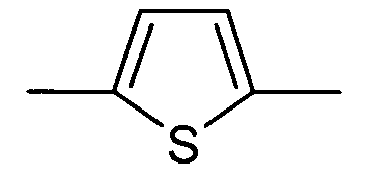
worin eines der Folgenden gilt:I. die Polymerschichten sind eine innere Schicht und eine äußere Schicht, die näher bei der Elektrode sind bzw. weiter von ihr entfernt sind, wobei die innere Schicht eine hydrophobe Polymerschicht ist, die als Substituenten X einen funktionellen Substituenten trägt, der an einer elektrochemischen Reaktion teilnehmen soll, und die äußere Schicht eine hydrophile Schicht ist, welche die Elektrodenstruktur mit einem wässrigen Medium benetzbar macht, sodass Spezies in die innere Schicht eindringen oder aus ihr austreten können,II. die Polymerschichten sind eine innere Schicht und eine äußere Schicht, die näher bei der Elektrode sind bzw. weiter von ihr entfernt sind, wobei eine elektrofreisetzbare Verbindung vorhanden ist, die ionisch an die innere Polymerschicht gebunden ist, und die äußere Schicht Biokompatibilität der Elektrodenstruktur bereitstellt,III. die beiden Polymerschichten tragen jeweils zwei unterschiedliche funktionelle Gruppen, die zusammenwirken, um eine elektrochemische Reaktion bereitzustellen, oder zwei oder mehr Elektrofreisetzungssysteme werden als separate Polymerschichten aufgetragen, was eine kontrollierte selektive Freisetzung von unterschiedlichen elektrofreisetzbaren Verbindungen ermöglicht, wobei jedes der Elektrofreisetzungssysteme eine elektrofreisetzbare Verbindung und eine funktionelle Verbindung oder funktionelle Verbindungen umfasst, die eine erste funktionelle Gruppe, die eine ionische Bindung mit der elektrofreisetzbaren Verbindung bildet, und eine zweite funktionelle Gruppe bereitstellen, die so angepasst ist, dass sie bei Anlegung einer geeigneten Vorspannung an die Elektrode Protonen erzeugt, die sich auf den Zustand der ionischen Bindung auswirken, und so die Freisetzung der elektrofreisetzbaren Verbindung regelt,IV. die Polymerschichten sind eine innere Schicht und eine äußere Schicht, die näher bei der Elektrode sind bzw. weiter von ihr entfernt sind, und die äußere Schicht trägt eine funktionelle Gruppe, die Zellhaftung hemmt, wenn sich die Elektrodenstruktur in einer biologischen Umgebung befindet. - Verfahren nach Anspruch 5, umfassend die Bildung zumindest einer der Polymerschichten durch die Herstellung einer Vorläuferschicht durch Polymerisieren eines unsubstituierten oder substituierten Pyrrols oder Thiophens und die darauf folgende Bildung des Substituenten X daraus.
- Verfahren zur Herstellung einer modifizierten Elektrodenstruktur, umfassend die Bildung von zumindest zwei Polymerschichten nacheinander auf einer Elektrode, wobei jede der Polymerschichten ein Polymer mit Monomereinheiten der Form


wobei in dem Verfahren die erste der zwei nacheinander aufgebrachten Schichten substituiertes Pyrrol oder Thiophen ist, das durch In-situ-Polymerisation gebildet wird und das dann in situ modifiziert wird, um den gewünschten Substituenten X zu inkorporieren, nachdem die zweite der zwei nacheinander aufgebrachten Schichten aufgebracht wurde.
Applications Claiming Priority (3)
| Application Number | Priority Date | Filing Date | Title |
|---|---|---|---|
| GB9702277 | 1997-02-04 | ||
| GBGB9702277.6A GB9702277D0 (en) | 1997-02-04 | 1997-02-04 | Modified electrodes and their use |
| EP98903143A EP0959941B1 (de) | 1997-02-04 | 1998-02-03 | Elektroabgabesysteme |
Related Parent Applications (2)
| Application Number | Title | Priority Date | Filing Date |
|---|---|---|---|
| EP98903143A Division EP0959941B1 (de) | 1997-02-04 | 1998-02-03 | Elektroabgabesysteme |
| EP98903143.0 Division | 1998-08-06 |
Publications (3)
| Publication Number | Publication Date |
|---|---|
| EP1438983A1 EP1438983A1 (de) | 2004-07-21 |
| EP1438983B1 EP1438983B1 (de) | 2006-05-03 |
| EP1438983B2 true EP1438983B2 (de) | 2010-03-03 |
Family
ID=10807079
Family Applications (2)
| Application Number | Title | Priority Date | Filing Date |
|---|---|---|---|
| EP98903143A Expired - Lifetime EP0959941B1 (de) | 1997-02-04 | 1998-02-03 | Elektroabgabesysteme |
| EP04008955A Expired - Lifetime EP1438983B2 (de) | 1997-02-04 | 1998-02-03 | Modifizierte Elektroden und deren Herstellung |
Family Applications Before (1)
| Application Number | Title | Priority Date | Filing Date |
|---|---|---|---|
| EP98903143A Expired - Lifetime EP0959941B1 (de) | 1997-02-04 | 1998-02-03 | Elektroabgabesysteme |
Country Status (11)
| Country | Link |
|---|---|
| US (1) | US6132752A (de) |
| EP (2) | EP0959941B1 (de) |
| AT (2) | ATE272424T1 (de) |
| AU (1) | AU723918B2 (de) |
| CA (2) | CA2278814C (de) |
| DE (2) | DE69825424T2 (de) |
| DK (1) | DK1438983T3 (de) |
| ES (1) | ES2264062T5 (de) |
| GB (1) | GB9702277D0 (de) |
| PT (1) | PT1438983E (de) |
| WO (1) | WO1998033552A1 (de) |
Families Citing this family (15)
| Publication number | Priority date | Publication date | Assignee | Title |
|---|---|---|---|---|
| GB9702277D0 (en) † | 1997-02-04 | 1997-03-26 | Innes John Centre | Modified electrodes and their use |
| AU2001283359A1 (en) * | 2000-08-14 | 2002-02-25 | Pharmacia Corporation | Drug release (delivery system) |
| US6949763B2 (en) * | 2001-10-11 | 2005-09-27 | Marc Ovadia | Semiconductor and non-semiconductor non-diffusion-governed bioelectrodes |
| NL1023720C2 (nl) * | 2003-06-23 | 2004-12-28 | Univ Eindhoven Tech | Werkwijze voor het wijzigen van de transporteigenschappen van een materiaal, werkwijze voor het vrijmaken van een werkstof uit een implantaat, evenals implantaat met werkstof. |
| CA2583746C (en) * | 2004-10-14 | 2014-04-01 | Trustees Of Tufts College | Electrochemically degradable polymers |
| US9084546B2 (en) * | 2005-08-31 | 2015-07-21 | The Regents Of The University Of Michigan | Co-electrodeposited hydrogel-conducting polymer electrodes for biomedical applications |
| US8005526B2 (en) * | 2005-08-31 | 2011-08-23 | The Regents Of The University Of Michigan | Biologically integrated electrode devices |
| US8936794B2 (en) * | 2006-08-25 | 2015-01-20 | The Regents Of The University Of Michigan | Conducting polymer nanotube actuators for precisely controlled release of medicine and bioactive molecules |
| US20090292325A1 (en) | 2008-05-02 | 2009-11-26 | Cederna Paul S | Hybrid bioelectrical interface device |
| GB201012808D0 (en) | 2010-07-29 | 2010-09-15 | Chameleon Biosurfaces Ltd | Implantable electrode |
| US9808616B2 (en) | 2011-01-14 | 2017-11-07 | The Regents Of The University Of Michigan | Regenerative peripheral nerve interface |
| US10109386B2 (en) | 2013-05-17 | 2018-10-23 | Heraeus Medical Components Llc | Impregnation of a non-conductive material with an intrinsically conductive polymer through in-situ polymerization |
| US10314725B2 (en) | 2014-11-13 | 2019-06-11 | The Regents Of The University Of Michigan | Method for amplifying signals from individual nerve fascicles |
| US10731041B2 (en) | 2014-11-19 | 2020-08-04 | Heraeus Medical Components Llc | Conductive polymer coatings for three dimensional substrates |
| EP4065509B1 (de) * | 2019-11-26 | 2025-04-16 | Nyctea Technologies AB | Generischer hochkapazitätsproteineinfang und abstimmbare elektrochemische freisetzung |
Citations (2)
| Publication number | Priority date | Publication date | Assignee | Title |
|---|---|---|---|---|
| EP0495303A2 (de) † | 1990-12-17 | 1992-07-22 | Ford Motor Company Limited | Anordnung von elektroaktiven Polymeren |
| WO1998033552A1 (en) † | 1997-02-04 | 1998-08-06 | Plant Bioscience Limited | Electro-release systems, modified electrodes and their use |
Family Cites Families (4)
| Publication number | Priority date | Publication date | Assignee | Title |
|---|---|---|---|---|
| US4585652A (en) * | 1984-11-19 | 1986-04-29 | Regents Of The University Of Minnesota | Electrochemical controlled release drug delivery system |
| US4994023A (en) * | 1989-08-08 | 1991-02-19 | Wellinghoff Stephen T | Electrochemical drug release and article |
| JP3740549B2 (ja) * | 1990-03-30 | 2006-02-01 | アルザ・コーポレーション | イオン侵透療法による薬剤投与の装置と方法 |
| JPH08155041A (ja) * | 1994-12-05 | 1996-06-18 | Advance Co Ltd | イオントフォレシス用新規高能率電極システム |
-
1997
- 1997-02-04 GB GBGB9702277.6A patent/GB9702277D0/en active Pending
- 1997-09-02 US US08/921,471 patent/US6132752A/en not_active Expired - Lifetime
-
1998
- 1998-02-03 PT PT04008955T patent/PT1438983E/pt unknown
- 1998-02-03 ES ES04008955T patent/ES2264062T5/es not_active Expired - Lifetime
- 1998-02-03 DE DE69825424T patent/DE69825424T2/de not_active Expired - Lifetime
- 1998-02-03 AT AT98903143T patent/ATE272424T1/de not_active IP Right Cessation
- 1998-02-03 DE DE69834444T patent/DE69834444T3/de not_active Expired - Lifetime
- 1998-02-03 AT AT04008955T patent/ATE324925T1/de not_active IP Right Cessation
- 1998-02-03 CA CA002278814A patent/CA2278814C/en not_active Expired - Fee Related
- 1998-02-03 AU AU59968/98A patent/AU723918B2/en not_active Expired
- 1998-02-03 EP EP98903143A patent/EP0959941B1/de not_active Expired - Lifetime
- 1998-02-03 CA CA002513344A patent/CA2513344C/en not_active Expired - Fee Related
- 1998-02-03 EP EP04008955A patent/EP1438983B2/de not_active Expired - Lifetime
- 1998-02-03 WO PCT/GB1998/000363 patent/WO1998033552A1/en not_active Ceased
- 1998-02-03 DK DK04008955T patent/DK1438983T3/da active
Patent Citations (2)
| Publication number | Priority date | Publication date | Assignee | Title |
|---|---|---|---|---|
| EP0495303A2 (de) † | 1990-12-17 | 1992-07-22 | Ford Motor Company Limited | Anordnung von elektroaktiven Polymeren |
| WO1998033552A1 (en) † | 1997-02-04 | 1998-08-06 | Plant Bioscience Limited | Electro-release systems, modified electrodes and their use |
Also Published As
| Publication number | Publication date |
|---|---|
| EP0959941B1 (de) | 2004-08-04 |
| EP1438983A1 (de) | 2004-07-21 |
| DK1438983T3 (da) | 2006-08-21 |
| DE69834444T2 (de) | 2007-04-12 |
| GB9702277D0 (en) | 1997-03-26 |
| EP0959941A1 (de) | 1999-12-01 |
| AU723918B2 (en) | 2000-09-07 |
| PT1438983E (pt) | 2006-09-29 |
| DE69825424D1 (de) | 2004-09-09 |
| AU5996898A (en) | 1998-08-25 |
| DE69834444T3 (de) | 2010-11-04 |
| CA2278814A1 (en) | 1998-08-06 |
| ATE272424T1 (de) | 2004-08-15 |
| EP1438983B1 (de) | 2006-05-03 |
| CA2278814C (en) | 2007-05-01 |
| WO1998033552A1 (en) | 1998-08-06 |
| ES2264062T5 (es) | 2010-06-28 |
| CA2513344C (en) | 2009-05-12 |
| DE69834444D1 (de) | 2006-06-08 |
| US6132752A (en) | 2000-10-17 |
| CA2513344A1 (en) | 1998-08-06 |
| DE69825424T2 (de) | 2005-08-11 |
| ATE324925T1 (de) | 2006-06-15 |
| ES2264062T3 (es) | 2006-12-16 |
Similar Documents
| Publication | Publication Date | Title |
|---|---|---|
| EP1438983B2 (de) | Modifizierte Elektroden und deren Herstellung | |
| US7187969B2 (en) | Electroactive pore | |
| AU621417B2 (en) | Iontophoresis electrode | |
| EP0182765B1 (de) | System zur elektrochemisch kontrollierten Arzneiabgabe | |
| US5766144A (en) | High efficiency electrode system for iontophoresis | |
| EP0429552A1 (de) | Iontophorese Elektrode. | |
| AU736523B2 (en) | Electro-release systems, modified electrodes and their use | |
| NZ577718A (en) | Methods of predicting dose of drug and program for predicting dose of drug | |
| CN101272820A (zh) | 电转运递送阴离子型药物的阴极 |
Legal Events
| Date | Code | Title | Description |
|---|---|---|---|
| PUAI | Public reference made under article 153(3) epc to a published international application that has entered the european phase |
Free format text: ORIGINAL CODE: 0009012 |
|
| AC | Divisional application: reference to earlier application |
Ref document number: 0959941 Country of ref document: EP Kind code of ref document: P |
|
| AK | Designated contracting states |
Kind code of ref document: A1 Designated state(s): AT BE CH DE DK ES FI FR GB GR IE IT LI NL PT SE |
|
| RTI1 | Title (correction) |
Free format text: ELECTRO-RELEASE SYSTEMS, MODIFIED ELECTRODES AND THEIR USE |
|
| 17P | Request for examination filed |
Effective date: 20050111 |
|
| AKX | Designation fees paid |
Designated state(s): AT BE CH DE DK ES FI FR GB GR IE IT LI NL PT SE |
|
| 17Q | First examination report despatched |
Effective date: 20050314 |
|
| GRAP | Despatch of communication of intention to grant a patent |
Free format text: ORIGINAL CODE: EPIDOSNIGR1 |
|
| RTI1 | Title (correction) |
Free format text: MODIFIED ELECTRODES AND THEIR MANUFACTURE |
|
| GRAS | Grant fee paid |
Free format text: ORIGINAL CODE: EPIDOSNIGR3 |
|
| GRAA | (expected) grant |
Free format text: ORIGINAL CODE: 0009210 |
|
| AC | Divisional application: reference to earlier application |
Ref document number: 0959941 Country of ref document: EP Kind code of ref document: P |
|
| AK | Designated contracting states |
Kind code of ref document: B1 Designated state(s): AT BE CH DE DK ES FI FR GB GR IE IT LI NL PT SE |
|
| PG25 | Lapsed in a contracting state [announced via postgrant information from national office to epo] |
Ref country code: IT Free format text: LAPSE BECAUSE OF FAILURE TO SUBMIT A TRANSLATION OF THE DESCRIPTION OR TO PAY THE FEE WITHIN THE PRESCRIBED TIME-LIMIT;WARNING: LAPSES OF ITALIAN PATENTS WITH EFFECTIVE DATE BEFORE 2007 MAY HAVE OCCURRED AT ANY TIME BEFORE 2007. THE CORRECT EFFECTIVE DATE MAY BE DIFFERENT FROM THE ONE RECORDED. Effective date: 20060503 |
|
| REG | Reference to a national code |
Ref country code: GB Ref legal event code: FG4D |
|
| REG | Reference to a national code |
Ref country code: CH Ref legal event code: EP |
|
| REF | Corresponds to: |
Ref document number: 69834444 Country of ref document: DE Date of ref document: 20060608 Kind code of ref document: P |
|
| REG | Reference to a national code |
Ref country code: IE Ref legal event code: FG4D |
|
| REG | Reference to a national code |
Ref country code: SE Ref legal event code: TRGR |
|
| REG | Reference to a national code |
Ref country code: DK Ref legal event code: T3 |
|
| REG | Reference to a national code |
Ref country code: GR Ref legal event code: EP Ref document number: 20060402299 Country of ref document: GR |
|
| REG | Reference to a national code |
Ref country code: PT Ref legal event code: SC4A Effective date: 20060719 |
|
| ET | Fr: translation filed | ||
| REG | Reference to a national code |
Ref country code: ES Ref legal event code: FG2A Ref document number: 2264062 Country of ref document: ES Kind code of ref document: T3 |
|
| PLBI | Opposition filed |
Free format text: ORIGINAL CODE: 0009260 |
|
| PLAX | Notice of opposition and request to file observation + time limit sent |
Free format text: ORIGINAL CODE: EPIDOSNOBS2 |
|
| 26 | Opposition filed |
Opponent name: ELUTEX LTD. Effective date: 20070202 |
|
| NLR1 | Nl: opposition has been filed with the epo |
Opponent name: ELUTEX LTD. |
|
| REG | Reference to a national code |
Ref country code: GB Ref legal event code: 732E |
|
| RAP2 | Party data changed (patent owner data changed or rights of a patent transferred) |
Owner name: CHAMELEON BIOSURFACES LIMITED |
|
| REG | Reference to a national code |
Ref country code: CH Ref legal event code: NV Representative=s name: MICHELI & CIE SA Ref country code: CH Ref legal event code: PFA Owner name: CHAMELEON BIOSURFACES LIMITED Free format text: CHAMELEON BIOSURFACES LIMITED#JOHN INNES CENTRE NORWICH RESEARCH PARK, COLNEY LANE#NORWICH NR4 7UH (GB) -TRANSFER TO- CHAMELEON BIOSURFACES LIMITED#MERLIN PLACE MILTON ROAD#CAMBRIDGE CB4 0DP (GB) Ref country code: CH Ref legal event code: PUE Owner name: CHAMELEON BIOSURFACES LIMITED Free format text: PLANT BIOSCIENCE LIMITED#NORWICH RESEARCH PARK, COLNEY LANE#NORWICH, NORFOLK NR4 7UH (GB) -TRANSFER TO- CHAMELEON BIOSURFACES LIMITED#JOHN INNES CENTRE NORWICH RESEARCH PARK, COLNEY LANE#NORWICH NR4 7UH (GB) |
|
| REG | Reference to a national code |
Ref country code: PT Ref legal event code: PC4A Owner name: CHAMELEON BIOSURFACES LIMITED, GB Effective date: 20070528 |
|
| REG | Reference to a national code |
Ref country code: ES Ref legal event code: PC2A |
|
| NLS | Nl: assignments of ep-patents |
Owner name: CHAMELEON BIOSURFACES LIMITED Effective date: 20070504 |
|
| PLAF | Information modified related to communication of a notice of opposition and request to file observations + time limit |
Free format text: ORIGINAL CODE: EPIDOSCOBS2 |
|
| NLT2 | Nl: modifications (of names), taken from the european patent patent bulletin |
Owner name: CHAMELEON BIOSURFACES LIMITED Effective date: 20070530 |
|
| REG | Reference to a national code |
Ref country code: FR Ref legal event code: TP Ref country code: FR Ref legal event code: CA |
|
| PLBB | Reply of patent proprietor to notice(s) of opposition received |
Free format text: ORIGINAL CODE: EPIDOSNOBS3 |
|
| BECA | Be: change of holder's address |
Owner name: *CHAMELEON BIOSURFACES LTDMERLIN PLACE, MILTON ROA Effective date: 20060503 |
|
| BECH | Be: change of holder |
Owner name: *CHAMELEON BIOSURFACES LTD Effective date: 20060503 |
|
| PLAY | Examination report in opposition despatched + time limit |
Free format text: ORIGINAL CODE: EPIDOSNORE2 |
|
| PLAB | Opposition data, opponent's data or that of the opponent's representative modified |
Free format text: ORIGINAL CODE: 0009299OPPO |
|
| PLBC | Reply to examination report in opposition received |
Free format text: ORIGINAL CODE: EPIDOSNORE3 |
|
| PGFP | Annual fee paid to national office [announced via postgrant information from national office to epo] |
Ref country code: DK Payment date: 20090224 Year of fee payment: 12 Ref country code: AT Payment date: 20090224 Year of fee payment: 12 |
|
| PGFP | Annual fee paid to national office [announced via postgrant information from national office to epo] |
Ref country code: FI Payment date: 20090225 Year of fee payment: 12 |
|
| PGFP | Annual fee paid to national office [announced via postgrant information from national office to epo] |
Ref country code: GR Payment date: 20090127 Year of fee payment: 12 |
|
| PGFP | Annual fee paid to national office [announced via postgrant information from national office to epo] |
Ref country code: BE Payment date: 20090309 Year of fee payment: 12 |
|
| PUAH | Patent maintained in amended form |
Free format text: ORIGINAL CODE: 0009272 |
|
| STAA | Information on the status of an ep patent application or granted ep patent |
Free format text: STATUS: PATENT MAINTAINED AS AMENDED |
|
| 27A | Patent maintained in amended form |
Effective date: 20100303 |
|
| AK | Designated contracting states |
Kind code of ref document: B2 Designated state(s): AT BE CH DE DK ES FI FR GB GR IE IT LI NL PT SE |
|
| REG | Reference to a national code |
Ref country code: CH Ref legal event code: AEN Free format text: AUFRECHTERHALTUNG DES PATENTES IN GEAENDERTER FORM |
|
| REG | Reference to a national code |
Ref country code: NL Ref legal event code: T3 |
|
| REG | Reference to a national code |
Ref country code: SE Ref legal event code: RPEO |
|
| REG | Reference to a national code |
Ref country code: ES Ref legal event code: DC2A Date of ref document: 20100518 Kind code of ref document: T5 |
|
| PGFP | Annual fee paid to national office [announced via postgrant information from national office to epo] |
Ref country code: IE Payment date: 20100428 Year of fee payment: 13 Ref country code: PT Payment date: 20100428 Year of fee payment: 13 Ref country code: ES Payment date: 20100428 Year of fee payment: 13 |
|
| REG | Reference to a national code |
Ref country code: PT Ref legal event code: MP4A Effective date: 20100820 |
|
| PG25 | Lapsed in a contracting state [announced via postgrant information from national office to epo] |
Ref country code: AT Free format text: LAPSE BECAUSE OF FAILURE TO SUBMIT A TRANSLATION OF THE DESCRIPTION OR TO PAY THE FEE WITHIN THE PRESCRIBED TIME-LIMIT Effective date: 20060503 Ref country code: FI Free format text: LAPSE BECAUSE OF FAILURE TO SUBMIT A TRANSLATION OF THE DESCRIPTION OR TO PAY THE FEE WITHIN THE PRESCRIBED TIME-LIMIT Effective date: 20100302 |
|
| PGFP | Annual fee paid to national office [announced via postgrant information from national office to epo] |
Ref country code: NL Payment date: 20100428 Year of fee payment: 14 Ref country code: IT Payment date: 20100429 Year of fee payment: 13 |
|
| PG25 | Lapsed in a contracting state [announced via postgrant information from national office to epo] |
Ref country code: GR Free format text: LAPSE BECAUSE OF FAILURE TO SUBMIT A TRANSLATION OF THE DESCRIPTION OR TO PAY THE FEE WITHIN THE PRESCRIBED TIME-LIMIT Effective date: 20100604 |
|
| PGFP | Annual fee paid to national office [announced via postgrant information from national office to epo] |
Ref country code: CH Payment date: 20100426 Year of fee payment: 13 |
|
| PGFP | Annual fee paid to national office [announced via postgrant information from national office to epo] |
Ref country code: SE Payment date: 20100426 Year of fee payment: 13 |
|
| PG25 | Lapsed in a contracting state [announced via postgrant information from national office to epo] |
Ref country code: PT Free format text: LAPSE BECAUSE OF FAILURE TO SUBMIT A TRANSLATION OF THE DESCRIPTION OR TO PAY THE FEE WITHIN THE PRESCRIBED TIME-LIMIT Effective date: 20100830 Ref country code: DK Free format text: LAPSE BECAUSE OF FAILURE TO SUBMIT A TRANSLATION OF THE DESCRIPTION OR TO PAY THE FEE WITHIN THE PRESCRIBED TIME-LIMIT Effective date: 20100603 |
|
| REG | Reference to a national code |
Ref country code: NL Ref legal event code: V1 Effective date: 20110901 |
|
| REG | Reference to a national code |
Ref country code: CH Ref legal event code: PL |
|
| REG | Reference to a national code |
Ref country code: SE Ref legal event code: EUG |
|
| PG25 | Lapsed in a contracting state [announced via postgrant information from national office to epo] |
Ref country code: LI Free format text: LAPSE BECAUSE OF NON-PAYMENT OF DUE FEES Effective date: 20110228 Ref country code: CH Free format text: LAPSE BECAUSE OF NON-PAYMENT OF DUE FEES Effective date: 20110228 |
|
| REG | Reference to a national code |
Ref country code: IE Ref legal event code: MM4A |
|
| PG25 | Lapsed in a contracting state [announced via postgrant information from national office to epo] |
Ref country code: NL Free format text: LAPSE BECAUSE OF NON-PAYMENT OF DUE FEES Effective date: 20110901 Ref country code: IT Free format text: LAPSE BECAUSE OF NON-PAYMENT OF DUE FEES Effective date: 20110203 |
|
| PG25 | Lapsed in a contracting state [announced via postgrant information from national office to epo] |
Ref country code: IE Free format text: LAPSE BECAUSE OF NON-PAYMENT OF DUE FEES Effective date: 20110203 |
|
| REG | Reference to a national code |
Ref country code: GB Ref legal event code: 732E Free format text: REGISTERED BETWEEN 20120112 AND 20120118 |
|
| REG | Reference to a national code |
Ref country code: FR Ref legal event code: TP Owner name: BIOTECTIX, LLC, US Effective date: 20120120 |
|
| REG | Reference to a national code |
Ref country code: ES Ref legal event code: FD2A Effective date: 20120411 |
|
| REG | Reference to a national code |
Ref country code: DE Ref legal event code: R082 Ref document number: 69834444 Country of ref document: DE Representative=s name: LEINWEBER & ZIMMERMANN, DE |
|
| PG25 | Lapsed in a contracting state [announced via postgrant information from national office to epo] |
Ref country code: ES Free format text: LAPSE BECAUSE OF NON-PAYMENT OF DUE FEES Effective date: 20110204 |
|
| REG | Reference to a national code |
Ref country code: DE Ref legal event code: R082 Ref document number: 69834444 Country of ref document: DE Representative=s name: LEINWEBER & ZIMMERMANN, DE Effective date: 20120418 Ref country code: DE Ref legal event code: R081 Ref document number: 69834444 Country of ref document: DE Owner name: BIOTECTIX, LLC (N.D.GES. DES STAATES MISSOURI), US Free format text: FORMER OWNER: CHAMELEON BIOSURFACES LTD., CAMBRIDGE, CAMBRIDGESHIRE, GB Effective date: 20120418 Ref country code: DE Ref legal event code: R081 Ref document number: 69834444 Country of ref document: DE Owner name: BIOTECTIX, LLC (N.D.GES. DES STAATES MISSOURI), US Free format text: FORMER OWNER: CHAMELEON BIOSURFACES LTD., CAMBRIDGE, GB Effective date: 20120418 |
|
| PG25 | Lapsed in a contracting state [announced via postgrant information from national office to epo] |
Ref country code: SE Free format text: LAPSE BECAUSE OF NON-PAYMENT OF DUE FEES Effective date: 20110204 |
|
| PG25 | Lapsed in a contracting state [announced via postgrant information from national office to epo] |
Ref country code: BE Free format text: LAPSE BECAUSE OF NON-PAYMENT OF DUE FEES Effective date: 20100228 |
|
| REG | Reference to a national code |
Ref country code: FR Ref legal event code: PLFP Year of fee payment: 19 |
|
| REG | Reference to a national code |
Ref country code: FR Ref legal event code: PLFP Year of fee payment: 20 |
|
| PGFP | Annual fee paid to national office [announced via postgrant information from national office to epo] |
Ref country code: DE Payment date: 20170227 Year of fee payment: 20 Ref country code: FR Payment date: 20170223 Year of fee payment: 20 |
|
| PGFP | Annual fee paid to national office [announced via postgrant information from national office to epo] |
Ref country code: GB Payment date: 20170227 Year of fee payment: 20 |
|
| REG | Reference to a national code |
Ref country code: DE Ref legal event code: R071 Ref document number: 69834444 Country of ref document: DE |
|
| REG | Reference to a national code |
Ref country code: GB Ref legal event code: PE20 Expiry date: 20180202 |
|
| PG25 | Lapsed in a contracting state [announced via postgrant information from national office to epo] |
Ref country code: GB Free format text: LAPSE BECAUSE OF EXPIRATION OF PROTECTION Effective date: 20180202 |