EP1443036A1 - Prozess zur Herstellung von hoch reinem Trialkanolamin - Google Patents
Prozess zur Herstellung von hoch reinem Trialkanolamin Download PDFInfo
- Publication number
- EP1443036A1 EP1443036A1 EP20040002111 EP04002111A EP1443036A1 EP 1443036 A1 EP1443036 A1 EP 1443036A1 EP 20040002111 EP20040002111 EP 20040002111 EP 04002111 A EP04002111 A EP 04002111A EP 1443036 A1 EP1443036 A1 EP 1443036A1
- Authority
- EP
- European Patent Office
- Prior art keywords
- ammonia
- tea
- reaction
- distillation
- column
- Prior art date
- Legal status (The legal status is an assumption and is not a legal conclusion. Google has not performed a legal analysis and makes no representation as to the accuracy of the status listed.)
- Granted
Links
- 238000000034 method Methods 0.000 title claims abstract description 110
- QGZKDVFQNNGYKY-UHFFFAOYSA-N Ammonia Chemical compound N QGZKDVFQNNGYKY-UHFFFAOYSA-N 0.000 claims abstract description 198
- 238000009835 boiling Methods 0.000 claims abstract description 78
- 238000006243 chemical reaction Methods 0.000 claims abstract description 71
- 229910021529 ammonia Inorganic materials 0.000 claims abstract description 68
- 238000005292 vacuum distillation Methods 0.000 claims abstract description 19
- 239000000126 substance Substances 0.000 claims abstract description 18
- 125000002947 alkylene group Chemical group 0.000 claims abstract description 14
- 241001550224 Apha Species 0.000 claims abstract 2
- 238000004821 distillation Methods 0.000 claims description 66
- 150000001875 compounds Chemical class 0.000 claims description 53
- 239000003054 catalyst Substances 0.000 claims description 51
- XLYOFNOQVPJJNP-UHFFFAOYSA-N water Substances O XLYOFNOQVPJJNP-UHFFFAOYSA-N 0.000 claims description 47
- 239000002994 raw material Substances 0.000 claims description 46
- VHUUQVKOLVNVRT-UHFFFAOYSA-N Ammonium hydroxide Chemical compound [NH4+].[OH-] VHUUQVKOLVNVRT-UHFFFAOYSA-N 0.000 claims description 43
- HNPSIPDUKPIQMN-UHFFFAOYSA-N dioxosilane;oxo(oxoalumanyloxy)alumane Chemical compound O=[Si]=O.O=[Al]O[Al]=O HNPSIPDUKPIQMN-UHFFFAOYSA-N 0.000 claims description 14
- 229910021536 Zeolite Inorganic materials 0.000 claims description 13
- 239000010457 zeolite Substances 0.000 claims description 13
- 238000007670 refining Methods 0.000 claims description 7
- GSEJCLTVZPLZKY-UHFFFAOYSA-N Triethanolamine Chemical compound OCCN(CCO)CCO GSEJCLTVZPLZKY-UHFFFAOYSA-N 0.000 description 136
- HZAXFHJVJLSVMW-UHFFFAOYSA-N 2-Aminoethan-1-ol Chemical compound NCCO HZAXFHJVJLSVMW-UHFFFAOYSA-N 0.000 description 105
- 235000011114 ammonium hydroxide Nutrition 0.000 description 41
- IAYPIBMASNFSPL-UHFFFAOYSA-N Ethylene oxide Chemical compound C1CO1 IAYPIBMASNFSPL-UHFFFAOYSA-N 0.000 description 36
- 239000000243 solution Substances 0.000 description 35
- 230000000052 comparative effect Effects 0.000 description 31
- 238000012360 testing method Methods 0.000 description 28
- 239000000203 mixture Substances 0.000 description 23
- 239000000047 product Substances 0.000 description 23
- OAICVXFJPJFONN-UHFFFAOYSA-N Phosphorus Chemical compound [P] OAICVXFJPJFONN-UHFFFAOYSA-N 0.000 description 20
- 229910052698 phosphorus Inorganic materials 0.000 description 20
- 239000011574 phosphorus Substances 0.000 description 20
- IJGRMHOSHXDMSA-UHFFFAOYSA-N Atomic nitrogen Chemical compound N#N IJGRMHOSHXDMSA-UHFFFAOYSA-N 0.000 description 18
- 238000002835 absorbance Methods 0.000 description 15
- 239000007788 liquid Substances 0.000 description 12
- 238000010586 diagram Methods 0.000 description 11
- 238000006073 displacement reaction Methods 0.000 description 11
- 239000000945 filler Substances 0.000 description 11
- 229910001873 dinitrogen Inorganic materials 0.000 description 10
- 239000011521 glass Substances 0.000 description 9
- ZBCBWPMODOFKDW-UHFFFAOYSA-N diethanolamine Chemical compound OCCNCCO ZBCBWPMODOFKDW-UHFFFAOYSA-N 0.000 description 8
- 239000003205 fragrance Substances 0.000 description 8
- 238000004519 manufacturing process Methods 0.000 description 8
- 239000012153 distilled water Substances 0.000 description 7
- 238000004064 recycling Methods 0.000 description 7
- 230000032683 aging Effects 0.000 description 6
- 238000000998 batch distillation Methods 0.000 description 6
- 241000196324 Embryophyta Species 0.000 description 5
- 238000004458 analytical method Methods 0.000 description 5
- 239000008367 deionised water Substances 0.000 description 5
- 229910021641 deionized water Inorganic materials 0.000 description 5
- 239000012263 liquid product Substances 0.000 description 5
- 239000012086 standard solution Substances 0.000 description 5
- 238000005303 weighing Methods 0.000 description 5
- LFQSCWFLJHTTHZ-UHFFFAOYSA-N Ethanol Chemical compound CCO LFQSCWFLJHTTHZ-UHFFFAOYSA-N 0.000 description 4
- NBIIXXVUZAFLBC-UHFFFAOYSA-N Phosphoric acid Chemical compound OP(O)(O)=O NBIIXXVUZAFLBC-UHFFFAOYSA-N 0.000 description 4
- 230000015572 biosynthetic process Effects 0.000 description 4
- 239000003153 chemical reaction reagent Substances 0.000 description 4
- 239000007789 gas Substances 0.000 description 4
- 230000001965 increasing effect Effects 0.000 description 4
- 229910052757 nitrogen Inorganic materials 0.000 description 4
- 238000002360 preparation method Methods 0.000 description 4
- 239000007921 spray Substances 0.000 description 4
- ZWEHNKRNPOVVGH-UHFFFAOYSA-N 2-Butanone Chemical compound CCC(C)=O ZWEHNKRNPOVVGH-UHFFFAOYSA-N 0.000 description 3
- WFDIJRYMOXRFFG-UHFFFAOYSA-N Acetic anhydride Chemical compound CC(=O)OC(C)=O WFDIJRYMOXRFFG-UHFFFAOYSA-N 0.000 description 3
- KFZMGEQAYNKOFK-UHFFFAOYSA-N Isopropanol Chemical compound CC(C)O KFZMGEQAYNKOFK-UHFFFAOYSA-N 0.000 description 3
- OKKJLVBELUTLKV-UHFFFAOYSA-N Methanol Chemical compound OC OKKJLVBELUTLKV-UHFFFAOYSA-N 0.000 description 3
- DNIAPMSPPWPWGF-UHFFFAOYSA-N Propylene glycol Chemical compound CC(O)CO DNIAPMSPPWPWGF-UHFFFAOYSA-N 0.000 description 3
- QVGXLLKOCUKJST-UHFFFAOYSA-N atomic oxygen Chemical compound [O] QVGXLLKOCUKJST-UHFFFAOYSA-N 0.000 description 3
- KRKNYBCHXYNGOX-UHFFFAOYSA-N citric acid Chemical compound OC(=O)CC(O)(C(O)=O)CC(O)=O KRKNYBCHXYNGOX-UHFFFAOYSA-N 0.000 description 3
- 238000001816 cooling Methods 0.000 description 3
- MTHSVFCYNBDYFN-UHFFFAOYSA-N diethylene glycol Chemical compound OCCOCCO MTHSVFCYNBDYFN-UHFFFAOYSA-N 0.000 description 3
- 239000011259 mixed solution Substances 0.000 description 3
- 239000001301 oxygen Substances 0.000 description 3
- 229910052760 oxygen Inorganic materials 0.000 description 3
- 238000011084 recovery Methods 0.000 description 3
- 239000011369 resultant mixture Substances 0.000 description 3
- 238000000926 separation method Methods 0.000 description 3
- CSCPPACGZOOCGX-UHFFFAOYSA-N Acetone Chemical compound CC(C)=O CSCPPACGZOOCGX-UHFFFAOYSA-N 0.000 description 2
- NLXLAEXVIDQMFP-UHFFFAOYSA-N Ammonium chloride Substances [NH4+].[Cl-] NLXLAEXVIDQMFP-UHFFFAOYSA-N 0.000 description 2
- VEXZGXHMUGYJMC-UHFFFAOYSA-N Hydrochloric acid Chemical compound Cl VEXZGXHMUGYJMC-UHFFFAOYSA-N 0.000 description 2
- LRHPLDYGYMQRHN-UHFFFAOYSA-N N-Butanol Chemical compound CCCCO LRHPLDYGYMQRHN-UHFFFAOYSA-N 0.000 description 2
- QAOWNCQODCNURD-UHFFFAOYSA-N Sulfuric acid Chemical compound OS(O)(=O)=O QAOWNCQODCNURD-UHFFFAOYSA-N 0.000 description 2
- DKGAVHZHDRPRBM-UHFFFAOYSA-N Tert-Butanol Chemical compound CC(C)(C)O DKGAVHZHDRPRBM-UHFFFAOYSA-N 0.000 description 2
- 229910000147 aluminium phosphate Inorganic materials 0.000 description 2
- 229910052799 carbon Inorganic materials 0.000 description 2
- 238000001944 continuous distillation Methods 0.000 description 2
- 239000000498 cooling water Substances 0.000 description 2
- HPNMFZURTQLUMO-UHFFFAOYSA-N diethylamine Chemical compound CCNCC HPNMFZURTQLUMO-UHFFFAOYSA-N 0.000 description 2
- 150000002148 esters Chemical class 0.000 description 2
- 230000002349 favourable effect Effects 0.000 description 2
- 230000002431 foraging effect Effects 0.000 description 2
- 238000004817 gas chromatography Methods 0.000 description 2
- 239000001307 helium Substances 0.000 description 2
- 229910052734 helium Inorganic materials 0.000 description 2
- SWQJXJOGLNCZEY-UHFFFAOYSA-N helium atom Chemical compound [He] SWQJXJOGLNCZEY-UHFFFAOYSA-N 0.000 description 2
- 239000012535 impurity Substances 0.000 description 2
- 238000005342 ion exchange Methods 0.000 description 2
- 229910052746 lanthanum Inorganic materials 0.000 description 2
- FZLIPJUXYLNCLC-UHFFFAOYSA-N lanthanum atom Chemical compound [La] FZLIPJUXYLNCLC-UHFFFAOYSA-N 0.000 description 2
- 239000007791 liquid phase Substances 0.000 description 2
- 238000002156 mixing Methods 0.000 description 2
- 230000001590 oxidative effect Effects 0.000 description 2
- 238000012856 packing Methods 0.000 description 2
- RGCLLPNLLBQHPF-HJWRWDBZSA-N phosphamidon Chemical compound CCN(CC)C(=O)C(\Cl)=C(/C)OP(=O)(OC)OC RGCLLPNLLBQHPF-HJWRWDBZSA-N 0.000 description 2
- BDERNNFJNOPAEC-UHFFFAOYSA-N propan-1-ol Chemical compound CCCO BDERNNFJNOPAEC-UHFFFAOYSA-N 0.000 description 2
- 239000003507 refrigerant Substances 0.000 description 2
- 238000003786 synthesis reaction Methods 0.000 description 2
- VZGDMQKNWNREIO-UHFFFAOYSA-N tetrachloromethane Chemical compound ClC(Cl)(Cl)Cl VZGDMQKNWNREIO-UHFFFAOYSA-N 0.000 description 2
- SVONRAPFKPVNKG-UHFFFAOYSA-N 2-ethoxyethyl acetate Chemical compound CCOCCOC(C)=O SVONRAPFKPVNKG-UHFFFAOYSA-N 0.000 description 1
- HXDLWJWIAHWIKI-UHFFFAOYSA-N 2-hydroxyethyl acetate Chemical compound CC(=O)OCCO HXDLWJWIAHWIKI-UHFFFAOYSA-N 0.000 description 1
- RZVAJINKPMORJF-UHFFFAOYSA-N Acetaminophen Chemical compound CC(=O)NC1=CC=C(O)C=C1 RZVAJINKPMORJF-UHFFFAOYSA-N 0.000 description 1
- OKTJSMMVPCPJKN-UHFFFAOYSA-N Carbon Chemical compound [C] OKTJSMMVPCPJKN-UHFFFAOYSA-N 0.000 description 1
- LYCAIKOWRPUZTN-UHFFFAOYSA-N Ethylene glycol Chemical compound OCCO LYCAIKOWRPUZTN-UHFFFAOYSA-N 0.000 description 1
- UFHFLCQGNIYNRP-UHFFFAOYSA-N Hydrogen Chemical compound [H][H] UFHFLCQGNIYNRP-UHFFFAOYSA-N 0.000 description 1
- 240000001822 Ilex glabra Species 0.000 description 1
- ZLMJMSJWJFRBEC-UHFFFAOYSA-N Potassium Chemical compound [K] ZLMJMSJWJFRBEC-UHFFFAOYSA-N 0.000 description 1
- WUGQZFFCHPXWKQ-UHFFFAOYSA-N Propanolamine Chemical compound NCCCO WUGQZFFCHPXWKQ-UHFFFAOYSA-N 0.000 description 1
- VYPSYNLAJGMNEJ-UHFFFAOYSA-N Silicium dioxide Chemical compound O=[Si]=O VYPSYNLAJGMNEJ-UHFFFAOYSA-N 0.000 description 1
- 238000013019 agitation Methods 0.000 description 1
- 150000001298 alcohols Chemical class 0.000 description 1
- 125000000217 alkyl group Chemical group 0.000 description 1
- XAGFODPZIPBFFR-UHFFFAOYSA-N aluminium Chemical compound [Al] XAGFODPZIPBFFR-UHFFFAOYSA-N 0.000 description 1
- 229910052782 aluminium Inorganic materials 0.000 description 1
- 229910000323 aluminium silicate Inorganic materials 0.000 description 1
- 230000005587 bubbling Effects 0.000 description 1
- 239000006227 byproduct Substances 0.000 description 1
- 239000007795 chemical reaction product Substances 0.000 description 1
- GFHNAMRJFCEERV-UHFFFAOYSA-L cobalt chloride hexahydrate Chemical compound O.O.O.O.O.O.[Cl-].[Cl-].[Co+2] GFHNAMRJFCEERV-UHFFFAOYSA-L 0.000 description 1
- 239000002537 cosmetic Substances 0.000 description 1
- 239000013078 crystal Substances 0.000 description 1
- 230000003247 decreasing effect Effects 0.000 description 1
- 230000000593 degrading effect Effects 0.000 description 1
- 239000003599 detergent Substances 0.000 description 1
- 235000014113 dietary fatty acids Nutrition 0.000 description 1
- 150000002009 diols Chemical class 0.000 description 1
- 230000000694 effects Effects 0.000 description 1
- 239000003995 emulsifying agent Substances 0.000 description 1
- 239000000194 fatty acid Substances 0.000 description 1
- 229930195729 fatty acid Natural products 0.000 description 1
- 150000004665 fatty acids Chemical class 0.000 description 1
- 238000004508 fractional distillation Methods 0.000 description 1
- 239000002241 glass-ceramic Substances 0.000 description 1
- 150000008282 halocarbons Chemical class 0.000 description 1
- 230000002363 herbicidal effect Effects 0.000 description 1
- 239000004009 herbicide Substances 0.000 description 1
- 239000001257 hydrogen Substances 0.000 description 1
- 229910052739 hydrogen Inorganic materials 0.000 description 1
- 230000001976 improved effect Effects 0.000 description 1
- 230000001939 inductive effect Effects 0.000 description 1
- 239000011261 inert gas Substances 0.000 description 1
- 150000002484 inorganic compounds Chemical class 0.000 description 1
- 229910010272 inorganic material Inorganic materials 0.000 description 1
- 238000009413 insulation Methods 0.000 description 1
- 150000002576 ketones Chemical class 0.000 description 1
- 239000000463 material Substances 0.000 description 1
- 150000007522 mineralic acids Chemical class 0.000 description 1
- 238000006386 neutralization reaction Methods 0.000 description 1
- 150000007524 organic acids Chemical class 0.000 description 1
- 235000005985 organic acids Nutrition 0.000 description 1
- 150000002894 organic compounds Chemical class 0.000 description 1
- 239000011591 potassium Substances 0.000 description 1
- 229910052700 potassium Inorganic materials 0.000 description 1
- 239000005297 pyrex Substances 0.000 description 1
- 230000001105 regulatory effect Effects 0.000 description 1
- 229910052710 silicon Inorganic materials 0.000 description 1
- 239000010703 silicon Substances 0.000 description 1
- -1 silicon and aluminum Chemical class 0.000 description 1
- 239000007787 solid Substances 0.000 description 1
- 229910001220 stainless steel Inorganic materials 0.000 description 1
- 239000010935 stainless steel Substances 0.000 description 1
- 230000001988 toxicity Effects 0.000 description 1
- 231100000419 toxicity Toxicity 0.000 description 1
- 230000000007 visual effect Effects 0.000 description 1
Images



Classifications
-
- C—CHEMISTRY; METALLURGY
- C07—ORGANIC CHEMISTRY
- C07C—ACYCLIC OR CARBOCYCLIC COMPOUNDS
- C07C213/00—Preparation of compounds containing amino and hydroxy, amino and etherified hydroxy or amino and esterified hydroxy groups bound to the same carbon skeleton
- C07C213/04—Preparation of compounds containing amino and hydroxy, amino and etherified hydroxy or amino and esterified hydroxy groups bound to the same carbon skeleton by reaction of ammonia or amines with olefin oxides or halohydrins
-
- B—PERFORMING OPERATIONS; TRANSPORTING
- B01—PHYSICAL OR CHEMICAL PROCESSES OR APPARATUS IN GENERAL
- B01J—CHEMICAL OR PHYSICAL PROCESSES, e.g. CATALYSIS OR COLLOID CHEMISTRY; THEIR RELEVANT APPARATUS
- B01J29/00—Catalysts comprising molecular sieves
- B01J29/04—Catalysts comprising molecular sieves having base-exchange properties, e.g. crystalline zeolites
- B01J29/06—Crystalline aluminosilicate zeolites; Isomorphous compounds thereof
- B01J29/40—Crystalline aluminosilicate zeolites; Isomorphous compounds thereof of the pentasil type, e.g. types ZSM-5, ZSM-8 or ZSM-11, as exemplified by patent documents US3702886, GB1334243 and US3709979, respectively
- B01J29/405—Crystalline aluminosilicate zeolites; Isomorphous compounds thereof of the pentasil type, e.g. types ZSM-5, ZSM-8 or ZSM-11, as exemplified by patent documents US3702886, GB1334243 and US3709979, respectively containing rare earth elements, titanium, zirconium, hafnium, zinc, cadmium, mercury, gallium, indium, thallium, tin or lead
Definitions
- This invention relates to a process for producing trialkanolamines by the reaction of an alkylene oxide with liquefied ammonia in the presence of a zeolite catalyst. More particularly, this invention relates to a process for producing a high purity trialkanolamine excellent in hue by two-stage vacuum distillation of a crude trialkanolamine.
- this invention relates to a process for refining a trialkanolamine from a mixed alkanolamine obtained by the reaction of an alkylene oxide with ammonia. More particularly, this invention relates to a process for adding a low-boiling compound to a raw material trialkanolamineand subsequently distilling them together.
- a product which is composed of mon-/di-/triethanolamine at a weight ratio of 55/41/4 is obtained by causing ammonia and ethylene oxide to react at a molar ratio of 7 : 9 while using pentacyl type aluminosilicate (crystal structure MFI type) as a zeolite catalyst (U.S. Patent No. 6,169,207) (catalyst process).
- pentacyl type aluminosilicate crystal structure MFI type
- zeolite catalyst U.S. Patent No. 6,169,207
- the reaction product obtained by the catalyst process has diethanolamine at a high ratio and triethanolamine at a low ratio.
- the product is vacuum distilled to produce triethanolamine, a high purity triethanolamine cannot be obtained because impurities are concentrated into the triethanolamine. There has been the problem that a high purity product cannot be obtained.
- triethanolamine is used as the raw material for cosmetic preparations, detergents, emulsifiers, etc., it is processed in advance into fatty acid amides and higher alkyl sulfuric esters. It is, therefore, required to possess high purity and avoid inducing coloration to the fullest possible extent during the course of neutralization with inorganic acids such as acetic anhydride, sulfuric acid, and phosphoric acid, and organic acids such as citric acid.
- the triethanolamine as a finished product is required to have the prescribed properties.
- a high quality triethanolamine can be obtained by finely dividing the fractions of distillation.
- triethanolamine excellent in hue has been produced only in a low yield.
- An object of the invention is to solve the problem mentioned above and to provide a process for producing a high purity trialkanolamine excellent in hue.
- Another object of the invention is to provide a process for refining a trialkanolamine from a mixed alkanolamine obtained by the aqueous ammonia process and/or the catalyst process.
- This invention concerns a process for producing a high purity trialkanolamine excelling in hue having an APHA of not more than 40, characterized by comprising, in producing a mixed alkanolamine by the reaction of an alkylene oxide with liquid ammonia in the presence of a zeolite type catalyst, or by the reaction of an alkylene oxide with liquid ammonia in the presence of a zeolite type catalyst and the reaction of an alkylene oxide with aqueous ammonia, a step of removing a low-boiling substance for removing unreacted ammonia, water, a monoalkanolamine, and a dialkanolamine from the product of the reaction of an alkylene oxide with ammonia, a step of removing a high-boiling substance by subj ecting the product resulting from the removal of the low-boiling substance to a vacuum distillation, and a step for redistilling the distillate resulting from the vacuum distillation.
- this invention is directed at a process for refining a trialkanolamine from a mixed alkanolamine obtained by the process mentioned above and is accomplished by a process for refining a trialkanolamine, characterized by adding to the raw material trialkanolamine a low-boiling compound having a boiling point less than the boiling point of the trialkanolamine and distilling them together.
- a high purity trialkanolamine excelling in hue can be produced by removing the unreacted ammonia, water, mono-, and diethanolamine from the reaction solution obtained by the catalyst process or the combined process of the catalyst process and the aqueous ammonia process and subjecting the resulting reaction solution to two stages of vacuum distillation, namely crude distillation and redistillation.
- this invention it is possible to heighten the purity of a trialkanolamine and, at the same time, improve the quality in terms of hue by a simple process of adding a low-boiling compound having a boiling point lower than the boiling point of the trialkanolamine to the raw material trialkanolamine and distilling them together. Further, as regards the quality, an improvement in the test for phosphorus coloration and the test for aging can be confirmed.
- alkanolamine refers to alkanolamines having a carbon number in the range of 2 - 5, for instance, ethanolamine and propanolamine.
- the process for producing such an alkanolamine will be described with respect to ethanolamine as a representative.
- the alkanolamine which is obtained by the reaction is a mixture of a monoalkanolamine, a dialkanolamine, and a trialkanolamine.
- the mixed ethanolamine to be used as the raw material is an ethanolamine solution which is obtained by the reaction of ethylene oxide with liquid ammonia in the presence of a ZSM-5 zeolite as a catalyst (hereinafter may be referred to as "catalyst process”) or a mixed solution of the ethanolamine solution obtained by the catalyst process and an ethanolamine solution continuously obtained by the conventional reaction of ethylene oxide with aqueous ammonia (hereinafter maybe referred to as "aqueous ammonia process").
- the process contemplated by this invention does not discriminate the produced ethanolamine on account of variations in the ratio of formation and in the ratio of productions by the catalyst process and the aqueous ammonia process.
- the reaction of liquid ammonia and ethylene oxide as raw materials is performed in the state of liquid phase under pressure using a fixed-bed reactor or reaction vessel.
- the ammonia is used in excess of the theoretical amount of the reaction with ethylene oxide, so that excess ammonia is separated and recovered from the product, and the recovered ammonia is generally supplied again to the reactor.
- the ethanolamine which is obtained by the reaction is a mixture of monoethanolamine (hereinafter may be referred to as "MEA”), diethanolamine (hereinafter may be referred to as "DEA”), and triethanolamine (hereinafter may be referred to as "TEA").
- MEA monoethanolamine
- DEA diethanolamine
- TEA triethanolamine
- the reactor is a fixed-bed type one in which the raw material is fed generally in an up-flow stream. Further, the reactor is preferred to be of insulation type from the viewpoint of the efficiency of reaction.
- the reaction temperature is in the range of normal temperature - 200°C and the reaction pressure in the range of 8 - 15 MPa.
- the liquid of raw materials flows inside the reactor generally not less than 0.1 liter/hr and preferably in the range of 0.1 - 100,000 liters/hr.
- the liquid hourly space velocity (LHSV) is generally in the range of 0.5 - 100 hr -1 , depending upon the reaction temperature, the kind of catalyst, and the amount of the catalyst used.
- FIG. 1 is an explanatory diagram illustrating an apparatus to be used in this invention for producing ethanolamine by recycling MEA to the reactor.
- liquid ammonia from a liquid ammonia tank 102 is fed to a reactor 104 via a preheater 103, and ethylene oxide from an ethylene oxide tank 101 is fed to the reactor 104.
- the ammonia is generally added in the range of 2 - 30 mols relative to 1 mole of ethylene oxide, though it is not particularly restricted.
- the preheater 103 is intended to heat the rawmaterials in advance of the reaction and quicken their arrival at the reactor, so that the temperature of the preheater 103 is preferred to be in the range of 20°C - 100°C.
- the reaction is an adiabatic reaction.
- the product emanating from the reactor 104 is forwarded via a pressure control valve 107 to an ammonia recovering column 105 such as a flash drum.
- the ammonia recovering column 105 is fitted with a reboiler 109.
- the ammonia recovering column 105 via the top of the column ammonia is introduced to a cooler 108 and recovered as liquid ammonia in a tank 106 and, at the same time, a mixture of ammonia and ethanolamine is obtained as bottoms in the bottom of the column.
- this recovery step usually 80 - 98% by weight, preferably 85 - 96% by weight, and more preferably 90 - 95% by weight, of the ammonia is recovered in the form of liquid ammonia in the tank 106.
- the ammonia recovering column 105 is operated under a pressure in the approximate range of 1 - 3 MPa, since a cooling water of normal temperature is used as the refrigerant for the cooler 108.
- the bottoms obtained from the ammonia recovering column 105 therefore, contains about 4 - 20% by weight of ammonia.
- the position at which the MEA is recycled to the reactor is preferred to be the inlet to the preheater from the viewpoint of the efficiency of the reaction.
- the ethylene oxide concentration at the inlet to the reactor is generally in the range of 3 - 35% by weight, preferably 5 - 30% by weight, and most preferably 8 - 25% by weight. If the ethylene oxide concentration is unduly low, the shortage will degrade the productivity excessively and decrease the amount of DEA to be obtained.
- Fig. 2 is an explanatory diagram illustrating an apparatus to be used in this invention for producing ethanolamine by recycling part of the liquid product from which the greater part of the unaltered ammonia has been removed.
- the same members and devices as those in Fig. 1 are denoted by reference numerals which are formed by substituting 2 for 1 at the third decimal position of the relevant reference numerals used in Fig. 1 unless otherwise specified.
- Fig. 2 part of the bottoms from an ammonia recovering column 205 or the liquid product is fed to a reactor 204 or a preheater 203.
- the liquid product contains MEA, DEA, and TEA, and ammonia.
- the liquid product is generally recycled in the range of 5 - 90% by volume, preferably 10 - 80% by volume, and more preferably 20 - 70% by volume, based on the total product. If the amount of the liquid to be recycled is unduly small, the shortage will prevent the ethylene oxide concentration from being increased, thereby the amount of DEA to be obtained being increased. Conversely, if the amount of the liquid to be recycled is unduly large, the excess will result in unduly increasing the amount of the liquid flowing through the inlet to the reactor relative to the amount of the product, thereby degrading the efficiency of production.
- part of the liquid product is preferably recycled to the reactor without completely separating ammonia from the ethanolamine.
- Complete separation of ammonia requires the pressure to fall in the range of normal pressure - reduced pressure and this decrease of pressure is very expensive.
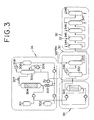
- Fig. 3 is a diagram illustrating a flow sheet of the process for producing ethanolamine by the combination of catalyst process and aqueous ammonia process.
- the block 3A depicts the flow of the process for producing ethanolamine by catalyst process
- the block 3B the process for producing ethanolamine by aqueous ammonia process
- the block 3C the ammonia recovery system
- the block 3D the refinery system.
- the reaction is performed by using liquid ammonia and ethylene oxide as raw materials in the state of a liquid phase under pressure using a fixed-bed reactor.
- the ammonia is generally used in the range of 2 - 30 mols per 1 mol of ethylene oxide. Since the ammonia is used in excess of the theoretical amount of the reaction with ethylene oxide, ammonia is separated and recovered from the product and fed again to the reactor.
- the ethanolamine which is obtained by the reaction is a mixture of MEA, DEA, and TEA. In the case of obtaining DEA and TEA selectively, the mixture may be recycled to the reactor. In the case of obtaining DEA selectively, MEA alone may be separated and recycled to the reactor.
- a reactor, and reaction conditions such as reaction temperature, pressure, flow rate, and LHSV to be used in b) are the same to the catalyst process.
- liquid ammonia is fed by a high-pressure pump to a reactor 304 via a preheater (20°C - 100°C) 303.
- EO ethylene oxide
- EO ethylene oxide
- the reactor 304 is maintained under a pressure in the approximate range of 8 - 15 MPa by a pressure control valve 307.
- the product which has emanated from the pressure control valve 307 is forwarded to the middle stage of an ammonia recovering column 305, which is controlled to a pressure in the approximate range of 1 - 3 MPa.
- the ammonia recovering column 305 is fitted with a reboiler 309.
- the ammonia which has emanated from the top of the ammonia recovering column 305 is cooled in a cooler (using normal cooling water as a refrigerant) 308 and recovered in the liquid ammonia tank 306.
- the bottom of the ammonia recovering column 305 contains ethanolamine mixture and 4 - 20% by weight of ammonia. The bottom is forwarded to an ammonia stripping column 332 for aqueous ammonia process.
- a process for producing ethanolamine by the aqueous ammonia process using aqueous ammonia as a rawmaterial may be effected by any of the well-known process.
- aqueous ammonia from an aqueous ammonia tank 333 and EO from the EO tank 301 are forwarded to a reactor 324.
- the amounts of ammonia and EO to be used may be properly set to suit the purpose of use, since the ratio of MEA, DEA, and TEA to be obtained varies with the ratio of ammonia and EO used.
- the amount of ammonia in the range of 1 - 40 mols per mol of EO may be cited for example.
- the reaction is generally carried out in a shell-and-tube type reactor under a pressure in the range of normal pressure - 16 MPa at a reaction temperature in the range of normal temperature - 150°C.
- the reaction solution which contains ammonia/water/ethanolamine is mixed with the bottoms of the ammonia recovering column 305 mentioned above and forwarded to the middle stage of the ammonia stripping column 332.
- ammonia and water are released via the top of the column and recovered via a cooler 336 into the aqueous ammonia tank 333.
- the resultant aqueous ammonia is diluted and reclaimed as a raw material for the reaction of the aqueous ammonia process.
- the bottoms from the ammonia stripping column 332 may be refined in a refinery system 3D.
- the bottoms contain water and ethanolamine.
- the bottoms are fed into a dehydrating column 344, wherein water is removed via the top of the column and the bottoms are fed into a MEA rectifying column 345.
- the liquid from the top of the MEA rectifying column 345 is partly introduced via a pump to the preheater 303.
- the reference numerals 346, 347, and 348 respectively denote a DEA rectifying column, a TEA distilling column, and a TEA rectifying column.
- the amount of MEA to be recycled depends on the DEA to be aimed at.
- the ammonia in the liquid mixture is removed by pressure distillation.
- the temperature and the pressure are generally in the respective ranges of 100°C - 160°C and 3.0-1.0 MPa.
- the pressure distillation is generally carried out for duration of 0.1 - 2 hours.
- ammonia recovery system 3C shown in Fig. 3 ammonia is recovered from the bottoms of the ammonia recovering column 305.
- the ammonia, water, MEA and DEA which have been recovered in the above process, are subjected to vacuum distillation to be expelled.
- the temperature and the pressure are generally in the respective ranges of 135°C - 180°C and 5.33 - 0.53 kPa.
- This vacuum distillation is generally performed for duration of 0.5 - 36 hours.
- a plate column, a packed column, wetted-wall column, or spray column is generally adopted.
- the bottoms from the ammonia stripping column 332 are fed into the dehydrating column 344.
- the dehydrating column 344 water is removed through the top of the column and the bottoms are fed into the MEA rectifying column 345.
- the bottoms from the MEA rectifying column 345 are fed into the DEA rectifying column 346.
- MEA and DEA when necessary, may be subjected to distillation again.
- the raw material solution for TEA is obtained in the form of bottoms from the distillation column and is used as the liquid rawmaterial for the next step of crude distillation. It is preferred to contain 96 - 70% by weight of TEA, not more than 10% by weight of DEA, and not more than 15% by weight of a high-boiling compound.
- a distillate is obtained as crude TEA by a crude distillation.
- the crude distillation is performed continuously or batchwise.
- the continuous distillation is preferred over the batch distillation from the viewpoint of the productivity.
- the atmosphere which fills the distillation vessel and overlays the raw material solution is preferably displaced with an insert gas such as nitrogen and helium prior to the distillation. This displacement is preferred because the removal of an oxidative gas such as oxygen results in preventing the raw material solution from yielding to subsequent reactions.
- the working temperature/pressure of this distillation is generally in the range of 120°C - 210°C/0.05 - 1.80 kPa and preferably in the range of 130°C - 200°C/0.05 - 1.20 kPa.
- the operating time of the distillation is generally in the range of 0.5 - 36 hours and preferably in the range of 0.5 - 24 hours.
- a plate column, a packed column, a wetted-wall column, or a spray column is generally adopted, the use of a packed column, which is filled with fillers, has disabled not only the production of high purity TEA but also the impartation of the prescribed properties to the product.
- the crude TEA preferably contains 97 - 85% by weight of TEA, not more than 10% by weight of DEA, and not more than 5% by weight of a high-boiling compound.
- the bottoms from the DEA rectifying column 346 are fed into a.TEA distilling column 347.
- the redistillation is generally carried out batchwise using an empty column, not filled with fillers.
- the crude TEA which is the raw material for the redistillation, contains a low-boiling compound such as DEA and a high-boiling compound based on the boiling point of TEA in considerable proportions. That is, the low-boiling compound and the high-boiling compound are preferred to be removed efficiently.
- removing the low-boiling compound as an initial fraction, and removing the high-boiling compound as a post fraction it is possible to obtain the remaining intermediate fraction as the TEA of a high quality.
- this batch distillation by continuously or intermittently testing the distillate for purity by analytical means such as gas chromatography, it is possible to control the purity of the product based on the results of the analysis.
- the intermediate fraction excluding the initial fraction containing the low-boiling compound and the post fraction containing the high-boiling compound is obtained as TEA of a high quality.
- the operating temperature/pressure during the distillation is generally in the range of 100°C - 200°C/0.05 - 1.20 kPa and preferably in the range of 120°C - 190°C/0.05 - 0.80 kPa.
- the operating time of the distillation is generally in the range of 0.5 - 36 hours and preferably in the range of 0.5 - 24 hours.
- the distillate emanating from the TEA distilling column 347 (may referred to as "OH solution”) is fed into a TEA redistilling column 348 to obtain a high purity TEA.
- the TEA of a high quality thus obtained generally exhibits the following properties: Purity of not less than 98% and preferably not less than 99%, hue (APHA) of not more than 40 and preferably not more than 25, and absorbance determined by the test for phosphorus coloration generally of not more than 0.12, 0.06, and 0.08 and preferably of not more than 0.10, 0.04, and 0.06 respectively at wavelengths of 420, 510, and 530 nm.
- Fig. 3 is a diagram illustrating a flow sheet of the process for producing ethanolamine by the combination of the catalyst process and the aqueous ammonia process. In accordance with the procedure in Fig. 3, ethanolamine can be obtained.
- the ethanolamine obtained as described above contains MEA, DEA, TEA, ammonia as the unaltered raw material, and water.
- the TEA as the raw material is obtained by expelling ammonia, water, MEA, and DEA sequentially in the order mentioned from the ethanolamine by fractional distillation.
- the distillation regarding water, MEA, and DEA is performed using any of well known apparatuses and processes.
- water, MEA, and DEA are expelled respectively by vacuum distillation.
- the temperature and the pressure for vacuumizing the distillation device are generally in the respective ranges of 55°C - 180°C and 110 - 5.3 hPa.
- the operating time of the vacuum distillation is generally in the range of 0.5 - 36 hours.
- a plate column, a packed column, a wetted-wall column, or a spray column is generally adopted for the distillation.
- the raw material TEA is obtained as the bottoms from the DEA distilling column. It generally has a composition of 96 - 85% by weight of TEA, not more than 10% by weight of DEA, and not more than 15% by weight of a high-boiling compound.
- the raw material TEA obtained as described above and a low-boiling compound having a boiling point lower than the boiling point of TEA (hereinafter abbreviated as "low-boiling compound") are added together and subjected to distillation.
- the boiling point of TEA is 360°C.
- low-boiling compounds may include various forms of water such as distilled water and deionized water; alcohols such as ethanol, methanol (anhydrous) or (hydrous), propyl alcohol, isopropyl alcohol, butyl alcohol, and t-butyl alcohol; ketones such as acetone and methylethyl ketone; esters such as ethylene glycol monoacetate and ethylene glycol monoethyl ether acetate; diols such as monoethylene glycol and diethylene glycol; and halogenated hydrocarbons such as carbon tetrachloride.
- Low-boiling compounds are preferred to have a boiling point less than that of DEA from the viewpoint of quality improvement.
- the boiling point of DEA is 270°C.
- the low-boiling compound is preferred to be a compound having a boiling point of not lower than 30°C from the viewpoint of ease of handling.
- such low-boiling compounds which exhibit solubility in organic compounds and TEA and assume a liquid state and water prove particularly favorable.
- the compounds which are obtained by the reaction of synthesis of ethanolamine excluding DEA, water and/or MEA prove advantageous.
- the compound which is obtained by the reaction of synthesis of ethanolamine is at an advantage in avoiding generation of a new impurity and permitting recycling, as compared with a third substance other than those mentioned above.
- water is used as the low-boiling compound, no problem ensues because the distillation gives rise to water as a by-product and the produced TEA contains water in a very small amount.
- the low-boiling compound may be added into the raw material TEA in advance of the distillation andmixed together, or the raw material TEA and the low-boiling compound be separately fed to the distilling column with.
- the addition of the low-boiling compound prior to the distillation proves favorable from the viewpoint of convenience of the operation.
- the amount of the low-boiling compound to be added is not particularly restricted but only required to bring a discernible effect with respect to the hue and the phosphorus coloration of the refined TEA.
- the amount is generally in the range of 0.1 - 1000 parts by weight, preferably 0.5 - 100 parts by weight, and more preferably 0.5 - 30 parts by weight, based on 100 parts by weight of the raw material TEA. If this amount is less than 0.1 part by weight, the shortage will prevent the improvement of quality of TEA. Conversely, if this amount exceeds 1000 parts by weight, the excess will prevent the improvement of the quality with proportionately.
- the distillation is performed continuously or batchwise.
- the continuous distillation is preferred over the batch distillation in terms of productivity.
- the atmosphere which fills the distillation vessel and overlays the liquid raw material is preferred to be displaced with an inert gas such as nitrogen and helium prior to the distillation. This displacement can prevent the liquid raw material from succumbing subsequent reactions by removing an oxidative gas such as oxygen therefrom.
- the operating temperature/pressure of the distillation is generally in the range of 120°C - 210°C/0.5 - 18.0 hPa and preferably in the range of 130°C - 200°C/0.5 - 12.0 hPa.
- the operating time of the distillation is generally in the range of 0.5 - 36 hours and preferably in the range of 0.5 - 24 hours.
- any of well-known devices such as plate column, packed column, wetted-wall column, and spray column may be adopted.
- the distillation results in giving a composition formed of 97 - 85% by weight of TEA, not more than 10% by weight of DEA, and not more than 5% by weight of the high-boiling compound (referred to occasionally as "crude TEA").
- the magnitudes of APHA hue are 85 without addition of the low-boiling compound and about 23 (20 - 35) with the addition.
- the magnitudes of phosphorus coloration at a wavelength of 510 nm are 0.20 without addition of the low-boiling compound and 0.03 with the addition.
- the TEA When the TEA is required to have a higher quality regarding purity, hue, and phosphorus coloration, it is further distilled (hereinafter referred to as "rectification"), as occasion demands, and subjected to a refining treatment.
- the resultant raw material TEA to be used for rectification and a low-boiling compound are added together and distilled.
- the addition process and amount of the low-boiling compound are the same as those mentioned with the distillation above.
- the rectification is generally carried out batchwise using an empty column, not packed with fillers.
- the raw material TEA for the rectification contains a low-boiling compound such as DEA and a high-boiling compound, based on the boiling point of TEA, in considerable proportions. That is, the low-boiling and high-boiling compounds are preferred to be removed efficiently.
- the low-boiling compound is removed as the initial fraction
- the high-boiling compound as the post fraction and the remaining intermediate fraction is obtained as TEA of a high quality.
- analytical means such as gas chromatography.
- the intermediate fraction excluding the initial fraction containing the low-boiling compound and the post fraction containing the high-boiling compound is obtained as TEA of a high quality.
- the operating temperature/pressure of the rectification is generally in the range of 100°C - 200°C/0.5 - 12.0 hPa and preferably in the range of 120°C - 190°C/0.5 - 8.0 hPa.
- the operating time of the rectification is generally in the range of 0.5 - 36 hours and preferably in the range of 0.5 - 24 hours.
- the TEA of a high quality thus obtained generally exhibits the following properties: Purity of not less than 98% and preferably not less than 99%, hue (APHA) of not more than 40 and preferably not more than 25, and absorbance determined by the test for phosphorus coloration generally of not more than 0.12, 0.06, and 0.08 and preferably of not more than 0.10, 0.04, and 0.06 respectively at wavelengths of 420, 510, and 530 nm.
- LHSV (/hr) (Weight per unit time of reaction solution supplied to reactor (kg/hr))/(weight of catalyst in reactor (kg))
- the analysis of ethanolamine is performed using a gas chromatograph provided with a hydrogen flame ionization detector.
- This apparatus is fitted with a nonpolar capillary column and the analysis is performed by the internal standard process.
- An APHA standard master solution is prepared by accurately weighing out 1.245 g of reagent chemical grade potassium chloroplatinate and 1. 00 g of reagent chemical grade cobalt chloride hexahydrate, placing them in a 1000-ml measuring flask. To the flask, are added about 100 ml of deionized water and 100 ml of a reagent chemical grade hydrochloric acid (36% content), then the flask is heated to dissolve the solid. After cooling, to the flask is added deionized water to a total volume of 1000 ml. This is equivalent to APHA No. 500.
- APHA standard master solution To a 100-ml measuring flask is added a prescribed amount of APHA standard master solution, and then deionized water to the capacity. The resultant is used as an APHA standard solution.
- the APHA No. of this APHA standard solution is 5 x V, wherein V denotes the amount (ml) of the standard master solution.
- the standard solutions are regulated by graduations of APHA No. 5 from 0.
- These standard solutions are each placed in a glass vessel to a marked line.
- the vessel is a lidded pipe made of quartz glass or Pyrex in dimensions of 25 mm in outside diameter, 22 mm in inside diameter, and 250 mm in total length, furnished with a flat bottom, which is fused with the pipe.
- the vessel has the marked line at a height of 130 mm from the bottom surface in order to fix the volume (about 50 ml) of the solution to be contained.
- the TEA obtained is placed in the glass vessel of the same as the above till the marked line.
- This vessel and the vessels containing the APHA standard solutions are placed on a white sheet of paper. Their contents are compared in color through visual observation from above under natural color to determine the hue of the sample.
- TEA weighing 27 g and deionized water weighing 3 g are added.
- 7.5 g of propylene glycol and 6.0 g of reagent chemical grade phosphoric acid are added to the flask.
- the flask is heated by being immersed in a water bath at 75 ⁇ 1°C for 20 minutes.
- the flask is withdrawn from the water bath, vigorously shaken, and the left cooling for 20 minutes.
- the mixture in the flask is stirred again and deaerated by means of a supersonic purifier. Thereafter, the resultant product is tested for absorbance at wavelengths of 420, 510, and 530 nm using a spectrophotometer with a glass-ceramic disk 50 mm in diameter.
- TEA weighing 250 g is placed in a bottle made of stainless steel, left standing for two days in an oven kept at 120°C under an atmosphere of nitrogen, and thereafter tested for change in hue.
- EO, liquid ammonia, and ethanolamine were continuously introduced into a reactor packed with a catalyst, till their final concentrations reached 18.1, 70.9, and 11.0% by weight respectively.
- the reaction was performed under an adiabatic condition, a reaction pressure of 10 MPa, an inlet temperature of 45°C, and an LHSV of 5.
- the catalyst used was a ZSM-5 type zeolite which had undergone ion exchange with lanthanum. The degree of conversion of ethylene oxide in the reaction was nearly 100%.
- the resultant reaction solution was subjected to pressure distillation and nitrogen bubbling to expel unaltered ammonia, and subsequently subjected to vacuum distillation to distill off MEA and DEA.
- the bottoms thus obtained were found to have a composition formed of 76.6% by weight of TEA, 9.9% by weight of DEA, and 13.5% by weight of a high-boiling compound.
- the bottoms (400 g) were placed in a 500 ml three-neck flask made of glass and furnished with a capillary tube and given thorough displacement with nitrogen gas. Thereafter, it was heated and vacuumized and subjected to a crude distillation under the conditions of 175°C - 180°C/0. 33 - 0. 21 kPa.
- the crude TEA solution distilled at this time totaled 348 g, representing a yield of 87.1% based on the amount of the bottoms fed to the flask.
- the crude TEA solution was found to have a composition formed of 88.0% by weight of TEA, 7.4% by weight of DEA, and 4.6% by weight of the high-boiling compound, indicating a vast decrease of the high-boiling compound.
- Table 2 shows the conditions of the crude distillation and the amounts of fractions recovered.
- Table 3 shows the concentrations of the individual fractions and the amounts of the fractions recovered in the crude distillation.
- the TEA thus obtained was found to have a hue of 25 and an absorbance determined by the phosphorus coloration test of 0.09, 0.04, and 0.02 at wavelengths respectively of 420, 510, and 530 nm.
- the sample had a colorless, transparent appearance free of suspended matter and a smell of slight fragrance and not of pungent odor.
- Ethanolamine was produced using an apparatus constructed as illustrated in Fig. 3.
- the crude MEA obtained in Example I-1, EO, and an aqueous 37% ammonia solution were continuously introduced in such flow rates into the reactor as to allow the molar ratio of EO and ammonia to reach 0.275.
- the reaction was performed with the degree of conversion of EO set at 100%.
- the reaction solutions obtained by the catalyst process and the aqueous ammonia process were deprived of unaltered ammonia, andtheremainingsolutionsweremixed. Atthistime, the mixing ratio of the two solutions was 80 : 20 (weight).
- the mixed solution was subjected to vacuum distillation to expel water, MEA, and DEA and to obtain bottoms of the column.
- the bottoms had a composition formed of 85.3% by weight of TEA, 9.3% by weight of DEA, and 5.4% by weight of a high boiling compound.
- the bottoms (800 g) were placed in a 1,000 ml three-neck flask made of glass and furnished with a capillary tube and given therein thorough displacement with nitrogen gas. It was subsequently heated and vacuumized and subjected to a crude distillation under the conditions of 170°C - 180°C/0. 33 - 0.31 kPa. The amount of crude TEA separated by distillation at this time totaled 744 g, representing a yield of 93% based on the amount of the bottoms fed to the column.
- the crude TEA was found to have a composition formed of 88.9% by weight of TEA, 9.7% by weight of DEA, and 0.8% by weight of the high-boiling compound, indicating a vast decrease of the high-boiling compound.
- Table 6 shows the conditions for the crude distillation and the amounts of the individual fractions recovered.
- Table 7 shows the concentrations of the individual fractions and the amounts of the fractions recovered in the crude distillation.
- the crude TEA solution (740 g) was placed in another flask and given a thorough displacement with nitrogen gas. When it was subsequently heated and vacuumized and subjected to redistillation under the conditions of 160°C - 170°C/0 . 27 - 0.24 kPa, TEA having a purity of 99.3% was obtained in an amount of 380 g (yield 57.8%).
- Table 8 shows the conditions of the redistillation and the amounts of the fractions recovered.
- Table 9 shows the concentrations of the individual fractions and the amounts of the fractions recovered in the redistillation.
- the TEA thus obtained was found to have a hue of no less than 10 and an absorbance determined by the phosphorus coloration test of 0.07, 0.02, and 0.01 at wavelengths respectively of 420, 510, and 530 nm.
- the sample had a colorless, transparent appearance free of suspended matter and a smell of slight fragrance and not of pungent odor.
- Example I-1 A 400 g portion of the bottoms obtained in Example I-1 was placed in a 500 ml three-neck flask made of glass and furnished with a capillary tube and given therein thorough displacement with nitrogen gas. When it was subsequently heated and vacuumized and subjected to one-stage distillation under the conditions of 175°C - 177°C/0.27 - 0.24 kPa, TEA having a purity of 95.0% was obtained in an amount of 161 g (yield 40.2%).
- Table 10 shows the conditions for the one-stage distillation and the amounts of the fractions recovered.
- Table 11 shows the concentrations of the individual fractions and the amounts of the fractions recovered in the one-stage distillation.
- the TEA thus obtained was found to have a hue of 80 and an absorbance determined by the phosphorus coloration test of 1.2, 0.19, and 0.29 at wavelengths respectively of 420, 510, and 530 nm.
- Example I-2 A 800 g portion of the bottoms obtained in Example I-2 was placed in a 1,000 ml three-neck flask made of glass and furnished with a capillary tube and given therein thorough displacement with nitrogen gas. When it was subsequently heated and vacuumized and subjected to one-stage distillation under the conditions of 168°C - 178°C/0.31 - 0.29 kPa, TEA having a purity of 98.5% was obtained in an amount of 358 g (yield 44.8%).
- Table 12 shows the conditions for the one-stage distillation and the amounts of the fractions recovered.
- Table 13 shows the concentrations of the individual fractions and the amounts of the fractions recovered in the one-stage distillation.
- the TEA thus obtained was found to have a hue of 35 and an absorbance determined by the phosphorus coloration test of 0.13, 0.09, and 0.04 at wavelengths respectively of 420, 510, and 530 nm.
- Example I-1 A 400 g portion of the bottoms obtained in Example I-1 was placed in a 500 ml three-neck flask made of glass and furnished with a capillary tube and given therein thorough displacement with nitrogen gas. When it was subsequently heated and vacuumized and subjected to one-stage distillation under the conditions of 186°C - 190°C/0.30 - 0.27 kPa, TEA having a purity of 93.0% was obtained in an amount of 151 g (yield 37.8%).
- the distilling column was packed with 10 cm of fillers (Dixon packing measuring 3 mm in outside diameter and made of SUS 316).
- Table 14 shows the conditions for the one-stage distillation (using fillers) and the amounts of the fractions recovered.
- Table 15 shows the concentrations of the individual fractions and the amounts of the fractions recovered in the one-stage distillation (using fillers).
- the TEA thus obtained was found to have a hue of not less than 100 and an absorbance determined by the phosphorus coloration test of 1.8, 0.61, and 0.49 at wavelengths respectively of 420, 510, and 530 nm.
- Table 1 shows the process of distillation and the discretion of distillation on account of use of fillers regarding Examples 1 and 2, and Comparative Examples 1-3. (Condition of distillation in distilling column) Process Filler Example I-1 Crude distillation No Redistillation No Example I-2 Crude distillation No Redistillation No Comparative Example I-1 One-stage distillation No Comparative Example I-2 One-stage distillation No Comparative Example I-3 One-stage distillation Yes
- Size of distilling column Packed type, using common ground joints; Measuring 26 mm in inside diameter and 400 mm in bed length
- the catalyst process was implemented by continuously introducing EO, liquid ammonia, and MEA into a reactor packed with a catalyst at such flow rates as to enable their concentrations to reach 18.1, 70.9, and 11.0% by weight respectively.
- the reaction was performed adiabatically at a reaction pressure of 10 MPa, at an inlet temperature of 45°C and at a LHSV of 5.9.
- the catalyst used was a ZSM-5 type zeolite which had undergone ion exchange with lanthanum.
- the aqueous ammonia process was implemented by continuously introducing EO and an aqueous 37% ammonia solution into another reactor at such flow rates as to enable the molar ratio of EO and ammonia to reach 0.28.
- the degree of conversion of EO at the plant for the production of ethanolamine by the catalyst process and the aqueous ammonia process was nearly 100%.
- the reaction solution consequently obtained was deprived of the unaltered ammonia of the catalyst process by the pressure distillation.
- the remaining solution and the reaction solution of the aqueous ammonia process were mixed together.
- the mixing ratio (weight) of catalyst process/aqueous ammonia process was 60/40.
- Fig. 4 is a diagram schematically illustrating a flow of the operation of distilling the reaction solution.
- a reaction solution 401 (a mixture of the solutions of the catalyst and aqueous ammonia processes) was first distilled continuously in an ammonia stripping column 402 to distill aqueous ammonia, then continuously distilled in a dehydrating column 403 to distill water, continuously distilled in a MEA rectifying column 404 to distill MEA, and further distilled continuously in a DEA rectifying column 405 to distill DEA and obtain the raw material TEA in the form of bottoms.
- the bottoms had a composition formed of 91. 7% by weight of TEA, 7.6% by weight of DEA, and 0.7% by weight of high-boiling compounds.
- the raw material TEA and a low-boiling compound 408 were mixed together and fed to a TEA rectifying column 406, batch distillation, to distill TEA.
- a 500 g portion of the bottom (raw material TEA) and 15 g of distilled water were mixed together and the resultant mixture was placed in a 600 ml three-neck flask made of glass and furnished with a capillary tube and given therein thorough displacement with nitrogen gas. Thereafter, the resultant mixture was heated and vacuumized, treated under the conditions of 90°C - 170°C/400 - 10 hPa to expel water, and thereafter distilled under the conditions of 160°C - 167°C .
- the absorbance of the resultant TEA determined by the phosphorus coloration test was 0.09, 0.03, and 0.03 at wavelengths of 420, 510, and 530 nm respectively.
- the sample had a colorless transparent appearance free of suspended matter and a small of slight fragrance and not of pungent odor.
- the aging test showed a change of APHA from 20 to 25.
- TEA was obtained by following the procedure of Example II-1 while omitting the addition of water to the raw material TEA.
- the TEA thus obtained was tested for APHA. The results are shown in Table 16.
- the absorbance of the refined TEA as determined by the phosphorus coloration test was 0.66, 0.20, and 0.13 at wavelengths of 420, 510, and 530 nm respectively.
- the sample has a colorless transparent appearance free of suspended matter and a small of slight fragrance and not of pungent odor.
- Example II-1 decisively excels Comparative Example II-1 in APHA.
- the average value of APHA at TEA purities exceeding 99% was 24.1 for Example II-1, for Comparative Example II-1 was 86.0, indicating that the ratio of (Example II-1)/(Comparative example II-1) was 0.28.
- Example II-1 brought an improvement of 72% in APHA, as compared with Comparative Example II-1.
- Example II-1 and Comparative Example II-1 are compared in the absorbance determined by the phosphorus coloration test, the TEA of Example II-1 excelled at all the wavelengths used in the test.
- TEA was obtained by following the procedure of Example II-1 while adding 2.5 g of distilled water to the raw material TEA.
- the TEA consequently obtained was tested for APHA. The results are shown in Table 17.
- the refined TEA was found to have a purity of 99.7% by weight was obtained in an amount of 304 g (yield 60.9%), and an average APHA of 28.3.
- the absorbance determined by the phosphorus coloration test was 0.11, 0.04, and 0.05 at wavelengths of 420, 510, and 530 nm, respectively.
- the sample had a colorless, transparent appearance free of suspended matter and a smell of slight fragrance and not of pungent odor.
- the aging test showed a change of the APHA from 23 to 30.
- TEA was obtained by following the procedure of Example II-1 while adding 100 g of distilled water to the raw material TEA.
- the refined TEA consequently obtained was tested for APHA. The results are shown in Table 17.
- the refined TEA was found to have a purity of 99.7% by weight was obtained in an amount of 308 g (yield 61.6%), and an average APHA of 20.0
- the absorbance determined by the phosphorus coloration test was 0.07, 0.02, and 0.02 at wavelengths of 420, 510, and 530 nm, respectively.
- the sample had a colorless, transparent appearance free of suspended matter and a smell of slight fragrance and not of pungent odor.
- the aging test showed a change of the APHA from 18 to 22.
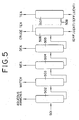
- Fig. 5 is a diagram schematically illustrating a flow of the operation of distilling a reaction solution.
- a reaction solution 501 (a mixture of the solutions of the catalyst and aqueous ammonia processes) was first continuously distilled in an ammonia stripping column 502 to distill aqueous ammonia, then continuously distilled in a dehydrating column 503 to distill water, continuously distilled in a MEA rectifying column 504 to distill MEA, and further continuously distilled in a DEA rectifying column 505 to distill DEA and obtain the raw material TEA in the form of bottoms.
- the raw material TEA was continuously distilled in a TEA distilling column 506 to distill crude TEA.
- the bottoms had a composition formed of 95% by weight of TEA, 4.9% by weight of DEA, and 0.1% by weight of a high-boiling compound.
- the crude TEA and a low-boiling mixture 508 were mixed together and subjected to batch distillation in a TEA rectifying column 507 to distill refined TEA.
- a 500 g portion of the bottoms (crude TEA) and 15 g of distilled water were mixed together.
- the resultant mixture was placed in a 500 ml three-neck flask made of glass and furnished with a capillary tube and given therein thorough displacement with nitrogen gas. It was subsequently heated andvacuumized, treated under the conditions of 90°C- 170°C/400 - 10 hPa to expel water, and distilled under the conditions of 173°C - 175°C/6.6 - 3.0 hPa. Consequently, TEA having a purity of 99.7% by weight was obtained in an amount of 372 g (yield 74.4%).
- the refined TEA thus obtained was tested for APHA. The results are shown in Table 18.
- the absorbance of the refined TEA determined by the phosphorus coloration test was 0.08, 0.03, and 0.02 at wavelengths of 420, 510, and 530 nm, respectively.
- the sample had a colorless, transparent appearance free of suspended matter and a smell of slight fragrance and not of pungent odor.
- the aging test showed a change of the APHA from 10 to 15.
- Refined TEA was obtained by following the procedure of Example II-4 without the addition of water for the rawmaterial TEAsolution for rectification.
- the refined TEA thus obtained was tested for APHA. The results are shown in Table 18.
- the absorbance of the refined TEA determined by the phosphorus coloration test was 0.09, 0.04, and 0.02 at wavelengths of 420, 510, and 530 nm, respectively.
- the sample had a colorless, transparent appearance free of suspended matter and a smell of slight fragrance and not of pungent odor.
- the aging test showed a change of APH from 15 to 25.
- Example II-4 excelled Comparative Example II-2. Specifically, the average APHA at TEA purities exceeding 99% was 10.9 for Example II-4, and 15.9 for Comparative Example II-2, indicating the ratio of (Example II-4)/(Comparative Example II-2) was 0.69. Thus, Example II-4 brought an improvement of 31% in APHV, as compared with Comparative Example II-2.
- the TEA of Example II-4 excelled that of Comparative Example II-2 at wavelengths of 420 and 510 nm. Further in the aging test of APHA, the TEA of Example II-4 showed a smaller change than that of Comparative Example II-2.
- TEA Refined TEA was obtained by following the procedure of Example II-1 with the addition of 3% by weight of MEA (Example II-5), the addition of 3% by weight of water + 1 % by weight of MEA (Example II-6), the addition of 3% by weight of distilled water (Example II-7), the addition of 3% by weight of ethanol (Example II-8), and without the addition of water (Comparative Example II-3) to the raw material TEA solution for rectification. These products of TEA were tested for APHA. The results are shown in Table 19.
- Examples II-5 - 8 excelled Comparative Example II-3. Specifically, the average APHA value at TEA purities exceeding 99% was 15.9, 12, 1, 16.1, and 17.0 for Examples II-5-8, and 30.0 for Comparative Example II-3, indicating the ratio of (Example II-5)/(Comparative Example II-3) to be 0.53, that of (Example II-6) / (Comparative example II-3) to be 0.41, that of (Example II-7) / (Comparative Example II-3) to be 0.52, and that of (Example II-8)/(Comparative example II-3) to be 0.57.
- Example II-5 brought an improvement of 47%, Example II-6 an improvement of 59%, Example II-7 an improvement of 48%, and Example II-8 an improvement of 43% respectively in the APHA value over that of Comparative Example II-3.
Landscapes
- Chemical & Material Sciences (AREA)
- Organic Chemistry (AREA)
- Chemical Kinetics & Catalysis (AREA)
- Organic Low-Molecular-Weight Compounds And Preparation Thereof (AREA)
Applications Claiming Priority (4)
| Application Number | Priority Date | Filing Date | Title |
|---|---|---|---|
| JP2003026072A JP4205963B2 (ja) | 2003-02-03 | 2003-02-03 | 色相の優れた高純度トリエタノールアミンの製造方法 |
| JP2003026072 | 2003-02-03 | ||
| JP2003171784A JP2005008536A (ja) | 2003-06-17 | 2003-06-17 | トリアルカノールアミンの精製方法 |
| JP2003171784 | 2003-06-17 |
Publications (3)
| Publication Number | Publication Date |
|---|---|
| EP1443036A1 true EP1443036A1 (de) | 2004-08-04 |
| EP1443036B1 EP1443036B1 (de) | 2015-10-28 |
| EP1443036B2 EP1443036B2 (de) | 2018-06-27 |
Family
ID=32658620
Family Applications (1)
| Application Number | Title | Priority Date | Filing Date |
|---|---|---|---|
| EP04002111.5A Expired - Lifetime EP1443036B2 (de) | 2003-02-03 | 2004-01-31 | Prozess zur Herstellung von hoch reinem Trialkanolamin |
Country Status (5)
| Country | Link |
|---|---|
| US (1) | US7164044B2 (de) |
| EP (1) | EP1443036B2 (de) |
| CN (1) | CN100376543C (de) |
| BR (1) | BRPI0400750A (de) |
| TW (1) | TWI303242B (de) |
Cited By (8)
| Publication number | Priority date | Publication date | Assignee | Title |
|---|---|---|---|---|
| CN1308287C (zh) * | 2004-09-06 | 2007-04-04 | 南京红宝丽股份有限公司 | 三异丙醇胺的合成方法 |
| WO2010031790A1 (de) * | 2008-09-17 | 2010-03-25 | Basf Se | Vorrichtungen und verfahren zur kontinuierlichen destillativen auftrennung eines gemisches enthaltend ein oder mehrere alkanolamin/e |
| EP2177501A1 (de) * | 2008-10-20 | 2010-04-21 | Sulzer Chemtech AG | Verfahren und Anlage zur Herstellung von Ethanolaminen |
| WO2010069856A1 (de) * | 2008-12-19 | 2010-06-24 | Basf Se | Verfahren zur herstellung von reinem triethanolamin (teoa) |
| CN106748823A (zh) * | 2016-12-19 | 2017-05-31 | 南京红宝丽醇胺化学有限公司 | 一种三链烷醇胺的制备方法 |
| CN110639600A (zh) * | 2018-06-27 | 2020-01-03 | 中国石油化工股份有限公司 | 富产一乙醇胺和二乙醇胺的催化剂 |
| CN110639601A (zh) * | 2018-06-27 | 2020-01-03 | 中国石油化工股份有限公司 | 用于合成一乙醇胺和二乙醇胺的催化剂 |
| CN110639605A (zh) * | 2018-06-27 | 2020-01-03 | 中国石油化工股份有限公司 | 用于增产一乙醇胺和二乙醇胺的催化剂 |
Families Citing this family (17)
| Publication number | Priority date | Publication date | Assignee | Title |
|---|---|---|---|---|
| DE10346779A1 (de) * | 2003-10-08 | 2005-05-12 | Basf Ag | Verfahren zur Abtrennung von Triethanolamin aus einem durch die Umsetzung von Ammoniak mit Ethylenoxid erhaltenen Stoffgemisch |
| CN101139296B (zh) * | 2007-09-29 | 2010-05-26 | 吴兆立 | 增设气提拔头段的乙醇胺蒸馏的方法 |
| JP5791628B2 (ja) * | 2009-12-17 | 2015-10-07 | ビーエーエスエフ ソシエタス・ヨーロピアBasf Se | 高級エタノールアミンの製造方法 |
| CN103724214B (zh) * | 2014-01-22 | 2016-01-20 | 湖北葛店人福药用辅料有限责任公司 | 药用级三乙醇胺的纯化方法 |
| ES2904863T3 (es) | 2014-04-04 | 2022-04-06 | Sabic Global Technologies Bv | Minimización del contenido de agua en corrientes de productos de etanolamina |
| US10526275B2 (en) | 2014-04-08 | 2020-01-07 | Sabic Global Technologies B.V. | Minimizing water content in ethanolamine product streams |
| EP3148965A1 (de) | 2014-05-27 | 2017-04-05 | SABIC Global Technologies B.V. | Herstellung von tea 85% direkt ohne mischen mit reinem strecken von dea 99% |
| WO2015181751A1 (en) | 2014-05-30 | 2015-12-03 | Sabic Global Technologies B.V. | Improved quality and color of ethanolamine product streams by reduced temperature at the triethanolamine column |
| CN104710124B (zh) * | 2015-02-03 | 2017-06-06 | 辽宁鑫隆科技有限公司 | 利用工业废酸和铵盐制备水泥助磨剂及其方法 |
| CN106608833B (zh) * | 2015-10-22 | 2018-07-13 | 中国石油化工股份有限公司 | 乙醇胺联产方法 |
| CN106608834B (zh) * | 2015-10-22 | 2018-10-23 | 中国石油化工股份有限公司 | 液氨法与氨水法联产乙醇胺的方法 |
| CN106608830B (zh) * | 2015-10-22 | 2018-06-08 | 中国石油化工股份有限公司 | 氨水法和液氨法联合生产乙醇胺方法 |
| CN106608829B (zh) * | 2015-10-22 | 2018-07-17 | 中国石油化工股份有限公司 | 乙醇胺联产工艺中的氨回收方法 |
| CN108290825B (zh) | 2015-12-11 | 2021-12-10 | 沙特基础工业全球技术有限公司 | 烷醇胺组合物中减色的方法和由此制得的组合物 |
| WO2017115256A1 (en) | 2015-12-29 | 2017-07-06 | Sabic Global Technologies B.V. | Methods of reducing color in alkanolamine compositions and compositions produced thereby |
| WO2017159814A1 (ja) * | 2016-03-18 | 2017-09-21 | 株式会社日本触媒 | アルカノールアミン類の製造方法 |
| CN112939792A (zh) * | 2020-12-31 | 2021-06-11 | 江苏仁爱建材科技开发有限公司 | 一种高纯度三链烷醇胺的制备方法 |
Citations (2)
| Publication number | Priority date | Publication date | Assignee | Title |
|---|---|---|---|---|
| EP1081130A1 (de) * | 1999-09-04 | 2001-03-07 | Basf Aktiengesellschaft | Verfahren zur Herstellung von Alkanolaminen mit verbesserter Farbqualität |
| EP1219592A1 (de) * | 2000-12-19 | 2002-07-03 | Nippon Shokubai Co., Ltd. | Verfahren zur Herstellung von Alkanolaminen und dafür geeignete Apparatur |
Family Cites Families (18)
| Publication number | Priority date | Publication date | Assignee | Title |
|---|---|---|---|---|
| US2512584A (en) * | 1946-02-25 | 1950-06-20 | Commerical Solvents Corp | Azeotropic distillation of isopropyl alcohol from diisopropylamine |
| US2512585A (en) * | 1946-02-25 | 1950-06-20 | Commercial Solvents Corp | Azeotropic distillation of isopropyl alcohol from diisopropylamine |
| US3207790A (en) * | 1961-07-06 | 1965-09-21 | Dow Chemical Co | Process for reducing the color of discolored alkanolamines |
| US3453183A (en) * | 1964-12-29 | 1969-07-01 | Nippon Catalytic Chem Ind | Method of purifying ethanolamines |
| IT967651B (it) * | 1972-09-20 | 1974-03-11 | Sir Soc Italiana Resine Spa | Perfezionamenti nei procedimenti per la preparazione di etanolam mine |
| DE2810135A1 (de) † | 1978-03-09 | 1979-09-20 | Basf Ag | Verfahren zur herstellung von ungefaerbten technischen aethanolaminen |
| US4395311A (en) * | 1981-11-30 | 1983-07-26 | The Dow Chemical Company | Preparation of aminomethanols |
| JPS6219558A (ja) † | 1985-07-19 | 1987-01-28 | Mitsui Toatsu Chem Inc | 安定化高品質トリエタノ−ルアミンの製造方法 |
| US4673762A (en) * | 1986-05-27 | 1987-06-16 | Texaco Inc. | Decolorizing ethanolamines with alkylene oxides |
| JPH0825420B2 (ja) | 1991-06-28 | 1996-03-13 | 日本プラスト株式会社 | グローブボックスの開閉装置 |
| FR2682950B1 (fr) † | 1991-10-29 | 1994-01-28 | Hoechst Ste Fse | Procede d'elimination de la diethanolamine presente dans la triethanolamine et procede de preparation de triethanolamine purifiee. |
| DE4410610A1 (de) † | 1994-03-26 | 1995-09-28 | Basf Ag | Verfahren zur Herstellung von Ethanolaminen |
| US5693866A (en) † | 1996-04-12 | 1997-12-02 | Betzdearborn Inc. | Inhibitors of color formation in alkanolamines |
| JP3154984B2 (ja) † | 1998-03-13 | 2001-04-09 | 株式会社日本触媒 | ジアルカノールアミンの製造方法およびこれに用いる触媒 |
| DE19855383A1 (de) * | 1998-12-01 | 2000-06-08 | Basf Ag | Verfahren zur Reinigung von Triethanolamin |
| FR2804109B1 (fr) * | 2000-01-24 | 2002-08-16 | Bp Chemicals Snc | Procede de fabrication en continu de triethanolamine, et produit obtenu |
| DE10011942A1 (de) * | 2000-03-11 | 2001-09-13 | Basf Ag | Verfahren zur Herstellung von Alkanolaminen mit verbesserter Farbqualität |
| GB0031678D0 (en) * | 2000-12-23 | 2001-02-07 | Eastman Kodak Co | Coating fluid for the preparation of a recording medium for use in inkjet printing |
-
2004
- 2004-01-27 TW TW093101797A patent/TWI303242B/zh not_active IP Right Cessation
- 2004-01-30 BR BR0400750-6A patent/BRPI0400750A/pt not_active Application Discontinuation
- 2004-01-31 EP EP04002111.5A patent/EP1443036B2/de not_active Expired - Lifetime
- 2004-02-02 US US10/770,297 patent/US7164044B2/en not_active Expired - Lifetime
- 2004-02-03 CN CNB2004100032808A patent/CN100376543C/zh not_active Expired - Lifetime
Patent Citations (2)
| Publication number | Priority date | Publication date | Assignee | Title |
|---|---|---|---|---|
| EP1081130A1 (de) * | 1999-09-04 | 2001-03-07 | Basf Aktiengesellschaft | Verfahren zur Herstellung von Alkanolaminen mit verbesserter Farbqualität |
| EP1219592A1 (de) * | 2000-12-19 | 2002-07-03 | Nippon Shokubai Co., Ltd. | Verfahren zur Herstellung von Alkanolaminen und dafür geeignete Apparatur |
Cited By (22)
| Publication number | Priority date | Publication date | Assignee | Title |
|---|---|---|---|---|
| CN1308287C (zh) * | 2004-09-06 | 2007-04-04 | 南京红宝丽股份有限公司 | 三异丙醇胺的合成方法 |
| WO2010031790A1 (de) * | 2008-09-17 | 2010-03-25 | Basf Se | Vorrichtungen und verfahren zur kontinuierlichen destillativen auftrennung eines gemisches enthaltend ein oder mehrere alkanolamin/e |
| US9345988B2 (en) | 2008-09-17 | 2016-05-24 | Basf Se | Devices and method for continuous distillative separation of a mixture containing one or more alkanolamine(s) |
| US8674140B2 (en) | 2008-09-17 | 2014-03-18 | Basf Se | Devices and method for continuous distillative separation of a mixture containing one or more alkanolamine(s) |
| CN102159291B (zh) * | 2008-09-17 | 2014-12-10 | 巴斯夫欧洲公司 | 连续蒸馏分离包含一种或多种链烷醇胺的混合物的设备和方法 |
| CN101723840B (zh) * | 2008-10-20 | 2014-12-10 | 苏舍化学技术有限公司 | 制备乙醇胺的方法和设备 |
| EP2177501A1 (de) * | 2008-10-20 | 2010-04-21 | Sulzer Chemtech AG | Verfahren und Anlage zur Herstellung von Ethanolaminen |
| CN101723840A (zh) * | 2008-10-20 | 2010-06-09 | 苏舍化学技术有限公司 | 制备乙醇胺的方法和设备 |
| CN102256932A (zh) * | 2008-12-19 | 2011-11-23 | 巴斯夫欧洲公司 | 制备纯三乙醇胺(teoa)的方法 |
| USRE45240E1 (en) | 2008-12-19 | 2014-11-11 | Basf Se | Process for preparing pure triethanolamine (TEOA) |
| EA020158B1 (ru) * | 2008-12-19 | 2014-09-30 | Басф Се | Способ получения чистого триэтаноламина (тэа) |
| CN102256932B (zh) * | 2008-12-19 | 2014-09-10 | 巴斯夫欧洲公司 | 制备纯三乙醇胺(teoa)的方法 |
| EA020158B9 (ru) * | 2008-12-19 | 2015-02-27 | Басф Се | Способ получения чистого триэтаноламина (тэа) |
| WO2010069856A1 (de) * | 2008-12-19 | 2010-06-24 | Basf Se | Verfahren zur herstellung von reinem triethanolamin (teoa) |
| CN106748823B (zh) * | 2016-12-19 | 2018-11-30 | 南京红宝丽醇胺化学有限公司 | 一种三链烷醇胺的制备方法 |
| CN106748823A (zh) * | 2016-12-19 | 2017-05-31 | 南京红宝丽醇胺化学有限公司 | 一种三链烷醇胺的制备方法 |
| CN110639600A (zh) * | 2018-06-27 | 2020-01-03 | 中国石油化工股份有限公司 | 富产一乙醇胺和二乙醇胺的催化剂 |
| CN110639601A (zh) * | 2018-06-27 | 2020-01-03 | 中国石油化工股份有限公司 | 用于合成一乙醇胺和二乙醇胺的催化剂 |
| CN110639605A (zh) * | 2018-06-27 | 2020-01-03 | 中国石油化工股份有限公司 | 用于增产一乙醇胺和二乙醇胺的催化剂 |
| CN110639605B (zh) * | 2018-06-27 | 2021-10-01 | 中国石油化工股份有限公司 | 用于增产一乙醇胺和二乙醇胺的催化剂 |
| CN110639601B (zh) * | 2018-06-27 | 2021-10-01 | 中国石油化工股份有限公司 | 用于合成一乙醇胺和二乙醇胺的催化剂 |
| CN110639600B (zh) * | 2018-06-27 | 2021-10-01 | 中国石油化工股份有限公司 | 富产一乙醇胺和二乙醇胺的催化剂 |
Also Published As
| Publication number | Publication date |
|---|---|
| EP1443036B2 (de) | 2018-06-27 |
| CN1519225A (zh) | 2004-08-11 |
| BRPI0400750A (pt) | 2005-06-28 |
| TW200424151A (en) | 2004-11-16 |
| US7164044B2 (en) | 2007-01-16 |
| TWI303242B (en) | 2008-11-21 |
| CN100376543C (zh) | 2008-03-26 |
| US20040158102A1 (en) | 2004-08-12 |
| EP1443036B1 (de) | 2015-10-28 |
Similar Documents
| Publication | Publication Date | Title |
|---|---|---|
| EP1443036B1 (de) | Prozess zur Herstellung von hoch reinem Trialkanolamin | |
| ES2636456T3 (es) | Procedimiento para la producción de mentol ópticamente activo y racémico | |
| JP4205963B2 (ja) | 色相の優れた高純度トリエタノールアミンの製造方法 | |
| TWI453181B (zh) | 製備純三乙醇胺(teoa)之方法 | |
| KR101984335B1 (ko) | 1,4-부탄디올을 포함하는 스트림의 정제 방법 | |
| US20210163439A1 (en) | Process for preparing carbonates by addition of co2 with an epoxide | |
| EP2900627A2 (de) | Verfahren zur herstellung von hochreinen glycolestern | |
| UA120931C2 (uk) | Спосіб очистки сумішей метилацетату | |
| US20150065742A1 (en) | Method for producing nitrous acid ester, and method for producing dialkyl oxalate and dialkyl carbonate | |
| JP4471976B2 (ja) | アンモニアとエチレンオキサイドとの反応により得られる混合物からのトリエタノールアミンの分離方法 | |
| SA08290724B1 (ar) | طريقة إنتاج n-بروبيل أسيتات | |
| JP2003026633A (ja) | メタクリル酸エステルの製造方法 | |
| JP2021529192A (ja) | 軽質アクリレートを精製するための方法 | |
| KR100219006B1 (ko) | 이소프로필알콜의 제조방법 | |
| KR101554409B1 (ko) | 시클로헥산올, 시클로헥산올의 제조 방법 및 아디프산의 제조 방법 | |
| CA2169225A1 (en) | Process for cracking tertiary butyl alcohol in a reaction distillation column | |
| EP4081211A1 (de) | Cannabicitran-zusammensetzungen und verfahren zur synthese von cannabicitran | |
| CN110612283B (zh) | 用于从n-甲基葡糖胺出发制备n,n-二甲基葡糖胺的催化方法 | |
| JPH0639409B2 (ja) | オクタン誘導体の製造法 | |
| EP2699537A1 (de) | Vorrichtung und verfahren für flexible nitrierungsselektivität durch azeotrope destillation | |
| US8362296B2 (en) | Process for preparing 4-pentenoic acid | |
| JP2834436B2 (ja) | アクリル酸とブテン異性体との反応によるsec−ブチルアクリレートの製造方法 | |
| JPH09165348A (ja) | シクロヘキセンの分離方法 | |
| EP1747188B1 (de) | Verfahren zur herstellung von langkettigen quaternären ammonium-oxalaten und -hydrogenoxalaten | |
| CN110191875B (zh) | 用于从n-甲基葡糖胺出发制备n,n-二甲基葡糖胺的催化方法 |
Legal Events
| Date | Code | Title | Description |
|---|---|---|---|
| PUAI | Public reference made under article 153(3) epc to a published international application that has entered the european phase |
Free format text: ORIGINAL CODE: 0009012 |
|
| AK | Designated contracting states |
Kind code of ref document: A1 Designated state(s): AT BE BG CH CY CZ DE DK EE ES FI FR GB GR HU IE IT LI LU MC NL PT RO SE SI SK TR |
|
| AX | Request for extension of the european patent |
Extension state: AL LT LV MK |
|
| 17P | Request for examination filed |
Effective date: 20041207 |
|
| AKX | Designation fees paid |
Designated state(s): BE DE FR |
|
| 17Q | First examination report despatched |
Effective date: 20070215 |
|
| REG | Reference to a national code |
Ref country code: DE Ref legal event code: R079 Ref document number: 602004048131 Country of ref document: DE Free format text: PREVIOUS MAIN CLASS: C07C0213040000 Ipc: B01J0029400000 |
|
| GRAP | Despatch of communication of intention to grant a patent |
Free format text: ORIGINAL CODE: EPIDOSNIGR1 |
|
| RIC1 | Information provided on ipc code assigned before grant |
Ipc: B01J 29/40 20060101AFI20150430BHEP Ipc: C07C 213/04 20060101ALI20150430BHEP |
|
| INTG | Intention to grant announced |
Effective date: 20150602 |
|
| GRAS | Grant fee paid |
Free format text: ORIGINAL CODE: EPIDOSNIGR3 |
|
| GRAA | (expected) grant |
Free format text: ORIGINAL CODE: 0009210 |
|
| AK | Designated contracting states |
Kind code of ref document: B1 Designated state(s): BE DE FR |
|
| REG | Reference to a national code |
Ref country code: DE Ref legal event code: R096 Ref document number: 602004048131 Country of ref document: DE |
|
| REG | Reference to a national code |
Ref country code: FR Ref legal event code: PLFP Year of fee payment: 13 |
|
| REG | Reference to a national code |
Ref country code: DE Ref legal event code: R026 Ref document number: 602004048131 Country of ref document: DE |
|
| PLBI | Opposition filed |
Free format text: ORIGINAL CODE: 0009260 |
|
| 26 | Opposition filed |
Opponent name: BASF SE Effective date: 20160725 |
|
| PLAX | Notice of opposition and request to file observation + time limit sent |
Free format text: ORIGINAL CODE: EPIDOSNOBS2 |
|
| REG | Reference to a national code |
Ref country code: FR Ref legal event code: PLFP Year of fee payment: 14 |
|
| PLBB | Reply of patent proprietor to notice(s) of opposition received |
Free format text: ORIGINAL CODE: EPIDOSNOBS3 |
|
| REG | Reference to a national code |
Ref country code: FR Ref legal event code: PLFP Year of fee payment: 15 |
|
| PUAH | Patent maintained in amended form |
Free format text: ORIGINAL CODE: 0009272 |
|
| STAA | Information on the status of an ep patent application or granted ep patent |
Free format text: STATUS: PATENT MAINTAINED AS AMENDED |
|
| 27A | Patent maintained in amended form |
Effective date: 20180627 |
|
| AK | Designated contracting states |
Kind code of ref document: B2 Designated state(s): BE DE FR |
|
| REG | Reference to a national code |
Ref country code: DE Ref legal event code: R102 Ref document number: 602004048131 Country of ref document: DE |
|
| REG | Reference to a national code |
Ref country code: BE Ref legal event code: FP Effective date: 20151207 |
|
| PGFP | Annual fee paid to national office [announced via postgrant information from national office to epo] |
Ref country code: FR Payment date: 20221208 Year of fee payment: 20 |
|
| PGFP | Annual fee paid to national office [announced via postgrant information from national office to epo] |
Ref country code: BE Payment date: 20221216 Year of fee payment: 20 |
|
| PGFP | Annual fee paid to national office [announced via postgrant information from national office to epo] |
Ref country code: DE Payment date: 20221207 Year of fee payment: 20 |
|
| REG | Reference to a national code |
Ref country code: DE Ref legal event code: R071 Ref document number: 602004048131 Country of ref document: DE |
|
| REG | Reference to a national code |
Ref country code: BE Ref legal event code: MK Effective date: 20240131 |