EP1447936A1 - Datenübertragungseinheit und entsprechendes Verfahren für iterative Dekodierung - Google Patents
Datenübertragungseinheit und entsprechendes Verfahren für iterative Dekodierung Download PDFInfo
- Publication number
- EP1447936A1 EP1447936A1 EP03290328A EP03290328A EP1447936A1 EP 1447936 A1 EP1447936 A1 EP 1447936A1 EP 03290328 A EP03290328 A EP 03290328A EP 03290328 A EP03290328 A EP 03290328A EP 1447936 A1 EP1447936 A1 EP 1447936A1
- Authority
- EP
- European Patent Office
- Prior art keywords
- receiving
- iterative decoding
- data blocks
- communication unit
- data
- Prior art date
- Legal status (The legal status is an assumption and is not a legal conclusion. Google has not performed a legal analysis and makes no representation as to the accuracy of the status listed.)
- Withdrawn
Links
Images



Classifications
-
- H—ELECTRICITY
- H04—ELECTRIC COMMUNICATION TECHNIQUE
- H04L—TRANSMISSION OF DIGITAL INFORMATION, e.g. TELEGRAPHIC COMMUNICATION
- H04L1/00—Arrangements for detecting or preventing errors in the information received
- H04L1/12—Arrangements for detecting or preventing errors in the information received by using return channel
- H04L1/16—Arrangements for detecting or preventing errors in the information received by using return channel in which the return channel carries supervisory signals, e.g. repetition request signals
- H04L1/18—Automatic repetition systems, e.g. Van Duuren systems
- H04L1/1812—Hybrid protocols; Hybrid automatic repeat request [HARQ]
-
- H—ELECTRICITY
- H03—ELECTRONIC CIRCUITRY
- H03M—CODING; DECODING; CODE CONVERSION IN GENERAL
- H03M13/00—Coding, decoding or code conversion, for error detection or error correction; Coding theory basic assumptions; Coding bounds; Error probability evaluation methods; Channel models; Simulation or testing of codes
-
- H—ELECTRICITY
- H04—ELECTRIC COMMUNICATION TECHNIQUE
- H04L—TRANSMISSION OF DIGITAL INFORMATION, e.g. TELEGRAPHIC COMMUNICATION
- H04L1/00—Arrangements for detecting or preventing errors in the information received
- H04L1/004—Arrangements for detecting or preventing errors in the information received by using forward error control
- H04L1/0045—Arrangements at the receiver end
- H04L1/0047—Decoding adapted to other signal detection operation
- H04L1/005—Iterative decoding, including iteration between signal detection and decoding operation
- H04L1/0051—Stopping criteria
-
- H—ELECTRICITY
- H04—ELECTRIC COMMUNICATION TECHNIQUE
- H04L—TRANSMISSION OF DIGITAL INFORMATION, e.g. TELEGRAPHIC COMMUNICATION
- H04L1/00—Arrangements for detecting or preventing errors in the information received
- H04L1/12—Arrangements for detecting or preventing errors in the information received by using return channel
- H04L1/16—Arrangements for detecting or preventing errors in the information received by using return channel in which the return channel carries supervisory signals, e.g. repetition request signals
- H04L1/1607—Details of the supervisory signal
- H04L1/1628—List acknowledgements, i.e. the acknowledgement message consisting of a list of identifiers, e.g. of sequence numbers
-
- H—ELECTRICITY
- H04—ELECTRIC COMMUNICATION TECHNIQUE
- H04L—TRANSMISSION OF DIGITAL INFORMATION, e.g. TELEGRAPHIC COMMUNICATION
- H04L1/00—Arrangements for detecting or preventing errors in the information received
- H04L1/08—Arrangements for detecting or preventing errors in the information received by repeating transmission, e.g. Verdan system
-
- H—ELECTRICITY
- H04—ELECTRIC COMMUNICATION TECHNIQUE
- H04L—TRANSMISSION OF DIGITAL INFORMATION, e.g. TELEGRAPHIC COMMUNICATION
- H04L1/00—Arrangements for detecting or preventing errors in the information received
- H04L1/12—Arrangements for detecting or preventing errors in the information received by using return channel
- H04L1/16—Arrangements for detecting or preventing errors in the information received by using return channel in which the return channel carries supervisory signals, e.g. repetition request signals
- H04L1/18—Automatic repetition systems, e.g. Van Duuren systems
- H04L1/1829—Arrangements specially adapted for the receiver end
Definitions
- This invention relates to decoding of data in communication units, and particularly to communication units supporting packet data transmissions.
- the invention is applicable to, but not limited to, speeding up an iterative decoding algorithm of compound codes.
- these services can be divided into two groups, real-time and non-real-time.
- the real-time services typically require a low average data packet delay, arranged such that they can cope with a certain error rate.
- the non-real-time services typically require some limitation against delay, but often need a very low error rate.
- Real-time services have been traditionally used only with Forward Error Correction (FEC) mechanisms that guarantee a bounded delay but deliver data with an error rate depending on channel conditions (which in wireless channels is highly variable).
- FEC Forward Error Correction
- these services can only operate up to a maximum error rate. When this error-rate value is exceeded, even with a low delay, the service is not delivered.
- the decoder is unable to correctly decode the received codeword, irrespective of the number of iterations employed. In such situations, the decoder wastes time and power on continuing with the iterative decoding process is a vain and ultimately fruitless attempt to decode the codeword, i.e. the packet to be decoded by the receiver, until a decision is finally made that the codeword must be retransmitted.
- SNR signal to noise ratio
- a first known correction mechanism for correcting received data packets corrupted during transmission, uses only forward error correction (FEC) coding.
- FEC forward error correction
- an FEC mechanism guarantees a low delay and low delay variation, it cannot guarantee a low error rate.
- a second known correction mechanism uses re-transmission of erroneous data packets, as illustrated in FIG. 1.
- the re-transmission process is achieved via a feedback channel from the receiver to the transmitter, which is used to indicate whether the data packet has been correctly received or not.
- This correction mechanism is termed Automatic Repeat reQuest (ARQ) and is widely used in wired communication systems since it provides an error rate as low as needed.
- ARQ Automatic Repeat reQuest
- the ARQ re-transmission process commences by receiving digital information, in step 105. Iterative decoding is then applied to the received information in step 110.
- the iterative decoding process is applied a number (k) times, until the decoding operation converges to yield recovered data. If, after k times, the codeword has not been accurately decoded, in step 115, the process requests a re-transmission of the information, in step 120.
- ARQ When ARQ is used over a wireless channel, which typically encounters a much higher data packet error rate, an ARQ mechanism often leads to very poor transmission performance. For instance, this poor performance results from, say, the same data packet requiring a large number of re-transmissions to be successfully received. To mitigate this effect, ARQ is usually used with a limited maximum number of re-transmissions, which bounds the delay but does not guarantee the error rate.
- H-ARQ Hybrid ARQ
- IR incremental redundancy
- the UE 200 comprises, for example, standard radio frequency (RF) components and circuits, such as an antenna 202 preferably coupled to an antenna switch 204 for receiving a digitally modulated RF signal.
- RF radio frequency
- the antenna switch 204 provides isolation between a receiver and a transmitter chain within the UE 200.
- the receiver chain typically includes receiver front-end circuitry 206 (effectively providing reception, filtering and intermediate or baseband frequency conversion).
- the front-end circuitry 206 is serially coupled to a signal processing function 208 to convert, inter-alia, the received digitised signal into blocks of data for subsequent processing.
- An output from the signal processing function is provided to a suitable output device 210, such as a speaker.
- the signal processor function 208 which may be a baseband (back-end) signal processing receiver integrated circuit in other embodiments, has been adapted to incorporate the inventive concepts described below.
- the signal processing function 208 in the context of the present invention, will perform numerous signal processing tasks, such as: symbol timing recovery, demodulation, decoding, burst building, de-multiplexing, de-interleaving, re-ordering, etc.
- the decoding function in the signal processing function 208 has been adapted to include a prior decision function as to whether the iterative decoding operation will likely converge. If it is determined that the subsequent iterative decoding operation will likely converge, the decoding operation is performed. However, and advantageously, if it is determined that the subsequent iterative decoding operation will be unlikely to converge, the iterative decoding operation is not performed and a re-transmission of the data blocks requested.
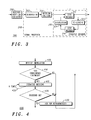
- the signal processing function 208 has been adapted to perform, or be replaced in software hardware or firmware by, an iterative decoder function as described further below with reference to FIG. 3.
- the receiver chain also includes received signal strength indicator (RSSI) circuitry 212 coupled to the receiver front-end circuitry 206 and the signal processing function 208 (generally realised by a digital signal processor (DSP)).
- a controller 214 also coupled to the receiver front-end circuitry 206 and the signal processing function 208, may therefore receive bit error rate (BER) or frame error rate (FER) data from recovered information.
- the controller 214 is coupled to the memory device 216 for storing operating regimes, such as decoding/encoding functions and the like.
- a timer 218 is typically coupled to the controller 214 to control the timing of operations (transmission or reception of time-dependent signals) within the UE 200. In the context of the present invention, the timer 218 dictates the timing of speech signals, in the transmit (encoding) path and/or the receive (decoding) path.
- the transmit chain essentially includes an input device, such as a microphone transducer coupled in series via transmit signal processor 228 to a transmitter/ modulation circuit 222. Thereafter, any transmit signal is passed through a power amplifier 224 to be radiated from the antenna 202.
- the transmitter/ modulation circuitry 222 and the power amplifier 224 are operationally responsive to the controller, with an output from the power amplifier coupled to the duplex filter or circulator 204.
- the transmitter/ modulation circuitry 222 and receiver front-end circuitry 206 comprise frequency up-conversion and frequency down-conversion functions (not shown).
- the various adapted components within a UE 200 can be realised in discrete or integrated component form. More generally, the functionality associated with deciding whether to decode or not may be implemented in a respective communication unit in any suitable manner. For example, new apparatus may be added to a conventional Node-B or UE, or alternatively existing parts of a conventional communication unit may be adapted, for example by reprogramming one or more processors therein. As such, the required adaptation, for example the incorporation of a decision function to determine the likelihood of convergence of the iterative decoding process, may be implemented in the form of processor-implementable instructions stored on a storage medium, such as a floppy disk, hard disk, PROM, RAM or any combination of these or other storage media.
- a storage medium such as a floppy disk, hard disk, PROM, RAM or any combination of these or other storage media.
- a front-end receiver 206 receives a digital information signal and routes it to a demodulator 302.
- a determination is made, in decision function 304, as to whether it is likely that the iterative decoding operation will converge.
- the proposed technique prevents running the iterative decoder 310 when the test detects a-priori that the iterative decoder 310 cannot decode the demodulated information correctly.
- the iterative decoding function 310 comprises, for instance, Peral's Belief Propagation (BP) algorithm.
- BP Peral's Belief Propagation
- SISO soft-input soft-output
- the SISO decoders 312, 314 are separated by a de-leaving function 322 and an interleaving function 324 to reformulate and formulate the data stream for the decoding operation. Interleaving is used to avoid burst errors having an independent identically distributed (IID) error statistic, which makes it easier for the data stream to be treated.
- the de-interleaving function is the reverse process, aiming to restore the sequence in the original order.
- the ARQ re-transmission process commences by receiving information, in step 405.
- an iterative decoding 'convergence likelihood' test is performed, as shown in step 410.
- the details of the preferred 'convergence likelihood' test are further described in relation to FIG. 5 and FIG. 6. If the determination of the convergence likelihood test yields that iterative decoding will be unlikely to converge, in step 410, an immediate request for re-transmission is sent to the transmitting unit, as shown in step 430.
- step 410 iterative decoding is then applied to the received information in step 415.
- the iterative decoding is applied a number (k) times, until the decoding converges, as shown in step 420. If, after k times, the codeword has not been accurately decoded, in step 425, the process requests a re-transmission of the information, in step 430.
- the determination as to whether a decoding operation of a received information signal will converge is based on an analysis of the Density Evolution (DE) of the demodulated data.
- DE Density Evolution
- a graphical representation 500 of this is shown in FIG. 5, where bit-nodes 510 represent the bits of the codeword and the check-nodes 520 represent the parity check equations that the bit-nodes are related to.
- the illustrated graphical representation of Density Evolution uses a regular LDPC Code (3,6), where each bit-node 510 is connected to three check-nodes 520 and each check-node 520 is connected to six bit-nodes 510.
- the messages applied to a DE function are distributed usually in a manner similar to a Gaussian response.
- a Gaussian approximation it is possible to propagate a one-dimensional parameter through the graph, i.e. describing the density instead the density of the messages itself.
- this parameter can be the mean of the density or the mutual information.
- the term 'message' identifies the parameter selected for propagation through the graph, for example mutual information or a mean of the probability density distribution of the original LLR message.
- DE is used as a method to evaluate the performance of the real BP decoder.
- a bit-node 'i' 610 will be connected to a check-node k, if this bit-node participates in the k th parity check equation.
- the real BP decoder operates in the following manner.
- an initial message 605 is associated to each bit-node 510, related to the output of the channel.
- Each bit-node 510 sends the initial message (in a log-likelihood ratio (LLR) form), identified as v_k, to all the corresponding check-nodes that the bit-node 510 is connected to, where k is the index identifying the respective bit-node 510.
- LLR log-likelihood ratio
- v_sk is the message coming from the k th bit-node.
- each check-node 520 collects all transmitted messages, except from bit-node 'i' 610, which was used to compute c_i 620 and is returned to the i th bit-node 610.
- This DE process is repeated, i.e. it follows the same iterative process but instead of the (LLR) messages being propagated, the densities of the messages propagate through the graph.
- the bit-nodes compute the message to be sent to the check-node as follows.
- c_pk is the message coming from the k th check-nodes and c_0 is the initial message coming form the channel (the channel output). This procedure is done in parallel for all the bit-nodes and the check-nodes.
- the preferred embodiment of the present invention utilises Density Evolution (DE), as DE obtains a track of the densities of messages exchanged between nodes as they propagate through the graph.
- DE Density Evolution
- the inventors of the present invention have found that DE provides a good estimate of the convergence likelihood of the decoding process.
- using a DE enables a good estimate to be obtained, as the finite length code is cyclic in its graph, whereas the corresponding infinite length code is cycle free.
- inventive concepts described herein can be applied to any mechanism that provides a-priori information about the convergence of the decoder, and is not limited to the use of Density Evolution.
- an embodiment of the present invention consists of adding a derivation of the Density Evolution prior to decoding the received information. This derivation triggers the real iterative decoding when it converges. Alternatively, if the derivation guarantees that there will be no convergence of the Density Evolution, i.e. the codeword will not be correctly decoded, and then the iterative decoding operation is not performed until a re-transmission of the data block(s) is received.
- the information message is encoded using Turbo Codes or LDPC with length 'n' and split into 'M' bursts, as shown in step 705.
- the transmitter starts sending a first burst/ initial message.
- the decoder receives the i th burst, in step 710, and determines whether the DE has already converged, as shown in step 715. If the DE has not already converged, in step 715, a determination is made as to whether it is likely that the DE will subsequently converge, as shown in step 720.
- step 720 the process immediately requests a re-transmission of the burst, as shown in step 725.
- a re-transmission is requested as the non-convergence of the DE attests that the iterative decoding will not converge.
- the additional burst will contain more redundancy.
- step 720 the process commences iterative decoding, in step 730, because the DE convergence shows that iterative decoding is likely to converge too.
- the iterative decoding operation occurs 'k' times, as shown in step 735.
- the process delivers the codeword to the user, as shown in step 740.
- the decoder stores the received burst and asks, via a negative acknowledgment, for a re-transmission of the burst with more redundancy, as shown in step 725.
- step 715 focuses on DE convergence, which provides only an indicator of the convergence likelihood of the real decoder, in step 730.
- DE convergence shows that the real iterative decoder has a chance to converge.
- Non-convergence of the DE indicates that there is no chance of the real decoder converging.
- subsequent transmissions include additional redundancy, thereby increasing the convergence likelihood.
- BP C_BP*m
- BP is the total complexity of the iterative decoding technique (i.e. Belief Propagation).
- DE is a useful mechanism to evaluate the performance of infinite length codes, as it provides information about the convergence of a finite-length BP decoder. This is confirmed in the paper titled "The Capacity of Low-Density Parity-Check Codes Under Message Passing Decoding” authored by T.J. Richardson and R. L Urbanke. In the paper titled “On the Construction of Some Capacity-Approaching Coding Scheme", authored by S.Y Chung in a PhD Thesis, MIT, September 2000, a description of the DE convergence performance for small BER is described.
- the inventors of the present invention have recognised an opportunity to use such a DE convergence performance, in improving an operation of iterative decoders.
- DE converges to a fixed point less then '1' (i.e. the decoder has insufficient information from which to decode the infinite length code)
- the finite length decoder will yield small BER. Therefore, the receiver does not even try to run the BP decoder, and asks for new redundancy (i.e. additional error correction applied to the previously sent data).
- 'm' is the number of bursts necessary to have Belief Propagation (i.e. real decoding) convergence.
- M_nc is the number of bursts necessary to have DE converged.
- PI complexity of the present invention
- BP known technique
- N* ⁇ _i defines the number of bit-nodes connected to 'i' edges in the graph
- 'N' is the number of bit-nodes
- dv (dc) is the maximum degree of variable node (check-node).
- the number of different variable nodes (check-nodes) ddv (ddc) is bounded by dv (dc).
- irregular LDPC has the following values: ddv ⁇ 10-15 and ddc ⁇ 2-3.
- the inventors of the present invention have identified that the gain provided by the method is approximately 15% in terms of running time. This evaluation is based on simulation time on the same computer, with and without the method and is directly linked with the gain in terms of number of operations.
- inventive concepts can be applied in any modem (wireless or wired) that includes an iterative decoder.
- 3G (and beyond 3 rd generation (B3G) including 4G) communication units using turbo codes and iterative decoders may utilize the inventive concepts described herein.
- inventive concepts hereinafter described are equally applicable to other wireless communication systems, for example, GPRS (Generalized Packet Radio Service), or Edge, or 802.11x family of systems.
- GPRS Generalized Packet Radio Service
- Edge or 802.11x family of systems.
Landscapes
- Engineering & Computer Science (AREA)
- Computer Networks & Wireless Communication (AREA)
- Signal Processing (AREA)
- Physics & Mathematics (AREA)
- Probability & Statistics with Applications (AREA)
- Theoretical Computer Science (AREA)
- Error Detection And Correction (AREA)
Priority Applications (1)
| Application Number | Priority Date | Filing Date | Title |
|---|---|---|---|
| EP03290328A EP1447936A1 (de) | 2003-02-11 | 2003-02-11 | Datenübertragungseinheit und entsprechendes Verfahren für iterative Dekodierung |
Applications Claiming Priority (1)
| Application Number | Priority Date | Filing Date | Title |
|---|---|---|---|
| EP03290328A EP1447936A1 (de) | 2003-02-11 | 2003-02-11 | Datenübertragungseinheit und entsprechendes Verfahren für iterative Dekodierung |
Publications (1)
| Publication Number | Publication Date |
|---|---|
| EP1447936A1 true EP1447936A1 (de) | 2004-08-18 |
Family
ID=32669034
Family Applications (1)
| Application Number | Title | Priority Date | Filing Date |
|---|---|---|---|
| EP03290328A Withdrawn EP1447936A1 (de) | 2003-02-11 | 2003-02-11 | Datenübertragungseinheit und entsprechendes Verfahren für iterative Dekodierung |
Country Status (1)
| Country | Link |
|---|---|
| EP (1) | EP1447936A1 (de) |
Cited By (2)
| Publication number | Priority date | Publication date | Assignee | Title |
|---|---|---|---|---|
| US7917830B2 (en) | 2007-09-28 | 2011-03-29 | Via Technologies, Inc. | Turbo decoder and iteration stopping method thereof |
| US9479240B1 (en) | 2014-01-31 | 2016-10-25 | Quantenna Communications, Inc. | Composite beamforming to coordinate concurrent WLAN links |
Citations (4)
| Publication number | Priority date | Publication date | Assignee | Title |
|---|---|---|---|---|
| WO2001037433A1 (en) * | 1999-11-17 | 2001-05-25 | Motorola Inc. | Adaptive hybrid arq using turbo code structure |
| US20010004761A1 (en) * | 1997-05-30 | 2001-06-21 | Ephraim Zehavi | Method and apparatus for providing error protection for over the air file transfer |
| WO2001063869A1 (en) * | 2000-02-25 | 2001-08-30 | Nokia Corporation | Adaptive method and arrangement for implementing incremental redundancy in reception |
| EP1193881A2 (de) * | 2000-09-29 | 2002-04-03 | Sony Corporation | ARQ Automatische sendewiederholung für Turbo codierte Daten |
-
2003
- 2003-02-11 EP EP03290328A patent/EP1447936A1/de not_active Withdrawn
Patent Citations (4)
| Publication number | Priority date | Publication date | Assignee | Title |
|---|---|---|---|---|
| US20010004761A1 (en) * | 1997-05-30 | 2001-06-21 | Ephraim Zehavi | Method and apparatus for providing error protection for over the air file transfer |
| WO2001037433A1 (en) * | 1999-11-17 | 2001-05-25 | Motorola Inc. | Adaptive hybrid arq using turbo code structure |
| WO2001063869A1 (en) * | 2000-02-25 | 2001-08-30 | Nokia Corporation | Adaptive method and arrangement for implementing incremental redundancy in reception |
| EP1193881A2 (de) * | 2000-09-29 | 2002-04-03 | Sony Corporation | ARQ Automatische sendewiederholung für Turbo codierte Daten |
Non-Patent Citations (1)
| Title |
|---|
| RICHARDSON T J ET AL: "The capacity of low-density parity-check codes under message-passing decoding", IEEE TRANSACTIONS ON INFORMATION THEORY, IEEE INC. NEW YORK, US, vol. 47, no. 2, February 2001 (2001-02-01), pages 599 - 618, XP002228426, ISSN: 0018-9448 * |
Cited By (2)
| Publication number | Priority date | Publication date | Assignee | Title |
|---|---|---|---|---|
| US7917830B2 (en) | 2007-09-28 | 2011-03-29 | Via Technologies, Inc. | Turbo decoder and iteration stopping method thereof |
| US9479240B1 (en) | 2014-01-31 | 2016-10-25 | Quantenna Communications, Inc. | Composite beamforming to coordinate concurrent WLAN links |
Similar Documents
| Publication | Publication Date | Title |
|---|---|---|
| KR100766839B1 (ko) | 터보 디코딩을 위해 정지 규칙을 이용한 고속 h-arq 확인응답 생성 방법 | |
| Chen et al. | A survey and tutorial on low-complexity turbo coding techniques and a holistic hybrid ARQ design example | |
| EP1193881B1 (de) | ARQ Automatische sendewiederholung für Turbo codierte Daten | |
| US7992073B2 (en) | Decoding device, decoding method, and receiving apparatus | |
| US7600172B2 (en) | Method and device for decoding packets of data within a hybrid ARQ scheme | |
| EP1482643A2 (de) | Verfahren und Vorrichtung zur Decodierung eines Low Density Partity Check (LDPC) Codes in einem Kommunikationssystem | |
| JP2013518488A (ja) | 繰り返し復号されるfec符号におけるエラーフロアの低減 | |
| US6996762B2 (en) | Methods and apparatus of signal demodulation combining with different modulations and coding for wireless communications | |
| JP3440092B1 (ja) | 誤り訂正復号装置および誤り訂正復号方法 | |
| WO2007099468A1 (en) | Method and apparatus for transmitting and receiving a data block in a wireless communication system | |
| US20050022101A1 (en) | Fast iteration termination of Turbo decoding | |
| US10122496B2 (en) | Method for dynamic and selective FD-DSDF transmission of a digital signal for a MARC system with a full-duplex relay, and corresponding program product and relay device | |
| US7272771B2 (en) | Noise and quality detector for use with turbo coded signals | |
| EP1447936A1 (de) | Datenübertragungseinheit und entsprechendes Verfahren für iterative Dekodierung | |
| US20080024335A1 (en) | Local Erasure Map Decoder | |
| US20100318876A1 (en) | Decoding device, decoding method, decoding program, reception device, and communication system | |
| Yatribi et al. | Hybrid automatic repeat request protocols: Turbo-Codes against Cyclic Binary low-density parity-check codes | |
| Huang et al. | Digital fountain codes system model and performance over AWGN and Rayleigh fading channels | |
| Breddermann | On rate-compatible insertion convolutional turbo codes and HARQ for mobile communications | |
| Riediger et al. | Application of Reed-Solomon codes with erasure decoding to type-II hybrid ARQ transmission | |
| EP1381181A1 (de) | Kommunikationsystem und -verfahren mit Hybrid-ARQ Zusammenfassen von paketen | |
| Chintha et al. | SNR-Responsive Communication: Turbo Codes and BCH in a Dynamic HARQ Scheme for Enhanced Efficiency | |
| CN113366872A (zh) | 利用并行级联卷积码的lpwan通信协议设计 | |
| Checked | KI/ERA/SRF/BT Girum Alebachew | |
| EP1783917A1 (de) | Methode für kodierte Modulation und Gerät hierfür |
Legal Events
| Date | Code | Title | Description |
|---|---|---|---|
| PUAI | Public reference made under article 153(3) epc to a published international application that has entered the european phase |
Free format text: ORIGINAL CODE: 0009012 |
|
| AK | Designated contracting states |
Kind code of ref document: A1 Designated state(s): AT BE BG CH CY CZ DE DK EE ES FI FR GB GR HU IE IT LI LU MC NL PT SE SI SK TR |
|
| AX | Request for extension of the european patent |
Extension state: AL LT LV MK RO |
|
| AKX | Designation fees paid | ||
| REG | Reference to a national code |
Ref country code: DE Ref legal event code: 8566 |
|
| STAA | Information on the status of an ep patent application or granted ep patent |
Free format text: STATUS: THE APPLICATION IS DEEMED TO BE WITHDRAWN |
|
| 18D | Application deemed to be withdrawn |
Effective date: 20050219 |
|
| P01 | Opt-out of the competence of the unified patent court (upc) registered |
Effective date: 20230520 |