EP1449005B1 - Bestimmung von ortsinformation von abgetasteten positionierungssignalen - Google Patents
Bestimmung von ortsinformation von abgetasteten positionierungssignalen Download PDFInfo
- Publication number
- EP1449005B1 EP1449005B1 EP02752163A EP02752163A EP1449005B1 EP 1449005 B1 EP1449005 B1 EP 1449005B1 EP 02752163 A EP02752163 A EP 02752163A EP 02752163 A EP02752163 A EP 02752163A EP 1449005 B1 EP1449005 B1 EP 1449005B1
- Authority
- EP
- European Patent Office
- Prior art keywords
- data
- value
- modulation frequency
- signal source
- signal
- Prior art date
- Legal status (The legal status is an assumption and is not a legal conclusion. Google has not performed a legal analysis and makes no representation as to the accuracy of the status listed.)
- Expired - Lifetime
Links
- 238000000034 method Methods 0.000 claims description 60
- 238000004364 calculation method Methods 0.000 claims description 14
- 238000012937 correction Methods 0.000 claims description 6
- 238000005070 sampling Methods 0.000 claims description 5
- 238000012545 processing Methods 0.000 description 17
- 238000004422 calculation algorithm Methods 0.000 description 16
- 238000004891 communication Methods 0.000 description 16
- 230000001427 coherent effect Effects 0.000 description 10
- 230000008569 process Effects 0.000 description 10
- 239000013598 vector Substances 0.000 description 9
- 238000013459 approach Methods 0.000 description 7
- 230000033001 locomotion Effects 0.000 description 6
- 230000003287 optical effect Effects 0.000 description 5
- 230000002238 attenuated effect Effects 0.000 description 4
- 238000010586 diagram Methods 0.000 description 4
- 230000008901 benefit Effects 0.000 description 3
- 230000005540 biological transmission Effects 0.000 description 3
- 238000005314 correlation function Methods 0.000 description 2
- 230000000694 effects Effects 0.000 description 2
- 230000006870 function Effects 0.000 description 2
- 230000004927 fusion Effects 0.000 description 2
- 238000005259 measurement Methods 0.000 description 2
- 238000005457 optimization Methods 0.000 description 2
- 238000001303 quality assessment method Methods 0.000 description 2
- 230000003068 static effect Effects 0.000 description 2
- 230000002194 synthesizing effect Effects 0.000 description 2
- RYGMFSIKBFXOCR-UHFFFAOYSA-N Copper Chemical compound [Cu] RYGMFSIKBFXOCR-UHFFFAOYSA-N 0.000 description 1
- 230000001133 acceleration Effects 0.000 description 1
- 230000003044 adaptive effect Effects 0.000 description 1
- 230000010267 cellular communication Effects 0.000 description 1
- 230000008859 change Effects 0.000 description 1
- 239000003795 chemical substances by application Substances 0.000 description 1
- 230000006835 compression Effects 0.000 description 1
- 238000007906 compression Methods 0.000 description 1
- 230000008878 coupling Effects 0.000 description 1
- 238000010168 coupling process Methods 0.000 description 1
- 238000005859 coupling reaction Methods 0.000 description 1
- 230000001934 delay Effects 0.000 description 1
- 230000001419 dependent effect Effects 0.000 description 1
- 230000010339 dilation Effects 0.000 description 1
- 238000005516 engineering process Methods 0.000 description 1
- 239000000835 fiber Substances 0.000 description 1
- 230000010354 integration Effects 0.000 description 1
- 230000003993 interaction Effects 0.000 description 1
- 230000002452 interceptive effect Effects 0.000 description 1
- 238000012986 modification Methods 0.000 description 1
- 230000004048 modification Effects 0.000 description 1
- 230000004044 response Effects 0.000 description 1
- 238000007619 statistical method Methods 0.000 description 1
- 238000012360 testing method Methods 0.000 description 1
Images
Classifications
-
- G—PHYSICS
- G01—MEASURING; TESTING
- G01S—RADIO DIRECTION-FINDING; RADIO NAVIGATION; DETERMINING DISTANCE OR VELOCITY BY USE OF RADIO WAVES; LOCATING OR PRESENCE-DETECTING BY USE OF THE REFLECTION OR RERADIATION OF RADIO WAVES; ANALOGOUS ARRANGEMENTS USING OTHER WAVES
- G01S19/00—Satellite radio beacon positioning systems; Determining position, velocity or attitude using signals transmitted by such systems
- G01S19/01—Satellite radio beacon positioning systems transmitting time-stamped messages, e.g. GPS [Global Positioning System], GLONASS [Global Orbiting Navigation Satellite System] or GALILEO
- G01S19/13—Receivers
- G01S19/24—Acquisition or tracking or demodulation of signals transmitted by the system
- G01S19/30—Acquisition or tracking or demodulation of signals transmitted by the system code related
Definitions
- the distance to each satellite is estimated by decoding the time stamp information embedded in the data message and comparing it to the time of reception by the receiver's own clock.
- the result of this comparison is traditionally referred to as a "pseudorange" and is expressed in meters rather than seconds by multiplying by the speed of light. Any net drift due to the imperfect synchronization of the two clocks is corrected for through a space/time triangulation procedure combining the pseudoranges from four or more signal sources. This procedure also results in an initial position estimate. This estimate is then updated through time using the outputs of delay locked loops tracking the received signals.
- This approach suffers from the drawback of having to wait for the time-stamp in the data message before giving even an initial position fix.
- the time stamps are transmitted only once every few seconds. This means that even if the receiver is able to acquire all the satellites instantly, it still might have to wait up to a few seconds before being able to give any position estimate at all.
- US 4 578 678 describes a GPS receiver for position and velocity measurement of high dynamic missiles and aircraft, where position measurement error due to acceleration maneuvers at high speed is to be maintained at a low level of approximately 0.2 m/g with other errors due to random effects comparable to the corresponding errors in conventional GPS receivers, namely receivers using phase-locked loops for tracking GPS carrier and code signals.
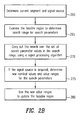
- FIG. 2B The process of searching a data segment for a signal source is illustrated in FIG. 2B .
- These nominal values can be combined using either a classical weighted least squares method technique to give an estimated position and time, where the weights are chosen on the basis of calculated template parameters or on the basis of the relative strengths of the signal sources in the sampled data as deduced from the relative magnitudes of the largest calculated I and Q correlation integral magnitudes.
Landscapes
- Engineering & Computer Science (AREA)
- Radar, Positioning & Navigation (AREA)
- Remote Sensing (AREA)
- Computer Networks & Wireless Communication (AREA)
- Physics & Mathematics (AREA)
- General Physics & Mathematics (AREA)
- Position Fixing By Use Of Radio Waves (AREA)
- Circuits Of Receivers In General (AREA)
Claims (15)
- Verfahren zum Bestimmen eines Orts eines Empfängers, wobei das Verfahren computerimplementierte Schritte aufweist:Empfangen (205) abgetasteter Daten, die zu einem empfangenen Signal gehören;Berechnen (210) eines gegenwärtigen Wertbereichs für einen Verzögerungswert und eines gegenwärtigen Wertbereichs für einen Modulationsfrequenzwert, der jeder Signalquelle von einem Satz von Signalquellen entsprechen, die sich oberhalb des Empfängers befindet;Berechnen (230) einer Schätzung für den Verzögerungswert und einer Schätzung für den Modulationsfrequenzwert entsprechend jeder Signalquelle, indem Segmente zunehmender Länge von abgetasteten Daten, die zu einem empfangenen Signal gehören, das an dem Empfänger empfangen wird, verwendet werden;Aktualisieren des gegenwärtigen Wertbereichs für den Verzögerungswert und des gegenwärtigen Wertbereichs für den Modulationsfrequenzwert basierend auf der Schätzung für den Verzögerungswert und der Schätzung für den Modulationsfrequenzwert;Bestimmen eines gegenwärtigen Suchbereichs für den Verzögerungswert und eines gegenwärtigen Suchbereichs für den Modulationsfrequenzwert; entsprechend jeder Signalquelle von dem Satz von Signalquellen, Verwenden der abgetasteten Daten zum Berechnen eines Satzes von Größeberechnungen von I und Q Korrelationsintegralen für den Satz von Verzögerungswerten von innerhalb des gegenwärtigen Suchbereichs für:den Verzögerungswert, wobei der gegenwärtige Suchbereich für den Verzögerungswert Verzögerungswerte aufweist, die die Schätzung des Verzögerungswerts umgeben, undeinen Satz von Modulationsfrequenzwerten von innerhalb des gegenwärtigen Suchbereichs für den Modulationsfrequenzwert, wobei der gegenwärtige Suchbereich für den Modulationsfrequenzwert Modulationsfrequenzwerte aufweist, die die Schätzung des Modulationsfrequenzwerts umgeben;entsprechend jeder Signalquelle von dem Satz von Signalquellen, Bestimmen von interpolierten Berechnungen von I und Q Korrelationsintegralen durch Interpolieren der Berechnungen der I und Q Korrelationsintegrale basierend auf dem Satz von Größeberechnungen und einem Größewert, der der Schätzung des Verzögerungswerts und der Schätzung des Modulationsfrequenzwerts entspricht; undBerechnen (240) des Orts des Empfängers durch Verwenden der interpolierten Berechnungen der I und Q Korrelationsintegrale für jede Signalquelle.
- Verfahren nach Anspruch 1, bei dem der Schritt zum Berechnen einer Schätzung für den Verzögerungswert und einer Schätzung für den Modulationsfrequenzwert, die jeder Signalquelle entsprechen, indem zunehmende Längen abgetasteter Daten verwendet werden, die Schritte aufweist:Berechnen eines gegenwärtigen Wertbereichs für einen Verzögerungswert und eines gegenwärtigen Wertbereichs für einen Modulationsfrequenzwert entsprechend jeder Signalquelle von einem Satz von Signalquellen, der oberhalb des Empfängers ist;Berechnen einer Schätzung für den Verzögerungswert und einer Schätzung für den Modulationsfrequenzwert entsprechend jeder Signalquelle durch Durchführen der Schritte:Schritt A: Teilen der abgetasteten Daten in einem Satz von Segmenten von Daten, wobei jedes nachfolgende Datensegment in dem Satz von Datensegmenten gebildet wird durch Verlängern eines vorherigen Datensegments;Schritt B: Auswählen eines kürzesten Datensegments, das vorher nicht aus dem Satz von Datensegmenten ausgewählt worden ist, als ein ausgewähltes Datensegment;Schritt C: Auswählen einer Signalquelle, die vorher nicht von einem Satz von Signalquellen ausgewählt worden ist, die über dem Empfänger ist, als eine ausgewählte Signalquelle;Schritt D: Aktualisieren des gegenwärtigen Wertbereichs für den Verzögerungswert und Aktualisieren des gegenwärtigen Wertbereichs für den Modulationsfrequenzwert basierend auf der ausgewählten Signalquelle und dem ausgewählten Datensegment, wenn ein Satz von Kriterien erfüllt ist, wobei der Satz von Kriterien aufweist:wenn der gegenwärtige Wertbereich für den Verzögerungswert und der gegenwärtige Wertbereich für den Modulationsfrequenzwert vorher berechnet werden; undwenn eine Schätzung des Modulationsfrequenzwerts einen vorbestimmten Toleranzwert des Modulationsfrequenzwerts erfüllt, und eine Schätzung des Verzögerungswerts einen vorbestimmten Toleranzwert des Verzögerungswerts erfüllt;Schritt E: Wiederholen von Schritt C bis Schritt E bis alle Signalquellen von dem Satz von Signalquellen als ausgewählter Satellit ausgewählt worden sind;Schritt F: Wiederholen der Schritte B bis F bis alle Datensegmente von dem Satz von Datensegmenten als das ausgewählte Datensegment ausgewählt worden sind.
- Verfahren nach Anspruch 1, bei dem der Schritt des Berechnens einer Schätzung für den Verzögerungswert und einer Schätzung für den Modulationsfrequenzwert, die jeder Signalquelle entsprechen, indem zunehmende Längen von abgetasteten Daten verwendet werden, die Schritte aufweist:Schritt A: Teilen der abgetasteten Daten in einen Satz von Datensegmenten, wobei jedes nachfolgende Datensegment in dem Satz von Datensegmenten gebildet wird durch Verlängern eines vorherigen Datensegments;Schritt B: Auswählen eines kürzesten Datensegments, das vorher nicht aus dem Satz von Datensegmenten ausgewählt worden ist, als ein ausgewähltes Datensegment;Schritt C: Auswählen einer Signalquelle, die vorher nicht aus einem Satz von Signalquellen ausgewählt worden ist, der oberhalb des Empfängers ist, als eine ausgewählte Signalquelle;Schritt D: Schätzen des Modulationsfrequenzwerts basierend auf der ausgewählten Signalquelle und dem ausgewählten Datensegment durch Durchführen der Schritte:Schritt E: Berechnen eines gegenwärtigen Wertbereichs für einen Verzögerungswert und eines gegenwärtigen Wertbereichs für einen Modulationsfrequenzwert, die zu dem empfangenen Signal gehören, wenn sie nicht vorher basierend auf der ausgewählten Signalquelle berechnet worden sind;Schritt F: Aktualisieren des gegenwärtigen Wertbereichs für den Verzögerungswert und Aktualisieren des gegenwärtigen Wertbereichs für den Modulationsfrequenzwert basierend auf der ausgewählten Signalquelle und dem ausgewählten Datensegment, wenn ein Satz von Kriterien erfüllt ist, wobei der Satz von Kriterien aufweist;wenn der gegenwärtige Wertbereich für den Verzögerungswert und der gegenwärtige Wertbereich für den Modulationsfrequenzwert vorher berechnet werden; undwenn eine Schätzung des Modulationsfrequenzwerts einen vorbestimmten Toleranzwert des Modulationsfrequenzwerts erfüllt, und eine Schätzung des Verzögerungswerts einen vorbestimmten Toleranzwert des Verzögerungswerts erfüllt;Schritt G: Wiederholen der Schritte C bis G bis alle Signalquellen von dem Satz von Signalquellen als der ausgewählte Satellit ausgewählt worden sind;Schritt H: Wiederholen der Schritte B bis H bis alle Datensegmente von dem Satz von Datensegmenten als das ausgewählte Datensegment ausgewählt worden sind.
- Verfahren nach einem der Ansprüche 1 bis 3, ferner mit einem Empfangen von abgetasteten Daten, die zu dem empfangenen Signal gehören, von dem Empfänger.
- Verfahren nach einem der Ansprüche 1 bis 4, wobei das Berechnen eines gegenwärtigen Wertbereichs für einen Verzögerungswert, der jeder Signalquelle entspricht, basiert auf:einer ungefähren Positionsinformation, die zu dem Empfänger gehört, relativ zu einer ungefähren Positionsinformation, die zu jeder Signalquelle gehört; undeiner ungefähren Zeitinformation, die der Empfänger von dem empfangenen Signal empfangen hat.
- Verfahren nach einem der Ansprüche 1 bis 5, wobei das Berechnen eines gegenwärtigen Wertbereichs für einen Modulationsfrequenzwert, der jeder Signalquelle entspricht, basiert auf:einer Taktkorrekturfaktorinformation der Signalquelle relativ zu einer Taktkorrekturfaktorinformation des Empfängers;Ephemerideinformation, die zu der Signalquelle gehört;Navigationsbitinformation, die zu der Signalquelle gehört; undeinem Typ von Filter, der verwendet wird zum Abtasten des empfangenen Signals, um die abgetasteten Daten zu erzeugen.
- Verfahren nach einem der Ansprüche 1 bis 6, wobei das Berechnen einer Schätzung für den Verzögerungswert und einer Schätzung für den Modulationsfrequenzwert, die jeder Signalquelle entsprechen, eine Verwendung der Navigationsbitinformation, die zu jeder Signalquelle gehört, umfasst.
- Verfahren nach einem der Ansprüche 1 bis 7, wobei entsprechend jeder Signalquelle von dem Satz von Signalquellen, das Verwenden der abgetasteten Daten zum Berechnen eines Satzes von Größeberechnungen von I und Q Korrelationsintegralen für einen Satz von Verzögerungswerten von innerhalb des gegenwärtigen Suchbereichs für den Verzögerungswert und für einen Satz von Modulationsfrequenzwerten innerhalb des gegenwärtigen Suchbereichs für den Modulationsfrequenzwert, ein Verwenden von Navigationsbitinformation, die zu jeder Signalquelle gehört, umfasst.
- Verfahren nach einem der Ansprüche 1 bis 8, wobei entsprechend jeder Signalquelle von dem Satz von Signalquellen, das Interpolieren der Berechnungen der I und Q Korrelationsintegrale ein Verwenden der Navigationsbitinformation, die zu jeder Signalquelle gehört, umfasst.
- Verfahren nach einem der Ansprüche 1 bis 9, wobei entsprechend jeder Signalquelle von dem Satz von Signalquellen, das Interpolieren der Berechnungen von I und Q Korrelationsintegralen auf einem Typ von Filter basiert, der verwendet wird zum Abtasten des empfangenen Signals.
- Verfahren nach einem der Ansprüche 2 bis 10, wobei die zunehmenden Längen der abgetasteten Daten erhalten werden durch Teilen der abgetasteten Daten in einen Satz von Datensegmenten, wobei jedes nachfolgende Datensegment von dem Satz von Datensegmenten gebildet wird, indem alle vorherigen Datensegmente plus zusätzliche Daten von den abgetasteten aufgenommen werden, um eine vorbestimmte Segmentlänge zu erreichen.
- Verfahren nach Anspruch 11, wobei die vorbestimmte Segmentlänge für ein (j+1)-tes nachfolgendes Datensegment gleich L mal 2j ist, wobei j von Null bis zu einer Gesamtanzahl von nachfolgenden Segmenten reicht, und L positiv ganzzahlig ist.
- Verfahren nach einem der Ansprüche 1 bis 12, wobei der gegenwärtige Such- oder Wertbereich für die Verzögerungswerte diskrete Verzögerungswerte aufweist, wobei ein Abstand zwischen einem Verzögerungswert von einem nächsten Verzögerungswert gleich einer Zeit zwischen aufeinanderfolgenden Abtastungen in den abgetasteten Daten ist.
- Verfahren nach einem der Ansprüche 11 bis 13, wobei der gegenwärtige Such- oder Wertbereich für den Modulationsfrequenzwert auf einer Länge jedes Segments basiert, das verarbeitet wird.
- Computerlesbares Medium, das eine oder mehrere Sequenzen von Anweisungen zum Bestimmen eines Orts eines Empfängers durchführt, wobei die Ausführung der einen oder der mehreren Sequenzen von Anweisungen durch einen oder mehrere Prozessoren den einen oder die mehreren Prozessoren veranlasst die Schritte nach einem der Ansprüche 1 bis 14 durchzuführen.
Applications Claiming Priority (3)
| Application Number | Priority Date | Filing Date | Title |
|---|---|---|---|
| US888337 | 1986-07-23 | ||
| US09/888,337 US6535163B1 (en) | 2001-06-22 | 2001-06-22 | Determining location information using sampled data containing location-determining signals and noise |
| PCT/US2002/021178 WO2003001235A2 (en) | 2001-06-22 | 2002-06-21 | Determining location information from sampled positioning signals |
Publications (2)
| Publication Number | Publication Date |
|---|---|
| EP1449005A2 EP1449005A2 (de) | 2004-08-25 |
| EP1449005B1 true EP1449005B1 (de) | 2009-03-25 |
Family
ID=25392999
Family Applications (1)
| Application Number | Title | Priority Date | Filing Date |
|---|---|---|---|
| EP02752163A Expired - Lifetime EP1449005B1 (de) | 2001-06-22 | 2002-06-21 | Bestimmung von ortsinformation von abgetasteten positionierungssignalen |
Country Status (6)
| Country | Link |
|---|---|
| US (1) | US6535163B1 (de) |
| EP (1) | EP1449005B1 (de) |
| AT (1) | ATE426821T1 (de) |
| AU (1) | AU2002349799A1 (de) |
| DE (1) | DE60231736D1 (de) |
| WO (1) | WO2003001235A2 (de) |
Families Citing this family (7)
| Publication number | Priority date | Publication date | Assignee | Title |
|---|---|---|---|---|
| US7069019B2 (en) * | 2001-09-08 | 2006-06-27 | Sirf Technology, Inc. | System and method to estimate the location of a receiver |
| US6873910B2 (en) * | 2002-10-22 | 2005-03-29 | Qualcomm Incorporated | Procedure for searching for position determination signals using a plurality of search modes |
| FR2847101B1 (fr) * | 2002-11-08 | 2005-09-23 | Thales Sa | Procede et modem pour la synchronisation et la poursuite de phase |
| US7656348B2 (en) * | 2006-05-19 | 2010-02-02 | Qualcomm Incorporated | System and/or method for determining sufficiency of pseudorange measurements |
| JP5109706B2 (ja) * | 2007-04-23 | 2012-12-26 | セイコーエプソン株式会社 | 測位方法及び測位装置 |
| US8217838B2 (en) | 2008-03-20 | 2012-07-10 | Skybitz, Inc. | System and method for using data phase to reduce position ambiguities |
| AU2018218371B2 (en) * | 2017-02-09 | 2021-05-20 | The University Of Tokyo | Position information processing system and position information processing device |
Citations (1)
| Publication number | Priority date | Publication date | Assignee | Title |
|---|---|---|---|---|
| US4578678A (en) * | 1983-11-14 | 1986-03-25 | The United States Of America As Represented By The United States National Aeronautics And Space Administration | High dynamic global positioning system receiver |
Family Cites Families (15)
| Publication number | Priority date | Publication date | Assignee | Title |
|---|---|---|---|---|
| US5225842A (en) | 1991-05-09 | 1993-07-06 | Navsys Corporation | Vehicle tracking system employing global positioning system (gps) satellites |
| US5327144A (en) * | 1993-05-07 | 1994-07-05 | Associated Rt, Inc. | Cellular telephone location system |
| US6208290B1 (en) | 1996-03-08 | 2001-03-27 | Snaptrack, Inc. | GPS receiver utilizing a communication link |
| US5874914A (en) | 1995-10-09 | 1999-02-23 | Snaptrack, Inc. | GPS receiver utilizing a communication link |
| US6131067A (en) | 1995-10-09 | 2000-10-10 | Snaptrack, Inc. | Client-server based remote locator device |
| US5945944A (en) | 1996-03-08 | 1999-08-31 | Snaptrack, Inc. | Method and apparatus for determining time for GPS receivers |
| US6133874A (en) | 1996-03-08 | 2000-10-17 | Snaptrack, Inc. | Method and apparatus for acquiring satellite positioning system signals |
| US6185427B1 (en) | 1996-09-06 | 2001-02-06 | Snaptrack, Inc. | Distributed satellite position system processing and application network |
| US5890068A (en) * | 1996-10-03 | 1999-03-30 | Cell-Loc Inc. | Wireless location system |
| US5959944A (en) | 1996-11-07 | 1999-09-28 | The Music Connection Corporation | System and method for production of customized compact discs on demand |
| US6215442B1 (en) | 1997-02-03 | 2001-04-10 | Snaptrack, Inc. | Method and apparatus for determining time in a satellite positioning system |
| US5920278A (en) * | 1997-05-28 | 1999-07-06 | Gregory D. Gibbons | Method and apparatus for identifying, locating, tracking, or communicating with remote objects |
| US6134228A (en) * | 1997-12-12 | 2000-10-17 | Telefonaktiebolaget Lm Ericsson (Publ) | Method and system for determining the position of a mobile terminal in a CDMA mobile communications system |
| US5999124A (en) | 1998-04-22 | 1999-12-07 | Snaptrack, Inc, | Satellite positioning system augmentation with wireless communication signals |
| US6061018A (en) | 1998-05-05 | 2000-05-09 | Snaptrack, Inc. | Method and system for using altitude information in a satellite positioning system |
-
2001
- 2001-06-22 US US09/888,337 patent/US6535163B1/en not_active Expired - Lifetime
-
2002
- 2002-06-21 EP EP02752163A patent/EP1449005B1/de not_active Expired - Lifetime
- 2002-06-21 AT AT02752163T patent/ATE426821T1/de not_active IP Right Cessation
- 2002-06-21 AU AU2002349799A patent/AU2002349799A1/en not_active Abandoned
- 2002-06-21 DE DE60231736T patent/DE60231736D1/de not_active Expired - Fee Related
- 2002-06-21 WO PCT/US2002/021178 patent/WO2003001235A2/en not_active Ceased
Patent Citations (1)
| Publication number | Priority date | Publication date | Assignee | Title |
|---|---|---|---|---|
| US4578678A (en) * | 1983-11-14 | 1986-03-25 | The United States Of America As Represented By The United States National Aeronautics And Space Administration | High dynamic global positioning system receiver |
Also Published As
| Publication number | Publication date |
|---|---|
| DE60231736D1 (de) | 2009-05-07 |
| AU2002349799A1 (en) | 2003-01-08 |
| WO2003001235A3 (en) | 2004-06-03 |
| EP1449005A2 (de) | 2004-08-25 |
| US6535163B1 (en) | 2003-03-18 |
| WO2003001235A2 (en) | 2003-01-03 |
| ATE426821T1 (de) | 2009-04-15 |
Similar Documents
| Publication | Publication Date | Title |
|---|---|---|
| US11885890B2 (en) | Method and apparatus of single epoch position bound | |
| JP4436250B2 (ja) | グローバル測位受信機のネットワークを用いる位置推定 | |
| KR100657444B1 (ko) | 위치-결정 방법 및 장치 | |
| KR100657445B1 (ko) | 위치-결정 방법 및 장치 | |
| EP1184677B1 (de) | Verfahren zum Voraussagen von Navigationsinformation in einer globalen Navigationsanlage | |
| JP2008527364A (ja) | 位置決定方法及び装置 | |
| US20110181462A1 (en) | System and Method for Positioning with GNSS Using Multiple Integer Candidates | |
| EP1419401B1 (de) | System und verfahren zur bestimmung des orts eines empfängers | |
| US20230003901A1 (en) | User-aided signal line-of-sight (los) machine learning classifier | |
| EP3489720B1 (de) | Positionierungsvorrichtung | |
| EP1449005B1 (de) | Bestimmung von ortsinformation von abgetasteten positionierungssignalen | |
| US20180246195A1 (en) | Ranging method and apparatus | |
| Baron et al. | Implementation and accuracy of Doppler navigation with LEO satellites | |
| JP4977053B2 (ja) | 電離層電子密度分布推定システム及び測位システム | |
| US7961145B1 (en) | Method and apparatus for estimating relative position in a global navigation satellite system | |
| US6542116B1 (en) | Determining the spatio-temporal and kinematic parameters of a signal receiver and its clock by information fusion | |
| Elghazouly et al. | Estimating satellite and receiver differential code bias using a relative Global Positioning System network | |
| JPH07280912A (ja) | Gps受信機 | |
| US7027534B2 (en) | Extracting fine-tuned estimates from correlation functions evaluated at a limited number of values | |
| CN112880633A (zh) | 基于伯格算法的海面高度测量方法 | |
| JP4777353B2 (ja) | Gps測位方法及びgps測位装置 | |
| EP1184674A1 (de) | Verfahren zum Ausrichten von vorausgesagter Navigationsinformation | |
| CN118604862B (zh) | 一种提高gnss定位精度的方法、系统及定位终端 | |
| RU2285934C2 (ru) | Способ однопозиционного определения местоположения дкмв передатчиков | |
| Zheng et al. | Enhanced GNSS-SAR range-doppler algorithm for the target detection of weak reflected signals: an experimental study |
Legal Events
| Date | Code | Title | Description |
|---|---|---|---|
| PUAI | Public reference made under article 153(3) epc to a published international application that has entered the european phase |
Free format text: ORIGINAL CODE: 0009012 |
|
| 17P | Request for examination filed |
Effective date: 20040119 |
|
| AK | Designated contracting states |
Kind code of ref document: A2 Designated state(s): AT BE CH CY DE DK ES FI FR GB GR IE IT LI LU MC NL PT SE TR |
|
| AX | Request for extension of the european patent |
Extension state: AL LT LV MK RO SI |
|
| RAP1 | Party data changed (applicant data changed or rights of an application transferred) |
Owner name: SIRF TECHNOLOGY, INC. |
|
| 17Q | First examination report despatched |
Effective date: 20080122 |
|
| GRAP | Despatch of communication of intention to grant a patent |
Free format text: ORIGINAL CODE: EPIDOSNIGR1 |
|
| GRAS | Grant fee paid |
Free format text: ORIGINAL CODE: EPIDOSNIGR3 |
|
| GRAA | (expected) grant |
Free format text: ORIGINAL CODE: 0009210 |
|
| AK | Designated contracting states |
Kind code of ref document: B1 Designated state(s): AT BE CH CY DE DK ES FI FR GB GR IE IT LI LU MC NL PT SE TR |
|
| REG | Reference to a national code |
Ref country code: GB Ref legal event code: FG4D |
|
| REG | Reference to a national code |
Ref country code: CH Ref legal event code: EP |
|
| REG | Reference to a national code |
Ref country code: IE Ref legal event code: FG4D |
|
| REF | Corresponds to: |
Ref document number: 60231736 Country of ref document: DE Date of ref document: 20090507 Kind code of ref document: P |
|
| PG25 | Lapsed in a contracting state [announced via postgrant information from national office to epo] |
Ref country code: FI Free format text: LAPSE BECAUSE OF FAILURE TO SUBMIT A TRANSLATION OF THE DESCRIPTION OR TO PAY THE FEE WITHIN THE PRESCRIBED TIME-LIMIT Effective date: 20090325 |
|
| PG25 | Lapsed in a contracting state [announced via postgrant information from national office to epo] |
Ref country code: AT Free format text: LAPSE BECAUSE OF FAILURE TO SUBMIT A TRANSLATION OF THE DESCRIPTION OR TO PAY THE FEE WITHIN THE PRESCRIBED TIME-LIMIT Effective date: 20090325 Ref country code: SE Free format text: LAPSE BECAUSE OF FAILURE TO SUBMIT A TRANSLATION OF THE DESCRIPTION OR TO PAY THE FEE WITHIN THE PRESCRIBED TIME-LIMIT Effective date: 20090625 |
|
| NLV1 | Nl: lapsed or annulled due to failure to fulfill the requirements of art. 29p and 29m of the patents act | ||
| PG25 | Lapsed in a contracting state [announced via postgrant information from national office to epo] |
Ref country code: BE Free format text: LAPSE BECAUSE OF FAILURE TO SUBMIT A TRANSLATION OF THE DESCRIPTION OR TO PAY THE FEE WITHIN THE PRESCRIBED TIME-LIMIT Effective date: 20090325 |
|
| PG25 | Lapsed in a contracting state [announced via postgrant information from national office to epo] |
Ref country code: PT Free format text: LAPSE BECAUSE OF FAILURE TO SUBMIT A TRANSLATION OF THE DESCRIPTION OR TO PAY THE FEE WITHIN THE PRESCRIBED TIME-LIMIT Effective date: 20090901 Ref country code: ES Free format text: LAPSE BECAUSE OF FAILURE TO SUBMIT A TRANSLATION OF THE DESCRIPTION OR TO PAY THE FEE WITHIN THE PRESCRIBED TIME-LIMIT Effective date: 20090706 |
|
| PGFP | Annual fee paid to national office [announced via postgrant information from national office to epo] |
Ref country code: FR Payment date: 20090618 Year of fee payment: 8 |
|
| PG25 | Lapsed in a contracting state [announced via postgrant information from national office to epo] |
Ref country code: NL Free format text: LAPSE BECAUSE OF FAILURE TO SUBMIT A TRANSLATION OF THE DESCRIPTION OR TO PAY THE FEE WITHIN THE PRESCRIBED TIME-LIMIT Effective date: 20090325 |
|
| PGFP | Annual fee paid to national office [announced via postgrant information from national office to epo] |
Ref country code: DE Payment date: 20090626 Year of fee payment: 8 Ref country code: GB Payment date: 20090623 Year of fee payment: 8 |
|
| PG25 | Lapsed in a contracting state [announced via postgrant information from national office to epo] |
Ref country code: MC Free format text: LAPSE BECAUSE OF NON-PAYMENT OF DUE FEES Effective date: 20090630 Ref country code: DK Free format text: LAPSE BECAUSE OF FAILURE TO SUBMIT A TRANSLATION OF THE DESCRIPTION OR TO PAY THE FEE WITHIN THE PRESCRIBED TIME-LIMIT Effective date: 20090325 |
|
| PLBE | No opposition filed within time limit |
Free format text: ORIGINAL CODE: 0009261 |
|
| REG | Reference to a national code |
Ref country code: CH Ref legal event code: PL |
|
| STAA | Information on the status of an ep patent application or granted ep patent |
Free format text: STATUS: NO OPPOSITION FILED WITHIN TIME LIMIT |
|
| 26N | No opposition filed |
Effective date: 20091229 |
|
| REG | Reference to a national code |
Ref country code: IE Ref legal event code: MM4A |
|
| PG25 | Lapsed in a contracting state [announced via postgrant information from national office to epo] |
Ref country code: IE Free format text: LAPSE BECAUSE OF NON-PAYMENT OF DUE FEES Effective date: 20090621 Ref country code: LI Free format text: LAPSE BECAUSE OF NON-PAYMENT OF DUE FEES Effective date: 20090630 Ref country code: CH Free format text: LAPSE BECAUSE OF NON-PAYMENT OF DUE FEES Effective date: 20090630 |
|
| PG25 | Lapsed in a contracting state [announced via postgrant information from national office to epo] |
Ref country code: GR Free format text: LAPSE BECAUSE OF FAILURE TO SUBMIT A TRANSLATION OF THE DESCRIPTION OR TO PAY THE FEE WITHIN THE PRESCRIBED TIME-LIMIT Effective date: 20090626 |
|
| GBPC | Gb: european patent ceased through non-payment of renewal fee |
Effective date: 20100621 |
|
| REG | Reference to a national code |
Ref country code: FR Ref legal event code: ST Effective date: 20110228 |
|
| PG25 | Lapsed in a contracting state [announced via postgrant information from national office to epo] |
Ref country code: IT Free format text: LAPSE BECAUSE OF FAILURE TO SUBMIT A TRANSLATION OF THE DESCRIPTION OR TO PAY THE FEE WITHIN THE PRESCRIBED TIME-LIMIT Effective date: 20090325 |
|
| PG25 | Lapsed in a contracting state [announced via postgrant information from national office to epo] |
Ref country code: LU Free format text: LAPSE BECAUSE OF NON-PAYMENT OF DUE FEES Effective date: 20090621 Ref country code: DE Free format text: LAPSE BECAUSE OF NON-PAYMENT OF DUE FEES Effective date: 20110101 |
|
| PG25 | Lapsed in a contracting state [announced via postgrant information from national office to epo] |
Ref country code: FR Free format text: LAPSE BECAUSE OF NON-PAYMENT OF DUE FEES Effective date: 20100630 |
|
| PG25 | Lapsed in a contracting state [announced via postgrant information from national office to epo] |
Ref country code: GB Free format text: LAPSE BECAUSE OF NON-PAYMENT OF DUE FEES Effective date: 20100621 |
|
| PG25 | Lapsed in a contracting state [announced via postgrant information from national office to epo] |
Ref country code: TR Free format text: LAPSE BECAUSE OF FAILURE TO SUBMIT A TRANSLATION OF THE DESCRIPTION OR TO PAY THE FEE WITHIN THE PRESCRIBED TIME-LIMIT Effective date: 20090325 |
|
| PG25 | Lapsed in a contracting state [announced via postgrant information from national office to epo] |
Ref country code: CY Free format text: LAPSE BECAUSE OF FAILURE TO SUBMIT A TRANSLATION OF THE DESCRIPTION OR TO PAY THE FEE WITHIN THE PRESCRIBED TIME-LIMIT Effective date: 20090325 |
|
| REG | Reference to a national code |
Ref country code: DE Ref legal event code: R081 Ref document number: 60231736 Country of ref document: DE Owner name: CSR TECHNOLOGY INC. (N. D. GES. D. STAATES DEL, US Free format text: FORMER OWNER: SIRF TECHNOLOGY, INC., SAN JOSE, CALIF., US Ref country code: DE Ref legal event code: R082 Ref document number: 60231736 Country of ref document: DE Representative=s name: KRAMER BARSKE SCHMIDTCHEN PATENTANWAELTE PARTG, DE |