EP1452986A1 - Sanitär-messystem - Google Patents
Sanitär-messystem Download PDFInfo
- Publication number
- EP1452986A1 EP1452986A1 EP01979015A EP01979015A EP1452986A1 EP 1452986 A1 EP1452986 A1 EP 1452986A1 EP 01979015 A EP01979015 A EP 01979015A EP 01979015 A EP01979015 A EP 01979015A EP 1452986 A1 EP1452986 A1 EP 1452986A1
- Authority
- EP
- European Patent Office
- Prior art keywords
- sanitary
- food
- information
- factories
- food factories
- Prior art date
- Legal status (The legal status is an assumption and is not a legal conclusion. Google has not performed a legal analysis and makes no representation as to the accuracy of the status listed.)
- Ceased
Links
Images


Classifications
-
- G—PHYSICS
- G06—COMPUTING OR CALCULATING; COUNTING
- G06Q—INFORMATION AND COMMUNICATION TECHNOLOGY [ICT] SPECIALLY ADAPTED FOR ADMINISTRATIVE, COMMERCIAL, FINANCIAL, MANAGERIAL OR SUPERVISORY PURPOSES; SYSTEMS OR METHODS SPECIALLY ADAPTED FOR ADMINISTRATIVE, COMMERCIAL, FINANCIAL, MANAGERIAL OR SUPERVISORY PURPOSES, NOT OTHERWISE PROVIDED FOR
- G06Q10/00—Administration; Management
- G06Q10/10—Office automation; Time management
-
- G—PHYSICS
- G06—COMPUTING OR CALCULATING; COUNTING
- G06Q—INFORMATION AND COMMUNICATION TECHNOLOGY [ICT] SPECIALLY ADAPTED FOR ADMINISTRATIVE, COMMERCIAL, FINANCIAL, MANAGERIAL OR SUPERVISORY PURPOSES; SYSTEMS OR METHODS SPECIALLY ADAPTED FOR ADMINISTRATIVE, COMMERCIAL, FINANCIAL, MANAGERIAL OR SUPERVISORY PURPOSES, NOT OTHERWISE PROVIDED FOR
- G06Q99/00—Subject matter not provided for in other groups of this subclass
Definitions
- the present invention relates to a sanitary measurement system, and particularly to a sanitary measurement system, which manages and effectively utilizes sanitary information obtained from a plurality of food factories registered in the system.
- Such processed food is produced by food factories.
- various processing is effected on fresh food materials transported from places of production, and processed food thus produced is transported to convenience stores, stores of food-service industries and supermarkets.
- transportation manners such as low-temperature transportation and chilled transportation are often employed when transporting food materials from the places of production to the food factories, and transporting the processed food from the food factories to the stores or shops.
- each store is equipped with refrigerating facilities and freezing facilities for ensuring the safety of the processed food.
- sanitary measurement such as bacteria inspection is performed for ensuring the safety of food materials and processed food.
- a staff dedicated to the bacteria measurement performs the sanitary measurement every day.
- medium and small food factories outsource the sanitary measurement because a time from processing to consumption is short.
- samples or specimens are prepared from food materials of a packed lunch and saline, and is diluted with three kinds of (zero, ten and hundred parts of) diluents. After cultivation for 48 hours, a colony count of bacteria is measured with eyes, and the number of bacteria is recorded. In this manner, the bacteria inspection is performed.
- sanitary measurement such as bacteria inspection has been performed in food factories for ensuring the safety of processed food.
- the safety of food is of increasing importance.
- such processed food is decreasing that is consumed in a narrow area within a short time, and such processed food is increasing that is distributed over a large area, and is eaten after a long time.
- increase in distribution area number of articles, amount and time before consumption of the processed food, the importance of safety of the food has been increasing, and it is now required to execute the sanitary measurement more strictly.
- Some kinds of food materials have been procured from neighboring farms, and frozen materials delivered from abroad have been also used. In addition to these materials, refrigerated materials, raw or unprocessed materials and half-processed materials, which are delivered from abroad, are increasing.
- An object of the invention is to provide a sanitary measurement system, which can reduce a load relating to the sanitary measurement in each food factory.
- a sanitary measurement system for registering a plurality of food factories, managing sanitary information obtained from the food factories and effectively utilizing the sanitary information includes a sanitary information managing computer and a sanitary inspection device.
- the sanitary inspection device performs sanitary inspection in each of the food factories, and sends sanitary information formed of a result of the information to the sanitary information managing computer.
- This system reduces loads on operations such as sanitary inspection and management of sanitary information formed of results of the inspection, which are conventionally performed in each individual food factory. Owing to such reduction, the sanitary information managing computer centralizes the sanitary information of the respective food factories. Thus, the sanitary inspection device performing the sanitary inspection in each food factory sends the sanitary information to the sanitary information managing computer.
- each food factory is not required to perform the management of sanitary information (results of sanitary inspection) and determination of the sanitary inspection results in contrast to the conventional method, and the sanitary information managing computer can manage the sanitary information and can determine the results of the sanitary inspection. Since the sanitary information managing computer collects and manages the sanitary information provided from the plurality of food factories, it is possible to perform efficiently the operations such as management and determination of the results of sanitary inspection.
- the sanitary information managing computer may be configured to handle the sanitary information of each food factory based on a uniform criterion of determination. Thereby, it is possible to satisfy a request or demand for crisis management relating to food poisoning.
- groups such as a food-sales chain having a plurality of food factories under it, the above system can be conveniently used to increase the safety of products handled by the groups.
- the sanitary inspection device may be a device counting the number of bacteria, a device measuring a degree of freshness of food, a device measuring a degree of washing or cleaning of food and/or processing devices and tools, a device of measuring a degree of clarification of industrial wastewater, or a device performing various kinds of sanitary inspection in the food or the factory.
- the sanitary measurement system according to claim 1 further has such a feature that the sanitary information managing computer is connected to the sanitary inspection device over the Internet.
- each food factory can send the sanitary information from the sanitary inspection device to the sanitary information managing computer over the telephone or the like without employing additional facilities. Further, the food factories can easily and rapidly obtain required sanitary information, results of the determination of sanitary information, criteria of the determination of sanitary information and others from the sanitary information managing computer via the sanitary inspection device connected to the sanitary information managing computer over the Internet or via another computer.
- the sanitary measurement system according to claim 1 or 2 further has such a feature that the sanitary information formed of the results of inspection by the sanitary inspection device is results of sanitary inspection of products handled in the food factory.
- the sanitary information managing computer manages the sanitary information by storing the sanitary information at least in a database created on a factory-by-factory basis, a database created on a product-by-product basis and a database prepared on a material-by-material basis related to food materials contained in the products.
- the sanitary information managing computer manages the sanitary information, which is formed of results of sanitary inspection of the products handled in the food factory, by storing the sanitary information in the database created on the factory-by-factory basis, the database created on the product-by-product basis or the database created on the material-by-material basis related to the respective food materials contained in the corresponding products.
- the sanitary information managing computer can offer the service of managing the sanitary information obtained from the food factory and providing the results of determination, as well as the service of providing useful information based on the database, which contains the centralized sanitary information obtained from the plurality of food factories, and is created on the product-by-product basis and/or the material-by-material basis.
- each food factory can utilize the results of sanitary inspection performed by itself, and further can be indirectly utilize the results of sanitary inspection performed by other factories. Therefore, it is possible to reduce loads, which may be imposed on the sanitary measuring operation to be performed by each factory, and may be imposed on the operations of developing new products or new cooking method by each factory.
- the sanitary measurement system according to claim 3 further has such a feature that the sanitary information managing computer provides sanitary information data in the database to the food factories.
- the sanitary measurement system according to claim 4 further has such a feature that the sanitary information managing computer analyzes the sanitary information data in the database to provide results of the analysis to the food factories.
- the system does not only provide the sanitary information data in the database, which is a bundle of the sanitary information collected from the respective food factories, but also offers the service of providing the results of analysis of the sanitary information data to the food factories.
- the system can provide, e.g., sell-by dates calculated from the sanitary information data, periods of replacement of consumables of the sanitary inspection devices calculated from the sanitary information data of times of executed inspection or the like, contents of sanitary guidance obtained from the sanitary information data, results of problem-prone analysis relating to the food materials and production lines determined from the sanitary information data, and maintenance information of the sanitary inspection device determined from the sanitary information data.
- the sanitary measurement system according to claim 4 or 5 further has such a feature that at least some of the food factories belong to a food-sales company, and the sanitary information managing computer provides the sanitary information data to the food factories via the food-sales company.
- This system can supply uniformalized information, which relates to the safety of the food in the respective food factories, to the food-sales company owing these food factories such as headquarters of convenience stores, supermarkets or a restaurant chain.
- the sanitary information managing computer can provide the sanitary information data to the food factories together with determination prepared by the computer based on its criterion. Also, the sanitary information managing computer can provide the sanitary information data to the food factories together with determination prepared by the criterion of the food-sales company.
- the sanitary measurement system according to any one of claims 3 to 6 further has such a feature that at least some of the food factories belong to a food-sales company having a plurality of stores.
- the sanitary information managing computer informs the food factories of whether the products can be shipped to the stores or not.
- the sanitary information managing computer collectively manages the sanitary information of the plurality of food factories belonging to the food-sales company, and determines, instead of the respective food factories, whether the food factories can ship the products to the store or not. Therefore, the food-sales company can determine, based on the same criterion, whether the respective food factories can ship the products to the stores or not.
- the sanitary information managing computer may directly inform the food factory of whether the product can be shipped or not, or may send such information via the food-sales company.
- the sanitary measurement system according to claim 4 or 5 further has such a feature that at least some of the food factories belong to a food-sales company owning a plurality of stores.
- the sanitary information managing computer provides the sanitary information relating to the products to the stores as well as the food factories.
- the sanitary information managing computer collectively manages the sanitary information of the plurality of food factories belonging to the food-sales company, and provides the sanitary information relating to the products to the respective food factories as well as the stores of the food-sales company. Therefore, the food-sales company can easily assign the sanitary information to the products handled by the stores of the company. For example, it is possible to use sanitary levels determined by the sanitary information managing computer, the food-sales company, an appropriate organization or the like, and sanitary level information such as "AAA" or "AAB" may be assigned to the products. Also, the sanitary information may be added to a product master file of a POS system used in the stores, and may be collectively managed together with other product information.
- the sanitary measurement system according to any one of preceding claims 3 to 8 further has such a feature that the sanitary information managing computer has databases including the sanitary information and created on the food material-by-food material basis and on the cooking method-by-cooking method basis, and provides the data required for product development or trial production to the food factories.
- the food factory can use data held in the sanitary information managing computer, and more specifically can use the data in the database created on the food material-by-food material basis and the database created on the method-by-method basis related to the respective cooking methods.
- the food factories can be supplied from the sanitary information managing computer with the data in the database created on the food material-by-food material basis and the database created on the cooking method-by-cooking method basis, and can quickly review the food materials, cooking methods, additives, steps and others.
- the sanitary information managing computer may provide various useful information (e.g., advice for each cooking method, advice for reviewing the production line and advice relating to processing temperature and environment) to the food factories. Such information improves the efficiency of the development or trial of products in the food factories.
- the data required for the trial or development of the products can be supplied to the food factories from an operator or the like of the sanitary information managing computer over telephone or facsimile.
- the sanitary information managing computer may provide web pages protected by the security function on the Internet so that the retrieval or consulting may be performed from or on the databases through the web pages.
- the sanitary measurement system according to any one of the preceding claims 1 to 9 further has such a feature that the sanitary information managing computer estimates a degree of consumption of consumables of the sanitary inspection device based on the sanitary information provided from the sanitary inspection device in the food factories, and advises the food factories to order the consumables.
- This system utilizes such an operation that each food factory sends the sanitary information, which is formed of the sanitary inspection results of the sanitary inspection device, to the sanitary information managing computer, and thereby the sanitary information managing computer estimates the degree of consumption of the consumables of the sanitary inspection device. Therefore, the food factories are not required to manage the consumables of the sanitary inspection device by itself, and can determine the timing of required replacement of the consumables from the information provided by the sanitary information managing computer.
- the sanitary information managing computer advises or guides the appropriate replacement of the consumables of the sanitary inspection device in each food factory, the safety of the food handled in each food factory can be ensured.
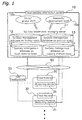
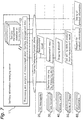
- Fig. 1 illustrates a sanitary measurement system according to an embodiment of the invention.
- a system operator makes a contract with a headquarters 20 of a convenience store chain, which will be referred to as a "CVS headquarters" hereinafter, and a sanitary information managing server 11 operated and managed by the system operator aids sanitary inspection operation in a plurality of food factories 30, which are collectively controlled by the CVS headquarters 20.
- the system operator has a food sanitary information center 10, in which the sanitary information managing server 11 performs data analysis and data management on results of sanitary inspection in the respective food factories 30, and also provides various useful information to the food factories 30.
- Each food factory 30 is registered in the food sanitary information center 10 together with an ID code assigned thereto, and the sanitary information managing server 11 receives data of the inspection results including the ID code from a measuring device 31 in each food factory 30.
- a research/development staff 10a and a sales/service staff 10b are working for providing information to the respective food factories 30 and others via the sanitary information managing server 11.
- the food factories 30 receive fresh food materials from places of production, and processes these food materials in various manners to produce processed foods.
- the processed foods thus produced are delivered to respective stores of the convenience store chain.
- each food factory 30 is provided with the measuring device 31 for performing sanitary management of food materials, processed foods and others handled in the food factory 30.
- the measuring device 31 can count the number of bacteria contained in a sample or specimen of food or the like. Various types of devices are available for counting the bacteria, and any one among them can be used as the measuring device 31.
- the measuring device 31 can provide measured values or measurements, i.e., the results of sanitary inspection as output data.
- the measuring device 31 counts the bacteria.
- the measuring device 31 can send the data of measured values to the sanitary information managing server 11 of the food sanitary information center 10 via connection means 90 such as the Internet, telephone, dedicated line, cellular phone or the like.
- connection means 90 such as the Internet, telephone, dedicated line, cellular phone or the like.
- the measuring device 31 may be connected to a telephone line connector in the factory via a personal computer or the like so that the measuring device 31 can be connected to the sanitary information managing server 11 via the connection means 90 such as telephone or the Internet.
- the food factories 30 exchange various data to and from the sanitary information managing server 11 in the food sanitary information center 10 via another send/receive device such as a personal computer connected to the measuring device 31 or the sanitary information managing server 11.
- Information (data) sent from the food factories 30 to the food sanitary information center 10 includes data of measurements, i.e., the results of inspection by the measuring device 31, device information of the measuring device 31 itself, order information for consumables for the measuring device 31, inquiries about the measuring device 31 and/or others.
- Information sent from the food sanitary information center 10 to the food factories 30 include results (acceptance/rejection) of analysis of the inspection data, sanitary guidance, information relating to the degree of consumption of consumables estimated from the times of executed inspection, upgrade information of software of the measuring device 31, replies to the inquiries sent from the food factories 30 and/or others.
- the food factories 30 handle the following foods.
- Meat such as frozen meat and meat products, dairy products such as butter and processed milk, processed broiler chicken and others.
- Canned fish processed seaweed, fish meat products such as fish sausage and fish-paste products, frozen marine products, dried marine products and others.
- Vegetables seasonings, sugars, milled rice and flour, bread, sweet stuff, fat and oil, yeast, starch, noodles, koji mold, beans, bean jam, frozen cooked foods, daily dishes, packed lunches, sandwiches, retort foods and others,
- the sanitary information managing server (sanitary information managing computer) 11 is connected to the measuring device 31 in each food factory 30 over the connection means 90 such as the Internet as illustrated in Fig. 1.
- the sanitary information managing server 11 collects and analyzes the data of inspection results from the measuring devices 31 for managing the sanitary information according to the plurality of databases.
- the sanitary information managing server 11 provides various information prepared by the research/development staff 10a and the sales/service staff 10b to the respective food factories 30. For example, web pages for the food factories 30 are prepared on the Internet, and each food factory 30 can receive information and can sent inquiries through the web pages.
- the research/development staff 10a can provide upgrade information of software installed in the measuring device 31 of each food factory 30, and can send information as a reply to the inquiry, which was sent from the food factories 30 in connection with the measuring device 31.
- the sales/service staff 10b can provide the information for replying to the inquiries or the like sent from the food factories 30.
- the sanitary information managing server 11 manages the data of results of the sanitary inspection, which are collected from the food factories 30, by processing the data on various bases such as a factory-by-factory basis, a product-by-product basis, a material-by-material basis (i.e., a basis relating to the food materials) and a method-by-method basis (i.e., a basis relating to the cooking methods) and others. More specifically, the sanitary information managing server 11 has a plurality of databases such as sanitary management databases 12, 13, 14 and 15 created on the factory-by-factory basis, product-by-product basis, food material-by-food material basis and cooking method-by-cooking method basis, respectively.
- the CVS headquarters 20 generally controls the plurality of food factories 30, and supervises the states of sanitary management in the food factories 30, which provide the food products to the respective stores of the convenience store chain.
- the CVS headquarters 20 requests the operator of the food sanitary information center 10 to aid in the sanitary management operations in the food factories 30.
- the CVS headquarters 20 receives information, which are collected and managed by the food sanitary information center 10, such as the sanitary management database 12 created on the factory-by-factory basis, and thereby can provide uniform sanitary guidance to the respective food factories 30.
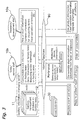
- the sanitary information managing server 11 can provide the sanitary guidance to the food factories 30 directly or via the CVS headquarters 20, as illustrated in Fig. 2. For example, according to the sanitary guidance, it is determined whether the inspection results sent from the food factories 30 are in an allowable range or not (allowed or rejected), and provides information such as appropriate processing method (cooking method) if some or many results represent the rejection.
- sanitary information managing server 11 can analyze the tendencies of problems in the food (processed food), food material, production line and others in each food factory 30, and can provide the information and sanitary guidance to the food factories 30. Since the sanitary information managing server 11 collectively performs the data analysis as described above, each food factory 30 can obtain more information useful to the factory.
- the sanitary information managing server 11 provides the information to the food factories 30 in response to the requests from the food factories 30, based on estimation performed according to the accumulation of data of inspection results sent thereto.
- the food sanitary information center 10 sends a reply to the food factories 30.
- the sanitary information managing server 11 estimates the state of the measuring device 31 used in the food factories 30.
- the sanitary information managing server 11 prepares information files, e.g., of consumable stock information created on the factory-by-factory basis, order information created on the factory-by-factory basis and measuring device information created on the factory-by-factory basis, and periodically performs the maintenance on measuring device 31 by remote access or the like. Also, it requests or prompts the food factories 30 to order the consumables. In response to such request or prompt, the food factories 30 send the device information of the measuring device 31 to the sanitary information managing server 11, or places an order for the consumables.
- the sanitary information managing server 11 provides new product information, which is prepared by the research/development staff 10a, as well as software information for the measuring device 31 and food sanitation information to the food factories 30 at appropriate times.
- the sanitary information managing server 11 can provide information for aiding the food factories 30 in new product development such as planning of new menu and study of new food materials.
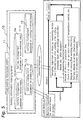
- the food factories 30 can retrieve necessary data in the sanitary management databases 13, 14 and 15, which are created on the product-by-product basis, food material-by- food material basis and cooking method-by-cooking method basis, respectively, and are kept in the sanitary information managing server 11, for referring to and utilizing it.
- the sanitary information managing server 11 provides the web pages for the food factories 30, and allows retrieving of the data in the respective databases on the web pages.
- the food factories 30 can access the web pages of the sanitary information managing server 11, e.g., by entering a pass word, and thereby can obtain necessary information. Since the information thus obtained is a part of the information, which has been collected, accumulated and sorted from many food factories 30 for a long term, it has higher quality and reliability than the information locally held in the food factories 30.
- the food factories 30 can rapidly receive the results of determination about acceptance/rejection from the sanitary information managing server 11. If the trial product is rejected, the food factories 30 can obtain the data, which can aid in reviewing various points such as food materials, cooking methods, additives and processing steps, from the various databases in sanitary information managing server 11.
- the sanitary information managing server 11 can provide necessary information to the food factories 30, when required, in connection with the operations of checking new products prepared in a trial stage for mass production (i.e., information relating to the analysis of bacteria inspection and acceptance/rejection determination) as well as the various inspecting and reviewing operations required due to the rejection.
- the sanitary information managing server 11 Since the sanitary information managing server 11 provides the guidance to replace appropriately the consumables of the measuring devices 31 in the respective food factories 30, this ensures the safety of the food handled by each food factory 30.
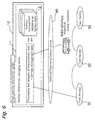
- the sanitary information managing server 11 checks the data of the sanitary inspection in the food factories 30, and the information relating to the allowance or prohibition of delivery may be provided to the delivery truck 40 based on the results of such checking.
- information of sell-by date which may be used for advancing the sell-by date, may be provided to the stores 50.
- a terminal arranged in each store 50 or a terminal of the consumer 60 may be used to access the web pages managed by the sanitary information managing server 11 so that the consumer 60 can obtain the sanitary information of the products, e.g., by entering a product ID.
- the sanitary information managing server 11 may assign sanitary level information such as "AAA” or "AAB" to the products, and such information may be open to the consumers 60.
- Labels attached to the products such as lunch packages may bear the sanitary information in addition to the information of the date and time of production as well as the name of the processor or the like.
- the sanitary information may be added to a product master file of a POS system used in the stores 50, and may be collectively managed together with other product information.
- the sanitary information managing computer centralizes the sanitary information of the respective food factories, the sanitary information managing computer can manage the sanitary information and determine the results of the sanitary inspection, instead of the management of the sanitary information and determination of results of such inspection by each individual food factory. Therefore, the operations such as management and determination of the sanitary inspection results can be efficiently performed.
Landscapes
- Engineering & Computer Science (AREA)
- Business, Economics & Management (AREA)
- Human Resources & Organizations (AREA)
- Strategic Management (AREA)
- General Business, Economics & Management (AREA)
- Theoretical Computer Science (AREA)
- General Physics & Mathematics (AREA)
- Entrepreneurship & Innovation (AREA)
- Physics & Mathematics (AREA)
- Data Mining & Analysis (AREA)
- Economics (AREA)
- Marketing (AREA)
- Operations Research (AREA)
- Quality & Reliability (AREA)
- Tourism & Hospitality (AREA)
- General Factory Administration (AREA)
- Measurement Of The Respiration, Hearing Ability, Form, And Blood Characteristics Of Living Organisms (AREA)
Applications Claiming Priority (1)
| Application Number | Priority Date | Filing Date | Title |
|---|---|---|---|
| PCT/JP2001/009670 WO2003040974A1 (en) | 2000-06-30 | 2001-11-05 | Sanitary measurement system |
Publications (2)
| Publication Number | Publication Date |
|---|---|
| EP1452986A1 true EP1452986A1 (de) | 2004-09-01 |
| EP1452986A4 EP1452986A4 (de) | 2006-08-16 |
Family
ID=32800782
Family Applications (1)
| Application Number | Title | Priority Date | Filing Date |
|---|---|---|---|
| EP01979015A Ceased EP1452986A4 (de) | 2001-11-05 | 2001-11-05 | Sanitär-messystem |
Country Status (2)
| Country | Link |
|---|---|
| EP (1) | EP1452986A4 (de) |
| WO (1) | WO2003040974A1 (de) |
Family Cites Families (5)
| Publication number | Priority date | Publication date | Assignee | Title |
|---|---|---|---|---|
| JPH0663036A (ja) * | 1992-08-19 | 1994-03-08 | Toshiba Corp | X線断層像撮影装置 |
| JPH11304595A (ja) * | 1998-04-16 | 1999-11-05 | Mobile Media Net:Kk | 温度を主とした食材、食品の品質管理システムと、温度を主とした食材、食品の品質管理システムに使用する検査機器収容ケース |
| US6422061B1 (en) * | 1999-03-03 | 2002-07-23 | Cyrano Sciences, Inc. | Apparatus, systems and methods for detecting and transmitting sensory data over a computer network |
| ATE403145T1 (de) * | 2000-01-31 | 2008-08-15 | Univ Texas | Tragbare vorrichtung mit einer sensor-array- anordnung |
| JP2001228761A (ja) * | 2000-02-14 | 2001-08-24 | Canon Inc | 消耗品管理方法及び消耗品管理システム |
-
2001
- 2001-11-05 EP EP01979015A patent/EP1452986A4/de not_active Ceased
- 2001-11-05 WO PCT/JP2001/009670 patent/WO2003040974A1/ja not_active Ceased
Also Published As
| Publication number | Publication date |
|---|---|
| EP1452986A4 (de) | 2006-08-16 |
| WO2003040974A1 (en) | 2003-05-15 |
Similar Documents
| Publication | Publication Date | Title |
|---|---|---|
| Jedermann et al. | Reducing food losses by intelligent food logistics | |
| US20200334628A1 (en) | Food fulfillment with user selection of instances of food items and related systems, articles and methods | |
| Roccato et al. | Analysis of domestic refrigerator temperatures and home storage time distributions for shelf-life studies and food safety risk assessment | |
| Overbosch et al. | Principles and systems for quality and food safety management | |
| Soysal et al. | A review on quantitative models for sustainable food logistics management | |
| Hsu et al. | A RFID-enabled traceability system for the supply chain of live fish | |
| Zhang et al. | A guidance document on the best practices in food traceability | |
| Shi et al. | Optimizing distribution strategy for perishable foods using RFiD and sensor technologies | |
| US20050021347A1 (en) | Sanitary measurement system | |
| Bech et al. | Consumers’ quality perception | |
| Focker et al. | Designing a risk-based monitoring plan for pathogens in food: A review | |
| Lim et al. | Statistical Process Control for the Food Industry | |
| Kusolchoo et al. | Digital technologies for food loss and waste in food supply chain management | |
| National Advisory Committee on Microbiological Criteria for Foods | Response to questions posed by the department of defense regarding microbiological criteria as indicators of process control or insanitary conditions | |
| Öztürk et al. | Food waste management in hospitality operations: A study of 4-and 5-star hotels in Konya Province | |
| Bortolini et al. | Assessing energy requirements in the European (EU-28) food sector | |
| Polkinghorne | From commodity, to customer, to consumer: The Australian beef industry evolution | |
| Patidar et al. | Traceability and transportation issues in the food supply chain | |
| EP1452986A1 (de) | Sanitär-messystem | |
| Busch | The new autocracy in food and agriculture | |
| Nurhayati et al. | Supplier assessment for supply chain performance and effective food safety implementation: a framework | |
| KR102634061B1 (ko) | 사용자의 취향 및 건강 상태를 고려하여 맞춤으로 소분되고 포장된 곡물을 제공하기 위한 방법 및 장치 | |
| US7584882B2 (en) | System and method for managing financial data | |
| Zanoni et al. | Inventory models for maturing and ageing items: cheese and wine storage | |
| Ollinger et al. | The Food Safety Performance of Ground Beef Suppliers to the National School Lunch Program |
Legal Events
| Date | Code | Title | Description |
|---|---|---|---|
| PUAI | Public reference made under article 153(3) epc to a published international application that has entered the european phase |
Free format text: ORIGINAL CODE: 0009012 |
|
| 17P | Request for examination filed |
Effective date: 20040505 |
|
| AK | Designated contracting states |
Kind code of ref document: A1 Designated state(s): AT BE CH CY DE DK ES FI FR GB GR IE IT LI LU MC NL PT SE TR |
|
| AX | Request for extension of the european patent |
Extension state: AL LT LV MK RO SI |
|
| A4 | Supplementary search report drawn up and despatched |
Effective date: 20060719 |
|
| 17Q | First examination report despatched |
Effective date: 20060915 |
|
| REG | Reference to a national code |
Ref country code: DE Ref legal event code: R003 |
|
| STAA | Information on the status of an ep patent application or granted ep patent |
Free format text: STATUS: THE APPLICATION HAS BEEN REFUSED |
|
| 18R | Application refused |
Effective date: 20130315 |