EP1453111A2 - Lichtquelleneinheit - Google Patents
Lichtquelleneinheit Download PDFInfo
- Publication number
- EP1453111A2 EP1453111A2 EP04004509A EP04004509A EP1453111A2 EP 1453111 A2 EP1453111 A2 EP 1453111A2 EP 04004509 A EP04004509 A EP 04004509A EP 04004509 A EP04004509 A EP 04004509A EP 1453111 A2 EP1453111 A2 EP 1453111A2
- Authority
- EP
- European Patent Office
- Prior art keywords
- led
- substrate
- light source
- source unit
- temperature
- Prior art date
- Legal status (The legal status is an assumption and is not a legal conclusion. Google has not performed a legal analysis and makes no representation as to the accuracy of the status listed.)
- Withdrawn
Links
Images




Classifications
-
- H—ELECTRICITY
- H04—ELECTRIC COMMUNICATION TECHNIQUE
- H04N—PICTORIAL COMMUNICATION, e.g. TELEVISION
- H04N1/00—Scanning, transmission or reproduction of documents or the like, e.g. facsimile transmission; Details thereof
- H04N1/024—Details of scanning heads ; Means for illuminating the original
- H04N1/028—Details of scanning heads ; Means for illuminating the original for picture information pick-up
- H04N1/02815—Means for illuminating the original, not specific to a particular type of pick-up head
-
- F—MECHANICAL ENGINEERING; LIGHTING; HEATING; WEAPONS; BLASTING
- F21—LIGHTING
- F21K—NON-ELECTRIC LIGHT SOURCES USING LUMINESCENCE; LIGHT SOURCES USING ELECTROCHEMILUMINESCENCE; LIGHT SOURCES USING CHARGES OF COMBUSTIBLE MATERIAL; LIGHT SOURCES USING SEMICONDUCTOR DEVICES AS LIGHT-GENERATING ELEMENTS; LIGHT SOURCES NOT OTHERWISE PROVIDED FOR
- F21K9/00—Light sources using semiconductor devices as light-generating elements, e.g. using light-emitting diodes [LED] or lasers
-
- H—ELECTRICITY
- H04—ELECTRIC COMMUNICATION TECHNIQUE
- H04N—PICTORIAL COMMUNICATION, e.g. TELEVISION
- H04N1/00—Scanning, transmission or reproduction of documents or the like, e.g. facsimile transmission; Details thereof
- H04N1/024—Details of scanning heads ; Means for illuminating the original
- H04N1/028—Details of scanning heads ; Means for illuminating the original for picture information pick-up
- H04N1/02815—Means for illuminating the original, not specific to a particular type of pick-up head
- H04N1/02845—Means for illuminating the original, not specific to a particular type of pick-up head using an elongated light source, e.g. tubular lamp, LED array
- H04N1/02865—Means for illuminating the original, not specific to a particular type of pick-up head using an elongated light source, e.g. tubular lamp, LED array using an array of light sources or a combination of such arrays, e.g. an LED bar
-
- H—ELECTRICITY
- H05—ELECTRIC TECHNIQUES NOT OTHERWISE PROVIDED FOR
- H05K—PRINTED CIRCUITS; CASINGS OR CONSTRUCTIONAL DETAILS OF ELECTRIC APPARATUS; MANUFACTURE OF ASSEMBLAGES OF ELECTRICAL COMPONENTS
- H05K1/00—Printed circuits
- H05K1/02—Details
- H05K1/0274—Optical details, e.g. printed circuits comprising integral optical means
-
- H—ELECTRICITY
- H10—SEMICONDUCTOR DEVICES; ELECTRIC SOLID-STATE DEVICES NOT OTHERWISE PROVIDED FOR
- H10H—INORGANIC LIGHT-EMITTING SEMICONDUCTOR DEVICES HAVING POTENTIAL BARRIERS
- H10H20/00—Individual inorganic light-emitting semiconductor devices having potential barriers, e.g. light-emitting diodes [LED]
- H10H20/80—Constructional details
- H10H20/85—Packages
- H10H20/855—Optical field-shaping means, e.g. lenses
- H10H20/856—Reflecting means
-
- F—MECHANICAL ENGINEERING; LIGHTING; HEATING; WEAPONS; BLASTING
- F21—LIGHTING
- F21V—FUNCTIONAL FEATURES OR DETAILS OF LIGHTING DEVICES OR SYSTEMS THEREOF; STRUCTURAL COMBINATIONS OF LIGHTING DEVICES WITH OTHER ARTICLES, NOT OTHERWISE PROVIDED FOR
- F21V23/00—Arrangement of electric circuit elements in or on lighting devices
- F21V23/003—Arrangement of electric circuit elements in or on lighting devices the elements being electronics drivers or controllers for operating the light source, e.g. for a LED array
-
- H—ELECTRICITY
- H04—ELECTRIC COMMUNICATION TECHNIQUE
- H04N—PICTORIAL COMMUNICATION, e.g. TELEVISION
- H04N2201/00—Indexing scheme relating to scanning, transmission or reproduction of documents or the like, and to details thereof
- H04N2201/04—Scanning arrangements
- H04N2201/0402—Arrangements not specific to a particular one of the scanning methods covered by groups H04N1/04 - H04N1/207
- H04N2201/0404—Scanning transparent media, e.g. photographic film
-
- H—ELECTRICITY
- H05—ELECTRIC TECHNIQUES NOT OTHERWISE PROVIDED FOR
- H05K—PRINTED CIRCUITS; CASINGS OR CONSTRUCTIONAL DETAILS OF ELECTRIC APPARATUS; MANUFACTURE OF ASSEMBLAGES OF ELECTRICAL COMPONENTS
- H05K1/00—Printed circuits
- H05K1/02—Details
- H05K1/03—Use of materials for the substrate
- H05K1/05—Insulated conductive substrates, e.g. insulated metal substrate
- H05K1/056—Insulated conductive substrates, e.g. insulated metal substrate the metal substrate being covered by an organic insulating layer
-
- H—ELECTRICITY
- H05—ELECTRIC TECHNIQUES NOT OTHERWISE PROVIDED FOR
- H05K—PRINTED CIRCUITS; CASINGS OR CONSTRUCTIONAL DETAILS OF ELECTRIC APPARATUS; MANUFACTURE OF ASSEMBLAGES OF ELECTRICAL COMPONENTS
- H05K1/00—Printed circuits
- H05K1/18—Printed circuits structurally associated with non-printed electric components
- H05K1/182—Printed circuits structurally associated with non-printed electric components associated with components mounted in printed circuit boards [PCB], e.g. insert-mounted components [IMC]
- H05K1/183—Printed circuits structurally associated with non-printed electric components associated with components mounted in printed circuit boards [PCB], e.g. insert-mounted components [IMC] associated with components mounted in and supported by recessed areas of the PCBs
-
- H—ELECTRICITY
- H05—ELECTRIC TECHNIQUES NOT OTHERWISE PROVIDED FOR
- H05K—PRINTED CIRCUITS; CASINGS OR CONSTRUCTIONAL DETAILS OF ELECTRIC APPARATUS; MANUFACTURE OF ASSEMBLAGES OF ELECTRICAL COMPONENTS
- H05K2201/00—Indexing scheme relating to printed circuits covered by H05K1/00
- H05K2201/09—Shape and layout
- H05K2201/09009—Substrate related
- H05K2201/09036—Recesses or grooves in insulating substrate
-
- H—ELECTRICITY
- H05—ELECTRIC TECHNIQUES NOT OTHERWISE PROVIDED FOR
- H05K—PRINTED CIRCUITS; CASINGS OR CONSTRUCTIONAL DETAILS OF ELECTRIC APPARATUS; MANUFACTURE OF ASSEMBLAGES OF ELECTRICAL COMPONENTS
- H05K2201/00—Indexing scheme relating to printed circuits covered by H05K1/00
- H05K2201/09—Shape and layout
- H05K2201/09209—Shape and layout details of conductors
- H05K2201/09654—Shape and layout details of conductors covering at least two types of conductors provided for in H05K2201/09218 - H05K2201/095
- H05K2201/09745—Recess in conductor, e.g. in pad or in metallic substrate
-
- H—ELECTRICITY
- H05—ELECTRIC TECHNIQUES NOT OTHERWISE PROVIDED FOR
- H05K—PRINTED CIRCUITS; CASINGS OR CONSTRUCTIONAL DETAILS OF ELECTRIC APPARATUS; MANUFACTURE OF ASSEMBLAGES OF ELECTRICAL COMPONENTS
- H05K2201/00—Indexing scheme relating to printed circuits covered by H05K1/00
- H05K2201/10—Details of components or other objects attached to or integrated in a printed circuit board
- H05K2201/10007—Types of components
- H05K2201/10106—Light emitting diode [LED]
-
- H—ELECTRICITY
- H05—ELECTRIC TECHNIQUES NOT OTHERWISE PROVIDED FOR
- H05K—PRINTED CIRCUITS; CASINGS OR CONSTRUCTIONAL DETAILS OF ELECTRIC APPARATUS; MANUFACTURE OF ASSEMBLAGES OF ELECTRICAL COMPONENTS
- H05K2201/00—Indexing scheme relating to printed circuits covered by H05K1/00
- H05K2201/20—Details of printed circuits not provided for in H05K2201/01 - H05K2201/10
- H05K2201/2054—Light-reflecting surface, e.g. conductors, substrates, coatings, dielectrics
-
- H—ELECTRICITY
- H10—SEMICONDUCTOR DEVICES; ELECTRIC SOLID-STATE DEVICES NOT OTHERWISE PROVIDED FOR
- H10W—GENERIC PACKAGES, INTERCONNECTIONS, CONNECTORS OR OTHER CONSTRUCTIONAL DETAILS OF DEVICES COVERED BY CLASS H10
- H10W72/00—Interconnections or connectors in packages
- H10W72/50—Bond wires
- H10W72/541—Dispositions of bond wires
- H10W72/547—Dispositions of multiple bond wires
- H10W72/5473—Dispositions of multiple bond wires multiple bond wires connected to a common bond pad
-
- H—ELECTRICITY
- H10—SEMICONDUCTOR DEVICES; ELECTRIC SOLID-STATE DEVICES NOT OTHERWISE PROVIDED FOR
- H10W—GENERIC PACKAGES, INTERCONNECTIONS, CONNECTORS OR OTHER CONSTRUCTIONAL DETAILS OF DEVICES COVERED BY CLASS H10
- H10W72/00—Interconnections or connectors in packages
- H10W72/851—Dispositions of multiple connectors or interconnections
- H10W72/874—On different surfaces
- H10W72/884—Die-attach connectors and bond wires
-
- H—ELECTRICITY
- H10—SEMICONDUCTOR DEVICES; ELECTRIC SOLID-STATE DEVICES NOT OTHERWISE PROVIDED FOR
- H10W—GENERIC PACKAGES, INTERCONNECTIONS, CONNECTORS OR OTHER CONSTRUCTIONAL DETAILS OF DEVICES COVERED BY CLASS H10
- H10W90/00—Package configurations
Definitions
- the present invention relates to a light source unit including a plurality of light emitting diodes (LED) for irradiating beam to an object.
- the invention relates also to a technique of controlling temperature of the light source area of such light source unit when the unit is employed in an apparatus, such as a film scanner, for obtaining image data.
- an illuminating module using white LED's irradiates a beam on the document and the beam reflected from this document is then guided through mirrors, lenses to be impinged in focus on a 3-line sensor.
- This illuminating module includes a plurality of white LED's spaced apart with a predetermined distance therebetween and arranged linearly.
- a power supply system is provided for supplying power to the plurality of LED's from a PWM (pulse width modulation) control circuit. Further, a plurality of resistors acting as heat generating elements are provided adjacent the plural LED's.
- a further power supplying system for supplying power to the respective resistors from a different PWM control circuit than the above-mentioned PWM control circuit.
- a further type of conventional technique is known from Japanese Patent Application "Kokai” No.: Hei. 2001-45225 (paragraphs [0038]-[0051] and Fig. 3) ("Document 2" hereinafter), though this document does not describe control of light source temperature.
- This document discloses a film scanner including a light source comprising LED's and adapted for obtaining image data from a photographic film.
- a plurality of LED chips for emitting rays of R (red), G (green), B (blue) and IR (infrared) are mounted in correspondence with each of the colors on an aluminum substrate.
- the rays from the LED's are guided via such optical components as a half mirror, a dichroic mirror, etc. onto the photographic film.
- the beam transmitting through the film is guided via a zooming lens to be impinged on an area-sensor type CCD sensor.
- the heat generating elements are arranged in the vicinity of the LED's.
- the heat from each heat generating element is caused to affect each corresponding LED, thereby to maintain this LED at a target temperature. Therefore, for independent drive of each of the plural heat generating elements arranged along the array of the LED's (main scanning direction), the construction requires the PWM control circuit for controlling each heat generating element. This results in not only increased complexity of the circuit and physical enlargement of the entire apparatus, but also in cost increase due to the large number of components required.
- a primary object of the present invention is to provide a light source unit which allows precise temperature control of LED's with minimum number of components.
- a light source unit including a substrate mounting a plurality of light emitting diodes (LED's) for irradiating beam to an object
- said substrate is formed of a material having high heat conductivity and the unit includes a chip resistor mounted on said substrate and heat generation controlling means for heating the substrate with heat generated in said chip resistor upon supply of power to the chip resistor.
- this chip resistor when power is supplied to the chip resistor, this chip resistor generates heat, which heat is then conducted through the substrate and eventually to the LED's mounted thereon.
- the substrate is formed of a material having high heat conductivity
- the heat generated from the chip resistor can heat the entire substrate uniformly and can maintain all of the LED's mounted on the substrate at a near desired temperature.
- the chip resistor is less expensive and more compact than a sheet-like heat generating element, this may be disposed at a desired appropriate area on the substrate. Hence, such advantageous temperature control is made possible without inviting cost increase.
- said plural LED's are arranged in the form of an array on the substrate and a plurality of said chip resistors are arranged linearly along the array of LED's.
- the substrate receives heat from the plurality of chip resistors arranged in the form of array along the array of the LED's. Therefore, even when there occurs some localized discharge of heat on one end of the LED array, this polarization or localization in the temperature of the substrate can be solved by heat from the plurality of chip resistors. Consequently, temperature uniformity can be achieved in the direction of the LED array.
- said substrate includes a metal base, an insulating layer formed on the base, and a printed circuit formed on the top face of the insulating layer, a bonding wiring being provided between terminals of the printed circuit and the LED's and said chip resistors being solder-fixed to the terminals of the printed circuit.
- the bonding wiring is provided for the LED's.
- the chip resistors are solder-fixed to the terminals of the printed circuit, these chip resistors can be thermally coupled with the substrate over a large surface area, thereby to achieve even better heat conduction from the chip resistors to the substrate. Consequently, a large amount of light can be obtained form the number of LED's mounted on the substrate and also the heat form the chip resistors can be conducted in a very efficient manner to the LED's.
- said plural LED's arranged in the array are adapted for irradiating at least three kinds of beam of red, green and blue.
- the light source can be used in a scanner designed for obtaining color image data. Further, even when the three kinds of LED's are mounted on different substrates, the LED's on each of these different substrates can be maintained at a uniform temperature. As a result, the scanner using this light source unit will achieve improved performance in obtaining color image data.
- the light source unit further comprises light emission controlling means for supplying power to the LED's and warm-up controlling means for supplying a predetermined maximum power to said light emission controlling means and said heat generation controlling means at the time of startup of the light source unit.
- the light source unit further comprises temperature determining means for determining a temperature of the substrate, a radiator thermally coupled with the substrate and a fan for feeding cooling air to the radiator, and fan controlling means operable to drive said fan when the temperature of the substrate determined by said temperature determining means has exceeded a predetermined target temperature range and operable also to stop said fan when the determined temperature falls below said target temperature range.
- this construction the temperature control is made possible simply by ON/OFF control of the fan, eliminating necessity of providing any special circuit for controlling the power to the chip resistors.
- this construction does not require any complicated control circuit and can still maintain the temperature of the LED's within the target temperature range through such simple control scheme.
- said temperature determining means comprises a thermistor mounted on the substrate adjacent the LED.
- the temperature of the substrate is determined by the thermistor which is disposed in the vicinity of the LED.
- a film scanner includes a light source unit A, a film carrier unit B, a lens unit C, a photoelectric converter unit D, and a control unit E.
- a beam from the light source unit A is irradiated on a developed photographic film F carried on the film carrier B and the transmission beam past this photographic film F is guided by the lens unit C to the photoelectric converter unit D.
- a CCD (Charge Coupled Device) type line sensor incorporated therein obtains, from an image in the photographic film F, image data in the form of digital signals corresponding to the three primary colors of R (red), G (green) and B (blue) and obtains also, by means of an infrared beam (IR), its beam intensity variable due to presence of a defect or flaw or dust or the like in the photographic film F as image data in the form of digital signals for use in film defect correction.
- IR infrared beam
- the image data and the image-defect data thus obtained are stored in a storage means incorporated in the control unit E. Thereafter, the control unit E outputs the image data of the photographic film F by frame-by-frame basis and, when needed, corrects the image data based on the image-defect data.
- the light source unit A includes a plurality of light-emitting diode (LED) arrays (representing three kinds of LED arrays described later. See Fig. 11) each comprising an array of a plurality of LED elements (LED's) 9 arranged along a main scanning direction for generating the beams of the three visible primary color components and the infrared beam. So that, the unit functions to emit beams from this LED array.
- the film carrier unit B is designed for transporting the film F back and forth along a sub scanning direction. And, a plurality of film carrier units B are prepared to cope with a plurality of types of photographic films F such as 135 size, 240 size, 120/220 size films, so that these carriers are exchangeable.
- the lens unit C includes a zooming type optical lens which is operable to cause an image in the photographic film F carried by the film carrier B to be impinged in focus on a photoelectric converting face of the CCD type line sensor incorporated in the photoelectric converter unit D, the lens allowing variation of a magnifying power depending on the desired number of pixels to be obtained.
- the photoelectric converter unit D includes a three-line type CCD line sensor corresponding to the three primary colors of R (red), G (green) and B (blue) and a one-line type CCD line sensor having sensitivity for the infrared beam (IR).
- control unit E includes a microprocessor, the storage means comprising a large-capacity hard disc, a semiconductor memory etc, and an interface for realizing signal access.
- the control unit E stores therein a program for controlling the all of the light source unit A, the film carrier unit B, the lens unit C, and the photoelectric converter unit D.
- This program realizes a control process (to be described later) for controlling the light amount and temperature of the light source unit A, a further process for controlling transportation of the photographic film F by the film carrier unit B for a scanning operation of the photographic film F, a still further process for setting a focal length of the zooming lens of the lens unit D in accordance with a type of the film F employed and/or the type of its scanning operation to be effected, a still further process for storing the image data from the photoelectric converter unit C in the manner described above and a still further process for correcting, when necessary, the image data thus stored based on the image-defect data.
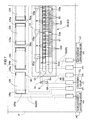
- the light source unit A includes an upper case 10 formed as resin molded component and a lower case 20 formed of an aluminum alloy.
- the upper case 10 includes a flat upper table portion 11 and a box portion 12 formed integrally therewith and projecting from the bottom face of the upper table portion 11. Further, a resin cover 13 is provided for a bottom face of the upper table portion 11.
- the lower case 20 includes a bottom wall portion 21, a lateral wall portion 22 formed integrally therewith and a plurality of fins 23 as heat radiator elements formed integrally with respective outer faces of the bottom wall portion 21 and the lateral wall portion 22.
- This light source unit A further includes a pair of fans 24 for feeding cooling air to the fins 23.
- the upper table portion 11 of the upper case 10 defines an opening 11A of a predetermined width formed along the main scanning direction for irradiating beam upwards.
- a cylindrical condensing lens 30 and at a position below this condensing lens 30, there is provided an ND filter 31 movable into and out of the optical axis of the lens. More particularly, this ND filter 31 is mounted to be slidable between a condition (position) where the filter is located downwardly of the condensing lens 30 and a further condition where the filter is retracted inside the cover 13.
- the filter is operably connected with a crank mechanism 15 activated by a drive from an electromagnetic solenoid type electric actuator 14 mounted to the cover 13.
- this ND filter 31 when this ND filter 31 is located at the position below the main converging lens 30 for adjusting the CCD of the photoelectric converter unit D, the filter reduces the amount of beam from the light source unit A, thus appropriately adjusting the photoelectric converter unit D with an appropriate amount of beam.
- the box portion 12 accommodates therein a first mirror M1 of dichroic type disposed at a lower position on an extension of the optical axis L of the condensing lens 30, a first lens Le1 of cylindrical type, a second mirror M2 of dichroic type disposed beside the first mirror M1, a second lens Le2 of cylindrical type for guiding beam to a reflecting side of the second mirror M2 and a third lens Le3 of cylindrical type for guiding the beam to a transmitting side of the second mirror M2.
- a first printed circuit board (substrate) P1 mounting thereon a light-emitting diode array G-LED consisting of a plurality of chip-type green LED elements 9 linearly arranged along the main scanning direction and a light-emitting diode array B-LED consisting of a plurality of chip-type blue LED elements 9 linearly arranged along the main scanning direction.
- a second printed board (substrate) P2 mounting thereon a light-emitting diode array R1 ⁇ R2 ⁇ IR-LED including first red, second red and infrared beam LED elements 9 linearly arranged in the mentioned order along the main scanning direction.
- the green LED array G-LED is disposed at the focal position of the first lens Le1
- the blue LED array B-LED is disposed at the focal position of the second lens Le2
- the first red, second red and infrared LED array R1 ⁇ R2 ⁇ IR-LED is disposed at the focal position of the third lens Le3, respectively.
- the green LED elements 9 have a wavelength of 400-480 nm, the blue LED elements 9 have a wavelength of 520-560 nm, and the first red LED elements 9 and the second red LED elements 9 have a combined wavelength of 620-750 nm, and the infrared LED elements 9 have a wavelength of 830-950 nm, respectively.
- the first mirror M1 transmits the beam of the particular wavelength (400-480 nm) from the green LED elements 9 while reflecting beams of any other wavelength.
- the second mirror M2 transmits the beams of the particular wavelengths (620-750 nm and 830-950 nm) from the first red, second red and infrared LED elements 9 while reflecting the beam from the blue LED elements 9 (520-560 nm).
- the beams from the green LED array G-LED are rendered into parallel rays through the first lens Le1 and then transmitted through the first mirror M1 to be guided to the condensing lens 30.
- the beams from the blue LED array B-LED are rendered into parallel rays through the second lens Le2 and reflected first by this second mirror M2 and then reflected by the first mirror M1 to be guided to the condensing lens 30.
- the beams from the first red, second red and infrared LED array R1 ⁇ R2 ⁇ IR-LED are rendered into parallel rays through the third lens Le3 and transmitted through the second mirror M2 and then reflected by the first mirror M1 to be guided to the condensing lens 20.
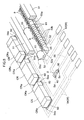
- positioning pins 17 are provided erect from the box portion 12 of the upper case 10 and positioning faces 18 are formed for coming into contact with the lens Le. Further, at portions of the box portion 12 facing the bottom wall portion 21 and the lateral wall portion 22, there are formed reference faces 19 for coming into contact with the printed circuit board (substrate) P. At opposed ends of each lens Le (i.e.
- the first lens Le1, second lens Le2 or third lens Le3 there are integrally formed support pieces 33 for coming into contact with the positioning faces 18, pin holes 34 for engagement with the pins 17 and screw holes 36 through which fixing screws 35 are to be inserted.
- the construction for supporting the condensing lens 30 to the upper case 10 is identical to that for supporting the lenses Le to the box portion 12. Namely, the screws 35 will be inserted through the screw holes 36 formed in the support pieces 33 formed at the opposed ends of the condensing lens 30 and then the inserted screws will be fixedly threaded with the upper case 10.
- the first printed circuit board P1 too defines pin holes 40 for engagement with the positioning pins 17.
- This first printed circuit board P1 will be fixed to the bottom wall portion 21 by means of screws 41 and the second printed circuit board P2 will be fixed in position to the lateral wall portion 22 by means of the screws 41.
- silicon grease is applied to the interfaces thereof for improvement of heat conductivity.
- the positioning pins 17 formed on the bottom face of the box portion 12 will engage into the corresponding pin holes 40 of the first printed circuit board P1 supported to the bottom wall portion 21, thereby to fixedly determine the position relative to the first printed circuit board P1 and fixedly determine also the position of the lower case 20 relative to the upper case 10 at the same time.
- the position of the third lens Le3 relative to the second printed circuit board P2 too will be fixedly determined as well.
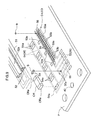
- the substrate (printed circuit board) P will be explained in details, by way of an example of its portion mounting the green LED array G-LED.
- the chip LED elements 9 are mounted on the substrate P and arranged linearly in the form of an array along the main scanning direction and along this array of the LED elements 9, there are provided a plurality of chip resistors CR.
- These chip resistors CR have a same resistance value and a same size and with supply of power thereto, and these resistors CR generate heat which is conducted to the substrate P, from which the heat is further conducted to the LED elements 9, so that the plural LED elements 9 may be maintained at an optimum temperature.
- the substrate P includes an aluminum base 45 as a material having a high heat conductivity, an insulating layer 46 formed on the base and a printed circuit W formed thereon and of a copper foil or a gold membrane. Further, on the upper face of this printed circuit W, there is formed a resist film 47 formed of an insulating resin (see Fig. 10). Further, this substrate P includes a reflector 52 formed integral with a rectangular frame member 51, the reflector 52 being disposed parallel with the LED array (main scanning direction) and fixed in the vicinity of the LED elements 9.
- the base 45 may be formed also of a copper plate or metal alloy, instead of aluminum.
- the reflector 52 includes a reflecting face 52a inclined on the side facing the LED elements 9, so that this reflecting face 52a reflects the beam from the LED elements 9 in the direction normal to the substrate P.
- the frame member 51 and the reflector 52 are formed of liquid crystalline polymer having a high heat resistance.
- the printed circuit W includes a light-emitting wiring portion 53 for supplying power to the LED elements 9, a heating wiring portion 54 for supplying power to the chip resistors CR and a determining wiring portion 55 for applying a potential to a chip thermistor S acting as a temperature determining means.
- the LED array G-LED includes a plurality of units of LED elements 9, each unit consisting of seven LED elements electrically serially connected to each other. In correspondence with portions mounting the respective LED elements 9, there are formed a plurality of mounting portions 56 formed of the same material as the printed circuit.
- the light emitting wiring portion 53 includes power terminals 53a each supplying power to one unit of LED elements 9, and relay terminals 53b formed independently thereof along the array direction of the LED elements 9.
- the heating wiring portion 54 includes terminals 54a to be connected by solder 60 with opposed electrodes CRa of the chip resistors CR.
- the determining wiring portion 55 includes terminals 55a which are connected by solder 60 with opposed electrodes Sa of the thermistor S.
- the substrate P is manufactured by a following process. Namely, after the substrate having the printed circuit W and the resist film 47 formed thereon is fixed in position with the pin holes 40, the reflector 52 together with the frame member 51 is fixedly bonded on the substrate P and then the chip LED elements 9 are fixedly supported to the mounting portions 56 of the substrate P linearly with the predetermined distance by means of die bonding.
- a bonding wiring 61 is formed between pad portions of the chip LED elements 9 and the power terminals 53a and also between pad portions of the LED elements 9 and the relay terminals 53b, and the chip resistors CR are disposed between the respective terminals 54a of the heating wiring portion 54, and the terminals 54a and the electrodes CRa of the chip resistors CR are fixed by the solder 60.
- the thermistor S is disposed between the terminals 55a of the determining wiring portion 55, and the terminals 55a and the electrodes Sa of the thermistor S are fixed by the solder 60. This thermistor S is disposed in the vicinity of the LED elements 9. In particular, it is preferred that the thermistor S be disposed within a distance of 1 mm or less from the LED elements 9. With such arrangement adjacent the LED, it becomes possible to obtain temperature information reflecting the temperature of the LED elements 9.
- the step of fixing the frame member 51 to the substrate P and the step of fixing the LED elements 9 to the substrate P by the die bonding may be carried out in a reverse order.
- These steps and the further step of forming the bonding wirings 61 between the chip LED elements 9 and the power terminals 53a and between the LED elements 9 and the relay terminals 53b are carried out with utilizing the pin holes 40 as reference, thus achieving high precision.
- the process effects a step of specifying the positions of the power terminals 53a and the relay terminals 53b through an image processing using e.g. CCD.
- the use of the pin holes 40 serves to further improve the die bonding and wire bonding performances, whereby the operation for specifying the positions may be completed in a shorter period of time.
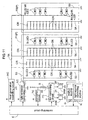
- this film scanner includes a light emission controlling circuit LC acting as light emission controlling means for supplying power to the plurality of LED elements 9, a heat generation controlling circuit HC acting as heat generation controlling means for supplying power to the chip resistors CR, a fan controlling circuit FC for supplying power to a motor 24M of each of the fans 24, and a converter circuit TC for converting a voltage signal from the thermistor S to a temperature signal.
- These circuits i.e. the light emission controlling circuit LC, the heat generation controlling circuit HC and the fan controlling circuit FC are controlled by control signals from the control unit E, whereas the converter circuit TC feedbacks the temperature signal to the control unit E.
- Fig. 11 shows each of the three kinds of the LED arrays: G-LED, B-LED, R1 ⁇ R2 ⁇ IR-LED as one light emitting unit block since each of these includes the unit of seven LED elements 9 serially connected to each other as described above.
- the light emission controlling circuit LC and the heat generation controlling circuit HC each includes a PWM type power control circuit, so that with a duty ratio setting of the power control circuit, each circuit LC, HC can be switched over between a condition for supplying power and a condition for stopping the power supply.
- the fan controlling circuit FC includes power transistors, relays etc. so that this circuit can be switched over between a condition for supplying power to the motor 24M of the fan 24 and a condition for stopping the power supply thereto.
- the converter circuit TC includes an amplifier having an input with a high impedance and an A/D converter so as to convert the voltage signal from the thermistor S into a digital signal and then output this digital signal.
- the control unit E includes the microprocessor for controlling the above-described components as well as the electric actuator 14 for controlling the ND filter 31, the film carrier B and the lens unit C, and the interface for realizing access of the control signals, and the unit stores therein the programs for obtaining image data from the photographic film F set to the film carrier unit B.
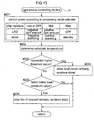
- the control unit E employed by the present invention stores therein in the form of programs a startup routine G (an example of warm-up controlling means) which is executed immediately after supply of power to this film scanner and a light source controlling routine H (an example of fan controlling means) which is executed when the photographic film F is to scanned.
- steps #101-104 the target temperature is set so as to maintain the temperature of the LED elements 9 at 45°C when effecting the scanning operation.
- threshold values (45.5°C, 44.5°C) are respectively set on the 0.5 °C higher side and on the 0.5°C lower side relative thereto. Then, when the temperature of the substrate P determined by the thermistor S has exceeded the lower threshold value (44.5°C), the power supply to the LED elements 9 is stopped.
- the routine executes a process for controlling power in accordance with a selected processing mode (step #201).
- a negative scanning mode for obtaining image data from a negative film
- a positive scanning mode for obtaining image data from a positive film
- a standby mode for not effecting any scanning at all.
- the negative scanning mode low (Low) power or no power is supplied to the chip resistors CR. Under this condition, power is supplied to the LED elements 9 for obtaining light amount suitable for the negative film.
- an intermediate (Mid) power is supplied to the chip resistors CR, and under this condition, power is supplied to the LED elements 9 for obtaining light amount suitable for the positive film.
- the maximum (Max) power is supplied to the chip resistors CR, and under this condition, power supply to the LED elements 9 is stopped.
- the light amount for the negative film is set greater than the light amount for the positive film. Therefore, for the light amount for the negative film, larger power is supplied to the LED elements 9 than that supplied thereto for obtaining the light amount for the positive film. Also, this light amount for the negative film is set to or near the maximum light amount value in accordance with the sensitivity of the CCD included in the photoelectric converter unit D. Hence, power corresponding to this light amount is supplied from the light emission controlling circuit LC and power inversely proportional thereto is supplied from the heat generation controlling circuit HC to the chip resistors CR or no power is supplied to the resistors CR.
- the heat generation amount combining the amount of heat generated by the power supplied to the LED elements 9 and the amount of heat generated by the power supplied to the chip resistors CR is set to be substantially equal in the respective processing modes. As a result, regardless of the processing mode selected, there will occur no variation in the temperature of the substrate P, thereby to reduce the frequency of driving the fans 24.
- step #201 when the temperature of the substrate determined by the thermistor S has exceeded to the higher threshold value (45.5°C), the driving of the fan 24 is initiated (when the fan 24 is being driven already, this driving is continued), and after this driving, when the temperature of the substrate determined by the thermistor S has fallen below the lower threshold value (44.5°C), the driving of the fan 24 is stopped (if the fan 24 is stopped already, this stop condition is continued) (steps #202-206).
- this light source controlling routine H regardless of the processing mode selected from the plurality of processing modes, the amount of heat generated on the substrate is maintained substantially constant. As a result, even when the processing mode is switched over, this will not invite such inconvenience as sharp rapid rise in the temperature of the substrate P and the frequency of driving the fan 24 can be reduced also.
- the substrate P employs the base 45 made of material having high heat conductivity and the plurality of LED elements 9 are mounted on this substrate P and arranged in the form of array along the main scanning direction. Further, along this array of the LED elements 9, there are arranged the plurality of relatively inexpensive chip resistors CR acting as heat source and fixed to the substrate by means of the solder 60. So that, the substrate P may be heated uniformly without temperature irregularity with the heat from the LED elements 9 and also the heat from the chip resistors CR, so that the LED elements 9 are maintained at the target temperature range for providing the beams of required wavelengths.
- the LED elements 9 can be heated to the optimum temperature in a short period time, thereby to allow a scanning operation to be started speedily. Further, once the temperature has reached the optimum value, even when the light amount is to be changed in accordance of the type of the photographic film F or when no scanning operation is to be effected in the standby condition, the temperature of the substrate P can be maintained only by varying the heat generation amount from the chip resistors CR. Especially, in the event of change in the temperature of the substrate P, the temperature control scheme is executed only by means of the control of the fans 24 with reference to the higher threshold value and the lower threshold value.
- this construction does not require such complicated control scheme as stepless change of the power to be supplied to the chip resistors CR through change in the duty ratio of the PWM control. Instead, the construction can maintain the entire LED arrays at an appropriate temperature by the simple and easy control schemes described above.
- the light source unit of the invention may be employed also as a light source for use in an electrostatic copier, a flat bed scanner, etc.
Landscapes
- Engineering & Computer Science (AREA)
- Multimedia (AREA)
- Signal Processing (AREA)
- Microelectronics & Electronic Packaging (AREA)
- General Engineering & Computer Science (AREA)
- Optics & Photonics (AREA)
- Physics & Mathematics (AREA)
- Facsimile Scanning Arrangements (AREA)
- Led Device Packages (AREA)
- Light Sources And Details Of Projection-Printing Devices (AREA)
- Facsimile Heads (AREA)
- Printers Or Recording Devices Using Electromagnetic And Radiation Means (AREA)
- Structures For Mounting Electric Components On Printed Circuit Boards (AREA)
- Illuminated Signs And Luminous Advertising (AREA)
- Fastening Of Light Sources Or Lamp Holders (AREA)
Applications Claiming Priority (6)
| Application Number | Priority Date | Filing Date | Title |
|---|---|---|---|
| JP2003052629 | 2003-02-28 | ||
| JP2003052634 | 2003-02-28 | ||
| JP2003052629A JP3948417B2 (ja) | 2003-02-28 | 2003-02-28 | 光源ユニット |
| JP2003052632A JP2004265977A (ja) | 2003-02-28 | 2003-02-28 | 発光ダイオード光源ユニット |
| JP2003052634A JP2004265979A (ja) | 2003-02-28 | 2003-02-28 | 発光ダイオード光源ユニット |
| JP2003052632 | 2003-02-28 |
Publications (2)
| Publication Number | Publication Date |
|---|---|
| EP1453111A2 true EP1453111A2 (de) | 2004-09-01 |
| EP1453111A3 EP1453111A3 (de) | 2009-06-03 |
Family
ID=32776827
Family Applications (3)
| Application Number | Title | Priority Date | Filing Date |
|---|---|---|---|
| EP04004509A Withdrawn EP1453111A3 (de) | 2003-02-28 | 2004-03-01 | Lichtquelleneinheit |
| EP04004506A Withdrawn EP1453109A3 (de) | 2003-02-28 | 2004-03-01 | Lichtquelleneinheit aus Leuchtdioden |
| EP04004507A Withdrawn EP1453110A3 (de) | 2003-02-28 | 2004-03-01 | Lichtquelleneinheit aus Leuchtdioden |
Family Applications After (2)
| Application Number | Title | Priority Date | Filing Date |
|---|---|---|---|
| EP04004506A Withdrawn EP1453109A3 (de) | 2003-02-28 | 2004-03-01 | Lichtquelleneinheit aus Leuchtdioden |
| EP04004507A Withdrawn EP1453110A3 (de) | 2003-02-28 | 2004-03-01 | Lichtquelleneinheit aus Leuchtdioden |
Country Status (4)
| Country | Link |
|---|---|
| US (3) | US7018065B2 (de) |
| EP (3) | EP1453111A3 (de) |
| JP (3) | JP2004265979A (de) |
| CN (3) | CN1306627C (de) |
Cited By (3)
| Publication number | Priority date | Publication date | Assignee | Title |
|---|---|---|---|---|
| CN101493214B (zh) * | 2008-01-23 | 2011-02-02 | 环隆电气股份有限公司 | 具有高密度电性连接的多波长发光模块 |
| EP2489928A4 (de) * | 2009-11-12 | 2014-03-12 | Sharp Kk | Beleuchtungsvorrichtung, anzeigevorrichtung und fernsehempfänger |
| EP2706743A3 (de) * | 2012-09-11 | 2015-01-28 | Kyocera Document Solutions Inc. | Bildlesevorrichtung und Bilderzeugungsvorrichtung damit |
Families Citing this family (44)
| Publication number | Priority date | Publication date | Assignee | Title |
|---|---|---|---|---|
| JP2006147999A (ja) * | 2004-11-24 | 2006-06-08 | Kyocera Corp | 発光素子用配線基板並びに発光装置 |
| US7361938B2 (en) * | 2004-06-03 | 2008-04-22 | Philips Lumileds Lighting Company Llc | Luminescent ceramic for a light emitting device |
| TW200605169A (en) * | 2004-06-29 | 2006-02-01 | Sanyo Electric Co | Circuit device and process for manufacture thereof |
| WO2006032160A1 (de) | 2004-09-21 | 2006-03-30 | Volpi Ag | Beleuchtungsquelle |
| KR100638047B1 (ko) * | 2004-10-15 | 2006-10-23 | 엘지전자 주식회사 | 백라이트 유닛을 갖는 액정 디스플레이 |
| US8541797B2 (en) * | 2004-11-18 | 2013-09-24 | Koninklijke Philips N.V. | Illuminator and method for producing such illuminator |
| JP4241658B2 (ja) | 2005-04-14 | 2009-03-18 | シチズン電子株式会社 | 発光ダイオード光源ユニット及びそれを用いて形成した発光ダイオード光源 |
| JPWO2007023807A1 (ja) * | 2005-08-23 | 2009-02-26 | 株式会社東芝 | 発光装置とそれを用いたバックライトおよび液晶表示装置 |
| US7470921B2 (en) * | 2005-09-20 | 2008-12-30 | Summit Business Products, Inc. | Light-emitting diode device |
| US8251689B2 (en) * | 2005-09-20 | 2012-08-28 | Summit Business Products, Inc. | Ultraviolet light-emitting diode device |
| JP4965858B2 (ja) * | 2005-12-26 | 2012-07-04 | 株式会社東芝 | レンズ付発光ダイオード装置 |
| DE102006015510A1 (de) * | 2006-03-31 | 2007-10-11 | Compal Communications Inc. | Leuchtanordnung |
| JP4840648B2 (ja) * | 2006-04-03 | 2011-12-21 | Nkワークス株式会社 | フィルムスキャナ |
| US20080019142A1 (en) * | 2006-06-29 | 2008-01-24 | Thomas & Betts International, Inc. | Lamp assembly adapted to illuminate a backlit sign |
| US7738235B2 (en) * | 2006-07-31 | 2010-06-15 | B/E Aerospace, Inc. | LED light apparatus |
| CN100423257C (zh) * | 2006-12-20 | 2008-10-01 | 黄虎钧 | 具有发光二极管晶片的发光棒 |
| JP5066953B2 (ja) * | 2007-03-07 | 2012-11-07 | 富士ゼロックス株式会社 | 露光装置および画像形成装置 |
| US7959282B2 (en) * | 2007-12-20 | 2011-06-14 | Summit Business Products, Inc. | Concentrated energy source |
| US20090167854A1 (en) * | 2007-12-26 | 2009-07-02 | Crs Electronic Co., Ltd. | Apparatus For Converting Film Images Into Digital Data |
| US20090167853A1 (en) * | 2007-12-26 | 2009-07-02 | Crs Electronic Co., Ltd | Apparatus For Converting Film Images Into Digital Data |
| US8049237B2 (en) | 2007-12-28 | 2011-11-01 | Nichia Corporation | Light emitting device |
| US8115974B2 (en) * | 2008-01-14 | 2012-02-14 | Crs Electronic Co., Ltd. | Device to transfer photo images into digital data |
| US7940326B2 (en) * | 2008-01-14 | 2011-05-10 | Crs Electronic Co., Ltd. | Device to transfer photo images into digital data |
| US20110095310A1 (en) * | 2008-03-26 | 2011-04-28 | Shimane Prefectural Government | Semiconductor light emitting module and method of manufacturing the same |
| US20090257096A1 (en) * | 2008-04-10 | 2009-10-15 | Crs Electronic Co., Ltd | Apparatus With Display For Converting Photographs Into Digital Data |
| JP2010238604A (ja) * | 2009-03-31 | 2010-10-21 | Koito Mfg Co Ltd | 発光素子モジュール化部材および灯具ユニット |
| TW201103170A (en) * | 2009-07-08 | 2011-01-16 | Paragon Sc Lighting Tech Co | LED package structure with concave area for positioning heat-conducting substance and method for manufacturing the same |
| KR20110080061A (ko) * | 2010-01-04 | 2011-07-12 | 삼성엘이디 주식회사 | 항만 조명장치 |
| JP5421799B2 (ja) * | 2010-01-18 | 2014-02-19 | パナソニック株式会社 | Ledユニット |
| US8729781B2 (en) * | 2010-03-03 | 2014-05-20 | Koninklijke Philips N.V. | Electric lamp having reflector for transferring heat from light source |
| KR101883839B1 (ko) * | 2010-12-07 | 2018-08-30 | 엘지이노텍 주식회사 | 발광소자 모듈 및 이를 포함하는 백라이트 유닛 |
| US8997732B2 (en) * | 2010-12-15 | 2015-04-07 | General Electric Company | Method and apparatus for the thermal protection of LED light modules in a range hood appliance |
| CN103929883B (zh) * | 2013-01-15 | 2017-01-25 | 南京尚孚电子电路有限公司 | 一种单晶cob封装碗杯孔状铝基板的制作方法 |
| JP2014158015A (ja) * | 2013-01-15 | 2014-08-28 | Rohm Co Ltd | 半導体装置 |
| CN103529635B (zh) * | 2013-10-16 | 2016-05-04 | 北京大学东莞光电研究院 | 一种数码彩扩机引擎片夹led平面光源 |
| US11049725B1 (en) * | 2014-05-29 | 2021-06-29 | Corporation For National Research Initiatives | Method for etching deep, high-aspect ratio features into silicon carbide and gallium nitride |
| CN104105348A (zh) * | 2014-06-16 | 2014-10-15 | 张龙 | 一种铝基板加工工艺 |
| US9976844B2 (en) * | 2015-02-06 | 2018-05-22 | Medlumics S.L. | Miniaturized OCT package and assembly thereof |
| JP2017021988A (ja) * | 2015-07-10 | 2017-01-26 | 東芝ライテック株式会社 | 車両用発光装置、車両用照明装置および車両用灯具 |
| JP6422031B2 (ja) * | 2015-07-30 | 2018-11-14 | 京セラドキュメントソリューションズ株式会社 | 照明装置、画像読取装置及び画像形成装置 |
| JP2019197610A (ja) * | 2018-05-07 | 2019-11-14 | 株式会社小糸製作所 | 照明装置 |
| US10801697B2 (en) * | 2018-11-20 | 2020-10-13 | Luxmux Technology Corporation | Broadband light source module combining spectrums of different types of light sources |
| KR102700062B1 (ko) * | 2018-12-21 | 2024-08-29 | 엘지이노텍 주식회사 | 액체 렌즈를 포함하는 카메라 모듈 및 그의 제어 방법 |
| JP2022051125A (ja) * | 2020-09-18 | 2022-03-31 | 日亜化学工業株式会社 | 発光装置 |
Family Cites Families (46)
| Publication number | Priority date | Publication date | Assignee | Title |
|---|---|---|---|---|
| US4000437A (en) * | 1975-12-17 | 1976-12-28 | Integrated Display Systems Incorporated | Electric display device |
| JPS59146069A (ja) * | 1983-02-08 | 1984-08-21 | Canon Inc | 光源安定化装置 |
| JPS6089988A (ja) * | 1983-10-24 | 1985-05-20 | Toshiba Corp | 複写機用ledアレイ光源 |
| JPS6184880A (ja) * | 1984-10-02 | 1986-04-30 | Sharp Corp | 固体発光表示装置 |
| JPH0680841B2 (ja) * | 1986-04-07 | 1994-10-12 | 株式会社小糸製作所 | 照明装置 |
| JPH0821747B2 (ja) * | 1987-04-23 | 1996-03-04 | 日本電気株式会社 | 光伝送装置 |
| KR880014692A (ko) * | 1987-05-30 | 1988-12-24 | 강진구 | 반사경이 부착된 반도체 발광장치 |
| US4881237A (en) * | 1988-08-26 | 1989-11-14 | Massachusetts Institute Of Technology | Hybrid two-dimensional surface-emitting laser arrays |
| US4896168A (en) * | 1988-08-30 | 1990-01-23 | Eastman Kodak Company | Light emitting diode printhead |
| US5150016A (en) * | 1990-09-21 | 1992-09-22 | Rohm Co., Ltd. | LED light source with easily adjustable luminous energy |
| US5119174A (en) * | 1990-10-26 | 1992-06-02 | Chen Der Jong | Light emitting diode display with PCB base |
| JP2772166B2 (ja) * | 1991-07-25 | 1998-07-02 | ローム株式会社 | Led光源装置 |
| US5226723A (en) * | 1992-05-11 | 1993-07-13 | Chen Der Jong | Light emitting diode display |
| JPH06291939A (ja) | 1993-03-30 | 1994-10-18 | Toshiba Lighting & Technol Corp | Led光源装置、読取装置および読取装置組込機器 |
| JP3219263B2 (ja) * | 1995-05-23 | 2001-10-15 | キヤノン株式会社 | 発光装置 |
| JP3185204B2 (ja) * | 1995-05-31 | 2001-07-09 | 日本精機株式会社 | 発光素子アセンブリ |
| DE19549818B4 (de) * | 1995-09-29 | 2010-03-18 | Osram Opto Semiconductors Gmbh | Optoelektronisches Halbleiter-Bauelement |
| JP3158037B2 (ja) * | 1996-02-29 | 2001-04-23 | 三菱電機株式会社 | 記録装置および記録方法 |
| JP3488570B2 (ja) * | 1996-03-29 | 2004-01-19 | ローム株式会社 | Led発光装置およびこれを用いた面発光照明装置 |
| JPH10129344A (ja) * | 1996-10-28 | 1998-05-19 | Katsuo Inoue | 字光式ナンバープレート |
| US6583444B2 (en) * | 1997-02-18 | 2003-06-24 | Tessera, Inc. | Semiconductor packages having light-sensitive chips |
| EP0863422B1 (de) * | 1997-03-04 | 2006-10-04 | Matsushita Electric Industrial Co., Ltd. | Lineare Beleuchtungsvorrichtung |
| JPH10275957A (ja) * | 1997-03-31 | 1998-10-13 | Hitachi Ltd | 光半導体チップキャリア |
| US6183100B1 (en) * | 1997-10-17 | 2001-02-06 | Truck-Lite Co., Inc. | Light emitting diode 360° warning lamp |
| US6385222B1 (en) * | 1998-11-19 | 2002-05-07 | The Furukawa Electric Co., Ltd. | Semiconductor laser module, and method for driving the semiconductor laser module |
| JP2000281240A (ja) * | 1999-03-30 | 2000-10-10 | Seiko Epson Corp | 画像形成装置 |
| WO2000079605A1 (fr) * | 1999-06-23 | 2000-12-28 | Citizen Electronics Co., Ltd. | Diode électroluminescente |
| JP2001045225A (ja) * | 1999-07-26 | 2001-02-16 | Fuji Photo Film Co Ltd | 画像読取装置 |
| WO2001029904A1 (en) * | 1999-10-18 | 2001-04-26 | Obschestvo S Ogranichennoi Otvetstvennostiju 'korvet-Lights' | Luminescent diode device |
| DE10020465A1 (de) * | 2000-04-26 | 2001-11-08 | Osram Opto Semiconductors Gmbh | Strahlungsemittierendes Halbleiterbauelement mit Lumineszenzkonversionselement |
| JP4926337B2 (ja) * | 2000-06-28 | 2012-05-09 | アバゴ・テクノロジーズ・ジェネラル・アイピー(シンガポール)プライベート・リミテッド | 光源 |
| JP4432275B2 (ja) * | 2000-07-13 | 2010-03-17 | パナソニック電工株式会社 | 光源装置 |
| EP1179858B1 (de) * | 2000-08-09 | 2009-03-18 | Avago Technologies General IP (Singapore) Pte. Ltd | Lichtemittierende Vorrichtungen |
| EP1187226B1 (de) * | 2000-09-01 | 2012-12-26 | Citizen Electronics Co., Ltd. | Oberflächenmontierbare LED und Herstellungsverfahren dafür |
| TW521409B (en) * | 2000-10-06 | 2003-02-21 | Shing Chen | Package of LED |
| JP2002281240A (ja) | 2001-03-14 | 2002-09-27 | Canon Inc | 画像読み取り装置 |
| ATE425556T1 (de) * | 2001-04-12 | 2009-03-15 | Matsushita Electric Works Ltd | Lichtquellenbauelement mit led und verfahren zu seiner herstellung |
| JP3891115B2 (ja) * | 2001-04-17 | 2007-03-14 | 日亜化学工業株式会社 | 発光装置 |
| DE10122002A1 (de) * | 2001-05-07 | 2002-11-21 | Osram Opto Semiconductors Gmbh | Gehäuse für ein optoelektronisches Bauelement und optoelektronisches Bauelement |
| JP3844196B2 (ja) * | 2001-06-12 | 2006-11-08 | シチズン電子株式会社 | 発光ダイオードの製造方法 |
| JP3891400B2 (ja) * | 2001-07-25 | 2007-03-14 | シチズン電子株式会社 | 発光ダイオード |
| JP4045781B2 (ja) * | 2001-08-28 | 2008-02-13 | 松下電工株式会社 | 発光装置 |
| US6480389B1 (en) * | 2002-01-04 | 2002-11-12 | Opto Tech Corporation | Heat dissipation structure for solid-state light emitting device package |
| US6851831B2 (en) * | 2002-04-16 | 2005-02-08 | Gelcore Llc | Close packing LED assembly with versatile interconnect architecture |
| US6964501B2 (en) * | 2002-12-24 | 2005-11-15 | Altman Stage Lighting Co., Ltd. | Peltier-cooled LED lighting assembly |
| EP1448031A1 (de) * | 2003-02-13 | 2004-08-18 | Yang, Pi-Fu | Leiterplatte mit becherförmigen Ausnehmungen für Leuchtdiode und Verfahren zur Herstellung |
-
2003
- 2003-02-28 JP JP2003052634A patent/JP2004265979A/ja active Pending
- 2003-02-28 JP JP2003052632A patent/JP2004265977A/ja active Pending
- 2003-02-28 JP JP2003052629A patent/JP3948417B2/ja not_active Expired - Fee Related
-
2004
- 2004-02-17 CN CNB2004100052619A patent/CN1306627C/zh not_active Expired - Fee Related
- 2004-02-19 CN CNB2004100054987A patent/CN100338787C/zh not_active Expired - Fee Related
- 2004-02-19 CN CNB2004100055000A patent/CN100344003C/zh not_active Expired - Fee Related
- 2004-02-27 US US10/789,089 patent/US7018065B2/en not_active Expired - Fee Related
- 2004-02-27 US US10/789,003 patent/US7108399B2/en not_active Expired - Fee Related
- 2004-02-27 US US10/789,088 patent/US7204609B2/en not_active Expired - Fee Related
- 2004-03-01 EP EP04004509A patent/EP1453111A3/de not_active Withdrawn
- 2004-03-01 EP EP04004506A patent/EP1453109A3/de not_active Withdrawn
- 2004-03-01 EP EP04004507A patent/EP1453110A3/de not_active Withdrawn
Cited By (4)
| Publication number | Priority date | Publication date | Assignee | Title |
|---|---|---|---|---|
| CN101493214B (zh) * | 2008-01-23 | 2011-02-02 | 环隆电气股份有限公司 | 具有高密度电性连接的多波长发光模块 |
| EP2489928A4 (de) * | 2009-11-12 | 2014-03-12 | Sharp Kk | Beleuchtungsvorrichtung, anzeigevorrichtung und fernsehempfänger |
| US8998442B2 (en) | 2009-11-12 | 2015-04-07 | Sharp Kabushiki Kaisha | Lighting device, display device and television receiver |
| EP2706743A3 (de) * | 2012-09-11 | 2015-01-28 | Kyocera Document Solutions Inc. | Bildlesevorrichtung und Bilderzeugungsvorrichtung damit |
Also Published As
| Publication number | Publication date |
|---|---|
| CN1525581A (zh) | 2004-09-01 |
| CN1525580A (zh) | 2004-09-01 |
| EP1453109A2 (de) | 2004-09-01 |
| EP1453110A2 (de) | 2004-09-01 |
| EP1453110A3 (de) | 2009-05-27 |
| JP3948417B2 (ja) | 2007-07-25 |
| US7204609B2 (en) | 2007-04-17 |
| JP2004265979A (ja) | 2004-09-24 |
| US20040179373A1 (en) | 2004-09-16 |
| EP1453109A3 (de) | 2009-05-27 |
| US20040179359A1 (en) | 2004-09-16 |
| EP1453111A3 (de) | 2009-06-03 |
| US20040170019A1 (en) | 2004-09-02 |
| CN100338787C (zh) | 2007-09-19 |
| CN1306627C (zh) | 2007-03-21 |
| JP2004265977A (ja) | 2004-09-24 |
| US7018065B2 (en) | 2006-03-28 |
| US7108399B2 (en) | 2006-09-19 |
| JP2004266412A (ja) | 2004-09-24 |
| CN100344003C (zh) | 2007-10-17 |
| CN1525579A (zh) | 2004-09-01 |
Similar Documents
| Publication | Publication Date | Title |
|---|---|---|
| US7108399B2 (en) | Light source unit | |
| US6960759B2 (en) | Light source device, image reading apparatus and image reading method | |
| US20010048814A1 (en) | Photographic Image acquisition device using LED chips | |
| WO2010045062A2 (en) | High intensity, strobed led micro-strip for microfilm imaging system and methods | |
| JP4406842B2 (ja) | 画像読み取り装置 | |
| JP3824162B2 (ja) | フィルムスキャナ | |
| JPH1175019A (ja) | 光源装置及び画像読取装置 | |
| JP2007035938A (ja) | Led駆動装置及びled駆動装置の制御方法 | |
| JP2005217367A (ja) | Led光源の環境温度制御システム | |
| JP3879926B2 (ja) | フィルムスキャナ | |
| JP2004265978A (ja) | 発光ダイオード光源ユニット | |
| JP2004266414A (ja) | フィルムスキャナ | |
| JP4840648B2 (ja) | フィルムスキャナ | |
| JP2006121598A (ja) | フィルムスキャナ及びフィルムスキャナのシェーディング補正方法 | |
| JPH0774891A (ja) | 撮影システム | |
| JP2005277879A (ja) | スキャナの光源ユニット | |
| JPH03134647A (ja) | 画像読取装置 | |
| JP2011049827A (ja) | 画像読取装置 | |
| JPH06338990A (ja) | 撮影装置 | |
| JP2006025226A (ja) | フィルムスキャナ | |
| JPH0774892A (ja) | 撮影システム | |
| JP2005277158A (ja) | スキャナの光源ユニット | |
| JP2005354511A (ja) | フィルムスキャナ | |
| JP2006086986A (ja) | フィルムスキャナ | |
| JPH118738A (ja) | 画像読取装置 |
Legal Events
| Date | Code | Title | Description |
|---|---|---|---|
| PUAI | Public reference made under article 153(3) epc to a published international application that has entered the european phase |
Free format text: ORIGINAL CODE: 0009012 |
|
| AK | Designated contracting states |
Kind code of ref document: A2 Designated state(s): AT BE BG CH CY CZ DE DK EE ES FI FR GB GR HU IE IT LI LU MC NL PL PT RO SE SI SK TR |
|
| AX | Request for extension of the european patent |
Extension state: AL LT LV MK |
|
| PUAL | Search report despatched |
Free format text: ORIGINAL CODE: 0009013 |
|
| AK | Designated contracting states |
Kind code of ref document: A3 Designated state(s): AT BE BG CH CY CZ DE DK EE ES FI FR GB GR HU IE IT LI LU MC NL PL PT RO SE SI SK TR |
|
| AX | Request for extension of the european patent |
Extension state: AL LT LV MK |
|
| 17P | Request for examination filed |
Effective date: 20090724 |
|
| AKX | Designation fees paid |
Designated state(s): DE FR GB |
|
| STAA | Information on the status of an ep patent application or granted ep patent |
Free format text: STATUS: THE APPLICATION HAS BEEN WITHDRAWN |
|
| 18W | Application withdrawn |
Effective date: 20110129 |