EP1455506A1 - Telephone cellulaire - Google Patents
Telephone cellulaire Download PDFInfo
- Publication number
- EP1455506A1 EP1455506A1 EP02783740A EP02783740A EP1455506A1 EP 1455506 A1 EP1455506 A1 EP 1455506A1 EP 02783740 A EP02783740 A EP 02783740A EP 02783740 A EP02783740 A EP 02783740A EP 1455506 A1 EP1455506 A1 EP 1455506A1
- Authority
- EP
- European Patent Office
- Prior art keywords
- functions
- memory
- displayed
- function
- display
- Prior art date
- Legal status (The legal status is an assumption and is not a legal conclusion. Google has not performed a legal analysis and makes no representation as to the accuracy of the status listed.)
- Withdrawn
Links
Images



Classifications
-
- H—ELECTRICITY
- H04—ELECTRIC COMMUNICATION TECHNIQUE
- H04M—TELEPHONIC COMMUNICATION
- H04M1/00—Substation equipment, e.g. for use by subscribers
- H04M1/72—Mobile telephones; Cordless telephones, i.e. devices for establishing wireless links to base stations without route selection
- H04M1/724—User interfaces specially adapted for cordless or mobile telephones
- H04M1/72469—User interfaces specially adapted for cordless or mobile telephones for operating the device by selecting functions from two or more displayed items, e.g. menus or icons
-
- H—ELECTRICITY
- H04—ELECTRIC COMMUNICATION TECHNIQUE
- H04M—TELEPHONIC COMMUNICATION
- H04M1/00—Substation equipment, e.g. for use by subscribers
- H04M1/72—Mobile telephones; Cordless telephones, i.e. devices for establishing wireless links to base stations without route selection
- H04M1/724—User interfaces specially adapted for cordless or mobile telephones
Definitions
- the present invention is related to a portable telephone capable of setting displays as to a plurality of functions.
- portable telephones may have not only telephone communications, but also a large number of functions such as the Internet, electronic mails, games, electronic calculators, schedule notebooks, and the like. Then, in order to realize these functions, assuming now that telephone communications are employed as an example, a large number of functions should be selected/adjusted, namely, telephone ringing sounds are selected; telephone ringing volume is adjusted; telephone calling notifications by vibrations are selected; telephone receiving volume is adjusted; telephone talking volume is adjusted, and so on. These portable telephones are also equipped with a very large number of functions capable of selecting/adjusting these items.
- Such portable telephones have been proposed in which a plurality of functions have been categorized in hierarchical groups.
- a plurality of functions belonging to an upper-grade hierarchical group are firstly displayed under initial condition.
- functions of the next hierarchical group related to the selected one function are displayed.
- functions of the second next hierarchical group related to the above-described first next hierarchical group are displayed.
- a target function may be selected.
- the present invention has been made to solve the above-explained conventional problems, and therefore, has an object to provide such a portable telephone having a superior characteristic and a simple construction, capable of selecting/setting a plurality of functions which can be arbitrarily displayed on a display device by a user under initial condition.
- a portable telephone of the present invention is comprised of a memory in which a plurality of functions displayed on a display device under initial condition are arbitrarily selected by manipulating an operation unit to store the arbitrarily-selected functions into this memory. Under the initial condition, the above-described plural functions stored in the memory are displayed on the respective display portions of the display device, one function is selected from the plural functions displayed on the display device by operating the operation unit, and then, this selected one function is carried out.
- a portable telephone of the present invention is comprised of: a first memory in which a plurality of functions displayed on a display device under initial condition are arbitrarily selected by manipulating an operation unit to store the arbitrarily-selected functions into this memory; a second memory in which a plurality of functions displayed on the display device under the initial condition are automatically and sequentially selected in this order of such a function whose use frequency is high, and then the selected functions are stored in the second memory. While any one of the first memory and the second memory is selected, the plurality of functions stored in the selected memory are displayed on the respective display portions of the display device. One function is selected from the plural functions displayed on the display device by manipulating the operation unit, and then, this selected one function is executed.
- the function whose use frequency is high may be used with a top priority, so that this portable telephone can become very useful to the user.
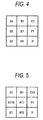
- the portable telephone is preferably arranged in such a manner that a display screen which is displayed on the display device under initial condition is constituted by "m” X “n” pieces of display portions, which is subdivided into “m” columns and “n” rows; and icons indicative of the respective functions are displayed on these display portions.
- the above-described functions can be displayed in an easy manner by employing the icons, and further, the subdivided display portion can be selected at once by using the navigation key, and thus, the function related to this selected display portion can be executed.
- the portable telephone may be preferably arranged in that the large number of the above-described functions are categorized in the hierarchical groups; the numbers for specifying these functions are applied to the respective functions; and these numbers are stored in the above-explained memory in correspondence with the numbers of the display portions formed on the display device. Then, the content stored in the memory is read out under the initial condition; and the function stored in connection with the function number is displayed on the display portion having the corresponding display number of the display device.
- the function displayed on the display device under the initial condition can be arbitrarily selected/set by merely defining the number of the display portion formed on the display device in correspondence with the number of the function which is wanted to be displayed. Therefore, the portable telephone can have such an effect that the desirable function can be selected/set in a very easy manner.
- Fig. 1 is a front view for schematically indicating a portable telephone according to one embodiment mode of the present invention.
- Fig. 2 is an electric schematic block diagram of this portable telephone.
- Fig. 3 is an explanatory diagram for explaining a large number of functions of this portable telephone.
- Fig. 4 and Fig. 5 are diagrams for showing one example of displays made on a display device of the portable telephone.
- reference numeral 1 shows a housing
- reference numeral 2 indicates a display device
- reference numeral 3 represents a navigation key which can be manipulated along upper/lower/right/left/oblique directions
- Reference numeral 4 shows function keys used to execute an ON/OFF function, an on-hook function, an off-hook function, and other functions.
- reference numeral 5 indicates a ten-numeral entry key for entering telephone numbers, characters, symbols and the like.
- reference numeral 6 indicates an antenna
- reference numeral 7 represents a wireless unit
- reference numeral 8 shows a control unit
- reference numeral 9 indicates a audio circuit unit
- reference numeral 10 represents an operation unit equipped with the navigation key 3, the function key 4, the ten-numeral entry key 5, and the like.
- reference numeral 11 shows a storage unit.
- the portable telephone according to this embodiment mode may execute a large number of functions in addition to the normal telephone function, for example, the Internet, electronic mails, games, schedule notebooks, and so on. These functions are categorized in accordance with hierarchical groups as shown in Fig. 3, while reference numerals for specifying various functions are applied to the respective functions. In this case, when reference numerals applied to functions are registered in a memory, or the like employed in the storage unit 11, address numbers thereof may be used.
- a large number of functions are categorized based upon the hierarchical groups.
- an initial condition namely, telephone-call waiting condition after power supply has been turned ON, or under such a condition that selection of function is commenced from beginning
- displays made in the display device 2 are given as follows: A plurality of functions of the uppermost hierarchy, which have been previously determined by a manufacturer, are displayed.
- the function for covering the desirable function is selected to be determined among the uppermost hierarchical functions displayed under the initial condition, and then, the displayed function is sequentially advanced to the lower hierarchical functions, so that the desirable function may be displayed, and since the displayed desirable function is selected/determined, the desirable function may be carried out.
- the portable telephone of this embodiment mode is further equipped with the below-mentioned function in addition to the above-explained function.
- the portable telephone since a predetermined key in the operation unit 10 is manipulated, the portable telephone is brought into such a condition that the display made on the display device 2 under initial condition can be changed.
- a function displayed on the display device 2 under initial condition can be arbitrarily selected and set by manipulating the operation unit 10.
- the function selected/set in this case is registered in a user memory employed in the storage unit 11 independent from the functions which have been previously set by the manufacturer, and is arbitrarily read to be used.
- selecting/setting operations of the functions displayed under the initial condition will now be explained more in detail with reference to a flow chart shown in Fig. 6.
- a step 601 of this flow chart when the predetermined key in the operation unit 10 is manipulated, this key operation is sensed by the control unit 8. Then, in a next step 602, the portable telephone is brought into such a condition that the display of the display device 2 under initial condition may be changed (namely, user memory rewrite mode). Under this condition, as indicated in a step 603, the functions are sequentially displayed in accordance with such a hierarchy which has been previously set/registered into the memory by the manufacturer, so that a desirable function is selected. In a step 604, when this desirable function is determined, this determined desirable function is rewritten into the user memory as a function which should be displayed under initial condition so as to be registered thereinto.
- these determined functions may be set/registered into the user memory which is separately provided with the memory for the functions which have been previously set/registered by the manufacturer and stored in the storage unit 11, while these determined functions are set/registered as functions displayed under the initial condition, respectively.
- the selected function may be deleted from the display made under initial condition.
- nine pieces of functions which are wanted to be displayed under the initial condition may be selected/set at maximum by utilizing this deleted display portion.
- a display position of a selected/set function may be arbitrarily moved to a desirable display portion by using the navigation key 3.
- the desirable function may be arbitrarily displayed on the display device 2 under the initial condition, and the desirable function may be directly selected from this display, so that this selected function may be executed.
- the numbers for specifying the respective functions are applied to these functions.
- a predetermined key is manipulated.
- the functions which are allocated/registered with respect to the respective display portions of the display of the display device 2 under the initial condition may be registered in the storage unit 11 in correspondence with the numbers for specifying these functions as well as the numbers for specifying the display portions.
- a predetermined key is manipulated ("YES" of step 601).
- the respective functions may be read from either the user memory or the memory of the functions which have been previously registered by the manufacturer, may be arbitrarily selected/determined in such a manner that the display under the initial condition registered in the user memory is set to which function.
- this arbitrarily selected/determined function may be rewritten so as to be registered in the user memory.
- the rewritten user memory is stored into the storage unit 11 as a memory which has been just before used in the next step 606.
- the portable telephone according to this embodiment mode may be equipped with a frequent-degree information memory, while frequent-degrees of executed functions are measured.
- This frequent-degree information memory automatically stores thereinto information as to the frequent-degrees of the functions in order that a plurality of functions are displayed on the display device 2 in this order from such a function which has been executed and owns a higher frequent-degree. Since the frequent-degree information memory is read out, a predetermined number of functions may be displayed on the display device 2 based upon the execution frequent-degrees of the functions.
- a read mode is set up in a step 607.
- a memory which was stored in the step 606 and has been just before used is read out from the storage unit 11, namely, any one of the user memory, the frequent-degree information memory, and the memory which has directly stored thereinto the functions defined during the manufacturing operation is read out from the storage unit 11.
- the respective operations may be commenced, executed, interrupted, and accomplished based upon the displays of this read memory.
- the process operation is advanced to a further step 610.
- a memory to be used is switched to any one of the user memory, the frequent-degree information memory, and the memory which has directly stored thereinto the functions defined during the manufacturing operation.
- the selected memory is stored into the storage unit 11 as the memory which has been just before used.
- step 606 the above-explained memory which has been used may be directly stored as the memory which has been just before used in the storage unit 11.
- step 608 the same memory is called, and the function display is not changed.
- the functions to be displayed under the initial condition in response to the desires of the user can be freely set/registered in the user memory. These functions can be properly used in combination with the previously-registered functions by the manufacturer, which is very convenient with respect to the user.
- the user memory and the frequent-degree information memory need not be newly and separately provided.
- these memories may be arranged by employing a portion of such a memory to which the functions have been previously registered by the manufacturer.
- the functions of all (namely, 9 in this embodiment) of the display portions are registered respectively in the user memory and the frequent-degree information memory, which can be displayed on the display device, these functions are separately displayed.
- such functions may be registered, the total number of which is equal to a total number of all of display portions which may be displayed one time on the display device in such a way that a total number of functions related to one of the user memory and the frequent-degree information memory is decreased smaller than the above-explained number, and also, a total number of functions related to the other of these memories is determined to compensate for this decreased number.
- a total number of functions which can be set/registered in the user memory is selected to be 6 and a total number of functions which can be automatically registered in the frequent-degree information memory is selected to be 3, 9 pieces of functions in total may be registered in the user memory.
- the present invention discloses such a portable telephone. That is, such a memory is employed, i.e., a plurality of functions which are displayed on the display device under the initial condition are arbitrarily selected from a large number of functions by operating the operation unit, and then the selected functions are stored into the memory. Under initial condition, the above-described plural functions stored in the memory are displayed on the respective display portions of the display device, one function is selected from the plural functions displayed on the display device by operating the operation unit, and then, this selected one function is carried out.
- the user can arbitrarily select/set a plurality of functions which are displayed on the display device under initial condition. Since such functions which are usually used many times are selected/set as the functions to be displayed under initial condition, there is such an effect that the functions which are usually used many times can be quickly carried out in a simple manner with better operability.
Landscapes
- Engineering & Computer Science (AREA)
- Human Computer Interaction (AREA)
- Computer Networks & Wireless Communication (AREA)
- Signal Processing (AREA)
- Telephone Function (AREA)
- Mobile Radio Communication Systems (AREA)
Applications Claiming Priority (3)
| Application Number | Priority Date | Filing Date | Title |
|---|---|---|---|
| JP2001380035 | 2001-12-13 | ||
| JP2001380035A JP2006024970A (ja) | 2001-12-13 | 2001-12-13 | 携帯電話機 |
| PCT/JP2002/012598 WO2003051023A1 (fr) | 2001-12-13 | 2002-12-02 | Telephone cellulaire |
Publications (2)
| Publication Number | Publication Date |
|---|---|
| EP1455506A1 true EP1455506A1 (fr) | 2004-09-08 |
| EP1455506A4 EP1455506A4 (fr) | 2007-05-16 |
Family
ID=19187058
Family Applications (1)
| Application Number | Title | Priority Date | Filing Date |
|---|---|---|---|
| EP02783740A Withdrawn EP1455506A4 (fr) | 2001-12-13 | 2002-12-02 | Telephone cellulaire |
Country Status (6)
| Country | Link |
|---|---|
| US (1) | US20050009570A1 (fr) |
| EP (1) | EP1455506A4 (fr) |
| JP (1) | JP2006024970A (fr) |
| CN (1) | CN1605184A (fr) |
| AU (1) | AU2002349684A1 (fr) |
| WO (1) | WO2003051023A1 (fr) |
Families Citing this family (2)
| Publication number | Priority date | Publication date | Assignee | Title |
|---|---|---|---|---|
| USD571762S1 (en) * | 2007-05-09 | 2008-06-24 | Samsung Electronics Co., Ltd. | Cellular phone |
| EP3154799B1 (fr) | 2014-06-14 | 2022-08-03 | Compagnie Générale des Etablissements Michelin | Composition de caoutchouc de rigidité élevée |
Family Cites Families (18)
| Publication number | Priority date | Publication date | Assignee | Title |
|---|---|---|---|---|
| JPH0612217A (ja) * | 1992-06-26 | 1994-01-21 | Toshiba Corp | パーソナルコンピュータ及びメニュ画面表示方法 |
| JP3268467B2 (ja) * | 1992-09-08 | 2002-03-25 | 株式会社日立製作所 | 電話機 |
| JP2882220B2 (ja) * | 1992-12-08 | 1999-04-12 | 株式会社東京精密 | アイコンの配置変更装置 |
| JPH09138746A (ja) * | 1995-11-14 | 1997-05-27 | Canon Inc | 表示制御装置及び方法 |
| JPH09261759A (ja) * | 1996-03-19 | 1997-10-03 | Sony Corp | 通信端末装置 |
| JPH10214171A (ja) * | 1997-01-29 | 1998-08-11 | Mitsubishi Electric Corp | 情報処理装置 |
| FI972908A7 (fi) * | 1997-07-09 | 1999-01-10 | Nokia Mobile Phones Ltd | Mukautettava valikko-ohjattu käytt¦liittymä |
| DE19821235A1 (de) * | 1998-05-12 | 1999-11-18 | Siemens Ag | Menügesteuerte Bedienung eines Endgerätes |
| JP3123990B2 (ja) * | 1998-10-05 | 2001-01-15 | 埼玉日本電気株式会社 | 携帯無線端末 |
| SE521472C2 (sv) * | 1999-03-16 | 2003-11-04 | Ericsson Telefon Ab L M | Portabel kommunikationsapparat med dynamisk meny |
| KR20010026690A (ko) * | 1999-09-08 | 2001-04-06 | 서평원 | 이동단말기의 사용자용 데이터 백업 방법 |
| KR100334806B1 (ko) * | 1999-12-07 | 2002-05-02 | 윤종용 | 통신단말기에서 사용자 정의에 따른 단축키 설정 방법 |
| DE10003306A1 (de) * | 2000-01-20 | 2001-07-26 | Deutsche Telekom Ag | Verfahren zur Vereinfachung der Menüführung bei der Auswahl von Leistungsmerkmalen für ein Kommunikationsendgerät |
| GB2365684A (en) * | 2000-05-26 | 2002-02-20 | Nokia Mobile Phones Ltd | Displaying a table |
| JP4757984B2 (ja) * | 2000-08-31 | 2011-08-24 | 任天堂株式会社 | 画像表示装置 |
| JP2002132412A (ja) * | 2000-10-26 | 2002-05-10 | Denso Corp | 携帯電話のアイコンの表示方法 |
| US6873861B2 (en) * | 2001-04-12 | 2005-03-29 | International Business Machines Corporation | Business card presentation via mobile phone |
| JP3630129B2 (ja) * | 2001-09-28 | 2005-03-16 | ソニー株式会社 | 液晶表示装置 |
-
2001
- 2001-12-13 JP JP2001380035A patent/JP2006024970A/ja active Pending
-
2002
- 2002-12-02 US US10/496,941 patent/US20050009570A1/en not_active Abandoned
- 2002-12-02 EP EP02783740A patent/EP1455506A4/fr not_active Withdrawn
- 2002-12-02 WO PCT/JP2002/012598 patent/WO2003051023A1/fr not_active Ceased
- 2002-12-02 CN CNA028249631A patent/CN1605184A/zh active Pending
- 2002-12-02 AU AU2002349684A patent/AU2002349684A1/en not_active Abandoned
Also Published As
| Publication number | Publication date |
|---|---|
| CN1605184A (zh) | 2005-04-06 |
| WO2003051023A1 (fr) | 2003-06-19 |
| EP1455506A4 (fr) | 2007-05-16 |
| US20050009570A1 (en) | 2005-01-13 |
| JP2006024970A (ja) | 2006-01-26 |
| AU2002349684A1 (en) | 2003-06-23 |
Similar Documents
| Publication | Publication Date | Title |
|---|---|---|
| US6195569B1 (en) | Phone displaying alternative functionality menu | |
| KR100354780B1 (ko) | 이동통신 단말기의 메뉴 구현 방법 | |
| EP1780994A2 (fr) | Terminal mobile avec plusieurs unités d'entrée | |
| EP0860970A2 (fr) | Répertoire de numéros téléphoniques | |
| CN1344392A (zh) | 具有分层菜单系统和动态菜单的一种便携式通信装置 | |
| US8224388B2 (en) | Mobile communication terminal displaying background screen and display method thereof | |
| US20060139328A1 (en) | Mobile communications terminal and a method therefor | |
| US20050130614A1 (en) | Function calling apparatus and computer program for executing a function calling process | |
| EP2230587B1 (fr) | Dispositif de traitement d'informations et programme | |
| KR20010049844A (ko) | 감소된 수의 소프트키들에 대해 소프트키 기능을경험적으로 구성하기 위한 방법 및 장치 | |
| EP1455506A1 (fr) | Telephone cellulaire | |
| KR20050082874A (ko) | 이동 통신 단말기의 핫키 설정 방법 | |
| JP3318927B2 (ja) | 携帯電話機の動作方法及びその動作装置 | |
| KR100605951B1 (ko) | 국가번호 검색 가능한 이동통신단말기 및 그 방법 | |
| WO2001061444A2 (fr) | Telephone mobile a interface homme-machine amelioree | |
| JP2004312320A (ja) | 電話機 | |
| EP1424855A1 (fr) | Téléphone mobile, procédé de commande pour cela et programme de contrôle correspondant | |
| KR100549922B1 (ko) | 이동 전화 단말기의 전화 번호부 기능 구현 방법 | |
| JP4161561B2 (ja) | 移動体端末、そのポインタ制御方法、およびそのプログラム | |
| JP2003324513A (ja) | 電子端末機器及びメニュー登録方法 | |
| JP4485650B2 (ja) | 電子機器 | |
| JP2011175443A (ja) | 携帯電子機器 | |
| JPH11196158A (ja) | 移動無線装置 | |
| KR100701946B1 (ko) | 사용자 설정이 가능한 전화번호 입력기능을 구비하는이동통신 단말기 및 그 설정방법 | |
| KR20000045792A (ko) | 이동 통신 단말기의 검색 정보 제공 방법 |
Legal Events
| Date | Code | Title | Description |
|---|---|---|---|
| PUAI | Public reference made under article 153(3) epc to a published international application that has entered the european phase |
Free format text: ORIGINAL CODE: 0009012 |
|
| 17P | Request for examination filed |
Effective date: 20040611 |
|
| AK | Designated contracting states |
Kind code of ref document: A1 Designated state(s): AT BE BG CH CY CZ DE DK EE ES FI FR GB GR IE IT LI LU MC NL PT SE SI SK TR |
|
| AX | Request for extension of the european patent |
Extension state: AL LT LV MK RO |
|
| A4 | Supplementary search report drawn up and despatched |
Effective date: 20070417 |
|
| STAA | Information on the status of an ep patent application or granted ep patent |
Free format text: STATUS: THE APPLICATION HAS BEEN WITHDRAWN |
|
| 18W | Application withdrawn |
Effective date: 20070716 |