EP1465610B1 - Utilisation d'un inhibiteur de gsk-3 beta dans la fabrication d'un medicament pour accroitre la formation osseuse - Google Patents
Utilisation d'un inhibiteur de gsk-3 beta dans la fabrication d'un medicament pour accroitre la formation osseuse Download PDFInfo
- Publication number
- EP1465610B1 EP1465610B1 EP03729222A EP03729222A EP1465610B1 EP 1465610 B1 EP1465610 B1 EP 1465610B1 EP 03729222 A EP03729222 A EP 03729222A EP 03729222 A EP03729222 A EP 03729222A EP 1465610 B1 EP1465610 B1 EP 1465610B1
- Authority
- EP
- European Patent Office
- Prior art keywords
- gsk
- alkyl
- hydrogen
- inhibitor
- heteroalkyl
- Prior art date
- Legal status (The legal status is an assumption and is not a legal conclusion. Google has not performed a legal analysis and makes no representation as to the accuracy of the status listed.)
- Expired - Lifetime
Links
- 0 *[n]1c(cccc2)c2c(C(C(N2)=O)=C(C3C=CC=CC3)*2=O)c1 Chemical compound *[n]1c(cccc2)c2c(C(C(N2)=O)=C(C3C=CC=CC3)*2=O)c1 0.000 description 2
Classifications
-
- A—HUMAN NECESSITIES
- A61—MEDICAL OR VETERINARY SCIENCE; HYGIENE
- A61K—PREPARATIONS FOR MEDICAL, DENTAL OR TOILETRY PURPOSES
- A61K31/00—Medicinal preparations containing organic active ingredients
- A61K31/33—Heterocyclic compounds
- A61K31/395—Heterocyclic compounds having nitrogen as a ring hetero atom, e.g. guanethidine or rifamycins
- A61K31/40—Heterocyclic compounds having nitrogen as a ring hetero atom, e.g. guanethidine or rifamycins having five-membered rings with one nitrogen as the only ring hetero atom, e.g. sulpiride, succinimide, tolmetin, buflomedil
- A61K31/403—Heterocyclic compounds having nitrogen as a ring hetero atom, e.g. guanethidine or rifamycins having five-membered rings with one nitrogen as the only ring hetero atom, e.g. sulpiride, succinimide, tolmetin, buflomedil condensed with carbocyclic rings, e.g. carbazole
- A61K31/404—Indoles, e.g. pindolol
-
- A—HUMAN NECESSITIES
- A61—MEDICAL OR VETERINARY SCIENCE; HYGIENE
- A61K—PREPARATIONS FOR MEDICAL, DENTAL OR TOILETRY PURPOSES
- A61K31/00—Medicinal preparations containing organic active ingredients
-
- A—HUMAN NECESSITIES
- A61—MEDICAL OR VETERINARY SCIENCE; HYGIENE
- A61P—SPECIFIC THERAPEUTIC ACTIVITY OF CHEMICAL COMPOUNDS OR MEDICINAL PREPARATIONS
- A61P19/00—Drugs for skeletal disorders
- A61P19/08—Drugs for skeletal disorders for bone diseases, e.g. rachitism, Paget's disease
-
- A—HUMAN NECESSITIES
- A61—MEDICAL OR VETERINARY SCIENCE; HYGIENE
- A61P—SPECIFIC THERAPEUTIC ACTIVITY OF CHEMICAL COMPOUNDS OR MEDICINAL PREPARATIONS
- A61P19/00—Drugs for skeletal disorders
- A61P19/08—Drugs for skeletal disorders for bone diseases, e.g. rachitism, Paget's disease
- A61P19/10—Drugs for skeletal disorders for bone diseases, e.g. rachitism, Paget's disease for osteoporosis
-
- A—HUMAN NECESSITIES
- A61—MEDICAL OR VETERINARY SCIENCE; HYGIENE
- A61P—SPECIFIC THERAPEUTIC ACTIVITY OF CHEMICAL COMPOUNDS OR MEDICINAL PREPARATIONS
- A61P43/00—Drugs for specific purposes, not provided for in groups A61P1/00-A61P41/00
Definitions
- the present invention is directed to the use of inhibitors of glycogen synthase kinase-3 ⁇ (GSK-3 ⁇ ) according to formula (I) to promote bone formation and treat bone metabolic diseases such as osteoporosis.
- GSK-3 ⁇ glycogen synthase kinase-3 ⁇
- the invention is concerned especially with the use of a GSK-3 ⁇ inhibitor for the preparation of medicaments for increasing bone formation in mammals.
- Glycogen synthase kinase is a serine/threonine kinase for which two isoforms, ⁇ and ⁇ , have been identified.
- Glycogen synthase kinase -3 ⁇ was originally identified as a protein kinase which phosphorylated and inactivated glycogen synthase, a key enzyme regulating insulin-stimulated glycogen synthesis (( see Embi et al., Eur. J. Biochem. 107, 519-527, (1980 ); Rylatt et al., Eur. J. Biochem. 107, 529-537, (1980 ); and Vandenheede et al., J.
- GSK-3 ⁇ is inhibited upon insulin activation thereby allowing the activation of glycogen synthase. Therefore, inhibition of GSK-3 ⁇ stimulates insulin-dependent processes and is useful in the treatment of type 2 diabetes which is characterized by decreased sensitivity to insulin and an increase in blood glucose level.
- a number of drugs such as 5-iodotubercidin, metformin, troglitazonem, have been used to treat diabetes.
- metformin can cause hypoglycemia
- troglitazonem can cause severe hepatoxicity
- 5-iodotubercidin a known GSK-3 inhibitor, inhibits other serine/threonine and tyrosine kinases.
- GSK-3 ⁇ plays a role in pathogenesis of Alzheimer's disease (( see Lovestone et al., Current Biology, 4, 1077-86 (1994 ), Brownlees et al., Neuroreport, 8, 3251-3255 (1997 ), Takashima et al., PNAS 95, 9637-9641 (1998 ), and Pei et al., J Neuropathol. Exp., 56, 70-78 (1997 )) and bipolar disorder ( see Chen et al., J. Neurochemistry, 72, 1327-1330 (1999 )).
- GSK-3 ⁇ is involved in blocking of early immune response gene activation via NF-AT and regulation of apoptosis ( see Beals et al., Science, 275, 1930-33 (1997 ) and Pap, M. et al. J. Biochem. 273, 19929-19932, (1998 )). Additionally, GSK-3 ⁇ is reported to be required for the NF- ⁇ B mediated survival response in the TNF- ⁇ signalling pathway involved in the proinflammatory response to infection (( Hoeflich et.al., Nature, 406, 86-90 (2000 )).
- GSK-3 ⁇ is also known to regulate the degradation of a protein ( ⁇ -catenin) which controls the activity of TCF family of transcription factors (( see ., Dale,T. C., Biochem. J. 329, 209-223 (1998 ); Clevers, H. & van de Wetering, M., Trends in Genetics 13, 485-489 (1997 ); Staal, F.J.T. et al., International Immunology 11, 317-323 (1999 )). The pathway has been shown to regulate the transformation of colonic epithelial cells.
- GSK-3 ⁇ inhibitors are described in the following references: WO99/65897 (Chiron), WO 01/20727A1 (Sanofi-Synthelabo), EP 1 136 493 A1 (Sanofi-Synthelabo), EP 1 136 489 A1 (Sanofi-Synthelabo), EP 1 136 486 A1 (Sanofi-Synthelabo), EP 1 136 483 A1 (Sanofi-Synthelabo), EP 1 136 099A1 (Sanofi-Synthelabo),) WO 2000/021927 (SKB), WO 2001/049709 , WO 2001/056567 (Novo Nordisk), WO 2001/081345 , WO 2001/085685 , WO 2001/009106 (SKB) and WO2001/52862 (Isis), WO2001/37819 , WO2001/60374 , EP 1 106 180A1 (CNRS), WO2000
- the present invention is directed to the use of inhibitors of glycogen synthase kinase-3 ⁇ (GSK-3 ⁇ ) according to formula (I) to promote bone formation.
- GSK-3 ⁇ glycogen synthase kinase-3 ⁇
- the invention is directed to the use of GSK-3 ⁇ inhibitors to increase bone mineral density in a patient. In another aspect, the invention is directed to the use of GSK-3 ⁇ inhibitors to reduce the rate of fracture and/or increase the rate of fracture healing in a patient. In another aspect, the invention is directed to the use of GSK-3 ⁇ inhibitors to increase cancellous bone formation and/or new bone formation in a patient. In another aspect, the invention is directed to the use of GSK-3 ⁇ inhibitors to treat osteoporosis. Accordingly, this invention is directed to the use of 3-indolyl-4-phenyl-1H-pyrrole-2,5-dione derivatives represented by Formula (I) to increase bone formation in a mammal: wherein:
- isomers Compounds that have the same molecular formula but differ in the nature or sequence of bonding of their atoms or the arrangement of their atoms in space are termed “isomers”. Isomers that differ in the arrangement of their atoms in space are termed “stereoisomers”. Stereoisomers that are not mirror images of one another are termed “diastereomers” and those that are non-superimposable mirror images of each other are termed “enantiomers”. When a compound has an asymmetric center, for example, it is bonded to four different groups, a pair of enantiomers is possible.
- An enantiomer can be characterized by the absolute configuration of its asymmetric center and is described by the R- and S-sequencing rules of Cahn and Prelog, or by the manner in which the molecule rotates the plane of polarized light and designated as dextrorotatory or levorotatory (i.e., as (+) or (-)-isomers respectively).
- a chiral compound can exist as either individual enantiomer or as a mixture thereof. A mixture containing equal proportions of the enantiomers is called a "racemic mixture".
- the compounds of Formula (I) may possess one or more asymmetric centers; such compounds can therefore be produced as individual (R)- or (S)- stereoisomers or as mixtures thereof.
- R 6 substituent in a compound of formula (I) is 2-hydroxyethyl
- the carbon to which the hydroxy group is attached is an asymmetric center and therefore the compound of Formula (I) can exist as an (R)- or (S)-stereoisomer.
- the description or naming of a particular compound in the specification and claims is intended to include both individual enantiomers and mixtures, racemic or otherwise, thereof.
- the methods for the determination of stereochemistry and the separation of stereoisomers are well-known in the art ( see discussion in Chapter 4 of " Advanced Organic Chemistry", 4th edition J. March, John Wiley and Sons, New York, 1992 ).
- a “pharmaceutically acceptable excipient” means an excipient that is useful in preparing a pharmaceutical composition that is generally safe, non-toxic and neither biologically nor otherwise undesirable, and includes an excipient that is acceptable for veterinary use as well as human pharmaceutical use.
- a “pharmaceutically acceptable excipient” as used in the specification and claims includes both one and more than one such excipient.
- a "pharmaceutically acceptable salt” of a compound means a salt that is pharmaceutically acceptable and that possesses the desired pharmacological activity of the parent compound.
- Such salts include:
- a compound of Formula (I) may act as a pro-drug.
- Prodrug means any compound which releases an active parent drug according to Formula (I) in vivo when such prodrug is administered to a mammalian subject.
- Prodrugs of a compound of Formula (I) are prepared by modifying functional groups present in the compound of Formula (I) in such a way that the modifications may be cleaved in vivo to release the parent compound.
- Prodrugs include compounds of Formula (I) wherein a hydroxy, amino, or sulfhydryl group in compound (I) is bonded to any group that may be cleaved in vivo to regenerate the free hydroxyl, amino, or sulfhydryl group, respectively.
- prodrugs include, but are not limited to esters (e.g., acetate, formate, and benzoate derivatives), carbamates (e.g., N,N-dimethylamino-carbonyl) of hydroxy functional groups in compounds of Formula (I), and the like.
- esters e.g., acetate, formate, and benzoate derivatives
- carbamates e.g., N,N-dimethylamino-carbonyl
- Treating” or “treatment” of a disease includes:
- a “therapeutically effective amount” means the amount of a compound that, when administered to a mammal for treating a disease, is sufficient to effect such treatment for the disease.
- the “therapeutically effective amount” will vary depending on the compound, the disease and its severity and the age, weight, etc., of the mammal to be treated.
- Preferred compounds of Formula (I) are selected from I.
- R 4 -R 6 is hydrogen and which are selected from 3-(1-methyl-indol-3-yl)-4- ⁇ 3-((R)-2,3-dihydroxy-propoxyl)-2-methylphenyl ⁇ -1H-pyrrole-2,5-dione; 3-(1-methyl-indol-3-yl)-4- ⁇ 3-((R)-2,3-dihydroxy-propoxyl)-2-nitrophenyl ⁇ -1H-pyrrole-2,5-dione; and 3-(1-methylindol-3-yl)-4-[5-((R)-2,3-dihydroxypropoxy)-2-nitrophenyl]-1H-pyrrole-2,5-dione.
- GSK-3 ⁇ inhibitor is selected from
- GSK-3 ⁇ inhibitor for the preparation of medicaments for increasing bone formation in mammals.
- the medicaments increase bone mineral density in a mammal.
- Another preferred aspect of the present invention is the above use, wherein the medicaments reduce the incidence of fracture in a mammal.
- GSK-3 ⁇ inhibitor for the preparation of medicaments for the prophylaxis and treatment of osteoporosis in a mammal.
- GSK-3 ⁇ inhibitor is a compound represented by Formula (I): wherein:
- GSK-3 ⁇ inhibitor is selected from
- Another preferred aspect of the invention is the above use or method, wherein treatment with the GSK-3 ⁇ inhibitor is followed by treatment with an antiresorptive agent.
- the GSK-3 ⁇ inhibitor has an IC50 against GSK-3 ⁇ of less than 50nM.
- the GSK-3 ⁇ inhibitor has an IC50 against GSK-3 ⁇ of less than 10nM.
- the GSK-3 ⁇ inhibitor has a molecular weight of less than 1000 daltons.
- the methods disclosed herein provide treatments for increasing bone mineral density, forming new bone, increasing the rate of fracture healing, improving the mechanical properties of bone (i.e., forming cortical and trabecular bone) and treating osteoporosis, iatrogenic and senile osteoporosis and related bone metabolic diseases.
- Treatment with GSK-3 ⁇ inhibitors is useful in the treatment of Type I (postmenopausal), Type II (iatrogenic), and Type III (senile) osteoporosis, including that associated with corticosteroid treatment (e.g. for asthma), with chemotherapy, as well in the treatment of osteodystrophy due to renal dialysis, andhyperparathyroidism.
- Treatment with GSK-3 ⁇ inhibitors as described herein results in increased bone mineral density and unlike conventional treatments provides bone of good quality. Therefore, the treatments described herein may reduce the incidence of fracture and result in faster healing of pre-existing fractures. Such treatments are particularly useful for patients suffering from estrogen withdrawal (e.g. elderly females) who would otherwise be at risk for an increased fracture rate.
- Types of fractures treatable include both traumatic and osteoporotic fractures, e.g., fractures of the hip, neck of the femur, wrist, vertebrae, spine, ribs, sternum, larynx and trachea, radius/ulna, tibia, patella, clavicle, pelvis, humerus, lower leg, fingers and toes, face and ankle.
- traumatic and osteoporotic fractures e.g., fractures of the hip, neck of the femur, wrist, vertebrae, spine, ribs, sternum, larynx and trachea, radius/ulna, tibia, patella, clavicle, pelvis, humerus, lower leg, fingers and toes, face and ankle.
- Identification of compounds that inhibit GSK 3 ⁇ may be done by in vitro assays such as ligand binding assay and inhibition of ⁇ -catenin degradation assay as described in detail in Biological Example 1 and 2 below.
- the GSK -3 ⁇ inhibitors will be administered in a therapeutically effective amount by any of the accepted modes of administration for agents that are used to increaase bone formation.
- the actual amount of the inhibitor will depend upon numerous factors such as the severity of the disease to be treated, the age and relative health of the subject, the potency of the compound used, the route and form of administration, and other factors.
- the inhibitor can be administered more than once a day, preferably once or twice a day.
- Therapeutically effective amounts of GSK-3 ⁇ inhibitors may range from approximately 1 mg to 50 mg per kilogram body weight of the recipient per day; preferably about 3 mg/kg/day. Thus, for administration to a 70 kg person, the dosage range would be about 70 to 3500 mg/day, most preferably be about 200 mg per day.
- the GSK-3 ⁇ inhibitors will be administered as pharmaceutical compositions by any one of the following routes: oral, systemic (e.g., transdermal, intranasal or by suppository), or parenteral (e.g., intramuscular, intravenous or subcutaneous) administration.
- routes oral, systemic (e.g., transdermal, intranasal or by suppository), or parenteral (e.g., intramuscular, intravenous or subcutaneous) administration.
- parenteral e.g., intramuscular, intravenous or subcutaneous
- compositions can take the form of tablets, pills, capsules, semisolids, powders, sustained release formulations, solutions, suspensions, elixirs, aerosols, or any other appropriate compositions.
- a related aspect of this invention relates to combination therapies of GSK-3 ⁇ inhibitors for increased bone formation with other active agents such as bisphosphonates, estrogen, SERMS (selective estrogen receptor modulators), calcitonins or anabolic therapies.
- active agents such as bisphosphonates, estrogen, SERMS (selective estrogen receptor modulators), calcitonins or anabolic therapies.
- bisphosphonates include alendronate, ibandronate, pamidronate, etidronate and risedronate.
- SERMS include raloxifene, dihydroraloxifene and lasofoxifene.
- Calcitonins include human and salmon calcitonin.
- Anabolic agents include parathyroid hormones (PTH) e.g.
- PTHrP parathyroid hormone-related protein
- Particular analogs of PTHrP are described in " Mono- and Bicyclic Analogs of Parathyroid Hormone-Related Protein. 1. Synthesis and Biological Studies," Michael Chorev et al. Biochemistry, 36:3293-3299 (1997 ) and "Cyclic analogs of PTH and PTHrP," WO 96/40193 and U.S. Patent No. 5,589,452 and WO 97/07815 .
- the other active agent may be administered concurrently, prior to or after the GSK-3 ⁇ inhibitor and may be administered by a different delivery method.
- the GSK-3 ⁇ inhibitor is administered first.
- the period of this administration may be of any length, but typically ranges from six to twenty four months.
- This treatment is then followed by treatment with an antiresorptive agent, e.g., a bisphosphonate, SERM, calcitonin or hormone replacement therapy.
- an antiresorptive agent e.g., a bisphosphonate, SERM, calcitonin or hormone replacement therapy.
- compositions of GSK 3 ⁇ inhibitors usually contain at least one pharmaceutically acceptable excipient.
- Acceptable excipients are non-toxic, aid administration, and do not adversely affect the therapeutic benefit of the inhibitor.
- excipient may be any solid, liquid, semi-solid or, in the case of an aerosol composition, gaseous excipient that is generally available to one of skill in the art.
- Solid pharmaceutical excipients include starch, cellulose, talc, glucose, lactose, sucrose, gelatin, malt, rice, flour, chalk, silica gel, magnesium stearate, sodium stearate, glycerol monostearate, sodium chloride, dried skim milk and the like.
- Liquid and semisolid excipients may be selected from glycerol, propylene glycol, water, ethanol and various oils, including those of petroleum, animal, vegetable or synthetic origin, e.g., peanut oil, soybean oil, mineral oil, sesame oil, etc.
- Preferred liquid carriers, particularly for injectable solutions include water, saline, aqueous dextrose, and glycols.
- the amount of the compound in a formulation can vary within the full range employed by those skilled in the art.
- the formulation will contain, on a weight percent (wt%) basis, from about 0.01-99.99 wt% of a GSK-3 ⁇ inhibitor based on the total formulation, with the balance being one or more suitable pharmaceutical excipients.
- the compound is present at a level of about 1-80 wt%. ow.
- Examples 1-3 show methods of making specific compounds of Formula (I).
- Tetrapropylammonium perruthenate (0.18g, 5.3mmol) was added to a mixture of methylene chloride (20 mL) and acetonitrile (2 mL) containing 3-( tert- butyldimethylsilyloxy)-propanol (2 g, 0.01mmol), N-methylmorpholine N-oxide (1.76g) and 4 ⁇ molecular sieves.
- the reaction mixture was stirred at RT overnight and then filtered through a pad of silica gel. The filtrate was concentrated under vacuo to afford 3-( tert -butyldimethylsilyloxy)-propionaldehyde (1.3 g, 66%).
- 3-(1-Methyl-5-chloroindol-3-yl)-4-(3-nitrophenyl)-1H-pyrrole-2,5-dione was prepared by proceeding as described in Example 1 , Step 3, but substituting 3-(1-methyl-5-chloroindol-3-yl)-4-(3-nitrophenyl)furan-2,5-dione for 3-(1-methylindol-3-yl)-4-(3-nitrophenyl)furan-2,5-dione.
- 3-(1-Methyl-5-fluoroindol-3-yl)-4-(3-nitrophenyl)-1H-pyrrole-2,5-dione was prepared by proceeding as described in Example 2 , Step 3, but substituting 3-(1-methyl-5-fluoroindol-3-yl)-4-(3-nitrophenyl)furan-2,5-dione for 3-(1-methyl-5-chloroindol-3-yl)-4-(3-nitrophenyl)furan-2,5-dione.
- Ingredient Amount compound of this invention 1.0 g fumaric acid 0.5 g sodium chloride 2.0 g methyl paraben 0.15 g propyl parabe 0.05 g granulated suga 25.0 g sorbitol (70% solution) 13.00 g Veegum K (Vanderbilt Co.) 1.0 g flavoring 0.035 mL colorings 0.5 mg distilled water q.s. to 100 mL
- Ingredient Amount compound of this invention 0.2 mg-20 mg sodium acetate buffer solution, 0.4 M 2.0 mL HCl (1N) or NaOH (1N) q.s. to suitable pH water (distilled, sterile) q.s. to 20 mL
- a suppository of total weight 2.5 g is prepared by mixing the compound of the invention with Witepsol ® H-15 (triglycerides of saturated vegetable fatty acid; Riches-Nelson, Inc., New York), and has the following composition: compound of the invention 500 mg Witepsol ® H-15 balance
- GSK-3 ⁇ was expressed in BL21 DE3 cells. The cells were grown at 37 °C until they reached mid log phase and then induced with isopropyl-beta-(D)-thiogalactopyranoside (final concentration 0.4mM) at 30 °C for 2 h.
- the cells were homogenized and the cell extract was loaded on a glutathione sepharose 4B column.
- GSK-3 ⁇ was eluted with glutathione buffer (50mM Tris pH 8 and 10mM reduced glutathione). The eluate was collected in 3 minute fractions and assayed for GSK-3 ⁇ content on a 10% SDS PAGE (polyacrylamide gel electrophoresis). Fractions above 20% peak height were pooled, aliquoted, and stored at -80 °C until used.
- the GSK-3 ⁇ binding assay was performed in 50 ⁇ l reactions in a 96 well polypropylene plate, each reaction containing 20 mM magnesium chloride, 40 ⁇ M ATP, 2mM DTT, 88.5 ⁇ M biotinylated and phosphorylated CREB-peptide substrate (biotin-KRREILSRRPS(PO 4 )YR-OH, see Wang, Q.M. et al., J. Biol. Chem. 269, 14566-14574 (1994 )), [ ⁇ - 33 P] ATP (1 ⁇ Ci), and 2 ⁇ l of compounds of this invention in DMSO (various concentrations).
- GSK-3 ⁇ inhibitory activities (expressed as IC 50 , the inhibitor concentration causing 50% inhibition of the activity in the control) of some compounds of the invention disclosed in Table I-IV were less than 2 ⁇ m. Activities of certain specific compounds are shown below Compound IC 50 ⁇ M I-1 0.194 II-1 0.02 II-2 0.0264 II-3 0.0032 II-4 0.0296 II-9 0.0015 III-2 0.0007 III-3 0.23 IV-1 0.1334
- the cell based GSK-3 ⁇ activity of compounds of this invention was determined by measuring ⁇ -catenin levels in Jurkat T-cells after treatment with the compounds of this invention using ELISA as follows.
- Jurkat cells (5 x 10⁵ cells/mL) were plated in 6-well plates (6 mL/well) and then treated with various concentrations of the compounds of this invention (preferrably 1nM-10 ⁇ M) for 24 h. At the end of the incubation, the cells were collected and washed once with PBS. The cells were then suspended in 0.3 mL RadioImmuno Precipitation Assay lysis (RIPA) buffer (Boehringer Mannheim, cat.# 1 920 693). After 3 freeze - thaw cycles, the cell extracts were centrifuged at 15,000 rpm for 10 min. The supernatant was collected and analyzed using ELISA assay as described below.
- RIPA RadioImmuno Precipitation Assay lysis
- Microwell plates were coated overnight with capture antibody (mouse monoclonal anti- ⁇ -catenin, Zymed La., cat.# 13-8400, 100 ⁇ l per well, containing 250 ng antibody) diluted in coating buffer (0.1 M NaHCO 3 , pH 9.5).
- the wells were aspirated and washed 3 times with 300 ⁇ l of wash buffer (PBS containing 0.05% Tween 20) and blocked with 200 ⁇ l of assay diluent (PBS, 10% RBS, pH 7; PharMingen) and then incubated at room temperature for at least 72 h. The wells were washed again as described above.
- the level of GSK-3 ⁇ inhibition was calculated by plotting the compound concentration versus ⁇ -catenin levels. The results are shown in Figure 1, confirming the effect of compounds of this invention on ⁇ -catenin levels.
- Ovalbumin-sensitized Brown-Norway rats were used. They were sensitized i.p. with 100 ⁇ g of OA (ovalbumin) in 0.2 ml alum once every week for three weeks (Day 0, 7 and 14). Seven days after the final sensitization (Day 21), rats were challenged with 1% OA for 45 minutes and euthanized 72hrs later (day 24). Compound II-3 was given twice daily by oral gavage on Days 6-8 and Days 13-23. Compound was prepared as a liposome formulation - 8 mg/ml liposome solution in a liposome composition of 1.44 grams of compound and 54 grams of L-alpha-phosphatidylcholine in 160 ml of sterile water for injection.
- Femur samples were decalcified in 10% formic acid, embedded in paraffin, sectioned at five micron thickness and stained with hematoxylin and eosin. The animals had moderate increases in cancellous bone under the growth plate of the femur as evaluated by light microscopy.
- Compound was formulated as a solution in 10% w/v Solutol.
- Male Wistar rats were dosed by oral gavage, once per day for 14 days at 25, 75 or 150mg/kg/day and compared to vehicle control (10% Solutol, 10ml/kg/day).
- vehicle control (10% Solutol, 10ml/kg/day).
- Complete necroscopies were done and the tissues preserved in 10% formalin.
- Femur, sternum and vertabra were processed and analyzed as described in Example 3.
- Increased cancellous bone was observed in all groups - only one animal in the 25mg/kg group.
- Five out of six rats in the 150mg/kg group had increased new bone formation, a more intensive and active effect.
- Control groups both sham (rats that were not ovariectomized) and Ovx, received vehicle only.
- Bovine parathyroid hormone, bPTH was tested at 40ug/kg (optimal dose) as an internal positive control for anabolic activity.
- the effect on III-2 was also tested in intact Sham animals. Blood and urine samples were collected at 2-3 weeks after initiation of treatment and the amount of calcium in the serum and urine was determined.
- the bone mineral density of the right femur was determined using the High Resolution Software on a QDR-4500W Bone Densitometer TM (Hologic, Waltham, MA). The animals were scanned by placing them on a plexiglass block in a supine position such that the right leg was perpendicular to the main body and the tibia was perpendicular to the femur. The increase in the bone mineral density and the amount of calcium in the urine and the serum for the compounds are given in the table below. Efficacy was observed for both compounds at doses which were not associated with hypercalcemia or hypercalciuria. Similar results were observed in the tibia.
Landscapes
- Health & Medical Sciences (AREA)
- Life Sciences & Earth Sciences (AREA)
- Chemical & Material Sciences (AREA)
- Veterinary Medicine (AREA)
- Public Health (AREA)
- Medicinal Chemistry (AREA)
- General Health & Medical Sciences (AREA)
- Animal Behavior & Ethology (AREA)
- Pharmacology & Pharmacy (AREA)
- Physical Education & Sports Medicine (AREA)
- Epidemiology (AREA)
- Organic Chemistry (AREA)
- Nuclear Medicine, Radiotherapy & Molecular Imaging (AREA)
- General Chemical & Material Sciences (AREA)
- Chemical Kinetics & Catalysis (AREA)
- Engineering & Computer Science (AREA)
- Orthopedic Medicine & Surgery (AREA)
- Bioinformatics & Cheminformatics (AREA)
- Rheumatology (AREA)
- Pharmaceuticals Containing Other Organic And Inorganic Compounds (AREA)
- Medicines That Contain Protein Lipid Enzymes And Other Medicines (AREA)
Abstract
Claims (13)
- Utilisation d'un inhibiteur de GSK-3β pour la préparation de médicaments destinés à augmenter la formation de tissu osseux chez des mammifères, dans lesquels l'inhibiteur de GSK-3β est un composé représenté par la formule (I) :
 R1 et R2 représentent indépendamment un atome d'hydrogène, un groupe alkyle, halogéno, halogénalkyle, alkylthio, hydroxy, alkoxy, cyano, nitro, amino, acylamino, monoalkylamino ou dialkylamino ;R3 représente un atome d'hydrogène, un groupe alkyle, cycloalkyle, hétéroalkyle, -COR7 (dans lequel R7 représente un atome d'hydrogène ou un groupe alkyle), ou phényle facultativement substitué avec un ou deux substituants choisis indépendamment dans le groupe consistant en des substituants hydrogène, alkyle, halogénalkyle, alkylthio, hydroxy, alkoxy, cyano, nitro, amino, acylamino, monoalkylamino et dialkylamino ;R4 et R5 représentent indépendamment un atome d'hydrogène, un groupe alkyle, halogéno, halogénalkyle, alkylthio, hydroxy, alkoxy, cyano, nitro, amino, acylamino, monoalkylamino ou dialkylamino ;R6 représente un groupe hétéroalkyle, hétérocyclyle, hétérocyclylalkyle, hétérocyclyle à substituant hétéroalkyle, cycloalkyle à substituant hétéroalkyle, cycloalkyle hétérosubstitué, -OR8, -S(O)nR8 (dans lesquels n a une valeur de 0 à 2 ; et R8 représente un groupe hétéroalkyle, hétéroaralkyle, hétérocyclyle ou hétérocyclylalkyle), -NR9R10 (dans lequel R9 représente un atome d'hydrogène ou un groupe alkyle et R10 représente un groupe hétéroalkyle, hétéroaralkyle, cycloalkyle hétérosubstitué, hétérocyclyle ou hétérocyclylalkyle) ou -X-(alkylène)-Y-Z (dans lequel X représente une liaison covalente, un groupe -O-, -NH- ou -S(O)n1- dans lequel n1 a une valeur de 0 à 2, et Y représente un groupe -O-, -NH- ou -S-, et Z représente un groupe hétéroalkyle ou SiR11R12R13, dans lequel R11, R12 et R13 représentent indépendamment un atome d'hydrogène ou un groupe alkyle), ou R6, conjointement avec R4, forme un groupe méthylènedioxy ou éthylènedioxy lorsqu'ils sont adjacents l'un à l'autre ;
ou
un de ses sels pharmaceutiquement acceptables. - Utilisation suivant la revendication 1, dans laquelle les médicaments augmentent la densité minérale osseuse chez un mammifère.
- Utilisation suivant la revendication 1 ou 2, dans laquelle les médicaments réduisent l'incidence de fractures chez un mammifère.
- Utilisation suivant l'une quelconque des revendications 1 à 3, dans laquelle les médicaments améliorent la guérison de fractures chez un mammifère.
- Utilisation d'un inhibiteur de GSK-3β pour la préparation de médicaments destinés à la prophylaxie et au traitement de l'ostéoporose chez un mammifère, dans lesquels l'inhibiteur de GSK-3β est un composé représenté par la formule (I) :
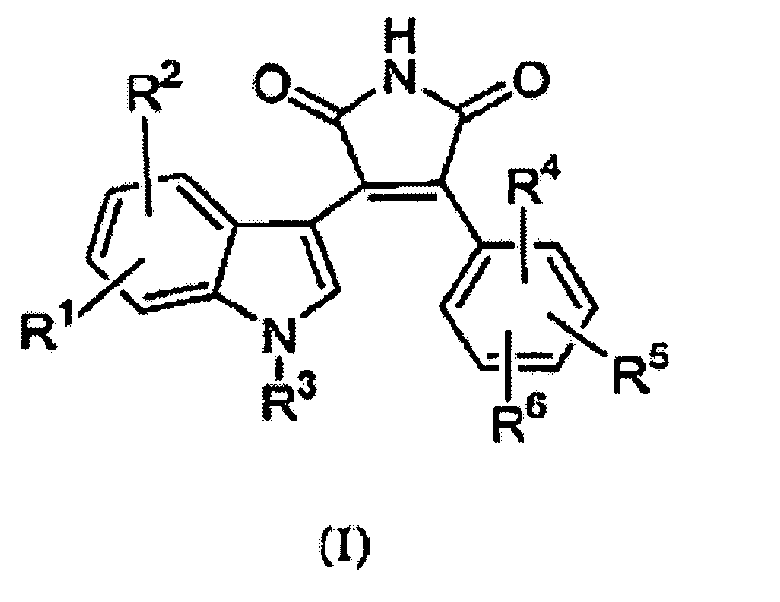 R1 et R2 représentent indépendamment un atome d'hydrogène, un groupe alkyle, halogéno, halogénalkyle, alkylthio, hydroxy, alkoxy, cyano, nitro, amino, acylamino, monoalkylamino ou dialkylamino ;R3 représente un atome d'hydrogène, un groupe alkyle, cycloalkyle, hétéroalkyle, -COR7 (dans lequel R7 représente un atome d'hydrogène ou un groupe alkyle), ou phényle facultativement substitué avec un ou deux substituants choisis indépendamment dans le groupe consistant en des substituants hydrogène, alkyle, halogénalkyle, alkylthio, hydroxy, alkoxy, cyano, nitro, amino, acylamino, monoalkylamino et dialkylamino ;R4 et R5 représentent indépendamment un atome d'hydrogène, un groupe alkyle, halogéno, halogénalkyle, alkylthio, hydroxy, alkoxy, cyano, nitro, amino, acylamino, monoalkylamino ou dialkylamino ;R6 représente un groupe hétéroalkyle, hétérocyclyle, hétérocyclylalkyle, hétérocyclyle à substituant hétéroalkyle, cycloalkyle à substituant hétéroalkyle, cycloalkyle hétérosubstitué, -OR8, -S(O)nR8 (dans lesquels n a une valeur de 0 à 2 ; et R8 représente un groupe hétéroalkyle, hétéroaralkyle, hétérocyclyle ou hétérocyclylalkyle), -NR9R10 (dans lequel R9 représente un atome d'hydrogène ou un groupe alkyle et R10 représente un groupe hétéroalkyle, hétéroaralkyle, cycloalkyle hétérosubstitué, hétérocyclyle ou hétérocyclylalkyle) ou -X-(alkylène)-Y-Z (dans lequel X représente une liaison covalente, un groupe -O-, -NH- ou -S(O)n1- dans lequel n1 a une valeur de 0 à 2, et Y représente un groupe -O-, ou -S- -NH-, et Z représente un groupe hétéroalkyle ou SiR11R12R13, dans lequel R11, R12 et R13 représentent indépendamment un atome d'hydrogène ou un groupe alkyle), ou R6, conjointement avec R4, forme un groupe méthylènedioxy ou éthylènedioxy lorsqu'ils sont adjacents l'un à l'autre ;
ou
un de ses sels pharmaceutiquement acceptables. - Utilisation suivant l'une quelconque des revendications 1 à 5, dans laquelle le mammifère est un être humain.
- Utilisation suivant l'une quelconque des revendications 1 à 6, dans laquelle le mammifère est un mammifère femelle.
- Utilisation suivant l'une quelconque des revendications 1 à 7, dans laquelle l'inhibiteur de GSK-3β est choisi entre(a) un composé de formule
 (b) un composé de formule
 (c) un composé de formule
 (d) la N6-{2-[4-(2,4-dichlorophényl)-5-(1H-imidazole-2-yl)-pyrimidine-2-ylamino]-éthyl}-3-nitro-pyridine-2,6-diamine.
 - Utilisation suivant l'une quelconque des revendications 1 à 8, dans laquelle l'inhibiteur de GSK-3β est administré par voie orale.
- Utilisation suivant l'une quelconque des revendications 1 à 9, dans laquelle le traitement avec l'inhibiteur de GSK-3β est suivi par un traitement avec un agent antirésorption.
- Utilisation suivant l'une quelconque des revendications 1 à 10, dans laquelle l'inhibiteur de GSK-3β a une CI50 contre GSK-3β inférieure à 50 nM.
- Utilisation suivant l'une quelconque des revendications 1 à 11, dans laquelle l'inhibiteur de GSK-3β a une CI50 contre GSK-3β inférieure à 10 nM.
- Utilisation suivant l'une quelconque des revendications 1 à 12, dans laquelle l'inhibiteur de GSK-3β a un poids moléculaire inférieur à 1000 daltons.
Applications Claiming Priority (3)
| Application Number | Priority Date | Filing Date | Title |
|---|---|---|---|
| US34805502P | 2002-01-10 | 2002-01-10 | |
| US348055P | 2002-01-10 | ||
| PCT/EP2003/000049 WO2003057202A1 (fr) | 2002-01-10 | 2003-01-07 | Utilisation d'un inhibiteur de gsk-3 beta dans la fabrication d'un medicament pour accroitre la formation osseuse |
Publications (2)
| Publication Number | Publication Date |
|---|---|
| EP1465610A1 EP1465610A1 (fr) | 2004-10-13 |
| EP1465610B1 true EP1465610B1 (fr) | 2008-12-31 |
Family
ID=23366458
Family Applications (1)
| Application Number | Title | Priority Date | Filing Date |
|---|---|---|---|
| EP03729222A Expired - Lifetime EP1465610B1 (fr) | 2002-01-10 | 2003-01-07 | Utilisation d'un inhibiteur de gsk-3 beta dans la fabrication d'un medicament pour accroitre la formation osseuse |
Country Status (10)
| Country | Link |
|---|---|
| US (1) | US7476676B2 (fr) |
| EP (1) | EP1465610B1 (fr) |
| JP (1) | JP4237066B2 (fr) |
| CN (1) | CN100409840C (fr) |
| AR (1) | AR038276A1 (fr) |
| AU (1) | AU2003235798A1 (fr) |
| CA (1) | CA2471565C (fr) |
| DE (1) | DE60325551D1 (fr) |
| ES (1) | ES2316756T3 (fr) |
| WO (1) | WO2003057202A1 (fr) |
Families Citing this family (18)
| Publication number | Priority date | Publication date | Assignee | Title |
|---|---|---|---|---|
| KR20060056377A (ko) * | 2003-08-13 | 2006-05-24 | 카이론 코포레이션 | Gsk-3 억제제 및 그것의 사용 |
| US20050064044A1 (en) * | 2003-09-19 | 2005-03-24 | Georges Rawadi | GSK-3beta inhibitors in the treatment of bone-related diseases |
| US20050171015A1 (en) * | 2003-10-31 | 2005-08-04 | Crabtree Gerald R. | Methods and agents for enhancing bone formation or preventing bone loss |
| WO2006061212A1 (fr) | 2004-12-08 | 2006-06-15 | Johannes Gutenberg-Universität Mainz | Derives de 3-(indolyl)-4-arylmaleimide et utilisation comme inhibiteurs de l'angiogenese |
| US7670742B2 (en) | 2005-03-15 | 2010-03-02 | Ricoh Company, Ltd. | Recording material, toner, liquid developer and image forming method using the same |
| US20080207594A1 (en) | 2005-05-04 | 2008-08-28 | Davelogen Aktiengesellschaft | Use of Gsk-3 Inhibitors for Preventing and Treating Pancreatic Autoimmune Disorders |
| EP1757607A1 (fr) | 2005-08-24 | 2007-02-28 | Molisa GmbH | Benzo¬2,3|azepino¬4,5-b|indol-6-ones N5-substitués pour le traitement des maladies tropiques |
| TW200800203A (en) * | 2006-03-08 | 2008-01-01 | Astrazeneca Ab | New use |
| ES2446269T3 (es) * | 2006-12-19 | 2014-03-06 | The Board Of Trustees Of The University Of Illinois | 3-Benzofuranil-4-indolil-maleimidas como potentes inhibidores de GSK-3 para trastornos neurodegenerativos |
| US20100137330A1 (en) * | 2007-03-08 | 2010-06-03 | Ratan Bhat | Use |
| EP2343291A1 (fr) | 2009-12-18 | 2011-07-13 | Johannes Gutenberg-Universität Mainz | Composés de 3-(indolyl)- ou 3-(azaindolyl)-4-arylmaléimide et leur utilisation dans le traitement de tumeurs |
| KR20120120307A (ko) | 2010-01-19 | 2012-11-01 | 아스트라제네카 아베 | 피라진 유도체 |
| KR101851518B1 (ko) * | 2010-09-08 | 2018-04-23 | 스미또모 가가꾸 가부시끼가이샤 | 피리다지논 화합물 및 그 중간체의 제조 방법 |
| WO2012035770A1 (fr) * | 2010-09-15 | 2012-03-22 | 国立大学法人 新潟大学 | Agent d'activation de l'ostéogenèse contenant du glycogène |
| EP2474541A1 (fr) | 2010-12-23 | 2012-07-11 | Johannes- Gutenberg-Universität Mainz | Composés conjugués de 3-(indolyl)- et 3-(azaindolyl)-4-arylmaléimide et leur utilisation dans le traitement de tumeurs |
| EP3187495A1 (fr) | 2015-12-30 | 2017-07-05 | Johannes Gutenberg-Universität Mainz | Composés de 3-(5-fluoroindolyl)-4-arylmaléimide et leur utilisation dans le traitement de tumeurs |
| WO2018132636A1 (fr) * | 2017-01-12 | 2018-07-19 | The Research Foundation For The State University Of New York | LIGANDS DE GLYCOGÈNE SYNTHASE KINASE-3β À BASE DE [18F]MALÉIMIDE POUR IMAGERIE PAR TOMOGRAPHIE PAR ÉMISSION DE POSITRONS ET PROCÉDÉ DE RADIOSYNTHÈSE |
| CN113248472B (zh) * | 2020-02-12 | 2022-06-28 | 中国药科大学 | 抗骨质疏松化合物及其衍生物,药物组合物、制备方法和应用 |
Family Cites Families (9)
| Publication number | Priority date | Publication date | Assignee | Title |
|---|---|---|---|---|
| WO1999065897A1 (fr) * | 1998-06-19 | 1999-12-23 | Chiron Corporation | Inhibiteurs de glycogene synthase kinase 3 |
| AU6111699A (en) * | 1998-10-08 | 2000-05-01 | Smithkline Beecham Plc | Novel method and compounds |
| GB9828640D0 (en) * | 1998-12-23 | 1999-02-17 | Smithkline Beecham Plc | Novel method and compounds |
| US6455525B1 (en) * | 1999-11-04 | 2002-09-24 | Cephalon, Inc. | Heterocyclic substituted pyrazolones |
| KR20010111298A (ko) * | 2000-02-05 | 2001-12-17 | 버텍스 파마슈티칼스 인코포레이티드 | Erk의 억제제로서 유용한 피라졸 조성물 |
| JP4739632B2 (ja) * | 2000-02-05 | 2011-08-03 | バーテックス ファーマシューティカルズ インコーポレイテッド | Erkのインヒビターとして有用なピラゾール組成物 |
| CA2417277A1 (fr) * | 2000-07-27 | 2002-02-07 | F. Hoffmann-La Roche Ag | Derives de 3-indolyl-4-phenyl-1h-pyrrole-2,5-dione agissant comme inhibiteurs de la glycogene synthase kinase-3.beta. |
| US6989385B2 (en) * | 2000-12-21 | 2006-01-24 | Vertex Pharmaceuticals Incorporated | Pyrazole compounds useful as protein kinase inhibitors |
| MY130778A (en) * | 2001-02-09 | 2007-07-31 | Vertex Pharma | Heterocyclic inhibitiors of erk2 and uses thereof |
-
2003
- 2003-01-07 ES ES03729222T patent/ES2316756T3/es not_active Expired - Lifetime
- 2003-01-07 CN CNB038021269A patent/CN100409840C/zh not_active Expired - Lifetime
- 2003-01-07 JP JP2003557560A patent/JP4237066B2/ja not_active Expired - Lifetime
- 2003-01-07 CA CA002471565A patent/CA2471565C/fr not_active Expired - Lifetime
- 2003-01-07 AU AU2003235798A patent/AU2003235798A1/en not_active Abandoned
- 2003-01-07 DE DE60325551T patent/DE60325551D1/de not_active Expired - Lifetime
- 2003-01-07 EP EP03729222A patent/EP1465610B1/fr not_active Expired - Lifetime
- 2003-01-07 WO PCT/EP2003/000049 patent/WO2003057202A1/fr not_active Ceased
- 2003-01-08 AR ARP030100043A patent/AR038276A1/es unknown
- 2003-01-09 US US10/339,193 patent/US7476676B2/en not_active Expired - Lifetime
Also Published As
| Publication number | Publication date |
|---|---|
| CA2471565C (fr) | 2009-10-27 |
| ES2316756T3 (es) | 2009-04-16 |
| AR038276A1 (es) | 2005-01-12 |
| US20030176484A1 (en) | 2003-09-18 |
| CN1703207A (zh) | 2005-11-30 |
| DE60325551D1 (de) | 2009-02-12 |
| CN100409840C (zh) | 2008-08-13 |
| JP4237066B2 (ja) | 2009-03-11 |
| CA2471565A1 (fr) | 2003-07-17 |
| AU2003235798A8 (en) | 2003-07-24 |
| WO2003057202A8 (fr) | 2003-12-11 |
| WO2003057202A1 (fr) | 2003-07-17 |
| EP1465610A1 (fr) | 2004-10-13 |
| AU2003235798A1 (en) | 2003-07-24 |
| JP2005519056A (ja) | 2005-06-30 |
| US7476676B2 (en) | 2009-01-13 |
Similar Documents
| Publication | Publication Date | Title |
|---|---|---|
| EP1465610B1 (fr) | Utilisation d'un inhibiteur de gsk-3 beta dans la fabrication d'un medicament pour accroitre la formation osseuse | |
| EP1307447B1 (fr) | Derives de 3-indolyl-4-phenyl-1h-pyrrole-2,5-dione agissant comme inhibiteurs de la glycogene synthase kinase-3beta | |
| EA029099B1 (ru) | Замещенные циклофаны для использования при лечении инфекции вгс | |
| US12064432B2 (en) | Treatment of adipocytes | |
| CN1771040B (zh) | 糖尿病治疗药 | |
| JP2003509493A (ja) | モノ−およびビス−インドリルキノンおよびその予防および治療用途 | |
| EP0935463B1 (fr) | Utilisation de composes et compositions anti-inflammatoires antineurogenes | |
| EP1093455B1 (fr) | Derives du bis-indole et leur utilisation comme agents anti-inflammatoires | |
| JP2013515766A (ja) | イマチニブジクロロ酢酸塩及びそれを含む抗癌剤組成物 | |
| CN112204025B (zh) | 用于治疗疼痛的化合物,包含其的组合物以及使用其的方法 | |
| US10450295B2 (en) | Method of using an indolinone molecule and derivatives for inhibiting liver fibrosis and hepatitis | |
| WO2011008052A2 (fr) | Composition pour la prévention ou le traitement de maladies osseuses comprenant du daropate de colforsine | |
| KR101018791B1 (ko) | 세포외 신호조절 키나제의 활성을 저해하는타이오옥소-타이아졸리딘-온 유도체 또는 이의 약학적으로허용가능한 염을 유효성분으로 함유하는 암 또는 심혈관계질환의 예방 또는 치료용 조성물 | |
| CN108619145B (zh) | 化合物在治疗肿瘤中的应用 | |
| Mucke | Drug repurposing patent applications October-December 2025: A selection of the most interesting drug | |
| CN121735905A (zh) | 氘代苯甲醇类trpv3抑制剂及其医药用途 | |
| RU2421219C1 (ru) | Ингибиторы протеинкиназы с | |
| BR112019021140B1 (pt) | Composição, e, uso de um ativador de lyn cinase e de um agonista de trpm8 |
Legal Events
| Date | Code | Title | Description |
|---|---|---|---|
| PUAI | Public reference made under article 153(3) epc to a published international application that has entered the european phase |
Free format text: ORIGINAL CODE: 0009012 |
|
| 17P | Request for examination filed |
Effective date: 20040810 |
|
| AK | Designated contracting states |
Kind code of ref document: A1 Designated state(s): AT BE BG CH CY CZ DE DK EE ES FI FR GB GR HU IE IT LI LU MC NL PT SE SI SK TR |
|
| AX | Request for extension of the european patent |
Extension state: AL LT LV MK RO |
|
| 17Q | First examination report despatched |
Effective date: 20061222 |
|
| GRAP | Despatch of communication of intention to grant a patent |
Free format text: ORIGINAL CODE: EPIDOSNIGR1 |
|
| GRAS | Grant fee paid |
Free format text: ORIGINAL CODE: EPIDOSNIGR3 |
|
| GRAA | (expected) grant |
Free format text: ORIGINAL CODE: 0009210 |
|
| AK | Designated contracting states |
Kind code of ref document: B1 Designated state(s): CH DE ES FR GB IT LI |
|
| AX | Request for extension of the european patent |
Extension state: LT LV |
|
| REG | Reference to a national code |
Ref country code: CH Ref legal event code: EP Ref country code: GB Ref legal event code: FG4D |
|
| REF | Corresponds to: |
Ref document number: 60325551 Country of ref document: DE Date of ref document: 20090212 Kind code of ref document: P |
|
| REG | Reference to a national code |
Ref country code: ES Ref legal event code: FG2A Ref document number: 2316756 Country of ref document: ES Kind code of ref document: T3 |
|
| LTIE | Lt: invalidation of european patent or patent extension |
Effective date: 20081231 |
|
| PLBE | No opposition filed within time limit |
Free format text: ORIGINAL CODE: 0009261 |
|
| STAA | Information on the status of an ep patent application or granted ep patent |
Free format text: STATUS: NO OPPOSITION FILED WITHIN TIME LIMIT |
|
| 26N | No opposition filed |
Effective date: 20091001 |
|
| REG | Reference to a national code |
Ref country code: FR Ref legal event code: PLFP Year of fee payment: 14 |
|
| REG | Reference to a national code |
Ref country code: FR Ref legal event code: PLFP Year of fee payment: 15 |
|
| REG | Reference to a national code |
Ref country code: FR Ref legal event code: PLFP Year of fee payment: 16 |
|
| PGFP | Annual fee paid to national office [announced via postgrant information from national office to epo] |
Ref country code: FR Payment date: 20211222 Year of fee payment: 20 Ref country code: GB Payment date: 20211228 Year of fee payment: 20 |
|
| PGFP | Annual fee paid to national office [announced via postgrant information from national office to epo] |
Ref country code: CH Payment date: 20211220 Year of fee payment: 20 |
|
| PGFP | Annual fee paid to national office [announced via postgrant information from national office to epo] |
Ref country code: DE Payment date: 20211216 Year of fee payment: 20 |
|
| PGFP | Annual fee paid to national office [announced via postgrant information from national office to epo] |
Ref country code: IT Payment date: 20220114 Year of fee payment: 20 Ref country code: ES Payment date: 20220209 Year of fee payment: 20 |
|
| REG | Reference to a national code |
Ref country code: DE Ref legal event code: R071 Ref document number: 60325551 Country of ref document: DE |
|
| REG | Reference to a national code |
Ref country code: CH Ref legal event code: PL |
|
| REG | Reference to a national code |
Ref country code: GB Ref legal event code: PE20 Expiry date: 20230106 |
|
| REG | Reference to a national code |
Ref country code: ES Ref legal event code: FD2A Effective date: 20230426 |
|
| PG25 | Lapsed in a contracting state [announced via postgrant information from national office to epo] |
Ref country code: GB Free format text: LAPSE BECAUSE OF EXPIRATION OF PROTECTION Effective date: 20230106 |
|
| PG25 | Lapsed in a contracting state [announced via postgrant information from national office to epo] |
Ref country code: ES Free format text: LAPSE BECAUSE OF EXPIRATION OF PROTECTION Effective date: 20230108 |