EP1480253A2 - Analyse de fluorure au moyen d'oxydes de silicium fonctionnalises - Google Patents
Analyse de fluorure au moyen d'oxydes de silicium fonctionnalises Download PDFInfo
- Publication number
- EP1480253A2 EP1480253A2 EP03702660A EP03702660A EP1480253A2 EP 1480253 A2 EP1480253 A2 EP 1480253A2 EP 03702660 A EP03702660 A EP 03702660A EP 03702660 A EP03702660 A EP 03702660A EP 1480253 A2 EP1480253 A2 EP 1480253A2
- Authority
- EP
- European Patent Office
- Prior art keywords
- matrix
- functionalised
- silica
- solution
- accordance
- Prior art date
- Legal status (The legal status is an assumption and is not a legal conclusion. Google has not performed a legal analysis and makes no representation as to the accuracy of the status listed.)
- Withdrawn
Links
Images



Classifications
-
- G—PHYSICS
- G01—MEASURING; TESTING
- G01N—INVESTIGATING OR ANALYSING MATERIALS BY DETERMINING THEIR CHEMICAL OR PHYSICAL PROPERTIES
- G01N21/00—Investigating or analysing materials by the use of optical means, i.e. using sub-millimetre waves, infrared, visible or ultraviolet light
- G01N21/75—Systems in which material is subjected to a chemical reaction, the progress or the result of the reaction being investigated
-
- G—PHYSICS
- G01—MEASURING; TESTING
- G01N—INVESTIGATING OR ANALYSING MATERIALS BY DETERMINING THEIR CHEMICAL OR PHYSICAL PROPERTIES
- G01N21/00—Investigating or analysing materials by the use of optical means, i.e. using sub-millimetre waves, infrared, visible or ultraviolet light
- G01N21/17—Systems in which incident light is modified in accordance with the properties of the material investigated
- G01N21/25—Colour; Spectral properties, i.e. comparison of effect of material on the light at two or more different wavelengths or wavelength bands
- G01N21/31—Investigating relative effect of material at wavelengths characteristic of specific elements or molecules, e.g. atomic absorption spectrometry
Definitions
- optical signal can only be observed in nonaqueous solvents, such as chloroform or acetonitrile, and there are very few examples of chemical anion sensors which can operate in an aqueous environment.
- An alternative approach to this, based on recognition of anions, is carried out by causing specific reactions to the anions in question, conveniently coupled with a simultaneous process which gives off a detectable macroscopic signal.
- silica stands out for its high chemical and thermal stability. Furthermore, the ample availability of precursors, and the slow kinetics that most of them result in, mean that it is possible to obtain silicate matrices with very different macroscopic and microscopic characteristics. Silicates with a high specific surface are of particular interest, and among this group, materials known as MCM-41, which are porous solids, within the mesoporous range (2-50 nm), with a highly controlled pore size and topology. These materials are particularly notable due to the possibility of controlling their accessible surface characteristics and the morphology of particles and conglomerates forming the solids, by means of changing normal synthesis parameters (temperature, time, pH, etc.).
- the object of this invention is to provide materials capable of detecting and/or analysing the presence of the fluoride anion in aqueous samples.
- Another object of this invention is the synthesis of solid inorganic materials which, after being conveniently functionalised by the anchoring of organic systems, are capable of detecting the presence of anions.
- this invention intends to examine the functionalisation of high accessibility porous oxides, such as silicates or silicon metalates, among others, using organic fluorogenic or chromogenic systems. Another object of this invention is to guarantee a high level of compound homogeneity in these solids, and a large level of functionalisation homogeneity.
- this invention will try to use solid inorganic functionalised materials for the detection and analysis of fluoride, by anchoring organic fluorogenic or chromogenic systems.
- the invention also intends to use silicon oxides and/or functionalised silicon metalates for the detection and analysis of fluoride, by anchoring organic fluorogenic or chromogenic systems.
- This invention also intends to use silicon oxides and/or porous silicon metalates of high accessibility, which have been functionalised using the anchoring of organic fluorogenic and/or chromogenic systems, for the detection and analysis of fluoride.
- a final object of this invention is to determine the methodology used to apply the materials mentioned above for the detection and analysis of fluoride in water or in any other environment.
- the process for obtaining the functionalised materials included in this invention comprises two different steps. Firstly, obtaining the silica matrix, and secondly, functionalising the surface of the matrix with organic molecules capable of providing a macroscopic signal in solution.
- the silica matrix is obtained by the synthesis process described in the publications and patent applications indicated as follows: S. Cabrera et al, in Solid State Sciences 2 (2000) page 405. J. E1 Haskouri et al, Chem. Com (in press), P. Amorós et al., patent application PCT/ES01/00122, P. Amorós et al, patent application PCT/ES01/02777. Later, functionalisation with organic molecules which give the macroscopic signal, is carried out by reaction of the silanols in the silica matrix with the different alcoxysilanes, which will be anchored to the surface of the silica using condensation. Once the silanol is anchored to the surface of the matrix, it is made to react conveniently with the carbonated chain, in order to achieve the organic function which will give rise to the production of a macroscopic signal.
- the process for detecting fluoride in this invention is based on the attack suffered by the silica when in contact with fluoride in an acid environment.
- the fluoride dissolves the silica
- the anchored molecule dissolves, giving rise to a spectroscopic event (usually colour and/or fluorescence), which indicates the presence of fluoride in the solution.
- this invention relates to a functionalised material which comprises an inorganic matrix, corresponding to a mesoporous silica of the UVM-7, UVM-8, M-UVM-7 or M-UVM-8 type, functionalised with an organic compound capable of providing a macroscopic signal in solution, said matrix has the following formula (I) or (II) in its anhydrous form, regardless of whether it is powder of monolite: (SiO 2 ) 1-x-y [SiO (4-n)/2 (OH) n ] x (SiO 3/2 R) y (SiO 2 ) 1-x-y (A o O a ) z/o (M 2 O) z' [SiO (4-n)/2 (OH) n ] x (SiO 3/2 R) y wherein "x", "y", “z” and “z'” represent molar fractions which define the empirical composition of the functionalised anhydrous material, and take real values as defined by the following conditions:
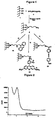
- the aforementioned functionalised material from formula (I) or (II), is a material chosen from the materials identified as S1, S2 or S3 (see examples 1-3 and Figure 1).
- the functionalised materials of the compounds described above are characterised by the fact that the inorganic matrix corresponds to mesoporous silica UVM-7, UVM-8, M-UVM-7 or M-UVM-8. Therefore, the functionalised materials in question have, among others, the following distinctive characteristics:
- the invention also refers to a monolite of a porous material having a composition represented by the formula (I) or (II), which has the textural and structural characteristics described above, namely that it is formed by the aggregation of microporous or mesoporous particles, welded, with a size of between 12 and 70 nm, which creates a second large scale pore system of between 20 and 100 nm, between large mesopores and macropores, which can be obtained by conventional moulding or extrusion techniques.
- a monolite of a porous material having a composition represented by the formula (I) or (II) which has the textural and structural characteristics described above, namely that it is formed by the aggregation of microporous or mesoporous particles, welded, with a size of between 12 and 70 nm, which creates a second large scale pore system of between 20 and 100 nm, between large mesopores and macropores, which can be obtained by conventional moulding or ex
- the invention also refers to a process to obtain the aforementioned functional material, comprising an inorganic matrix corresponding to the mesoporous silica of the type UVM-7, UVM-8, M-UVM-7 or M-UVM-8, functionalised with an organic compound which can produce a macroscopic signal in solution, which in anhydrous form, is represented by the aforementioned formula (I) or (II), which includes:
- the process for obtaining the functionalised materials comprises the functionalisation of some specific inorganic matrices, using a process which begins with the preparation and activation of the surface of the aforementioned inorganic material (the inorganic matrix which corresponds to a mesoporous silica UVM-7, UVM-8, M-UVM-7 or M-UVM-8), aimed to the production of the highest possible number of anchorage points for the subsequent functionalisation.
- the process can be more or less complex.
- the preparation and activation of the surface involves a simple heating to between 100°C and 150°C for a period of no less than 12 hours and no more than 3 days.
- the process of preparation and activation of the surface can further include digestion in acid solutions.
- the material used as inorganic matrix can be aggregated together in powder format or can be conformed as monolites.
- the alcoxysilane is anchored. This involves using an organic function capable of reacting with an organic compound that can provide the macroscopic signal in solution.
- the activated surface of the inorganic matrix is suspended in an organic anhydrous solvent, to which the alcoxysilane is added to provide covalent bonding of the organic compound capable of producing the macroscopic signal (observable and/or measurable) in solution (active molecule), to the inorganic matrix.
- an organic anhydrous solvent to which the alcoxysilane is added to provide covalent bonding of the organic compound capable of producing the macroscopic signal (observable and/or measurable) in solution (active molecule), to the inorganic matrix.
- the fluoride anion to be detected attacks the synthesised solid, under conditions which allow the aforementioned alcoxysilane to anchor to the matrix.
- toluene was used as the solvent (Examples 1-3) and the suspensions were prepared with a concentration of no less than 0.1g of inorganic matrix per 30 mL of toluene, and no greater than 10g of inorganic matrix per 30 mL of toluene.
- the alcoxysilane can be a trialcoxyaminosilane, typically 3-aminopropylethoxisylane, which is added in excess in order to achieve maximum functionalisation of the inorganic matrix.
- Any other trialcoxysilane can be used, as long as its carbonated chain contains a suitable organic function to react with an organic compound capable of producing a macroscopic signal in solution.
- This anchoring reaction of the alcoxysilane to the inorganic matrix is carried out by heating and stirring, but while keeping a dry and inert atmosphere, in order to avoid oxidation or hydrolysis of the alcoxysilane to be anchored.
- the time needed to complete this step will depend on the type of inorganic matrix, and the chosen alcoxysilane. For the functionalisation of UVM-7 matrixes, more than 12 hours and less than 2 days is required.
- the alcoxysilane which has been anchored to the matrix is made to react with an organic compound capable of producing the macroscopic signal (observable and/or measurable) in solution.
- the functionalised material is identified as S1, S2 and S3 ( Figure 1)
- the chosen alcoxysilane (3-aminopropylethoxisylane) contains a primary amine
- the organic compound capable of producing a macroscopic signal in solution contains a group susceptible to the nucleophilic attack by said amine, such as an aldehyde, acid or acid chloride.
- the anchoring reaction conditions will depend on the solubility and reactivity characteristics of the organic compound capable of providing the macroscopic signal in solution.
- the organic compound capable to provide the macroscopic signal in solution is 9-anthraldehyde, 4-(4-[(dimethylamine)phenyl]diazenyl) benzoic acid or sulforhodamine B chloride.
- the excess of the organic compound capable of providing the macroscopic signal in solution is removed, which has not been anchored to the alcoxysilane.
- the solids can be washed using conventional methods, for example by extraction with an organic dissolvent, in which the organic compound used to produce the macroscopic signal will dissolve.
- the washing is carried out by extraction in Soxhlet, with an organic solvent in which the active molecule is soluble, typically ethanol, for a period of time sufficient to ensure the complete removal of the non-anchored reactive material.
- the invention refers to a process to functionalise a silica or silicometalate, with a compound capable of producing a macroscopic signal in solution, which comprises:
- alcoxysilane and the organic compound capable of providing a macroscopic signal in solution as well as the anchoring of this to the silica or silicometalate matrix, is applicable to the functionalisation process indicated previously, with appropriate modifications depending on the nature of the matrix and the reactants (alcoxysilanes and active substance).
- the invention refers to a process to obtain a silica or silicometalate, functionalised using the synthesis process described as the "atranes” (described in patent application PCT/ES01/00122 and P200102777, by P. Amorós et al), which comprises:
- Another aspect of the invention refers to a process to determine fluoride.
- the determination of fluoride is carried out in aqueous solutions buffered at acid pH, in order to ensure the quantitative formation of fluorhydric acid.
- a mixture of water with solvents such as alcohols, ethers, acetonitriles, or any other organic solvent miscible with water can be used as a means of producing a reaction for the determination of fluoride, said mixture being suitable for the sample to be analysed and to keep the organic compound capable of providing the macroscopic signal in solution.
- the invention provides a process for analysing the fluoride anion in an aqueous environment, based on the specific attack experienced by the silica in the presence of the fluoride anion in an acid environment, which comprises:
- This invention therefore, provides a process to analyse the fluoride anion in an aqueous environment, based on the specific attack suffered by the silica in the presence of the fluoride anion in an acid environment, which comprises the following steps:
- a suspension of the functionalised material is prepared (S1, S2, S3 or any other silica or silicometalate conveniently functionalised) in the acid buffer, in such a way as to make the suspension contain no less than 0.1 mg of functionalised material per mL in the buffer, and no more than 10 mg of functionalised material per mL in the buffer. Aliquots of this suspension are then dropped in by pipette to prepare the standard solutions, which correspond to the distinctive calibration points and samples.
- All aliquots and samples are prepared in non-siliceous tubes, in order to avoid any possible interferences caused by the use of glass, and these can optionally be sealed in order to avoid evaporation of the solvent and to minimise deviations in concentration.
- the standard solutions and samples are kept under thermostat in a water bath at 25°C, and are stirred by magnetic action, for example, for as long as is needed to obtain a constant response (until an increase in stirring time does not result in a significant increase in the fluoride detection limit), generally no less than 10 minutes and no more than 2 hours (typically one hour).
- the solid from the resulting suspensions (namely, the functionalised material which has lost all or part of the organic compound capable of producing an observable and/or measurable macroscopic signal, when it is in solution, as a consequence of the fluoride attack on the functionalised material) is separated by conventional methods of solid/liquid separation, for example by filtering, centrifugal action and decanting or any other suitable method.
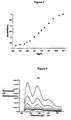
- the solutions obtained are then directly entered into the measurement cell, and the response is obtained by the method used (fluorometric or colorimetric), leading to an increase in the signal, as the concentration of fluoride increases, and a linear response is obtained for the neperian logarithm for absorbency or fluorescence vs. the logarithm for fluoride concentration, as shown in Figures 5, 6 and 7.
- the methodology proposed in this invention is based on a perfect coupling of the characteristics of the inorganic matrix and the compound providing the anion detection signal.
- the inorganic matrix chosen was a silica from the MCM-41 family. This matrix was chosen for its large specific surface (approximately 1,000 m 2 /g) which allowed the maximum level of anchoring for the detector compound molecules (the organic compound capable of producing an observable and/or measurable signal in solution).
- the use of UVM-7 silica as described in the patent application P200102777, by P. Amorós et al, as a siliceous matrix to anchor the active species has the additional advantage of having a bimodal pore system.
- the inorganic matrix UVM-7 is structured in the form of mesoporous particles, which bond together to form micrometric aggregates, giving rise to the formation of a second system of pores which ranges from large mesopores to macropores.
- the matrix functionalisation process results in a sealing of the ordered mesopore system, which characterises MCM-41 solids (among which the UVM-7 are to be found)
- the second system of pores which remains open, allows the species to be detected to have greater access to the functionalised particles, and therefore provides a quicker and more reliable response regarding the presence of fluoride in the environment.
- the control of the synthesis conditions as described in the detailed description of the invention, allows the use of smooth conditions during the fluoride determination process, in order to allow detection to take place, ensuring the quantitative formation of PH, at room temperature and in medium acid pH.
- the method described in this invention for the functionalisation of the inorganic matrix allows for organic compounds providing the observable and/or measurable macroscopic signal to be anchored when they are in solution, by means of covalent bonding instead of using simple absorption, which would allow a response of the functionalised material by simple washing, and not by an attack by the fluoride anion on the silica.
- the process to determine fluoride can be implemented in a quick measurement unit, including a mechanic device allowing the functionalised silica or silicometalate matrix to be attacked by the fluoride in the problem solution, and allowing for the calculation of its concentration by comparison with a standard concentration.
- the mechanical device used to implement the fluoride determination process in this invention, involves strips or bands for analytic tests.
- Another aspect of this invention refers to the use of a functionalised material or porous material, or a monolite of a porous material, created as a result of this invention into the analysis of fluoride in an aqueous environment, in accordance with the process of determining fluoride laid out in this invention.
- this invention refers to the use of a non-porous silica, functionalised with an organic compound capable of providing a macroscopic signal in solution, for the analysis of fluoride in an aqueous environment, in accordance with the fluoride determination process laid out in this invention.
- Example 1 Silicon oxide with a bimodal porous system, functionalised with anthracen, S1 ( Figure 1).
- the UVM-7 silica matrix (silicon oxide with a bimodal porous system obtained in accordance with patent application P200102777, by P. Amorós et al) is dried in a hothouse at 110°C, to eliminate the water absorbed, and is then suspended in anhydrous toluene (typically 1 g of solid / 30 mL of toluene) and 3-aminopropyltriethoxisylane is added in excess, in order to favour maximum functionalisation of the material (0.013 mol/g solid) under an inert argon atmosphere. This is then heated to 110°C and is stirred constantly for a day.
- anhydrous toluene typically 1 g of solid / 30 mL of toluene
- 3-aminopropyltriethoxisylane is added in excess, in order to favour maximum functionalisation of the material (0.013 mol/g solid) under an inert argon atmosphere.
- the product obtained from this process is then filtered and washed with dichloromethane and ethanol to eliminate the excess of reactive materials which did not condense with the silanol groups (SiOH) on the solid walls and this is then left to dry in a hothouse at 70°C for a few hours.
- a suspension of this solid is then prepared in pure ethanol (1 g/30 ml EtOH) and then 0.5 g of 9-anthraldehyde is added, and heated at 45°C for one day.
- NaBH 4 is added to this mixture in excess, in order to reduce the imine formed and this is then stirred at room temperature for 10-12 hours.
- the solid obtained from this process is kept by extraction in a Soxhlet with ethanol, for 1-2 days in order to ensure that any traces of fluorophore absorbed on the surface have been removed.
- the final material produces an x-ray diffractogram (Figure 2) with a peak at an angle corresponding to 35 ⁇ , which is characteristic of disordered MCM-41 materials.
- Figure 3 contains a SEM image which is representative of this solid, and which shows the nanometric particles which characterise this material.
- Figure 4 shows an absorption/desorption curve which is typical of this material, and in which the peak at high pressures shows the presence of a textural macroporous nature.
- Example 2 Silicon oxide with bimodal pore system, functionalised with azoic dye, S2 ( Figure 1).
- the UVM-7 silica matrix (silicon oxide with a bimodal pore system, obtained in accordance with the patent application P200102777, by P. Amorós et al), is dried in a hothouse at 110°C in order to eliminate the water absorbed, and is then suspended in anhydrous toluene (typically 1 g solid/30 mL toluene), and 3-aminopropyltriethoxisylane is added in excess, in order to favour maximum functionalisation of the material (0.013 mol/g solid) under an inert argon atmosphere. This is then heated to 110°C and is stirred constantly for a day.
- anhydrous toluene typically 1 g solid/30 mL toluene
- 3-aminopropyltriethoxisylane is added in excess, in order to favour maximum functionalisation of the material (0.013 mol/g solid) under an inert argon atmosphere.
- the product obtained from this process is then filtered and washed with dichloromethane and ethanol to eliminate the excess of reactive materials which did not condense with the silanol groups (SiOH) on the solid walls and this is then left to dry in a hothouse at 70°C for a few hours.
- the solid that is obtained is then extracted in a Soxhlet, with ethanol, for 1-2 days, in order to ensure that the traces of colorant/fluorophore absorbed on the surface has been removed.
- This material shows an x-ray diffractogram, microstructure and porosity similar to that of the solid from example 1 ( Figures 2, 3 and 4).
- Example 3 Silicon oxide with a bimodal pore system, functionalised with sulforhodamine, S3 ( Figure 1)
- the UVM-7 silica matrix (silicon oxide with a bimodal pore system, obtained in accordance with the patent application P200102777, by P. Amorós et al), is dried in a hothouse at 110°C in order to eliminate the water absorbed, and is then suspended in anhydrous toluene (typically 1 g solid/30 mL toluene), and 3-aminopropyltrietoxisylane is added in excess, in order to achieve maximum functionalisation of the material (0.013 mol/g solid) under an inert argon atmosphere. This is then heated to 110°C and is stirred constantly for a day.
- anhydrous toluene typically 1 g solid/30 mL toluene
- 3-aminopropyltrietoxisylane is added in excess, in order to achieve maximum functionalisation of the material (0.013 mol/g solid) under an inert argon atmosphere.
- the product obtained from this process is then filtered and washed with dichloromethane and ethanol to eliminate the excess of reactive materials which did not condense with the silanol groups (SiOH) on the solid walls and this is then left to dry in a hothouse at 70°C for a few hours.
- a suspension of this solid is then prepared, in recently distilled dichloromethane (1 g/20 mL CH2CI2) in an ice bath, to which 320 mg of sulforhodamine B chloride, dissolved in 10 mL of distilled dichloromethane, is added using an addition funnel (drop by drop for about twenty minutes) under an argon atmosphere. This is left to be stirred for 24 hours at room temperature, and is then filtered and washed with ethanol and dichloromethane.
- Example 4 Commercial silicon oxide with high surface area functionalised with anthracen.
- the commercial silica matrix with high surface area is dried in a hothouse at 110°C for two days, to eliminate the water absorbed, and then is suspended in anhydrous toluene (typically 1 g solid/30 mL toluene), to which 3-aminopropyltrietoxisylane is added in excess, to encourage maximum functionalisation of the material (0.013 mol/g solid) under an inert argon atmosphere. This is heated to 110°C, and is stirred for one day.
- anhydrous toluene typically 1 g solid/30 mL toluene
- the product obtained from this process is filtered and washed with dichloromethane and ethanol to eliminate excess of reactive material which has not condensed with the silanol groups (SiOH) on the wall of the solid, and is left to dry in the hothouse at 70°C for a few hours.
- a suspension of this solid is then prepared in pure ethanol (1 g/30 ml EtOH) and then 0.5 g of 9-anthraldehyde is added, and heated at 45°C for one day.
- NaBH 4 is added to this mixture in excess, in order to reduce the imine formed and this is then stirred at room temperature for 10-12 hours.
- the solid obtained from this process is kept by extraction in a Soxhlet with ethanol, for 1-2 days in order to ensure that any traces of fluorophore absorbed on the surface have been removed.
- the MCM-41 silica matrix is dried in a hothouse at 110°C for 36 hours, to eliminate the water absorbed, and is then suspended in anhydrous toluene (typically 1 g solid/30 mL toluene) to which 3-aminopropyltrietoxisylane is added in excess, to achieve maximum functionalisation of the material (0.013 mol/g solid) under an inert argon atmosphere. This is heated to 110°C, and is stirred for one day.
- anhydrous toluene typically 1 g solid/30 mL toluene
- the product obtained from this process is filtered and washed with dichloromethane and ethanol to eliminate excess of reactive material which has not condensed with the silanol groups (SiOH) on the wall of the solid, and is left to dry in the hothouse at 70°C for a few hours.
- a suspension of this solid is then prepared in pure ethanol (1 g/30 ml EtOH) and then 0.5 g of 9-anthraldehyde is added, and heated at 45°C for one day.
- NaBH4 is added to this mixture in excess, in order to reduce the imine formed and this is then stirred at room temperature for 10-12 hours.
- samples of 10mL of fluoride are prepared, from a standard solution of sodium fluoride (Aldrich), using the following concentrations: 0.5 x 10 -7 , 10 -6 , 2x10 -6 , 4x10 -6 , 6x10 -6 , 10 -5 , 2x10 -5 , 4x10 -5 , 6x10 -5 , 10 -4 , 2x10 -4 , 4x10 -4 , 10 -3 , 2x10 -3 , and 4x10 -3 M.
- Example 10 Determination of fluoride by means of fluorometry, using a commercial silica functionalised with anthracen.
- Example 11 Determination of fluoride by means of fluorometry, using a mesoporous silica MCM-41.
Landscapes
- Physics & Mathematics (AREA)
- Chemical & Material Sciences (AREA)
- General Physics & Mathematics (AREA)
- Immunology (AREA)
- Health & Medical Sciences (AREA)
- Analytical Chemistry (AREA)
- Biochemistry (AREA)
- General Health & Medical Sciences (AREA)
- Spectroscopy & Molecular Physics (AREA)
- Life Sciences & Earth Sciences (AREA)
- Pathology (AREA)
- Engineering & Computer Science (AREA)
- Chemical Kinetics & Catalysis (AREA)
- Plasma & Fusion (AREA)
- Solid-Sorbent Or Filter-Aiding Compositions (AREA)
- Investigating Or Analyzing Non-Biological Materials By The Use Of Chemical Means (AREA)
- Investigating, Analyzing Materials By Fluorescence Or Luminescence (AREA)
- Investigating Or Analysing Materials By Optical Means (AREA)
Applications Claiming Priority (3)
| Application Number | Priority Date | Filing Date | Title |
|---|---|---|---|
| ES200200307 | 2002-01-31 | ||
| ES200200307 | 2002-01-31 | ||
| PCT/ES2003/000053 WO2003065408A2 (fr) | 2002-01-31 | 2003-01-30 | Analyse de fluorure au moyen d'oxydes de silicium fonctionnalises |
Publications (1)
| Publication Number | Publication Date |
|---|---|
| EP1480253A2 true EP1480253A2 (fr) | 2004-11-24 |
Family
ID=27635990
Family Applications (1)
| Application Number | Title | Priority Date | Filing Date |
|---|---|---|---|
| EP03702660A Withdrawn EP1480253A2 (fr) | 2002-01-31 | 2003-01-30 | Analyse de fluorure au moyen d'oxydes de silicium fonctionnalises |
Country Status (2)
| Country | Link |
|---|---|
| EP (1) | EP1480253A2 (fr) |
| WO (1) | WO2003065408A2 (fr) |
Cited By (1)
| Publication number | Priority date | Publication date | Assignee | Title |
|---|---|---|---|---|
| CN109351353A (zh) * | 2018-10-31 | 2019-02-19 | 昆明理工大学 | 一种载铁硅胶除砷吸附剂的制备方法及应用 |
Families Citing this family (5)
| Publication number | Priority date | Publication date | Assignee | Title |
|---|---|---|---|---|
| ES2212743B1 (es) * | 2002-12-23 | 2005-10-16 | Universidad Politecnica De Valencia | Metodo para la determinacion de trifosfato de adenosina (atp). |
| FR2865541B1 (fr) * | 2003-05-20 | 2006-08-11 | Commissariat Energie Atomique | Procede de detection de fluorure ou de fluorure d'hydrogene et trousse de detection |
| ES2246705B1 (es) * | 2004-05-28 | 2007-06-16 | Universidad Politecnica De Valencia | Metodo para la eliminacion de boro en medio acuoso. |
| CN110394148A (zh) * | 2019-07-05 | 2019-11-01 | 重庆科技学院 | 一种以丙烯酸甲酯修饰硅胶的复合材料制备方法及产品和应用 |
| CN113138189B (zh) * | 2021-04-22 | 2022-08-19 | 中国石油大学(华东) | 一种AgPt-Fe3O4@SiO2纳米粒子探针用于比色检测氟离子的方法 |
Family Cites Families (1)
| Publication number | Priority date | Publication date | Assignee | Title |
|---|---|---|---|---|
| JPH0484762A (ja) * | 1990-07-27 | 1992-03-18 | Miyagi Oki Denki Kk | 微量弗素ガスの検出方法 |
-
2003
- 2003-01-30 EP EP03702660A patent/EP1480253A2/fr not_active Withdrawn
- 2003-01-30 WO PCT/ES2003/000053 patent/WO2003065408A2/fr not_active Ceased
Non-Patent Citations (1)
| Title |
|---|
| See references of WO03065408A3 * |
Cited By (1)
| Publication number | Priority date | Publication date | Assignee | Title |
|---|---|---|---|---|
| CN109351353A (zh) * | 2018-10-31 | 2019-02-19 | 昆明理工大学 | 一种载铁硅胶除砷吸附剂的制备方法及应用 |
Also Published As
| Publication number | Publication date |
|---|---|
| WO2003065408A3 (fr) | 2003-12-04 |
| WO2003065408A2 (fr) | 2003-08-07 |
Similar Documents
| Publication | Publication Date | Title |
|---|---|---|
| CN105050954B (zh) | 具有分级多孔性的沸石 | |
| Tran-Thi et al. | Optical chemical sensors based on hybrid organic–inorganic sol–gel nanoreactors | |
| Wang et al. | A highly selective regenerable optical sensor for detection of mercury (II) ion in water using organic–inorganic hybrid nanomaterials containing pyrene | |
| US9562882B2 (en) | Nanoporous detectors of monocyclic aromatic compounds and other pollutants | |
| Ros‐Lis et al. | A mesoporous 3D hybrid material with dual functionality for Hg2+ detection and adsorption | |
| Lee et al. | Luminophore-immobilized mesoporous silica for selective Hg2+ sensing | |
| CN105431380A (zh) | 具有分级孔隙度的沸石 | |
| JP2013510185A (ja) | 複素環芳香族化合物等を捕捉、検出及び定量化するための材料及び方法 | |
| Shahamirifard et al. | A new silver (I) ions optical sensor based on nanoporous thin films of sol–gel by rose bengal dye | |
| Sayen et al. | Tuning the Sensitivity of Electrodes Modified with an Organic‐Inorganic Hybrid by Tailoring the Structure of the Nanocomposite Material | |
| Groen et al. | In situ monitoring of desilication of MFI-type zeolites in alkaline medium | |
| Zhang et al. | Application of nanopore and porous materials for heavy metal ion detection | |
| CN103059835B (zh) | 用于汞离子比率检测的pmo荧光纳米粒子及其制备方法 | |
| EP1480253A2 (fr) | Analyse de fluorure au moyen d'oxydes de silicium fonctionnalises | |
| Kim et al. | Functionalized monolayers on mesoporous silica and on titania nanoparticles for mercuric sensing | |
| El-Safty | Organic–inorganic hybrid mesoporous monoliths for selective discrimination and sensitive removal of toxic mercury ions | |
| El-Safty et al. | Optical supermicrosensor responses for simple recognition and sensitive removal of Cu (II) ion target | |
| Hemmati Tirabadi et al. | Trithiocyanuric acid-functionalized nanoporous silica: synthesis and application as an Ag+ selective optical probe | |
| Hosseini et al. | A novel Lu3+ fluorescent nano-chemosensor using new functionalized mesoporous structures | |
| Zhang et al. | Three-dimensional wormhole mesoporous-based material as a regenerative solid optical sensor for detection of Hg 2+ in aqueous media | |
| CN105259149A (zh) | 一种固载型罗丹明b基荧光传感器及其制备方法 | |
| Zhang et al. | Oxygen-sensing materials based on [Ru (bpy) 3] 2+ covalently grafted MSU-3 mesoporous molecular sieves | |
| Wang et al. | Facile preparation of a multifunctional fluorescent nanosensor for chemical and biological applications | |
| CN116754506A (zh) | 一种金纳米染色水凝胶构建汞离子比色分析方法 | |
| Canada et al. | Optical sensors for the determination of concentrated hydroxide. Characterization of the sensor materials and evaluation of the sensor performance |
Legal Events
| Date | Code | Title | Description |
|---|---|---|---|
| PUAI | Public reference made under article 153(3) epc to a published international application that has entered the european phase |
Free format text: ORIGINAL CODE: 0009012 |
|
| 17P | Request for examination filed |
Effective date: 20040831 |
|
| AK | Designated contracting states |
Kind code of ref document: A2 Designated state(s): AT BE BG CH CY CZ DE DK EE ES FI FR GB GR HU IE IT LI LU MC NL PT SE SI SK TR |
|
| AX | Request for extension of the european patent |
Extension state: AL LT LV MK RO |
|
| RAP1 | Party data changed (applicant data changed or rights of an application transferred) |
Owner name: UNIVERSIDAD DE VALENCIA ESTUDI GENERAL Owner name: UNIVERSIDAD POLITECNICA DE VALENCIA |
|
| STAA | Information on the status of an ep patent application or granted ep patent |
Free format text: STATUS: THE APPLICATION IS DEEMED TO BE WITHDRAWN |
|
| 18D | Application deemed to be withdrawn |
Effective date: 20070801 |