EP1484063A2 - Methode, die Abstossung von transplantiertem Gewebe zu verhindern - Google Patents
Methode, die Abstossung von transplantiertem Gewebe zu verhindern Download PDFInfo
- Publication number
- EP1484063A2 EP1484063A2 EP04075694A EP04075694A EP1484063A2 EP 1484063 A2 EP1484063 A2 EP 1484063A2 EP 04075694 A EP04075694 A EP 04075694A EP 04075694 A EP04075694 A EP 04075694A EP 1484063 A2 EP1484063 A2 EP 1484063A2
- Authority
- EP
- European Patent Office
- Prior art keywords
- antigen
- tissue
- cell
- cells
- medicament
- Prior art date
- Legal status (The legal status is an assumption and is not a legal conclusion. Google has not performed a legal analysis and makes no representation as to the accuracy of the status listed.)
- Withdrawn
Links
Images

Classifications
-
- C—CHEMISTRY; METALLURGY
- C12—BIOCHEMISTRY; BEER; SPIRITS; WINE; VINEGAR; MICROBIOLOGY; ENZYMOLOGY; MUTATION OR GENETIC ENGINEERING
- C12N—MICROORGANISMS OR ENZYMES; COMPOSITIONS THEREOF; PROPAGATING, PRESERVING, OR MAINTAINING MICROORGANISMS; MUTATION OR GENETIC ENGINEERING; CULTURE MEDIA
- C12N5/00—Undifferentiated human, animal or plant cells, e.g. cell lines; Tissues; Cultivation or maintenance thereof; Culture media therefor
- C12N5/06—Animal cells or tissues; Human cells or tissues
- C12N5/0602—Vertebrate cells
- C12N5/0676—Pancreatic cells
-
- A—HUMAN NECESSITIES
- A61—MEDICAL OR VETERINARY SCIENCE; HYGIENE
- A61K—PREPARATIONS FOR MEDICAL, DENTAL OR TOILETRY PURPOSES
- A61K35/00—Medicinal preparations containing materials or reaction products thereof with undetermined constitution
- A61K35/12—Materials from mammals; Compositions comprising non-specified tissues or cells; Compositions comprising non-embryonic stem cells; Genetically modified cells
- A61K35/22—Urine; Urinary tract, e.g. kidney or bladder; Intraglomerular mesangial cells; Renal mesenchymal cells; Adrenal gland
-
- A—HUMAN NECESSITIES
- A61—MEDICAL OR VETERINARY SCIENCE; HYGIENE
- A61K—PREPARATIONS FOR MEDICAL, DENTAL OR TOILETRY PURPOSES
- A61K35/00—Medicinal preparations containing materials or reaction products thereof with undetermined constitution
- A61K35/12—Materials from mammals; Compositions comprising non-specified tissues or cells; Compositions comprising non-embryonic stem cells; Genetically modified cells
- A61K35/34—Muscles; Smooth muscle cells; Heart; Cardiac stem cells; Myoblasts; Myocytes; Cardiomyocytes
-
- A—HUMAN NECESSITIES
- A61—MEDICAL OR VETERINARY SCIENCE; HYGIENE
- A61K—PREPARATIONS FOR MEDICAL, DENTAL OR TOILETRY PURPOSES
- A61K35/00—Medicinal preparations containing materials or reaction products thereof with undetermined constitution
- A61K35/12—Materials from mammals; Compositions comprising non-specified tissues or cells; Compositions comprising non-embryonic stem cells; Genetically modified cells
- A61K35/37—Digestive system
- A61K35/407—Liver; Hepatocytes
-
- A—HUMAN NECESSITIES
- A61—MEDICAL OR VETERINARY SCIENCE; HYGIENE
- A61K—PREPARATIONS FOR MEDICAL, DENTAL OR TOILETRY PURPOSES
- A61K35/00—Medicinal preparations containing materials or reaction products thereof with undetermined constitution
- A61K35/12—Materials from mammals; Compositions comprising non-specified tissues or cells; Compositions comprising non-embryonic stem cells; Genetically modified cells
- A61K35/42—Respiratory system, e.g. lungs, bronchi or lung cells
-
- A—HUMAN NECESSITIES
- A61—MEDICAL OR VETERINARY SCIENCE; HYGIENE
- A61P—SPECIFIC THERAPEUTIC ACTIVITY OF CHEMICAL COMPOUNDS OR MEDICINAL PREPARATIONS
- A61P3/00—Drugs for disorders of the metabolism
- A61P3/08—Drugs for disorders of the metabolism for glucose homeostasis
- A61P3/10—Drugs for disorders of the metabolism for glucose homeostasis for hyperglycaemia, e.g. antidiabetics
-
- A—HUMAN NECESSITIES
- A61—MEDICAL OR VETERINARY SCIENCE; HYGIENE
- A61P—SPECIFIC THERAPEUTIC ACTIVITY OF CHEMICAL COMPOUNDS OR MEDICINAL PREPARATIONS
- A61P37/00—Drugs for immunological or allergic disorders
- A61P37/02—Immunomodulators
- A61P37/06—Immunosuppressants, e.g. drugs for graft rejection
-
- C—CHEMISTRY; METALLURGY
- C07—ORGANIC CHEMISTRY
- C07K—PEPTIDES
- C07K16/00—Immunoglobulins [IG], e.g. monoclonal or polyclonal antibodies
- C07K16/18—Immunoglobulins [IG], e.g. monoclonal or polyclonal antibodies against material from animals or humans
- C07K16/28—Immunoglobulins [IG], e.g. monoclonal or polyclonal antibodies against material from animals or humans against receptors, cell surface antigens or cell surface determinants
- C07K16/2803—Immunoglobulins [IG], e.g. monoclonal or polyclonal antibodies against material from animals or humans against receptors, cell surface antigens or cell surface determinants against the immunoglobulin superfamily
- C07K16/2833—Immunoglobulins [IG], e.g. monoclonal or polyclonal antibodies against material from animals or humans against receptors, cell surface antigens or cell surface determinants against the immunoglobulin superfamily against MHC-molecules, e.g. HLA-molecules
-
- A—HUMAN NECESSITIES
- A61—MEDICAL OR VETERINARY SCIENCE; HYGIENE
- A61K—PREPARATIONS FOR MEDICAL, DENTAL OR TOILETRY PURPOSES
- A61K39/00—Medicinal preparations containing antigens or antibodies
- A61K2039/505—Medicinal preparations containing antigens or antibodies comprising antibodies
-
- A—HUMAN NECESSITIES
- A61—MEDICAL OR VETERINARY SCIENCE; HYGIENE
- A61K—PREPARATIONS FOR MEDICAL, DENTAL OR TOILETRY PURPOSES
- A61K38/00—Medicinal preparations containing peptides
-
- C—CHEMISTRY; METALLURGY
- C07—ORGANIC CHEMISTRY
- C07K—PEPTIDES
- C07K2317/00—Immunoglobulins specific features
- C07K2317/50—Immunoglobulins specific features characterized by immunoglobulin fragments
- C07K2317/54—F(ab')2
-
- C—CHEMISTRY; METALLURGY
- C07—ORGANIC CHEMISTRY
- C07K—PEPTIDES
- C07K2317/00—Immunoglobulins specific features
- C07K2317/70—Immunoglobulins specific features characterized by effect upon binding to a cell or to an antigen
-
- Y—GENERAL TAGGING OF NEW TECHNOLOGICAL DEVELOPMENTS; GENERAL TAGGING OF CROSS-SECTIONAL TECHNOLOGIES SPANNING OVER SEVERAL SECTIONS OF THE IPC; TECHNICAL SUBJECTS COVERED BY FORMER USPC CROSS-REFERENCE ART COLLECTIONS [XRACs] AND DIGESTS
- Y10—TECHNICAL SUBJECTS COVERED BY FORMER USPC
- Y10S—TECHNICAL SUBJECTS COVERED BY FORMER USPC CROSS-REFERENCE ART COLLECTIONS [XRACs] AND DIGESTS
- Y10S424/00—Drug, bio-affecting and body treating compositions
- Y10S424/809—Drug, bio-affecting and body treating compositions involving immunoglobulin or antibody fragment, e.g. fab', fv, fc, heavy chain or light chain
-
- Y—GENERAL TAGGING OF NEW TECHNOLOGICAL DEVELOPMENTS; GENERAL TAGGING OF CROSS-SECTIONAL TECHNOLOGIES SPANNING OVER SEVERAL SECTIONS OF THE IPC; TECHNICAL SUBJECTS COVERED BY FORMER USPC CROSS-REFERENCE ART COLLECTIONS [XRACs] AND DIGESTS
- Y10—TECHNICAL SUBJECTS COVERED BY FORMER USPC
- Y10S—TECHNICAL SUBJECTS COVERED BY FORMER USPC CROSS-REFERENCE ART COLLECTIONS [XRACs] AND DIGESTS
- Y10S424/00—Drug, bio-affecting and body treating compositions
- Y10S424/81—Drug, bio-affecting and body treating compositions involving autoimmunity, allergy, immediate hypersensitivity, delayed hypersensitivity, immunosuppression, immunotolerance, or anergy
Definitions
- This invention relates to transplantation of tissues, e.g., islet cells, muscle cells, and whole organs, into hosts in need of such tissues, e.g., patients who have or are at risk of developing diabetes mellitus, have muscular dystrophy, or are in need of an organ transplant.
- tissues e.g., islet cells, muscle cells, and whole organs
- Diabetes mellitus is a prevalent degenerative disease, characterized by insulin deficiency, which prevents normal regulation of blood glucose levels, and which leads to hyperglycemia and ketoacidosis.
- Insulin a peptide hormone, promotes glucose utilization, protein synthesis, formation and storage of neutral lipids, and the growth of some cell types. Insulin is produced by the ⁇ cells within the islets of Langerhans of the pancreas. Early-onset diabetes (10-20% of cases) is caused by an auto-immune reaction that causes complete destruction of ⁇ cells. Adult-onset diabetes has a number of causes, but in most cases the ⁇ islet cells are defective in secretion of insulin.
- Insulin injection therapy usually with porcine or bovine insulin, prevents severe hyperglycemia and ketoacidosis, but fails to completely normalize blood glucose levels. While injection therapy has been quite successful, it fails to prevent the premature vascular deterioration that is now the leading cause of morbidity among diabetics. Diabetes-related vascular deterioration, which includes both microvascular degeneration and acceleration of atherosclerosis, can eventually cause renal failure, retinal deterioration, angina pectoris, myocardial infarction, peripheral neuropathy, and arteriosclerosis.
- Insulin delivery pumps have been developed which administer varying doses of insulin based on activity, diet, time of day, and other pre-programmed factors. While such devices improve blood sugar control, they also do not prevent vascular deterioration.
- Surgical transplantation of part or all of the pancreas is thought to be potentially the best treatment for diabetes.
- Successful transplantation is difficult, however, because the pancreas is a fragile and complicated organ, and it is impossible for a human donor to give only a portion of it; the only practicable source is a deceased donor.
- the pancreas is a fragile and complicated organ, and it is impossible for a human donor to give only a portion of it; the only practicable source is a deceased donor.
- the ⁇ cells of the islet of Langerhans produce insulin; the remainder of the pancreas presents a potent target for transplant rejection.
- Transplantation of just the islets of Langerhans is a desirable goal, as they continue to secrete appropriate amounts of insulin in response to nutritional signals even when isolated from the rest of the pancreas.
- a major problem associated with transplantation therapy as a treatment for diabetes is that current regimes require life-long administration of immunosuppressive drugs. These drugs can cause increased susceptibility to infection, renal failure, hypertension, and tumor growth.
- Faustman et al. J. Exp. Med. 151:1673, 1980 found that islet cells lack Ia antigenic determinants and express class I antigen on their surfaces. This allowed Faustman et al. (Proc. Natl. Acad. of Sci. USA 78:5156, 1981) to develop a regime that used donor-specific anti-Ia serum and complement to destroy Ia bearing lymphoid cells in islets, and allowed transplantation across a major histocompatibility barrier into non-immunosuppressed diabetic mice.
- the invention features a method for inhibiting rejection by a recipient animal of a transplanted tissue.
- the method involves modifying, eliminating, or masking an antigen which, when present on the surface of a cell of the tissue, is capable of causing a T-lymphocyte-mediated response in the animal; modification, elimination, or masking of the antigen inhibits antigen-mediated interaction between the cell and a T-lymphocyte of the animal, without causing lysis of the cell.
- HLA class I antigens members of one of the classes of major histocompatibility complex antigens
- these antigens cause cytotoxic T-cell activation in recipients, terminating in donor cell lysis after several sequential activation steps.
- the cascade is initiated by nonspecific conjugate formation between the CD8 receptor on host cytotoxic T-cells and the HLA class I antigens on the donor cell. Conjugate formation is followed by T-cell-mediated lysis, resulting in donor cell death.
- This lytic process can result in rejection even in intra-species transplantation.
- this problem is addressed by masking, modifying, or eliminating of the HLA class I antigens on the donor cells, so that the CD8-HLA class I antigen interaction which initiates the lytic cascade cannot occur.
- any T-cell receptor-interactive antigens on the surfaces of donor cells can advantageously be modified, eliminated, or masked according to the invention.
- the invention thus permits not just intra-species transplantation of tissues and organs, but xenografts as well, opening up the possibility of "farming" of donor organs and tissues in non-human animals for transplantation into human patients.
- Preferred masking agents are F(ab') 2 fragments of antibodies to donor cell antigens; these fragments, while being capable of forming immune complexes with the antigen and thus preventing antigen-T-cell interaction, do not, because they have had the Fc portion of the antibody removed, fix complement and bring about cell lysis. It has been found that, even though one might not expect such F(ab') 2 fragments to bind tightly enough to permanently mask antigenic sites on donor cells, long-term host acceptance of such treated tissues can be achieved.
- rejection-inducing surface antigens on cells of donor tissues can, in addition to being masked, be modified, e.g., by "capping", or wholly or partially eliminated by genetic manipulation, either in transgenic animals used as a source of donor tissue, or in culture.
- Fig. 1 is a set of graphs illustrating the expression of HLA-class I (W6/32), CD29 (4B4), CD54 (ICAM-1) and CD58 (LFA-3) on freshly isolated 99-97% pure whole human islets of Langerhans by indirect immunofluorescence and flow cytometry.
- C. Human islets in this clean islet preparation were virtually negative for ICAM-1 with 14% expression (-----).
- D. Human islets were negative for LFA-3 expression with 10.2% of the cells positive. Background goat anti-mouse FITC expression was 9% (----) for this experiment.
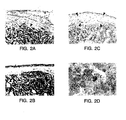
- FIG. 2 is a series of photographs showing histologic analysis of human islets transplanted under the kidney capsule of Balb/c recipients
- a control Balb/c mouse was transplanted with untreated fresh human islets and then killed at day 30. This characteristic photomicrograph shows the absence of donor islets and the presence of subcapsular fibrosis demonstrating the former area where the islets were transplanted.
- D Aldehyde fuscin stain of a mouse islet in the mouse pancreas demonstrating the characteristic purple granulation of healthy beta cells.
- the invention can facilitate transplantation of any other tissue or organ, e.g., kidney, heart, liver, lung, brain, and muscle tissue.
- tissue or organ e.g., kidney, heart, liver, lung, brain, and muscle tissue.
- the invention can be used to mask, modify, or eliminate any host T-cell-interactive antigen on any of the cells of the donor tissue.
- HLA class I antigens which are found on all parenchymal cells, including islet cells
- LFA-3 and ICAM-1 these react, respectively, with the host T-cell receptors CD2 and LFA-1.
- LFA-3 and ICAM-1 are found on endothelial cells which make up blood vessels in transplanted organs such as kidney and heart. Masking, altering, or eliminating these antigens will facilitate transplantation of any vascularized implant, by preventing recognition of those antigens by CD2+ and LFA-1+ host T-lymphocytes.
- masking, altering, or eliminating a particular donor cell antigen may render more than one donor cell-type less susceptible to rejection.
- parenchymal cells such as islet cells bear HLA class I antigens
- passenger lymphocytes bear such antigens as well, and if such lymphocytes are present in a donor tissue preparation, removal of an HLA class I antigen or treatment of the tissue preparation with an HLA class 1 antigen masking agent will render those lymphocytes less antigenic.
- antigens HLA class 1, LFA-3, and ICAM-1 are well-characterized, and antibodies to these antigens are publicly available, and can be made by standard technique.
- anti-ICAM-1 can be obtained from AMAC, Inc., Maine; hybridoma cells producing anti-LFA-3 can be obtained from the American Type Culture Collection, Rockville, Maryland.
- the donor tissue to be transplanted bears more than one T-cell-interactive antigen
- two or more treatments e.g., two or more masking agents
- a polyclonal antisera generated against the donor tissue may be used to mask multiple cell surface antigens of the donor tissue.
- the invention can employ three categories of masking agents: (1) antibodies or fragments or derivatives thereof; (2) soluble fragments or analogs of antigen-specific host T-cell receptors; and (3) synthetic organic molecules which mimic the antigen binding properties of T-cell receptors.
- Antibodies the currently most preferred masking agents, can be used either as one or more antigen-specific preparations, or as whole donor organ or tissue antisera preparations. In either case, it is necessary that the preparations be unable to fix complement and bring about donor cell lysis. Complement fixation can be prevented by deletion of the Fc portion of the antibody, by using an antibody isotype which is not capable of fixing complement, or, less preferably, by using a complement fixing antibody in conjunction with a drug which inhibits complement fixation.
- Individual antigen-specific antibodies can be made by standard procedures, including immunization of an animal, e.g., a mouse, with the antigen to be masked, followed by hybridoma preparation and antibody screening according to standard methods.
- whole donor antisera can also be used.
- whole pig antisera are produced by immunization of a mouse with pig donor tissue or pig lymphocytes, followed by screening for antibodies which block human T-lymphocyte adhesion to pig donor cells.
- masking can be effected by use of soluble host T-cell receptor which competitively inhibits binding of those T-cells to donor tissue cell antigens, by occupying the antigenic site on the tissue which would otherwise interact with the host T-cells.
- T-cell molecules or proteins e.g., CD8, CD2, and LFA-1, are well characterized proteins generally having an extracellular domain, a transmembrane region, and a cytoplasmic domain which bend to target cell ligands.
- Soluble T-cell receptor protein fragments can be made by standard recombinant DNA procedures, in which the DNA encoding the transmembrane and cytoplasmic domains is deleted, and the extracellular domain DNA is expressed in recombinant cells to produce soluble recombinant protein.
- Capping is a term referring to the use of antibodies to cause aggregation and inactivation of surface antigens.
- the tissue is contacted with an antibody specific for the antigen, so that antigen-antibody immune complexes are formed.
- the next step is contacting the tissue with a second antibody capable of forming immune complexes with the first antibody, so that the first antibody is aggregated to form a cap at a single location on the cell surface.
- the technique is well known, and has been described, e.g., in Taylor et al. (1971), Nat. New Biol. 233:225-227; and Santiso et al. (1986), Blood, 67:343-349.
- the first step is to incubate the cells with antibody (e.g., W6/32 antibody, described below) to HLA class I, and then to incubate with antibody to the donor species, e.g., goat anti-mouse antibody, to bring about aggregation.
- antibody e.g., W6/32 antibody, described below
- donor species e.g., goat anti-mouse antibody
- transgenic animals which have been genetically altered so that surface antigen expression is diminished.
- Such transgenic animals can be made by standard transgenic techniques, employing genes which delete or inactivate the gene encoding the target antigen, or delete or inactivate a gene necessary for its expression on the cell surface, by homologous recombination.
- homologous recombination can be used either to delete or inactivate the HLA class I molecule itself, or to inactivate or delete a companion molecule necessary for its surface expression.
- the HLA class I molecule is a protein composed of a 32Kd and a 45Kd chain, associated with another protein, ⁇ -2 microglobulin.
- the highly conserved ⁇ -2 microglobulin protein is believed to function as a carrier molecule which facilitates class I assembly in plasma membranes.
- Inhibition of class I expression on the surfaces of cells can thus be achieved either by deletion or inactivation of one of the HLA class I chains, or by deletion or inactivation of the carrier ⁇ -2 microglobulin molecule.
- Disruption of ⁇ -2 microglobulin expression in transgenic animals resulting in decreased HLA class I expression has been carried out by several groups (Koller and Smithies (1989), PNAS USA 86:8932-8935; Zijlstra et al. (1990) Nature, 344:742-746; Doetschman et al. (1987) Nature, 51:503-512).
- viral fragments For purposes of decreasing HLA class I expression on the surfaces of donor cells, e.g., islet cells, viral fragments, which are non-infectious, are preferable to whole viruses, which could cause complications. Other viruses and viral fragments could be used to decrease expression of other surface antigens on other types of donor cells, as well as decreasing expression of HLA class I expression on parenchymal cells such as islet cells.
- transplantation inhibition strategies discussed above all involve altering the donor tissue such that surface antigens on donor tissue cells which are recognized as foreign by receptors on recipient T-cells are eliminated, modified, or masked.
- An alternative strategy is to modify the donor tissue in a different way, which brings about blockage of the host T-cell receptors by antigen secreted by donor cells.
- those cells can be transfected with DNA encoding soluble antigen, which is secreted and which competitively binds to the CD8 receptor on the T-lymphocytes of the recipient which would otherwise bind to membrane-bound HLA class I antigen on the donor tissue cells.
- HLA class I antigen expression and secretion could be coupled to insulin production and secretion by placing the gene for one or both subunits of HLA class I antigen under the control of insulin gene regulatory sequences. Insulin secretion thus will result in simultaneous expression and secretion of HLA class I antigen.
- This strategy has the advantage of causing secretion of HLA class I antigen only from islet cells, in tissue which may contain other cell types as well; none of the other cells present produce and secrete insulin.
- this approach confines the soluble HLA class I antigen to the localized region where it is needed, i.e., in the area immediately surrounding the transplanted islet cells.
- This example involves xenogeneic transplantation of HLA class I positive human islet cells into nonimmunosuppressed Balb/c mouse recipients.
- Freshly isolated human islets were pretreated prior to transplantation with whole monoclonal antibody or F(ab') 2 monoclonal antibody fragments to conceal ("mask") donor antigens.
- F(ab') 2 fragments lack the Fc antibody region, thus circumventing complement-mediated killing after antigen binding.
- Intact immunoglobulin was used as a control.
- Human islets were treated with relevant HLA class I monoclonal antibody (W6/32) (American Tissue Culture Society) (Barnstable et al.
- F(ab') 2 fragments were generated using an immobilized pepsin.
- Purified antibody added at 20 mg/ml in pH 4.7 digestion buffer was digested for 4.5 hours for CD29 antibody and 4.0 hours for W6/32 antibody (HLA class I) at 37°C in a shaker water bath (Pierce Chemical, Rockford, IL).
- the crude digest was removed from the pepsin and immediately neutralized with pH 7.0 binding buffer.
- This antibody mixture was applied to an immobilized Protein A column and the eluate collected for the F(ab') 2 fragments. Dialysis against PBS for 24 hours using 50,000 M.W. cutoff tubing was then performed to rid the digest of contaminating Fc fragments.
- CHAPPS was added to the dialysis bag at a concentration of 10 mM.
- the completeness of the digest and purification of the F(ab') 2 digests were monitored by silver staining of 15% SDS gels. Final purification of the fragments was achieved by HPLC using a Superose 12 column (Pharmacia, Upsala, Sweden).
- F(ab') 2 fragments or whole antibodies were incubated with human islets at a concentration of 1 ⁇ g of antibody for approximately 1 x 10 6 islet cells for 30 minutes at room temperature. After incubation, the treated or untreated islets were washed once in Hanks buffer containing 2% FCS and then immediately transplanted under the kidney capsule by syringe injection. The human islets used were transplanted within 4 days after isolation. Ten to twelve week old Balb/c female mice (The Jackson Laboratories, Bar Harbor, Maine) were transplanted with 2200-4500 human islets. At 30 or 200 days post transplantation the mice were sacrificed by cervical dislocation and the kidney containing the transplanted tissue was surgically removed and immediately fixed in Bouin's solution.
- the HLA class I F(ab') 2 treated islet grafts (W6/32) were virtually free of adjacent lymphocyte deposits even at 200 days following transplantation (Figure 1B). Lymphocytic accumulations are a known characteristic of xenograft transplants prolonged with culture.
- Balb/c recipients receiving islet grafts pretreated with whole HLA class I W6/32 antibody demonstrated no surviving islet tissue at 30 or 200 days after transplantation (Group 3, 4) (Table 1), indicating probable complement fixation and lysis by the whole, uncut antibody. Histology performed on these transplants revealed subcapsular kidney fibrosis at the transplantation site ( Figure 1C). The coating of donor islets with irrelevant F(ab') 2 fragments directed at CD29 resulted in islet graft rejection by day 30 as well as day 200 (Group 5, 6). Intact, CD29 antibody also failed to prolong islet xenograft survival (Group 7, 8).
- This example involves the xenogeneic transplantation of rat insulinoma tumor cells (RIN) into nonimmunosupressed Balb/c mouse recipients to investigate the possibility of graft specific tolerance with growth of a transplanted tissue pre-treated with polyclonal F(ab') 2 .
- RIN rat insulinoma tumor cells
- pretreatment of RIN cells with F(ab') 2 fragments of mouse anti-RIN polyclonal antibodies allowed RIN cell survival at one, two, three, and four months after transplantation. Even though each BALB/c recipient received an equal number of cells at the time of transplantation, serial sections through the transplant site under the kidney capsules at different monthly intervals after transplantation revealed a noticeable increase in the mass of tumor tissue, suggesting tumor growth.
- F(ab') 2 HLA class I antibody coating in preventing rejection of non-tumorgeneic human liver cells in xenogeneic transplants was also investigated. Approximately 5,000 fresh human liver cells from the parenchymal tissue of the liver were injected into the subscapular space of the kidney capsules of nonimmunosuppressed mouse recipients. Histological examination using PAS staining of the subscapular sites indicated that all 5 transplant recipients of F(ab') 2 - treated liver cells demonstrated easily located viable liver cells at the subscapular renal site 30 days after transplantation. As expected, untreated human liver cells were uniformly rejected in all five mice by day 30 after transplantation.
- the procedures described above for treatment of islet cells and liver cells can be used to treat muscle cells for transplantation into patients with muscular dystrophy, as follows; muscle cells, like islet cells, bear rejection-stimulating HLA class I antigens, and also express class II antigens.
- Human donor muscle cells will be obtained by biopsy of living related donors or brain dead donors using a 14-16 gauge cutting trochar into a 1-2 inch skin incision. The fresh muscle plug will then be lightly digested into a single cell suspension using collagenase, trypsin and dispase at 37°C. Floating debris will be removed with a pipet and media washes and the viable cell pellet counted after centrifugation at 1000 rpm X 10 minutes.
- This cell count will then be used to calculate the amount of HLA class I and class II antibody fragments to add; treatment will be as described above for islet cells.
- the invention will permit transplantation of cells, from a healthy individual or which have been genetically engineered, into recipients who have a deficiency for a particular cellular component.
- individuals with hemophilia might be recipients of Factor VIII-producing liver cells from normal donors, or of cells which have been genetically engineered to secrete Factor VIII.
- Another embodiment of the invention would be the transplantation into patients of whole organs (e.g. heart, lung, liver, kidney).
- a preferred organ masking pre-treatment procedure would involve perfusion of the donor organ with F(ab') 2 fragments of monoclonal antigen-specific antibodies or with polyclonal antisera generated against the organ tissue; perfusion is carried out using conventional techniques for perfusing donor organs with other fluids.
Landscapes
- Health & Medical Sciences (AREA)
- Life Sciences & Earth Sciences (AREA)
- Chemical & Material Sciences (AREA)
- Engineering & Computer Science (AREA)
- Immunology (AREA)
- Cell Biology (AREA)
- Biomedical Technology (AREA)
- General Health & Medical Sciences (AREA)
- Zoology (AREA)
- Medicinal Chemistry (AREA)
- Biotechnology (AREA)
- Animal Behavior & Ethology (AREA)
- Organic Chemistry (AREA)
- Pharmacology & Pharmacy (AREA)
- Developmental Biology & Embryology (AREA)
- Public Health (AREA)
- Veterinary Medicine (AREA)
- Virology (AREA)
- Epidemiology (AREA)
- Bioinformatics & Cheminformatics (AREA)
- Genetics & Genomics (AREA)
- Biochemistry (AREA)
- Wood Science & Technology (AREA)
- Physiology (AREA)
- Diabetes (AREA)
- Pulmonology (AREA)
- Molecular Biology (AREA)
- Vascular Medicine (AREA)
- Cardiology (AREA)
- General Engineering & Computer Science (AREA)
- Nuclear Medicine, Radiotherapy & Molecular Imaging (AREA)
- Urology & Nephrology (AREA)
- Nutrition Science (AREA)
- General Chemical & Material Sciences (AREA)
- Biophysics (AREA)
- Chemical Kinetics & Catalysis (AREA)
- Microbiology (AREA)
- Proteomics, Peptides & Aminoacids (AREA)
- Obesity (AREA)
- Transplantation (AREA)
Applications Claiming Priority (5)
| Application Number | Priority Date | Filing Date | Title |
|---|---|---|---|
| US57515090A | 1990-08-30 | 1990-08-30 | |
| US575150 | 1990-08-30 | ||
| US671517 | 1991-03-19 | ||
| US07/671,517 US5283058A (en) | 1990-08-30 | 1991-03-19 | Methods for inhibiting rejection of transplanted tissue |
| EP19910916036 EP0550482A4 (en) | 1990-08-30 | 1991-08-27 | Methods for inhibiting rejection of transplanted tissue |
Related Parent Applications (1)
| Application Number | Title | Priority Date | Filing Date |
|---|---|---|---|
| EP19910916036 Division EP0550482A4 (en) | 1990-08-30 | 1991-08-27 | Methods for inhibiting rejection of transplanted tissue |
Publications (2)
| Publication Number | Publication Date |
|---|---|
| EP1484063A2 true EP1484063A2 (de) | 2004-12-08 |
| EP1484063A3 EP1484063A3 (de) | 2005-03-16 |
Family
ID=27076606
Family Applications (2)
| Application Number | Title | Priority Date | Filing Date |
|---|---|---|---|
| EP04075694A Withdrawn EP1484063A3 (de) | 1990-08-30 | 1991-08-27 | Methode, die Abstossung von transplantiertem Gewebe zu verhindern |
| EP19910916036 Ceased EP0550482A4 (en) | 1990-08-30 | 1991-08-27 | Methods for inhibiting rejection of transplanted tissue |
Family Applications After (1)
| Application Number | Title | Priority Date | Filing Date |
|---|---|---|---|
| EP19910916036 Ceased EP0550482A4 (en) | 1990-08-30 | 1991-08-27 | Methods for inhibiting rejection of transplanted tissue |
Country Status (7)
| Country | Link |
|---|---|
| US (3) | US5283058A (de) |
| EP (2) | EP1484063A3 (de) |
| JP (2) | JPH06503810A (de) |
| AU (1) | AU656150B2 (de) |
| CA (1) | CA2090009C (de) |
| FI (1) | FI104732B (de) |
| WO (1) | WO1992004033A1 (de) |
Families Citing this family (89)
| Publication number | Priority date | Publication date | Assignee | Title |
|---|---|---|---|---|
| US6159751A (en) * | 1990-10-25 | 2000-12-12 | The Trustees Of Columbia University In The City Of New York | Development of DNA probes and immunological reagents of human tumor associated antigens |
| DE69231250T2 (de) * | 1991-10-21 | 2001-03-15 | Cell Genesys, Inc. | Kombinierte zelluläre und immunsuppressive therapien |
| US7592006B1 (en) * | 1993-03-05 | 2009-09-22 | Université Catholique de Louvain | Composition comprising the LO-CD2a antibody |
| US5817311A (en) * | 1993-03-05 | 1998-10-06 | Universite Catholique De Louvain | Methods of inhibiting T-cell medicated immune responses with LO-CD2a-specific antibodies |
| US5951983A (en) * | 1993-03-05 | 1999-09-14 | Universite Catholique De Louvain | Methods of inhibiting T cell mediated immune responses with humanized LO-CD2A-specific antibodies |
| US5730979A (en) * | 1993-03-05 | 1998-03-24 | Universite Catholique Delouvain | LO-CD2a antibody and uses thereof for inhibiting T cell activation and proliferation |
| US5877396A (en) * | 1993-04-23 | 1999-03-02 | Sloan Kettering Institute For Cancer Research | Mice mutant for functional Fc receptors and method of treating autoimmune diseases |
| AU695120B2 (en) * | 1993-06-07 | 1998-08-06 | Baylor College Of Medicine | Use of an MHC class I suppressor drug for the treatment of autoimmune diseases and transplantation rejection |
| US20040067157A1 (en) * | 1993-07-22 | 2004-04-08 | Clearant, Inc. | Methods for sterilizing biological materials |
| US5679340A (en) * | 1994-03-31 | 1997-10-21 | Diacrin, Inc. | Cells with multiple altered epitopes on a surface antigen for use in transplantation |
| EP0752868A1 (de) * | 1994-03-31 | 1997-01-15 | Diacrin, Inc. | Verbesserte verfahren zur transplantation unter verwendung von modifizierten zellen und t-zellinhibierenden agenzien |
| CA2186528A1 (en) * | 1994-03-31 | 1995-10-12 | E. Michael Egan | Genetically modified cells for use in transplantation |
| US5683693A (en) * | 1994-04-25 | 1997-11-04 | Trustees Of Dartmouth College | Method for inducing T cell unresponsiveness to a tissue or organ graft with anti-CD40 ligand antibody or soluble CD40 |
| US8715645B2 (en) * | 1994-05-27 | 2014-05-06 | The Regents Of The University Of Colorado | Viral vectors encoding apoptosis-inducing proteins and methods for making and using the same |
| US5759536A (en) * | 1994-05-27 | 1998-06-02 | University Technology Corporation | Use of fas ligand to supress T-lymphocyte-mediated immune responses |
| WO1995034202A1 (en) * | 1994-06-15 | 1995-12-21 | Alexion Pharmaceuticals, Inc. | Methods for reducing hyperacute rejection of xenografts |
| US5629194A (en) * | 1994-10-21 | 1997-05-13 | Diacrin, Inc. | Isolated porcine pancreatic cells for use in treatment of diseases characterized by insufficient insulin activity |
| US6294383B1 (en) * | 1994-11-08 | 2001-09-25 | The Mclean Hospital Corporation | Porcine neural cells and their use in treatment of neurological deficits due to neurodegenerative diseases |
| US6277372B1 (en) * | 1994-11-08 | 2001-08-21 | Diacrin, Inc. | Porcine neural cells and their use in treatment of neurological deficits due to neurodegenerative diseases |
| US6204053B1 (en) | 1994-11-08 | 2001-03-20 | Diacrin, Inc. | Porcine cortical cells and their use in treatment of neurological deficits due to neurodegenerative diseases |
| WO1996031229A1 (en) * | 1995-04-05 | 1996-10-10 | Beth Israel Hospital Association | Inhibiting rejection of a graft |
| CA2217131A1 (en) * | 1995-04-20 | 1996-12-05 | Diacrin, Incorporated | Modified cells and methods for inhibiting xenograft rejection |
| CA2221234A1 (en) * | 1995-05-15 | 1996-11-21 | Cedars-Sinai Medical Center | Compositions and methods for inhibiting xenograft rejection |
| US6610288B1 (en) * | 1995-05-26 | 2003-08-26 | Diacrin, Inc. | Porcine hepatocytes for use in treatment of disorders characterized by insufficient liver function |
| US5919449A (en) * | 1995-05-30 | 1999-07-06 | Diacrin, Inc. | Porcine cardiomyocytes and their use in treatment of insufficient cardiac function |
| EP0880701A1 (de) * | 1995-08-21 | 1998-12-02 | THE GOVERNMENT OF THE UNITED STATES OF AMERICA, as represented by THE SECRETARY, DEPARTMENT OF HEALTH AND HUMAN SERVICES | Verfahren zur bewerkung von klasse i-haupthistokompatibilitats-komplex-expression und klasse-1-expression-modulierende proteine |
| US5792604A (en) * | 1996-03-12 | 1998-08-11 | University Of British Columbia | Method of identifying MHC-class I restricted antigens endogenously processed by cellular secretory pathway |
| CA2251650A1 (en) * | 1996-04-10 | 1997-10-16 | Diacrin, Inc. | Method for providing pathogen-free porcine tissue suitable for human transplantation |
| AU6090598A (en) * | 1996-12-23 | 1998-07-17 | Hilmar Lemke | Anti-allergenic compound |
| US6849258B1 (en) | 1997-07-18 | 2005-02-01 | Universite Catholique De Louvain | LO-CD2a antibody and uses thereof for inhibiting T cell activation and proliferation |
| US6521448B1 (en) | 1997-08-19 | 2003-02-18 | Diacrin, Inc. | Porcine MHC class I genes and uses thereof |
| US6617171B2 (en) * | 1998-02-27 | 2003-09-09 | The General Hospital Corporation | Methods for diagnosing and treating autoimmune disease |
| ATE357247T1 (de) | 1998-08-26 | 2007-04-15 | Univ California | Inhibitoren von autoantikörpern |
| US6365616B1 (en) | 1998-08-31 | 2002-04-02 | Sentron Medical, Inc. | Methimazole derivatives and tautomeric cyclic thiones to treat autoimmune diseases |
| US6444205B2 (en) | 1998-09-30 | 2002-09-03 | Diacrin, Inc. | Transplantation of neural cells for the treatment of chronic pain or spasticity |
| US7807377B2 (en) | 1998-10-20 | 2010-10-05 | Salvatore Albani | Method of isolating antigen-specific T cells employing artificial antigen presenting cells |
| US6787154B2 (en) * | 1998-10-20 | 2004-09-07 | Salvatore Albani | Artificial antigen presenting cells |
| CA2345277C (en) | 1998-10-20 | 2011-05-24 | Salvatore Albani | Methods for isolation, quantification, characterization and modulation of antigen-specific t cells |
| US7485293B1 (en) | 1999-02-18 | 2009-02-03 | Faustman Denise L | Method for inhibiting transplant rejection |
| US6599710B1 (en) * | 1999-03-10 | 2003-07-29 | The General Hospital Corporation | Treatment of autoimmune disease |
| US6365385B1 (en) | 1999-03-22 | 2002-04-02 | Duke University | Methods of culturing and encapsulating pancreatic islet cells |
| US6303355B1 (en) | 1999-03-22 | 2001-10-16 | Duke University | Method of culturing, cryopreserving and encapsulating pancreatic islet cells |
| US6878543B1 (en) | 1999-10-25 | 2005-04-12 | Nsgene Sa | Cultures of GFAP+ nestin+ cells that differentiate to neurons |
| DK1458853T3 (da) | 2002-05-16 | 2010-04-06 | Absorber Ab | Fremgangsmåde til donorspecifik krydsmatchning |
| US7628988B2 (en) | 2002-06-27 | 2009-12-08 | The General Hospital Corporation | Methods and compositions for treating type 1 diabetes |
| US7582313B2 (en) | 2002-06-27 | 2009-09-01 | The General Hospital Corporation | Methods of organ regeneration using Hox 11-expressing pluripotent cells |
| WO2004045376A2 (en) * | 2002-11-15 | 2004-06-03 | The General Hospital Corporation | Screening methods to identify treatments for autoimmune disease |
| CA2553303C (en) | 2004-01-14 | 2014-06-10 | Novahep Ab | Human hepatic progenitor cells and methods of use thereof |
| JP2007527923A (ja) * | 2005-01-10 | 2007-10-04 | テバ ファーマシューティカル インダストリーズ リミティド | トルテロジンタルトレートの調製方法 |
| US20080102054A1 (en) * | 2005-01-18 | 2008-05-01 | Faustman Denise L | Compositions Containing Agm Cells And Methods Of Use Thereof |
| CA2673757A1 (en) | 2006-11-30 | 2008-06-05 | Tapimmune Inc. | Poxviridae treatment |
| WO2008089267A1 (en) | 2007-01-16 | 2008-07-24 | University Of Rochester | Non-human animals with human-glial chimeric brains |
| RU2611361C2 (ru) | 2010-09-01 | 2017-02-21 | Риджентс Оф Дзе Юниверсити Оф Миннесота | Способы рецеллюляризации ткани или органа для улучшения приживления трансплантата |
| WO2012048276A2 (en) | 2010-10-08 | 2012-04-12 | Caridianbct, Inc. | Customizable methods and systems of growing and harvesting cells in a hollow fiber bioreactor system |
| EP2879682B1 (de) | 2012-08-01 | 2018-03-21 | United Therapeutics Corporation | Behandlung von pulmonal-arteriellem hochdruck mit mesenchymalen stammzellen |
| ES2713988T3 (es) | 2012-08-01 | 2019-05-24 | United Therapeutics Corp | Tratamiento de hipertensión arterial pulmonar con células progenitoras endoteliales tratadas con prostaciclina |
| EP2943069B1 (de) | 2013-01-09 | 2018-08-15 | United Therapeutics Corporation | Behandlung von vaskulopathie mit prostacyclin und mesenchymalen stammzellen |
| EP3936137A1 (de) | 2013-02-07 | 2022-01-12 | The General Hospital Corporation | Verfahren zur expansion oder abreicherung von t-regulatorischen zellen |
| WO2015054383A1 (en) * | 2013-10-09 | 2015-04-16 | The University Of Arizona | Muscle cell patches and uses therefor |
| CN111879948A (zh) | 2013-10-17 | 2020-11-03 | 综合医院公司 | 鉴定响应于用于自身免疫性疾病的治疗的受试者的方法以及用于治疗该疾病的组合物 |
| WO2015073913A1 (en) | 2013-11-16 | 2015-05-21 | Terumo Bct, Inc. | Expanding cells in a bioreactor |
| WO2015148704A1 (en) | 2014-03-25 | 2015-10-01 | Terumo Bct, Inc. | Passive replacement of media |
| US10779519B2 (en) | 2014-05-13 | 2020-09-22 | University Of Rochester | Human glial chimeric model for drug candidate assessment in human gliotrophic viral infections and progressive multifocal encephalopathy |
| EP3198006B1 (de) | 2014-09-26 | 2021-03-24 | Terumo BCT, Inc. | Geplante fütterung |
| US9974814B2 (en) | 2015-03-26 | 2018-05-22 | Miromatrix Medical Inc. | Gas filled decellularized matrix |
| US9724432B2 (en) | 2015-04-30 | 2017-08-08 | University Of Rochester | Non-human mammal model of human degenerative disorder, uses thereof, and method of treating human degenerative disorder |
| CN115043943A (zh) | 2015-05-15 | 2022-09-13 | 综合医院公司 | 拮抗性抗肿瘤坏死因子受体超家族抗体 |
| WO2017004592A1 (en) | 2015-07-02 | 2017-01-05 | Terumo Bct, Inc. | Cell growth with mechanical stimuli |
| US20190135929A1 (en) | 2015-08-28 | 2019-05-09 | The General Hospital Corporation | Agonistic anti-tumor necrosis factor receptor 2 antibodies |
| EP3355914B1 (de) | 2015-09-29 | 2024-03-06 | The General Hospital Corporation | Eine bcg-haltige zusammensetzung zur cholesterolsenkung. |
| US11859002B2 (en) | 2016-05-13 | 2024-01-02 | The General Hospital Corporation | Antagonistic anti-tumor necrosis factor receptor 2 antibodies |
| US11965175B2 (en) | 2016-05-25 | 2024-04-23 | Terumo Bct, Inc. | Cell expansion |
| US11685883B2 (en) | 2016-06-07 | 2023-06-27 | Terumo Bct, Inc. | Methods and systems for coating a cell growth surface |
| US11104874B2 (en) | 2016-06-07 | 2021-08-31 | Terumo Bct, Inc. | Coating a bioreactor |
| EP3534917B1 (de) | 2016-10-24 | 2022-08-24 | United Therapeutics Corporation | Verbesserung der msc-immunmodulatorischen eigenschaften durch treprostinil |
| US11624046B2 (en) | 2017-03-31 | 2023-04-11 | Terumo Bct, Inc. | Cell expansion |
| US12234441B2 (en) | 2017-03-31 | 2025-02-25 | Terumo Bct, Inc. | Cell expansion |
| CN117247899A (zh) | 2017-03-31 | 2023-12-19 | 泰尔茂比司特公司 | 细胞扩增 |
| US11043823B2 (en) * | 2017-04-06 | 2021-06-22 | Tesla, Inc. | System and method for facilitating conditioning and testing of rechargeable battery cells |
| US11690876B2 (en) | 2017-05-10 | 2023-07-04 | University Of Rochester | Methods of treating neuropsychiatric disorders |
| US10391156B2 (en) * | 2017-07-12 | 2019-08-27 | Viacyte, Inc. | University donor cells and related methods |
| US12378572B2 (en) | 2018-09-07 | 2025-08-05 | Crispr Therapeutics Ag | Universal donor cells |
| CN113302205B (zh) | 2018-11-15 | 2024-12-06 | 综合医院公司 | 激动性肿瘤坏死因子受体超家族多肽 |
| PH12022550542A1 (en) | 2019-09-05 | 2023-03-20 | Crispr Therapeutics Ag | Universal donor cells |
| CA3150235A1 (en) | 2019-09-05 | 2021-03-11 | Alireza Rezania | Universal donor cells |
| WO2022144855A1 (en) | 2020-12-31 | 2022-07-07 | Crispr Therapeutics Ag | Universal donor cells |
| EP4314244B1 (de) | 2021-03-23 | 2025-07-23 | Terumo BCT, Inc. | Zellerfassung und -erweiterung |
| US12209689B2 (en) | 2022-02-28 | 2025-01-28 | Terumo Kabushiki Kaisha | Multiple-tube pinch valve assembly |
| USD1099116S1 (en) | 2022-09-01 | 2025-10-21 | Terumo Bct, Inc. | Display screen or portion thereof with a graphical user interface for displaying cell culture process steps and measurements of an associated bioreactor device |
Family Cites Families (13)
| Publication number | Priority date | Publication date | Assignee | Title |
|---|---|---|---|---|
| GB1355961A (en) * | 1970-02-27 | 1974-06-12 | Wellcome Found | Preparation of immunosuppressive antilymphocytic serum |
| IL47062A (en) | 1975-04-10 | 1979-07-25 | Yeda Res & Dev | Process for diminishing antigenicity of tissues to be usedas transplants by treatment with glutaraldehyde |
| US4167945A (en) * | 1977-01-31 | 1979-09-18 | Gottlieb Sheldon K | Method for enhancing the healing of grafted tissue |
| DD145755A1 (de) * | 1979-08-27 | 1981-01-07 | Dittrich Christa | Isolierungsverfahren fuer spezifische hla-antikoerper |
| US4399123A (en) * | 1980-04-01 | 1983-08-16 | Oliver Roy F | Fibrous tissue dressing or implant |
| US5190859A (en) * | 1987-02-26 | 1993-03-02 | Dana-Farber Cancer Institute, Inc. | Purification of LFA-3 |
| US5284931A (en) * | 1987-05-04 | 1994-02-08 | Dana Farber Cancer Institute | Intercellular adhesion molecules, and their binding ligands |
| DE3852374T2 (de) * | 1987-11-02 | 1995-05-04 | Baylor College Medicine | Verwendung von ICAM-1 oder ihre funktionelle Derivate zur Behandlung unspezifischer Entzündungen. |
| FR2629347B1 (fr) * | 1988-04-01 | 1991-06-14 | Merieux Inst | Procede de preparation d'un serum antilymphocytaire par immunisation d'animaux a l'aide d'un clone de lymphoblaste t humain, et serum antilymphocytaire ainsi obtenu |
| AU4412889A (en) | 1988-09-28 | 1990-04-18 | Dana-Farber Cancer Institute | Intercellular adhesion molecules, and their binding ligands |
| US5135915A (en) | 1988-10-14 | 1992-08-04 | Genentech, Inc. | Method for the treatment of grafts prior to transplantation using TGF-.beta. |
| US5574205A (en) | 1989-07-25 | 1996-11-12 | Cell Genesys | Homologous recombination for universal donor cells and chimeric mammalian hosts |
| WO1991006105A1 (en) * | 1989-10-20 | 1991-05-02 | Australian Nuclear Science & Technology Organisation | Vibratory calciners |
-
1991
- 1991-03-19 US US07/671,517 patent/US5283058A/en not_active Expired - Lifetime
- 1991-08-27 WO PCT/US1991/006105 patent/WO1992004033A1/en not_active Ceased
- 1991-08-27 AU AU85104/91A patent/AU656150B2/en not_active Ceased
- 1991-08-27 EP EP04075694A patent/EP1484063A3/de not_active Withdrawn
- 1991-08-27 CA CA002090009A patent/CA2090009C/en not_active Expired - Fee Related
- 1991-08-27 JP JP3515135A patent/JPH06503810A/ja active Pending
- 1991-08-27 EP EP19910916036 patent/EP0550482A4/en not_active Ceased
-
1993
- 1993-02-26 FI FI930886A patent/FI104732B/fi not_active IP Right Cessation
- 1993-08-26 US US08/112,709 patent/US5783216A/en not_active Expired - Fee Related
-
1997
- 1997-09-09 US US08/925,627 patent/US6844011B1/en not_active Expired - Fee Related
-
2001
- 2001-07-23 JP JP2001222108A patent/JP2002104998A/ja active Pending
Also Published As
| Publication number | Publication date |
|---|---|
| AU656150B2 (en) | 1995-01-27 |
| FI930886L (fi) | 1993-03-31 |
| FI104732B (fi) | 2000-03-31 |
| AU8510491A (en) | 1992-03-30 |
| EP0550482A4 (en) | 1994-05-18 |
| US5783216A (en) | 1998-07-21 |
| EP0550482A1 (de) | 1993-07-14 |
| US6844011B1 (en) | 2005-01-18 |
| CA2090009A1 (en) | 1992-03-01 |
| FI930886A0 (fi) | 1993-02-26 |
| EP1484063A3 (de) | 2005-03-16 |
| US5283058A (en) | 1994-02-01 |
| JP2002104998A (ja) | 2002-04-10 |
| JPH06503810A (ja) | 1994-04-28 |
| CA2090009C (en) | 2002-07-16 |
| WO1992004033A1 (en) | 1992-03-19 |
Similar Documents
| Publication | Publication Date | Title |
|---|---|---|
| AU656150B2 (en) | Methods for inhibiting rejection of transplanted tissue | |
| EP0752869B1 (de) | Zellen mit mehreren geänderten epitopen auf einem oberflächeantigen zur verwendung in transplantation | |
| Faustman et al. | Prevention of xenograft rejection by masking donor HLA class I antigens | |
| Rossini et al. | Induction of immunologic tolerance for transplantation | |
| JP2002502823A (ja) | 移植における補刺激遮断および混合キメラ現象 | |
| Dong et al. | Transplantation tolerance: the concept and its applicability | |
| JPH10501693A (ja) | リンパ球仲介型免疫応答を抑制するためのfasリガンドの使用 | |
| Gray et al. | Islet cell transplantation for insulin-dependent diabetes mellitus: perspectives from the present and prospects for the future | |
| CN1261286A (zh) | 用于胰岛组织移植的cd154阻断治疗 | |
| CA2291338A1 (en) | Composition and method to prevent graft rejection and other counter-adaptive t lymphocyte mediated immune responses | |
| Rayat et al. | Potential application of neonatal porcine islets as treatment for type 1 diabetes: a review | |
| Ajmal et al. | Identifying promising immunomodulators for type 1 diabetes (T1D) and islet transplantation | |
| Guo et al. | Long‐term survival of intestinal allografts induced by costimulation blockade, busulfan and donor bone marrow infusion | |
| Menard et al. | Anti-GAD monoclonal antibody delays the onset of diabetes mellitus in NOD mice | |
| Safley et al. | Proliferative and cytokine responses in CTLA4-Ig-treated diabetic NOD mice transplanted with microencapsulated neonatal porcine ICCs | |
| WO1996031229A1 (en) | Inhibiting rejection of a graft | |
| Valente et al. | Immunobiology of renal transplantation | |
| Kimura et al. | Locally expressed CTLA4-Ig in a pancreatic beta-cell line suppresses accelerated graft rejection response induced by donor-specific transfusion | |
| Emerich | Islet transplantation for diabetes: current status and future prospects | |
| Diab et al. | Rat islets are not rejected by anti‐islet antibodies in mice treated with costimulation blockade | |
| Chatenoud | Tolerogenic antibodies and fusion proteins to prevent graft rejection and treat autoimmunity | |
| Veld et al. | Xenotransplantation of purified pre‐natal porcine beta cells in mice normalizes diabetes when a short anti‐CD4–CD8 antibody treatment is combined with transient insulin injections | |
| Graeb et al. | Hepatocyte expression of soluble donor MHC class I antigen via gene transfer inhibits multiple aspects of the antidonor immune response in fully sensitized rat transplant recipients | |
| Gotoh et al. | Induction of Allograft Tolerance: An End to Immunosuppressive Therapy in Transplantation? | |
| Nelsen | Immunological Pathways Controlling Transplant Tolerance and Rejection |
Legal Events
| Date | Code | Title | Description |
|---|---|---|---|
| PUAI | Public reference made under article 153(3) epc to a published international application that has entered the european phase |
Free format text: ORIGINAL CODE: 0009012 |
|
| 17P | Request for examination filed |
Effective date: 20040304 |
|
| AC | Divisional application: reference to earlier application |
Ref document number: 0550482 Country of ref document: EP Kind code of ref document: P |
|
| AK | Designated contracting states |
Kind code of ref document: A2 Designated state(s): AT BE CH DE DK ES FR GB GR IT LI LU NL SE |
|
| PUAL | Search report despatched |
Free format text: ORIGINAL CODE: 0009013 |
|
| AK | Designated contracting states |
Kind code of ref document: A3 Designated state(s): AT BE CH DE DK ES FR GB GR IT LI LU NL SE |
|
| AKX | Designation fees paid |
Designated state(s): AT BE CH DE DK ES FR GB GR IT LI LU NL SE |
|
| 17Q | First examination report despatched |
Effective date: 20060620 |
|
| GRAP | Despatch of communication of intention to grant a patent |
Free format text: ORIGINAL CODE: EPIDOSNIGR1 |
|
| STAA | Information on the status of an ep patent application or granted ep patent |
Free format text: STATUS: THE APPLICATION IS DEEMED TO BE WITHDRAWN |
|
| 18D | Application deemed to be withdrawn |
Effective date: 20080301 |