EP1486576A2 - Verfahren zur Wärmebehandlung von zähen, hochfesten Titanium-Legierungen - Google Patents
Verfahren zur Wärmebehandlung von zähen, hochfesten Titanium-Legierungen Download PDFInfo
- Publication number
- EP1486576A2 EP1486576A2 EP04076736A EP04076736A EP1486576A2 EP 1486576 A2 EP1486576 A2 EP 1486576A2 EP 04076736 A EP04076736 A EP 04076736A EP 04076736 A EP04076736 A EP 04076736A EP 1486576 A2 EP1486576 A2 EP 1486576A2
- Authority
- EP
- European Patent Office
- Prior art keywords
- alloy
- temperature
- beta
- cooling
- beta transus
- Prior art date
- Legal status (The legal status is an assumption and is not a legal conclusion. Google has not performed a legal analysis and makes no representation as to the accuracy of the status listed.)
- Granted
Links
- 238000000034 method Methods 0.000 title claims abstract description 77
- 229910001069 Ti alloy Inorganic materials 0.000 title abstract description 21
- 229910045601 alloy Inorganic materials 0.000 claims abstract description 130
- 239000000956 alloy Substances 0.000 claims abstract description 130
- 239000010936 titanium Substances 0.000 claims abstract description 69
- 238000001816 cooling Methods 0.000 claims abstract description 54
- 238000010438 heat treatment Methods 0.000 claims abstract description 22
- 241001644893 Entandrophragma utile Species 0.000 claims abstract description 11
- 229910052751 metal Inorganic materials 0.000 claims abstract description 10
- 239000002184 metal Substances 0.000 claims abstract description 10
- 229910052719 titanium Inorganic materials 0.000 claims description 24
- RTAQQCXQSZGOHL-UHFFFAOYSA-N Titanium Chemical compound [Ti] RTAQQCXQSZGOHL-UHFFFAOYSA-N 0.000 claims description 23
- 229910052750 molybdenum Inorganic materials 0.000 claims description 18
- ZOKXTWBITQBERF-UHFFFAOYSA-N Molybdenum Chemical compound [Mo] ZOKXTWBITQBERF-UHFFFAOYSA-N 0.000 claims description 17
- 239000011733 molybdenum Substances 0.000 claims description 17
- 238000005266 casting Methods 0.000 claims description 10
- 238000004519 manufacturing process Methods 0.000 claims description 5
- 230000008569 process Effects 0.000 description 39
- 229910021535 alpha-beta titanium Inorganic materials 0.000 description 12
- 238000003303 reheating Methods 0.000 description 10
- 229910001040 Beta-titanium Inorganic materials 0.000 description 9
- 238000010583 slow cooling Methods 0.000 description 9
- 238000012360 testing method Methods 0.000 description 6
- 238000010791 quenching Methods 0.000 description 5
- 229910052782 aluminium Inorganic materials 0.000 description 4
- 230000008901 benefit Effects 0.000 description 4
- 239000013078 crystal Substances 0.000 description 4
- 239000012535 impurity Substances 0.000 description 4
- 238000001556 precipitation Methods 0.000 description 4
- 229910052720 vanadium Inorganic materials 0.000 description 4
- XAGFODPZIPBFFR-UHFFFAOYSA-N aluminium Chemical compound [Al] XAGFODPZIPBFFR-UHFFFAOYSA-N 0.000 description 3
- 238000000137 annealing Methods 0.000 description 3
- 239000003921 oil Substances 0.000 description 3
- 230000000171 quenching effect Effects 0.000 description 3
- 238000002791 soaking Methods 0.000 description 3
- LEONUFNNVUYDNQ-UHFFFAOYSA-N vanadium atom Chemical compound [V] LEONUFNNVUYDNQ-UHFFFAOYSA-N 0.000 description 3
- XLYOFNOQVPJJNP-UHFFFAOYSA-N water Substances O XLYOFNOQVPJJNP-UHFFFAOYSA-N 0.000 description 3
- 229910052804 chromium Inorganic materials 0.000 description 2
- 239000011651 chromium Substances 0.000 description 2
- 238000013461 design Methods 0.000 description 2
- 230000000694 effects Effects 0.000 description 2
- 238000005242 forging Methods 0.000 description 2
- 239000011261 inert gas Substances 0.000 description 2
- 238000003754 machining Methods 0.000 description 2
- 238000005259 measurement Methods 0.000 description 2
- 239000000203 mixture Substances 0.000 description 2
- 238000009864 tensile test Methods 0.000 description 2
- VYZAMTAEIAYCRO-UHFFFAOYSA-N Chromium Chemical compound [Cr] VYZAMTAEIAYCRO-UHFFFAOYSA-N 0.000 description 1
- ATJFFYVFTNAWJD-UHFFFAOYSA-N Tin Chemical compound [Sn] ATJFFYVFTNAWJD-UHFFFAOYSA-N 0.000 description 1
- QCWXUUIWCKQGHC-UHFFFAOYSA-N Zirconium Chemical compound [Zr] QCWXUUIWCKQGHC-UHFFFAOYSA-N 0.000 description 1
- 239000011825 aerospace material Substances 0.000 description 1
- 230000032683 aging Effects 0.000 description 1
- 238000005275 alloying Methods 0.000 description 1
- 230000009286 beneficial effect Effects 0.000 description 1
- 238000007796 conventional method Methods 0.000 description 1
- 238000005260 corrosion Methods 0.000 description 1
- 230000007797 corrosion Effects 0.000 description 1
- 230000007423 decrease Effects 0.000 description 1
- 230000003247 decreasing effect Effects 0.000 description 1
- 230000007123 defense Effects 0.000 description 1
- 230000003090 exacerbative effect Effects 0.000 description 1
- 239000007789 gas Substances 0.000 description 1
- 238000001513 hot isostatic pressing Methods 0.000 description 1
- 230000001788 irregular Effects 0.000 description 1
- 239000000463 material Substances 0.000 description 1
- 238000012986 modification Methods 0.000 description 1
- 230000004048 modification Effects 0.000 description 1
- 238000001073 sample cooling Methods 0.000 description 1
- 229910052710 silicon Inorganic materials 0.000 description 1
- 239000010703 silicon Substances 0.000 description 1
- 239000003381 stabilizer Substances 0.000 description 1
- 238000009870 titanium metallurgy Methods 0.000 description 1
- 230000009466 transformation Effects 0.000 description 1
- 238000011282 treatment Methods 0.000 description 1
- 230000035899 viability Effects 0.000 description 1
- 238000003466 welding Methods 0.000 description 1
- 229910052726 zirconium Inorganic materials 0.000 description 1
Images


Classifications
-
- C—CHEMISTRY; METALLURGY
- C22—METALLURGY; FERROUS OR NON-FERROUS ALLOYS; TREATMENT OF ALLOYS OR NON-FERROUS METALS
- C22C—ALLOYS
- C22C14/00—Alloys based on titanium
-
- C—CHEMISTRY; METALLURGY
- C22—METALLURGY; FERROUS OR NON-FERROUS ALLOYS; TREATMENT OF ALLOYS OR NON-FERROUS METALS
- C22F—CHANGING THE PHYSICAL STRUCTURE OF NON-FERROUS METALS AND NON-FERROUS ALLOYS
- C22F1/00—Changing the physical structure of non-ferrous metals or alloys by heat treatment or by hot or cold working
- C22F1/16—Changing the physical structure of non-ferrous metals or alloys by heat treatment or by hot or cold working of other metals or alloys based thereon
- C22F1/18—High-melting or refractory metals or alloys based thereon
- C22F1/183—High-melting or refractory metals or alloys based thereon of titanium or alloys based thereon
Definitions
- the present invention relates to titanium metallurgy.
- the invention relates more particularly to processes for treating titanium alloys to enhance physical and mechanical properties of the alloys, such as tensile strength and fracture toughness.
- aspects of the invention have particular utility in connection with light, high-strength structures, e.g., structural members for aircraft.
- Titanium alloys are frequently used in aerospace and aeronautical applications because of their superior strength, low density, and corrosion resistance. Titanium and many titanium alloys exhibit a two-phase behavior. Pure titanium exists in an alpha phase having a hexagonal close-packed crystal structure up to its beta transus temperature (about 1625° F). Above the beta transus temperature, the microstructure changes to the beta phase, which has a body-centered-cubic crystal structure. Pure titanium is unduly weak and too ductile for use in most aerospace and aeronautical applications, though. To achieve the necessary strength and fatigue resistance, titanium is typically alloyed with other elements.
- Certain alloying elements may affect the behavior of the crystal structure, allowing the beta phase to be at least metastable at room temperature.
- Alpha-beta alloys are typically made by adding one or more beta stabilizers, e.g., vanadium, that inhibit the transformation from beta to alpha and allow the alloy to exist in a two-phase alpha-beta form at room temperature.
- Ti 64 and Ti 6242 are titanium-based alloys, i.e., at least about 50% of the alloy comprises titanium.
- Ti 64 is an alpha-beta alloy that consists principally of about 6 weight percent (wt.%) aluminum, 4 wt.% vanadium, and the balance titanium and incidental impurities.
- Ti 6242 is also an alpha-beta alloy and it consists principally of about 6 wt.% aluminum, 2 wt.% tin, 4 wt.% zirconium, 2 wt.% molybdenum, and the balance titanium and incidental impurities.
- Beta and alpha-beta titanium alloys are known to be sensitive to the cooling rate when cooled from a temperature above the beta transus temperature.
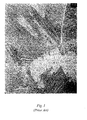
- Figure 1 is photomicrograph (taken at 200x magnification) of a beta-annealed Ti 64 plate.
- Figure 2 is a photomicrograph (also taken at 200x magnification) of a Ti 6242 casting. Both of these microstructures exhibit a relatively coarse "basketweave" of alpha and beta crystals. The basketweave is coarser in the Ti 6242 alloy ( Figure 2).
- Alpha phase is also precipitated at the grain boundaries in both alloys during cooling. This alpha precipitation significantly decreases ductility and reduces fatigue strength of the alloy.
- beta and alpha-beta alloys such as Ti 64 and Ti 6242 must be quenched rapidly if heated to or above the beta transus temperature.
- the rapid cooling is at least as fast as air cooling.
- Alpha-beta titanium alloys are also frequently cooled even faster, e.g., with a gas, water, or oil quench.
- the need to rapidly quench beta and alpha-beta titanium alloys can limit their use in some structural applications.
- the properties of alpha-beta titanium alloys can drop off significantly as the thickness of a cast or forged part increases. This is due, at least in part, to the differential cooling rate between the outer portions and the inner portions of the formed structure.
- the tensile strength and fracture resistance for cast or forged parts drops significantly in areas having a thickness of five inches or more.
- the thick parts of a cast or forged Ti 64 member must be made even thicker, both exacerbating the cooling rate difficulties and increasing the weight and cost of the final finished part.
- Figure 1 is a photomicrograph taken at 200x magnification of a conventionally processed beta-annealed Ti 64 plate.
- Figure 2 is a photomicrograph taken at 200x magnification of a conventionally processed Ti 6242 casting.
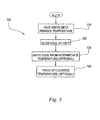
- FIG. 3 is a flowchart schematically illustrating aspects of a heat treatment in accordance with an embodiment of the invention.
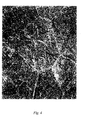
- Figure 4 is a photomicrograph taken at 200x magnification of a Ti 5553 alloy heat treated in accordance with an embodiment of the invention.
- Figure 5 is a perspective view of an airplane schematically illustrating one potential application for a titanium alloy structural member in accordance with an embodiment of the invention.
- Various embodiments of the present invention provide methods for heat treating titanium alloys and metal members comprising heat-treated titanium alloys, e.g., cast or forged titanium alloy parts. Aspects of the invention show significant promise as viable alternatives to conventional wrought Ti 64 and Ti 6242, likely the most common titanium alloys in the aircraft industry today.
- One embodiment of the invention provides a method of forming a metal member in which an alloy is formed into a utile shape.
- the alloy may comprise at least about 50 wt.% titanium and at least about 5 wt.% molybdenum.
- the alloy is cooled from a first temperature above a beta transus temperature of the alloy to a second temperature below the beta transus temperature at a cooling rate of no more than about 5° F per minute. Thereafter, the alloy optionally may be treated for a period of about 1-12 hours at a third temperature of about 700-1100° F.
- a method of forming a metal member in accordance with another embodiment of the invention involves forming an alloy into a utile shape.
- the alloy may comprise at least about 50 wt.% titanium and at least about 5 wt.% molybdenum.
- the alloy is cooled from a first temperature above a beta transus temperature of the alloy to room temperature at a cooling rate of no more than about 30° F per minute. Thereafter, the alloy optionally may be treated for a period of about 1-12 hours at a third temperature of about 700-1100° F.
- Another embodiment of the invention provides a method of heat treating a titanium-based alloy that comprises cooling the alloy from a first temperature above a beta transus temperature of the alloy to a second temperature below the beta transus temperature. This cooling may take place at a rate of less than 30° F per minute, e.g., about 1-5° F per minute.
- a method of manufacturing an aircraft in accordance with another embodiment of the invention comprises forming a structural member and assembling the structural member into the aircraft.
- Forming the structural member may include forming an alloy into a utile shape, the alloy comprising at least about 50 wt.% titanium and at least about 5 wt.% molybdenum.
- the alloy may be cooled from a first temperature above a beta transus temperature of the alloy to a second temperature below the beta transus temperature at a cooling rate of no more than about 30° F per minute.
- the structural member When assembled into the aircraft, the structural member may be in a load-bearing position in the aircraft and have an ultimate tensile strength of at least about 150 ksi and a K 1C fracture toughness of at least about 70 ksi ⁇ in.
- the first section outlines methods for heat treating titanium alloys in accordance with embodiments of the invention.
- the second section discusses specific applications for formed metal members in accordance with other aspects of the invention.
- FIG. 1 schematically illustrates a heat treatment method 100 in accordance with an embodiment of the invention.
- a titanium-based alloy may be provided in any desired form.
- the titanium-based alloy is desirably either a beta titanium alloy or an alpha-beta titanium alloy, i.e., a titanium alloy that will exhibit both alpha and beta phases at room temperature.
- the alloy comprises at least about 50 wt.% titanium and at least about 5 wt.% molybdenum.
- the alloy is formed into a utile shape before the heat treatment.
- the alloy may be forged into the desired shape.
- such forging will typically will take place at a temperature below the beta transus temperature.
- the alloy may be formed into a utile shape by various casting techniques.
- the casting may take place at a temperature above the beta transus temperature for the alloy and the cast part may be subjected to the slow cool process 120 (discussed below) in cooling down from the initial casting.
- the casting may be cooled to a temperature below the beta transus temperature for hot isostatic pressing or the like.
- the alloy may be heated above the beta transus temperature in the heating process 110 of Figure 3.
- the beta transus temperature of the alloy may be determined using conventional techniques, e.g., by testing representative samples from a lot of the alloy in accordance with MIL-H-81200B, mentioned above.
- the alloy is soaked at a temperature that is about 50 ⁇ 25° F above the determined beta transus temperature of the lot.
- the soaking time is selected such that all portions of the alloy member are soaked at the target temperature for at least 30 minutes. This time may vary with the selected soak temperature, with soaking times decreasing with increasing temperature.
- the alloy After the alloy has been subjected to the heat process 110, it may be cooled in the slow cool process 120.
- This slow cool process 120 desirably takes place at a cooling rate that is substantially lower than conventional wisdom would dictate.
- cooling rates in the slow cool process 120 are desirably no greater than 30° F and may be less than 30° F.
- the alloy is cooled in the slow cool process 120 at a rate of about 1-30° F per minute, e.g., about 1-10° F per minute.
- the tensile strength and fracture toughness of at least some beta and alpha-beta alloys may be further enhanced by a particularly slow cooling rate.
- the cooling rate in the slow cool process 120 is no more than about 5° F per minute, e.g., 1-5° F, with select embodiments being cooled at about 1-2° F per minute.
- a slow cool process 120 at a slow cooling rate can yield strong, tough alloys.
- select embodiments of the invention provide a heat-treated alloy having ultimate tensile strength of at least about 150 ksi and a K 1C fracture toughness of at least about 70ksi ⁇ in.
- the slow cool process 120 starts from a temperature above the beta transus temperature and continues to a second temperature that is below the beta transus temperature.
- this second temperature is no greater than about 1500° F, e.g., 1400° F or less. In other embodiments of the invention, this second temperature is less than about 250° F.
- continuing the slow cool process 120 until the alloy reaches room temperature, typically less than 100° F, will yield particularly good results.
- the slow cool process 120 stops at an intermediate second temperature that is less than the beta transus temperature, but greater than room temperature, it may be subjected to a final cool process 130.
- the temperature is reduced from the second temperature to room temperature at a cooling rate that is faster than the cooling rate in the slow cool process 120.
- the final cool process 130 comprises allowing the alloy to cool from the second temperature to room temperature by air-cooling the alloy. If so desired, the alloy may be cooled even faster, e.g., by quenching with an inert gas, water, or oil.
- Such a final cool process 130 can increase throughput of the heat treatment method 100 while achieving mechanical properties that may still surpass those conventionally obtained for Ti 64 and Ti 6242 alloys.
- Certain embodiments of the invention include an optional reheating process 140 in which the alloy is treated at an elevated temperature below the beta transus temperature.
- the temperature of the reheating process 140 and the soak time at the desired temperature may vary depending on the composition of the alloy and its desired properties, among other factors.
- a reheating process 140 may comprise maintaining the alloy at a temperature of at least 700° F but below the beta transus temperature for a period of at least one hour.
- the reheating process 140 may comprise heat treating the alloy at a temperature of about 700-1100° F for about 1-12 hours. Although temperatures higher than 1100° F may reduce the time needed in the reheating process to achieve a desired property, temperatures in excess of 1100° F are not believe to be necessary for most alloys.
- the alloy may be cooled down to room temperature. Although a slow cooling rate, e.g., 30° F per minute or less, is typically used, substantially faster cooling rates may be used. In one embodiment, the alloy is cooled fairly rapidly after soaking at the intended reheating temperature, e.g., by air cooling or quenching.
- Figure 4 is a photomicrograph of an alpha-beta titanium alloy heat treated in accordance with an embodiment of the invention.
- the particular alloy shown in Figure 4 comprises Ti 5553 (also referred to as VT 22-1) which comprises principally about 5 wt.% aluminum, 5 wt.% molybdenum, 5 wt.% vanadium, and 3 wt.% chromium, with the balance comprising titanium and minor impurities.
- VT 22-1 also referred to as VT 22-1
- Figures 1 and 2 illustrate relatively coarse basketweave structures of long, relatively large alpha inclusions in a beta structure.
- a fair amount of the alpha structure is also precipitated at the grain boundaries in Figures 1 and 2.
- the structure shown in Figure 4 in contrast, has an extremely fine basketweave structure that includes fine, acicular alpha phase and very little grain boundary alpha. This is particularly surprising in light of the common understanding in the art that beta and alpha-beta titanium alloys must be cooled very rapidly to avoid undue precipitation of grain boundary alpha phase.
- Table 1 compares the effects of various heat treatments on yield strength, ultimate tensile strength, elongation, and fracture toughness.
- Each of samples A1-A12 was soaked at a temperature above the beta transus temperature for a time deemed sufficient to convert the sample to beta phase, then cooled at a rate of 1° F/min. or 2° F/min. to room temperature, 1400° F, or 1500° F.
- samples were subjected to a reheating process 140 ( Figure 3) in which they were soaked for about 8 hours at a temperature of about 1100° F.
- Samples A3, A5, A9, and A11 were air cooled to room temperature upon reaching the intermediate temperature; those cooled to an elevated intermediate temperature and not aged (A4, A6, A10, and A12) were held at the intermediate temperature for four hours then allowed to air cool.
- sample A13 was heat treated in a fashion one skilled in the art might suggest to achieve a high ultimate tensile strength and high fracture toughness.
- sample A13 was soaked at a temperature of about 20°C below the beta transus temperature for about 4 hours, furnace cooled to 1454° F and held for 3 hours then air cooled to room temperature, and then aged at 1150° F for 8 hours.
- sample A13 was much less ductile (7.1% elongation) and less tough (K 1C fracture toughness of less than 47 ksi ⁇ in) than any one of samples A1, A2, A7, and A8 (elongation of 10-16.1%, K 1C fracture toughness of at least 73 ksi ⁇ in and as high as 89.1 ksi ⁇ in). Cooling at about 1 or 2° F/min to an intermediate temperature of 1400-1500°C did not appear to yield significant benefit over the more conventional treatment of sample A13.
- All three samples were Ti 5553 alloy.
- the first two samples, B1 and B2 were heated above the beta transus temperature and cooled at a rate of about 2° F/min to room temperature.
- Sample B2 was then reheated to about 1100° F and held at that temperature for about 8 hours; B1 was tested without a subsequent reheat process 140 ( Figure 3).
- the third sample, sample B3, was heat treated more conventionally by annealing at a temperature about 100° F below the beta transus temperature, then air cooling to a temperature of about 1100° F) and aging at that temperature before testing.
- sample B3 The sample subjected to a conventional air cooling process, sample B3, had yield and ultimate tensile strengths of 180 ksi or greater, but this conventional sample was quite brittle, with a K 1C fracture toughness of less than 37 ksi ⁇ in. Although the slow-cooled samples B1 and B2 had lower tensile strengths, their fracture toughness was more than double that of sample B3. This makes them much better suited for some applications, e.g., load-bearing members in aircraft, than the conventional heat treatment.
- Table 2 also highlights a surprising result of the reheating process 140 (Figure 3). Instead of sacrificing strength for improved toughness, as one might expect, the reheating process 140 increased toughness and increased the yield and ultimate strength of sample B2.
- Samples C3 and C4 exhibit good ductility, but have yield tensile strengths of less than 115 ksi and ultimate tensile strengths of 132 ksi or less. Although adequate for some purposes, similar results may be obtained using wrought and mill annealed Ti 64, a titanium alloy used in aerospace applications. Sample C3 has no molybdenum and sample C4 has only 2 wt.% molybdenum. The other two samples, each of which had in excess of 2 wt.% molybdenum, exhibited a much better balance of strength and toughness than samples C3 and C4. Samples B1 and B2 in Table 2, like samples C1 and C2 in Table 3, have at least 5 wt.% molybdenum. All four of these samples have tensile strengths superior to those measured for C3 and C4, suggesting that a slow cooling process 120 ( Figure 3) in accordance with the invention is particularly beneficial for titanium alloys containing at least 5 wt.% molybdenum.
- Sample D4 which was cooled at a rate of about 33° F/min (2000° F/hour), showed a rather substantial drop off in both ductility and fracture toughness, dropping from over 73 ksi ⁇ in (sample D3, cooled at about 17° F/min) to less than 48 ksi ⁇ in. Such low fracture toughness would render sample D4 unsuitable for many load-bearing members in aeronautical and aerospace applications, for example.
- the results for samples D1-D3 indicate that slow cooling rates of no more than 30° F/min, e.g., less than 17° F/min, are more appropriate, at least for aeronautical and aerospace applications.
- Table 4 also suggests that ductility and fracture toughness can be improved at slower cooling rates, although this may sacrifice some tensile strength.
- a cooling rate of greater than about 1° F/min but less than about 30° F/min - e.g., between about 8° F/min (500° F/hr) and about 17° F/min (1000° F/hr) - may provide a superior balance of tensile strength, ductility, and fracture toughness.
- wrought Ti 64 Most thicker titanium-based parts in aerospace applications today comprise wrought Ti 64. Such parts are typically formed at a temperate about 50-100° F below the beta transus temperature and mill annealed, e.g., in accordance with the mill anneal process set forth in Military Specification MIL-H-81200B. Typical ultimate tensile strength for wrought Ti 64 is generally on the order of about 130-140 ksi, with K 1C fracture toughness typically in the vicinity of about 50 ksi ⁇ in.
- a wrought Ti 64 part is appreciably more costly than a part cast from the same alloy.
- the minimum requirements for cast parts are generally higher than those for forged parts because different locations on cast parts usually experience more significant variations in cooling rate than the same locations on a similar wrought part.
- the United States Federal Aviation Administration (FAA) specifies that cast parts must include a safety factor of 25%, i.e., the projected maximum load carrying capacity for a part is reduced by 25% to determine whether it meets the specified requirement for the part. For example, if the specification calls for a part having a maximum load carrying capacity of 60 ksi, a cast part would have to have a nominal maximum capacity of 80 ksi (80 ksi less 25% is 60 ksi).
- test part having an irregular shape and a maximum thickness of about 0.75 in. was cast.
- the cast part was formed in a mold then hot isostatic pressed at about 1650°F at a pressure of about 15 ksi for about 2 hours to improve density.
- This cast part was then heated above the beta transus temperature and slow cooled (process 120 in Figure 3) and reheated (process 140 in Figure 3) in accordance with aspects of the invention.
- the alloy in this cast part exhibited an ultimate tensile strength of about 168 ksi. Once reduced by the 25% safety factor noted above, the effective ultimate tensile strength for use in parts design would be about 126 ksi.
- Heat treating forged parts in accordance with aspects of the invention can also yield significant benefits over conventional wrought Ti 64 parts.
- the main landing gear beam for a BOEING 747 which is 10 inches thick in some areas, was forged from Ti 5553, heated above the beta transus temperature, and slow cooled and reheated in accordance with aspects of the invention.
- the ultimate tensile strength of a conventional air-cooled wrought Ti 64 alloy in areas 10 inches thick may be expected to be quite poor. With great care, it may be able to achieve ultimate tensile strengths for such a 10 inch-thick area on the order of about 130 ksi.
- a 10-inch thick area of the test casting of the main landing gear beam exhibited an ultimate tensile strength over 158 ksi and fracture toughness over 75 ksi ⁇ in, though. Accordingly, a titanium-based alloy part manufactured in accordance with embodiments of the invention would be significantly stronger, and likely more durable, than a typical wrought Ti 64 part of the same dimensions. Alternatively, a part heat treated in accordance with aspects of the present invention may be thinner and lighter than a wrought Ti 64 part for the same application.
- Metal members manufactured in accordance with embodiments of the invention may find use in any circumstance calling for a light, strong, and tough material. Such metal members may be used as load-bearing structural members, e.g., in aerospace and aeronautical applications. As noted above, aspects of the invention provide methods of manufacturing an aircraft, which methods may involve a heat treatment similar to the heat treatment method 100 outlined in Figure 3.
- FIG. 5 schematically illustrates an aircraft 200 including structural members 210 manufactured in accordance with aspects of the invention.
- the structural members 210 are schematically indicated as elements of a front landing gear assembly 215 and a main landing gear assembly 220, but the structural members 210 may be used in any appropriate load-bearing capacity.
- a method of manufacturing an aircraft in accordance with an embodiment includes forming a structural member and assembling the structural member into the aircraft.
- the structural member may be formed by forming a titanium-based alloy (e.g., an alloy comprising at least 50 wt. % Ti and at least 5 wt.% molybdenum) into a utile shape in any desired fashion, including casting or forging.
- This formed alloy may be subjected to a heat treatment process 100 generally as discussed above, e.g., by heating the formed alloy to a temperature above the alloy's beta transus temperature (heating process 110) and cooling to a second temperature below the beta transus temperature at a rate of no greater than 30° F/min (slow cooling process 120).
- the alloy of the resultant structural member may have an ultimate tensile strength of at least about 140 ksi, e.g., 150 ksi or greater.
- the alloy may also have a K 1C fracture toughness of at least about 50 ksi ⁇ in, e.g., 70 ksi ⁇ in
- the heat treated structural member may be subjected to various post-forming operations, e.g., machining to provide the desired finish and final dimensions.
- the completed structural member may be assembled into the aircraft in any suitable fashion, e.g., bolting, welding, or any other known manner. Techniques for assembling structural members of aircraft are well known in the art and need not be detailed here.
Landscapes
- Chemical & Material Sciences (AREA)
- Engineering & Computer Science (AREA)
- Materials Engineering (AREA)
- Mechanical Engineering (AREA)
- Metallurgy (AREA)
- Organic Chemistry (AREA)
- Physics & Mathematics (AREA)
- Thermal Sciences (AREA)
- Crystallography & Structural Chemistry (AREA)
- Forging (AREA)
- Heat Treatment Of Articles (AREA)
- Powder Metallurgy (AREA)
Applications Claiming Priority (2)
| Application Number | Priority Date | Filing Date | Title |
|---|---|---|---|
| US10/459,396 US7785429B2 (en) | 2003-06-10 | 2003-06-10 | Tough, high-strength titanium alloys; methods of heat treating titanium alloys |
| US459396 | 2003-06-10 |
Publications (3)
| Publication Number | Publication Date |
|---|---|
| EP1486576A2 true EP1486576A2 (de) | 2004-12-15 |
| EP1486576A3 EP1486576A3 (de) | 2004-12-22 |
| EP1486576B1 EP1486576B1 (de) | 2012-01-04 |
Family
ID=33299678
Family Applications (1)
| Application Number | Title | Priority Date | Filing Date |
|---|---|---|---|
| EP04076736A Expired - Lifetime EP1486576B1 (de) | 2003-06-10 | 2004-06-10 | Verfahren zur Wärmebehandlung von zähen, hochfesten Titanium-Legierungen |
Country Status (3)
| Country | Link |
|---|---|
| US (2) | US7785429B2 (de) |
| EP (1) | EP1486576B1 (de) |
| JP (1) | JP5078220B2 (de) |
Cited By (4)
| Publication number | Priority date | Publication date | Assignee | Title |
|---|---|---|---|---|
| EP1538226A3 (de) * | 2003-10-24 | 2006-02-01 | General Electric Company | Methode für das Fabrizieren eines starken Legierung Ti64 Artikels |
| EP3449025A4 (de) * | 2016-04-25 | 2019-11-20 | Arconic Inc. | Bcc-materialien aus titan, aluminium, vanadium und eisen sowie daraus hergestellte produkte |
| CN111458360A (zh) * | 2020-04-30 | 2020-07-28 | 中国航发北京航空材料研究院 | Ti6242棒材两相织构测定用EBSD样品的制备方法 |
| KR20240067421A (ko) | 2022-11-09 | 2024-05-17 | 한국생산기술연구원 | 베타 어닐링 타이타늄 합금의 성형방법 |
Families Citing this family (29)
| Publication number | Priority date | Publication date | Assignee | Title |
|---|---|---|---|---|
| US20040221929A1 (en) | 2003-05-09 | 2004-11-11 | Hebda John J. | Processing of titanium-aluminum-vanadium alloys and products made thereby |
| US7785429B2 (en) | 2003-06-10 | 2010-08-31 | The Boeing Company | Tough, high-strength titanium alloys; methods of heat treating titanium alloys |
| US7837812B2 (en) | 2004-05-21 | 2010-11-23 | Ati Properties, Inc. | Metastable beta-titanium alloys and methods of processing the same by direct aging |
| US20070102073A1 (en) * | 2004-06-10 | 2007-05-10 | Howmet Corporation | Near-beta titanium alloy heat treated casting |
| JP4900574B2 (ja) * | 2006-05-25 | 2012-03-21 | 日産自動車株式会社 | 動力伝達部品及びその製造方法 |
| US8500929B2 (en) * | 2006-09-28 | 2013-08-06 | The Boeing Company | Thermal processing method for improved machinability of titanium alloys |
| FR2940319B1 (fr) * | 2008-12-24 | 2011-11-25 | Aubert & Duval Sa | Procede de traitement thermique d'un alliage de titane, et piece ainsi obtenue |
| US10053758B2 (en) * | 2010-01-22 | 2018-08-21 | Ati Properties Llc | Production of high strength titanium |
| JP5328694B2 (ja) * | 2010-02-26 | 2013-10-30 | 新日鐵住金株式会社 | 耐熱性に優れたチタン合金製自動車用エンジンバルブ |
| CN102939398A (zh) * | 2010-04-30 | 2013-02-20 | 奎斯泰克创新公司 | 钛合金 |
| US9255316B2 (en) | 2010-07-19 | 2016-02-09 | Ati Properties, Inc. | Processing of α+β titanium alloys |
| US8499605B2 (en) | 2010-07-28 | 2013-08-06 | Ati Properties, Inc. | Hot stretch straightening of high strength α/β processed titanium |
| US8613818B2 (en) | 2010-09-15 | 2013-12-24 | Ati Properties, Inc. | Processing routes for titanium and titanium alloys |
| US9206497B2 (en) | 2010-09-15 | 2015-12-08 | Ati Properties, Inc. | Methods for processing titanium alloys |
| US10513755B2 (en) | 2010-09-23 | 2019-12-24 | Ati Properties Llc | High strength alpha/beta titanium alloy fasteners and fastener stock |
| US8652400B2 (en) | 2011-06-01 | 2014-02-18 | Ati Properties, Inc. | Thermo-mechanical processing of nickel-base alloys |
| RU2465366C1 (ru) * | 2011-09-15 | 2012-10-27 | Российская Федерация в лице Министерства промышленности и торговли Российской Федерации (Минпромторг России) | СПОСОБ ТЕРМИЧЕСКОЙ ОБРАБОТКИ ВЫСОКОПРОЧНЫХ (α+β)-ТИТАНОВЫХ СПЛАВОВ |
| US9050647B2 (en) | 2013-03-15 | 2015-06-09 | Ati Properties, Inc. | Split-pass open-die forging for hard-to-forge, strain-path sensitive titanium-base and nickel-base alloys |
| US9869003B2 (en) | 2013-02-26 | 2018-01-16 | Ati Properties Llc | Methods for processing alloys |
| US9192981B2 (en) | 2013-03-11 | 2015-11-24 | Ati Properties, Inc. | Thermomechanical processing of high strength non-magnetic corrosion resistant material |
| US9777361B2 (en) | 2013-03-15 | 2017-10-03 | Ati Properties Llc | Thermomechanical processing of alpha-beta titanium alloys |
| US11111552B2 (en) | 2013-11-12 | 2021-09-07 | Ati Properties Llc | Methods for processing metal alloys |
| WO2016040996A1 (en) * | 2014-09-19 | 2016-03-24 | Deakin University | Methods of processing metastable beta titanium alloys |
| US10323312B2 (en) | 2014-12-10 | 2019-06-18 | Rolls-Royce Corporation | Reducing microtexture in titanium alloys |
| US10094003B2 (en) | 2015-01-12 | 2018-10-09 | Ati Properties Llc | Titanium alloy |
| US10502252B2 (en) | 2015-11-23 | 2019-12-10 | Ati Properties Llc | Processing of alpha-beta titanium alloys |
| CN114717497A (zh) * | 2022-04-21 | 2022-07-08 | 重庆科技学院 | 一种钛合金制件的焊接工艺 |
| CN116005090B (zh) * | 2023-01-06 | 2024-08-20 | 中国航空制造技术研究院 | 一种改善1500MPa级钛合金韧性的热处理工艺 |
| US12344918B2 (en) | 2023-07-12 | 2025-07-01 | Ati Properties Llc | Titanium alloys |
Citations (3)
| Publication number | Priority date | Publication date | Assignee | Title |
|---|---|---|---|---|
| GB815975A (en) | 1955-07-01 | 1959-07-08 | Crucible Steel Co America | Heat treatment of titanium alloys |
| GB1499134A (en) | 1974-02-13 | 1978-01-25 | Ceskoslovenska Akademie Ved | Method for the preparation of hydrophilic ion exchangers |
| US5698050A (en) | 1994-11-15 | 1997-12-16 | Rockwell International Corporation | Method for processing-microstructure-property optimization of α-β beta titanium alloys to obtain simultaneous improvements in mechanical properties and fracture resistance |
Family Cites Families (22)
| Publication number | Priority date | Publication date | Assignee | Title |
|---|---|---|---|---|
| US2950191A (en) * | 1951-05-31 | 1960-08-23 | Crucible Steel Co America | Titanium base alloys |
| GB710584A (en) | 1952-02-28 | 1954-06-16 | Battelle Development Corp | Titanium-molybdenum-chromium alloys |
| US2880089A (en) * | 1957-12-13 | 1959-03-31 | Crucible Steel Co America | Titanium base alloys |
| US3147115A (en) * | 1958-09-09 | 1964-09-01 | Crucible Steel Co America | Heat treatable beta titanium-base alloys and processing thereof |
| US2968586A (en) * | 1958-09-15 | 1961-01-17 | Crucible Steel Co America | Wrought titanium base alpha-beta alloys of high creep strength and processing thereof |
| CA899110A (en) * | 1968-09-24 | 1972-05-02 | Noranda Mines Limited | Low density wrought zinc alloy with improved strength and low temperature ductility |
| SU396427A1 (ru) * | 1971-05-10 | 1973-08-29 | СПОСОБ ТЕРМОМЕХАНИЧЕСКОЙ ОБРАБОТКИ а+р-ТИТАНОВЫХ СПЛАВОВ | |
| GB1449134A (en) | 1972-09-11 | 1976-09-15 | Secr Defence | Titanium alloys |
| US4098623A (en) * | 1975-08-01 | 1978-07-04 | Hitachi, Ltd. | Method for heat treatment of titanium alloy |
| JPS5839902B2 (ja) | 1976-04-28 | 1983-09-02 | 三菱重工業株式会社 | 内部摩擦の大きいチタン合金 |
| JPS5792164A (en) * | 1980-11-27 | 1982-06-08 | Toshiba Corp | Vane of steam turbine and its manufacture |
| US4631092A (en) | 1984-10-18 | 1986-12-23 | The Garrett Corporation | Method for heat treating cast titanium articles to improve their mechanical properties |
| JPS62284051A (ja) * | 1986-06-02 | 1987-12-09 | Nippon Steel Corp | α+β型チタン合金の熱処理方法 |
| US4975125A (en) * | 1988-12-14 | 1990-12-04 | Aluminum Company Of America | Titanium alpha-beta alloy fabricated material and process for preparation |
| US5407787A (en) * | 1993-04-14 | 1995-04-18 | The United States Of America As Represented By The Secretary Of The Navy | Process to fabricate thick coplanar microwave electrode structures |
| FR2713663B1 (fr) * | 1993-12-15 | 1996-01-12 | Snecma | Procédé de fabrication de pièces axisymétriques en composite à matrice métallique. |
| JPH0931617A (ja) * | 1995-07-13 | 1997-02-04 | Sumitomo Metal Ind Ltd | チタン合金厚板の製造方法 |
| US6127044A (en) * | 1995-09-13 | 2000-10-03 | Kabushiki Kaisha Toshiba | Method for producing titanium alloy turbine blades and titanium alloy turbine blades |
| US6190473B1 (en) | 1999-08-12 | 2001-02-20 | The Boenig Company | Titanium alloy having enhanced notch toughness and method of producing same |
| JP2001059148A (ja) * | 1999-08-24 | 2001-03-06 | Nippon Steel Corp | 高強度、高延性、高疲労強度を有するα+β型チタン合金の製造方法およびその製造装置 |
| US6284070B1 (en) | 1999-08-27 | 2001-09-04 | General Electric Company | Heat treatment for improved properties of alpha-beta titanium-base alloys |
| US7785429B2 (en) | 2003-06-10 | 2010-08-31 | The Boeing Company | Tough, high-strength titanium alloys; methods of heat treating titanium alloys |
-
2003
- 2003-06-10 US US10/459,396 patent/US7785429B2/en not_active Expired - Fee Related
-
2004
- 2004-06-09 JP JP2004171188A patent/JP5078220B2/ja not_active Expired - Fee Related
- 2004-06-10 EP EP04076736A patent/EP1486576B1/de not_active Expired - Lifetime
-
2010
- 2010-07-06 US US12/830,915 patent/US8262819B2/en not_active Expired - Fee Related
Patent Citations (3)
| Publication number | Priority date | Publication date | Assignee | Title |
|---|---|---|---|---|
| GB815975A (en) | 1955-07-01 | 1959-07-08 | Crucible Steel Co America | Heat treatment of titanium alloys |
| GB1499134A (en) | 1974-02-13 | 1978-01-25 | Ceskoslovenska Akademie Ved | Method for the preparation of hydrophilic ion exchangers |
| US5698050A (en) | 1994-11-15 | 1997-12-16 | Rockwell International Corporation | Method for processing-microstructure-property optimization of α-β beta titanium alloys to obtain simultaneous improvements in mechanical properties and fracture resistance |
Cited By (6)
| Publication number | Priority date | Publication date | Assignee | Title |
|---|---|---|---|---|
| EP1538226A3 (de) * | 2003-10-24 | 2006-02-01 | General Electric Company | Methode für das Fabrizieren eines starken Legierung Ti64 Artikels |
| US7481898B2 (en) | 2003-10-24 | 2009-01-27 | General Electric Company | Method for fabricating a thick Ti64 alloy article to have a higher surface yield and tensile strengths and a lower centerline yield and tensile strengths |
| EP3449025A4 (de) * | 2016-04-25 | 2019-11-20 | Arconic Inc. | Bcc-materialien aus titan, aluminium, vanadium und eisen sowie daraus hergestellte produkte |
| CN111458360A (zh) * | 2020-04-30 | 2020-07-28 | 中国航发北京航空材料研究院 | Ti6242棒材两相织构测定用EBSD样品的制备方法 |
| CN111458360B (zh) * | 2020-04-30 | 2023-08-04 | 中国航发北京航空材料研究院 | Ti6242棒材两相织构测定用EBSD样品的制备方法 |
| KR20240067421A (ko) | 2022-11-09 | 2024-05-17 | 한국생산기술연구원 | 베타 어닐링 타이타늄 합금의 성형방법 |
Also Published As
| Publication number | Publication date |
|---|---|
| EP1486576A3 (de) | 2004-12-22 |
| US20100269958A1 (en) | 2010-10-28 |
| JP2005002473A (ja) | 2005-01-06 |
| US20040250932A1 (en) | 2004-12-16 |
| JP5078220B2 (ja) | 2012-11-21 |
| US8262819B2 (en) | 2012-09-11 |
| EP1486576B1 (de) | 2012-01-04 |
| US7785429B2 (en) | 2010-08-31 |
Similar Documents
| Publication | Publication Date | Title |
|---|---|---|
| US8262819B2 (en) | Tough, high-strength titanium alloys; methods of heat treating titanium alloys | |
| US10119178B2 (en) | Titanium alloy with improved properties | |
| AU2011305924B2 (en) | High strength and ductility alpha/beta titanium alloy | |
| US5746846A (en) | Method to produce gamma titanium aluminide articles having improved properties | |
| US5226985A (en) | Method to produce gamma titanium aluminide articles having improved properties | |
| Fan et al. | Martensite decomposition during post-heat treatments and the aging response of near-α Ti–6Al–2Sn–4Zr–2Mo (Ti-6242) titanium alloy processed by selective laser melting (SLM) | |
| EP3521480B1 (de) | Hochfeste alpha-beta-titanlegierung | |
| CA2807151C (en) | Low-cost alpha-beta titanium alloy with good ballistic and mechanical properties | |
| AU2019249801B2 (en) | High temperature titanium alloys | |
| JPH03274238A (ja) | 加工性に優れた高強度チタン合金およびその合金材の製造方法ならびにその超塑性加工法 | |
| WO1998022629A2 (en) | A new class of beta titanium-based alloys with high strength and good ductility | |
| AU2025201384A1 (en) | Creep Resistant Titanium Alloys | |
| EP3974082A1 (de) | Tial-legierung und verfahren zu ihrer herstellung | |
| KR20210018663A (ko) | 고강도 고성형성 베타 타이타늄 합금 | |
| JP2003013159A (ja) | チタン合金ファスナー材及びその製造方法 | |
| KR102245612B1 (ko) | 우수한 기계적 특성을 가지는 저비용 Ti-Al-Fe-Sn계 타이타늄 합금 | |
| JP2005154850A (ja) | 高強度β型チタン合金 | |
| US20060115374A1 (en) | Titanium-based alloy | |
| JP6626046B2 (ja) | 良好な弾道及び機械特性を有する低コストのα−βチタニウム合金 |
Legal Events
| Date | Code | Title | Description |
|---|---|---|---|
| PUAI | Public reference made under article 153(3) epc to a published international application that has entered the european phase |
Free format text: ORIGINAL CODE: 0009012 |
|
| PUAL | Search report despatched |
Free format text: ORIGINAL CODE: 0009013 |
|
| AK | Designated contracting states |
Kind code of ref document: A2 Designated state(s): AT BE BG CH CY CZ DE DK EE ES FI FR GB GR HU IE IT LI LU MC NL PL PT RO SE SI SK TR |
|
| AX | Request for extension of the european patent |
Extension state: AL HR LT LV MK |
|
| AK | Designated contracting states |
Kind code of ref document: A3 Designated state(s): AT BE BG CH CY CZ DE DK EE ES FI FR GB GR HU IE IT LI LU MC NL PL PT RO SE SI SK TR |
|
| AX | Request for extension of the european patent |
Extension state: AL HR LT LV MK |
|
| 17P | Request for examination filed |
Effective date: 20050530 |
|
| AKX | Designation fees paid |
Designated state(s): DE FR GB |
|
| 17Q | First examination report despatched |
Effective date: 20071114 |
|
| GRAP | Despatch of communication of intention to grant a patent |
Free format text: ORIGINAL CODE: EPIDOSNIGR1 |
|
| GRAS | Grant fee paid |
Free format text: ORIGINAL CODE: EPIDOSNIGR3 |
|
| GRAA | (expected) grant |
Free format text: ORIGINAL CODE: 0009210 |
|
| AK | Designated contracting states |
Kind code of ref document: B1 Designated state(s): DE FR GB |
|
| REG | Reference to a national code |
Ref country code: GB Ref legal event code: FG4D |
|
| REG | Reference to a national code |
Ref country code: DE Ref legal event code: R096 Ref document number: 602004035947 Country of ref document: DE Effective date: 20120301 |
|
| RAP2 | Party data changed (patent owner data changed or rights of a patent transferred) |
Owner name: THE BOEING COMPANY |
|
| PLBE | No opposition filed within time limit |
Free format text: ORIGINAL CODE: 0009261 |
|
| STAA | Information on the status of an ep patent application or granted ep patent |
Free format text: STATUS: NO OPPOSITION FILED WITHIN TIME LIMIT |
|
| 26N | No opposition filed |
Effective date: 20121005 |
|
| REG | Reference to a national code |
Ref country code: DE Ref legal event code: R097 Ref document number: 602004035947 Country of ref document: DE Effective date: 20121005 |
|
| REG | Reference to a national code |
Ref country code: FR Ref legal event code: PLFP Year of fee payment: 13 |
|
| REG | Reference to a national code |
Ref country code: FR Ref legal event code: PLFP Year of fee payment: 14 |
|
| REG | Reference to a national code |
Ref country code: FR Ref legal event code: PLFP Year of fee payment: 15 |
|
| PGFP | Annual fee paid to national office [announced via postgrant information from national office to epo] |
Ref country code: DE Payment date: 20210629 Year of fee payment: 18 Ref country code: FR Payment date: 20210625 Year of fee payment: 18 |
|
| PGFP | Annual fee paid to national office [announced via postgrant information from national office to epo] |
Ref country code: GB Payment date: 20210628 Year of fee payment: 18 |
|
| REG | Reference to a national code |
Ref country code: DE Ref legal event code: R119 Ref document number: 602004035947 Country of ref document: DE |
|
| GBPC | Gb: european patent ceased through non-payment of renewal fee |
Effective date: 20220610 |
|
| PG25 | Lapsed in a contracting state [announced via postgrant information from national office to epo] |
Ref country code: FR Free format text: LAPSE BECAUSE OF NON-PAYMENT OF DUE FEES Effective date: 20220630 |
|
| PG25 | Lapsed in a contracting state [announced via postgrant information from national office to epo] |
Ref country code: GB Free format text: LAPSE BECAUSE OF NON-PAYMENT OF DUE FEES Effective date: 20220610 Ref country code: DE Free format text: LAPSE BECAUSE OF NON-PAYMENT OF DUE FEES Effective date: 20230103 |