EP1494546B1 - Verfahren zur lebensmitteltechnischen gewinnung von kartoffelsaft-produkten - Google Patents
Verfahren zur lebensmitteltechnischen gewinnung von kartoffelsaft-produkten Download PDFInfo
- Publication number
- EP1494546B1 EP1494546B1 EP03718536A EP03718536A EP1494546B1 EP 1494546 B1 EP1494546 B1 EP 1494546B1 EP 03718536 A EP03718536 A EP 03718536A EP 03718536 A EP03718536 A EP 03718536A EP 1494546 B1 EP1494546 B1 EP 1494546B1
- Authority
- EP
- European Patent Office
- Prior art keywords
- potato juice
- juice
- potato
- drying
- electrodialysis
- Prior art date
- Legal status (The legal status is an assumption and is not a legal conclusion. Google has not performed a legal analysis and makes no representation as to the accuracy of the status listed.)
- Expired - Lifetime
Links
- 244000061456 Solanum tuberosum Species 0.000 title claims description 104
- 235000002595 Solanum tuberosum Nutrition 0.000 title claims description 103
- 238000000034 method Methods 0.000 title claims description 67
- 235000021581 juice product Nutrition 0.000 title claims description 22
- 235000013305 food Nutrition 0.000 title description 14
- 238000004519 manufacturing process Methods 0.000 title description 7
- 238000005516 engineering process Methods 0.000 title description 5
- 235000011389 fruit/vegetable juice Nutrition 0.000 claims description 66
- 239000012528 membrane Substances 0.000 claims description 66
- 238000000108 ultra-filtration Methods 0.000 claims description 30
- 238000000909 electrodialysis Methods 0.000 claims description 29
- 235000012015 potatoes Nutrition 0.000 claims description 20
- 238000001035 drying Methods 0.000 claims description 17
- 238000001914 filtration Methods 0.000 claims description 14
- VYPSYNLAJGMNEJ-UHFFFAOYSA-N Silicium dioxide Chemical compound O=[Si]=O VYPSYNLAJGMNEJ-UHFFFAOYSA-N 0.000 claims description 13
- 238000009792 diffusion process Methods 0.000 claims description 13
- 239000000126 substance Substances 0.000 claims description 12
- 238000000926 separation method Methods 0.000 claims description 11
- 235000005979 Citrus limon Nutrition 0.000 claims description 10
- 244000131522 Citrus pyriformis Species 0.000 claims description 10
- 239000002253 acid Substances 0.000 claims description 10
- 239000003795 chemical substances by application Substances 0.000 claims description 10
- 238000002360 preparation method Methods 0.000 claims description 8
- OKTJSMMVPCPJKN-UHFFFAOYSA-N Carbon Chemical compound [C] OKTJSMMVPCPJKN-UHFFFAOYSA-N 0.000 claims description 6
- BPQQTUXANYXVAA-UHFFFAOYSA-N Orthosilicate Chemical compound [O-][Si]([O-])([O-])[O-] BPQQTUXANYXVAA-UHFFFAOYSA-N 0.000 claims description 6
- 229920002472 Starch Polymers 0.000 claims description 6
- 239000003963 antioxidant agent Substances 0.000 claims description 6
- 229910052799 carbon Inorganic materials 0.000 claims description 6
- 239000003381 stabilizer Substances 0.000 claims description 6
- 235000019698 starch Nutrition 0.000 claims description 6
- 239000008107 starch Substances 0.000 claims description 6
- 239000000835 fiber Substances 0.000 claims description 4
- 239000000706 filtrate Substances 0.000 claims description 4
- 235000015203 fruit juice Nutrition 0.000 claims description 4
- 239000000377 silicon dioxide Substances 0.000 claims description 4
- 239000011573 trace mineral Substances 0.000 claims description 4
- 235000013619 trace mineral Nutrition 0.000 claims description 4
- 241000196324 Embryophyta Species 0.000 claims description 3
- 235000015192 vegetable juice Nutrition 0.000 claims description 3
- 229930003231 vitamin Natural products 0.000 claims description 3
- 235000013343 vitamin Nutrition 0.000 claims description 3
- 239000011782 vitamin Substances 0.000 claims description 3
- 229940088594 vitamin Drugs 0.000 claims description 3
- 229910052500 inorganic mineral Inorganic materials 0.000 claims description 2
- 235000010755 mineral Nutrition 0.000 claims description 2
- 239000011707 mineral Substances 0.000 claims description 2
- 239000004150 EU approved colour Substances 0.000 claims 1
- 238000002036 drum drying Methods 0.000 claims 1
- 239000000796 flavoring agent Substances 0.000 claims 1
- 229940006093 opthalmologic coloring agent diagnostic Drugs 0.000 claims 1
- 235000012239 silicon dioxide Nutrition 0.000 claims 1
- 238000001694 spray drying Methods 0.000 claims 1
- 230000008719 thickening Effects 0.000 claims 1
- 238000002474 experimental method Methods 0.000 description 43
- 239000012141 concentrate Substances 0.000 description 23
- 235000008504 concentrate Nutrition 0.000 description 23
- 150000002500 ions Chemical class 0.000 description 22
- 239000003792 electrolyte Substances 0.000 description 19
- 230000008569 process Effects 0.000 description 19
- 150000001768 cations Chemical class 0.000 description 17
- CIWBSHSKHKDKBQ-JLAZNSOCSA-N Ascorbic acid Chemical compound OC[C@H](O)[C@H]1OC(=O)C(O)=C1O CIWBSHSKHKDKBQ-JLAZNSOCSA-N 0.000 description 15
- 239000000523 sample Substances 0.000 description 15
- 238000012360 testing method Methods 0.000 description 14
- XEEYBQQBJWHFJM-UHFFFAOYSA-N Iron Chemical compound [Fe] XEEYBQQBJWHFJM-UHFFFAOYSA-N 0.000 description 12
- OYPRJOBELJOOCE-UHFFFAOYSA-N Calcium Chemical compound [Ca] OYPRJOBELJOOCE-UHFFFAOYSA-N 0.000 description 11
- 239000011575 calcium Substances 0.000 description 11
- 229910052791 calcium Inorganic materials 0.000 description 11
- 239000011734 sodium Substances 0.000 description 11
- 239000007787 solid Substances 0.000 description 11
- VEXZGXHMUGYJMC-UHFFFAOYSA-M Chloride anion Chemical compound [Cl-] VEXZGXHMUGYJMC-UHFFFAOYSA-M 0.000 description 10
- FYYHWMGAXLPEAU-UHFFFAOYSA-N Magnesium Chemical compound [Mg] FYYHWMGAXLPEAU-UHFFFAOYSA-N 0.000 description 10
- PXHVJJICTQNCMI-UHFFFAOYSA-N Nickel Chemical compound [Ni] PXHVJJICTQNCMI-UHFFFAOYSA-N 0.000 description 10
- 210000004027 cell Anatomy 0.000 description 10
- 239000011777 magnesium Substances 0.000 description 10
- 238000001471 micro-filtration Methods 0.000 description 10
- 239000000047 product Substances 0.000 description 10
- 239000000654 additive Substances 0.000 description 9
- 229910052749 magnesium Inorganic materials 0.000 description 9
- 238000013508 migration Methods 0.000 description 9
- 230000005012 migration Effects 0.000 description 9
- XLYOFNOQVPJJNP-UHFFFAOYSA-N water Substances O XLYOFNOQVPJJNP-UHFFFAOYSA-N 0.000 description 9
- DGAQECJNVWCQMB-PUAWFVPOSA-M Ilexoside XXIX Chemical compound C[C@@H]1CC[C@@]2(CC[C@@]3(C(=CC[C@H]4[C@]3(CC[C@@H]5[C@@]4(CC[C@@H](C5(C)C)OS(=O)(=O)[O-])C)C)[C@@H]2[C@]1(C)O)C)C(=O)O[C@H]6[C@@H]([C@H]([C@@H]([C@H](O6)CO)O)O)O.[Na+] DGAQECJNVWCQMB-PUAWFVPOSA-M 0.000 description 8
- ZLMJMSJWJFRBEC-UHFFFAOYSA-N Potassium Chemical compound [K] ZLMJMSJWJFRBEC-UHFFFAOYSA-N 0.000 description 8
- 230000007717 exclusion Effects 0.000 description 8
- 238000003306 harvesting Methods 0.000 description 8
- 238000004062 sedimentation Methods 0.000 description 8
- 229910052708 sodium Inorganic materials 0.000 description 8
- 238000003860 storage Methods 0.000 description 8
- 150000001450 anions Chemical class 0.000 description 7
- 230000000694 effects Effects 0.000 description 7
- 230000006641 stabilisation Effects 0.000 description 7
- 238000011105 stabilization Methods 0.000 description 7
- 150000007513 acids Chemical class 0.000 description 6
- 235000010323 ascorbic acid Nutrition 0.000 description 6
- 239000011668 ascorbic acid Substances 0.000 description 6
- 238000002845 discoloration Methods 0.000 description 6
- 229910001412 inorganic anion Inorganic materials 0.000 description 6
- 238000004255 ion exchange chromatography Methods 0.000 description 6
- 229910052742 iron Inorganic materials 0.000 description 6
- ODBLHEXUDAPZAU-UHFFFAOYSA-N isocitric acid Chemical compound OC(=O)C(O)C(C(O)=O)CC(O)=O ODBLHEXUDAPZAU-UHFFFAOYSA-N 0.000 description 6
- 239000000203 mixture Substances 0.000 description 6
- 150000002891 organic anions Chemical class 0.000 description 6
- 239000011591 potassium Substances 0.000 description 6
- 229920001592 potato starch Polymers 0.000 description 6
- 241000282414 Homo sapiens Species 0.000 description 5
- 229910019142 PO4 Inorganic materials 0.000 description 5
- HCHKCACWOHOZIP-UHFFFAOYSA-N Zinc Chemical compound [Zn] HCHKCACWOHOZIP-UHFFFAOYSA-N 0.000 description 5
- 230000000996 additive effect Effects 0.000 description 5
- 238000004458 analytical method Methods 0.000 description 5
- 239000003011 anion exchange membrane Substances 0.000 description 5
- 239000000969 carrier Substances 0.000 description 5
- 238000004140 cleaning Methods 0.000 description 5
- 229910052759 nickel Inorganic materials 0.000 description 5
- NBIIXXVUZAFLBC-UHFFFAOYSA-K phosphate Chemical compound [O-]P([O-])([O-])=O NBIIXXVUZAFLBC-UHFFFAOYSA-K 0.000 description 5
- 239000010452 phosphate Substances 0.000 description 5
- 239000011148 porous material Substances 0.000 description 5
- 229910052700 potassium Inorganic materials 0.000 description 5
- 150000003839 salts Chemical class 0.000 description 5
- 239000011701 zinc Substances 0.000 description 5
- 229910052725 zinc Inorganic materials 0.000 description 5
- QGZKDVFQNNGYKY-UHFFFAOYSA-O Ammonium Chemical compound [NH4+] QGZKDVFQNNGYKY-UHFFFAOYSA-O 0.000 description 4
- VYZAMTAEIAYCRO-UHFFFAOYSA-N Chromium Chemical compound [Cr] VYZAMTAEIAYCRO-UHFFFAOYSA-N 0.000 description 4
- KRKNYBCHXYNGOX-UHFFFAOYSA-K Citrate Chemical compound [O-]C(=O)CC(O)(CC([O-])=O)C([O-])=O KRKNYBCHXYNGOX-UHFFFAOYSA-K 0.000 description 4
- RYGMFSIKBFXOCR-UHFFFAOYSA-N Copper Chemical compound [Cu] RYGMFSIKBFXOCR-UHFFFAOYSA-N 0.000 description 4
- NHNBFGGVMKEFGY-UHFFFAOYSA-N Nitrate Chemical compound [O-][N+]([O-])=O NHNBFGGVMKEFGY-UHFFFAOYSA-N 0.000 description 4
- QAOWNCQODCNURD-UHFFFAOYSA-L Sulfate Chemical compound [O-]S([O-])(=O)=O QAOWNCQODCNURD-UHFFFAOYSA-L 0.000 description 4
- 229940024606 amino acid Drugs 0.000 description 4
- 150000001413 amino acids Chemical class 0.000 description 4
- 150000001449 anionic compounds Chemical class 0.000 description 4
- 235000006708 antioxidants Nutrition 0.000 description 4
- 229910052802 copper Inorganic materials 0.000 description 4
- 239000010949 copper Substances 0.000 description 4
- 238000005868 electrolysis reaction Methods 0.000 description 4
- 239000004615 ingredient Substances 0.000 description 4
- 238000005342 ion exchange Methods 0.000 description 4
- 239000003014 ion exchange membrane Substances 0.000 description 4
- 239000007788 liquid Substances 0.000 description 4
- 229940049920 malate Drugs 0.000 description 4
- BJEPYKJPYRNKOW-UHFFFAOYSA-L malate(2-) Chemical compound [O-]C(=O)C(O)CC([O-])=O BJEPYKJPYRNKOW-UHFFFAOYSA-L 0.000 description 4
- WPBNNNQJVZRUHP-UHFFFAOYSA-L manganese(2+);methyl n-[[2-(methoxycarbonylcarbamothioylamino)phenyl]carbamothioyl]carbamate;n-[2-(sulfidocarbothioylamino)ethyl]carbamodithioate Chemical compound [Mn+2].[S-]C(=S)NCCNC([S-])=S.COC(=O)NC(=S)NC1=CC=CC=C1NC(=S)NC(=O)OC WPBNNNQJVZRUHP-UHFFFAOYSA-L 0.000 description 4
- 239000000463 material Substances 0.000 description 4
- 239000011159 matrix material Substances 0.000 description 4
- 108090000623 proteins and genes Proteins 0.000 description 4
- 102000004169 proteins and genes Human genes 0.000 description 4
- 239000007858 starting material Substances 0.000 description 4
- 208000010444 Acidosis Diseases 0.000 description 3
- 240000004160 Capsicum annuum Species 0.000 description 3
- 235000008534 Capsicum annuum var annuum Nutrition 0.000 description 3
- FEWJPZIEWOKRBE-JCYAYHJZSA-L L-tartrate(2-) Chemical compound [O-]C(=O)[C@H](O)[C@@H](O)C([O-])=O FEWJPZIEWOKRBE-JCYAYHJZSA-L 0.000 description 3
- JVTAAEKCZFNVCJ-UHFFFAOYSA-M Lactate Chemical compound CC(O)C([O-])=O JVTAAEKCZFNVCJ-UHFFFAOYSA-M 0.000 description 3
- PWHULOQIROXLJO-UHFFFAOYSA-N Manganese Chemical compound [Mn] PWHULOQIROXLJO-UHFFFAOYSA-N 0.000 description 3
- 229910002651 NO3 Inorganic materials 0.000 description 3
- BUGBHKTXTAQXES-UHFFFAOYSA-N Selenium Chemical compound [Se] BUGBHKTXTAQXES-UHFFFAOYSA-N 0.000 description 3
- KEAYESYHFKHZAL-UHFFFAOYSA-N Sodium Chemical compound [Na] KEAYESYHFKHZAL-UHFFFAOYSA-N 0.000 description 3
- QAOWNCQODCNURD-UHFFFAOYSA-N Sulfuric acid Chemical compound OS(O)(=O)=O QAOWNCQODCNURD-UHFFFAOYSA-N 0.000 description 3
- 230000007950 acidosis Effects 0.000 description 3
- 208000026545 acidosis disease Diseases 0.000 description 3
- 229940072107 ascorbate Drugs 0.000 description 3
- 235000014633 carbohydrates Nutrition 0.000 description 3
- 150000001720 carbohydrates Chemical class 0.000 description 3
- 229910052804 chromium Inorganic materials 0.000 description 3
- 239000011651 chromium Substances 0.000 description 3
- 229940001468 citrate Drugs 0.000 description 3
- 210000002808 connective tissue Anatomy 0.000 description 3
- 230000006378 damage Effects 0.000 description 3
- 208000037265 diseases, disorders, signs and symptoms Diseases 0.000 description 3
- 235000013399 edible fruits Nutrition 0.000 description 3
- 238000001095 inductively coupled plasma mass spectrometry Methods 0.000 description 3
- 229940001447 lactate Drugs 0.000 description 3
- 239000002245 particle Substances 0.000 description 3
- 230000000737 periodic effect Effects 0.000 description 3
- 229920002492 poly(sulfone) Polymers 0.000 description 3
- 238000003825 pressing Methods 0.000 description 3
- 239000004576 sand Substances 0.000 description 3
- 239000011669 selenium Substances 0.000 description 3
- 229910052711 selenium Inorganic materials 0.000 description 3
- 230000008961 swelling Effects 0.000 description 3
- 229940095064 tartrate Drugs 0.000 description 3
- 230000036962 time dependent Effects 0.000 description 3
- 238000006891 umpolung reaction Methods 0.000 description 3
- 235000013311 vegetables Nutrition 0.000 description 3
- 241000282813 Aepyceros melampus Species 0.000 description 2
- 241000833485 Agria Species 0.000 description 2
- 235000007862 Capsicum baccatum Nutrition 0.000 description 2
- ZZZCUOFIHGPKAK-UHFFFAOYSA-N D-erythro-ascorbic acid Natural products OCC1OC(=O)C(O)=C1O ZZZCUOFIHGPKAK-UHFFFAOYSA-N 0.000 description 2
- 241000405147 Hermes Species 0.000 description 2
- 240000004153 Hibiscus sabdariffa Species 0.000 description 2
- 240000000950 Hippophae rhamnoides Species 0.000 description 2
- 235000003145 Hippophae rhamnoides Nutrition 0.000 description 2
- CKLJMWTZIZZHCS-REOHCLBHSA-N L-aspartic acid Chemical compound OC(=O)[C@@H](N)CC(O)=O CKLJMWTZIZZHCS-REOHCLBHSA-N 0.000 description 2
- 241001465754 Metazoa Species 0.000 description 2
- 241000551546 Minerva Species 0.000 description 2
- NBIIXXVUZAFLBC-UHFFFAOYSA-N Phosphoric acid Chemical compound OP(O)(O)=O NBIIXXVUZAFLBC-UHFFFAOYSA-N 0.000 description 2
- OAICVXFJPJFONN-UHFFFAOYSA-N Phosphorus Chemical compound [P] OAICVXFJPJFONN-UHFFFAOYSA-N 0.000 description 2
- 206010039509 Scab Diseases 0.000 description 2
- 102000003425 Tyrosinase Human genes 0.000 description 2
- 108060008724 Tyrosinase Proteins 0.000 description 2
- 229930003268 Vitamin C Natural products 0.000 description 2
- 230000009471 action Effects 0.000 description 2
- 229960005070 ascorbic acid Drugs 0.000 description 2
- 238000011001 backwashing Methods 0.000 description 2
- 244000052616 bacterial pathogen Species 0.000 description 2
- 230000008901 benefit Effects 0.000 description 2
- 230000033228 biological regulation Effects 0.000 description 2
- 230000015572 biosynthetic process Effects 0.000 description 2
- FUHMZYWBSHTEDZ-UHFFFAOYSA-M bispyribac-sodium Chemical compound [Na+].COC1=CC(OC)=NC(OC=2C(=C(OC=3N=C(OC)C=C(OC)N=3)C=CC=2)C([O-])=O)=N1 FUHMZYWBSHTEDZ-UHFFFAOYSA-M 0.000 description 2
- 235000013949 black currant juice Nutrition 0.000 description 2
- 238000009835 boiling Methods 0.000 description 2
- 239000003010 cation ion exchange membrane Substances 0.000 description 2
- 239000002800 charge carrier Substances 0.000 description 2
- 239000000470 constituent Substances 0.000 description 2
- 230000007423 decrease Effects 0.000 description 2
- 230000001419 dependent effect Effects 0.000 description 2
- 238000001514 detection method Methods 0.000 description 2
- 201000010099 disease Diseases 0.000 description 2
- 230000005684 electric field Effects 0.000 description 2
- 230000002255 enzymatic effect Effects 0.000 description 2
- 238000011156 evaluation Methods 0.000 description 2
- 238000000605 extraction Methods 0.000 description 2
- 230000002349 favourable effect Effects 0.000 description 2
- 239000011521 glass Substances 0.000 description 2
- 229910052736 halogen Inorganic materials 0.000 description 2
- 150000002367 halogens Chemical class 0.000 description 2
- 230000005764 inhibitory process Effects 0.000 description 2
- -1 inorganic anions sulfate Chemical class 0.000 description 2
- 238000011835 investigation Methods 0.000 description 2
- 230000002503 metabolic effect Effects 0.000 description 2
- 230000004060 metabolic process Effects 0.000 description 2
- 235000010387 octyl gallate Nutrition 0.000 description 2
- 239000000574 octyl gallate Substances 0.000 description 2
- 230000003647 oxidation Effects 0.000 description 2
- 238000007254 oxidation reaction Methods 0.000 description 2
- 239000011574 phosphorus Substances 0.000 description 2
- 229910052698 phosphorus Inorganic materials 0.000 description 2
- 239000000209 sambucus canadensis extract Substances 0.000 description 2
- 238000005070 sampling Methods 0.000 description 2
- 238000007789 sealing Methods 0.000 description 2
- 150000004760 silicates Chemical class 0.000 description 2
- 125000006850 spacer group Chemical group 0.000 description 2
- 235000019154 vitamin C Nutrition 0.000 description 2
- 239000011718 vitamin C Substances 0.000 description 2
- 229910002016 Aerosil® 200 Inorganic materials 0.000 description 1
- 229910002019 Aerosil® 380 Inorganic materials 0.000 description 1
- 208000005223 Alkalosis Diseases 0.000 description 1
- 201000004384 Alopecia Diseases 0.000 description 1
- 108010024957 Ascorbate Oxidase Proteins 0.000 description 1
- 240000007124 Brassica oleracea Species 0.000 description 1
- 235000003899 Brassica oleracea var acephala Nutrition 0.000 description 1
- 235000011299 Brassica oleracea var botrytis Nutrition 0.000 description 1
- 235000011301 Brassica oleracea var capitata Nutrition 0.000 description 1
- 235000017647 Brassica oleracea var italica Nutrition 0.000 description 1
- 235000001169 Brassica oleracea var oleracea Nutrition 0.000 description 1
- 244000308180 Brassica oleracea var. italica Species 0.000 description 1
- BHPQYMZQTOCNFJ-UHFFFAOYSA-N Calcium cation Chemical compound [Ca+2] BHPQYMZQTOCNFJ-UHFFFAOYSA-N 0.000 description 1
- 208000024172 Cardiovascular disease Diseases 0.000 description 1
- 208000034656 Contusions Diseases 0.000 description 1
- 206010013786 Dry skin Diseases 0.000 description 1
- 108090000790 Enzymes Proteins 0.000 description 1
- 102000004190 Enzymes Human genes 0.000 description 1
- 235000021559 Fruit Juice Concentrate Nutrition 0.000 description 1
- 241001295925 Gegenes Species 0.000 description 1
- 235000003230 Helianthus tuberosus Nutrition 0.000 description 1
- 241000282412 Homo Species 0.000 description 1
- 206010020601 Hyperchlorhydria Diseases 0.000 description 1
- WHUUTDBJXJRKMK-VKHMYHEASA-N L-glutamic acid Chemical compound OC(=O)[C@@H](N)CCC(O)=O WHUUTDBJXJRKMK-VKHMYHEASA-N 0.000 description 1
- 208000019695 Migraine disease Diseases 0.000 description 1
- 206010028980 Neoplasm Diseases 0.000 description 1
- 208000001132 Osteoporosis Diseases 0.000 description 1
- 108090000854 Oxidoreductases Proteins 0.000 description 1
- 102000004316 Oxidoreductases Human genes 0.000 description 1
- 208000001647 Renal Insufficiency Diseases 0.000 description 1
- 244000299790 Rheum rhabarbarum Species 0.000 description 1
- 235000009411 Rheum rhabarbarum Nutrition 0.000 description 1
- 208000025747 Rheumatic disease Diseases 0.000 description 1
- FAPWRFPIFSIZLT-UHFFFAOYSA-M Sodium chloride Chemical compound [Na+].[Cl-] FAPWRFPIFSIZLT-UHFFFAOYSA-M 0.000 description 1
- 206010047700 Vomiting Diseases 0.000 description 1
- 230000002159 abnormal effect Effects 0.000 description 1
- 238000000184 acid digestion Methods 0.000 description 1
- 230000001154 acute effect Effects 0.000 description 1
- 230000002340 alkalosis Effects 0.000 description 1
- 229930014669 anthocyanidin Natural products 0.000 description 1
- 235000008758 anthocyanidins Nutrition 0.000 description 1
- 238000013459 approach Methods 0.000 description 1
- 238000005899 aromatization reaction Methods 0.000 description 1
- 229940009098 aspartate Drugs 0.000 description 1
- 208000006673 asthma Diseases 0.000 description 1
- 239000008280 blood Substances 0.000 description 1
- 210000004369 blood Anatomy 0.000 description 1
- 229910001424 calcium ion Inorganic materials 0.000 description 1
- 238000004364 calculation method Methods 0.000 description 1
- 201000011510 cancer Diseases 0.000 description 1
- 239000001511 capsicum annuum Substances 0.000 description 1
- 239000001728 capsicum frutescens Substances 0.000 description 1
- 150000001722 carbon compounds Chemical class 0.000 description 1
- 238000005341 cation exchange Methods 0.000 description 1
- 150000001767 cationic compounds Chemical class 0.000 description 1
- 230000008859 change Effects 0.000 description 1
- 239000003153 chemical reaction reagent Substances 0.000 description 1
- 239000003086 colorant Substances 0.000 description 1
- 230000000536 complexating effect Effects 0.000 description 1
- 230000008094 contradictory effect Effects 0.000 description 1
- 230000001186 cumulative effect Effects 0.000 description 1
- 230000003111 delayed effect Effects 0.000 description 1
- 206010012601 diabetes mellitus Diseases 0.000 description 1
- 235000014113 dietary fatty acids Nutrition 0.000 description 1
- 239000000539 dimer Substances 0.000 description 1
- 208000035475 disorder Diseases 0.000 description 1
- 238000009826 distribution Methods 0.000 description 1
- 239000003814 drug Substances 0.000 description 1
- 238000001704 evaporation Methods 0.000 description 1
- 230000008020 evaporation Effects 0.000 description 1
- 230000029142 excretion Effects 0.000 description 1
- 210000001723 extracellular space Anatomy 0.000 description 1
- 239000000194 fatty acid Substances 0.000 description 1
- 229930195729 fatty acid Natural products 0.000 description 1
- 150000004665 fatty acids Chemical class 0.000 description 1
- 239000012467 final product Substances 0.000 description 1
- 229930003944 flavone Natural products 0.000 description 1
- 150000002213 flavones Chemical class 0.000 description 1
- 235000011949 flavones Nutrition 0.000 description 1
- HVQAJTFOCKOKIN-UHFFFAOYSA-N flavonol Natural products O1C2=CC=CC=C2C(=O)C(O)=C1C1=CC=CC=C1 HVQAJTFOCKOKIN-UHFFFAOYSA-N 0.000 description 1
- 150000002216 flavonol derivatives Chemical class 0.000 description 1
- 235000011957 flavonols Nutrition 0.000 description 1
- NWKFECICNXDNOQ-UHFFFAOYSA-N flavylium Chemical compound C1=CC=CC=C1C1=CC=C(C=CC=C2)C2=[O+]1 NWKFECICNXDNOQ-UHFFFAOYSA-N 0.000 description 1
- 238000003958 fumigation Methods 0.000 description 1
- 210000001035 gastrointestinal tract Anatomy 0.000 description 1
- 229930195712 glutamate Natural products 0.000 description 1
- 229940093915 gynecological organic acid Drugs 0.000 description 1
- 208000024963 hair loss Diseases 0.000 description 1
- 230000003676 hair loss Effects 0.000 description 1
- 230000036541 health Effects 0.000 description 1
- 125000002887 hydroxy group Chemical group [H]O* 0.000 description 1
- 208000026278 immune system disease Diseases 0.000 description 1
- 230000006872 improvement Effects 0.000 description 1
- 208000030603 inherited susceptibility to asthma Diseases 0.000 description 1
- 229910001411 inorganic cation Inorganic materials 0.000 description 1
- 230000002452 interceptive effect Effects 0.000 description 1
- 230000003834 intracellular effect Effects 0.000 description 1
- 238000002955 isolation Methods 0.000 description 1
- 201000006370 kidney failure Diseases 0.000 description 1
- JVTAAEKCZFNVCJ-UHFFFAOYSA-N lactic acid Chemical compound CC(O)C(O)=O JVTAAEKCZFNVCJ-UHFFFAOYSA-N 0.000 description 1
- 210000004185 liver Anatomy 0.000 description 1
- 208000019423 liver disease Diseases 0.000 description 1
- 229910001425 magnesium ion Inorganic materials 0.000 description 1
- 229910052748 manganese Inorganic materials 0.000 description 1
- 239000011572 manganese Substances 0.000 description 1
- 238000005259 measurement Methods 0.000 description 1
- 206010027599 migraine Diseases 0.000 description 1
- 235000013336 milk Nutrition 0.000 description 1
- 239000008267 milk Substances 0.000 description 1
- 210000004080 milk Anatomy 0.000 description 1
- 239000000178 monomer Substances 0.000 description 1
- 238000001728 nano-filtration Methods 0.000 description 1
- 230000000926 neurological effect Effects 0.000 description 1
- 235000016709 nutrition Nutrition 0.000 description 1
- NRPKURNSADTHLJ-UHFFFAOYSA-N octyl gallate Chemical compound CCCCCCCCOC(=O)C1=CC(O)=C(O)C(O)=C1 NRPKURNSADTHLJ-UHFFFAOYSA-N 0.000 description 1
- 230000003287 optical effect Effects 0.000 description 1
- 238000005457 optimization Methods 0.000 description 1
- 150000007524 organic acids Chemical class 0.000 description 1
- 235000005985 organic acids Nutrition 0.000 description 1
- 238000009329 organic farming Methods 0.000 description 1
- 238000012856 packing Methods 0.000 description 1
- 208000024691 pancreas disease Diseases 0.000 description 1
- 239000000546 pharmaceutical excipient Substances 0.000 description 1
- 150000002989 phenols Chemical class 0.000 description 1
- 230000001766 physiological effect Effects 0.000 description 1
- 229920000642 polymer Polymers 0.000 description 1
- 238000006116 polymerization reaction Methods 0.000 description 1
- 229910001414 potassium ion Inorganic materials 0.000 description 1
- 239000000843 powder Substances 0.000 description 1
- 230000035935 pregnancy Effects 0.000 description 1
- 102000004196 processed proteins & peptides Human genes 0.000 description 1
- 108090000765 processed proteins & peptides Proteins 0.000 description 1
- 125000001453 quaternary ammonium group Chemical group 0.000 description 1
- 238000011084 recovery Methods 0.000 description 1
- 230000001105 regulatory effect Effects 0.000 description 1
- 238000011160 research Methods 0.000 description 1
- 230000000241 respiratory effect Effects 0.000 description 1
- 230000029058 respiratory gaseous exchange Effects 0.000 description 1
- 230000009528 severe injury Effects 0.000 description 1
- 208000017520 skin disease Diseases 0.000 description 1
- 239000007921 spray Substances 0.000 description 1
- 238000005507 spraying Methods 0.000 description 1
- 230000000087 stabilizing effect Effects 0.000 description 1
- 229910001220 stainless steel Inorganic materials 0.000 description 1
- 239000010935 stainless steel Substances 0.000 description 1
- 238000003756 stirring Methods 0.000 description 1
- 239000001117 sulphuric acid Substances 0.000 description 1
- 150000003512 tertiary amines Chemical class 0.000 description 1
- 239000002562 thickening agent Substances 0.000 description 1
- 238000012546 transfer Methods 0.000 description 1
- 230000009278 visceral effect Effects 0.000 description 1
- 230000008673 vomiting Effects 0.000 description 1
Images


Classifications
-
- A—HUMAN NECESSITIES
- A23—FOODS OR FOODSTUFFS; TREATMENT THEREOF, NOT COVERED BY OTHER CLASSES
- A23L—FOODS, FOODSTUFFS OR NON-ALCOHOLIC BEVERAGES, NOT OTHERWISE PROVIDED FOR; PREPARATION OR TREATMENT THEREOF
- A23L2/00—Non-alcoholic beverages; Dry compositions or concentrates therefor; Preparation or treatment thereof
- A23L2/70—Clarifying or fining of non-alcoholic beverages; Removing unwanted matter
- A23L2/72—Clarifying or fining of non-alcoholic beverages; Removing unwanted matter by filtration
- A23L2/74—Clarifying or fining of non-alcoholic beverages; Removing unwanted matter by filtration using membranes, e.g. osmosis, ultrafiltration
-
- A—HUMAN NECESSITIES
- A23—FOODS OR FOODSTUFFS; TREATMENT THEREOF, NOT COVERED BY OTHER CLASSES
- A23L—FOODS, FOODSTUFFS OR NON-ALCOHOLIC BEVERAGES, NOT OTHERWISE PROVIDED FOR; PREPARATION OR TREATMENT THEREOF
- A23L2/00—Non-alcoholic beverages; Dry compositions or concentrates therefor; Preparation or treatment thereof
- A23L2/02—Non-alcoholic beverages; Dry compositions or concentrates therefor; Preparation or treatment thereof containing fruit or vegetable juices
- A23L2/08—Concentrating or drying of juices
- A23L2/082—Concentrating or drying of juices by membrane processes
- A23L2/085—Concentrating or drying of juices by membrane processes by osmosis, reverse osmosis, electrodialysis
-
- A—HUMAN NECESSITIES
- A23—FOODS OR FOODSTUFFS; TREATMENT THEREOF, NOT COVERED BY OTHER CLASSES
- A23L—FOODS, FOODSTUFFS OR NON-ALCOHOLIC BEVERAGES, NOT OTHERWISE PROVIDED FOR; PREPARATION OR TREATMENT THEREOF
- A23L2/00—Non-alcoholic beverages; Dry compositions or concentrates therefor; Preparation or treatment thereof
- A23L2/02—Non-alcoholic beverages; Dry compositions or concentrates therefor; Preparation or treatment thereof containing fruit or vegetable juices
- A23L2/08—Concentrating or drying of juices
- A23L2/082—Concentrating or drying of juices by membrane processes
- A23L2/087—Concentrating or drying of juices by membrane processes by ultrafiltration, microfiltration
-
- A—HUMAN NECESSITIES
- A23—FOODS OR FOODSTUFFS; TREATMENT THEREOF, NOT COVERED BY OTHER CLASSES
- A23L—FOODS, FOODSTUFFS OR NON-ALCOHOLIC BEVERAGES, NOT OTHERWISE PROVIDED FOR; PREPARATION OR TREATMENT THEREOF
- A23L2/00—Non-alcoholic beverages; Dry compositions or concentrates therefor; Preparation or treatment thereof
- A23L2/385—Concentrates of non-alcoholic beverages
- A23L2/39—Dry compositions
-
- A—HUMAN NECESSITIES
- A61—MEDICAL OR VETERINARY SCIENCE; HYGIENE
- A61K—PREPARATIONS FOR MEDICAL, DENTAL OR TOILETRY PURPOSES
- A61K36/00—Medicinal preparations of undetermined constitution containing material from algae, lichens, fungi or plants, or derivatives thereof, e.g. traditional herbal medicines
- A61K36/18—Magnoliophyta (angiosperms)
- A61K36/185—Magnoliopsida (dicotyledons)
- A61K36/81—Solanaceae (Potato family), e.g. tobacco, nightshade, tomato, belladonna, capsicum or jimsonweed
-
- A—HUMAN NECESSITIES
- A61—MEDICAL OR VETERINARY SCIENCE; HYGIENE
- A61P—SPECIFIC THERAPEUTIC ACTIVITY OF CHEMICAL COMPOUNDS OR MEDICINAL PREPARATIONS
- A61P3/00—Drugs for disorders of the metabolism
-
- A—HUMAN NECESSITIES
- A61—MEDICAL OR VETERINARY SCIENCE; HYGIENE
- A61P—SPECIFIC THERAPEUTIC ACTIVITY OF CHEMICAL COMPOUNDS OR MEDICINAL PREPARATIONS
- A61P43/00—Drugs for specific purposes, not provided for in groups A61P1/00-A61P41/00
Definitions
- the invention relates to a method for food technology Production of potato juice products.
- the acid-base balance of the human organism is designed as a vital system to permanently eliminate the intracellular surplus of acids from the metabolism. While the CO 2 produced in a daily amount of about 13,000 mmol is excreted via the respiration as volatile acid, an additional 40 to 60 mmol per day of protons from non-volatile acids accumulates. These acids (but also CO 2 ) are regulated in a healthy organism via various buffer systems in order to keep the pH in the extracellular space and in the blood largely constant. Respiratory or metabolic deviations from physiological pH ranges (acidosis or alkalosis) represent life-threatening conditions and must therefore be treated accordingly in the context of acute medicine.
- latent connective tissue acidosis As less life-threatening, but as a “milieu cause” numerous diseases, however, the "latent connective tissue acidosis” discussed, a relative hyperacidity of the interstitium or an overload of the basic buffer capacities of the Connective tissue by endogenous and / or exogenous metabolic acids.
- Diseases of the gastrointestinal tract, liver and pancreas diseases, Cardiovascular diseases, bronchial asthma, Diabetes mellitus, migraine, osteoporosis, rheumatic Diseases, hair loss, immunological disorders such as Cancer, renal insufficiency, skin diseases, neurological complaints, Pregnancy vomiting, circulatory disorders as well limited performance in sports and heavy work are associated with latent connective tissue acidosis.
- Solanum tuberosum (potato, earth apple) was originally imported from South America to Europe and now counts here to the main staple foods.
- the potato tuber becomes more digestible, mainly because of its content Strength, due to its high quality amino acid pattern and due the level of natural vitamins is estimated. Fewer is known, the content of electrolytes (potassium, magnesium and Calcium ions), which are mainly in the form of organic salts in the Potato tuber present. Due to its high content of "basic or base-forming "electrolytes counts the potato to base-forming staple foods. Base-forming foods serve, on the one hand, the endogenous emission to reduce nonvolatile acids, on the other hand, accumulating Neutralize metabolism acids and thus a renal To excrete excretion.
- the nutritionally important Ingredients of the potato partly by storage considerably reduced in their activity: so also depends the vitamin C content of potatoes very much from their harvest time and storage conditions off, for example, has a potato that after six-month storage in March without shell is cooked only More 2-3 mg of vitamin C to 100 g, which is just about one-tenth corresponds to the original freshness value.
- Object of the present invention was therefore a food technology Applicable method for obtaining potato juice products to provide, in which one A product with a high content of basic or base-forming electrolytes is obtained, which product is stable, and beside a high electrolyte content also has a high content of dissolved having organic carbon compounds.
- the electrolytic Proportion of fresh potato juice in an efficient manner Main constituents of the potato tuber, namely carbohydrates and starch (about 86% of the dry matter) as well as proteins and free amino acids (about 12-13% of the dry matter) separately become.
- the potato juice or Potato fresh juice
- the manner, where this juice is provided is not critical; Numerous industrially suitable processes are those skilled in the art available for this. Also suitable for the laboratory scale Methods are known. For example, washed and peeled Mechanically crushed potato and in a commercial Juicers are juiced. Resulting from juice production Solids, especially potato starch as the main are usually first by simple sedimentation (usually when cooled, for example 4 ° C) separated. The resulting Potato squeeze juice is inventively first about itself known microfiltration of any remaining fine residues, like fiber or starch residues, cleaned.
- Electrodialysis is a membrane method in which, under the action of the electric field, all ionogenic components are influenced. These can thus be separated specifically according to their charge.
- the different Ions can pass through selective ion exchange membranes being separated into cations and anions, being considered as driving Force an electrical potential gradient acts.
- the dissolved ions migrate through the membranes to the corresponding electrode so that on the one side of the membrane a dilute solution, the so-called. Diluat remains, and on the other side the ions be enriched in the so-called. Concentrate.
- a membrane stack is used, wherein the individual membranes by means of spacers and the resulting Rooms with the help of sealing frames from each other and the Electrode chamber are separated.
- cation and anion exchange membranes Through an alternating use of cation and anion exchange membranes an enrichment of the ions in the so-called Concentrate cycle and a corresponding decrease in charge carriers in the so-called. Diluate cycle.
- JP 53-115660 A relates to a method of treatment a juice containing protein, inorganic salts and similar ingredients wherein the juice through an inverseêtsseparator and a microfilter is passed. It will a protein-enriched juice fraction obtained which is an inorganic Salts is depleted. This does not mention that this method of making potato juice or Potato juice products can still be used that one Electrodialysis of the obtained juice is made. Furthermore, Nor is ultrafiltration or drying of the electrodialysate with the addition of silicate-containing carriers in this Document mentioned.
- JP 58-051880 A relates to a process for the preparation of fruit juices in which the juice passes through an ultrafiltration membrane is directed. However, this procedure is not considered described for potato juice. Furthermore is also the Filtration via microfilter and subsequent electrodialysis the microfiltrate just as little as the drying of the Electrodialysate with the addition of silicate-containing carriers.
- JP 58-051880 A The aim of the method according to JP 58-051880 A is juices (especially fruit juices) by ultrafiltration so specific to fractionate that thereby the sedimentation of suspended matter is minimized and in this way easily soluble fruit juice concentrates be won.
- This method also aims not suggesting basic and base-forming electrolytes Potatoes (which do not belong to the fruits under the the definition of the method described therein can be used can win).
- JP 03-239701 A relates to a method for Production of potato starch in which a potato starting material ("ground potato milk”) is deproteinized and although by anion exchangers with tertiary amine or quaternary Ammonium groups.
- the method according to the present invention does not relate to a process for the preparation directed by potato starch, but to a procedure for Production of potato juice products, in which just the Protein content to be removed according to this document, must be maintained to meet the nutritional goals realize with the potato juice products according to the invention to be able to.
- the electrodialysate obtained according to the invention can then be finished immediately as a food-grade potato juice to corresponding food products, or it can be further worked up or, if appropriate, stored as an intermediate.
- a drying of the juice is recommended.
- excipients are added during the drying, which should of course be suitable for food technology, ie bring about in food no undesirable properties.
- Silicate-containing carriers in particular silica-containing highly disperse silicates, have proven particularly useful.
- silicate-containing carriers having a large surface area (eg a surface area of more than 50 m 2 / g, more than 100 m 2 / g or more than 150 m 2 / g), such as Aerosil 200 (surface area 200 m 2) / g) or Aerosil 380 (surface area 380 m 2 / g).
- the potato squeeze juice Stabilizer added. It is favorable to admit these either after or during the pressing.
- the use of lemons has proven to be particularly useful here or lemon (press) juice or lemon juice products, since these as natural antioxidants are capable of unwanted enzyme activities in the potato juice, in particular caused by Oxidases, to prevent. Very good results are in the frame of the method according to the invention also with ascorbic acid, black Currant juice, elderflower extract, sea buckthorn juice, whole Get lemons or whole red pepper.
- Natural antioxidants that act as stabilizers can be used, as mentioned above, especially Lemon juice or lemon juice products particularly preferred, however is the optimization of the stabilizer in each case also from the special type of potato or the type of Growing and storage dependent.
- the potato juice is made from potatoes provided a ratio of base-forming to acid-forming Components of at least 1.5, preferably about 3.5 have. This ratio can be achieved by any professional simple analysis can be determined based on the starting material.
- potato press juices are made the varieties Desiree and Ackersegen preferred. Further preferred Varieties are Bintje, Desiree, Ostara and Planta. However, too other festive (greasy), predominantly festkochende or Mehligkochende potato good for the process of the invention geeigenet.
- the above-mentioned ratio of base-forming to acid-forming Components should be taken into account. This ratio is often characterized by the calcium / phosphorus ratio, but more accurate is the determination of a quotient of the molar Divided concentrations of acid-forming components by the sum of the molar concentrations of base-forming Components.
- the acid-forming components are included Sulfate, phosphate, chloride, nitrate, malate, lactate, tartrate, citrate, Isocitrate and L-ascorbate.
- To the base-forming components include potassium, magnesium, calcium, sodium, Ammonium, iron, zinc, manganese, copper, selenium, nickel and chromium counted.
- an ultrafilter with an exclusion limit of below 100,000 Da, preferably less than 10,000 Da, in particular of about 1,000 Da, used, usually with overpressure is worked, preferably with 1.1 to 10 bar, in particular with about 2 bar.
- the invention has particular proven the use of low-diffusion membranes, thereby Pollution and swelling of the electrodialysis membrane largely (even without ultrafiltration) can be avoided as well possible "fouling processes".
- the potato squeeze juice obtained according to the invention immediately be further processed by food technology.
- a storage or transport in a liquid state is but not always desirable for larger (industrial) quantities, so that preferably a drying process according to the invention Procedure is attached.
- a drying process according to the invention Procedure is attached.
- conventional Drying out of potato juice just becomes an amorphous mass, which is difficult to handle industrially, according to the invention in the drying process preferably highly dispersed silica added.
- the obtained and optionally dried potato juice product one or more other agents added, preferably at least one other vegetable or Fruit juice, one or more stabilizing agents, in particular natural antioxidants, one or more, especially natural Flavoring or coloring agents, one or more thickening agents, Reconstitution or electrolyte agents or combinations this means.
- the dried potato juice product can also vitamins, minerals, trace elements or secondary Plant substances of any quality and quantity, individually or added in combination. Rekonstitu réellesstoff thereby serve a complete and rapid re-transfer in the liquid state; Electrolytic agents give the to reconstituting potato juice powder additional electrolytes.
- the drying is by spray or roller drying performed.
- An advantage of adding silica preparations is also that conventional, industrial usable drying equipment can be used.
- the present invention relates also a potato juice product, which according to the invention Method is available.
- the potato juice product according to the invention preferably 1000 mg / l or more organic components, preferably 2000 mg / l or more, in particular 4000 mg / l or more, preferably determined as non-blow-out organic carbon.
- a particularly preferred potato juice product according to the invention is characterized by the fact that there is a ratio of Base-forming to acid-forming components of at least 2.5, preferably greater than 4, in particular greater than 6.
- the present invention also relates to the use of potato juice products according to the invention with basic or base-forming electrolytes for (production of an agent for) regulation of the acid / base balance in human or animal organism.
- the agent may then be in a suitable Dose to balance the acid / base balance of humans or animals be administered.
- antioxidants to use for the stabilization of the potato juice was investigated whether the addition of selected plant material (Fruits, vegetables) to inhibit phenol oxidase activity suitable. These additives are selected according to health relevant, ecological, technological and economic criteria.
- kbA grades were not available, was partially based on standardized, commercially available Vegetable juices (kbA) used.
- washed potatoes was used Juicer centrifuge with rapid throughput of sample material Potato juice won. Immediately thereafter, the juice was added to the Test vessels transferred and with the respective stabilizing additive in different concentrations.
- the peeled, washed and roughly chopped (halved to quartered) potatoes were mixed as homogeneously as possible with the respective additive (about 1 cm 3 pieces of vegetable).
- Liquid additives were metered in evenly during centrifuge decoction. With rapid throughput, the potato juice + additive mixtures were recovered. The samples were immediately transferred to Eprouvetten.
- the packages were free of foreign components, like earth, sand or loose germs, and basically peel-proof.
- the molar concentrations of the acid-forming anions were related to those of the base-forming cations.
- the quotient thus obtained was used as a decision criterion for the variety selection.
- Q ⁇ the molar concentrations of acid-forming components ⁇ the molar concentrations of base-forming components
- Values ⁇ 1 becomes the physiological property "acid-forming" and values> 1 "base-forming". The higher the value, the more base-forming the sample is.
- electrodialysis is a membrane process under the action of the electric field. This field works to all ionogenic components and can be used for substance separation become.
- a separator also serve here membranes, but not use the separation parameter size for selection, but the Charge the molecules.
- the different ions are made by selective Ion exchange membranes separated into cations and anions, as the driving force, an electrical potential gradient acts. Due to the applied electrical potential migrate the dissolved ions through the membranes to the corresponding Electrode too, so that on one side of the membrane a dilute Solution, the so-called diluate remains and on the On the other hand, the ions are enriched, in the so-called concentrate.
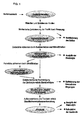
- the operating principle of this method is schematic in FIG briefly illustrated by the electrodialysis of a saline solution.
- sample material Prepared potato juice of the variety Desiree as described under 3.2.1: ⁇ sedimentation ⁇ microfiltration with 1 ⁇ m pore size electrolysis cell ⁇ Stack Type 36 ⁇ 36 cm 2 eff. Membrane surface / membrane membrane ⁇ standard membrane ⁇ 10 cell pairs ⁇ a total of 0.0756 m 2 eff. membrane area Solutions at the beginning of the experiment volume flow rate Dilute each other Potato press juice 3 l 70 l / h Concentrate side city water 3 l 70 l / h Electrode rinsing Na 2 SO 4 8.3 mS / cm 2 l 300 l / h test conditions ⁇ constant operating voltage of 21V ⁇ Umpolung for 30 seconds every 30 minutes sampling ⁇ every 30 minutes
- sample material Prepared potato juice of the variety Desiree as described under 3.2.1: ⁇ sedimentation and ⁇ microfiltration with 1 ⁇ m pore size electrolysis cell ⁇ Stack Type 36 ⁇ 36 cm 2 eff.
- Membrane surface / membrane membrane ⁇ "Low diffusion membrane” ⁇ 10 cell pairs ⁇ a total of 0.0756 m 2 eff.
- membrane area Solutions at the beginning of the experiment volume flow rate Dilute each other Potato press juice 3 l 70 l / h Concentrate side city water 3 l 70 l / h Electrode rinsing Na 2 SO 4 8.3 mS / cm 2 l 300 l / h test conditions ⁇ constant operating voltage of 21V ⁇ Umpolung for 30 seconds every 30 minutes sampling ⁇ every 30 minutes
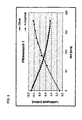
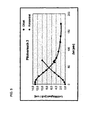
- Striking in this experiment is the sigmoid curve compared to the other two experiments, which gave rather a hyperbolic curve. This phenomenon can be explained by the water of different quality and conductivity used on the concentrate side at the beginning of the experiment.
- experiments 1 and 2 was dialyzed against city water, which contains the known according to analysis ion composition and due to which already at the time 0 conductivity is present.
- the last trial was started with demineralised water, which has no conductivity at the beginning of the experiment and leads to the graphically observed delayed onset of electrodialysis.
Landscapes
- Health & Medical Sciences (AREA)
- Engineering & Computer Science (AREA)
- Life Sciences & Earth Sciences (AREA)
- Chemical & Material Sciences (AREA)
- Polymers & Plastics (AREA)
- Food Science & Technology (AREA)
- Natural Medicines & Medicinal Plants (AREA)
- Nutrition Science (AREA)
- Water Supply & Treatment (AREA)
- Medicinal Chemistry (AREA)
- Pharmacology & Pharmacy (AREA)
- Animal Behavior & Ethology (AREA)
- General Health & Medical Sciences (AREA)
- Public Health (AREA)
- Veterinary Medicine (AREA)
- Mycology (AREA)
- Organic Chemistry (AREA)
- Bioinformatics & Cheminformatics (AREA)
- Chemical Kinetics & Catalysis (AREA)
- Alternative & Traditional Medicine (AREA)
- Biotechnology (AREA)
- Botany (AREA)
- Medical Informatics (AREA)
- Microbiology (AREA)
- General Chemical & Material Sciences (AREA)
- Epidemiology (AREA)
- Nuclear Medicine, Radiotherapy & Molecular Imaging (AREA)
- Hematology (AREA)
- Diabetes (AREA)
- Obesity (AREA)
- Preparation Of Fruits And Vegetables (AREA)
- Separation Using Semi-Permeable Membranes (AREA)
- Non-Alcoholic Beverages (AREA)
- Medicines Containing Plant Substances (AREA)
- Cosmetics (AREA)
Description
- Bereitstellen von Kartoffelpresssaft
- Abfiltrieren von Faser- oder Stärkerückständen über Mikrofilter
- vorzugsweise Ultrafiltration des Filtrates
- Elektrodialyse des Mikro- bzw. Ultrafiltrates, und
- gegebenenfalls Trocknen des Elektrodialysates unter Zugabe von Silikat-hältigen Trägerstoffen.
- AGATA
- österr. Heurige aus biologischer Landwirtschaft, Ernte 2001, festkochend
- FRIESLANDER
- österr. Heurige aus biol. Landwirtschaft, Ernte 2001, vorwiegend festkochend
- BINTJE
- aus österr. biol. Landwirtschaft, Ernte 2000, vorwiegend festkochend
- Octylgallat E311
- Ascorbinsäure E300
- CO2 Begasung
- Broccoli Presssaft
- Holunderblütenextrakt (standardisiertes, kommerziell erhältliches Produkt)
- Kohl Presssaft
- Paprika grün Presssaft
- Paprika rot ganz
- Sanddornsaft (standardisiertes, kommerziell erhältliches Produkt)
- Schwarze Johannisbeere Saft (standard., kommerziell erhältliches Produkt)
- Zitrone ganz
- Zitronensaft
- Die Kartoffelsaft+Zusatz-Gemische werden in verschlossenen Glaseprouvetten gleicher Größe und gleicher Qualität vorgesehen.
- Die Farbwerte der Kartoffelsaft+Zusatz-Gemische sowie die der Referenzproben (ohne Zusatz) wurden mittels Farbtabellen-Vergleich bei Laborbeleuchtung sowie mittels Digitalkamera bei Halogenlampenlicht dokumentiert.
- Aufnahme der Farbwerte: Erstmals unmittelbar nach Probenbereitung, danach in Tagesintervallen
- Beobachtungszeitraum: 1 Woche
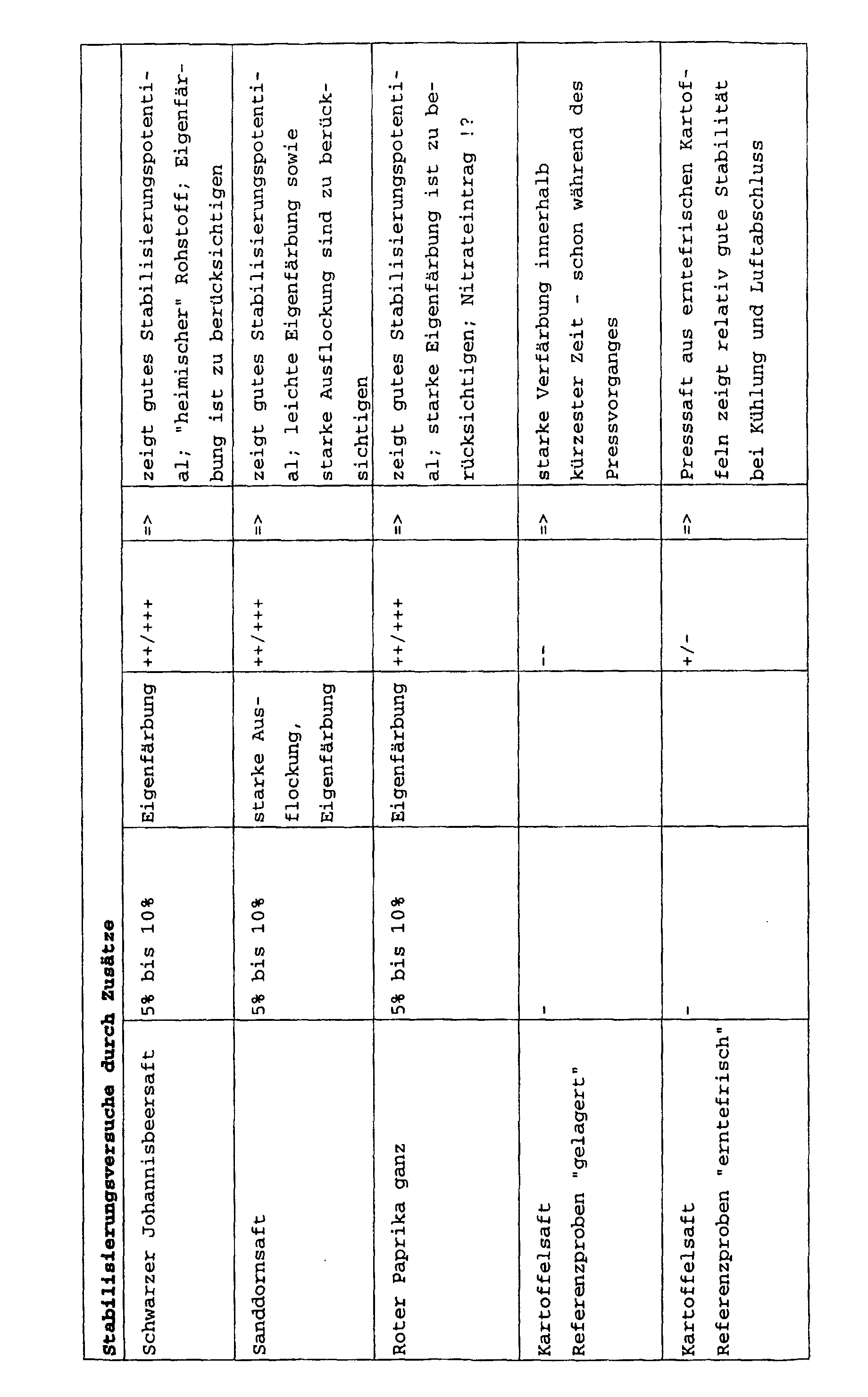
| +++ | keine oder nur sehr geringe Farbveränderung | - | nicht signifikante Verfärbungshemmung |
| ++ | mittlere Verfärbung | -- | starke Verfärbung |
| + | noch signifikante Verfärbungshemmung | --- | sehr starke Verfärbung (schwarzbraun) |

| Code | Solanum tuberosum | Herkunft | Ernte | Typ |
| L1 | Ostara | Lungau | 2000 | vorwiegend festkochend |
| L2 | Desiree | Lungau | 2000 | vorwiegend festkochend |
| S3 | Planta | Stainz | 2000 | vorwiegend festkochend |
| S4 | Desiree | Stainz | 2000 | vorwiegend festkochend |
| B5 | Bintje | Gratkorn | 2000 | vorwiegend festkochend |
| 01 | Ostara | Lungau | 2001 | vorwiegend festkochend |
| D1 | Desiree | Lungau | 2001 | vorwiegend festkochend |
| A1 | Ackersegen | Lungau | 2001 | mehlig |
- Kationen (Kalium, Magnesium, Calcium, Natrium, Eisen, Zink, Mangan, Kupfer, Selen, Nickel und Chrom) wurden nach einem Säureaufschluss mit Schwefelsäure mittels ICP-MS (Massenspektrometrie mit induktiv gekoppeltem Plasma) quantifiziert
- Ammonium wurde nach einer Filtration photometrisch mittels Nessler's Reagenz detektiert
- Anorganischen Anionen (Sulfat, Phosphat, Chlorid und Nitrat) wurden nach einer Filtration mittels IC (Ionenchromatographie) und Leitfähigkeitsdetektion nachgewiesen
- Organischen Anionen (Malat, Lactat, Tartrat, Citrat und Isocitrat) wurden ebenfalls nach einer Filtration mittels IC (Ionenchromatographie) und Leitfähigkeitsdetektion nachgewiesen
- Ascorbat wurde photometrisch vor und nach einer enzymatischen Oxidation mit Ascorbat-Oxidase bestimmt
- Als Summenparameter für organische Bestandteile wurde der DOC (gelöster organischer Kohlenstoff) als NPOC (nicht ausblasbarer organischer Kohlenstoff) bestimmt.


| Probenmaterial | Kartoffelpresssaft der Sorte Desiree aufgearbeitet wie unter 3.2.1 beschrieben: | ||
| ◆ Sedimentation | |||
| ◆ Mikrofiltration mit 1µm Porengröße | |||
| Elektrolysezelle | ◆ Stapeltyp 36 | ||
| ◆ 36 cm2 eff. Membranfläche / Membran | |||
| Membrane | ◆ Standardmembrane | ||
| ◆ 10 Zellpaare | |||
| ◆ insgesamt 0,0756 m2 eff. Membranfläche | |||
| Lösungen zu Beginn des Versuches | Volumen | Flussrate | |
| Diluat-seitig | Kartoffelpresssaft | 3 l | 70 l/h |
| Konzentrat-seitig | Stadtwasser | 3 l | 70 l/h |
| Elektroden-Spülung | Na2SO4 8,3 mS/cm | 2 l | 300 l/h |
| Versuchsbedingungen | ◆ konstante Betriebsspannung von 21 V | ||
| ◆ Umpolung für 30 Sekunden alle 30 Minuten | |||
| Probennahme | ◆ alle 30 Minuten | ||
| Stadt-Wasser, | Versuch 1 30 Min | Versuch 1 60 Min | Versuch 1 90 Min | Versuch 1 120 Min | Versuch 1 150 Min | Versuch 1 180 Min | Proben-Material | |
| mg/l | mg/l | mg/l | mg/l | mg/l | mg/l | mg/l | mg/l | |
| DOC | 1,1 | 245 | 576 | 792 | 850 | 1530 | 1450 | 9490 |
| Probenmaterial | Kartoffelpresssaft der Sorte Desiree aufgearbeitet wie unter 3.2.1 beschrieben: | ||
| ◆ Sedimentation und | |||
| ◆ Mikrofiltration mit 1µm Porengröße | |||
| Elektrolysezelle | ◆ Stapeltyp 36 | ||
| ◆ 36 cm2 eff. Membranfläche / Membran | |||
| Membrane | ◆ "Low Diffusion-Membrane" | ||
| ◆ 10 Zellpaare | |||
| ◆ insgesamt 0,0756 m2 eff. Membranfläche | |||
| Lösungen zu Beginn des Versuches | Volumen | Flussrate | |
| Diluat-seitig | Kartoffelpresssaft | 3 l | 70 l/h |
| Konzentrat-seitig | Stadtwasser | 3 l | 70 l/h |
| Elektroden-Spülung | Na2SO4 8,3 mS/cm | 2 l | 300 l/h |
| Versuchsbedingungen | ◆ konstante Betriebsspannung von 21 V | ||
| ◆ Umpolung für 30 Sekunden alle 30 Minuten | |||
| Probennahme | ◆ alle 30 Minuten | ||

- Die im zweiten Versuch eingesetzten "Low-Diffusion-Membranen" zeigen für die gegenständliche Fragestellung ein besseres Trennverhalten, da sie den Transport von unerwünschten organischen Anteilen in das Konzentrat signifikant erschweren. Der DOC als Summenparameter für diese Anteile ist bei der Verwendung der Standardmembranen nach 180 Minuten Versuchsdauer bei 1450 mg/l, mit ,Low Diffusion-Membranen nach der selben Versuchsdauer unter ansonsten identischen Bedingungen hingegen bei 351 mg/l. Jener des eingesetzten Kartoffelpresssaftes zum Vergleich lag bei 9490 mg/l.
- Auch in Bezug auf das unerwünschte "Fouling-Verhalten" ist eindeutig den "Low Diffusion-Membranen" der Vorzug zu geben. Einerseits sind hier keinerlei Formveränderungen durch Quellprozesse zu beobachten und andererseits tritt eine Belegung der Membranen in weit geringerem Ausmaß auf.
- Betrachtet man nun die detaillierte Analyse der ionogenen Substanzen im Konzentrat des zweiten Versuches, so kristallisieren sich folgende Fakten heraus:
- Die Wanderung der anorganischen Anionen entspricht weitgehend dem laut theoretischem Hintergrund erwarteten Muster, dass einwertige Ionen schneller wandern als zweiwertige und letztere wieder schneller als dreiwertige. Im Vergleich zum eingesetzten Kartoffelpresssaft ist nach einer Versuchsdauer von 180 Minuten Phosphat zu 62% und Sulfat zu 70% gewandert. Die detektierten Konzentrationen an Chlorid dagegen liegen weit über den erwarteten und sind sogar höher als jene im ursprünglichen Kartoffelpresssaft, nämlich 3.6 mmol/l im Überschuss. Wie im folgenden Kapitel betreffend der Kationen noch dargelegt, ist ebenso ein signifikanter Überschuss an Natrium (5.3 mmol/l) im Konzentrat nachzuweisen. Diese bei erster Betrachtung widersprüchlich erscheinenden Fakten sind jedoch durch einen Ionenaustausch an den eingesetzten Membranen zu erklären. Die Ionenaustausch-Kapazität der Membranen beträgt laut Herstellerangaben 1,5 mmol/g trockener Membranen. Unter der Annahme, dass 1 Membran etwa 1 g Trockengewicht hat und je 10 Kationen- und Anionen-Membranen im Versuchsaufbau verwendet wurden, ist ein potentieller Eintrag der an der Membran gebundenen Gegenionen Natrium und Chlorid im Ausmaß von je 15 mmol möglich und unter Berücksichtigung des Gesamtvolumens an Konzentrat von 3 l auch in der Größenordnung des detektierten Überschusses. Ein derartiges Phänomen der Loslösung der Hersteller-seitig an die Ionenaustauscher-Oberflächen gebundenen Ionen ist denkbar unter der durchaus plausiblen Annahme, dass die Bindungsstellen im Laufe des Versuches durch etwaige höher-molekulare Anteile belegt wurden, die auch rein optisch als Belag erkennbar waren.
- Betrachtet man das Wanderverhalten der Kationen, so fällt - abgesehen vom bereits diskutierten Überschuss an Natrium - auf, dass sämtliche Kationen signifikant in ihrer Diffusion durch die Membran gehindert werden. Beispielsweise Kalium, das ja aufgrund seiner Einwertigkeit relativ vollständig wandern sollte, ist nur zu 37% im Konzentrat. Bei den höherwertigen Kationen - zwar primär bei den Wert bestimmenden Ionen Calcium und Magnesium, aber auch ganz deutlich bei den Spurenelementen Eisen, Kupfer, Mangan, Nickel und Zink - sind die Verhältnisse noch drastischer. Das detektierbare Calcium und Magnesium stammt zur Gänze aus dem zu Versuchsbeginn eingesetzten Stadtwasser und spiegelt offensichtlich das Faktum wider, dass die einwertigen Kationen schlecht und die mehrwertigen gar nicht gewandert sind.
- Phänomene dieser Art sind in der Elektrodialyse bekannt und in speziellen Fällen sogar erwünscht. Beispielsweise werden speziell beschichtete Membranen als "selektive Ionenaustausch-Membranen" eingesetzt, um selektiv einwertige Ionen von mehrwertigen zu trennen. Da in unserem Versuch offensichtlich die Trenneigenschaft der Membranen in ähnlicher Weise durch Belegung mit Begleitstoffen aus dem Kartoffelpresssaft verändert wurde, wurde für den nächsten Versuch ein weiterer Filtrationsschritt zur Vorreinigung des Saftes, nämlich eine Ultrafiltration mit einer Ausschlussgrenze von 1000 Da pilotiert.
| Probenmaterial | Kartoffelpresssaft der Sorte Desiree aufgearbeitet wie unter 3.2.1 und 3.2.2 beschrieben: | ||
| ◆ Sedimentation | |||
| ◆ Mikrofiltration mit 1 µm Porengröße | |||
| ◆ Ultrafiltration mit einer Ausschlussgrenze von 1000 Da | |||
| Elektrolysezelle | ◆ Stapeltyp 36 | ||
| ◆ 36 cm2 eff. Membranfläche / Membran | |||
| Membrane | ◆ "Low Diffusion-Membrane" | ||
| ◆ 10 Zellpaare | |||
| ◆ insgesamt 0,0756 m2 eff. Membranfläche | |||
| Lösungen zu Beginn des Versuches | Volumen | Flussrate | |
| Diluat-seitig | Kartoffelpresssaft | 2 l | 75 l/h |
| Konzentrat-seitig | VE-Wasser | 2 l | 75 l/h |
| Elektroden-Spülung | Na2SO4 8,3 mS/cm | 2 l | 200 l/h |
| Versuchsbedingungen | ◆ konstante Betriebsspannung von 21 V | ||
| ◆ Umpolung für 30 Sekunden alle 30 Minuten | |||
| Versuchsdauer | ◆ 180 Minuten | ||

- Die im zweiten Versuch aufgetretenen Probleme durch Belegung der Ionenaustauschmembranen konnten durch die Vorreinigung des Saftes mittels Ultrafiltration mit einer Ausschlussgrenze von 1000 Da weitgehend gelöst werden. Offensichtlich wurden durch diesen Verfahrensschritt jene höhermolekularen Anteile aus der Probenmatrix effizient entfernt, die bei den ersten beiden Versuchen zu den problematischen "Fouling-Phänomenen" und den dadurch bedingten Änderungen der Trenneigenschaften der Membranen geführt haben, die sich ja ganz massiv auf die Kationenwanderung ausgewirkt haben.
- Ferner ist im Gegensatz zum zweiten Pilotversuch durch die Ultrafiltration des Saftes auch das Problem des Ionenaustausches und der dadurch bedingten Loslösung der Gegenionen Chlorid und Natrium aus den Membranen durch Matrixbestandteile der Probe nicht mehr zu beobachten. Vielmehr entspricht die Wanderung der anorganischen Anionen bei diesem Versuch den Erwartungen. Sulfat beispielsweise ist zu 74%, Phosphat zu 79% und Chlorid zu 93% gewandert. Auch die organischen Anionen wandern entsprechend ihrer Ladung und Größe; Malat, das kleinste der untersuchten Anionen zu 91%, Citrat und Isocitrat zu 62 und 72% und Ascorbat zu 42%.
- Die verbesserte Wanderung der Ionen hat sich natürlich auch auf die im Summenparameter des DOC erfassten organischen Bestandteile der Probenmatrix ausgewirkt. So liegt der DOC diesmal bei 4000 mg/l im Konzentrat und ist damit deutlich höher als im zweiten Pilotversuch. Hier sei jedoch angemerkt, dass in diesem Wert auch die detailliert quantifizierten organischen Anionen mit erfasst sind. Zu den qualitativ und quantitativ nicht erfassten Komponenten, die ebenfalls im Konzentrat zu finden sind und ihren Beitrag zu diesem Summenparameter leisten, gehören vermutlich primär Aspartat und Glutamat.
- Betrachtet man das Wanderverhalten der Kationen, so ist eindeutig erkennbar, dass der zusätzliche Verfahrensschritt der Ultrafiltration die Probleme durch das "Fouling-Verhalten" im zweiten Versuch gelöst hat. Die für das zu entwickelnde Produkt wertbestimmenden Kationen wandern durch die letztendlich angewandte Kombination an Verfahrensschritten äußerst zufriedenstellend. Sogar die zweiwertigen Kationen Magnesium und Calcium wandern zu 85% beziehungsweise sogar vollständig. Kalium wandert zu 87%, Natrium zu 84% und die mengenmäßig weniger dominierenden Ionen, wie Eisen, Zink und Mangan wandern zwischen 70 und 84%.
- Diese äußerst erfreuliche Verbesserung der Leistung der Elektrodialyse spiegelt sich auch in den bereits eingangs definierten Quotienten aus der Summe der Basen-bildenden zu den Säure-bildenden Elektrolyten wider. Vergleicht man beispielsweise den Quotienten zwischen dem 2. und 3. Versuch, so ist durch diese Innovation eine Steigerung von 2,10 auf 4,98, also eine Steigerung um 237% zu verzeichnen! Hier sei anzumerken, das die oben genannten Quotienten auf die anorganischen Anionen bezogen sind, da bei Versuch 2 die organischen Anionen nicht detailliert analysiert wurden.
- Vergleicht man den Quotienten, der auch die analysierten organischen Anionen berücksichtigt, so zeigt unser Endprodukt einen Wert von 3,52 im Vergleich zum nicht verarbeiteten Kartoffelsaft, der Im Falle der eingesetzten Sorte Desiree einen Wert von 1,55 aufweist. Hier ist also eine Zunahme von 227% zu verzeichnen!
Claims (12)
- Verfahren zur lebensmitteltechnischen Gewinnung von Kartoffelsaft-Produkten, gekennzeichnet durch die folgenden Schritte:Bereitstellen von Kartoffelpresssaft,Abfiltrieren von Faser- oder Stärkerückständen über Mikrofilter,vorzugsweise Ultrafiltration des FiltratesElektrodialyse des Mikro- bzw. Ultrafiltrates undgegebenenfalls Trocknen des Elektrodialysates unter Zugabe von silikathältigen Trägerstoffen.
- Verfahren nach Anspruch 1, dadurch gekennzeichnet, dass dem Kartoffelpresssaft Stabilisierungsmittel, vorzugsweise natürliche Antioxidantien, insbesondere Zitronensaft oder Zitronensaft-Produkte, zugegeben werden.
- Verfahren nach Anspruch 1 oder 2, dadurch gekennzeichnet, dass der Kartoffelpresssaft aus Kartoffeln bereitgestellt wird, die ein Verhältnis von Basen-bildenden zu Säure-bildenden Komponenten von zumindest 1,5, bevorzugter von über 3,5, aufweisen, insbesondere Kartoffelpresssaft aus den Sorten Desiree und Ackersegen.
- Verfahren nach einem der Ansprüche 1 bis 3, dadurch gekennzeichnet, dass die Ultrafiltration mit einem Ultrafilter mit einer Ausschlussgrenze von unter 100.000 Da, bevorzugt von unter 10.000 Da, insbesondere von etwa 1.000 Da, durchgeführt wird.
- Verfahren nach einem der Ansprüche 1 bis 4, dadurch gekennzeichnet, dass die Elektrodialyse unter Verwendung eines Membranstapels, insbesondere eines Membranstapels von Niedrig-diffusionsmembranen, durchgeführt wird.
- Verfahren nach einem der Ansprüche 1 bis 5, dadurch gekennzeichnet, dass das Trocknen unter Zugabe von hochdispersem Siliziumdioxid durchgeführt wird.
- Verfahren nach einem der Ansprüche 1 bis 6, dadurch gekenn zeichnet, dass dem erhaltenen und gegebenenfalls getrockneten Kartoffelsaft-Produkt weitere Mittel zugesetzt werden, vorzugsweise zumindest ein weiterer Gemüse- oder Fruchtsaft, ein oder mehrere Stabilisierungsmittel, insbesondere natürliche Antioxidantien, ein oder mehrere, insbesondere natürliche, Geschmacks- oder Farbstoffe, ein oder mehrere Verdickungs-, Rekonstituierungs- oder Elektrolytmittel oder Kombinationen dieser Mittel sowie Vitamine, Mineralstoffe, Spurenelemente, sekundäre Pflanzenstoffe oder Kombinationen dieser Mittel.
- Verfahren nach einem der Ansprüche 1 bis 7, dadurch gekennzeichnet, dass das Trocknen durch Sprüh- oder Walztrocken erfolgt.
- Kartoffelsaft-Produkt, erhältlich nach einem der Ansprüche 1 bis 8.
- Kartoffelsaft-Produkt nach Anspruch 9, dadurch gekennzeichnet, dass es organische Bestandteile von 1000 mg/l oder mehr, vorzugsweise 2000 mg/l oder mehr, insbesondere 4000 mg/l oder mehr, bestimmt als nicht ausblasbaren organischen Kohlenstoff, enthält.
- Kartoffelsaft-Produkt nach Anspruch 9 oder 10, dadurch gekennzeichnet, dass es ein Verhältnis von Basen-bildenden zu Säure-bildenden Komponenten von zumindest 2,5, bevorzugter von über 4, insbesondere von über 6, aufweist.
- Verwendung eines Kartoffelsaft-Produktes nach einem der Ansprüche 9 bis 11 zur Herstellung eines Mittels zur Regulierung des Säure/Basen-Haushaltes.
Priority Applications (1)
| Application Number | Priority Date | Filing Date | Title |
|---|---|---|---|
| AT03718536T ATE306198T1 (de) | 2002-04-18 | 2003-04-17 | Verfahren zur lebensmitteltechnischen gewinnung von kartoffelsaft-produkten |
Applications Claiming Priority (3)
| Application Number | Priority Date | Filing Date | Title |
|---|---|---|---|
| AT0060102A AT502589B1 (de) | 2002-04-18 | 2002-04-18 | Verfahren zur lebensmitteltechnischen gewinnung von kartoffelsaft-produkten |
| AT6012002 | 2002-04-18 | ||
| PCT/AT2003/000114 WO2003086102A2 (de) | 2002-04-18 | 2003-04-17 | Verfahren zur lebensmitteltechnischen gewinnung von kartoffelsaft-produkten |
Publications (2)
| Publication Number | Publication Date |
|---|---|
| EP1494546A2 EP1494546A2 (de) | 2005-01-12 |
| EP1494546B1 true EP1494546B1 (de) | 2005-10-12 |
Family
ID=29220190
Family Applications (1)
| Application Number | Title | Priority Date | Filing Date |
|---|---|---|---|
| EP03718536A Expired - Lifetime EP1494546B1 (de) | 2002-04-18 | 2003-04-17 | Verfahren zur lebensmitteltechnischen gewinnung von kartoffelsaft-produkten |
Country Status (10)
| Country | Link |
|---|---|
| US (1) | US7378117B2 (de) |
| EP (1) | EP1494546B1 (de) |
| JP (1) | JP2005526829A (de) |
| AT (1) | AT502589B1 (de) |
| AU (1) | AU2003223248A1 (de) |
| CA (1) | CA2482574C (de) |
| DE (1) | DE50301366D1 (de) |
| ES (1) | ES2249711T3 (de) |
| TW (1) | TW200407085A (de) |
| WO (1) | WO2003086102A2 (de) |
Families Citing this family (8)
| Publication number | Priority date | Publication date | Assignee | Title |
|---|---|---|---|---|
| GB0622137D0 (en) * | 2006-11-03 | 2006-12-20 | Univ Manchester | Treatment of gastrointestinal diseases |
| GB0622136D0 (en) * | 2006-11-03 | 2006-12-20 | Univ Manchester | Treatment of gastrointestinal diseases |
| JP2009073777A (ja) * | 2007-09-21 | 2009-04-09 | Kao Corp | 化粧料 |
| CZ200841A3 (cs) * | 2008-01-25 | 2009-08-05 | Jihoceská univerzita v Ceských Budejovicích, Zemedelská fakulta | Koncentrát hlízových bílkovin brambor s vysokou mírou rozpustnosti a zpusob jeho prípravy |
| CN102871077A (zh) * | 2012-09-19 | 2013-01-16 | 杨学青 | 马铃薯生汁发酵提取物及制备方法 |
| NL2023197B9 (en) * | 2019-05-24 | 2023-12-01 | Cooperatie Avebe U A | Diafiltration |
| CA3150533A1 (en) * | 2019-09-27 | 2021-04-01 | Darrin Dale WINGER | Fry assessment system and method |
| US20220248732A1 (en) * | 2021-02-05 | 2022-08-11 | Frito-Lay North America, Inc. | Saltiness-Perception Enhancing Compounds |
Family Cites Families (8)
| Publication number | Priority date | Publication date | Assignee | Title |
|---|---|---|---|---|
| US3342719A (en) * | 1963-06-05 | 1967-09-19 | American Mach & Foundry | Ion exchange membrane fabrication |
| GB1520738A (en) | 1974-09-23 | 1978-08-09 | Scholten Honig Nv | Production of porotein from non-diluted or diluted potato corm water |
| JPS53115660A (en) * | 1977-03-18 | 1978-10-09 | Nitto Electric Ind Co Ltd | Method for treating juice |
| JPS603820B2 (ja) * | 1977-12-23 | 1985-01-30 | 旭化成工業株式会社 | 酸味の改良された天然果汁の製造方法 |
| JPS5851880A (ja) * | 1981-09-21 | 1983-03-26 | Toray Ind Inc | 果汁を原料とする安定な飲料の製造法 |
| JP2890129B2 (ja) * | 1990-02-16 | 1999-05-10 | 森永製菓株式会社 | 馬鈴薯汁液の精製法 |
| DE19755426C2 (de) | 1997-12-13 | 1999-10-07 | Nig Nahrungs Ingenieurtechnik | Verfahren zur Gewinnung von natürlich vorkommenden organischen Säuren |
| US6440222B1 (en) * | 2000-07-18 | 2002-08-27 | Tate & Lyle Industries, Limited | Sugar beet membrane filtration process |
-
2002
- 2002-04-18 AT AT0060102A patent/AT502589B1/de not_active IP Right Cessation
-
2003
- 2003-04-04 TW TW092107954A patent/TW200407085A/zh unknown
- 2003-04-17 US US10/511,072 patent/US7378117B2/en not_active Expired - Fee Related
- 2003-04-17 EP EP03718536A patent/EP1494546B1/de not_active Expired - Lifetime
- 2003-04-17 DE DE50301366T patent/DE50301366D1/de not_active Expired - Lifetime
- 2003-04-17 AU AU2003223248A patent/AU2003223248A1/en not_active Abandoned
- 2003-04-17 WO PCT/AT2003/000114 patent/WO2003086102A2/de not_active Ceased
- 2003-04-17 CA CA2482574A patent/CA2482574C/en not_active Expired - Fee Related
- 2003-04-17 JP JP2003583135A patent/JP2005526829A/ja active Pending
- 2003-04-17 ES ES03718536T patent/ES2249711T3/es not_active Expired - Lifetime
Also Published As
| Publication number | Publication date |
|---|---|
| WO2003086102A3 (de) | 2003-12-24 |
| AT502589A1 (de) | 2007-04-15 |
| CA2482574A1 (en) | 2003-10-23 |
| US7378117B2 (en) | 2008-05-27 |
| WO2003086102A2 (de) | 2003-10-23 |
| AU2003223248A1 (en) | 2003-10-27 |
| DE50301366D1 (de) | 2006-02-23 |
| AT502589B1 (de) | 2009-06-15 |
| CA2482574C (en) | 2010-12-07 |
| TW200407085A (en) | 2004-05-16 |
| US20050208198A1 (en) | 2005-09-22 |
| JP2005526829A (ja) | 2005-09-08 |
| ES2249711T3 (es) | 2006-04-01 |
| EP1494546A2 (de) | 2005-01-12 |
| AU2003223248A8 (en) | 2003-10-27 |
Similar Documents
| Publication | Publication Date | Title |
|---|---|---|
| DE69215854T2 (de) | Zuckerabtrennung in säften | |
| DE69431423T2 (de) | Polyphenolmischung aus unreifen Äpfeln; Verfahren zur Herstellung von Polyphenolmischungen aus unreifen Rosaceae Früchten | |
| DE69002883T2 (de) | Konzentrieren von Saftprodukten mit einem verbesserten Geschmack durch umgekehrte Osmose. | |
| DE69214103T2 (de) | Pflanzlicher saft oder trockenpulver daraus | |
| DE69907218T2 (de) | Neue inulin-fraktionen, verfahren zu deren herstellung sowie diese inulin-fraktionen enthaltende lebensmittelprodukte | |
| DE10150824B4 (de) | Konzentrat, seine Herstellung und Verwendung | |
| EP1494546B1 (de) | Verfahren zur lebensmitteltechnischen gewinnung von kartoffelsaft-produkten | |
| EP1977653B1 (de) | Verfahren zur Gewinnung pflanzlicher Proteine und/oder Peptide, danach hergestellte Proteine und/oder Peptide und Verwendung derselben | |
| Ilame et al. | Physico-chemical properties of ultrafiltered kinnow (mandarin) fruit juice | |
| DE69426085T2 (de) | Aus natürlichen Johannisbrotzuckern bestehender Sirup und Verfahren zur Herstellung desselben | |
| EP2236043A1 (de) | Verfahren zur Herstellung einer Extraktionssubstanz aus Blättern der süßen Brombeere und deren Verwendung | |
| KR102049769B1 (ko) | 알룰로스를 함유하는 아미노산 음료 | |
| EP3723499B1 (de) | Protein-polyuronid-konjugate und ihren verwendung als emulgatoren | |
| EP1005795B1 (de) | Verfahren zur Herstellung von Frucht- und Gemüsesaftkonzentraten | |
| KR100959520B1 (ko) | 녹차 기능성 성분이 결합된 해양성 천연 유기미네랄 조성물 | |
| DE69908259T2 (de) | Neues anethanol enthaltend klares gegebenfalls alkoholisches getränk und trübes verdünntes getränk hergestellt durch verdünnung | |
| DE3152847C2 (en) | Ribulose-1,5-diphosphate carboxylase and process for obtaining it | |
| US6387425B1 (en) | Method for producing low potassium juice with improved taste and product thereof | |
| EP1867655A1 (de) | Verfahren zur zubereitung eines pflanzenextrakts | |
| EP3405272B1 (de) | Verfahren zur gewinnung von wertbestimmenden inhaltsstoffen aus kräutern oder gewürzen | |
| EP0792588B1 (de) | Fruchtgetränk | |
| DE102024137042A1 (de) | Verfahren zur Herstellung eines Konzentrats aus wässrigen Extrakten durch Kombination von Mikrofiltration und Umkehrosmose und Verwendung der dadurch hergestellten Extrakte | |
| DD275775A3 (de) | Verfahren zur verbesserten verarbeitung von rohsaft aus sanddornbeeren | |
| US20160286839A1 (en) | Non-Reconstituted Stevia Juice Product and Method for Producing the Product | |
| JP6367264B2 (ja) | 杜仲葉及び高麗人参抽出物を含む液体組成物、並びにその製造方法 |
Legal Events
| Date | Code | Title | Description |
|---|---|---|---|
| PUAI | Public reference made under article 153(3) epc to a published international application that has entered the european phase |
Free format text: ORIGINAL CODE: 0009012 |
|
| 17P | Request for examination filed |
Effective date: 20041014 |
|
| AK | Designated contracting states |
Kind code of ref document: A2 Designated state(s): AT BE BG CH CY CZ DE DK EE ES FI FR GB GR HU IE IT LI LU MC NL PT RO SE SI SK TR |
|
| AX | Request for extension of the european patent |
Extension state: AL LT LV MK |
|
| GRAP | Despatch of communication of intention to grant a patent |
Free format text: ORIGINAL CODE: EPIDOSNIGR1 |
|
| GRAS | Grant fee paid |
Free format text: ORIGINAL CODE: EPIDOSNIGR3 |
|
| GRAA | (expected) grant |
Free format text: ORIGINAL CODE: 0009210 |
|
| AK | Designated contracting states |
Kind code of ref document: B1 Designated state(s): AT BE BG CH CY CZ DE DK EE ES FI FR GB GR HU IE IT LI LU MC NL PT RO SE SI SK TR |
|
| PG25 | Lapsed in a contracting state [announced via postgrant information from national office to epo] |
Ref country code: SI Free format text: LAPSE BECAUSE OF FAILURE TO SUBMIT A TRANSLATION OF THE DESCRIPTION OR TO PAY THE FEE WITHIN THE PRESCRIBED TIME-LIMIT Effective date: 20051012 Ref country code: RO Free format text: LAPSE BECAUSE OF FAILURE TO SUBMIT A TRANSLATION OF THE DESCRIPTION OR TO PAY THE FEE WITHIN THE PRESCRIBED TIME-LIMIT Effective date: 20051012 Ref country code: SK Free format text: LAPSE BECAUSE OF FAILURE TO SUBMIT A TRANSLATION OF THE DESCRIPTION OR TO PAY THE FEE WITHIN THE PRESCRIBED TIME-LIMIT Effective date: 20051012 Ref country code: IE Free format text: LAPSE BECAUSE OF FAILURE TO SUBMIT A TRANSLATION OF THE DESCRIPTION OR TO PAY THE FEE WITHIN THE PRESCRIBED TIME-LIMIT Effective date: 20051012 Ref country code: CZ Free format text: LAPSE BECAUSE OF FAILURE TO SUBMIT A TRANSLATION OF THE DESCRIPTION OR TO PAY THE FEE WITHIN THE PRESCRIBED TIME-LIMIT Effective date: 20051012 Ref country code: FI Free format text: LAPSE BECAUSE OF FAILURE TO SUBMIT A TRANSLATION OF THE DESCRIPTION OR TO PAY THE FEE WITHIN THE PRESCRIBED TIME-LIMIT Effective date: 20051012 |
|
| REG | Reference to a national code |
Ref country code: GB Ref legal event code: FG4D Free format text: NOT ENGLISH |
|
| REG | Reference to a national code |
Ref country code: CH Ref legal event code: EP |
|
| REG | Reference to a national code |
Ref country code: IE Ref legal event code: FG4D Free format text: LANGUAGE OF EP DOCUMENT: GERMAN |
|
| PG25 | Lapsed in a contracting state [announced via postgrant information from national office to epo] |
Ref country code: GR Free format text: LAPSE BECAUSE OF FAILURE TO SUBMIT A TRANSLATION OF THE DESCRIPTION OR TO PAY THE FEE WITHIN THE PRESCRIBED TIME-LIMIT Effective date: 20060112 Ref country code: BG Free format text: LAPSE BECAUSE OF FAILURE TO SUBMIT A TRANSLATION OF THE DESCRIPTION OR TO PAY THE FEE WITHIN THE PRESCRIBED TIME-LIMIT Effective date: 20060112 Ref country code: SE Free format text: LAPSE BECAUSE OF FAILURE TO SUBMIT A TRANSLATION OF THE DESCRIPTION OR TO PAY THE FEE WITHIN THE PRESCRIBED TIME-LIMIT Effective date: 20060112 Ref country code: DK Free format text: LAPSE BECAUSE OF FAILURE TO SUBMIT A TRANSLATION OF THE DESCRIPTION OR TO PAY THE FEE WITHIN THE PRESCRIBED TIME-LIMIT Effective date: 20060112 |
|
| GBT | Gb: translation of ep patent filed (gb section 77(6)(a)/1977) |
Effective date: 20060120 |
|
| REF | Corresponds to: |
Ref document number: 50301366 Country of ref document: DE Date of ref document: 20060223 Kind code of ref document: P |
|
| PG25 | Lapsed in a contracting state [announced via postgrant information from national office to epo] |
Ref country code: PT Free format text: LAPSE BECAUSE OF FAILURE TO SUBMIT A TRANSLATION OF THE DESCRIPTION OR TO PAY THE FEE WITHIN THE PRESCRIBED TIME-LIMIT Effective date: 20060313 |
|
| REG | Reference to a national code |
Ref country code: ES Ref legal event code: FG2A Ref document number: 2249711 Country of ref document: ES Kind code of ref document: T3 |
|
| PG25 | Lapsed in a contracting state [announced via postgrant information from national office to epo] |
Ref country code: HU Free format text: LAPSE BECAUSE OF FAILURE TO SUBMIT A TRANSLATION OF THE DESCRIPTION OR TO PAY THE FEE WITHIN THE PRESCRIBED TIME-LIMIT Effective date: 20060413 |
|
| PG25 | Lapsed in a contracting state [announced via postgrant information from national office to epo] |
Ref country code: AT Free format text: LAPSE BECAUSE OF NON-PAYMENT OF DUE FEES Effective date: 20060417 |
|
| PG25 | Lapsed in a contracting state [announced via postgrant information from national office to epo] |
Ref country code: ES Free format text: LAPSE BECAUSE OF NON-PAYMENT OF DUE FEES Effective date: 20060418 |
|
| PG25 | Lapsed in a contracting state [announced via postgrant information from national office to epo] |
Ref country code: MC Free format text: LAPSE BECAUSE OF NON-PAYMENT OF DUE FEES Effective date: 20060430 Ref country code: BE Free format text: LAPSE BECAUSE OF NON-PAYMENT OF DUE FEES Effective date: 20060430 |
|
| PGFP | Annual fee paid to national office [announced via postgrant information from national office to epo] |
Ref country code: IT Payment date: 20060430 Year of fee payment: 4 |
|
| REG | Reference to a national code |
Ref country code: IE Ref legal event code: FD4D |
|
| ET | Fr: translation filed | ||
| PLBE | No opposition filed within time limit |
Free format text: ORIGINAL CODE: 0009261 |
|
| STAA | Information on the status of an ep patent application or granted ep patent |
Free format text: STATUS: NO OPPOSITION FILED WITHIN TIME LIMIT |
|
| 26N | No opposition filed |
Effective date: 20060713 |
|
| REG | Reference to a national code |
Ref country code: FR Ref legal event code: ST Effective date: 20061230 |
|
| REG | Reference to a national code |
Ref country code: ES Ref legal event code: FD2A Effective date: 20060418 |
|
| REG | Reference to a national code |
Ref country code: CH Ref legal event code: PL |
|
| GBPC | Gb: european patent ceased through non-payment of renewal fee |
Effective date: 20070417 |
|
| BERE | Be: lapsed |
Owner name: *VIS-VITALIS LIZENZ- UND HANDELS G.M.B.H. Effective date: 20060430 |
|
| NLV4 | Nl: lapsed or anulled due to non-payment of the annual fee |
Effective date: 20071101 |
|
| PG25 | Lapsed in a contracting state [announced via postgrant information from national office to epo] |
Ref country code: NL Free format text: LAPSE BECAUSE OF NON-PAYMENT OF DUE FEES Effective date: 20071101 |
|
| PG25 | Lapsed in a contracting state [announced via postgrant information from national office to epo] |
Ref country code: CH Free format text: LAPSE BECAUSE OF NON-PAYMENT OF DUE FEES Effective date: 20070430 Ref country code: LI Free format text: LAPSE BECAUSE OF NON-PAYMENT OF DUE FEES Effective date: 20070430 |
|
| PG25 | Lapsed in a contracting state [announced via postgrant information from national office to epo] |
Ref country code: GB Free format text: LAPSE BECAUSE OF NON-PAYMENT OF DUE FEES Effective date: 20070417 Ref country code: FR Free format text: LAPSE BECAUSE OF NON-PAYMENT OF DUE FEES Effective date: 20060502 |
|
| PG25 | Lapsed in a contracting state [announced via postgrant information from national office to epo] |
Ref country code: EE Free format text: LAPSE BECAUSE OF FAILURE TO SUBMIT A TRANSLATION OF THE DESCRIPTION OR TO PAY THE FEE WITHIN THE PRESCRIBED TIME-LIMIT Effective date: 20051012 |
|
| PG25 | Lapsed in a contracting state [announced via postgrant information from national office to epo] |
Ref country code: TR Free format text: LAPSE BECAUSE OF FAILURE TO SUBMIT A TRANSLATION OF THE DESCRIPTION OR TO PAY THE FEE WITHIN THE PRESCRIBED TIME-LIMIT Effective date: 20051012 Ref country code: LU Free format text: LAPSE BECAUSE OF NON-PAYMENT OF DUE FEES Effective date: 20060417 |
|
| PG25 | Lapsed in a contracting state [announced via postgrant information from national office to epo] |
Ref country code: CY Free format text: LAPSE BECAUSE OF FAILURE TO SUBMIT A TRANSLATION OF THE DESCRIPTION OR TO PAY THE FEE WITHIN THE PRESCRIBED TIME-LIMIT Effective date: 20051012 |
|
| PG25 | Lapsed in a contracting state [announced via postgrant information from national office to epo] |
Ref country code: IT Free format text: LAPSE BECAUSE OF NON-PAYMENT OF DUE FEES Effective date: 20070417 |
|
| REG | Reference to a national code |
Ref country code: DE Ref legal event code: R082 Ref document number: 50301366 Country of ref document: DE Representative=s name: SCHUMACHER & WILLSAU PATENTANWALTSGESELLSCHAFT, DE |
|
| REG | Reference to a national code |
Ref country code: DE Ref legal event code: R082 Ref document number: 50301366 Country of ref document: DE Representative=s name: SCHUMACHER & WILLSAU PATENTANWALTSGESELLSCHAFT, DE |
|
| REG | Reference to a national code |
Ref country code: DE Ref legal event code: R082 Ref document number: 50301366 Country of ref document: DE Representative=s name: SCHUMACHER & WILLSAU PATENTANWALTSGESELLSCHAFT, DE Effective date: 20130127 Ref country code: DE Ref legal event code: R081 Ref document number: 50301366 Country of ref document: DE Owner name: NUTROPIA ERNAEHRUNGSMEDIZINISCHE FORSCHUNGS GM, AT Free format text: FORMER OWNER: VIS-VITALIS LIZENZ-UND HANDELS GMBH, ANIF, AT Effective date: 20130820 Ref country code: DE Ref legal event code: R082 Ref document number: 50301366 Country of ref document: DE Representative=s name: SCHUMACHER & WILLSAU PATENTANWALTSGESELLSCHAFT, DE Effective date: 20130820 |
|
| PGFP | Annual fee paid to national office [announced via postgrant information from national office to epo] |
Ref country code: DE Payment date: 20190408 Year of fee payment: 17 |
|
| REG | Reference to a national code |
Ref country code: DE Ref legal event code: R119 Ref document number: 50301366 Country of ref document: DE |
|
| PG25 | Lapsed in a contracting state [announced via postgrant information from national office to epo] |
Ref country code: DE Free format text: LAPSE BECAUSE OF NON-PAYMENT OF DUE FEES Effective date: 20201103 |