EP1495679A1 - Schutzkulturen und deren Verwendung bei der Konservierung von Lebensmitteln - Google Patents
Schutzkulturen und deren Verwendung bei der Konservierung von Lebensmitteln Download PDFInfo
- Publication number
- EP1495679A1 EP1495679A1 EP04021804A EP04021804A EP1495679A1 EP 1495679 A1 EP1495679 A1 EP 1495679A1 EP 04021804 A EP04021804 A EP 04021804A EP 04021804 A EP04021804 A EP 04021804A EP 1495679 A1 EP1495679 A1 EP 1495679A1
- Authority
- EP
- European Patent Office
- Prior art keywords
- lactic acid
- acid bacteria
- food
- bacteria
- protective cultures
- Prior art date
- Legal status (The legal status is an assumption and is not a legal conclusion. Google has not performed a legal analysis and makes no representation as to the accuracy of the status listed.)
- Withdrawn
Links
Images



Classifications
-
- A—HUMAN NECESSITIES
- A23—FOODS OR FOODSTUFFS; TREATMENT THEREOF, NOT COVERED BY OTHER CLASSES
- A23B—PRESERVATION OF FOODS, FOODSTUFFS OR NON-ALCOHOLIC BEVERAGES; CHEMICAL RIPENING OF FRUIT OR VEGETABLES
- A23B2/00—Preservation of foods or foodstuffs, in general
- A23B2/70—Preservation of foods or foodstuffs, in general by treatment with chemicals
- A23B2/725—Preservation of foods or foodstuffs, in general by treatment with chemicals in the form of liquids or solids
- A23B2/729—Organic compounds; Microorganisms; Enzymes
- A23B2/783—Microorganisms; Enzymes
-
- A—HUMAN NECESSITIES
- A23—FOODS OR FOODSTUFFS; TREATMENT THEREOF, NOT COVERED BY OTHER CLASSES
- A23B—PRESERVATION OF FOODS, FOODSTUFFS OR NON-ALCOHOLIC BEVERAGES; CHEMICAL RIPENING OF FRUIT OR VEGETABLES
- A23B2/00—Preservation of foods or foodstuffs, in general
- A23B2/80—Freezing; Subsequent thawing; Cooling
- A23B2/85—Freezing; Subsequent thawing; Cooling with addition of or treatment with chemicals
-
- A—HUMAN NECESSITIES
- A23—FOODS OR FOODSTUFFS; TREATMENT THEREOF, NOT COVERED BY OTHER CLASSES
- A23B—PRESERVATION OF FOODS, FOODSTUFFS OR NON-ALCOHOLIC BEVERAGES; CHEMICAL RIPENING OF FRUIT OR VEGETABLES
- A23B4/00—Preservation of meat, sausages, fish or fish products
- A23B4/06—Freezing; Subsequent thawing; Cooling
- A23B4/08—Freezing; Subsequent thawing; Cooling with addition of chemicals or treatment with chemicals before or during cooling, e.g. in the form of an ice coating or frozen block
-
- A—HUMAN NECESSITIES
- A23—FOODS OR FOODSTUFFS; TREATMENT THEREOF, NOT COVERED BY OTHER CLASSES
- A23B—PRESERVATION OF FOODS, FOODSTUFFS OR NON-ALCOHOLIC BEVERAGES; CHEMICAL RIPENING OF FRUIT OR VEGETABLES
- A23B4/00—Preservation of meat, sausages, fish or fish products
- A23B4/12—Preserving with acids; Acid fermentation
-
- A—HUMAN NECESSITIES
- A23—FOODS OR FOODSTUFFS; TREATMENT THEREOF, NOT COVERED BY OTHER CLASSES
- A23B—PRESERVATION OF FOODS, FOODSTUFFS OR NON-ALCOHOLIC BEVERAGES; CHEMICAL RIPENING OF FRUIT OR VEGETABLES
- A23B4/00—Preservation of meat, sausages, fish or fish products
- A23B4/14—Preserving with chemicals not covered by groups A23B4/02 or A23B4/12
- A23B4/18—Preserving with chemicals not covered by groups A23B4/02 or A23B4/12 in the form of liquids or solids
- A23B4/20—Organic compounds; Microorganisms; Enzymes
- A23B4/22—Microorganisms; Enzymes; Antibiotics
-
- A—HUMAN NECESSITIES
- A23—FOODS OR FOODSTUFFS; TREATMENT THEREOF, NOT COVERED BY OTHER CLASSES
- A23K—FODDER
- A23K30/00—Processes specially adapted for preservation of materials in order to produce animal feeding-stuffs
-
- A—HUMAN NECESSITIES
- A23—FOODS OR FOODSTUFFS; TREATMENT THEREOF, NOT COVERED BY OTHER CLASSES
- A23K—FODDER
- A23K30/00—Processes specially adapted for preservation of materials in order to produce animal feeding-stuffs
- A23K30/10—Processes specially adapted for preservation of materials in order to produce animal feeding-stuffs of green fodder
- A23K30/15—Processes specially adapted for preservation of materials in order to produce animal feeding-stuffs of green fodder using chemicals or microorganisms for ensilaging
- A23K30/18—Processes specially adapted for preservation of materials in order to produce animal feeding-stuffs of green fodder using chemicals or microorganisms for ensilaging using microorganisms or enzymes
-
- C—CHEMISTRY; METALLURGY
- C12—BIOCHEMISTRY; BEER; SPIRITS; WINE; VINEGAR; MICROBIOLOGY; ENZYMOLOGY; MUTATION OR GENETIC ENGINEERING
- C12N—MICROORGANISMS OR ENZYMES; COMPOSITIONS THEREOF; PROPAGATING, PRESERVING, OR MAINTAINING MICROORGANISMS; MUTATION OR GENETIC ENGINEERING; CULTURE MEDIA
- C12N1/00—Microorganisms; Compositions thereof; Processes of propagating, maintaining or preserving microorganisms or compositions thereof; Processes of preparing or isolating a composition containing a microorganism; Culture media therefor
- C12N1/20—Bacteria; Culture media therefor
-
- C—CHEMISTRY; METALLURGY
- C12—BIOCHEMISTRY; BEER; SPIRITS; WINE; VINEGAR; MICROBIOLOGY; ENZYMOLOGY; MUTATION OR GENETIC ENGINEERING
- C12N—MICROORGANISMS OR ENZYMES; COMPOSITIONS THEREOF; PROPAGATING, PRESERVING, OR MAINTAINING MICROORGANISMS; MUTATION OR GENETIC ENGINEERING; CULTURE MEDIA
- C12N1/00—Microorganisms; Compositions thereof; Processes of propagating, maintaining or preserving microorganisms or compositions thereof; Processes of preparing or isolating a composition containing a microorganism; Culture media therefor
- C12N1/20—Bacteria; Culture media therefor
- C12N1/205—Bacterial isolates
-
- C—CHEMISTRY; METALLURGY
- C12—BIOCHEMISTRY; BEER; SPIRITS; WINE; VINEGAR; MICROBIOLOGY; ENZYMOLOGY; MUTATION OR GENETIC ENGINEERING
- C12R—INDEXING SCHEME ASSOCIATED WITH SUBCLASSES C12C - C12Q, RELATING TO MICROORGANISMS
- C12R2001/00—Microorganisms ; Processes using microorganisms
- C12R2001/01—Bacteria or Actinomycetales ; using bacteria or Actinomycetales
- C12R2001/46—Streptococcus ; Enterococcus; Lactococcus
Definitions
- the present invention relates to novel lactic acid bacteria comprehensive protection cultures, which for the preservation of Lebensoder Feed can also serve, even under refrigeration only are limited shelf life.
- the protective cultures are capable of Interruption of the cold chain or failure to comply with the prescribed Cooling temperature the growth of for the consumer to inhibit dangerous bacteria.
- Certain food or feed such as various Meat products must be kept until the time of consumption or the preparation by the consumer cool, i. at temperatures stored below 7 ° C to 8 ° C, to make them edible stay.
- This group of food or feed which is therefore limited shelf life only under cooling, can also at a careful manufacturing practice can not be excluded, that about contaminated raw materials or about contamination individual product precursors or the end product for the Consumers dangerous bacteria in the food or feed reach.
- bacteria that cause bacterial food poisoning can trigger.
- These bacteria include on the one hand toxinogenic Bacteria, which are already in the food or feed toxins can form. The consumption of toxinbelasteten life or Feed can lead to toxi infections, that is, to a disease to lead. Second, bacterial food poisoning be triggered by toxiin Stammi Surprise bacteria that are in Food or feed can multiply and thus when eating into the gastrointestinal tract (G. Seidel and J. Kiesewalter: Bacterial food infections and intoxications. Berlin: Akademie Verlag, 1992).
- Lactic acid bacteria are in principle capable of producing a variety of metabolites, the growth of other bacteria too inhibitors (S.E. Lindgren and W.J. Dobrogosz, FEMS Microbiology Reviews 87: 149-173 (1990); H. Asperger, Austrian dairy industry 41: 1-22 (1986) Supplement 1 to Issue 4).
- bacteriocines antagonistic proteins or protein complexes
- Bacteriocins show antibacterial activity over closely related species (Tagg et al. (Bacteriological Reviews 40: 722-756, 1976)).
- bacteriocins known in the art are capable of inhibiting only a very narrow range of bacteria, most of which are restricted to Gram-positive bacteria (L.
- the object of the present invention is therefore protective cultures to provide the above criteria and their use therefore in food or feed is harmless. Furthermore, it is an object of the invention To provide food containing the protective cultures contain.
- the protective cultures of the invention include non-pathogenic, Lactic acid-producing bacteria (lactic acid bacteria), which have the surprising properties that they maintain metabolic activity when maintaining the cooling temperature show when the cold chain breaks or at Non-compliance of the cooling temperature, however, by the production of metabolites the growth of a variety of toxinogener and / or toxi-infectious bacteria. Furthermore the number of lactic acid bacteria remains over the storage period in food or feed, almost constant, so that even at the end of storage there is an inhibition of growth the dangerous bacteria is possible. By using the The protective cultures according to the invention can thus be used by the consumer a variety of toxinogenic and / or toxiin Stammi ashamed bacteria such as Salmonella be protected.
- the protection cultures include lactic acid bacteria of the genera Lactococcus, Pediococcus, Lactobacillus, Leuconostoc, Weissella, Bifidobacterium, Enterococcus and / or Sporolactobacillus, or mixtures thereof.
- the protective cultures include lactic acid bacteria of the genera Lactococ cus, Pediococcus, Lactobacillus, Leuconostoc, Enterococcus or Weissella or mixtures thereof, and according to a most preferred embodiment lactic acid bacteria of the genus Lactococcus .
- the protective cultures comprise lactic acid bacteria of the species Lactococcus lactis, Lactococcus garieae, Lactococcus piscium, Lactococcus plantarum and / or Lactococcus raffinolactis or mixtures thereof.
- the protective cultures comprise lactic acid bacteria of the species Lactococcus lactis .
- the protective cultures comprise lactic acid bacteria of the subspecies Lactococcus lactis subsp. cremoris, and / or Lactococcus lactis subsp. lactis or mixtures thereof. According to a particularly preferred embodiment, the protective cultures comprise lactic acid bacteria of the subspecies Lactococcus lactis subsp. lactis .
- the protective cultures comprise lactic acid bacteria of the variant Lactococcus lactis subsp. lactis var. diacetylactis .
- the protection cultures include lactic acid bacteria of the strain Lactococcus lactis subsp. lactis 1526.
- the strain Lactococcus lactis subsp. lactis 1526 was deposited with the DSMZ-German Collection of Microorganisms and Cell Cultures GmbH, Mascheroder Weg 1b, D 38124 Braunschweig, on September 21, 1998 under the number DSM 12415.
- the protective cultures according to the invention a mixture of the various above mentioned genera, species, subspecies and / or strains.
- the life or For the purposes of this invention feeds also include precursors such as Carcases or raw materials used in the production of food and or use feed.
- these food or feed include in particular those described below Food.
- the lactic acid bacteria of the protective cultures of the invention show no sensory at temperatures below 7 ° C to 8 ° C. detectable metabolic activity.
- Under sensory detectable Metabolic activity is any metabolic activity understood, which can be perceived by the consumer.
- Especially the lactic acid bacteria show no growth activity, no acidification activity, and they do not produce metabolic products, which is the color of food or feed can influence.
- the number of replicative lactic acid bacteria decreases at temperatures below 7 ° C to 8 ° C above a period of one to two weeks by less than a power of ten, most preferably less than a half-power of ten from.
- the lactic acid bacteria of the protective cultures of the invention inhibit the growth of the following toxinogenic and / or toxiin Stammi Hampshire bacteria at temperatures of at least 7 ° C to 8 ° C, the invention is not limited to the inhibition of these bacteria: Staphylococcus aureus, Salmonella, human pathogenic E. coli strains (EIEC, ETEC, EPEC, EHEC), Shigella, Pseudomonas aeruginosa, Vibrio parahaemolyticus, Aeromonas hydrophila, Camphylobacter jejuni, Bacillus cereus, Clostridium perfringens and Clostridium botulinum .
- Staphylococcus aureus Salmonella
- human pathogenic E. coli strains EIEC, ETEC, EPEC, EHEC
- Shigella Pseudomonas aeruginosa
- Vibrio parahaemolyticus Vibrio parahaemolyticus
- the lactic acid bacteria of the protective cultures of the invention inhibit the growth of toxinogenic and / or toxi-infectious bacteria among other things by the production of the following antimicrobial effective substances, which included according to the invention is that the lactic acid bacteria some or all of these substances and that the inhibitory potential of lactic acid bacteria may also be based on other substances: organic Acids (lactic acid, acetic acid, formic acid, benzoic acid), Diacetyl, carbon dioxide, reducing substances leading to a reduction of the redox potential, hydrogen peroxide, bacteriocins.
- the lactic acid bacteria inhibit the growth of toxinogenic and / or toxic infectious Bacteria by the production of organic acids, preferably Lactic acid.
- the show Lactic acid bacteria of the protective cultures of the invention Temperatures of at least 7 ° C to 8 ° C or above one sensory metabolic activity, preferably one Acidification of food or feed.
- the temperature below which no metabolic activity of Lactic acid bacteria of the protective cultures of the invention is present, and above that the lactic acid bacteria growth toxinogenic and / or toxi-infectious bacteria 7 ° C.
- the invention furthermore relates to lactic acid bacteria which belong to the strain Lactococcus lactis subsp . lactis 1526 (DSM 12415, supra).
- This strain has the surprising property that it shows no sensory metabolism at temperatures below 7 ° C to 8 ° C, however, at temperatures of at least 7 ° C to 8 ° C, the growth of toxinogenic and / or toxiin Stammi Hampshire bacteria can inhibit.
- it has the surprising property that the number of potentially metabolically active lactic acid bacteria of the strain in the respective food or feed at temperatures below 7 ° C to 8 ° C over a period of one to two weeks by less than two orders of magnitude decreases.
- the invention further relates to the use of the invention Protection cultures for the preservation of food and living Feed that is stable for a limited time when refrigerated.
- there are the food or feed with the inventive Protective cultures are treated by the food or feed be contacted with the protective cultures in such a way that The protective cultures are capable of inhibiting the growth of toxinogens and / or toxi-infectious bacteria.
- the life or Treated animal feed with the protective cultures according to the invention by placing the protective cultures on the surface of the products be applied, preferably by spraying or rubbing.
- the products with treated the protective cultures by the protective cultures in the Product are mixed and / or stirred.
- the life or Feed treated with a powder containing the protective cultures and, optionally, suitable carriers include, for example, saccharides, preferably Mono- or disaccharides.
- the Treated food or feed with a liquid medium which includes the protective cultures.
- the liquid medium must be such be designed that it is the survivability of the culture during the treatment is guaranteed.
- the liquid Medium an aqueous medium such as physiological saline or drinking water.
- the food or feed is treated with a lactic acid bacteria amount of 10 4 to 10 8 lactic acid bacteria per g or ml or cm 2 surface of the food or feed, preferably with a lactic acid bacteria amount of 10 5 to 10 6 lactic acid bacteria per g or ml or cm 2 surface.
- a carbon source preferably carbohydrates, particularly preferably added glucose, sucrose, lactose.
- the inventive Protective crops used by the food or feed treated a mixture of the above genera, Species, subspecies and / or strains.
- the invention further relates to a food or feed, which is characterized in that it is the inventive Contains protective cultures.
- This is the food or feed with the protective cultures according to the invention according to the above treated embodiments illustrated.
- the food or feed selected from the group of Fish and fish products most preferably from the Group consisting of fresh fish (fish fillet, fish cutlets), Smoked fish such as cold cuts, or soft and crustaceans, each by applying the protective cultures of the invention are treated on the surface.
- the food delicatessen salads are particularly preferred.
- Pre-cooked ready meals are meals that are cooked stored and / or sold. These dishes are going through Mixing / stirring the protective cultures of the invention or by applying the protective cultures of the invention to the Surface treated.
- the food selected from the group of dairy products, very particularly preferably from the group consisting of fresh milk, Yogurt, quark and cheese.
- the present invention thus represents protection cultures for the first time available at temperatures of at least 7 ° C to 8 ° C or above the growth of toxinogens and / or inhibit toxi-infectious bacteria at temperatures below 7 ° C up to 8 ° C, however, no organoleptically detectable metabolic activity demonstrate.
- the protective cultures according to the invention can be used directly in food or feed intended for human use or animals are limited and limited only under cooling are durable, used as they are for the consumer are not pathogenic.
- lactic acid bacteria mainly isolated from meat products. This should ensure that the isolated lactic acid bacteria are Organisms that adapts to the substrate "meat" are. Furthermore, it was required that the isolates opposite of a competing flora. That's why the meat products before isolation at 30 ° C for 48 h stored. Thus, the lactic acid bacteria flora could prevail, the dominant lactic acid bacteria reached the Samples high germ densities.
- test pieces were placed in 90 ml of sterile Ringer's solution (Unipath GmBH, D-46467 Wesel, BR 52) and according to their nature with an Ultra-Turrax (T 25, Fa. JANKE & KUNKEL / Staufen) for crushed and suspended for two minutes at 13500 rpm or in Stomacher (LabBlender 400, SEWARD-MEDICAL / London) for ten minutes. From the suspensions thus obtained, serial serial dilutions were made in 9 ml of sterile Ringer's solution.
- the nutrient media per product was maximum five colonies detached, due to their macroscopic Distinguished morphology.
- those colonies were taken into account that were characterized by a large yard diameter (discolored, clear) distinguished. This can be taken as an indication of a strong acidification.
- the cultures were suspended in 5 ml of MRS broth and incubated anaerobically for 48 hours at 30 ° C. If After the two-day incubation, a clear turbidity showed a dilution smear on Chalmers and MRS created. After appropriate incubation (4 days / 30 ° C / anaerobic) single colonies were taken and the won Reinkultur grown again in an MRS broth.
- the isolates were included as frozen preparations in the strain collection.
- For the preparation of a preparation were the freshly grown Scraped out pure cultures on an MRS medium and correspondingly incubated under the conditions already listed. After 4 to For 5 days, the bacterial lawn was allowed to receive 1.5 ml of a casein peptone-soy meal peptone solution USP (Unipath, CM 129) washed off and in 6 ml of a sterile skim milk solution (Unipath, L 31) become. After mixing, the bacterial suspension was in Bottled culture tube and freeze-stored at -20 ° C.
- the isolates recorded in the strain collection were due to the Gram reaction, the catalase and the oxidation fermentation test in terms of their growth behavior on appropriate Nutrient media (MRS, Chalmers, Rogosa) as well due a microscopic and macroscopic assessment of her Roughly classified morphology.
- MRS Nutrient media
- Chalmers Chalmers, Rogosa
- a microscopic and macroscopic assessment of her Roughly classified morphology a positive Gram reaction, a negative catalase test, a fermentative Carbohydrate degradation and colonial morphology on a modified Chalmers medium (courting by acid) as a general Characteristics indicating a membership of the isolates to the group of lactic acid bacteria (Baumgart, J. et al., supra, Chapter 4.8, S 245 et seq.).
- Gram staining was performed on freshly grown cultures (surface colonies). For the staining, the test kit ColorGram 2 (bioMérieux / Marcy-l'Etoile, France) was used. To control the staining process, a gram-positive ( Bacillus subtilis ) and a gram-negative culture ( Escherichia coli ) were each co-treated.
- the test medium used was a carbohydrate-free OF base nutrient medium (Merck, 10282) to which, after autoclaving, a 10% strength sterile-filtered glucose solution (100 ml per 1 liter culture medium) was added.
- the pure culture removed via a vaccination needle was inoculated into two tubes each, which were filled with the nutrient medium, in parallel by means of a puncture procedure. One of the two tubes was covered with sterile paraffin oil after the execution of the inoculation step to prevent oxygen access.
- the isolates to be identified were from a freezing culture grown in an MRS broth, centrifuged and then recorded in Ringer's solution. That needed for the experiments Inoculum could be detected using the McFarland standard 2.0 (bioMérieux, 70900).
- the microtubes of the test strips were inoculated with 100 ul of the germ suspension, with sterile Paraffin oil covered and in a humid chamber at 30 ° C. incubated. The evaluation of the microtubes took place after 24 and 48 h, wherein a fermentation-induced Bromkresolpurpurindikator envelope was considered positive.
- the recording of the growth behavior of the lactic acid bacterial isolates was carried out according to the method of Reuter, G., Archiv für Strukturhygiene, 12: 257 ff (1970).
- the nutrient medium used was an MRS broth, 10 ml each being introduced into test tubes.
- the nutrient solutions were then inoculated with 10 5 germs.
- the tested temperatures were 6 ° C, 10 ° C and 15 ° C, with the incubation period depending on the respective temperature.
- the samples stored at 6 ° C were evaluated after 14 days, the 10 ° C samples after 7 and the 15 ° C samples after 5 days. After the two-week trial period, the samples stored at 6 ° C were incubated at 22 ° C for 24 hours to see if the culture still had sufficient vitality after refrigerated storage.
- Lactis 1526 was isolated from a vacuum-packed brewed sausage meats sourced from Hong Kong according to Examples 1 to 3.
- MRS de Man, Rogosa and Sharpe
- the culture shows after a three-day incubation at 30 ° C smooth, round colonies with a yard diameter> 1 mm.
- Colonies form on a nutrient medium according to Chalmers, which are characterized by a distinctly distinct halo formation, which indicates a strong formation of acid.
- growth on a Rogosa medium which is designed to selectively isolate lactobacilli, is very weak.
- the microscopic morphology is under different growing conditions very uneven. The description varies from “kokkoid” to “short sticks", both forms in a preparation can occur. The germs are mostly in chains, sometimes in pairs. The culture shows a pronounced good vitality when growing after freezing cultivation. In the breeding broth (MRS broth) were after 24 h at 30 ° C germ densities of more than 109 cfu / ml achieved.
- the biochemical identification with the rapid test api 50CH of bioMerieux gave the taxon of first choice the species "Lactococcus lactis subsp. lactis "with a process identification of 98.4%.
- One of the German collection of microorganisms and Cell Cultures GmbH in Braunschweig DNA sequencing confirmed the biochemical identification.
- the investigation 16S rDNA sequence similarity with sequencing of the area of greatest variability gave a 99.8% match with Lactococcus lactis subsp. lactis.
- the final product The glucose fermentation is lactic acid with an L (+) configuration. Lactate may u.a. from glucose, fructose, mannose and Lactose, as well as ribose, trehalose and sucrose become.
- the germ densities were determined according to the method described by J. Baumgart, W. in Heeschen, (Ed.): Handbook of food hygiene. Hamburg: Behr's, 1 ff, (1994).
- the sample to be tested (20 g) was placed in a stomacher pouch with 80 ml of sterile Ringer's solution Weighed on an above-scale balance. Homogenizing was performed with a bag walker (Stomacher 400).
- the homogenization time was at medium speed against the recommendation of Baumgart 10 min., since the Homogenticians Congress proposed in the literature of Max. 60 s in the food to be examined as insufficient proved.
- test microorganisms medium method Incubation conditions temperature / time / atmosphere
- Staphylococcus aurcus DSM 346
- Baird-Parker Agar Cast plates process 37 ° C / 24-48h / aerobic Salmonella Gassner-nutrient soil / brilliant green phenol-red lactose sucrose agar. mod.
- spatula 37 ° C / 24h / aerobic Bacillus cereus (DSM 31) Bacillus Cereus Selective Agar spatula 37 ° C / 24-18h / aerobic Clostridium perfringens (DSM 756 type A) OPSP-selective medium Cast plates process 37 ° C / 18-24h / anaerobic Bacillus cereus (DSM 31) Bacillus Cereus Selective Agar spatula 37 ° C / 24-18h / aerobic Clostridium perfringens (DSM 756 type A) OPSP-selective medium Cast plates process 37 ° C / 18-24h / anaerobic
- Lactic acid bacterial strains were 10 ml at the start of the experiment MRS broth (Unipath, CM 359) grown for 24 h at 30 ° C. After cold storage at 6 ° C for max. 10 days became the breeding stock 100 .mu.l bacterial suspension and taken to growing again in 10 ml of MRS nutrient solution. After 2. Cultivation (30 ° C / 24 h) was the bacterial mass for 10 min at Centrifuged at 8,000 rpm (Biofuge 28 RS, HERAEUS SEPA-TECH / Osterode). Subsequently, the supernatant was poured off and the sediment with the same amount of sterile Ringer solution slurried.
- the cell suspension was again under the same Centrifuged, the supernatant removed and turn replaced with the same amount of sterile Ringer's solution.
- the thus purified cultures were refrigerated until use (6 ° C, max 7 days) and after determination of the germ density the Boiled sausage samples added.
- a modified Chalmers nutrient medium was used. From the appropriate dilutions, casting cultures were applied, which were incubated for 3 - 5 days at 30 ° C.
- the most important requirement of a protective culture. must be provided is the hygienic protection of a food in an improper cold storage.
- the bacteria of the invention used must be sufficiently antagonistic to toxinogenic and / or toxiin Stammi Hampshire bacteria and therefore significantly suppress an increase and / or toxin formation.
- the result of the experiments shown in Examples 1 to 4 is that bacteria belonging to the strain Lactococcus lactis subsp. lactis 1526 belong to this function. In the following experiments it should therefore be clarified whether the antagonistic effect can also be achieved on a cooked sausage cut surface.
- the boiled sausages were prepared by a method well known in the art (reference for the production of boiled sausages: A. Fischer: Product Related Technology - Production of Meat Products In: O. recuperndl, A. Fischer, T. Schmidhofer, H.-J. Sinell ( Eds.): Meat - Technology and Hygiene of Extraction and Processing Stuttgart: Ulmer, 1988, pp. 505 ff).
- the protective culture was then applied by means of compressed air via a spray nozzle.
- the spraying of the germinal suspensions leads to a uniform distribution of germs on the surface. Only a uniform distribution of the protective culture can bring about an optimal inhibiting effect on the entire surface.
- another scalding sausage slice was placed on the respective contaminated disc. Thereafter, the samples were vacuum packed and stored at the appropriate temperatures. Since the surface was decisive for the microbiological experiments, the bacterial densities in the following experiments were reported per area [KbE / cm 2 ].
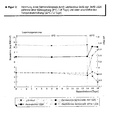
- Figure 1 shows the behavior of Lactococcus lactis subsp. lactis 1526 in vacuum-packed boiled sausage slices during a three-week cold storage at 6 ° C followed by simulated cold chain interruption (48h / 22 ° C).
- the lactobacilli isolates was therefore mainly on the directed antagonistic action against the Salmonella.
- the Dependence of the inhibition on the C-source concentration and the Seed density of the protection culture was in vacuum-packed boiled sausage slices examined by the inhibitory effect of L. lactis subsp. lactis 1526 on a salmonella pool (consisting of 9 Wild strains, see Table 1) at different inoculation densities the lactic acid bacteria culture and various Glucose concentrations was determined.
- the uncooked scalded sausage samples were "smear-infected" with a total of 4.4 ⁇ 10 4 Salmonella, wherein the checking of the inoculation density yielded a recovery of 70%, which corresponds to an actual salmonella density of 700 KbE / cm 2 .
- Lacctococcus lactis subsp. lactis 1526 sprayed at a density of 10 6 cfu / cm 2 .
- a glucose amount of 0.7 mg / cm 2 was sprayed onto the surface.
- the desired Laktokokkenêt of 10 6 cfu / cm 2 was approximately achieved (1,1x10 6 cfu / cm 2).
- the sprayed discs were overlaid with another disc and vacuum packed. Subsequently, the samples were stored in the cooled incubator at 6 ° C. After 14 days, the temperature was raised to 22 ° C to simulate a cold chain interruption.
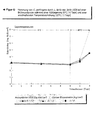
- FIG. 3 shows the acidification activity of the protective culture and the growth behavior of the Salmonella in the samples with and without protective culture addition.
- the salmonella population without the protective culture was able to proliferate.
- Lactococcus lactis subsp. lactis 1526 already on the 7th day Lactococcus lactis subsp. lactis 1526 already on the 7th day, the maximum bacterial count of 5.9 ⁇ 10 7 CFU / cm 2 in the further course of the experiment, the cell numbers decreased slightly.
- the pH decreased significantly in the first week, on the 7th day average values of 5.02 were measured on the surface, after 14 days values of 4.76 were reached.
- the Salmonella could only grow weakly during the 10 ° C storage.
Landscapes
- Life Sciences & Earth Sciences (AREA)
- Engineering & Computer Science (AREA)
- Chemical & Material Sciences (AREA)
- Zoology (AREA)
- Wood Science & Technology (AREA)
- Polymers & Plastics (AREA)
- Food Science & Technology (AREA)
- Health & Medical Sciences (AREA)
- Microbiology (AREA)
- Bioinformatics & Cheminformatics (AREA)
- Organic Chemistry (AREA)
- Biotechnology (AREA)
- Genetics & Genomics (AREA)
- General Chemical & Material Sciences (AREA)
- Chemical Kinetics & Catalysis (AREA)
- Tropical Medicine & Parasitology (AREA)
- Virology (AREA)
- Biomedical Technology (AREA)
- Medicinal Chemistry (AREA)
- Biochemistry (AREA)
- General Engineering & Computer Science (AREA)
- General Health & Medical Sciences (AREA)
- Animal Husbandry (AREA)
- Micro-Organisms Or Cultivation Processes Thereof (AREA)
- Fodder In General (AREA)
- Food Preservation Except Freezing, Refrigeration, And Drying (AREA)
- Seeds, Soups, And Other Foods (AREA)
- Peptides Or Proteins (AREA)
Applications Claiming Priority (3)
| Application Number | Priority Date | Filing Date | Title |
|---|---|---|---|
| DE19917715A DE19917715A1 (de) | 1999-04-09 | 1999-04-09 | Neuartige Schutzkulturen und deren Verwendung bei der Konservierung von Lebensmitteln |
| DE19917715 | 1999-04-09 | ||
| EP00918851A EP1171000B2 (de) | 1999-04-09 | 2000-04-05 | Neuartige schutzkulturen und deren verwendung bei der konservierung von lebensmitteln oder futtermitteln |
Related Parent Applications (1)
| Application Number | Title | Priority Date | Filing Date |
|---|---|---|---|
| EP00918851A Division EP1171000B2 (de) | 1999-04-09 | 2000-04-05 | Neuartige schutzkulturen und deren verwendung bei der konservierung von lebensmitteln oder futtermitteln |
Publications (1)
| Publication Number | Publication Date |
|---|---|
| EP1495679A1 true EP1495679A1 (de) | 2005-01-12 |
Family
ID=7905138
Family Applications (2)
| Application Number | Title | Priority Date | Filing Date |
|---|---|---|---|
| EP00918851A Expired - Lifetime EP1171000B2 (de) | 1999-04-09 | 2000-04-05 | Neuartige schutzkulturen und deren verwendung bei der konservierung von lebensmitteln oder futtermitteln |
| EP04021804A Withdrawn EP1495679A1 (de) | 1999-04-09 | 2000-04-05 | Schutzkulturen und deren Verwendung bei der Konservierung von Lebensmitteln |
Family Applications Before (1)
| Application Number | Title | Priority Date | Filing Date |
|---|---|---|---|
| EP00918851A Expired - Lifetime EP1171000B2 (de) | 1999-04-09 | 2000-04-05 | Neuartige schutzkulturen und deren verwendung bei der konservierung von lebensmitteln oder futtermitteln |
Country Status (16)
| Country | Link |
|---|---|
| US (2) | US6916647B1 (pt) |
| EP (2) | EP1171000B2 (pt) |
| JP (1) | JP2002540805A (pt) |
| KR (1) | KR100700223B1 (pt) |
| CN (1) | CN100429979C (pt) |
| AT (1) | ATE282323T1 (pt) |
| AU (1) | AU780255B2 (pt) |
| BR (1) | BR0010663A (pt) |
| CA (1) | CA2369631C (pt) |
| DE (2) | DE19917715A1 (pt) |
| DK (1) | DK1171000T4 (pt) |
| ES (1) | ES2232436T5 (pt) |
| NZ (1) | NZ531090A (pt) |
| PT (1) | PT1171000E (pt) |
| SI (1) | SI1171000T2 (pt) |
| WO (1) | WO2000060947A1 (pt) |
Cited By (1)
| Publication number | Priority date | Publication date | Assignee | Title |
|---|---|---|---|---|
| WO2012113597A1 (fr) * | 2011-02-21 | 2012-08-30 | Galactic S.A. | Méthode pour augmenter la durée de vie des produits alimentaires |
Families Citing this family (21)
| Publication number | Priority date | Publication date | Assignee | Title |
|---|---|---|---|---|
| DE19917715A1 (de) | 1999-04-09 | 2000-10-19 | Danisco A S Kopenhagen Koebenh | Neuartige Schutzkulturen und deren Verwendung bei der Konservierung von Lebensmitteln |
| DK174676B1 (da) * | 2001-01-18 | 2003-08-25 | Slagteriernes Forskningsinst | Fremgangsmåde og anlæg til fremstilling af skiveskårne fødevarer |
| FR2830018B1 (fr) * | 2001-09-21 | 2003-11-07 | Patrice Daniel | Nouvelles bacteries lactiques du genre lactococcus lactis et leur application a la conservation de produits alimentaires |
| EP1308506A1 (en) | 2001-11-06 | 2003-05-07 | Eidgenössische Technische Hochschule Zürich | Mixtures of Propionibacterium jensenii and Lactobacillus sp. with antimicrobial activities for use as a natural preservation system |
| JP4236087B2 (ja) * | 2002-11-06 | 2009-03-11 | 日本水産株式会社 | 抗菌作用および抗酸化作用を有する乳酸菌培養液で処理された魚介類 |
| EP1483975A1 (en) * | 2003-06-05 | 2004-12-08 | PURAC Biochem BV | Antimicrobial composition comprising a mixture of lactic acid or a derivative thereof and an inorganic acid |
| WO2006022471A1 (en) * | 2004-08-25 | 2006-03-02 | Jong Suk Oh | Lactic acid bacteria inhibiting halitosis |
| US8038990B2 (en) * | 2005-06-01 | 2011-10-18 | The Ohio State University | Compositions and methods for the prevention and removal of biofilms on inert and biological surfaces |
| KR100890462B1 (ko) * | 2007-06-20 | 2009-03-26 | 전남대학교산학협력단 | 페디오코쿠스 스피시스 jnu534 |
| KR100901190B1 (ko) * | 2007-10-08 | 2009-06-04 | 박홍제 | 항균활성을 갖는 락토코쿠스 락티스 젠64 및 이를 포함하는미생물제제 |
| JP6406875B2 (ja) * | 2013-05-16 | 2018-10-17 | 裕 翠川 | 抗菌性検査方法 |
| CN103300126B (zh) * | 2013-06-07 | 2014-11-26 | 浙江工商大学 | 凝结芽孢杆菌作为生物保鲜剂在大黄鱼防腐保鲜中的应用 |
| WO2014209912A1 (en) | 2013-06-27 | 2014-12-31 | Starbucks Corporation D/B/A Starbucks Coffee Company | Biopreservation methods for beverages and other foods |
| CA2957854C (en) | 2014-08-28 | 2021-06-08 | Chr. Hansen A/S | Improved compositions of hetero- and homofermentative lactic acid bacterial species for dual purpose silage preservation |
| BE1022587B1 (fr) * | 2015-05-08 | 2016-06-10 | Galactic S.A. | Methode permettant d'augmenter la duree de vie des produits alimentaires avec une composition antimicrobienne a base d'acides lactique et acetique |
| US10264808B2 (en) | 2015-12-29 | 2019-04-23 | The United States Of America, As Represented By The Secretary Of Agriculture | Use of phyllosphere associated lactic acid bacteria as biocontrol agents to reduce bacterial growth on fresh produce |
| CN107668576A (zh) * | 2017-11-19 | 2018-02-09 | 山东明鑫集团有限公司 | 一种即食比目鱼食品的制造方法 |
| CN108294238A (zh) * | 2018-01-22 | 2018-07-20 | 任文明 | 一种爵克炒米条及其制备方法 |
| WO2021033190A1 (en) | 2019-08-22 | 2021-02-25 | Ifat Hammer | Goods protection insert and uses thereof |
| CN111717541A (zh) * | 2020-06-28 | 2020-09-29 | 岳阳弘昱农产品仓储有限公司 | 一种冷链物流用的储运装置 |
| BE1029147B1 (fr) * | 2021-02-26 | 2022-09-27 | Pastificio Della Mamma | Procédé de fabrication de produits alimentaires frais bio-conservables |
Citations (14)
| Publication number | Priority date | Publication date | Assignee | Title |
|---|---|---|---|---|
| GB1388507A (en) * | 1971-12-13 | 1975-03-26 | Merck & Co Inc | Production of sausages |
| JPS5618570A (en) * | 1979-07-25 | 1981-02-21 | Kongo:Kk | Color development and storing of meat or food containing meat |
| JPS62130679A (ja) * | 1985-12-03 | 1987-06-12 | Karupisu Shokuhin Kogyo Kk | 新規乳酸菌 |
| JPS62130680A (ja) * | 1985-12-03 | 1987-06-12 | Karupisu Shokuhin Kogyo Kk | 新規乳酸菌 |
| US4886673A (en) * | 1987-11-25 | 1989-12-12 | Karl Muller u. Co. KG | Method of preserving meat products and microorganisms for the stabilization of meat products |
| US4894243A (en) * | 1986-08-14 | 1990-01-16 | Ab Tetra Pak | Method of reducing the health risks during the handling of packaged non-sterilized foodstuffs |
| US4917906A (en) * | 1987-01-21 | 1990-04-17 | Hoechst Aktiengesellschaft | Process for preserving raw meat with a bacteria-lysing enzyme from streptomycetes |
| JPH02138953A (ja) * | 1988-11-21 | 1990-05-28 | Ushiwaka Shoji Kk | 食肉の加工方法 |
| EP0484991A2 (en) * | 1990-09-13 | 1992-05-13 | Johma Nederland B.V. | Method for preserving foodstuffs |
| US5186962A (en) * | 1991-03-12 | 1993-02-16 | Board Of Regents Of The University Of Nebraska | Composition and method for inhibiting pathogens and spoilage organisms in foods |
| US5371011A (en) * | 1989-07-10 | 1994-12-06 | Zeneca Corp. | Mold control in forage |
| US5374433A (en) * | 1991-11-20 | 1994-12-20 | Monfort, Inc. | Method for preserving food products |
| WO1998012931A1 (en) * | 1996-09-27 | 1998-04-02 | Calpis Co., Ltd. | Lactic acid bacteria fermented milk in which increase in acidity is suppressed |
| US5750165A (en) * | 1996-04-16 | 1998-05-12 | Erway; Dale E. | Method of preparing a refrigerated potato product |
Family Cites Families (8)
| Publication number | Priority date | Publication date | Assignee | Title |
|---|---|---|---|---|
| US3899594A (en) * | 1971-09-13 | 1975-08-12 | Dirigo Corp | Food preservation |
| EP0574586B1 (en) * | 1991-11-12 | 1997-01-22 | Kyowa Hakko Kogyo Co., Ltd. | Process for producing food and drink |
| US5185962A (en) * | 1991-12-12 | 1993-02-16 | John Liou | Belt roller adjustment device of belt sander |
| JPH08187071A (ja) | 1995-01-11 | 1996-07-23 | Morinaga Milk Ind Co Ltd | 食品の保存方法 |
| JPH08187072A (ja) | 1995-01-11 | 1996-07-23 | Morinaga Milk Ind Co Ltd | 食品保存剤及びその製造法 |
| US6063410A (en) * | 1998-03-17 | 2000-05-16 | Quest International Flavors & Food Ingredients Company, Division Of Indopco, Inc. | Method and compositions for improved flavor and aroma in fermented meat |
| US6692779B2 (en) * | 1999-03-26 | 2004-02-17 | The Pillsbury Company | Food products with biocontrol preservation |
| DE19917715A1 (de) | 1999-04-09 | 2000-10-19 | Danisco A S Kopenhagen Koebenh | Neuartige Schutzkulturen und deren Verwendung bei der Konservierung von Lebensmitteln |
-
1999
- 1999-04-09 DE DE19917715A patent/DE19917715A1/de not_active Ceased
-
2000
- 2000-04-05 NZ NZ531090A patent/NZ531090A/en not_active IP Right Cessation
- 2000-04-05 EP EP00918851A patent/EP1171000B2/de not_active Expired - Lifetime
- 2000-04-05 SI SI200030560T patent/SI1171000T2/sl unknown
- 2000-04-05 EP EP04021804A patent/EP1495679A1/de not_active Withdrawn
- 2000-04-05 AT AT00918851T patent/ATE282323T1/de active
- 2000-04-05 DE DE50008676T patent/DE50008676D1/de not_active Expired - Lifetime
- 2000-04-05 AU AU39648/00A patent/AU780255B2/en not_active Ceased
- 2000-04-05 US US09/958,051 patent/US6916647B1/en not_active Expired - Lifetime
- 2000-04-05 BR BR0010663-1A patent/BR0010663A/pt not_active Application Discontinuation
- 2000-04-05 JP JP2000610297A patent/JP2002540805A/ja active Pending
- 2000-04-05 PT PT00918851T patent/PT1171000E/pt unknown
- 2000-04-05 CN CNB008087474A patent/CN100429979C/zh not_active Expired - Lifetime
- 2000-04-05 ES ES00918851T patent/ES2232436T5/es not_active Expired - Lifetime
- 2000-04-05 KR KR1020017012909A patent/KR100700223B1/ko not_active Expired - Fee Related
- 2000-04-05 WO PCT/EP2000/003025 patent/WO2000060947A1/de not_active Ceased
- 2000-04-05 CA CA2369631A patent/CA2369631C/en not_active Expired - Lifetime
- 2000-04-05 DK DK00918851T patent/DK1171000T4/da active
-
2004
- 2004-10-14 US US10/967,066 patent/US7939119B2/en not_active Expired - Fee Related
Patent Citations (14)
| Publication number | Priority date | Publication date | Assignee | Title |
|---|---|---|---|---|
| GB1388507A (en) * | 1971-12-13 | 1975-03-26 | Merck & Co Inc | Production of sausages |
| JPS5618570A (en) * | 1979-07-25 | 1981-02-21 | Kongo:Kk | Color development and storing of meat or food containing meat |
| JPS62130679A (ja) * | 1985-12-03 | 1987-06-12 | Karupisu Shokuhin Kogyo Kk | 新規乳酸菌 |
| JPS62130680A (ja) * | 1985-12-03 | 1987-06-12 | Karupisu Shokuhin Kogyo Kk | 新規乳酸菌 |
| US4894243A (en) * | 1986-08-14 | 1990-01-16 | Ab Tetra Pak | Method of reducing the health risks during the handling of packaged non-sterilized foodstuffs |
| US4917906A (en) * | 1987-01-21 | 1990-04-17 | Hoechst Aktiengesellschaft | Process for preserving raw meat with a bacteria-lysing enzyme from streptomycetes |
| US4886673A (en) * | 1987-11-25 | 1989-12-12 | Karl Muller u. Co. KG | Method of preserving meat products and microorganisms for the stabilization of meat products |
| JPH02138953A (ja) * | 1988-11-21 | 1990-05-28 | Ushiwaka Shoji Kk | 食肉の加工方法 |
| US5371011A (en) * | 1989-07-10 | 1994-12-06 | Zeneca Corp. | Mold control in forage |
| EP0484991A2 (en) * | 1990-09-13 | 1992-05-13 | Johma Nederland B.V. | Method for preserving foodstuffs |
| US5186962A (en) * | 1991-03-12 | 1993-02-16 | Board Of Regents Of The University Of Nebraska | Composition and method for inhibiting pathogens and spoilage organisms in foods |
| US5374433A (en) * | 1991-11-20 | 1994-12-20 | Monfort, Inc. | Method for preserving food products |
| US5750165A (en) * | 1996-04-16 | 1998-05-12 | Erway; Dale E. | Method of preparing a refrigerated potato product |
| WO1998012931A1 (en) * | 1996-09-27 | 1998-04-02 | Calpis Co., Ltd. | Lactic acid bacteria fermented milk in which increase in acidity is suppressed |
Non-Patent Citations (8)
| Title |
|---|
| DATABASE BIOSIS [online] BIOSCIENCES INFORMATION SERVICE, PHILADELPHIA, PA, US; 1996, WESSELS S ET AL: "Suitability of Lactococcus lactis subsp. lactis ATCC 11454 as a protective culture for lightly preserved fish products.", XP002143429, Database accession no. PREV199799317351 * |
| ELSSER D.: "THESIS", 27 May 1999, article "Minimierung des Hygienerisikos durch toxiinfektiöse und toxinogene Bakterien bei nitritverminderten Brühwursterzeugnissen durch den Einsatz von Schutzkulturen", XP007909203 * |
| EL-ZINEY M.G.; UYTTENDAELE M.R.; DEBEVERE J.M.: "The Production and application of reuterin from Lactobacillus Reuteri 12002", MEDEDELINGEN VAN DE FACULTEIT LANDBOUWWETENSCHAPPEN UNIVERSITEITGENT, vol. 61, no. 4A, 1 January 1996 (1996-01-01), GENT, BE, pages 1573 - 1583, XP007907200 * |
| FOOD MICROBIOLOGY (LONDON), vol. 13, no. 4, 1996, pages 323 - 332, ISSN: 0740-0020 * |
| NN: "Fachgebiet Haushalts- und Betriebshygiene", INTERNET CITATION, 1 July 1998 (1998-07-01), Retrieved from the Internet <URL:http://www.wzw.tum.de/hhy/elsser.htm> * |
| PATENT ABSTRACTS OF JAPAN vol. 005, no. 067 (C - 053) 7 May 1981 (1981-05-07) * |
| PATENT ABSTRACTS OF JAPAN vol. 014, no. 377 (C - 0748) 15 August 1990 (1990-08-15) * |
| RIEMANN H.; LEE W.H.; GENIGEORGIS C.: "CONTROL OF CLOSTRIDIUM BOTULINUM AND STAPHYLOCOCCUS AUREUS IN SEMI-PRESERVED MEAT PRODUCTS", JOURNAL OF MILK AND FOOD TECHNOLOGY, vol. 35, no. 9, 1 January 1972 (1972-01-01), THE ASSOCIATION, AMES, IA, US, pages 514 - 523, XP000618325 * |
Cited By (2)
| Publication number | Priority date | Publication date | Assignee | Title |
|---|---|---|---|---|
| WO2012113597A1 (fr) * | 2011-02-21 | 2012-08-30 | Galactic S.A. | Méthode pour augmenter la durée de vie des produits alimentaires |
| BE1019833A3 (fr) * | 2011-02-21 | 2013-01-08 | Galactic Sa | Methode pour augmenter la duree de vie des produits alimentaires. |
Also Published As
| Publication number | Publication date |
|---|---|
| ATE282323T1 (de) | 2004-12-15 |
| US6916647B1 (en) | 2005-07-12 |
| US20050053702A1 (en) | 2005-03-10 |
| DE50008676D1 (de) | 2004-12-23 |
| SI1171000T2 (sl) | 2010-01-29 |
| CN1355673A (zh) | 2002-06-26 |
| KR20020012171A (ko) | 2002-02-15 |
| ES2232436T5 (es) | 2009-12-23 |
| EP1171000B2 (de) | 2009-09-02 |
| ES2232436T3 (es) | 2005-06-01 |
| US7939119B2 (en) | 2011-05-10 |
| DK1171000T4 (da) | 2009-11-23 |
| KR100700223B1 (ko) | 2007-03-26 |
| CN100429979C (zh) | 2008-11-05 |
| DK1171000T3 (da) | 2005-03-29 |
| NZ531090A (en) | 2005-09-30 |
| WO2000060947A1 (de) | 2000-10-19 |
| SI1171000T1 (en) | 2005-02-28 |
| CA2369631A1 (en) | 2000-10-19 |
| DE19917715A1 (de) | 2000-10-19 |
| AU780255B2 (en) | 2005-03-10 |
| AU3964800A (en) | 2000-11-14 |
| EP1171000A1 (de) | 2002-01-16 |
| BR0010663A (pt) | 2002-02-19 |
| CA2369631C (en) | 2010-07-20 |
| JP2002540805A (ja) | 2002-12-03 |
| PT1171000E (pt) | 2005-03-31 |
| EP1171000B1 (de) | 2004-11-17 |
Similar Documents
| Publication | Publication Date | Title |
|---|---|---|
| EP1171000B1 (de) | Neuartige schutzkulturen und deren verwendung bei der konservierung von lebensmitteln oder futtermitteln | |
| Papadopoulos et al. | Effect of gutting on microbiological, chemical, and sensory properties of aquacultured sea bass (Dicentrarchus labrax) stored in ice | |
| Vermeiren et al. | Evaluation of meat born lactic acid bacteria as protective cultures for the biopreservation of cooked meat products | |
| DE69231650T2 (de) | Verfahren zum Konservieren von Frischfleischprodukten und Produkte | |
| DE69733951T2 (de) | Breitspektrum-prävention und entfernung mikrobieller nahrungsverunreinigungen durch quartäre ammonium verbindungen | |
| Tanaka et al. | Inhibition of botulinum toxin formation in bacon by acid development | |
| DE3783208T2 (de) | Verfahren, bezueglich nahrungsmittel tierischen ursprungs. | |
| Stivarius et al. | The effects of acetic acid, gluconic acid and trisodium citrate treatment of beef trimmings on microbial, color and odor characteristics of ground beef through simulated retail display | |
| US5019411A (en) | Process for bacterial decontamination of vegetable foods | |
| Kramer et al. | Inhibition of Listeria monocytogenes on bologna by a beta acid rich hop extract | |
| Samelis et al. | Use of ionizing radiation doses of 2 and 4 kGy to control Listeria spp. and Escherichia coli O157: H7 on frozen meat trimmings used for dry fermented sausage production | |
| Stillmunkes et al. | Microbiological safety of cooked beef roasts treated with lactate, monolaurin or gluconate | |
| Vihavainen et al. | Leuconostoc spoilage of vacuum-packaged vegetable sausages | |
| US20160143302A1 (en) | Use of lactobacillus sakei for the biopreservation of products from the sea | |
| Vasilopoulos et al. | Interactions between bacterial isolates from modified-atmosphere-packaged artisan-type cooked ham in view of the development of a bioprotective culture | |
| Kotzekidou et al. | Microbial and sensory changes in vacuum-packed frankfurter-type sausage byLactobacillus alimentariusand fate of inoculatedSalmonella enteritidis | |
| DE60218063T2 (de) | Milchsäurebakterien der gattung lactococcus lactis und deren verwendung zur konservierung von nahrungsmitteln | |
| US20050158432A1 (en) | Method of and composition for inhibiting the growth of Clostridium perfringens in meat products | |
| CA2971392A1 (en) | Biopreservation composition based on lactobacteria for preventing and controlling the spoilage of fresh and cooked meat products | |
| JP2002306132A (ja) | 非加熱食肉製品及びその製造方法 | |
| Murthy et al. | Effect of lactococcus lactis var. lactis biovar diacetylactis on bacterial counts, pH and total acidity of minced goat meat during refrigerated storage | |
| Maijala et al. | The influence of some starter cultures and GDL on the formation of biogenic amines in dry sausages | |
| Lowore et al. | Microbial, Sensory and Biochemical Properties of Fresh Farmed Tilapia Fish Preserved in Lactic Acid Bacteria Culture | |
| Lillard et al. | Research note: Relationship of microbiological quality and oxidative stability of raw broiler meat during cold storage | |
| Langlois et al. | Effects of pre-cure storage and smoking on the microflora and palatability of aged dry-cured hams |
Legal Events
| Date | Code | Title | Description |
|---|---|---|---|
| PUAI | Public reference made under article 153(3) epc to a published international application that has entered the european phase |
Free format text: ORIGINAL CODE: 0009012 |
|
| 17P | Request for examination filed |
Effective date: 20040920 |
|
| AC | Divisional application: reference to earlier application |
Ref document number: 1171000 Country of ref document: EP Kind code of ref document: P |
|
| AK | Designated contracting states |
Kind code of ref document: A1 Designated state(s): AT BE CH CY DE DK ES FI FR GB GR IE IT LI LU MC NL PT SE |
|
| AX | Request for extension of the european patent |
Extension state: AL LT LV MK RO SI |
|
| RIN1 | Information on inventor provided before grant (corrected) |
Inventor name: ELSSER, DIETER, DR. |
|
| AKX | Designation fees paid |
Designated state(s): AT BE CH CY DE DK ES FI FR GB GR IE IT LI LU MC NL PT SE |
|
| AXX | Extension fees paid |
Extension state: SI Payment date: 20040920 Extension state: RO Payment date: 20040920 Extension state: MK Payment date: 20040920 Extension state: LV Payment date: 20040920 Extension state: LT Payment date: 20040920 Extension state: AL Payment date: 20040920 |
|
| 17Q | First examination report despatched |
Effective date: 20090219 |
|
| STAA | Information on the status of an ep patent application or granted ep patent |
Free format text: STATUS: THE APPLICATION IS DEEMED TO BE WITHDRAWN |
|
| 18D | Application deemed to be withdrawn |
Effective date: 20090702 |