EP1498421A1 - Inhibiteurs de gamma secretase - Google Patents
Inhibiteurs de gamma secretase Download PDFInfo
- Publication number
- EP1498421A1 EP1498421A1 EP03720938A EP03720938A EP1498421A1 EP 1498421 A1 EP1498421 A1 EP 1498421A1 EP 03720938 A EP03720938 A EP 03720938A EP 03720938 A EP03720938 A EP 03720938A EP 1498421 A1 EP1498421 A1 EP 1498421A1
- Authority
- EP
- European Patent Office
- Prior art keywords
- leu
- compound
- group
- replaced
- amino acid
- Prior art date
- Legal status (The legal status is an assumption and is not a legal conclusion. Google has not performed a legal analysis and makes no representation as to the accuracy of the status listed.)
- Granted
Links
Images

Classifications
-
- C—CHEMISTRY; METALLURGY
- C07—ORGANIC CHEMISTRY
- C07K—PEPTIDES
- C07K5/00—Peptides containing up to four amino acids in a fully defined sequence; Derivatives thereof
-
- C—CHEMISTRY; METALLURGY
- C07—ORGANIC CHEMISTRY
- C07K—PEPTIDES
- C07K5/00—Peptides containing up to four amino acids in a fully defined sequence; Derivatives thereof
- C07K5/02—Peptides containing up to four amino acids in a fully defined sequence; Derivatives thereof containing at least one abnormal peptide link
- C07K5/0207—Peptides containing up to four amino acids in a fully defined sequence; Derivatives thereof containing at least one abnormal peptide link containing the structure -NH-(X)4-C(=0), e.g. 'isosters', replacing two amino acids
-
- A—HUMAN NECESSITIES
- A61—MEDICAL OR VETERINARY SCIENCE; HYGIENE
- A61P—SPECIFIC THERAPEUTIC ACTIVITY OF CHEMICAL COMPOUNDS OR MEDICINAL PREPARATIONS
- A61P25/00—Drugs for disorders of the nervous system
-
- A—HUMAN NECESSITIES
- A61—MEDICAL OR VETERINARY SCIENCE; HYGIENE
- A61P—SPECIFIC THERAPEUTIC ACTIVITY OF CHEMICAL COMPOUNDS OR MEDICINAL PREPARATIONS
- A61P25/00—Drugs for disorders of the nervous system
- A61P25/28—Drugs for disorders of the nervous system for treating neurodegenerative disorders of the central nervous system, e.g. nootropic agents, cognition enhancers, drugs for treating Alzheimer's disease or other forms of dementia
-
- A—HUMAN NECESSITIES
- A61—MEDICAL OR VETERINARY SCIENCE; HYGIENE
- A61P—SPECIFIC THERAPEUTIC ACTIVITY OF CHEMICAL COMPOUNDS OR MEDICINAL PREPARATIONS
- A61P43/00—Drugs for specific purposes, not provided for in groups A61P1/00-A61P41/00
-
- C—CHEMISTRY; METALLURGY
- C07—ORGANIC CHEMISTRY
- C07K—PEPTIDES
- C07K14/00—Peptides having more than 20 amino acids; Gastrins; Somatostatins; Melanotropins; Derivatives thereof
- C07K14/435—Peptides having more than 20 amino acids; Gastrins; Somatostatins; Melanotropins; Derivatives thereof from animals; from humans
- C07K14/46—Peptides having more than 20 amino acids; Gastrins; Somatostatins; Melanotropins; Derivatives thereof from animals; from humans from vertebrates
- C07K14/47—Peptides having more than 20 amino acids; Gastrins; Somatostatins; Melanotropins; Derivatives thereof from animals; from humans from vertebrates from mammals
- C07K14/4701—Peptides having more than 20 amino acids; Gastrins; Somatostatins; Melanotropins; Derivatives thereof from animals; from humans from vertebrates from mammals not used
- C07K14/4711—Alzheimer's disease; Amyloid plaque core protein
-
- C—CHEMISTRY; METALLURGY
- C07—ORGANIC CHEMISTRY
- C07K—PEPTIDES
- C07K14/00—Peptides having more than 20 amino acids; Gastrins; Somatostatins; Melanotropins; Derivatives thereof
- C07K14/81—Protease inhibitors
- C07K14/8107—Endopeptidase (E.C. 3.4.21-99) inhibitors
- C07K14/811—Serine protease (E.C. 3.4.21) inhibitors
- C07K14/8114—Kunitz type inhibitors
-
- C—CHEMISTRY; METALLURGY
- C07—ORGANIC CHEMISTRY
- C07K—PEPTIDES
- C07K16/00—Immunoglobulins [IG], e.g. monoclonal or polyclonal antibodies
- C07K16/44—Immunoglobulins [IG], e.g. monoclonal or polyclonal antibodies against material not provided for elsewhere, e.g. haptens, metals, DNA, RNA, amino acids
-
- C—CHEMISTRY; METALLURGY
- C07—ORGANIC CHEMISTRY
- C07K—PEPTIDES
- C07K7/00—Peptides having 5 to 20 amino acids in a fully defined sequence; Derivatives thereof
-
- A—HUMAN NECESSITIES
- A61—MEDICAL OR VETERINARY SCIENCE; HYGIENE
- A61K—PREPARATIONS FOR MEDICAL, DENTAL OR TOILETRY PURPOSES
- A61K38/00—Medicinal preparations containing peptides
Definitions
- the present invention relates to compounds that inhibit gamma-secretease, a splitting enzyme that produces amyloid protein from the amyloid-precursor protein. More specifically, the present invention relates to those compounds or their pharmaceutically acceptable salts, gamma-secretase inhibitors comprising them, use of the compounds in the screening of anti-aging drugs or antidementia drugs, as well as antibodies to the compounds.
- Amyloid protein accumulation is a histopathological change occurring in cerebral tissues of not only those with Alzheimer's disease or Down's syndrome but also those who went through a process of normally aging.
- the amyloid protein which consists of from 40 to 42/43 amino acids rich in hydrophobic ones, is produced from its precursor, the amyloid-precursor protein (hereinafter referred to as APP), by a hydrolytic cleavage.
- APP which consists of 695, 751 or 770 amino acids, is a type 1 membrane protein that spans the membrane once, with its amino terminal portion exposed outside the cell. The difference in the number of its amino acids corresponds to the presence or absence of a so-called Kunitz-type protease inhibitor-active site, which is located in the region outside the cell.
- APP695 a form of APP consisting of 695 amino acids (hereinafter referred to as "APP695", whose amino acid sequence is set forth as SEQ ID NO:7), is a dominant one.
- the APP695 consisting of 695 amino acids starting with the methionine at position 1 and extending up to the asparagine at position 695, is an isoform occurring mainly in neurocytes, and is a type 1 membrane protein having a transmembrane domain (consisting of 24 amino acid extending from the glycine at position 625 to the leucine at position 648) which spans the cell membrane once.
- the amyloid protein comprises a shorter form protein molecule consisting of 40 amino acids extending from the aspartic acid at position 597 in the APP695's portion exposed outside the cell to the valine at position 636, which is within the cell membrane, and a longer protein molecule consisting of 42 or 43 amino acids extending up to the alanine at position 638 or the threonine at position 639.
- APP770 a form of APP consisting of 770 amino acids
- SEQ ID NO:8 a form of APP consisting of 770 amino acids
- SEQ ID NO:9 a form of APP consisting of 770 amino acids
- SEQ ID NO:9 a form of APP consisting of 770 amino acids extending from the methionine at position 1 to the asparagine at position 770 and includes in it an amino acid sequence portion that the APP695 does not possess (75 amino acids extending from the glutamic acid at position 289 to the lysine at position 363).
- this inserted amino acid sequence it is the molecule having exactly the same amino acid sequence as those of APP695.
- APP751 which consists in total of 751 amino acids, with 19 amino acids lost that extends from the methionine at position 345 to the lysine at position 363 of the APP770.
- An amino acid sequence that is commonly inserted into APP751 and APP770 (56 amino acids extending from the glutamic acid at position 289 to the alanine at position 344 in the APP770 amino acid sequence) possesses an activity of the Kunitz-type protease inhibitor and is thought to be expressed in cells other than neurocytes.
- the amyloid protein has been assumed as a key molecule of the onset of Alzheimer's disease.
- Two important steps of reactions must take place for the amyloid protein to be produced from the amyloid-precursor protein.
- the first step is the cutting off, by ⁇ -secretase, of the portion extending from the amino terminus of the amyloid protein portion.
- cleavage takes place at the carboxyl terminus of the amyloid protein by the action of ⁇ -secretase, resulting in the release of the amyloid protein, with dissociated APP intracellular fragment left behind.
- the cleavage in the second step has been assumed to occur at the gamma ( ⁇ ) site, which is at the carboxyl terminus of the amyloid protein (between the valine at position 711 and the isoleucine at position 712, between alanine at position 713 and the threonine at position 714, or between the threonine at position 714 and the valine at position 715, according to the manner of numbering of amino acid residues in the APP770).
- neuronal lesions in the brain occur before its abnormal clinical symptoms will appear, such as disorientation, debilitating memory loss, amnesia, deteriorating judgment, and behavioral aberration.
- the neuronal lesions include deposition of the amyloid protein, neurofibrillary tangle, and degenerative cellular loss, among which deposition of the amyloid protein is the earliest pathological event.
- amyloid hypothesis according to which the production and deposition of amyloid protein does cause the disease, is deemed important with respect to the progress of Alzheimer's disease.
- the basis for it has been provided by studies of familial Alzheimer's disease.
- ⁇ -secretase is the gene product of presenilin-1 [Sherrington,-R; Rogaev,-E-I; Liang,-Y; Rogaeva,-E-A; Levesque,-G; Ikeda,-M; Chi,-H; Lin,-C; Li,-G; Holman,-K; et-al. Cloning of a gene bearing missense mutations in early-onset familial Alzheimer's disease.
- APP is also a causative gene of early-onset familial Alzheimer's disease (Goate, A. et al Nature 1991) indicates that a plurality of genes are involved as causative factors of the single class of dementia called Alzheimer's disease.
- the amyloid protein comprises two components.
- One is a shorter amyloid protein component, which starts with aspartic acid and ends in the valine at position 40, and the other is a longer amyloid protein component consisting of 42 or 43 amino acids, which starts with the same aspartic acid as does the 40 amino-acids component but ends in the alanine at position 42 (thus longer by 2 amino acid residues) or the threonine at position 43 (thus longer by 3 amino acid residues).
- the latter longer component is more hydrophobic and therefore still less soluble.
- amyloid fiber is formed, which is a fibriform structure having the diameter of about 5 to 6 nm.
- presenilin-1 is playing an important role. According to animal experiments or cell culture experiments, defunctionalization of presenilin-1 reportedly caused abnormalities in the development of cranial nerves or the formation of spinal column, or abnormalities in the development of lymphocytes. Thus, presenilin-1 is known to have a variety of functions in addition to the one relating the amyloid protein.
- ⁇ -secretase inhibitors are: inhibitors which are peptidomimetic compounds based on reports about the ⁇ -site of the substrate APP, located at the carboxyl terminus of amyloid protein portion, on which the enzyme acts [Mori H., Takio K., Ogawara M. & Selkoe D.J.j, Mass spectrometry of purified amyloid b protein in Alzheimer's disease. (1992) J. Biol. Chem.
- DFK-167 As for a peptidomimetic compound, DFK-167 is known [Wolfe M.S., Citron M., Diehl T.S., Xia W., Donkor I.C. and Selkoe D.J.: A substrate-based difluoro ketone selectively inhibits Alzheimer' s g-secretase activity. (1998) J. Med. Chem., 41(1), 6-9].
- JLK-6 which is a ⁇ - chymotrypsin inhibitor [Nakajima, K., Powers,J.C., Ashe,B.M., Zimmerman,M. Mapping the extended substrate binding site of cathepsin G and human leukocyte elastase. Studies with peptide substrates related to the alpha 1-protease inhibitor reactive site. (1979) J. Biol. Chem. 254 (10), 4027-32].
- DFK-167 is an inhibitor that was designed for the ⁇ -site and is a compound totally independent from the recent findings on the ⁇ -site, thus it has a different target with regard to inhibitor designing.
- Inhibitors L-685,458 and JLK-6 are not compounds originally developed as specific inhibitors of ⁇ -secretase involved in the production of the amyloid protein from the APP. Apart from the specificity problem as ⁇ -secretase inhibitors, there are other problems concerning efficacy at the target tissue.
- An objective of the present invention is to provide novel compounds that inhibit ⁇ -secretase.
- Another objective of the present invention is to provide ⁇ -secretase inhibitor compounds which is focused on the amino acid sequence of substrate APP, not on ⁇ -secretase itself.
- a further objective of the present invention is to provide ⁇ -secretase inhibitor compounds based on the most recent findings about the ⁇ -site.
- a still further objective of the present invention is to provide a method for diagnosis, useful therapeutic drugs and method for treatment, and a method for screening for the development of useful therapeutic drugs, of Alzheimer's disease and other related diseases.
- the related diseases referred to herein includes diseases in which the amyloid protein is known or suspected to be directly or indirectly involved as the pathogen, like Down syndrome, as well as diseases in which amyloid protein is noted in the neuropathological lesions.
- the present invention provides:
- the compounds of the present invention and acceptable salts thereof may be used for the treatment of, and for the screening of therapeutic drugs of, Alzheimer's disease and related diseases thereto, such as those in which amyloid protein is known or suspected to be directly or indirectly involved as a causative factor of the disease, e.g., Down syndrome, and diseases in which amyloid protein is observed at a site of a neuropathological lesion.
- the antibody of the present invention may be used, e.g., for determining the blood levels of the compound of the present invention administered to a human for treatment.
- the "alkyl" referred to in connection with the alkyloxycarbonyl group is a C1-10, preferably C1-7, and more preferably C1-5 alkyl.
- Such an alkyl may be linear or branched and, may be, e.g., methyl, ethyl, propyl, isopropyl, n-butyl, sec-butyl, t-butyl, n-pentyl, isopentyl, 2-methylbutyl, 2,2-dimethylpropyl, t-pentyl, hexyl, heptyl, octyl, nonyl, decyl, etc.
- One of the particularly preferred examples is t-butyl. They may have one or more of their hydrogen atoms replaced with a phenyl group or a naphthyl group.
- a particularly preferred example of such substituent groups is a benzyloxycarbonyl group.
- the "alkyl” referred to in connection with the "conversion to an alkyl ester or alkyl amide” is a C1-10, preferably C1-7, and more preferably C1-5 alkyl.
- Such an alkyl may be linear or branched and, may be, e.g., methyl, ethyl, propyl, isopropyl, n-butyl, sec-butyl, t-butyl, n-pentyl, isopentyl, 2-methylbutyl, 2,2-dimethylpropyl, t-pentyl, hexyl, heptyl, octyl, nonyl, decyl, etc.
- Methyl and t-butyl are particularly preferred examples. They may have one or more of their hydrogen atoms replaced with a phenyl group or a naphthyl group.
- One of particularly preferred examples is a benzyloxycarbonyl group.
- examples of the C1-4 hydrophobic group includes hydrophobic protective groups such as methyl, ethyl, propyl, n-butyl, sec-butyl, t-butyl, etc.
- an “amino acid” means an L-amino acid.
- the peptidomimetic compounds of the present invention was obtained through an attempt of preparing a compound which has a structure similar to the ⁇ -site but stabilized to the enzyme, and their suppressive effect was confirmed not only on sporadic Alzheimer's disease's amyloid production but also on amyloid production involving a gene mutation of early-onset familial Alzheimer's disease.
- a variety of peptide-like compounds which have an amino acid sequence similar to that located around the ⁇ -site of the APP cleaved by ⁇ -secretase but are modified to stabilize the site and have a ⁇ -secretase inhibiting activity may be used for the purpose of the present invention.
- An example of such a compound is one in which an amino acid residue,-NH-CHR-CO-, in the vicinity of the ⁇ -site is replaced with a different amino acid residue having a similar property regarding to the R (hydrophobicity/hydrophilicity, acidity/basicity, absence ore presence of sulfur atom, presence or absence of a hydroxy group, etc.), and which has a ⁇ -secretase inhibiting activity.
- Ile, Val, Ala and Gly are amino acids that may be substituted for Leu; Leu, Val, Ala and Gly for Ile; Ser for Thr; Ala for Met; Gly, Val, Ile and Leu for Ala; Arg and His for Lys, respectively.
- Leu at position 14 of SEQ ID NO:1 (identical to the Leu at position 6 of SEQ ID NO:2 and the Leu at position 4 of SEQ ID NO:3) may be replaced with Pro, for it has been reported that the A ⁇ 42 amyloid protein component increases in a variant in which the amino acid at that site is replaced with Pro (this suggests that such a variant protein has higher affinity to ⁇ -secretase) [Kwok,-J-B; Li,-Q-X; Hallupp,-M; Whyte,-S; Ames,-D; Beyreuther,-K; Masters,-C-L; Schofield,-P-R, Novel Leu723Pro amyloid precursor protein mutation increases amyloid beta42(43) peptide levels and induces apoptosis. Ann-Neurol. 2000 Feb; 47(2): 249-53].
- synthesis may be performed as desired by employing a combination of well-known methods such as Boc(t-butyloxycarbonyl)-carbonylation reaction, DMSO oxidation, alkaline reaction, acidic reaction, epoxidation, silica gel column chromatography, alkylation, saponification, reaction by heating, decarboxylation, condensation reaction, reverse-phase column chromatography, etc.
- a method is employed in which each of the structural components of the compound of the present invention is sequentially reacted and the yield and the purity of the reactant is assayed at desired steps.
- the compounds of the present invention may include such modifications as those for facilitating synthesis or purification, those for promoting physical/chemical stability, those for activation in the body relating to stability and instability or to conditioning to metabolism, and a modification for regulation which causes increase or decrease in the efficiency of transportation to organs including transportation across the blood-brain barrier.
- the "modification for regulation” referred to herein means a modification with a sequence consisting of the 11 amino acids, Tyr-Gly-Arg-Lys-Lys-Arg-Arg-Gln-Arg-Arg-Arg (SEQ ID NO:3) [Schwarze, S.R., Ho, A., Vocero-Akbani, A. & Dowdy, S.F.
- modifications of the compound of the present invention include, acetylation, acylation, ADP-ribosylation, amidation, attachment of a flavin compound via a covalent bond, attachment of a heme moiety via a covalent bond, attachment of a nucleotide or a nucleotide derivative via a covalent bond, attachment of a lipid or a lipid derivative via a covalent bond, attachment of phosphatidylinositol via a covalent bond, cross-linking, cyclization, disulfide bond formation, demethylation, formation of a cross-linking covalent bond, cystine formation, pyroglutamate formation, formylation, ⁇ -carboxylation, glycosylation, GPI-anchor formation, hydroxylation, iodization, methylation, myristoylation, oxidation, protein hydrolysis processing, phosphorylation, prenylation, racemization, attachment of a lipid, sulfation, selenoy
- any product obtained through such processing will fall within the scope of the present invention.
- An antibody may be purified using, as an antigen, any compound chosen from the compound of the present invention, its derivatives and or decomposition products.
- An antigen may be the compound or its derivative, and consists of, e.g., 20 or less amino acid residues, preferably 5 or less amino acid residues, more preferably 3 and most preferably 2 amino acid residues. Purification may also be carried out using a combination of such antigens.
- An antigen need not to be the compound of the present invention itself or its derivative or decomposition product, but may be one of a structure having, outwardly exposed, a primary sequence in the vicinity of the APP's ⁇ -site.
- the term "vicinity" referred to herein means a region extending by up to 4 amino acids from the ⁇ -site, (which is at either of the 2 positions) in the direction of the carboxyl terminus.
- a compound containing the aforementioned amino acid sequence in the vicinity of the ⁇ -site is preferably used as an antigen.
- preferable antibodies include:
- antibodies are not limited to a specific class or amount insofar as they immunologically bind to or recognize the site of interest. Binding or recognition of an antibody is determined through publicly known antigen-antibody reactions.
- immunospecific means possessing substantially greater affinity to a compound of interest than to other relating proteins or compounds known in the prior art.
- an antibody is prepared by induction of humoral and/or cellular immune response to the antigen. Otherwise, immuno response may be induced by immunologically stimulating lymphocytes, or their progenitor cells, in culture.
- a carrier on the scope of which no particular limitation is imposed insofar as it has by itself no adverse effect on the host, include, but are not limited to, cellulose, physiological saline, buffered physiological saline, dextrose, water, glycerol, ethanol, polymerized amino acid, albumin and a mixture thereof.
- Suitable animals used for immunization are mice, rats, rabbits, goats, horses, bovines, etc.
- a polyclonal antibody may be obtained in the form of a serum by a publicly known method, or by a method for antibody recovery from a serum. Examples of preferably means include immunoaffinity chromatography.
- Production of a monoclonal antibody are carried out either by first harvesting tissues (e.g., the spleen or lymph nodes) containing the antibody activity from animals or harvesting cultured cells immunized as above, and then introducing transformation into publicly known perpetually growing cells (e.g., a myeloma line such as P3X63Ag8).
- tissues e.g., the spleen or lymph nodes
- transformation into publicly known perpetually growing cells e.g., a myeloma line such as P3X63Ag8
- hybridoma cells prepared from the above antibody producing cell and a perpetually growing cells are cloned, and a specific hybridoma cell is selected that is producing an antibody that specifically recognize the novel compound of the present invention, and the antibody is collected from the culture medium of the hybridoma.
- the antibody mentioned above may be used for identification, detection and quantitative determination of the compound of the present invention or its derivative or decomposition compound, or for preparation and purification of the compounds utilizing affinity chromatography.
- the antibody mentioned above may be converted to a human-type antibody using a publicly known technique.
- the compound of the present invention or its derivative or decomposition compound, and a specific antibody to them having an activity to enhance the effect of the compound of the present invention, its derivative or decomposition product are useful as a standard compound for screening of compounds in search of amyloid protein-inhibitor drugs, and also as a means for such screening.
- the compound of the present invention By administering its effective amount to a patient of Alzheimer's disease or a related disease thereto, in a pharmaceutically acceptable carrier or without use of a carrier, the compound of the present invention is used in order to control the amount of amyloid protein production, thereby preventing or treating those diseases or ameliorating their symptoms.
- the compound of the present invention may be provided in a suitable preparation form that enhances the efficiency in the transportation of the compound to the encephalic tissues.
- a preferred form of a pharmaceutical composition for systemic administration containing the compound of the present invention is an injection, above all, an intravenous injection.
- Other routes for injection such as subcutaneous, intramuscular and intraperitoneal routes, may also be employed.
- Another means for systemic administration is transmucosal or transdermal administration utilizing a penetration enhancer such as bile salt, fuchsine acid or other surfactants.
- oral administration is possible when enteric-coating preparations or capsules are properly formulated. Topical administration of such a pharmaceutical composition is also possible, which may be in the form of a plaster, a paste or a gel.
- assay methods utilizing an antibody to the compound of the present invention, its derivatives or decomposition products include radioimmunoassay, competitive binding assay, high-performance liquid chromatography, Western blot analysis and ELISA, etc. and their combinations.
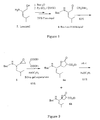
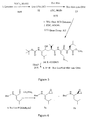
- Boc-Leu*Val-Met-Leu-OMe (wherein, "*" indicates that the peptide bond "-CO-NH-" between the Leu and the Val is replaced with a hydroxyethylene group "-CHOH-CH 2 -") was synthesized as follows according to the synthetic scheme shown in Figures 1-5. The compound was chosen in which the configuration around the ⁇ -carbon of the hydroxyethylene group represented the R-type. The structure of the compound is shown as the formula (1).
- L-leucinol hydrochloric acid (2) (9.87g, 64.2 mmol) was dissolved in 100 ml of acetone and 50 ml of water, and, after addition of triethylamine (21.5 ml, 128 mmol), refrigerated to -10 °C.
- Boc 2 O (20 g, 92 mmol) was added dropwise at -10 °C and then stirring was continued overnight without cooling.
- Acetone was evaporated and, following addition of about 500 ml of 0.1 M hydrochloric acid, extraction was carried out with 500 ml of ethyl acetate.
- Boc-leucinol (3) (12.88g, 58.9 mmol) was flushed with toluene and then purged with argon gas. It was dissolved in dimethylsulfoxide (dehydrated, 200 ml) and, after addition of triethylamine (22 ml, 158 mmol), cooled in a 15 °C water bath. Meanwhile, in another flask, sulfur trioxide-pyridine complex (25.3 g, 159 mmol) was dissolved in dehydrated DMSO (100 ml) and stirred for 10 minutes under argon stream.
- Epoxy compound 5a (0.96g, 4.2 mmol) and diethyl malonate (0.76 ml, 1.2 equivalents) were dissolved in 3 ml of ethanol (dehydrated), and, to the mixture was added dropwise 2 ml of 20 % sodium ethoxide (3 equivalents) while cooling. Cooling then was terminated, and the mixture was stirred 20 hours at room. temperature, and then poured into a cold aqueous solution of 10 % citric acid to terminate the reaction.
- compound 6a (1.13 g 3.29 mmol) was dissolved in 10 ml of dehydrated ethanol. To this were added, under cooling on ice, 20 % sodium ethoxide (1.4 ml, 1.2 equivalents) and isopropyl iodide (1.8 ml, 3 equivalents). After a five-hour stirring at 60 °C, stirring was continued overnight at room temperature, and then 7 hours at 60 °C on the following day. The reaction was terminated by pouring the mixture into a 10 % cold aqueous solution of citric acid.
- Lactone-ester (7) (0.78g, 2.0 mmol) was dissolved in about 10 ml of dioxane. Cooling on ice, 1 N sodium hydroxide (4 ml) was added dropwise and the mixture was stirred at room temperature. After a 1.5-hour stirring, dioxane was evaporated, and the residue was poured into a cold 0.2 N HCl aqueous solution, and extracted with ethyl acetate. The organic layer was washed with saturated saline solution, and dried over sodium sulfate. Filtered and concentrated, this gave a crude product of lactone-carboxylic acid (8).
- HCl, Leu-OMe (5.3g, 29.2 mmol), Boc-Met (7.64g, 30.6 mmol) and 1-hydroxy-1H-benzotriazole (HOBt) (4.34g, 32 mmol) were weighed into a 500-ml flask, and dissolved in DMF. While cooling, WSCD (5.88 ml, 32 mmol) wad added dropwise. Two hours later, the mixture was poured into a cold 2 % sodium bicarbonate aqueous solution, and precipitating crystals were collected by filtration and washed with water.
- Example 1 The compound synthesized in Example 1 was examined for its solubility, visually as well as by microscopy. The results are shown in the table below. Solubility of the Compound Solvent Concentration (10 ng/ml) Concentration (1 ⁇ g/ml) Concentration (100 ⁇ g/ml) Physiological saline + +/- - Phosphate buffer (pH 7.0) + +/- - DMEM medium containing 10 % fetal bovine serum + +/- - DMSO + + + + + + + + + + + + + + + + + + + + + + + + + + + + + + + + + + + + + + + + + + + + + + + + + + + + + + + + + + + + + + + + + + + + + + + + + + + + + + + + + + + + + + + + + + + + + + + + + + + + + + + + + + + + + + + + + + + + + + + + + + +
- the human APP695 gene used in this example (whose nucleotide sequence in its coding region is shown as SEQ ID NO:6) was what had been screened from a cDNA library prepared from the dead brain of a normal human by a conventional method, and its entire nucleotide sequence was confirmed by a conventional method. Briefly, about 1 g of frozen cerebral tissue was phenol-treated and the supernatant aqueous solution was collected. After repeating this process, mRNA was precipitated by addition of ethanol. After dissolving in 20 mM tris-HCl, pH 8., 0.1 mM EDTA, cDNA was synthesized with reverse transcriptase using oligo-dT primers and the mRNA as a template.
- RNA was digested with RNase, using thus obtained single-stranded cDNA as a template, double-stranded cDNA was synthesized with DNA polymerase. The double-stranded cDNA was then blunt-ended with T4 DNA polymerase. Following introduction of methylation into a EcoR1 restriction site using EcoR1 methylase, an EcoR1 linker adapter was ligated using ligase. After removal of unreacted free adapter by gel filtration, ligation to ⁇ gt11 vector was effected using DNA ligase, and thus ligated product was incorporated into ⁇ -phage using a packaging kit. E.
- coli cells in agar plates were infected with the ⁇ -phage thus obtained, and the solution containing thus proliferated phage was used as cDNA library.
- oligonucleotides that were anticipated based on the amyloid protein were radio-labeled using ⁇ 32 P-ATP and DNA kinase to provide the labeled nucleotides as probes.
- 10 6 pfu (plaque forming units) of phage were allowed to form plaques on agar plates, and brought into contact with a nylon membrane.
- the phage DNAs that stuck to the membrane were denaturated to single-stranded DNAs by alkali treatment of the nylon membrane, and the membrane then was neutralized, to which, after incubation in a solution containing salmon sperm DNAs, the 32 P radio-labeled nucleotide probes were added and allowed to hybridize for 12 hours.
- the 32 P radio-labeled nucleotide probes were added and allowed to hybridize for 12 hours.
- aimed APP gene incorporated to the phage and one of the oligonucleotides were mutually complementary in their sequences, they would form a double-stranded DNA.
- the nylon membrane was then exposed to X-ray film, and plaques on the agar plates corresponding to spots of exposure were identified with phages carrying APP gene (fragment). By repeating this process, a single phage was finally obtained.
- the nucleotide sequence of the APP gene incorporated into the phage was determined by publicly known Sanger method.
- APP gene was efficiently introduced from outside into COS cells, which is a cultured cell line of simian kidney's origin, using Lipofectamine Plus reagent (Invitrogen K.K.) according to its protocol. Briefly, 1 ⁇ g of APP gene was dissolved in 100 ⁇ l of OPTI-MEM, mixed with 6 ⁇ l of Plus reagent and left to stand for 15 minutes at room temperature. In parallel, 4 ⁇ l of Lipofectamine dissolved in 100 ⁇ l of OPTI-MEM medium was prepared. This was then mixed with the APP gene solution, and left to stand for further 15 minutes.
- Lipofectamine Plus reagent Invitrogen K.K.
- ELISA kits for amyloid determination included 96-well ELISA plates coated with a primary antibody to these two types of amyloid proteins: Following eliminating non-specific antigen-antibody reactions by allowing a usual non-specific blocking reaction, a sample medium containing the amyloid protein to be measured was reacted. Then, after usual washing, one of secondary antibodies was added.
- the secondary antibodies consisted of two deferent antibodies that can distinguish between the two types of amyloid proteins, the one is the shorter amyloid protein and the other is the longer amyloid antibody, without no cross reactivity.
- the difference between the two amyloid proteins is the absence or presence of the two amino acid residues (isoleucine and alanine) at their carboxyl terminus.
- the antibody that detects the former is considered to recognize valine at the carboxyl terminus and the antibody that detects the latter is thought to recognize the alanine.
- the inhibitor exhibited an inhibitory activities of about 71 % for A ⁇ 42(43) production and nearly 100 %, i.e., about 98 % for A ⁇ 40 production. About 98 % inhibition was achieved even on the total amyloid protein. Thus, it was revealed that the present inhibitor has an effective activity.
- inhibitory activity on amyloid protein production in familial early-onset Alzheimer's disease was also examined. According to the results, nearly the same level of inhibitory activity as that noted on the wild-type sequence was observed on Val717Ile mutation of amyloid protein, called London mutation. On the other hand, on a double mutation discovered in Sweden, Met670Arn and Lys671Leu, inhibitory activity was about 90 % for A ⁇ 40 and about 48 % for A ⁇ 42(43). On each mutation of the familial disease, more than about 80 % inhibition was noted for total amyloid production.
- amyloid protein is formed through proteolysis consisting of the first-step cleavage of the APP by ⁇ - or ⁇ -secretase and the second-step cleavage by ⁇ -secretase. Besides ⁇ -secretase inhibition, the inhibition in the first-step could lead to suppression of amyloid protein synthesis.
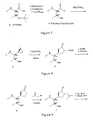
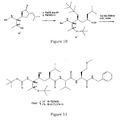
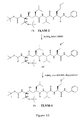
- T-But-OCO-Thr*-Leu-Val-Met-NH-Bzl (wherein, "*" indicates that the peptide bond "-CO-NH-" between the Thr and the Leu is replaced with a hydroxyethylene group "-CHOH-CH 2 -” and that the hydroxyl group of the Thr is converted to t-butyl ether) was synthesized as follows according to the synthetic scheme shown in Figures 7-12. Both R- and S-type compounds were synthesized with regard to the configuration around ⁇ -carbon of the hydroxyethylene group of the compounds. Out of these, the R-type compound is shown in the formula (1a).
- the epoxy compound (4') (6.3 g, 20.5 mmol) was dissolved in anhydrous ethanol (10 ml) and, after addition of diethyl malonate (3.8 ml, 25 mmol), cooled on ice. While ice-cooling, 20 % NaOEt (9.6 ml, 24.5 mmol) was added dropwise, and, after a 3-hour stirring, a 10 % citric acid aqueous solution was added.
- the lactone compound (6') (0.95 g, 2.72 mmol) was dissolved in anhydrous THF (20 ml) and cooled to -78 °C and 1.1 N LiHMDS (5.4 ml) was added dropwise. After 30 minutes of stirring at -78 °C, 3-bromo-2-methyl-propene (550 ⁇ l, 5.45 mmol) was added and stirring was continued at -78 °C for 40 minutes. The reaction was terminated by addition of saturated ammonium chloride aqueous solution and extraction was performed with ethyl acetate.
- TEA triethylamine
- the lactone (8') was saponified with sodium hydroxide in methanol. After precipitated with acid and extracted, this was converted to a silyl ether with alkylsilylchloride, imidazole and DMAP in DMF, and purified using a silica gel column to give carboxylic acid (9').
- the carboxylic acid (9') and an amino moiety (dipeptide H-Val-Met-NHBzl) were condensed in DMF solvent using EDC and HOBt. After the reaction, workup including extraction, washing, etc. and purification using a silica gel column gave (10').
- the silyl ether (10) was TBAF-treated in THF solvent.
- the present invention provides novel peptidomimetic compounds relating to the pathology of Alzheimer's disease and related diseases thereto. Provision of novel pharmaceutical compositions, as well as means for diagnosis that utilize the characteristics of the compounds, is useful in the clinical and medical field of diseases to which the present compounds relate, in particular, Alzheimer's disease and related diseases thereto.
Landscapes
- Chemical & Material Sciences (AREA)
- Health & Medical Sciences (AREA)
- Organic Chemistry (AREA)
- Life Sciences & Earth Sciences (AREA)
- General Health & Medical Sciences (AREA)
- Medicinal Chemistry (AREA)
- Proteomics, Peptides & Aminoacids (AREA)
- Molecular Biology (AREA)
- Genetics & Genomics (AREA)
- Biophysics (AREA)
- Biochemistry (AREA)
- Engineering & Computer Science (AREA)
- Neurology (AREA)
- Biomedical Technology (AREA)
- Gastroenterology & Hepatology (AREA)
- Bioinformatics & Cheminformatics (AREA)
- Neurosurgery (AREA)
- Nuclear Medicine, Radiotherapy & Molecular Imaging (AREA)
- Veterinary Medicine (AREA)
- Chemical Kinetics & Catalysis (AREA)
- General Chemical & Material Sciences (AREA)
- Public Health (AREA)
- Animal Behavior & Ethology (AREA)
- Pharmacology & Pharmacy (AREA)
- Toxicology (AREA)
- Crystallography & Structural Chemistry (AREA)
- Zoology (AREA)
- Psychiatry (AREA)
- Hospice & Palliative Care (AREA)
- Immunology (AREA)
- Medicines That Contain Protein Lipid Enzymes And Other Medicines (AREA)
- Peptides Or Proteins (AREA)
- Pharmaceuticals Containing Other Organic And Inorganic Compounds (AREA)
- Investigating Or Analysing Biological Materials (AREA)
- Preparation Of Compounds By Using Micro-Organisms (AREA)
- Enzymes And Modification Thereof (AREA)
- Medicinal Preparation (AREA)
- Heat Sensitive Colour Forming Recording (AREA)
Applications Claiming Priority (3)
| Application Number | Priority Date | Filing Date | Title |
|---|---|---|---|
| JP2002121983 | 2002-04-24 | ||
| JP2002121983 | 2002-04-24 | ||
| PCT/JP2003/005017 WO2003091278A1 (fr) | 2002-04-24 | 2003-04-18 | Inhibiteurs de gamma secretase |
Publications (3)
| Publication Number | Publication Date |
|---|---|
| EP1498421A1 true EP1498421A1 (fr) | 2005-01-19 |
| EP1498421A4 EP1498421A4 (fr) | 2006-05-17 |
| EP1498421B1 EP1498421B1 (fr) | 2009-11-11 |
Family
ID=29267426
Family Applications (1)
| Application Number | Title | Priority Date | Filing Date |
|---|---|---|---|
| EP03720938A Expired - Lifetime EP1498421B1 (fr) | 2002-04-24 | 2003-04-18 | Inhibiteurs de gamma secretase |
Country Status (11)
| Country | Link |
|---|---|
| US (1) | US7585938B2 (fr) |
| EP (1) | EP1498421B1 (fr) |
| JP (1) | JP4404643B2 (fr) |
| KR (1) | KR101051249B1 (fr) |
| CN (1) | CN1319987C (fr) |
| AT (1) | ATE448242T1 (fr) |
| AU (1) | AU2003235283A1 (fr) |
| BR (1) | BR0304562A (fr) |
| DE (1) | DE60329995D1 (fr) |
| NO (1) | NO329184B1 (fr) |
| WO (1) | WO2003091278A1 (fr) |
Cited By (1)
| Publication number | Priority date | Publication date | Assignee | Title |
|---|---|---|---|---|
| WO2009019815A1 (fr) | 2007-08-09 | 2009-02-12 | Kabushiki Kaisha Yakult Honsha | Nouvel inhibiteur de γ-sécrétase |
Families Citing this family (15)
| Publication number | Priority date | Publication date | Assignee | Title |
|---|---|---|---|---|
| US7521481B2 (en) | 2003-02-27 | 2009-04-21 | Mclaurin Joanne | Methods of preventing, treating and diagnosing disorders of protein aggregation |
| WO2008055924A1 (fr) * | 2006-11-07 | 2008-05-15 | Vib Vzw | Diagnostic et traitement d'une leucémie aiguë lymphoblastique par prolifération des lymphocytes t |
| US8278345B2 (en) | 2006-11-09 | 2012-10-02 | Probiodrug Ag | Inhibitors of glutaminyl cyclase |
| ATE554085T1 (de) | 2006-11-30 | 2012-05-15 | Probiodrug Ag | Neue inhibitoren von glutaminylcyclase |
| JP5930573B2 (ja) | 2007-03-01 | 2016-06-15 | プロビオドルグ エージー | グルタミニルシクラーゼ阻害剤の新規使用 |
| EP2142514B1 (fr) | 2007-04-18 | 2014-12-24 | Probiodrug AG | Dérivés de thio-urée utilisés comme inhibiteurs de la glutaminyl cyclase |
| JP5934645B2 (ja) | 2009-09-11 | 2016-06-15 | プロビオドルグ エージー | グルタミニルシクラーゼ阻害剤としてのヘテロ環式誘導体 |
| WO2012144972A2 (fr) * | 2010-01-19 | 2012-10-26 | The General Hospital Corporation | Procédés pour inhiber la neurodégénérescence |
| JP6026284B2 (ja) | 2010-03-03 | 2016-11-16 | プロビオドルグ エージー | グルタミニルシクラーゼの阻害剤 |
| NZ602312A (en) | 2010-03-10 | 2014-02-28 | Probiodrug Ag | Heterocyclic inhibitors of glutaminyl cyclase (qc, ec 2.3.2.5) |
| WO2011131748A2 (fr) | 2010-04-21 | 2011-10-27 | Probiodrug Ag | Nouveaux inhibiteurs |
| CN102344485A (zh) * | 2010-08-05 | 2012-02-08 | 中国人民解放军军事医学科学院毒物药物研究所 | 用于治疗阿尔茨海默病的肽类β分泌酶抑制剂及其用途 |
| EP2686313B1 (fr) | 2011-03-16 | 2016-02-03 | Probiodrug AG | Dérivés de benzimidazole en tant qu'inhibiteurs de la glutaminyl cyclase |
| WO2016059220A1 (fr) | 2014-10-16 | 2016-04-21 | INSERM (Institut National de la Santé et de la Recherche Médicale) | Agents d'activation du tcr à utiliser dans le traitement de la lla-t |
| ES2812698T3 (es) | 2017-09-29 | 2021-03-18 | Probiodrug Ag | Inhibidores de glutaminil ciclasa |
Family Cites Families (5)
| Publication number | Priority date | Publication date | Assignee | Title |
|---|---|---|---|---|
| EP0236734A3 (fr) | 1986-02-07 | 1988-05-11 | Ciba-Geigy Ag | Dérivés d'amino-5-hydroxy-4-valeryl substitués par des groupes contenant du soufre |
| JP2003520266A (ja) * | 2000-01-24 | 2003-07-02 | メルク シャープ エンド ドーム リミテッド | γ−セクレターゼ阻害薬 |
| US6753410B2 (en) | 2000-03-02 | 2004-06-22 | Merck & Co., Inc. | Investigational compounds |
| ATE339496T1 (de) * | 2000-05-11 | 2006-10-15 | Scios Inc | Modulation von gamma-secretase aktivität |
| US20030022251A1 (en) * | 2001-07-04 | 2003-01-30 | Boehringer Ingelheim Pharma Kg | Gamma-secretase in vitro screening assay |
-
2003
- 2003-04-18 DE DE60329995T patent/DE60329995D1/de not_active Expired - Lifetime
- 2003-04-18 US US10/511,269 patent/US7585938B2/en not_active Expired - Fee Related
- 2003-04-18 AT AT03720938T patent/ATE448242T1/de not_active IP Right Cessation
- 2003-04-18 BR BR0304562-5A patent/BR0304562A/pt not_active Application Discontinuation
- 2003-04-18 CN CNB038118963A patent/CN1319987C/zh not_active Expired - Fee Related
- 2003-04-18 WO PCT/JP2003/005017 patent/WO2003091278A1/fr not_active Ceased
- 2003-04-18 AU AU2003235283A patent/AU2003235283A1/en not_active Abandoned
- 2003-04-18 KR KR1020047016996A patent/KR101051249B1/ko not_active Expired - Fee Related
- 2003-04-18 JP JP2003587836A patent/JP4404643B2/ja not_active Expired - Fee Related
- 2003-04-18 EP EP03720938A patent/EP1498421B1/fr not_active Expired - Lifetime
- 2003-12-11 NO NO20035535A patent/NO329184B1/no not_active IP Right Cessation
Cited By (3)
| Publication number | Priority date | Publication date | Assignee | Title |
|---|---|---|---|---|
| WO2009019815A1 (fr) | 2007-08-09 | 2009-02-12 | Kabushiki Kaisha Yakult Honsha | Nouvel inhibiteur de γ-sécrétase |
| EP2177529A4 (fr) * | 2007-08-09 | 2011-04-20 | Yakult Honsha Kk | Nouvel inhibiteur de -sécrétase |
| US8501813B2 (en) | 2007-08-09 | 2013-08-06 | Kabushiki Kaisha Yakult Honsha | γ-secretase inhibitor |
Also Published As
| Publication number | Publication date |
|---|---|
| JP4404643B2 (ja) | 2010-01-27 |
| CN1319987C (zh) | 2007-06-06 |
| NO20035535L (no) | 2004-02-19 |
| JPWO2003091278A1 (ja) | 2005-09-02 |
| KR101051249B1 (ko) | 2011-07-21 |
| US20060205666A1 (en) | 2006-09-14 |
| EP1498421B1 (fr) | 2009-11-11 |
| KR20040106370A (ko) | 2004-12-17 |
| DE60329995D1 (de) | 2009-12-24 |
| ATE448242T1 (de) | 2009-11-15 |
| NO329184B1 (no) | 2010-09-06 |
| NO20035535D0 (no) | 2003-12-11 |
| BR0304562A (pt) | 2004-07-20 |
| EP1498421A4 (fr) | 2006-05-17 |
| US7585938B2 (en) | 2009-09-08 |
| WO2003091278A1 (fr) | 2003-11-06 |
| AU2003235283A1 (en) | 2003-11-10 |
| CN1656115A (zh) | 2005-08-17 |
Similar Documents
| Publication | Publication Date | Title |
|---|---|---|
| US7585938B2 (en) | Gamma-secretase inhibitors | |
| US5436153A (en) | Human amyloid protein precursor homolog and Kunitz-type inhibitor | |
| EP0605462B1 (fr) | Nouveaux peptides isosteriques | |
| CA2078759C (fr) | Derives carboxyalkyliques, utiles comme inhibiteurs de l'enkephalinase et de l'enzyme de conversion de l'angiotensine | |
| AU661270B2 (en) | Chymotrypsin-like proteases and their inhibitors | |
| US7501397B2 (en) | Helical peptidomimetics with enhanced activity | |
| US20070004637A1 (en) | Peptide derivatives having beta-secretase inhibitory activity | |
| WO2000032631A2 (fr) | Compositions et procedes d'utilisation de proteines et de peptides fixant des proteines inhibant l'angiogenese | |
| JPH10512257A (ja) | 置換オキサゾリジンカルパインおよび/またはカテプシンb阻害剤 | |
| JP2001521367A (ja) | ヒト ビクニン | |
| US5677146A (en) | Human amyloid protein precursor homolog and kunitz-type inhibitor | |
| JP2003502342A (ja) | ベータ−セクレターゼのスタチン誘導テトラペプチド阻害剤 | |
| KR20040081165A (ko) | 펩타이드 항체 및 이를 이용한 아밀로이드-관련 질환의진단 및 치료 방법 | |
| JP2002501738A (ja) | 67個のヒト分泌タンパク質 | |
| JPH04211095A (ja) | 新規ジペプチド、その製造方法及び薬剤におけるレニン阻害剤としてのその使用 | |
| JPH11506923A (ja) | 新しいカテプシンならびにその阻害のための方法および組成物 | |
| HUT77041A (hu) | II. Típusú foszfolipáz-A2-t gátló aktivitású monoklonális antitest és annak egy részét tartalmazó fehérje | |
| KR20000016700A (ko) | 뎁시 펩티드 및 이를 유효 성분으로 하는 의약 | |
| JPH10500992A (ja) | 新しいエラスターゼ阻害剤 | |
| CN120463815A (zh) | 多肽偶联物及其在射血分数保留的心衰中的应用 | |
| WO2002032933A1 (fr) | Antagonistes de l'endotheline | |
| CA2476292A1 (fr) | Composes peptidomimetiques helicoidaux | |
| WO2006019193A1 (fr) | Utilisation d'un inhibiteur et d'un promoteur | |
| US7169759B1 (en) | Tetrapeptide inhibitors of β-secretase | |
| JPWO1999006555A1 (ja) | 新規なヒトmmp−20タンパク質及びその利用 |
Legal Events
| Date | Code | Title | Description |
|---|---|---|---|
| PUAI | Public reference made under article 153(3) epc to a published international application that has entered the european phase |
Free format text: ORIGINAL CODE: 0009012 |
|
| 17P | Request for examination filed |
Effective date: 20041018 |
|
| AK | Designated contracting states |
Kind code of ref document: A1 Designated state(s): AT BE BG CH CY CZ DE DK EE ES FI FR GB GR HU IE IT LI LU MC NL PT RO SE SI SK TR |
|
| AX | Request for extension of the european patent |
Extension state: AL LT LV MK |
|
| A4 | Supplementary search report drawn up and despatched |
Effective date: 20060404 |
|
| 17Q | First examination report despatched |
Effective date: 20070404 |
|
| GRAP | Despatch of communication of intention to grant a patent |
Free format text: ORIGINAL CODE: EPIDOSNIGR1 |
|
| GRAC | Information related to communication of intention to grant a patent modified |
Free format text: ORIGINAL CODE: EPIDOSCIGR1 |
|
| GRAS | Grant fee paid |
Free format text: ORIGINAL CODE: EPIDOSNIGR3 |
|
| GRAA | (expected) grant |
Free format text: ORIGINAL CODE: 0009210 |
|
| AK | Designated contracting states |
Kind code of ref document: B1 Designated state(s): AT BE BG CH CY CZ DE DK EE ES FI FR GB GR HU IE IT LI LU MC NL PT RO SE SI SK TR |
|
| REG | Reference to a national code |
Ref country code: GB Ref legal event code: FG4D |
|
| REG | Reference to a national code |
Ref country code: CH Ref legal event code: EP |
|
| REG | Reference to a national code |
Ref country code: CH Ref legal event code: NV Representative=s name: BOVARD AG PATENTANWAELTE |
|
| REG | Reference to a national code |
Ref country code: IE Ref legal event code: FG4D |
|
| REF | Corresponds to: |
Ref document number: 60329995 Country of ref document: DE Date of ref document: 20091224 Kind code of ref document: P |
|
| PG25 | Lapsed in a contracting state [announced via postgrant information from national office to epo] |
Ref country code: FI Free format text: LAPSE BECAUSE OF FAILURE TO SUBMIT A TRANSLATION OF THE DESCRIPTION OR TO PAY THE FEE WITHIN THE PRESCRIBED TIME-LIMIT Effective date: 20091111 Ref country code: ES Free format text: LAPSE BECAUSE OF FAILURE TO SUBMIT A TRANSLATION OF THE DESCRIPTION OR TO PAY THE FEE WITHIN THE PRESCRIBED TIME-LIMIT Effective date: 20100222 Ref country code: SE Free format text: LAPSE BECAUSE OF FAILURE TO SUBMIT A TRANSLATION OF THE DESCRIPTION OR TO PAY THE FEE WITHIN THE PRESCRIBED TIME-LIMIT Effective date: 20091111 Ref country code: PT Free format text: LAPSE BECAUSE OF FAILURE TO SUBMIT A TRANSLATION OF THE DESCRIPTION OR TO PAY THE FEE WITHIN THE PRESCRIBED TIME-LIMIT Effective date: 20100311 |
|
| PG25 | Lapsed in a contracting state [announced via postgrant information from national office to epo] |
Ref country code: CY Free format text: LAPSE BECAUSE OF FAILURE TO SUBMIT A TRANSLATION OF THE DESCRIPTION OR TO PAY THE FEE WITHIN THE PRESCRIBED TIME-LIMIT Effective date: 20091111 Ref country code: SI Free format text: LAPSE BECAUSE OF FAILURE TO SUBMIT A TRANSLATION OF THE DESCRIPTION OR TO PAY THE FEE WITHIN THE PRESCRIBED TIME-LIMIT Effective date: 20091111 |
|
| PGFP | Annual fee paid to national office [announced via postgrant information from national office to epo] |
Ref country code: LU Payment date: 20100426 Year of fee payment: 8 |
|
| PG25 | Lapsed in a contracting state [announced via postgrant information from national office to epo] |
Ref country code: BE Free format text: LAPSE BECAUSE OF FAILURE TO SUBMIT A TRANSLATION OF THE DESCRIPTION OR TO PAY THE FEE WITHIN THE PRESCRIBED TIME-LIMIT Effective date: 20091111 Ref country code: AT Free format text: LAPSE BECAUSE OF FAILURE TO SUBMIT A TRANSLATION OF THE DESCRIPTION OR TO PAY THE FEE WITHIN THE PRESCRIBED TIME-LIMIT Effective date: 20091111 |
|
| PG25 | Lapsed in a contracting state [announced via postgrant information from national office to epo] |
Ref country code: RO Free format text: LAPSE BECAUSE OF FAILURE TO SUBMIT A TRANSLATION OF THE DESCRIPTION OR TO PAY THE FEE WITHIN THE PRESCRIBED TIME-LIMIT Effective date: 20091111 Ref country code: EE Free format text: LAPSE BECAUSE OF FAILURE TO SUBMIT A TRANSLATION OF THE DESCRIPTION OR TO PAY THE FEE WITHIN THE PRESCRIBED TIME-LIMIT Effective date: 20091111 Ref country code: BG Free format text: LAPSE BECAUSE OF FAILURE TO SUBMIT A TRANSLATION OF THE DESCRIPTION OR TO PAY THE FEE WITHIN THE PRESCRIBED TIME-LIMIT Effective date: 20100211 Ref country code: DK Free format text: LAPSE BECAUSE OF FAILURE TO SUBMIT A TRANSLATION OF THE DESCRIPTION OR TO PAY THE FEE WITHIN THE PRESCRIBED TIME-LIMIT Effective date: 20091111 |
|
| PG25 | Lapsed in a contracting state [announced via postgrant information from national office to epo] |
Ref country code: CZ Free format text: LAPSE BECAUSE OF FAILURE TO SUBMIT A TRANSLATION OF THE DESCRIPTION OR TO PAY THE FEE WITHIN THE PRESCRIBED TIME-LIMIT Effective date: 20091111 Ref country code: SK Free format text: LAPSE BECAUSE OF FAILURE TO SUBMIT A TRANSLATION OF THE DESCRIPTION OR TO PAY THE FEE WITHIN THE PRESCRIBED TIME-LIMIT Effective date: 20091111 |
|
| PLBE | No opposition filed within time limit |
Free format text: ORIGINAL CODE: 0009261 |
|
| STAA | Information on the status of an ep patent application or granted ep patent |
Free format text: STATUS: NO OPPOSITION FILED WITHIN TIME LIMIT |
|
| 26N | No opposition filed |
Effective date: 20100812 |
|
| PG25 | Lapsed in a contracting state [announced via postgrant information from national office to epo] |
Ref country code: GR Free format text: LAPSE BECAUSE OF FAILURE TO SUBMIT A TRANSLATION OF THE DESCRIPTION OR TO PAY THE FEE WITHIN THE PRESCRIBED TIME-LIMIT Effective date: 20100212 |
|
| PG25 | Lapsed in a contracting state [announced via postgrant information from national office to epo] |
Ref country code: MC Free format text: LAPSE BECAUSE OF NON-PAYMENT OF DUE FEES Effective date: 20100430 |
|
| PG25 | Lapsed in a contracting state [announced via postgrant information from national office to epo] |
Ref country code: IE Free format text: LAPSE BECAUSE OF NON-PAYMENT OF DUE FEES Effective date: 20100418 |
|
| REG | Reference to a national code |
Ref country code: CH Ref legal event code: PFA Owner name: MORI, HIROSHI Free format text: MORI, HIROSHI#ROOM 301, HAITSU-KOSUMO-21, 3-45, NAKAMICHI 1-CHOME, HIGASHINARI-KU#OSAKA-SHI, OSAKA 537-0025 (JP) -TRANSFER TO- MORI, HIROSHI#ROOM 301, HAITSU-KOSUMO-21, 3-45, NAKAMICHI 1-CHOME, HIGASHINARI-KU#OSAKA-SHI, OSAKA 537-0025 (JP) |
|
| PG25 | Lapsed in a contracting state [announced via postgrant information from national office to epo] |
Ref country code: HU Free format text: LAPSE BECAUSE OF FAILURE TO SUBMIT A TRANSLATION OF THE DESCRIPTION OR TO PAY THE FEE WITHIN THE PRESCRIBED TIME-LIMIT Effective date: 20100512 |
|
| PG25 | Lapsed in a contracting state [announced via postgrant information from national office to epo] |
Ref country code: TR Free format text: LAPSE BECAUSE OF FAILURE TO SUBMIT A TRANSLATION OF THE DESCRIPTION OR TO PAY THE FEE WITHIN THE PRESCRIBED TIME-LIMIT Effective date: 20091111 |
|
| PG25 | Lapsed in a contracting state [announced via postgrant information from national office to epo] |
Ref country code: LU Free format text: LAPSE BECAUSE OF NON-PAYMENT OF DUE FEES Effective date: 20110418 |
|
| PGFP | Annual fee paid to national office [announced via postgrant information from national office to epo] |
Ref country code: DE Payment date: 20130508 Year of fee payment: 11 Ref country code: CH Payment date: 20130412 Year of fee payment: 11 Ref country code: GB Payment date: 20130417 Year of fee payment: 11 |
|
| PGFP | Annual fee paid to national office [announced via postgrant information from national office to epo] |
Ref country code: FR Payment date: 20130625 Year of fee payment: 11 Ref country code: NL Payment date: 20130416 Year of fee payment: 11 Ref country code: IT Payment date: 20130422 Year of fee payment: 11 |
|
| REG | Reference to a national code |
Ref country code: DE Ref legal event code: R119 Ref document number: 60329995 Country of ref document: DE |
|
| REG | Reference to a national code |
Ref country code: NL Ref legal event code: V1 Effective date: 20141101 |
|
| REG | Reference to a national code |
Ref country code: CH Ref legal event code: PL |
|
| GBPC | Gb: european patent ceased through non-payment of renewal fee |
Effective date: 20140418 |
|
| REG | Reference to a national code |
Ref country code: DE Ref legal event code: R119 Ref document number: 60329995 Country of ref document: DE Effective date: 20141101 |
|
| REG | Reference to a national code |
Ref country code: FR Ref legal event code: ST Effective date: 20141231 |
|
| PG25 | Lapsed in a contracting state [announced via postgrant information from national office to epo] |
Ref country code: CH Free format text: LAPSE BECAUSE OF NON-PAYMENT OF DUE FEES Effective date: 20140430 Ref country code: GB Free format text: LAPSE BECAUSE OF NON-PAYMENT OF DUE FEES Effective date: 20140418 Ref country code: LI Free format text: LAPSE BECAUSE OF NON-PAYMENT OF DUE FEES Effective date: 20140430 Ref country code: DE Free format text: LAPSE BECAUSE OF NON-PAYMENT OF DUE FEES Effective date: 20141101 |
|
| PG25 | Lapsed in a contracting state [announced via postgrant information from national office to epo] |
Ref country code: FR Free format text: LAPSE BECAUSE OF NON-PAYMENT OF DUE FEES Effective date: 20140430 Ref country code: NL Free format text: LAPSE BECAUSE OF NON-PAYMENT OF DUE FEES Effective date: 20141101 |
|
| PG25 | Lapsed in a contracting state [announced via postgrant information from national office to epo] |
Ref country code: IT Free format text: LAPSE BECAUSE OF NON-PAYMENT OF DUE FEES Effective date: 20140418 |