EP1501314A1 - Systeme de transfert d'images en mouvement, appareils de codage et de decodage d'images en mouvement, et programme de transfert d'images en mouvement - Google Patents
Systeme de transfert d'images en mouvement, appareils de codage et de decodage d'images en mouvement, et programme de transfert d'images en mouvement Download PDFInfo
- Publication number
- EP1501314A1 EP1501314A1 EP03727985A EP03727985A EP1501314A1 EP 1501314 A1 EP1501314 A1 EP 1501314A1 EP 03727985 A EP03727985 A EP 03727985A EP 03727985 A EP03727985 A EP 03727985A EP 1501314 A1 EP1501314 A1 EP 1501314A1
- Authority
- EP
- European Patent Office
- Prior art keywords
- data
- encoded data
- encoded
- packet
- moving picture
- Prior art date
- Legal status (The legal status is an assumption and is not a legal conclusion. Google has not performed a legal analysis and makes no representation as to the accuracy of the status listed.)
- Withdrawn
Links
Images



Classifications
-
- H—ELECTRICITY
- H04—ELECTRIC COMMUNICATION TECHNIQUE
- H04N—PICTORIAL COMMUNICATION, e.g. TELEVISION
- H04N21/00—Selective content distribution, e.g. interactive television or video on demand [VOD]
- H04N21/20—Servers specifically adapted for the distribution of content, e.g. VOD servers; Operations thereof
- H04N21/25—Management operations performed by the server for facilitating the content distribution or administrating data related to end-users or client devices, e.g. end-user or client device authentication, learning user preferences for recommending movies
- H04N21/258—Client or end-user data management, e.g. managing client capabilities, user preferences or demographics, processing of multiple end-users preferences to derive collaborative data
- H04N21/25808—Management of client data
-
- H—ELECTRICITY
- H04—ELECTRIC COMMUNICATION TECHNIQUE
- H04N—PICTORIAL COMMUNICATION, e.g. TELEVISION
- H04N19/00—Methods or arrangements for coding, decoding, compressing or decompressing digital video signals
- H04N19/10—Methods or arrangements for coding, decoding, compressing or decompressing digital video signals using adaptive coding
- H04N19/102—Methods or arrangements for coding, decoding, compressing or decompressing digital video signals using adaptive coding characterised by the element, parameter or selection affected or controlled by the adaptive coding
- H04N19/115—Selection of the code volume for a coding unit prior to coding
-
- H—ELECTRICITY
- H04—ELECTRIC COMMUNICATION TECHNIQUE
- H04N—PICTORIAL COMMUNICATION, e.g. TELEVISION
- H04N19/00—Methods or arrangements for coding, decoding, compressing or decompressing digital video signals
- H04N19/10—Methods or arrangements for coding, decoding, compressing or decompressing digital video signals using adaptive coding
- H04N19/134—Methods or arrangements for coding, decoding, compressing or decompressing digital video signals using adaptive coding characterised by the element, parameter or criterion affecting or controlling the adaptive coding
- H04N19/156—Availability of hardware or computational resources, e.g. encoding based on power-saving criteria
-
- H—ELECTRICITY
- H04—ELECTRIC COMMUNICATION TECHNIQUE
- H04N—PICTORIAL COMMUNICATION, e.g. TELEVISION
- H04N19/00—Methods or arrangements for coding, decoding, compressing or decompressing digital video signals
- H04N19/30—Methods or arrangements for coding, decoding, compressing or decompressing digital video signals using hierarchical techniques, e.g. scalability
- H04N19/39—Methods or arrangements for coding, decoding, compressing or decompressing digital video signals using hierarchical techniques, e.g. scalability involving multiple description coding [MDC], i.e. with separate layers being structured as independently decodable descriptions of input picture data
-
- H—ELECTRICITY
- H04—ELECTRIC COMMUNICATION TECHNIQUE
- H04N—PICTORIAL COMMUNICATION, e.g. TELEVISION
- H04N19/00—Methods or arrangements for coding, decoding, compressing or decompressing digital video signals
- H04N19/60—Methods or arrangements for coding, decoding, compressing or decompressing digital video signals using transform coding
- H04N19/61—Methods or arrangements for coding, decoding, compressing or decompressing digital video signals using transform coding in combination with predictive coding
-
- H—ELECTRICITY
- H04—ELECTRIC COMMUNICATION TECHNIQUE
- H04N—PICTORIAL COMMUNICATION, e.g. TELEVISION
- H04N19/00—Methods or arrangements for coding, decoding, compressing or decompressing digital video signals
- H04N19/85—Methods or arrangements for coding, decoding, compressing or decompressing digital video signals using pre-processing or post-processing specially adapted for video compression
- H04N19/89—Methods or arrangements for coding, decoding, compressing or decompressing digital video signals using pre-processing or post-processing specially adapted for video compression involving methods or arrangements for detection of transmission errors at the decoder
- H04N19/895—Methods or arrangements for coding, decoding, compressing or decompressing digital video signals using pre-processing or post-processing specially adapted for video compression involving methods or arrangements for detection of transmission errors at the decoder in combination with error concealment
-
- H—ELECTRICITY
- H04—ELECTRIC COMMUNICATION TECHNIQUE
- H04N—PICTORIAL COMMUNICATION, e.g. TELEVISION
- H04N21/00—Selective content distribution, e.g. interactive television or video on demand [VOD]
- H04N21/20—Servers specifically adapted for the distribution of content, e.g. VOD servers; Operations thereof
- H04N21/25—Management operations performed by the server for facilitating the content distribution or administrating data related to end-users or client devices, e.g. end-user or client device authentication, learning user preferences for recommending movies
- H04N21/266—Channel or content management, e.g. generation and management of keys and entitlement messages in a conditional access system, merging a VOD unicast channel into a multicast channel
- H04N21/2662—Controlling the complexity of the video stream, e.g. by scaling the resolution or bitrate of the video stream based on the client capabilities
Definitions
- the present invention relates to a moving picture transmission system for encoding and sending moving picture data and receiving and decoding the encoded data that has been sent, and more particularly to a moving picture transmission system, a moving picture encoding apparatus, a moving picture decoding apparatus, and a moving picture transmission program for minimizing corruptions of decoded images which are caused by transmission errors of encoded data.
- moving picture compression encoding include MPEG (Moving Picture Expert Group)-1, MPEG-2, MPEG-4, etc.
- an encoded image is predicted from temporally preceding and following frames by a process such as motion compensation or the like, and obtained interframe prediction parameters and residual image data are encoded to reduce the amount of information of moving picture data that are highly correlated temporally. Furthermore, the residual image data are efficiently compressed by conversion encoding or quantization to make it possible to transmit moving picture data of good image quality in a small transmission band.
- the present invention has been made in view of the above drawbacks. It is a first object of the present invention to provide a moving picture transmission system, a moving picture encoding apparatus, a moving picture decoding apparatus, and a moving picture transmission program which make it possible to minimize corruptions of decoded images at a recipient site which are caused by transmission errors of encoded data.
- a second object of the present invention to provide a moving picture transmission system, a moving picture encoding apparatus, a moving picture decoding apparatus, and a moving picture transmission program which achieve the first object while reducing any increase in the transmission band that is required.
- a third object of the present invention to provide a moving picture transmission system, a moving picture encoding apparatus, a moving picture decoding apparatus, and a moving picture transmission program which achieve the first object while preventing the amount of processing required to decode compression-encoded data from increasing.
- a moving picture transmission system comprising a transmission side sending encoded moving picture data and one or plural reception sides decoding the moving picture data, wherein the transmission side sends a plurality of encoded data comprising primary encoded data produced by compressing input moving picture frames using interframe prediction, and one or plural encoded data produced by compressing the input frames at one or plural compression ratios, which are higher than the compression ratio of the primary encoded data, using interframe prediction referring to picture frames obtained by decoding the primary encoded data; and each of the reception sides selects one of encoded data with frame-by-frame selection from the plurality of encoded data received by the reception side without error, and decodes the selected encoded data.
- a moving picture transmission system comprising a transmission side sending encoded moving picture data and one or plural reception sides decoding the moving picture data, wherein the transmission side sends a plurality of encoded data comprising primary packet data produced by compressing input moving picture frames into one or plural packets using interframe prediction, and one or plural encoded packet data produced by compressing the image area which is contained in each packet of the as primary packet data, into one or plural packet data at one or plural compression ratios, which are higher than the compression ratio of the primary packet data, using interframe prediction referring to picture frames obtained by decoding the primary encoded data; and each of the reception sides selects one of encoded data with packet-by-packet selection from the plurality of encoded packet data received by the reception side without error, and decode the selected encoded data.
- a moving picture transmission system comprising a transmission side sending encoded moving picture data and one or plural reception sides decoding the moving picture data, wherein the transmission side sends a plurality of encoded data comprising primary encoded data produced by compressing input moving picture frames using interframe prediction, and one or plural encoded data produced by compressing the input frames at one or plural compression ratios, which are higher than the compression ratio of the primary encoded data, using interframe prediction referring to the same picture frames as the frames referred to in the interframe prediction of the primary encoded data; and each of the reception sides selects one of encoded data with frame-by-frame selection from the plurality of encoded data received by the reception side without error, and decodes the selected encoded data.
- a moving picture transmission system comprising a transmission side sending encoded moving picture data and one or plural reception sides decoding the moving picture data, wherein the transmission side sends a plurality of encoded data comprising primary encoded data produced by compressing input moving picture frames using interframe prediction, and one or plural encoded data produced by compressing the input frames at one or plural compression ratios, which are higher than the compression ratio of said primary encoded data, by reusing the prediction parameters and the residual image data which are obtained in the interframe prediction of the primary encoded data; and each of the reception sides selects one of encoded data with frame-by-frame selection from the plurality of encoded data received by the reception side without error, and decodes the selected encoded data.
- a moving picture transmission system comprising a transmission side sending encoded moving picture data and one or plural reception sides decoding the moving picture data, wherein the transmission side sends a plurality of encoded data comprising primary packet data produced by compressing input moving picture frames into one or plural packets using interframe prediction, and one or plural encoded packet data produced by compressing the image area, which is contained in each packet of the primary packet data, into one or plural packet data at one or plural compression ratios, which are higher than the compression ratio of the primary packet data, by reusing the prediction parameters and the residual image data, which are obtained by the interframe prediction of the primary packet data; and each of the reception sides selects one of encoded data with packet-by-packet selection from the plurality of encoded data received by the reception side without error, and decodes the selected encoded data.
- a moving picture transmission system comprising a transmission side sending encoded moving picture data and one or plural reception sides decoding the moving picture data, wherein the transmission side sends a plurality of encoded data comprising primary packet data produced by compressing input moving picture frames into one or plural packets using interframe prediction, and one or plural encoded packet data produced by compressing the image area, which is contained in each packet of said primary packet data, into one or plural packet data at one or plural compression ratios, which are higher than the compression ratio of the or the same as primary packet data, using interframe prediction referring to the same picture frames as the frames referred to in the interframe prediction of the primary packet data; and each of the reception sides selects one of encoded data with packet-by-packet selection from the plurality of encoded data received by the reception side without error, and decodes the selected encoded data.
- the transmission side may send a plurality of encoded data comprising all compression-encoded data or encoded data of selected frames.
- the transmission side may send a plurality of packet data comprising all compression-encoded packet data or selected packet data.
- Each one of the reception sides selects the encoded data having the lowest compression ratio from the plurality of encoded data received without error, and decode the selected encoded data.
- the transmission side may assign priority orders to the plurality of encoded data subject to a predetermined assignment rule, and each one of the reception sides selects encoded data having the highest priority order from the plurality of encoded data received by the reception side without error and decodes the selected encoded data.
- the transmission side may multiplex the plurality of encoded data with time differences added therebetween and sends the multiplexed encoded data
- the reception side may demultiplex the multiplexed and sent encoded data into a plurality of encoded data.
- the moving picture transmission system may comprise a moving picture encoding apparatus as the transmission side and a moving picture decoding apparatus as the reception side, the moving picture encoding apparatus having: a plurality of encoding means for compressing input moving picture frames into a plurality of encoded data having different compression ratios and sending the encoded data, the moving picture decoding apparatus having: a plurality of encoded-data-receiving means for receiving the plurality of encoded data which have been sent and detecting bit errors or packet losses of the received encoded data; a selecting mean for selecting either one encoded data from the encoded data which have been received free of bit errors or packet losses by the encoded data-receiving-means; and a decoding mean for decoding the encoded data selected by the selecting mean.
- the transmission side may have delay-adding means for delaying part of the encoded data to add the time differences between the plurality of encoded data, and multiplexing means for multiplexing the plurality of encoded data with the time differences added therebetween and sending the multiplexed data, and each of the reception sides has demultiplexing means for demultiplexing the multiplexed and sent data into a plurality of encoded data.
- a moving picture transmission system for transmitting moving picture data which have been compressed using interframe prediction from a transmission side to one or plural reception sides, where N represents an integer of 2 or greater
- the transmission side comprises: first moving-picture-encoding/sending means for compressing input moving picture frames using interframe prediction, and sending obtained encoded data with predetermined transmitting means; and second through Nth (N-1) moving-picture-encoding/sending means for encoding at least part of the frames, which are encoded by the first moving-picture-encoding/sending means, at one or plural compression ratios, which are higher than the compression ratio of the first moving-picture-encoding/sending means, using reference frame image used in the interframe prediction performed on the frames by the first moving-picture-encoding/sending means, and sending obtained encoded data; and each one of the reception sides comprises: N encoded data-receiving means for detecting errors or dropouts in frames of the received moving-picture
- a moving picture transmission system for transmitting moving picture data which have been compressed using interframe prediction from a transmission side to one or plural reception sides, where N represents an integer of 2 or greater
- the transmission side comprises: first moving-picture-encoding/sending means for compressing input moving picture frames into one or plural packet data using interframe prediction, and sending the obtained one or plural packet data with predetermined transmitting means; and second through Nth (N-1) moving-picture-encoding/sending means for encoding each image area, which is encoded into a packet by the first moving-picture-encoding/sending means, into packet data at one or plural compression ratios, which are higher than the compression ratio of the first moving-picture-encoding/sending means, referring to reference frame images used in the interframe prediction performed on the image area by the first-moving-picture-encoding/sending means, and sending the obtained packet data; and each one of the reception sides comprises: N encoded-data-recei
- a moving picture transmission system for transmitting moving picture data which have been compressed using interframe prediction from a transmission side to one or plural reception sides, where N represents an integer of 2 or greater
- the transmission side comprises: first moving-picture-encoding/sending means for compression-encoding input moving picture frames according to interframe prediction, and sending obtained encoded data with predetermined transmitting means; and second through Nth (N-1) moving picture encoding/sending means for encoding at least part of the frames, which are encoded by the first moving-picture-encoding/sending means, at one or plural compression ratios, which are higher than the compression ratio of the first moving-picture-encoding/sending means, reusing interframe prediction parameters and residual image data which are obtained in the interframe prediction performed on the frames by the first moving-picture-encoding/sending means, and sending obtained encoded data
- each one of the reception sides comprises: N encoded data-receiving means for detecting errors or dropout
- a moving picture transmission system for transmitting moving picture data which have been compressed using interframe prediction from a transmission side to one or plural reception sides, where N represents an integer of 2 or greater
- the transmission side comprises: first moving-picture-encoding/sending means for compressing input moving picture frames into one or plural packet data using interframe prediction, and sending the obtained encoded packet data with predetermined transmitting means; and second through Nth (N-1) moving-picture-encoding/sending means for encoding each image area, which is encoded into a pecket by said first moving-picture-encoding/sending means, into packet data at one or plural compression ratios, which are higher than the compression ratio of the first moving-picture-encoding/sending means, reusing interframe prediction parameters and residual image data which are obtained in the interframe prediction performed on the image area by said first moving-picture-encoding/sending means, and sending the obtained packet data
- each one of the reception sides comprises: N encoded
- a moving picture encoding apparatus for compressing moving picture data and sending the encoded data to one or plural moving-picture-decoding apparatuses, wherein the moving-picture-encoding apparatus sends a plurality of encoded data comprising primary encoded data produced by compressing frames of input moving picture data based on interframe prediction, and encoded data produced by compressing the encoded frames at one or plural compression ratios, which are higher than the or the same as primary encoded data, based on interframe prediction using reference frame images used in the interframe prediction of the primary encoded data.
- a moving picture encoding apparatus for compressing moving picture data and sending the encoded data to one or plural moving-picture-decoding apparatuses, wherein the moving-picture-encoding apparatus sends a plurality of encoded data comprising primary packet data produced by compressing frames of input moving picture data based on interframe prediction, and packet data produced by compressing each image area, which is encoded into a packet of the primary packet data, at one or plural compression ratios, which are higher than the primary packet data, according to interframe prediction using reference frame images used in the interframe prediction of the primary encoded data.
- a moving picture encoding apparatus for compressing moving picture data and sending the encoded data to one or plural moving-picture-decoding apparatuses, wherein the moving-picture-encoding apparatus sends a plurality of encoded data comprising parimary encoded data produced by compressing frames of input moving picture data based on interframe prediction, and encoded data produced by compressing at least part of the encoded frames at one or plural compression ratios, which are higher than the primary encoded data, by reusing interframe prediction parameters and residual image data which are obtained in the interframe prediction of the primary encoded data.
- a moving picture encoding apparatus for compressing moving picture data and sending the encoded data to one or plural moving-picture-decoding apparatuses, wherein the moving-picture-encoding apparatus sends a plurality of encoded data comprising primary packet data produced by compressing frames of input moving picture data based on interframe prediction, and packet data produced by compressing each image area, which is encoded into a packet of the primary packet data, at one or plural compression ratios which are higher than the primary packet data, by reusing interframe prediction parameters and residual image data which are obtained in the interframe prediction of the primary packet data.
- a moving picture decoding apparatus for receiving data produced by compressing moving picture data from a moving-picture-encoding apparatus and decoding the received data, wherein the moving-picture-decoding apparatus receives a plurality of encoded data comprising primary encoded data produced by compressing frames of input moving picture data based on interframe prediction, and encoded data produced by compressing the encoded frames at one or plural compression ratios, which are higher than the primary encoded data based on interframe prediction using reference frame images used in the interframe prediction of the primary encoded data, selects the encoded data having the lowest compression ratio with frame-by-frame selection from the encoded data free of bit errors or packet losses of the received encoded data, and decodes the selected encoded data.
- a moving picture decoding apparatus for receiving data produced by compressing moving picture data from a moving-picture-encoding apparatus and decoding the received data, wherein the moving-picture-decoding apparatus receives a plurality of encoded data comprising primary packet data produced by compressing frames of input moving picture data based on interframe prediction, and packet data produced by compressing each image area, which is encoded into a packet of said primary packet data, at one or plural compression ratios, which are higher than the or the same as primary packet data, according to interframe prediction using reference frame images used in the interframe prediction of the primary encoded data, selects the encoded packet data having the lowest compression ratio with packet-by-packet selection from the encoded data free of transmission errors and dropouts of the received encoded data, and decodes the selected encoded data.
- a moving picture decoding apparatus for receiving data produced by compressing moving picture data from a moving-picture-encoding apparatus and decoding the received data, wherein the moving-picture-decoding apparatus receives a plurality of encoded data comprising primary encoded data produced by compressing frames of input moving picture data based on interframe prediction, and encoded data produced by compressing at least part of the encoded frames at one or plural compression ratios, which are higher than the or the same as primary encoded data, by reusing interframe prediction parameters and residual image data which are obtained in the interframe prediction of the primary encoded data, selects the encoded data having the lowest compression ratio with frame-by-frame selection from the encoded data free of bit errors or packet losses of the received encoded data, and decodes the selected encoded data.
- a moving picture decoding apparatus for receiving data produced by compressing moving picture data from a moving-picture-encoding apparatus and decoding the received data, wherein the moving-picture-decoding apparatus receives a plurality of encoded data comprising primary packet data produced by compressing frames of input moving picture data based on interframe prediction, and packet data produced by compressing each image area, which is encoded into a packet of the primary packet data, at one or plural compression ratios, which are higher than the or the same as primary packet data, by reusing interframe prediction parameters and residual image data which are obtained in the interframe prediction of the primary packet data, selects the encoded packet data having the lowest compression ratio with packet-by-packet selection from the encoded data free of transmission errors and dropouts of the received encoded data, and decodes the selected encoded data.
- a moving picture transmission system having a moving picture transmission program for enabling a computer processor to encode moving picture data and send the encoded data at a transmission side, and enabling a computer processor to receive and decode the encoded data at a reception side
- the moving picture transmission program enables the computer processor at the transmission side to send a plurality of encoded data comprising primary encoded data produced by compressing frames of input moving picture data based on interframe prediction, and encoded data produced by compressing the encoded frames at one or plural compression ratios, which are higher than the primary encoded data based on interframe prediction using reference frame images used in the interframe prediction of the primary encoded data, and enables the computer processor at the reception side to select the encoded data having the lowest compression ratio with frame-by-frame selection from the plurality of properly received encoded data and decode the selected encoded data.
- a moving picture transmission system having a moving picture transmission program for enabling a computer processor to encode moving picture data and send the encoded data at a transmission side, and enabling a computer processor to receive and decode the encoded data at a reception side
- the moving picture transmission program enables the computer processor at the transmission side to send a plurality of encoded data comprising primary packet data produced by compressing frames of input moving picture data based on interframe prediction, and packet data produced by compressing each image area, which is encoded into a packet of the primary packet data, at one or plural compression ratios, which are higher than the or the same as primary packet data, according to interframe prediction using reference frame images used in the interframe prediction of the primary encoded data, and enables the computer processor at the reception side to select the encoded data having the lowest compression ratio with packet-by-packet selection from the plurality of properly received encoded data and decode the selected encoded data.
- a moving picture transmission system having a moving picture transmission program for enabling a computer processor to encode moving picture data and send the encoded data at a transmission side, and enabling a computer processor to receive and decode the encoded data at a reception side
- the moving picture transmission program enables the computer processor at the transmission side to send a plurality of encoded data comprising primary encoded data produced by compressing frames of input moving picture data based on interframe prediction, and encoded data produced by compressing at least part of the encoded frames at one or plural compression ratios, which are higher than the primary encoded data, by reusing interframe prediction parameters and residual image data which are obtained in the interframe prediction of the primary encoded data, and enables the computer processor at the reception side to select the encoded data having the lowest compression ratio with frame-by-frame selection from the plurality of properly received encoded data and decode the selected encoded data.
- a moving picture transmission system having a moving picture transmission program for enabling a computer processor to encode moving picture data and send the encoded data at a transmission side, and enabling a computer processor to receive and decode the encoded data at a reception side
- the moving picture transmission program enables the computer processor at the transmission side to send a plurality of encoded data comprising primary packet data produced by compressing frames of input moving picture data based on interframe prediction, and packet data produced by compressing each image area, which is encoded into a packet of the primary packet data, at one or plural compression ratios, which are higher than the or the same as primary packet data, according to interframe prediction, by reusing interframe prediction parameters and residual image data which are obtained in the interframe prediction of the primary packet data, and enables the computer processor at the reception side to select the encoded data having the lowest compression ratio with packet-by-packet selection from the plurality of properly received encoded data and decode the selected encoded data.
- moving picture data are compressing into primary encoded data
- encoded frames are encoded into a plurality of encoded data using interframe prediction parameters and residual image data or a reference frame image obtained in the encoding of the frame
- the encoded data are sent to one or plural reception sides.
- encoded data having the lowest compression ratio and high image quality are selected in frames or packets from encoded data that are received normally by the reception side, and the selected encoded data are decoded.
- encoded data other than primary encoded data of a plurality of encoded data are encoded at a compression ratio which is higher than the primary encoded data, and the encoded data other than the primary encoded data can be encoded with respect to only part of a frame or an image area for which the primary encoded data have been encoded. Consequently, an increase caused in the transmission rate when the plural encoded data are sent may be reduced.
- the transmission side generates encoded data containing the same frame or the same image area
- the reception side selects encoded data in frames or packets from a plurality of encoded data that are received and decodes the selected encoded data. Therefore, the reception side is not required to decode the plurality of received encoded data for the purpose of decoding the same frame or the same image area, making it possible to reduce an increase in the amount of calculations needed by the reception side.
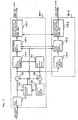
- FIG. 1 shows an overall arrangement of the moving picture transmission system according to the first embodiment.
- the moving picture transmission system comprises moving picture encoding apparatus 100 for encoding moving picture data, moving picture decoding apparatus 200, and transmission path 300 for transmitting encoded moving picture data from moving picture encoding apparatus 100 to moving picture decoding apparatus 200.
- N is an integer of 2 or greater, representing the number of encoded data sent from moving picture encoding apparatus 100.
- Moving picture encoding apparatus 100 is supplied with frames of moving picture data, encodes the supplied moving picture data into N encoded data, and sends the encoded data as 1 st through Nth moving picture encoded packet data.
- moving picture encoding apparatus 100 has first through Nth N moving picture encoder/senders 101-1 through 101-N.
- First moving picture encoder/sender 101-1 encodes the frames of moving picture data supplied to moving picture encoding apparatus 100 based on interframe prediction according to a predetermined compression encoding process, and sends the encoded data to moving picture decoding apparatus 200.
- Second through Nth N moving picture encoder/senders 101-2 through 101-N encode all or part of frames encoded by first moving picture encoder/sender 101-1 at a compression ratio higher than first moving picture encoder/sender 101-1 using interframe prediction parameters and residual image data that are obtained by the interframe prediction performed by the first moving picture encoder/sender on those frames.
- the compression ratio for encoding frames with second through Nth N moving picture encoder/senders 101-2 through 101-N is higher than the compression ratio of first moving picture encoder/sender 101-1.
- Second through Nth N moving picture encoder/senders 101-2 through 101-N may have respective different compression ratios or the same compression ratio.
- Moving picture decoding apparatus 200 receives and decodes the N encoded data sent from moving picture encoding apparatus 100 into moving picture data. As shown in Fig. 1, moving picture decoding apparatus 200 comprises first through Nth encoded data receivers 201-1 through 201-N for receiving the encoded data sent from first through Nth N moving picture encoder/senders 101-1 through 101-N of moving picture encoding apparatus 100, encoded data reconstructor 202, and moving picture data decoder 203.
- Encoded data reconstructor 202 selects one encoded data having the lowest compression ratio as encoded data to be decoded, from a maximum of N encoded data free of transmission errors and dropouts received by first through Nth encoded data receivers 201-1 through 201-N.
- Moving picture data decoder 203 decodes encoded data output from encoded data reconstructor 202 into moving picture data.
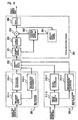
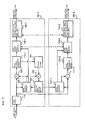
- FIG. 2 Details of the moving picture encoder/senders of moving picture encoding apparatus 100 are shown in Fig. 2.
- the number N of encoded data output by the apparatus is illustrated as "2" for the sake of brevity.
- First moving picture encoder/sender 101-1 shown in Fig. 2 has frame scanner 111 for rearranging supplied frames of moving picture data into an order to be encoded, interframe predictor 112 for performing interframe prediction on an image input from frame scanner 111 based on one or more decoded images stored in reference frame storage memory 119, residual calculator 113 for subtracting a prediction image obtained by interframe predictor 112 from the input frame image to calculate a residual , first residual compression encoder 114-1 for compression-encoding the residual image obtained by residual calculator 113 according to a predetermined process, and first encoded packet generator 115-1 for variable-length-encoding the interframe predictive parameters obtained by interframe predictor 112 and the compressed data of the residual image obtained by first residual compression encoder 114-1 into a bit string and outputting the bit string in packets.
- First moving picture encoder/sender 101-1 also has first packet error detecting code-frame/packet identification number adder 116-1 for adding an error detecting code and frame/packet identification numbers in order for a receiving apparatus to detect transmission errors and packet losses of the encoded packet data output by first encoded packet generator 115-1, residual decoder 117 for determining decoded data of the residual encoded by first residual compression encoder 114-1, decoded image calculator 118 for adding the prediction image generated by interframe predictor 112 and the residual decoded by residual decoder 117 into a decoded image, and reference frame storage memory 119 for storing decoded images in preparation for the encoding of a next frame.
- first packet error detecting code-frame/packet identification number adder 116-1 for adding an error detecting code and frame/packet identification numbers in order for a receiving apparatus to detect transmission errors and packet losses of the encoded packet data output by first encoded packet generator 115-1
- residual decoder 117 for determining decoded data
- First moving picture encoder/sender 101-1 operates with the above processing components.
- Second moving picture encoder/sender 101-2 shown in Fig. 2 has second residual compression encoder 114-2 for encoding the residual image obtained by residual calculator 113 at a compression ratio higher than the compression ratio of first residual compression encoder 114-1, second encoded packet generator 115-2 for variable-length-encoding the interframe predictive parameters obtained by interframe predictor 112 and the compressed data of the residual obtained by second residual compression encoder 114-2 into a bit string and outputting the bit string in packets, and second moving picture encoder/sender 101-2 also has second packet error detecting code-frame/packet identification number adder 116-2 for adding an error detecting code and frame/packet identification numbers in order for the receiving apparatus to detect transmission errors and packet losses of the compressed packet data output by second encoded packet generator 115-2.
- Second moving picture encode data are obtained when the above processing components operate, and sent in packets by a predetermined sending means.
- Second moving picture encoder/sender 101-2 of moving picture encoding apparatus 100 operates with the above processing components.
- FIG. 2 only second moving picture encoder/sender 101-2 is shown. However, third through Nth moving picture encoder/senders 101-3 through 101-N shown in Fig. 1 are of the same arrangement as second moving picture encoder/sender 101-2.
- first packet error detecting code-frame/packet identification number adder 116-1 is provided for adding an error detecting code and frame/packet identification numbers to the first encoded packet data output from first encoded packet generator 115-1.
- any other processes may be employed if they enable moving picture decoding apparatus 200 to detect transmission errors and packet losses of the encoded packet data that are sent. For example, if the first encoded packet transmission path has a mechanism for detecting transmission errors, then there is no need for first packet error detecting code -frame/packet identification number adder 116-1 to add an error detecting code.
- first encoded packet generator 115-1 if the encoded data output from first encoded packet generator 115-1 contain information for identifying frames and packets, then there is no need for first packet error detecting code-frame/packet identification number adder 116-1 to add frame/packet identification numbers.
- second packet error detecting code-frame/packet identification number adder 116-2 is provided for adding an error detecting code and frame/packet identification numbers to the second encoded packet data.
- any other processes may be employed if they enable moving picture decoding apparatus 200 to detect transmission errors and packet losses of the encoded packet data that are sent.
- the moving picture encoding apparatus is connected to an Internet communication network, compresses a moving picture input by a camera or the like into encoded data according to the MPEG-4 Visual process, and transmits the encoded data using the UDP/IP protocol.
- Interframe predictor 112 performs interframe prediction based on motion compensation.
- First residual compression encoder 114-1 and second residual compression encoder 114-2 perform a compression process based on two-dimensional discrete cosine transform (2D-DCT) and quantization.
- Second residual compression encoder 114-2 compresses image data such that the compression ratio of the second encoded data is higher than the compression ratio of the first encoded data, according to a process for quantizing 2D-DCT coefficients using quantization parameters greater than first residual compression encoder 114-1 or a process of adaptively cutting off high-order 2D-DCT.
- Residual decoder 117 performs inverse quantization and two-dimensional inverse discrete cosine transform (2D-IDCT).
- First encoded packet generator 115-1 encodes quantization DCT coefficients output from first residual compression encoder 114-1 and motion vectors output from interframe predictor 112, according to the syntax prescribed by the MPEG-4 Visual process.
- second encoded packet generator 115-2 encodes quantization DCT coefficients output from second residual compression encoder 114-2 and motion vectors output from interframe predictor 112, according to the syntax prescribed by the MPEG-4 Visual process.
- First packet error detecting code-frame/packet identification number adder 116-1 and second packet error detecting code-frame/packet identification number adder 116-2 generate a UDP datagram including a check sum for detecting an error, and sends the generated UDP datagram to the moving picture decoding apparatus connected to the Internet.
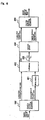
- Fig. 3 shows a detailed arrangement of moving picture decoding apparatus 200 according to the first embodiment.
- First encoded data receiver 201-1 shown in Fig. 3 has first packet reception buffer 211-1 for receiving first encoded packet data sent from the encoding apparatus, first encoded data extractor 212-1 for extracting moving picture encoded data from the packet data received by first packet reception buffer 211-1, and first packet error detector/packet loss detector 213-1 for detecting bit errors and packet losses that have occurred when the first encoded packet data are transmitted.
- First encoded data receiver 201-1 operates with the processors of the above components.
- second encoded data receiver 201-2 shown in Fig. 3 has second packet reception buffer 211-2 for receiving second encoded packet data sent from the encoding apparatus, second encoded data extractor 212-2 for extracting moving picture encoded data from the packet data received by second packet reception buffer 211-2, and second packet error detector/packet loss detector 213-2 for detecting bit errors and packet losses that have occurred when the second encoded packet data are transmitted.
- Second encoded data receiver 201-2 operates with the processors of the above components.
- Encoded data reconstructor 202 reconstructs the two encoded data sent from the encoding apparatus into single encoded data according to the results of errors and packet losses detected by first packet error detector/packet loss detector 213-1 and second packet error detector/packet loss detector 213-2.
- Moving picture data decoder 203 shown in Fig. 3 comprises variable-length decoder 251 for variable-length-decoding the encoded data reconstructed by encoded data reconstructor 202, residual decoder 252, interframe prediction image generator 253, decoded image calculator 254 for adding a residual produced by residual decoder 252 and a prediction image produced by interframe prediction image generator 253 to determine a decoded image, reference frame storage memory 255 for storing decoded image data produced by decoded image calculator 254, which is to be used in decoding a following frame, and frame scanner 256 for rearranging and outputting decoded images in an order to be reproduced.
- Moving picture data decoder 203 of moving picture decoding apparatus 200 operates with the processors of the above components to produce moving picture data transmitted from moving picture encoding apparatus 100.
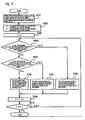
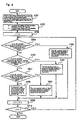
- FIG. 4 An encoded data reconstructing sequence of encoded data reconstructor 202 according to the present embodiment will be described below with reference to a flowchart shown in Fig. 4.
- the sequence shown in Fig. 4 represents a process of reconstructing encoded data of an nth frame where n is an integer.
- step S401 control waits until a time which is the sum of a time when all encoded data of the nth frame are to arrive at first packet reception buffer 211-1 and second packet reception buffer 211-2 and a predetermined allowable maximum delay time. Then, control goes to step S402.
- step S402 the following branching process is performed depending on the results of errors and packet losses detected by first packet error detector/packet loss detector 213-1: If all encoded data of the nth frame are received by first packet reception buffer 211-1 and no error is detected in the data, then control goes to step S403. Otherwise, control goes to step S404.
- step S403 the encoded data of the nth frame output from first encoded data extractor 212-1 are transferred as encoded data to be decoded to variable-length decoder 251. The, the encoded data reconstructing process is ended.
- step S404 the following branching process is performed depending on the results of errors and packet losses detected by second packet error detector/packet loss detector 213-2: If all encoded data of the nth frame are received by second packet reception buffer 211-2 and no error is detected in the data, then control goes to step S405. Otherwise, control goes to step S406.
- step S405 the encoded data of the nth frame output from second encoded data extractor 212-2 are transferred as encoded data to be decoded to variable-length decoder 251. The, the encoded data reconstructing process is ended.
- Control proceeds to step S406 when the encoded data of the nth frame cannot be received free of bit errors and packet losses by either one of first and second packet reception buffers 211-1, 211-2.
- step S406 therefore, a concealment process for making less visible decoded image corruptions due to reception errors is carried out by an appropriate method.
- a command is sent to moving picture data decoder 203 to use a decoded image of a preceding (n-1 )th frame as a decoded image of the nth frame.
- first packet reception buffer 211-1 If some of the encoded data of the nth frame are received by first packet reception buffer 211-1, then the received encoded data are used for decoding the nth frame. If no encoded data at all are received by first packet reception buffer 211-1 and some of the encoded data of the nth frame are received by second packet reception buffer 211-2, then the encoded data received by the second packet reception buffer are used for decoding the nth frame. If no encoded data of the nth frame at all are received by both the first and second packet reception buffers, then a decoded image of a preceding (n-1)th frame is output.
- step S406 the encoded data reconstructing process for the nth frame is ended.
- encoded data reconstructing process carried out by encoded data reconstructor 202 has been described above.
- Fig. 4 illustrates the operation of encoded data reconstructor 202 where, as shown in Figs. 2 and 3, N shown in Fig. 1 is "2", moving picture encoding apparatus 100 has first moving picture encoder/sender 101-1 and second moving picture encoder/sender 101-2, and moving picture decoding apparatus 200 has first encoded data receiver 201-1 and second encoded data receiver 201-2.
- encoded data reconstructor 202 operates according to a flowchart shown in Fig. 5.
- N is "3"
- moving picture encoding apparatus 100 has first moving picture encoder/sender 101-1 through third moving picture encoder/sender 101-3
- moving picture decoding apparatus 200 has first encoded data receiver 201-1 through third encoded data receiver 201-3
- the compression ratio for frame encoding is successively higher in the order from first moving picture encoder/sender 101-1 through third moving picture encoder/sender 101-3.
- step S501 determines whether there are a data error and a packet loss in the encoded data in the third packet reception buffer. If there are not a data error and a packet loss, then the encoded data in the third packet reception buffer are transferred as encoded data to be decoded to variable-length decoder 251.
- step S406 If the encoded data of the nth frame cannot be received free of bit errors and packet losses by either one of the packet reception buffers, then the concealment process in step S406 is performed.
- the encoded data are transferred as encoded data to be decoded to variable-length decoder 251 so that priority is given to the encoded data of the lower compression ratio.
- the encoded sent from first through Nth N moving picture encoder/senders 101-1 through 101-N of moving picture encoding apparatus 100 may be ordered so that priority is given to the encoded data of the lower compression ratio, for example, and encoded data reconstructor 202 of moving picture decoding apparatus 200 may select encoded data of the highest order for each frame from a plurality of properly received encoded data.
- first packet error detector/packet loss detector 213-1 may employ any process for detecting bit errors and packet losses in the first encoded packet data. For example, it may detect bit errors and packet losses based on the error detecting code and the frame/packet numbers that have been added by moving picture encoding apparatus 100. Alternatively, if the encoded data transmission path has an error detecting function, then the detected result thereof may be employed. If information which identifies encoded frames is included in the encoded data, then the information included in the encoded data may be employed.
- second packet error detector/packet loss detector 213-2 may employ any process for detecting bit errors and packet losses in the first encoded packet data.
- any processes of waiting for the reception of the encoded data of the nth frame may be employed in step S401 insofar as they are capable of detecting packet losses while holding a packet transmission delay within a predetermined range.
- moving picture decoding apparatus 200 is connected to an Internet communication network, receives packet data sent from moving picture encoding apparatus 100 connected at another spot to the Internet communication network using the UDP/IP protocol, decodes moving picture encoded data included in the received UDP datagram, and displays an obtained moving picture on a display.
- the moving picture encoded data are data according to the MPEG-4 Visual process, for example.
- First packet error detector/packet loss detector 213-1 and second packet error detector/packet loss detector 213-2 detect a transmission error by calculating a check sum included in the UDP datagram.
- Moving picture data decoder 203 which comprises variable-length decoder 251, residual decoder 252, interframe prediction image generator 253, decoded image calculator 254, reference frame storage memory 255, and frame scanner 256 is an ordinary decoding apparatus compatible with the MPEG-4 Visual process.
- Variable-length decoder 251 variable-length-decodes data that are encoded according to the MPEG-4 Visual process to extract compression information such as DCT quantization coefficients, motion vectors, etc.
- Residual decoder 252 performs inverse quantization and two-dimensional inverse discrete cosine transform.
- Interframe prediction image generator 253 generates a motion-compensated image according to decoded motion vectors.
- the first and second encoded packet data may be transmitted from moving picture encoding apparatus 100 to moving picture decoding apparatus 200 according to any processes.
- Fig. 6 shows a second embodiment for realizing such a preferable encoded packet data transmission process.
- the second embodiment shown in Fig. 6 has delay adder 601 for adding a constant or adaptively variable delay time to the second encoded packet data output from moving picture encoding apparatus 100 according to the first embodiment shown in Fig. 2 and sending the data with the added delay time, multiplexer 602 for multiplexing the first encoded packet data output from moving picture encoding apparatus 100 and the second encoded packet data output from delay adder 601 and sending the multiplexed data to a transmission path, transmission path 603 for transmitting the data multiplexed by multiplexer 602 from the sending apparatus to the receiving apparatus, and demultiplexer 604 for receiving the data from transmission path 603, demultiplexing the data into the first encoded packet data and the second encoded packet data, outputting them to moving picture decoding apparatus 200 according to the first embodiment.
- the delay time that is added to the second encoded packet data by delay adder 601 is determined by a maximum burst time of bit errors and packet looses that occur in transmission path 603. Therefore, even when a burst error occurs in transmission path 603, since the probability that both the first and second encoded data produced by encoding the same frame are affected by the error is reduced, it is possible to reduce significant image quality deteriorations due to a loss of encoded frame data.
- moving picture encoding apparatus 100 encodes one moving picture data into two encoded data and sends the encoded data at a constant or adaptively variable time interval.
- Second encoder/sender 101-2 encodes frames encoded by first encoder/sender 101-1 using interframe prediction parameters and residual image data which are obtained by the encoding of the frames which is performed by first encoder/sender 101-1.
- Moving picture decoding apparatus 200 on the reception side selects and decodes frames of encoded data which are of a low compression ratio and high image quality from the properly received encoded data. As a result, even if the transmission path is of low reliability, frequently causing transmission errors and packet errors of highly burst nature, the probability that both the two encoded data are transmitted in error is reduced, making it possible to prevent transmitted decoded images from suffering significant corruptions.
- An increase caused in the transmission band when the second encoded data are sent may be reduced by increasing the compression ratio of the second encoded data.
- moving picture decoding apparatus 200 may decode only one of the two encoded data that are received, the amount of calculations that are required thereby is not appreciably greater than the amount of calculations that are required by ordinary moving picture decoding apparatus.
- moving picture encoding apparatus 100 encodes one moving picture data into two encoded data and sends the encoded data at a constant or adaptively variable time interval. Therefore, even when a burst error occurs in the transmission path, since the probability that both the first and second encoded data produced by encoding the same frame are affected by the error is reduced, it is possible to reduce significant image quality deteriorations due to a loss of encoded frame data.
- the arrangement and operation of the third embodiment are substantially the same as those of the first embodiment, and comprises, as shown in Fig. 1, moving picture encoding apparatus 100, moving picture decoding apparatus 200, and transmission path 300 for transmitting encoded data.
- N represents the number of encoded data sent from moving picture encoding apparatus 100.
- the arrangement of moving picture encoding apparatus 100 is substantially the same as that of the first embodiment. However, operation of components of moving picture encoding apparatus 100 is different from that of the first embodiment.
- Encoded data of an input frame image that is encoded by first moving picture encoder/sender 101-1 comprise one or plural packet data, each representing encoded interframe prediction parameters and residual image compression data with respect to an image area contained in the input frame image.
- Second through Nth N moving picture encoder/senders 101-2 through 101-N encode the image area included in all or part of the packets encoded by the first moving picture encoder/sender at a compression ratio higher than first moving picture encoder/sender 101-1, using interframe prediction parameters and residual image data which are obtained the interframe prediction performed on the image area by first moving picture encoder/sender 101-1, and sends the obtained encoded packet data to moving picture decoding apparatus 200.
- Other operation details than described above are basically the same as those of the first embodiment.
- the arrangement of moving picture decoding apparatus 200 is also substantially the same as that of the first embodiment. However, operation of components of moving picture decoding apparatus 200 is different from that of the first embodiment.
- encoded data reconstructor 202 selects one packet having the lowest compression ratio as encoded data to be decoded, from a maximum of N encoded packet data free of transmission errors and dropouts received by first through Nth encoded data receivers 201-1 through 201-N. Encoded data reconstructor 202 selects packet data sent by moving picture encoding apparatus 100. Other operation details than described above are basically the same as those of the first embodiment.
- the arrangement and operation of the moving picture encoder/senders according to the third embodiment are substantially the same as the moving picture encoder/senders of the first embodiment shown in FIG. 2.
- the moving picture encoder/senders according to the third embodiment differ from moving picture encoder/senders of the first embodiment only as to operation of first encoded packet generator 115-1, second encoded packet generator 115-2, first packet error detecting code-frame/packet identification number adder 116-1, and second packet error detecting code-frame/packet identification number adder 116-2.
- first encoded packet generator 115-1 and second encoded packet generator 115-2 generate encoded packet data such that an image area contained in the encoded packet data generated by first encoded packet generator 115-1 and an image area contained in the encoded packet data generated by second encoded packet generator 115-2 coincide with each other.
- First packet error detecting code-frame/packet identification number adder 116-1, and second packet error detecting code-frame/packet identification number adder 116-2 operate to add the same packet identification number to encoded packet data corresponding to the same image area of the same frame. However, if the packet data encoded by first and second encoded packet generators 115-1, 115-2 contain a frame number and information for identifying the position of the image area contained in the packet data, then no frame/packet identification number may be added.
- the MPEG Visual process is used for the compression encoding of moving pictures.
- an input image frame is divided into rectangular areas of constant size called macroblocks and then compressed, and the compressed image information in each of the macroblocks is encoded in packets called video packets into a bit string.
- the video packets contain compressed data with respect to any desired number of macroblocks, and the bit string data encoded by this process can be decoded in video packets.
- First encoded packet generator 115-1 and second encoded packet generator 115-2 output encoded data in video packets.
- Video packets encoded by second encoded packet generator 115-2 are generated so as to contain macroblocks in the same area as the video packets encoded by first encoded packet generator 115-1.
- moving picture decoding apparatus 200 The arrangement and operation of moving picture decoding apparatus 200 according to the present embodiment are substantially the same as those of the moving picture decoding apparatus according to the first embodiment, except that only operation of encoded data reconstructor 202 in Fig. 3 is different.
- FIG. 7 An encoded data reconstructing sequence of encoded data reconstructor 202 according to the third embodiment will be described below with reference to a flowchart shown in Fig. 7.
- the sequence shown in Fig. 7 represents a process of reconstructing encoded data of an nth frame where n is an integer.
- step S701 control waits until a time which is the sum of a time when all encoded data of the nth frame are to arrive at first packet reception buffer 211-1 and second packet reception buffer 211-2 and a predetermined allowable maximum delay time. Then, control goes to step S702.
- step S702 a minimum value of the packet number of the nth frame is stored in a variable a which stores the packet number, and a maximum value of the packet number of the nth frame is stored in a variable b.
- step S703 the value of the variable a is substituted for a variable i which stores the packet number. Then, control starts a repetitive loop from step S704.
- step S704 the following branching process is performed depending on the results of errors and packet losses detected by first packet error detector/packet loss detector 213-1: If an ith packet of the nth frame is received by first packet reception buffer 211-1 and no error is detected in the data, then control goes to step S705. Otherwise, control goes to step S706.
- step S705 the ith packet data of the nth frame output from first encoded data extractor 212-1 is transferred as encoded data to be decoded to variable-length decoder 251. Then, control goes to step S709.
- step S706 the following branching process is performed depending on the results of errors and packet losses detected by second packet error detector/packet loss detector 213-2: If the ith packet of the nth frame is received by second packet reception buffer 211-2 and no error is detected in the data, then control goes to step S707. Otherwise, control goes to step S708.
- step S707 the ith packet data of the nth frame output from second encoded data extractor 212-2 is transferred as encoded data to be decoded to variable-length decoder 251. Then, control goes to step S709.
- Control proceeds to step S708 when the ith packet data of the nth frame cannot be received free of bit errors and packet losses by either one of the first and second packet reception buffers.
- step S708 therefore, a concealment process for making less visible corruptions of a decoded image area contained in the ith packet data is carried out by an appropriate method.
- a command is sent to the moving picture data decoder to use a decoded image of a preceding (n-1)th frame as a decoded image contained in the ith packet data of the nth frame.
- first packet reception buffer 211-1 has received incomplete ith packet data of the nth frame
- the received packet data is used for decoding the nth frame.
- the packet data is not received by first packet reception buffer 211-1 and second packet reception buffer 211-2 has received incomplete ith packet data of the nth frame, then the packet data obtained by the second packet reception buffer is used for decoding the nth frame. If the ith packet data of the nth frame is not received by both the first and second packet reception buffers, then a decoded image of a preceding (n-1 )th frame is displayed.
- step S708 After the above concealment process is performed in step S708, control goes to step S709.
- step S709 the variable i is incremented by 1.
- step S710 it is determined whether the variable i does not exceed the value of the variable b. If the variable i does not exceed the value of the variable b, then the processing from step S704 is repeated. If the variable i exceeds the value of the variable b, then the repetitive process is finished, and the process of reconstructing encoded data of the nth frame is put to an end.
- encoded data reconstructor 202 The operation of encoded data reconstructor 202 according to the third embodiment has been described above.
- Fig. 7 illustrates the operation of encoded data reconstructor 202 where, as shown in Figs. 2 and 3, N shown in Fig. 1 is "2", moving picture encoding apparatus 100 has first moving picture encoder/sender 101-1 and second moving picture encoder/sender 101-2, and moving picture decoding apparatus 200 has first encoded data receiver 201-1 and second encoded data receiver 201-2.
- encoded data reconstructor 202 operates according to a flowchart shown iri Fig. 8.
- N is "3"
- moving picture encoding apparatus 100 has first moving picture encoder/sender 101-1 through third moving picture encoder/sender 101-3
- moving picture decoding apparatus 200 has first encoded data receiver 201-1 through third encoded data receiver 201-3
- the compression ratio for frame encoding is successively higher in the order from first moving picture encoder/sender 101-1 through third moving picture encoder/sender 101-3.
- step S801, S802 are added. Specifically, if the ith packet is not present in the second packet reception buffer or if the ith packet is present in the second packet reception buffer, but suffers a bit error, then if the ith packet of the nth frame is received in the third packet reception buffer and no error is detected in the received data in step S801, the ith packet data of the nth frame output from third encoded data extractor 212-3 is transferred as encoded data to be decoded to variable-length decoder 251 in step S802.
- step S708 If the ith packet of the nth frame is present in any one of the packet reception buffers or if the ith packet of the nth frame is present in either one of the packet reception buffers, but a bit error is detected in the data, then the concealment process in step S708 is performed.
- the packet data having the low compression ratio for frame encoding is preferentially transferred as encoded data to variable-length decoder 251.
- any processes of waiting for the reception of the encoded data of the nth frame may be employed in step S701 insofar as they are capable of detecting packet losses while holding a packet transmission delay within a predetermined range.
- moving picture encoding apparatus 100 encodes one moving picture data into two encoded data and sends the encoded data at a constant or adaptively variable time interval.
- Second moving picture encoder/sender 101-2 encodes the image area included in the packets encoded by first moving picture encoder/sender 101-1, using interframe prediction parameters and residual image data which are obtained the interframe prediction performed by first moving picture encoder/sender 101-1.
- the reception side selects and decodes packets of encoded data which are of a low compression ratio and high image quality from the properly received encoded data.
- a moving picture transmission system according to a fourth embodiment of the present invention will be described below.
- the arrangement and operation of the present embodiment are substantially the same as those of the first embodiment, and comprises, as shown in Fig. 1, moving picture encoding apparatus 100, moving picture decoding apparatus 200, and transmission path 300 for transmitting encoded data.
- operation of components of moving picture encoding apparatus 100 is different from that of the first embodiment.
- Second through Nth N moving picture encoder/senders 101-2 through 101-N encode an input frame image using a reference frame image that is used in the interframe prediction performed on the frame by first moving picture encoder/sender 101-1.
- Second through Nth N moving picture encoder/senders 101-2 through 101-N may encode interframe prediction parameters and residual image data different from those in first moving picture encoder/sender 101-1, which are obtained by interframe prediction under a different control process from first moving picture encoder/sender 101-1.
- Other operation details than described above are basically the same as those of the first embodiment.
- moving picture decoding apparatus 200 is exactly the same as that of the first embodiment.
- FIG. 9 shows a detailed arrangement of moving picture encoding apparatus 10 according to the fourth embodiment of the present invention.
- the number N of encoded data output by the apparatus is illustrated as "2" for the sake of brevity.
- First moving picture encoder/sender 101-1 of moving picture encoding apparatus 10 according to the fourth embodiment shown in Fig. 9 is identical in arrangement and operation to that of the first embodiment shown in FIG. 2.
- Second moving picture encoder/sender 101-2 according to the present embodiment is different in arrangement and operation from that of the first embodiment shown in FIG. 2.
- Second moving picture encoder/sender 101-2 comprises second interframe predictor 112-2, second residual calculator 113-2, second residual compression encoder 114-2, second encoded packet generator 115-2, and second packet error detecting code-frame/packet identification number adder 116-2.
- Second interframe predictor 112-2 performs interframe prediction on an image input from frame scanner 111 based on one or more decoded images stored in reference frame storage memory 119.
- Second residual calculator 113-2 subtracts a prediction image obtained by second interframe predictor 112-2 from the input frame image to calculate a residual.
- Second residual compression encoder 114-2 encodes the residual image obtained by second residual calculator 113-2 at a compression ratio higher than that of first residual compression encoder 114-1.
- Second encoded packet generator 115-2 variable-length-encodes the interframe predictive parameters obtained by second interframe predictor 112-2 and the compressed data of the residual obtained by second residual compression encoder 114-2 into a bit string and outputs the bit string in packets.
- Second packet error detecting code-frame/packet identification number adder 116-2 adds an error detecting code and frame/packet identification numbers in order for the receiving apparatus to detect transmission errors and packet losses of the compressed packet data output by second encoded packet generator 115-2.
- the above processors operate to obtain second moving picture encoded data, which are sent in packets by a predetermining sending means.
- Second interframe predictor 112-2 performs interframe prediction using the same input frame image and reference frame image as those used by first interframe predictor 112-1. No problem arises if second interframe predictor 112-2 produces interframe prediction parameters and prediction images that are different from those produced by first interframe predictor 112-1. Therefore, the advantages of the present invention can be increased by second interframe predictor 112-2 which determines prediction parameters by attaching more importance to the encoded length of interframe prediction parameters than first interframe predictor 112-1.
- moving picture encoding apparatus 100 encodes one moving picture data into two encoded data and sends the encoded data at a constant or adaptively variable time interval.
- Second moving picture encoder/sender 101-2 encodes frames encoded by first moving picture encoder/sender 101-1 using a reference frame image used in the encoding of the frames which is performed by first moving encoder/sender 101-1.
- the reception side selects and decodes frames of encoded data which are of a low compression ratio and high image quality from the properly received encoded data.
- An increase caused in the transmission band when the second encoded data are sent may be reduced by increasing the compression ratio of the second encoded data. Furthermore, since moving picture decoding apparatus 200 may decode only one of the two encoded data that are received, the amount of calculations that are required thereby is not appreciably greater than the amount of calculations that are required by ordinary moving picture decoding apparatus.
- a moving picture transmission system according to a fifth embodiment of the present invention will be described below.
- the overall arrangement of the present embodiment is the same as those of the fourth embodiment, and comprises, as shown in Fig. 1, moving picture encoding apparatus 100, moving picture decoding apparatus 200, and transmission path 300 for transmitting encoded data.
- the arrangement of moving picture encoding apparatus 100 is the same as the fourth embodiment, but operation of components of moving picture encoding apparatus 100 is different from that of the fourth embodiment.
- Encoded data of an input frame image that is encoded by first moving picture encoder/sender 101-1 comprise one or plural packet data, each representing encoded interframe prediction parameters and residual image compression data with respect to an image area contained in the input frame image.
- Second through Nth N moving picture encoder/senders 101-2 through 101-N encode the image area included in all or part of the packets encoded by first moving picture encoder/sender 101-1 at a compression ratio higher than first moving picture encoder/sender 101-1, using a reference frame image used in the interframe prediction performed on the image area by first moving picture encoder/sender 101-1, and sends the obtained encoded packet data to moving picture decoding apparatus 200.
- Other operation details than described above are basically the same as those of the fourth embodiment.
- moving picture decoding apparatus 200 is exactly the same as that of the third embodiment.
- Moving picture encoding apparatus 100 The arrangement and operation of moving picture encoding apparatus 100 according to the present embodiment are substantially the same as the moving picture encoding apparatus of the fourth embodiment shown in FIG. 9.
- Moving picture encoding apparatus 100 according to the present embodiment differs therefrom only as to operation of first encoded packet generator 115-1, second encoded packet generator 115-2, first packet error detecting code-frame/packet identification number adder 116-1, and second packet error detecting code-frame/packet identification number adder 116-2.
- first encoded packet generator 115-1 and second encoded packet generator 115-2 generate encoded packet data such that an image area contained in the encoded packet data generated by first encoded packet generator 115-1 and an image area contained in the encoded packet data generated by second encoded packet generator 115-2 coincide with each other.
- First packet error detecting code-frame/packet identification number adder 116-1, and second packet error detecting code-frame/packet identification number adder 116-2 operate to add the same packet identification number to encoded packet data corresponding to the same image area of the same frame. However, if the packet data encoded by first and second encoded packet generators 115-1, 115-2 contain a frame number and information for identifying the position of the image area contained in the packet data, then no frame/packet identification number may be added.
- first moving picture encoder/sender 101-1 of moving picture encoding apparatus 100 encodes one moving picture data into two encoded data and sends the encoded data at a constant or adaptively variable time interval.
- Second moving picture encoder/sender 101-2 encodes the image area included in the packets encoded by first moving picture encoder/sender 101-1, using a reference frame image used in the encoding of the frames which is performed by first moving picture encoder/sender 101-1.
- the reception side selects and decodes packets of encoded data which are of a low compression ratio and high image quality from the properly received encoded data.
- An increase caused in the transmission band when the second encoded data are sent may be reduced by increasing the compression ratio of the second encoded data.
- moving picture decoding apparatus 200 may decode only one of the two encoded data that are received, the amount of calculations that are required thereby is not appreciably greater than the amount of calculations that are required by ordinary moving picture decoding apparatus.
- the moving picture transmission system may be realized by hardware-implemented functions of the moving picture encoding apparatus and the moving picture decoding apparatus, or by loading a moving picture transmission program comprising moving picture encoding program 800 and moving picture decoding program 900 which have the above functions of the moving picture encoding apparatus and the moving picture decoding apparatus into a memory of a computer processor and executing the loaded moving picture transmission program.
- Moving picture encoding program 800 and moving picture decoding program 900 are stored in a magnetic disk, a semiconductor memory, or any of other recording mediums, are loaded from the recording medium into the computer processor, and control operation of the computer processor to achieve the above functions.
Landscapes
- Engineering & Computer Science (AREA)
- Multimedia (AREA)
- Signal Processing (AREA)
- Databases & Information Systems (AREA)
- Computing Systems (AREA)
- Theoretical Computer Science (AREA)
- Computer Graphics (AREA)
- Compression Or Coding Systems Of Tv Signals (AREA)
- Compression, Expansion, Code Conversion, And Decoders (AREA)
Applications Claiming Priority (3)
| Application Number | Priority Date | Filing Date | Title |
|---|---|---|---|
| JP2002126894 | 2002-04-26 | ||
| JP2002126894 | 2002-04-26 | ||
| PCT/JP2003/005321 WO2003092302A1 (fr) | 2002-04-26 | 2003-04-25 | Systeme de transfert d'images en mouvement, appareils de codage et de decodage d'images en mouvement, et programme de transfert d'images en mouvement |
Publications (2)
| Publication Number | Publication Date |
|---|---|
| EP1501314A1 true EP1501314A1 (fr) | 2005-01-26 |
| EP1501314A4 EP1501314A4 (fr) | 2010-03-17 |
Family
ID=29267620
Family Applications (1)
| Application Number | Title | Priority Date | Filing Date |
|---|---|---|---|
| EP03727985A Withdrawn EP1501314A4 (fr) | 2002-04-26 | 2003-04-25 | Systeme de transfert d'images en mouvement, appareils de codage et de decodage d'images en mouvement, et programme de transfert d'images en mouvement |
Country Status (4)
| Country | Link |
|---|---|
| US (1) | US20050117643A1 (fr) |
| EP (1) | EP1501314A4 (fr) |
| JP (1) | JP4280927B2 (fr) |
| WO (1) | WO2003092302A1 (fr) |
Cited By (1)
| Publication number | Priority date | Publication date | Assignee | Title |
|---|---|---|---|---|
| WO2005076623A3 (fr) * | 2004-02-09 | 2008-05-29 | Matsushita Electric Industrial Co Ltd | Appareil de reception d'emission, procede de reception d'emission, programme de reception d'emission, et circuit de reception d'emission |
Families Citing this family (6)
| Publication number | Priority date | Publication date | Assignee | Title |
|---|---|---|---|---|
| JP4475235B2 (ja) * | 2004-01-28 | 2010-06-09 | 日本電気株式会社 | コンテンツの符号化、配信及び受信方法と装置とシステムならびにプログラム |
| CN101543082B (zh) * | 2007-05-22 | 2011-07-20 | 松下电器产业株式会社 | 运动图像解码装置以及运动图像解码方法 |
| HUE037656T2 (hu) * | 2010-04-13 | 2018-09-28 | Fraunhofer Ges Forschung | Valószínûség intervallum partícionáló kódoló és dekódoló |
| JP6439414B2 (ja) * | 2014-12-01 | 2018-12-19 | 富士通株式会社 | 通信装置 |
| JP6649212B2 (ja) * | 2016-09-06 | 2020-02-19 | 株式会社東芝 | 符号化装置、復号装置、および画像処理システム |
| FR3135085B1 (fr) | 2022-04-28 | 2026-01-16 | Arkema France | Compositions de polyamide ignifuge ductile et leur utilisation notamment pour application ferroviaire |
Family Cites Families (18)
| Publication number | Priority date | Publication date | Assignee | Title |
|---|---|---|---|---|
| JPS59167143A (ja) * | 1983-03-11 | 1984-09-20 | Nec Corp | 信号伝送方式 |
| JPH0748711B2 (ja) * | 1987-02-20 | 1995-05-24 | 日本電信電話株式会社 | 信号伝送方式 |
| ES2101730T3 (es) * | 1990-12-28 | 1997-07-16 | Canon Kk | Aparato para codificacion de imagenes, con optimizacion del codigo generado. |
| US5111292A (en) * | 1991-02-27 | 1992-05-05 | General Electric Company | Priority selection apparatus as for a video signal processor |
| US5481543A (en) * | 1993-03-16 | 1996-01-02 | Sony Corporation | Rational input buffer arrangements for auxiliary information in video and audio signal processing systems |
| JPH10224746A (ja) * | 1997-02-05 | 1998-08-21 | Kokusai Electric Co Ltd | 画像伝送システム |
| JPH10276365A (ja) * | 1997-03-31 | 1998-10-13 | Hitachi Ltd | 映像データ圧縮装置、映像記録再生装置および映像データの圧縮符号化方法 |
| US5847760A (en) * | 1997-05-22 | 1998-12-08 | Optibase Ltd. | Method for managing video broadcast |
| US6014694A (en) * | 1997-06-26 | 2000-01-11 | Citrix Systems, Inc. | System for adaptive video/audio transport over a network |
| JP3495922B2 (ja) * | 1997-09-26 | 2004-02-09 | フーリエ有限会社 | 映像データの伝送方法 |
| JPH11225161A (ja) * | 1998-02-05 | 1999-08-17 | Matsushita Electric Ind Co Ltd | データ処理方法およびデータ処理装置 |
| JP3646853B2 (ja) * | 1999-02-12 | 2005-05-11 | Kddi株式会社 | 複数経路画像伝送装置 |
| JP2001007786A (ja) * | 1999-06-21 | 2001-01-12 | Matsushita Electric Ind Co Ltd | データ通信方法およびシステム |
| US6611530B1 (en) * | 1999-09-21 | 2003-08-26 | Hewlett-Packard Development Company, L.P. | Video communication using multiple streams |
| US6829303B1 (en) * | 1999-11-17 | 2004-12-07 | Hitachi America, Ltd. | Methods and apparatus for decoding images using dedicated hardware circuitry and a programmable processor |
| US6510177B1 (en) * | 2000-03-24 | 2003-01-21 | Microsoft Corporation | System and method for layered video coding enhancement |
| GB2366464A (en) * | 2000-08-14 | 2002-03-06 | Nokia Mobile Phones Ltd | Video coding using intra and inter coding on the same data |
| US9143546B2 (en) * | 2000-10-03 | 2015-09-22 | Realtime Data Llc | System and method for data feed acceleration and encryption |
-
2003
- 2003-04-25 EP EP03727985A patent/EP1501314A4/fr not_active Withdrawn
- 2003-04-25 WO PCT/JP2003/005321 patent/WO2003092302A1/fr not_active Ceased
- 2003-04-25 US US10/505,668 patent/US20050117643A1/en not_active Abandoned
- 2003-04-25 JP JP2004501963A patent/JP4280927B2/ja not_active Expired - Fee Related
Cited By (1)
| Publication number | Priority date | Publication date | Assignee | Title |
|---|---|---|---|---|
| WO2005076623A3 (fr) * | 2004-02-09 | 2008-05-29 | Matsushita Electric Industrial Co Ltd | Appareil de reception d'emission, procede de reception d'emission, programme de reception d'emission, et circuit de reception d'emission |
Also Published As
| Publication number | Publication date |
|---|---|
| EP1501314A4 (fr) | 2010-03-17 |
| JP4280927B2 (ja) | 2009-06-17 |
| WO2003092302A1 (fr) | 2003-11-06 |
| JPWO2003092302A1 (ja) | 2005-09-08 |
| US20050117643A1 (en) | 2005-06-02 |
Similar Documents
| Publication | Publication Date | Title |
|---|---|---|
| US7957465B2 (en) | Moving picture data code conversion/transmission method and device, code conversion/reception method and device | |
| US7212576B2 (en) | Picture encoding method and apparatus and picture decoding method and apparatus | |
| US9961356B2 (en) | Image encoding and decoding apparatus and method | |
| US20160249048A1 (en) | Media coding for loss recovery with remotely predicted data units | |
| US20070009039A1 (en) | Video encoding and decoding methods and apparatuses | |
| US8300959B2 (en) | Transport stream structure of image data having additional information inserted, and method and apparatus for transmission and reception thereof | |
| US7792374B2 (en) | Image processing apparatus and method with pseudo-coded reference data | |
| US20080212599A1 (en) | Methods and systems for encoding data in a communication network | |
| EP1501311A1 (fr) | Systeme de transfert d'image animee, appareils de codage et de decodage d'image animee, et programme de transfert d'image animee | |
| EP1501314A1 (fr) | Systeme de transfert d'images en mouvement, appareils de codage et de decodage d'images en mouvement, et programme de transfert d'images en mouvement | |
| WO2002019709A1 (fr) | Transmission vidéo double priorité pour applications mobiles | |
| US12200195B2 (en) | Multiple lists for block based weighting factors | |
| US20060133488A1 (en) | Method for encoding and decoding video signal | |
| WO2001015458A2 (fr) | Emission video prioritaire duale pour applications mobiles | |
| HK1075779B (en) | Code conversion/transmission method and apparatus for moving picture data, and code conversion/reception method and apparatus for moving picture data |
Legal Events
| Date | Code | Title | Description |
|---|---|---|---|
| PUAI | Public reference made under article 153(3) epc to a published international application that has entered the european phase |
Free format text: ORIGINAL CODE: 0009012 |
|
| 17P | Request for examination filed |
Effective date: 20040924 |
|
| AK | Designated contracting states |
Kind code of ref document: A1 Designated state(s): AT BE BG CH CY CZ DE DK EE ES FI FR GB GR HU IE IT LI LU MC NL PT RO SE SI SK TR |
|
| A4 | Supplementary search report drawn up and despatched |
Effective date: 20100215 |
|
| 17Q | First examination report despatched |
Effective date: 20100714 |
|
| RIC1 | Information provided on ipc code assigned before grant |
Ipc: H04N 21/258 20110101ALI20141114BHEP Ipc: H04N 21/2662 20110101ALI20141114BHEP Ipc: H04N 19/115 20140101AFI20141114BHEP |
|
| GRAP | Despatch of communication of intention to grant a patent |
Free format text: ORIGINAL CODE: EPIDOSNIGR1 |
|
| INTG | Intention to grant announced |
Effective date: 20150619 |
|
| RIN1 | Information on inventor provided before grant (corrected) |
Inventor name: DEI, HIROAKI Inventor name: OZAWA, KAZUNORI Inventor name: HATABU, ATSUSHI |
|
| STAA | Information on the status of an ep patent application or granted ep patent |
Free format text: STATUS: THE APPLICATION IS DEEMED TO BE WITHDRAWN |
|
| 18D | Application deemed to be withdrawn |
Effective date: 20151030 |