EP1507795B1 - Peptides associes aux tumeurs et se liant a une molecule du complexe majeur d'histocompatibilite - Google Patents
Peptides associes aux tumeurs et se liant a une molecule du complexe majeur d'histocompatibilite Download PDFInfo
- Publication number
- EP1507795B1 EP1507795B1 EP03720376A EP03720376A EP1507795B1 EP 1507795 B1 EP1507795 B1 EP 1507795B1 EP 03720376 A EP03720376 A EP 03720376A EP 03720376 A EP03720376 A EP 03720376A EP 1507795 B1 EP1507795 B1 EP 1507795B1
- Authority
- EP
- European Patent Office
- Prior art keywords
- peptide
- seq
- cells
- tumor
- ctl
- Prior art date
- Legal status (The legal status is an assumption and is not a legal conclusion. Google has not performed a legal analysis and makes no representation as to the accuracy of the status listed.)
- Expired - Lifetime
Links
Images



Classifications
-
- C—CHEMISTRY; METALLURGY
- C07—ORGANIC CHEMISTRY
- C07K—PEPTIDES
- C07K7/00—Peptides having 5 to 20 amino acids in a fully defined sequence; Derivatives thereof
- C07K7/04—Linear peptides containing only normal peptide links
- C07K7/06—Linear peptides containing only normal peptide links having 5 to 11 amino acids
-
- A—HUMAN NECESSITIES
- A61—MEDICAL OR VETERINARY SCIENCE; HYGIENE
- A61K—PREPARATIONS FOR MEDICAL, DENTAL OR TOILETRY PURPOSES
- A61K40/00—Cellular immunotherapy
- A61K40/10—Cellular immunotherapy characterised by the cell type used
- A61K40/11—T-cells, e.g. tumour infiltrating lymphocytes [TIL] or regulatory T [Treg] cells; Lymphokine-activated killer [LAK] cells
-
- A—HUMAN NECESSITIES
- A61—MEDICAL OR VETERINARY SCIENCE; HYGIENE
- A61K—PREPARATIONS FOR MEDICAL, DENTAL OR TOILETRY PURPOSES
- A61K40/00—Cellular immunotherapy
- A61K40/40—Cellular immunotherapy characterised by antigens that are targeted or presented by cells of the immune system
- A61K40/41—Vertebrate antigens
- A61K40/42—Cancer antigens
-
- A—HUMAN NECESSITIES
- A61—MEDICAL OR VETERINARY SCIENCE; HYGIENE
- A61K—PREPARATIONS FOR MEDICAL, DENTAL OR TOILETRY PURPOSES
- A61K40/00—Cellular immunotherapy
- A61K40/40—Cellular immunotherapy characterised by antigens that are targeted or presented by cells of the immune system
- A61K40/41—Vertebrate antigens
- A61K40/42—Cancer antigens
- A61K40/4238—Regulators of development
- A61K40/424—Apoptosis related proteins, e.g. survivin or livin
-
- A—HUMAN NECESSITIES
- A61—MEDICAL OR VETERINARY SCIENCE; HYGIENE
- A61K—PREPARATIONS FOR MEDICAL, DENTAL OR TOILETRY PURPOSES
- A61K40/00—Cellular immunotherapy
- A61K40/40—Cellular immunotherapy characterised by antigens that are targeted or presented by cells of the immune system
- A61K40/41—Vertebrate antigens
- A61K40/42—Cancer antigens
- A61K40/4242—Transcription factors, e.g. SOX or c-MYC
-
- A—HUMAN NECESSITIES
- A61—MEDICAL OR VETERINARY SCIENCE; HYGIENE
- A61K—PREPARATIONS FOR MEDICAL, DENTAL OR TOILETRY PURPOSES
- A61K40/00—Cellular immunotherapy
- A61K40/40—Cellular immunotherapy characterised by antigens that are targeted or presented by cells of the immune system
- A61K40/46—Viral antigens
-
- A—HUMAN NECESSITIES
- A61—MEDICAL OR VETERINARY SCIENCE; HYGIENE
- A61P—SPECIFIC THERAPEUTIC ACTIVITY OF CHEMICAL COMPOUNDS OR MEDICINAL PREPARATIONS
- A61P1/00—Drugs for disorders of the alimentary tract or the digestive system
-
- A—HUMAN NECESSITIES
- A61—MEDICAL OR VETERINARY SCIENCE; HYGIENE
- A61P—SPECIFIC THERAPEUTIC ACTIVITY OF CHEMICAL COMPOUNDS OR MEDICINAL PREPARATIONS
- A61P1/00—Drugs for disorders of the alimentary tract or the digestive system
- A61P1/04—Drugs for disorders of the alimentary tract or the digestive system for ulcers, gastritis or reflux esophagitis, e.g. antacids, inhibitors of acid secretion, mucosal protectants
-
- A—HUMAN NECESSITIES
- A61—MEDICAL OR VETERINARY SCIENCE; HYGIENE
- A61P—SPECIFIC THERAPEUTIC ACTIVITY OF CHEMICAL COMPOUNDS OR MEDICINAL PREPARATIONS
- A61P1/00—Drugs for disorders of the alimentary tract or the digestive system
- A61P1/18—Drugs for disorders of the alimentary tract or the digestive system for pancreatic disorders, e.g. pancreatic enzymes
-
- A—HUMAN NECESSITIES
- A61—MEDICAL OR VETERINARY SCIENCE; HYGIENE
- A61P—SPECIFIC THERAPEUTIC ACTIVITY OF CHEMICAL COMPOUNDS OR MEDICINAL PREPARATIONS
- A61P13/00—Drugs for disorders of the urinary system
- A61P13/10—Drugs for disorders of the urinary system of the bladder
-
- A—HUMAN NECESSITIES
- A61—MEDICAL OR VETERINARY SCIENCE; HYGIENE
- A61P—SPECIFIC THERAPEUTIC ACTIVITY OF CHEMICAL COMPOUNDS OR MEDICINAL PREPARATIONS
- A61P13/00—Drugs for disorders of the urinary system
- A61P13/12—Drugs for disorders of the urinary system of the kidneys
-
- A—HUMAN NECESSITIES
- A61—MEDICAL OR VETERINARY SCIENCE; HYGIENE
- A61P—SPECIFIC THERAPEUTIC ACTIVITY OF CHEMICAL COMPOUNDS OR MEDICINAL PREPARATIONS
- A61P15/00—Drugs for genital or sexual disorders; Contraceptives
-
- A—HUMAN NECESSITIES
- A61—MEDICAL OR VETERINARY SCIENCE; HYGIENE
- A61P—SPECIFIC THERAPEUTIC ACTIVITY OF CHEMICAL COMPOUNDS OR MEDICINAL PREPARATIONS
- A61P15/00—Drugs for genital or sexual disorders; Contraceptives
- A61P15/14—Drugs for genital or sexual disorders; Contraceptives for lactation disorders, e.g. galactorrhoea
-
- A—HUMAN NECESSITIES
- A61—MEDICAL OR VETERINARY SCIENCE; HYGIENE
- A61P—SPECIFIC THERAPEUTIC ACTIVITY OF CHEMICAL COMPOUNDS OR MEDICINAL PREPARATIONS
- A61P35/00—Antineoplastic agents
-
- A—HUMAN NECESSITIES
- A61—MEDICAL OR VETERINARY SCIENCE; HYGIENE
- A61P—SPECIFIC THERAPEUTIC ACTIVITY OF CHEMICAL COMPOUNDS OR MEDICINAL PREPARATIONS
- A61P37/00—Drugs for immunological or allergic disorders
- A61P37/02—Immunomodulators
- A61P37/04—Immunostimulants
-
- C—CHEMISTRY; METALLURGY
- C07—ORGANIC CHEMISTRY
- C07K—PEPTIDES
- C07K14/00—Peptides having more than 20 amino acids; Gastrins; Somatostatins; Melanotropins; Derivatives thereof
- C07K14/435—Peptides having more than 20 amino acids; Gastrins; Somatostatins; Melanotropins; Derivatives thereof from animals; from humans
- C07K14/46—Peptides having more than 20 amino acids; Gastrins; Somatostatins; Melanotropins; Derivatives thereof from animals; from humans from vertebrates
- C07K14/47—Peptides having more than 20 amino acids; Gastrins; Somatostatins; Melanotropins; Derivatives thereof from animals; from humans from vertebrates from mammals
- C07K14/4701—Peptides having more than 20 amino acids; Gastrins; Somatostatins; Melanotropins; Derivatives thereof from animals; from humans from vertebrates from mammals not used
- C07K14/4748—Tumour specific antigens; Tumour rejection antigen precursors [TRAP], e.g. MAGE
-
- G—PHYSICS
- G01—MEASURING; TESTING
- G01N—INVESTIGATING OR ANALYSING MATERIALS BY DETERMINING THEIR CHEMICAL OR PHYSICAL PROPERTIES
- G01N33/00—Investigating or analysing materials by specific methods not covered by groups G01N1/00 - G01N31/00
- G01N33/48—Biological material, e.g. blood, urine; Haemocytometers
- G01N33/50—Chemical analysis of biological material, e.g. blood, urine; Testing involving biospecific ligand binding methods; Immunological testing
- G01N33/5005—Chemical analysis of biological material, e.g. blood, urine; Testing involving biospecific ligand binding methods; Immunological testing involving human or animal cells
- G01N33/5008—Chemical analysis of biological material, e.g. blood, urine; Testing involving biospecific ligand binding methods; Immunological testing involving human or animal cells for testing or evaluating the effect of chemical or biological compounds, e.g. drugs, cosmetics
- G01N33/5044—Chemical analysis of biological material, e.g. blood, urine; Testing involving biospecific ligand binding methods; Immunological testing involving human or animal cells for testing or evaluating the effect of chemical or biological compounds, e.g. drugs, cosmetics involving specific cell types
- G01N33/5047—Cells of the immune system
- G01N33/505—Cells of the immune system involving T-cells
-
- G—PHYSICS
- G01—MEASURING; TESTING
- G01N—INVESTIGATING OR ANALYSING MATERIALS BY DETERMINING THEIR CHEMICAL OR PHYSICAL PROPERTIES
- G01N33/00—Investigating or analysing materials by specific methods not covered by groups G01N1/00 - G01N31/00
- G01N33/48—Biological material, e.g. blood, urine; Haemocytometers
- G01N33/50—Chemical analysis of biological material, e.g. blood, urine; Testing involving biospecific ligand binding methods; Immunological testing
- G01N33/53—Immunoassay; Biospecific binding assay; Materials therefor
- G01N33/569—Immunoassay; Biospecific binding assay; Materials therefor for microorganisms, e.g. protozoa, bacteria, viruses
- G01N33/56966—Animal cells
- G01N33/56977—HLA or MHC typing
-
- G—PHYSICS
- G01—MEASURING; TESTING
- G01N—INVESTIGATING OR ANALYSING MATERIALS BY DETERMINING THEIR CHEMICAL OR PHYSICAL PROPERTIES
- G01N33/00—Investigating or analysing materials by specific methods not covered by groups G01N1/00 - G01N31/00
- G01N33/48—Biological material, e.g. blood, urine; Haemocytometers
- G01N33/50—Chemical analysis of biological material, e.g. blood, urine; Testing involving biospecific ligand binding methods; Immunological testing
- G01N33/53—Immunoassay; Biospecific binding assay; Materials therefor
- G01N33/575—Immunoassay; Biospecific binding assay; Materials therefor for cancer
-
- A—HUMAN NECESSITIES
- A61—MEDICAL OR VETERINARY SCIENCE; HYGIENE
- A61K—PREPARATIONS FOR MEDICAL, DENTAL OR TOILETRY PURPOSES
- A61K2239/00—Indexing codes associated with cellular immunotherapy of group A61K40/00
- A61K2239/46—Indexing codes associated with cellular immunotherapy of group A61K40/00 characterised by the cancer treated
- A61K2239/48—Blood cells, e.g. leukemia or lymphoma
-
- A—HUMAN NECESSITIES
- A61—MEDICAL OR VETERINARY SCIENCE; HYGIENE
- A61K—PREPARATIONS FOR MEDICAL, DENTAL OR TOILETRY PURPOSES
- A61K38/00—Medicinal preparations containing peptides
-
- A—HUMAN NECESSITIES
- A61—MEDICAL OR VETERINARY SCIENCE; HYGIENE
- A61K—PREPARATIONS FOR MEDICAL, DENTAL OR TOILETRY PURPOSES
- A61K48/00—Medicinal preparations containing genetic material which is inserted into cells of the living body to treat genetic diseases; Gene therapy
-
- Y—GENERAL TAGGING OF NEW TECHNOLOGICAL DEVELOPMENTS; GENERAL TAGGING OF CROSS-SECTIONAL TECHNOLOGIES SPANNING OVER SEVERAL SECTIONS OF THE IPC; TECHNICAL SUBJECTS COVERED BY FORMER USPC CROSS-REFERENCE ART COLLECTIONS [XRACs] AND DIGESTS
- Y10—TECHNICAL SUBJECTS COVERED BY FORMER USPC
- Y10S—TECHNICAL SUBJECTS COVERED BY FORMER USPC CROSS-REFERENCE ART COLLECTIONS [XRACs] AND DIGESTS
- Y10S530/00—Chemistry: natural resins or derivatives; peptides or proteins; lignins or reaction products thereof
- Y10S530/827—Proteins from mammals or birds
- Y10S530/828—Cancer
Definitions
- the present invention relates to tumor-associated peptides having the ability to bind to a molecule of the human major histocompatibility complex (MHC), class I.
- MHC human major histocompatibility complex
- Such peptides are used, for example, in the immunotherapy of tumor diseases.
- TAA tumor-associated antigens
- CD8-expressing cytotoxic T-lymphocytes are involved in the rejection of tumors.
- CTL cytotoxic T-lymphocytes
- foreign proteins / peptides must be presented to the T cells.
- T cells recognize antigens as peptide fragments only when presented on cell surfaces of MHC molecules.
- MHC major histocompatibility complex
- MHC molecules are peptide receptors that normally bind peptides within the cell to transport them to the cell surface. This complex of peptide and MHC molecule can be recognized by the T cells.
- Human MHC molecules are also referred to as human leukocyte antigens (HLA).
- MHC class I molecules found on most nucleated cells present peptides produced by proteolytic degradation of endogenous proteins.
- MHC class II molecules are only found on professional antigen-presenting cells (APCs) and present peptides from exogenous proteins that are taken up and processed by APC during endocytosis.
- Peptide and MHC class I complexes are derived from CD8-positive cytotoxic T lymphocytes recognized, complexes of peptide and MHC class II are recognized by CD4 helper T cells.
- MHC class I-binding peptides are typically 8-10 residues long and contain in their sequence two conserved residues (“anchors") that interact with the corresponding binding groove of the MHC molecule.
- these peptides In order for the immune system to initiate an effective CTL response against tumor-derived peptides, these peptides must not only be able to bind to the particular MHC class I molecules expressed by the tumor cells, they must also be of T Cells with specific T-cell receptors (TCR, "T-cell receptor”) are detected.
- TCR T-cell receptor
- the main goal for the development of a tumor vaccine is the identification and characterization of tumor-associated antigens recognized by CD8 + CTL.
- the antigens recognized by the tumor-specific cytotoxic T lymphocytes, or their epitopes can be molecules from all protein classes, such as enzymes, receptors, transcription factors, etc.
- Another important class of tumor-associated antigens are tissue-specific Structures such as CT ("cancer testis”) antigens that are expressed in various tumor types and in healthy testicular tissue.
- the antigen should be expressed mainly by tumor cells and normal tissues or only in smaller quantities than in the tumors. It is further desirable if the antigen in question is present not only in one type of tumor but also in a high concentration.
- the antigen in question is present not only in one type of tumor but also in a high concentration.
- Only essential is the presence of epitopes in the amino acid sequence of the Antigens, as such derived from a tumor-associated antigen peptides ("immunogenic peptides”) should lead to a T cell response, be it in vitro or in vivo.
- TAAs thus provide a starting point for the development of a tumor vaccine.
- the methods for the identification and characterization of TAA are based on the use of already induced in patients CTL or based on the creation of differential transcription profiles between tumors and normal tissues.
- This object is achieved according to the invention by providing a tumor-associated peptide having the amino acid sequence YVDPVITSI (SEQ ID No. 1), the peptide having the ability to bind to a molecule of the human major histocompatibility complex (MHC) class-1 ,
- peptides identified by the tumor are synthesized or expressed in cells for recovery of larger amounts and for use in the purposes listed below.
- tumor-associated refers to peptides that have been isolated and identified from tumor material. These peptides, which are presented on real (primary) tumors, are therefore subject to antigen processing in a tumor cell.
- the specific ligand can be used in cancer therapy, e.g. to induce an immune response against tumor cells that express the corresponding antigens from which the peptide is derived.
- Such an immune response in the form of induction of CTL can be achieved on the one hand in vivo .
- a patient who suffers from a tumor disease associated with the TAA for example, administered the peptide in the form of a pharmaceutical composition.
- a CTL response to a tumor expressing the antigens from which the peptides are derived may also be induced ex vivo .
- the CTL progenitor cells are incubated together with antigen-presenting cells and the peptide. Subsequently, the CTL stimulated thereby is cultured and administered to the patient by this activated CTL.
- APC ex vivo with the peptide and to administer these loaded APC to the patient, who in the tumor tissue expresses the antigen from which the peptide is derived.
- the APC can then in turn present the peptide to the CTL in vivo and activate it.
- the peptide according to the invention can also be used as a diagnostic reagent.
- the peptide can be used to test for the increase in precursor T cells which have reactivity against the defined peptide.
- the peptide can be used as a marker to track the disease process of a tumor expressing the antigen from which the peptide is derived.
- the attached Table 1 lists identified peptides. They are ordered according to the HLA types to which they bind. The table also indicates the proteins from which the peptide is derived and the respective position of the peptide in the protein in question. The English names of the proteins have been retained to avoid misleading translations. In addition, the Acc numbers are listed in the Genebank of the National Center for Biotechnology Information of the National Institute of Health (see http://www.ncbi.nlm.nih.gov).
- the inventors were able to isolate peptides (or ligands) from renal cell tumors of two patients, RCC01 and RCC13.
- 68 ligands were isolated from tumor tissue of the patient RCC0 1, 13 from tumor tissue of the patient RCC 13.
- Two of the ligands identified in both patients were identical. These were the peptides with SEQ ID NO. 1 and 3 (YVDPVITSI of met-proto-oncogene (C-Met) and ALLNIKVKL of keratin 18).
- HLA-A * 02 ligands all had the allele-specific peptide motif: (leucine / valine, isoleucine, alanine or methionine at position 2, leucine / valine, isoleucine or alanine at the C-terminus.
- ligands were derived from highly expressed so-called "housekeeping" genes, which are expressed uniformly in most tissues, but many were characterized by tumor association.
- YVDPVITSI is e.g. a ligand particularly associated with tumors derived from the met proto-oncogene (c-Met) (position 654-662).
- the peptides with the sequence ID no. Figures 2, 22 and 23 are derived from adipophilin (also referred to as "adipose differentiation related" protein) and have positions 129-137, 62-71 and 349-358 in this protein, the latter two of which are due to HLA-A * 68 presented peptides counted.
- Figure 3 is a ligand derived from keratin 18 located at position 365-373.
- the inventors could also u.a. Identifying ligands derived from ets-1 (NEFSLKGVDF, position 86-95), alpha-catenin (NEQDLGIQY, positions 169-177), and galectin 2 (SEVKFTVTF, positions 80-88).
- the inventors isolated the fragment YYMIGEQKF (Sequence ID No. 79) derived from the enzyme nicotinamide N-methyltransferase (position 203-211). Takahashi et al., Gene expression profiling of clear cell renal cell carcinoma: gene identification and prognostic classification, 2001, Proc. Natl. Acad. Sci. USA, 98: 9754-9749 , showed that this enzyme was overexpressed in renal cell tumor tissue.
- the inventors were able to detect specific cytotoxic T lymphocytes in donated blood for one of the identified peptides. This provides the potential to trigger a specific CTL response against the tumors.
- CTL cytotoxic T-lymphocytes
- SEQ ID NO. 1 c-Met proto-oncogene fragment or c-Met peptide
- SEQ ID NO. 2 adipophilin fragment or adipophilin peptide
- the inventors were able to show that human T cells could be activated in vitro using the peptide according to the invention as an epitope.
- CTL derived from a patient's peripheral blood mononuclear cells (PBMNC) and specific for a particular peptide could kill cells of the same tumor type of another patient.
- PBMNC peripheral blood mononuclear cells
- the inventors also showed that also cells of other types of tumors could be lysed with these CTLs.
- a peptide with the sequence ID no. 1, in which at least one amino acid is chemically modified is chemically modified.
- the varying amino acid (s) is (are) chosen so that the variation does not affect the immunogenicity of the peptide, i. has a similar binding affinity to the MHC molecule and the ability to stimulate T cells.
- the peptide can be used for the treatment of tumor diseases and / or adenomatous diseases.
- the tumor diseases to be treated include, for example, kidney, breast, pancreas, stomach, testicular and / or skin cancer.
- the enumeration of the tumors is merely exemplary and should not limit the scope of use.
- the inventors could show in their own experiments. It was shown that specifically generated CTL specific for certain peptides could effectively and selectively kill tumor cells.
- tumor-associated antigens for the use of tumor-associated antigens in a tumor vaccine several application forms are basically possible. So described Tighe et al., 1998, Gene vaccination: plasmid DNA is more than just a blueprint, Immunol. Today 19 (2): 89-97 in that the antigen can be administered either as a recombinant protein with suitable adjuvants or carrier systems or as the cDNA coding for the antigen in plasmid vectors. In these cases, the antigen in the patient's body must be processed and presented by antigen-presenting cells (APC) to trigger an immune response.
- APC antigen-presenting cells
- the peptide can be used in a preferred embodiment with the addition of adjuvants, or even in isolation.
- GM-CSF granulocyte-macrophage-colony stimulating factor
- adjuvants are aluminum hydroxide, emulsions of mineral oils, such as Freund's adjuvant, saponins or silicon compounds.
- the peptide is employed bound on an antigen-presenting cell.
- This measure has the advantage that the peptides can be presented to the immune system, in particular the cytotoxic T lymphocytes (CTL). This allows the CTL to recognize and specifically kill the tumor cells.
- CTL cytotoxic T lymphocytes
- antigen-presenting cells for example, dendritic cells, monocytes or B-lymphocytes are suitable for such use.
- the cells are loaded, for example, ex vivo with the peptides.
- the inventors have been able to show in their own experiments that it is possible to load dendritic cells (DC) with specific peptides and that these loaded dendritic cells activate peptide-specific CTL. This means that the immune system can be stimulated to develop CTL against the tumors expressing the corresponding peptides.
- DC dendritic cells
- the antigen-presenting cells carrying the peptide can either be used directly or activated with the heat-shock protein gp96 prior to use, for example.
- This heat-shock protein induces the expression of MHC class I molecules and costimulatory molecules such as B7 and also stimulates the production of cytokines. As a result, the triggering of immune responses is promoted overall.
- the peptides are used for in vitro labeling of leukocytes, especially T lymphocytes.
- the peptide can be used as a marker to assess a course of therapy in a tumor disease.
- the peptide can be used for monitoring the therapy.
- the peptide is not only therapeutically but also diagnostically useful.
- the peptide is used to produce an antibody.
- Polyclonal antibodies can be obtained in a conventional manner by immunizing animals by injection of the peptides and subsequent purification of the immunoglobulin.
- Monoclonal antibodies can be prepared according to standard protocols, such as in Methods Enzymol. (1986), 121, Hybridoma technology and monoclonal antibodies , described.
- the invention also relates, in another aspect, to a pharmaceutical composition containing the peptide of the invention.
- composition serves, for example, parenteral administration, for example, subcutaneously, intradermally or intramuscularly, or oral administration.
- the peptide is dissolved or suspended in a pharmaceutically acceptable, preferably aqueous, carrier.
- the composition may contain adjuvants, such as buffers, binders, diluents, etc.
- the peptides may also be administered together with immunostimulating substances, eg cytokines.
- immunostimulating substances eg cytokines.
- a comprehensive list of excipients, as they can be used in such a composition is, for example, in A. Kibbe, Handbook of Pharmaceutical Excipients, 3rd ed., 2000, American Pharmaceutical Association and pharmaceutical press represented.
- the agent can be used for the prevention, prophylaxis and / or therapy of tumor diseases and / or adenomatous diseases.
- the pharmaceutical agent containing the peptide with the sequence ID-No. 1 is administered to a patient suffering from a tumor disease with which the peptide or antigen in question is associated. This can trigger a tumor-specific immune response based on tumor-specific CTL.
- the amount of the peptide present in the pharmaceutical composition is present in a therapeutically effective amount.
- the peptides contained in the composition can also bind to at least two different HLA types.
- the present invention relates to nucleic acid molecules which are suitable for a peptide having the sequence ID no. 1 encode.
- the nucleic acid molecules may be DNA or RNA molecules and also be used for the immunotherapy of cancers.
- the peptide expressed by the nucleic acid molecule induces an immune response against tumor cells expressing the peptide.
- the nucleic acid molecules can also be present in a vector.
- the invention relates to cells which have been genetically modified by means of the nucleic acid molecule which codes for the peptide in such a way that they contain a peptide with the sequence ID no. 1 produce.
- the cells are transfected with the DNA coding for the peptide or the corresponding RNA, whereby the peptide is expressed on the cells.
- Dendritic cells, monocytes or B lymphocytes are suitable as antigen-presenting cells for such an application, for example.
- RCC01 had the following HLA typing: HLA-A * 02 A * 68 B * 18 B * 44; Patient No. 2 (hereinafter referred to as RCC13) HLA-A * 02 A * 24 B * 07 B * 40.
- the shock-frozen tumor samples were processed as already described in Schirle, M. et al., Identification of tumor-associated MHC class I ligands by a novel T cell-independent approach, 2000, European Journal of Immunology, 30: 2216-2225 ,
- the peptides were isolated according to standard protocols using the monoclonal antibody W6 / 32, which is specific for the HLA class I molecules, or the monoclonal antibody Antibody BB7.2 specific for HLA-A2.
- Barnstable, CJ et al. Production of monoclonal antibodies to group A erythrocytes, HLA and other human cell surface antigens-new tools for genetic analysis, 1978, Cell, 14: 9-20 and Parham, P.
- BB7.2 Partial purification and some properties of BB7.2.
- the peptides derived from tumor tissue from patient RCC13 were identified by capillary LC-MS as just mentioned, but with minor changes: 100 ⁇ l samples were each loaded, desalted and placed on a 300 ⁇ m * 5 mm C18 ⁇ guard column (LC Packings) preconcentrated. The solvent and sample were delivered by means of a syringe pump (PHD 2000, Harvard Apparatus, Inc.) with a sealed 100 ⁇ l syringe (1710 RNR, Hamilton) at a rate of 2 ⁇ l / min. To separate the peptides, the preconcentration column was placed in front of a 75 ⁇ m * 250 mm C-18 column (LC Packings). connected.
- PLD 2000 Harvard Apparatus, Inc.
- the attached Table 1 lists the ligands bound to HLA-A * 02, HLA-A * 68, HLA-B * 18 or HLA-B * 44.
- the peptides associated with HLA-A * 02 exhibited the allele-specific peptide motif: leucine, valine, isoleucine, alanine or methionine, and at the C-terminus leucine, valine, isoleucine, or alanine were found at position 2 .
- Most of the ligands were derived from so-called "housekeeping" proteins, but ligands could also be identified from proteins associated with tumors.
- Ligands associated with HLA-A * 68 were identified by their anchor amino acids threonine, isoleucine, valine, alanine or leucine at position 2 and arginine or lysine at the C-terminal end. This indicated the subtype HLA-A * 6801.
- the HLA-A * 68-associated peptides included two ligands of adipophilin, MTSALPEIQK and MAGDIYSVFR, as well as ETIPLTAEKL derived from tumor-associated cytyclin D1.
- Annexin II is derived from the peptide TIVNILTNR, which was found to be immunogenic in MHC class II in melanoma patients (see Heinzel et al., The self-peptide annexin II (208-223) presented by dendritic cells sentisizes autologous CD4 + T lymphocytes to recognize melanoma cells, 2001, Cancer Immunol. Immunother. 49: 671-678 ).
- the other ligands exhibited glutamic acid at position 2, which is an anchor amino acid for the HLA-B * 44 subtype.
- the peptide motif for HLA-B * 18 is unknown so far, which is why the ligands of these two HLA-B molecules could not be distinguished.
- ligands identified in the patient RCC01 and derived from met-proto-oncogene (c-Met) and keratin 18 could be identified. These were the peptides with SEQ ID NO. Nos. 1 and 3.
- other ligands could be obtained from this tumor tissue: For example, a ligand was identified, which is derived from the nicotinamide N-methyltransferase (NNMT), a gene that is present in more than 95% of all kidney tumors overexpressed. Furthermore, several other ligands overlap with the peptide repertoire of RCC01.
- NMT nicotinamide N-methyltransferase
- HLA-A * 0201 tetramers were stained with HLA-A * 0201 tetramers, either with recombinant HLA-A * 0201 molecules were generated in vitro with the peptides SVASTITGV (SEQ ID NO: 2, adipophilin) for the preparation of the tetramers, the adipophilin, keratin 18 or met proto-oncogene (c-Met) peptides , ALLNIKVKL (SEQ ID NO: 3, Keratin 18) or YVDPVITSI (SEQ ID NO: 1, met proto-oncogene, c-Met), purified by gel filtration, biotinylated and mixed with streptavidin to link the monomers.
- SVASTITGV SEQ ID NO: 2
- adipophilin for the preparation of the tetramers
- keratin 18 or met proto-oncogene (c-Met) peptides ALLNIKVKL (SEQ ID NO: 3, Ker
- a significant population of CD8 + T lymphocytes specific for keratin 18 was found in four out of 22 healthy patients.
- Fig. 1 the results of the double staining are shown by dot plots, the middle row showing the results of staining with keratin 18. Between 0.02 and 0.2% of the CD8 + T cells were specific for keratin 18. It can be seen from the bottom row of dot plots that this binding of the keratin 18 tetramer was specific.
- DC were isolated from heparinized blood by PBMNC Ficoll / Paque (Biochrom, Berlin, Germany) density gradient centrifugation.
- the heparinized blood was obtained from "buffy coat" preparations of healthy donors of the blood bank of the University of Tübingen.
- the cells were seeded on 6-well plates (Falcon, Heidelberg, Germany) (1 x 10 7 cells / 3 ml per well) in RP10 medium (RPMI 1640 supplemented with 10% heat-inactivated fetal calf serum and with antibiotics).
- GM-CSF granulocyte macrophage colony stimulating leucomax, Novartis; 100ng / ml
- Interleukin IL-4 R & D Systems, Wiesbaden, Germany; 1000 IU (ml)
- TNF- ⁇ Tumor Necrosis Factor ⁇
- HLA-A * 02 binding peptides (c-Met (SEQ ID NO: 1, YVDPVITSI) or adipophilin (SEQ ID NO: 2, SVASTITGV) identified as discussed above) were synthesized by using F- moc (9-fluorenylmethyloxycarbonyl) protecting groups were synthesized on a peptide synthesizer (432A, Applied Biosystems, Rothstadt, Germany) and analyzed by reversed phase HPLC and mass spectroscopy. In this way, sufficient quantities of the identified peptides can be made.
- the in step 2.1 recovered DC (5 x 10 5 ) with those from step 2.2. obtained peptides having the SEQ ID NO. 1 or SEQ ID NO. 2 with 50 ug / ml pulsed for 2 hours, then washed and incubated with 2.5 x 10 6 autologous PBMNC in RP10 medium. After a 7-day culture period, the cells were restimulated with autologous, peptide-pulsed PBMNC. 1 ng / ml of human recombinant interleukin IL-2 (R & D Systems) was added on days 1, 3 and 5. The cytotoxic activity of CTL induced in this way was examined on day 5 after the last restimulation by means of a standardized 51 Cr release assay (see below, under 2.4 .: CTL assay).
- tumor cells peptide-pulsed cells of different cell lines and autologous DC were used as target cells.
- Peptide-pulsed cells were pulsed with 50 ⁇ g / ml peptide (SEQ ID NO: 1 or SEQ ID NO: 2) for 2 hours. All target cells were labeled in RP10 medium (RPMI 1640 supplemented with 10% heat-inactivated fetal calf serum and with antibiotics) for 1 hour at 37 ° C with [ 51 Cr] sodium chromate ( 51 Cr). Subsequently, 10 4 cells / well were placed on a 96-well plate with rounded bottom.
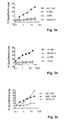
- Fig. 2 are the results of the 51 Cr release assay (see under 2.4.) Regarding the cytotoxic activity of induced CTL (see 2.3.) Compared to T2 or DC cells shown.
- the T2 cell line is HLA-A * 02 positive and TAP (transporter associated with antigen processing) deficient; (TAP peptide transporters transport peptide fragments of a protein antigen from the cytosol into the endoplasmic reticulum where they associate with MHC molecules.)
- Fig. 2c and 2d is the cytotoxic activity of CTL generated using the peptide of SEQ ID NO. 2 were demonstrated to T2 and DC cells previously treated with the (adipophilin) peptide having SEQ ID NO. 2 were pulsed.
- the specific lysis which is reflected in the release of 51 Cr, is in the Fig. 2a to 2d - as well as in the CTL lysis diagrams of Fig. 3 to 5 - applied against different ratios of effector cells (CTL) to target cells ( 51 Cr-labeled cells to be lysed).
- CTL effector cells
- HCT 116 colonal cancer, obtained from Prof. G. Pawelec, Tübingen, Germany
- a 498 , MZ 1257 and MZ 1774 Renal cell carcinoma, obtained from Prof. A. Knuth, Frankfurt, Germany
- MCF-7 breast cancer, commercially purchased from the ATCC, American Type Culture Collection
- Mel 1479 melanoma, obtained from Prof. G. Pawelec, Tübingen, Germany
- U 266 multiple myeloma, obtained from Prof. G. Pawelec, Tübingen, Germany.
- These cell lines express the c-Met proto-oncogene and adipophilin as targets.
- B-cell line Croft (EBV (Epstein-Barr virus) -immortalized; HLA-A * 02-positive, obtained from OJ Finn, Pittsburgh, USA) and the cell line SK-OV-3 (ovarian tumor, HLA-A * 03 positive, obtained from OJ Finn, Pittsburgh, USA) were included as negative controls in the studies.
- K 562 cells available, for example, from the German Collection of Microorganisms and Cell Cultures, DSMZ, ACC 10) were used to determine the activity of natural killer cells (NK), since this cell line is highly sensitive to these killer cells.
- RP10 medium RPMI 1640 supplemented with 10% heat-inactivated fetal calf serum and with antibiotics.
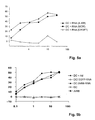
- FIGS. 3a to 3f show the results of these CTL assays, wherein in the Fig. 3a to 3d CTL using the c-Met peptide having the SEQ ID NO. 1 were induced, and in the 3e and 3f CTL generated using the adipophilin peptide of SEQ ID NO. 2 were induced.
- the CTL lysed for the c-Met peptide with SEQ ID NO. 1 ( Fig. 3a to 3d ) or for the adipophilin peptide having SEQ ID NO. 2 ( 3e and 3f ) are specific, efficiently tumor cells expressing both HLA-A * 02 and c-Met or adipophilin (ie in Fig. 3a the cell line HCT 116, in Fig. 3b the cell line A 498, in Fig. 3c the cell lines MZ 1257 and MEL 1479 and in Fig. 3d the cell lines MCF-7. and U 266; in Fig. 3e the cell lines A 498, U 266 and MCF-7, in Fig.
- the ability of peptide-pulsed cell lines was analyzed to inhibit the lysis of tumor cells, or to compete.
- an excess of inhibitor ie on pulsed, unlabeled cells
- the ratio of the inhibitor (peptide-pulsed cells) to the target (tumor cells) was 20: 1.
- 51 Cr could not be released because the inhibitor cell lines were unlabelled.
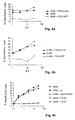
- Fig. 4a and 4b the lysis of 51 Cr-labeled cell lines U 266 and A 498 was tested, without inhibitor cell line (in each case the curve with the black boxes filled in); with the inhibitor cell line T2, pulsed with an irrelevant peptide (survivin; SEQ ID NO: 80, negative control, curves with the filled in triangles); and with the inhibitor cell line T2, pulsed with the c-Met peptide having SEQ ID NO. 1 (curves with the unfilled rhombs).
- an irrelevant peptide survivin; SEQ ID NO: 80, negative control, curves with the filled in triangles
- the inhibitor cell line T2 pulsed with the c-Met peptide having SEQ ID NO. 1 (curves with the unfilled rhombs).
- the T2 cells pulsed with an irrelevant peptide were unable to inhibit tumor cell lysis by the CTL so that released 51 Cr could be measured (see Fig. 4a and 4b the curves with the black filled triangles).
- the MHC restriction and antigen specificity of the cytotoxic activity mediated by the adipophilin-induced CTL could be assessed using an HLA-A * 02-specific monoclonal antibody and in an inhibition assay with unlabelled ("cold") inhibitor be confirmed:
- the results of this experiment are in Fig. 4c shown.
- the A 498 tumor cells were characterized by addition of the HLA-A * 02-specific Antibody (monoclonal antibody BB7.2, IgG2b, obtained from S. Stefanovic, Tübingen) so that they were not lysed by addition of the CTL and no 51 Cr was released (see Fig. 4c the curve with unfilled triangular symbols).
- the control was a nonspecific antibody that did not block the HLA-A * 02 molecule (ChromPure mouse IgG, Dianova, Germany; Fig. 4c the curve with the filled boxes).
- the cells were seeded on the 96-well plates for 30 min before sowing. incubated with 10 ⁇ g / ml antibody.
- T2-competition cell line which coincides with the irrelevant peptide Survivin with SEQ ID NO. 80 (T2 / SV), which was unable to inhibit CTL-mediated lysis of tumor cell line A 498 (see Fig. 4c the curve with black circles), but that with the adipophilin peptide having the SEQ ID NO. 2 pulsed T2 inhibitor cell line (T2 / AD) was able to inhibit the lysis of the tumor cell line, so that no 51 Cr release could be measured in the latter case (see Fig. 4c the curve with x-symbols).
- RNA in vitro transcribed EGFP RNA (enhanced Green Fluorescent Protein RNA); plasmid used: pSP64 poly (A) EGFPII, obtained from Van Tendeloo, Antwerp, Belgium).
- RNA was isolated from the tumor cells using the QIAGEN Rneasy Mini Kit (QIAGEN, Hilden, Germany) according to the manufacturer's instructions. The amount and purity of the RNA was determined photometrically and stored in aliquots at -80 ° C.
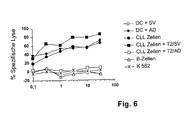
- PBLNC of an HLA-A * 0201 positive patient with chronic lymphocytic leukemia (CLL) generated CTL specific for the adipophilin peptide of SEQ ID NO: 2.
- CLL chronic lymphocytic leukemia
- both the autologous DC of this patient which with the adipophilin peptide having the SEQ ID NO. 2 were pulsed ("DC + AD") as well as the autologous CLL cells (“CLL cells”) were lysed by the peptide-induced CTL.
- DC which with the irrelevant peptide survivin with the SEQ ID NO. 80 were pulsed, however, were not lysed ("DC + SV").
- Non-malignant B cells and the K 562 cell line were also not lysed by the CTL.
- the specificity of the CTL response was confirmed in a target inhibition assay using as inhibitor cells the cell line T2 (see above), which was in each case mixed with the adipophilin peptide with SEQ ID NO. 2 or with the irrelevant peptide Survivin with SEQ ID NO. 80 were pulsed.
- the adipophilin peptide having the SEQ ID NO. 2 induced CTL also lysed here in excess inhibitor cell lines, which are complexed with the relevant peptide having the SEQ ID NO. Pulsed 2, so that the 51 Cr-labeled tumor cells were not lysed in this case (see in Fig. 6 the curve with the empty boxes).
- adipose differentiation-related protein 23rd MAGDIYSVFR 349-358 X97324 SEQ ID NO. 23 adipose differentiation-related protein 24th ETIPLTAEKL 115-124 X59798 SEQ ID NO. 24 cyclin D1 / PRAD1 25th DVMVGPFKLR 934-943 AJ303079 SEQ ID NO. 25 A kinase (PRKA) anchor protein 2 26th TIIDILTKR 64-72 X05908 SEQ ID NO. 26 annexin A1 27th TIVNILTNR 55-63 BC001388 SEQ ID NO. 27 annexin A2 28th TIIDIITHR 385-393 J03578 SEQ ID NO.
- PRKA kinase
- RNA-binding protein 1 60th LEGLTVVY 62-69 AF151878 SEQ ID NO. 60 coatomer protein complex subunit zeta 1 61st NELPTVAF 192-199 AK001475 SEQ ID NO.
- NADH dehydrogenase (ubiquinone) 1, (B14.5b) 79th YYMIGEQKF 203-211 U08021 SEQ ID NO. 79 nicotinamide-n-methyltransferase transferase
Landscapes
- Health & Medical Sciences (AREA)
- Life Sciences & Earth Sciences (AREA)
- Chemical & Material Sciences (AREA)
- Immunology (AREA)
- General Health & Medical Sciences (AREA)
- Engineering & Computer Science (AREA)
- Public Health (AREA)
- Veterinary Medicine (AREA)
- Medicinal Chemistry (AREA)
- Animal Behavior & Ethology (AREA)
- Organic Chemistry (AREA)
- Molecular Biology (AREA)
- Urology & Nephrology (AREA)
- Biomedical Technology (AREA)
- Hematology (AREA)
- Cell Biology (AREA)
- Epidemiology (AREA)
- Biochemistry (AREA)
- Bioinformatics & Cheminformatics (AREA)
- Pharmacology & Pharmacy (AREA)
- Chemical Kinetics & Catalysis (AREA)
- General Chemical & Material Sciences (AREA)
- Nuclear Medicine, Radiotherapy & Molecular Imaging (AREA)
- Food Science & Technology (AREA)
- Microbiology (AREA)
- Pathology (AREA)
- General Physics & Mathematics (AREA)
- Biotechnology (AREA)
- Analytical Chemistry (AREA)
- Physics & Mathematics (AREA)
- Genetics & Genomics (AREA)
- Proteomics, Peptides & Aminoacids (AREA)
- Toxicology (AREA)
- Zoology (AREA)
- Biophysics (AREA)
- Tropical Medicine & Parasitology (AREA)
- Gastroenterology & Hepatology (AREA)
- Virology (AREA)
- Endocrinology (AREA)
- Reproductive Health (AREA)
Claims (16)
- Un peptide tumoral avec séquence d'acide aminé YVDPVITSI (SEQ ID No. 1), le peptide étant capable de se fixer sur une molécule de classe I du complexe majeur d'histocompatibilité (CMH) humain.
- Le peptide selon la revendication 1, se caractérisant par la présence d'un acide aminé supplémentaire à l'extrémité N et/ou C.
- Le peptide selon la revendication 1 ou 2, se caractérisant par la délétion d'un acide aminé au moins.
- Le peptide selon les revendications 1 à 3, se caractérisant par la modification chimique d'un acide aminé au moins.
- L'utilisation du peptide selon une des revendications 1 à 4 pour la fabrication d'un médicament destiné au traitement de maladies tumorales et/ou adénomateuses.
- L'utilisation du peptide selon une des revendications 1 à 4 pour la fabrication d'une composition pharmaceutique destinée au traitement de maladies tumorales et/ou adénomateuses.
- L'utilisation selon la revendication 5 ou 6 en présence d'un cancer des testicules, de la vessie, de l'estomac, du pancréas, du sein et/ou du rein.
- L'utilisation selon la revendication 6 ou 7, se caractérisant par l'utilisation du peptide et d'un adjuvant.
- L'utilisation selon la revendication 6 ou 7, se caractérisant par l'utilisation du peptide lié à une cellule présentatrice d'antigène.
- L'utilisation du peptide selon une des revendications 1 à 4 pour le marquage in vitro de leucocytes, en particulier des lymphocytes T.
- L'utilisation selon la revendication 10 pour l'appréciation du déroulement d'une thérapie dans le cas d'une maladie tumorale.
- L'utilisation du peptide selon une des revendications 1 à 4 pour la fabrication d'un anticorps.
- Une composition pharmaceutique comprenant ce peptide selon une des revendications 1 à 4.
- Une molécule d'acide nucléique, codante pour le peptide selon une des revendications 1 à 4.
- Un vecteur comprenant la molécule d'acide nucléique selon la revendication 14.
- Une cellule qui, grâce à la molécule d'acide nucléique selon la revendication 14 ou grâce au vecteur selon la revendication 15, a été génétiquement modifiée de telle manière qu'elle produit un peptide selon une des revendications 1 à 4.
Priority Applications (8)
| Application Number | Priority Date | Filing Date | Title |
|---|---|---|---|
| DK08014304.3T DK2006294T3 (da) | 2002-05-29 | 2003-03-27 | MHC-molekyler bindende tumorassocierede peptider |
| SI200331412T SI1507795T1 (sl) | 2002-05-29 | 2003-03-27 | S tumorjem povezani peptidi, ki se veĹľejo na MHC molekule |
| EP06015806A EP1734049B1 (fr) | 2002-05-29 | 2003-03-27 | Peptides associés à une tumeur et se liant à des molecules MHC |
| EP08014304A EP2006294B1 (fr) | 2002-05-29 | 2003-03-27 | Peptides spécifiques aux tumeurs se fixant sur des molécules CMH |
| EP08014305A EP2014673B1 (fr) | 2002-05-29 | 2003-03-27 | Peptides spécifiques aux tumeurs se fixant sur des molécules CMH |
| DK08014305.0T DK2014673T3 (da) | 2002-05-29 | 2003-03-27 | Til MHC-molekyler bindende tumorassocierede peptider |
| EP06015805A EP1734048B1 (fr) | 2002-05-29 | 2003-03-27 | Peptides associés à une tumeur et se liant à des molecules MHC |
| CY20081101297T CY1108507T1 (el) | 2002-05-29 | 2008-11-13 | Σχετιζομενα με ογκους πεπτιδια δεσμευμενα σε μορια mhc |
Applications Claiming Priority (3)
| Application Number | Priority Date | Filing Date | Title |
|---|---|---|---|
| DE10225144 | 2002-05-29 | ||
| DE10225144A DE10225144A1 (de) | 2002-05-29 | 2002-05-29 | An MHC-Moleküle bindende Tumor-assoziierte Peptide |
| PCT/EP2003/003181 WO2003102023A1 (fr) | 2002-05-29 | 2003-03-27 | Peptides associes aux tumeurs et se liant a une molecule du complexe majeur d'histocompatibilite |
Related Child Applications (4)
| Application Number | Title | Priority Date | Filing Date |
|---|---|---|---|
| EP08014304A Division EP2006294B1 (fr) | 2002-05-29 | 2003-03-27 | Peptides spécifiques aux tumeurs se fixant sur des molécules CMH |
| EP06015806A Division EP1734049B1 (fr) | 2002-05-29 | 2003-03-27 | Peptides associés à une tumeur et se liant à des molecules MHC |
| EP06015805A Division EP1734048B1 (fr) | 2002-05-29 | 2003-03-27 | Peptides associés à une tumeur et se liant à des molecules MHC |
| EP08014305A Division EP2014673B1 (fr) | 2002-05-29 | 2003-03-27 | Peptides spécifiques aux tumeurs se fixant sur des molécules CMH |
Publications (2)
| Publication Number | Publication Date |
|---|---|
| EP1507795A1 EP1507795A1 (fr) | 2005-02-23 |
| EP1507795B1 true EP1507795B1 (fr) | 2008-10-08 |
Family
ID=29557592
Family Applications (5)
| Application Number | Title | Priority Date | Filing Date |
|---|---|---|---|
| EP06015805A Expired - Lifetime EP1734048B1 (fr) | 2002-05-29 | 2003-03-27 | Peptides associés à une tumeur et se liant à des molecules MHC |
| EP03720376A Expired - Lifetime EP1507795B1 (fr) | 2002-05-29 | 2003-03-27 | Peptides associes aux tumeurs et se liant a une molecule du complexe majeur d'histocompatibilite |
| EP08014304A Expired - Lifetime EP2006294B1 (fr) | 2002-05-29 | 2003-03-27 | Peptides spécifiques aux tumeurs se fixant sur des molécules CMH |
| EP06015806A Expired - Lifetime EP1734049B1 (fr) | 2002-05-29 | 2003-03-27 | Peptides associés à une tumeur et se liant à des molecules MHC |
| EP08014305A Expired - Lifetime EP2014673B1 (fr) | 2002-05-29 | 2003-03-27 | Peptides spécifiques aux tumeurs se fixant sur des molécules CMH |
Family Applications Before (1)
| Application Number | Title | Priority Date | Filing Date |
|---|---|---|---|
| EP06015805A Expired - Lifetime EP1734048B1 (fr) | 2002-05-29 | 2003-03-27 | Peptides associés à une tumeur et se liant à des molecules MHC |
Family Applications After (3)
| Application Number | Title | Priority Date | Filing Date |
|---|---|---|---|
| EP08014304A Expired - Lifetime EP2006294B1 (fr) | 2002-05-29 | 2003-03-27 | Peptides spécifiques aux tumeurs se fixant sur des molécules CMH |
| EP06015806A Expired - Lifetime EP1734049B1 (fr) | 2002-05-29 | 2003-03-27 | Peptides associés à une tumeur et se liant à des molecules MHC |
| EP08014305A Expired - Lifetime EP2014673B1 (fr) | 2002-05-29 | 2003-03-27 | Peptides spécifiques aux tumeurs se fixant sur des molécules CMH |
Country Status (15)
| Country | Link |
|---|---|
| US (5) | US7396904B2 (fr) |
| EP (5) | EP1734048B1 (fr) |
| JP (5) | JP4472520B2 (fr) |
| AT (5) | ATE478088T1 (fr) |
| AU (2) | AU2003224001B2 (fr) |
| CA (5) | CA2736921C (fr) |
| CY (5) | CY1108507T1 (fr) |
| DE (6) | DE10225144A1 (fr) |
| DK (5) | DK2006294T3 (fr) |
| ES (5) | ES2317379T3 (fr) |
| HR (1) | HRP20041108B1 (fr) |
| PL (5) | PL210356B1 (fr) |
| PT (5) | PT2006294E (fr) |
| SI (5) | SI1734049T1 (fr) |
| WO (1) | WO2003102023A1 (fr) |
Cited By (1)
| Publication number | Priority date | Publication date | Assignee | Title |
|---|---|---|---|---|
| WO2011113872A1 (fr) | 2010-03-19 | 2011-09-22 | Immatics Biotechnologies Gmbh | Composition de peptides associés à la tumeur et vaccin anticancéreux apparenté pour traiter le cancer gastrique et autres cancers |
Families Citing this family (41)
| Publication number | Priority date | Publication date | Assignee | Title |
|---|---|---|---|---|
| US7892559B2 (en) | 2002-01-30 | 2011-02-22 | Survac Aps | Survivin-derived peptides and use thereof |
| DE10225139A1 (de) * | 2002-05-29 | 2004-02-26 | Immatics Biotechnologies Gmbh | Verfahren zur Identifizierung von immunreaktiven Peptiden |
| US20050221350A1 (en) | 2002-05-29 | 2005-10-06 | Toni Weinschenk | Method for identifying immunoreactive peptides |
| US7670604B2 (en) | 2002-12-13 | 2010-03-02 | Aurelium Biopharma, Inc. | Vimentin directed diagnostics and therapeutics for multidrug resistant neoplastic disease |
| ES2633389T3 (es) * | 2003-01-30 | 2017-09-21 | Survac Aps | Péptidos derivados de survivina y uso de los mismos |
| DE10313819A1 (de) * | 2003-03-24 | 2004-10-07 | Immatics Biotechnologies Gmbh | An MHC-Moleküle bindende Tumor-assoziierte Peptide |
| NZ548166A (en) | 2003-12-01 | 2010-06-25 | Meiji Dairies Corp | Peptide inhibiting angiontensin converting enzyme |
| EP1695089A1 (fr) * | 2003-12-15 | 2006-08-30 | Aurelium Biopharma Inc. | Diagnostic dirige sur la vimentine et methode therapeutique pour maladies neoplasiques a multiresistance aux medicaments |
| DE102004011503A1 (de) * | 2004-01-28 | 2005-09-15 | Immatics Biotechnologies Gmbh | Verfahren zur Identifizierung und Quantifizierung von tumor-assoziierten Peptiden |
| DE102004026135A1 (de) * | 2004-05-25 | 2006-01-05 | Immatics Biotechnologies Gmbh | An MHC-Moleküle bindende Tumor-assoziierte Peptide |
| EP1642905B1 (fr) * | 2004-10-02 | 2009-01-21 | Immatics Biotechnologies GmbH | Epitopes T-auxiliaires d'antigènes tumoraux humains et leur utilisation en méthodes immunothérapeutiques |
| IL172896A0 (en) * | 2005-12-29 | 2006-06-11 | Yeda Res & Dev | Cxcr4 inhibition |
| US20090004213A1 (en) * | 2007-03-26 | 2009-01-01 | Immatics Biotechnologies Gmbh | Combination therapy using active immunotherapy |
| CN103864893B (zh) * | 2007-07-27 | 2017-01-04 | 伊玛提克斯生物技术有限公司 | 免疫疗法的免疫抗原表位 |
| WO2009129498A2 (fr) * | 2008-04-17 | 2009-10-22 | Immuneregen Biosciences, Inc. | Substance p et ses analogues en tant qu’adjuvant d’une composition immunogène pour le cancer |
| ES2532896T5 (es) | 2008-05-14 | 2018-03-20 | Immatics Biotechnologies Gmbh | Péptidos del MHC de clase II novedosos y potentes derivados de survivina y neurocan |
| CN101451975B (zh) * | 2008-12-29 | 2012-01-25 | 浙江大学 | 一种检测胃癌预后与分期血清蛋白质的方法 |
| US8075895B2 (en) * | 2009-09-22 | 2011-12-13 | Janssen Pharmaceutica N.V. | Identification of antigenic peptides from multiple myeloma cells |
| GB201009222D0 (en) * | 2010-06-02 | 2010-07-21 | Immatics Biotechnologies Gmbh | Improved cancer therapy based on tumour associated antigens derived from cyclin D1 |
| WO2012048190A1 (fr) | 2010-10-08 | 2012-04-12 | Regents Of The University Of Minnesota | Composition d'annexine ii et procédés |
| ES3009756T3 (en) | 2013-08-05 | 2025-03-31 | Immatics Biotechnologies Gmbh | Novel immunotherapy against several tumors, such as lung cancer including nsclc |
| WO2015050259A1 (fr) * | 2013-10-03 | 2015-04-09 | 大日本住友製薬株式会社 | Peptide d'antigène tumoral |
| DK3068428T3 (da) | 2013-11-13 | 2022-10-17 | Univ Minnesota | Annexin-ii-variant-sammensætninger og fremgangsmåder |
| LT3388075T (lt) | 2015-03-27 | 2023-11-10 | Immatics Biotechnologies Gmbh | Nauji peptidai ir peptidų deriniai, skirti naudoti imunoterapijai prieš įvairius navikus (seq id 25 - mrax5-003) |
| GB201505305D0 (en) | 2015-03-27 | 2015-05-13 | Immatics Biotechnologies Gmbh | Novel Peptides and combination of peptides for use in immunotherapy against various tumors |
| NL2014935B1 (en) | 2015-06-08 | 2017-02-03 | Applied Immune Tech Ltd | T cell receptor like antibodies having fine specificity. |
| MA54884A (fr) | 2015-07-01 | 2022-01-12 | Immatics Biotechnologies Gmbh | Neuartige peptide und kombination aus peptiden zur verwendung in der immuntherapie gegen ovarialkarzinom und andere karzinome |
| GB201511546D0 (en) | 2015-07-01 | 2015-08-12 | Immatics Biotechnologies Gmbh | Novel peptides and combination of peptides for use in immunotherapy against ovarian cancer and other cancers |
| GB201520550D0 (en) | 2015-11-23 | 2016-01-06 | Immunocore Ltd & Adaptimmune Ltd | Peptides |
| GB201520558D0 (en) * | 2015-11-23 | 2016-01-06 | Immunocore Ltd & Adaptimmune Ltd | Peptides |
| GB201520568D0 (en) | 2015-11-23 | 2016-01-06 | Immunocore Ltd | Peptides |
| GB201521746D0 (en) * | 2015-12-10 | 2016-01-27 | Immatics Biotechnologies Gmbh | Novel peptides and combination of peptides for use in immunotherapy against CLL and other cancers |
| HRP20210698T1 (hr) | 2015-12-22 | 2021-09-17 | Immatics Biotechnologies Gmbh | Peptidi i kombinacija peptida za uporabu u imunoterapiji protiv karcinoma dojke i drugih karcinoma |
| DE102016005550B4 (de) | 2016-05-09 | 2024-09-26 | Hans-Georg Rammensee | Adjuvans zur lnduzierung einer zellulären lmmunantwort |
| GB201609193D0 (en) * | 2016-05-25 | 2016-07-06 | Immatics Biotechnologies Gmbh | Novel peptides, combination of peptides as targets for use in immunotherapy against gallbladder cancer and cholangiocarcinoma and other cancers |
| JP7075125B2 (ja) | 2016-05-25 | 2022-05-25 | イマティクス バイオテクノロジーズ ゲーエムベーハー | 標的としてのおよび胆嚢がんおよび胆管がんおよびその他のがんに対する免疫療法で使用するための新規ペプチド、ペプチド組み合わせ |
| KR102379955B1 (ko) | 2016-12-08 | 2022-03-29 | 이매틱스 바이오테크놀로지스 게엠베하 | 짝짓기가 향상된 t 세포 수용체 |
| DE102016123893A1 (de) | 2016-12-08 | 2018-06-14 | Immatics Biotechnologies Gmbh | T-Zellrezeptoren mit verbesserter Bindung |
| WO2019160383A1 (fr) * | 2018-02-19 | 2019-08-22 | 고려대학교 산학협력단 | Vaccin comprenant un épitope de protéine de choc thermique et utilisation associée |
| KR102184377B1 (ko) | 2018-02-19 | 2020-11-30 | 고려대학교 산학협력단 | 열충격단백질의 에피토프를 포함하는 백신 및 이의 용도 |
| BR102018010523A2 (pt) * | 2018-05-23 | 2020-04-28 | Univ Estadual Campinas Unicamp | peptídeo, composição farmacêutica compreendendo o mesmo e uso |
Family Cites Families (13)
| Publication number | Priority date | Publication date | Assignee | Title |
|---|---|---|---|---|
| US4810781A (en) * | 1987-01-15 | 1989-03-07 | The George Washington University | Methods of preparing epitopes of tumor associated antigens |
| US5739009A (en) * | 1996-12-12 | 1998-04-14 | Incyte Pharmaceuticals, Inc. | Adipocyte-specific differentiation-related protein |
| US6977074B2 (en) * | 1997-07-10 | 2005-12-20 | Mannkind Corporation | Method of inducing a CTL response |
| DE19837015C2 (de) * | 1998-08-14 | 2003-03-20 | Vasopharm Biotech Gmbh | Isolierte und gereinigte humane lösliche Guanylylcyclase alpha1/beta1 (hsGCalpha1/beta1) |
| US6809179B1 (en) | 1999-08-04 | 2004-10-26 | Boehringer Ingelheim International Gmbh | Tumor-associated antigen (R11) |
| DE19936563A1 (de) | 1999-08-04 | 2001-02-08 | Boehringer Ingelheim Int | Tumorassoziiertes Antigen |
| WO2001063294A2 (fr) * | 2000-02-24 | 2001-08-30 | Oxford Glycosciences (Uk) Limited | Proteines, genes et leur utilisation dans le diagnostic et le traitement de maladies affectives bipolaires (bad) et de depressions unipolaires |
| WO2002050103A2 (fr) * | 2000-12-20 | 2002-06-27 | Glaxosmithkline Biologicals S.A. | Composes |
| US20030170719A1 (en) * | 2000-12-28 | 2003-09-11 | Akio Matsuda | NF-kappa B activating gene |
| AU2002309583A1 (en) * | 2001-04-18 | 2002-11-05 | Protein Desing Labs, Inc. | Methods of diagnosis of lung cancer, compositions and methods of screening for modulators of lung cancer |
| US6867283B2 (en) * | 2001-05-16 | 2005-03-15 | Technion Research & Development Foundation Ltd. | Peptides capable of binding to MHC molecules, cells presenting such peptides, and pharmaceutical compositions comprising such peptides and/or cells |
| WO2002101075A2 (fr) * | 2001-06-13 | 2002-12-19 | Millennium Pharmaceuticals, Inc. | Identification, evaluation, prevention et traitement du cancer du col de l'uterus : nouveaux genes, nouvelles compositions, nouvelles trousses et nouvelles methodes |
| US7244573B2 (en) * | 2001-12-03 | 2007-07-17 | Bristol-Myers Squibb Company | Polynucleotides and polypeptides associated with the development of rheumatoid arthritis |
-
2002
- 2002-05-29 DE DE10225144A patent/DE10225144A1/de not_active Ceased
-
2003
- 2003-03-27 AT AT08014304T patent/ATE478088T1/de active
- 2003-03-27 CA CA2736921A patent/CA2736921C/fr not_active Expired - Fee Related
- 2003-03-27 CA CA2736926A patent/CA2736926C/fr not_active Expired - Fee Related
- 2003-03-27 EP EP06015805A patent/EP1734048B1/fr not_active Expired - Lifetime
- 2003-03-27 DE DE50310882T patent/DE50310882D1/de not_active Expired - Lifetime
- 2003-03-27 SI SI200331430T patent/SI1734049T1/sl unknown
- 2003-03-27 DE DE50313004T patent/DE50313004D1/de not_active Expired - Lifetime
- 2003-03-27 EP EP03720376A patent/EP1507795B1/fr not_active Expired - Lifetime
- 2003-03-27 ES ES06015806T patent/ES2317379T3/es not_active Expired - Lifetime
- 2003-03-27 ES ES03720376T patent/ES2314196T3/es not_active Expired - Lifetime
- 2003-03-27 CA CA2736972A patent/CA2736972C/fr not_active Expired - Fee Related
- 2003-03-27 DK DK08014304.3T patent/DK2006294T3/da active
- 2003-03-27 DK DK08014305.0T patent/DK2014673T3/da active
- 2003-03-27 CA CA2736974A patent/CA2736974C/fr not_active Expired - Fee Related
- 2003-03-27 AT AT08014305T patent/ATE466872T1/de active
- 2003-03-27 DK DK06015805T patent/DK1734048T3/da active
- 2003-03-27 AT AT06015806T patent/ATE416188T1/de active
- 2003-03-27 EP EP08014304A patent/EP2006294B1/fr not_active Expired - Lifetime
- 2003-03-27 AU AU2003224001A patent/AU2003224001B2/en not_active Ceased
- 2003-03-27 SI SI200331848T patent/SI2014673T1/sl unknown
- 2003-03-27 DK DK03720376T patent/DK1507795T3/da active
- 2003-03-27 PT PT08014304T patent/PT2006294E/pt unknown
- 2003-03-27 ES ES08014305T patent/ES2348468T3/es not_active Expired - Lifetime
- 2003-03-27 DK DK06015806T patent/DK1734049T3/da active
- 2003-03-27 SI SI200331885T patent/SI2006294T1/sl unknown
- 2003-03-27 PL PL390816A patent/PL210356B1/pl unknown
- 2003-03-27 ES ES06015805T patent/ES2317378T3/es not_active Expired - Lifetime
- 2003-03-27 AT AT03720376T patent/ATE410442T1/de active
- 2003-03-27 DE DE50310613T patent/DE50310613D1/de not_active Expired - Lifetime
- 2003-03-27 SI SI200331412T patent/SI1507795T1/sl unknown
- 2003-03-27 DE DE50312701T patent/DE50312701D1/de not_active Expired - Lifetime
- 2003-03-27 PT PT03720376T patent/PT1507795E/pt unknown
- 2003-03-27 PT PT06015806T patent/PT1734049E/pt unknown
- 2003-03-27 PL PL390815A patent/PL211158B1/pl unknown
- 2003-03-27 WO PCT/EP2003/003181 patent/WO2003102023A1/fr not_active Ceased
- 2003-03-27 PT PT08014305T patent/PT2014673E/pt unknown
- 2003-03-27 PL PL390814A patent/PL211157B1/pl unknown
- 2003-03-27 PL PL373700A patent/PL206306B1/pl unknown
- 2003-03-27 ES ES08014304T patent/ES2350461T3/es not_active Expired - Lifetime
- 2003-03-27 EP EP06015806A patent/EP1734049B1/fr not_active Expired - Lifetime
- 2003-03-27 SI SI200331451T patent/SI1734048T1/sl unknown
- 2003-03-27 PL PL390817A patent/PL211159B1/pl unknown
- 2003-03-27 PT PT06015805T patent/PT1734048E/pt unknown
- 2003-03-27 JP JP2004509714A patent/JP4472520B2/ja not_active Expired - Fee Related
- 2003-03-27 DE DE50310952T patent/DE50310952D1/de not_active Expired - Lifetime
- 2003-03-27 EP EP08014305A patent/EP2014673B1/fr not_active Expired - Lifetime
- 2003-03-27 CA CA2487137A patent/CA2487137C/fr not_active Expired - Fee Related
- 2003-03-27 AT AT06015805T patent/ATE417859T1/de active
- 2003-03-27 HR HRP20041108AA patent/HRP20041108B1/hr not_active IP Right Cessation
-
2004
- 2004-11-29 US US10/999,364 patent/US7396904B2/en not_active Expired - Lifetime
-
2007
- 2007-08-30 US US11/848,110 patent/US7666984B2/en not_active Expired - Lifetime
- 2007-08-30 US US11/848,062 patent/US7763711B2/en not_active Expired - Lifetime
-
2008
- 2008-11-13 CY CY20081101297T patent/CY1108507T1/el unknown
- 2008-12-09 CY CY20081101425T patent/CY1108673T1/el unknown
- 2008-12-30 CY CY20081101508T patent/CY1108680T1/el unknown
-
2009
- 2009-12-15 JP JP2009283583A patent/JP5042300B2/ja not_active Expired - Fee Related
- 2009-12-15 JP JP2009283585A patent/JP5042302B2/ja not_active Expired - Fee Related
- 2009-12-15 JP JP2009283586A patent/JP5042303B2/ja not_active Expired - Fee Related
- 2009-12-15 JP JP2009283584A patent/JP5042301B2/ja not_active Expired - Fee Related
-
2010
- 2010-01-22 US US12/632,541 patent/US8536304B2/en not_active Expired - Fee Related
- 2010-01-22 US US12/632,463 patent/US8399613B2/en not_active Expired - Fee Related
- 2010-02-25 AU AU2010200689A patent/AU2010200689B2/en not_active Ceased
- 2010-07-30 CY CY20101100714T patent/CY1110723T1/el unknown
- 2010-11-03 CY CY20101100991T patent/CY1111174T1/el unknown
Cited By (1)
| Publication number | Priority date | Publication date | Assignee | Title |
|---|---|---|---|---|
| WO2011113872A1 (fr) | 2010-03-19 | 2011-09-22 | Immatics Biotechnologies Gmbh | Composition de peptides associés à la tumeur et vaccin anticancéreux apparenté pour traiter le cancer gastrique et autres cancers |
Also Published As
Similar Documents
| Publication | Publication Date | Title |
|---|---|---|
| EP1507795B1 (fr) | Peptides associes aux tumeurs et se liant a une molecule du complexe majeur d'histocompatibilite | |
| JP4365405B2 (ja) | Mhc分子と結合する腫瘍関連ペプチド |
Legal Events
| Date | Code | Title | Description |
|---|---|---|---|
| PUAI | Public reference made under article 153(3) epc to a published international application that has entered the european phase |
Free format text: ORIGINAL CODE: 0009012 |
|
| 17P | Request for examination filed |
Effective date: 20041214 |
|
| AK | Designated contracting states |
Kind code of ref document: A1 Designated state(s): AT BE BG CH CY CZ DE DK EE ES FI FR GB GR HU IE IT LI LU MC NL PT RO SE SI SK TR |
|
| AX | Request for extension of the european patent |
Extension state: AL LT LV MK |
|
| 17Q | First examination report despatched |
Effective date: 20060320 |
|
| RAP1 | Party data changed (applicant data changed or rights of an application transferred) |
Owner name: IMMATICS BIOTECHNOLOGIES GMBH |
|
| GRAP | Despatch of communication of intention to grant a patent |
Free format text: ORIGINAL CODE: EPIDOSNIGR1 |
|
| GRAS | Grant fee paid |
Free format text: ORIGINAL CODE: EPIDOSNIGR3 |
|
| GRAA | (expected) grant |
Free format text: ORIGINAL CODE: 0009210 |
|
| AK | Designated contracting states |
Kind code of ref document: B1 Designated state(s): AT BE BG CH CY CZ DE DK EE ES FI FR GB GR HU IE IT LI LU MC NL PT RO SE SI SK TR |
|
| AX | Request for extension of the european patent |
Extension state: AL LT LV MK |
|
| REG | Reference to a national code |
Ref country code: GB Ref legal event code: FG4D Free format text: NOT ENGLISH |
|
| REG | Reference to a national code |
Ref country code: CH Ref legal event code: EP |
|
| REG | Reference to a national code |
Ref country code: RO Ref legal event code: EPE |
|
| REG | Reference to a national code |
Ref country code: IE Ref legal event code: FG4D Free format text: LANGUAGE OF EP DOCUMENT: GERMAN |
|
| REF | Corresponds to: |
Ref document number: 50310613 Country of ref document: DE Date of ref document: 20081120 Kind code of ref document: P |
|
| REG | Reference to a national code |
Ref country code: SE Ref legal event code: TRGR |
|
| REG | Reference to a national code |
Ref country code: DK Ref legal event code: T3 |
|
| REG | Reference to a national code |
Ref country code: CH Ref legal event code: NV Representative=s name: E. BLUM & CO. AG PATENT- UND MARKENANWAELTE VSP |
|
| REG | Reference to a national code |
Ref country code: GR Ref legal event code: EP Ref document number: 20080403147 Country of ref document: GR |
|
| REG | Reference to a national code |
Ref country code: PT Ref legal event code: SC4A Free format text: AVAILABILITY OF NATIONAL TRANSLATION Effective date: 20081215 |
|
| REG | Reference to a national code |
Ref country code: ES Ref legal event code: FG2A Ref document number: 2314196 Country of ref document: ES Kind code of ref document: T3 |
|
| PLBE | No opposition filed within time limit |
Free format text: ORIGINAL CODE: 0009261 |
|
| STAA | Information on the status of an ep patent application or granted ep patent |
Free format text: STATUS: NO OPPOSITION FILED WITHIN TIME LIMIT |
|
| 26N | No opposition filed |
Effective date: 20090709 |
|
| REG | Reference to a national code |
Ref country code: FR Ref legal event code: PLFP Year of fee payment: 14 |
|
| REG | Reference to a national code |
Ref country code: FR Ref legal event code: PLFP Year of fee payment: 15 |
|
| REG | Reference to a national code |
Ref country code: FR Ref legal event code: PLFP Year of fee payment: 16 |
|
| PGFP | Annual fee paid to national office [announced via postgrant information from national office to epo] |
Ref country code: DE Payment date: 20180322 Year of fee payment: 16 Ref country code: GB Payment date: 20180326 Year of fee payment: 16 Ref country code: DK Payment date: 20180326 Year of fee payment: 16 Ref country code: CZ Payment date: 20180319 Year of fee payment: 16 Ref country code: CH Payment date: 20180326 Year of fee payment: 16 Ref country code: NL Payment date: 20180322 Year of fee payment: 16 Ref country code: RO Payment date: 20180322 Year of fee payment: 16 Ref country code: FI Payment date: 20180320 Year of fee payment: 16 Ref country code: LU Payment date: 20180322 Year of fee payment: 16 |
|
| PGFP | Annual fee paid to national office [announced via postgrant information from national office to epo] |
Ref country code: AT Payment date: 20180320 Year of fee payment: 16 Ref country code: BG Payment date: 20180321 Year of fee payment: 16 Ref country code: HU Payment date: 20180313 Year of fee payment: 16 Ref country code: IT Payment date: 20180322 Year of fee payment: 16 Ref country code: EE Payment date: 20180322 Year of fee payment: 16 Ref country code: SI Payment date: 20180315 Year of fee payment: 16 Ref country code: FR Payment date: 20180326 Year of fee payment: 16 Ref country code: MC Payment date: 20180321 Year of fee payment: 16 Ref country code: GR Payment date: 20180322 Year of fee payment: 16 Ref country code: BE Payment date: 20180322 Year of fee payment: 16 Ref country code: SK Payment date: 20180314 Year of fee payment: 16 Ref country code: SE Payment date: 20180326 Year of fee payment: 16 Ref country code: PT Payment date: 20180315 Year of fee payment: 16 Ref country code: IE Payment date: 20180326 Year of fee payment: 16 Ref country code: TR Payment date: 20180322 Year of fee payment: 16 |
|
| PGFP | Annual fee paid to national office [announced via postgrant information from national office to epo] |
Ref country code: ES Payment date: 20180423 Year of fee payment: 16 |
|
| PGFP | Annual fee paid to national office [announced via postgrant information from national office to epo] |
Ref country code: CY Payment date: 20180316 Year of fee payment: 16 |
|
| REG | Reference to a national code |
Ref country code: DE Ref legal event code: R119 Ref document number: 50310613 Country of ref document: DE |
|
| REG | Reference to a national code |
Ref country code: EE Ref legal event code: MM4A Ref document number: E002749 Country of ref document: EE Effective date: 20190331 |
|
| REG | Reference to a national code |
Ref country code: LT Ref legal event code: MM9D Effective date: 20190327 |
|
| REG | Reference to a national code |
Ref country code: DK Ref legal event code: EBP Effective date: 20190331 |
|
| REG | Reference to a national code |
Ref country code: SE Ref legal event code: EUG |
|
| PG25 | Lapsed in a contracting state [announced via postgrant information from national office to epo] |
Ref country code: MC Free format text: LAPSE BECAUSE OF NON-PAYMENT OF DUE FEES Effective date: 20190401 Ref country code: CY Free format text: LAPSE BECAUSE OF NON-PAYMENT OF DUE FEES Effective date: 20190327 Ref country code: FI Free format text: LAPSE BECAUSE OF NON-PAYMENT OF DUE FEES Effective date: 20190327 Ref country code: RO Free format text: LAPSE BECAUSE OF NON-PAYMENT OF DUE FEES Effective date: 20190327 Ref country code: CZ Free format text: LAPSE BECAUSE OF NON-PAYMENT OF DUE FEES Effective date: 20190327 Ref country code: SE Free format text: LAPSE BECAUSE OF NON-PAYMENT OF DUE FEES Effective date: 20190328 Ref country code: PT Free format text: LAPSE BECAUSE OF NON-PAYMENT OF DUE FEES Effective date: 20190927 |
|
| REG | Reference to a national code |
Ref country code: CH Ref legal event code: PL |
|
| REG | Reference to a national code |
Ref country code: NL Ref legal event code: MM Effective date: 20190401 |
|
| REG | Reference to a national code |
Ref country code: AT Ref legal event code: MM01 Ref document number: 410442 Country of ref document: AT Kind code of ref document: T Effective date: 20190327 |
|
| GBPC | Gb: european patent ceased through non-payment of renewal fee |
Effective date: 20190327 |
|
| PG25 | Lapsed in a contracting state [announced via postgrant information from national office to epo] |
Ref country code: LU Free format text: LAPSE BECAUSE OF NON-PAYMENT OF DUE FEES Effective date: 20190327 |
|
| REG | Reference to a national code |
Ref country code: SK Ref legal event code: MM4A Ref document number: E 4742 Country of ref document: SK Effective date: 20190327 |
|
| REG | Reference to a national code |
Ref country code: BE Ref legal event code: MM Effective date: 20190331 |
|
| REG | Reference to a national code |
Ref country code: SI Ref legal event code: KO00 Effective date: 20191113 |
|
| PG25 | Lapsed in a contracting state [announced via postgrant information from national office to epo] |
Ref country code: GB Free format text: LAPSE BECAUSE OF NON-PAYMENT OF DUE FEES Effective date: 20190327 Ref country code: BG Free format text: LAPSE BECAUSE OF NON-PAYMENT OF DUE FEES Effective date: 20190930 Ref country code: IE Free format text: LAPSE BECAUSE OF NON-PAYMENT OF DUE FEES Effective date: 20190327 Ref country code: CH Free format text: LAPSE BECAUSE OF NON-PAYMENT OF DUE FEES Effective date: 20190331 Ref country code: EE Free format text: LAPSE BECAUSE OF NON-PAYMENT OF DUE FEES Effective date: 20190331 Ref country code: AT Free format text: LAPSE BECAUSE OF NON-PAYMENT OF DUE FEES Effective date: 20190327 Ref country code: LI Free format text: LAPSE BECAUSE OF NON-PAYMENT OF DUE FEES Effective date: 20190331 Ref country code: DE Free format text: LAPSE BECAUSE OF NON-PAYMENT OF DUE FEES Effective date: 20191001 Ref country code: NL Free format text: LAPSE BECAUSE OF NON-PAYMENT OF DUE FEES Effective date: 20190401 Ref country code: HU Free format text: LAPSE BECAUSE OF NON-PAYMENT OF DUE FEES Effective date: 20190328 Ref country code: SK Free format text: LAPSE BECAUSE OF NON-PAYMENT OF DUE FEES Effective date: 20190327 |
|
| PG25 | Lapsed in a contracting state [announced via postgrant information from national office to epo] |
Ref country code: SI Free format text: LAPSE BECAUSE OF NON-PAYMENT OF DUE FEES Effective date: 20190328 Ref country code: IT Free format text: LAPSE BECAUSE OF NON-PAYMENT OF DUE FEES Effective date: 20190327 Ref country code: GR Free format text: LAPSE BECAUSE OF NON-PAYMENT OF DUE FEES Effective date: 20191007 Ref country code: BE Free format text: LAPSE BECAUSE OF NON-PAYMENT OF DUE FEES Effective date: 20190331 Ref country code: FR Free format text: LAPSE BECAUSE OF NON-PAYMENT OF DUE FEES Effective date: 20190331 |
|
| PG25 | Lapsed in a contracting state [announced via postgrant information from national office to epo] |
Ref country code: DK Free format text: LAPSE BECAUSE OF NON-PAYMENT OF DUE FEES Effective date: 20190331 |
|
| REG | Reference to a national code |
Ref country code: ES Ref legal event code: FD2A Effective date: 20200728 |
|
| PG25 | Lapsed in a contracting state [announced via postgrant information from national office to epo] |
Ref country code: ES Free format text: LAPSE BECAUSE OF NON-PAYMENT OF DUE FEES Effective date: 20190328 |
|
| PG25 | Lapsed in a contracting state [announced via postgrant information from national office to epo] |
Ref country code: TR Free format text: LAPSE BECAUSE OF NON-PAYMENT OF DUE FEES Effective date: 20190327 |