EP1509523B1 - Composes triazaspiro utilises pour le traitement ou la prevention de la douleur - Google Patents
Composes triazaspiro utilises pour le traitement ou la prevention de la douleur Download PDFInfo
- Publication number
- EP1509523B1 EP1509523B1 EP03741857A EP03741857A EP1509523B1 EP 1509523 B1 EP1509523 B1 EP 1509523B1 EP 03741857 A EP03741857 A EP 03741857A EP 03741857 A EP03741857 A EP 03741857A EP 1509523 B1 EP1509523 B1 EP 1509523B1
- Authority
- EP
- European Patent Office
- Prior art keywords
- compound
- triazaspiro
- pharmaceutically acceptable
- acceptable salt
- compounds
- Prior art date
- Legal status (The legal status is an assumption and is not a legal conclusion. Google has not performed a legal analysis and makes no representation as to the accuracy of the status listed.)
- Expired - Lifetime
Links
- 0 CC1=N*N=N1 Chemical compound CC1=N*N=N1 0.000 description 14
- KFFNSHUPMWCGMC-UHFFFAOYSA-N O=C(C12CCN(CCC(c3ccccc3)c3ccccc3)CC1)N(CCc1nnn[nH]1)CN2c1ccccc1 Chemical compound O=C(C12CCN(CCC(c3ccccc3)c3ccccc3)CC1)N(CCc1nnn[nH]1)CN2c1ccccc1 KFFNSHUPMWCGMC-UHFFFAOYSA-N 0.000 description 3
- HVHHNBXIGHBGKX-UHFFFAOYSA-N NC(CN(CN(C12CCN(CCC(c3ccccc3)c3ccccc3)CC1)c1ccccc1)C2=O)=O Chemical compound NC(CN(CN(C12CCN(CCC(c3ccccc3)c3ccccc3)CC1)c1ccccc1)C2=O)=O HVHHNBXIGHBGKX-UHFFFAOYSA-N 0.000 description 2
- JXJPYHDHJZJWRI-UHFFFAOYSA-N C(CN1CCCCC1)C(c1ccccc1)c1ccccc1 Chemical compound C(CN1CCCCC1)C(c1ccccc1)c1ccccc1 JXJPYHDHJZJWRI-UHFFFAOYSA-N 0.000 description 1
- NIPNEMFKYAOGNC-UHFFFAOYSA-N CCOC(CCCCN(CN(C12CCN(CCC(c3ccccc3)(c3ccccc3)C#N)CC1)c1ccccc1)C2=O)=O Chemical compound CCOC(CCCCN(CN(C12CCN(CCC(c3ccccc3)(c3ccccc3)C#N)CC1)c1ccccc1)C2=O)=O NIPNEMFKYAOGNC-UHFFFAOYSA-N 0.000 description 1
- VZWHMXKIJWDHGP-UHFFFAOYSA-N CCOC(CCN(CN(C12CCN(CCC(c3ccccc3)(c3ccccc3)C#N)CC1)c1ccccc1)C2=O)=O Chemical compound CCOC(CCN(CN(C12CCN(CCC(c3ccccc3)(c3ccccc3)C#N)CC1)c1ccccc1)C2=O)=O VZWHMXKIJWDHGP-UHFFFAOYSA-N 0.000 description 1
- MUQZEHLKQODNST-UHFFFAOYSA-N CN(C)C(C(CCN(CC1)CCC1(C(NC1)=O)N1c1ccccc1)(c1ccccc1)c1ccccc1)=O Chemical compound CN(C)C(C(CCN(CC1)CCC1(C(NC1)=O)N1c1ccccc1)(c1ccccc1)c1ccccc1)=O MUQZEHLKQODNST-UHFFFAOYSA-N 0.000 description 1
- BXVCFLARGCBLEP-UHFFFAOYSA-N CS(NCCBr)(=O)=O Chemical compound CS(NCCBr)(=O)=O BXVCFLARGCBLEP-UHFFFAOYSA-N 0.000 description 1
- XZGLNCKSNVGDNX-UHFFFAOYSA-N Cc1nnn[nH]1 Chemical compound Cc1nnn[nH]1 XZGLNCKSNVGDNX-UHFFFAOYSA-N 0.000 description 1
- RFMHBHFEJFVGDH-UHFFFAOYSA-N N#CC(CCN(CC1)CCC1(C(N(CC(O)=O)C1)=O)N1c1ccccc1)(c1ccccc1)c1ccccc1 Chemical compound N#CC(CCN(CC1)CCC1(C(N(CC(O)=O)C1)=O)N1c1ccccc1)(c1ccccc1)c1ccccc1 RFMHBHFEJFVGDH-UHFFFAOYSA-N 0.000 description 1
- NZUCDIKDAWQZEQ-UHFFFAOYSA-N N#CC(CCN(CC1)CCC1(C(N(CCC(O)=O)C1)=O)N1c1ccccc1)(c1ccccc1)c1ccccc1 Chemical compound N#CC(CCN(CC1)CCC1(C(N(CCC(O)=O)C1)=O)N1c1ccccc1)(c1ccccc1)c1ccccc1 NZUCDIKDAWQZEQ-UHFFFAOYSA-N 0.000 description 1
- LPFQCYUJWCKOLX-UHFFFAOYSA-N N#CC(CCN(CC1)CCC1(C(N(CCCCC(O)=O)C1)=O)N1c1ccccc1)(c1ccccc1)c1ccccc1 Chemical compound N#CC(CCN(CC1)CCC1(C(N(CCCCC(O)=O)C1)=O)N1c1ccccc1)(c1ccccc1)c1ccccc1 LPFQCYUJWCKOLX-UHFFFAOYSA-N 0.000 description 1
- NKXGNEORRDKCOE-UHFFFAOYSA-N N#CCCCN(CN(C12CCN(CCC(c3ccccc3)c3ccccc3)CC1)c1ccccc1)C2=O Chemical compound N#CCCCN(CN(C12CCN(CCC(c3ccccc3)c3ccccc3)CC1)c1ccccc1)C2=O NKXGNEORRDKCOE-UHFFFAOYSA-N 0.000 description 1
- CAMOCNPOWIKUNA-UHFFFAOYSA-N N#CCCN(CN(C12CCN(CCC(c3ccccc3)c3ccccc3)CC1)c1ccccc1)C2O Chemical compound N#CCCN(CN(C12CCN(CCC(c3ccccc3)c3ccccc3)CC1)c1ccccc1)C2O CAMOCNPOWIKUNA-UHFFFAOYSA-N 0.000 description 1
- OOKHDDWXINPDTA-UHFFFAOYSA-N O=C(C12CCN(CCC(c3ccccc3)c3ccccc3)CC1)NCN2c1ccccc1 Chemical compound O=C(C12CCN(CCC(c3ccccc3)c3ccccc3)CC1)NCN2c1ccccc1 OOKHDDWXINPDTA-UHFFFAOYSA-N 0.000 description 1
- MDERNBVVCATCJN-UHFFFAOYSA-N O=C(C12CCN(CCC(c3nnn[nH]3)(c3ccccc3)c3ccccc3)CC1)NCN2c1ccccc1 Chemical compound O=C(C12CCN(CCC(c3nnn[nH]3)(c3ccccc3)c3ccccc3)CC1)NCN2c1ccccc1 MDERNBVVCATCJN-UHFFFAOYSA-N 0.000 description 1
Classifications
-
- C—CHEMISTRY; METALLURGY
- C07—ORGANIC CHEMISTRY
- C07D—HETEROCYCLIC COMPOUNDS
- C07D471/00—Heterocyclic compounds containing nitrogen atoms as the only ring hetero atoms in the condensed system, at least one ring being a six-membered ring with one nitrogen atom, not provided for by groups C07D451/00 - C07D463/00
- C07D471/02—Heterocyclic compounds containing nitrogen atoms as the only ring hetero atoms in the condensed system, at least one ring being a six-membered ring with one nitrogen atom, not provided for by groups C07D451/00 - C07D463/00 in which the condensed system contains two hetero rings
- C07D471/10—Spiro-condensed systems
-
- A—HUMAN NECESSITIES
- A61—MEDICAL OR VETERINARY SCIENCE; HYGIENE
- A61P—SPECIFIC THERAPEUTIC ACTIVITY OF CHEMICAL COMPOUNDS OR MEDICINAL PREPARATIONS
- A61P25/00—Drugs for disorders of the nervous system
- A61P25/04—Centrally acting analgesics, e.g. opioids
-
- A—HUMAN NECESSITIES
- A61—MEDICAL OR VETERINARY SCIENCE; HYGIENE
- A61P—SPECIFIC THERAPEUTIC ACTIVITY OF CHEMICAL COMPOUNDS OR MEDICINAL PREPARATIONS
- A61P29/00—Non-central analgesic, antipyretic or antiinflammatory agents, e.g. antirheumatic agents; Non-steroidal antiinflammatory drugs [NSAID]
-
- A—HUMAN NECESSITIES
- A61—MEDICAL OR VETERINARY SCIENCE; HYGIENE
- A61P—SPECIFIC THERAPEUTIC ACTIVITY OF CHEMICAL COMPOUNDS OR MEDICINAL PREPARATIONS
- A61P43/00—Drugs for specific purposes, not provided for in groups A61P1/00-A61P41/00
Definitions
- the present invention relates to Triazaspiro Compounds, compositions comprising a Triazaspiro Compound and methods for preventing or treating pain in an animal in need thereof comprising administering to the animal an effective amount of a Triazaspiro Compound.
- Pain is the most common symptom for which patients seek medical advice and treatment. Pain can be acute or chronic. While acute pain is usually self-limited, chronic pain can persist for 3 months or longer and lead to significant changes in a patient's personality, lifestyle, functional ability or overall quality of life ( K.M. Foley, Pain, in Cecil Textbook of Medicine 100-107 (J.C. Bennett and F. Plum eds., 20th ed. 1996 ).
- a non-opioid analgesic such as acetylsalicylic acid, choline magnesium trisalicylate, acetaminophen, ibuprofen, fenoprofen, diflusinal and naproxen
- an opioid analgesic including morphine, hydromorphone, methadone, levorphanol, fentanyl, oxycodone and oxymorphone.
- WO 99/59997 discloses 1,3,8-triazaspiro[4,5]decanone derivatives with high affinity for opioid receptor subtypes.
- the present invention encompasses compounds having the formula (I): and pharmaceutically acceptable salts thereof, wherein:
- a Triazaspiro Compound is useful for treating or preventing pain in an animal.
- the invention also relates to compositions comprising an effective amount of a Triazaspiro Compound and a pharmaceutically acceptable carrier or excipient.
- the present compositions are useful for treating or preventing pain in an animal.
- kits comprising a container containing a Triazaspiro Compound, and instructions for its use.
- the invention further relates to for preventing pain in an animal, comprising administering to an animal in need thereof an effective amount of a Triazaspiro Compound.
- the invention further relates to the use of a compound of Formula (I) for the manufacture of a medicament for treating pain in an animal, comprising administering to an animal in need thereof an effective amount of a Triazaspiro Compound.
- the invention still further relates to the use of a compound of Formula (I) for the manufacture of a medicament for stimulating opioid-receptor function in a cell, comprising contacting a cell capable of expressing an opioid receptor with an effective amount of a Triazaspiro Compound.
- the present invention is directed toward a method for preparing a composition, comprising the step of admixing a Triazaspiro Compound and a pharmaceutically acceptable carrier or excipient.
- a "Triazaspiro Compound” is a compound of formula (I), a compound set forth in Section 4.3 of this application, or a pharmaceutically acceptable salt of any of the above.
- -C 1 -C 4 alkyl means a straight or branched non-cyclic hydrocarbon chain having from 1 to 4 carbon atoms.
- Representative straight chain -C 1 -C 4 alkyls include -methyl, - ethyl, -n-propyl, and -n-butyl.
- Representative branched chain -C 1 -C 4 alkyls include - isopropyl, -sec-butyl, -isobutyl, and - tert -butyl.
- -C 1 -C 6 alkyl means a straight or branched non-cyclic hydrocarbon chain having from 1 to 6 carbon atoms.
- Representative straight chain -C 1 -C 6 alkyls include -methyl, -ethyl, -n-propyl, -n-butyl, -n-pentyl and-n-hexyl.
- Representative branched chain -C 1 -C 6 alkyls include -isopropyl, - sec -butyl, -isobutyl, -tert-butyl, -isopentyl, -neopentyl, 1-methylbutyl, 2-methylbutyl, 3-methylbutyl, 1,1-dimethylpropyl, 1,2-dimethylpropyl, 1-methylpentyl, 2-methylpentyl, 3-methylpentyl, 4-methylpentyl, 1-ethylbutyl, 2-ethylbutyl, 3-ethylbutyl, 1,1-dimethtylbutyl, 1,2-dimethylbutyl, 1,3-dimethylbutyl, 2,2-dimethylbutyl, 2,3-dimethylbutyl and 3,3-dimethylbutyl.
- -C 3 -C 6 cycloalkyl means a saturated cyclic hydrocarbon having from 3 to 6 carbon atoms.
- Representative -C 3 -C 6 cycloalkyls are -cyclopropyl, -cyclobutyl, -cyclopentyl and cyclohexyl.
- animal includes, but is not limited to, a cow, monkey, horse, sheep, pig, chicken, turkey, quail, cat, dog, mouse, rat, rabbit, guinea pig and human.
- salts are a salt formed from an acid and the basic nitrogen group of a Triazaspiro Compound.
- Such salts include, but are not limited, to sulfate, citrate, acetate, oxalate, chloride, bromide, iodide, nitrate, bisulfate, phosphate, acid phosphate, isonicotinate, lactate, salicylate, acid citrate, tartrate, oleate, tannate, pantothenate, bitartrate, ascorbate, succinate, maleate, gentisinate, fumarate, gluconate, glucaronate, saccharate, formate, benzoate, glutamate, methanesulfonate, ethanesulfonate, benzenesulfonate, p -toluenesulfonate, and pamoate ( i.e ., 1,1'-methylene-bis-(
- Suitable bases include, but are not limited to, hydroxides of alkali metals such as sodium, potassium and lithium; hydroxides of alkaline earth metal such as calcium and magnesium; hydroxides of other metals, such as aluminum and zinc; ammonia; and organic amines, such as unsubstituted or hydroxy-substituted mono-, di-, or trialkylamines; dicyclohexylamine; tributylamine; pyridine; N-methyl-N-ethylamine; diethylamine; triethylamine; mono-, bis-, or tris-(2-hydroxy-lower alkyl amines), such as mono-, bis-, or tris-(2-hydroxyethyl)amine, 2-hydroxy-tert-butylamine
- treatment of and “treating” pain includes the amelioration or cessation of pain.
- prevention of and "preventing” pain includes the avoidance of the onset of pain.
- opioid receptor means a B-opioid receptor, a x-opioid receptor, a ⁇ -opioid receptor or an ORL-1 receptor.
- an effective amount when used in connection with a Triazaspiro Compound means an amount effective for (a) treating or preventing paint, or (b) stimulating opioid receptor function in a cell.
- phrases "effective amount" when used in connection with another therapeutic agents means an amount for providing the therapeutic effect of the therapeutic agent.
- first group When a first group is "substituted with one or more" second groups, one or more hydrogen atoms of the first group is replaced with a corresponding number of second groups.
- the number of second groups is two or greater, the second groups can be the same or different. In one embodiment, the number of second groups is 1 or 2. In another embodiment, the number of second groups is 1.
- the present invention encompasses Triazaspiro Compounds having the formula (I): and pharmaceutically acceptable salts thereof, wherein:
- Triazaspiro Compounds of formula (I) are those wherein R 1 is hydrogen and n is 0.
- the Triazaspiro Compounds of formula (I) are those wherein R 1 is -COOH or -COOR 3 , and R 3 is -(C 1 -C 6 alkyl), benzyl, phenyl, or -(C 3 -C 6 cycloalkyl). In another embodiment, R 3 is -CH 3 .
- the Triazaspiro Compounds of of formula (I) are those wherein R 1 is -C(O)NH 2 , -C(O)NH(C 1 -C 4 alkyl) or -C(O)N(C 1 -C 4 alkyl)(C 1 -C 4 alkyl). In another embodiment, R 1 is -C(O)NH(CH 3 ) or -C(O)N(CH 3 ) 2 .
- Triazaspiro Compounds of formula (I) are those wherein R 1 is -CN.
- Triazaspiro Compounds of formula (I) are those wherein R 1 is -N(H)S(O) 2 (C 1 -C 4 alkyl). In another embodiment, R 1 is -N(H)S(O) 2 (CH 3 ).
- Triazaspiro Compounds of formula (I) are those wherein R 1 is
- the Triazaspiro Compounds of formula (I) are those wherein R 2 is -COOH or -COOW, and R 3 is -(C 1 -C 6 alkyl), benzyl, phenyl, or -(C 3 -C 6 cycloalkyl). In another embodiment, R 3 is -CH 3 .
- Triazaspiro Compounds of formula (I) are those wherein R 2 is
- n is 0 or 1. In another embodiment, m is 0.
- Triazaspiro Compounds of formula (I) are: pharmaceutically acceptable salts thereof. and pharmaceutically acceptable salts thereof.
- Triazaspiro Compounds are: and pharmaceutically acceptable salts thereof.
- Triazaspiro Compounds can be made using conventional organic syntheses and/or by the following illustrative methods:
- Triazaspiro Compounds wherein R 1 is H, n is 0, and R 2 is -COOR 3 can be prepared by reacting Compound A with Compound B wherein R 2 is -COOR 3 (wherein R 3 is defined above) and X is a leaving group such as a benzenesulfonate, 4-methylbenzenesulfonate, 4-bromobenzenesulfonate, 4-nitrobenzenesulfonate, methanesulfonate, trifluoromethanesulfonate, or halogen in the presence of an organic base, such as pyridine, 4-dimethylpyridine, triethylamine, or diisopropylethylamine (DIEA), in an aprotic solvent to provide Compound C wherein R 2 is -COOR 3 (wherein R 3 is defined above).
- an organic base such as pyridine, 4-dimethylpyridine, triethylamine, or diisopropylethylamine (
- Suitable aprotic solvents include, but are not limited to, acetonitrile, dimethylsulfoxide (DMSO), dimethylformamide (DMF), dichloromethane (DCM), 1,2-dichloroethane, tetrahydrofuran (THF), diethyl ether, ligroin, pentane, hexane, and dioxane.
- DMSO dimethylsulfoxide
- DCM dichloromethane
- THF tetrahydrofuran
- diethyl ether diethyl ether
- ligroin pentane, hexane, and dioxane.
- pentane hexane
- dioxane dioxane.
- the aprotic solvent is acetonitrile.
- the Triazaspiro Compounds wherein R 1 is H, n is 0, and R 2 is -COOH can be prepared by hydrolyzing Compound C wherein R 2 is -COOR 3 (wherein R 3 is defined above).
- the hydrolysis can be performed using an excess of an aqueous base; such as about 0.01 to about 1 N alkali metal hydroxide and then acidifying the hydrolysis product.
- the acidifying can be performed using about 0.01 to 3 N acid.
- the alkali metal hydroxide is potassium hydroxide.
- Triazaspiro Compounds wherein R 1 is H, n is 0, and R 2 is (wherein m is defined above) can be prepared by reacting Compound A and Compound B wherein R 2 is -(CH 2 ) m CN to obtain Compound C wherein R 2 is -(CH 2 ) m CN.
- Compound C wherein R 2 is -(CH 2 ) m CN is then reacted with trimethylsilylazide ("TMSN 3 ") in the presence of tin oxide according to the procedure described in S.J. Wittenberg et al., J. Org. Chem. 58;4139-4141 (1993 ).
- TMSN 3 trimethylsilylazide
- Triazaspiro Compound wherein R 1 is H, n is 0, and R 2 is -C(O)N(CH 3 ) 2 (Compound AB ) can be prepared as described below: Compound B(1) (obtainable by hydrolyzing Compound B wherein R 2 is -COOR 3 ) is converted to an acid chloride using thionyl chloride or oxaloyl chloride to provide Compound D . Methods for obtaining acid chlorides are well known to those skilled in the art. Compound D is then reacted with about 1 to about 10 molar eq. of dimethylamine and an alkali metal carbonate, an alkali metal bicarbonate, or an alkaline earth carbonate to provide Compound E . One eq.
- Compound E is then reacted with about 1 eq. of Compound A in the presence of an alkali metal carbonate, an alkali metal bicarbonate, or an alkaline earth carbonate in an aprotic solvent defined above to provide Compound AB .
- the alkali metal carbonate is Na 2 CO 3 .
- the aprotic solvent is DMF.
- the reaction of Compound A and Compound E is conducted at a temperature of from about room temperature to about 100°C.
- Compound C wherein R 2 is H can be prepared by reacting Compound A with Compound B wherein R 2 is H, and X is a leaving group such as a benzenesulfonate, 4-methylbenzenesulfonate, 4-bromobenzenesulfonate, 4-nitrobenzenesulfonate, methanesulfonate, trifluoromethanesulfonate, or halogen in the presence of an organic base, such as pyridine, 4-dimethylpyridine, triethylamine, or diisopropylethylamine (DIEA), in an aprotic solvent.
- X is I or Br.
- Suitable aprotic solvents include, but are not limited to, acetonitrile, dimethylsulfoxide (DMSO), dimethylformamide (DMF), dichloromethane (DCM), 1,2-dichloroethane, tetrahydrofuran (THF), diethyl ether, ligroin, pentane, hexane, and dioxane.
- DMSO dimethylsulfoxide
- DCM dichloromethane
- THF tetrahydrofuran
- diethyl ether diethyl ether
- ligroin pentane, hexane, and dioxane.
- pentane hexane
- dioxane dioxane.
- the aprotic solvent is acetonitrile.
- Triazaspiro Compounds wherein R 1 is other than H and n is an integer ranging from 1 to 4 can be prepared by reacting Compound C wherein R 2 is H, -COOR 3 , - C(O)N(CH 3 ) 2 , or (wherein R 3 and m are defined above), with a compound of general formula R 1 (CH 2 ) n -X wherein R 1 is other than H and is defined above, n is an integer ranging from 1 to 4 and X is a leaving group such as a benzenesulfonate, 4-methylbenzenesulfonate, 4-bromobenzenesulfonate, 4-nitrobenzenesulfonate, methanesulfonate, trifluoromethanesulfonate, or halogen in the presence of a strong base such as lithium diisopropylamide or sodium hydride and an aprotic solvent such as THF, dioxane, or DMF.
- the Triazaspiro Compounds wherein R 1 is other than H and R 2 is -COOH can be prepared by hydrolyzing the Triazaspiro Compounds wherein R 1 is other than H and R 2 is - COOR 3 (wherein R 3 is defined above).
- the hydrolysis can be performed using an excess of an aqueous base, such as about 0.01 to about 1 N alkali metal hydroxide and then acidifying the hydrolysis product.
- the acidifying can be performed using about 0.01 to 3 N acid.
- the alkali metal hydroxide is potassium hydroxide.
- Compound A is commercially available from Sigma-Aldrich, St. Louis, MO (www.sigma-aldrich.com).
- Compound B wherein R 2 is -COOR 3 is obtainable by esterifying Compound B wherein R 2 is -COOH (or a derivative thereof) and X is Br.
- Methods for esterifying carboxylic acids and derivatives thereof are well known to those skilled in the art ( See, e.g., J. March, Advanced Organic Chemistry, Reaction Mechanisms and Structure 392-396 and 400(4th ed. 1992 )).
- X is a halogen; and n is an integer ranging from 1 to 4 are obtainable by aminating a compound of general formula R 1 (CH 2 ) n -X wherein R 1 is -COOH (or a derivative thereof). Methods for aminating carboxylic acids or derivatives thereof are well known to those skilled in the art ( See, e.g., J. March, Advanced Organic Chemistry, Reaction Mechanics and Structure 417-424 (4th ed. 1992 )).
- R 1 (CH 2 ) n -X wherein R 1 is -N(H)S(O) 2 (C 1 -C 4 alkyl), X is a halogen, and n is an integer ranging from 1 to 4 can be obtained by reacting an amine of formula NH 2 -(CH 2 ) n -X, wherein X is a halogen, and n is an integer ranging from 1 to 4 (commercially available from Sigma-Aldrich, St. Louis, MO (www.sigma-aldrich.com) with a sulfonyl chloride of formula Cl-S(O) 2 (C 1 -C 4 alkyl).
- sulfonyl halides are commercially available or can be made by methods well known to those skilled in the art ( See, e.g., J. March, Advanced Organic Chemistry, Reaction Mechanisms and Structure, 499 (4th ed. 1992 )).
- R 1 (CH 2 ) n -X wherein R 1 is are obtainable by reacting compounds of general formula R 1 (CH 2 ) n -X wherein R 1 is -CN, X is a halogen, and n is an integer ranging from 1 to 4 with TMSN 3 in the presence of tin oxide as described in S.J. Wittenberg et al., J. Org. Chem. 58:4139-4141 (1993 ).
- Triazaspiro Compounds can have asymmetric centers and therefore exist in different enantiomeric and diastereomeric forms.
- a Triazaspiro Compound can be in the form of an optical isomer or a diastereomer. Accordingly, the invention encompasses Triazaspiro Compounds and their uses as described herein in the form of their optical isomers, diasteriomers, and mixtures thereof, including a racemic mixture.
- one or more hydrogen, carbon or other atoms of a Triazaspiro Compound can be replaced by an isotope of the hydrogen, carbon or other atoms.
- Such compounds which are encompassed by the present invention, are useful as research and diagnostic tools in metabolism pharmacokinetic studies and in binding assays.
- the Triazaspiro Compounds can be administered in certain embodiments, to an animal, e.g . a mammal or a human, for the treatment or prevention of pain.
- the Triazaspiro Compounds can be used to treat or prevent acute or chronic pain.
- the Triazaspiro Compounds can be used for, but are not limited to, treating or preventing cancer pain, central pain, labor pain, myocardial infarction pain, pancreatic pain, colic pain, post-operative pain, headache pain, muscle pain, and pain associated with intensive care.
- the Triazaspiro Compounds can also be used for inhibiting, preventing, or treating pain associated with inflammation or with an inflammatory disease in an animal.
- the pain to be inhibited, treated or prevented may be associated with inflammation associated with an inflammatory disease, which can arise where there is an inflammation of the body tissue, and which can be a local inflammatory response and/or a systemic inflammation.
- the Triazaspiro Compounds can be used to inhibit, treat, or prevent pain associated with inflammatory diseases including, but not limited to: organ transplant rejection; reoxygenation injury resulting from organ transplantation (see Grupp et al,. J. Mol. Cell Cardiol.
- inflammatory diseases of the joints including arthritis, rheumatoid arthritis, osteoarthritis and bone diseases associated with increased bone resorption; inflammatory bowel diseases, such as ileitis, ulcerative colitis, Barrett's syndrome, and Crohn's disease; inflammatory lung diseases, such as asthma, adult respiratory distress syndrome, and chronic obstructive airway disease; inflammatory diseases of the eye, including corneal dystrophy, trachoma, onchocerciasis, uveitis, sympathetic ophthalmitis and endophthalmitis; chronic inflammatory diseases of the gum, including gingivitis and periodontitis; tuberculosis; leprosy; inflammatory diseases of the kidney, including uremic complications, glomerulonephritis and nephrosis; inflammatory diseases of the skin, including sclerodermatitis, psoriasis and ec
- the Triazaspiro Compounds can also be used for inhibiting, treating, or preventing pain associated with inflammatory disease that can, for example, be a systemic inflammation of the body, exemplified by gram-positive or gram negative shock, hemorrhagic or anaphylactic shock, or shock induced by cancer chemotherapy in response to pro-inflammatory cytokines, e.g., shock associated with pro-inflammatory cytokines.
- inflammatory disease can, for example, be a systemic inflammation of the body, exemplified by gram-positive or gram negative shock, hemorrhagic or anaphylactic shock, or shock induced by cancer chemotherapy in response to pro-inflammatory cytokines, e.g., shock associated with pro-inflammatory cytokines.
- shock can be induced, e.g ., by a chemotherapeutic agent that is administered as a treatment for cancer.
- Triazaspiro Compounds are agonists for an opioid receptor.
- the invention also relates to the use of a compound of Formula (I) for the manufacture of a medicament for stimulating opioid-receptor function in a cell comprising contacting a cell capable of expressing an opioid receptor with an effective amount of a Triazaspiro Compound.
- the Triazaspiro Compounds are advantageously useful in veterinary and human medicine. As described above, the Triazaspiro Compounds are useful for treating or preventing pain in an animal in need thereof.
- the Triazaspiro Compounds When administered to an animal, the Triazaspiro Compounds can be administered as a component of a composition that comprises a pharmaceutically acceptable carrier or excipient.
- the present compositions, which comprise a Triazaspiro Compound are, in certain embodiments, administered orally.
- the compositions of the invention can also be administered by any other convenient route, for example, by infusion or bolus injection, by absorption through epithelial or mucocutaneous linings ( e.g ., oral mucosa, rectal, and intestinal mucosa, etc .) and can be administered together with another therapeutic agent. Administration can be systemic or local.
- Various delivery systems are known, e.g ., encapsulation in liposomes, microparticles, microcapsules, capsules, etc., and can be used to administer the Triazaspiro Compounds.
- Methods of administration include but are not limited to intradermal, intramuscular, intraperitoneal, intravenous, subcutaneous, intranasal, epidural, oral, sublingual, intracerebral, intravaginal, transdermal, rectal, by inhalation, or topical, particularly to the ears, nose, eyes, or skin.
- the mode of administration is left to the discretion of the practitioner. In most instances, administration will result in the release of the Triazaspiro Compounds into the bloodstream.
- the Triazaspiro Compounds can be administered locally. This can be achieved, for example, and not by way of limitation, by local infusion during surgery, topical application, e.g ., in conjunction with a wound dressing after surgery, by injection, by means of a catheter, by means of a suppository, or by means of an implant, said implant being of a porous, non-porous, or gelatinous material, including membranes, such as sialastic membranes, or fibers.
- Pulmonary administration can also be employed, e.g ., by use of an inhaler or nebulizer, and formulation with an aerosolizing agent, or via perfusion in a fluorocarbon or synthetic pulmonary surfactant.
- the Triazaspiro Compounds can be formulated as a suppository, with traditional binders and excipients such as triglycerides.
- the Triazaspiro Compounds can be delivered in a vesicle, in particular a liposome (see Langer, Science 249:1527-1533 (1990 ) and Treat et al., Liposomes in the Therapy of Infectious Disease and Cancer 317-327 and 353-365 (1989 ).
- the Triazaspiro Compounds can be delivered in a controlled-release system (see, e.g., Goodson, in Medical Applications of Controlled Release, supra, vol. 2, pp. 115-138 (1984 )).
- a controlled-release system discussed in the review by Langer, Science 249:1527-1533 (1990 ) may be used.
- a pump may be used ( Langer, Science 249:1527-1533 (1990 ); Sefton, CRC Crit. Ref. Biomed. Eng. 14:201 (1987 ); Buchwald et al., Surgery 88:507 (1980 ); and Saudek et al., N. Engl. J. Med. 321:574 (1989 )).
- polymeric materials can be used ( see Medical Applications of Controlled Release (Langer and Wise eds., 1974 ); Controlled Drug Bioavailability, Drug Product Design and Performance (Smolen and Ball eds., 1984 ); Ranger and Peppas, J. Macromol. Sci. Rev. Macromol. Chem. 23:61 (1983 ); Levy et al., Science 228:190 (1985 ); During et al., Ann. Neurol. 25:351 (1989 ); and Howard et al., J. Neurosurg. 71:105 (1989 )).
- a controlled-release system can be placed in proximity of a target of the Triazaspiro Compound thus requiring only a fraction of the systemic dose.
- compositions can optionally comprise a suitable amount of a pharmaceutically acceptable excipient so as to provide the form for proper administration to the animal.
- Such pharmaceutical excipients can be liquids, such as water and oils, including those of petroleum, animal, vegetable, or synthetic origin, such as peanut oil, soybean oil, mineral oil, sesame oil and the like.
- the pharmaceutical excipients can be saline, gum acacia, gelatin, starch paste, talc, keratin, colloidal silica, urea, and the like.
- auxiliary, stabilizing, thickening, lubricating, and coloring agents may be used.
- the pharmaceutically acceptable excipients are, in certain embodiments, sterile. Water is a particularly useful excipient when the Triazaspiro Compound is administered intravenously.
- Saline solutions and aqueous dextrose and glycerol solutions can also be employed as liquid excipients, particularly for injectable solutions.
- suitable pharmaceutical excipients also include starch, glucose, lactose, sucrose, gelatin, malt, rice, flour, chalk, silica gel, sodium stearate, glycerol monostearate, talc, sodium chloride, dried skim milk, glycerol, propylene, glycol, water, ethanol, and the like.
- the present compositions if desired, can also contain minor amounts of wetting or emulsifying agents, or pH buffering agents.
- Suitable pharmaceutically acceptable carriers or excipients for intravenous administration of the Triazaspiro Compounds include, but are not limited to, normal (about 0.9%) saline, about 25 to about 30% polyethylene glycol (“PEG”) diluted with saline or water, and about 2 to about 30% hydroxy propyl ⁇ -cyclodextrin diluted with water.
- Suitable pharmaceutically acceptable carriers or excipients for intraperitoneal administration of the Triazaspiro Compounds include, but are not limited to, normal (about 0.9%) saline, about 25 to about 30% polyethylene glycol ("PEG" diluted with saline or water, about 25 to about 30% propylene glycol (PG) diluted with saline or water, and about 2 to about 30% hydroxypropyl ⁇ -cyclodextrin diluted with water.
- PEG polyethylene glycol
- PG propylene glycol
- Suitable pharmaceutically acceptable carriers or excipients for subcutaneous and intramuscular administration of the Triazaspiro Compounds include, but are not limited to, normal (about 0.9%) saline, about 25 to about 30% polyethylene glycol (“PEG”) diluted with saline or water, about 25 to about 30% propylene glycol (PG) diluted with saline or water, and water.
- PEG polyethylene glycol
- PG propylene glycol
- Suitable pharmaceutically acceptable carriers or excipients for oral administration of the Triazaspiro Compounds include, but are not limited to, normal (about 0.9%) saline, about 25 to about 30% polyethylene glycol (“PEG”) diluted with saline or water, about 2 to about 30% hydroxypropyl ⁇ -cyclodextrin diluted with water, about 25 to about 30% propylene glycol (PG) diluted with saline or water, about 1 to about 5% methylcellulose diluted with water, and water.
- PEG polyethylene glycol
- PG propylene glycol
- Suitable pharmaceutically acceptable carriers or excipients for intracerebroventricular and intrathecal administration of the Triazaspiro Compounds include, but are not limited to, normal (about 0.9%) saline.
- compositions can take the form of solutions, suspensions, emulsion, tablets, pills, pellets, capsules, capsules containing liquids, powders, sustained-release formulations, suppositories, aerosols, sprays, suspensions, or any other form suitable for use.
- the composition is in the form of a capsule (see e.g., U.S. Patent No. 5,698,155 ).
- suitable pharmaceutical excipients are described in Remington's Pharmaceutical Sciences 1447-1676 (Alfonso R. Gennaro ed., 19th ed. 1995 ), incorporated herein by reference.
- the Triazaspiro Compounds are formulated in accordance with routine procedures as a composition adapted for oral administration to an animal, particularly a human being.
- Compositions for oral delivery can be in the form of tablets, lozenges, aqueous or oily suspensions, granules, powders, emulsions, capsules, syrups, or elixirs, for example.
- Orally administered compositions can contain one or more agents, for example, sweetening agents such as fructose, aspartame or saccharin; flavoring agents such as peppermint, oil of wintergreen, or cherry; coloring agents; and preserving agents, to provide a pharmaceutically palatable preparation.
- compositions can be coated to delay disintegration and absorption in the gastrointestinal tract thereby providing a sustained action over an extended period of time.
- Selectively permeable membranes surrounding an osmotically active driving compound are also suitable for orally administered compositions.
- fluid from the environment surrounding the capsule is imbibed by the driving compound, which swells to displace the agent or agent composition through an aperture.
- delivery platforms can provide an essentially zero-order delivery profile as opposed to the spiked profiles of immediate-release formulations.
- a time delay material such as glycerol monostearate or glycerol stearate can also be used.
- Oral compositions can include standard excipients such as mannitol, lactose, starch, magnesium stearate, sodium saccharin, cellulose and magnesium carbonate. Such excipients are, in certain embodiments, of pharmaceutical grade.
- the Triazaspiro Compounds can be formulated for intravenous administration.
- compositions for intravenous administration comprise sterile isotonic aqueous buffer.
- the compositions can also include a solubilizing agent.
- Compositions for intravenous administration can optionally include a local anesthetic such as lignocaine to lessen any pain at the site of the injection.
- the ingredients are supplied either separately or mixed together in unit dosage form, for example, as a dry lyophilized powder or water-free concentrate in a hermetically sealed container such as an ampoule or sachette indicating the quantity of active agent.
- Triazaspiro Compounds are to be administered by infusion, they can be dispensed, for example, from an infusion bottle containing sterile pharmaceutical grade water or saline. Where the Triazaspiro Compounds are administered by injection, an ampoule of sterile water for injection or saline can be provided so that the ingredients can be mixed prior to administration.
- Triazaspiro Compounds can be administered by controlled-release means or by delivery devices that are well known to those of ordinary skill in the art. Examples include, but are not limited to, those described in U.S. Patent Nos.: 3,845,770 ; 3,916,899 ; 3,536,809 ; 3,598,123 ; 4,008,719 ; 5,674,533 ; 5,059,595 ; 5,591,767 ; 5,120,548 ; 5,073,543 ; 5,639,476 ; 5,354,556 ; and 5,733,566 , each of which is incorporated herein by reference.
- Such dosage forms can be used to provide slow or controlled-release of one or more active ingredients using, for example, hydropropylmethyl cellulose, other polymer matrices, gels, permeable membranes, osmotic systems, multilayer coatings, microparticles, liposomes, microspheres, or a combination thereof to provide the desired release profile in varying proportions.
- Suitable controlled-release formulations known to those of ordinary skill in the art, including those described herein, can be readily selected for use with the active ingredients of the invention.
- the invention thus encompasses single unit dosage forms suitable for oral administration such as, but not limited to, tablets, capsules, gelcaps, and caplets that are adapted for controlled-release.
- Controlled-release pharmaceutical compositions can have a common goal of improving drug therapy over that achieved by their non-controlled counterparts.
- a controlled-release composition comprises a minimal amount of a Triazaspiro Compound to cure or control the condition in a minimum amount of time.
- Advantages of controlled-release compositions include extended activity of the drug, reduced dosage frequency, and increased patient compliance.
- controlled-release compositions can favorably affect the time of onset of action or other characteristics, such as blood levels of the Triazaspiro Compound, and can thus reduce the occurrence of side (e.g., adverse) effects.
- Controlled-release compositions can initially release an amount of a Triazaspiro Compound that promptly produces the desired therapeutic effect, and gradually and continually release other amounts of the Triazaspiro Compound to maintain this level of therapeutic or prophylactic effect over an extended period of time. To maintain this constant level of the Triazaspiro Compound in the body, the Triazaspiro Compound can be released from the dosage form at a rate that will replace the amount of Triazaspiro Compound being metabolized and excreted from the body. Controlled-release of an active ingredient can be stimulated by various conditions including, but not limited to, changes in pH, changes in temperature, concentration or availability of enzymes, concentration or availability of water, or other physiological conditions or compounds.
- the amount of the Triazaspiro Compound that is effective in the treatment or prevention of pain depends on the nature of the disorder or condition causing the pain and can be determined by standard clinical techniques. In addition, in vitro or in vivo assays can optionally be employed to help identify optimal dosage ranges. The precise dose to be employed can also depend on the route of administration, and the seriousness of the pain and should be decided according to the judgment of the practitioner and each patient's circumstances in view of published clinical studies. Suitable effective amounts, however, range, in certain embodiments, from about 10 micrograms to about 2500 milligrams about every 4 h, although typically about 100 mg or less.
- the effective amount ranges from about 0.01 milligrams to about 100 milligrams of a Triazaspiro Compound about every 4 h, from about 0.020 milligrams to about 50 milligrams about every 4 h, and from about 0.025 milligrams to about 20 milligrams about every 4 h.
- the effective amounts described herein refer to total amounts administered; that is, if more than one Triazaspiro Compound is administered, the dosages correspond to the total amount administered.
- the effective amount will typically range, in certain embodiments, from about 0.01 mg to about 100 mg/L, from about 0.1 mg to about 50 mg/L, and from about 1 mg to about 20 mg/L, of a solution or suspension of a pharmaceutically acceptable carrier or excipient.
- the effective amount will typically range, in certain embodiments, from about 0.01 mg to about 100 mg/kg of body weight per day, from about 0.1 mg to about 50 mg/kg body weight per day, and from about 1 mg to about 20 mg/kg of body weight per day.
- Triazaspiro Compounds are, in certain embodiments, assayed in vitro or in vivo for the desired therapeutic or prophylactic activity prior to use in humans.
- Animal model systems can be used to demonstrate safety and efficacy.
- the present methods for treating or preventing pain in an animal can further comprise administering to the animal being administered a Triazaspiro Compound an effective amount of another therapeutic agent.
- the present methods for stimulating opioid-receptor function in a cell can further comprise contacting the cell with an effective amount of another therapeutic agent.
- Examples of other therapeutic agents include, but are not limited to, an opioid agonist, a non-opioid analgesic, a non-steroid anti-inflammatory agent, an antimigraine agent, a Cox-II inhibitor, an antiemetic, a ⁇ -adrenergic blocker, an anticonvulsant, an antidepressant, a Ca2+-channel blocker, an anticancer agent, an anti-anxiety agent, an agent for treating or preventing an addictive disorder and mixtures thereof.
- Effective amounts of the other therapeutic agents are well known to those skilled in the art. However, it is well within the skilled artisan's purview to determine the other therapeutic agent's optimal effective-amount range. In one embodiment of the invention where another therapeutic agent is administered to an animal, the effective amount of the Triazaspiro Compound is less than its effective amount would be where the other therapeutic agent is not administered. In this case, without being bound by theory, it is believed that the Triazaspiro Compound and the other therapeutic agent act synergistically to treat or prevent pain.
- Examples of useful opioid agonists include, but are not limited to, alfentanil, allylprodine, alphaprodine, anileridine, benzylmorphine, bezitramide, buprenorphine, butorphanol, clonitazene, codeine, desomorphine, dextromoramide, dezocine, diampromide, diamorphone, dihydrocodeine, dihydromorphine, dimenoxadol, dimepheptanol, dimethylthiambutene, dioxaphetyl butyrate, dipipanone, eptazocine, ethoheptazine, ethylmethylthiambutene, ethylmorphine, etonitazene fentanyl, heroin, hydrocodone, hydromorphone, hydroxypethidine, isomethadone, ketobemidone, levorphanol, levophenacylmorphan, lofentanil
- the opioid agonist is selected from codeine, hydromorphone, hydrocodone, oxycodone, dihydrocodeine, dihydromorphine, morphine, tramadol, oxymorphone, pharmaceutically acceptable salts thereof, and mixtures thereof.
- non-steroidal anti-inflammatory agents such as aspirin, ibuprofen, diclofenac, naproxen, benoxaprofen, flurbiprofen, fenoprofen, flubufen, ketoprofen, indoprofen, piroprofen, carprofen, oxaprozin, pramoprofen, muroprofen, trioxaprofen, suprofen, aminoprofen, tiaprofenic acid, fluprofen, bucloxic acid, indomethacin, sulindac, tolmetin, zomepirac, tiopinac, zidometacin, acemetacin, fentiazac, clidanac, oxpinac, mefenamic acid, meclofenamic acid, flufenamic acid, niflumic acid, tolfenamic acid
- non-opioid analgesics include the following, non-limiting, chemical classes of analgesic, antipyretic, nonsteroidal antiinflammatory drugs: salicylic acid derivatives, including aspirin, sodium salicylate, choline magnesium trisalicylate, salsalate, diflunisal, salicylsalicylic acid, sulfasalazine, and olsalazin; para-aminophennol derivatives including acetaminophen and phenacetin; indole and indene acetic acids, including indomethacin, sulindac, and etodolac; heteroaryl acetic acids, including tolmetin, diclofenac, and ketorolac; anthranilic acids (fenamates), including mefenamic acid, and meclofenamic acid; enolic acids, including oxicams (piroxicam, tenoxicam), and pyrazolidinediones (phen
- Cox-II inhibitors include, but are not limited to, rofecoxib and celecoxib.
- useful antimigraine agents include, but are not limited to, alpiropride, dihydroergotamine, dolasetron, ergocornine, ergocorninine, ergocryptine, ergot, ergotamine, flumedroxone acetate, fonazine, lisuride, lomerizine, methysergide oxetorone, pizotyline, and mixtures thereof.
- the other therapeutic agent can also be an agent useful for reduce any potential side effects of a Triazaspiro Compound.
- the other therapeutic agent can be an antiemetic agent.
- Useful antiemetic agents include, but are not limited to, metoclopromide, domperidone, prochlorperazine, promethazine, chlorpromazine, trimethobenzamide, ondansetron, granisetron, hydroxyzine, acetylleucine monoethanolamine, alizapride, azasetron, benzquinamide, bietanautine, bromopride, buclizine, clebopride, cyclizine, dimenhydrinate, diphenidol, dolasetron, meclizine, methallatal, metopimazine, nabilone, oxyperndyl, pipamazine, scopolamine, sulpiride, tetrahydrocannabinol, thiethylperazin
- ⁇ -adrenergic blockers include, but are not limited to, acebutolol, alprenolol, amosulabol, arotinolol, atenolol, befunolol, betaxolol, bevantolol, bisoprolol, bopindolol, bucumolol, bufetolol, bufuralol, bunitrolol, bupranolol, butidrine hydrochloride, butofilolol, carazolol, carteolol, carvedilol, celiprolol, cetamolol, cloranolol, dilevalol, epanolol, esmolol, indenolol, labetalol, levobunolol, mepindolol, metipranolol, metoprolol, moprol
- useful anticonvulsants include, but are not limited to, acetylpheneturide, albutoin, aloxidone, aminoglutethimide, 4-amino-3-hydroxybutyric acid, atrolactamide, beclamide, buramate, calcium bromide, carbamazepine, cinromide, clomethiazole, clonazepam, decimemide, diethadione, dimethadione, doxenitroin, eterobarb, ethadione, ethosuximide, ethotoin, felbamate, fluoresone, gabapentin, 5-hydroxytryptophan, lamotrigine, magnesium bromide, magnesium sulfate, mephenytoin, mephobarbital, metharbital, methetoin, methsuximide, 5-methyl-5-(3-phenanthryl)-hydantoin, 3-methyl-5-phenylhydantoin, narcobarbit
- Examples of useful antidepressants include, but are not limited to, binedaline, caroxazone, citalopram, dimethazan, fencamine, indalpine, indeloxazine hydrocholoride, nefopam, nomifensine, oxitriptan, oxypertine, paroxetine, sertraline, thiazesim, trazodone, benmoxine, iproclozide, iproniazid, isocarboxazid, nialamide, octamoxin, phenelzine, cotinine, rolicyprine, rolipram, maprotiline, metralindole, mianserin, mirtazepine, adinazolam, amitriptyline, amitriptylinoxide, amoxapine, butriptyline, clomipramine, demexiptiline, desipramine, dibenz
- Ca2+-channel blockers examples include, but are not limited to, bepridil, clentiazem, diltiazem, fendiline, gallopamil, mibefradil, prenylamine, semotiadil, terodiline, verapamil, amlodipine, aranidipine, bamidipine, benidipine, cilnidipine, efonidipine, elgodipine, felodipine, isradipine, lacidipine, lercanidipine, manidipine, nicardipine, nifedipine, nilvadipine, nimodipine, nisoldipine, nitrendipine, cinnarizine, flunarizine, lidoflazine, lomerizine, bencyclane, etafenone, fantofarone, and perhexiline.
- useful anticancer agents include, but are not limited to, acivicin, aclarubicin, acodazole hydrochloride, acronine, adozelesin, aldesleukin, altretamine, ambomycin, ametantrone acetate, aminoglutethimide, amsacrine, anastrozole, anthramycin, asparaginase, asperlin, azacitidine, azetepa, azotomycin, batimastat, benzodepa, bicalutamide, bisantrene hydrochloride, bisnafide dimesylate, bizelesin, bleomycin sulfate, brequinar sodium, bropirimine, busulfan, cactinomycin, calusterone, caracemide, carbetimer, carboplatin, carmustine, carubicin hydrochloride, carzelesin, cedefingol, chlorambucil,
- Examples of other useful anti-cancer agents include, but are not limited to, 20-epi-1,25 dihydroxyvitamin D3; 5-ethynyluracil; abiraterone; aclarubicin; acylfulvene; adecypenol; adozelesin; aldesleukin; ALL-TK antagonists; altretamine; ambamustine; amidox; amifostine; aminolevulinic acid; amrubicin; amsacrine; anagrelide; anastrozole; andrographolide; angiogenesis inhibitors; antagonist D; antagonist G; antarelix; anti-dorsalizing morphogenetic protein-1; antiandrogen, prostatic carcinoma; antiestrogen; antineoplaston; antisense oligonucleotides; aphidicolin glycinate; apoptosis gene modulators; apoptosis regulators; apurinic acid; ara-CDP-DL
- Therapeutic agents useful for treating or preventing an addictive disorder include, but are not limited to, methadone, desipramine, amantadine, fluoxetine, buprenorphine, an opiate agonist, 3-phenoxypyridine, or a serotonin antagonist.
- useful anti-anxiety agents include, but are not limited to, benzodiazepines, such as alprazolam, chlordiazepoxide, clonazepam, clorazepate, diazepam, halazepam, lorazepam, oxazepam, and prazepam; non-benzodiazepine agents, such as buspirone; and tranquilizers, such as barbituates.
- benzodiazepines such as alprazolam, chlordiazepoxide, clonazepam, clorazepate, diazepam, halazepam, lorazepam, oxazepam, and prazepam
- non-benzodiazepine agents such as buspirone
- tranquilizers such as barbituates.
- a Triazaspiro Compound and the other therapeutic agent can act additively or, in one embodiment, synergistically.
- a Triazaspiro Compound is administered concurrently with another therapeutic agent.
- a composition comprising an effective amount of a Triazaspiro Compound and an effective amount of another therapeutic agent can be administered.
- a composition comprising an effective amount of a Triazaspiro Compound and a different composition comprising an effective amount of another therapeutic agent can be concurrently administered.
- an effective amount of a Triazaspiro Compound is administered prior or subsequent to administration of an effective amount of another therapeutic agent.
- the Triazaspiro Compound is administered while the other therapeutic agent exerts its therapeutic effect, or the other thereapeutic agent is administered while the Triazaspiro Compound exerts its preventive or therapeutic effect for treating or preventing pain.
- a composition of the invention is prepared by a method comprising admixing a Triazaspiro Compound or pharmaceutically acceptable salt and a pharmaceutically acceptable carrier or excipient. Admixing can be accomplished using methods well known for admixing a compound (or salt) and a pharmaceutically acceptable carrier or excipient. In one embodiment, the Triazaspiro Compound or the pharmaceutically acceptable salt of the Compound is present in the composition in an effective amount.
- the invention encompasses kits that can simplify the administration of a Triazaspiro Compound to an animal.
- a typical kit of the invention comprises a unit dosage form of a Triazaspiro Compound.
- the unit dosage form is a container, which in certain embodiments, is a sterile container, containing an effective amount of a Triazaspiro Compound and a pharmaceutically acceptable carrier or excipient.
- the kit can further comprise a label or printed instructions instructing the use of the Triazaspiro Compound to treat or prevent pain.
- the kit can also further comprise a unit dosage form of another therapeutic, agent, for example, a container containing an effective amount of the other therapeutic agent.
- the kit comprises a container containing an effective amount of a Triazaspiro Compound and an effective amount of another therapeutic agent. Examples of other therapeutic agents include, but are not limited to, those listed above.
- Kits of the invention can further comprise a device that is useful for administering the unit dosage forms.
- a device that is useful for administering the unit dosage forms. Examples of such devices include, but are not limited to, syringes, drip bags, patches, and inhalers.
- Examples 1-21 relate to the synthesis of illustrative Triazaspiro Compounds.
- Compound AF was prepared by dissolving Compound AC (0.5 mmol) in 3 mL of methanol and 40 mL of 40% aqueous potassium hydroxide and heating the resulting mixture at 80°C with stirring for about 2 h. LC/MS indicated disappearance of Compound AC . Then 2 mL of water and 2 mL of 3N HCl was added to the mixture to adjust the pH to a value of about 1. The resulting precipitate was collected and dried under vacuum to provide 110 mg of Compound AF . Compound AF was shown to be greater than 97% pure by HPLC analysis.
- Compound AT was prepared by dissolving Compound AR (0.5 mmol) in 3 mL of methanol and 40 mL of 40% aqueous potassium hydroxide and heating the resulting mixture at 80°C with stirring for about 2 h. LC/MS indicated disappearance of Compound AT . After completion of the reaction, 2 mL of water and 2 mL of 3N HCl was added to the mixture to adjust the pH to a value of about 1. The resulting precipitate was collected and dried under vacuum to provide 110 mg of Compound AT . Compound AT was shown to be greater than 97% pure by HPLC analysis.
- BrCH 2 CH 2 NHSO 2 CH 3 was used in place of ethyl iodoacetate.
- BrCH 2 CH 2 NHSO 2 CH 3 can be prepared by reacting from 2-bromoethylamine (commercially available from Sigma-Aldrich, St. Louis, MO, www.sigma-aldrich.com) with methanesulfonyl chloride in methylene chloride in the presence of triethylamine at 0° as shown in the scheme below:
- the purity of Compound AL was determined to be greater than 97% by HPLC analysis.
- Compound AN and Compound AO were synthesized according to the methods of Example 10 and Example 11 except that ethyl 3-iodopropionate and ethyl 5-bromovalerate (each commercially available from Sigma-Aldrich, St. Louis, MO, www.sigma-aldrich.com), respectively, were used in place of ethyl iodoacetate.
- the purity of Compound AN and Compound AO was each determined to be greater than 97% by HPLC analysis.
- Compound AP was synthesized according to the method of Example 6 except that ethyl 5-bromovalerate (commercially available from Sigma-Aldrich, St. Lo www.sigma-aldrich.com) was used in place of ethyl 3-bromopropionate.
- the purity of Compound AP was determined to be greater than 97% by HPLC analysis.
- Compound AQ was synthesized according to the method of Example 6 except that methyl bromoacetate (commercially available from Sigma-Aldrich, St. Louis, MO, www.sigma-aldrich.com) was used in place of ethyl 3-bromopropionate.
- the purity of Compound AQ was determined to be greater than 97% by HPLC analysis.
- Compound AS was synthesized according to the method of Example 8 except that ethyl 5-bromovalerate (commercially available from Sigina-Aldrich, St. Louis, MO, www.sigma-aldrich.com) was used in place of ethyl iodoacetate.
- the purity of Compound AS was determined to be greater than 97% by HPLC analysis.
- Compound AU was synthesized according to the method of Example 9 except that Compound AS (prepared according to the method of Example 17) was used in place of Compound AH.
- the purity of Compound AU was determined to be greater than 97% by HPLC analysis.
- Compound AV was synthesized according to the method of Example 9 except that Compound G, shown below: was used in place of Compound AH.
- Compound G was prepared according to the method of Example 8 except that 3-iodopropionate (commercially available from Sigma-Aldrich, St. Louis, MO, www.sigma-aldrich.com) was used in place of ethyl iodoacetate.
- the purity of Compound AV was determined to be greater than 97% by HPLC analysis.
- reaction mixture was then cooled to room temperature, diluted with 10 mL of ethylacetate, and washed with water (10 mL, 2 times).
- the organic layer was separated, dried (MgSO 4 ), and the solvent removed under reduced pressure to provide a residue that was purified using a silica gel column eluted with 10% triethylamine, 40% ethyl acetate, 50% hexanes to provide Compound AI.
- Compound AJ was synthesized according to the method of Example 20 except that 4-bromobutyronitrile (commercially available from Sigara-Aldrich, St. Louis, MO, www.sigma-aldrich.com) was used in place of 3-bromopropionitrile.
- 4-bromobutyronitrile commercially available from Sigara-Aldrich, St. Louis, MO, www.sigma-aldrich.com
- Radioligand dose-displacement binding assays for ORL-1 and ⁇ receptors used 0.1 nM [ 3 H]-nociceptin or 0.2 nM [ 3 H]-diprenorphine (NEN, Boston, MA), respectively, with 5-20 mg membrane protein/well in a final volume of 500 ml binding buffer (10 mM MgCh, 1 mM EDTA, 5% DMSO, 50 mM HEPES, pH 7.4). Reactions were carried out in the absence or presence of increasing concentrations of unlabled nociceptin (American Peptide Company, Sunnyvale, CA) or naloxone, for ORL-1 and ⁇ , respectively.
- the Triazaspiro Compounds have a Ki (nM) of about 300 or less for binding to ⁇ -opioid receptors. In one embodiment, the Triazaspiro Compounds have a Ki (nM) of about 100 or less. In another embodiment, t Compounds have a Ki (nM) of about 10 or less. In still another embodiment, the Triazaspiro Compounds have a Ki (nM) of about 1 or less. In still another embodiment, the Triazaspiro Compounds have a Ki (nM) of about 0.1 or less.
- Compound AG an illustrative Triazaspiro Compound, binds to ⁇ -opioid receptors with a binding constant K i of 2.9 nM. Accordingly, the above-disclosed assay indicates that the Triazaspiro Compounds would be useful for treating or preventing pain in an animal.
- the Triazaspiro Compounds have a Ki (nM) of about 10,000 or less for ORL-1 receptors. In one embodiment, the Triazaspiro Compounds have a Ki (nM) of about 2000 or less. In another embodiment, the Triazaspiro Compounds have a Ki (nM) of about 1000 or less. In still another embodiment, the Triazaspiro Compounds have a Ki (nM) of about 100 or less. In still another embodiment, the Triazaspiro Compounds have a Ki (nM) of about 10 or less.
- Compound AG an illustrative Triazaspiro Compound, binds to ORL-1 receptors with a binding constant K i of 18 nM. Accordingly, the above-disclosed assay indicates that the Triazaspiro Compounds would be useful for treating or preventing pain in an animal.
- [ 35 S]GTPgS functional assays were conducted using freshly thawed ORL-1 or ⁇ -receptor membranes, as appropriate. Assay reactions were prepared by sequentially adding the following reagents to binding buffer (100 mM NaCl, 10 mM MgCl 2 , 20 mM HERPES, pH 7.4) on ice (final concentrations indicated): membrane protein (0.066 mg/mL for ORL-1 receptor and 0.026 mg/mL for ⁇ -receptor), saponin (10 mg/ml), GDP (3 mM) and [ 35 S]GTPgS (0.20 nM; NEN).
- binding buffer 100 mM NaCl, 10 mM MgCl 2 , 20 mM HERPES, pH 7.4
- the prepared membrane solution (190 mL/well) was transferred to 96-shallow well polypropylene plates containing 10 mL of 20x concentrated stock solutions of the agonist nociceptin prepared in dimethyl sulfoxide ("DMSO"). Plates were incubated for 30 min at room temperature with shaking. Reactions were terminated by rapid filtration onto 96-well Unifilter GF/B filter plates (Packard, Meriden, CT) using a 96-well tissue harvester (Brandel, Gaithersburg, MD) followed by three filtration washes with 200 mL of ice-cold binding buffer (10 mM NaH 2 PO 4 , 10 mM Na 2 HPO 4 , pH 7.4). Filter plates were subsequently dried at 50°C for 2-3 h.
- DMSO dimethyl sulfoxide
- BetaScint scintillation cocktail (Wallac, Turku, Finland) was added (50 mL/well) and plates were counted using a Packard Top-Count for 1 min/well. Data were analyzed using the sigmoidal dose-response curve fitting functions in GraphPad PRISM, v. 3.0.
- ⁇ GTP EC 50 is the concentration of a compound providing 50% of the maximal response for the compound at a ⁇ receptor.
- Triazaspiro Compounds typically having a ⁇ GTP EC 50 (nM) of about 5000 or less stimulate ⁇ opioid receptor function.
- the Triazaspiro Compounds have a ⁇ GTP EC 50 (nM) of about 1000 or less.
- the Triazaspiro Compounds have a ⁇ GTP EC 50 (nM) of about 100 or less.
- the Triazaspiro Compounds have a ⁇ GTP EC 50 (nM) of about 10 or less.
- the Triazaspiro Compounds have a ⁇ GTP EC 50 (nM) of about 1 or less. In still another embodiment, the Triazaspiro Compounds have a ⁇ GTP EC 50 (nM) of about 0.1 or less.
- ⁇ GTP Emax % is the maximal effect elicited by a compound relative to the effect elicited by [D-Ala2, N-methyl-Phe4, Gly-o15]-enkephalin ("DAMGO"), a standard ⁇ agonist.
- DAMGO [D-Ala2, N-methyl-Phe4, Gly-o15]-enkephalin
- the ⁇ GTP Emax (%) value measures the efficacy of a compound to treat or prevent pain.
- the Triazaspiro Compounds have a ⁇ GTP Emax (%) of greater than 50%.
- the Triazaspiro Compounds have a ⁇ GTP Emax (%) of greater than 75%.
- the Triazaspiro Compounds have a ⁇ GTP Emax (%) of greater than 88%.
- the Triazaspiro Compounds have a ⁇ GTP Emax (%) of greater than 100%.
- Compound AG an illustrative Triazaspiro Compound, stimulates ⁇ -opioid-receptor function and exhibits a ⁇ GTP EC 50 of 44 nM and a ⁇ GTP Emax of 88%. Accordingly, this assay indicates that Triazaspiro Compounds would be useful useful for treating or preventing pain in an animal.
- ORL-1 GTP EC 50 is the concentration of a compound providing 50% of the maximal response for the compound at an ORL-1 receptor.
- Triazaspiro Compounds having a ORL-1 GTP EC 50 (nM) of about 10,000 or less stimulate ORL-1 opioid-receptor function.
- the Triazaspiro Compounds have a ORL-1 GTP EC 50 (nM) of about 1000 or less.
- the Triazaspiro Compounds have a ORL-1 GTP Echo (nM) of about 100 or less.
- the Triazaspiro Compounds have a ORL-1 GTP EC 50 (nM) of about 50 or less.
- the Triazaspiro Compounds have a ORL-1 GTP EC 50 (nM) of about 10 or less.
- ORL-1 GTP Emax % is the maximal effect elicited by a compound relative to the effect elicited by nociceptin, a standard ORL-1 agonist. Generally, the ORL-1 GTP Emax (%) value measures the efficacy of a compound to treat or prevent pain.
- the Triazaspiro Compounds have a ORL-1 GTP Emax (%) of greater than 50%. In one embodiment the Triazaspiro Compounds have a ORL-1 GTP Emax (%) of greater than 75%. In still another embodiment the Triazaspiro Compounds have a ORL-1 GTP Emax (%) of greater than 88%. In still another embodiment the Triazaspiro Compounds have a ORL-1 GTP Emax (%) of greater than 100%.
- Compound AG an illustrative Triazaspiro Compound, stimulates ORL-1 opioid-receptor function and exhibits a ORL-1 GTP EC 50 of 71 nM and a ORL-1 GTP Emax of 95%. Accordingly, these assays indicate that Triazaspiro Compounds wouled be useful for treating or preventing pain in an animal.
Landscapes
- Chemical & Material Sciences (AREA)
- Organic Chemistry (AREA)
- Health & Medical Sciences (AREA)
- General Health & Medical Sciences (AREA)
- Veterinary Medicine (AREA)
- General Chemical & Material Sciences (AREA)
- Medicinal Chemistry (AREA)
- Nuclear Medicine, Radiotherapy & Molecular Imaging (AREA)
- Chemical Kinetics & Catalysis (AREA)
- Pharmacology & Pharmacy (AREA)
- Life Sciences & Earth Sciences (AREA)
- Animal Behavior & Ethology (AREA)
- Public Health (AREA)
- Engineering & Computer Science (AREA)
- Bioinformatics & Cheminformatics (AREA)
- Pain & Pain Management (AREA)
- Rheumatology (AREA)
- Biomedical Technology (AREA)
- Neurology (AREA)
- Neurosurgery (AREA)
- Pharmaceuticals Containing Other Organic And Inorganic Compounds (AREA)
- Nitrogen Condensed Heterocyclic Rings (AREA)
- Medicines That Contain Protein Lipid Enzymes And Other Medicines (AREA)
- Other In-Based Heterocyclic Compounds (AREA)
Claims (33)
- Composé selon la formule (I) suivante :
 R1 est -H, -COOH, -COOR3, -C(O)NH2, -C(O)NH(alkyle en C1-C4), -C(O)N(alkyle en C1-C4)(alkyle en C1-C4), -CN, -N(H)S(O)2(alkyle en C1-C4), ou
 R2 est -H, -COOH, -COOR3, -C(O)N(CH3)2, ou
 R3 est -(alkyle en C1-C6), benzyle, phényle ou -(cycloalkyle en C3-C6),m est un nombre entier dans la plage de 0 à 4, etn est un nombre entier dans la plage de 1 à 4,avec une première condition qui est que lorsque R1 est H, alors n est 0, et R2 n'est pas H et -C(O)N(CH3)2, etavec une seconde condition qui est que lorsque R2 est H, alors R1 n'est pas H, -COOR3, ou -CN.
 - Composé ou sel pharmaceutiquement acceptable du composé de la revendication 1, dans lequel R1 est de l'hydrogène, et n est 0.
- Composé ou sel pharmaceutiquement acceptable du composé de la revendication 1, dans lequel R1 est -COOH ou -COOR3.
- Composé ou sel pharmaceutiquement acceptable du composé de la revendication 1, dans lequel R1 est -C(O)NH2, -C(O)NH(alkyle en C1-C4) ou -C(O)N(alkyle en C1-C4)(alkyle en C1-C4).
- Composé ou sel pharmaceutiquement acceptable du composé de la revendication 1, dans lequel R1 est -CN.
- Composé ou sel pharmaceutiquement acceptable du composé de la revendication 1, dans lequel R1 est -N(H)S(O)2(alkyle en C1-C4).
- Composé ou sel pharmaceutiquement acceptable du composé de la revendication 1, dans lequel R1 est

- Composé ou sel pharmaceutiquement acceptable du composé de la revendication 1, dans lequel R2 est -COOH ou -COOR3.
- Composé ou sel pharmaceutiquement acceptable du composé de la revendication 1, dans lequel R2 est

- Composé ou sel pharmaceutiquement acceptable du composé de la revendication 1, dans lequel m est 0 ou 1.
- Composé ou sel pharmaceutiquement acceptable du composé de la revendication 1, dans lequel m est 0.
- Composé selon la revendication 1, ayant la structure :


- Composition comprenant une quantité efficace d'un composé ou d'un sel pharmaceutiquement acceptable du composé de la revendication 1, et un support ou excipient pharmaceutiquement acceptable.
- Composition selon la revendication 13, comportant en outre un analgésique opioïde.
- Composition selon la revendication 13, comportant en outre un analgésique non opioïde.
- Composition selon la revendication 13, comportant en outre un agent anti-émétique.
- Utilisation d'un composé ou d'un sel pharmaceutiquement acceptable du composé de la revendication 1 pour la fabrication d'un médicament destiné à traiter la douleur chez un animal.
- Utilisation selon la revendication 17, comportant en outre l'utilisation d'une quantité efficace d'un analgésique opioïde.
- Utilisation selon la revendication 17, comportant en outre l'utilisation d'une quantité efficace d'un analgésique non opioïde.
- Utilisation selon la revendication 17, comportant en outre l'utilisation d'une quantité efficace d'un agent anti-émétique.
- Utilisation d'un composé ou d'un sel pharmaceutiquement acceptable du composé de la revendication 1 pour la fabrication d'un médicament destiné à stimuler une fonction de récepteur opioïde dans une cellule.
- Procédé pour préparer une composition, comprenant l'étape consistant à mélanger un composé ou un sel pharmaceutiquement acceptable du composé de la revendication 1 et un support ou excipient pharmaceutiquement acceptable.
- Composé ou sel pharmaceutiquement acceptable du composé de la revendication 1, dans lequel R2 est -C(O)N(CH3)2,
- Composé selon la revendication 1, ayant la structure :


- Composé selon la revendication 1, dans lequel n est 2.
- Composé selon la revendication 1, dans lequel n est 1.
- Composé ou sel pharmaceutiquement acceptable du composé de la revendication 1, dans lequel R1 est -COOH.
- Composé selon la revendication 1, sélectionné dans le groupe comprenant :
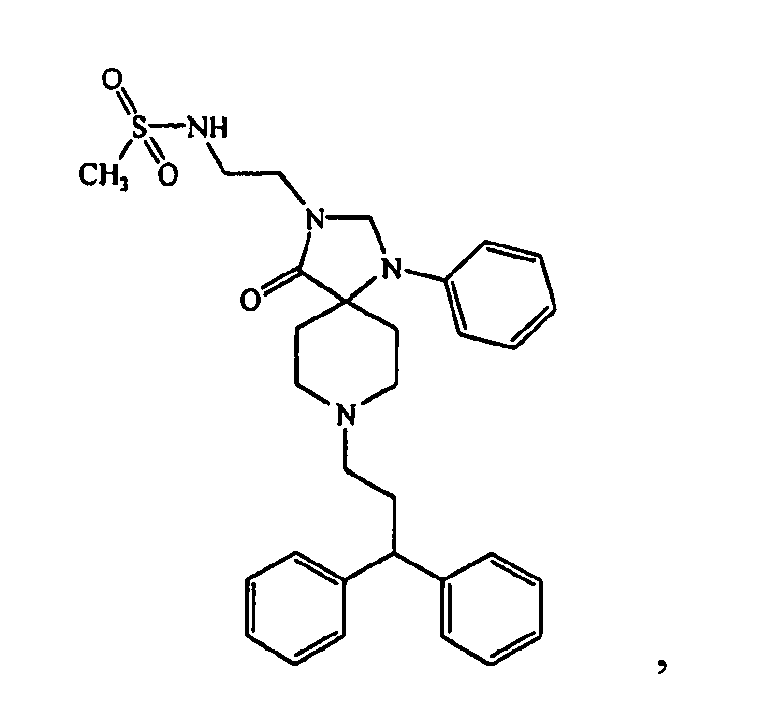


- Utilisation d'un composé ou d'un sel pharmaceutiquement acceptable de celui-ci, sélectionné dans le groupe comprenant :


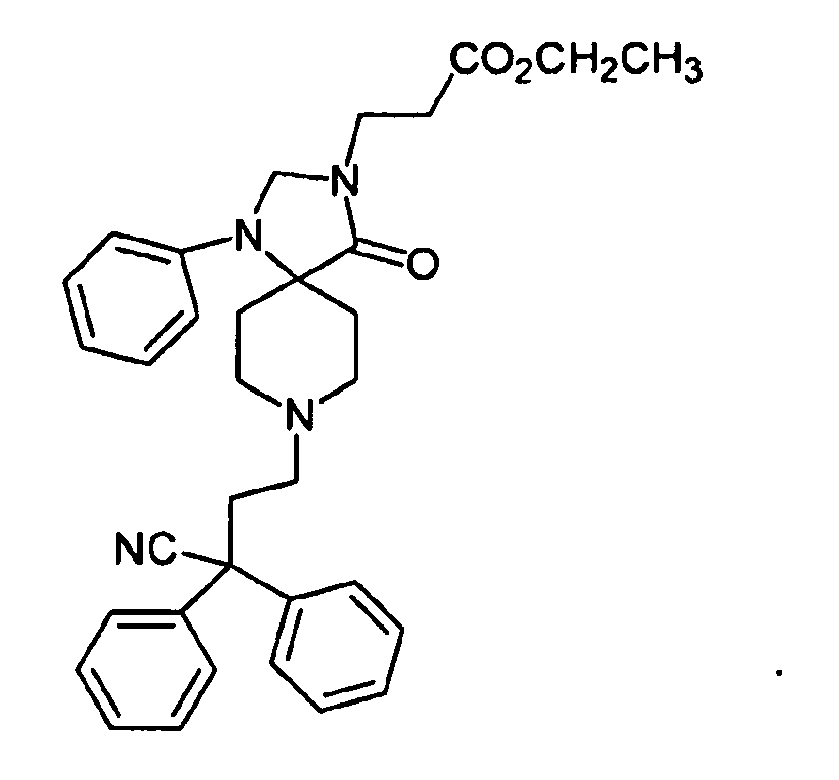
- Utilisation selon la revendication 29, comportant en outre l'utilisation d'une quantité efficace d'un analgésique opioïde.
- Utilisation selon la revendication 29, comportant en outre l'utilisation d'une quantité efficace d'un analgésique non opioïde.
- Utilisation selon la revendication 29, comportant en outre l'utilisation d'une quantité efficace d'un agent anti-émétique.
- Utilisation d'un composé ou d'un sel pharmaceutiquement acceptable de celui-ci, sélectionné dans le groupe comprenant :


Priority Applications (2)
| Application Number | Priority Date | Filing Date | Title |
|---|---|---|---|
| SI200331540T SI1509523T1 (sl) | 2002-05-31 | 2003-06-02 | Triazaspiro spojine, koristne za zdravljenje ali prepreäśevanje boleäśine |
| CY20091100427T CY1109031T1 (el) | 2002-05-31 | 2009-04-10 | Τριαζασπιρο ενωσεις χρησιμες για την αντιμετωπιση ή προληψη πονου |
Applications Claiming Priority (7)
| Application Number | Priority Date | Filing Date | Title |
|---|---|---|---|
| US38480702P | 2002-05-31 | 2002-05-31 | |
| US384807P | 2002-05-31 | ||
| US46021903P | 2003-04-03 | 2003-04-03 | |
| US460219P | 2003-04-03 | ||
| US448627 | 2003-05-29 | ||
| US10/448,627 US6995168B2 (en) | 2002-05-31 | 2003-05-29 | Triazaspiro compounds useful for treating or preventing pain |
| PCT/US2003/017419 WO2003101953A2 (fr) | 2002-05-31 | 2003-06-02 | Composes triazaspiro utilises pour le traitement ou la prevention de la douleur |
Publications (3)
| Publication Number | Publication Date |
|---|---|
| EP1509523A2 EP1509523A2 (fr) | 2005-03-02 |
| EP1509523A4 EP1509523A4 (fr) | 2006-04-05 |
| EP1509523B1 true EP1509523B1 (fr) | 2009-01-21 |
Family
ID=29716134
Family Applications (1)
| Application Number | Title | Priority Date | Filing Date |
|---|---|---|---|
| EP03741857A Expired - Lifetime EP1509523B1 (fr) | 2002-05-31 | 2003-06-02 | Composes triazaspiro utilises pour le traitement ou la prevention de la douleur |
Country Status (12)
| Country | Link |
|---|---|
| US (2) | US6995168B2 (fr) |
| EP (1) | EP1509523B1 (fr) |
| JP (2) | JP4658595B2 (fr) |
| AT (1) | ATE421517T1 (fr) |
| AU (1) | AU2003273250A1 (fr) |
| CY (1) | CY1109031T1 (fr) |
| DE (1) | DE60325965D1 (fr) |
| DK (1) | DK1509523T3 (fr) |
| ES (1) | ES2320750T3 (fr) |
| PT (1) | PT1509523E (fr) |
| SI (1) | SI1509523T1 (fr) |
| WO (1) | WO2003101953A2 (fr) |
Families Citing this family (11)
| Publication number | Priority date | Publication date | Assignee | Title |
|---|---|---|---|---|
| US6995168B2 (en) * | 2002-05-31 | 2006-02-07 | Euro-Celtique S.A. | Triazaspiro compounds useful for treating or preventing pain |
| WO2005012256A1 (fr) | 2003-07-22 | 2005-02-10 | Astex Therapeutics Limited | Composes 1h-pyrazole 3,4-disubstitues et leur utilisation en tant que kinases dependant des cyclines (cdk) et modulateurs de la glycogene synthase kinase-3 (gsk-3) |
| AR054425A1 (es) | 2005-01-21 | 2007-06-27 | Astex Therapeutics Ltd | Sales de adicion de piperidin 4-il- amida de acido 4-(2,6-dicloro-benzoilamino) 1h-pirazol-3-carboxilico. |
| CA2594477C (fr) * | 2005-01-21 | 2016-07-12 | Astex Therapeutics Limited | Composes pharmaceutiques |
| US8404718B2 (en) | 2005-01-21 | 2013-03-26 | Astex Therapeutics Limited | Combinations of pyrazole kinase inhibitors |
| DE102005038141A1 (de) * | 2005-08-12 | 2007-02-15 | Grünenthal GmbH | Substituierte 8-(3-Aminopropyl)-1-phenyl-1,3,8-triaza-spiro[4.5]decan-4-on-Derivate |
| UA107943C2 (xx) * | 2009-11-16 | 2015-03-10 | Lilly Co Eli | Сполуки спіропіперидину як антагоністи рецептора orl-1 |
| WO2014102589A1 (fr) | 2012-12-27 | 2014-07-03 | Purdue Pharma L.P. | Composés de pipéridine du type quinazolin-4(3h)-one et utilisations de ceux-ci |
| WO2014102588A2 (fr) | 2012-12-27 | 2014-07-03 | Purdue Pharma L.P. | Composés de pipéridine de type indole et indoline et leurs utilisations |
| WO2014102590A1 (fr) | 2012-12-27 | 2014-07-03 | Purdue Pharma L.P. | Composés de type pipéridine-4-amino substituée et leurs utilisations |
| CN103242230B (zh) * | 2013-05-02 | 2015-02-18 | 陕西步长高新制药有限公司 | 一种喹啉酮衍生物及其制备方法 |
Family Cites Families (38)
| Publication number | Priority date | Publication date | Assignee | Title |
|---|---|---|---|---|
| US3155670A (en) * | 1962-06-22 | 1964-11-03 | Res Lab Dr C Janssen N V | 1-oxo-2, 4, 8, triaza-spiro (4, 5) decanes |
| US3155669A (en) * | 1962-06-22 | 1964-11-03 | Res Lab Dr C Janssen N V | 2, 4, 8-triaza-spiro (4, 5) dec-2-enes |
| US3161644A (en) | 1962-06-22 | 1964-12-15 | Res Lab Dr C Janssen N V | 1-benzyl-4-substituted piperidines |
| US3238216A (en) * | 1963-06-20 | 1966-03-01 | Res Lab Dr C Janssen N V | Substituted 1, 3, 8-triaza-spiro (4, 5) decanes |
| US3536809A (en) | 1969-02-17 | 1970-10-27 | Alza Corp | Medication method |
| US3598123A (en) | 1969-04-01 | 1971-08-10 | Alza Corp | Bandage for administering drugs |
| US3845770A (en) | 1972-06-05 | 1974-11-05 | Alza Corp | Osmatic dispensing device for releasing beneficial agent |
| US3916899A (en) | 1973-04-25 | 1975-11-04 | Alza Corp | Osmotic dispensing device with maximum and minimum sizes for the passageway |
| US4008719A (en) | 1976-02-02 | 1977-02-22 | Alza Corporation | Osmotic system having laminar arrangement for programming delivery of active agent |
| US4409230A (en) | 1982-04-09 | 1983-10-11 | Hoechst-Roussel Pharmaceuticals Inc. | Pharmaceutical compositions and methods employing 8-[3-(6-fluoro-1,2-benzisoxazol-3-yl)propyl]-1-phenyl-1,3,8-triazaspiro-[4.]decan-4-one and derivatives thereof |
| US4418067A (en) | 1982-04-09 | 1983-11-29 | Hoechst-Roussel Pharmaceuticals Inc. | 8-[3-(6-Fluoro-1,2-benzisoxazol-3-yl)propyl]-1-phenyl-1,3,8-triazaspiro[4.5]dec.5)decan-4-one to treat pain |
| US4374245A (en) | 1982-04-09 | 1983-02-15 | Hoechst-Roussel Pharmaceuticals Inc. | 8-[3-(6-Fluoro-1,2-benzisoxazol-3-yl)propyl]-1-phenyl-1,3,8-triazaspiro[4.5]decan-4-one |
| IE58110B1 (en) | 1984-10-30 | 1993-07-14 | Elan Corp Plc | Controlled release powder and process for its preparation |
| US5073543A (en) | 1988-07-21 | 1991-12-17 | G. D. Searle & Co. | Controlled release formulations of trophic factors in ganglioside-lipsome vehicle |
| IT1229203B (it) | 1989-03-22 | 1991-07-25 | Bioresearch Spa | Impiego di acido 5 metiltetraidrofolico, di acido 5 formiltetraidrofolico e dei loro sali farmaceuticamente accettabili per la preparazione di composizioni farmaceutiche in forma a rilascio controllato attive nella terapia dei disturbi mentali organici e composizioni farmaceutiche relative. |
| US5120548A (en) | 1989-11-07 | 1992-06-09 | Merck & Co., Inc. | Swelling modulated polymeric drug delivery device |
| US5852029A (en) | 1990-04-10 | 1998-12-22 | Israel Institute For Biological Research | Aza spiro compounds acting on the cholinergic system with muscarinic agonist activity |
| US5733566A (en) | 1990-05-15 | 1998-03-31 | Alkermes Controlled Therapeutics Inc. Ii | Controlled release of antiparasitic agents in animals |
| US5698155A (en) | 1991-05-31 | 1997-12-16 | Gs Technologies, Inc. | Method for the manufacture of pharmaceutical cellulose capsules |
| DE4135473A1 (de) | 1991-10-28 | 1993-04-29 | Bayer Ag | Triazaspirodecanon-methylchromane |
| US5580578A (en) | 1992-01-27 | 1996-12-03 | Euro-Celtique, S.A. | Controlled release formulations coated with aqueous dispersions of acrylic polymers |
| US5591767A (en) | 1993-01-25 | 1997-01-07 | Pharmetrix Corporation | Liquid reservoir transdermal patch for the administration of ketorolac |
| IT1270594B (it) | 1994-07-07 | 1997-05-07 | Recordati Chem Pharm | Composizione farmaceutica a rilascio controllato di moguisteina in sospensione liquida |
| US5789402A (en) | 1995-01-17 | 1998-08-04 | Eli Lilly Company | Compounds having effects on serotonin-related systems |
| US5739336A (en) | 1995-06-23 | 1998-04-14 | Syntex (U.S.A.) Inc. | 1,3,8-triaza- and 3,8-diaza-1-oxaspiro 4,5! decane derivatives |
| GB9521781D0 (en) | 1995-10-24 | 1996-01-03 | Merck Sharp & Dohme | Therapeutic agents |
| CA2226058C (fr) | 1997-01-30 | 2008-01-29 | F. Hoffmann-La Roche Ag | Derives de substitution en 8 de 1,3,8-triazaspiro[4.5]decan-4-one |
| EP0921125B1 (fr) | 1997-12-05 | 2002-01-30 | F. Hoffmann-La Roche Ag | Derives de la 1,3,8-triazaspiro[4,5]decan-4-one |
| CN1291984A (zh) | 1998-03-06 | 2001-04-18 | 詹森药业有限公司 | 甘氨酸传输抑制剂 |
| EP1080091A1 (fr) * | 1998-05-18 | 2001-03-07 | Novo Nordisk A/S | Nouvelles 1,3,8-triazaspiro[4.5]decanones possedant une affinite elevee pour les sous-types du recepteur opioide |
| US6277991B1 (en) | 1998-05-18 | 2001-08-21 | Novo Nordisk A/S | 1,3,8-triazaspiro[4.5]decanones with high affinity for opioid receptor subtypes |
| ID29137A (id) | 1998-07-27 | 2001-08-02 | Schering Corp | Ligan-ligan afinitas tinggi untuk reseptor nosiseptin orl-1 |
| US6262066B1 (en) | 1998-07-27 | 2001-07-17 | Schering Corporation | High affinity ligands for nociceptin receptor ORL-1 |
| CA2324330A1 (fr) | 1999-11-08 | 2001-05-08 | Ssp Co., Ltd. | Derives de la 4-hydroxy-4-phenylpiperidine et produits pharmaceutiques a base de ceux-ci |
| WO2001036418A1 (fr) | 1999-11-17 | 2001-05-25 | Novo Nordisk A/S | Nouvelles triazaspirodecanones a affinite elevee pour des soustypes de recepteurs opioides |
| US6686370B2 (en) | 1999-12-06 | 2004-02-03 | Euro-Celtique S.A. | Triazospiro compounds having nociceptin receptor affinity |
| AU2001242744B2 (en) * | 2000-03-24 | 2005-07-21 | Meiji Seika Kaisha Ltd | Diphenylalkylamine derivatives useful as opioid delta receptor ligands |
| US6995168B2 (en) * | 2002-05-31 | 2006-02-07 | Euro-Celtique S.A. | Triazaspiro compounds useful for treating or preventing pain |
-
2003
- 2003-05-29 US US10/448,627 patent/US6995168B2/en not_active Expired - Lifetime
- 2003-06-02 SI SI200331540T patent/SI1509523T1/sl unknown
- 2003-06-02 ES ES03741857T patent/ES2320750T3/es not_active Expired - Lifetime
- 2003-06-02 DK DK03741857T patent/DK1509523T3/da active
- 2003-06-02 AU AU2003273250A patent/AU2003273250A1/en not_active Abandoned
- 2003-06-02 EP EP03741857A patent/EP1509523B1/fr not_active Expired - Lifetime
- 2003-06-02 JP JP2004509647A patent/JP4658595B2/ja not_active Expired - Fee Related
- 2003-06-02 DE DE60325965T patent/DE60325965D1/de not_active Expired - Lifetime
- 2003-06-02 PT PT03741857T patent/PT1509523E/pt unknown
- 2003-06-02 WO PCT/US2003/017419 patent/WO2003101953A2/fr not_active Ceased
- 2003-06-02 AT AT03741857T patent/ATE421517T1/de active
-
2005
- 2005-06-16 US US11/155,263 patent/US7414062B2/en not_active Expired - Lifetime
-
2009
- 2009-04-10 CY CY20091100427T patent/CY1109031T1/el unknown
-
2010
- 2010-08-31 JP JP2010194855A patent/JP2011021021A/ja not_active Withdrawn
Also Published As
| Publication number | Publication date |
|---|---|
| US20050234084A1 (en) | 2005-10-20 |
| JP2011021021A (ja) | 2011-02-03 |
| US6995168B2 (en) | 2006-02-07 |
| DK1509523T3 (da) | 2009-04-27 |
| ATE421517T1 (de) | 2009-02-15 |
| JP4658595B2 (ja) | 2011-03-23 |
| US7414062B2 (en) | 2008-08-19 |
| ES2320750T3 (es) | 2009-05-28 |
| JP2006516239A (ja) | 2006-06-29 |
| AU2003273250A8 (en) | 2003-12-19 |
| WO2003101953A3 (fr) | 2004-08-05 |
| SI1509523T1 (sl) | 2009-06-30 |
| US20050009854A1 (en) | 2005-01-13 |
| EP1509523A2 (fr) | 2005-03-02 |
| WO2003101953A2 (fr) | 2003-12-11 |
| DE60325965D1 (de) | 2009-03-12 |
| EP1509523A4 (fr) | 2006-04-05 |
| PT1509523E (pt) | 2009-04-20 |
| AU2003273250A1 (en) | 2003-12-19 |
| CY1109031T1 (el) | 2014-07-02 |
Similar Documents
| Publication | Publication Date | Title |
|---|---|---|
| CA2506242C (fr) | Derives de 4-tetrazolyl-4-phenylpiperidine utilises pour le traitement de la douleur | |
| US6635653B2 (en) | Spiropyrazole compounds | |
| EP1385514B1 (fr) | Composes spiro-indene et spiro-indane | |
| US20090253727A1 (en) | Nociceptin analogs | |
| EP1385518B1 (fr) | Composes de benzimidazolone | |
| AU2002311833A1 (en) | Spiropyrazole compounds | |
| US6995168B2 (en) | Triazaspiro compounds useful for treating or preventing pain | |
| CA2628750C (fr) | Composes a base de 4-oxadiazolyl-piperidine et utilisation de ceux-ci | |
| WO2004103305A2 (fr) | Compose a base de spiropyrazole | |
| HK1062885B (en) | Spiropyrazole compounds | |
| HK1127032A (en) | Quinolinone derivatives and their use to treat pain |
Legal Events
| Date | Code | Title | Description |
|---|---|---|---|
| PUAI | Public reference made under article 153(3) epc to a published international application that has entered the european phase |
Free format text: ORIGINAL CODE: 0009012 |
|
| 17P | Request for examination filed |
Effective date: 20041125 |
|
| AK | Designated contracting states |
Kind code of ref document: A2 Designated state(s): AT BE BG CH CY CZ DE DK EE ES FI FR GB GR HU IE IT LI LU MC NL PT RO SE SI SK TR |
|
| AX | Request for extension of the european patent |
Extension state: AL LT LV MK |
|
| RAP1 | Party data changed (applicant data changed or rights of an application transferred) |
Owner name: EURO-CELTIQUE S.A. |
|
| DAX | Request for extension of the european patent (deleted) | ||
| A4 | Supplementary search report drawn up and despatched |
Effective date: 20060216 |
|
| RIC1 | Information provided on ipc code assigned before grant |
Ipc: A61K 31/4465 20060101ALI20060210BHEP Ipc: A61P 29/00 20060101ALI20060210BHEP Ipc: C07D 471/10 20060101AFI20041201BHEP |
|
| RIN1 | Information on inventor provided before grant (corrected) |
Inventor name: VICTORY, SAM, F. Inventor name: CHEN, ZHENGMING |
|
| 17Q | First examination report despatched |
Effective date: 20060919 |
|
| GRAP | Despatch of communication of intention to grant a patent |
Free format text: ORIGINAL CODE: EPIDOSNIGR1 |
|
| RAP1 | Party data changed (applicant data changed or rights of an application transferred) |
Owner name: EURO-CELTIQUE S.A. |
|
| GRAS | Grant fee paid |
Free format text: ORIGINAL CODE: EPIDOSNIGR3 |
|
| GRAA | (expected) grant |
Free format text: ORIGINAL CODE: 0009210 |
|
| AK | Designated contracting states |
Kind code of ref document: B1 Designated state(s): AT BE BG CH CY CZ DE DK EE ES FI FR GB GR HU IE IT LI LU MC NL PT RO SE SI SK TR |
|
| REG | Reference to a national code |
Ref country code: GB Ref legal event code: FG4D |
|
| REG | Reference to a national code |
Ref country code: CH Ref legal event code: EP |
|
| REG | Reference to a national code |
Ref country code: IE Ref legal event code: FG4D |
|
| REF | Corresponds to: |
Ref document number: 60325965 Country of ref document: DE Date of ref document: 20090312 Kind code of ref document: P |
|
| REG | Reference to a national code |
Ref country code: CH Ref legal event code: NV Representative=s name: BOVARD AG PATENTANWAELTE |
|
| REG | Reference to a national code |
Ref country code: RO Ref legal event code: EPE |
|
| REG | Reference to a national code |
Ref country code: GR Ref legal event code: EP Ref document number: 20090400878 Country of ref document: GR |
|
| REG | Reference to a national code |
Ref country code: PT Ref legal event code: SC4A Free format text: AVAILABILITY OF NATIONAL TRANSLATION Effective date: 20090413 |
|
| REG | Reference to a national code |
Ref country code: DK Ref legal event code: T3 |
|
| REG | Reference to a national code |
Ref country code: SE Ref legal event code: TRGR |
|
| REG | Reference to a national code |
Ref country code: ES Ref legal event code: FG2A Ref document number: 2320750 Country of ref document: ES Kind code of ref document: T3 |
|
| REG | Reference to a national code |
Ref country code: HU Ref legal event code: AG4A Ref document number: E005523 Country of ref document: HU |
|
| PLBE | No opposition filed within time limit |
Free format text: ORIGINAL CODE: 0009261 |
|
| STAA | Information on the status of an ep patent application or granted ep patent |
Free format text: STATUS: NO OPPOSITION FILED WITHIN TIME LIMIT |
|
| 26N | No opposition filed |
Effective date: 20091022 |
|
| REG | Reference to a national code |
Ref country code: CH Ref legal event code: PFA Owner name: EURO-CELTIQUE S.A. Free format text: EURO-CELTIQUE S.A.#2, AVENUE CHARLES DE GAULLE#1653 LUXEMBOURG (LU) -TRANSFER TO- EURO-CELTIQUE S.A.#2, AVENUE CHARLES DE GAULLE#1653 LUXEMBOURG (LU) |
|
| PGFP | Annual fee paid to national office [announced via postgrant information from national office to epo] |
Ref country code: ES Payment date: 20120618 Year of fee payment: 10 |
|
| PGFP | Annual fee paid to national office [announced via postgrant information from national office to epo] |
Ref country code: CZ Payment date: 20130530 Year of fee payment: 11 Ref country code: LU Payment date: 20130625 Year of fee payment: 11 Ref country code: EE Payment date: 20130530 Year of fee payment: 11 Ref country code: GB Payment date: 20130529 Year of fee payment: 11 Ref country code: IE Payment date: 20130531 Year of fee payment: 11 Ref country code: DK Payment date: 20130527 Year of fee payment: 11 Ref country code: SE Payment date: 20130607 Year of fee payment: 11 Ref country code: SK Payment date: 20130530 Year of fee payment: 11 Ref country code: CH Payment date: 20130426 Year of fee payment: 11 |
|
| PGFP | Annual fee paid to national office [announced via postgrant information from national office to epo] |
Ref country code: NL Payment date: 20130620 Year of fee payment: 11 Ref country code: RO Payment date: 20130603 Year of fee payment: 11 Ref country code: HU Payment date: 20130529 Year of fee payment: 11 Ref country code: FR Payment date: 20130618 Year of fee payment: 11 Ref country code: FI Payment date: 20130606 Year of fee payment: 11 Ref country code: SI Payment date: 20130530 Year of fee payment: 11 Ref country code: IT Payment date: 20130613 Year of fee payment: 11 Ref country code: PT Payment date: 20130530 Year of fee payment: 11 |
|
| PGFP | Annual fee paid to national office [announced via postgrant information from national office to epo] |
Ref country code: BE Payment date: 20130625 Year of fee payment: 11 |
|
| PGFP | Annual fee paid to national office [announced via postgrant information from national office to epo] |
Ref country code: CY Payment date: 20130603 Year of fee payment: 11 |
|
| PGFP | Annual fee paid to national office [announced via postgrant information from national office to epo] |
Ref country code: BG Payment date: 20140328 Year of fee payment: 12 |
|
| PGFP | Annual fee paid to national office [announced via postgrant information from national office to epo] |
Ref country code: MC Payment date: 20140530 Year of fee payment: 12 |
|
| PGFP | Annual fee paid to national office [announced via postgrant information from national office to epo] |
Ref country code: GR Payment date: 20140529 Year of fee payment: 12 Ref country code: TR Payment date: 20140520 Year of fee payment: 12 Ref country code: AT Payment date: 20140527 Year of fee payment: 12 |
|
| PGFP | Annual fee paid to national office [announced via postgrant information from national office to epo] |
Ref country code: DE Payment date: 20140630 Year of fee payment: 12 |
|
| REG | Reference to a national code |
Ref country code: PT Ref legal event code: MM4A Free format text: LAPSE DUE TO NON-PAYMENT OF FEES Effective date: 20141202 |
|
| REG | Reference to a national code |
Ref country code: DK Ref legal event code: EBP Effective date: 20140630 |
|
| REG | Reference to a national code |
Ref country code: NL Ref legal event code: V1 Effective date: 20150101 |
|
| PG25 | Lapsed in a contracting state [announced via postgrant information from national office to epo] |
Ref country code: PT Free format text: LAPSE BECAUSE OF NON-PAYMENT OF DUE FEES Effective date: 20141202 Ref country code: RO Free format text: LAPSE BECAUSE OF NON-PAYMENT OF DUE FEES Effective date: 20140602 Ref country code: FI Free format text: LAPSE BECAUSE OF NON-PAYMENT OF DUE FEES Effective date: 20140602 Ref country code: CZ Free format text: LAPSE BECAUSE OF NON-PAYMENT OF DUE FEES Effective date: 20140602 Ref country code: SE Free format text: LAPSE BECAUSE OF NON-PAYMENT OF DUE FEES Effective date: 20140603 Ref country code: LU Free format text: LAPSE BECAUSE OF NON-PAYMENT OF DUE FEES Effective date: 20140602 |
|
| REG | Reference to a national code |
Ref country code: CH Ref legal event code: PL |
|
| REG | Reference to a national code |
Ref country code: SE Ref legal event code: EUG |
|
| REG | Reference to a national code |
Ref country code: EE Ref legal event code: MM4A Ref document number: E003141 Country of ref document: EE Effective date: 20140630 |
|
| GBPC | Gb: european patent ceased through non-payment of renewal fee |
Effective date: 20140602 |
|
| PG25 | Lapsed in a contracting state [announced via postgrant information from national office to epo] |
Ref country code: CY Free format text: LAPSE BECAUSE OF NON-PAYMENT OF DUE FEES Effective date: 20140602 |
|
| REG | Reference to a national code |
Ref country code: SK Ref legal event code: MM4A Ref document number: E 5303 Country of ref document: SK Effective date: 20140602 |
|
| REG | Reference to a national code |
Ref country code: IE Ref legal event code: MM4A |
|
| REG | Reference to a national code |
Ref country code: FR Ref legal event code: ST Effective date: 20150227 |
|
| PG25 | Lapsed in a contracting state [announced via postgrant information from national office to epo] |
Ref country code: NL Free format text: LAPSE BECAUSE OF NON-PAYMENT OF DUE FEES Effective date: 20150101 |
|
| REG | Reference to a national code |
Ref country code: SI Ref legal event code: KO00 Effective date: 20150213 |
|
| PG25 | Lapsed in a contracting state [announced via postgrant information from national office to epo] |
Ref country code: SK Free format text: LAPSE BECAUSE OF NON-PAYMENT OF DUE FEES Effective date: 20140602 Ref country code: HU Free format text: LAPSE BECAUSE OF NON-PAYMENT OF DUE FEES Effective date: 20140603 Ref country code: IE Free format text: LAPSE BECAUSE OF NON-PAYMENT OF DUE FEES Effective date: 20140602 Ref country code: CH Free format text: LAPSE BECAUSE OF NON-PAYMENT OF DUE FEES Effective date: 20140630 Ref country code: IT Free format text: LAPSE BECAUSE OF NON-PAYMENT OF DUE FEES Effective date: 20140602 Ref country code: LI Free format text: LAPSE BECAUSE OF NON-PAYMENT OF DUE FEES Effective date: 20140630 Ref country code: EE Free format text: LAPSE BECAUSE OF NON-PAYMENT OF DUE FEES Effective date: 20140630 |
|
| PG25 | Lapsed in a contracting state [announced via postgrant information from national office to epo] |
Ref country code: SI Free format text: LAPSE BECAUSE OF NON-PAYMENT OF DUE FEES Effective date: 20140603 Ref country code: GB Free format text: LAPSE BECAUSE OF NON-PAYMENT OF DUE FEES Effective date: 20140602 Ref country code: FR Free format text: LAPSE BECAUSE OF NON-PAYMENT OF DUE FEES Effective date: 20140630 |
|
| REG | Reference to a national code |
Ref country code: ES Ref legal event code: FD2A Effective date: 20150724 |
|
| PG25 | Lapsed in a contracting state [announced via postgrant information from national office to epo] |
Ref country code: DK Free format text: LAPSE BECAUSE OF NON-PAYMENT OF DUE FEES Effective date: 20140630 |
|
| PG25 | Lapsed in a contracting state [announced via postgrant information from national office to epo] |
Ref country code: ES Free format text: LAPSE BECAUSE OF NON-PAYMENT OF DUE FEES Effective date: 20140603 |
|
| REG | Reference to a national code |
Ref country code: DE Ref legal event code: R119 Ref document number: 60325965 Country of ref document: DE |
|
| PG25 | Lapsed in a contracting state [announced via postgrant information from national office to epo] |
Ref country code: MC Free format text: LAPSE BECAUSE OF NON-PAYMENT OF DUE FEES Effective date: 20150630 |
|
| REG | Reference to a national code |
Ref country code: AT Ref legal event code: MM01 Ref document number: 421517 Country of ref document: AT Kind code of ref document: T Effective date: 20150602 |
|
| PG25 | Lapsed in a contracting state [announced via postgrant information from national office to epo] |
Ref country code: DE Free format text: LAPSE BECAUSE OF NON-PAYMENT OF DUE FEES Effective date: 20160101 Ref country code: BG Free format text: LAPSE BECAUSE OF NON-PAYMENT OF DUE FEES Effective date: 20160331 |
|
| PG25 | Lapsed in a contracting state [announced via postgrant information from national office to epo] |
Ref country code: AT Free format text: LAPSE BECAUSE OF NON-PAYMENT OF DUE FEES Effective date: 20150602 Ref country code: GR Free format text: LAPSE BECAUSE OF NON-PAYMENT OF DUE FEES Effective date: 20160112 |
|
| REG | Reference to a national code |
Ref country code: GR Ref legal event code: ML Ref document number: 20090400878 Country of ref document: GR Effective date: 20160112 |
|
| PG25 | Lapsed in a contracting state [announced via postgrant information from national office to epo] |
Ref country code: BE Free format text: LAPSE BECAUSE OF NON-PAYMENT OF DUE FEES Effective date: 20140630 |
|
| PG25 | Lapsed in a contracting state [announced via postgrant information from national office to epo] |
Ref country code: TR Free format text: LAPSE BECAUSE OF NON-PAYMENT OF DUE FEES Effective date: 20150602 |