EP1511037B1 - Mediumaufzeichnungsverfahren, mediumaufzeichnungseinrichtung und informationsaufzeichnungsmedium - Google Patents
Mediumaufzeichnungsverfahren, mediumaufzeichnungseinrichtung und informationsaufzeichnungsmedium Download PDFInfo
- Publication number
- EP1511037B1 EP1511037B1 EP03733048A EP03733048A EP1511037B1 EP 1511037 B1 EP1511037 B1 EP 1511037B1 EP 03733048 A EP03733048 A EP 03733048A EP 03733048 A EP03733048 A EP 03733048A EP 1511037 B1 EP1511037 B1 EP 1511037B1
- Authority
- EP
- European Patent Office
- Prior art keywords
- file
- management information
- recording
- recorded
- managing
- Prior art date
- Legal status (The legal status is an assumption and is not a legal conclusion. Google has not performed a legal analysis and makes no representation as to the accuracy of the status listed.)
- Expired - Lifetime
Links
Images





Classifications
-
- G—PHYSICS
- G11—INFORMATION STORAGE
- G11B—INFORMATION STORAGE BASED ON RELATIVE MOVEMENT BETWEEN RECORD CARRIER AND TRANSDUCER
- G11B27/00—Editing; Indexing; Addressing; Timing or synchronising; Monitoring; Measuring tape travel
- G11B27/10—Indexing; Addressing; Timing or synchronising; Measuring tape travel
- G11B27/19—Indexing; Addressing; Timing or synchronising; Measuring tape travel by using information detectable on the record carrier
- G11B27/28—Indexing; Addressing; Timing or synchronising; Measuring tape travel by using information detectable on the record carrier by using information signals recorded by the same method as the main recording
- G11B27/32—Indexing; Addressing; Timing or synchronising; Measuring tape travel by using information detectable on the record carrier by using information signals recorded by the same method as the main recording on separate auxiliary tracks of the same or an auxiliary record carrier
- G11B27/327—Table of contents
- G11B27/329—Table of contents on a disc [VTOC]
-
- G—PHYSICS
- G11—INFORMATION STORAGE
- G11B—INFORMATION STORAGE BASED ON RELATIVE MOVEMENT BETWEEN RECORD CARRIER AND TRANSDUCER
- G11B20/00—Signal processing not specific to the method of recording or reproducing; Circuits therefor
- G11B20/10—Digital recording or reproducing
-
- G—PHYSICS
- G11—INFORMATION STORAGE
- G11B—INFORMATION STORAGE BASED ON RELATIVE MOVEMENT BETWEEN RECORD CARRIER AND TRANSDUCER
- G11B20/00—Signal processing not specific to the method of recording or reproducing; Circuits therefor
- G11B20/10—Digital recording or reproducing
- G11B20/12—Formatting, e.g. arrangement of data block or words on the record carriers
-
- G—PHYSICS
- G11—INFORMATION STORAGE
- G11B—INFORMATION STORAGE BASED ON RELATIVE MOVEMENT BETWEEN RECORD CARRIER AND TRANSDUCER
- G11B27/00—Editing; Indexing; Addressing; Timing or synchronising; Monitoring; Measuring tape travel
-
- G—PHYSICS
- G11—INFORMATION STORAGE
- G11B—INFORMATION STORAGE BASED ON RELATIVE MOVEMENT BETWEEN RECORD CARRIER AND TRANSDUCER
- G11B27/00—Editing; Indexing; Addressing; Timing or synchronising; Monitoring; Measuring tape travel
- G11B27/02—Editing, e.g. varying the order of information signals recorded on, or reproduced from, record carriers
- G11B27/031—Electronic editing of digitised analogue information signals, e.g. audio or video signals
- G11B27/034—Electronic editing of digitised analogue information signals, e.g. audio or video signals on discs
-
- G—PHYSICS
- G11—INFORMATION STORAGE
- G11B—INFORMATION STORAGE BASED ON RELATIVE MOVEMENT BETWEEN RECORD CARRIER AND TRANSDUCER
- G11B7/00—Recording or reproducing by optical means, e.g. recording using a thermal beam of optical radiation by modifying optical properties or the physical structure, reproducing using an optical beam at lower power by sensing optical properties; Record carriers therefor
- G11B7/007—Arrangement of the information on the record carrier, e.g. form of tracks, actual track shape, e.g. wobbled, or cross-section, e.g. v-shaped; Sequential information structures, e.g. sectoring or header formats within a track
-
- G—PHYSICS
- G11—INFORMATION STORAGE
- G11B—INFORMATION STORAGE BASED ON RELATIVE MOVEMENT BETWEEN RECORD CARRIER AND TRANSDUCER
- G11B20/00—Signal processing not specific to the method of recording or reproducing; Circuits therefor
- G11B20/10—Digital recording or reproducing
- G11B20/18—Error detection or correction; Testing, e.g. of drop-outs
- G11B2020/1873—Temporary defect structures for write-once discs, e.g. TDDS, TDMA or TDFL
-
- G—PHYSICS
- G11—INFORMATION STORAGE
- G11B—INFORMATION STORAGE BASED ON RELATIVE MOVEMENT BETWEEN RECORD CARRIER AND TRANSDUCER
- G11B2220/00—Record carriers by type
- G11B2220/20—Disc-shaped record carriers
- G11B2220/21—Disc-shaped record carriers characterised in that the disc is of read-only, rewritable, or recordable type
- G11B2220/215—Recordable discs
- G11B2220/216—Rewritable discs
-
- G—PHYSICS
- G11—INFORMATION STORAGE
- G11B—INFORMATION STORAGE BASED ON RELATIVE MOVEMENT BETWEEN RECORD CARRIER AND TRANSDUCER
- G11B2220/00—Record carriers by type
- G11B2220/20—Disc-shaped record carriers
- G11B2220/21—Disc-shaped record carriers characterised in that the disc is of read-only, rewritable, or recordable type
- G11B2220/215—Recordable discs
- G11B2220/218—Write-once discs
-
- G—PHYSICS
- G11—INFORMATION STORAGE
- G11B—INFORMATION STORAGE BASED ON RELATIVE MOVEMENT BETWEEN RECORD CARRIER AND TRANSDUCER
- G11B2220/00—Record carriers by type
- G11B2220/20—Disc-shaped record carriers
- G11B2220/25—Disc-shaped record carriers characterised in that the disc is based on a specific recording technology
- G11B2220/2537—Optical discs
- G11B2220/2562—DVDs [digital versatile discs]; Digital video discs; MMCDs; HDCDs
Definitions
- This invention relates to an optical disc recording method, an optical disc recording apparatus, and an information recording medium for recording information to a rewritable optical disc such as DVD-RW (DVD-rewritable).
- DVD-RW DVD-rewritable optical disc
- DVD-R digital versatile discs
- DVD-RW DVD-rewritable
- DVD-RAM DVD-random access memory
- DVD-R and DVD-RW of these optical discs if video data is recorded in a format conformable to the DVD video format, the data can be reproduced by a playback-only optical disc player.
- This standard enables reading of data recorded on a disc in a computer that processes data, by supporting the standard of universal disk format (UDF).
- UDF universal disk format
- Figs.1A to 1C are views showing a logical format of an optical disc based on the DVD video format.
- the optical disc based on this format has its information recording surface sectioned into a lead-in area, a data zone, and a lead-out area, from the innermost side, which is the leading side, and desired video data is recorded in the data zone, as shown in Fig.1A .
- the data zone is sectioned into, from the lead-in side, a UDF (universal disk format) area A1, which is a file system area with a UDF bridge structure described therein, a VMG (video manager) area A2, which is a DVD management information area, and a real-time data recording area A3.
- the UDF area and VMG area are management information recording areas for managing files based on video data recorded on this optical disc.
- the second management information recording area that is, the VMG area, is an area corresponding to a file management system proper to the DVD video format, and TOC information as management information for managing the whole video data recorded in the real-time data recording area A3 is recorded in this area.
- the first management information recording area that is, the UDF area A1
- the UDF area A1 is an area corresponding to a file management system based on a computer, and management information for managing the whole video data recorded in the real-time data recording area A3 in a format that realizes compatibility with the file system in the computer is recorded in this area.
- the real-time data recording area A3 is a user area for recording actual data, and video data is recorded by each VTS (video title set, hereinafter suitably referred to as title) as a unit in this area, as shown in Fig.1B .
- VTSs can be provided at the maximum.
- This VTS includes, from the leading side, VTSI (video title set information), VTSM VOBS (video object set for the VTSM), VTSTT VOBS (video object set for titles in a VTS), and VTSI BUP (backup of VTSI), as shown in Fig.1C .
- VTSTT VOBS video data based on the MPEG (Moving Picture Experts Group) 2 format, which is actual data, is recorded.
- MPEG Motion Picture Experts Group
- VTSI recording position information or the like, which is management information for managing video data based on this actual data, is recorded.
- VTSTT VOBS a title menu of video data is recorded.
- VTSTT VOBS is optional.
- VTSI BUP is a backup for VTSI.
- an incremental recording system hereinafter referred to as INC system
- a restricted overwrite system hereinafter referred to as ROW system
- the INC system is a system of sequentially recording video data.
- the ROW system is a system applied to an optical disc on which data can be overwritten. However, even in the ROW system, when recording data to an non-recorded area, video data is recorded sequentially.
- processing to the optical disc such as reservation is managed using RMA (recording management area) provided on the inner side of the lead-in area.
- Figs.2A to 2H show recording procedure based on the INC system.
- the INC system it is defined that data can be written into a maximum of three areas at a time. Each of these areas is called R zone and each R zone is managed using RMA.
- R zones are reserved first, as shown in Fig.2A .
- an R zone 1 area which forms a UDF area and a VMG area as a management information recording area
- an R zone 2 area which forms VTSI and VTSM VOBS of the leading VTS
- the remaining non-recorded area is defined as an Invisible R zone area.
- the management information recording area is secured and the area forming VTSI and VTSM VOBS of the leading VTS is secured.
- VTSTT VBOS based on actual data is formed by sequentially recording video data from the leading side of the Invisible R zone. Moreover, when recording of actual data for one title is completed by a user's instruction, VTSI BUP is recorded after the recording of this actual data, as shown in Fig.2B . Then, again from the leading side, VTSI and VTSM VOBS are formed in the R zone 2, as shown in Fig.2C , and the R zone 2 is closed. In this manner, one VTS is recorded on the optical disc in the INC system.
- an R zone 3 is reserved in the remaining non-recorded area to secure VTSI and VTSM VOBS, and the Invisible R zone is defined, as shown in Fig.2D .
- VTSTT VOBS is formed by recording actual data
- VTSI BUP is formed, as shown in Fig.2E
- VTSI and VTSM VOBS are formed in the previously secured area, as shown in Fig.2F .
- the subsequent VTS is recorded on the optical disc, as shown in Fig.2G .
- the non-recorded area is similarly defined and VTSs are sequentially recorded.
- a UDF area and a VMG area are formed by finalizing processing, and a lead-in area and a lead-out area are formed, as shown in Fig.2H .
- the formation of the UDF area and the VMG area is executed by generating UDF and VMG data from VTSI and VTSM VOBS of each title, then recording the data in the R zone 1, and closing the R zone 1.
- Figs.3A to 3G show recording procedure based on the ROW system.
- a recording area for lead-in, UDF, VMG, and VTSI and VTSM VOBS of the leading title is secured in advance by padding, as shown in Fig.3A .
- Padding is the processing to secure an area by recording dummy data such as NULL.
- VTSTT VOBS based on actual data is formed by sequentially recording video data, as shown in Fig.3B .
- VTSI BUP is subsequently recorded, as shown in Fig.3B .
- padding processing is executed.
- VTSI and VTSM VOBS corresponding to the recording of this actual data are formed, as shown in Fig.3C .
- one VTS is recorded on the optical disc in the ROW system.
- VTSTT VOBS and VTSI BUP are formed by recording actual data, following the padding area formed by the VTS that is immediately before, as shown in Fig.3D .
- padding processing is executed.
- VTSI and VTSM VOBS are formed, as shown in Fig.3E , and the subsequent VTS is recorded on the optical disc, as shown in Fig.3F .
- processing such as padding is similarly executed and VTSs are sequentially recorded.
- a UDF area and a VMG area are formed by finalizing processing similar to that of the INC system, and a lead-in area and a lead-out area are formed, as shown in Fig.3G .
- a file system for managing an intermediate state is necessary. If only recording conformable to the DVD video standard is performed, information managing VTSs is held in the file system for the intermediate state. Therefore, when a VTS is deleted, which LSN (logical sector number) on the medium has become free is managed. By utilizing this information, it is possible to newly record data to this position.
- JP-A-14-063765 discloses a technique of recording information to a DVD-R along real time in such a manner that the information can also be reproduced by a player for a playback-only DVD where information is recorded irrespective of real time.
- the VTS is recorded to the DVD-R, and after recording the VTS, temporary VMGI is generated as temporary control information corresponding to the recorded VTS and adapted for later forming VMGI and recording the VMGI to the DVD-R.
- the generated temporary VMGI is recorded to the DVD-R every time a VTS is recorded to the DVD-R.
- Document EP 1 182 662 A2 discloses writing several versions of temporary management information at different locations but on a DVD-R, i.e., without updating the previous versions.
- Document EP 0 845 780 A1 concerns a magneto-optical disc and discloses to store at the same time several copies of defect management information (e.g. the secondary defect list SDL) at fixed locations to improve reliability.
- defect management information e.g. the secondary defect list SDL
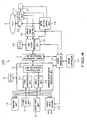
- This invention is applied to an optical disc recording/reproducing apparatus 100 having, for example, a structure as shown in Fig.4 .
- the optical disc recording/reproducing apparatus 100 shown in Fig.4 is a portable video recorder with an integrated camera and records the result of image pickup in the ROW system, using an optical disc 2, for example, a DVD-RW (DVD-rewritable) as a recording medium.
- an optical disc 2 for example, a DVD-RW (DVD-rewritable) as a recording medium.
- This optical disc recording/reproducing apparatus 100 has a video input unit 3, an audio input unit 5, a compression/expansion processing unit 6, a header information processing unit 7, random access memories (RAMs) 9 and 15, a system controller 10, an operating unit 11, a monitor unit 12, a video/audio encoder 13, a DVD signal processing unit 14, an analog front-end unit 16, a motor driving control unit 18, an optical head 19, a spindle motor 20, a thread motor 21 and the like.
- the compression/expansion processing unit 6 includes a video processing unit 61, an audio processing unit 62, and a multiplexing processing unit 63.
- the video input unit 3 generates video data by converting a video signal as the result of image pickup acquired from image pickup means, not shown, or a video signal inputted from an external device, to a digital signal, and supplies the video data to the compression/expansion processing unit 6, the monitor unit 12, and the video/audio encoder 13.
- video data acquired as the result of image pickup by built-in image pickup means is inputted in accordance with the control by the system controller 10.
- the audio input unit 5 generates audio data by converting an audio signal acquired from a microphone or an externally inputted audio signal to a digital signal, and supplies the audio data to the compression/expansion processing unit 6, the monitor unit 12, and the video/audio encoder 13.
- the compression/expansion processing unit 6 has its operation switched under the control of the system controller 10. At the time of recording, the compression/expansion processing unit 6 compresses and multiplexes video data and audio data, using the random access memory 9, and outputs the resulting data to the header information processing unit 7. At the time of reproduction, the compression/expansion processing unit 6 separates video data and audio data of data acquired from the header information processing unit 7, using the random access memory 9. After that, it expands the respective data and outputs the expanded data to the monitor unit 12 and the video/audio encoder 13.
- the video processing unit 61 at the time of recording, compresses video data outputted from the video input unit 3 and outputs the compressed video data under the control of the system controller 10. If the video data is a motion picture, data compression is performed using the MPEG2 format. At the time of reproduction, the video processing unit 61 expands video data outputted from the multiplexing processing unit 63 in accordance with its data compression format and outputs the expanded video data.
- the audio processing unit 62 at the time of recording, compresses audio data inputted from the audio input unit 5 using a format such as MPEG, Dolby audio or linear PCM, and outputs the compressed audio data.
- the audio processing unit 62 expands audio data acquired from the multiplexing processing unit 63 and outputs the expanded audio data.
- the multiplexing processing unit 63 at the time of recording, performs time-division multiplexing of video data outputted from the video processing unit 61 and audio data outputted from the audio processing unit 62 and outputs the resulting data to the header information processing unit 7.
- the multiplexing processing unit 63 separates video data and audio data of time-vision multiplexed data outputted from the header information processing unit 7 and outputs the respective data to the video processing unit 61 and the audio processing unit 62.
- the monitor unit 12 includes a display mechanism and an audio processing mechanism for monitoring video data inputted from the video input unit 3, audio data inputted from the audio input unit 5, or video and audio data outputted from the compression/expansion processing unit 6.
- the monitor unit 12 can monitor the result of image pickup and the result of reproduction.
- the video/audio encoder 13 compresses video data and audio data inputted from the audio input unit 5 or video data and audio data outputted from the compression/expansion processing unit 6, using a predetermined format, and outputs the compressed data to an external device. This enables monitoring of the result of image pickup and the result of reproduction by the optical disc recording/reproducing apparatus 100, on the external device.
- the header information processing unit 7 at the time of recording, receives time-division multiplexed data outputted from the compression/expansion processing unit 6, and adds header information or the like proper to the DVD to the data and outputs the resulting data under the control of the system controller 10.
- the header information processing unit 7 generated data such as UDF, VMG and VTSI based on information from the system controller 10 and outputs the generated data to the DVD signal processing unit 14.
- the header information processing unit 7 separates header information added at the time of recording, from output data of the DVD signal processing unit 14, and outputs the header information to the compression/expansion processing unit 6. The system controller 10 is notified of this separated header information.
- the DVD signal processing unit 14 at the time of recording, generates an error correcting code based on output data to the header information processing unit 7, using the random access memory 15, and adds this error correcting code to the output data.
- the DVD signal processing unit 14 performs processing such as scrambling or 8/15 modulation and outputs a data string based on the result of the processing, in the form of a serial data string, to the analog front-end unit 16.
- the DVD signal processing unit 14 performs decoding processing, descrambling processing and error correction processing of output data of the analog front-end unit 16, and outputs the result of the processing to the header information processing unit 7.
- the DVD signal processing unit 14 performs digital-to-analog conversion of various driving information for spindle control, tracking control, focusing control and thread control outputted from the system controller 10 so as to generate driving signals of these, and outputs these driving signals to the motor driving control unit 18.
- the analog front-end unit 16 generates and outputs a light quantity control signal with respect to a laser beam irradiation onto the optical disc 2 from the optical head 19.
- the analog front-end unit 16 at the time of reproduction, holds a constant quantity of light for reproduction with respect to the laser beam irradiation onto the optical disc 2 from the optical head 19 in accordance with the light quantity control signal.
- the analog front-end unit 16 changes the signal level of the light quantity control signal in accordance with output data from the DVD signal processing unit 14 and intermittently increases the quantity of light of the laser beam from the quantity of light for reproduction to the quantity of light for recording in accordance with the output data from the DVD signal processing unit 14.
- the analog front-end unit 16 amplifies the result of reception of return light acquired from the optical head 19 and performs arithmetic processing of the result, thereby generating a reproduction signal with its signal level changing in accordance with a bit string formed on the optical disc 2.
- the analog front-end unit 16 outputs reproduction data, which is the result of binary identification of this reproduction signal, to the DVD signal processing unit 14.
- the analog front-end unit 16 generates a tracking error signal, a focusing error signal and the like with their signal levels changing in accordance with the quantity of tracking error and the quantity of focusing error, and outputs these signals in the form of digital signals to the system controller 10.
- the motor driving control unit 18 drives respective mechanism corresponding to the driving signals outputted from the DVD signal processing unit 14. Specifically, in accordance with the driving signal for spindle control and the driving signal for thread control of these driving signals, the motor driving control unit 18 rotationally drives the spindle motor 20 and the thread motor 21. The motor driving control unit 18 also drives an actuator provided in the optical head 19 in accordance with the driving signal for tracking control and the driving signal for focusing control.
- the spindle motor 20 holds and rotationally drives the optical disc 2 at a predetermined rotational speed.
- the thread motor 21 moves the optical head 19 in the radial direction of the optical disc 2.
- the optical head 19 emits a laser beam from a built-in semiconductor laser in accordance with the light quantity control signal outputted from the analog front-end unit 16 and condenses the laser beam on the information recording surface of the optical disc 2 via an objective lens.
- the optical head 19 also guides return light acquired from the optical disc 2 by irradiating the laser beam thereon, to a predetermined light-receiving element via the objective lens, and outputs the result of light reception by the light-receiving element to the analog front-end unit 16.
- the objective lens of the optical head 19 can be moved by the actuator driven by the driving signal for tracking control and the driving signal for focusing control.
- the optical head 19 can thus perform tracking control and focusing control.
- the quantity of light of the laser beam is intermittently increased in accordance with the light quantity control signal, thus locally raising the temperature of the signal recording surface of the optical disc 2 so as to record desired data.
- the system controller 10 includes a computer for controlling the operation of the whole optical disc recording/reproducing apparatus 100.
- the system controller 10 controls the operation of each unit by executing a processing program installed in advance in the optical disc recording/reproducing apparatus 100, and through an operation input from the user via the operating unit 11, and in accordance with various signals detected by the analog front-end unit 16.
- the system controller 10 generates driving information for tracking control and for focusing control on the basis of the tracking error signal and the focusing error signal detected by the analog front-end unit 16, and causes the DVD signal processing unit 14 to convert the driving information to analog signals and output these analog signals to the motor driving unit 18, thus performing tracking control and focusing control processing.
- the system controller 10 also detects a laser beam irradiating position based on the header information or the like detected by the header information unit 7, then generates driving information for thread control based on the result of the detection, and outputs this driving information to the DVD signal processing unit 14, thus performing seek processing or the like. Similarly, the system controller 10 performs spindle control processing.
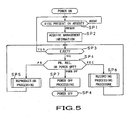
- the processing procedure shown in Fig.5 is carried out as the power is turned on. Specifically, when the power is turned on, the system controller 10 at step SP1 judges the presence/absence of the optical disc 2 from the result of detection by a detecting mechanism for the optical disc 2, not shown. If the result is negative at step SP1, the system controller 10 repeats step SP1. On the other hand, if the power is turned on in the state where the optical disc 2 has already been loaded, or if the optical disc 2 is loaded after the power is turned on, the result is positive at step SP1 and the processing shifts to step SP2. If the power is turned off while the system controller 10 is repeating step SP1, the system controller 10 shifts directly to step SP4 and ends this processing procedure.
- the system controller 10 drives the thread motor 21 to move the optical head 19 to the innermost circle of the optical disc 2 and acquires the result of reproduction of the innermost circle side from the DVD signal processing unit 14, thereby acquiring VMG data in the case where the optical disc 2 has been finalized. If the optical disc 2 has not been finalized yet, the system controller 10 acquires RMA information. If it is judged from this RMA information that data has already been recorded in a real-time data recording area on the optical disc 2, the system controller 10 searches the optical disc 2 to acquire VTSI and VTSTT VOBS data of each VTS. By doing so, the system controller 10 acquires management information for the optical disc 2, which is necessary for recording and reproduction of the optical disc 2, as in an optical disc apparatus for recording and reproducing an ordinary DVD.
- the system controller 10 acquires UDF data in addition to VMG data, and records and holds the series of acquired management information in a built-in memory.
- step SP3 the system controller 10 shifts to step SP3 and judges whether ejection of the optical disc 2 is designated or not. If the result is positive at this step, the system controller 10 instructs a loading mechanism, not shown, to eject the optical disc 2, and then returns to step SP1.
- step SP3 the system controller 10 shifts from step SP3 to step SP4 and judges whether the user's operation is an operation to designate recording (indicated by REC), an operation to designate reproduction (indicated by PB), or an operation to designate turning off of the power (indicated by Power OFF). If the user's operation is the operation to designate reproduction, the system controller 10 shifts from step SP4 to step SP5, then executes reproduction processing procedure to reproduce a file recorded on the optical disc 2, and returns to step SP4.
- step SP6 executes recording processing procedure to record an image to the optical disc 2, and returns to step SP4.
- the system controller 10 returns to step SP4 without executing the recording processing procedure.
- the system controller 10 erases recorded data after confirmation to the user, and executes the recording processing procedure.
- step SP4 the system controller 10 shifts from step SP4 to step SP7, then executes power off processing, and ends this processing procedure.
- the system controller 10 records an image file in the ROW system if the optical disc 2 is a DVD-RW.
- Fig.6 is a flowchart showing the recording processing procedure.
- the system controller 10 at the first step SP11 judges whether the user's designation of recording is related to image recording or is related to finalizing processing.
- step SP12 the system controller 10 shifts to step SP12 and judges whether start of recording has been designated by the user or not. If the result is negative at this step, the system controller 10 repeats step SP12. On the other hand, if the result is positive, the system controller 10 shifts from step SP12 to step SP13 and records VTSTT VOBS based on actual data.
- step SP14 the system controller 10 shifts to step SP14 and judges whether stop of recording has been designated by the user or not. If the result is negative at this step, the system controller 10 returns to step SP13.
- the system controller 10 thus repeats the processing procedure of steps SP13-SP14 SP13 to sequentially record actual data.
- step SP14 the recording of actual data VTSTT VOBS is completed.
- step SP15 the system controller 10 shifts to step SP15.
- the system controller 10 sequentially forms VTSI BUP, VTSI, and VTSM VOBS and thus records one VTS.
- the system controller 10 then updates TMP_VMGI and ends this recording processing procedure.
- step SP11 the system controller 10 shifts from step SP11 to step SP16 and judges whether start of recording has been designated by the user or not. If the result is negative at this step, the system controller 10 repeats step SP16. However, if the result is positive, the system controller 10 shifts from step SP16 to step SP17 to execute finalizing processing and ends this processing procedure.
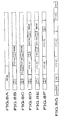
- Figs.7A to 7G are views for explaining image file recording processing based on this ROW system, for example, in the case where the optical disc 2 is a so-called virgin disc having no files recorded thereon.
- the system controller 10 updates RMA information acquired from the optical disc 2 and held in the memory, thereby securing, in advance, a recording area for lead-in, UDF, TMP_VMGI, and VTSI and VTSM VOBS of the leading title on the innermost circle side on the disc by padding, as shown in Fig.7A .
- Padding is the processing to record dummy data such as NULL to secure an area.
- VTSTT VOBS based on actual data is formed by sequentially recording video data and recording of actual data for one title is completed.
- VTSI BUP is subsequently recorded.
- padding processing is carried out.
- TMP_VMGI is updated, and VTSI and VTSM VOBS corresponding to this recording of actual data are formed, as shown in Fig.7C . In this manner, one VTS is recorded onto the optical disc.
- the system controller 10 records VTSTT VOBS based on actual data, as shown in Fig.7B .
- the system controller 10 completes recording of actual data VTSTT VOBS, as shown in Fig.7C .
- the system controller 10 sequentially forms VTSI BUP, VTSI, and VTSM VOBS, thus recording one VTS, and then updates TMP_VMGI.
- VTSTT VOBS and VTSI BUP are formed by recording actual data, following the padding area formed by the VTS that is immediately before, and padding processing is carried out to secure a recording area for TMP_VMGI and VTSI and VTSM VOBS of the subsequent title, as shown in Figs.7D and 7E .
- TMP_VMGI is temporary VMGI recorded together with VTSI when recording of one title is completed.
- TMP_VMGI includes information such as the number of VTSs recorded on the disc and the disc name, and information such as physical location of VTSs and title names of 99 titles. This TMP_VMGI is updated to the latest information for all the titles (VTSs) recorded in the past.
- the system controller 10 sequentially records titles.
- an optical disc 2 that has not been finalized yet is loaded and data is to be additionally written to this optical disc 2
- similar processing using RMA data acquired at step SP2 of Fig.5 and held in the memory is carried out, starting at the end of the already recorded titles.
- an image as a result of image pickup is additionally written.
- UDF and VMG are generated based on the management information thus generated and held in the memory, and lead-in and lead-out are generated.
- UDF and VMG data for the titles already recorded on the optical disc 2 are generated, using VTSI, TMP_VMGI, and VTSTT VOBS acquired at step SP2 of Fig.5 .
- a UDF area and a VMG area are formed by the finalizing processing, and a lead-in area and a lead-out area are formed, as shown in Fig.7G . This realizes compatibility with a playback-only optical disc.
- the system controller 10 executes the finalizing processing to form a UDF area and a VMG area and to form a lead-in area and a lead-out area, as shown in Figs.7A-7G .
- the size of VTSI and VTSM VOBS of a title following that VTS is defined as the size of the recording area to be secured by padding processing, and the latest TMP_VMGI is recorded into the recording area secured by the padding processing every time one VTS is prepared.
- TMP_VMGI on the innermost side is updated, and VTSTT VOBS and VTSI BUP constituting the next VTS are sequentially formed so as to record one VTS, VTSI and VTSM VOBS are recorded into the recording area secured by the padding processing.
- Fig.9 is a flowchart showing reproduction processing procedure.
- the system controller 10 starts this reproduction processing procedure, the system controller 10 at step SP31 judges whether start of reproduction has been designated by the user or not. If the result is negative at this step, the system controller 10 repeats step SP31. On the other hand, if the result is positive, the system controller 10 shifts from step SP31 to step SP32.
- the system controller 10 controls the entire operation so as to reproduce an image file designated by the user, with reference to the management information recorded and held in the memory.
- the system controller 10 detects the recording position of the corresponding file by using VMG data held in the memory, and instructs each unit of the optical disc recording/reproducing apparatus 100 to perform reproduction from this recording position.
- the system controller 10 detects the recording position of the corresponding file by using TMP_VMGI, and VTSI and VTSTT VOBS of each title that are held in the memory, and instructs each unit of the optical disc recording/reproducing apparatus 100 to perform reproduction from this recording position.
- step SP33 After instructing each unit to perform reproduction in this manner, the system controller 10 shifts to step SP33 and judges whether stop of reproduction has been designated by the user or not. If the result is negative at this step, the system controller 10 returns to step SP32. The system controller 10 thus repeats the processing procedure steps SP32-SP33-SP32 and sequentially reproduces a motion picture file designated by the user. On the other hand, if the result is positive at step SP33, the system controller 10 ends the reproducing operation and ends this reproduction processing procedure.
- a recording area for temporary management information for managing the file and management information for managing recording information of a file to be recorded next is secured, and the temporary management information for managing the file is recorded into the recording area while at least the temporary management information recorded on the innermost side is updated. Therefore, even when the temporary management information becomes unreadable because of update exceeding the rewriting durability of the medium with respect to the recording area for the temporary management information on the innermost side, the temporary management information recorded in the other recording area can be read and finalizing processing can be executed.
Landscapes
- Engineering & Computer Science (AREA)
- Signal Processing (AREA)
- Multimedia (AREA)
- Signal Processing For Digital Recording And Reproducing (AREA)
- Management Or Editing Of Information On Record Carriers (AREA)
- Optical Recording Or Reproduction (AREA)
Claims (9)
- Optisches Plattenaufzeichnungsverfahren zum Aufzeichnen eines Datensatzes, der aus einer aufzuzeichnenden Datei und Verwaltungsinformation der Datei besteht, auf einem Benutzerbereich auf einer umschreibbaren optischen Platte, während sie mit einem Aufzeichnungsformat für ein Nur-Wiedergabe-Aufzeichnungsmedium übereinstimmen, welches zumindest eine Datei, welche wiederzugebende Information und Verwaltungsinformation zum Verwalten der Information enthält, und Dateiverwaltungsinformation zum Verwalten von einer oder mehreren Dateien aufweist, wobei das Verfahren umfasst:Sichern eines Aufzeichnungsbereichs für temporäre Verwaltungsinformation zum Verwalten der aufzuzeichnenden Datei in dem Benutzerbereich, wobei die Verwaltungsinformation mit dem Aufzeichnungsformat des Nur-Wiedergabe-Aufzeichnungsmediums übereinstimmt, und Verwaltungsinformation zum Verwalten von Information der aufzuzeichnenden Datei;Aufzeichnen der temporären Verwaltungsinformation zum Verwalten der Datei auf dem Aufzeichnungsbereich und nachfolgendes Aufzeichnen der Information der aufzuzeichnenden Datei auf dem Aufzeichnungsbereich; Aufzeichnen der Verwaltungsinformation zum Verwalten der Information der Datei auf dem Aufzeichnungsbereich, um somit das Aufzeichnen der Datei zu beenden, danach Sichern eines Aufzeichnungsbereichs für die temporäre Verwaltungsinformation zum Verwalten der Datei und der Verwaltungsinformation zum Verwalten von Information einer anschließend aufzuzeichnenden Datei, danach Aufzeichnen der temporären Verwaltungsinformation zum Verwalten der Datei auf dem Aufzeichnungsbereich, und Umschreiben der vorher aufgezeichneten temporären Verwaltungsinformation mit der neuesten temporären Verwaltungsinformation; undjedes Mal, wenn eine Datei aufgezeichnet wird, Sichern eines Aufzeichnungsbereichs für die temporäre Verwaltungsinformation zum Verwalten der Datei und Verwaltungsinformation zum Verwalten von Information einer anschließend aufzuzeichnenden Datei, dann Aufzeichnen der temporären Verwaltungsinformation zum Verwalten der Datei auf dem Aufzeichnungsbereich und Aktualisieren der temporären Verwaltungsinformation, welche zumindest auf der innersten Seite der optischen Platte aufgezeichnet ist.
- Aufzeichnungsverfahren nach Anspruch 1, wobei jedes Mal, wenn eine Datei aufgezeichnet wird, ein Aufzeichnungsbereich für die temporäre Verwaltungsinformation zum Verwalten der Datei und Verwaltungsinformation zum Verwalten der Information der Datei, die anschließend aufzuzeichnen ist, gesichert wird, die temporäre Verwaltungsinformation zum Verwalten der Datei auf dem Aufzeichnungsbereich aufgezeichnet wird, und die gesamte temporäre Verwaltungsinformation, die schon aufgezeichnet wurde, aktualisiert wird.
- Aufzeichnungsverfahren nach Anspruch 1, wobei jedes Mal, wenn eine Datei aufgezeichnet wird, ein Aufzeichnungsbereich für die temporäre Verwaltungsinformation zum Verwalten der Datei und Verwaltungsinformation zum Verwalten von Information einer Datei, die anschließend aufgezeichnet wird, gesichert wird, die temporäre Verwaltungsinformation zum Verwalten der Datei auf dem Aufzeichnungsbereich aufgezeichnet wird, und lediglich die temporäre Verwaltungsinformation, welche auf der innersten Seite der optischen Platte aufgezeichnet ist, aktualisiert wird.
- Aufzeichnungsverfahren nach Anspruch 1, wobei, wenn eine Datei aufgezeichnet und geschlossen wird, Verwaltungsinformation zum Verwalten von Information dieser Datei verwendet wird, einen temporären Informationsteil, der aufgezeichnet ist, umzuschreiben, wenn eine frühere Datei geschlossen wird, und die temporäre Verwaltungsinformation bei zwei Positionen, d.h., die temporäre Verwaltungsinformation auf der innersten Seite der optischen Platte und die temporäre Verwaltungsinformation auf der äußersten Seite der optischen Platte gesichert werden.
- Optische Aufzeichnungsvorrichtung zum Aufzeichnen eines Datensatzes, der aus einer aufzuzeichnenden Datei und Verwaltungsinformation der Datei besteht, auf einem Benutzerbereich auf einer umschreibbaren optischen Platte (2), welche mit einem Aufzeichnungsformat für ein Nur-Wiedergabe-Aufzeichnungsmedium übereinstimmen, welches zumindest eine Datei aufweist, welche wiederzugebende Information und Verwaltungsinformation zum Verwalten der Information enthält, und Dateiverwaltungsinformation zum Verwalten einer oder mehrerer Dateien, wobei die Vorrichtung umfasst:eine Verwaltungsinformations-Erzeugungseinrichtung (7) zum Erzeugen von Verwaltungsinformation einer aufzuzeichnenden Datei;eine Aufzeichnungseinrichtung (16, 18, 19, 20, 21 ) zum Aufzeichnen des Datensatzes, der aus der Datei und Verwaltungsinformation der Datei besteht, auf dem Benutzerbereich der optischen Platte; undeine Steuereinrichtung (10) zum Steuern des Betriebs von zumindest der Verwaltungsinformations-Erzeugungseinrichtung und der Aufzeichnungseinrichtung;wobei die Steuereinrichtung betriebsfähig ist, einen Aufzeichnungsbereich für temporäre Verwaltungsinformation zum Verwalten der aufzuzeichnenden Datei im Benutzerbereich zu sichern, wobei die Verwaltungsinformation mit dem Aufzeichnungsbereich der Nur-Wiedergabe-Aufzeichnungsmedium übereinstimmt, und Verwaltungsinformation zum Verwalten der Information der aufzuzeichnenden Datei, und dann betriebsfähig ist, die temporäre Verwaltungsinformation zum Verwalten der Datei auf dem Aufzeichnungsbereich aufzuzeichnen, und anschließend betriebsfähig ist, die Information der aufzuzeichnenden Datei auf dem Aufzeichnungsbereich aufzuzeichnen, und dann die Verwaltungsinformation zum Verwalten der Aufzeichnungsinformation der Datei auf dem Aufzeichnungsbereich aufzuzeichnen, um somit das Aufzeichnen der Datei zu beenden, danach einen Aufzeichnungsbereich für die temporäre Verwaltungsinformation zum Verwalten der Datei und Verwaltungsinformation zum Verwalten einer Information einer nachfolgend aufzuzeichnenden Datei zu sichern, dann die temporäre Verwaltungsinformation zum Verwalten der Datei auf dem Aufzeichnungsbereich aufzuzeichnen, und die früher aufzeichnete temporäre Verwaltungsinformation mit der neuesten temporären Verwaltungsinformation umzuschreiben, und jedes Mal, wenn eine Datei aufgezeichnet wird, die Steuereinrichtung betriebsfähig ist, einen Aufzeichnungsbereich für die temporäre Verwaltungsinformation zum Verwalten der Datei und von Verwaltungsinformation zum Verwalten der Information einer Datei, die anschließend aufzuzeichnen ist, zu sichern, danach die temporäre Verwaltungsinformation zum Verwalten der Datei auf dem Aufzeichnungsbereich aufzuzeichnen, und die temporäre Verwaltungsinformation, die zumindest auf der innersten Seite der optischen Platte aufgezeichnet ist, zu aktualisieren.
- Aufzeichnungsvorrichtung nach Anspruch 5, wobei jedes Mal, wenn eine Datei aufgezeichnet wurde, die Steuereinrichtung betriebsfähig ist, Steuerung durchzuführen, um einen Aufzeichnungsbereich für die temporäre Verwaltungsinformation zum Verwalten der Datei und Verwaltungsinformation zum Verwalten der Datei einer anschließend aufzuzeichnenden Datei zu sichern, danach die temporäre Verwaltungsinformation zum Verwalten der Datei auf dem Aufzeichnungsbereich aufzuzeichnen, und die gesamte temporäre Verwaltungsinformation, welche schon aufgezeichnet wurde, zu aktualisieren.
- Aufzeichnungsvorrichtung nach Anspruch 5, wobei jedes Mal, wenn eine Datei aufgezeichnet wird, die Steuereinrichtung betriebsfähig ist, Steuerung durchzuführen, um einen Aufzeichnungsbereich für die temporäre Verwaltungsinformation zum Verwalten der Datei und Verwaltungsinformation zum Verwalten von Information einer nachfolgend aufzuzeichnenden Datei zu sichern, danach die temporäre Verwaltungsinformation zum Verwalten der Datei auf dem Aufzeichnungsbereich aufzuzeichnen, und dann lediglich die temporäre Verwaltungsinformation, welche auf der innersten Seite der optischen Platte aufgezeichnet wurde, zu aktualisieren.
- Aufzeichnungsvorrichtung nach Anspruch 5, wobei, wenn eine Datei aufgezeichnet und geschlossen wird, die Steuereinrichtung betriebsfähig ist, Steuerung durchzuführen, um Verwaltungsinformation zum Verwalten von Information dieser Datei zu verwenden, um einen temporären Verwaltungsinformationsteil, der aufgezeichnet wird, zu überschreiben, wenn eine vorherige Datei geschlossen wird, und die temporäre Verwaltungsinformation bei zwei Positionen, d.h., die temporäre Verwaltungsinformation auf der innersten Seite der optischen Platte und die temporäre Verwaltungsinformation auf der äußersten Seite der optischen Platte zu sichern.
- Informationsaufzeichnungsmedium, auf welchem ein Steuerprogramm aufgezeichnet ist, so dass das Steuerprogramm durch einen Steuercomputer lesbar ist, wobei der Steuercomputer die Arbeitsweise der Verwaltungsinformations-Erzeugungseinrichtung steuert, um Verwaltungsinformation einer aufzuzeichnenden Datei zu erzeugen, und der Aufzeichnungseinrichtung zum Aufzeichnen eines Datensatzes, der aus einer Datei besteht, und von Verwaltungsinformation der Datei auf einem Benutzerbereich einer optischen Platte, wobei die Verwaltungsinformations-Erzeugungseinrichtung und die Aufzeichnungseinrichtung in einer optischen Plattenaufzeichnungsvorrichtung zum Aufzeichnen des Satzes vorgesehen sind, der aus der aufzuzeichnenden Datei und Verwaltungsinformation der Datei besteht, auf dem Benutzerbereich auf der optischen Platte, wobei das Steuerprogramm veranlasst, dass der Steuercomputer als Steuereinrichtung arbeitet, um Steuerung durchzuführen, um einen Aufzeichnungsbereich für temporäre Verwaltungsinformation zum Verwalten der aufzuzeichnenden Datei im Benutzerbereich zu sichern, wobei die Verwaltungsinformation mit dem Aufzeichnungsformat des Nur-Wiedergabe-Aufzeichnungsmediums übereinstimmt, und Verwaltungsinformation zum Verwalten von Information der aufzuzeichnenden Datei, danach Aufzeichnen der temporären Verwaltungsinformation zum Verwalten der Datei auf dem Aufzeichnungsbereich, anschließendes Aufzeichnen der Information der aufzuzeichnenden Datei auf dem Aufzeichnungsbereich, und danach Aufzeichnen der Verwaltungsinformation zum Verwalten der Information der Datei auf dem Aufzeichnungsbereich, um das Aufzeichnen der Datei zu beenden, danach einen Aufzeichnungsbereich für die temporäre Verwaltungsinformation zum Verwalten der Datei und der Verwaltungsinformation zum Verwalten einer Datei, welche anschließend aufzuzeichnen ist, zu sichern, danach Aufzeichnen der temporären Verwaltimgsinformation zum Verwalten der Datei auf dem Aufzeichnungsbereich, und Umschreiben der vorherigen aufgezeichneten temporären Verwaltungsinformation mit der neuesten aufgezeichneten temporären Verwaltungsinformation, und, jedes Mal, wenn eine Datei aufgezeichnet wird, einen Aufzeichnungsbereich für die temporäre Verwaltungsinformation zu sichern, um die Datei zu verwalten und Verwaltungsinformation von Information einer anschließend aufzuzeichnenden Datei zu verwalten, danach Aufzeichnen der temporären Verwaltungsinformation zum Verwalten der Datei auf dem Aufzeichnungsbereich, und die temporäre Verwaltungsinformation, welche zumindest auf der innersten Seite der optischen Platte aufgezeichnet wurde, zu aktualisieren.
Applications Claiming Priority (3)
| Application Number | Priority Date | Filing Date | Title |
|---|---|---|---|
| JP2002163537A JP3858766B2 (ja) | 2002-06-04 | 2002-06-04 | 光ディスク記録方法、光ディスク記録装置及び情報記録媒体 |
| JP2002163537 | 2002-06-04 | ||
| PCT/JP2003/006489 WO2003102954A1 (en) | 2002-06-04 | 2003-05-23 | Medium recording method, medium recording device, and information recording medium |
Publications (3)
| Publication Number | Publication Date |
|---|---|
| EP1511037A1 EP1511037A1 (de) | 2005-03-02 |
| EP1511037A4 EP1511037A4 (de) | 2008-02-20 |
| EP1511037B1 true EP1511037B1 (de) | 2010-04-07 |
Family
ID=29706638
Family Applications (1)
| Application Number | Title | Priority Date | Filing Date |
|---|---|---|---|
| EP03733048A Expired - Lifetime EP1511037B1 (de) | 2002-06-04 | 2003-05-23 | Mediumaufzeichnungsverfahren, mediumaufzeichnungseinrichtung und informationsaufzeichnungsmedium |
Country Status (8)
| Country | Link |
|---|---|
| US (1) | US7469094B2 (de) |
| EP (1) | EP1511037B1 (de) |
| JP (1) | JP3858766B2 (de) |
| KR (1) | KR100971829B1 (de) |
| CN (1) | CN100447888C (de) |
| AU (1) | AU2003242443A1 (de) |
| DE (1) | DE60332015D1 (de) |
| WO (1) | WO2003102954A1 (de) |
Families Citing this family (3)
| Publication number | Priority date | Publication date | Assignee | Title |
|---|---|---|---|---|
| JP4106630B2 (ja) * | 2004-09-06 | 2008-06-25 | ソニー株式会社 | 記録装置および方法、記録媒体、並びにプログラム |
| JP2007048350A (ja) * | 2005-08-08 | 2007-02-22 | Sony Corp | 光ディスク記録装置、光ディスクの初期化方法及びカメラ一体型光ディスク記録装置 |
| US20080056674A1 (en) * | 2006-09-05 | 2008-03-06 | Mediatek Inc. | Data recording and recovery method for an optical storage medium and computer-readable storage medium using the method |
Family Cites Families (9)
| Publication number | Priority date | Publication date | Assignee | Title |
|---|---|---|---|---|
| JP2910593B2 (ja) * | 1994-12-20 | 1999-06-23 | ティアック株式会社 | ディスク装置 |
| US6223302B1 (en) | 1995-08-18 | 2001-04-24 | Matsushita Electric Industrial Co., Ltd. | Information recording/reproducing unit and information recording/reproducing data |
| JPH09115246A (ja) | 1995-10-19 | 1997-05-02 | Sony Corp | 情報記録方法及び情報記録装置並びに記録媒体 |
| CN100403404C (zh) * | 1997-09-17 | 2008-07-16 | 松下电器产业株式会社 | 光盘记录装置和记录方法 |
| KR100544175B1 (ko) * | 1999-05-08 | 2006-01-23 | 삼성전자주식회사 | 링킹 타입 정보를 저장하는 기록 매체와 결함 영역 처리 방법 |
| JP2001110055A (ja) * | 1999-10-05 | 2001-04-20 | Yamaha Corp | 記録完結処理済み書換型光ディスクの追記方法および書換型光ディスク記録装置 |
| JP2001291367A (ja) * | 2000-04-10 | 2001-10-19 | Mitsubishi Chemicals Corp | 光記録媒体並びに光記録媒体記録方法及び光記録媒体再生方法 |
| JP4214665B2 (ja) | 2000-07-25 | 2009-01-28 | ソニー株式会社 | 再生装置 |
| JP4467737B2 (ja) * | 2000-08-16 | 2010-05-26 | パイオニア株式会社 | 情報記録装置、情報記録方法及び記録制御プログラムが記録された情報記録媒体 |
-
2002
- 2002-06-04 JP JP2002163537A patent/JP3858766B2/ja not_active Expired - Fee Related
-
2003
- 2003-05-23 DE DE60332015T patent/DE60332015D1/de not_active Expired - Lifetime
- 2003-05-23 EP EP03733048A patent/EP1511037B1/de not_active Expired - Lifetime
- 2003-05-23 AU AU2003242443A patent/AU2003242443A1/en not_active Abandoned
- 2003-05-23 KR KR1020047001694A patent/KR100971829B1/ko not_active Expired - Fee Related
- 2003-05-23 WO PCT/JP2003/006489 patent/WO2003102954A1/ja not_active Ceased
- 2003-05-23 US US10/485,424 patent/US7469094B2/en not_active Expired - Fee Related
- 2003-05-23 CN CNB038007878A patent/CN100447888C/zh not_active Expired - Fee Related
Also Published As
| Publication number | Publication date |
|---|---|
| US7469094B2 (en) | 2008-12-23 |
| JP3858766B2 (ja) | 2006-12-20 |
| DE60332015D1 (de) | 2010-05-20 |
| JP2004013967A (ja) | 2004-01-15 |
| US20050078945A1 (en) | 2005-04-14 |
| EP1511037A1 (de) | 2005-03-02 |
| EP1511037A4 (de) | 2008-02-20 |
| KR100971829B1 (ko) | 2010-07-22 |
| KR20050006123A (ko) | 2005-01-15 |
| AU2003242443A1 (en) | 2003-12-19 |
| CN100447888C (zh) | 2008-12-31 |
| WO2003102954A1 (en) | 2003-12-11 |
| CN1543648A (zh) | 2004-11-03 |
Similar Documents
| Publication | Publication Date | Title |
|---|---|---|
| KR100917517B1 (ko) | 기록 방법, 기록 장치 및 기록 매체 | |
| EP1498893B1 (de) | Optische datenträgereinrichtung und verfahren zum aufzeichnen auf einem optischen datenträger | |
| CA2477522C (en) | Optical recording method and optical recording device | |
| KR100940419B1 (ko) | 기록 장치 및 기록 방법 | |
| CA2484707C (en) | Recording method, recording device and recording medium | |
| EP1511037B1 (de) | Mediumaufzeichnungsverfahren, mediumaufzeichnungseinrichtung und informationsaufzeichnungsmedium | |
| JP4066449B2 (ja) | 光ディスク装置、光ディスクの記録方法、光ディスクの記録方法のプログラム及び光ディスクの記録方法のプログラムを記録した記録媒体 | |
| HK1072317B (en) | Optical disc device and optical disc recording method | |
| HK1074559A (en) | Recording device and recording method | |
| HK1074525A (en) | Recording method, recording device, and recording medium |
Legal Events
| Date | Code | Title | Description |
|---|---|---|---|
| PUAI | Public reference made under article 153(3) epc to a published international application that has entered the european phase |
Free format text: ORIGINAL CODE: 0009012 |
|
| 17P | Request for examination filed |
Effective date: 20040123 |
|
| AK | Designated contracting states |
Kind code of ref document: A1 Designated state(s): AT BE BG CH CY CZ DE DK EE ES FI FR GB GR HU IE IT LI LU MC NL PT RO SE SI SK TR |
|
| AX | Request for extension of the european patent |
Extension state: AL LT LV MK |
|
| DAX | Request for extension of the european patent (deleted) | ||
| RBV | Designated contracting states (corrected) |
Designated state(s): AT BE BG CH DE FR GB LI NL |
|
| A4 | Supplementary search report drawn up and despatched |
Effective date: 20080123 |
|
| 17Q | First examination report despatched |
Effective date: 20080404 |
|
| GRAP | Despatch of communication of intention to grant a patent |
Free format text: ORIGINAL CODE: EPIDOSNIGR1 |
|
| RBV | Designated contracting states (corrected) |
Designated state(s): DE FR GB NL |
|
| GRAS | Grant fee paid |
Free format text: ORIGINAL CODE: EPIDOSNIGR3 |
|
| GRAA | (expected) grant |
Free format text: ORIGINAL CODE: 0009210 |
|
| AK | Designated contracting states |
Kind code of ref document: B1 Designated state(s): DE FR GB NL |
|
| REG | Reference to a national code |
Ref country code: GB Ref legal event code: FG4D |
|
| REF | Corresponds to: |
Ref document number: 60332015 Country of ref document: DE Date of ref document: 20100520 Kind code of ref document: P |
|
| REG | Reference to a national code |
Ref country code: NL Ref legal event code: T3 |
|
| PLBE | No opposition filed within time limit |
Free format text: ORIGINAL CODE: 0009261 |
|
| STAA | Information on the status of an ep patent application or granted ep patent |
Free format text: STATUS: NO OPPOSITION FILED WITHIN TIME LIMIT |
|
| 26N | No opposition filed |
Effective date: 20110110 |
|
| REG | Reference to a national code |
Ref country code: GB Ref legal event code: 746 Effective date: 20120702 |
|
| PGFP | Annual fee paid to national office [announced via postgrant information from national office to epo] |
Ref country code: NL Payment date: 20120531 Year of fee payment: 10 Ref country code: DE Payment date: 20120523 Year of fee payment: 10 |
|
| REG | Reference to a national code |
Ref country code: DE Ref legal event code: R084 Ref document number: 60332015 Country of ref document: DE Effective date: 20120614 |
|
| PGFP | Annual fee paid to national office [announced via postgrant information from national office to epo] |
Ref country code: GB Payment date: 20120522 Year of fee payment: 10 Ref country code: FR Payment date: 20120601 Year of fee payment: 10 |
|
| REG | Reference to a national code |
Ref country code: NL Ref legal event code: V1 Effective date: 20131201 |
|
| GBPC | Gb: european patent ceased through non-payment of renewal fee |
Effective date: 20130523 |
|
| PG25 | Lapsed in a contracting state [announced via postgrant information from national office to epo] |
Ref country code: DE Free format text: LAPSE BECAUSE OF NON-PAYMENT OF DUE FEES Effective date: 20131203 |
|
| REG | Reference to a national code |
Ref country code: DE Ref legal event code: R119 Ref document number: 60332015 Country of ref document: DE Effective date: 20131203 |
|
| PG25 | Lapsed in a contracting state [announced via postgrant information from national office to epo] |
Ref country code: NL Free format text: LAPSE BECAUSE OF NON-PAYMENT OF DUE FEES Effective date: 20131201 |
|
| REG | Reference to a national code |
Ref country code: FR Ref legal event code: ST Effective date: 20140131 |
|
| PG25 | Lapsed in a contracting state [announced via postgrant information from national office to epo] |
Ref country code: GB Free format text: LAPSE BECAUSE OF NON-PAYMENT OF DUE FEES Effective date: 20130523 |
|
| PG25 | Lapsed in a contracting state [announced via postgrant information from national office to epo] |
Ref country code: FR Free format text: LAPSE BECAUSE OF NON-PAYMENT OF DUE FEES Effective date: 20130531 |