EP1511243A1 - Selektivübertagungsgeschwindigkeitsbegrenzer für ein schnelles Spanning-Tree-Protokol - Google Patents
Selektivübertagungsgeschwindigkeitsbegrenzer für ein schnelles Spanning-Tree-Protokol Download PDFInfo
- Publication number
- EP1511243A1 EP1511243A1 EP04019546A EP04019546A EP1511243A1 EP 1511243 A1 EP1511243 A1 EP 1511243A1 EP 04019546 A EP04019546 A EP 04019546A EP 04019546 A EP04019546 A EP 04019546A EP 1511243 A1 EP1511243 A1 EP 1511243A1
- Authority
- EP
- European Patent Office
- Prior art keywords
- bridge
- control messages
- network
- topology
- port
- Prior art date
- Legal status (The legal status is an assumption and is not a legal conclusion. Google has not performed a legal analysis and makes no representation as to the accuracy of the status listed.)
- Granted
Links
- 230000005540 biological transmission Effects 0.000 title claims abstract description 80
- 238000000034 method Methods 0.000 claims abstract description 64
- 230000008859 change Effects 0.000 claims description 74
- 230000004048 modification Effects 0.000 description 40
- 238000012986 modification Methods 0.000 description 40
- 230000007704 transition Effects 0.000 description 14
- 238000010586 diagram Methods 0.000 description 12
- 230000009471 action Effects 0.000 description 9
- 230000014509 gene expression Effects 0.000 description 8
- 230000007246 mechanism Effects 0.000 description 8
- 230000003111 delayed effect Effects 0.000 description 3
- 238000001514 detection method Methods 0.000 description 3
- 238000001914 filtration Methods 0.000 description 2
- 238000011010 flushing procedure Methods 0.000 description 2
- 230000006399 behavior Effects 0.000 description 1
- 238000006243 chemical reaction Methods 0.000 description 1
- 238000004891 communication Methods 0.000 description 1
- 230000001934 delay Effects 0.000 description 1
- 230000000694 effects Effects 0.000 description 1
- 230000006870 function Effects 0.000 description 1
- 230000008569 process Effects 0.000 description 1
- 230000008707 rearrangement Effects 0.000 description 1
- 238000006467 substitution reaction Methods 0.000 description 1
Images







Classifications
-
- H—ELECTRICITY
- H04—ELECTRIC COMMUNICATION TECHNIQUE
- H04L—TRANSMISSION OF DIGITAL INFORMATION, e.g. TELEGRAPHIC COMMUNICATION
- H04L45/00—Routing or path finding of packets in data switching networks
- H04L45/02—Topology update or discovery
-
- H—ELECTRICITY
- H04—ELECTRIC COMMUNICATION TECHNIQUE
- H04L—TRANSMISSION OF DIGITAL INFORMATION, e.g. TELEGRAPHIC COMMUNICATION
- H04L45/00—Routing or path finding of packets in data switching networks
- H04L45/02—Topology update or discovery
- H04L45/028—Dynamic adaptation of the update intervals, e.g. event-triggered updates
-
- H—ELECTRICITY
- H04—ELECTRIC COMMUNICATION TECHNIQUE
- H04L—TRANSMISSION OF DIGITAL INFORMATION, e.g. TELEGRAPHIC COMMUNICATION
- H04L45/00—Routing or path finding of packets in data switching networks
- H04L45/48—Routing tree calculation
Definitions
- the present invention relates in general to local and metropolitan area networks and, in particular, to a method for selectively eliminating latencies in the exchange of control messages between bridges during the re/convergence of the network.
- Computers are often connected together through a network (e.g., Local Area Network (LAN), Metropolitan Area Network (MAN)) that is made up of bridges (or any other device operating at layer 2 of the Open Systems Interconnection reference model) compliant with the IEEE 802.1 Rapid Spanning Tree Protocol (RSTP).
- LAN Local Area Network
- MAN Metropolitan Area Network
- RSTP Rapid Spanning Tree Protocol
- the network provides for redundant connections where data transmitted from one bridge to another bridge is constrained to follow a loop-free path.
- the RSTP uses bridges within the network to reduce the physical topology of the network to an active topology that is both loop-free ('tree') and fully-connected ('spanning').
- the bridges can suffer from undesirable latencies when they have to communicate with one another in order for the topology to re/converge towards a spanning tree as directed by the RSTP.
- the RSTP currently avoids these latencies instead of eliminating these latencies as done by the present invention.
- the avoidance is built into the current RSTP whose operation depends on the exchange of control messages known as Bridge Protocol Data Units (BPDUs) between bridges.
- Bridges are interconnected to one another by links.
- the BPDUs are transmitted on a link by a port of one of the bridges.
- the current RSTP limits the number of BPDUs that can be transmitted by a port.
- txCount the number of transmitted BPDUs per port
- txCount reaches a limit of txHoldCount BPDUs
- the current RSTP prevents the next BPDU from being transmitted until txCount is decremented. Such a situation can create an undesirable latency.
- the current RSTP is not good enough because its solution is not always successful at totally avoiding such latencies. As a consequence, the number of transmitted BPDUs is limited. In particular, the current RSTP increments txCount by 1 for each transmitted BPDU and decrements txCount by 1 at one-second intervals. If txCount is null, as many as txHoldCount BPDUs can be transmitted before txCount is decremented. If txHoldCount BPDUs have been transmitted and txCount has hot been decremented, a port consequently has to wait at worse 1 second before the next BPDU can be transmitted.
- the present invention includes a network (e.g., RSTP-based network) and method that can selectively eliminate latencies in the exchange of control messages (e.g., BPDUs) between bridges during the re/convergence of the network.
- the method includes a step of classifying control messages (that are scheduled for transmission) as either low-priority control messages or high-priority control messages.
- the method also has a step of limiting the transmission rate of the low-priority control messages in accordance with a traditional IEEE 802.1 RSTP.
- the method also includes a step of immediately transmitting the high-priority control messages that contain information that contributes to the re/convergence of the network.
- a network 100 shown as a bridged local area network 100
- the present invention is described below as being used in a RSTP-based Bridged LAN 100, it should be understood that the present invention can be used in other types of RSTP-based networks such as a RSTP-based Bridged Metropolitan Area Network (MAN).
- MAN RSTP-based Bridged Metropolitan Area Network
- the present invention may be used in any type of network that incorporates a protocol relying on RSTP such as the Multiple Spanning Tree Protocol (MSTP). Accordingly, the network 100 and method 300 should not be construed in a limited manner.
- MSTP Multiple Spanning Tree Protocol
- the network 100 includes multiple LANS 102 (only three shown) that are interconnected to one another by Media Access Control (MAC) bridges 104 (only three shown). Each bridge 104 includes one or more ports 106 each of which is connected to one of the LANs 102.
- MAC Media Access Control
- FIGURE 2 there is shown a block diagram that illustrates the architecture of the bridge 104 (shown as a two-port bridge 104).
- the method 300 of the present invention primarily affects the spanning tree protocol entity 202 in the bridge 104. Basically, the method 300 eliminates latencies during the re/convergence of the network 100 after an event occurs within the network 100 such as when a bridge 104 (e.g., root bridge 104), port 106 or LAN 102 fails, is added to the network 100, or is removed from the network 100 (see FIGURES 4-6).
- a bridge 104 e.g., root bridge 104
- port 106 or LAN 102 fails
- the method 300 distinguishes between classes of control messages 204 (e.g., BPDUs 204) and limits the transmission rate of low-priority BPDUs 204a and immediately transmits high-priority BPDUs 204b that contain information that contributes to the re/convergence of the network 100 from an unstable topology to a stable topology. More details about the different steps of the method 300 and different examples of high-priority BPDUs 204b are provided below with respect to FIGURE 3.
- classes of control messages 204 e.g., BPDUs 204
- FIGURE 3 there is a flowchart illustrating the basic steps of the preferred method 300 for selectively eliminating latencies in the exchange of BPDUs 204 during the re/convergence of the RSTP-based network 100.
- one or more state machines 206 within each bridge 104 are used to, among other tasks, classify each of the to-be-transmitted BPDUs 204 as either a low-priority BPDU 204a or a high-priority BPDU 204b.
- a high-priority BPDU 204b is any control message that contains information that contributes to the re/convergence of the network 100.
- the state machines 206 needed to implement method 300 would classify a to-be-transmitted BPDU as a high-priority BPDU 204b in the following situations: (1) a bridge 104 becomes a new root bridge 104; (2) a bridge 104 has to "reroot" (i.e. decide which other port 106 provides access towards a new root bridge 104); or (3) a bridge 104 has to advertise information about a new root bridge 104 (see the detailed discussion associated with FIGURES 4-6 for more information about these situations). BPDUs not classified as high-priority BPDU 204b are classified as low-priority BPDUs 204a.
- the state machines 206 are configured in a manner that enables this high-priority BPDU 204b to be immediately transmitted between bridges 104.
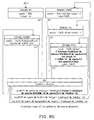
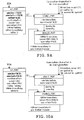
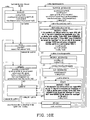
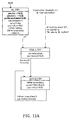
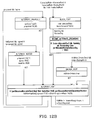
- the state machines 204 can be configured to perform step 304, reference is made to the discussion provided below with respect to FIGURES 7-12.
- FIGURE 2 Although only one state machine 206 is shown in FIGURE 2, it is readily appreciated by those skilled in the art that there are many different state machines 206 used by the bridge 104.
- the bridge 104 can use state machines 206 like a Port Transmit state machine and a Port Timers state machine (see discussion below and Chapter 17 in IEEE P802.1D-2003/D3 (June 11, 2003)).
- the state machine 206 allows the value of the txCount parameter to reach but not exceed the value of the txHoldCount parameter when there is a low-priority BPDU 204a to transmit, which limits the transmission rate of the low-priority BPDUs 204a between bridges 104.
- the transmission rate of the low-priority BPDUs 204a is limited in accordance with the traditional IEEE 802.1 RSTP standard.
- the method 300 selectively eliminates latencies by removing the restriction imposed by the traditional IEEE 802.1 RSTP on the txCount parameter by the txHoldCount parameter for high-priority BPDUs 204. In doing this, the method 300 classifies the BPDUs 204 into low- and high-priority classes on a per-port basis and then immediately transmits the high-priority BPDUs 204b while the transmission rate of the low-priority BPDUs 204a is limited as mandated by the traditional IEEE 802.1 RSTP.
- the classes of low- and high- priority BPDUs 204a and 204b are mutually exclusive. As such, the definition of the class of high-priority BPDUs 204b is consequently sufficient to define both.
- High-priority BPDUs 204b encompass any BPDU 204 whose information, once transmitted, contributes to the re/convergence of an unstable RSTP-based topology to a stable one (spanning tree). As a consequence, high-priority BPDUs 204b appear when re/convergence is occurring.
- the BPDUs 204 are classified as low-priority BPDUs 204a.
- FIGURES 4-6 there are shown three exemplary networks where the immediate transmission of high-priority BPDUs 204b is desired.
- a globally unique Identifier identifies every bridge 104 of a topology.
- the present invention like the traditional RSTP elects the bridge 104 with the lowest Id as the root bridge 104 of the spanning tree.
- the spanning tree is built by preventing some of the ports 106 on the participating bridges 104 from forwarding data traffic.
- the path connecting a bridge 104 to the root bridge 104 is chosen as the lowest-cost path among all possible paths in the topology.
- FIGURE 4 there is a diagram that represents a spanning tree where bridges 1, 2 and 4 are connected to root bridge 0 through a path while bridges 3 and 5 use another path.
- the path chosen to connect bridge 2 to root bridge 0 has a lower cost than the path that would go through bridges 3 and then 5.
- bridges 4 and 5 each become a 'temporary' root bridge and have to advertise what they consider as superior information to their neighbor(s), bridge 2 and 3 respectively in this case.
- bridges 2 and 3 have to wait as they could in the traditional RSTP before transmitting a high-priority BPDU 204b containing such advertising information, then the reconvergence of the topology is delayed by at least the time they spend waiting for the transmission to start.
- bridge 1 After some time, bridge 1 realizes that it is the new root bridge because its Id is the lowest among all connected bridges. Assuming bridge 1 can transmit a high-priority BPDU 204b advertising bridge 1 as the new root bridge to its neighbor, bridge 2, the latter will have to "reroot”. Bridge 2 used to consider bridge 4 as the direction towards former root bridge 0. When it receives the high-priority BPDU 204b from bridge 1, bridge 2 now considers its port 106 connected to bridge 1 as providing the direction towards the new root bridge. This is "rerooting". Because of this, bridge 2 has to advertise new root bridge 1 to its downstream neighbors, bridges 3 and 4. If bridge 2 has to wait before transmitting a high-priority BPDU 204b advertising such information on the ports 106 connected to these neighbors, the reconvergence of the topology is delayed by at least the time bridge 2 spends waiting for the transmission to start.
- bridge 2 became one as well and advertised itself to bridge 3, in particular.
- Bridge 3 accepted this information, "rerooted", as described for bridge 2 previously.
- bridge 3 receives from bridge 2 a high-priority BPDU 204b advertising new root bridge 1, it does not reroot even though it has to advertise new root bridge 1 to its downstream neighbor, bridge 5.
- bridge 3 has to wait before transmitting a high-priority BPDU 204b advertising such information on the ports 106 connected to this neighbor, the reconvergence of the topology is delayed by at least the time bridge 3 spends waiting for the transmission to start.
- FIGURE 6 illustrates a diagram that depicts the final configuration of the network after reconvergence.
- the present invention populates the class of high-priority control traffic with BPDUs 204b that carry superior information and are immediately transmitted when a bridge:
- the method 300 allows for immediate transmission of high-priority BPDUs 204b and limits the transmission rate of low-priority BPDUs 204a.
- the method 300 like the traditional RSTP relies on a distributed algorithm and the RSTP-based bridges 104 do not know whether the surrounding topology is stable or not. It is only by detecting certain events that a bridge 104 knows that re/convergence is ongoing (e.g., see the yes/no steps in FIGURES 7E, 8E and 9C).
- TCPNs Topology Change Pre-Notifications BPDUs
- TCPNs Topology Change Pre-Notifications BPDUs
- the "reset” keyword means that the boolean variable should be initialized to FALSE, while the keyword “set” means that the boolean variable should be initialized to TRUE.
- TABLE #2 The different sets of modifications to IEEE P802.1D-2003/D3 that are possible to implement the proposed solution are summarized below in TABLE #2. Each set is further explained below. It should be appreciated that in TABLE #2 and in the rest of this document (until otherwise mentioned), RSTP is fully stable when bridges are connected by a spanning tree (as described in the standard) and txCount holds a value of 0 or 1 on all ports of all bridges in the topology. After initial convergence or after a reconvergence, it takes a few seconds before an incremented txCount comes back to 0 or 1.
- BPDUs Bridge Protocol Data Units
- BPDUs Rapid Spanning Tree BPDUs unless otherwise mentioned (see also section 9.3.3 in IEEE P802.1D-2003/D3).
- each transmitted BPDU shall contain the following parameters and no others. Where a specific parameter value is indicated in this subclause, that parameter value shall be encoded in all transmitted BPDUs:
- TCNs Topology Change Notification messages
- TCNs are generated and consequently transmitted over the entire topology to let bridges accordingly flush their Filtering Databases following a TC (short for Topology Change).
- Each participating bridge should receive at least one such TCN immediately following a TC (so as to ensure immediate flushing of outdated information in a bridge's Filtering Database). If reception of such a TCN is not immediate, some data frames may not be transmitted on the right ports. This is an undesirable effect, as data may not be forwarded to the right destination.
- the set of modifications described hereafter makes immediate transmission of necessary TCNs possible when a bridge:
- txHoldCount should not be set to 1. This is because some bridges in the topology may not be aware of a TC but still have to propagate at least one TCN on each active port other than the port notified of a TC by a received TCN. Assuming, as it is so far assumed, that RSTP is stable and that no event altered the topology for some time, txCount should hold a value of 0 or 1 on each port of any bridge in the topology. A value of 1 on a port would be due for instance to a "Hello Message" being transmitted before txCount is reset (as it is at one-second intervals).
- ((tcWhile! 0) && selectiveTc)))" condition is verified on that port, which may not be the case on all ports of all bridges in the topology).
- a TCN can be transmitted if txHoldCount is set to 2 in these conditions.
- Two mechanisms can be envisaged to allow txHoldCount to be set to any value including the value 1 without impairing reconvergence time.
- the propagation of TCNs subsequently received has to be limited by the standard transmission rate limiter so as to avoid unnecessary flushing in the topology.
- the second mechanism monitors the detection of a TC on any port of a bridge. Upon detection of a TC, it transmits a "Topology Change Pre-Notification" BPDU (TCPN) on all Root or Designated Ports in the Forwarding state that are not Edge Ports. TCPNs are accepted on other bridges by other Root or Designated Ports in the Forwarding state that are not Edge Ports. Those receiving ports trigger the transmission of TCPNs on all Root or Designated Ports in the Forwarding state that are not Edge Ports: This can be referred to as the propagation of a TCPN.
- TCPN Topicology Change Pre-Notification
- Such propagation eventually stops when a TCPN reaches a bridge whose ports other than the receiving ports are not Root or Designated Ports in the Forwarding state that are not Edge Ports (e.g. a port in the Discarding or Learning state, an Edge Port, etc.).
- a bridge allows the propagation of the next received TCN.
- a TCPN is a BPDU as generated by the txRstp () procedure (see section 17.21.20 in IEEE P802.1D-2003/D3) except that:
- the second mechanism allows the selective transmission of necessary BPDUs as previously described in Set#1 but also when a bridge finds a less costly path to the Root Bridge.
- the transmission of a TCPN always precedes (during the processing of a received BPDU) the transmission of a regular BPDU and is independent. This can be done by replacing newInfo with "newInfo && !newInfoTCPN" in the condition on the transition from the IDLE state to the TRANSMIT_RSTP state in the Port Transmit State Machine where newInfoTCPN is a boolean set if a TCPN is to be (immediately) transmitted. newInfoTCPN would be reset in a new TRANSMIT_TCPN state that would be part of the Port Transmit state machine.
- This new state might reuse txRstp() to transmit a well-formatted TCPN only when the transmitting port is a Root or Designated Port in the Forwarding state that is not an Edge Port.
- UCT Unconditional Transition
- txCount should not be incremented by one when a TCPN is transmitted by a port.
- care should be exercised to avoid deadlocks due to newInfoTCPN being set e.g. the condition to the TRANSMIT_RSTP state might have to be further modified).
- TCPNs could be standardized but need not be as it is interoperable with existing RSTP-based bridges.
- Standardization might include a Pre-Notification bit in a regular BPDU that would provide the same functionality as a TCPN without the extra BPDU. Interoperability with existing RSTP-based bridges is ensured: IEEE P802.1D-2003-2003 claims that, although "the Unknown value of Port Role cannot be generated by a valid implementation of 802.1D-2003..., this value is accepted on receipt.” The standard also notes that "If the Unknown value of the Port Role parameter is received, the state machines will effectively treat the RST BPDU as if it were a Configuration BPDU.” (see section 9.2.9 in IEEE P802.1D-2003-2003)..
- Set#4 has to be complemented by those of Set#5 as described next.
- Set#5 allows a port that is becoming enabled (e.g. when a link that was lost is brought back up within a very short period of time) to transmit any necessary BPDU for immediate reconvergence to start.
- Set#5 may optionally be complemented by those of Set#6 as described next.
- Set#6 allows a port that is becoming an Alternate Port and that is transiting to the Discarding state to transmit any BPDU necessary for the port on the other side of the link to transit to its final state. This is optional because that other port should be a Designated Port in the Discarding state waiting to transit to the Forwarding state. Assuming, as it is so far assumed, that the link is a point-to-point link, no data service user can be connected to that remote Designated Port. As a consequence its transiting to the Forwarding state does not improve the service provided to the data service user. However, such a transition leads to a more stable RSTP faster, which is desirable.
- the described and claimed method may have the following advantageous features or combinations of features:
- the described and claimed network may have the following advantageous features or combinations of features:
- the described invention may also be realized by a device as follows:
- a device comprising: a plurality of state machines that selectively eliminates latencies in the exchange of control messages during the re/convergence of a network by: classifying the to-be-transmitted control messages into either low-priority control messages or high-priority control messages; limiting the transmission rate of the low-priority control messages; and immediately transmitting the high-priority control messages that contain information that contributes to the re/convergence of an unstable topology to a stable topology in the network.
- This device may have the following advantageous features or combinations of features:
Landscapes
- Engineering & Computer Science (AREA)
- Computer Networks & Wireless Communication (AREA)
- Signal Processing (AREA)
- Small-Scale Networks (AREA)
- Communication Control (AREA)
Applications Claiming Priority (2)
| Application Number | Priority Date | Filing Date | Title |
|---|---|---|---|
| US10/648,865 US7324461B2 (en) | 2003-08-26 | 2003-08-26 | Selective transmission rate limiter for rapid spanning tree protocol |
| US648865 | 2003-08-26 |
Publications (2)
| Publication Number | Publication Date |
|---|---|
| EP1511243A1 true EP1511243A1 (de) | 2005-03-02 |
| EP1511243B1 EP1511243B1 (de) | 2008-07-09 |
Family
ID=34104670
Family Applications (1)
| Application Number | Title | Priority Date | Filing Date |
|---|---|---|---|
| EP04019546A Expired - Lifetime EP1511243B1 (de) | 2003-08-26 | 2004-08-18 | Selektivübertagungsgeschwindigkeitsbegrenzer für ein schnelles Spanning-Tree-Protokol |
Country Status (4)
| Country | Link |
|---|---|
| US (1) | US7324461B2 (de) |
| EP (1) | EP1511243B1 (de) |
| AT (1) | ATE400948T1 (de) |
| DE (1) | DE602004014860D1 (de) |
Cited By (6)
| Publication number | Priority date | Publication date | Assignee | Title |
|---|---|---|---|---|
| EP1753184A1 (de) * | 2005-08-11 | 2007-02-14 | Alcatel | Erleichterung von Änderungen einer Netzwerkstopologie bei Änderung der regionalen Root-Information |
| EP2086175A4 (de) * | 2007-01-23 | 2009-09-16 | Huawei Tech Co Ltd | Verfahren und vorrichtung zum schutz eines ether-ring-netzes |
| WO2010086022A1 (en) * | 2009-01-30 | 2010-08-05 | Telefonaktiebolaget Lm Ericsson (Publ) | Port table flushing in ethernet networks |
| WO2011008489A1 (en) * | 2009-06-30 | 2011-01-20 | Alcatel-Lucent Usa Inc. | Method for reconvergence after failure in a dual-homing network environment |
| ITTO20090947A1 (it) * | 2009-12-02 | 2011-06-03 | Selex Communications Spa | Procedimento di generazione di un albero di copertura dei collegamenti tra nodi di una rete di comunicazione, con migliorato tempo di reazione. |
| US9270485B2 (en) | 2007-01-23 | 2016-02-23 | Huawei Technologies Co., Ltd. | Method for ethernet ring protection |
Families Citing this family (20)
| Publication number | Priority date | Publication date | Assignee | Title |
|---|---|---|---|---|
| US7707307B2 (en) * | 2003-01-09 | 2010-04-27 | Cisco Technology, Inc. | Method and apparatus for constructing a backup route in a data communications network |
| US7580360B2 (en) * | 2003-10-14 | 2009-08-25 | Cisco Technology, Inc. | Method and apparatus for generating routing information in a data communications network |
| US7565435B2 (en) * | 2003-12-20 | 2009-07-21 | Alcatel Lucent | Method for obtaining the best connectivity achievable within virtual local area networks |
| JP2005269059A (ja) * | 2004-03-17 | 2005-09-29 | Fujitsu Ltd | データ中継装置、データ中継方法およびデータ中継プログラム |
| US7577106B1 (en) | 2004-07-12 | 2009-08-18 | Cisco Technology, Inc. | Method and apparatus for managing a transition for a class of data between first and second topologies in a data communications network |
| US7496644B2 (en) * | 2004-11-05 | 2009-02-24 | Cisco Technology, Inc. | Method and apparatus for managing a network component change |
| US7916668B2 (en) * | 2004-12-30 | 2011-03-29 | Alcatel Lucent | Spanning tree protocol with burst avoidance |
| US7646733B2 (en) * | 2005-09-16 | 2010-01-12 | Cisco Technology, Inc. | System and method for generating symmetrical spanning trees |
| US7944853B2 (en) * | 2006-01-06 | 2011-05-17 | Belair Networks Inc. | Virtual root bridge |
| US7889682B2 (en) * | 2006-03-27 | 2011-02-15 | Alcatel Lucent | Deterministic operation of rapid spanning tree protocols for proper propagation of a “cut” |
| US20090303888A1 (en) * | 2007-05-03 | 2009-12-10 | Honeywell International Inc. | Method and system for optimizing wireless networks through feedback and adaptation |
| US8391185B2 (en) * | 2007-05-29 | 2013-03-05 | Cisco Technology, Inc. | Method to transport bidir PIM over a multiprotocol label switched network |
| US8200270B2 (en) * | 2007-08-20 | 2012-06-12 | Honeywell International Inc. | Method for adusting power at a node |
| US7899483B2 (en) * | 2007-10-08 | 2011-03-01 | Honeywell International Inc. | Method and system for performing distributed outer loop power control in wireless communication networks |
| US8107387B2 (en) * | 2008-03-25 | 2012-01-31 | Honeywell International Inc. | Method to operate a wireless network having a predictable and stable performance |
| JP5219915B2 (ja) * | 2009-05-11 | 2013-06-26 | キヤノン株式会社 | データ通信装置及びその制御方法並びにプログラム |
| US8661118B2 (en) * | 2010-03-08 | 2014-02-25 | Microsoft Corporation | Detection of end-to-end transport quality |
| GB2524749B (en) * | 2014-03-31 | 2018-12-19 | Metaswitch Networks Ltd | Spanning tree protocol |
| US11025527B2 (en) * | 2019-07-22 | 2021-06-01 | Dell Products L.P. | Topology change processing in bridged networks using a spanning tree protocol |
| US11314558B2 (en) | 2019-07-23 | 2022-04-26 | Netapp, Inc. | Methods for dynamic throttling to satisfy minimum throughput service level objectives and devices thereof |
Citations (2)
| Publication number | Priority date | Publication date | Assignee | Title |
|---|---|---|---|---|
| US5933590A (en) * | 1996-04-18 | 1999-08-03 | Mci Communications Corporation | Restoration of multiple span cuts with priority hand-off using SHN |
| US6262977B1 (en) * | 1998-08-28 | 2001-07-17 | 3Com Corporation | High availability spanning tree with rapid reconfiguration |
Family Cites Families (4)
| Publication number | Priority date | Publication date | Assignee | Title |
|---|---|---|---|---|
| US6330229B1 (en) | 1998-11-09 | 2001-12-11 | 3Com Corporation | Spanning tree with rapid forwarding database updates |
| US6611502B1 (en) * | 1999-01-15 | 2003-08-26 | 3Com Corportion | Spanning tree with rapid propagation of topology changes |
| EP1132844A3 (de) | 2000-03-02 | 2002-06-05 | Telseon IP Services Inc. | Elektronisches Handelssystem zur Unterstützung von Dienst-Netzwerken unter Einbeziehung von Dienst-Netzwerken mit Breitbandkommunikation |
| EP1330078A1 (de) * | 2002-01-16 | 2003-07-23 | Lucent Technologies Inc. | Méthode d'arbre complet |
-
2003
- 2003-08-26 US US10/648,865 patent/US7324461B2/en not_active Expired - Lifetime
-
2004
- 2004-08-18 AT AT04019546T patent/ATE400948T1/de not_active IP Right Cessation
- 2004-08-18 DE DE602004014860T patent/DE602004014860D1/de not_active Expired - Lifetime
- 2004-08-18 EP EP04019546A patent/EP1511243B1/de not_active Expired - Lifetime
Patent Citations (2)
| Publication number | Priority date | Publication date | Assignee | Title |
|---|---|---|---|---|
| US5933590A (en) * | 1996-04-18 | 1999-08-03 | Mci Communications Corporation | Restoration of multiple span cuts with priority hand-off using SHN |
| US6262977B1 (en) * | 1998-08-28 | 2001-07-17 | 3Com Corporation | High availability spanning tree with rapid reconfiguration |
Non-Patent Citations (1)
| Title |
|---|
| IEEE STANDARDS-IEEE 802.1Q: "IEEE Standards for Local and Metropolitan area networks", IEEE COMPUTER SOCIETY, 7 May 2003 (2003-05-07), pages 152 - 206, XP002297729, Retrieved from the Internet <URL:http://ieeexplore.ieee.org/iel5/8557/27089/01203093.pdf> [retrieved on 20040923] * |
Cited By (10)
| Publication number | Priority date | Publication date | Assignee | Title |
|---|---|---|---|---|
| EP1753184A1 (de) * | 2005-08-11 | 2007-02-14 | Alcatel | Erleichterung von Änderungen einer Netzwerkstopologie bei Änderung der regionalen Root-Information |
| EP2086175A4 (de) * | 2007-01-23 | 2009-09-16 | Huawei Tech Co Ltd | Verfahren und vorrichtung zum schutz eines ether-ring-netzes |
| US8483050B2 (en) | 2007-01-23 | 2013-07-09 | Huawei Technologies Co., Ltd. | Method and apparatus for ethernet ring protection |
| US8995253B2 (en) | 2007-01-23 | 2015-03-31 | Huawei Technologies Co., Ltd. | Method, apparatus and system for ring protection |
| US9270485B2 (en) | 2007-01-23 | 2016-02-23 | Huawei Technologies Co., Ltd. | Method for ethernet ring protection |
| WO2010086022A1 (en) * | 2009-01-30 | 2010-08-05 | Telefonaktiebolaget Lm Ericsson (Publ) | Port table flushing in ethernet networks |
| US8699380B2 (en) | 2009-01-30 | 2014-04-15 | Telefonaktiebolaget Lm Ericsson (Publ) | Port table flushing in ethernet networks |
| WO2011008489A1 (en) * | 2009-06-30 | 2011-01-20 | Alcatel-Lucent Usa Inc. | Method for reconvergence after failure in a dual-homing network environment |
| US8102760B2 (en) | 2009-06-30 | 2012-01-24 | Alcatel Lucent | Method for reconvergence after failure in a dual-homing network environment |
| ITTO20090947A1 (it) * | 2009-12-02 | 2011-06-03 | Selex Communications Spa | Procedimento di generazione di un albero di copertura dei collegamenti tra nodi di una rete di comunicazione, con migliorato tempo di reazione. |
Also Published As
| Publication number | Publication date |
|---|---|
| ATE400948T1 (de) | 2008-07-15 |
| DE602004014860D1 (de) | 2008-08-21 |
| US7324461B2 (en) | 2008-01-29 |
| US20050050220A1 (en) | 2005-03-03 |
| EP1511243B1 (de) | 2008-07-09 |
Similar Documents
| Publication | Publication Date | Title |
|---|---|---|
| US7324461B2 (en) | Selective transmission rate limiter for rapid spanning tree protocol | |
| JP4212476B2 (ja) | イーサネット上でsdh/sonet自動保護スイッチングをサポートするための方法 | |
| EP1994694B1 (de) | System und verfahren zur vermeidung von schleifen bei defekten auf steuerungsebene | |
| US9106547B2 (en) | Apparatus for constructing ring network | |
| US7233991B2 (en) | Self-healing tree network | |
| JP4370999B2 (ja) | ネットワークシステム、ノード及びノード制御プログラム、ネットワーク制御方法 | |
| US9621454B2 (en) | Spanning tree protocol with burst avoidance | |
| US20070047472A1 (en) | System and method for implementing multiple ring networks using a common link | |
| US7822049B1 (en) | System and method for enabling a remote instance of a loop avoidance protocol | |
| WO2006077001A1 (en) | A method of operating a node in a communications network | |
| US8687523B2 (en) | System and method for integrating ring-protocol-compatible devices into network configurations that also include non-ring-protocol compatible devices | |
| CN111886834A (zh) | 用于网段间通信的系统、方法和设备 | |
| US20090190503A1 (en) | Efficient end-to-end proposal/agreement messaging for spanning tree convergence in a computer network | |
| US20040105455A1 (en) | Automatic edge port and one way connectivity detection with rapid reconfiguration for shared media in spanning tree configured bridged Local Area Networks | |
| US20050237943A1 (en) | Transmission device | |
| CN102111317B (zh) | 以太环网中保护控制虚拟局域网的方法、系统及装置 | |
| CN1825832B (zh) | 快速环生成树协议 | |
| EP1116361B1 (de) | Kommunikationsnetzwerkbrücke | |
| US11025527B2 (en) | Topology change processing in bridged networks using a spanning tree protocol | |
| JP2000183940A (ja) | ブリッジ | |
| JP2005341128A (ja) | レイヤ2伝送装置およびレイヤ2伝送装置の制御方法 | |
| JP2007158800A (ja) | 通信システムおよび通信方法 |
Legal Events
| Date | Code | Title | Description |
|---|---|---|---|
| PUAI | Public reference made under article 153(3) epc to a published international application that has entered the european phase |
Free format text: ORIGINAL CODE: 0009012 |
|
| AK | Designated contracting states |
Kind code of ref document: A1 Designated state(s): AT BE BG CH CY CZ DE DK EE ES FI FR GB GR HU IE IT LI LU MC NL PL PT RO SE SI SK TR |
|
| AX | Request for extension of the european patent |
Extension state: AL HR LT LV MK |
|
| 17P | Request for examination filed |
Effective date: 20050901 |
|
| AKX | Designation fees paid |
Designated state(s): AT BE BG CH CY CZ DE DK EE ES FI FR GB GR HU IE IT LI LU MC NL PL PT RO SE SI SK TR |
|
| 17Q | First examination report despatched |
Effective date: 20051010 |
|
| RAP1 | Party data changed (applicant data changed or rights of an application transferred) |
Owner name: ALCATEL LUCENT |
|
| GRAP | Despatch of communication of intention to grant a patent |
Free format text: ORIGINAL CODE: EPIDOSNIGR1 |
|
| GRAS | Grant fee paid |
Free format text: ORIGINAL CODE: EPIDOSNIGR3 |
|
| GRAA | (expected) grant |
Free format text: ORIGINAL CODE: 0009210 |
|
| AK | Designated contracting states |
Kind code of ref document: B1 Designated state(s): AT BE BG CH CY CZ DE DK EE ES FI FR GB GR HU IE IT LI LU MC NL PL PT RO SE SI SK TR |
|
| REG | Reference to a national code |
Ref country code: GB Ref legal event code: FG4D |
|
| REG | Reference to a national code |
Ref country code: CH Ref legal event code: EP |
|
| REF | Corresponds to: |
Ref document number: 602004014860 Country of ref document: DE Date of ref document: 20080821 Kind code of ref document: P |
|
| REG | Reference to a national code |
Ref country code: IE Ref legal event code: FG4D |
|
| NLV1 | Nl: lapsed or annulled due to failure to fulfill the requirements of art. 29p and 29m of the patents act | ||
| PG25 | Lapsed in a contracting state [announced via postgrant information from national office to epo] |
Ref country code: PT Free format text: LAPSE BECAUSE OF FAILURE TO SUBMIT A TRANSLATION OF THE DESCRIPTION OR TO PAY THE FEE WITHIN THE PRESCRIBED TIME-LIMIT Effective date: 20081209 Ref country code: ES Free format text: LAPSE BECAUSE OF FAILURE TO SUBMIT A TRANSLATION OF THE DESCRIPTION OR TO PAY THE FEE WITHIN THE PRESCRIBED TIME-LIMIT Effective date: 20081020 Ref country code: NL Free format text: LAPSE BECAUSE OF FAILURE TO SUBMIT A TRANSLATION OF THE DESCRIPTION OR TO PAY THE FEE WITHIN THE PRESCRIBED TIME-LIMIT Effective date: 20080709 |
|
| PG25 | Lapsed in a contracting state [announced via postgrant information from national office to epo] |
Ref country code: BG Free format text: LAPSE BECAUSE OF FAILURE TO SUBMIT A TRANSLATION OF THE DESCRIPTION OR TO PAY THE FEE WITHIN THE PRESCRIBED TIME-LIMIT Effective date: 20081009 Ref country code: SI Free format text: LAPSE BECAUSE OF FAILURE TO SUBMIT A TRANSLATION OF THE DESCRIPTION OR TO PAY THE FEE WITHIN THE PRESCRIBED TIME-LIMIT Effective date: 20080709 Ref country code: AT Free format text: LAPSE BECAUSE OF FAILURE TO SUBMIT A TRANSLATION OF THE DESCRIPTION OR TO PAY THE FEE WITHIN THE PRESCRIBED TIME-LIMIT Effective date: 20080709 Ref country code: FI Free format text: LAPSE BECAUSE OF FAILURE TO SUBMIT A TRANSLATION OF THE DESCRIPTION OR TO PAY THE FEE WITHIN THE PRESCRIBED TIME-LIMIT Effective date: 20080709 |
|
| PG25 | Lapsed in a contracting state [announced via postgrant information from national office to epo] |
Ref country code: MC Free format text: LAPSE BECAUSE OF NON-PAYMENT OF DUE FEES Effective date: 20080831 Ref country code: BE Free format text: LAPSE BECAUSE OF FAILURE TO SUBMIT A TRANSLATION OF THE DESCRIPTION OR TO PAY THE FEE WITHIN THE PRESCRIBED TIME-LIMIT Effective date: 20080709 |
|
| REG | Reference to a national code |
Ref country code: CH Ref legal event code: PL |
|
| PG25 | Lapsed in a contracting state [announced via postgrant information from national office to epo] |
Ref country code: DK Free format text: LAPSE BECAUSE OF FAILURE TO SUBMIT A TRANSLATION OF THE DESCRIPTION OR TO PAY THE FEE WITHIN THE PRESCRIBED TIME-LIMIT Effective date: 20080709 Ref country code: EE Free format text: LAPSE BECAUSE OF FAILURE TO SUBMIT A TRANSLATION OF THE DESCRIPTION OR TO PAY THE FEE WITHIN THE PRESCRIBED TIME-LIMIT Effective date: 20080709 |
|
| PLBE | No opposition filed within time limit |
Free format text: ORIGINAL CODE: 0009261 |
|
| STAA | Information on the status of an ep patent application or granted ep patent |
Free format text: STATUS: NO OPPOSITION FILED WITHIN TIME LIMIT |
|
| PG25 | Lapsed in a contracting state [announced via postgrant information from national office to epo] |
Ref country code: SK Free format text: LAPSE BECAUSE OF FAILURE TO SUBMIT A TRANSLATION OF THE DESCRIPTION OR TO PAY THE FEE WITHIN THE PRESCRIBED TIME-LIMIT Effective date: 20080709 Ref country code: RO Free format text: LAPSE BECAUSE OF FAILURE TO SUBMIT A TRANSLATION OF THE DESCRIPTION OR TO PAY THE FEE WITHIN THE PRESCRIBED TIME-LIMIT Effective date: 20080709 Ref country code: CZ Free format text: LAPSE BECAUSE OF FAILURE TO SUBMIT A TRANSLATION OF THE DESCRIPTION OR TO PAY THE FEE WITHIN THE PRESCRIBED TIME-LIMIT Effective date: 20080709 |
|
| 26N | No opposition filed |
Effective date: 20090414 |
|
| PG25 | Lapsed in a contracting state [announced via postgrant information from national office to epo] |
Ref country code: LI Free format text: LAPSE BECAUSE OF NON-PAYMENT OF DUE FEES Effective date: 20080831 Ref country code: CH Free format text: LAPSE BECAUSE OF NON-PAYMENT OF DUE FEES Effective date: 20080831 |
|
| PG25 | Lapsed in a contracting state [announced via postgrant information from national office to epo] |
Ref country code: IE Free format text: LAPSE BECAUSE OF NON-PAYMENT OF DUE FEES Effective date: 20080818 |
|
| PG25 | Lapsed in a contracting state [announced via postgrant information from national office to epo] |
Ref country code: IT Free format text: LAPSE BECAUSE OF FAILURE TO SUBMIT A TRANSLATION OF THE DESCRIPTION OR TO PAY THE FEE WITHIN THE PRESCRIBED TIME-LIMIT Effective date: 20080709 |
|
| PG25 | Lapsed in a contracting state [announced via postgrant information from national office to epo] |
Ref country code: SE Free format text: LAPSE BECAUSE OF FAILURE TO SUBMIT A TRANSLATION OF THE DESCRIPTION OR TO PAY THE FEE WITHIN THE PRESCRIBED TIME-LIMIT Effective date: 20081009 |
|
| PG25 | Lapsed in a contracting state [announced via postgrant information from national office to epo] |
Ref country code: PL Free format text: LAPSE BECAUSE OF FAILURE TO SUBMIT A TRANSLATION OF THE DESCRIPTION OR TO PAY THE FEE WITHIN THE PRESCRIBED TIME-LIMIT Effective date: 20080709 |
|
| PG25 | Lapsed in a contracting state [announced via postgrant information from national office to epo] |
Ref country code: LU Free format text: LAPSE BECAUSE OF NON-PAYMENT OF DUE FEES Effective date: 20080818 Ref country code: HU Free format text: LAPSE BECAUSE OF FAILURE TO SUBMIT A TRANSLATION OF THE DESCRIPTION OR TO PAY THE FEE WITHIN THE PRESCRIBED TIME-LIMIT Effective date: 20090110 Ref country code: CY Free format text: LAPSE BECAUSE OF FAILURE TO SUBMIT A TRANSLATION OF THE DESCRIPTION OR TO PAY THE FEE WITHIN THE PRESCRIBED TIME-LIMIT Effective date: 20080709 |
|
| PG25 | Lapsed in a contracting state [announced via postgrant information from national office to epo] |
Ref country code: TR Free format text: LAPSE BECAUSE OF FAILURE TO SUBMIT A TRANSLATION OF THE DESCRIPTION OR TO PAY THE FEE WITHIN THE PRESCRIBED TIME-LIMIT Effective date: 20080709 |
|
| PG25 | Lapsed in a contracting state [announced via postgrant information from national office to epo] |
Ref country code: GR Free format text: LAPSE BECAUSE OF FAILURE TO SUBMIT A TRANSLATION OF THE DESCRIPTION OR TO PAY THE FEE WITHIN THE PRESCRIBED TIME-LIMIT Effective date: 20081010 |
|
| REG | Reference to a national code |
Ref country code: FR Ref legal event code: GC Effective date: 20131018 |
|
| REG | Reference to a national code |
Ref country code: FR Ref legal event code: RG Effective date: 20141016 |
|
| REG | Reference to a national code |
Ref country code: FR Ref legal event code: CA Effective date: 20150521 |
|
| REG | Reference to a national code |
Ref country code: FR Ref legal event code: CA Effective date: 20150521 |
|
| REG | Reference to a national code |
Ref country code: FR Ref legal event code: PLFP Year of fee payment: 12 |
|
| REG | Reference to a national code |
Ref country code: FR Ref legal event code: PLFP Year of fee payment: 13 |
|
| REG | Reference to a national code |
Ref country code: FR Ref legal event code: PLFP Year of fee payment: 14 |
|
| REG | Reference to a national code |
Ref country code: DE Ref legal event code: R082 Ref document number: 602004014860 Country of ref document: DE Representative=s name: METACOM LEGAL RECHTSANWAELTE, DE Ref country code: DE Ref legal event code: R082 Ref document number: 602004014860 Country of ref document: DE Representative=s name: METACOM LEGAL, DE Ref country code: DE Ref legal event code: R082 Ref document number: 602004014860 Country of ref document: DE Representative=s name: BARKHOFF REIMANN VOSSIUS, DE Ref country code: DE Ref legal event code: R081 Ref document number: 602004014860 Country of ref document: DE Owner name: WSOU INVESTMENTS, LLC, LOS ANGELES, US Free format text: FORMER OWNER: ALCATEL LUCENT, PARIS, FR |
|
| REG | Reference to a national code |
Ref country code: GB Ref legal event code: 732E Free format text: REGISTERED BETWEEN 20201203 AND 20201209 |
|
| REG | Reference to a national code |
Ref country code: DE Ref legal event code: R082 Ref document number: 602004014860 Country of ref document: DE Representative=s name: METACOM LEGAL RECHTSANWAELTE, DE Ref country code: DE Ref legal event code: R082 Ref document number: 602004014860 Country of ref document: DE Representative=s name: METACOM LEGAL, DE |
|
| P01 | Opt-out of the competence of the unified patent court (upc) registered |
Effective date: 20230606 |
|
| PGFP | Annual fee paid to national office [announced via postgrant information from national office to epo] |
Ref country code: DE Payment date: 20240129 Year of fee payment: 20 Ref country code: GB Payment date: 20240129 Year of fee payment: 20 |
|
| PGFP | Annual fee paid to national office [announced via postgrant information from national office to epo] |
Ref country code: FR Payment date: 20240125 Year of fee payment: 20 |
|
| REG | Reference to a national code |
Ref country code: DE Ref legal event code: R071 Ref document number: 602004014860 Country of ref document: DE |
|
| REG | Reference to a national code |
Ref country code: GB Ref legal event code: PE20 Expiry date: 20240817 |
|
| PG25 | Lapsed in a contracting state [announced via postgrant information from national office to epo] |
Ref country code: GB Free format text: LAPSE BECAUSE OF EXPIRATION OF PROTECTION Effective date: 20240817 |
|
| PG25 | Lapsed in a contracting state [announced via postgrant information from national office to epo] |
Ref country code: GB Free format text: LAPSE BECAUSE OF EXPIRATION OF PROTECTION Effective date: 20240817 |