EP1524630A1 - Fenster-Antriebssystem für Kraftfahrzeug - Google Patents
Fenster-Antriebssystem für Kraftfahrzeug Download PDFInfo
- Publication number
- EP1524630A1 EP1524630A1 EP20040024567 EP04024567A EP1524630A1 EP 1524630 A1 EP1524630 A1 EP 1524630A1 EP 20040024567 EP20040024567 EP 20040024567 EP 04024567 A EP04024567 A EP 04024567A EP 1524630 A1 EP1524630 A1 EP 1524630A1
- Authority
- EP
- European Patent Office
- Prior art keywords
- unit
- occupant
- window
- passenger compartment
- power
- Prior art date
- Legal status (The legal status is an assumption and is not a legal conclusion. Google has not performed a legal analysis and makes no representation as to the accuracy of the status listed.)
- Granted
Links
Images


Classifications
-
- E—FIXED CONSTRUCTIONS
- E05—LOCKS; KEYS; WINDOW OR DOOR FITTINGS; SAFES
- E05F—DEVICES FOR MOVING WINGS INTO OPEN OR CLOSED POSITION; CHECKS FOR WINGS; WING FITTINGS NOT OTHERWISE PROVIDED FOR, CONCERNED WITH THE FUNCTIONING OF THE WING
- E05F15/00—Power-operated mechanisms for wings
- E05F15/70—Power-operated mechanisms for wings with automatic actuation
- E05F15/73—Power-operated mechanisms for wings with automatic actuation responsive to movement or presence of persons or objects
- E05F15/76—Power-operated mechanisms for wings with automatic actuation responsive to movement or presence of persons or objects responsive to devices carried by persons or objects, e.g. magnets or reflectors
-
- E—FIXED CONSTRUCTIONS
- E05—LOCKS; KEYS; WINDOW OR DOOR FITTINGS; SAFES
- E05F—DEVICES FOR MOVING WINGS INTO OPEN OR CLOSED POSITION; CHECKS FOR WINGS; WING FITTINGS NOT OTHERWISE PROVIDED FOR, CONCERNED WITH THE FUNCTIONING OF THE WING
- E05F15/00—Power-operated mechanisms for wings
- E05F15/40—Safety devices, e.g. detection of obstructions or end positions
-
- E—FIXED CONSTRUCTIONS
- E05—LOCKS; KEYS; WINDOW OR DOOR FITTINGS; SAFES
- E05F—DEVICES FOR MOVING WINGS INTO OPEN OR CLOSED POSITION; CHECKS FOR WINGS; WING FITTINGS NOT OTHERWISE PROVIDED FOR, CONCERNED WITH THE FUNCTIONING OF THE WING
- E05F15/00—Power-operated mechanisms for wings
- E05F15/60—Power-operated mechanisms for wings using electrical actuators
- E05F15/603—Power-operated mechanisms for wings using electrical actuators using rotary electromotors
- E05F15/665—Power-operated mechanisms for wings using electrical actuators using rotary electromotors for vertically-sliding wings
- E05F15/689—Power-operated mechanisms for wings using electrical actuators using rotary electromotors for vertically-sliding wings specially adapted for vehicle windows
- E05F15/695—Control circuits therefor
-
- E—FIXED CONSTRUCTIONS
- E05—LOCKS; KEYS; WINDOW OR DOOR FITTINGS; SAFES
- E05Y—INDEXING SCHEME ASSOCIATED WITH SUBCLASSES E05D AND E05F, RELATING TO CONSTRUCTION ELEMENTS, ELECTRIC CONTROL, POWER SUPPLY, POWER SIGNAL OR TRANSMISSION, USER INTERFACES, MOUNTING OR COUPLING, DETAILS, ACCESSORIES, AUXILIARY OPERATIONS NOT OTHERWISE PROVIDED FOR, APPLICATION THEREOF
- E05Y2800/00—Details, accessories and auxiliary operations not otherwise provided for
-
- E—FIXED CONSTRUCTIONS
- E05—LOCKS; KEYS; WINDOW OR DOOR FITTINGS; SAFES
- E05Y—INDEXING SCHEME ASSOCIATED WITH SUBCLASSES E05D AND E05F, RELATING TO CONSTRUCTION ELEMENTS, ELECTRIC CONTROL, POWER SUPPLY, POWER SIGNAL OR TRANSMISSION, USER INTERFACES, MOUNTING OR COUPLING, DETAILS, ACCESSORIES, AUXILIARY OPERATIONS NOT OTHERWISE PROVIDED FOR, APPLICATION THEREOF
- E05Y2900/00—Application of doors, windows, wings or fittings thereof
- E05Y2900/50—Application of doors, windows, wings or fittings thereof for vehicles
- E05Y2900/53—Type of wing
- E05Y2900/55—Windows
-
- G—PHYSICS
- G07—CHECKING-DEVICES
- G07C—TIME OR ATTENDANCE REGISTERS; REGISTERING OR INDICATING THE WORKING OF MACHINES; GENERATING RANDOM NUMBERS; VOTING OR LOTTERY APPARATUS; ARRANGEMENTS, SYSTEMS OR APPARATUS FOR CHECKING NOT PROVIDED FOR ELSEWHERE
- G07C9/00—Individual registration on entry or exit
- G07C9/00174—Electronically operated locks; Circuits therefor; Nonmechanical keys therefor, e.g. passive or active electrical keys or other data carriers without mechanical keys
- G07C2009/00753—Electronically operated locks; Circuits therefor; Nonmechanical keys therefor, e.g. passive or active electrical keys or other data carriers without mechanical keys operated by active electrical keys
- G07C2009/00769—Electronically operated locks; Circuits therefor; Nonmechanical keys therefor, e.g. passive or active electrical keys or other data carriers without mechanical keys operated by active electrical keys with data transmission performed by wireless means
- G07C2009/00793—Electronically operated locks; Circuits therefor; Nonmechanical keys therefor, e.g. passive or active electrical keys or other data carriers without mechanical keys operated by active electrical keys with data transmission performed by wireless means by Hertzian waves
-
- G—PHYSICS
- G07—CHECKING-DEVICES
- G07C—TIME OR ATTENDANCE REGISTERS; REGISTERING OR INDICATING THE WORKING OF MACHINES; GENERATING RANDOM NUMBERS; VOTING OR LOTTERY APPARATUS; ARRANGEMENTS, SYSTEMS OR APPARATUS FOR CHECKING NOT PROVIDED FOR ELSEWHERE
- G07C2209/00—Indexing scheme relating to groups G07C9/00 - G07C9/38
- G07C2209/60—Indexing scheme relating to groups G07C9/00174 - G07C9/00944
- G07C2209/63—Comprising locating means for detecting the position of the data carrier, i.e. within the vehicle or within a certain distance from the vehicle
Definitions
- the present invention relates to a power window system for electrically opening and closing a window of a vehicle through an operation by an occupant of the vehicle.
- the vehicle such as an automobile generally has the power window system for electrically opening and closing a window of the vehicle (for example, JP-A-2001-234653).
- the vehicular power window system includes an operation switch installed on a trim on a passenger compartment side of the vehicle, a window main body adapted to be raised and lowered so as to close and open an opening in a door, and a window driving unit for electrically driving the main body in accordance with the operation of the operation switch.
- the driving unit has arms that are connected to the main body and driven by an electric motor when the motor is driven, whereby the main body is raised and lowered by moving the arms.
- the electric motor in the driving unit is designed to be energized when an ignition key is in an ON state and not to be energized when the ignition key is in an OFF state.
- the raising and lowering speed thereof is designed to be faster than that when the occupant sits in the passenger compartment.
- a detection of an existence of the occupant within the passenger compartment is carried out by a portable device of a keyless entry system for operating the doors and an occupant sensor installed in a seat.
- the power window system in which a window operating portion continues to be energized until the door to the driver' s seat is opened and closed when the ignition key is switched from the ON state to the OFF state. According to the power window system, the window operation continues to be available until the occupant gets out of the driver's seat even when the ignition key is in the OFF state.
- the window driving unit still remains energized. Therefore, when the energization continues for a long time, there causes a risk that the battery is exhausted. Moreover, according to the above power window system, in the event that a robber inserts a stick or the like in an opened space to operate the switch with the stick, there causes a risk that the window main body can be lowered.
- the present invention was made in the light of the situations, and an object thereof is to provide a power window system for permitting an energization of a window driving unit only when an existence of an occupant in a passenger compartment is ensured.
- a power window system for a power to be supplied to a window driving unit so as to permit a window operation when an ignition key is turned to be in an ON state, comprising:
- the power is supplied to the window driving unit by the power supply unit.
- the occupant existence determination unit determines whether or not the occupant is in the passenger compartment by receiving a signal from the portable device held by the occupant, the determination can be implemented accurately.
- the energization of the window driving unit can be implemented only when the existence of the occupant in the passenger compartment is accurately ensured, whereby the exhaustion of the battery can be suppressed to a minimum level.
- the power window system as set forth in the first aspect of the present invention, wherein the portable device and the occupant existence determination unit are those used in a smart key system for permitting the start of an engine when the occupant is in the passenger compartment.
- the power window system can be structured without increasing the number of components by using the smart key system that is originally fixed on the vehicle as the portable device and the occupant existence determination unit.
- the engine cannot be started as long as a signal is not received from the portable device of the smart key system, the occupant is forced to hold the portable device at all times. Namely, since the power window system operates based on the signal from the portable device that is held by the occupant at all times, the determination of the existence of the occupant becomes more accurate.
- the power window system as set forth in the first aspect of the invention, wherein the portable device is such as to have a mislaid warning function to inform that the portable device is mislaid in the passenger compartment with alarm, when a predetermined mislaying condition is established, and comprising a mislaid prohibiting unit for prohibiting the supply of the power to the window driving unit after the warning function has been activated.
- the power supply to the window driving unit is prohibited in the state where the occupant moves to the outside of the passenger compartment with the portable device mislaid within the passenger compartment, whereby the exhaustion of the battery power can be suppressed further.
- a robber can operate the switch to lower the window by forcing a stick from an opened space of the vehicle.
- the aforesaid robbing can be prevented by prohibiting the power supply to the window driving unit after the warning function is activated.
- a power window system as set forth in any of the first to third aspects of the invention, comprising a measuring unit for measuring a total time when a window has been driven after the occupant existence determination unit has determined that the occupant was in the compartment and a time prohibiting unit for prohibiting the power supply to the window driving unit by the power supply unit in the event that the total time measured by the measuring unit exceeds a pre-set battery protection time.
- the power supply to the window driving unit is prohibited in the event that the total time when the window is driven after the ignition key has been put in the OFF state exceeds the battery protection time, whereby a risk is eliminated that the battery is exhausted as a result of the continuation of the power supply to the window driving unit over a long time, thereby making it possible to properly protect the battery endurance.
- the vehicular power window system as set forth in any of the first to fourth aspects of the invention, comprising a non-in-compartment state prohibiting means for prohibiting the power supply to the window driving unit in the event that the occupant existence determination unit determines that the occupant is not in the compartment, after the power has been supplied to the window driving unit by the power supply unit.
- the fifth aspect of the present invention in addition to the function provided by any of the first to fourth aspect of the invention, in the event that the occupant moves to the outside of the passenger compartment, whereby it is determined that the occupant is not in the compartment with the power being supplied to the window driving unit when the ignition key is in the OFF state, the power supply to the window driving unit is prohibited, so that the exhaustion of the battery can be suppressed further.
- a robbery cannot be monitored.
- the robbery in the event that the window driving unit is in an energized state, the robber can operate the switch to lower the window by forcing a stick from the opened space of the vehicle.
- the robbery like this can be prevented by prohibiting the power supply to the window driving unit when the occupant moves to the outside of the passenger compartment.
- the non-in-compartment state prohibiting means is adapted to prohibit the power supply to the window driving unit after the time elapse of a pre-set permissible period that is set in advance since the occupant existence determination unit determines that the occupant is not in the compartment.
- the window operation can continue to be operated, whereby the convenience to the occupant can be enhanced further.
- the power window system as set forth in any of the fist to sixth aspect of the invention, comprising a signaling unit for signaling the occupant that the power is supplied to the window driving unit by the power supply unit so that the window can be operated.
- the occupant in addition to the function provided by any of the first to sixth aspects of the invention, the occupant can recognize through the signaling unit that the window can be operated even when the ignition key is in the OFF state.
- the occupant can operate the window quickly without switching the ignition key from the OFF state to the ON state.
- the power window system as set forth in the seventh aspect of the invention, wherein the signaling means has a lamp control unit for signaling the occupant that the window can be operated by controlling a lamp disposed within the passenger compartment.
- the occupant in addition to the function provided by the seventh aspect of the invention, the occupant can recognize that the window can be operated by illuminating or flashing the lamp disposed within the passenger compartment.
- the signaling unit can be structured without increasing the number of components.
- the power window system as set forth in the seventh or eighth aspect of the invention, wherein the signaling means has buzzer control means for signaling the occupant that the window can be operated by controlling a buzzer disposed within the passenger compartment.
- the occupant in addition to the function provided by the seventh or eighth aspect of the invention, the occupant can recognize that the window can be operated by activating the buzzer.
- the signaling unit can be structured without increasing the number of components.
- the energization is permitted even if the predetermined time has elapsed since the ignition key was put in the OFF state where the occupant is within the passenger compartment, and the window driving unit can be energized only when the existence of the occupant within the passenger compartment can be ensured.
- Figs. 1 to 3 show an embodiment of the present invention.
- Fig. 1 is a block diagram schematically showing a configuration of a power window system.
- Fig. 2 is the block diagram schematically showing the configuration of the storage unit.
- Fig. 3 is a flowchart showing an operation of an energization control unit.
- a power window system 1 includes a window main body 3 for opening and closing an opening in a vehicle door 2, a window driving unit 4 for raising and lowering the window main body 3, an energization control unit 5 for controlling the energization of the window driving unit 4 and a window operating unit 6 connected to the window driving unit 5 and installed in the vehicle door 2.
- the window driving unit 4 has an electric motor and arms.
- the arm is connected to the electric motor and the main body 3.
- the driving motor When the driving motor is activated, the window main body 3 is raised and lowered.
- a vehicle ignition key 7 is put in an ON state, a power is supplied from a battery to the window driving unit 4 via a relay circuit, whereby an window operation is permitted.
- the ignition key 7 when the ignition key 7 is in an OFF state, no power is supplied to the window driving unit 4 in principle.
- the energization control unit 5 is connected to the ignition key 7 and receives signals regarding the ON/OFF state of the ignition key 7.
- the energization control unit 5 has a communication antenna 8 for receiving a signal from a portable device 9 held by an occupant of a vehicle.
- the portable device 9 and the communication antenna 8 are those used in a smart key system SK equipped on the vehicle.
- the smart key system SK is designed to permit the start of an engine only when the occupant is in a passenger compartment and is configured similarly to a conventional one.
- the portable device 9 has a mislaid warning function (as a mislaid warning mechanism) for alarming with an alarm that the portable device 9 is left in the passenger compartment when a predetermined mislaying condition is established.
- a predetermined mislaying condition for example, a detection may be made a condition of a state where vehicle doors are all locked irrespective of the fact that the portable device 9 is left in the passenger compartment.
- the energization control unit 5 is connected to a light emitting lamp 6a for the window operating unit 6 and a key cylinder lamp 7a for the ignition key 7 so that the illumination or flashing of the respective lamps 6a , 7a can be controlled. Furthermore, the energization control unit 5 is connected to a warning buzzer 10 so that the activation of the warning buzzer 10 can be controlled. This warning buzzer 10 urges the occupant to turn off lamps or to lock the vehicle door 2.
- the energization control unit 5 has a processing unit 101 made up of, for example, a CPU and a storage unit 102 made up of, for example, a ROM, a RAM and the like. Note that in this embodiment, the processing unit 101 and the storage unit 102 are also used for the smart key system SK. As shown in Fig. 2, a normal enegization program 111 for controlling the energization of the window driving unit 4 based on the operating state of the window operating unit 6 is stored in the storage unit 102, whereby the main body 3 is raised and lowered as the occupant wishes in a state where the power is supplied to the window driving unit 4.
- an occupant existence determination program 112 for determining whether the occupant is in the compartment where the occupant is within the passenger compartment or where the occupant is outside the passenger compartment and a power supply program 113 for supplying the power to the window driving unit 4 when the passenger is determined in the compartment.
- the energization control unit 5 constitutes the occupant existence recognition means (as a determination unit) and the power supply unit.
- the occupant existence determination program 112 is such as to be used in the smart key system SK.
- a receiving condition of a signal from the portable device 9 such as the magnitude of the sensitivity of a signal, for example, may be used as a reference .
- wiring of an electric system is configured such that the power is supplied only to parts involved in the operation of the window, when the power is supplied by the power supply program 113.
- ameasuring program 114 for measuring a total time when the window main body 3 has been driven after the occupant existence determination program 112 determines that the occupant is in the compartment when the ignition key 7 is in the OFF state.
- the energization control unit 5 also constitutes the time measuring unit.
- a time prohibiting program 115 for prohibiting the power supply to the driving unit 4 by the power supply program 113 when the total time so measured exceeds a pre-set battery protection or endurance time.
- the energization control unit 5 also constitutes the time prohibiting unit.
- an out-of-compartment state prohibiting program 116 for prohibiting the power supply to the driving unit 4 in the event that the occupant existence determination program 112 determines that the occupant is in the non-in-compartment state after the power has been supplied to the window driving unit 4 by the power supply program 113.
- the energization control unit 5 also constitutes the non-in-compartmentstateprohibiting unit.
- the power supply to the driving unit 4 is designed to be prohibited after the passage of a pre-set permissible period that is set in advance since the occupant existence determination program 112 has determined that the occupant is in the non-in-compartment state.
- mislaid prohibiting program 117 for prohibiting the power supply to the driving unit 4 after the mislaid warning function of the portable device 9 is activated in the state where the power is supplied to the driving unit 4 by the power supply program 113.
- the energization control unit 5 also constitutes the mislaid prohibiting unit.
- the power supply is designed to be prohibited after the passage of a predetermined time since the mislaid warning function of the portable device 9 has been activated.
- a signaling program 118 for signaling the occupant that power is supplied to the window driving unit 4 by the power supply program 113 so that the window can be operated.
- the signaling program 118 includes a lamp controlling program 118a for controlling the flashing of the key cylinder lamp 7a of the ignition key device 7 and the light emitting lamp 6a of the window operating unit 6 which are both disposed within the passenger compartment.
- the signaling program 118 includes a buzzer controlling program 118a for controlling the activation of the warning buzzer 10.
- the energization control unit 5 also constitutes the signaling unit, the lamp controlling unit and the buzzer controlling unit.
- a state where the ignition key 7 is turned to be in the ON state so as to supply the power to the window driving unit 4 is an initial state.
- step S1 it is determined whether or not the ignition key 7 has been switched from the ON state to the OFF state. At this time, if the ignition key 7 is determined to remain in the ON state, it returns to the step S1 for waiting.
- step S2 it is determined whether or not the occupant is in the passenger compartment.
- the determination is implemented by using the smart key system SK. That is, the determination is carried out based on the signal from a portable device 9. As this occurs, if the occupant is in the the passenger compartment, the power is supplied to the window driving unit 4 (step S3). Then, the key cylinder lamp 7a of the ignition key 7 and the light emitting light 6a of the window operating unit 6 are controlled so as to be flashed, and the warning buzzer 10 is controlled to be activated (step S4). Note that if the occupant is not in the passenger compartment in the step S3, the power supply to the driving unit 4 is stopped (step S5).
- step S6 it is determined whether or not the occupant is out the compartment (step S6), then proceed to the step S5, where the power supply to the window driving unit 4 is stopped. If the occupant is determined to continue to be in the compartment in the step S6, it is determined whether or not the mislaid function of the portable device 9 has been activated (step S7). If the mislaid function of the portable device 9 is determined to be in operation, then it proceeds to the step S5, where the power supply to the window driving unit 4 is stopped after the predetermined time elapse.
- step S7 If it is determined in the step S7 that the mislaid function of the portable device 9 has not yet been activated, it is determined then whether or not the total time while the windowmainbody 3 has been driven to exceed the battery protection time (step S8). If the total time exceeds the battery protection time, the power supply to the window driving unit 4 is stopped, and the control is terminated (step S8). If the total time does not exceed the battery protection time, then return to the step S4, where the power supply to the window driving unit 4 and the signaling control by the respective lamps 6a, 7a and the warning buzzer 10 are made to continue.
- the power window system 1 of the embodiment even when the ignition key 7 is in the OFF state, in case the occupant existence determination program 112 determines that the occupant is in the compartment, the power is supplied to the window driving unit 4 by the power supply program 113.
- the occupant existence determination program 112 determines whether or not the occupant is within the passenger compartment by receiving a signal from the portable device 9, the determination can be implemented accurately.
- the energization of the window driving unit 4 can be implemented only when the existence of the occupant in the passenger compartment can be ensured by ensuring the accurate determination of the existence of the occupant, thereby making it possible to suppress the exhaustion of the battery to a minimum level.
- the system can be configured without increasing the number of components by using the smart key system SK which is equipped on the vehicle as the portable device 9 and the occupant existence determination program 112.
- the engine cannot be started as long as the signal from the portable device 9 of the smart key system SK is not received, the occupant is forced to hold the portable device 9. Namely, since the system is operated on the basis of a signal from the portable device 9 which is held by the occupant at all times, the determination of the existence of the occupant can be more accurate.
- the power supply to the window driving unit 4 is prohibited in the state in which the occupant moves to the outside of the passenger compartment with the portable device 9 being left behind in the passenger compartment, whereby the battery exhaustion can be suppressed further.
- the robbery by a robber cannot be monitored.
- the robber can operate to switch on the window operating unit 6 so as to lower the window main body 3 by inserting the stick in the opened space of the vehicle.
- the robbery can be prevented by prohibiting the power supply to the window driving unit 4 after the activation of the mislaid function of the portable device 9.
- the power window system 1 of the embodiment when the total time when the window main body 3 has been driven after the ignition key 7 was put in the OFF state exceeds the battery protection time, the power supply to the window driving unit 4 is prohibited, whereby the risk is eliminated that power is supplied to the window driving unit 4 over a long period of time to thereby exhaust the battery, thereby making it possible to protect the battery properly.
- the power supply to the window driving unit 4 is prohibited in the event that the passenger compartment is determined to be not in the compartment due to the fact that the occupant has moved to the outside of the passenger compartment in the state where power is supplied to the power window driving unit 4 when the ignition key 7 is in the OFF state, whereby the battery exhaustion can be suppressed further.
- the window main body 3 can be operated to be lowered in the state when the ignition key 7 is in the OFF state, the robbery can be prevented by prohibiting the power supply to the window driving unit 4 when the occupant moves out of the passenger compartment.
- the window driving unit 4 since the power supply to the window driving unit 4 is prohibited after the pre-set permissible period of time after the occupant is not in the compartment, even when the occupant moves out of the vehicle for a very short time, in case the occupant returns to the passenger compartment before the pre-set permissible period of time has elapsed, the window can continued to be operated, whereby the convenience to the occupant can be enhanced further.
- the occupant can recognize that the window is operable even when the ignition key 7 is in the OFF state.
- the flashing lamps 6a, 7a which are disposed within the passenger compartment and the activated warning buzzer 10 which is also disposed within the passenger compartment that the window can be operated.
- the window can be operated quickly without switching the ignition key 7 from the OFF state to the ON state when the occupant recognizes that the window can be operated.
- the signaling unit can be configured without increasing the number of components.
- the portable device 9 may be such as not to have the mislaid warning function.
- a window control unit 16 may be provided which has an processing unit 201 made up of a CPU and a storage unit 202 made up of, for example, an EEPROM, RAM and the like.
- stored in the storage unit 202 are a normal energization program 111, a power supply program 113, a measuring program 114, a time prohibiting program 115, a out-of-compartment state prohibiting program 116, a mislaid prohibiting program 117 and a signaling program 118.
- the window control unit 16 constitutes the power supply unit, the measuring unit, the time prohibiting unit, the non-in-compartment state prohibiting unit, the mislaid prohibiting unit and the signaling unit.
- a smart control unit 15 of the smart key system SK has an processing unit 101 and a storage unit 102 as in the case with the energization control unit 5 in the aforesaid embodiment.
- the occupant existence determination program 111 is stored in the storage unit 102, and the smart control unit 15 constitutes the occupant existence determination unit. Even when this configuration is adopted, the operation of the control system becomes similar to the flowcharts shown in Figs. 3 and 4, and similar function and advantage to those provided by the aforesaid embodiment can be obtained.
- the signaling may be implemented only by any one of the above mentioned systems. Note that no signaling regarding the operation of the window may be provided to the occupant.
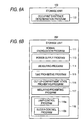
- the power supply to the window driving unit 4 is described as being prohibited in the event that the total time when the window main body 3 has been driven after the power was supplied to the window driving unit 4 with the ignition key 7 being put in the OFF state, the occupant moves out of the passenger compartment with the portable device 9 being left behind in the passenger compartment, or the occupant moves out of the passenger compartment, as shown by the flowchart shown in Fig. 4, none of these prohibiting units may be provided.
- the power supply is designed to be stopped when the predetermined time has elapsed since the power was started to be supplied to the window driving unit 4 with the ignition key 7 being put in the OFF state (step S18).
- the power supply is described as being prohibited after the pre-set permissible time period since the occupant was not in compartment, the power supply may be prohibited immediately after the occupant is not in the compartment, or it goes without saying that the configuration may be modified appropriately including the configurations of other specific detailed portions.
Landscapes
- Power-Operated Mechanisms For Wings (AREA)
- Window Of Vehicle (AREA)
Applications Claiming Priority (2)
| Application Number | Priority Date | Filing Date | Title |
|---|---|---|---|
| JP2003355029A JP4468673B2 (ja) | 2003-10-15 | 2003-10-15 | 車両用パワーウインドウ装置 |
| JP2003355029 | 2003-10-15 |
Publications (2)
| Publication Number | Publication Date |
|---|---|
| EP1524630A1 true EP1524630A1 (de) | 2005-04-20 |
| EP1524630B1 EP1524630B1 (de) | 2011-03-23 |
Family
ID=34373572
Family Applications (1)
| Application Number | Title | Priority Date | Filing Date |
|---|---|---|---|
| EP20040024567 Expired - Lifetime EP1524630B1 (de) | 2003-10-15 | 2004-10-14 | Fenster-Antriebssystem für Kraftfahrzeug |
Country Status (4)
| Country | Link |
|---|---|
| US (1) | US7221065B2 (de) |
| EP (1) | EP1524630B1 (de) |
| JP (1) | JP4468673B2 (de) |
| DE (1) | DE602004031912D1 (de) |
Cited By (1)
| Publication number | Priority date | Publication date | Assignee | Title |
|---|---|---|---|---|
| FR2916221A1 (fr) * | 2007-05-16 | 2008-11-21 | Renault Sas | Procede de fermeture automatique des vitres et/ou du toit ouvrant d'un vehicule et dispositif de mise en oeuvre d'un tel procede |
Families Citing this family (3)
| Publication number | Priority date | Publication date | Assignee | Title |
|---|---|---|---|---|
| JP4967959B2 (ja) * | 2007-09-27 | 2012-07-04 | 株式会社デンソー | 電源制御システム |
| JP5503983B2 (ja) * | 2010-01-27 | 2014-05-28 | 本田技研工業株式会社 | 電動車両 |
| JP2018052172A (ja) * | 2016-09-26 | 2018-04-05 | 株式会社オートネットワーク技術研究所 | 車両用電源制御装置 |
Citations (6)
| Publication number | Priority date | Publication date | Assignee | Title |
|---|---|---|---|---|
| US4873530A (en) * | 1985-09-30 | 1989-10-10 | Nissan Motor Co., Ltd. | Antenna device in automotive keyless entry system |
| DE4308912A1 (de) * | 1993-01-20 | 1994-09-29 | Siemens Ag | Fahrzeug-Schließsystem |
| US5747956A (en) * | 1993-02-18 | 1998-05-05 | Robert Bosch Gmbh | Method of controlling the rpm of a motor |
| EP1099812A2 (de) | 1999-11-09 | 2001-05-16 | Mazda Motor Corporation | Vorrichtung zur Steuerung eines Elements zum Öffnen und Schliessen eines Fahrzeugs |
| DE10162209A1 (de) | 2001-12-18 | 2003-07-10 | Arvinmeritor Gmbh | Fensterheber sowie Verfahren zur Steuerung eines Fenterhebers |
| EP1394751A2 (de) | 2002-09-02 | 2004-03-03 | Calsonic Kansei Corporation | Drahtloses Kommunikationssystem für Fahrzeuge |
Family Cites Families (4)
| Publication number | Priority date | Publication date | Assignee | Title |
|---|---|---|---|---|
| JPH079863Y2 (ja) | 1987-09-09 | 1995-03-08 | エス・オー・シー株式会社 | シート給送装置のゲート |
| US6922622B2 (en) * | 1999-06-03 | 2005-07-26 | Robert Bosch Corporation | Hot vehicle safety system and methods of preventing passenger entrapment and heat suffocation |
| JP3913661B2 (ja) * | 2002-10-09 | 2007-05-09 | 本田技研工業株式会社 | 車両用自動ドアロック施解錠装置 |
| US7199710B2 (en) * | 2003-06-03 | 2007-04-03 | Kabushiki Kaisha Tokai Rika Denki | Controller for remote control system |
-
2003
- 2003-10-15 JP JP2003355029A patent/JP4468673B2/ja not_active Expired - Fee Related
-
2004
- 2004-10-14 US US10/965,084 patent/US7221065B2/en not_active Expired - Fee Related
- 2004-10-14 EP EP20040024567 patent/EP1524630B1/de not_active Expired - Lifetime
- 2004-10-14 DE DE200460031912 patent/DE602004031912D1/de not_active Expired - Lifetime
Patent Citations (6)
| Publication number | Priority date | Publication date | Assignee | Title |
|---|---|---|---|---|
| US4873530A (en) * | 1985-09-30 | 1989-10-10 | Nissan Motor Co., Ltd. | Antenna device in automotive keyless entry system |
| DE4308912A1 (de) * | 1993-01-20 | 1994-09-29 | Siemens Ag | Fahrzeug-Schließsystem |
| US5747956A (en) * | 1993-02-18 | 1998-05-05 | Robert Bosch Gmbh | Method of controlling the rpm of a motor |
| EP1099812A2 (de) | 1999-11-09 | 2001-05-16 | Mazda Motor Corporation | Vorrichtung zur Steuerung eines Elements zum Öffnen und Schliessen eines Fahrzeugs |
| DE10162209A1 (de) | 2001-12-18 | 2003-07-10 | Arvinmeritor Gmbh | Fensterheber sowie Verfahren zur Steuerung eines Fenterhebers |
| EP1394751A2 (de) | 2002-09-02 | 2004-03-03 | Calsonic Kansei Corporation | Drahtloses Kommunikationssystem für Fahrzeuge |
Non-Patent Citations (1)
| Title |
|---|
| PATENT ABSTRACTS OF JAPAN vol. 013, no. 240 (E - 767) 6 June 1989 (1989-06-06) * |
Cited By (1)
| Publication number | Priority date | Publication date | Assignee | Title |
|---|---|---|---|---|
| FR2916221A1 (fr) * | 2007-05-16 | 2008-11-21 | Renault Sas | Procede de fermeture automatique des vitres et/ou du toit ouvrant d'un vehicule et dispositif de mise en oeuvre d'un tel procede |
Also Published As
| Publication number | Publication date |
|---|---|
| JP4468673B2 (ja) | 2010-05-26 |
| DE602004031912D1 (de) | 2011-05-05 |
| JP2005120631A (ja) | 2005-05-12 |
| US20050082991A1 (en) | 2005-04-21 |
| EP1524630B1 (de) | 2011-03-23 |
| US7221065B2 (en) | 2007-05-22 |
Similar Documents
| Publication | Publication Date | Title |
|---|---|---|
| US9076274B2 (en) | Door courtesy switch abnormality detection apparatus and method | |
| US7068160B2 (en) | Open automotive door alert | |
| US20060170241A1 (en) | Smart entry system for vehicle | |
| US7132929B2 (en) | Antitheft device and antitheft method | |
| US7315237B2 (en) | Automotive antitheft system | |
| JP2013116694A (ja) | 車両電源システム | |
| US20080211642A1 (en) | Antitheft device for vehicle | |
| US5892433A (en) | Timing circuit for air bag disable switch | |
| EP1542888B1 (de) | Kraftfahrzeugwegfahrsperre mit auf zündzustand reagierender schlüssel-steckt-warnung | |
| CA2420947C (en) | Vehicle control system with piggyback controller and associated methods | |
| US7221065B2 (en) | Power window system for vehicle | |
| US5739749A (en) | Forced passive anti-hijack security system | |
| JP2002104148A (ja) | 自動車のパーキングロック機構を自動的に活動化する電子ユニットおよびパーキングロック機構の自動的な活動化を防止する方法 | |
| US20040104588A1 (en) | Vehicle drive system operation apparatus and vehicle drive control system | |
| JP4526699B2 (ja) | 自動車におけるドアロック制御装置 | |
| JP2001164807A (ja) | 車両用施解錠装置 | |
| JP2002120643A (ja) | 自動車用室外灯の制御装置 | |
| EP1672333B1 (de) | System und Verfahren zur Erkennung eines Fehlers einer Vorrichtung zum Detektieren des Bedieners | |
| US7215242B2 (en) | Vehicular burglar-proof system | |
| JP2002194937A (ja) | 車両用スマートエントリシステム及びその制御方法 | |
| KR20200094506A (ko) | 도어 록킹 시 윈도 오픈 경고방법 | |
| KR100217391B1 (ko) | 자동차 도어 안전개방 장치 및 방법 | |
| KR0140751Y1 (ko) | 자동차의 도난 방지장치 | |
| JPH08199881A (ja) | ドアロック制御装置 | |
| KR20020074855A (ko) | 차량 식별용 안테나 구동장치 및 그의 제어방법 |
Legal Events
| Date | Code | Title | Description |
|---|---|---|---|
| PUAI | Public reference made under article 153(3) epc to a published international application that has entered the european phase |
Free format text: ORIGINAL CODE: 0009012 |
|
| AK | Designated contracting states |
Kind code of ref document: A1 Designated state(s): AT BE BG CH CY CZ DE DK EE ES FI FR GB GR HU IE IT LI LU MC NL PL PT RO SE SI SK TR |
|
| AX | Request for extension of the european patent |
Extension state: AL HR LT LV MK |
|
| 17P | Request for examination filed |
Effective date: 20050607 |
|
| R17P | Request for examination filed (corrected) |
Effective date: 20050606 |
|
| AKX | Designation fees paid |
Designated state(s): DE |
|
| GRAP | Despatch of communication of intention to grant a patent |
Free format text: ORIGINAL CODE: EPIDOSNIGR1 |
|
| GRAS | Grant fee paid |
Free format text: ORIGINAL CODE: EPIDOSNIGR3 |
|
| GRAA | (expected) grant |
Free format text: ORIGINAL CODE: 0009210 |
|
| AK | Designated contracting states |
Kind code of ref document: B1 Designated state(s): DE |
|
| REF | Corresponds to: |
Ref document number: 602004031912 Country of ref document: DE Date of ref document: 20110505 Kind code of ref document: P |
|
| REG | Reference to a national code |
Ref country code: DE Ref legal event code: R096 Ref document number: 602004031912 Country of ref document: DE Effective date: 20110505 |
|
| PLBE | No opposition filed within time limit |
Free format text: ORIGINAL CODE: 0009261 |
|
| STAA | Information on the status of an ep patent application or granted ep patent |
Free format text: STATUS: NO OPPOSITION FILED WITHIN TIME LIMIT |
|
| 26N | No opposition filed |
Effective date: 20111227 |
|
| REG | Reference to a national code |
Ref country code: DE Ref legal event code: R097 Ref document number: 602004031912 Country of ref document: DE Effective date: 20111227 |
|
| REG | Reference to a national code |
Ref country code: DE Ref legal event code: R082 Ref document number: 602004031912 Country of ref document: DE Representative=s name: MEISSNER BOLTE PATENTANWAELTE RECHTSANWAELTE P, DE Ref country code: DE Ref legal event code: R081 Ref document number: 602004031912 Country of ref document: DE Owner name: SUBARU CORPORATION, JP Free format text: FORMER OWNER: FUJI JUKOGYO K.K., TOKIO/TOKYO, JP |
|
| PGFP | Annual fee paid to national office [announced via postgrant information from national office to epo] |
Ref country code: DE Payment date: 20191021 Year of fee payment: 16 |
|
| REG | Reference to a national code |
Ref country code: DE Ref legal event code: R119 Ref document number: 602004031912 Country of ref document: DE |
|
| PG25 | Lapsed in a contracting state [announced via postgrant information from national office to epo] |
Ref country code: DE Free format text: LAPSE BECAUSE OF NON-PAYMENT OF DUE FEES Effective date: 20210501 |