EP1526116A1 - Procédé d'isolation de substances biologiquement actives à partir de sous-produits ou de déchets, et substances biologiquement actives ainsi obtenus - Google Patents
Procédé d'isolation de substances biologiquement actives à partir de sous-produits ou de déchets, et substances biologiquement actives ainsi obtenus Download PDFInfo
- Publication number
- EP1526116A1 EP1526116A1 EP03292605A EP03292605A EP1526116A1 EP 1526116 A1 EP1526116 A1 EP 1526116A1 EP 03292605 A EP03292605 A EP 03292605A EP 03292605 A EP03292605 A EP 03292605A EP 1526116 A1 EP1526116 A1 EP 1526116A1
- Authority
- EP
- European Patent Office
- Prior art keywords
- biologically active
- active substance
- product
- support material
- industrial waste
- Prior art date
- Legal status (The legal status is an assumption and is not a legal conclusion. Google has not performed a legal analysis and makes no representation as to the accuracy of the status listed.)
- Withdrawn
Links
- 239000006227 byproduct Substances 0.000 title claims abstract description 47
- 238000000034 method Methods 0.000 title claims abstract description 47
- 239000002699 waste material Substances 0.000 title claims abstract description 24
- 238000002955 isolation Methods 0.000 title claims abstract description 8
- 239000013543 active substance Substances 0.000 title description 16
- 239000000463 material Substances 0.000 claims abstract description 65
- 239000007787 solid Substances 0.000 claims abstract description 57
- 229940088623 biologically active substance Drugs 0.000 claims abstract description 31
- 239000002440 industrial waste Substances 0.000 claims abstract description 23
- 108010046377 Whey Proteins Proteins 0.000 claims description 43
- 102000007544 Whey Proteins Human genes 0.000 claims description 42
- 239000005862 Whey Substances 0.000 claims description 41
- 241000196324 Embryophyta Species 0.000 claims description 29
- 239000000047 product Substances 0.000 claims description 23
- 238000012545 processing Methods 0.000 claims description 22
- 102000004169 proteins and genes Human genes 0.000 claims description 20
- 108090000623 proteins and genes Proteins 0.000 claims description 20
- 238000004519 manufacturing process Methods 0.000 claims description 14
- 239000007788 liquid Substances 0.000 claims description 13
- 235000013336 milk Nutrition 0.000 claims description 13
- 239000008267 milk Substances 0.000 claims description 13
- 210000004080 milk Anatomy 0.000 claims description 13
- 230000000845 anti-microbial effect Effects 0.000 claims description 12
- 239000000203 mixture Substances 0.000 claims description 10
- 230000008569 process Effects 0.000 claims description 10
- 241001465754 Metazoa Species 0.000 claims description 9
- 239000000126 substance Substances 0.000 claims description 7
- 235000013351 cheese Nutrition 0.000 claims description 6
- 230000033228 biological regulation Effects 0.000 claims description 5
- 230000010261 cell growth Effects 0.000 claims description 5
- 230000000489 anti-atherogenic effect Effects 0.000 claims description 4
- 230000000843 anti-fungal effect Effects 0.000 claims description 4
- 230000003110 anti-inflammatory effect Effects 0.000 claims description 4
- 230000002785 anti-thrombosis Effects 0.000 claims description 4
- 230000000840 anti-viral effect Effects 0.000 claims description 4
- 239000003146 anticoagulant agent Substances 0.000 claims description 4
- 239000004599 antimicrobial Substances 0.000 claims description 4
- 230000003115 biocidal effect Effects 0.000 claims description 4
- 230000004071 biological effect Effects 0.000 claims description 4
- 230000001076 estrogenic effect Effects 0.000 claims description 4
- 230000002519 immonomodulatory effect Effects 0.000 claims description 4
- 229910021645 metal ion Inorganic materials 0.000 claims description 4
- 239000006041 probiotic Substances 0.000 claims description 4
- 230000000529 probiotic effect Effects 0.000 claims description 4
- 235000018291 probiotics Nutrition 0.000 claims description 4
- 108090000765 processed proteins & peptides Proteins 0.000 claims description 4
- 102000004196 processed proteins & peptides Human genes 0.000 claims description 4
- 150000003254 radicals Chemical class 0.000 claims description 4
- 241000219310 Beta vulgaris subsp. vulgaris Species 0.000 claims description 2
- 241000195493 Cryptophyta Species 0.000 claims description 2
- 108090000790 Enzymes Proteins 0.000 claims description 2
- 102000004190 Enzymes Human genes 0.000 claims description 2
- 102000003886 Glycoproteins Human genes 0.000 claims description 2
- 108090000288 Glycoproteins Proteins 0.000 claims description 2
- 229920002683 Glycosaminoglycan Polymers 0.000 claims description 2
- 235000021536 Sugar beet Nutrition 0.000 claims description 2
- 235000013399 edible fruits Nutrition 0.000 claims description 2
- 239000005556 hormone Substances 0.000 claims description 2
- 229940088597 hormone Drugs 0.000 claims description 2
- 235000013372 meat Nutrition 0.000 claims description 2
- 229920001184 polypeptide Polymers 0.000 claims description 2
- 239000010865 sewage Substances 0.000 claims description 2
- 239000002351 wastewater Substances 0.000 claims description 2
- 238000003795 desorption Methods 0.000 description 24
- HEMHJVSKTPXQMS-UHFFFAOYSA-M Sodium hydroxide Chemical compound [OH-].[Na+] HEMHJVSKTPXQMS-UHFFFAOYSA-M 0.000 description 21
- 238000001179 sorption measurement Methods 0.000 description 20
- 235000018102 proteins Nutrition 0.000 description 19
- 230000012010 growth Effects 0.000 description 16
- 230000001580 bacterial effect Effects 0.000 description 14
- WECIKJKLCDCIMY-UHFFFAOYSA-N 2-chloro-n-(2-cyanoethyl)acetamide Chemical compound ClCC(=O)NCCC#N WECIKJKLCDCIMY-UHFFFAOYSA-N 0.000 description 12
- 210000004534 cecum Anatomy 0.000 description 12
- 239000002609 medium Substances 0.000 description 10
- 238000000926 separation method Methods 0.000 description 10
- 235000012211 aluminium silicate Nutrition 0.000 description 8
- 239000000843 powder Substances 0.000 description 8
- 238000012360 testing method Methods 0.000 description 8
- XLYOFNOQVPJJNP-UHFFFAOYSA-N water Chemical compound O XLYOFNOQVPJJNP-UHFFFAOYSA-N 0.000 description 8
- 239000005995 Aluminium silicate Substances 0.000 description 7
- 230000000694 effects Effects 0.000 description 7
- 235000013305 food Nutrition 0.000 description 7
- 239000000499 gel Substances 0.000 description 7
- NLYAJNPCOHFWQQ-UHFFFAOYSA-N kaolin Chemical compound O.O.O=[Al]O[Si](=O)O[Si](=O)O[Al]=O NLYAJNPCOHFWQQ-UHFFFAOYSA-N 0.000 description 7
- 235000019362 perlite Nutrition 0.000 description 7
- 230000000274 adsorptive effect Effects 0.000 description 6
- 238000013019 agitation Methods 0.000 description 6
- 238000004458 analytical method Methods 0.000 description 6
- 239000000872 buffer Substances 0.000 description 6
- 239000010451 perlite Substances 0.000 description 6
- 239000007858 starting material Substances 0.000 description 6
- ROOXNKNUYICQNP-UHFFFAOYSA-N ammonium peroxydisulfate Substances [NH4+].[NH4+].[O-]S(=O)(=O)OOS([O-])(=O)=O ROOXNKNUYICQNP-UHFFFAOYSA-N 0.000 description 5
- VAZSKTXWXKYQJF-UHFFFAOYSA-N ammonium persulfate Chemical compound [NH4+].[NH4+].[O-]S(=O)OOS([O-])=O VAZSKTXWXKYQJF-UHFFFAOYSA-N 0.000 description 5
- 229910001870 ammonium persulfate Inorganic materials 0.000 description 5
- 239000003925 fat Substances 0.000 description 5
- 235000004213 low-fat Nutrition 0.000 description 5
- 238000002415 sodium dodecyl sulfate polyacrylamide gel electrophoresis Methods 0.000 description 5
- OKTJSMMVPCPJKN-UHFFFAOYSA-N Carbon Chemical compound [C] OKTJSMMVPCPJKN-UHFFFAOYSA-N 0.000 description 4
- 238000004587 chromatography analysis Methods 0.000 description 4
- 238000002474 experimental method Methods 0.000 description 4
- 238000001914 filtration Methods 0.000 description 4
- 238000002360 preparation method Methods 0.000 description 4
- QFVHZQCOUORWEI-UHFFFAOYSA-N 4-[(4-anilino-5-sulfonaphthalen-1-yl)diazenyl]-5-hydroxynaphthalene-2,7-disulfonic acid Chemical compound C=12C(O)=CC(S(O)(=O)=O)=CC2=CC(S(O)(=O)=O)=CC=1N=NC(C1=CC=CC(=C11)S(O)(=O)=O)=CC=C1NC1=CC=CC=C1 QFVHZQCOUORWEI-UHFFFAOYSA-N 0.000 description 3
- 108010076119 Caseins Proteins 0.000 description 3
- 102000011632 Caseins Human genes 0.000 description 3
- PEDCQBHIVMGVHV-UHFFFAOYSA-N Glycerine Chemical compound OCC(O)CO PEDCQBHIVMGVHV-UHFFFAOYSA-N 0.000 description 3
- 239000007983 Tris buffer Substances 0.000 description 3
- 235000015140 cultured milk Nutrition 0.000 description 3
- 235000013365 dairy product Nutrition 0.000 description 3
- 230000002401 inhibitory effect Effects 0.000 description 3
- 229910052500 inorganic mineral Inorganic materials 0.000 description 3
- 238000013508 migration Methods 0.000 description 3
- 230000005012 migration Effects 0.000 description 3
- 239000011707 mineral Substances 0.000 description 3
- 235000010755 mineral Nutrition 0.000 description 3
- 230000003287 optical effect Effects 0.000 description 3
- 239000000243 solution Substances 0.000 description 3
- QKNYBSVHEMOAJP-UHFFFAOYSA-N 2-amino-2-(hydroxymethyl)propane-1,3-diol;hydron;chloride Chemical compound Cl.OCC(N)(CO)CO QKNYBSVHEMOAJP-UHFFFAOYSA-N 0.000 description 2
- HRPVXLWXLXDGHG-UHFFFAOYSA-N Acrylamide Chemical compound NC(=O)C=C HRPVXLWXLXDGHG-UHFFFAOYSA-N 0.000 description 2
- 101150039392 CBL3 gene Proteins 0.000 description 2
- 102100035249 Carbonyl reductase [NADPH] 3 Human genes 0.000 description 2
- 101150058299 Cblc gene Proteins 0.000 description 2
- 102100035275 E3 ubiquitin-protein ligase CBL-C Human genes 0.000 description 2
- 241000588724 Escherichia coli Species 0.000 description 2
- DHMQDGOQFOQNFH-UHFFFAOYSA-N Glycine Chemical compound NCC(O)=O DHMQDGOQFOQNFH-UHFFFAOYSA-N 0.000 description 2
- 101000737274 Homo sapiens Carbonyl reductase [NADPH] 3 Proteins 0.000 description 2
- 108060003951 Immunoglobulin Proteins 0.000 description 2
- 102000004407 Lactalbumin Human genes 0.000 description 2
- 108090000942 Lactalbumin Proteins 0.000 description 2
- 102000010445 Lactoferrin Human genes 0.000 description 2
- 108010063045 Lactoferrin Proteins 0.000 description 2
- 102000008192 Lactoglobulins Human genes 0.000 description 2
- 108010060630 Lactoglobulins Proteins 0.000 description 2
- 239000006391 Luria-Bertani Medium Substances 0.000 description 2
- 241001508691 Martes zibellina Species 0.000 description 2
- KWYHDKDOAIKMQN-UHFFFAOYSA-N N,N,N',N'-tetramethylethylenediamine Chemical compound CN(C)CCN(C)C KWYHDKDOAIKMQN-UHFFFAOYSA-N 0.000 description 2
- FAPWRFPIFSIZLT-UHFFFAOYSA-M Sodium chloride Chemical compound [Na+].[Cl-] FAPWRFPIFSIZLT-UHFFFAOYSA-M 0.000 description 2
- 238000010521 absorption reaction Methods 0.000 description 2
- 230000003698 anagen phase Effects 0.000 description 2
- BECPQYXYKAMYBN-UHFFFAOYSA-N casein, tech. Chemical compound NCCCCC(C(O)=O)N=C(O)C(CC(O)=O)N=C(O)C(CCC(O)=N)N=C(O)C(CC(C)C)N=C(O)C(CCC(O)=O)N=C(O)C(CC(O)=O)N=C(O)C(CCC(O)=O)N=C(O)C(C(C)O)N=C(O)C(CCC(O)=N)N=C(O)C(CCC(O)=N)N=C(O)C(CCC(O)=N)N=C(O)C(CCC(O)=O)N=C(O)C(CCC(O)=O)N=C(O)C(COP(O)(O)=O)N=C(O)C(CCC(O)=N)N=C(O)C(N)CC1=CC=CC=C1 BECPQYXYKAMYBN-UHFFFAOYSA-N 0.000 description 2
- 108010067454 caseinomacropeptide Proteins 0.000 description 2
- 235000021240 caseins Nutrition 0.000 description 2
- 229940021722 caseins Drugs 0.000 description 2
- 235000020247 cow milk Nutrition 0.000 description 2
- 238000001962 electrophoresis Methods 0.000 description 2
- 230000036541 health Effects 0.000 description 2
- 238000010438 heat treatment Methods 0.000 description 2
- 102000018358 immunoglobulin Human genes 0.000 description 2
- 229940072221 immunoglobulins Drugs 0.000 description 2
- CSSYQJWUGATIHM-IKGCZBKSSA-N l-phenylalanyl-l-lysyl-l-cysteinyl-l-arginyl-l-arginyl-l-tryptophyl-l-glutaminyl-l-tryptophyl-l-arginyl-l-methionyl-l-lysyl-l-lysyl-l-leucylglycyl-l-alanyl-l-prolyl-l-seryl-l-isoleucyl-l-threonyl-l-cysteinyl-l-valyl-l-arginyl-l-arginyl-l-alanyl-l-phenylal Chemical compound C([C@H](N)C(=O)N[C@@H](CCCCN)C(=O)N[C@@H](CS)C(=O)N[C@@H](CCCNC(N)=N)C(=O)N[C@@H](CCCNC(N)=N)C(=O)N[C@@H](CC=1C2=CC=CC=C2NC=1)C(=O)N[C@@H](CCC(N)=O)C(=O)N[C@@H](CC=1C2=CC=CC=C2NC=1)C(=O)N[C@@H](CCCNC(N)=N)C(=O)N[C@@H](CCSC)C(=O)N[C@@H](CCCCN)C(=O)N[C@@H](CCCCN)C(=O)N[C@@H](CC(C)C)C(=O)NCC(=O)N[C@@H](C)C(=O)N1CCC[C@H]1C(=O)N[C@@H](CO)C(=O)N[C@@H]([C@@H](C)CC)C(=O)N[C@@H]([C@@H](C)O)C(=O)N[C@@H](CS)C(=O)N[C@@H](C(C)C)C(=O)N[C@@H](CCCNC(N)=N)C(=O)N[C@@H](CCCNC(N)=N)C(=O)N[C@@H](C)C(=O)N[C@@H](CC=1C=CC=CC=1)C(O)=O)C1=CC=CC=C1 CSSYQJWUGATIHM-IKGCZBKSSA-N 0.000 description 2
- 235000021242 lactoferrin Nutrition 0.000 description 2
- 229940078795 lactoferrin Drugs 0.000 description 2
- 239000010808 liquid waste Substances 0.000 description 2
- 230000000813 microbial effect Effects 0.000 description 2
- 235000016709 nutrition Nutrition 0.000 description 2
- 230000035764 nutrition Effects 0.000 description 2
- -1 or soluble Substances 0.000 description 2
- 230000001766 physiological effect Effects 0.000 description 2
- 238000011084 recovery Methods 0.000 description 2
- 239000004576 sand Substances 0.000 description 2
- 239000007790 solid phase Substances 0.000 description 2
- 238000003860 storage Methods 0.000 description 2
- 235000021119 whey protein Nutrition 0.000 description 2
- 235000021241 α-lactalbumin Nutrition 0.000 description 2
- QYLJIYOGHRGUIH-CIUDSAMLSA-N Arg-Ile Chemical compound CC[C@H](C)[C@@H](C(O)=O)NC(=O)[C@@H](N)CCCNC(N)=N QYLJIYOGHRGUIH-CIUDSAMLSA-N 0.000 description 1
- 241000894006 Bacteria Species 0.000 description 1
- 108010023063 Bacto-peptone Proteins 0.000 description 1
- 241000283690 Bos taurus Species 0.000 description 1
- 102100021973 Carbonyl reductase [NADPH] 1 Human genes 0.000 description 1
- 108010076010 Cystathionine beta-lyase Proteins 0.000 description 1
- 102100035813 E3 ubiquitin-protein ligase CBL Human genes 0.000 description 1
- 239000004471 Glycine Substances 0.000 description 1
- 101000896985 Homo sapiens Carbonyl reductase [NADPH] 1 Proteins 0.000 description 1
- GUBGYTABKSRVRQ-QKKXKWKRSA-N Lactose Natural products OC[C@H]1O[C@@H](O[C@H]2[C@H](O)[C@@H](O)C(O)O[C@@H]2CO)[C@H](O)[C@@H](O)[C@H]1O GUBGYTABKSRVRQ-QKKXKWKRSA-N 0.000 description 1
- 241000186779 Listeria monocytogenes Species 0.000 description 1
- 239000006137 Luria-Bertani broth Substances 0.000 description 1
- 241001494479 Pecora Species 0.000 description 1
- 108010001441 Phosphopeptides Proteins 0.000 description 1
- 108010009736 Protein Hydrolysates Proteins 0.000 description 1
- 241000191963 Staphylococcus epidermidis Species 0.000 description 1
- 241000282887 Suidae Species 0.000 description 1
- 239000003905 agrochemical Substances 0.000 description 1
- 230000003321 amplification Effects 0.000 description 1
- 235000019728 animal nutrition Nutrition 0.000 description 1
- 239000003242 anti bacterial agent Substances 0.000 description 1
- 229940088710 antibiotic agent Drugs 0.000 description 1
- 230000003385 bacteriostatic effect Effects 0.000 description 1
- 235000012216 bentonite Nutrition 0.000 description 1
- 238000012742 biochemical analysis Methods 0.000 description 1
- 230000015572 biosynthetic process Effects 0.000 description 1
- UDSAIICHUKSCKT-UHFFFAOYSA-N bromophenol blue Chemical compound C1=C(Br)C(O)=C(Br)C=C1C1(C=2C=C(Br)C(O)=C(Br)C=2)C2=CC=CC=C2S(=O)(=O)O1 UDSAIICHUKSCKT-UHFFFAOYSA-N 0.000 description 1
- 238000004364 calculation method Methods 0.000 description 1
- 229940041514 candida albicans extract Drugs 0.000 description 1
- 238000005119 centrifugation Methods 0.000 description 1
- 150000005829 chemical entities Chemical class 0.000 description 1
- 239000012141 concentrate Substances 0.000 description 1
- 235000009508 confectionery Nutrition 0.000 description 1
- 238000007796 conventional method Methods 0.000 description 1
- 239000013578 denaturing buffer Substances 0.000 description 1
- 230000001419 dependent effect Effects 0.000 description 1
- 235000015872 dietary supplement Nutrition 0.000 description 1
- 238000010790 dilution Methods 0.000 description 1
- 239000012895 dilution Substances 0.000 description 1
- 230000008034 disappearance Effects 0.000 description 1
- 238000009826 distribution Methods 0.000 description 1
- 238000001035 drying Methods 0.000 description 1
- 238000005516 engineering process Methods 0.000 description 1
- 230000002255 enzymatic effect Effects 0.000 description 1
- 239000012634 fragment Substances 0.000 description 1
- 210000001035 gastrointestinal tract Anatomy 0.000 description 1
- 238000001502 gel electrophoresis Methods 0.000 description 1
- 238000010353 genetic engineering Methods 0.000 description 1
- 239000011521 glass Substances 0.000 description 1
- 239000008187 granular material Substances 0.000 description 1
- 150000004679 hydroxides Chemical class 0.000 description 1
- 238000000338 in vitro Methods 0.000 description 1
- 238000012994 industrial processing Methods 0.000 description 1
- 235000021125 infant nutrition Nutrition 0.000 description 1
- 208000015181 infectious disease Diseases 0.000 description 1
- 239000003112 inhibitor Substances 0.000 description 1
- 230000005764 inhibitory process Effects 0.000 description 1
- 238000009434 installation Methods 0.000 description 1
- 239000008101 lactose Substances 0.000 description 1
- 230000002045 lasting effect Effects 0.000 description 1
- 239000007791 liquid phase Substances 0.000 description 1
- 239000012160 loading buffer Substances 0.000 description 1
- 238000011068 loading method Methods 0.000 description 1
- 239000003550 marker Substances 0.000 description 1
- 238000005259 measurement Methods 0.000 description 1
- 230000010534 mechanism of action Effects 0.000 description 1
- 238000001471 micro-filtration Methods 0.000 description 1
- 229910052901 montmorillonite Inorganic materials 0.000 description 1
- 238000001728 nano-filtration Methods 0.000 description 1
- 238000003199 nucleic acid amplification method Methods 0.000 description 1
- 238000000424 optical density measurement Methods 0.000 description 1
- 239000011368 organic material Substances 0.000 description 1
- 239000005416 organic matter Substances 0.000 description 1
- 229920002401 polyacrylamide Polymers 0.000 description 1
- 244000144977 poultry Species 0.000 description 1
- 239000002244 precipitate Substances 0.000 description 1
- 230000006920 protein precipitation Effects 0.000 description 1
- 239000008213 purified water Substances 0.000 description 1
- 238000007670 refining Methods 0.000 description 1
- 210000004767 rumen Anatomy 0.000 description 1
- 238000012216 screening Methods 0.000 description 1
- 238000004062 sedimentation Methods 0.000 description 1
- 239000011780 sodium chloride Substances 0.000 description 1
- 235000008983 soft cheese Nutrition 0.000 description 1
- 238000002798 spectrophotometry method Methods 0.000 description 1
- 239000007921 spray Substances 0.000 description 1
- 238000010186 staining Methods 0.000 description 1
- 239000011550 stock solution Substances 0.000 description 1
- 210000002784 stomach Anatomy 0.000 description 1
- 239000006228 supernatant Substances 0.000 description 1
- 239000000454 talc Substances 0.000 description 1
- 229910052623 talc Inorganic materials 0.000 description 1
- 230000001225 therapeutic effect Effects 0.000 description 1
- 230000036962 time dependent Effects 0.000 description 1
- 230000009466 transformation Effects 0.000 description 1
- 238000000108 ultra-filtration Methods 0.000 description 1
- 239000003981 vehicle Substances 0.000 description 1
- 230000035899 viability Effects 0.000 description 1
- 230000000007 visual effect Effects 0.000 description 1
- 238000012800 visualization Methods 0.000 description 1
- 239000012138 yeast extract Substances 0.000 description 1
- 239000010457 zeolite Substances 0.000 description 1
- DGVVWUTYPXICAM-UHFFFAOYSA-N β‐Mercaptoethanol Chemical compound OCCS DGVVWUTYPXICAM-UHFFFAOYSA-N 0.000 description 1
Images
Classifications
-
- A—HUMAN NECESSITIES
- A23—FOODS OR FOODSTUFFS; TREATMENT THEREOF, NOT COVERED BY OTHER CLASSES
- A23J—PROTEIN COMPOSITIONS FOR FOODSTUFFS; WORKING-UP PROTEINS FOR FOODSTUFFS; PHOSPHATIDE COMPOSITIONS FOR FOODSTUFFS
- A23J1/00—Obtaining protein compositions for foodstuffs; Bulk opening of eggs and separation of yolks from whites
- A23J1/20—Obtaining protein compositions for foodstuffs; Bulk opening of eggs and separation of yolks from whites from milk, e.g. casein; from whey
- A23J1/205—Obtaining protein compositions for foodstuffs; Bulk opening of eggs and separation of yolks from whites from milk, e.g. casein; from whey from whey, e.g. lactalbumine
-
- A—HUMAN NECESSITIES
- A23—FOODS OR FOODSTUFFS; TREATMENT THEREOF, NOT COVERED BY OTHER CLASSES
- A23J—PROTEIN COMPOSITIONS FOR FOODSTUFFS; WORKING-UP PROTEINS FOR FOODSTUFFS; PHOSPHATIDE COMPOSITIONS FOR FOODSTUFFS
- A23J1/00—Obtaining protein compositions for foodstuffs; Bulk opening of eggs and separation of yolks from whites
- A23J1/20—Obtaining protein compositions for foodstuffs; Bulk opening of eggs and separation of yolks from whites from milk, e.g. casein; from whey
-
- A—HUMAN NECESSITIES
- A23—FOODS OR FOODSTUFFS; TREATMENT THEREOF, NOT COVERED BY OTHER CLASSES
- A23J—PROTEIN COMPOSITIONS FOR FOODSTUFFS; WORKING-UP PROTEINS FOR FOODSTUFFS; PHOSPHATIDE COMPOSITIONS FOR FOODSTUFFS
- A23J3/00—Working-up of proteins for foodstuffs
- A23J3/04—Animal proteins
- A23J3/08—Dairy proteins
-
- A—HUMAN NECESSITIES
- A23—FOODS OR FOODSTUFFS; TREATMENT THEREOF, NOT COVERED BY OTHER CLASSES
- A23K—FODDER
- A23K10/00—Animal feeding-stuffs
- A23K10/20—Animal feeding-stuffs from material of animal origin
-
- A—HUMAN NECESSITIES
- A23—FOODS OR FOODSTUFFS; TREATMENT THEREOF, NOT COVERED BY OTHER CLASSES
- A23K—FODDER
- A23K10/00—Animal feeding-stuffs
- A23K10/20—Animal feeding-stuffs from material of animal origin
- A23K10/26—Animal feeding-stuffs from material of animal origin from waste material, e.g. feathers, bones or skin
- A23K10/28—Animal feeding-stuffs from material of animal origin from waste material, e.g. feathers, bones or skin from waste dairy products
-
- A—HUMAN NECESSITIES
- A23—FOODS OR FOODSTUFFS; TREATMENT THEREOF, NOT COVERED BY OTHER CLASSES
- A23K—FODDER
- A23K10/00—Animal feeding-stuffs
- A23K10/30—Animal feeding-stuffs from material of plant origin, e.g. roots, seeds or hay; from material of fungal origin, e.g. mushrooms
- A23K10/37—Animal feeding-stuffs from material of plant origin, e.g. roots, seeds or hay; from material of fungal origin, e.g. mushrooms from waste material
-
- A—HUMAN NECESSITIES
- A23—FOODS OR FOODSTUFFS; TREATMENT THEREOF, NOT COVERED BY OTHER CLASSES
- A23K—FODDER
- A23K10/00—Animal feeding-stuffs
- A23K10/30—Animal feeding-stuffs from material of plant origin, e.g. roots, seeds or hay; from material of fungal origin, e.g. mushrooms
- A23K10/37—Animal feeding-stuffs from material of plant origin, e.g. roots, seeds or hay; from material of fungal origin, e.g. mushrooms from waste material
- A23K10/38—Animal feeding-stuffs from material of plant origin, e.g. roots, seeds or hay; from material of fungal origin, e.g. mushrooms from waste material from distillers' or brewers' waste
-
- A—HUMAN NECESSITIES
- A23—FOODS OR FOODSTUFFS; TREATMENT THEREOF, NOT COVERED BY OTHER CLASSES
- A23L—FOODS, FOODSTUFFS OR NON-ALCOHOLIC BEVERAGES, NOT OTHERWISE PROVIDED FOR; PREPARATION OR TREATMENT THEREOF
- A23L33/00—Modifying nutritive qualities of foods; Dietetic products; Preparation or treatment thereof
- A23L33/10—Modifying nutritive qualities of foods; Dietetic products; Preparation or treatment thereof using additives
- A23L33/17—Amino acids, peptides or proteins
-
- Y—GENERAL TAGGING OF NEW TECHNOLOGICAL DEVELOPMENTS; GENERAL TAGGING OF CROSS-SECTIONAL TECHNOLOGIES SPANNING OVER SEVERAL SECTIONS OF THE IPC; TECHNICAL SUBJECTS COVERED BY FORMER USPC CROSS-REFERENCE ART COLLECTIONS [XRACs] AND DIGESTS
- Y02—TECHNOLOGIES OR APPLICATIONS FOR MITIGATION OR ADAPTATION AGAINST CLIMATE CHANGE
- Y02P—CLIMATE CHANGE MITIGATION TECHNOLOGIES IN THE PRODUCTION OR PROCESSING OF GOODS
- Y02P60/00—Technologies relating to agriculture, livestock or agroalimentary industries
- Y02P60/80—Food processing, e.g. use of renewable energies or variable speed drives in handling, conveying or stacking
- Y02P60/87—Re-use of by-products of food processing for fodder production
Definitions
- the present invention relates to a process for the separation and isolation of biologically active substances from by-product or secondary waste flows.
- Many industrial processes such as chemical, agrochemical, and food processes, generate significant amounts of currently unavoidable by-products or waste products. These products must be handled according to legislation that is becoming ever stricter, which often implies a non-negligible cost.
- One way of recovering that extra cost that the industrialist has to pay, is by attempting to exploit or to find some value added material within the waste or by-product.
- Unfortunately are relatively rare on the whole, since the economics of any extra processing steps necessary to retrieve the material are generally unfavorable with respect to value that can be gained from such material. This is especially true of the food industry, where industrial costs have to be kept as low as possible, in order to maintain economic viability of the general food production processes.
- dairy product manufacture and treatment An example of a branch of the food industry faced with such difficulties is that relating to dairy product manufacture and treatment.
- Most dairy products start out from a bulk volume, low cost, starting material, namely milk.
- This starting material is available in very large quantities and the initial transformation steps, such as protein precipitation, filtration, or heat treatment are considered to form part of the well established economic environment in this field, simply because of the immense volumes involved.
- other products and by-products can also be made starting from milk.
- One such by-product is whey, which again can be transformed into further value added products.
- Exemplary value added products obtained from whey would be, for example, whey proteins, whey protein concentrate or hydrolysate, ⁇ -lactoglobulin, and ⁇ -lactalbumin, phosphopeptides, casein proteins, caseinomacropeptides, immunoglobulins and the like.
- these further processing steps are not viable on a large scale, simply because of the high cost of the further technological steps that are currently required to produce these products.
- Still yet another object of the present invention is to provide for a biologically active complex in which a biologically active substance obtained via the method of the present invention is used.
- Particularly preferred solid support materials can be chosen from the group consisting of :
- one object of the invention is a method for the isolation of at least one biologically active substance from an industrial by-product or waste flow, comprising :
- the at least one industrial waste or by-product flow is substantially liquid.
- the at least one industrial waste or by-product flow comprises not more than 30% by weight of dry matter.
- the at least one industrial waste or by-product flow is preferably generated or supplied from an industrial process that processes or manufactures an organic product.
- the organic product can be of animal or plant origin.
- the method of the present invention can be used for treating waste flows and by-products from a number of industries, and more particularly from the group of industries consisting of a sewage plant, a waste water processing plant, a sugar processing plant, in particular a sugar beet processing plant, a cheese manufacture, a milk processing plant, a meat processing plant, an egg-breaking plant, a fruit processing plant, an oil processing plant, a wine producing plant, a paper processing plant, an algae processing plant, and a brewery.
- the at least one industrial waste or by-product flow is milk or derived from milk.
- the milk industry produces huge amounts of liquid waste or by-products such as whey, that contain very interesting biologically active substances, but which with todays current processing techniques require great efforts to isolate and recover them, at great expense, with the result that the products thereby obtained can only be sold in niche markets with perceived high added value.
- the method of the present invention manages to solve this problem by producing a workable, industrially scalable alternative, that is also very economic, both in the components used, as in the installation and running requirements. Consequently, in one of the most preferred embodiments, the at least one industrial waste or by-product flow is whey.
- the at least one solid insoluble support material and the at least one industrial waste or by-product flow are agitated together after being brought into contact one with the other.
- the conditions of operation will depend on the type and molecular weight of active substance being recovered from the waste flow. Such conditions can be determined by one skilled in the art, so as to arrive at a system where one can scan a waste product flow for all possible biologically active molecules of interest, and then adapt the adsorption conditions, in a further cycle for example, to retain only those specific molecules that are desired.
- the method of the present invention can, for example, be made to function as a small plug-in unit that is connected to the main processing flows of the industrial plant and produces a value added secondary or tertiary material with potential applications in human and animal health and nutrition.
- the method of the invention reduces the volumes that need to be dried subsequent to isolation of the biologically active substance, thereby causing further economies of scale to be obtained in heating and energy costs.
- the unit can for example comprise a chamber, having a solid support material inlet, and a conduit either for the introduction, or the flow through, of the at least one waste flow or by-product.
- the chamber can also optionally be provided with agitation means, and temperature regulation means.
- the chamber will also be provided with outlets for both the adsorbed biologically active substance/support material complex, and the remaining waste liquid that is now poorer or depleted in molecules of interest and can either be passed through the chamber once again, or dispatched for disposal.
- a final optional step is the isolation of the at least one biologically active substance from the at least one solid insoluble support material. This can be achieved by the desorption step for example, or could be followed by other refining or purifying techniques that are known to the skilled person such as chromatography.
- the invention also therefore provides for a method of screening industrial waste or by-product flows for new biologically active molecules of interest.
- the at least one biologically active substance is selected from the group consisting of hormones, proteins, peptides, polypeptides, antibodies, glycoproteins, glycosaminoglycans, and enzymes. Even more preferably, the at least one biologically active substance has a biological activity selected from the group consisting of antibiotic, probiotic, anti-microbial, anti-fungal, cell growth regulation, neurogenerative, oestrogenic, anti-thrombotic, anti-viral, free radical and metal ions scavengers, immuno-modulatory, anti atherogenic, anti-inflammatory.
- a further object of the invention is the provision of a complex obtainable from a process as defined previously, wherein the complex comprises at least one solid insoluble support material on which is adsorbed at least one biologically active substance.
- the complex preferably has a biological activity selected from the group consisting of antibiotic, probiotic, anti-microbial, anti-fungal, cell growth regulation, neurogenerative, oestrogenic, anti-thrombotic, anti-viral, free radical and metal ion scavengers, immuno-modulatory, anti atherogenic, anti-inflammatory.
- Still yet another object is an animal feedstock composition
- a complex as defined previously.
- the complex has antimicrobial activity.
- the complex can be used as a substitute for feedstocks that currently contain antibiotics and which will soon be forbidden for use in agricultural animal nutrition.
- the antimicrobial activity of the feedstock of the present invention will act as a therapeutic solution to minor infections that some agricultural animals tend to suffer from, e.g. poultry, pigs, sheep and cattle.
- the at least one biologically active substance be a substance naturally present in the at least one industrial waste or by-product, i.e. that it not be a substance that has resulted from the addition by man to the mainstream product or to the animal that created the starting materials for the mainstream product. This of course extends to substances that are introduced b y genetic manipulation.
- the control whey is obtained from fermented milk (Ribot milkTM, sold by BRIDEL, France), and simulates whey obtained from cheese manufacturing plants during the manufacture of fresh cheese from cow's milk or certain cow's milk based soft cheeses.
- the fermented milk is centrifuged at 6000 g for 20 minutes.
- the precipitate obtained, that is made up mainly of caseins and caseinates, was eliminated ; the supernatant was collected and made up the control whey sample.
- the pH was adjusted to pH 6.8, by the addition of 0.5M aqueous sodium hydroxide NaOH, in order to simulate sweet whey, and in order to limit the effects of dilution of the starting material.
- aqueous sodium hydroxide NaOH
- Other aqueous hydroxides could also be optionally be used instead of NaOH, but the latter is most often used in the milk industry.
- each whey was taken as the starting material, and the solid support material concentration was 2% (w/v).
- the mixture was agitated, for example on an agitation table, for an hour.
- the mixture was then filtered on a Büchner filter, using a Whatman #4 filter paper.
- the solid and liquid fractions obtained after filtration were stored at -20°C for further analysis.
- the solid support materials that were tested, either with or without prior treatment, are brought into contact with a solution that simulates an agroindustry effluent or by-product that contains one or more biologically active substances of interest.
- the obtained fractions are analysed using a gel electrophoresis technique known as SDS-PAGE, which involves separating out proteins based on their respective molecular masses, followed by staining.
- SDS-PAGE a gel electrophoresis technique
- the SDS-PAGE technique enables identification of all of the proteins present in a given sample and provides a visualisation of their distribution in each fraction, when compared to the starting sample analysed.
- the liquid fraction can be analysed as it is after the solid-liquid separation step, i.e. directly after adsorption.
- the solid fraction is put into solution with what is known to the skilled in the art as a "loading" buffer, and brought to the boil.
- Such drastic conditions enable all of the adsorbed proteins to be desorbed, but are not representative of the enzymatic or temperature conditions prevalent in the normal digestive tract, rumen or stomach.
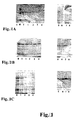
- the dotted line delimits two areas, with the proteins of interest being located in the area above the dotted line.
- these proteins are substantially immunoglobulins and lactoferrin.
- the area below the dotted line is that in which unwanted residual caseins and low molecular weight proteins such as ⁇ -lactalbumin and ⁇ -lactoglobulin are to be found, which have molecular weights at about 16 to 18 kDa. These latter kind of molecules are not of interest in the present invention.
- the polyacrylamide gels were prepared as follows :
- the samples were adjusted to a total protein concentration of approximately 1 mg/mL, by the addition of a volume of loading buffer i.e. sufficient to obtain a concentration that is ready to load of 1 mg/mL.
- the volume actually loaded onto the gel was comprised between about 25 ⁇ l and about 30 ⁇ L per well.
- Electrophoresis was carried out under the following conditions: concentration gel at 60V, then separation gel at 190 V, with migration lasting approximately 45 minutes. After migration was stopped, the gels were stained with Coomassie blue and then dried.
- the sample used was a low fat whey, the pH of which had been adjusted to between 4.6 to 6.8 by the addition of 0.5 M NaOH.
- the sample tested was a whole fat whey, the pH of which was adjusted to between 4.6 to 6.8 by the addition 0.5M NaOH.
- the results of solid insoluble supports numbered 14, 15, 16 and 17 are given in Figure 1B, with adsorption being represented in lanes 1, 2, 3 and 4, and desorption being represented in lanes 5, 6, 7 and 8 respectively.
- a few significant differences can be seen depending on the nature of the solid insoluble support material, in particular for KC 1 (B2) and KC2 (B3).
- KC1 support n°15
- KC1 support n°15
- the sample used was a low fat whey, the pH was not adjusted and was naturally close to 4.6.
- the results of solid support materials 14, 15, 16 and 17 are given in Figure 1C, with adsorption being represented in lanes 1, 2, 3 and 4, and desorption being represented respectively in lanes 5, 6, 7 and 8.
- adsorption differs greatly depending on the solid insoluble support material used. It is low for STF (C1 ), medium for KC1 and ATC Na (C2 and C4) and strong for KC2, in which there is almost complete disappearance of the bands, as shown in C3.
- Desorption is very high for KC2 (C7), with the presence of a single very intense band in the upper area, indicating a very high selectivity upon desorption, and intermediate for KC1(C6) and finally relatively weal for STF and ATC Na (C5 and C8).
- the difference in behaviour upon desorption appears to be linked to the degree of adsorption that took place beforehand.
- adsorption, desorption and corresponding selectivity can be modulated greatly.
- the four solid insoluble support materials all behave in a generally similar way. However , clarsol KC1 and especially clarsol KC2 show some noticeable differences in behaviour, which are visible both after adsorption (B2, B3 and C3) and desorption (B6, B7 and C7).
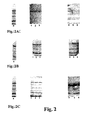
- the sample used was a low fat whey, the pH of which had been adjusted to about 4.6 to 6.8 by the addition of 0.5 M NaOH.
- the sample tested was a whole fat whey, the pH of which was adjusted to between 4.6 to 6.8 by addition of 0.5M NaOH.
- the results for support materials 22, 23 and 24 are given in Figure 2B, whereby adsorption is represented in lanes 1, 2 and 3, respectively, and desorption is represented in lanes 4, 5 and 6. Whichever material was used, no significant difference was observed (B1, B2 and B3).
- Adsorptive capacity is low under the experimental conditions used, with little difference between the starting sample and lanes B1 to B3. However, the desorptive capacity is good.
- the desorbed fractions were all enriched (B5, B6 and B7), whereby some bands appeared to be more intense than in the starting material.
- Metasial C support n°23
- the sample used was a low fat whey, the pH was not adjusted and was naturally close to 4.6.
- the results of support materials numbered 22, 23 and 24 are shown in Figure 2C, with adsorption being given in lanes 1, 2 and 3, and desorption in lanes 4, 5 and 6 respectively.
- Adsorption is intermediate when compared to the conditions used in A and B. Many bands are present in the fractions C1, C2 and C3, but are generally of a lower intensity than the starting sample. Desorption is very high (C4, C5 and C6), with the presence of a very intense band in the upper area (very high selectivity for the corresponding protein). Under these conditions, no significant difference was observed between the three support materials (C4, C5 and C6).
- the samples of example 7 were those that showed the most interesting desorption profile, with high desorption of proteins having a molecular weight within the target area being searched for. An in vitro test was carried out on these samples to show that the complex obtained had antimicrobial activity.
- the bacterial strain used was a strain of E. Coli. This strain was maintained in culture in a Luria-Bertani medium having the following composition : bactopeptone 10 g/L, yeast extract 5 g/L, sodium chloride 5 g/L, prepared in purified water.
- the culture conditions were as follows : temperature 37°C, agitation 250 rpm on an agitating table, period between reseeding : 24 hours.
- the analytical method used was reading from a spectrophotometer at a wavelength of 565 nm.
- a non-inoculated medium one of either whey n°1 or whey n°2 was added, in order to test whether the endogenous bacteria would not develop in these experimental conditions, and thereby lead to inaccurate results. Under the conditions given, no bacterial growth was observed.
- a glass tube with a diameter of 1.7 mm 0.1 mL (i.e. 2% v/v) of culture was added to 5 mL of LB media placed within the tube.
- 10 mg of product was added, whereby the product was the complex, or a whey powder, to give a weight of 0.2% (w/v).
- a collection of tubes prepared in the same way with different solid insoluble support materials was agitated at 250 rpm and maintained at at temperature of 37°C. Optical density measurements were taken at regular intervals, for example after 1, 3, 5, and 22 hours respectively via spectrophotometry, using a wavelength of 565 nm, in order to check for bacterial growth.
- Control C shows that in the culture conditions used, a strong rate of bacterial growth was observed.
- Control B obtained by the addition of lyophilized whey powder, shows that, on its own, whey has no inhibiting effect on bacterial growth. On the contrary, the addition of powdered whey seems to have the opposite effect, i.e. stimulate bacterial growth, probably because it is very rich in lactose.
- the solid support material on its own has an inhibiting effect on bacterial growth particularly at the beginning of microbial cell growth.
- the first set of tests were carried out on a strain known as E. Coli. (gram -).
- E. Coli. strain known as E. Coli.
- Other strains were tested. These strains were Staphylococcus Epidermidis (gram +) and Lrsteria Innocua, the latter often being used to emulate the behaviour of Listeria monocytogenes, but without the precautions necessary to manipulate the monocytogenes strain.
- the initial analytical method used was challenged by adopting a different method.
- the addition of the solid support, or the formation of a particular complex leads to the risk biasing the values obtained.
- the concentration of solid support material used and tested approximately 0.2%, the samples were homogenized by centrifugation at low speed for 5 seconds.
- this simple step was insufficient to obtain a homogeneous sample in which the OD could be said to be representative.
- the inventors therefore resorted to a visual observation of the turbidity of the samples.
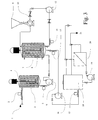
- FIG. 3 shows a schematic representation of how the process according to the present invention can be implemented into an existing industrial food production unit, and more specifically into a cheese manufacture production line.
- whey is produced as a by-product, generally indicated on Figure 3 by the reference numeral 1.
- the whey is pumped and collected into a storage vessel 3.
- the tank 3 also includes agitation means, such as a stirrer 4, to keep the whey homogenized.
- the homogenized whey is then pumped through an automatic rotary valve 5 via a centrifugal pump 6 and into a reactor vessel 7 that will enable the selective absorption and desorption of required biologically active substances in accordance with the present invention, and equipped with agitation means, for example, a stirrer 8.
- the reactor vessel 7 is connected to a hopper 9 and a metering pump 10.
- the hopper 9 is loaded with solid insoluble support material that is added to the reactor vessel 7 via the metering pump 10.
- Other means of transporting and feeding the solid insoluble support material could be for example, by using a conveyor system.
- the mixture of whey and insoluble solid support material is stirred continuously and at the necessary optimal conditions and length of time required for the desired biologically active substance or substances to be adsorbed onto the solid support material.
- the mixture of whey and solid insoluble support material is fed via a centrifugal pump 16 and a automatic rotary valve 17 through an accumulator vessel 18 into a solid/liquid separation system 20.
- the accumulator vessel 18 recirculates the mixture, and enables the system to be operated until optimal filtration conditions are reached, thereby ensuring consistency in the results obtained.
- the separation system 20 the solid and liquid phases are separated one from the other, leaving a solid phase that is as dry as possible. It is noted that the solid support material now contains the biologically active substances absorbed onto it.
- the solid thus produced is then dried using more conventional techniques, such as via a concentrator, evaporator, flash dryer, spray dryer, atomizer and the like.
Landscapes
- Life Sciences & Earth Sciences (AREA)
- Chemical & Material Sciences (AREA)
- Engineering & Computer Science (AREA)
- Polymers & Plastics (AREA)
- Food Science & Technology (AREA)
- Health & Medical Sciences (AREA)
- Zoology (AREA)
- Molecular Biology (AREA)
- Animal Husbandry (AREA)
- Physiology (AREA)
- Biotechnology (AREA)
- Mycology (AREA)
- Biochemistry (AREA)
- Botany (AREA)
- Nutrition Science (AREA)
- Biomedical Technology (AREA)
- Proteomics, Peptides & Aminoacids (AREA)
- Dairy Products (AREA)
Priority Applications (4)
| Application Number | Priority Date | Filing Date | Title |
|---|---|---|---|
| EP03292605A EP1526116A1 (fr) | 2003-10-20 | 2003-10-20 | Procédé d'isolation de substances biologiquement actives à partir de sous-produits ou de déchets, et substances biologiquement actives ainsi obtenus |
| PCT/IB2004/003420 WO2005037718A1 (fr) | 2003-10-20 | 2004-10-19 | Methodes d'isolement de substances biologiquement actives contenues dans des sous-produits ou effluents laitiers |
| US10/576,503 US20070026086A1 (en) | 2003-10-20 | 2004-10-19 | Method for the isolation of biogically active substances from dairy by-product or waste flows, and biologically active substances obtained therefrom |
| EP04791717A EP1680360A1 (fr) | 2003-10-20 | 2004-10-19 | Methodes d'isolement de substances biologiquement actives contenues dans des sous-produits ou effluents laitiers |
Applications Claiming Priority (1)
| Application Number | Priority Date | Filing Date | Title |
|---|---|---|---|
| EP03292605A EP1526116A1 (fr) | 2003-10-20 | 2003-10-20 | Procédé d'isolation de substances biologiquement actives à partir de sous-produits ou de déchets, et substances biologiquement actives ainsi obtenus |
Publications (1)
| Publication Number | Publication Date |
|---|---|
| EP1526116A1 true EP1526116A1 (fr) | 2005-04-27 |
Family
ID=34384698
Family Applications (2)
| Application Number | Title | Priority Date | Filing Date |
|---|---|---|---|
| EP03292605A Withdrawn EP1526116A1 (fr) | 2003-10-20 | 2003-10-20 | Procédé d'isolation de substances biologiquement actives à partir de sous-produits ou de déchets, et substances biologiquement actives ainsi obtenus |
| EP04791717A Withdrawn EP1680360A1 (fr) | 2003-10-20 | 2004-10-19 | Methodes d'isolement de substances biologiquement actives contenues dans des sous-produits ou effluents laitiers |
Family Applications After (1)
| Application Number | Title | Priority Date | Filing Date |
|---|---|---|---|
| EP04791717A Withdrawn EP1680360A1 (fr) | 2003-10-20 | 2004-10-19 | Methodes d'isolement de substances biologiquement actives contenues dans des sous-produits ou effluents laitiers |
Country Status (3)
| Country | Link |
|---|---|
| US (1) | US20070026086A1 (fr) |
| EP (2) | EP1526116A1 (fr) |
| WO (1) | WO2005037718A1 (fr) |
Cited By (2)
| Publication number | Priority date | Publication date | Assignee | Title |
|---|---|---|---|---|
| CN102616941A (zh) * | 2012-03-26 | 2012-08-01 | 大连理工大学 | 一种海参微生态水质调节剂及其制备方法 |
| CN103645144A (zh) * | 2013-12-23 | 2014-03-19 | 华中科技大学 | 一种白酒成分定量分析方法 |
Families Citing this family (3)
| Publication number | Priority date | Publication date | Assignee | Title |
|---|---|---|---|---|
| US20080264066A1 (en) * | 2007-04-25 | 2008-10-30 | Marc Porat | Conversion of coal-fired power plants to cogenerate cement |
| US20080264301A1 (en) * | 2007-04-25 | 2008-10-30 | Marc Porat | Coal combustion product cements and related methods of production |
| DE102014211703A1 (de) * | 2013-06-24 | 2014-12-24 | MAHLE Behr GmbH & Co. KG | Rotationsventil für eine Adsorptionswärmepumpe |
Citations (8)
| Publication number | Priority date | Publication date | Assignee | Title |
|---|---|---|---|---|
| US2254241A (en) * | 1938-09-16 | 1941-09-02 | Girdler Corp | Treatment of milk waste |
| US2739063A (en) * | 1951-08-29 | 1956-03-20 | Commercial Solvents Corp | Bacitracin feed supplements from crude fermentation liquors |
| US3078164A (en) * | 1960-03-30 | 1963-02-19 | Phoenix Gems Inc | Method of drying dilute biological solutions to prepare a food supplement |
| US3278309A (en) * | 1961-09-08 | 1966-10-11 | Charles Page & Company Ltd | Production of dried vegetable juices as feedstuff for animals |
| DE1668866A1 (de) * | 1968-01-18 | 1970-07-09 | Dr Bjoern Olsen | Verwendung von Polyamidspaenen zum Entfernen von phenolgruppenhaltigen Substanzen aus Fluessigkeiten |
| DE1922259A1 (de) * | 1969-01-17 | 1970-07-30 | Kurt Egger | Verfahren zur Isolierung und Gewinnung von proteolytischen Milchfermenten |
| EP0331824A1 (fr) * | 1988-03-07 | 1989-09-13 | Control Feeds, Inc. | Additif fourrager pour animal et volaille et procédé de préparation |
| US20030015476A1 (en) * | 2001-03-09 | 2003-01-23 | Moffett Robert H. | Removal of biomaterials from aqueous streams |
Family Cites Families (2)
| Publication number | Priority date | Publication date | Assignee | Title |
|---|---|---|---|---|
| US5756680A (en) * | 1994-01-05 | 1998-05-26 | Sepragen Corporation | Sequential separation of whey proteins and formulations thereof |
| DK0876106T3 (da) * | 1996-01-26 | 2004-08-16 | Univ Massey | Fremgangsmåde til adskillelse og genvinding af proteiner fra en proteinoplösning |
-
2003
- 2003-10-20 EP EP03292605A patent/EP1526116A1/fr not_active Withdrawn
-
2004
- 2004-10-19 EP EP04791717A patent/EP1680360A1/fr not_active Withdrawn
- 2004-10-19 US US10/576,503 patent/US20070026086A1/en not_active Abandoned
- 2004-10-19 WO PCT/IB2004/003420 patent/WO2005037718A1/fr not_active Ceased
Patent Citations (8)
| Publication number | Priority date | Publication date | Assignee | Title |
|---|---|---|---|---|
| US2254241A (en) * | 1938-09-16 | 1941-09-02 | Girdler Corp | Treatment of milk waste |
| US2739063A (en) * | 1951-08-29 | 1956-03-20 | Commercial Solvents Corp | Bacitracin feed supplements from crude fermentation liquors |
| US3078164A (en) * | 1960-03-30 | 1963-02-19 | Phoenix Gems Inc | Method of drying dilute biological solutions to prepare a food supplement |
| US3278309A (en) * | 1961-09-08 | 1966-10-11 | Charles Page & Company Ltd | Production of dried vegetable juices as feedstuff for animals |
| DE1668866A1 (de) * | 1968-01-18 | 1970-07-09 | Dr Bjoern Olsen | Verwendung von Polyamidspaenen zum Entfernen von phenolgruppenhaltigen Substanzen aus Fluessigkeiten |
| DE1922259A1 (de) * | 1969-01-17 | 1970-07-30 | Kurt Egger | Verfahren zur Isolierung und Gewinnung von proteolytischen Milchfermenten |
| EP0331824A1 (fr) * | 1988-03-07 | 1989-09-13 | Control Feeds, Inc. | Additif fourrager pour animal et volaille et procédé de préparation |
| US20030015476A1 (en) * | 2001-03-09 | 2003-01-23 | Moffett Robert H. | Removal of biomaterials from aqueous streams |
Cited By (3)
| Publication number | Priority date | Publication date | Assignee | Title |
|---|---|---|---|---|
| CN102616941A (zh) * | 2012-03-26 | 2012-08-01 | 大连理工大学 | 一种海参微生态水质调节剂及其制备方法 |
| CN103645144A (zh) * | 2013-12-23 | 2014-03-19 | 华中科技大学 | 一种白酒成分定量分析方法 |
| CN103645144B (zh) * | 2013-12-23 | 2017-01-18 | 华中科技大学 | 一种白酒成分定量分析方法 |
Also Published As
| Publication number | Publication date |
|---|---|
| EP1680360A1 (fr) | 2006-07-19 |
| US20070026086A1 (en) | 2007-02-01 |
| WO2005037718A1 (fr) | 2005-04-28 |
Similar Documents
| Publication | Publication Date | Title |
|---|---|---|
| EP1480524B1 (fr) | Procede d'isolement de lactoferrine | |
| AU592837B2 (en) | A process for the specific separation of lactose from milk | |
| Kuharić et al. | Removing aflatoxin M1 from milk with native lactic acid bacteria, centrifugation, and filtration | |
| CN109561724A (zh) | 生产含乳蛋白和乳糖类的改良营养产品的方法及通过该方法获得的产品 | |
| DE69219015T2 (de) | Verfahren zur Herstellung eines antimikrobiellen Peptids in hoher Reinheit und im grossen Masstab | |
| EP1526116A1 (fr) | Procédé d'isolation de substances biologiquement actives à partir de sous-produits ou de déchets, et substances biologiquement actives ainsi obtenus | |
| US2251334A (en) | Protein composition of matter | |
| AU636939B2 (en) | Process for the fractionation of dried milk products | |
| DE10149668A1 (de) | Insulinmimetische Aminosäuresequenzen | |
| Hietala et al. | Identification of antimicrobial alpha-hydroxyacids in Lactobacillus plantarum-fermented animal protein | |
| AU2003241837B2 (en) | Process for producing lacturose-containing powder composition, lacturose-containing powder composition obtained by the process and feed additive | |
| US5436014A (en) | Removing lipids from cheese whey using chitosan | |
| RU2204262C2 (ru) | Способ получения биологически активного белкового концентрата, обогащенного панкреатической рибонуклеазой а, ангиогенином и лизоцимом, из молочного ультрафильтрата | |
| WO2014001103A1 (fr) | Procédé de fabrication d'une préparation protéinée ayant une forte teneur en vitamine b | |
| Lemiasheuski et al. | Milk and milk by products and alternative assessment methods | |
| EP0588775A2 (fr) | Procédé d'utilisation de produits de déchets laitiers | |
| RU2299570C1 (ru) | Способ производства сухой молочной сыворотки | |
| WO2023152262A1 (fr) | Procédé d'obtention d'une préparation protéique | |
| Hayes | Industrial Processing of Proteins | |
| US20260085099A1 (en) | Isolation of Osteopontin and Glycomacropeptide from Whey | |
| Kuharić et al. | Uklanjanje aflatoksina M1 iz mlijeka s autohtonim bakterijama mliječne kiseline centrifugiranjem i filtriranjem | |
| AU2006233196A1 (en) | Enriched milk products | |
| RU2295251C1 (ru) | Способ выделения белковых веществ из молочного сырья | |
| KR20230154024A (ko) | 다수의 단백질 공급물을 사용한 베타-락토글로불린의 결정화 | |
| CN118489748A (zh) | 一种具有解酒保肝护肝的驼奶制备方法 |
Legal Events
| Date | Code | Title | Description |
|---|---|---|---|
| PUAI | Public reference made under article 153(3) epc to a published international application that has entered the european phase |
Free format text: ORIGINAL CODE: 0009012 |
|
| AK | Designated contracting states |
Kind code of ref document: A1 Designated state(s): AT BE BG CH CY CZ DE DK EE ES FI FR GB GR HU IE IT LI LU MC NL PT RO SE SI SK TR |
|
| AX | Request for extension of the european patent |
Extension state: AL LT LV MK |
|
| STAA | Information on the status of an ep patent application or granted ep patent |
Free format text: STATUS: THE APPLICATION HAS BEEN WITHDRAWN |
|
| 18W | Application withdrawn |
Effective date: 20051024 |