EP1532127B1 - HERSTELLUNG VON STEREOISOMEREN VON (3ALPHA, 3ALPHA/BETA, 6ALPHA/BETA)HEXAHYDROFURO¬2,3-b|FURAN-3-OL - Google Patents
HERSTELLUNG VON STEREOISOMEREN VON (3ALPHA, 3ALPHA/BETA, 6ALPHA/BETA)HEXAHYDROFURO¬2,3-b|FURAN-3-OL Download PDFInfo
- Publication number
- EP1532127B1 EP1532127B1 EP03762054A EP03762054A EP1532127B1 EP 1532127 B1 EP1532127 B1 EP 1532127B1 EP 03762054 A EP03762054 A EP 03762054A EP 03762054 A EP03762054 A EP 03762054A EP 1532127 B1 EP1532127 B1 EP 1532127B1
- Authority
- EP
- European Patent Office
- Prior art keywords
- formula
- alkyl
- compound
- hydrogen
- aryl
- Prior art date
- Legal status (The legal status is an assumption and is not a legal conclusion. Google has not performed a legal analysis and makes no representation as to the accuracy of the status listed.)
- Expired - Lifetime
Links
- 0 *C(N(*)C(*=C)=O)=O Chemical compound *C(N(*)C(*=C)=O)=O 0.000 description 11
- CQVOUVKQBMHRJX-UHFFFAOYSA-N OCC(C1=COCC1)O Chemical compound OCC(C1=COCC1)O CQVOUVKQBMHRJX-UHFFFAOYSA-N 0.000 description 3
- RCXLRBOCGWECNI-YPVSKDHRSA-N CC(OC1[C@H](CCO2)[C@H]2OC1)=O Chemical compound CC(OC1[C@H](CCO2)[C@H]2OC1)=O RCXLRBOCGWECNI-YPVSKDHRSA-N 0.000 description 2
- LNIOLRGPCMYXIC-UHFFFAOYSA-N CCOC(C(C1=COCC1)=O)=O Chemical compound CCOC(C(C1=COCC1)=O)=O LNIOLRGPCMYXIC-UHFFFAOYSA-N 0.000 description 2
- RCDXYCHYMULCDZ-PBXRRBTRSA-N O[C@H]1[C@@H](CCO2)[C@@H]2OC1 Chemical compound O[C@H]1[C@@H](CCO2)[C@@H]2OC1 RCDXYCHYMULCDZ-PBXRRBTRSA-N 0.000 description 2
- JHGBHIUJCMBQCQ-SRQIZXRXSA-N B[C@]1(CCO2)[C@@H]2OC[C@H]1O Chemical compound B[C@]1(CCO2)[C@@H]2OC[C@H]1O JHGBHIUJCMBQCQ-SRQIZXRXSA-N 0.000 description 1
- HJFUCLCLUSUKMB-XLPZGREQSA-N CC(O[C@@H](CO[C@H]1OCC2)[C@@]12Br)=O Chemical compound CC(O[C@@H](CO[C@H]1OCC2)[C@@]12Br)=O HJFUCLCLUSUKMB-XLPZGREQSA-N 0.000 description 1
- RCXLRBOCGWECNI-BIIVOSGPSA-N CC(O[C@@H]1[C@H](CCO2)[C@H]2OC1)=O Chemical compound CC(O[C@@H]1[C@H](CCO2)[C@H]2OC1)=O RCXLRBOCGWECNI-BIIVOSGPSA-N 0.000 description 1
- GURSBPNMUYFAQE-UIISKDMLSA-O O=C(CI)[OH+][C@@H](CO[C@H]1OCC2)[C@@]12Br Chemical compound O=C(CI)[OH+][C@@H](CO[C@H]1OCC2)[C@@]12Br GURSBPNMUYFAQE-UIISKDMLSA-O 0.000 description 1
- DGDNRUQHVMTDMO-UHFFFAOYSA-N OC(COC1OCC2)C12Br Chemical compound OC(COC1OCC2)C12Br DGDNRUQHVMTDMO-UHFFFAOYSA-N 0.000 description 1
- CQVOUVKQBMHRJX-LURJTMIESA-N OC[C@@H](C1=COCC1)O Chemical compound OC[C@@H](C1=COCC1)O CQVOUVKQBMHRJX-LURJTMIESA-N 0.000 description 1
- DGDNRUQHVMTDMO-KVQBGUIXSA-N O[C@@H](CO[C@H]1OCC2)[C@@]12Br Chemical compound O[C@@H](CO[C@H]1OCC2)[C@@]12Br DGDNRUQHVMTDMO-KVQBGUIXSA-N 0.000 description 1
- RCDXYCHYMULCDZ-SRQIZXRXSA-N O[C@@H]1[C@@H](CCO2)[C@@H]2OC1 Chemical compound O[C@@H]1[C@@H](CCO2)[C@@H]2OC1 RCDXYCHYMULCDZ-SRQIZXRXSA-N 0.000 description 1
Classifications
-
- C—CHEMISTRY; METALLURGY
- C07—ORGANIC CHEMISTRY
- C07D—HETEROCYCLIC COMPOUNDS
- C07D493/00—Heterocyclic compounds containing oxygen atoms as the only ring hetero atoms in the condensed system
- C07D493/02—Heterocyclic compounds containing oxygen atoms as the only ring hetero atoms in the condensed system in which the condensed system contains two hetero rings
- C07D493/04—Ortho-condensed systems
-
- C—CHEMISTRY; METALLURGY
- C07—ORGANIC CHEMISTRY
- C07D—HETEROCYCLIC COMPOUNDS
- C07D307/00—Heterocyclic compounds containing five-membered rings having one oxygen atom as the only ring hetero atom
- C07D307/02—Heterocyclic compounds containing five-membered rings having one oxygen atom as the only ring hetero atom not condensed with other rings
- C07D307/26—Heterocyclic compounds containing five-membered rings having one oxygen atom as the only ring hetero atom not condensed with other rings having one double bond between ring members or between a ring member and a non-ring member
Definitions
- HIV human immunodeficiency virus
- AIDS acquired immunodeficiency syndrome
- ARC AIDS-related complex
- drugs currently used to treat HIV infections in humans are those that inhibit the HIV aspartyl protease enzyme.
- Drugs that are used as protease inhibitors are, in general, chemically complex and are difficult to prepare in a cost-effective and efficient manner. As a result of the inherent complexity of these molecules, new and more efficient methods for their preparation are of value.
- the present invention concerns processes for the preparation of four stereoisomers of (3 ⁇ , 3a ⁇ , 6a ⁇ )hexahydrofuro[2,3- b ]furan-3-ol, compounds useful in the preparation of inhibitors of HIV aspartyl protease, and their separation to provide single diastereoisomers in highly enantio-enriched form.
- the present invention also features chemical compounds useful as intermediates in the preparation of compounds that may function as inhibitors of HIV aspartyl protease.
- Ghosh, et. al. discloses the preparation of hexahydrofuro[2,3- b ]furan-3-ol and its use in the preparation of compounds that are effective inhibitors of HIV aspartyl protease.
- the method disclosed for the preparation of the hexahydrofuro[2,3- b ]furan-3-ol sub-unit was a multi-step procedure that required the initial preparation of an enantiomerically pure starting material, followed by six additional chemical steps.
- the present method features the use of inexpensive, nonchiral starting materials, and does not rely on the use of heavy metals or photochemistry.
- the present invention provides processes and compounds that are useful in the preparation of (3 ⁇ , 3a ⁇ , 6a ⁇ )-hexahydrofuro[2,3- b ]furan-3-ol, diastereoisomers, and enantiomers thereof, which are useful in the preparation of compounds that may be inhibitors of HIV aspartyl protease.
- the present invention provides processes and compounds that are useful in the preparation of (3 ⁇ , 3a ⁇ , 6a ⁇ )-hexahydrofuro[2,3- b ]furan-3-ol, diastereoisomers and enantiomers thereof.
- Schemes A - C and I - IX illustrate processes of the present invention.
- step 3 may be separated before proceeding with step 4 or step 4 may be performed in the presence of the four stereoisomeric products of step 3.
- step 3 The diastereoisomers of step 3 may be separated before proceeding with step 4 or the downstream products may be separated subsequent to step 4.
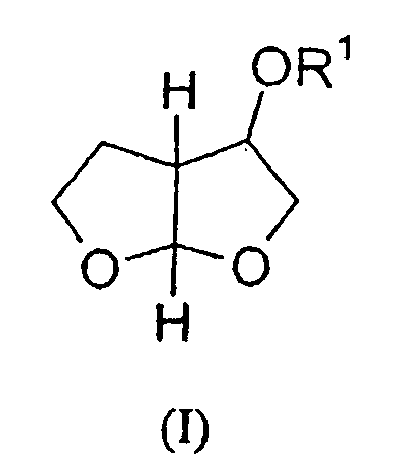
- the present invention features a process for the preparation of compounds of formula (I) diastereoisomers, enantiomers, and mixtures thereof, wherein R 1 is hydrogen comprising:
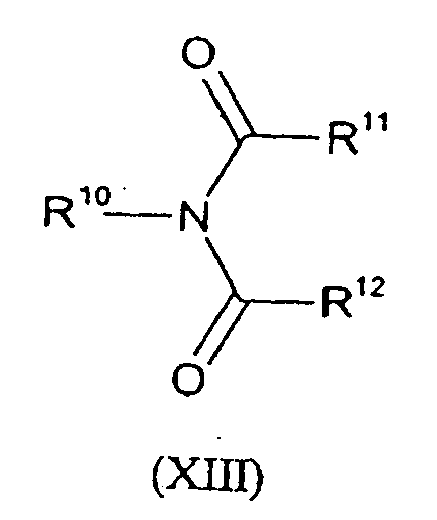
- R 1 is -C(O)R 2 wherein R 2 is C 1-6 alkyl, C 3-8 cycloalkyl, C 6-14 aryl, or C 6-14 arylC 1-6 alkyl; R 6 is halogen, -OR 7 , or-NR 8 R 9 ; R 7 is hydrogen, C 1-6 alkyl, C 3-8 cycloalkyl, C 6-14 aryl, or C 6-14 arylC 1-6 alkyl; R 8 and R 9 are independently selected from hydrogen, C 1-6 alkyl, C 3-8 cycloalkyl, C 6-14 aryl, and C 6-14 arylC 1-6 alkyl; and R 10 - R 12 are as hereinbefore defined to yield a compound of formula (I) wherein R 1 is hydrogen.
- the compounds thus formed may be converted to compounds of formula (I) wherein R 1 is -C(O)R 2 wherein R 2 is C 1-6 alkyl, C 3-8 cycloalkyl, C 6-14 aryl, or C 6-14 arylC 1-6 alkyl by reaction, for example, with acetic anhydride in tetrahydrofuran, in the presence of sodium carbonate and DMAP.
- the resulting compound may optionally be separated and/or resolved to yield a single stereoisomer of the compound of formula (I) wherein R 1 is C(O)R 2 and R 2 is C 1-6 alkyl, C 3-8 cycloalkyl, C 6-14 aryl, or C 6-14 arylC 1-6 alkyl or compounds of formula (I) wherein R 1 is hydrogen. Resolution may be accomplished by treatment with lipase or other methods known to those skilled in the art.
- R 1 is -C(O)R 2 wherein R 2 is C 1-6 alkyl, C 3-8 cycloalkyl, C 6-14 aryl, or C 6-14 arylC 1-6 alkyl; R 6 is -OR 7 wherein R 7 is C 1-6 alkyl, C 3-8 cycloalkyl, C 6-14 aryl, or C 6-14 arylC 1-6 alkyl; and R 10 - R 12 are as hereinbefore defined to yield a compound of formula (I) wherein R 1 is hydrogen.
- the compounds thus formed may be converted to compounds of formula (I) wherein R 1 is -C(O)R 2 wherein R 2 is C 1-6 alkyl, C 3-8 cycloalkyl, C 6-14 aryl, or C 6-14 arylC 1-6 alkyl by reaction, for example, with acetic anhydride in tetrahydrofuran, in the presence of sodium carbonate and DMAP.
- the resulting compound may optionally be separated and/or resolved to yield a single stereoisomer of the compound of formula (I) wherein R 1 is C(O)R 2 and R 2 is C 1-6 alkyl, C 3-8 cycloalkyl, C 6-14 aryl, or C 6-14 arylC 1-6 alkyl or compounds of formula (I) wherein R 1 is hydrogen. Resolution may be accomplished by treatment with lipase or other methods known to those skilled in the art.
- the present invention also features processes for the preparation of compounds of formula (I) as described above, wherein the first reducing agent is selected from the group consisting of di- iso butylaluminum hydride (DIBAL), sodium borohydride, and lithium aluminum hydride; R 6 in the compound of formula (XII) is -OR 7 wherein R 7 is C 1-6 alkyl; the compound of formula (XIII) is N-bromosuccinimide; and the second reducing agent is palladium on carbon in combination with hydrogen.
- the first reducing agent is advantageously lithium aluminum hydride.
- C 1-6 alkyl refers to a straight-chain or branched-chain saturated aliphatic hydrocarbon radical containing the specified number of carbon atoms.
- alkyl radicals include, but are not limited to, methyl, ethyl, n-propyl, isopropyl, n-butyl, isobutyl, sec-butyl, tert-butyl, pentyl, isoamyl, n-hexyl and the like.
- C 3-8 cycloalkyl refers to a saturated or partially saturated carbocyclic ring composed of 3-8 carbons in any chemically stable configuration.
- suitable carbocyclic groups include cyclopropyl, cyclobutyl, cyclopentyl, cyclohexyl, cycloheptyl, cyclooctyl, and cyclohexenyl.
- C 6-14 aryl alone or in combination with any other term, refers to a carbocyclic aromatic moiety (such as phenyl or naphthyl) containing the specified number of carbon atoms, preferably from 6-14 carbon atoms, and more preferably from 6-10 carbon atoms.
- aryl radicals include, but are not limited to phenyl, naphthyl, indenyl, indanyl, azulenyl, fluorenyl, anthracenyl and the like.
- halogen refers to fluorine, chlorine, bromine or iodine.
- substantially free from in reference to a particular compound means that the compound contains from about 0 to 10% of other stereoisomeric compounds such as enantiomers and diastereoisomers.
- reducing agent refers to a chemical reagent or combination of reagents known to those skilled in the art to be capable of reducing a carbonyl-containing compound.
- reagents or combination of reagents are lithium aluminum hydride, di- iso butyl aluminum hydride, and sodium borohydride.
- the compounds according to the invention may contain one or more asymmetric atoms and thus occur as racemates, racemic mixtures, single enantiomers, diastereoisomeric mixtures and individual diastereoisomers. All such isomeric forms of these compounds are expressly included in the present invention.
- Each stereogenic atom may be of the R or S configuration.
- the specific compounds exemplified in this application may be depicted in a particular stereochemical configuration, compounds having either the opposite stereochemistry at any given chiral center or mixtures thereof are also envisioned.
- Compounds containing one or more stereocenters may be drawn using plain lines to depict bonds from said stereocenters. Such structures are intended to represent both possible configurations at that center. Where the compound contains only one stereocenter and a plain line is used to depict the bond from said stereocenter, that structure is meant to depict both enantiomers. Where the compound depicted contains more than one stereocenter and is drawn using plain lines, it is meant to represent all possible stereoisomers, including all enantiomers and all diastereoisomers, and mixtures thereof.
- compound (XIV) depicted below is meant to represent four diastereoisomers: (3 S ,3a R ,6a R )-3a-bromohexahydrofuro[2,3- b ]furan-3-ol, (3 R ,3a R ,6a R )-3a-bromohexahydrofuro[2,3- b ]furan-3-ol, (3 S ,3a S ,6a S )-3a-bromohexahydrofuro[2,3- b ]furan-3-ol, and (3 R ,3a S ,6a S )-3a-bromohexahydrofuro[2,3- b ]furan-3-ol, and mixtures thereof.
- compound (XIXa) shown below is meant to represent two enantiomers: (3 S ,3a R ,6a R )-3a-bromohexahydrofuro[2,3- b ]furan-3-ol and (3 R ,3a S ,6a S )-3a-bromohexahydrofuro[2,3- b ]furan-3-ol, and mixtures thereof.
- compound (XX) is meant to represent a single enantiomer: (3 S ,3a R ,6a R )-3a-bromohexahydrofuro[2,3- b ]furan-3-ol, one enantiomer, either in pure form or substantially free from the opposite enantiomer, and other diastereoisomers.
- the present invention features a process for the preparation of compounds of formula (I) as described above, diastereoisomers, enantiomers, and mixtures thereof, said process comprising the step of reducing a compound of formula (XII) to afford an alcohol of formula (III).
- the present invention also features a process for the preparation of compounds of formula (I), said process comprising the step of treating a compound of formula (III), with an acid selected from hydrochloric acid, hydrobromic acid, hydroiodic acid, acetic acid, sulfuric acid, sulfonic acids such as para -toluenesulfonic acid, and the like.
- an acid selected from hydrochloric acid, hydrobromic acid, hydroiodic acid, acetic acid, sulfuric acid, sulfonic acids such as para -toluenesulfonic acid, and the like.
- Another feature of the present invention is a process for the preparation of a compound of formula (V) substantially free from other diastereoisomers, comprising:
- Compounds of formula (II) may be optionally resolved by treatment with lipase such that the acetate is the desired enantiomer followed by either reduction/hydrolysis or hydrolysis/reduction, as shown below.
- a compound of formula (II) may be resolved by treatment with lipase followed by reduction.
- the present invention also features an intermediate compound of formula (XIX) as a mixture with its stereoisomeric compounds, or substantially free from other stereoisomeric compounds.
- the compound of formula (XIX), or its stereoisomers or any mixture thereof, may be made by treating a compound of formula (XII) wherein R 6 is halogen, -OR 7 , or -NR 8 R 9 ; R 7 is hydrogen, C 1-6 alkyl, C 3-8 cycloalkyl, C 6-14 aryl, or C 6-14 arylC 1-6 alkyl; and R 8 and R 9 are independently selected from hydrogen, C 1-6 alkyl, C 3-8 cycloalkyl, C 6-14 aryl, and C 6-14 arylC 1-6 alkyl; with a reducing agent to form an alcohol of formula (III), treating the alcohol with a compound of formula (XIII) wherein R 10 is chlorine, bromine, or iodine; and R 11 and R 12 are independently selected from C 1-6 alkyl, C 3-8 cycloalkyl, C 6-14 aryl, and C 6-14 arylC 1-6 alkyl, or R 11 and R 12 together with the
- Compounds of formula (XX) may be prepared by treating a compound of formula (XII) wherein R 6 is halogen, -OR 7 , or -NR 8 R 9 ; R 7 is hydrogen, C 1-6 alkyl, C 3-8 cycloalkyl, C 6-14 aryl, or C 6-14 arylC 1-6 alkyl; and R 8 and R 9 are independently selected from hydrogen, C 1-6 alkyl, C 3-8 cycloalkyl, C 6-14 aryl, and C 6-14 arylC 1-6 alkyl; with a reducing agent to form an alcohol of formula (III), treating the alcohol with N-bromosuccinimide to form a compound of formula (XX) and optionally resolving to yield diastereoisomers of compounds of formula (XX).
- the present invention also features 1-(4,5-dihydrofuran-3-yl)ethane-1,2-diol, a compound of formula (III)
- Compound (III) may be prepared by treating a compound of formula (XII) wherein R 6 is halogen, -OR 7 , or -NR 8 R 9 ; where R 7 is hydrogen, C 1-6 alkyl, C 3-8 cycloalkyl, C 6-14 aryl, or C 6-14 arylC 1-6 alkyl; and R 8 and R 9 are independently selected from hydrogen, C 1-6 alkyl, C 3-8 cycloalkyl, C 6-14 aryl, and C 6-14 arylC 1-6 alkyl; with a reducing agent.
- R 6 is halogen, -OR 7 , or -NR 8 R 9 ; where R 7 is hydrogen, C 1-6 alkyl, C 3-8 cycloalkyl, C 6-14 aryl, or C 6-14 arylC 1-6 alkyl; and R 8 and R 9 are independently selected from hydrogen, C 1-6 alkyl, C 3-8 cycloalkyl, C 6-14 aryl, and C 6-14
- the reducing agent may be selected from the group consisting of di- iso butylaluminum hydride (DIBAL), sodium borohydride, and lithium aluminum hydride.
- DIBAL di- iso butylaluminum hydride
- the reducing agent is advantageously lithium aluminum hydride.
- the first reducing agent may be selected from hydride-delivery reagents that include di- iso butylaluminum hydride (DIBAL), sodium borohydride, lithium aluminum hydride and the like.
- DIBAL di- iso butylaluminum hydride
- sodium borohydride sodium borohydride
- lithium aluminum hydride and the like.
- the first reducing agent may be selected from hydride-delivery reagents that include di- iso butylaluminum hydride (DIBAL), sodium borohydride, lithium aluminum hydride and the like; R 6 in the compound of formula (XII) may be -OR 7 where R 7 may be C 1-6 alkyl; the compound of formula (XIII) may be N-bromosuccinimide; and the second reducing agent may be palladium on carbon in combination with hydrogen.
- the first reducing agent is advantageously lithium aluminum hydride.
- the second reducing agent may be selected from reagents or combination of reagents known to those skilled in the art to reduce carbon-halogen bonds.
- these reagents or combination of reagents are 10% w/w palladium on carbon in combination with ammonium formate, 5% w/w palladium on carbon in combination with ammonium formate, 5% w/w palladium on carbon in combination with formic acid, 10% w/w palladium on carbon in combination with formic acid, 10% w/w palladium on carbon in combination with hydrogen, Raney Nickel in combination with hydrogen, or preferably 5% w/w palladium on carbon in combination with hydrogen.
- These reactions are typically performed in a protic solvent such as water, tert -butanol, ethanol, or preferably methanol, or in a mixture of solvents, preferably a mixture of dichloromethane and methanol. These reactions are performed at a temperature from 0-50 °C, preferably ambient temperature.
- a protic solvent such as water, tert -butanol, ethanol, or preferably methanol
- solvents preferably a mixture of dichloromethane and methanol.
- compounds of formula (I), wherein R 1 is hydrogen, and diastereoisomers, enantiomers, and mixtures thereof can be prepared from compounds of formula (I), wherein R 1 is -C(O)R 2 , and R 2 is as hereinbefore defined, by reaction with an appropriate esterase enzyme.
- a racemic mixture of esters may be allowed to react with an appropriate esterase enzyme under conditions that allow for reaction of predominantly one enantiomer of the ester to provide a mixture of diastereoisomeric alcohols and the corresponding ester of one enantiomer, substantially free of the other enantiomer and other diastereoisomers. See, E.L. Eliel and S.H.
- racemates (VI) and (VII) may be allowed to react with esterase PS-800 at a pH of 6.8-7.2 and at 32-38 °C, to afford (3 S ,3a S ,6a R )-hexahydrofuro[2,3- b ]furan-3-ol (VIII), (3 R ,3a R ,6a S )-hexahydrofuro[2,3- b ]furan-3-ol (IX), (3 S ,3a R ,6a S )-hexahydrofuro[2,3- b ]furan-3-ol (X), and (3 R ,3a S ,6a R )-hexahydrofuro[2,3- b ]furan-3-yl acetate (XI).
- the hydrolyzed isomers (VIII, IX and X) may be washed into a water layer and the remaining ester, compound (XI) for example, may then be deprotected using mildly basic conditions as described above, for example using potassium carbonate in a mixture of dichloromethane and methanol, to afford one enantiomer of the corresponding alcohol, substantially free of the other enantiomer and other diastereoisomers.
- a racemic mixture of hexahydrofuro[2,3- b ]furan-3-ol may be resolved by converting the mixture of enantiomers into a mixture of diastereoisomers, followed by traditional methods of separation, such as silica chromatography, crystallization, or extraction.
- the racemic alcohol may be allowed to react with a chiral nonracemic compound (the resolving agent) resulting in the formation of a diastereoisomeric mixture.
- the chiral nonracemic compound is either an acid chloride, a carbamyl chloride or a chloroformate, resulting in the formation of a diastereoisomeric mixture of esters, carbamates, or carbonates, respectively.
- the choice of the chiral nonracemic resolving agent will depend on factors known to those skilled in the art. For example, see Eliel, et. al., p. 322.
- the racemic alcohol may be allowed to react with a lipase enzyme capable of converting one enantiomer of the alcohol into an ester.
- the ester and the remaining alcohol may then be separated by methods known to those skilled in the art. See Eliel, et. al., p. 413.
- exo and endo diastereoisomers of compounds of formula (II), wherein R 3 is halogen and R 4 is hydrogen may be separated from one another using chromatography, crystallization, or extraction. Methods of resolving compounds of formula (I) can be applied to the resolution of compounds of formula (II).
- Compounds of formula (I), wherein R 1 is -C(O)R 2 , and R 2 is as hereinbefore defined, may be prepared from compounds of formula (I), wherein R 1 is hydrogen by reaction with an appropriate esterifying agent, an acid chloride or anhydride for example. These reactions are typically performed in an aprotic solvent, tetrahydrofuran for example, and in the presence of a compound capable of acting as a base, sodium carbonate for example.
- a compound capable of acting as a catalyst may be advantageously used, for example 4-N,N-dimethylaminopyridine (DMAP).
- reagents or combination of reagents are 10% w/w palladium on carbon in combination with ammonium formate, 5% w/w palladium on carbon in combination with ammonium formate, 5% w/w palladium on carbon in combination with formic acid, 10% w/w palladium on carbon in combination with formic acid, 10% w/w palladium on carbon in combination with hydrogen, Raney Nickel in combination with hydrogen, or preferably 5% w/w palladium on carbon in combination with hydrogen.
- compounds of formula (I) wherein R 1 is hydrogen may prepared from compounds of formula (II), wherein R 3 is halogen and R 4 is hydrogen, first by conversion to a compound of formula (II), wherein R 3 is halogen, R 4 is -C(O)R 5 , and R 5 is hydrogen, C 1-6 alkyl, C 3-8 cycloalkyl, C 6-14 aryl, or C 6-14 arylC 1-6 alkyl, followed by reduction, and, optionally, resolution.
- compound (XIV) may be allowed to react with an acylating agent followed by reduction of the bromine-carbon bond, and optionally resolution, and optionally followed by deprotection to afford predominantly (3 R ,3a S ,6a R )-hexahydrofuro[2,3- b ]furan-3-ol (XV).
- compounds of formula (I) wherein R 1 is hydrogen may prepared from compounds of formula (II), wherein R 3 is halogen and R 4 is hydrogen, first by conversion to a compound of formula (II), wherein R 3 is halogen, R 4 is -C(O)R 5 , and R 5 is hydrogen, C 1-6 alkyl, C 3-8 cycloalkyl, C 6-14 aryl, or C 6-14 arylC 1-6 alkyl, followed by resolution and reduction.
- compound (XIV) may be allowed to react with an acylating agent affording compound (XVI), which may then be resolved to afford compound (XIX), reduced and deprotected to afford (3 R ,3a S ,6a R )-hexahydrofuro[2,3- b ]furan-3-ol (XV), substantially free of the opposite enantiomer and other diastereoisomers.
- compounds of formula (I), wherein R 1 is hydrogen may be prepared from compounds of formula (III) by reaction with a reagent or combination of reagents capable of acting as a proton source.
- reagents or combination of reagents capable of acting as a proton source are Bronsted acids known to those skilled in the art, for example hydrochloric acid, hydrobromic acid, hydroiodic acid, acetic acid, sulfuric acid, and sulfonic acids such as para-toluenesulfonic acid.
- These reactions are typically performed in an aprotic solvent, such as tetrahydrofuran, and at a temperature from -30 to 50 °C, preferably - 10 to 10 °C.
- 1-(4,5-dihydrofuran-3-yl)ethane-1,2-diol may be allowed to react with an acid to afford hexahydrofuro[2,3- b ]furan-3-ol.
- Compounds of formula (II) wherein R 3 is halogen and R 4 is hydrogen may be prepared from compounds of formula (III) by reaction with a reagent or combination of reagents capable of providing a source of electrophilic halogen.
- a reagent or combination of reagents capable of providing an electrophilic source of halogen are bromine, iodine, N-iodosuccinimide, N-chlorosuccinimide, or preferably N-bromosuccinimide (NBS).
- NBS N-bromosuccinimide
- 1-(4,5-dihydrofuran-3-yl)ethane-1,2-diol may be allowed to react with NBS in THF at-5 to 0 °C to afford 3a-bromohexahydrofuro[2,3- b ]furan-3-ol (XIV).
- Compounds of formula (III), and enantiomers and mixtures thereof may be prepared by reduction of compounds of formula (XII), wherein R 6 is as hereinbefore defined. Reduction may be accomplished by allowing a compound of formula (XII) to react with a reagent or combination of reagents known to those skilled in the art as capable of reducing a compound of formula (XII).
- a reagent or combination of reagents known to those skilled in the art to be capable of such a reduction are lithium aluminum hydride (LAH), di- iso butylaluminum hydride (DIBAL), and sodium borohydride.
- reaction may be performed in an aprotic solvent, THF for example or preferably methyl tert -butyl ether (MTBE), in the presence of a compound capable of acting as a base, for example pyridine, DMAP, or preferably triethylamine, and at a temperature from 0 to 80 °C, preferably ambient temperature to 35 °C.
- a compound capable of acting as a base for example pyridine, DMAP, or preferably triethylamine
- 2,3-dihydrofuran may be allowed to react with ethyl chlorooxoacetate in MTBE, in the presence of triethylamine and at ambient temperature to 35 °C to afford compound (XVII), ethyl 4,5-dihydrofuran-3-yl(oxo)acetate.
- R 1 is hydrogen or -C(O)R 2 wherein R 2 is C 1-6 alkyl, C 3-8 cycloalkyl, C 6-14 aryl, or C 6-14 arylC 1-6 alkyl may be enantiomerically enriched as illustrated by the following procedures, as more fully described hereinabove and in the examples.
- the enantiomer of the acetate may be obtained by resolution of the bromo alcohol followed either reduction/hydrolysis or hydrolysis/reduction.
- the enantiomer of the alcohol may be obtained by resolution of the bromo alcohol followed by reduction.
- the enantiomer of the acetate may be obtained by resolution of the bromoacetate by either reduction/hydrolysis or hydrolysis/reduction.
- the enantiomer of the alcohol may be obtained by resolution of the acetate followed by reduction.
- the enantiomer of the acetate may be obtained by resolution of the alcohol followed by hydrolysis.
- the enantiomer of the alcohol may be obtained by resolution of the alcohol.
- the enantiomer of the acetate may be obtained by resolution of the acetate followed by hydrolysis.
- the enantiomer of the alcohol may be obtained by resolution of the acetate.
- MS mass spectra
- MS-AX505HA JOEL JMS-AX505HA
- JOEL SX-102 or a SCIEX-APIiii spectrometer
- high resolution MS were obtained using a JOEL SX-102A spectrometer.
- All mass spectra were taken under electrospray ionization (ESI), chemical ionization (CI), electron impact (EI) or by fast atom bombardment (FAB) methods.
- ESI electrospray ionization
- CI chemical ionization
- EI electron impact
- FAB fast atom bombardment
- IR Infrared
- Example 4 To the filtrate from Example 4 was added sodium carbonate (1.0 wt., 2 eq), and DMAP (0.01 wt., 0.02 eq). The resulting slurry was cooled to 0 °C, and acetic anhydride (0.53 wt, 1.1 eq) was added dropwise over 30 min. The reaction was warmed to rt and stirred overnight. The reaction was filtered, and the filtrate was concentrated in vacuo to an oil. The oil was dissolved in methylene chloride (5 vol) and was washed with 1N HCl (2 vol), and water (2 vol.). The organic layer was concentrated to give the title compound as an oil (90-95%).
- This mixture is subjected to hydrogenation at 0.2 barge H 2 for 20 h.
- the reaction mixture is purged with nitrogen, and Celite (0.06 wt) is added and stirred 30 min.
- the mixture is filtered through Celite, and rinsed with THF (1.5 volumes). The filtrate is washed with water (2x5 vol) and concentrated to afford the title product as an oil.
- 3a-bromohexahydrofuro [2,3- b ] furan-3-yl acetate (leq, 1 wt) (with a pH adjustment using 15% NaOH if necessary) is added and the solution heated to 35 +/- 3 °C.
- An appropriate esterase is added and the pH is kept between 6.8 and 7.2 with the addition of 15% NaOH when necessary.
- the reaction is followed by chiral GC until all of the undesired acetate has been hydrolyzed (ca. 18 h).
- Celite 0.5 wt
- methylene chloride 4.0 vol
- a reactor was charged with 3a-bromohexahydrofuro[2,3- b ]furan-3-ol from Example 3 (leq, 1 wt), vinyl acetate (2.3 equiv., 1.0 vol.), toluene (5 vol.), and ChiroCLEC-PC ( ⁇ 0.01 wt.). The reaction was followed by chiral GC until all of the undesired acetate was hydrolyzed (ca. 3 h).
- the desired alcohol was then extracted into tert-butyl methyl ether and the major diastereomer was enriched to 95:5 by successive washes with water.
- the organic layer was concentrated to an oil that solidifies on standing. This procedure may be applied with equal success to the resolution of a 95:5 diastereomeric ratio of the starting material without the necessity for extractive purification.
- (+/-)-1-(4,5-dihydrofuran-3-yl)ethane-1,2-diol from Example 2 was cooled to ⁇ -10°C and titrated with NBS ( ⁇ 0.69 eq based on ethyl 4,5-dihydrofuran-3-yl(oxo)acetate used in example 2, ⁇ 0.94 wt.), The titration was accomplished by monitoring the exotherm associated with the portionwise addition of NBS carried out over ⁇ 1 h at ⁇ -10 °C. The reaction mixture was stirred for another ⁇ 30 min and was treated with 10 % sodium sulfite solution (6 vol.).
- the resulting solution (a 3:1 diastereomeric mixture) was concentrated to about one half the original volume in vacuo at 35 - 40 °C and extracted with methyl tert-butyl ether (5 x 5 vol.). The combined organics were washed with water (5 x 5 vol.), and concentrated to an oil to afford 3a-bromohexahydrofuro[2,3-b]furan-3-ol as a diastereomeric mixture of 95 to 5 ( ⁇ 40% yield from ethyl 4,5-dihydrofuran-3-yl(oxo)acetate. The washes were combined and extracted with ethyl acetate (2x10 vol). The extracts, made up of a 3 : 1 mixture of diastereomers, were cycled through the above extraction process to isolate ⁇ 10% additional product as a 95 : 5 diastereomeric mixture. Overall yield is ⁇ 50% (two steps).
- Rel-(3S,3aR,6aR)-3a-bromohexahydrofuro[2,3-b]furan-3-ol (1 wt., 1 eq) (95:5 mixture of diastereomers, unresolved), THF (4.2 wt.), and triethylamine (0.58 wt, 1.2 eq.) were charged to a reactor followed by a slurry of palladium on carbon (0.28 wt, 5% Pd/C, 50% water) in water (0.86 wt.). The mixture was subjected to H 2 for ⁇ 8 hours and the catalyst was removed by filtration and washed with THF (2x1 wt.).
Landscapes
- Chemical & Material Sciences (AREA)
- Organic Chemistry (AREA)
- Pharmaceuticals Containing Other Organic And Inorganic Compounds (AREA)
- Heterocyclic Carbon Compounds Containing A Hetero Ring Having Oxygen Or Sulfur (AREA)
- Seasonings (AREA)
- Organic Low-Molecular-Weight Compounds And Preparation Thereof (AREA)
- Developing Agents For Electrophotography (AREA)
Claims (20)
- Verfahren zur Herstellung von Verbindungen der Formel (I),

wobei R1 Wasserstoff ist, umfassend:a) Behandeln einer Verbindung der Formel (XII) R6 Halogen, -OR7 oder -NR8R9 ist;R7 Wasserstoff, C1-6-Alkyl, C3-8-Cycloalkyl, C6-14-Aryl oder C6-14-Aryl-C1-6-alkyl ist;R8 und R9 unabhängig aus Wasserstoff, C1-6-Alkyl, C3-8-Cycloalkyl, C6-14-Aryl und C6-14-Aryl-C1-6-alkyl ausgewählt sind;mit einem ersten Reduktionsmittel unter Bildung eines Alkohols der Formel (III)
 b) Behandeln des Alkohols mit Brom, Iod, Iodmonochlorid, einem N-Fluorbissulfonamid oder einer Verbindung der Formel (XIII)
 R10 Chlor, Brom oder Iod ist; undR11 und R12 unabhängig aus C1-6-Alkyl, C3-8-Cycloalkyl, C6-14-Aryl und C6-14-Aryl-C1-6-alkyl ausgewählt sind oder R11 und R12 zusammen mit den Atomen, an die sie gebunden sind, einen 5- bis 8-gliedrigen Ring bilden;unter Bildung einer Verbindung der Formel (II)
 c) Behandeln einer Verbindung der Formel (II) mit einem zweiten Reduktionsmittel, um eine Verbindung der Formel (I) zu liefern, wobei R1 Wasserstoff ist.
 - Verfahren zur Herstellung von Verbindungen der Formel (I) nach Anspruch 1, wobei das erste Reduktionsmittel ausgewählt ist aus Diisobutylaluminiumhydrid (DIBAL), Natriumborhydrid und Lithiumaluminiumhydrid, R6 in der Verbindung der Formel (XII) -OR7 ist, wobei R7 C1-6-Alkyl ist, die Verbindung der Formel (XIII) N-Bromsuccinimid ist und das zweite Reduktionsmittel Palladium auf Kohlenstoff in Verbindung mit Wasserstoff ist.
- Verfahren zur Herstellung von Verbindungen der Formel (I),
wobei R1 -C(O)R2 ist; und R2 C1-6-Alkyl, C3-8-Cycloalkyl, C6-14-Aryl oder C6-14-Aryl-C1-6-alkyl ist, umfassend:a) Behandeln einer Verbindung der Formel (XII) R6 Halogen, -OR7 oder -NR8R9 ist;R7 Wasserstoff, C1-6-Alkyl, C3-8-Cycloalkyl, C6-14-Aryl oder C6-14-Aryl-C1-6-alkyl ist; undR8 und R9 unabhängig aus Wasserstoff, C1-6-Alkyl, C3-8-Cycloalkyl, C6-14-Aryl undC6-14-Aryl-C1-6-alkyl ausgewählt sind;mit einem ersten Reduktionsmittel unter Bildung eines Alkohols der Formel (III)
 b) Behandeln des Alkohols mit Brom, Iod, Iodmonochlorid, einem N-Fluorbissulfonamid oder einer Verbindung der Formel (XIII)
 R10 Chlor, Brom oder Iod ist; undR11 und R12 unabhängig ausgewählt sind aus C1-6-Alkyl, C3-8-Cycloalkyl, C6-14-Aryl und C6-14-Aryl-C1-6-alkyl oder R11 und R12 zusammen mit den Atomen, an die sie gebunden sind, einen 5- bis 8-gliedrigen Ring bilden;unter Bildung einer Verbindung der Formel (II)
 c) Behandeln einer Verbindung der Formel (II) mit einem zweiten Reduktionsmittel, um eine Verbindung der Formel (I) zu liefern, wobei R1 Wasserstoff ist; undd) Lösen unter Bildung einer Verbindung der Formel (I), wobei R1 -C(O)R2 ist und R2 C1-6-Alkyl, C3-8-Cycloalkyl, C6-14-Aryl oder C6-14-Aryl-C1-6-alkyl ist.
 - Verfahren zur Herstellung von Verbindungen der Formel (I),

wobei R1 Wasserstoff oder -C(O)R2 ist, wobei R2 C1-6-Alkyl, C3-8-Cycloalkyl, C6-14-Aryl oder C6-14Aryl-C1-6-alkyl ist;
umfassend die Reduktion einer Verbindung der Formel (XII)
R7 Wasserstoff, C1-6-Alkyl, C3-8-Cycloalkyl, C6-14-Aryl oder C6-14-Aryl-C1-6-alkyl ist; und
R8 und R9 unabhängig aus Wasserstoff, C1-6-Alkyl, C3-8-Cycloalkyl, C6-14-Aryl und C6-14-Aryl-C1-6-alkyl ausgewählt sind; um einen Alkohol der Formel (III) zu liefern
- Verfahren zur Herstellung von Verbindungen der Formel (I)

umfassend das Behandeln einer Verbindung der Formel (III)
- Verfahren zur Herstellung einer Verbindung der Formel (V)
 a) Behandeln einer Verbindung der Formel (XII)
 R6 Halogen, -OR7 oder -NR8R9 ist;R7 Wasserstoff, C1-6-Alkyl, C3-8-Cycloalkyl, C6-14-Aryl oder C6-14-Aryl-C1-6-alkyl ist; undR8 und R9 unabhängig ausgewählt sind aus Wasserstoff, C1-6-Alkyl, C3-8-Cycloalkyl, C6-14-Aryl und C6-14-Aryl-C1-6-alkyl;mit einem ersten Reduktionsmittel unter Bildung eines Alkohols der Formel (III)
 b) Behandeln des Alkohols mit Brom, Iod, Iodmonochlorid, einem N-Fluorbissulfonamid oder einer Verbindung der Formel (XIII)
 R10 Chlor, Brom oder Iod ist; undR11 und R12 unabhängig aus C1-6-Alkyl, C3-8-Cycloalkyl, C6-14-Aryl und C6-14-Aryl-C1-6-alkyl ausgewählt sind oder R11 und R12 zusammen mit den Atomen, an die sie gebunden sind, einen 5- bis 8-gliedrigen Ring bilden;unter Bildung einer Verbindung der Formel (II)
 c) Behandeln einer Verbindung der Formel (II) mit einem zweiten Reduktionsmittel, um eine Verbindung der Formel (I) zu liefern
 d) Lösen unter Bildung einer Verbindung der Formel (I), wobei R1 Wasserstoff oder -C(O)R2 ist und R2 C1-6-Alkyl, C3-8-Cycloalkyl, C6-14-Aryl oder C6-14-Aryl-C1-6-alkyl ist.
 - Verbindung der Formel (II)
 R3 Halogen ist;R4 Wasserstoff oder -C(O)R5 ist;R5 Wasserstoff, C1-6-Alkyl, C3-8-Cycloalkyl, C6-14-Aryl oder C6-14-Aryl-C1-6-alkyl ist; undDiastereoisomere, Enantiomere und Gemische davon.
 - Verbindung der Formel (II) nach Anspruch 7, wobei R3 Brom ist und R4 Wasserstoff ist.
- Verbindung der Formel (II) nach Anspruch 7, wobei R3 Brom ist, R4 -C(O)R5 ist und R5 C1-6-Alkyl ist.
- Verbindung der Formel (II) nach Anspruch 7, wobei R3 Brom ist, R4 -C(O)R5 ist und R5 -CH3 ist.
- Verfahren zur Herstellung von Verbindungen der Formel (II)
 R3 Halogen ist;R4 Wasserstoff oder -C(O)R5 ist;R5 Wasserstoff, C1-6-Alkyl, C3-8-Cycloalkyl, C6-14-Aryl oder C6-14-Aryl-C1-6-alkyl ist; undDiastereoisomeren, Enantiomeren und Gemischen davon, umfassend:a) Behandeln einer Verbindung der Formel (XII)
 R6 Halogen, -OR7 oder -NR8R9 ist;R7 Wasserstoff, C1-6-Alkyl, C3-8-Cycloalkyl, C6-14-Aryl oder C6-14-Aryl-C1-6-alkyl ist; undR8 und R9 unabhängig aus Wasserstoff, C1-6-Alkyl, C3-8-Cycloalkyl, C6-14-Aryl und C6-14-Aryl-C1-6-alkyl ausgewählt sind;mit einem Reduktionsmittel unter Bildung eines Alkohols der Formel (III)
 b) Behandeln des Alkohols mit Brom, Iod, Iodmonochlorid, einem N-Fluorbissulfonamid oder einer Verbindung der Formel (XIII)
 R10 Chlor, Brom oder Iod ist; undR11 und R12 unabhängig aus C1-6-Alkyl, C3-8-Cycloalkyl, C6-14-Aryl und C6-14-Aryl-C1-6-alkyl ausgewählt sind oder R11 und R12 zusammen mit den Atomen, an die sie gebunden sind, einen 5- bis 8-gliedrigen Ring bilden; unter Bildung einer Verbindung der Formel (II), wobei R3 Halogen ist und R4 Wasserstoff ist; undc) Lösen, um eine Verbindung der Formel (II) zu ergeben, wobei R3 Halogen ist; R4 Wasserstoff oder -C(O)R5 ist; und R5 Wasserstoff, C1-6-Alkyl, C3-8-Cycloalkyl, C6-14-Aryl oder C6-14-Aryl-C1-6-alkyl ist.
 - Verbindung der Formel (XIX)

- Verfahren zur Herstellung einer Verbindung der Formel (XIX)
 a) Behandeln einer Verbindung der Formel (XII)
 R6 Halogen, -OR7 oder -NR8R9 ist;R7 Wasserstoff, C1-6-Alkyl, C3-8-Cycloalkyl, C6-14-Aryl oder C6-14-Aryl-C1-6-alkyl ist; undR8 und R9 unabhängig aus Wasserstoff, C1-6-Alkyl, C3-8-Cycloalkyl, C6-14-Aryl und C6-14-Aryl-C1-6-alkyl ausgewählt sind;mit einem Reduktionsmittel unter Bildung eines Alkohols der Formel (III)
 b) Behandeln des Alkohols mit Brom, Iod, Iodmonochlorid, einem N-Fluorbissulfonamid oder einer Verbindung der Formel (XIII)
 R10 Chlor, Brom oder Iod ist; undR11 und R12 unabhängig aus C1-6-Alkyl, C3-8-Cycloalkyl, C6-14-Aryl und C6-14-Aryl-C1-6-alkyl ausgewählt sind oder R11 und R12 zusammen mit den Atomen, an die sie gebunden sind, einen 5- bis 8-gliedrigen Ring bilden; undc) gegebenenfalls Lösen, um eine Verbindung der Formel (XIX) zu liefern.
 - Verbindung der Formel (XX)

- Verfahren zur Herstellung einer Verbindung der Formel (XX)
 a) Behandeln einer Verbindung der Formel (XII)
 R6 Halogen, -OR7 oder -NR8R9 ist;R7 Wasserstoff, C1-6-Alkyl, C3-8-Cycloalkyl, C6-14-Aryl oder C6-14-Aryl-C1-6-alkyl ist; undR8 und R9 unabhängig aus Wasserstoff, C1-6-Alkyl, C3-8-Cycloalkyl, C6-14-Aryl und C6-14-Aryl-C1-6-alkylausgewählt sind;mit einem Reduktionsmittel unter Bildung eines Alkohols der Formel (III)
 b) Behandeln des Alkohols mit N-Bromsuccinimid unter Bildung einer Verbindung der Formel (XX); undc) gegebenenfalls Lösen, um Diastereoisomere von Verbindungen der Formel (XX) zu liefern.
 - Verbindung der Formel (III)

- Verfahren zur Herstellung einer Verbindung (III)


- Verfahren nach Anspruch 17, wobei das Reduktionsmittel ausgewählt ist aus Diisobutylaluminiumhydrid (DIBAL), Natriumborhydrid und Lithiumaluminiumhydrid.
- Verfahren zur Herstellung von Verbindungen der Formel I, II, V, XIV, XIX und XX nach einem der Ansprüche 1, 3, 4, 6, 11, 13 oder 15, wobei das erste Reduktionsmittel aus Diisobutylaluminiumhydrid (DIBAL), Natriumborhydrid und Lithiumaluminiumhydrid ausgewählt ist, wobei R6 in der Verbindung der Formel (XII) -OR7 ist, wobei R7 C1-6-Alkyl ist, wobei die Verbindung der Formel (XIII) N-Bromsuccinimid ist, und das zweite Reduktionsmittel Palladium auf Kohlenstoff in Verbindung mit Wasserstoff ist.
- Verfahren nach einem der Ansprüche 1, 2, 3 oder 4, weiter umfassend den Schritt des Lösens, um einzelne Enantiomere zu erhalten.
Priority Applications (1)
| Application Number | Priority Date | Filing Date | Title |
|---|---|---|---|
| SI200330492T SI1532127T1 (sl) | 2002-06-27 | 2003-06-25 | Priprava stereoizomerov (3alfa, 3alfa/beta, 6alfa/beta) heksahydrofuro(2,3-b)-furan-3-ola |
Applications Claiming Priority (3)
| Application Number | Priority Date | Filing Date | Title |
|---|---|---|---|
| US39267702P | 2002-06-27 | 2002-06-27 | |
| US392677P | 2002-06-27 | ||
| PCT/US2003/020094 WO2004002975A1 (en) | 2002-06-27 | 2003-06-25 | PREPARATION OF STEREOISOMERS OF (3ALPHA, 3ALPHA/BETA, 6ALPHA/BETA) HEXAHYDROFURO[2,3-b]FURAN-3-OL |
Publications (2)
| Publication Number | Publication Date |
|---|---|
| EP1532127A1 EP1532127A1 (de) | 2005-05-25 |
| EP1532127B1 true EP1532127B1 (de) | 2006-09-27 |
Family
ID=30000917
Family Applications (1)
| Application Number | Title | Priority Date | Filing Date |
|---|---|---|---|
| EP03762054A Expired - Lifetime EP1532127B1 (de) | 2002-06-27 | 2003-06-25 | HERSTELLUNG VON STEREOISOMEREN VON (3ALPHA, 3ALPHA/BETA, 6ALPHA/BETA)HEXAHYDROFURO¬2,3-b|FURAN-3-OL |
Country Status (12)
| Country | Link |
|---|---|
| US (1) | US20050261507A1 (de) |
| EP (1) | EP1532127B1 (de) |
| JP (1) | JP2005533821A (de) |
| AT (1) | ATE340788T1 (de) |
| AU (1) | AU2003247651A1 (de) |
| CY (1) | CY1105856T1 (de) |
| DE (1) | DE60308695T2 (de) |
| DK (1) | DK1532127T3 (de) |
| ES (1) | ES2268427T3 (de) |
| PT (1) | PT1532127E (de) |
| SI (1) | SI1532127T1 (de) |
| WO (1) | WO2004002975A1 (de) |
Families Citing this family (11)
| Publication number | Priority date | Publication date | Assignee | Title |
|---|---|---|---|---|
| WO2004060895A1 (ja) | 2002-12-27 | 2004-07-22 | Sumitomo Chemical Company, Limited | ヘキサヒドロフロフラノール誘導体の製造方法、その中間体及びその製造方法 |
| ES2359949T3 (es) * | 2006-11-09 | 2011-05-30 | Tibotec Pharmaceuticals | Métodos para preparar hexhidrofuro(2,3-b)furan-3-ol. |
| AU2008317375B2 (en) * | 2007-10-26 | 2013-02-28 | Concert Pharmaceuticals, Inc. | Deuterated darunavir |
| US8592487B2 (en) | 2007-10-26 | 2013-11-26 | Concert Pharmaceuticals, Inc. | Deuterated darunavir |
| WO2010075887A1 (en) * | 2008-12-30 | 2010-07-08 | Oxyrane (Uk) Limited | Methods and intermediates useful in the synthesis of hexahydrofuro[2,3-b]furan-3-ol |
| US20100305173A1 (en) * | 2009-04-30 | 2010-12-02 | Concert Pharmaceuticals, Inc. | Hydroxyethylamino sulfonamide derivatives |
| PT2643326T (pt) | 2010-11-23 | 2016-12-23 | Mylan Laboratories Ltd | Processo para a preparação de (3r,3as,6ar)-hexa-hidrofuro[2,3-b]furan-3-ol |
| EP2634180A1 (de) | 2012-03-01 | 2013-09-04 | Lonza Ltd. | Enzymatisches Verfahren zur Herstellung von Butyrolactonen |
| ES2657227T3 (es) * | 2012-08-09 | 2018-03-02 | Sumitomo Chemical Company, Limited | Método para producir un derivado de hexahidrofurofuranol |
| CN103864813B (zh) * | 2012-12-18 | 2017-02-22 | 上海迪赛诺化学制药有限公司 | 一种合成六氢呋喃并[2,3‑b]呋喃‑3‑醇及其对映体的方法 |
| WO2017041228A1 (zh) * | 2015-09-08 | 2017-03-16 | 浙江九洲药业股份有限公司 | 六氢呋喃并呋喃醇衍生物的制备方法、其中间体及其制备方法 |
Family Cites Families (3)
| Publication number | Priority date | Publication date | Assignee | Title |
|---|---|---|---|---|
| WO2002060905A2 (en) * | 2000-10-24 | 2002-08-08 | Glaxo Group Ltd | Process for preparing intermediates of hiv protease inhibitors |
| ES2338538T3 (es) * | 2001-09-10 | 2010-05-10 | Tibotec Pharmaceuticals | Metodo para la preparacion de hexahidrofuro(2,3-b)furan-3-ol. |
| WO2003024974A2 (en) * | 2001-09-20 | 2003-03-27 | Smithkline Beecham Corporation | Process for preparing protease inhibitor intermediates |
-
2003
- 2003-06-25 DK DK03762054T patent/DK1532127T3/da active
- 2003-06-25 US US10/517,966 patent/US20050261507A1/en not_active Abandoned
- 2003-06-25 AU AU2003247651A patent/AU2003247651A1/en not_active Abandoned
- 2003-06-25 DE DE60308695T patent/DE60308695T2/de not_active Expired - Fee Related
- 2003-06-25 AT AT03762054T patent/ATE340788T1/de not_active IP Right Cessation
- 2003-06-25 PT PT03762054T patent/PT1532127E/pt unknown
- 2003-06-25 WO PCT/US2003/020094 patent/WO2004002975A1/en not_active Ceased
- 2003-06-25 SI SI200330492T patent/SI1532127T1/sl unknown
- 2003-06-25 EP EP03762054A patent/EP1532127B1/de not_active Expired - Lifetime
- 2003-06-25 JP JP2004517842A patent/JP2005533821A/ja active Pending
- 2003-06-25 ES ES03762054T patent/ES2268427T3/es not_active Expired - Lifetime
-
2006
- 2006-12-13 CY CY20061101806T patent/CY1105856T1/el unknown
Also Published As
| Publication number | Publication date |
|---|---|
| JP2005533821A (ja) | 2005-11-10 |
| WO2004002975A1 (en) | 2004-01-08 |
| DK1532127T3 (da) | 2007-02-05 |
| US20050261507A1 (en) | 2005-11-24 |
| EP1532127A1 (de) | 2005-05-25 |
| CY1105856T1 (el) | 2011-02-02 |
| ATE340788T1 (de) | 2006-10-15 |
| AU2003247651A1 (en) | 2004-01-19 |
| DE60308695D1 (de) | 2006-11-09 |
| PT1532127E (pt) | 2007-01-31 |
| SI1532127T1 (sl) | 2006-12-31 |
| ES2268427T3 (es) | 2007-03-16 |
| DE60308695T2 (de) | 2007-08-16 |
Similar Documents
| Publication | Publication Date | Title |
|---|---|---|
| JP5491862B2 (ja) | ヘキサヒドロフロ[2,3−b]フラン−3−オールの製造方法 | |
| CN100519561C (zh) | 制备六氢-呋喃并[2,3-b]呋喃-3-醇的方法 | |
| WO2015066729A1 (en) | Macrocyclization reactions and intermediates useful in the synthesis of analogs of halichondrin b | |
| EP1532127A1 (de) | HERSTELLUNG VON STEREOISOMEREN VON (3ALPHA, 3ALPHA/BETA, 6ALPHA/BETA)HEXAHYDROFURO[2,3-b]FURAN-3-OL | |
| EP1725566B1 (de) | Verfahren zur herstellung von (1s,2r)-3-[[(4-aminophenyl)sulfonyl](isobutyl)amino]-1-benzyl-2-hydroxypropylcarbamidsäure-(3r,3as,6ar)-hexahydrofuro[2,3-b]furan-3-ylester | |
| AU2009286619B2 (en) | Process for the preparation of (3R,3aS,6aR)-hexahydrofuro [2,3-b] furan-3-yl (1S,2R)-3-[[(4-aminophenyl) sulfonyl] (isobutyl) amino]-1-benzyl-2-hydroxypropylcarbamate | |
| EP1732931B1 (de) | VERFAHREN ZUR HERSTELLUNG VON (3R,3AS,6AR)-HEXAHYDROFURO[2,3-b]FURAN-3-OL | |
| EP2152667B1 (de) | Herstellungsverfahren für n-isobutyl-n-(2-hydroxy-3-amino-4-phenylbutyl)-p-nitrobenzolsulfonylamidderivate | |
| KR101204145B1 (ko) | 비시클로〔3.1.0〕헥산 유도체의 제조 방법, 및 이에 대한 중간체 | |
| WO2018015929A1 (en) | A novel process for the preparation of hiv protease inhibitor and intermediates thereof | |
| Chen et al. | Synthesis of functionalized 1-azabicyclo [3.1. 0] hexanes: studies towards ficellomycin and its analogs | |
| JPH0625137B2 (ja) | ラセミ体形半エステルの分離方法 | |
| EP2643326B1 (de) | Verfahren zur Herstellung von (3R, 3aS, 6aR)-hexahydrofuro[2,3-b]furan-3-ol | |
| CN110483413A (zh) | 用于制备碳环糖衍生物的方法 | |
| Li | Syntheses of Carbobicyclic Nucleosides | |
| Tadano et al. | Synthesis of Tetrasubstituted Pyrrolidine Derivatives Employing β-Lactam as a Chiral Building Block |
Legal Events
| Date | Code | Title | Description |
|---|---|---|---|
| PUAI | Public reference made under article 153(3) epc to a published international application that has entered the european phase |
Free format text: ORIGINAL CODE: 0009012 |
|
| 17P | Request for examination filed |
Effective date: 20050118 |
|
| AK | Designated contracting states |
Kind code of ref document: A1 Designated state(s): AT BE BG CH CY CZ DE DK EE ES FI FR GB GR HU IE IT LI LU MC NL PT RO SE SI SK TR |
|
| AX | Request for extension of the european patent |
Extension state: AL LT LV MK |
|
| RAX | Requested extension states of the european patent have changed |
Extension state: LV Payment date: 20050118 Extension state: LT Payment date: 20050118 |
|
| GRAP | Despatch of communication of intention to grant a patent |
Free format text: ORIGINAL CODE: EPIDOSNIGR1 |
|
| GRAS | Grant fee paid |
Free format text: ORIGINAL CODE: EPIDOSNIGR3 |
|
| RAP1 | Party data changed (applicant data changed or rights of an application transferred) |
Owner name: SMITHKLINE BEECHAM CORPORATION |
|
| GRAA | (expected) grant |
Free format text: ORIGINAL CODE: 0009210 |
|
| AK | Designated contracting states |
Kind code of ref document: B1 Designated state(s): AT BE BG CH CY CZ DE DK EE ES FI FR GB GR HU IE IT LI LU MC NL PT RO SE SI SK TR |
|
| AX | Request for extension of the european patent |
Extension state: LT LV |
|
| PG25 | Lapsed in a contracting state [announced via postgrant information from national office to epo] |
Ref country code: IT Free format text: LAPSE BECAUSE OF FAILURE TO SUBMIT A TRANSLATION OF THE DESCRIPTION OR TO PAY THE FEE WITHIN THE PRESCRIBED TIME-LIMIT;WARNING: LAPSES OF ITALIAN PATENTS WITH EFFECTIVE DATE BEFORE 2007 MAY HAVE OCCURRED AT ANY TIME BEFORE 2007. THE CORRECT EFFECTIVE DATE MAY BE DIFFERENT FROM THE ONE RECORDED. Effective date: 20060927 |
|
| REG | Reference to a national code |
Ref country code: GB Ref legal event code: FG4D |
|
| REG | Reference to a national code |
Ref country code: CH Ref legal event code: EP |
|
| REG | Reference to a national code |
Ref country code: IE Ref legal event code: FG4D |
|
| REF | Corresponds to: |
Ref document number: 60308695 Country of ref document: DE Date of ref document: 20061109 Kind code of ref document: P |
|
| REG | Reference to a national code |
Ref country code: CH Ref legal event code: NV Representative=s name: E. BLUM & CO. PATENTANWAELTE |
|
| REG | Reference to a national code |
Ref country code: SE Ref legal event code: TRGR |
|
| REG | Reference to a national code |
Ref country code: RO Ref legal event code: EPE |
|
| REG | Reference to a national code |
Ref country code: GR Ref legal event code: EP Ref document number: 20060404275 Country of ref document: GR |
|
| REG | Reference to a national code |
Ref country code: HU Ref legal event code: AG4A Ref document number: E000899 Country of ref document: HU |
|
| REG | Reference to a national code |
Ref country code: PT Ref legal event code: SC4A Free format text: AVAILABILITY OF NATIONAL TRANSLATION Effective date: 20061117 |
|
| REG | Reference to a national code |
Ref country code: DK Ref legal event code: T3 |
|
| REG | Reference to a national code |
Ref country code: EE Ref legal event code: FG4A Ref document number: E000795 Country of ref document: EE Effective date: 20061212 |
|
| REG | Reference to a national code |
Ref country code: ES Ref legal event code: FG2A Ref document number: 2268427 Country of ref document: ES Kind code of ref document: T3 |
|
| ET | Fr: translation filed | ||
| PLBE | No opposition filed within time limit |
Free format text: ORIGINAL CODE: 0009261 |
|
| STAA | Information on the status of an ep patent application or granted ep patent |
Free format text: STATUS: NO OPPOSITION FILED WITHIN TIME LIMIT |
|
| 26N | No opposition filed |
Effective date: 20070628 |
|
| REG | Reference to a national code |
Ref country code: CH Ref legal event code: PFA Owner name: SMITHKLINE BEECHAM CORPORATION Free format text: SMITHKLINE BEECHAM CORPORATION#ONE FRANKLIN PLAZA P.O. BOX 7929#PHILADELPHIA, PA 19101 (US) -TRANSFER TO- SMITHKLINE BEECHAM CORPORATION#ONE FRANKLIN PLAZA P.O. BOX 7929#PHILADELPHIA, PA 19101 (US) |
|
| PGFP | Annual fee paid to national office [announced via postgrant information from national office to epo] |
Ref country code: EE Payment date: 20080325 Year of fee payment: 6 |
|
| PGFP | Annual fee paid to national office [announced via postgrant information from national office to epo] |
Ref country code: CH Payment date: 20080425 Year of fee payment: 6 Ref country code: CZ Payment date: 20080516 Year of fee payment: 6 Ref country code: DK Payment date: 20080508 Year of fee payment: 6 Ref country code: ES Payment date: 20080618 Year of fee payment: 6 Ref country code: HU Payment date: 20080331 Year of fee payment: 6 Ref country code: LU Payment date: 20080508 Year of fee payment: 6 |
|
| PGFP | Annual fee paid to national office [announced via postgrant information from national office to epo] |
Ref country code: SK Payment date: 20080513 Year of fee payment: 6 Ref country code: RO Payment date: 20080602 Year of fee payment: 6 Ref country code: AT Payment date: 20080507 Year of fee payment: 6 |
|
| PGFP | Annual fee paid to national office [announced via postgrant information from national office to epo] |
Ref country code: IT Payment date: 20080619 Year of fee payment: 6 Ref country code: BE Payment date: 20080630 Year of fee payment: 6 Ref country code: MC Payment date: 20080508 Year of fee payment: 6 Ref country code: TR Payment date: 20080407 Year of fee payment: 6 Ref country code: PT Payment date: 20080414 Year of fee payment: 6 Ref country code: SI Payment date: 20080612 Year of fee payment: 6 Ref country code: FI Payment date: 20080526 Year of fee payment: 6 Ref country code: CY Payment date: 20080508 Year of fee payment: 6 Ref country code: BG Payment date: 20080620 Year of fee payment: 6 |
|
| PGFP | Annual fee paid to national office [announced via postgrant information from national office to epo] |
Ref country code: DE Payment date: 20080630 Year of fee payment: 6 Ref country code: IE Payment date: 20080424 Year of fee payment: 6 Ref country code: NL Payment date: 20080530 Year of fee payment: 6 Ref country code: SE Payment date: 20080609 Year of fee payment: 6 |
|
| PGFP | Annual fee paid to national office [announced via postgrant information from national office to epo] |
Ref country code: GB Payment date: 20080506 Year of fee payment: 6 |
|
| PGFP | Annual fee paid to national office [announced via postgrant information from national office to epo] |
Ref country code: GR Payment date: 20080411 Year of fee payment: 6 |
|
| BERE | Be: lapsed |
Owner name: SMITHKLINE BEECHAM CORP. Effective date: 20090630 |
|
| REG | Reference to a national code |
Ref country code: PT Ref legal event code: MM4A Free format text: LAPSE DUE TO NON-PAYMENT OF FEES Effective date: 20091228 |
|
| LTLA | Lt: lapse of european patent or patent extension |
Effective date: 20090625 |
|
| PG25 | Lapsed in a contracting state [announced via postgrant information from national office to epo] |
Ref country code: FI Free format text: LAPSE BECAUSE OF NON-PAYMENT OF DUE FEES Effective date: 20090625 Ref country code: MC Free format text: LAPSE BECAUSE OF NON-PAYMENT OF DUE FEES Effective date: 20090630 Ref country code: CZ Free format text: LAPSE BECAUSE OF NON-PAYMENT OF DUE FEES Effective date: 20090625 |
|
| REG | Reference to a national code |
Ref country code: CH Ref legal event code: PL |
|
| REG | Reference to a national code |
Ref country code: DK Ref legal event code: EBP |
|
| REG | Reference to a national code |
Ref country code: EE Ref legal event code: MM4A Ref document number: E000795 Country of ref document: EE Effective date: 20090630 |
|
| GBPC | Gb: european patent ceased through non-payment of renewal fee |
Effective date: 20090625 |
|
| NLV4 | Nl: lapsed or anulled due to non-payment of the annual fee |
Effective date: 20100101 |
|
| REG | Reference to a national code |
Ref country code: SK Ref legal event code: MM4A Ref document number: E 1483 Country of ref document: SK Effective date: 20090625 |
|
| REG | Reference to a national code |
Ref country code: FR Ref legal event code: ST Effective date: 20100226 |
|
| PG25 | Lapsed in a contracting state [announced via postgrant information from national office to epo] |
Ref country code: PT Free format text: LAPSE BECAUSE OF NON-PAYMENT OF DUE FEES Effective date: 20091228 Ref country code: CY Free format text: LAPSE BECAUSE OF NON-PAYMENT OF DUE FEES Effective date: 20090625 |
|
| REG | Reference to a national code |
Ref country code: SI Ref legal event code: KO00 Effective date: 20100226 |
|
| PG25 | Lapsed in a contracting state [announced via postgrant information from national office to epo] |
Ref country code: RO Free format text: LAPSE BECAUSE OF NON-PAYMENT OF DUE FEES Effective date: 20090625 Ref country code: FR Free format text: LAPSE BECAUSE OF NON-PAYMENT OF DUE FEES Effective date: 20090630 Ref country code: HU Free format text: LAPSE BECAUSE OF NON-PAYMENT OF DUE FEES Effective date: 20090626 Ref country code: CH Free format text: LAPSE BECAUSE OF NON-PAYMENT OF DUE FEES Effective date: 20090630 Ref country code: LI Free format text: LAPSE BECAUSE OF NON-PAYMENT OF DUE FEES Effective date: 20090630 Ref country code: IE Free format text: LAPSE BECAUSE OF NON-PAYMENT OF DUE FEES Effective date: 20090625 Ref country code: EE Free format text: LAPSE BECAUSE OF NON-PAYMENT OF DUE FEES Effective date: 20090630 |
|
| PGFP | Annual fee paid to national office [announced via postgrant information from national office to epo] |
Ref country code: FR Payment date: 20080424 Year of fee payment: 6 |
|
| PG25 | Lapsed in a contracting state [announced via postgrant information from national office to epo] |
Ref country code: SI Free format text: LAPSE BECAUSE OF NON-PAYMENT OF DUE FEES Effective date: 20090626 Ref country code: GB Free format text: LAPSE BECAUSE OF NON-PAYMENT OF DUE FEES Effective date: 20090625 Ref country code: SK Free format text: LAPSE BECAUSE OF NON-PAYMENT OF DUE FEES Effective date: 20090625 |
|
| PG25 | Lapsed in a contracting state [announced via postgrant information from national office to epo] |
Ref country code: AT Free format text: LAPSE BECAUSE OF NON-PAYMENT OF DUE FEES Effective date: 20090625 Ref country code: BE Free format text: LAPSE BECAUSE OF NON-PAYMENT OF DUE FEES Effective date: 20090630 Ref country code: DE Free format text: LAPSE BECAUSE OF NON-PAYMENT OF DUE FEES Effective date: 20100101 |
|
| PG25 | Lapsed in a contracting state [announced via postgrant information from national office to epo] |
Ref country code: NL Free format text: LAPSE BECAUSE OF NON-PAYMENT OF DUE FEES Effective date: 20100101 Ref country code: BG Free format text: FAILURE TO ELECT DOMICILE IN THE NATIONAL COUNTRY Effective date: 20091231 Ref country code: DK Free format text: LAPSE BECAUSE OF NON-PAYMENT OF DUE FEES Effective date: 20090630 |
|
| REG | Reference to a national code |
Ref country code: ES Ref legal event code: FD2A Effective date: 20090626 |
|
| PG25 | Lapsed in a contracting state [announced via postgrant information from national office to epo] |
Ref country code: ES Free format text: LAPSE BECAUSE OF NON-PAYMENT OF DUE FEES Effective date: 20090626 Ref country code: GR Free format text: LAPSE BECAUSE OF NON-PAYMENT OF DUE FEES Effective date: 20100107 |
|
| PG25 | Lapsed in a contracting state [announced via postgrant information from national office to epo] |
Ref country code: IT Free format text: LAPSE BECAUSE OF NON-PAYMENT OF DUE FEES Effective date: 20090625 |
|
| PG25 | Lapsed in a contracting state [announced via postgrant information from national office to epo] |
Ref country code: LU Free format text: LAPSE BECAUSE OF NON-PAYMENT OF DUE FEES Effective date: 20090625 |
|
| PG25 | Lapsed in a contracting state [announced via postgrant information from national office to epo] |
Ref country code: SE Free format text: LAPSE BECAUSE OF NON-PAYMENT OF DUE FEES Effective date: 20090626 |
|
| PG25 | Lapsed in a contracting state [announced via postgrant information from national office to epo] |
Ref country code: TR Free format text: LAPSE BECAUSE OF NON-PAYMENT OF DUE FEES Effective date: 20090625 |