EP1541171A1 - Mittel zur behandlung von diabetes mellitus - Google Patents
Mittel zur behandlung von diabetes mellitus Download PDFInfo
- Publication number
- EP1541171A1 EP1541171A1 EP03738666A EP03738666A EP1541171A1 EP 1541171 A1 EP1541171 A1 EP 1541171A1 EP 03738666 A EP03738666 A EP 03738666A EP 03738666 A EP03738666 A EP 03738666A EP 1541171 A1 EP1541171 A1 EP 1541171A1
- Authority
- EP
- European Patent Office
- Prior art keywords
- ghs
- ghrelin
- antagonist
- mice
- antagonists
- Prior art date
- Legal status (The legal status is an assumption and is not a legal conclusion. Google has not performed a legal analysis and makes no representation as to the accuracy of the status listed.)
- Granted
Links
Images


Classifications
-
- A—HUMAN NECESSITIES
- A61—MEDICAL OR VETERINARY SCIENCE; HYGIENE
- A61K—PREPARATIONS FOR MEDICAL, DENTAL OR TOILETRY PURPOSES
- A61K38/00—Medicinal preparations containing peptides
- A61K38/16—Peptides having more than 20 amino acids; Gastrins; Somatostatins; Melanotropins; Derivatives thereof
- A61K38/17—Peptides having more than 20 amino acids; Gastrins; Somatostatins; Melanotropins; Derivatives thereof from animals; from humans
- A61K38/22—Hormones
- A61K38/25—Growth hormone-releasing factor [GH-RF], i.e. somatoliberin
-
- A—HUMAN NECESSITIES
- A61—MEDICAL OR VETERINARY SCIENCE; HYGIENE
- A61K—PREPARATIONS FOR MEDICAL, DENTAL OR TOILETRY PURPOSES
- A61K38/00—Medicinal preparations containing peptides
- A61K38/16—Peptides having more than 20 amino acids; Gastrins; Somatostatins; Melanotropins; Derivatives thereof
-
- A—HUMAN NECESSITIES
- A61—MEDICAL OR VETERINARY SCIENCE; HYGIENE
- A61P—SPECIFIC THERAPEUTIC ACTIVITY OF CHEMICAL COMPOUNDS OR MEDICINAL PREPARATIONS
- A61P3/00—Drugs for disorders of the metabolism
-
- A—HUMAN NECESSITIES
- A61—MEDICAL OR VETERINARY SCIENCE; HYGIENE
- A61P—SPECIFIC THERAPEUTIC ACTIVITY OF CHEMICAL COMPOUNDS OR MEDICINAL PREPARATIONS
- A61P3/00—Drugs for disorders of the metabolism
- A61P3/04—Anorexiants; Antiobesity agents
-
- A—HUMAN NECESSITIES
- A61—MEDICAL OR VETERINARY SCIENCE; HYGIENE
- A61P—SPECIFIC THERAPEUTIC ACTIVITY OF CHEMICAL COMPOUNDS OR MEDICINAL PREPARATIONS
- A61P3/00—Drugs for disorders of the metabolism
- A61P3/08—Drugs for disorders of the metabolism for glucose homeostasis
- A61P3/10—Drugs for disorders of the metabolism for glucose homeostasis for hyperglycaemia, e.g. antidiabetics
-
- A—HUMAN NECESSITIES
- A61—MEDICAL OR VETERINARY SCIENCE; HYGIENE
- A61P—SPECIFIC THERAPEUTIC ACTIVITY OF CHEMICAL COMPOUNDS OR MEDICINAL PREPARATIONS
- A61P43/00—Drugs for specific purposes, not provided for in groups A61P1/00-A61P41/00
Definitions
- This invention relates to novel prophylactics or therapeutics for diabetes mellitus. More particularly, the invention relates to prophylactics or therapeutics for diabetes mellitus that contain growth hormone secretagogue receptor (GHS-R) antagonists as an active ingredient. The invention also relates to a method of lowering the blood glucose level by administering GHS-R antagonists. The invention further relates to prophylactics or therapeutics for obesity that contain GHS-R antagonists as an active ingredient, as well as appetite suppressants that contain GHS-R antagonists as an active ingredient.
- GHS-R growth hormone secretagogue receptor
- Type I diabetes insulin-dependent diabetes mellitus, or IDDM
- type II diabetes mellitus non-insulin-dependent diabetes mellitus, or NIDDM
- Type I diabetes occurs most commonly in juveniles; in this disease, islets of Langerhans in the pancreas which are responsible for insulin secretion are destroyed by viral or other infection and become totally incapable of secreting insulin.
- Type II diabetes occurs predominantly in middle-aged persons and in the elderly; almost all (about 95%) of the diabetics in Japan are included in this classification. People who are predisposed to diabetes on account of a tendency for insufficient insulin secretion will develop the disease as a consequence of physiological inhibition of the action of insulin, such as ingestion of excess calories, physical inactivity, obesity, stress and aging.
- Diabetes mellitus is closely related to obesity and a survey shows that about two-thirds of the patients with NIDDM are either obese now or experienced obesity in the past. As a matter of fact, it has been found that the blood glucose lowering action of insulin is weak in obese people.
- the key to body weight regulation is the balance between food intake and energy consumption and an imbalance between the two causes either obesity or leanness.
- Leptin was first discovered in 1994 and ever since it was shown to be critical to body weight regulation as an adiposity signal.
- groups of hypothalamus-derived neuropeptides that were previously considered to have independent functions play individual roles downstream of leptin cascade and that intimate information exchange occurs among those neuropeptide groups.
- neuropeptide Y neuropeptide Y
- orexins motilin
- MCH melanin-concentrating hormone
- AGRP agouti-related protein
- NPY neuropeptide Y
- MCH melanin-concentrating hormone
- AGRP agouti-related protein
- ⁇ -MSH ⁇ -melanocyte-stimulating hormone
- CRF corticotropin-releasing factor
- CART cocaine- and amphetamine-regulated transcript
- CCK cholesystokinin
- GHRH growth hormone releasing hormone
- GHS growth hormone secretagogue
- GHRH activates the GHRH receptor to elevate the intracellular cAMP concentration
- GHS activates a different receptor from the GHRH receptor to elevate the intracellular Ca ++ ion concentration as mediated by the intracellular IP3 system.
- GHS-R is a typical G protein coupled receptor that has seven transmembrane-spanning domains and is expressed predominantly in the hypothalamus and the pituitary gland.
- Ghrelin is a 28-amino acid peptide, with an n-octanoyl modification on Ser 3(3 rd amino acid residue serine).
- Human ghrelin differs from rat ghrelin in two amino acid residues. Shown below are the structural formulas of rat and human ghrelin:
- Chemically synthesized ghrelin present in an amount of the nanomolar order has the activity of elevating intracellular Ca ++ in CHO cells having GHS-R expressed therein, as well as the activity of releasing growth hormone in a primary culture of pituitary gland cells. Ghrelin also elevates growth hormone in the blood in rats in vivo. The mRNA of ghrelin is highly expressed in the stomach and ghrelin is also present in the blood. GHS-R is present in the hypothalamus, heart, lung, pancreas, small intestine and adipose tissue ( ibid. Kojima et al .). In addition, ghrelin has been reported to stimulate feeding (Wren et al.
- ghrelin showed a marked appetite promoting action via NPY and Y1 receptor and proposed that ghrelin should be useful as a therapeutic for disease showing a symptom of hypoalimentation (PCT/JP02/00765).
- An object of the present invention is to develop a novel prophylactic or therapeutic for diabetes mellitus, as well as a novel prophylactic or therapeutic for obesity.
- a further object of the present invention is to provide a novel method of lowering blood glucose levels, a novel prophylactic or therapeutic for obesity, and a novel appetite suppressant.
- the present inventors found that growth hormone secretagogue receptor (GHS-R) antagonists significantly lowered blood glucose levels and markedly suppressed appetite.
- GLS-R growth hormone secretagogue receptor
- the present invention provides prophylactics or therapeutics for diabetes mellitus that contain growth hormone secretagogue receptor (GHS-R) antagonists as an active ingredient.
- GLS-R growth hormone secretagogue receptor
- the present invention further provides a method of lowering blood glucose levels which is characterized by administering GHS-R antagonists.
- the present invention further provides prophylactics or therapeutics for obesity that contain GHS-R antagonists as an active ingredient.
- the present invention further provides appetite suppressants containing GHS-R antagonists as an active ingredient.
- the present invention further provides a method of preventing or treating diabetes mellitus which comprises administering effective doses of GHS-R antagonists.
- the present invention further provides a method of preventing or treating obesity which comprises administering effective doses of GHS-R antagonists.
- the present invention further provides a method of suppressing appetite which comprises administering effective doses of GHS-R antagonists.
- the GHS-R antagonists which are used as active ingredients in the present invention are substances that can bind to GHS-R, thereby inhibiting the effects of the agonists.
- Useful GHS-R antagonists are ghrelin or ghrelin analog antagonists.
- Ghrelin or ghrelin analog antagonists can typically be identified by the screening method described below (see PCT/JP02/00765).
- screening for ghrelin or ghrelin analog antagonists can be performed by, but is not limited to, administering a candidate substance to an animal in the presence or absence of ghrelin or a ghrelin analog and measuring the food intake, NPY mRNA expression, the amount of binding between NPY and its Y1 receptor, oxygen consumption, rate of gastric emptying, or the activity of vagus nerve.
- the ghrelin or ghrelin analog antagonists obtained by such screening method can be used as an active ingredient in the prophylactic or therapeutic for diabetes mellitus, the prophylactic or therapeutic for obesity, and the appetite suppressant according to the present invention.
- motilin or motilin analog antagonists may be used as an active ingredient in place of ghrelin or ghrelin analog antagonists.
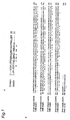
- Motilin is a 22-amino acid peptide secreted from endocrine cells in the duodenum and the upper part of the jejunum (Itoh, Z., Peptides, 18: 593-608, 1997); it is involved in the interdigestive motion of the digestive tract, contraction of the gallbladder and the secretion of enzymes from the stomach and the pancreas. Motilin has been reported to promote GH secretion and the use of nonpeptide motilin agonists to promote stomach motion has also been reported (Ibid., Itoh). As Fig. 1A shows, human ghrelin and human motilin have 36% amino acid identity to each other (Access Nos. A59316 and P12872). Further, as Fig.
- a human ghrelin receptor has an overall 50% amino acid identity with a human motilin receptor (Access Nos. Q92847, Q92848 and Q43193).
- Tomasetto et al. also isolated a novel peptide from mouse stomach and it was identical to ghrelin and named a motilin-related peptide (Tomasetto C. et al., Gastroenterology, 119: 395-405, 2000).
- motilin or motilin analog antagonists can be used as ghrelin or ghrelin analog antagonists.
- ghrelin is the rat ghrelin or human ghrelin or ghrelin analog that are represented by the formula I:
- Ghrelin analogs as designated in the present invention include those which have one or more of the 28 amino acids deleted, substituted or added as long as they have the desired appetite promoting action. Also included are various derivatives of such ghrelin analogs [e.g. derivatives having peptide composing amino acids substituted (including those which have a group, say, an alkylene inserted between amino acids) and ester derivatives].
- Ghrelin or ghrelin analogs may be produced by any methods and include but are not limited to those which are isolated and purified from human or rat cells, those synthesized, semi-synthesized, as well as those which are obtained by genetic engineering.
- a typical example of those ghrelin analogs which have one or more of the 28 amino acids deleted, substituted or added is des-Gln14-ghrelin in which Gln 14 in ghrelin is deleted.
- Rat des-Gln14-ghrelin occurs due to differences in the splicing of the ghrelin gene; in the rat stomach, this analogue accounts for about a quarter of the ghrelin and provides the same intensity of growth hormone releasing activity.
- ghrelin analogs are the following which are described in J. Med. Chem., 43, 4370-4376, 2000.
- Examples are those peptides or derivatives thereof which comprise two of the 28 amino acids in ghrelin, i.e., those at 3 and 4 positions from the N terminal (preferably the four amino acids at the N terminal) and which have the side chain at the third amino acid (Ser) from the N terminal substituted, provided that they have a growth hormone release promoting action.
- the side chain at the third amino acid from the N terminal may be exemplified by acyl groups other than the octanoyl group which is the side chain in ghrelin and alky groups (the acyl and alkyl groups preferably have 6-18 carbon atoms).
- ghrelin analogs which comprise the amino acids at 3 and 4 positions from the N terminal and which have the side chain at the third amino acid (Ser) from the N terminal substituted include NH 2 -(CH 2 ) 4 -CO-Ser(octyl)-Phe-Leu-NH-(CH 2 ) 2 -NH 2 , the compound reported at the 37 Peptide Forum (October 18-20, 2000).
- [D-Lys-3]-GHRP-6 (Veeraragavan K. et al., Life Sci. 50: 1149-55, 1992) and [D-Arg-1, D-Phe-5, D-Trp-7, 9, Leu-11] substance P (Cheng, K. et al ., Journal of Endocrinology, 152: 155-158, 1997) were used as GHS-R antagonists in order to verify the effects of the invention.
- the prophylactics or therapeutics and the suppressants of the present invention may be administered either centrally (e.g. by intracerebroventricular route or injected into the spinal column) or peripherally. Peripheral administration is preferred. Many of the appetite regulating peptides administered peripherally do not show the same action as when they are administered centrally; however, the prophylactics or therapeutics and the suppressants of the present invention significantly lowered the blood glucose level even when they were administered peripherally. Therefore, the prophylactics or therapeutics and the suppressants of the present invention can be administered conveniently, causing less pain to the patient, thus offering far greater advantages than the conventional appetite regulating peptides.
- the GHS-R antagonists can be formulated, either alone or together with pharmacologically acceptable carriers and additives, into common oral preparations and parenteral preparations by known pharmaceutical formulating procedures. For instance, they may be formulated into solution preparations (e.g. injections for intraarterial, intravenous or subcutaneous route, nasal drops and syrups), tablets, lozenges, capsules, powders, granules, ointments and suppositories. Use in drug delivery systems (as for sustained-release therapy) is also possible.
- the dose of the prophylactics or therapeutics and the suppressants of the present invention varies with the age of the patient, his or her body weight, symptoms, route of administration, etc. and should be determined at a doctor's discretion.
- the dose ranges from about 0.1 ⁇ g to 1000 mg per kg of body weight, preferably from about 0.01 mg to 100 mg per kg of body weight, more preferably from 0.1 mg to 10 mg per kg of body weight, as calculated for the GHS-R antagonist.
- the dose is by no means limited to those ranges.
- the prophylactics or therapeutics of the present invention can be used to prevent or treat diabetes mellitus and they are particularly useful as prophylactics or therapeutics for type II diabetes (NIDDM, or non-insulin-dependent diabetes mellitus).
- NIDDM type II diabetes
- the obesity therapeutics of the present invention are effective against disorders that originate from obesity such as ischemic heart disease, osteoarthritis, lumbago, abnormal lipid metabolism, sleep apnea syndrome and menoxenia.
- the appetite suppressants of the present invention are effective against disorders such as hyperphagia, stress hyperphagia and diabetic hyperphagia.
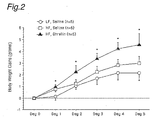
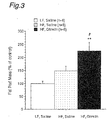
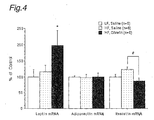
- the present inventors measured body weight, fat mass, glucose, insulin, and gene expressions of leptin, adiponectin and resistin in white adipose tissue after repeated administrations of ghrelin under a high-fat diet.
- the inventors also assessed gastric ghrelin gene expression by Northern blot analysis.
- the inventors measured energy intake and gastric emptying after administering the GHS-R antagonists. Repeated administration of the GHS-R antagonists was continued for six days in ob/ob obese mice and their efficacy was tested.
- the results were as follows: ghrelin induced appreciable adiposity and worsened glycemic control under a high-fat diet; ghrelin elevated leptin mRNA expression, and also reduced resistin mRNA expression; and gastric ghrelin mRNA expression was increased by a high-fat diet.
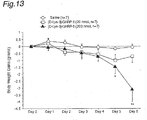
- the GHS-R antagonists reduced energy intake in lean mice, in mice with diet-induced obesity and in ob/ob obese mice, with its mechanism of action being associated with the decrease of gastric emptying. Repeated administration of the GHS-R antagonists reduced body weight gain and improved glycemic control in ob/ob mice.
- ghrelin is closely related to excess body weight gain, adiposity and insulin resistance, particularly under a high-fat diet. Further, it is expected that the GHS-R antagonists will become promising prophylactics or therapeutics for obesity and type II diabetes mellitus.
- GHS-R antagonists On the basis of the prediction that the GHS-R antagonists would induce a state of negative energy balance, the present inventors examined the effects of the GHS-R antagonists on feeding.
- the administered GHS-R antagonists reduced feeding in lean mice and in mice rendered obese by a high-fat diet.
- Previous reports have shown that GHS-R is present in the hypothalamus, heart, lung, pancreas, small intestine and adipose tissue. In the hypothalamus, GHS-R is located in the arcuate nucleus (ARC), where two orexigenic peptides, neuropeptide Y (NRY) and agouti-related protein (AGRP), are synthesized in neuron.
- ARC arcuate nucleus
- NRY neuropeptide Y
- AGRP agouti-related protein
- nonpeptide GH secretagogues act on the hypothalamus to alter the electrical activity of ARC neurons and activate expression of the c-fos (see, for example, Lawrence et al., Endocrinology, 143: 155-162, 2002).
- ghrelin has been reported to stimulate feeding behavior with its mechanism of action being involved in the direct activation of hypothalamic NPY and AGRP neurons in the ARC, where the blood-brain barrier is less effective (see, for example, Inui, Nat Rev Neurosci, 2: 551-560, 2001).
- an alternate pathway for ghrelin signaling from the stomach is via an ascending neural network that goes through the vagus nerve and brainstem nuclei and which ultimately reaches the hypothalamus.
- the centrally administered GHS-R antagonists abolished the stimulatory action on feeding that was induced by peripherally administered ghrelin.
- ghrelin may act through GHS-R in the brain.
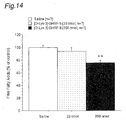
- the present inventors also demonstrated that the peripherally administered GHS-R antagonists reduced the gastric emptying rate, which contributes to its anorexigenic action (appetite suppressing action).
- the present invention shows that GHS-R has a role in the control of feeding behavior and that antagonism of GHS-R may be a promising approach for the treatment of obesity.
- the present inventors further demonstrated that the peripherally administered GHS-R antagonists produced an anorexigenic action and caused body weight loss and lowered blood glucose concentrations in ob / ob mice, which are known as a genetic model of obesity and diabetes mellitus with insulin resistance and rapid gastric emptying.
- elevations of plasma FFA induce insulin resistance through inhibition of glucose transport activity, with its mechanism of action being involved in the reduction of phosphatidylinositol 3-kinase activity.
- the present inventors found that the peripherally administered GHS-R antagonists, [D-Lys-3]-GHRP-6 and [D-Arg-1, D-Phe-5, D-Trp-7, 9, Leu-11] substance P, reduced food intake in lean mice, in mice with diet-induced obesity and in ob/ob obese mice.
- the inventors also showed that repeated administration of [D-Lys-3]-GHRP-6 decreased body weight gain and improved glycemic control in mice.
- mice of the ddy strain 34-37 g, JAPAN SLC, Shizuoka, Japan
- obese (ob/ob) C57BL/6J mice 68-74 g, Shionogi Co., Ltd., Shiga, Japan
- mice were individually housed in a regulated environment (22 ⁇ 2°C, 55 ⁇ 10% humidity, 12:12 hour light:dark cycle with light on at 7:00 AM).
- Mice received a standard diet containing 12% of total energy as fat or a high-fat diet containing 45% of total energy as fat (CLEA Japan, INC., Tokyo, Japan). Food and water were available ad lib except as otherwise indicated. All experiments were approved by Kobe University animal care committee.
- [D-Lys-3]-GHRP-6, [D-Arg-1, D-Phe-5, D-Trp-7, 9, Leu-11] substance P and rat ghrelin were purchased from BACHEM CALIFORNIA INC. (Torrance, California, USA), NEOSYSTEM (Strasbourg, France) and Peptide Institute (Osaka, Japan), respectively.
- each drug was diluted in 4 ⁇ l of artificial cerebrospinal fluid (ACSF) for intra-third cerebroventricular (ICV) administration or in 100 ⁇ l of physiological saline for intraperitoneal (IP) administration.
- Results are expressed as mean value ⁇ s.e.m. Analysis of variance(ANOVA) followed by Bonferroni's t test was used to assess the differences among groups. P ⁇ 0.05 was considered to be statistically significant.
- mice were anesthetized with sodium pentobarbital (80-85 mg/kg IP) and placed in a stereotaxic instrument (SR-6, Narishige, Tokyo, Japan) seven days before the experiments.
- SR-6 stereotaxic instrument
- a hole was made in each skull by using a needle inserted 0.9 mm lateral to the central suture and 0.9 mm posterior to the bregma.
- a 24-gauge cannula (Safelet-Cas, Nipro, Osaka, Japan) beveled at one end over a distance of 3 mm was implanted into the third cerebral ventricle for ICV administration.
- the cannula was fixed to the skull with dental cement and capped with silicon.
- a 27-gauge injection insert was attached to a microsyringe by PE-20 tubing.
- mice were food deprived for 16 hours with free access to water, except during an experiment on the effect of co-administration of [D-Lys-3]-GHRP-6 and ghrelin on food intake, in which mice were given free access to food and water.
- Food intake was measured by subtracting uneaten food from the initially pre-measured food at 20 minutes, 1, 2 and 4 hours after administration.
- G3PDH glyceraldehyde 3-phosphate dehydrogenase
- mice received a standard diet containing 12% of total energy as fat or a high-fat diet containing 45% of total energy as fat for two weeks. The mice were fasted for eight hours before being killed by cervical dislocation. Immediately after that, the stomachs of the mice were removed, frozen on dry ice and stored at -80°C until preparation of Northern blots.
- mice were given the administration at 7:00 AM and 19:00 PM. Food intake and body weight were measured daily. Serum was separated from blood obtained from the orbital sinus under ether anesthesia at the end of the experiment (eight hours after removal of food and the final IP administration). Mice were killed by cervical dislocation. Immediately after that, the epididymal fat pad mass assessed as white adipose tissue (WAT) and the gastrocnemius muscle were removed and weighed. Blood glucose was measured by the glucose oxidase method.
- WAT white adipose tissue
- Serum insulin and free fatty acids were measured by enzyme immunoassay and enzymatic method (EIKEN CHEMICAL CO., LTD., Tokyo, Japan), respectively. Serum triglycerides and total cholesterol were measured by an enzymatic method (Wako Pure Chemical Industries, Ltd., Tokyo, Japan).
- Example 1 The Effects of Repeated Administration of Ghrelin on Body Weight Gain and Glycemic Control Under a High-Fat Diet
- ghrelin mRNA expression was assessed under a high-fat diet containing 45% of total energy as fat.
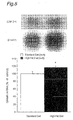
- the high-fat diet for two weeks significantly increased ghrelin gene expression in the stomach of food-deprived mice as compared with the standard diet (Fig. 5). Effects of ghrelin administered intraperitoneally (3 mmol/mouse every 12 hours for 5 days) on calorie intake, epididymal fat mass, gastrocnemius muscle, and blood glucose, insulin, cholesterol, triglycerides and free fatty acids concentrations in lean mice under a high-fat diet.
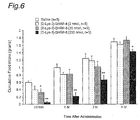
- the GHS-R antagonist [D-Lys-3]-GHRP-6 was IP administered to food-deprived mice. As Fig. 6 shows, [D-Lys-3]-GHRP-6 significantly reduced food intake in a dose-dependent manner.
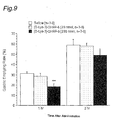
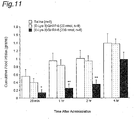
- the present inventors also investigated whether centrally administered [D-Lys-3]-GHRP-6 would have similar effects. ICV as well as IP administered [D-Lys-3]-GHRP-6 produced a potent decrease in feeding behavior (Fig. 7).
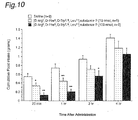
- the inventors also examined the effect of the other GHS-R antagonist, [D-Arg-1, D-Phe-5, D-Trp-7, 9, Leu-11] substance P (L-756,867), on feeding in food-deprived mice. Like [D-Lys-3]-GHRP-6, peripherally administered [D-Arg-1, D-Phe-5, D-Trp-7, 9, Leu-11] substance P significantly reduced food intake in a dose-dependent manner (Fig. 10).
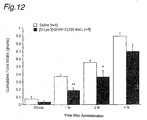
- the present inventors examined whether the IP administered [D-Lys-3]-GHRP-6 would produce an anorexigenic action in ob/ob mice.
- the administered [D-Lys-3]-GHRP-6 significantly reduced food intake in ob/ob mice as well as in lean mice (Fig. 12).
Landscapes
- Health & Medical Sciences (AREA)
- Life Sciences & Earth Sciences (AREA)
- Medicinal Chemistry (AREA)
- Chemical & Material Sciences (AREA)
- Public Health (AREA)
- Engineering & Computer Science (AREA)
- Veterinary Medicine (AREA)
- Pharmacology & Pharmacy (AREA)
- Bioinformatics & Cheminformatics (AREA)
- Animal Behavior & Ethology (AREA)
- General Health & Medical Sciences (AREA)
- Endocrinology (AREA)
- Diabetes (AREA)
- Nuclear Medicine, Radiotherapy & Molecular Imaging (AREA)
- Gastroenterology & Hepatology (AREA)
- Epidemiology (AREA)
- General Chemical & Material Sciences (AREA)
- Proteomics, Peptides & Aminoacids (AREA)
- Organic Chemistry (AREA)
- Immunology (AREA)
- Chemical Kinetics & Catalysis (AREA)
- Obesity (AREA)
- Zoology (AREA)
- Hematology (AREA)
- Emergency Medicine (AREA)
- Child & Adolescent Psychology (AREA)
- Medicines That Contain Protein Lipid Enzymes And Other Medicines (AREA)
- Medicines Containing Material From Animals Or Micro-Organisms (AREA)
- Medicines Containing Plant Substances (AREA)
- Mirrors, Picture Frames, Photograph Stands, And Related Fastening Devices (AREA)
- External Artificial Organs (AREA)
Applications Claiming Priority (3)
| Application Number | Priority Date | Filing Date | Title |
|---|---|---|---|
| JP2002197582 | 2002-07-05 | ||
| JP2002197582 | 2002-07-05 | ||
| PCT/JP2003/008482 WO2004004772A1 (ja) | 2002-07-05 | 2003-07-03 | 糖尿病治療剤 |
Publications (3)
| Publication Number | Publication Date |
|---|---|
| EP1541171A1 true EP1541171A1 (de) | 2005-06-15 |
| EP1541171A4 EP1541171A4 (de) | 2008-04-09 |
| EP1541171B1 EP1541171B1 (de) | 2010-09-15 |
Family
ID=30112403
Family Applications (1)
| Application Number | Title | Priority Date | Filing Date |
|---|---|---|---|
| EP03738666A Expired - Lifetime EP1541171B1 (de) | 2002-07-05 | 2003-07-03 | Mittel zum senken des blutglukosespiegels |
Country Status (15)
| Country | Link |
|---|---|
| US (1) | US20060276381A1 (de) |
| EP (1) | EP1541171B1 (de) |
| JP (1) | JP5113320B2 (de) |
| KR (1) | KR20050039829A (de) |
| CN (1) | CN1681532A (de) |
| AT (1) | ATE481133T1 (de) |
| AU (1) | AU2003246261A1 (de) |
| BR (1) | BR0312463A (de) |
| CA (1) | CA2493906A1 (de) |
| DE (1) | DE60334225D1 (de) |
| ES (1) | ES2351856T3 (de) |
| MX (1) | MXPA05000160A (de) |
| PL (1) | PL374481A1 (de) |
| RU (1) | RU2005102923A (de) |
| WO (1) | WO2004004772A1 (de) |
Cited By (2)
| Publication number | Priority date | Publication date | Assignee | Title |
|---|---|---|---|---|
| WO2007127457A3 (en) * | 2006-04-28 | 2008-02-21 | Univ Tulane | Ghrelin/growth hormone releasing peptide/growth hormone secretatogue receptor antagonists and uses thereof |
| US9724381B2 (en) | 2009-05-12 | 2017-08-08 | The Administrators Of The Tulane Educational Fund | Methods of inhibiting the ghrelin/growth hormone secretatogue receptor pathway and uses thereof |
Families Citing this family (6)
| Publication number | Priority date | Publication date | Assignee | Title |
|---|---|---|---|---|
| JP4843827B2 (ja) * | 2005-02-23 | 2011-12-21 | 国立大学法人京都大学 | 膵臓β細胞の再生促進剤及び膵臓β細胞におけるインスリン産生促進剤 |
| KR20090119785A (ko) | 2007-03-12 | 2009-11-19 | 유키지루시 뉴교 가부시키가이샤 | 성장 호르몬 분비 촉진제 |
| CN101951937A (zh) * | 2007-12-21 | 2011-01-19 | 赫尔辛医疗股份公司 | 使用伊帕瑞林刺激胃肠系统动力的方法 |
| WO2010022213A2 (en) * | 2008-08-22 | 2010-02-25 | Elixir Pharmaceuticals, Inc. | Compositions and methods for preserving pancreatic islet mass |
| CN102639700A (zh) | 2009-09-30 | 2012-08-15 | 哈佛大学校长及研究员协会 | 通过调节自噬增强基因产物调节自噬的方法 |
| US20110105389A1 (en) | 2009-10-30 | 2011-05-05 | Hoveyda Hamid R | Macrocyclic Ghrelin Receptor Antagonists and Inverse Agonists and Methods of Using the Same |
Family Cites Families (6)
| Publication number | Priority date | Publication date | Assignee | Title |
|---|---|---|---|---|
| US20010020012A1 (en) * | 2000-02-01 | 2001-09-06 | Andersen Maibritt Bansholm | Use of compounds for the regulation of food intake |
| AU2001228325A1 (en) * | 2000-02-01 | 2001-08-14 | Novo-Nordisk A/S | Use of compounds for the regulation of food intake |
| EP1286697A2 (de) * | 2000-05-17 | 2003-03-05 | Eli Lilly And Company | Methode zur selektiven hemmung der aktivität von ghrelin |
| CA2411667A1 (en) * | 2000-05-30 | 2001-12-06 | Merck & Co. Inc. | Ghrelin analogs |
| JP4493913B2 (ja) * | 2001-01-31 | 2010-06-30 | 中外製薬株式会社 | 低栄養症状疾患治療剤 |
| US6949261B2 (en) * | 2002-11-12 | 2005-09-27 | Ayurvedic-Life International, Llc | Compositions for diabetes treatment and prophylaxis |
-
2003
- 2003-07-03 DE DE60334225T patent/DE60334225D1/de not_active Expired - Lifetime
- 2003-07-03 KR KR1020057000174A patent/KR20050039829A/ko not_active Withdrawn
- 2003-07-03 ES ES03738666T patent/ES2351856T3/es not_active Expired - Lifetime
- 2003-07-03 CN CNA038211610A patent/CN1681532A/zh active Pending
- 2003-07-03 US US10/520,327 patent/US20060276381A1/en not_active Abandoned
- 2003-07-03 EP EP03738666A patent/EP1541171B1/de not_active Expired - Lifetime
- 2003-07-03 CA CA002493906A patent/CA2493906A1/en not_active Abandoned
- 2003-07-03 MX MXPA05000160A patent/MXPA05000160A/es unknown
- 2003-07-03 AT AT03738666T patent/ATE481133T1/de not_active IP Right Cessation
- 2003-07-03 AU AU2003246261A patent/AU2003246261A1/en not_active Abandoned
- 2003-07-03 BR BR0312463-0A patent/BR0312463A/pt not_active Application Discontinuation
- 2003-07-03 RU RU2005102923/15A patent/RU2005102923A/ru not_active Application Discontinuation
- 2003-07-03 PL PL03374481A patent/PL374481A1/xx unknown
- 2003-07-03 WO PCT/JP2003/008482 patent/WO2004004772A1/ja not_active Ceased
- 2003-07-03 JP JP2004519256A patent/JP5113320B2/ja not_active Expired - Fee Related
Cited By (3)
| Publication number | Priority date | Publication date | Assignee | Title |
|---|---|---|---|---|
| WO2007127457A3 (en) * | 2006-04-28 | 2008-02-21 | Univ Tulane | Ghrelin/growth hormone releasing peptide/growth hormone secretatogue receptor antagonists and uses thereof |
| US8536120B2 (en) | 2006-04-28 | 2013-09-17 | The Administrators Of The Tulane Educational Fund | Ghrelin/growth hormone releasing peptide/growth hormone secretatogue receptor antagonists and uses thereof |
| US9724381B2 (en) | 2009-05-12 | 2017-08-08 | The Administrators Of The Tulane Educational Fund | Methods of inhibiting the ghrelin/growth hormone secretatogue receptor pathway and uses thereof |
Also Published As
| Publication number | Publication date |
|---|---|
| US20060276381A1 (en) | 2006-12-07 |
| MXPA05000160A (es) | 2006-02-28 |
| KR20050039829A (ko) | 2005-04-29 |
| JPWO2004004772A1 (ja) | 2005-11-04 |
| WO2004004772A1 (ja) | 2004-01-15 |
| PL374481A1 (en) | 2005-10-31 |
| ATE481133T1 (de) | 2010-10-15 |
| DE60334225D1 (de) | 2010-10-28 |
| CA2493906A1 (en) | 2004-01-15 |
| ES2351856T3 (es) | 2011-02-11 |
| CN1681532A (zh) | 2005-10-12 |
| EP1541171A4 (de) | 2008-04-09 |
| EP1541171B1 (de) | 2010-09-15 |
| BR0312463A (pt) | 2005-04-26 |
| AU2003246261A1 (en) | 2004-01-23 |
| RU2005102923A (ru) | 2005-10-10 |
| JP5113320B2 (ja) | 2013-01-09 |
Similar Documents
| Publication | Publication Date | Title |
|---|---|---|
| Asakawa et al. | Antagonism of ghrelin receptor reduces food intake and body weight gain in mice | |
| JP5054075B2 (ja) | 低栄養症状疾患治療剤 | |
| Asakawa et al. | Ghrelin is an appetite-stimulatory signal from stomach with structural resemblance to motilin | |
| KR100429966B1 (ko) | 위장 운동성 조절을 위한 제약 조성물 | |
| Asakawa et al. | Urocortin reduces food intake and gastric emptying in lean and ob/ob obese mice | |
| Baranowska et al. | Neuropeptide Y, galanin, and leptin release in obese women and in women with anorexia nervosa | |
| US7485620B2 (en) | Pharmaceutical compositions comprising unacylated ghrelin and therapeutical uses thereof | |
| EP1407779A1 (de) | Verwendung von Ghrelin zur Behandlung von vermindertem Körpergewicht und Körperfett in Individuen mit Gastrektomie | |
| RU2314121C2 (ru) | Способ лечения или предупреждения ожирения | |
| EP1541171B1 (de) | Mittel zum senken des blutglukosespiegels | |
| US20110183416A1 (en) | Method of modulating the proliferation of medullary thyroid carcinoma cells | |
| JPH08501296A (ja) | レニン関連疾患をアミリン・アンタゴニストで治療する方法 | |
| Muller et al. | GH-related and extra-endocrine actions of GH secretagogues in aging | |
| Gagliardino | Physiological endocrine control of energy homeostasis and postprandial blood glucose levels | |
| JP2012523434A (ja) | エストロゲン欠乏哺乳類のためのアミリンアゴニスト化合物 | |
| HK1072732A (en) | Therapeutics for diabetes mellitus | |
| Chen et al. | Regulation of ingestive behavior, the upper gastrointestinal motility and gastric acid secretion by ghrelin in mammals | |
| Lindqvist et al. | Fat digestion and its role in appetite regulation and energy balance-The importance of enterostatin and tetrahydrolipstatin | |
| KOJIMA et al. | Ghrelin, an Endogenous Ligand for the Growth Hormone Secretagogue Receptor | |
| Saleri et al. | Growth hormone expression and secretion in pig pituitary and median eminence slices are not influenced by the VGF protein | |
| Adrian et al. | The gut hormones and their roles in obesity and gastric restrictive surgery | |
| Czimmer | Regulatory Mechanisms of Gastric Secretion and Motility: Role of Cytokines and CRF Peptide Family and Receptors | |
| Tanikawa et al. | Regulation of pancreatic polypeptide release is mediated through M3 Muscarinic receptors | |
| Chapman et al. | Growth hormone: normal physiology | |
| Otto | Somatostatin gene expression in the brain of goldfish. |
Legal Events
| Date | Code | Title | Description |
|---|---|---|---|
| PUAI | Public reference made under article 153(3) epc to a published international application that has entered the european phase |
Free format text: ORIGINAL CODE: 0009012 |
|
| 17P | Request for examination filed |
Effective date: 20050202 |
|
| AK | Designated contracting states |
Kind code of ref document: A1 Designated state(s): AT BE BG CH CY CZ DE DK EE ES FI FR GB GR HU IE IT LI LU MC NL PT RO SE SI SK TR |
|
| AX | Request for extension of the european patent |
Extension state: AL LT LV MK |
|
| REG | Reference to a national code |
Ref country code: HK Ref legal event code: DE Ref document number: 1072732 Country of ref document: HK |
|
| DAX | Request for extension of the european patent (deleted) | ||
| A4 | Supplementary search report drawn up and despatched |
Effective date: 20080307 |
|
| RIC1 | Information provided on ipc code assigned before grant |
Ipc: A61K 38/25 20060101ALI20080303BHEP Ipc: A61K 38/22 20060101ALI20080303BHEP Ipc: A61K 45/00 20060101AFI20040124BHEP Ipc: A61P 3/10 20060101ALI20080303BHEP Ipc: A61P 3/04 20060101ALI20080303BHEP Ipc: A61P 43/00 20060101ALI20080303BHEP Ipc: A61K 38/17 20060101ALI20080303BHEP |
|
| 17Q | First examination report despatched |
Effective date: 20080627 |
|
| GRAP | Despatch of communication of intention to grant a patent |
Free format text: ORIGINAL CODE: EPIDOSNIGR1 |
|
| RIC1 | Information provided on ipc code assigned before grant |
Ipc: A61P 3/00 20060101AFI20100202BHEP Ipc: A61P 3/10 20060101ALI20100202BHEP Ipc: A61K 38/22 20060101ALI20100202BHEP |
|
| RTI1 | Title (correction) |
Free format text: THERAPEUTICS FOR LOWERING THE BLOOD GLUCOSE LEVEL |
|
| GRAS | Grant fee paid |
Free format text: ORIGINAL CODE: EPIDOSNIGR3 |
|
| GRAA | (expected) grant |
Free format text: ORIGINAL CODE: 0009210 |
|
| AK | Designated contracting states |
Kind code of ref document: B1 Designated state(s): AT BE BG CH CY CZ DE DK EE ES FI FR GB GR HU IE IT LI LU MC NL PT RO SE SI SK TR |
|
| REG | Reference to a national code |
Ref country code: GB Ref legal event code: FG4D Ref country code: CH Ref legal event code: EP Ref country code: CH Ref legal event code: NV Representative=s name: E. BLUM & CO. AG PATENT- UND MARKENANWAELTE VSP |
|
| REG | Reference to a national code |
Ref country code: IE Ref legal event code: FG4D |
|
| REF | Corresponds to: |
Ref document number: 60334225 Country of ref document: DE Date of ref document: 20101028 Kind code of ref document: P |
|
| REG | Reference to a national code |
Ref country code: NL Ref legal event code: VDEP Effective date: 20100915 |
|
| PG25 | Lapsed in a contracting state [announced via postgrant information from national office to epo] |
Ref country code: AT Free format text: LAPSE BECAUSE OF FAILURE TO SUBMIT A TRANSLATION OF THE DESCRIPTION OR TO PAY THE FEE WITHIN THE PRESCRIBED TIME-LIMIT Effective date: 20100915 Ref country code: FI Free format text: LAPSE BECAUSE OF FAILURE TO SUBMIT A TRANSLATION OF THE DESCRIPTION OR TO PAY THE FEE WITHIN THE PRESCRIBED TIME-LIMIT Effective date: 20100915 |
|
| REG | Reference to a national code |
Ref country code: ES Ref legal event code: FG2A Effective date: 20110201 |
|
| PG25 | Lapsed in a contracting state [announced via postgrant information from national office to epo] |
Ref country code: SI Free format text: LAPSE BECAUSE OF FAILURE TO SUBMIT A TRANSLATION OF THE DESCRIPTION OR TO PAY THE FEE WITHIN THE PRESCRIBED TIME-LIMIT Effective date: 20100915 Ref country code: CY Free format text: LAPSE BECAUSE OF FAILURE TO SUBMIT A TRANSLATION OF THE DESCRIPTION OR TO PAY THE FEE WITHIN THE PRESCRIBED TIME-LIMIT Effective date: 20100915 |
|
| PG25 | Lapsed in a contracting state [announced via postgrant information from national office to epo] |
Ref country code: SE Free format text: LAPSE BECAUSE OF FAILURE TO SUBMIT A TRANSLATION OF THE DESCRIPTION OR TO PAY THE FEE WITHIN THE PRESCRIBED TIME-LIMIT Effective date: 20100915 Ref country code: GR Free format text: LAPSE BECAUSE OF FAILURE TO SUBMIT A TRANSLATION OF THE DESCRIPTION OR TO PAY THE FEE WITHIN THE PRESCRIBED TIME-LIMIT Effective date: 20101216 |
|
| PG25 | Lapsed in a contracting state [announced via postgrant information from national office to epo] |
Ref country code: EE Free format text: LAPSE BECAUSE OF FAILURE TO SUBMIT A TRANSLATION OF THE DESCRIPTION OR TO PAY THE FEE WITHIN THE PRESCRIBED TIME-LIMIT Effective date: 20100915 Ref country code: CZ Free format text: LAPSE BECAUSE OF FAILURE TO SUBMIT A TRANSLATION OF THE DESCRIPTION OR TO PAY THE FEE WITHIN THE PRESCRIBED TIME-LIMIT Effective date: 20100915 Ref country code: NL Free format text: LAPSE BECAUSE OF FAILURE TO SUBMIT A TRANSLATION OF THE DESCRIPTION OR TO PAY THE FEE WITHIN THE PRESCRIBED TIME-LIMIT Effective date: 20100915 Ref country code: SK Free format text: LAPSE BECAUSE OF FAILURE TO SUBMIT A TRANSLATION OF THE DESCRIPTION OR TO PAY THE FEE WITHIN THE PRESCRIBED TIME-LIMIT Effective date: 20100915 Ref country code: RO Free format text: LAPSE BECAUSE OF FAILURE TO SUBMIT A TRANSLATION OF THE DESCRIPTION OR TO PAY THE FEE WITHIN THE PRESCRIBED TIME-LIMIT Effective date: 20100915 Ref country code: PT Free format text: LAPSE BECAUSE OF FAILURE TO SUBMIT A TRANSLATION OF THE DESCRIPTION OR TO PAY THE FEE WITHIN THE PRESCRIBED TIME-LIMIT Effective date: 20110117 |
|
| PG25 | Lapsed in a contracting state [announced via postgrant information from national office to epo] |
Ref country code: BE Free format text: LAPSE BECAUSE OF FAILURE TO SUBMIT A TRANSLATION OF THE DESCRIPTION OR TO PAY THE FEE WITHIN THE PRESCRIBED TIME-LIMIT Effective date: 20100915 |
|
| PLBE | No opposition filed within time limit |
Free format text: ORIGINAL CODE: 0009261 |
|
| STAA | Information on the status of an ep patent application or granted ep patent |
Free format text: STATUS: NO OPPOSITION FILED WITHIN TIME LIMIT |
|
| 26N | No opposition filed |
Effective date: 20110616 |
|
| PG25 | Lapsed in a contracting state [announced via postgrant information from national office to epo] |
Ref country code: DK Free format text: LAPSE BECAUSE OF FAILURE TO SUBMIT A TRANSLATION OF THE DESCRIPTION OR TO PAY THE FEE WITHIN THE PRESCRIBED TIME-LIMIT Effective date: 20100915 |
|
| REG | Reference to a national code |
Ref country code: DE Ref legal event code: R097 Ref document number: 60334225 Country of ref document: DE Effective date: 20110616 |
|
| REG | Reference to a national code |
Ref country code: HK Ref legal event code: WD Ref document number: 1072732 Country of ref document: HK |
|
| PG25 | Lapsed in a contracting state [announced via postgrant information from national office to epo] |
Ref country code: MC Free format text: LAPSE BECAUSE OF NON-PAYMENT OF DUE FEES Effective date: 20110731 |
|
| REG | Reference to a national code |
Ref country code: IE Ref legal event code: MM4A |
|
| PG25 | Lapsed in a contracting state [announced via postgrant information from national office to epo] |
Ref country code: IE Free format text: LAPSE BECAUSE OF NON-PAYMENT OF DUE FEES Effective date: 20110703 |
|
| PGFP | Annual fee paid to national office [announced via postgrant information from national office to epo] |
Ref country code: ES Payment date: 20120615 Year of fee payment: 10 |
|
| PG25 | Lapsed in a contracting state [announced via postgrant information from national office to epo] |
Ref country code: LU Free format text: LAPSE BECAUSE OF NON-PAYMENT OF DUE FEES Effective date: 20110703 |
|
| PGFP | Annual fee paid to national office [announced via postgrant information from national office to epo] |
Ref country code: CH Payment date: 20130607 Year of fee payment: 11 |
|
| PG25 | Lapsed in a contracting state [announced via postgrant information from national office to epo] |
Ref country code: BG Free format text: LAPSE BECAUSE OF FAILURE TO SUBMIT A TRANSLATION OF THE DESCRIPTION OR TO PAY THE FEE WITHIN THE PRESCRIBED TIME-LIMIT Effective date: 20101215 Ref country code: TR Free format text: LAPSE BECAUSE OF FAILURE TO SUBMIT A TRANSLATION OF THE DESCRIPTION OR TO PAY THE FEE WITHIN THE PRESCRIBED TIME-LIMIT Effective date: 20100915 |
|
| PG25 | Lapsed in a contracting state [announced via postgrant information from national office to epo] |
Ref country code: HU Free format text: LAPSE BECAUSE OF FAILURE TO SUBMIT A TRANSLATION OF THE DESCRIPTION OR TO PAY THE FEE WITHIN THE PRESCRIBED TIME-LIMIT Effective date: 20100915 |
|
| PGFP | Annual fee paid to national office [announced via postgrant information from national office to epo] |
Ref country code: DE Payment date: 20130830 Year of fee payment: 11 |
|
| PGFP | Annual fee paid to national office [announced via postgrant information from national office to epo] |
Ref country code: FR Payment date: 20130719 Year of fee payment: 11 Ref country code: GB Payment date: 20130717 Year of fee payment: 11 |
|
| PGFP | Annual fee paid to national office [announced via postgrant information from national office to epo] |
Ref country code: IT Payment date: 20130703 Year of fee payment: 11 |
|
| REG | Reference to a national code |
Ref country code: DE Ref legal event code: R119 Ref document number: 60334225 Country of ref document: DE |
|
| REG | Reference to a national code |
Ref country code: CH Ref legal event code: PL |
|
| GBPC | Gb: european patent ceased through non-payment of renewal fee |
Effective date: 20140703 |
|
| REG | Reference to a national code |
Ref country code: FR Ref legal event code: ST Effective date: 20150331 |
|
| PG25 | Lapsed in a contracting state [announced via postgrant information from national office to epo] |
Ref country code: CH Free format text: LAPSE BECAUSE OF NON-PAYMENT OF DUE FEES Effective date: 20140731 Ref country code: DE Free format text: LAPSE BECAUSE OF NON-PAYMENT OF DUE FEES Effective date: 20150203 Ref country code: LI Free format text: LAPSE BECAUSE OF NON-PAYMENT OF DUE FEES Effective date: 20140731 Ref country code: IT Free format text: LAPSE BECAUSE OF NON-PAYMENT OF DUE FEES Effective date: 20140703 |
|
| REG | Reference to a national code |
Ref country code: DE Ref legal event code: R119 Ref document number: 60334225 Country of ref document: DE Effective date: 20150203 |
|
| PG25 | Lapsed in a contracting state [announced via postgrant information from national office to epo] |
Ref country code: GB Free format text: LAPSE BECAUSE OF NON-PAYMENT OF DUE FEES Effective date: 20140703 Ref country code: FR Free format text: LAPSE BECAUSE OF NON-PAYMENT OF DUE FEES Effective date: 20140731 |
|
| REG | Reference to a national code |
Ref country code: ES Ref legal event code: FD2A Effective date: 20150828 |
|
| PG25 | Lapsed in a contracting state [announced via postgrant information from national office to epo] |
Ref country code: ES Free format text: LAPSE BECAUSE OF NON-PAYMENT OF DUE FEES Effective date: 20140704 |