EP1553778A1 - Filtrage du bruit de suroscillation - Google Patents
Filtrage du bruit de suroscillation Download PDFInfo
- Publication number
- EP1553778A1 EP1553778A1 EP04030974A EP04030974A EP1553778A1 EP 1553778 A1 EP1553778 A1 EP 1553778A1 EP 04030974 A EP04030974 A EP 04030974A EP 04030974 A EP04030974 A EP 04030974A EP 1553778 A1 EP1553778 A1 EP 1553778A1
- Authority
- EP
- European Patent Office
- Prior art keywords
- pixels
- pixel
- group
- image
- test
- Prior art date
- Legal status (The legal status is an assumption and is not a legal conclusion. Google has not performed a legal analysis and makes no representation as to the accuracy of the status listed.)
- Ceased
Links
- 238000000034 method Methods 0.000 claims abstract description 60
- 230000004044 response Effects 0.000 claims abstract description 31
- 239000011159 matrix material Substances 0.000 claims abstract description 24
- 238000012935 Averaging Methods 0.000 claims 2
- 238000001914 filtration Methods 0.000 description 9
- 238000010586 diagram Methods 0.000 description 4
- 230000003044 adaptive effect Effects 0.000 description 2
- 238000013459 approach Methods 0.000 description 2
- 238000004364 calculation method Methods 0.000 description 2
- 238000013139 quantization Methods 0.000 description 2
- 241000255925 Diptera Species 0.000 description 1
- 101000969688 Homo sapiens Macrophage-expressed gene 1 protein Proteins 0.000 description 1
- 102100021285 Macrophage-expressed gene 1 protein Human genes 0.000 description 1
- 230000000903 blocking effect Effects 0.000 description 1
- 238000007796 conventional method Methods 0.000 description 1
- 230000001934 delay Effects 0.000 description 1
- 230000006870 function Effects 0.000 description 1
Images


Classifications
-
- H—ELECTRICITY
- H04—ELECTRIC COMMUNICATION TECHNIQUE
- H04N—PICTORIAL COMMUNICATION, e.g. TELEVISION
- H04N19/00—Methods or arrangements for coding, decoding, compressing or decompressing digital video signals
- H04N19/85—Methods or arrangements for coding, decoding, compressing or decompressing digital video signals using pre-processing or post-processing specially adapted for video compression
- H04N19/86—Methods or arrangements for coding, decoding, compressing or decompressing digital video signals using pre-processing or post-processing specially adapted for video compression involving reduction of coding artifacts, e.g. of blockiness
-
- H—ELECTRICITY
- H04—ELECTRIC COMMUNICATION TECHNIQUE
- H04N—PICTORIAL COMMUNICATION, e.g. TELEVISION
- H04N19/00—Methods or arrangements for coding, decoding, compressing or decompressing digital video signals
- H04N19/10—Methods or arrangements for coding, decoding, compressing or decompressing digital video signals using adaptive coding
- H04N19/102—Methods or arrangements for coding, decoding, compressing or decompressing digital video signals using adaptive coding characterised by the element, parameter or selection affected or controlled by the adaptive coding
- H04N19/117—Filters, e.g. for pre-processing or post-processing
-
- H—ELECTRICITY
- H04—ELECTRIC COMMUNICATION TECHNIQUE
- H04N—PICTORIAL COMMUNICATION, e.g. TELEVISION
- H04N19/00—Methods or arrangements for coding, decoding, compressing or decompressing digital video signals
- H04N19/10—Methods or arrangements for coding, decoding, compressing or decompressing digital video signals using adaptive coding
- H04N19/134—Methods or arrangements for coding, decoding, compressing or decompressing digital video signals using adaptive coding characterised by the element, parameter or criterion affecting or controlling the adaptive coding
- H04N19/136—Incoming video signal characteristics or properties
- H04N19/14—Coding unit complexity, e.g. amount of activity or edge presence estimation
-
- H—ELECTRICITY
- H04—ELECTRIC COMMUNICATION TECHNIQUE
- H04N—PICTORIAL COMMUNICATION, e.g. TELEVISION
- H04N19/00—Methods or arrangements for coding, decoding, compressing or decompressing digital video signals
- H04N19/10—Methods or arrangements for coding, decoding, compressing or decompressing digital video signals using adaptive coding
- H04N19/169—Methods or arrangements for coding, decoding, compressing or decompressing digital video signals using adaptive coding characterised by the coding unit, i.e. the structural portion or semantic portion of the video signal being the object or the subject of the adaptive coding
- H04N19/182—Methods or arrangements for coding, decoding, compressing or decompressing digital video signals using adaptive coding characterised by the coding unit, i.e. the structural portion or semantic portion of the video signal being the object or the subject of the adaptive coding the unit being a pixel
-
- H—ELECTRICITY
- H04—ELECTRIC COMMUNICATION TECHNIQUE
- H04N—PICTORIAL COMMUNICATION, e.g. TELEVISION
- H04N19/00—Methods or arrangements for coding, decoding, compressing or decompressing digital video signals
- H04N19/80—Details of filtering operations specially adapted for video compression, e.g. for pixel interpolation
Definitions
- This invention generally relates to compressed image and video coding and, more particularly, to a method for filtering ringing artifacts that may occur as a result of compressed image and video encoding/decoding processes.
- Computation resources and bandwidth can be saved by encoding images and videos at a low bit-rate.
- low bit-rate encoding may result in several types of artifacts in the decompressed images.
- the most notable artifacts include blocking and ringing artifacts.
- the ringing artifacts are typically observed around the true edges of an image.
- the ringing artifacts are also referred to as mosquito artifacts, as they tend to be annoying, especially in moving images (video sequences).
- de-ringing conventional methods operate in both the transform and pixel domains.
- Other conventional de-ringing filters make use of quantization information.
- One drawback of all the above-mentioned de-ringing filters is that are computationally intensive. Thus, the filters are not suitable for all receiving systems. Further, the filters may result in unacceptable delays, even when they can be implemented.
- the present invention is a de-ringing filter with a low computational complexity.
- a decision to apply the filter is made for each pixel based on its edge strength.
- a 3x3 kernel is used for filtering. Only the non-edge neighbor pixels are used to filter the current (test) pixel.
- the filter uses all of the non-edge neighbor pixels and the current pixel weighted appropriately, based on the total number of non-edge neighbor pixels.
- the invention works entirely in the pixel domain and does not use or need any quantization information. Further, the solution is not necessarily block or macroblock-based.
- an image de-ringing filter method comprises: accepting a plurality of image pixels; collecting data from a first group of pixels neighboring a test pixel; in response to the first group data, deciding if the test pixel includes image ringing artifacts; collecting data from a second group of pixels neighboring the test pixel; in response to the second group data, generating a filtered value (FV); and, replacing the test pixel actual value with FV.
- FV filtered value
- collecting data from the first and second group of pixels includes the performance of a mathematical operation.
- a matrix may be defined for the multiplication of the first group of pixels.
- the mathematical operation may involve the comparison of pixels values on opposite sides of a coordinate axis bisecting the test pixel. More specifically, values of pixels on a first side of the coordinate axis may be subtracted from pixels on a second side of the coordinate axis, opposite of the first side. Then, the difference is compared to a threshold.
- generating a FV in response to the second group operation includes: generating a map value for each pixel in the second group; and, using pixels from the second group to calculate FV, if they are equal to a first map value. Specifics of map values and the definition of the second group are provided.
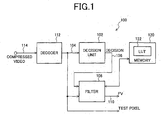
- Fig. 1 is a schematic block diagram of the present invention image de-ringing filter system.
- the system 100 comprises a decision unit 102 having an input on line 104 to accept a plurality of image pixels.
- the decision unit 102 collects data from a first group of pixels neighboring a test pixel. In response to the first group data, the decision unit 102 supplies a decision at an output on line 106 as to whether the test pixel includes image ringing artifacts.
- a filter 108 has an input on line 104 to accept the plurality of image pixels and an input on line 106 to accept the decision.
- the filter 108 collects data from a second group of pixels neighboring the test pixel. In response to the second group data, the filter generates a filtered value (FV) and supplies the FV at an output on line 110 as a replacement to the test pixel actual value.
- FV filtered value
- a decoder 112 has a connection on line 114 to accepted encoded video information.
- the encoded video may come from a network, local storage, or other source. This information may be encoded in a standard such as moving picture experts group (MPEG) or H.264 standards, to name a few examples.
- MPEG moving picture experts group
- the decoder 112 has an output on line 104 to supply the plurality of image pixels to the decision unit 102, and to the filter 108, as decoded image information.
- Fig. 2 is a diagram depicting a test pixel, and a group of neighboring pixels. Pixels from the first group are represented with a "1", while pixels from the second group are represented with a "2". Note, the first and second group of pixels are not necessarily the same. Although 9 pixel positions are shown, neither the first nor the second group of pixels is limited to any particular number.
- the filter performs a mathematical operation on the second group of pixels.
- the decision unit typically performs a mathematical operation on the first group of pixels.
- the decision unit may define a matrix and multiply the first group of pixels by the matrix, or more than one matrix.
- the decision unit defines a matrix such that a zero value is assigned to the position of the test pixel in the matrix.
- matrix may be used for a vector dot product.
- the decision unit may compare values of pixels on opposite sides of a coordinate axis bisecting the test pixel. For example, 1a, 1d, and 1g may be compared to 1c, 1f, and 1i.
- the decision unit subtracts the values of pixels on a first side of the coordinate axis from pixels on a second side of the coordinate axis, opposite of the first side, and compares the difference to a threshold.
- the decision unit compares the values of pixels on opposite sides of a plurality of coordinate axes, oriented in a plurality of directions. For example, pixels 1a and 1c may be compared to pixels 1g and 1i, while pixels 1a and 1g are compared to pixels 1c and 1i.
- the decision unit collects data from a group of 4 pixels neighboring the test pixel. For example, pixel positions 1a, 1c, 1g, and 1i can be used. The results of any of the mathematical operations can be compared to a threshold as a means of making a decision as to whether a test pixel is to be filtered.
- the position of pixels, the number of pixels, and the size of the neighboring group from which the pixels are selected may be different.
- X-axis, reflection, y-axis reflection, diagonal reflection, diagonal reflection symmetry, -90 degree rotation symmetry, centro symmetry, quadrantal symmetry, diagonal symmetry, 4-fold rotation symmetry, and octagonal symmetry are examples of other coordinate axes comparisons that can be made.
- the filter may add the test pixel to the second group of pixels.
- the test pixel value is not used to calculate FV.
- the filter collects data from 8 pixels neighboring the test pixel (2a, 2b, 2c, 2d, 2f, 2g, 2h, and 2i).
- other definitions of the second pixel group are possible.
- the filter uses pixels from the second group to calculate FV, if they are equal to a first map value.
- the filter uses a first map value equal to 0.
- the filter uses a first map value not equal to 1.
- the filter selects pixels from the second group to calculate FV, if they are equal to the first map value.
- the filter may randomly select pixels from the second group to calculate FV, if they are equal to the first map value.
- the filter may accept a plurality of image pixel sets, in a plurality of frames. Then, it generates FV by randomly selecting a first collection of pixel positions with respect to the test pixel, and uses pixels in the first collection to calculate FV for each test pixel in every image pixel set, in every frame.
- the filter generates FV by randomly selecting a first collection of pixel positions with respect to the test pixel in a first image pixel set in a current frame, and uses pixels in the first collection to calculate FV for each test pixel in every image pixel set in the current frame. Further, the filter randomly reselects a second collection of pixel positions in an image pixel set in a frame subsequent to the current frame, and uses pixels in the second collection to calculate FV for each test pixel in every image pixel set in the subsequent frame.
- the filter selects pixels in predetermined pixel positions, with respect to the test pixel, from the second group to calculate FV, if it is equal to the first map value. More generally, the filter may accept a plurality of image pixel sets in a plurality of frames, and select the pixels in the predetermined pixel positions to calculate FV for each test pixel in every image pixel set, in every frame. For example, the filter may select the pixels in a predetermined first collection of pixel positions to calculate FV for each test pixel in every image pixel set in a current frame, and select the pixels in a predetermined second collection of pixel positions to calculate FV for each test pixel in every image pixel set in a frame subsequent to the current frame.
- the filter generates FV by selecting the pixels in the predetermined first collection of pixel positions to calculate FV for test pixels in a first image pixel set and, then, selecting the pixels in the predetermined second collection of pixel positions to calculate FV for test pixels in a second image pixel set.
- the filter uses pixels from the second group to calculate FV, if they are equal to a first map value, by selectively weighting second group pixel values. Then, the weighted values are summed and averaged.
- the filter may add the test pixel to the second group of pixels. The filter may also selectively weigh in response to number of pixels in the second group.
- the filter generates FV by:
- the filter generates FV by:
- some aspects of the system 100 include an accessible memory 120 including a lookup table (LUT) 122 with pre-calculated values.
- the filter 108 generates a FV in response accessing the LUT 122.
- Fig. 3 is a drawing depicting the LUT of Fig. 1.
- the LUT 122 is indexed by nE values.
- the filter then uses the calculated nE value to access the LUT 122.
- the LUT 122 includes a value for each nE indicating the number of times the test pixel P(i,j) is added.
- the LUT 122 includes a value for each nE indicating the number of times the result is right shifted.
- the LUT 122 includes a value for each nE indicating if a pixel value from second group of pixels is subtracted, or not.
- the present invention de-ringing filter consists of decision and filtering functions.
- the following description is one specific example of the de-ringing filter.
- a decision is made as to whether the pixel should be filtered or left unprocessed. The decision is based on following computation:
- H 1 [1 0 -1] and to compute two gradient values that are denoted by g H 1 ( i, j ) and g H 2 ( i, j ).
- the operators are selected so that the actual current (test) pixel itself is not used in the calculation of its Strength(i, j) . Instead, only its 4 neighbors are used for this computation.
- the Threshold is a parameter that can be manipulated to vary the effective strength of the filter. A high-threshold value results in more pixels getting filtered and, thus, a stronger filter. A low-threshold value results in a lesser number of pixels getting filtered and, thus, a weaker filter.
- the de-ringing filter is applied to this pixel. Otherwise, the pixel is left unprocessed, i.e., its value is used without changing. If the decision is made to apply a de-ringing filter to a pixel, then the Strength ( i, j ) value is computed and compared to the Threshold , to obtain the Map ( i , j ) values for the current pixel's 8 neighbors in the 3x3 size kernel. These values are used in the de-ringing filter stage, as explained below.
- the pixels are processed by de-ringing filter, or not processed.
- the filter has a low complexity, as compared to other approaches, and is signal adaptive.
- the filtering can be done in place, or the results could be stored in a separate memory store. For example, satisfactory results are obtained with an in-place computation approach, using a 3x3 kernel.
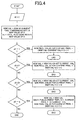
- Fig. 4 is a drawing illustrating an exemplary aspect of the present invention filter.
- the filter can be realized using only addition, subtraction, and shift operations.
- the multiplication operations in Fig. 4 can also be realized as multiple addition operations.
- a randomly (or selectively - based on some criterion) chosen neighbor pixel is not used in the filtering of the current pixel (if nE is equal to 8, for example).
- a lookup table can be used to realize the filter.
- the lookup table can be indexed by the value nE, and can store the information about the number of times the center pixel is added.
- the LUT can also be used if any neighbor pixels need to be subtracted (or effectively not used). The resulting average value is used to replace the current pixel under consideration.
- Fig. 5 is a flowchart illustrating the present invention image de-ringing filter method. Although the method is depicted as a sequence of numbered steps for clarity, no order should be inferred from the numbering unless explicitly stated. It should be understood that some of these steps may be skipped, performed in parallel, or performed without the requirement of maintaining a strict order of sequence.
- the method starts at Step 500.
- Step 502 decodes compressed image information.
- Step 504 accepts a plurality of image pixels. That is, the decoded image information is accepted.
- Step 506 collects data from a first group of pixels neighboring a test pixel.
- Step 508 decides if the test pixel includes image ringing artifacts, in response to the first group data.
- Step 510 collects data from a second group of pixels neighboring the test pixel.
- Step 512 in response to the second group data, generates a filtered value (FV).
- Step 514 replaces the test pixel actual value with FV. Note, FV is not necessarily calculated, or used to replace the test pixel, depending upon the result of the decision process in Step 508.
- collecting data from a second group of pixels neighboring a test pixel in Step 510 includes performing a mathematical operation on the second group of pixels. For example, collecting data from a second group of pixels neighboring the test pixel in Step 510 includes collecting data from 8 pixels neighboring the test pixel. In another aspect, Step 510 adds the test pixel to the second group of pixels.
- collecting data from a first group of pixels neighboring a test pixel in Step 506 may include performing a mathematical operation on the first group of pixels.
- Step 506 compares the results of the mathematical operation to a threshold.
- performing a mathematical operation on the first group of pixels may include substeps.
- Step 506a defines a matrix.
- Step 506b multiplies the first group of pixels by the matrix.
- the matrix is defined such that a zero value is assigned to the position of the test pixel in the matrix.
- performing a mathematical operation on the first group of pixels may include comparing values of pixels on opposite sides of a coordinate axis bisecting the test pixel.
- comparing values of pixels on opposite sides of a coordinate axis bisecting the test pixel may include: subtracting the values of pixels on a first side of the coordinate axis from pixels on a second side of the coordinate axis, opposite of the first side; and, comparing the difference to a threshold.
- a fixed threshold value is selected.
- the values of pixels may be compared on opposite sides of a plurality of coordinate axes, oriented in a plurality of directions.
- data is collected from a group of 4 pixels neighboring the test pixel.
- Step 506 values of pixels on opposite sides of a coordinate axis bisecting the test pixel may be compared (Step 506) as follows:
- Step 508 deciding if the test pixel includes image ringing artifacts in Step 508 includes deciding that P(i,j) includes ringing artifacts, if S(i,j) ⁇ threshold.
- generating FV in Step 512 includes using pixels from the second group to calculate FV, if they are equal to a first map value.
- FV is generated using a first map value of 0.
- the first map value is not equal to 1.
- FV can be calculated by selecting pixels from the second group, if they are equal to the first map value.
- Step 504 accepts a plurality of image pixel sets, in a plurality of frames, then generating FV in Step 512 may include substeps.
- Step 512a randomly selects a first collection of pixel positions with respect to the test pixel.
- Step 512b uses pixels in the first collection to calculate FV for each test pixel in every image pixel set, in every frame.
- Step 512a randomly selects a first collection of pixel positions with respect to the test pixel in a first image pixel set in a current frame.
- Step 512b uses pixels in the first collection to calculate FV for each test pixel in every image pixel set in the current frame.
- Step 512c randomly reselects a second collection of pixel positions in an image pixel set in a frame subsequent to the current frame.
- Step 512d uses pixels in the second collection to calculate FV for each test pixel in every image pixel set in the subsequent frame.
- Step 512 selects a predetermined collection of pixel positions with respect to the test pixel. If Step 504 accepts a plurality of image pixel sets in a plurality of frames, then Step 512 generates FV by selecting the pixels in the predetermined pixel positions to calculate FV for each test pixel in every image pixel set, in every frame. Alternately, Step 512e selects the pixels in a predetermined first collection of pixel positions to calculate FV for each test pixel in every image pixel set in a current frame. Step 512f selects the pixels in a predetermined second collection of pixel positions to calculate FV for each test pixel in every image pixel set in a frame subsequent to the current frame.
- Step 512e may select the pixels in the predetermined first collection of pixel positions to calculate FV for test pixels in a first image pixel set. Then, Step 512f selects the pixels in the predetermined second collection of pixel positions to calculate FV for test pixels in a second image pixel set.
- using pixels from the second group to calculate FV, if they are equal to a first map value (Step 512), may include other substeps (not shown).
- Step 512g selectively weights second group pixel values.
- Step 512h sums the weighted values.
- Step 512i averages.
- the test pixel may be added to the second group of pixels.
- Step 512g may weigh the pixels in response to the number of pixels in the second group.
- the generation of FV may include:
- the generation of FV may include:
- Step 512j loads a lookup table (LUT) with the pre-calculated values. Typically, the LUT is loaded before the decision and filtering processes are performed.
- LUT lookup table
- Step 512j loads a value for each nE indicating the number of times the test pixel P(i,j) is added. In another aspect, Step 512j loads a value for each nE indicating the number of times the result is right shifted. In a third aspect, Step 512j loads a value for each nE indicating if a pixel value from second group of pixels is subtracted or not.
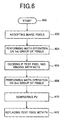
- Fig. 6 is a flowchart illustrating another aspect of the present invention image de-ringing filter method.
- the method starts at Step 600.
- Step 602 accepts a plurality of image pixels.
- Step 604 performs a mathematical operation on a first group of pixels neighboring a test pixel.
- Step 606 in response to the first group operation, decides if the test pixel includes image ringing artifacts.
- Step 608 performs a mathematical operation on a second group of pixels neighboring the test pixel.
- Step 610 in response to the second group operation, generates FV.
- Step 612 replaces the test pixel actual value with FV.
- performing a mathematical operation on the first group of pixels includes: defining a matrix; and, multiplying the first group of pixels by the matrix.
- Step 604 compares values of pixels on opposite sides of a coordinate axis bisecting the test pixel.
- generating a FV in response to the second group operation includes: generating a map value for each pixel in the second group; and, using pixels from the second group to calculate FV, if they are equal to a first map value.
- a system and method have been provided for removing ringing artifacts that can be simply implemented after a compressed video decoding process.
- Some examples of specific algorithms have been described to clarify the invention. However, the invention is not limited to merely these examples.
- abstract compressed video standards have been described, the present invention may be adapted for use with the following video standards: MPEG1, MPEG2, MPEG4, H.263, H.263+, H.263++, and H.264.
- Other variations and embodiments of the invention will occur to those skilled in the art.
Landscapes
- Engineering & Computer Science (AREA)
- Multimedia (AREA)
- Signal Processing (AREA)
- Image Processing (AREA)
- Compression Or Coding Systems Of Tv Signals (AREA)
- Picture Signal Circuits (AREA)
- Controls And Circuits For Display Device (AREA)
Applications Claiming Priority (6)
| Application Number | Priority Date | Filing Date | Title |
|---|---|---|---|
| US815029 | 1997-03-14 | ||
| US53504504P | 2004-01-06 | 2004-01-06 | |
| US53505004P | 2004-01-06 | 2004-01-06 | |
| US535050P | 2004-01-06 | ||
| US535045P | 2004-01-06 | ||
| US10/815,029 US7471845B2 (en) | 2004-01-06 | 2004-03-31 | De-ringing filter |
Publications (1)
| Publication Number | Publication Date |
|---|---|
| EP1553778A1 true EP1553778A1 (fr) | 2005-07-13 |
Family
ID=34595970
Family Applications (1)
| Application Number | Title | Priority Date | Filing Date |
|---|---|---|---|
| EP04030974A Ceased EP1553778A1 (fr) | 2004-01-06 | 2004-12-29 | Filtrage du bruit de suroscillation |
Country Status (3)
| Country | Link |
|---|---|
| US (2) | US7471845B2 (fr) |
| EP (1) | EP1553778A1 (fr) |
| JP (1) | JP2005198274A (fr) |
Cited By (4)
| Publication number | Priority date | Publication date | Assignee | Title |
|---|---|---|---|---|
| EP1909227A1 (fr) * | 2006-10-03 | 2008-04-09 | Vestel Elektronik Sanayi ve Ticaret A.S. | Procédé et appareil de minimisation des artéfacts de suroscillation dans une image d'entrée |
| US8571347B2 (en) | 2008-09-09 | 2013-10-29 | Marvell World Trade Ltd. | Reducing digital image noise |
| WO2015020919A3 (fr) * | 2013-08-06 | 2015-04-09 | Microsoft Corporation | Codage d'une vidéo capturée avec une faible luminosité |
| US9077990B2 (en) | 2010-07-28 | 2015-07-07 | Marvell World Trade Ltd. | Block noise detection in digital video |
Families Citing this family (24)
| Publication number | Priority date | Publication date | Assignee | Title |
|---|---|---|---|---|
| US8340177B2 (en) * | 2004-07-12 | 2012-12-25 | Microsoft Corporation | Embedded base layer codec for 3D sub-band coding |
| US8442108B2 (en) * | 2004-07-12 | 2013-05-14 | Microsoft Corporation | Adaptive updates in motion-compensated temporal filtering |
| US8374238B2 (en) | 2004-07-13 | 2013-02-12 | Microsoft Corporation | Spatial scalability in 3D sub-band decoding of SDMCTF-encoded video |
| JP4455487B2 (ja) * | 2005-12-16 | 2010-04-21 | 株式会社東芝 | 復号化装置及び復号化方法及びプログラム |
| US8711925B2 (en) | 2006-05-05 | 2014-04-29 | Microsoft Corporation | Flexible quantization |
| US8224076B2 (en) * | 2006-11-29 | 2012-07-17 | Panasonic Corporation | Image processing method and image processing apparatus |
| US8238424B2 (en) | 2007-02-09 | 2012-08-07 | Microsoft Corporation | Complexity-based adaptive preprocessing for multiple-pass video compression |
| US8750390B2 (en) * | 2008-01-10 | 2014-06-10 | Microsoft Corporation | Filtering and dithering as pre-processing before encoding |
| US8160132B2 (en) | 2008-02-15 | 2012-04-17 | Microsoft Corporation | Reducing key picture popping effects in video |
| US8953673B2 (en) * | 2008-02-29 | 2015-02-10 | Microsoft Corporation | Scalable video coding and decoding with sample bit depth and chroma high-pass residual layers |
| US8711948B2 (en) * | 2008-03-21 | 2014-04-29 | Microsoft Corporation | Motion-compensated prediction of inter-layer residuals |
| US8897359B2 (en) | 2008-06-03 | 2014-11-25 | Microsoft Corporation | Adaptive quantization for enhancement layer video coding |
| US9571856B2 (en) | 2008-08-25 | 2017-02-14 | Microsoft Technology Licensing, Llc | Conversion operations in scalable video encoding and decoding |
| US8213503B2 (en) * | 2008-09-05 | 2012-07-03 | Microsoft Corporation | Skip modes for inter-layer residual video coding and decoding |
| TWI415470B (zh) * | 2008-10-09 | 2013-11-11 | Mstar Semiconductor Inc | 去漣波裝置及方法 |
| US8306355B2 (en) * | 2009-07-13 | 2012-11-06 | Sharp Laboratories Of America, Inc. | Methods and systems for reducing compression artifacts |
| US9251569B2 (en) * | 2013-09-10 | 2016-02-02 | Adobe Systems Incorporated | Removing noise from an image via efficient patch distance computations |
| US9380226B2 (en) * | 2014-06-04 | 2016-06-28 | Toshiba America Electronic Components, Inc. | System and method for extraction of a dynamic range zone image |
| MY185713A (en) | 2015-09-25 | 2021-05-31 | Huawei Tech Co Ltd | Apparatus and method for video motion compensation |
| MY197611A (en) | 2015-09-25 | 2023-06-28 | Huawei Tech Co Ltd | Apparatus and method for video motion compensation |
| MY187403A (en) | 2015-09-25 | 2021-09-22 | Huawei Tech Co Ltd | Apparatus and method for video motion compensation with selectable interpolation filter |
| BR112018006031A2 (pt) | 2015-09-25 | 2018-10-09 | Huawei Tech Co Ltd | codificador de vídeo, decodificador de vídeo e métodos para codificação e decodificação preditiva |
| KR20180054751A (ko) | 2015-09-25 | 2018-05-24 | 후아웨이 테크놀러지 컴퍼니 리미티드 | 예측 코딩을 위한 적응 선명화 필터 |
| US10091533B2 (en) | 2016-02-18 | 2018-10-02 | Cisco Technology, Inc. | Generalized filter for removing video compression artifacts |
Citations (6)
| Publication number | Priority date | Publication date | Assignee | Title |
|---|---|---|---|---|
| EP0797349A2 (fr) * | 1996-03-23 | 1997-09-24 | Samsung Electronics Co., Ltd. | System de posttraitement à signal adaptatif pour réduire des effets de blockage et de bruit de cercles |
| WO2000014968A1 (fr) * | 1998-09-10 | 2000-03-16 | Wisconsin Alumni Research Foundation | Reduction des oscillations amorties dans les images decompressees par filtrage morphologique a posteriori et dispositif a cet effet |
| US20020122602A1 (en) * | 2000-12-26 | 2002-09-05 | Rouvellou Laurent Jean Marie | Data processing method |
| US20030081854A1 (en) * | 2001-06-12 | 2003-05-01 | Deshpande Sachin G. | Filter for combined de-ringing and edge sharpening |
| WO2003081534A1 (fr) * | 2002-03-26 | 2003-10-02 | Koninklijke Philips Electronics N.V. | Procede de post-traitement de signaux video |
| EP1351508A2 (fr) * | 2002-04-05 | 2003-10-08 | Seiko Epson Corporation | Postfiltrage adaptatif en vue de réduction du bruit pour le codage d'image ou de vidéo à forte compression |
Family Cites Families (20)
| Publication number | Priority date | Publication date | Assignee | Title |
|---|---|---|---|---|
| JP2536684B2 (ja) | 1990-09-29 | 1996-09-18 | 日本ビクター株式会社 | 画像符号化装置 |
| US5598184A (en) * | 1992-03-27 | 1997-01-28 | Hewlett-Packard Company | Method and apparatus for improved color recovery in a computer graphics system |
| US5802218A (en) * | 1994-11-04 | 1998-09-01 | Motorola, Inc. | Method, post-processing filter, and video compression system for suppressing mosquito and blocking atrifacts |
| US5581371A (en) * | 1995-03-07 | 1996-12-03 | Eastman Kodak Company | Error diffusion method |
| US5852475A (en) * | 1995-06-06 | 1998-12-22 | Compression Labs, Inc. | Transform artifact reduction process |
| US5819035A (en) * | 1995-10-20 | 1998-10-06 | Matsushita Electric Industrial Co., Ltd. | Post-filter for removing ringing artifacts of DCT coding |
| US5850294A (en) * | 1995-12-18 | 1998-12-15 | Lucent Technologies Inc. | Method and apparatus for post-processing images |
| DE19626985C1 (de) * | 1996-07-04 | 1998-01-02 | Siemens Ag | Verfahren und Anordnung zur Reduktion von Codierungsartefakten von blockbasierten Bildcodierungsverfahren und objektbasierten Bildcodierungsverfahren |
| US6188799B1 (en) * | 1997-02-07 | 2001-02-13 | Matsushita Electric Industrial Co., Ltd. | Method and apparatus for removing noise in still and moving pictures |
| KR100234316B1 (ko) * | 1997-04-04 | 1999-12-15 | 윤종용 | 링잉노이즈 감소를 위한 신호적응 필터링 방법 및 신호적응필터 |
| US6236763B1 (en) * | 1997-09-19 | 2001-05-22 | Texas Instruments Incorporated | Method and apparatus for removing noise artifacts in decompressed video signals |
| KR100269125B1 (ko) * | 1997-10-25 | 2000-10-16 | 윤덕용 | 양자화효과감소를위한영상데이터후처리방법및장치 |
| RU2154918C1 (ru) * | 1998-08-01 | 2000-08-20 | Самсунг Электроникс Ко., Лтд. | Способ и устройство для цикл-фильтрации данных изображения |
| KR100366643B1 (ko) * | 1998-11-25 | 2003-02-19 | 삼성전자 주식회사 | 구획현상제거방법및장치 |
| EP1209624A1 (fr) * | 2000-11-27 | 2002-05-29 | Sony International (Europe) GmbH | Procédé pour la réduction d'artefacts dans une image comprimée |
| US7136538B2 (en) * | 2000-12-21 | 2006-11-14 | Matsushita Electric Industrial Co., Ltd. | Noise reducing apparatus and noise reducing method |
| GB2373661B (en) | 2001-03-23 | 2005-05-11 | Advanced Risc Mach Ltd | A data processing apparatus and method for performing an adaptive filter operation on an input data sample |
| US6993191B2 (en) * | 2001-05-04 | 2006-01-31 | Pts Corporation | Methods and apparatus for removing compression artifacts in video sequences |
| US7003174B2 (en) * | 2001-07-02 | 2006-02-21 | Corel Corporation | Removal of block encoding artifacts |
| US6983079B2 (en) * | 2001-09-20 | 2006-01-03 | Seiko Epson Corporation | Reducing blocking and ringing artifacts in low-bit-rate coding |
-
2004
- 2004-03-31 US US10/815,029 patent/US7471845B2/en not_active Expired - Fee Related
- 2004-12-20 JP JP2004368008A patent/JP2005198274A/ja active Pending
- 2004-12-29 EP EP04030974A patent/EP1553778A1/fr not_active Ceased
-
2008
- 2008-05-23 US US12/126,795 patent/US7570834B2/en not_active Expired - Fee Related
Patent Citations (6)
| Publication number | Priority date | Publication date | Assignee | Title |
|---|---|---|---|---|
| EP0797349A2 (fr) * | 1996-03-23 | 1997-09-24 | Samsung Electronics Co., Ltd. | System de posttraitement à signal adaptatif pour réduire des effets de blockage et de bruit de cercles |
| WO2000014968A1 (fr) * | 1998-09-10 | 2000-03-16 | Wisconsin Alumni Research Foundation | Reduction des oscillations amorties dans les images decompressees par filtrage morphologique a posteriori et dispositif a cet effet |
| US20020122602A1 (en) * | 2000-12-26 | 2002-09-05 | Rouvellou Laurent Jean Marie | Data processing method |
| US20030081854A1 (en) * | 2001-06-12 | 2003-05-01 | Deshpande Sachin G. | Filter for combined de-ringing and edge sharpening |
| WO2003081534A1 (fr) * | 2002-03-26 | 2003-10-02 | Koninklijke Philips Electronics N.V. | Procede de post-traitement de signaux video |
| EP1351508A2 (fr) * | 2002-04-05 | 2003-10-08 | Seiko Epson Corporation | Postfiltrage adaptatif en vue de réduction du bruit pour le codage d'image ou de vidéo à forte compression |
Non-Patent Citations (2)
| Title |
|---|
| HU J ET AL: "Removal of blocking and ringing artifacts in transform coded images", ACOUSTICS, SPEECH, AND SIGNAL PROCESSING, 1997. ICASSP-97., 1997 IEEE INTERNATIONAL CONFERENCE ON MUNICH, GERMANY 21-24 APRIL 1997, LOS ALAMITOS, CA, USA,IEEE COMPUT. SOC, US, vol. 4, 21 April 1997 (1997-04-21), pages 2565 - 2568, XP010225679, ISBN: 0-8186-7919-0 * |
| SKOCIR P ET AL: "Spatio-temporal post-filtering of 3-D coded video sequences", ELECTROTECHNICAL CONFERENCE, 2000. MELECON 2000. 10TH MEDITERRANEAN MAY 29-31, 2000, PISCATAWAY, NJ, USA,IEEE, vol. 2, 29 May 2000 (2000-05-29), pages 474 - 477, XP010517831, ISBN: 0-7803-6290-X * |
Cited By (7)
| Publication number | Priority date | Publication date | Assignee | Title |
|---|---|---|---|---|
| EP1909227A1 (fr) * | 2006-10-03 | 2008-04-09 | Vestel Elektronik Sanayi ve Ticaret A.S. | Procédé et appareil de minimisation des artéfacts de suroscillation dans une image d'entrée |
| US8131104B2 (en) | 2006-10-03 | 2012-03-06 | Vestel Elektronik Sanayi Ve Ticaret A.S. | Method and apparatus for adjusting the contrast of an input image |
| US8571347B2 (en) | 2008-09-09 | 2013-10-29 | Marvell World Trade Ltd. | Reducing digital image noise |
| US9092855B2 (en) | 2008-09-09 | 2015-07-28 | Marvell World Trade Ltd. | Method and apparatus for reducing noise introduced into a digital image by a video compression encoder |
| US9077990B2 (en) | 2010-07-28 | 2015-07-07 | Marvell World Trade Ltd. | Block noise detection in digital video |
| WO2015020919A3 (fr) * | 2013-08-06 | 2015-04-09 | Microsoft Corporation | Codage d'une vidéo capturée avec une faible luminosité |
| US9661327B2 (en) | 2013-08-06 | 2017-05-23 | Microsoft Technology Licensing, Llc | Encoding video captured in low light |
Also Published As
| Publication number | Publication date |
|---|---|
| US7471845B2 (en) | 2008-12-30 |
| US20080219583A1 (en) | 2008-09-11 |
| JP2005198274A (ja) | 2005-07-21 |
| US20050147316A1 (en) | 2005-07-07 |
| US7570834B2 (en) | 2009-08-04 |
Similar Documents
| Publication | Publication Date | Title |
|---|---|---|
| US7570834B2 (en) | Image de-ringing filter | |
| US7551792B2 (en) | System and method for reducing ringing artifacts in images | |
| US7430337B2 (en) | System and method for removing ringing artifacts | |
| EP0797349B1 (fr) | System de posttraitement à signal adaptatif pour réduire des effets de blockage et de bruit de cercles | |
| US6370279B1 (en) | Block-based image processing method and apparatus therefor | |
| JP2960386B2 (ja) | 信号適応フィルタリング方法及び信号適応フィルター | |
| JP3001094B2 (ja) | リンギングノイズの減少のための信号適応フィルタリング方法及び信号適応フィルター | |
| US5512956A (en) | Adaptive spatial-temporal postprocessing for low bit-rate coded image sequences | |
| US8259819B2 (en) | Method and apparatus for improving video quality by utilizing a unified loop filter | |
| US7412109B2 (en) | System and method for filtering artifacts in images | |
| EP2378775B1 (fr) | Dispositif de décodage d'image et dispositif de codage d'image | |
| EP1434442A2 (fr) | Procédé et appareil avancé pour le codage vidéo à base d'une TCD | |
| WO2004038648A9 (fr) | Procede et systeme de decodage permettant de reduire les effets de quantification dans une image decodee | |
| US20060274959A1 (en) | Image processing to reduce blocking artifacts | |
| EP2078424A1 (fr) | Codage video avec selection du mode de codage intra | |
| WO2008020687A1 (fr) | Procédé et appareil de codage/décodage d'images | |
| JP2000232651A (ja) | ブロック変換符号化された画像表現から復号した電子的画像の中の歪を除去する方法 | |
| US7054503B2 (en) | Image processing system, image processing method, and image processing program | |
| US6556718B1 (en) | Video pictures compression and coding with decision step for field/frame and motion vectors DCT | |
| US20040264572A1 (en) | Motion prediction compensating device and its method | |
| US8121194B2 (en) | Fast macroblock encoding with the early qualification of skip prediction mode using its temporal coherence | |
| Chen et al. | Rough mode cost–based fast intra coding for high-efficiency video coding | |
| WO2001024115A1 (fr) | Dispositif et procede de filtrage | |
| US20080212890A1 (en) | Systems and Methods for Noise Estimation in a Single Frame of Video Data | |
| US11736704B1 (en) | Methods and apparatuses of SATD folding hardware design in video encoding systems |
Legal Events
| Date | Code | Title | Description |
|---|---|---|---|
| PUAI | Public reference made under article 153(3) epc to a published international application that has entered the european phase |
Free format text: ORIGINAL CODE: 0009012 |
|
| AK | Designated contracting states |
Kind code of ref document: A1 Designated state(s): AT BE BG CH CY CZ DE DK EE ES FI FR GB GR HU IE IS IT LI LT LU MC NL PL PT RO SE SI SK TR |
|
| AX | Request for extension of the european patent |
Extension state: AL BA HR LV MK YU |
|
| 17P | Request for examination filed |
Effective date: 20051007 |
|
| AKX | Designation fees paid |
Designated state(s): DE FR GB |
|
| STAA | Information on the status of an ep patent application or granted ep patent |
Free format text: STATUS: THE APPLICATION HAS BEEN REFUSED |
|
| 18R | Application refused |
Effective date: 20110417 |