EP1559791A2 - Nachweis und Quantifizierung von siRNA auf Mikroarrays - Google Patents
Nachweis und Quantifizierung von siRNA auf Mikroarrays Download PDFInfo
- Publication number
- EP1559791A2 EP1559791A2 EP04016483A EP04016483A EP1559791A2 EP 1559791 A2 EP1559791 A2 EP 1559791A2 EP 04016483 A EP04016483 A EP 04016483A EP 04016483 A EP04016483 A EP 04016483A EP 1559791 A2 EP1559791 A2 EP 1559791A2
- Authority
- EP
- European Patent Office
- Prior art keywords
- sirna
- array
- cell
- genes
- capture
- Prior art date
- Legal status (The legal status is an assumption and is not a legal conclusion. Google has not performed a legal analysis and makes no representation as to the accuracy of the status listed.)
- Withdrawn
Links
- 108020004459 Small interfering RNA Proteins 0.000 title claims abstract description 91
- 238000001514 detection method Methods 0.000 title claims abstract description 27
- 238000011002 quantification Methods 0.000 title claims abstract description 14
- 238000002493 microarray Methods 0.000 title claims description 10
- 108090000623 proteins and genes Proteins 0.000 claims abstract description 74
- 238000000034 method Methods 0.000 claims abstract description 35
- 230000008859 change Effects 0.000 claims abstract description 11
- 210000004027 cell Anatomy 0.000 claims description 58
- 239000000523 sample Substances 0.000 claims description 43
- 108091032973 (ribonucleotides)n+m Proteins 0.000 claims description 36
- 108020004999 messenger RNA Proteins 0.000 claims description 27
- 102000040430 polynucleotide Human genes 0.000 claims description 18
- 108091033319 polynucleotide Proteins 0.000 claims description 18
- 239000002157 polynucleotide Substances 0.000 claims description 18
- 230000000295 complement effect Effects 0.000 claims description 17
- 238000009396 hybridization Methods 0.000 claims description 12
- 150000001875 compounds Chemical class 0.000 claims description 11
- 239000012634 fragment Substances 0.000 claims description 8
- 102000004169 proteins and genes Human genes 0.000 claims description 8
- 238000012216 screening Methods 0.000 claims description 8
- 230000015572 biosynthetic process Effects 0.000 claims description 7
- 230000003915 cell function Effects 0.000 claims description 6
- 230000000694 effects Effects 0.000 claims description 6
- 238000003786 synthesis reaction Methods 0.000 claims description 6
- 238000013518 transcription Methods 0.000 claims description 6
- 230000035897 transcription Effects 0.000 claims description 6
- 102000004127 Cytokines Human genes 0.000 claims description 4
- 108090000695 Cytokines Proteins 0.000 claims description 4
- 239000000872 buffer Substances 0.000 claims description 4
- 238000012545 processing Methods 0.000 claims description 4
- 230000033616 DNA repair Effects 0.000 claims description 3
- 108700039887 Essential Genes Proteins 0.000 claims description 3
- 102000010834 Extracellular Matrix Proteins Human genes 0.000 claims description 3
- 108010037362 Extracellular Matrix Proteins Proteins 0.000 claims description 3
- 230000006907 apoptotic process Effects 0.000 claims description 3
- 230000033228 biological regulation Effects 0.000 claims description 3
- 230000021164 cell adhesion Effects 0.000 claims description 3
- 230000022131 cell cycle Effects 0.000 claims description 3
- 230000005754 cellular signaling Effects 0.000 claims description 3
- 230000002759 chromosomal effect Effects 0.000 claims description 3
- 210000002744 extracellular matrix Anatomy 0.000 claims description 3
- 239000003102 growth factor Substances 0.000 claims description 3
- 230000004060 metabolic process Effects 0.000 claims description 3
- 230000004783 oxidative metabolism Effects 0.000 claims description 3
- 230000022558 protein metabolic process Effects 0.000 claims description 3
- 108700020796 Oncogene Proteins 0.000 claims description 2
- 102000004245 Proteasome Endopeptidase Complex Human genes 0.000 claims description 2
- 108090000708 Proteasome Endopeptidase Complex Proteins 0.000 claims description 2
- 108010040002 Tumor Suppressor Proteins Proteins 0.000 claims description 2
- 102000001742 Tumor Suppressor Proteins Human genes 0.000 claims description 2
- 230000029918 bioluminescence Effects 0.000 claims description 2
- 238000005415 bioluminescence Methods 0.000 claims description 2
- 230000024245 cell differentiation Effects 0.000 claims description 2
- 238000004737 colorimetric analysis Methods 0.000 claims description 2
- 230000007423 decrease Effects 0.000 claims description 2
- 230000037356 lipid metabolism Effects 0.000 claims description 2
- 230000003938 response to stress Effects 0.000 claims description 2
- 238000012360 testing method Methods 0.000 claims description 2
- 230000009368 gene silencing by RNA Effects 0.000 abstract description 21
- 239000000411 inducer Substances 0.000 abstract description 3
- 108091060271 Small temporal RNA Proteins 0.000 abstract description 2
- 230000007613 environmental effect Effects 0.000 abstract description 2
- 108091030071 RNAI Proteins 0.000 abstract 1
- 239000002773 nucleotide Substances 0.000 description 26
- 125000003729 nucleotide group Chemical group 0.000 description 26
- 102000040650 (ribonucleotides)n+m Human genes 0.000 description 14
- 238000004458 analytical method Methods 0.000 description 13
- 108020004414 DNA Proteins 0.000 description 12
- 238000006243 chemical reaction Methods 0.000 description 9
- 230000000875 corresponding effect Effects 0.000 description 7
- 210000001519 tissue Anatomy 0.000 description 7
- 230000014509 gene expression Effects 0.000 description 6
- 238000002372 labelling Methods 0.000 description 6
- 102000039446 nucleic acids Human genes 0.000 description 6
- 108020004707 nucleic acids Proteins 0.000 description 6
- 150000007523 nucleic acids Chemical class 0.000 description 6
- 230000032361 posttranscriptional gene silencing Effects 0.000 description 6
- 239000000126 substance Substances 0.000 description 6
- 108091093088 Amplicon Proteins 0.000 description 5
- 230000006870 function Effects 0.000 description 5
- 241000894007 species Species 0.000 description 5
- YBJHBAHKTGYVGT-ZKWXMUAHSA-N (+)-Biotin Chemical compound N1C(=O)N[C@@H]2[C@H](CCCCC(=O)O)SC[C@@H]21 YBJHBAHKTGYVGT-ZKWXMUAHSA-N 0.000 description 4
- HEDRZPFGACZZDS-UHFFFAOYSA-N Chloroform Chemical compound ClC(Cl)Cl HEDRZPFGACZZDS-UHFFFAOYSA-N 0.000 description 4
- 102000053602 DNA Human genes 0.000 description 4
- 108700011259 MicroRNAs Proteins 0.000 description 4
- ISWSIDIOOBJBQZ-UHFFFAOYSA-N Phenol Chemical compound OC1=CC=CC=C1 ISWSIDIOOBJBQZ-UHFFFAOYSA-N 0.000 description 4
- ISAKRJDGNUQOIC-UHFFFAOYSA-N Uracil Chemical compound O=C1C=CNC(=O)N1 ISAKRJDGNUQOIC-UHFFFAOYSA-N 0.000 description 4
- 238000003491 array Methods 0.000 description 4
- 239000011324 bead Substances 0.000 description 4
- OPTASPLRGRRNAP-UHFFFAOYSA-N cytosine Chemical compound NC=1C=CNC(=O)N=1 OPTASPLRGRRNAP-UHFFFAOYSA-N 0.000 description 4
- 230000030279 gene silencing Effects 0.000 description 4
- UYTPUPDQBNUYGX-UHFFFAOYSA-N guanine Chemical compound O=C1NC(N)=NC2=C1N=CN2 UYTPUPDQBNUYGX-UHFFFAOYSA-N 0.000 description 4
- 230000007246 mechanism Effects 0.000 description 4
- 239000002679 microRNA Substances 0.000 description 4
- 239000000203 mixture Substances 0.000 description 4
- 230000008569 process Effects 0.000 description 4
- 239000007787 solid Substances 0.000 description 4
- RWQNBRDOKXIBIV-UHFFFAOYSA-N thymine Chemical compound CC1=CNC(=O)NC1=O RWQNBRDOKXIBIV-UHFFFAOYSA-N 0.000 description 4
- IAZDPXIOMUYVGZ-UHFFFAOYSA-N Dimethylsulphoxide Chemical compound CS(C)=O IAZDPXIOMUYVGZ-UHFFFAOYSA-N 0.000 description 3
- LFQSCWFLJHTTHZ-UHFFFAOYSA-N Ethanol Chemical compound CCO LFQSCWFLJHTTHZ-UHFFFAOYSA-N 0.000 description 3
- 241001465754 Metazoa Species 0.000 description 3
- 108091028043 Nucleic acid sequence Proteins 0.000 description 3
- 108091034117 Oligonucleotide Proteins 0.000 description 3
- 108091093037 Peptide nucleic acid Proteins 0.000 description 3
- 230000003321 amplification Effects 0.000 description 3
- 230000015556 catabolic process Effects 0.000 description 3
- 238000006731 degradation reaction Methods 0.000 description 3
- -1 electronic devices Substances 0.000 description 3
- 238000002474 experimental method Methods 0.000 description 3
- 239000000284 extract Substances 0.000 description 3
- 238000003199 nucleic acid amplification method Methods 0.000 description 3
- 230000037361 pathway Effects 0.000 description 3
- 108090000765 processed proteins & peptides Proteins 0.000 description 3
- 229930024421 Adenine Natural products 0.000 description 2
- GFFGJBXGBJISGV-UHFFFAOYSA-N Adenine Chemical compound NC1=NC=NC2=C1N=CN2 GFFGJBXGBJISGV-UHFFFAOYSA-N 0.000 description 2
- 108091032955 Bacterial small RNA Proteins 0.000 description 2
- 238000000018 DNA microarray Methods 0.000 description 2
- TWRXJAOTZQYOKJ-UHFFFAOYSA-L Magnesium chloride Chemical compound [Mg+2].[Cl-].[Cl-] TWRXJAOTZQYOKJ-UHFFFAOYSA-L 0.000 description 2
- 238000012408 PCR amplification Methods 0.000 description 2
- 102000000574 RNA-Induced Silencing Complex Human genes 0.000 description 2
- 108010016790 RNA-Induced Silencing Complex Proteins 0.000 description 2
- VYPSYNLAJGMNEJ-UHFFFAOYSA-N Silicium dioxide Chemical compound O=[Si]=O VYPSYNLAJGMNEJ-UHFFFAOYSA-N 0.000 description 2
- FAPWRFPIFSIZLT-UHFFFAOYSA-M Sodium chloride Chemical compound [Na+].[Cl-] FAPWRFPIFSIZLT-UHFFFAOYSA-M 0.000 description 2
- XSQUKJJJFZCRTK-UHFFFAOYSA-N Urea Chemical compound NC(N)=O XSQUKJJJFZCRTK-UHFFFAOYSA-N 0.000 description 2
- 241000700605 Viruses Species 0.000 description 2
- 229960000643 adenine Drugs 0.000 description 2
- 238000003556 assay Methods 0.000 description 2
- 102000023732 binding proteins Human genes 0.000 description 2
- 108091008324 binding proteins Proteins 0.000 description 2
- 229960002685 biotin Drugs 0.000 description 2
- 235000020958 biotin Nutrition 0.000 description 2
- 239000011616 biotin Substances 0.000 description 2
- 238000010367 cloning Methods 0.000 description 2
- 239000002299 complementary DNA Substances 0.000 description 2
- 229940104302 cytosine Drugs 0.000 description 2
- 230000004069 differentiation Effects 0.000 description 2
- 239000003814 drug Substances 0.000 description 2
- 230000009977 dual effect Effects 0.000 description 2
- 238000012869 ethanol precipitation Methods 0.000 description 2
- 230000001747 exhibiting effect Effects 0.000 description 2
- 238000000605 extraction Methods 0.000 description 2
- 238000012226 gene silencing method Methods 0.000 description 2
- FDGQSTZJBFJUBT-UHFFFAOYSA-N hypoxanthine Chemical compound O=C1NC=NC2=C1NC=N2 FDGQSTZJBFJUBT-UHFFFAOYSA-N 0.000 description 2
- 210000004962 mammalian cell Anatomy 0.000 description 2
- 238000005259 measurement Methods 0.000 description 2
- 238000010839 reverse transcription Methods 0.000 description 2
- 239000002336 ribonucleotide Substances 0.000 description 2
- 239000000243 solution Substances 0.000 description 2
- 239000000758 substrate Substances 0.000 description 2
- 229940113082 thymine Drugs 0.000 description 2
- 238000013519 translation Methods 0.000 description 2
- 229940035893 uracil Drugs 0.000 description 2
- QKNYBSVHEMOAJP-UHFFFAOYSA-N 2-amino-2-(hydroxymethyl)propane-1,3-diol;hydron;chloride Chemical compound Cl.OCC(N)(CO)CO QKNYBSVHEMOAJP-UHFFFAOYSA-N 0.000 description 1
- ASJSAQIRZKANQN-CRCLSJGQSA-N 2-deoxy-D-ribose Chemical compound OC[C@@H](O)[C@@H](O)CC=O ASJSAQIRZKANQN-CRCLSJGQSA-N 0.000 description 1
- LPXQRXLUHJKZIE-UHFFFAOYSA-N 8-azaguanine Chemical compound NC1=NC(O)=C2NN=NC2=N1 LPXQRXLUHJKZIE-UHFFFAOYSA-N 0.000 description 1
- 229960005508 8-azaguanine Drugs 0.000 description 1
- NIXOWILDQLNWCW-UHFFFAOYSA-M Acrylate Chemical compound [O-]C(=O)C=C NIXOWILDQLNWCW-UHFFFAOYSA-M 0.000 description 1
- 102000002260 Alkaline Phosphatase Human genes 0.000 description 1
- 108020004774 Alkaline Phosphatase Proteins 0.000 description 1
- 241000244203 Caenorhabditis elegans Species 0.000 description 1
- 108020004635 Complementary DNA Proteins 0.000 description 1
- HMFHBZSHGGEWLO-SOOFDHNKSA-N D-ribofuranose Chemical compound OC[C@H]1OC(O)[C@H](O)[C@@H]1O HMFHBZSHGGEWLO-SOOFDHNKSA-N 0.000 description 1
- 241000255601 Drosophila melanogaster Species 0.000 description 1
- KCXVZYZYPLLWCC-UHFFFAOYSA-N EDTA Chemical compound OC(=O)CN(CC(O)=O)CCN(CC(O)=O)CC(O)=O KCXVZYZYPLLWCC-UHFFFAOYSA-N 0.000 description 1
- 108010067770 Endopeptidase K Proteins 0.000 description 1
- 102000004190 Enzymes Human genes 0.000 description 1
- 108090000790 Enzymes Proteins 0.000 description 1
- 108700024394 Exon Proteins 0.000 description 1
- 241000233866 Fungi Species 0.000 description 1
- 241000238631 Hexapoda Species 0.000 description 1
- 241000282412 Homo Species 0.000 description 1
- UGQMRVRMYYASKQ-UHFFFAOYSA-N Hypoxanthine nucleoside Natural products OC1C(O)C(CO)OC1N1C(NC=NC2=O)=C2N=C1 UGQMRVRMYYASKQ-UHFFFAOYSA-N 0.000 description 1
- 102100034343 Integrase Human genes 0.000 description 1
- 102000003960 Ligases Human genes 0.000 description 1
- 108090000364 Ligases Proteins 0.000 description 1
- 241001599018 Melanogaster Species 0.000 description 1
- 108060004795 Methyltransferase Proteins 0.000 description 1
- 241000699670 Mus sp. Species 0.000 description 1
- NQTADLQHYWFPDB-UHFFFAOYSA-N N-Hydroxysuccinimide Chemical compound ON1C(=O)CCC1=O NQTADLQHYWFPDB-UHFFFAOYSA-N 0.000 description 1
- 206010028980 Neoplasm Diseases 0.000 description 1
- 101710163270 Nuclease Proteins 0.000 description 1
- 108700026244 Open Reading Frames Proteins 0.000 description 1
- 229910019142 PO4 Inorganic materials 0.000 description 1
- 108010021757 Polynucleotide 5'-Hydroxyl-Kinase Proteins 0.000 description 1
- 102000008422 Polynucleotide 5'-hydroxyl-kinase Human genes 0.000 description 1
- 238000012228 RNA interference-mediated gene silencing Methods 0.000 description 1
- 101710086015 RNA ligase Proteins 0.000 description 1
- 108010092799 RNA-directed DNA polymerase Proteins 0.000 description 1
- 102000006382 Ribonucleases Human genes 0.000 description 1
- 108010083644 Ribonucleases Proteins 0.000 description 1
- 108091028664 Ribonucleotide Proteins 0.000 description 1
- PYMYPHUHKUWMLA-LMVFSUKVSA-N Ribose Natural products OC[C@@H](O)[C@@H](O)[C@@H](O)C=O PYMYPHUHKUWMLA-LMVFSUKVSA-N 0.000 description 1
- 238000012300 Sequence Analysis Methods 0.000 description 1
- XUIMIQQOPSSXEZ-UHFFFAOYSA-N Silicon Chemical compound [Si] XUIMIQQOPSSXEZ-UHFFFAOYSA-N 0.000 description 1
- 108010090804 Streptavidin Proteins 0.000 description 1
- ZMZDMBWJUHKJPS-UHFFFAOYSA-M Thiocyanate anion Chemical compound [S-]C#N ZMZDMBWJUHKJPS-UHFFFAOYSA-M 0.000 description 1
- JLCPHMBAVCMARE-UHFFFAOYSA-N [3-[[3-[[3-[[3-[[3-[[3-[[3-[[3-[[3-[[3-[[3-[[5-(2-amino-6-oxo-1H-purin-9-yl)-3-[[3-[[3-[[3-[[3-[[3-[[5-(2-amino-6-oxo-1H-purin-9-yl)-3-[[5-(2-amino-6-oxo-1H-purin-9-yl)-3-hydroxyoxolan-2-yl]methoxy-hydroxyphosphoryl]oxyoxolan-2-yl]methoxy-hydroxyphosphoryl]oxy-5-(5-methyl-2,4-dioxopyrimidin-1-yl)oxolan-2-yl]methoxy-hydroxyphosphoryl]oxy-5-(6-aminopurin-9-yl)oxolan-2-yl]methoxy-hydroxyphosphoryl]oxy-5-(6-aminopurin-9-yl)oxolan-2-yl]methoxy-hydroxyphosphoryl]oxy-5-(6-aminopurin-9-yl)oxolan-2-yl]methoxy-hydroxyphosphoryl]oxy-5-(6-aminopurin-9-yl)oxolan-2-yl]methoxy-hydroxyphosphoryl]oxyoxolan-2-yl]methoxy-hydroxyphosphoryl]oxy-5-(5-methyl-2,4-dioxopyrimidin-1-yl)oxolan-2-yl]methoxy-hydroxyphosphoryl]oxy-5-(4-amino-2-oxopyrimidin-1-yl)oxolan-2-yl]methoxy-hydroxyphosphoryl]oxy-5-(5-methyl-2,4-dioxopyrimidin-1-yl)oxolan-2-yl]methoxy-hydroxyphosphoryl]oxy-5-(5-methyl-2,4-dioxopyrimidin-1-yl)oxolan-2-yl]methoxy-hydroxyphosphoryl]oxy-5-(6-aminopurin-9-yl)oxolan-2-yl]methoxy-hydroxyphosphoryl]oxy-5-(6-aminopurin-9-yl)oxolan-2-yl]methoxy-hydroxyphosphoryl]oxy-5-(4-amino-2-oxopyrimidin-1-yl)oxolan-2-yl]methoxy-hydroxyphosphoryl]oxy-5-(4-amino-2-oxopyrimidin-1-yl)oxolan-2-yl]methoxy-hydroxyphosphoryl]oxy-5-(4-amino-2-oxopyrimidin-1-yl)oxolan-2-yl]methoxy-hydroxyphosphoryl]oxy-5-(6-aminopurin-9-yl)oxolan-2-yl]methoxy-hydroxyphosphoryl]oxy-5-(4-amino-2-oxopyrimidin-1-yl)oxolan-2-yl]methyl [5-(6-aminopurin-9-yl)-2-(hydroxymethyl)oxolan-3-yl] hydrogen phosphate Polymers Cc1cn(C2CC(OP(O)(=O)OCC3OC(CC3OP(O)(=O)OCC3OC(CC3O)n3cnc4c3nc(N)[nH]c4=O)n3cnc4c3nc(N)[nH]c4=O)C(COP(O)(=O)OC3CC(OC3COP(O)(=O)OC3CC(OC3COP(O)(=O)OC3CC(OC3COP(O)(=O)OC3CC(OC3COP(O)(=O)OC3CC(OC3COP(O)(=O)OC3CC(OC3COP(O)(=O)OC3CC(OC3COP(O)(=O)OC3CC(OC3COP(O)(=O)OC3CC(OC3COP(O)(=O)OC3CC(OC3COP(O)(=O)OC3CC(OC3COP(O)(=O)OC3CC(OC3COP(O)(=O)OC3CC(OC3COP(O)(=O)OC3CC(OC3COP(O)(=O)OC3CC(OC3COP(O)(=O)OC3CC(OC3COP(O)(=O)OC3CC(OC3CO)n3cnc4c(N)ncnc34)n3ccc(N)nc3=O)n3cnc4c(N)ncnc34)n3ccc(N)nc3=O)n3ccc(N)nc3=O)n3ccc(N)nc3=O)n3cnc4c(N)ncnc34)n3cnc4c(N)ncnc34)n3cc(C)c(=O)[nH]c3=O)n3cc(C)c(=O)[nH]c3=O)n3ccc(N)nc3=O)n3cc(C)c(=O)[nH]c3=O)n3cnc4c3nc(N)[nH]c4=O)n3cnc4c(N)ncnc34)n3cnc4c(N)ncnc34)n3cnc4c(N)ncnc34)n3cnc4c(N)ncnc34)O2)c(=O)[nH]c1=O JLCPHMBAVCMARE-UHFFFAOYSA-N 0.000 description 1
- 230000001594 aberrant effect Effects 0.000 description 1
- 230000032683 aging Effects 0.000 description 1
- 150000001299 aldehydes Chemical class 0.000 description 1
- HMFHBZSHGGEWLO-UHFFFAOYSA-N alpha-D-Furanose-Ribose Natural products OCC1OC(O)C(O)C1O HMFHBZSHGGEWLO-UHFFFAOYSA-N 0.000 description 1
- 125000003277 amino group Chemical group 0.000 description 1
- 210000004102 animal cell Anatomy 0.000 description 1
- 230000000692 anti-sense effect Effects 0.000 description 1
- QVGXLLKOCUKJST-UHFFFAOYSA-N atomic oxygen Chemical compound [O] QVGXLLKOCUKJST-UHFFFAOYSA-N 0.000 description 1
- 230000008901 benefit Effects 0.000 description 1
- 239000012472 biological sample Substances 0.000 description 1
- 238000010804 cDNA synthesis Methods 0.000 description 1
- 201000011510 cancer Diseases 0.000 description 1
- 239000004202 carbamide Substances 0.000 description 1
- 150000001720 carbohydrates Chemical class 0.000 description 1
- 235000014633 carbohydrates Nutrition 0.000 description 1
- 230000006037 cell lysis Effects 0.000 description 1
- 230000009134 cell regulation Effects 0.000 description 1
- 230000001413 cellular effect Effects 0.000 description 1
- 238000003776 cleavage reaction Methods 0.000 description 1
- 238000004590 computer program Methods 0.000 description 1
- 230000002596 correlated effect Effects 0.000 description 1
- 238000004925 denaturation Methods 0.000 description 1
- 230000036425 denaturation Effects 0.000 description 1
- 238000013461 design Methods 0.000 description 1
- 238000011161 development Methods 0.000 description 1
- 230000018109 developmental process Effects 0.000 description 1
- 201000010099 disease Diseases 0.000 description 1
- 208000037265 diseases, disorders, signs and symptoms Diseases 0.000 description 1
- 229940079593 drug Drugs 0.000 description 1
- 239000012636 effector Substances 0.000 description 1
- 238000001962 electrophoresis Methods 0.000 description 1
- 210000002257 embryonic structure Anatomy 0.000 description 1
- 238000005516 engineering process Methods 0.000 description 1
- 230000002255 enzymatic effect Effects 0.000 description 1
- 150000002118 epoxides Chemical class 0.000 description 1
- 230000002068 genetic effect Effects 0.000 description 1
- 239000011521 glass Substances 0.000 description 1
- 239000000122 growth hormone Substances 0.000 description 1
- 238000010438 heat treatment Methods 0.000 description 1
- 210000005260 human cell Anatomy 0.000 description 1
- ZMZDMBWJUHKJPS-UHFFFAOYSA-N hydrogen thiocyanate Natural products SC#N ZMZDMBWJUHKJPS-UHFFFAOYSA-N 0.000 description 1
- 238000010348 incorporation Methods 0.000 description 1
- 238000011534 incubation Methods 0.000 description 1
- 230000001939 inductive effect Effects 0.000 description 1
- 230000005764 inhibitory process Effects 0.000 description 1
- 238000002347 injection Methods 0.000 description 1
- 239000007924 injection Substances 0.000 description 1
- 230000009545 invasion Effects 0.000 description 1
- 238000002955 isolation Methods 0.000 description 1
- 150000002632 lipids Chemical class 0.000 description 1
- 229910001629 magnesium chloride Inorganic materials 0.000 description 1
- 238000004519 manufacturing process Methods 0.000 description 1
- 239000011159 matrix material Substances 0.000 description 1
- 239000002184 metal Substances 0.000 description 1
- 239000013642 negative control Substances 0.000 description 1
- 239000001301 oxygen Substances 0.000 description 1
- 229910052760 oxygen Inorganic materials 0.000 description 1
- 230000001575 pathological effect Effects 0.000 description 1
- 230000007170 pathology Effects 0.000 description 1
- NBIIXXVUZAFLBC-UHFFFAOYSA-K phosphate Chemical compound [O-]P([O-])([O-])=O NBIIXXVUZAFLBC-UHFFFAOYSA-K 0.000 description 1
- 239000010452 phosphate Substances 0.000 description 1
- 238000006366 phosphorylation reaction Methods 0.000 description 1
- 229920002401 polyacrylamide Polymers 0.000 description 1
- 239000013641 positive control Substances 0.000 description 1
- 230000001124 posttranscriptional effect Effects 0.000 description 1
- 239000002243 precursor Substances 0.000 description 1
- 102000004196 processed proteins & peptides Human genes 0.000 description 1
- 230000036647 reaction Effects 0.000 description 1
- 238000011160 research Methods 0.000 description 1
- 238000003757 reverse transcription PCR Methods 0.000 description 1
- 125000002652 ribonucleotide group Chemical group 0.000 description 1
- 150000003839 salts Chemical class 0.000 description 1
- 230000007017 scission Effects 0.000 description 1
- 230000008684 selective degradation Effects 0.000 description 1
- 238000012163 sequencing technique Methods 0.000 description 1
- 229910052710 silicon Inorganic materials 0.000 description 1
- 239000010703 silicon Substances 0.000 description 1
- 239000000377 silicon dioxide Substances 0.000 description 1
- 239000011780 sodium chloride Substances 0.000 description 1
- 238000011895 specific detection Methods 0.000 description 1
- 230000035882 stress Effects 0.000 description 1
- 230000001225 therapeutic effect Effects 0.000 description 1
- 231100000331 toxic Toxicity 0.000 description 1
- 230000002588 toxic effect Effects 0.000 description 1
- 238000001890 transfection Methods 0.000 description 1
- 230000009466 transformation Effects 0.000 description 1
- 235000011178 triphosphate Nutrition 0.000 description 1
- 239000001226 triphosphate Substances 0.000 description 1
- UNXRWKVEANCORM-UHFFFAOYSA-N triphosphoric acid Chemical compound OP(O)(=O)OP(O)(=O)OP(O)(O)=O UNXRWKVEANCORM-UHFFFAOYSA-N 0.000 description 1
- 230000029812 viral genome replication Effects 0.000 description 1
Images

Classifications
-
- C—CHEMISTRY; METALLURGY
- C12—BIOCHEMISTRY; BEER; SPIRITS; WINE; VINEGAR; MICROBIOLOGY; ENZYMOLOGY; MUTATION OR GENETIC ENGINEERING
- C12Q—MEASURING OR TESTING PROCESSES INVOLVING ENZYMES, NUCLEIC ACIDS OR MICROORGANISMS; COMPOSITIONS OR TEST PAPERS THEREFOR; PROCESSES OF PREPARING SUCH COMPOSITIONS; CONDITION-RESPONSIVE CONTROL IN MICROBIOLOGICAL OR ENZYMOLOGICAL PROCESSES
- C12Q1/00—Measuring or testing processes involving enzymes, nucleic acids or microorganisms; Compositions therefor; Processes of preparing such compositions
- C12Q1/68—Measuring or testing processes involving enzymes, nucleic acids or microorganisms; Compositions therefor; Processes of preparing such compositions involving nucleic acids
- C12Q1/6809—Methods for determination or identification of nucleic acids involving differential detection
-
- C—CHEMISTRY; METALLURGY
- C07—ORGANIC CHEMISTRY
- C07H—SUGARS; DERIVATIVES THEREOF; NUCLEOSIDES; NUCLEOTIDES; NUCLEIC ACIDS
- C07H21/00—Compounds containing two or more mononucleotide units having separate phosphate or polyphosphate groups linked by saccharide radicals of nucleoside groups, e.g. nucleic acids
- C07H21/02—Compounds containing two or more mononucleotide units having separate phosphate or polyphosphate groups linked by saccharide radicals of nucleoside groups, e.g. nucleic acids with ribosyl as saccharide radical
-
- C—CHEMISTRY; METALLURGY
- C12—BIOCHEMISTRY; BEER; SPIRITS; WINE; VINEGAR; MICROBIOLOGY; ENZYMOLOGY; MUTATION OR GENETIC ENGINEERING
- C12Q—MEASURING OR TESTING PROCESSES INVOLVING ENZYMES, NUCLEIC ACIDS OR MICROORGANISMS; COMPOSITIONS OR TEST PAPERS THEREFOR; PROCESSES OF PREPARING SUCH COMPOSITIONS; CONDITION-RESPONSIVE CONTROL IN MICROBIOLOGICAL OR ENZYMOLOGICAL PROCESSES
- C12Q1/00—Measuring or testing processes involving enzymes, nucleic acids or microorganisms; Compositions therefor; Processes of preparing such compositions
- C12Q1/68—Measuring or testing processes involving enzymes, nucleic acids or microorganisms; Compositions therefor; Processes of preparing such compositions involving nucleic acids
- C12Q1/6813—Hybridisation assays
- C12Q1/6834—Enzymatic or biochemical coupling of nucleic acids to a solid phase
- C12Q1/6837—Enzymatic or biochemical coupling of nucleic acids to a solid phase using probe arrays or probe chips
Definitions
- the present invention relates to a new method for the detection, identification and/or quantification of multiple gene-specific siRNA or stRNA, respectively, the inducers of RNAi.
- the present invention relates to a method for detecting the presence or change in concentration of siRNA in a cell, which change may be induced by environmental conditions.
- RNA interference RNA interference
- dsRNA triggers degradation of homologous RNAs within the region of identity with the dsRNA (Zamore et al., Cell 101 (2000), 25-33). Apparently, the dsRNA is processed to RNA fragments exhibiting a length of about 21-23-ribonucleotides (Zamore et al., supra). These short fragments were also detected in extracts prepared from Drosophila melanogaster Schneider 2 cells that were transfected with dsRNA before cell lysis (Hammond et al., Nature 404 (2000), 293-296) or after injection of radiolabelled dsRNA into D. melanogaster embryos (Yang et al., Curr. Biol. 10 (2000), 1191-1200) or C. elegans adults (Parrish et al., Mol. Cell 6 (2000), 1077-1087).
- RNAi was observed to also be naturally present in a wide range of living cells. E.g. these kind of molecules has been found to exist in insects (Kennerdell and Carthew, Cell 95 (1998), 1017-1026), frog (Oelgeschlager et al., Nature 405 (2000), 757-763), and other animals including mice (Svoboda et al., Development 127 (2000), 4147-4156; Wianny and Zemicka-Goetz, Nat. Cell Biol. 2 (2000), 70-75) and also in humans. RNA molecules of similar size have also been found to accumulate in plant tissue that exhibits post-transcriptional gene-silencing (PTGS) (Hamilton and Baulcombe, Sciences 286 (1999), 950-952).
- PTGS post-transcriptional gene-silencing
- RNAi is closely linked to the post-transcriptional gene-silencing (PTGS) mechanism of co-suppression in plants and quelling in fungi
- PTGS post-transcriptional gene-silencing
- RNAi machinery 10 (2000), 169-178
- some components of the RNAi machinery are also necessary for post-transcriptional silencing by co-suppression (Catalanotto et al., Nature 404 (2000), 245; Demburg et al., Genes & Dev. 14 (2000), 1578-1583; Ketting and Plasterk, Nature 404 (2000), 296-298).
- RNAi and co-suppression appear to be protection of the genome against invasion by mobile genetic elements, such as transposons and viruses, which produce aberrant RNA or dsRNA in the host cell when they become active (Jensen et al., Nat. Genet. 21 (1999), 209-212; Ketting et al., Cell 99 (1999), 133-141; Ratcliff et al., Plant Cell 11 (1999), 1207-1216; Tabara et al., Cell 99 (1999), 123-132; Malinsky et al., Genetics 156 (2000), 1147-1155).
- mobile genetic elements such as transposons and viruses
- RNAi small interfering RNAs
- RISC RNA-induced silencing complex
- ssRNA single-stranded RNA
- miRNA small RNA molecules
- miRNA small RNA molecules
- the enzyme which produces the siRNA also produces other type of small RNA molecules termed microRNA (miRNA)
- miRNA are processed from endogenous transcripts that from hairpin structures.
- the miRNA formed are involved into the control of other genes by binding to the 3' end of their messenger RNA in animals (Chi et al, Proc. Natl. Acad. Sci. 100 (2003), 6343-6346).
- RNAi seems to be an evolutionary conserved mechanism in both plant and animal cells that directs the degradation of mRNA homologous to siRNA.
- the ability of siRNA to direct gene silencing in mammalian cells has raised the possibility that siRNA might be used to investigate gene function in a high throughput fashion or to specifically modulate gene expression in human diseases.
- siRNA duplexes of 19-25 nucleotides with overhanging 3'-ends are provided to mediate efficient target mRNA cleavage.
- Engineered dsRNA precursors are provided, which upon expression in a cell are processed by the cell to produce siRNAs that selectively silence targeted genes using the cell's own RNAi pathway.
- RNAi requires a set of conserved cellular factors to suppress gene expression. These factors are the components of the RNAi pathway (e.g. RDE-1, RDE-4) and provide activities necessary for interference. These activities may be absent or not sufficiently activated in many cell types to induce RNAi.
- siRNA has been introduced into the cells in order to inhibit transcription of the genes but without knowledge of the naturally occurring siRNA.
- An object of the present invention therefore, resides in providing a method for rapidly and reliably detecting and identifying RNAi, that is naturally present in a cell.
- the present invention provides a method based on the use of micro-arrays for the specific detection of the siRNA molecules directed to specific genes and being present in cells or cell extracts.
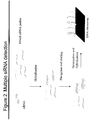
- the present method is designed for the detection, identification and/or quantification of a siRNA directed against at least one specific gene present in a sample and comprises the steps of, (i) providing an array onto which a number of polynucleotides corresponding to at least one gene and or transcript of a cell are arranged on pre-determined locations; (ii) isolating siRNA from a target cell; (iii) contacting the siRNA with the array under conditions allowing hybridization of the siRNA to the capture molecules present on the array; (iv) detecting a signal or a change in a signal present on a specific location on the array; wherein the location of the signal on the array and/or change of the signal is indicative of the presence of a siRNA in the cell.
- genes shall designate the genomic DNA which is transcribed into mRNA and then translated into a peptides or proteins.
- the measurement of the expressed genes is performed on either molecules within this process most currently the detection of the mRNA or of the peptide or protein.
- the detection can also be based on specific property of the protein being for example its enzymatic activity.
- nucleic acid array, probe, target nucleic acid, bind substantially, hybridizing specifically to, background, quantifying
- WO97/27317 which is incorporated herein by reference.
- nucleotide triphosphate refers to nucleotides present in either as DNA or RNA and thus includes nucleotides which incorporate adenine, cytosine, guanine, thymine and uracil as bases, the sugar moieties being deoxyribose or ribose.
- modified bases capable of base pairing with one of the conventional bases adenine, cytosine, guanine, thymine and uracil may be employed. Such modified bases include for example 8-azaguanine and hypoxanthine.
- nucleotide refers to nucleotides present in nucleic acids (either DNA or RNA) compared with the bases of said nucleic acid, and includes nucleotides comprising usual or modified bases as above described.
- references to nucleotide(s), oligonucleotide(s), polynucleotide(s) and the like include analogous species wherein the sugar-phosphate backbone is modified and/or replaced, provided that its hybridization properties are not destroyed.
- the backbone may be replaced by an equivalent synthetic peptide, called Peptide Nucleic Acid (PNA).
- PNA Peptide Nucleic Acid
- nucleotide species is a composition of related nucleotides for the detection of a given sequence by base pairing hybridization; nucleotides are synthesized either chemically or enzymatically but the synthesis is not always perfect and the main sequence is contaminated by other related sequences like shorter one or sequences differing by a one or a few nucleotides.
- the essential characteristic of one nucleotides species for the invention being that the overall species can be used for capture of a given sequence.
- Polynucleotide sequences that are complementary to one or more of the siRNA described herein refers to polynucleotides that are capable of hybridizing under stringent conditions to at least part of the nucleotide sequence of said RNA or RNA copies. Given the small size of the siRNA, the capture molecules have to be identical or at least have more than 90% identical sequence in order to specifically detect the siRNA beside other possible flanking regions.
- Bind(s) substantially refers to complementary hybridization between a probe nucleic acid and a target nucleic acid and embraces minor mismatches that can be accommodated by reducing the stringency of the hybridization media to achieve the desired detection of the target polynucleotide sequence.
- capture probe designates a molecule which is able to specifically bind to a given polynucleotide. Polynucleotide binding is obtained through base pairing between two polynucleotides, one being the immobilized capture probe and the other one the target to be detected.
- the present invention is based on the use of arrays having multiple single nucleotide sequences arranged on specific, pre-determined locations thereon and being identical or complementary to gene sequences, or mRNAs corresponding to genes, present in the cells for which the siRNA are to be determined.
- the main characteristic of the invention is to obtain a direct analysis and an overview of the genes which are essentially affected by the regulation through siRNAs naturally present in the cells.
- the signals of the different spots related to each gene being a direct measurement of the number and the concentration of the siRNA in the analysed cells or tissues.
- the invention is not limited by the number of genes to be screened.
- the array allows to analyse either from 2 to 100 and more preferably until 1000 and still up the entire gene pool present in a cell. This number depends on the species and the differentiation of the cell but can be as large as around 40.000 for the human genome.
- the present invention provides a method for the detection and/or identification and/or quantification of multiple siRNAs directed against at least one gene or mRNA or their complementary sequence, respectively, and present in a sample by detecting a signal or change in a signal present at a specific location on an array, said signal or signal change at such location being related to the presence of siRNA directed against a particular mRNA.
- the method comprises the steps of providing a support containing an array onto which a number of genes and/or transcripts of a cell is arranged on pre-determined locations.
- the support is generically composed of a solid surface which may be selected from the group consisting of glasses, electronic devices, silicon supports, silica, metal or mixtures thereof prepared in format selected from the group of slides, discs, gel layers and/or beads. Beads are considered as arrays in the context of the present invention, as long as they have characteristics which allow a differentiation from each other, so that identification of the beads is correlated with the identification of a given capture probe and so of the target sequence.
- each capture molecule is fixed by covalent binding, each capture molecule being located at a specific location and having at least in part a sequence in a single strand form identical to a gene for which the presence of a siRNA is screened.
- the detection of the siRNA may be performed on the (+) or (-) strand of the corresponding gene sequence, since the siRNA contain both of the strands.
- use of complementary sequences might lead to a binding of the natural mRNA as well, which might interfere with the analysis.
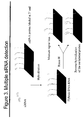
- the detection method presented in figure 3 In this case the sequence identical to the mRNA has to be present on the surface of the array. In the method proposed in figure 1, the two strands can be used.
- the capture probes may be synthesized by a variety of different techniques, but are preferably synthesized by PCR amplification from cloned genes using an aminated primer.
- the amino group of the amplicon is then reacted with a functionalized surface bearing reactive groups, such as, but not limited, to aldehyde, epoxide, acrylate, thiocyanate, N-hydroxysuccinimide.
- a functionalized surface bearing reactive groups such as, but not limited, to aldehyde, epoxide, acrylate, thiocyanate, N-hydroxysuccinimide.
- the second strand of the amplicon is then removed by heating or by alkaline treatment so that single strand DNA or RNA is present on the surface and ready to bind to the complementary siRNA or siRNA copies.
- the synthesised nucleotides are also preferably aminated or thiolated and deposited on the functionalized surface. Advantage of the chemically synthesised nucleotides is their easy production.
- the array contains capture probes represented by polynucleotides having a sequence identical to essentially the full length mRNA. In another embodiment, the array contains capture probes being polynucleotides having a sequence complementary to essentially the full length mRNA.
- the array contains a number of capture probes being polynucleotides identical or complementary to at least different parts of the same mRNA sequence, which capture probes are present at specific (and different) locations of the array.
- the different capture molecules present on the array cover most and preferably all of the gene sequences or mRNA present in a cell. The amount of siRNA for one gene may then be calculated as the sum of the signals for the different parts of the same gene.
- the capture molecules are present at a density superior to 10 fmoles, and preferably 100 fmoles per cm 2 surface of the solid support.
- capture probes are present on different supports being preferentially beads with chemical or physical characteristics for their identification with a specific capture probe. The simplest array would contain one capture probe.
- the invention also embraces the support and its substrate on which is bound the capture molecules for the detection of given siRNA target molecules.
- any known gene sequence derived from the genome of an organism may be used.
- parts of the said gene are put to use, which are preferably derived from the coding regions, i.e. the exons.
- transcripts of the genes are used and arranged on the array, i.e. nucleotides derived from the mRNA-pool of the cell to be investigated. Methods of arranging nucleotides and polynucleotides are well known in the art and may be found in Bowtell, D. and Sambrook ( DNA Microarrays, J. Cold Spring Harbor Laboratory Press, 2003 Cold Spring Harbor, New York, pg 1-712) which document is incorporated herein by way of reference.
- the nucleotide sequence is attached to the support via a linker, which may be a polynucleotide exhibiting a length of between about 20 to 200 nucleotides ( EP 1 266 034 ).
- the capture probes may be DNA, PNA or RNA.
- step (ii) siRNA from a cell of interest is isolated.
- An exemplary process for the isolation of siRNA is described e.g. in Tuschl et al. 1999, which document is incorporated herein by way of reference.
- the siRNA once isolated may directly be used for the assay or, preferably, may be processed further prior to performing the assay.
- the siRNA will be labelled prior to its use.
- the labelling may be performed by attaching a specific molecule to the siRNA, that may be detected, e.g. via fluorescence, colorimetry, chemo- or bioluminescence, electric, magnetic or particularly biotin.
- Biotin-labelled nucleotides may be attached/incorporated, which is then recognized by binding proteins being either antibodies or streptavidin or related binding molecules.
- the binding proteins are labelled by any chemical or physical means and detected and quantified. Indirect labelling is also of use when amplification of the signal is required.
- a labelling of the siRNA may also be performed by incubating the siRNA with a mixture of ssDNA probes under conditions as to obtain formation of a RNA-DNA hybrid complex, whereupon an elongation and concurrent labelling of the small RNA may be achieved.
- the ssDNA is used as a matrix and labelled ribonucleotide/deoxynucleotides are utilized for the elongation.
- the ssDNA used for the formation of the hybrid complex can be replaced by any nucleotide or nucleotide-like molecules as long as the elongation of the bound siRNA is possible. After denaturation the labelled strand will be used for incubation with the capture probes present on the array for detection and/or quantification of the transcripts.
- the capture probes present on the array may contain a label at their 3'-end. After binding of the siRNA, the RNA/DNA hybrids are then cleaved with Rnase H thus releasing the label from those capture probes, where the siRNA had bound. Therefore, in this embodiment, the decrease in signal is representative of the presence of a siRNA present in the sample.
- the sequence of the siRNA may also be determined by performing additional analysis of the release sequence.
- the released fragments may be detected and/or quantified and/or identified by their hybridization on specific capture probes present on a second DNA microarray (cf. Fig. 3).
- the released fragments are separated, identified and/or quantified after electrophoresis.
- the size of the released fragments indicate the location of binding of the siRNA and allow their identification. Also a sequence analysis of released sequence will lead to the same identification (figure 3).
- the siRNA may also be transcribed to their corresponding DNA-copies or amplified by means of PCR. Accordingly, the copying may be performed using a retro-transcriptase allowing for the incorporation of labelled nucleotides in the forming strand. Also, the siRNA may be subjected to a PCR-reaction, which in principle involves the use of 3'- and 5'-adapter oligonucleotides in order to perform a blunt end ligation with the multiple extracted siRNAs in solution. The product thus obtained is then reverse transcribed with a 3'-RT primer complementary to the 3'-adapter.
- a PCR amplification cycle is then perform with a 5'-primer complementary of the cDNA and in the presence of the 3'-RT primer. Labeled nucleotides are incorporated into the amplicons during the PCR-reaction.
- step (iii)) the siRNA or molecule derived therefrom (e.g. a DNA-copy or amplicon), is contacted with the array under conditions, allowing hybridization of the siRNA, or the molecule derived therefrom, with the capture probes present on the array. After a time sufficient for forming the duplex, a signal or a change in signal is detected on a specific location on the array.
- siRNA or molecule derived therefrom e.g. a DNA-copy or amplicon
- the presence of fixed labelled target will be indicative of the presence of siRNA in the sample and, in knowledge of the gene to which it binds, also which transcript is controlled in the cell via this mechanism.
- the amount of fixed labelled target on the array will be proportional to the siRNA if performed under the appropriate conditions.
- the presence of target bound on the different capture probes present on the solid support may be analyzed, identified and/or quantified by an apparatus comprising a detection and/or quantification device of a signal formed at the location of the binding between the target molecule and the capture molecule, preferably also a reading device of information recorded on a surface of said solid support, a computer program for recognizing the discrete regions bearing the bound target molecules upon its corresponding capture molecules and their locations, preferably also a quantification program of the signal present at the locations and a program for correlating the presence of the signal at these locations with the diagnostic and/or the quantification of thecomponents to be detected according to the invention.
- an apparatus comprising a detection and/or quantification device of a signal formed at the location of the binding between the target molecule and the capture molecule, preferably also a reading device of information recorded on a surface of said solid support, a computer program for recognizing the discrete regions bearing the bound target molecules upon its corresponding capture molecules and their locations, preferably also a quantification program of the signal present
- the principle laid down in the present specification may also be used in a method for determining the exact location of the siRNA binding on a gene sequence and/or the transcript.
- sequences of the gene or transcript, respectively are arranged on the array on different locations, and upon hybridization it may be determined, to which part of the gene and/or transcript the siRNA binds.
- the knowledge provided by the present invention allows the design of new medicaments comprising sequences containing the RNAi sequences.
- the present invention is suitable for screening for compounds appropriate for regulation of gene translation or to follow cell reactions in the presence of biological or chemical compounds.
- the cells, tissues or organisms are placed in the presence of one molecule and the analysis according to the present invention is carried out.
- the analysis of the spots intensities specific of the different genes gives an estimation and possible quantification of the siRNA present within the cells compared to cells incubated without the given compound.
- the invention is particularly useful for the determination of the efficiency of the transfection of the siRNA directed against one or several particular genes.
- Variation in the level of the siRNA for particular genes are determined and give a first overview of the changes occurring in the biological organisms, cells or tissues, due to the compound.
- Compounds comprise: biological molecules such as cytokines, growth hormones, or any biological molecules affecting cells. Is also comprises chemical compounds such as drugs, toxic molecules, compounds from plants or animal extracts, chemicals resulting from organic synthesis including combinatory chemistry. The invention is particularly well suited for the screening of these compounds on cell regulation of the transcription of the genes.
- siRNA directed against the main vital cellular functions as following: apoptosis, cell adhesion, cell cycle, growth factors and cytokines, cell signaling, chromosomal processing, DNA repair/synthesis, intermediate metabolism, extracellular matrix, cell structure, protein metabolism, oxidative metabolism, transcription and house keeping genes .
- the invention best application is for the detection of si RNA against genes corresponding for the proteins involved in at least 9 of the 13 main cellular functions.
- the array is used for the identification and/or quantification of siRNA present in cells against gene corresponding to at least 5 genes from one cellular functions including the 13 vital function here above described but also including specialized functions such as cell differentiation, oncogene/tumor suppressor, stress response, lipid metabolism, proteasome, circulation . Also the invention is best when focussed on genes related to one particular function which has biological, pharmaceutical, therapeutical or pathological interest.
- cells, tissues or organisms are incubated in particular physical, chemical or biological conditions and the analysis performed according to the invention.
- the particular physical conditions means only conditions in which a physical parameter has been changed such as pH, temperature, pressure.
- the particular chemical conditions mean any conditions in which the concentrations of one or several chemicals have been changed as compared to a control or reference condition including salts, oxygen, nutriments, proteins, glucides (carbohydrates), and lipids.
- the particular biological conditions mean any changes in the living cells, tissues or organisms including ageing, stress, transformation (cancer), pathology, which affect cells, tissues or organisms.
- the method and support as described herein may be utilized as part of a diagnostic and/or quantification kit which comprises means and media for analyzing biological samples containing target molecules being detected after their binding onto the capture probes being present on the support in the form of array with a density of at least 4 different capture probes per cm 2 of surface of rigid support.
- the kit may also contain a support with a single capture probe.
- kits for the detection and/or identification and/or quantification of multiple siRNA directed against at least one gene present in a sample comprising, which kit comprises an array, harboring capture probes having a sequence identical or complementary to a mRNA or parts thereof and being present at specific locations of the array, and buffers and labels.
- screening device for testing the effects of a compound on gene expression by detection of the presence of siRNA directed against at least one gene, said screening device comprising an array including capture probes having a sequence identical or complementary to mRNA or part thereof and being present at specific locations of the array and optionally buffers and labels.
- siRNAs were extracted from the cell medium and subsequently treated with proteinase K and were separated on a denaturing 15% polyacrylamide gel. A band, including a size range of at least 18-24 nt, was excised and then eluted into 0.3 M NaCl overnight at 4°C in siliconized tubes. The RNA was recovered by ethanol precipitation and then dephosphorylated (30 ⁇ l reaction, 50 °C, 30 min, 10 U alkaline phosphatase; Roche).
- the reaction was stopped by phenol/chloroform extraction, and the RNA was ethanol precipitated.
- the 3' adapter oligonucleotide (pUUUaaccg catccttctcx: uppercase, RNA; lowercase, DNA; p, phosphate; x, 4-hydroxymethylbenzyl) was then ligated to the dephosphorylated ⁇ 21-nt RNA (20 ⁇ L reaction, 37°C, 30 min, 5 ⁇ M 3' adapter, 50 mM Tris-HCl at pH 7.6, 10 mM MgCl2, 0.2 mM ATP, 0.1 mg/ml acetylated BSA, 15% DMSO, 25 U T4 RNA ligase; Amersham-Pharmacia) (Pan and Uhlenbeck 1992).
- the ligation reaction was stopped by the addition of an equal volume of 8 M urea/50 mM EDTA stopmix and directly loaded on a 15% gel.
- the ligation product was recovered from the gel and 5' phosphorylated (20 ⁇ L reaction, 37°C, 30 min, 2 mM ATP, 5 U T4 polynucleotide kinase; NEB).
- the phosphorylation reaction was stopped by phenol/chloroform extraction, and RNA was recovered by ethanol precipitation.
- the 5' adapter (tactaatacgactcactAAA: uppercase, RNA; lowercase, DNA) was ligated to the phosphorylated ligation product as described above.
- the new ligation product was gel purified and eluted from the gel slice in the presence of reverse transcription primer (GACTAGCT GGAATT CAAG GATGCGGTTAAA: bold, Eco RI site), used as carrier.
- Reverse transcription (15 ⁇ L reaction, 42°C, 30 min, 150 U Superscript II reverse transcriptase; Life Technologies) was followed by PCR using a 5' primer CAGCCAACG GAATTC ATACGACTCAC TAAA (bold, Eco RI site), the 3' RT primer and biotin-dATP/biotin-dCTP mix (10 ⁇ M each).
- the labelled PCR product was then hybridized on the Dual Chips Human General micro-array bearing ssDNA capture probes specific for 202 genes (Eppendorf, Hamburg, Germany).
- the dual chips Human General contains capture molecule having sequences identical at least in part to 202 genes belonging to the 13 main vital cell functions.
- the labelling of the bound targets was obtained as described by Delongueville et al (Biochem Pharmacol. 2002, 64:137-49) using Cy3 labelled antibodies against biotin and the arrays scanned using a laser confocal scanner "ScanArray” (Packard, USA) at a resolution of 10 ⁇ m.
- the scanned 16-bit images were imported to the software, 'ImaGene4.0' (BioDiscovery, Los Angeles, CA, USA), which was used to quantify the signal intensities.
- the spots intensities for every genes were first corrected by a subtraction of the local background intensity from signal intensity.
Landscapes
- Chemical & Material Sciences (AREA)
- Life Sciences & Earth Sciences (AREA)
- Organic Chemistry (AREA)
- Health & Medical Sciences (AREA)
- Engineering & Computer Science (AREA)
- Biochemistry (AREA)
- Molecular Biology (AREA)
- Zoology (AREA)
- Wood Science & Technology (AREA)
- Proteomics, Peptides & Aminoacids (AREA)
- Analytical Chemistry (AREA)
- Genetics & Genomics (AREA)
- General Health & Medical Sciences (AREA)
- Biotechnology (AREA)
- Physics & Mathematics (AREA)
- Biophysics (AREA)
- Immunology (AREA)
- Microbiology (AREA)
- Bioinformatics & Cheminformatics (AREA)
- General Engineering & Computer Science (AREA)
- Measuring Or Testing Involving Enzymes Or Micro-Organisms (AREA)
- Apparatus Associated With Microorganisms And Enzymes (AREA)
Applications Claiming Priority (2)
| Application Number | Priority Date | Filing Date | Title |
|---|---|---|---|
| US10/637,656 US20050037362A1 (en) | 2003-08-11 | 2003-08-11 | Detection and quantification of siRNA on microarrays |
| US637656 | 2003-08-11 |
Publications (2)
| Publication Number | Publication Date |
|---|---|
| EP1559791A2 true EP1559791A2 (de) | 2005-08-03 |
| EP1559791A3 EP1559791A3 (de) | 2005-08-10 |
Family
ID=34135619
Family Applications (1)
| Application Number | Title | Priority Date | Filing Date |
|---|---|---|---|
| EP04016483A Withdrawn EP1559791A3 (de) | 2003-08-11 | 2004-07-13 | Nachweis und Quantifizierung von siRNA auf Mikroarrays. |
Country Status (3)
| Country | Link |
|---|---|
| US (2) | US20050037362A1 (de) |
| EP (1) | EP1559791A3 (de) |
| JP (1) | JP2005058235A (de) |
Cited By (2)
| Publication number | Priority date | Publication date | Assignee | Title |
|---|---|---|---|---|
| WO2008040355A3 (en) * | 2006-10-06 | 2008-05-29 | Exiqon As | Novel methods for quantification of micrornas and small interfering rnas |
| WO2008052774A3 (en) * | 2006-10-31 | 2008-07-03 | Noxxon Pharma Ag | Methods for detection of a single- or double-stranded nucleic acid molecule |
Families Citing this family (94)
| Publication number | Priority date | Publication date | Assignee | Title |
|---|---|---|---|---|
| US20050260648A1 (en) * | 2004-04-06 | 2005-11-24 | Huffel Christophe V | Method for the determination of cellular transcriptional |
| US20060134639A1 (en) * | 2004-04-06 | 2006-06-22 | Huffel Christophe V | Method for the determination of cellular transcriptional regulation |
| US20050277139A1 (en) * | 2004-04-26 | 2005-12-15 | Itzhak Bentwich | Methods and apparatus for the detection and validation of microRNAs |
| EP2471924A1 (de) * | 2004-05-28 | 2012-07-04 | Asuragen, INC. | Verfahren und Zusammensetzungen mit microRNA |
| JP5020818B2 (ja) | 2004-07-01 | 2012-09-05 | ジェン−プローブ・インコーポレーテッド | 生物学的試料中の核酸を検出するための方法及び組成物 |
| US20060019258A1 (en) * | 2004-07-20 | 2006-01-26 | Illumina, Inc. | Methods and compositions for detection of small interfering RNA and micro-RNA |
| ES2534300T3 (es) | 2004-11-12 | 2015-04-21 | Asuragen, Inc. | Procedimientos y composiciones que implican miARN y moléculas inhibidoras de miARN |
| US7919239B2 (en) * | 2005-07-01 | 2011-04-05 | Agilent Technologies, Inc. | Increasing hybridization efficiencies |
| US9297036B2 (en) | 2005-07-01 | 2016-03-29 | Agilent Technologies, Inc | Nucleic acid probes for analysis of small RNAs and other polynucleotides |
| WO2007016548A2 (en) * | 2005-08-01 | 2007-02-08 | The Ohio State University Research Foundation | Micro-rna-based methods and compositions for the diagnosis, prognosis and treatment of breast cancer |
| US8481505B2 (en) * | 2005-09-12 | 2013-07-09 | The Ohio State University Research Foundation | Compositions and methods for the diagnosis and therapy of BCL2-associated cancers |
| WO2007035684A2 (en) * | 2005-09-16 | 2007-03-29 | Primera Biosystems, Inc. | Method for quantitative detection of short rna molecules |
| JP2007082436A (ja) * | 2005-09-20 | 2007-04-05 | Bioinformatics Institute For Global Good Inc | 機能性RNAが制御するターゲットmRNAの予測・同定方法及びその利用方法 |
| CA2624531A1 (en) * | 2005-10-05 | 2007-04-19 | Carlo M. Croce | Wwox gene, vectors containing the same, and uses in treatment of cancer |
| US20070099193A1 (en) * | 2005-11-01 | 2007-05-03 | Hui Wang | Probe/target stabilization with add-in oligo |
| WO2007081680A2 (en) | 2006-01-05 | 2007-07-19 | The Ohio State University Research Foundation | Microrna expression abnormalities in pancreatic endocrine and acinar tumors |
| AU2007205234B2 (en) | 2006-01-05 | 2012-07-12 | The Ohio State University Research Foundation | MicroRNA-based methods and compositions for the diagnosis, prognosis and treatment of lung cancer |
| EP2484782B1 (de) | 2006-01-05 | 2015-11-18 | The Ohio State University Research Foundation | Verfahren und Zusammensetzungen auf Mikro-RNA-Basis zur Diagnose und Behandlung von soliden Krebs |
| US20070172841A1 (en) * | 2006-01-25 | 2007-07-26 | Hui Wang | Probe/target stabilization with add-in oligo |
| US7754475B2 (en) * | 2006-01-25 | 2010-07-13 | Agilent Technologies, Inc. | Nucleic acid probes and microarrays for analysis of polynucleotides |
| ES2446362T3 (es) | 2006-03-20 | 2014-03-07 | The Ohio State University Research Foundation | Huellas de microARN durante megacariocipoyesis humana |
| ES2425387T3 (es) | 2006-07-13 | 2013-10-15 | The Ohio State University Research Foundation | Mir-106a para diagnosticar adenocarcinoma de colon de pronóstico de supervivencia pobre |
| US8580494B2 (en) | 2006-08-25 | 2013-11-12 | Research Foundation For Mental Hygiene, Inc. | Methods and compositions for amplification and detection of MicroRNAs |
| EP2145001A2 (de) * | 2006-09-19 | 2010-01-20 | Asuragen, Inc. | Von mir-15, mir-26, mir -31,mir -145, mir-147, mir-188, mir-215, mir-216 mir-331, mmu-mir-292-3p regulierte gene und stoffwechselwege als ziele für einen therapeutischen eingriff |
| US8071292B2 (en) * | 2006-09-19 | 2011-12-06 | The Ohio State University Research Foundation | Leukemia diagnostic methods |
| WO2008039937A2 (en) * | 2006-09-27 | 2008-04-03 | Novarx | Blocking of gene expression in eukaryotic cells |
| US7803784B2 (en) * | 2006-10-24 | 2010-09-28 | The Board Of Trustees Of The Leland Stanford Junior University | Modulation of T cell signaling threshold and T cell sensitivity to antigens |
| WO2008054828A2 (en) | 2006-11-01 | 2008-05-08 | The Ohio State University Research Foundation | Microrna expression signature for predicting survival and metastases in hepatocellular carcinoma |
| CN102399870B (zh) * | 2006-11-28 | 2014-04-16 | 博奥生物有限公司 | 一种确定食道癌病人生存预后的试剂 |
| US20080131878A1 (en) * | 2006-12-05 | 2008-06-05 | Asuragen, Inc. | Compositions and Methods for the Detection of Small RNA |
| EP2104735A2 (de) * | 2006-12-08 | 2009-09-30 | Asuragen, INC. | Mir-21-regulierte gene und pfade als ziele für therapeutische interventionen |
| CN101622348A (zh) * | 2006-12-08 | 2010-01-06 | 奥斯瑞根公司 | 作为治疗性干预靶标的miR-20调节的基因和途径 |
| EP2104737B1 (de) * | 2006-12-08 | 2013-04-10 | Asuragen, INC. | Funktionen und ziele von let-7-mikro-rnas |
| WO2008073919A2 (en) * | 2006-12-08 | 2008-06-19 | Asuragen, Inc. | Mir-20 regulated genes and pathways as targets for therapeutic intervention |
| CA2671270A1 (en) * | 2006-12-29 | 2008-07-17 | Asuragen, Inc. | Mir-16 regulated genes and pathways as targets for therapeutic intervention |
| JP2010516291A (ja) * | 2007-01-31 | 2010-05-20 | ジ・オハイオ・ステイト・ユニバーシティ・リサーチ・ファウンデイション | 急性骨髄性白血病(aml)の診断、予後及び治療のためのマイクロrnaに基づく方法及び組成物 |
| US20080194416A1 (en) * | 2007-02-08 | 2008-08-14 | Sigma Aldrich | Detection of mature small rna molecules |
| US8685899B2 (en) * | 2007-02-14 | 2014-04-01 | Genisphere Inc. | Methods, reagents and kits for detection of nucleic acid molecules |
| US20100190167A1 (en) * | 2007-02-14 | 2010-07-29 | Genisphere Inc. | Methods, Reagents and Kits for Detection of Nucleic Acid Molecules |
| CN101827941B (zh) * | 2007-04-30 | 2014-07-16 | 俄亥俄州立大学研究基金会 | 用于区分胰腺癌与正常胰腺功能和/或慢性胰腺炎的方法 |
| US20090232893A1 (en) * | 2007-05-22 | 2009-09-17 | Bader Andreas G | miR-143 REGULATED GENES AND PATHWAYS AS TARGETS FOR THERAPEUTIC INTERVENTION |
| US8465917B2 (en) * | 2007-06-08 | 2013-06-18 | The Ohio State University Research Foundation | Methods for determining heptocellular carcinoma subtype and detecting hepatic cancer stem cells |
| AU2008261951A1 (en) * | 2007-06-08 | 2008-12-18 | Asuragen, Inc. | miR-34 regulated genes and pathways as targets for therapeutic intervention |
| US8053186B2 (en) | 2007-06-15 | 2011-11-08 | The Ohio State University Research Foundation | Oncogenic ALL-1 fusion proteins for targeting Drosha-mediated microRNA processing |
| EP2173911B1 (de) * | 2007-07-31 | 2014-06-18 | The Ohio State University Research Foundation | Verfahren zur methylierungsreversion mittels abzielen auf dnmt3a und dnmt3b |
| EP2653561B1 (de) * | 2007-08-03 | 2016-03-02 | The Ohio State University Research Foundation | Ultrakonservierte Bereiche zur Codierung von ncRNA |
| EP3028708A1 (de) * | 2007-08-22 | 2016-06-08 | The Ohio State University Research Foundation | Verfahren und zusammensetzungen zur induzierung von epha7-deregulierung und erk-phosphorlylierung bei humaner akuter leukämie |
| US20090061424A1 (en) * | 2007-08-30 | 2009-03-05 | Sigma-Aldrich Company | Universal ligation array for analyzing gene expression or genomic variations |
| US8361714B2 (en) | 2007-09-14 | 2013-01-29 | Asuragen, Inc. | Micrornas differentially expressed in cervical cancer and uses thereof |
| EP2212440A4 (de) * | 2007-10-11 | 2011-04-06 | Univ Ohio State Res Found | Verfahren und zusammensetzungen zur diagnose und behandlung von adenokarzinomen der speiseröhre |
| WO2009052386A1 (en) * | 2007-10-18 | 2009-04-23 | Asuragen, Inc. | Micrornas differentially expressed in lung diseases and uses thereof |
| WO2009055773A2 (en) | 2007-10-26 | 2009-04-30 | The Ohio State University Research Foundation | Methods for identifying fragile histidine triad (fhit) interaction and uses thereof |
| EP2225396A4 (de) * | 2007-11-30 | 2011-03-02 | Univ Ohio State Res Found | Mikro-rna-expressionsprofilerstellung und abzielen darauf in peripherem blut bei lungenkrebs |
| WO2009070805A2 (en) * | 2007-12-01 | 2009-06-04 | Asuragen, Inc. | Mir-124 regulated genes and pathways as targets for therapeutic intervention |
| US20090192114A1 (en) * | 2007-12-21 | 2009-07-30 | Dmitriy Ovcharenko | miR-10 Regulated Genes and Pathways as Targets for Therapeutic Intervention |
| WO2009100430A2 (en) * | 2008-02-08 | 2009-08-13 | Asuragen, Inc | miRNAs DIFFERENTIALLY EXPRESSED IN LYMPH NODES FROM CANCER PATIENTS |
| JP2011517932A (ja) * | 2008-02-28 | 2011-06-23 | ジ・オハイオ・ステイト・ユニバーシティ・リサーチ・ファウンデイション | ヒト慢性リンパ球性白血病(ccl)と関連するマイクロrnaシグネチャーおよびその使用 |
| US20110054009A1 (en) * | 2008-02-28 | 2011-03-03 | The Ohio State University Research Foundation | MicroRNA-Based Methods and Compositions for the Diagnosis, Prognosis and Treatment of Prostate Related Disorders |
| US20090253780A1 (en) * | 2008-03-26 | 2009-10-08 | Fumitaka Takeshita | COMPOSITIONS AND METHODS RELATED TO miR-16 AND THERAPY OF PROSTATE CANCER |
| US20110027798A1 (en) * | 2008-03-31 | 2011-02-03 | The Ohio State University Research Foundation | Hybridization Quantitation Method for Modified Micro-RNA and -DNA Based Oligonucleotides |
| WO2009126726A1 (en) * | 2008-04-08 | 2009-10-15 | Asuragen, Inc | Methods and compositions for diagnosing and modulating human papillomavirus (hpv) |
| US8258111B2 (en) * | 2008-05-08 | 2012-09-04 | The Johns Hopkins University | Compositions and methods related to miRNA modulation of neovascularization or angiogenesis |
| WO2009148631A1 (en) * | 2008-06-06 | 2009-12-10 | The Board Of Trustees Of The Leland Stanford Junior University | Role of mirna in t cell leukemia |
| WO2009152300A1 (en) | 2008-06-11 | 2009-12-17 | The Government Of The United States Of America, As Represented By The Secretary Of The Department Of Health And Human Services | Use of mir-26 family as a predictive marker of hepatocellular carcinoma and responsiveness to therapy |
| US20110143959A1 (en) * | 2008-08-13 | 2011-06-16 | Rosetta Genomics Ltd. | Compositions and methods for determining the prognosis of bladder urothelial cancer |
| US20100179213A1 (en) * | 2008-11-11 | 2010-07-15 | Mirna Therapeutics, Inc. | Methods and Compositions Involving miRNAs In Cancer Stem Cells |
| JP2012509675A (ja) * | 2008-11-25 | 2012-04-26 | ジェン−プロウブ インコーポレイテッド | 低分子rnaを検出するための組成物および方法、ならびにその使用 |
| WO2011060014A1 (en) | 2009-11-13 | 2011-05-19 | Integrated Dna Technologies, Inc. | Small rna detection assays |
| EP2504452A4 (de) | 2009-11-23 | 2014-06-11 | Univ Ohio State Res Found | Materialien und verfahren zur beeinflussung des wachstums, der migration und der invasion von tumorzellen |
| US10787701B2 (en) | 2010-04-05 | 2020-09-29 | Prognosys Biosciences, Inc. | Spatially encoded biological assays |
| KR101866401B1 (ko) | 2010-04-05 | 2018-06-11 | 프로그노시스 바이오사이언스, 인코포레이티드 | 공간적으로 엔코딩된 생물학적 검정 |
| US20190300945A1 (en) | 2010-04-05 | 2019-10-03 | Prognosys Biosciences, Inc. | Spatially Encoded Biological Assays |
| WO2012065049A1 (en) | 2010-11-12 | 2012-05-18 | The Ohio State University Research Foundation | Materials and methods related to microrna-21, mismatch repair, and colorectal cancer |
| CA2817982C (en) | 2010-11-15 | 2020-06-30 | The Regents Of The University Of Michigan | Controlled release mucoadhesive systems |
| US20120208189A1 (en) | 2011-01-14 | 2012-08-16 | Life Technologies Corporation | Methods for isolation, identification, and quantification of mirnas |
| JP2014509852A (ja) | 2011-03-07 | 2014-04-24 | ジ・オハイオ・ステート・ユニバーシティ | マイクロRNA−155(miR−155)により誘導される変異誘発活性は炎症および癌を結び付ける |
| GB201106254D0 (en) | 2011-04-13 | 2011-05-25 | Frisen Jonas | Method and product |
| US9644241B2 (en) | 2011-09-13 | 2017-05-09 | Interpace Diagnostics, Llc | Methods and compositions involving miR-135B for distinguishing pancreatic cancer from benign pancreatic disease |
| CN102321764A (zh) * | 2011-09-19 | 2012-01-18 | 中国人民解放军军事医学科学院放射与辐射医学研究所 | 一种用于定量分析生物样品中反义寡核苷酸的新方法 |
| CA2852066A1 (en) | 2011-10-14 | 2013-04-18 | The Ohio State University | Methods and materials related to ovarian cancer |
| EP2790735A4 (de) | 2011-12-13 | 2015-12-09 | Ohio State Innovation Foundation | Verfahren und zusammensetzungen im zusammenhang mit mir-21 und mir-29a, exosomerhemmung und krebsmetastasen |
| JP2015511121A (ja) | 2012-01-20 | 2015-04-16 | ジ・オハイオ・ステート・ユニバーシティ | 浸潤性および予後に関する乳がんバイオマーカーシグネチャー |
| EP3901280B1 (de) | 2012-10-17 | 2025-03-12 | 10x Genomics Sweden AB | Verfahren und produkt zur optimierung einer lokalisierten oder räumlichen detektion einer genexpression in einer gewebeprobe |
| WO2014160352A1 (en) * | 2013-03-13 | 2014-10-02 | Abbott Molecular Inc. | Target sequence enrichment |
| CN111500680B (zh) | 2013-06-25 | 2024-04-16 | 普罗格诺西斯生物科学公司 | 检测样品中生物靶标的空间分布的方法和系统 |
| WO2015157678A2 (en) | 2014-04-10 | 2015-10-15 | The Trustees Of The University Of Pennsylvania | Use of micro-ribonucleic acid (mirna) to diagnose transplant rejection and tolerance of immunosuppression therapy |
| EP4321627A3 (de) | 2015-04-10 | 2024-04-17 | 10x Genomics Sweden AB | Räumlich getrennte multiplex-nukleinsäureanalyse von biologischen proben |
| CN108148891A (zh) * | 2018-03-05 | 2018-06-12 | 重庆市肿瘤研究所 | 肿瘤细胞dna损伤修复相关基因捕获测序的探针制备方法 |
| EP3976820A1 (de) | 2019-05-30 | 2022-04-06 | 10X Genomics, Inc. | Verfahren zum nachweis der räumlichen heterogenität einer biologischen probe |
| EP4600376A3 (de) | 2020-06-02 | 2025-10-22 | 10X Genomics, Inc. | Räumliche transkriptomik für antigenrezeptoren |
| EP4025692A2 (de) | 2020-06-02 | 2022-07-13 | 10X Genomics, Inc. | Nukleinsäure-bibliotheksverfahren |
| EP4421186B1 (de) | 2020-06-08 | 2025-08-13 | 10X Genomics, Inc. | Verfahren zur bestimmung eines chirurgischen randes und verfahren zur verwendung davon |
| CN113066532B (zh) * | 2021-04-01 | 2022-08-26 | 上海欧易生物医学科技有限公司 | 基于高通量测序技术的宿主中病毒来源sRNA数据分析方法 |
| JP2024512780A (ja) * | 2021-04-01 | 2024-03-19 | モデルナティエックス インコーポレイテッド | 多価rna組成物中のrna種の識別及び比率決定のための方法 |
Family Cites Families (10)
| Publication number | Priority date | Publication date | Assignee | Title |
|---|---|---|---|---|
| US5854033A (en) * | 1995-11-21 | 1998-12-29 | Yale University | Rolling circle replication reporter systems |
| EP0880598A4 (de) * | 1996-01-23 | 2005-02-23 | Affymetrix Inc | Verfahren zur analyse von nukleinsäure |
| WO2001025485A2 (en) * | 1999-10-06 | 2001-04-12 | Amersham Biosciences Corp | Method for detecting mutations using arrayed primer extension |
| EP1111069A1 (de) * | 1999-12-22 | 2001-06-27 | BioChip Technologies GmbH | Modifizierte Nukleinsäuren und deren Verwendung |
| WO2002099386A2 (en) * | 2001-06-07 | 2002-12-12 | Proligo Llc | Microcalorimetric detection of analytes and binding events |
| US7371580B2 (en) * | 2001-08-24 | 2008-05-13 | Agilent Technologies, Inc. | Use of unstructured nucleic acids in assaying nucleic acid molecules |
| WO2004015063A2 (en) * | 2002-08-07 | 2004-02-19 | Tularik Inc. | Amplification and overexpression of oncogenes |
| US7851150B2 (en) * | 2002-12-18 | 2010-12-14 | Third Wave Technologies, Inc. | Detection of small nucleic acids |
| AU2004249193A1 (en) * | 2003-06-20 | 2004-12-29 | Amgen Inc. | Gene amplification and overexpression in cancer |
| US20060134639A1 (en) * | 2004-04-06 | 2006-06-22 | Huffel Christophe V | Method for the determination of cellular transcriptional regulation |
-
2003
- 2003-08-11 US US10/637,656 patent/US20050037362A1/en not_active Abandoned
-
2004
- 2004-07-13 EP EP04016483A patent/EP1559791A3/de not_active Withdrawn
- 2004-08-11 JP JP2004234466A patent/JP2005058235A/ja active Pending
-
2005
- 2005-10-04 US US11/242,139 patent/US20060099619A1/en not_active Abandoned
Cited By (2)
| Publication number | Priority date | Publication date | Assignee | Title |
|---|---|---|---|---|
| WO2008040355A3 (en) * | 2006-10-06 | 2008-05-29 | Exiqon As | Novel methods for quantification of micrornas and small interfering rnas |
| WO2008052774A3 (en) * | 2006-10-31 | 2008-07-03 | Noxxon Pharma Ag | Methods for detection of a single- or double-stranded nucleic acid molecule |
Also Published As
| Publication number | Publication date |
|---|---|
| US20050037362A1 (en) | 2005-02-17 |
| US20060099619A1 (en) | 2006-05-11 |
| JP2005058235A (ja) | 2005-03-10 |
| EP1559791A3 (de) | 2005-08-10 |
Similar Documents
| Publication | Publication Date | Title |
|---|---|---|
| US20050037362A1 (en) | Detection and quantification of siRNA on microarrays | |
| EP1627925A1 (de) | Methode zur Bestimmung zellulärer Transkriptionsregulation durch mikro-RNAs | |
| JP6807406B2 (ja) | 短鎖rna機能の配列特異的阻害法 | |
| Hüttenhofer et al. | Experimental approaches to identify non-coding RNAs | |
| Aravin et al. | Identification and characterization of small RNAs involved in RNA silencing | |
| JP5963735B2 (ja) | マイクロrna分子 | |
| Shingara et al. | An optimized isolation and labeling platform for accurate microRNA expression profiling | |
| JP4095895B2 (ja) | Rna干渉を媒介する短鎖rna分子 | |
| US20080085999A1 (en) | Modulation of gene expression using dna-rna hybrids | |
| WO2006108473A1 (en) | Method for the determination of cellular transcriptional regulation by micro rnas | |
| US20040220127A1 (en) | Methods and compositions relating to 5'-chimeric ribonucleic acids | |
| WO2003106631A2 (en) | Methods and compositions relating to labeled rna molecules that reduce gene expression | |
| Tops et al. | The Caenorhabditis elegans Argonautes ALG-1 and ALG-2: almost identical yet different | |
| CA3140512A1 (en) | Array and method for detecting spatial information of nucleic acids | |
| JP2026501486A (ja) | 空間的トランスクリプトミクスライブラリー調製材料及び方法 | |
| EP2235180B1 (de) | Apoptose induzierende positivkontrolle für expressionsmodulationsexperimente | |
| US20080045417A1 (en) | Oligonucleotide Microarray | |
| JP2004507206A (ja) | 診断上重要な組織特異的遺伝子 | |
| US20050148531A1 (en) | Modulation of gene expression using DNA-DNA hybrids | |
| US20110091939A1 (en) | Methods and Compositions for Removing Specific Target Nucleic Acids | |
| EP1559792A2 (de) | Verfahren zur Transfektioin Gen-bezogener RNAi | |
| US20210123056A1 (en) | Functional ligands to dicamba | |
| Yalçın | Expression analysis of Drosophila melanogaster microRNAs | |
| Wang et al. | Recent patents on the identification and clinical application of microRNAs and target genes | |
| HK40129148A (en) | Spatially distinguished, multiplex nucleic acid analysis of biological specimens |
Legal Events
| Date | Code | Title | Description |
|---|---|---|---|
| PUAI | Public reference made under article 153(3) epc to a published international application that has entered the european phase |
Free format text: ORIGINAL CODE: 0009012 |
|
| PUAL | Search report despatched |
Free format text: ORIGINAL CODE: 0009013 |
|
| AK | Designated contracting states |
Kind code of ref document: A2 Designated state(s): AT BE BG CH CY CZ DE DK EE ES FI FR GB GR HU IE IT LI LU MC NL PL PT RO SE SI SK TR |
|
| AX | Request for extension of the european patent |
Extension state: AL HR LT LV MK |
|
| AK | Designated contracting states |
Kind code of ref document: A3 Designated state(s): AT BE BG CH CY CZ DE DK EE ES FI FR GB GR HU IE IT LI LU MC NL PL PT RO SE SI SK TR |
|
| AX | Request for extension of the european patent |
Extension state: AL HR LT LV MK |
|
| 17P | Request for examination filed |
Effective date: 20051216 |
|
| AKX | Designation fees paid |
Designated state(s): AT BE BG CH CY CZ DE DK EE ES FI FR GB GR HU IE IT LI LU MC NL PL PT RO SE SI SK TR |
|
| STAA | Information on the status of an ep patent application or granted ep patent |
Free format text: STATUS: THE APPLICATION IS DEEMED TO BE WITHDRAWN |
|
| 18D | Application deemed to be withdrawn |
Effective date: 20070201 |