EP1569623B1 - Topische nanopartikel-spironolacton-formulierung - Google Patents
Topische nanopartikel-spironolacton-formulierung Download PDFInfo
- Publication number
- EP1569623B1 EP1569623B1 EP02808245A EP02808245A EP1569623B1 EP 1569623 B1 EP1569623 B1 EP 1569623B1 EP 02808245 A EP02808245 A EP 02808245A EP 02808245 A EP02808245 A EP 02808245A EP 1569623 B1 EP1569623 B1 EP 1569623B1
- Authority
- EP
- European Patent Office
- Prior art keywords
- spironolactone
- nanosuspension
- formulation according
- nanoparticles
- formulation
- Prior art date
- Legal status (The legal status is an assumption and is not a legal conclusion. Google has not performed a legal analysis and makes no representation as to the accuracy of the status listed.)
- Expired - Lifetime
Links
- 239000000203 mixture Substances 0.000 title claims abstract 18
- 238000009472 formulation Methods 0.000 title claims abstract 15
- LXMSZDCAJNLERA-ZHYRCANASA-N spironolactone Chemical compound C([C@@H]1[C@]2(C)CC[C@@H]3[C@@]4(C)CCC(=O)C=C4C[C@H]([C@@H]13)SC(=O)C)C[C@@]21CCC(=O)O1 LXMSZDCAJNLERA-ZHYRCANASA-N 0.000 title claims abstract 9
- 229960002256 spironolactone Drugs 0.000 title claims abstract 9
- 230000000699 topical effect Effects 0.000 title claims abstract 6
- 150000002632 lipids Chemical class 0.000 claims abstract 9
- 239000002105 nanoparticle Substances 0.000 claims abstract 8
- 239000013078 crystal Substances 0.000 claims abstract 5
- 238000002296 dynamic light scattering Methods 0.000 claims abstract 4
- 239000006185 dispersion Substances 0.000 claims abstract 3
- 230000002209 hydrophobic effect Effects 0.000 claims abstract 3
- 239000007787 solid Substances 0.000 claims abstract 3
- 239000006070 nanosuspension Substances 0.000 claims 5
- LYCAIKOWRPUZTN-UHFFFAOYSA-N Ethylene glycol Chemical compound OCCO LYCAIKOWRPUZTN-UHFFFAOYSA-N 0.000 claims 3
- PEDCQBHIVMGVHV-UHFFFAOYSA-N Glycerine Chemical compound OCC(O)CO PEDCQBHIVMGVHV-UHFFFAOYSA-N 0.000 claims 3
- DNIAPMSPPWPWGF-UHFFFAOYSA-N Propylene glycol Chemical compound CC(O)CO DNIAPMSPPWPWGF-UHFFFAOYSA-N 0.000 claims 3
- LDVVTQMJQSCDMK-UHFFFAOYSA-N 1,3-dihydroxypropan-2-yl formate Chemical compound OCC(CO)OC=O LDVVTQMJQSCDMK-UHFFFAOYSA-N 0.000 claims 2
- 235000014113 dietary fatty acids Nutrition 0.000 claims 2
- 239000000194 fatty acid Substances 0.000 claims 2
- 229930195729 fatty acid Natural products 0.000 claims 2
- 150000004665 fatty acids Chemical class 0.000 claims 2
- 239000007788 liquid Substances 0.000 claims 2
- 238000000034 method Methods 0.000 claims 2
- ARIWANIATODDMH-UHFFFAOYSA-N rac-1-monolauroylglycerol Chemical group CCCCCCCCCCCC(=O)OCC(O)CO ARIWANIATODDMH-UHFFFAOYSA-N 0.000 claims 2
- 239000003381 stabilizer Substances 0.000 claims 2
- ARIWANIATODDMH-CQSZACIVSA-N 1-Monolaurin Natural products CCCCCCCCCCCC(=O)OC[C@H](O)CO ARIWANIATODDMH-CQSZACIVSA-N 0.000 claims 1
- DCBSHORRWZKAKO-MRXNPFEDSA-N 1-Monomyristin Natural products CCCCCCCCCCCCCC(=O)OC[C@H](O)CO DCBSHORRWZKAKO-MRXNPFEDSA-N 0.000 claims 1
- QHZLMUACJMDIAE-SFHVURJKSA-N 1-Monopalmitin Natural products CCCCCCCCCCCCCCCC(=O)OC[C@@H](O)CO QHZLMUACJMDIAE-SFHVURJKSA-N 0.000 claims 1
- QHZLMUACJMDIAE-UHFFFAOYSA-N 1-monopalmitoylglycerol Chemical compound CCCCCCCCCCCCCCCC(=O)OCC(O)CO QHZLMUACJMDIAE-UHFFFAOYSA-N 0.000 claims 1
- VBICKXHEKHSIBG-UHFFFAOYSA-N 1-monostearoylglycerol Chemical compound CCCCCCCCCCCCCCCCCC(=O)OCC(O)CO VBICKXHEKHSIBG-UHFFFAOYSA-N 0.000 claims 1
- 208000002874 Acne Vulgaris Diseases 0.000 claims 1
- 201000004384 Alopecia Diseases 0.000 claims 1
- 206010020112 Hirsutism Diseases 0.000 claims 1
- 229910019142 PO4 Inorganic materials 0.000 claims 1
- 241001303601 Rosacea Species 0.000 claims 1
- 206010000496 acne Diseases 0.000 claims 1
- 201000002996 androgenic alopecia Diseases 0.000 claims 1
- 125000004432 carbon atom Chemical group C* 0.000 claims 1
- 238000002425 crystallisation Methods 0.000 claims 1
- 229940079593 drug Drugs 0.000 claims 1
- 239000003814 drug Substances 0.000 claims 1
- 150000002148 esters Chemical class 0.000 claims 1
- 150000002170 ethers Chemical class 0.000 claims 1
- 238000010348 incorporation Methods 0.000 claims 1
- NBIIXXVUZAFLBC-UHFFFAOYSA-K phosphate Chemical compound [O-]P([O-])([O-])=O NBIIXXVUZAFLBC-UHFFFAOYSA-K 0.000 claims 1
- 239000010452 phosphate Substances 0.000 claims 1
- 238000002360 preparation method Methods 0.000 claims 1
- 201000004700 rosacea Diseases 0.000 claims 1
- APSBXTVYXVQYAB-UHFFFAOYSA-M sodium docusate Chemical group [Na+].CCCCC(CC)COC(=O)CC(S([O-])(=O)=O)C(=O)OCC(CC)CCCC APSBXTVYXVQYAB-UHFFFAOYSA-M 0.000 claims 1
- XLYOFNOQVPJJNP-UHFFFAOYSA-N water Substances O XLYOFNOQVPJJNP-UHFFFAOYSA-N 0.000 claims 1
Images



Classifications
-
- A—HUMAN NECESSITIES
- A61—MEDICAL OR VETERINARY SCIENCE; HYGIENE
- A61K—PREPARATIONS FOR MEDICAL, DENTAL OR TOILETRY PURPOSES
- A61K9/00—Medicinal preparations characterised by special physical form
- A61K9/0012—Galenical forms characterised by the site of application
- A61K9/0014—Skin, i.e. galenical aspects of topical compositions
-
- A—HUMAN NECESSITIES
- A61—MEDICAL OR VETERINARY SCIENCE; HYGIENE
- A61K—PREPARATIONS FOR MEDICAL, DENTAL OR TOILETRY PURPOSES
- A61K31/00—Medicinal preparations containing organic active ingredients
- A61K31/56—Compounds containing cyclopenta[a]hydrophenanthrene ring systems; Derivatives thereof, e.g. steroids
- A61K31/58—Compounds containing cyclopenta[a]hydrophenanthrene ring systems; Derivatives thereof, e.g. steroids containing heterocyclic rings, e.g. danazol, stanozolol, pancuronium or digitogenin
- A61K31/585—Compounds containing cyclopenta[a]hydrophenanthrene ring systems; Derivatives thereof, e.g. steroids containing heterocyclic rings, e.g. danazol, stanozolol, pancuronium or digitogenin containing lactone rings, e.g. oxandrolone, bufalin
-
- A—HUMAN NECESSITIES
- A61—MEDICAL OR VETERINARY SCIENCE; HYGIENE
- A61K—PREPARATIONS FOR MEDICAL, DENTAL OR TOILETRY PURPOSES
- A61K47/00—Medicinal preparations characterised by the non-active ingredients used, e.g. carriers or inert additives; Targeting or modifying agents chemically bound to the active ingredient
- A61K47/06—Organic compounds, e.g. natural or synthetic hydrocarbons, polyolefins, mineral oil, petrolatum or ozokerite
- A61K47/08—Organic compounds, e.g. natural or synthetic hydrocarbons, polyolefins, mineral oil, petrolatum or ozokerite containing oxygen, e.g. ethers, acetals, ketones, quinones, aldehydes, peroxides
- A61K47/14—Esters of carboxylic acids, e.g. fatty acid monoglycerides, medium-chain triglycerides, parabens or PEG fatty acid esters
-
- A—HUMAN NECESSITIES
- A61—MEDICAL OR VETERINARY SCIENCE; HYGIENE
- A61K—PREPARATIONS FOR MEDICAL, DENTAL OR TOILETRY PURPOSES
- A61K9/00—Medicinal preparations characterised by special physical form
- A61K9/06—Ointments; Bases therefor; Other semi-solid forms, e.g. creams, sticks, gels
-
- A—HUMAN NECESSITIES
- A61—MEDICAL OR VETERINARY SCIENCE; HYGIENE
- A61K—PREPARATIONS FOR MEDICAL, DENTAL OR TOILETRY PURPOSES
- A61K9/00—Medicinal preparations characterised by special physical form
- A61K9/14—Particulate form, e.g. powders, Processes for size reducing of pure drugs or the resulting products, Pure drug nanoparticles
- A61K9/141—Intimate drug-carrier mixtures characterised by the carrier, e.g. ordered mixtures, adsorbates, solid solutions, eutectica, co-dried, co-solubilised, co-kneaded, co-milled, co-ground products, co-precipitates, co-evaporates, co-extrudates, co-melts; Drug nanoparticles with adsorbed surface modifiers
- A61K9/145—Intimate drug-carrier mixtures characterised by the carrier, e.g. ordered mixtures, adsorbates, solid solutions, eutectica, co-dried, co-solubilised, co-kneaded, co-milled, co-ground products, co-precipitates, co-evaporates, co-extrudates, co-melts; Drug nanoparticles with adsorbed surface modifiers with organic compounds
-
- A—HUMAN NECESSITIES
- A61—MEDICAL OR VETERINARY SCIENCE; HYGIENE
- A61K—PREPARATIONS FOR MEDICAL, DENTAL OR TOILETRY PURPOSES
- A61K9/00—Medicinal preparations characterised by special physical form
- A61K9/14—Particulate form, e.g. powders, Processes for size reducing of pure drugs or the resulting products, Pure drug nanoparticles
- A61K9/141—Intimate drug-carrier mixtures characterised by the carrier, e.g. ordered mixtures, adsorbates, solid solutions, eutectica, co-dried, co-solubilised, co-kneaded, co-milled, co-ground products, co-precipitates, co-evaporates, co-extrudates, co-melts; Drug nanoparticles with adsorbed surface modifiers
- A61K9/146—Intimate drug-carrier mixtures characterised by the carrier, e.g. ordered mixtures, adsorbates, solid solutions, eutectica, co-dried, co-solubilised, co-kneaded, co-milled, co-ground products, co-precipitates, co-evaporates, co-extrudates, co-melts; Drug nanoparticles with adsorbed surface modifiers with organic macromolecular compounds
-
- A—HUMAN NECESSITIES
- A61—MEDICAL OR VETERINARY SCIENCE; HYGIENE
- A61P—SPECIFIC THERAPEUTIC ACTIVITY OF CHEMICAL COMPOUNDS OR MEDICINAL PREPARATIONS
- A61P17/00—Drugs for dermatological disorders
- A61P17/10—Anti-acne agents
-
- A—HUMAN NECESSITIES
- A61—MEDICAL OR VETERINARY SCIENCE; HYGIENE
- A61P—SPECIFIC THERAPEUTIC ACTIVITY OF CHEMICAL COMPOUNDS OR MEDICINAL PREPARATIONS
- A61P17/00—Drugs for dermatological disorders
- A61P17/14—Drugs for dermatological disorders for baldness or alopecia
Definitions
- the present invention relates to a topical nanoparticulate spironolactone formulation and its use in the treatment of acne, hirsutism, androgenic alopecia or rosacea.
- Spironolactone is known as an aldosterone inhibitor having utility as a potassium sparing diuretic. It is commercially available as e.g. aldactone and may be employed e.g. in the treatment of congestive heart failure. Spironolactone has extremely low solubility in water, viz: 2.8mg/100ml. This low solubility can adversely affect absorption of the drug substance in vivo, leading to poor bioavailability. Consequently higher amounts of the drug substance are required to achieve the desired blood levels. The poor solubility of spironolactone also restricts the options available for formulating the drug substance.
- US Patent 5,091,188 describes a method for preparing injectable solutions of water-insoluble drugs, which comprises reducing the crystalline drug substance to dimensions in the range 50nm to 10 ⁇ m, by sonication or other processes inducing high shear, in the presence of a phospholipid or other membrane-forming amphipathic lipid, whereby the drug microcrystals become coated with said lipid.
- EP-A-0410348 describes a topical spironolactone composition for the treatment of acne, hirsutism and conditions caused by excess androgenic activity.
- EP-A-0603405 describes a composition comprising spironolactone for treating acne vulgaris.
- US Patent No 5,145,684 describes particles of crystalline drug substance having a non-cross linked surface modifier adsorbed on the surface and an effective average particle size of less than about 400nm. These particles are said to be prepared by milling in the presence of grinding media, using for example a ball mill, an attrition mill, a vibratory mill or a media mill.
- the spironolactone in the form of nanoparticles can be successfully incorporated into a cream base consisting of a crystalline network of monoglycerides in water.
- the present invention provides a topical nanoparticulate spironolactone formulation comprising nanoparticles having a mean diameter, measured by photon correlation spectroscopy, in the range of from 300nm to 900nm, preferably 400nm to 600nm incorporated into a crystalline network system comprising a dispersion of solid crystals of polar lipids, said lipids exposing their hydrophilic side outwards and their hydrophobic side inwards towards the spironolactone nanoparticles.
- the formulation is suitable for application to the skin for use in treating dermatological conditions known to be treatable with antiandrogens e.g. acne, androgenic alopecia, hirsutism and rosacea.
- Cream bases consisting of a crystalline network of monoglycerides are described in WO87/02582 , WO82/03173 and WO93/20812 . Examples of such crystalline networks of monoglycerides are known as Crystalip TM .
- the lipids may have a crystallisation temperature of between 20°C and 100°C.
- Preferable lipid crystals are ⁇ -crystals from a monoglyceride of a fatty acid having a chain length of 12-18 carbon atoms or monoglycerol ethers having ether chains of the corresponding length or fatty acid esters of ascorbic acid with a fatty acid chain length of 12-18 carbon atoms or mixtures thereof.
- the fatty acids as well as the ethers may be saturated or unsaturated, preferably saturated ones.
- the fatty acids may therefore include lauric acid (C 12 ), myristic acid (C 14 ), palmitic acid (C 16 ) or stearic acid (C 18 ), although C 13 , C 15 , or C 17 acids could also be used.
- Preferable monoglycerides may be a 1- or 2- monoglyceride, preferably a 1-monolaurin, 1-monomyristin, 1-monopalmitin and 1-monostearin or a mixture of two or more of these such as a mixture of 1-monolaurin and 1-monomyristin.
- Examples of unsaturated monoglycerides are monopalmitolein, monoolein, monolinolein and monoliniolenin.
- the composition consists essentially of a dispersion of the above lipid crystals in water or any other polar liquid or mixtures thereof having the ability to allow crystal formation.
- polar lipids for use in accordance with the invention are water, glycerol, propylene glycol and ethylene glycol or mixtures thereof, however other suitable polar lipids may also be used.
- the spironolactone is protected within the network up to the time of use but upon application to the skin, the spironolactone comes into contact with the skin surface as a consequence of softening or melting of the crystalline structure of the shell.
- particle size may be measured by a variety of methods, which can give rise to apparently different reported particle sizes. Such methods include photon correlation spectroscopy (PCS) and laser diffraction. Furthermore the particle size may be reported as an average particle size (e.g. a number average, weight average or volume average particle size). In the present specification, unless indicated otherwise, the particle size will be quoted as a volume average particle size. Thus for example, a D 50 of 500nm indicates that 50% by volume of the particles have a diameter of less than 500nm. Alternatively it can be stated that the particles having a diameter of less than 500nm occupy 50% of the total volume occupied by the total number of particles.
- the D 50 is in the range 350-750nm and the D 99 is in the range 500-900nm.
- Nanosuspensions and nanoparticles comprising spironolactone according to the present invention preferably incorporate a stabiliser to prevent aggregation of the nanoparticles.
- a stabiliser to prevent aggregation of the nanoparticles.
- nanoparticles comprising spironolactone and nanosuspensions comprising spironolactone according to the present invention will be referred to as nanoparticulate spironolactone. It should be appreciated that this term also includes nanoparticles and nanosuspensions comprising spironolactone in association with a stabiliser.
- Nanoparticulate spironolactone according to the invention may be prepared by any known method for the preparation of nanoparticles, in particular by high pressure homogenisation.
- the nanoparticulate spironolactone may be prepared by subjecting a coarse dispersion of spironolactone to cavitation.
- the nanoparticles are prepared using a high pressure piston-gap homogeniser.
- the nanoparticles may be associated with a stabiliser.
- Such stabilisers which are well known in the art, are described in more detail hereinafter.
- the spironolactone starting material be utilised in the form of coarse particles, preferably having a particle size of less than about 100 ⁇ m. If necessary, the particle size of the spironolactone may be reduced to this level by conventional means, such as milling.
- the coarse particles of spironolactone are preferably dispersed in a liquid medium comprising a solvent in which the drug substance is essentially insoluble.
- the liquid medium preferably comprises an aqueous solvent and most preferably consists essentially of water.
- the concentration of spironolactone in the said dispersion of coarse particles may be in the range 0.1 to 50%.
- the coarse dispersion may then be utilised in any known method for obtaining nanoparticles.
- a preferred method is high pressure homogenization, wherein particle size is reduced mainly by cavitation. This is most preferably achieved using a high-pressure piston-gap homogeniser.
- the dispersion of coarse particles is forced at a high flow rate through a gap which is approximately 25 ⁇ m wide.
- the static pressure exerted on the liquid falls below the vapour pressure of the liquid.
- the liquid therefore boils, resulting in the formation of gas bubbles within the area of the gap.
- normal pressure prevails and the gas bubbles collapse.
- the powerful implosion forces which result are strong enough to break up the coarse particles of drug substance, resulting in the formation of nanoparticles.
- High pressure homogenisation may be carried out at a pressure in the range 100 to 3000 bar, preferably 1000 to 2000 bar (10 7 to 3 x 10 8 Pa, preferably 10 8 to 2 x 10 8 Pa) and at a temperature in the range 0 to 50°C, preferably 10 to 20°C, e.g. around 15°C.
- the homogenisation may be carried out in a series of cycles until the desired particle size is obtained, or as a continuous process, e.g. over a period of 2-30 hours, preferably 2-10 hours.
- Nanosuspensions of spironolactone according to the present invention preferably incorporate a stabiliser to prevent aggregation of the nanoparticles.
- Said stabiliser may be introduced at any suitable stage during the manufacture of the nanosuspension.
- surfactant may be added to the initial coarse dispersion prior to the formation of nanoparticles or after reduction of the particles size, e.g. by high pressure homogenization, has taken place.
- a portion of the stabiliser may be added before and a portion after the step of particle size reduction.
- stabiliser is present in the coarse dispersion.
- the concentration of stabiliser, either in the coarse dispersion or the nanosuspension may be in the range 0 to 10%.
- Stabilisers which may be employed in the preparation of nanosuspensions according to the present invention may be selected from conventional stabilisers, and may include compounds which are also described as surfactants and surface modifiers.
- stabiliser which may be employed include: polyoxyethylene sorbitan fatty acid esters, e.g. Tweens and Spans; polyoxyethylene stearates; polyoxyethylene alkyl esters; polyethylene glycols; block polymers and block copolymers such as poloxamers e.g Lutrol F68, and poloxamines; lecithins of various origin (e.g. egg-lecithin or soya-lecithin), chemically-modified lecithins (e.g.
- hydrated lecithin as well as phospholipids and sphingolipids, sterols (e.g. cholesterin derivatives, as well as stigmasterin), esters and ethers of sugars or sugar alcohols with fatty acids or fatty alcohols (e.g. saccharose monostearate); ethoxylated mono- and diglycerides, ethoxylated lipids and lipoids, dicetyl phosphate, phosphatidyl glycerine, sodium cholate, sodium glycolcholate, sodium taurocholate; sodium citrate; cellulose ethers and cellulose esters (e.g.
- polyvinyl derivatives such as polyvinyl alcohol, polyvinyl pyrrolidone, polyvinyl acetate, alginates, polyacrylates (e.g.
- carbopol xanthanes
- pectins gelatin, casein, gum acacia, cholesterol, tragacanth, stearic acid, calcium stearate, glyceryl monostearate, dioctyl sodium sulfosuccinate (sodium docusate); sodium lauryl sulfate, sodium dodecyl sulphate, benzalkonium chloride, alkyl aryl polyether sulfonate, polyethylene glycols; colloidal silicon dioxide, magnesium aluminium silicate; and phosphates.
- a preferred stabiliser is sodium docusate, which is commercially available as a 70% solution in propylene glycol, under the name Octowet 70PG TM (sodium dioctyl sulfosuccinate).
- the process is carried out in a liquid medium and hence the nanoparticulate spironolactone product is initially obtained in the form of a nanosuspension.
- the liquid medium may be removed, e.g. by lyophilisation or spray drying to provide nanoparticulate spironolactone in solid form.
- a stabiliser is present during the manufacture of a nanosuspension, the corresponding dried nanoparticulate product will be associated with said stabiliser.
- the formulation according to the invention may be prepared as follows.
- the polar lipid is mixed with water and/or any other polar liquid (such as glycerol, ethylene glycol or propylene glycol) having the ability to form crystalline network structures from polar lipids.
- the mixture formed has a concentration of water and/or polar liquid, respectively, of 50-95 percent by weight.
- the mixture is heated to a temperature above the transition temperature of the lipid.
- the transition temperature is defined as the lowest temperature at which a particle of the lipid in contact with an excess of water or polar liquid absorbs water or polar liquid respectively and is converted into cylindrical or spherical crystalline structures having a strong birefringence.
- the mixture is maintained above the transition temperature with stirring until the conversion has taken place.
- the mixture is then cooled with continued stirring to ambient temperature or the desired temperature, so that solid crystalline networks are formed. It is during this cooling down, at a temperature of about 30 to 35°C that the characteristic crystalline structure is formed.
- the nanoparticulate spironolactone is dispersed in the mixture of polar lipid and water or polar liquid before or while the lipid is transformed into crystalline structures. To ensure that the nanoparticulate spironolactone is incorporated into the crystalline structure it must be added before the mixture is cooled below 30 to 35°C.
- nanoparticulate spironolactone is added after the mixture has been cooled to below 30 to 35°C, a physical mixture is formed but it does not form part of the crystalline structure.
- the nanoparticulate spironolactone therefore does not benefit from protection from and prevention of re-crystallisation and particle size growth of the active component since crystal layers are not formed around the active particles.
- Nanosuspensions as used in the present invention in the formation of the topical formulation do not however respond well to heating. During heating, agglomerates may be formed and the active component may go into solution at higher temperatures. This can lead to re-crystallisation during the cooling down period which can result in a considerable increase in particle size.
- the applicants have however determined a formulation, process and temperature of incorporation in order to allow formation of the crystalline structure after the addition of the nanosuspension, while keeping the heat exposure of the nanosuspension to a minimum.
- Topical nanoparticulate spironolactone formulations according to the present invention advantageously incorporate the active drug in the form of a nanosuspension, most preferably in aqueous solution.
- Pharmaceutical formulations according to the present invention may be prepared according to methods well known in the art.
- Topical formulations according to the present invention may be provided as an ointment, cream, gel, liquid, spray or mousse.
- Aqueous preparations may contain the nanosuspension as such; non-aqueous preparations can alternatively comprise dried nanoparticles.
- the present invention provides a topical nanoparticulate spironolactone formulation according to the first aspect of the invention for use in the topical treatment of acne, androgenic alopecia, hirsutism and rosacea.
- a process for the preparation of a topical nanoparticulate spironolactone formulation comprising nanoparticles having a mean diameter, measured by photon correlation spectroscopy, in the range of from 300nm to 900nm, wherein the process comprises incorporation of a nanosuspension of spironolactone into an aqueous dispersion of solid crystals of polar lipids, said lipids exposing their hydrophilic side outwards and their hydrophobic side inwards towards the spironolactone nanoparticles.
- the nanosuspension may be incorporated when the mixture has been cooled to between 60°C and 35°C, more preferably 55°C to 45°C, suitably 50°C before the mixture reaches its crystallisation point.
- the temperature of the nanosuspension at incorporation is preferably equal to room temperature i.e. 20 to 25 °C.
- Example 1 Preparation of nanoparticulate Spironolactone as a topical formulation.
- Table 1 illustrates representative preparations of nanoparticulate spironolactone for incorporation into a crystalline structure in accordance with the present invention.
- the nanoparticulate spironolactone may be prepared as follows: A preparation of an aqueous solution of the stabiliser was incorporated into water or buffer for injection under magnetic stirring until a clear solution was obtained. A slurry was formed by wetting the spironolactone with the appropriate quantity of the aqueous solution of the surfactant. The resulting suspension was dispersed using a high shear-dispersing instrument. The suspensions were left under magnetic agitation to eliminate foaming. The resulting suspensions were passed through a high-pressure piston gap homogenizer to obtain a nanosuspension.
- Formulations 1-7 were prepared using an Avestin C5 TM and Formulations 8 and 9 were prepared using an Avestin C50 TM .
- the particle sizes were determined by photon correlation spectroscopy (PCS) using a Zetasizer 3000 HS TM (Malvern).
- D 50 and D 90 were measured by laser diffraction using a Coulter LS230.
- Table 2 illustrates representative preparations of nanoparticulate spironolactone as a topical cream, using formulations 7, 8 or 9 as shown in Table 1.
- the topical nanosuspension preparations were prepared as follows:
- the MG level was therefore increased to 24%.
- the viscosity also dropped around 40°C, but viscosity increased again during further cooling.
- An exothermic peak was observed at 33°C and the final cream had a shiny appearance, which means the final ⁇ -crystalline structure had been produced.
- Crystalip TM is compatible with Myrj 59 and Span 20, which are both non-ionic surfactants.
- Octowet 70PG is used for the spironolactone nanosuspension, which is an anionic surfactant.
- Octowet 70PG is also known as Sodium dioctyl sulfosuccinate and is a 70% solution (70% DOSS) of water and propylene glycol.
- Table 5 Crystalip TM batches including Octowet solution Batch number Glycerine mono laurate Glycerine mono myristate Propylene glycol Octowet solution (0.5%) Water T °C* 4011- 001/05 6% 18% 10% 20% 46% 70 4011- 001/06 6% 18% 10% 20% 46% 50 4011- 001/07 6% 18% 10% 20% 46% room temp *T °C: temperature at which the surfactant solution has been introduced.
- composition of the nanosuspension was 10% spironolactone and 0.5% Octowet 70PG.
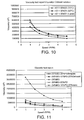
- Table 6 The results of Table 6 are also shown in Figures 8 and 9 .
- Table 7 Determination of particle size by photon correlation spectroscopy (Zetasizer 3000HS) Sample identity Reference 50°C - t0 70°C - t0 50°C - t24h 70°C - t24h Particles size (nm) 456.3 469.7 538.3 Not done* Not done* (*): the size was found too large by laser diffraction measurement with PCS was not made
- Crystalip TM with a reduced water phase would be prepared.
- the nanosuspension would be sonicated, but not heated. Once the temperature of the Crystalip TM reached 50° C, the cold nanosuspension would be added, leading to a quick temperature decrease and minimisation of heat exposure of the spironolactone suspension. This process would also not interfere with Crystalip TM crystallisation, which occurs at lower temperatures.
- the batch was successful.
- the final cream had a good viscosity and a shiny, homogenous appearance.
- nanosuspension was not fresh for the previous tests it was decided to make a new nanosuspension of spironolactone and to incorporate it in C-rystalip TM just a few days after the manufacture.
- the composition of the nanosuspension used was 10% spironolactone and 0.5% Octowet 70PG. It was also investigated whether it was possible to introduce 30% of nanosuspension instead of 10% in the Crystalip TM .
- the particle size of the nanosuspension, just after the making, using laser diffraction was as follows:
- Example 2 Size of spironolactone particles before and after storage.
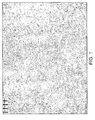
- Figures 1 , 2 , and 3 show microscope pictures of Spironolactone according to the invention immediately after preparation, after 7 months storage and their comparison to a commercial Spironolactone.
- the figures contain a scale which relates to a distance between each vertical bar of 0.01mm or 10 micrometres.
- the Crystalip TM formulation was supplied by SkyePharma AG.
- a commercial Spironolactone comparator was not available any more at the time of the experiments. Therefore a comparator in a standard cream matrix was prepared as follows. Briefly, 100 mg of Spironolactone powder was accurately weighed and mixed with 4.90 g Aqueous cream B.P. in order to obtain a 2% w/w non-nanoparticulate spironolactone in Aqueous cream formulation.
- Ethanol Phosphate 'buffer' (20:80 v/v, pH 4.5) was used as the receiver fluid in order to maintain stability of spironolactone and sink conditions.
- the artificial membrane used was regenerated cellulose membrane.
- Spironolactone standards were prepared in receiver fluid and calibration curves were constructed in the range 0.93 - 59.2 ⁇ g/ml. Calibration curves with r2 > 0.999 were considered acceptable and a typical curve is illustrated in Figure 4 .
- the amount of spironolactone in the receiver fluid was corrected for sample removal.
- the cumulative amount of spironolactone permeated per unit membrane surface was plotted against the square root of time and the slope of the linear portion of the graph was estimated as the steady state flux.
- a Student's t-test was employed to statistically determine any significant difference in release of spironolactone from the 2% spironolactone nanosuspensions and 2% spironolactone Aqueous cream.
- NTC 737 Central Public Health Laboratory, UK S&S Antibiotic-Assay discs(filter paper), diam 0,635cm (1 ⁇ 4 inch) Aldrich Chemical company, USA Aqueous cream B.P. Lot no. 28076 Hillcross, UK Spironolactone Lot no. 510/0 SkyePharma, Switzerland
- the Crystalip TM spironolactone and placebo formulations were prepared as shown in the table below. Since a commercial Spironolactone comparator was not available any more, a comparator in a standard cream matrix was prepared as follows. Briefly, 100 mg of Spironolactone powder was accurately weighed and mixed with 4.90 g Aqueous cream B.P. to obtain a 2% w/w non-nanoparticulate spironolactone in Aqueous cream.
- the batch size is 500g, manufactured with a lab reactor IKA-LR1000.2.
- the antibiotic discs coated with each of the formulations were placed onto the surface of the organism seeded agar plates using a pair of sterile forceps.
- the S. epidermidis plates were incubated for 24 h at 37°C.
- the P. acne plates were incubated in the anaerobic jars and incubated for 72 h.
- Zones of inhibition were measured using a pair of calipers.
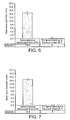
- Figures 6 and 7 show the mean zone of inhibition for both formulations using seeded S . epidermidis and P. acnes plates, respectively.
- the Crystalip TM formulation with Spironolactone nanosuspension exhibited a considerable effect against those acne-related bacteria.
- Aqueous cream B.P. with 2% w/w spironolactone (comparator) showed no zones of inhibition.
- the base matrix therefore adds an antibacterial effect (on S . epidermidis and P. acnes) to the formulation, which is not due to the Spironolactone.
- the formulation does not contain any further antibiotics, or preservatives.
- the comparator product which shows zero antibiotic effect on these acne-related microorganisms is preserved with phenoxyethanol. The applicants product may therefore improve acne through both the hormone activity of the drug and the antibacterial efficacy of the matrix in which it is contained.
Landscapes
- Health & Medical Sciences (AREA)
- Chemical & Material Sciences (AREA)
- Animal Behavior & Ethology (AREA)
- General Health & Medical Sciences (AREA)
- Veterinary Medicine (AREA)
- Public Health (AREA)
- Medicinal Chemistry (AREA)
- Pharmacology & Pharmacy (AREA)
- Life Sciences & Earth Sciences (AREA)
- Engineering & Computer Science (AREA)
- Epidemiology (AREA)
- Bioinformatics & Cheminformatics (AREA)
- Dermatology (AREA)
- Chemical Kinetics & Catalysis (AREA)
- General Chemical & Material Sciences (AREA)
- Oil, Petroleum & Natural Gas (AREA)
- Nuclear Medicine, Radiotherapy & Molecular Imaging (AREA)
- Organic Chemistry (AREA)
- Medicinal Preparation (AREA)
- Pharmaceuticals Containing Other Organic And Inorganic Compounds (AREA)
- Steroid Compounds (AREA)
- Cosmetics (AREA)
Claims (13)
- Topische Nanopartikel-Spironolacton-Formulierung, umfassend Nanopartikel mit einem mittleren Durchmesser, gemessen mittels Photonen-Korrelations-Spektroskopie, im Bereich von 300 nm bis 900 nm, inkorporiert in ein kristallines Netzwerksystem, umfassend eine Dispersion aus festen Kristallen polarer Lipide, wobei die hydrophile Seite der Lipide nach außen zeigt und ihre hydrophobe Seite nach innen hin zu den Spironolacton-Nanopartikeln zeigt.
- Formulierung nach Anspruch 1, umfassend Nanopartikel, die einen mittleren Durchmesser, gemessen mittels Photonen-Korelations-Spektroskopie, im Bereich von 400 nm bis 600 nm aufweisen.
- Formulierung nach Anspruch 1 oder 2, wobei das Lipid eine Krystallisationstemperatur von zwischen 20°C und 100°C hat.
- Formulierung nach den Ansprüchen 1 bis 3, wobei die Lipidkristalle β-Kristalle eines Monoglycerids einer Fettsäure mit 12-18 Kohlenstoffatomen, oder Ascorbin-, Phosphat- oder Laktat-Ester von Fettsäuren oder Monoglycerolestern oder Mischungen davon sind.
- Formulierung nach Anspruch 4, wobei das Monoglycerid 1-Monolaurin, 1-Monomyristin, 1-Monopalmitin oder 1-Monostearin oder eine Mischung von zweien oder mehreren dieser ist.
- Formulierung nach einem der Ansprüche 1 bis 5, wobei die kristallinen Netzwerkstrukturen polarer Lipide innerhalb einer polaren Flüssigkeit gebildet sind.
- Formulierung nach Anspruch 6, wobei die polare Flüssigkeit ausgewählt ist aus der Gruppe umfassend Wasser, Glycerol, Ethylenglycol oder Propylenglycol oder Mischungen davon.
- Topische Nanopartikel-Spironolacton-Formulierung nach einem der Ansprüche 1 bis 7 zur Verwendung bei der topischen Behandlung von Akne, Hirsutismus, androgener Alopezie oder Rosacea.
- Formulierung nach den Ansprüchen 1 bis 8, wobei das aktive Medikament in Form einer Nanosuspension inkorporiert ist.
- Formulierung nach Anspruch 9, wobei die Nanosuspension eine wässrige Nanosuspension ist.
- Formulierung nach Anspruch 10, wobei die Nanosuspension einen Stabilisator umfasst.
- Formulierung nach Anspruch 11, wobei der Stabilisator ein Docusat-Natrium ist.
- Verfahren zur Herstellung einer topischen Nanopartikel-Spironolacton-Formulierung, umfassend Nanopartikel mit einem mittleren Durchmesser, gemessen mittels Photonen-Korrelations-Spektroskopie, im Bereich von 300 nm bis 900 nm, wobei das Verfahren das Inkorporieren einer Nanosuspension von Spironolacton in eine wässrige Dispersion aus festen Kristallen polarer Lipide umfasst, wobei die hydrophile Seite der Lipide nach außen zeigt und ihre hydrophobe Seite nach innen hin zu den Spironolacton-Nanopartikeln zeigt.
Applications Claiming Priority (1)
| Application Number | Priority Date | Filing Date | Title |
|---|---|---|---|
| PCT/GB2002/005680 WO2004054549A1 (en) | 2002-12-13 | 2002-12-13 | A topical nanoparticulate spironolactone formulation |
Publications (2)
| Publication Number | Publication Date |
|---|---|
| EP1569623A1 EP1569623A1 (de) | 2005-09-07 |
| EP1569623B1 true EP1569623B1 (de) | 2008-10-15 |
Family
ID=32526735
Family Applications (1)
| Application Number | Title | Priority Date | Filing Date |
|---|---|---|---|
| EP02808245A Expired - Lifetime EP1569623B1 (de) | 2002-12-13 | 2002-12-13 | Topische nanopartikel-spironolacton-formulierung |
Country Status (11)
| Country | Link |
|---|---|
| US (1) | US8003690B2 (de) |
| EP (1) | EP1569623B1 (de) |
| JP (1) | JP2006511525A (de) |
| CN (1) | CN1310648C (de) |
| AT (1) | ATE411010T1 (de) |
| AU (1) | AU2002356294A1 (de) |
| BR (1) | BR0215979A (de) |
| CA (1) | CA2509101A1 (de) |
| DE (1) | DE60229450D1 (de) |
| MX (1) | MXPA05006311A (de) |
| WO (1) | WO2004054549A1 (de) |
Families Citing this family (19)
| Publication number | Priority date | Publication date | Assignee | Title |
|---|---|---|---|---|
| CA2606861C (en) * | 2005-05-05 | 2012-08-07 | Sanofi-Aventis U.S. Llc | Stable nanoparticle formulations |
| WO2008058755A1 (en) * | 2006-11-17 | 2008-05-22 | Abbott Gmbh & Co. Kg | Nanocrystals for use in topical cosmetic formulations and method of production thereof |
| CN101322712B (zh) * | 2007-06-14 | 2010-10-13 | 沈阳市万嘉生物技术研究所 | 一种前列地尔纳米粒制剂及其制备方法 |
| EP2242478A2 (de) * | 2008-01-02 | 2010-10-27 | Kringle Pharma Inc. | Topische zusammensetzungen zur verabreichung von proteinen und peptiden |
| US20090203628A1 (en) * | 2008-02-12 | 2009-08-13 | Jan Marini | Composition, Method And Kit For Treating Skin Disorders And Improving Skin Condition |
| WO2010080543A1 (en) * | 2008-12-18 | 2010-07-15 | Guthery B Eugene | Acne vulgaris treatment regimen |
| MX2012007234A (es) | 2009-12-22 | 2012-07-30 | Leo Pharma As | Nanocristales de monohidrato de calciprotiol. |
| PL2696848T3 (pl) | 2011-04-15 | 2020-12-28 | Janssen Pharmaceutica N.V. | Liofilizowane nanozawiesiny leków |
| GB201118193D0 (en) | 2011-10-21 | 2011-12-07 | Jagotec Ag | Improvements in or relating to oranic compounds |
| GB201118198D0 (en) | 2011-10-21 | 2011-12-07 | Jagotec Ag | Improvements in or relating to organic compounds |
| CN103301320A (zh) * | 2013-07-03 | 2013-09-18 | 彭中平 | 一种祛痘止痒搽剂及其配制方法 |
| US10350223B2 (en) | 2015-03-03 | 2019-07-16 | Richard W. Yee | Compositions and methods for treating ocular diseases |
| US10792293B2 (en) * | 2015-07-31 | 2020-10-06 | Hamidreza Kelidari | Topical nanodrug formulation |
| CA3003028A1 (en) | 2015-10-30 | 2017-05-04 | Cmp Development Llc | Spironolactone aqueous compositions |
| US10493083B2 (en) | 2015-10-30 | 2019-12-03 | Cmp Development Llc | Spironolactone aqueous compositions |
| US11524016B2 (en) * | 2020-07-17 | 2022-12-13 | Amy Thorne | Compositions and methods for the topical administration of spironolactone for the treatment of cutaneous signs of excess androgen and chronic stress response |
| KR20230142449A (ko) * | 2020-11-17 | 2023-10-11 | 아큐티스 바이오테라퓨틱스, 인크. | 심부 진피 약물 전달을 위한 조성물 및 방법 |
| AU2022387493A1 (en) * | 2021-11-11 | 2024-06-06 | Arcutis Biotherapeutics, Inc. | Pharmaceutical compositions of spironolactone for deep dermal drug delivery |
| US20240325350A1 (en) * | 2023-03-30 | 2024-10-03 | Celista Pharmaceuticals Llc | Sprayable liquid spironolactone compositions |
Family Cites Families (40)
| Publication number | Priority date | Publication date | Assignee | Title |
|---|---|---|---|---|
| US4011316A (en) | 1975-02-24 | 1977-03-08 | Research Institute For Medicine And Chemistry Inc. | Cyclohexa-2,5-diene-1-thiones |
| WO1983000294A1 (en) * | 1981-07-23 | 1983-02-03 | Little Inc A | Micellular drug delivery system |
| SE462894B (sv) * | 1985-10-28 | 1990-09-17 | Biogram Ab | Mikrokapslar, foerfarande foer framstaellning daerav samt anvaendning |
| DE3623193A1 (de) * | 1986-07-10 | 1988-01-14 | Gruenenthal Gmbh | Neue verbindungen, diese enthaltende arzneimittel und verfahren zu deren herstellung |
| DE3623376A1 (de) | 1986-07-11 | 1988-01-21 | Behringwerke Ag | Pharmazeutische formulierung und verfahren zu deren herstellung |
| US4837211A (en) | 1987-04-06 | 1989-06-06 | Carolina Medical Products, Inc. | Spironolactone composition |
| FR2627696B1 (fr) | 1988-02-26 | 1991-09-13 | Fournier Innovation Synergie | Nouvelle forme galenique du fenofibrate |
| JP2871776B2 (ja) | 1989-03-28 | 1999-03-17 | カロライナ メディカル プロダクツ インコーポレイテッド | スピロノラクトン組成物 |
| EP0410348A1 (de) | 1989-07-26 | 1991-01-30 | G.D. Searle & Co. | Topische Spironolakton-Zusammensetzung |
| US5091188A (en) * | 1990-04-26 | 1992-02-25 | Haynes Duncan H | Phospholipid-coated microcrystals: injectable formulations of water-insoluble drugs |
| US5145684A (en) | 1991-01-25 | 1992-09-08 | Sterling Drug Inc. | Surface modified drug nanoparticles |
| US5506222A (en) * | 1991-09-25 | 1996-04-09 | Laboratorios Beta S.A. | Method and composition for treating increased androgenic activity |
| JPH05331066A (ja) | 1992-05-25 | 1993-12-14 | Toko Yakuhin Kogyo Kk | 尋常性ざ瘡治療用組成物 |
| US5567592A (en) | 1994-02-02 | 1996-10-22 | Regents Of The University Of California | Screening method for the identification of bioenhancers through the inhibition of P-glycoprotein transport in the gut of a mammal |
| US6228383B1 (en) * | 1994-03-03 | 2001-05-08 | Gs Development Ab | Use of fatty acid esters as bioadhesive substances |
| GB9409778D0 (en) | 1994-05-16 | 1994-07-06 | Dumex Ltd As | Compositions |
| DE4440337A1 (de) * | 1994-11-11 | 1996-05-15 | Dds Drug Delivery Services Ges | Pharmazeutische Nanosuspensionen zur Arzneistoffapplikation als Systeme mit erhöhter Sättigungslöslichkeit und Lösungsgeschwindigkeit |
| FR2730231B1 (fr) | 1995-02-02 | 1997-04-04 | Fournier Sca Lab | Association de fenofibrate et de vitamine e, utilisation en therapeutique |
| US5510118A (en) | 1995-02-14 | 1996-04-23 | Nanosystems Llc | Process for preparing therapeutic compositions containing nanoparticles |
| CA2213638C (en) | 1995-02-24 | 2004-05-04 | Nanosystems L.L.C. | Aerosols containing nanoparticle dispersions |
| US5716928A (en) | 1995-06-07 | 1998-02-10 | Avmax, Inc. | Use of essential oils to increase bioavailability of oral pharmaceutical compounds |
| US5891469A (en) | 1997-04-02 | 1999-04-06 | Pharmos Corporation | Solid Coprecipitates for enhanced bioavailability of lipophilic substances |
| DE19800250A1 (de) | 1997-01-13 | 1998-08-06 | Winter Cvd Technik Gmbh | Schleifkörper |
| FR2758459B1 (fr) | 1997-01-17 | 1999-05-07 | Pharma Pass | Composition pharmaceutique de fenofibrate presentant une biodisponibilite elevee et son procede de preparation |
| FR2758461A1 (fr) | 1997-01-17 | 1998-07-24 | Pharma Pass | Composition pharmaceutique presentant une biodisponibilite elevee et son procede de preparation |
| ATE232087T1 (de) | 1997-10-27 | 2003-02-15 | Merck Patent Gmbh | Feste lösungen und dispersionen von eines schlecht wasserlöslichen wirkstoffes |
| US5891845A (en) | 1997-11-21 | 1999-04-06 | Fuisz Technologies Ltd. | Drug delivery systems utilizing liquid crystal structures |
| WO1999029300A1 (en) | 1997-12-10 | 1999-06-17 | Rtp Pharma Inc. | Self-emulsifying fenofibrate formulations |
| FR2774591B1 (fr) | 1998-02-12 | 2000-05-05 | Lipha | Composition pharmaceutique comprenant l'association metformine et fibrate et son utilisation pour la preparation de medicaments destines a reduire l'hyperglycemie |
| US6013637A (en) * | 1998-06-12 | 2000-01-11 | Dermik Laboratories Inc. | Anti-acne method and composition |
| CA2335472C (en) | 1998-06-19 | 2008-10-28 | Rtp Pharma Inc. | Processes to generate submicron particles of water-insoluble compounds |
| SK288117B6 (sk) | 1998-11-20 | 2013-09-03 | Skyepharma Canada Inc. | Rapidly dispersing solid dry therapeutic dosage form |
| UA74141C2 (uk) | 1998-12-09 | 2005-11-15 | Дж.Д. Сірл Енд Ко. | Фармацевтична композиція на основі тонкоподрібненого еплеренону (варіанти), спосіб її одержання та спосіб лікування розладів, опосередкованих альдостероном (варіанти) |
| US6180138B1 (en) | 1999-01-29 | 2001-01-30 | Abbott Laboratories | Process for preparing solid formulations of lipid-regulating agents with enhanced dissolution and absorption |
| US6294192B1 (en) | 1999-02-26 | 2001-09-25 | Lipocine, Inc. | Triglyceride-free compositions and methods for improved delivery of hydrophobic therapeutic agents |
| US6248363B1 (en) | 1999-11-23 | 2001-06-19 | Lipocine, Inc. | Solid carriers for improved delivery of active ingredients in pharmaceutical compositions |
| US6270806B1 (en) | 1999-03-03 | 2001-08-07 | Elan Pharma International Limited | Use of peg-derivatized lipids as surface stabilizers for nanoparticulate compositions |
| ES2240209T3 (es) | 1999-12-08 | 2005-10-16 | Pharmacia Corporation | Composiciones de eplerenona nanoparticulada. |
| FR2803203B1 (fr) | 1999-12-31 | 2002-05-10 | Fournier Ind & Sante | Nouvelles formulations galeniques du fenofibrate |
| GB0114532D0 (en) | 2001-06-14 | 2001-08-08 | Jagotec Ag | Novel compositions |
-
2002
- 2002-12-13 AT AT02808245T patent/ATE411010T1/de not_active IP Right Cessation
- 2002-12-13 EP EP02808245A patent/EP1569623B1/de not_active Expired - Lifetime
- 2002-12-13 CN CNB028301943A patent/CN1310648C/zh not_active Expired - Fee Related
- 2002-12-13 MX MXPA05006311A patent/MXPA05006311A/es not_active Application Discontinuation
- 2002-12-13 WO PCT/GB2002/005680 patent/WO2004054549A1/en not_active Ceased
- 2002-12-13 CA CA002509101A patent/CA2509101A1/en not_active Abandoned
- 2002-12-13 US US10/538,344 patent/US8003690B2/en not_active Expired - Fee Related
- 2002-12-13 JP JP2004559854A patent/JP2006511525A/ja active Pending
- 2002-12-13 BR BR0215979-1A patent/BR0215979A/pt not_active IP Right Cessation
- 2002-12-13 DE DE60229450T patent/DE60229450D1/de not_active Expired - Lifetime
- 2002-12-13 AU AU2002356294A patent/AU2002356294A1/en not_active Abandoned
Also Published As
| Publication number | Publication date |
|---|---|
| AU2002356294A1 (en) | 2004-07-09 |
| BR0215979A (pt) | 2005-11-01 |
| WO2004054549A1 (en) | 2004-07-01 |
| US8003690B2 (en) | 2011-08-23 |
| JP2006511525A (ja) | 2006-04-06 |
| MXPA05006311A (es) | 2006-02-08 |
| CN1741794A (zh) | 2006-03-01 |
| ATE411010T1 (de) | 2008-10-15 |
| CA2509101A1 (en) | 2004-07-01 |
| EP1569623A1 (de) | 2005-09-07 |
| US20060067892A1 (en) | 2006-03-30 |
| CN1310648C (zh) | 2007-04-18 |
| DE60229450D1 (de) | 2008-11-27 |
Similar Documents
| Publication | Publication Date | Title |
|---|---|---|
| EP1569623B1 (de) | Topische nanopartikel-spironolacton-formulierung | |
| CA2349203C (en) | Dispersible phospholipid stabilized microparticles | |
| JP3977418B2 (ja) | 飽和溶解度と溶解速度を増大させた薬剤投与用ナノ懸濁液 | |
| EP1073426B1 (de) | Pharmazeutische ciclosporin-formulierung mit verbesserten biopharmazeutischen eigenschaften, erhöhter physikalischer qualität & stabilität sowie verfahren zur herstellung | |
| US6861060B1 (en) | Personal care formulations | |
| EP2229936B1 (de) | Nanonisierte Testosteronformulierungen für verbesserte Bioverfügbarkeit | |
| AU2018321744A1 (en) | Injectable pharmaceutical composition containing meloxicam, and preparation method therefor | |
| US20030096013A1 (en) | Preparation of submicron sized particles with polymorph control | |
| US9314431B2 (en) | Solubilized benzoyl small molecule | |
| FR2945950A1 (fr) | Compositions de nanoparticules anticancereuses et procedes pour les preparer | |
| EP2537514B1 (de) | Antimikrobielle Zubereitungen mit einem in liposomen verkapselten Gehalt an Octenidindihydrochlorid | |
| EP3769753B1 (de) | Verfahren zur herstellung steriler ophthalmischer wässriger fluticason-propionat-form-a-nanokristallsuspensionen | |
| EP2962688B1 (de) | Öl-in-wasser emulsion enthaltend mometason und propylenglycol | |
| EP1364642B1 (de) | Zubereitung zur Verabreichung von Dithranol | |
| EP4005557A1 (de) | Verfahren zur herstellung von nanosystemen | |
| RU2331424C2 (ru) | Топический состав, содержащий наночастицы спиронолактона | |
| ZA200504683B (en) | A topical nanoparticulate spironolactone formulation | |
| US20240115512A1 (en) | Process for preparing nanoformulation for delivery of berbamine | |
| EP2255790B1 (de) | Liposomzusammensetzung enthaltend Naproxen und herstellungsverfahren dafür | |
| EP2429490B1 (de) | Öl-in-wasser-emulsion von mometason | |
| EP4445896B1 (de) | Nanosuspension mit progerinin und herstellungsverfahren dafür | |
| AU2003302162A1 (en) | Preparation of submicron sized particles with polymorph control and new polymorph of itraconazole | |
| HK40009384B (zh) | 一种包含美洛昔康的可注射的药物组合物及其制备方法 | |
| HK1105804A (en) | Composition containing fine particles and process for producing the same |
Legal Events
| Date | Code | Title | Description |
|---|---|---|---|
| PUAI | Public reference made under article 153(3) epc to a published international application that has entered the european phase |
Free format text: ORIGINAL CODE: 0009012 |
|
| 17P | Request for examination filed |
Effective date: 20050622 |
|
| AK | Designated contracting states |
Kind code of ref document: A1 Designated state(s): AT BE BG CH CY CZ DE DK EE ES FI FR GB GR IE IT LI LU MC NL PT SE SI SK TR |
|
| AX | Request for extension of the european patent |
Extension state: AL LT LV MK RO |
|
| DAX | Request for extension of the european patent (deleted) | ||
| 17Q | First examination report despatched |
Effective date: 20060926 |
|
| 17Q | First examination report despatched |
Effective date: 20060926 |
|
| GRAP | Despatch of communication of intention to grant a patent |
Free format text: ORIGINAL CODE: EPIDOSNIGR1 |
|
| GRAS | Grant fee paid |
Free format text: ORIGINAL CODE: EPIDOSNIGR3 |
|
| GRAA | (expected) grant |
Free format text: ORIGINAL CODE: 0009210 |
|
| AK | Designated contracting states |
Kind code of ref document: B1 Designated state(s): AT BE BG CH CY CZ DE DK EE ES FI FR GB GR IE IT LI LU MC NL PT SE SI SK TR |
|
| REG | Reference to a national code |
Ref country code: CH Ref legal event code: EP Ref country code: GB Ref legal event code: FG4D |
|
| REG | Reference to a national code |
Ref country code: IE Ref legal event code: FG4D |
|
| REF | Corresponds to: |
Ref document number: 60229450 Country of ref document: DE Date of ref document: 20081127 Kind code of ref document: P |
|
| NLV1 | Nl: lapsed or annulled due to failure to fulfill the requirements of art. 29p and 29m of the patents act | ||
| PG25 | Lapsed in a contracting state [announced via postgrant information from national office to epo] |
Ref country code: BG Free format text: LAPSE BECAUSE OF FAILURE TO SUBMIT A TRANSLATION OF THE DESCRIPTION OR TO PAY THE FEE WITHIN THE PRESCRIBED TIME-LIMIT Effective date: 20090115 Ref country code: AT Free format text: LAPSE BECAUSE OF FAILURE TO SUBMIT A TRANSLATION OF THE DESCRIPTION OR TO PAY THE FEE WITHIN THE PRESCRIBED TIME-LIMIT Effective date: 20081015 Ref country code: ES Free format text: LAPSE BECAUSE OF FAILURE TO SUBMIT A TRANSLATION OF THE DESCRIPTION OR TO PAY THE FEE WITHIN THE PRESCRIBED TIME-LIMIT Effective date: 20090126 |
|
| PG25 | Lapsed in a contracting state [announced via postgrant information from national office to epo] |
Ref country code: FI Free format text: LAPSE BECAUSE OF FAILURE TO SUBMIT A TRANSLATION OF THE DESCRIPTION OR TO PAY THE FEE WITHIN THE PRESCRIBED TIME-LIMIT Effective date: 20081015 Ref country code: NL Free format text: LAPSE BECAUSE OF FAILURE TO SUBMIT A TRANSLATION OF THE DESCRIPTION OR TO PAY THE FEE WITHIN THE PRESCRIBED TIME-LIMIT Effective date: 20081015 Ref country code: SI Free format text: LAPSE BECAUSE OF FAILURE TO SUBMIT A TRANSLATION OF THE DESCRIPTION OR TO PAY THE FEE WITHIN THE PRESCRIBED TIME-LIMIT Effective date: 20081015 Ref country code: PT Free format text: LAPSE BECAUSE OF FAILURE TO SUBMIT A TRANSLATION OF THE DESCRIPTION OR TO PAY THE FEE WITHIN THE PRESCRIBED TIME-LIMIT Effective date: 20090316 |
|
| PG25 | Lapsed in a contracting state [announced via postgrant information from national office to epo] |
Ref country code: BE Free format text: LAPSE BECAUSE OF FAILURE TO SUBMIT A TRANSLATION OF THE DESCRIPTION OR TO PAY THE FEE WITHIN THE PRESCRIBED TIME-LIMIT Effective date: 20081015 Ref country code: EE Free format text: LAPSE BECAUSE OF FAILURE TO SUBMIT A TRANSLATION OF THE DESCRIPTION OR TO PAY THE FEE WITHIN THE PRESCRIBED TIME-LIMIT Effective date: 20081015 Ref country code: DK Free format text: LAPSE BECAUSE OF FAILURE TO SUBMIT A TRANSLATION OF THE DESCRIPTION OR TO PAY THE FEE WITHIN THE PRESCRIBED TIME-LIMIT Effective date: 20081015 Ref country code: MC Free format text: LAPSE BECAUSE OF NON-PAYMENT OF DUE FEES Effective date: 20081231 |
|
| REG | Reference to a national code |
Ref country code: CH Ref legal event code: PL |
|
| PLBE | No opposition filed within time limit |
Free format text: ORIGINAL CODE: 0009261 |
|
| STAA | Information on the status of an ep patent application or granted ep patent |
Free format text: STATUS: NO OPPOSITION FILED WITHIN TIME LIMIT |
|
| PG25 | Lapsed in a contracting state [announced via postgrant information from national office to epo] |
Ref country code: IT Free format text: LAPSE BECAUSE OF FAILURE TO SUBMIT A TRANSLATION OF THE DESCRIPTION OR TO PAY THE FEE WITHIN THE PRESCRIBED TIME-LIMIT Effective date: 20081015 Ref country code: SE Free format text: LAPSE BECAUSE OF FAILURE TO SUBMIT A TRANSLATION OF THE DESCRIPTION OR TO PAY THE FEE WITHIN THE PRESCRIBED TIME-LIMIT Effective date: 20090115 Ref country code: CZ Free format text: LAPSE BECAUSE OF FAILURE TO SUBMIT A TRANSLATION OF THE DESCRIPTION OR TO PAY THE FEE WITHIN THE PRESCRIBED TIME-LIMIT Effective date: 20081015 |
|
| REG | Reference to a national code |
Ref country code: IE Ref legal event code: MM4A |
|
| 26N | No opposition filed |
Effective date: 20090716 |
|
| PG25 | Lapsed in a contracting state [announced via postgrant information from national office to epo] |
Ref country code: SK Free format text: LAPSE BECAUSE OF FAILURE TO SUBMIT A TRANSLATION OF THE DESCRIPTION OR TO PAY THE FEE WITHIN THE PRESCRIBED TIME-LIMIT Effective date: 20081015 |
|
| PG25 | Lapsed in a contracting state [announced via postgrant information from national office to epo] |
Ref country code: IE Free format text: LAPSE BECAUSE OF NON-PAYMENT OF DUE FEES Effective date: 20081213 Ref country code: CH Free format text: LAPSE BECAUSE OF NON-PAYMENT OF DUE FEES Effective date: 20081231 Ref country code: LI Free format text: LAPSE BECAUSE OF NON-PAYMENT OF DUE FEES Effective date: 20081231 |
|
| PG25 | Lapsed in a contracting state [announced via postgrant information from national office to epo] |
Ref country code: CY Free format text: LAPSE BECAUSE OF FAILURE TO SUBMIT A TRANSLATION OF THE DESCRIPTION OR TO PAY THE FEE WITHIN THE PRESCRIBED TIME-LIMIT Effective date: 20081015 Ref country code: LU Free format text: LAPSE BECAUSE OF NON-PAYMENT OF DUE FEES Effective date: 20081213 |
|
| PG25 | Lapsed in a contracting state [announced via postgrant information from national office to epo] |
Ref country code: TR Free format text: LAPSE BECAUSE OF FAILURE TO SUBMIT A TRANSLATION OF THE DESCRIPTION OR TO PAY THE FEE WITHIN THE PRESCRIBED TIME-LIMIT Effective date: 20081015 |
|
| PG25 | Lapsed in a contracting state [announced via postgrant information from national office to epo] |
Ref country code: GR Free format text: LAPSE BECAUSE OF FAILURE TO SUBMIT A TRANSLATION OF THE DESCRIPTION OR TO PAY THE FEE WITHIN THE PRESCRIBED TIME-LIMIT Effective date: 20090116 |
|
| PGFP | Annual fee paid to national office [announced via postgrant information from national office to epo] |
Ref country code: GB Payment date: 20141229 Year of fee payment: 13 |
|
| PGFP | Annual fee paid to national office [announced via postgrant information from national office to epo] |
Ref country code: DE Payment date: 20141222 Year of fee payment: 13 |
|
| PGFP | Annual fee paid to national office [announced via postgrant information from national office to epo] |
Ref country code: FR Payment date: 20141231 Year of fee payment: 13 |
|
| REG | Reference to a national code |
Ref country code: DE Ref legal event code: R119 Ref document number: 60229450 Country of ref document: DE |
|
| GBPC | Gb: european patent ceased through non-payment of renewal fee |
Effective date: 20151213 |
|
| REG | Reference to a national code |
Ref country code: FR Ref legal event code: ST Effective date: 20160831 |
|
| PG25 | Lapsed in a contracting state [announced via postgrant information from national office to epo] |
Ref country code: DE Free format text: LAPSE BECAUSE OF NON-PAYMENT OF DUE FEES Effective date: 20160701 Ref country code: GB Free format text: LAPSE BECAUSE OF NON-PAYMENT OF DUE FEES Effective date: 20151213 |
|
| PG25 | Lapsed in a contracting state [announced via postgrant information from national office to epo] |
Ref country code: FR Free format text: LAPSE BECAUSE OF NON-PAYMENT OF DUE FEES Effective date: 20151231 |