EP1576143B1 - Virusähnliche partikel, verfahren zur herstellung und immunogene zusammensetzungen - Google Patents
Virusähnliche partikel, verfahren zur herstellung und immunogene zusammensetzungen Download PDFInfo
- Publication number
- EP1576143B1 EP1576143B1 EP03808386A EP03808386A EP1576143B1 EP 1576143 B1 EP1576143 B1 EP 1576143B1 EP 03808386 A EP03808386 A EP 03808386A EP 03808386 A EP03808386 A EP 03808386A EP 1576143 B1 EP1576143 B1 EP 1576143B1
- Authority
- EP
- European Patent Office
- Prior art keywords
- virus
- vlp
- adjuvant molecule
- viral
- glycoprotein
- Prior art date
- Legal status (The legal status is an assumption and is not a legal conclusion. Google has not performed a legal analysis and makes no representation as to the accuracy of the status listed.)
- Expired - Lifetime
Links
- 238000000034 method Methods 0.000 title claims abstract description 42
- 239000000203 mixture Substances 0.000 title claims abstract description 38
- 239000002245 particle Substances 0.000 title claims abstract description 37
- 238000002360 preparation method Methods 0.000 title claims description 12
- 101710121417 Envelope glycoprotein Proteins 0.000 claims abstract description 137
- 239000002671 adjuvant Substances 0.000 claims abstract description 131
- 230000003612 virological effect Effects 0.000 claims abstract description 77
- 241000700605 Viruses Species 0.000 claims abstract description 57
- 230000002163 immunogen Effects 0.000 claims abstract description 51
- 108010015780 Viral Core Proteins Proteins 0.000 claims abstract description 28
- 230000028993 immune response Effects 0.000 claims abstract description 21
- 102100021696 Syncytin-1 Human genes 0.000 claims abstract 16
- 241000725303 Human immunodeficiency virus Species 0.000 claims description 50
- 210000004027 cell Anatomy 0.000 claims description 49
- 241000580858 Simian-Human immunodeficiency virus Species 0.000 claims description 34
- 210000004443 dendritic cell Anatomy 0.000 claims description 32
- 239000013604 expression vector Substances 0.000 claims description 31
- 102000003886 Glycoproteins Human genes 0.000 claims description 28
- 108090000288 Glycoproteins Proteins 0.000 claims description 28
- 229960005486 vaccine Drugs 0.000 claims description 28
- 206010014611 Encephalitis venezuelan equine Diseases 0.000 claims description 16
- 206010022000 influenza Diseases 0.000 claims description 16
- 208000002687 Venezuelan Equine Encephalomyelitis Diseases 0.000 claims description 15
- 201000009145 Venezuelan equine encephalitis Diseases 0.000 claims description 15
- 101150013553 CD40 gene Proteins 0.000 claims description 13
- 230000003053 immunization Effects 0.000 claims description 13
- 102100040245 Tumor necrosis factor receptor superfamily member 5 Human genes 0.000 claims description 12
- 238000002649 immunization Methods 0.000 claims description 12
- 210000000612 antigen-presenting cell Anatomy 0.000 claims description 11
- 210000000285 follicular dendritic cell Anatomy 0.000 claims description 11
- 230000008685 targeting Effects 0.000 claims description 10
- 108091026890 Coding region Proteins 0.000 claims description 9
- 108010031099 Mannose Receptor Proteins 0.000 claims description 9
- 208000002606 Paramyxoviridae Infections Diseases 0.000 claims description 9
- 238000004519 manufacturing process Methods 0.000 claims description 9
- 241000713800 Feline immunodeficiency virus Species 0.000 claims description 7
- 239000013060 biological fluid Substances 0.000 claims description 7
- 241000701447 unidentified baculovirus Species 0.000 claims description 7
- 241000712461 unidentified influenza virus Species 0.000 claims description 7
- 241000711573 Coronaviridae Species 0.000 claims description 6
- 101100335081 Mus musculus Flt3 gene Proteins 0.000 claims description 6
- 241000713112 Orthobunyavirus Species 0.000 claims description 6
- 241001115402 Ebolavirus Species 0.000 claims description 5
- 241000710831 Flavivirus Species 0.000 claims description 5
- 208000000389 T-cell leukemia Diseases 0.000 claims description 5
- 208000028530 T-cell lymphoblastic leukemia/lymphoma Diseases 0.000 claims description 5
- 241000710929 Alphavirus Species 0.000 claims description 4
- 241000712891 Arenavirus Species 0.000 claims description 4
- 241000711950 Filoviridae Species 0.000 claims description 4
- 206010023927 Lassa fever Diseases 0.000 claims description 4
- 230000024932 T cell mediated immunity Effects 0.000 claims description 4
- 206010046865 Vaccinia virus infection Diseases 0.000 claims description 4
- 238000000338 in vitro Methods 0.000 claims description 4
- 208000007089 vaccinia Diseases 0.000 claims description 4
- 241000713704 Bovine immunodeficiency virus Species 0.000 claims description 3
- 241000714266 Bovine leukemia virus Species 0.000 claims description 3
- 241000713730 Equine infectious anemia virus Species 0.000 claims description 3
- 101710141454 Nucleoprotein Proteins 0.000 claims description 3
- 108020004511 Recombinant DNA Proteins 0.000 claims description 3
- 241000701161 unidentified adenovirus Species 0.000 claims description 3
- 101710186180 Matrix protein VP40 Proteins 0.000 claims description 2
- 108050001488 Rhabdovirus glycoproteins Proteins 0.000 claims description 2
- 108700041558 Vesicular stomatitis virus M Proteins 0.000 claims description 2
- 238000001514 detection method Methods 0.000 claims description 2
- 230000028996 humoral immune response Effects 0.000 claims description 2
- 230000009885 systemic effect Effects 0.000 claims description 2
- 239000003814 drug Substances 0.000 claims 6
- 241000714165 Feline leukemia virus Species 0.000 claims 2
- 108700003471 Coronavirus 3C Proteases Proteins 0.000 claims 1
- 108700002673 Coronavirus M Proteins Proteins 0.000 claims 1
- 101710204837 Envelope small membrane protein Proteins 0.000 claims 1
- 101710145006 Lysis protein Proteins 0.000 claims 1
- 108010067390 Viral Proteins Proteins 0.000 abstract description 21
- 102100027723 Endogenous retrovirus group K member 6 Rec protein Human genes 0.000 description 129
- 235000001014 amino acid Nutrition 0.000 description 68
- 229940024606 amino acid Drugs 0.000 description 60
- 108090000765 processed proteins & peptides Proteins 0.000 description 60
- 150000001413 amino acids Chemical class 0.000 description 57
- 102000004196 processed proteins & peptides Human genes 0.000 description 50
- 229920001184 polypeptide Polymers 0.000 description 45
- 241000713124 Rift Valley fever virus Species 0.000 description 33
- 108090000623 proteins and genes Proteins 0.000 description 24
- 241000713311 Simian immunodeficiency virus Species 0.000 description 22
- 235000018102 proteins Nutrition 0.000 description 21
- 102000004169 proteins and genes Human genes 0.000 description 21
- 108091007433 antigens Proteins 0.000 description 17
- 102000036639 antigens Human genes 0.000 description 17
- 239000000427 antigen Substances 0.000 description 16
- 238000006467 substitution reaction Methods 0.000 description 16
- 230000003472 neutralizing effect Effects 0.000 description 15
- 230000001086 cytosolic effect Effects 0.000 description 14
- 230000013595 glycosylation Effects 0.000 description 14
- 238000006206 glycosylation reaction Methods 0.000 description 14
- 241000699670 Mus sp. Species 0.000 description 13
- 125000003275 alpha amino acid group Chemical group 0.000 description 13
- 101800001690 Transmembrane protein gp41 Proteins 0.000 description 12
- 102100020715 Fms-related tyrosine kinase 3 ligand protein Human genes 0.000 description 11
- 101710162577 Fms-related tyrosine kinase 3 ligand protein Proteins 0.000 description 11
- 238000012217 deletion Methods 0.000 description 11
- 230000037430 deletion Effects 0.000 description 11
- 108091033319 polynucleotide Proteins 0.000 description 10
- 102000040430 polynucleotide Human genes 0.000 description 10
- 239000002157 polynucleotide Substances 0.000 description 10
- 239000013598 vector Substances 0.000 description 10
- 230000036039 immunity Effects 0.000 description 9
- 241000713772 Human immunodeficiency virus 1 Species 0.000 description 8
- 230000005875 antibody response Effects 0.000 description 8
- 238000010348 incorporation Methods 0.000 description 8
- 208000015181 infectious disease Diseases 0.000 description 8
- 230000004048 modification Effects 0.000 description 8
- 238000012986 modification Methods 0.000 description 8
- 230000016379 mucosal immune response Effects 0.000 description 8
- 230000035772 mutation Effects 0.000 description 8
- 238000013459 approach Methods 0.000 description 7
- 210000003719 b-lymphocyte Anatomy 0.000 description 7
- 230000006698 induction Effects 0.000 description 7
- 230000001939 inductive effect Effects 0.000 description 7
- 230000003993 interaction Effects 0.000 description 7
- 102000009016 Cholera Toxin Human genes 0.000 description 6
- 108010049048 Cholera Toxin Proteins 0.000 description 6
- 108010076504 Protein Sorting Signals Proteins 0.000 description 6
- 238000007792 addition Methods 0.000 description 6
- 239000000969 carrier Substances 0.000 description 6
- 230000000694 effects Effects 0.000 description 6
- 239000012528 membrane Substances 0.000 description 6
- 125000003729 nucleotide group Chemical group 0.000 description 6
- 238000012545 processing Methods 0.000 description 6
- 210000002845 virion Anatomy 0.000 description 6
- 108020004414 DNA Proteins 0.000 description 5
- 101710091045 Envelope protein Proteins 0.000 description 5
- 101710177291 Gag polyprotein Proteins 0.000 description 5
- 101710188315 Protein X Proteins 0.000 description 5
- 210000001744 T-lymphocyte Anatomy 0.000 description 5
- 108010003533 Viral Envelope Proteins Proteins 0.000 description 5
- 230000004075 alteration Effects 0.000 description 5
- 230000015572 biosynthetic process Effects 0.000 description 5
- 210000001151 cytotoxic T lymphocyte Anatomy 0.000 description 5
- 201000010099 disease Diseases 0.000 description 5
- 208000037265 diseases, disorders, signs and symptoms Diseases 0.000 description 5
- 230000012202 endocytosis Effects 0.000 description 5
- 239000012634 fragment Substances 0.000 description 5
- 108020001507 fusion proteins Proteins 0.000 description 5
- 102000037865 fusion proteins Human genes 0.000 description 5
- MYWUZJCMWCOHBA-VIFPVBQESA-N methamphetamine Chemical compound CN[C@@H](C)CC1=CC=CC=C1 MYWUZJCMWCOHBA-VIFPVBQESA-N 0.000 description 5
- 102000039446 nucleic acids Human genes 0.000 description 5
- 108020004707 nucleic acids Proteins 0.000 description 5
- 150000007523 nucleic acids Chemical class 0.000 description 5
- 239000002773 nucleotide Substances 0.000 description 5
- 125000005629 sialic acid group Chemical group 0.000 description 5
- 241001430294 unidentified retrovirus Species 0.000 description 5
- 108010029697 CD40 Ligand Proteins 0.000 description 4
- 102100032937 CD40 ligand Human genes 0.000 description 4
- 108090000695 Cytokines Proteins 0.000 description 4
- 102000004127 Cytokines Human genes 0.000 description 4
- WQZGKKKJIJFFOK-QTVWNMPRSA-N D-mannopyranose Chemical compound OC[C@H]1OC(O)[C@@H](O)[C@@H](O)[C@@H]1O WQZGKKKJIJFFOK-QTVWNMPRSA-N 0.000 description 4
- 101150075350 FL gene Proteins 0.000 description 4
- DHMQDGOQFOQNFH-UHFFFAOYSA-N Glycine Chemical compound NCC(O)=O DHMQDGOQFOQNFH-UHFFFAOYSA-N 0.000 description 4
- 208000031886 HIV Infections Diseases 0.000 description 4
- 208000037357 HIV infectious disease Diseases 0.000 description 4
- 241000238631 Hexapoda Species 0.000 description 4
- 241000282412 Homo Species 0.000 description 4
- DCXYFEDJOCDNAF-REOHCLBHSA-N L-asparagine Chemical compound OC(=O)[C@@H](N)CC(N)=O DCXYFEDJOCDNAF-REOHCLBHSA-N 0.000 description 4
- 241001465754 Metazoa Species 0.000 description 4
- 102100036011 T-cell surface glycoprotein CD4 Human genes 0.000 description 4
- AYFVYJQAPQTCCC-UHFFFAOYSA-N Threonine Natural products CC(O)C(N)C(O)=O AYFVYJQAPQTCCC-UHFFFAOYSA-N 0.000 description 4
- 101710090322 Truncated surface protein Proteins 0.000 description 4
- 125000000539 amino acid group Chemical group 0.000 description 4
- 125000003178 carboxy group Chemical group [H]OC(*)=O 0.000 description 4
- 210000005220 cytoplasmic tail Anatomy 0.000 description 4
- -1 dying cells Proteins 0.000 description 4
- 238000005755 formation reaction Methods 0.000 description 4
- 238000009472 formulation Methods 0.000 description 4
- 208000033519 human immunodeficiency virus infectious disease Diseases 0.000 description 4
- 150000002632 lipids Chemical class 0.000 description 4
- 108020003175 receptors Proteins 0.000 description 4
- 102000005962 receptors Human genes 0.000 description 4
- 210000002966 serum Anatomy 0.000 description 4
- 239000000126 substance Substances 0.000 description 4
- 238000013519 translation Methods 0.000 description 4
- QTBSBXVTEAMEQO-UHFFFAOYSA-N Acetic acid Natural products CC(O)=O QTBSBXVTEAMEQO-UHFFFAOYSA-N 0.000 description 3
- 238000011510 Elispot assay Methods 0.000 description 3
- LFQSCWFLJHTTHZ-UHFFFAOYSA-N Ethanol Chemical compound CCO LFQSCWFLJHTTHZ-UHFFFAOYSA-N 0.000 description 3
- PEDCQBHIVMGVHV-UHFFFAOYSA-N Glycerine Chemical compound OCC(O)CO PEDCQBHIVMGVHV-UHFFFAOYSA-N 0.000 description 3
- 102100037850 Interferon gamma Human genes 0.000 description 3
- 108010074328 Interferon-gamma Proteins 0.000 description 3
- HNDVDQJCIGZPNO-YFKPBYRVSA-N L-histidine Chemical compound OC(=O)[C@@H](N)CC1=CN=CN1 HNDVDQJCIGZPNO-YFKPBYRVSA-N 0.000 description 3
- COLNVLDHVKWLRT-QMMMGPOBSA-N L-phenylalanine Chemical compound OC(=O)[C@@H](N)CC1=CC=CC=C1 COLNVLDHVKWLRT-QMMMGPOBSA-N 0.000 description 3
- AYFVYJQAPQTCCC-GBXIJSLDSA-N L-threonine Chemical compound C[C@@H](O)[C@H](N)C(O)=O AYFVYJQAPQTCCC-GBXIJSLDSA-N 0.000 description 3
- OUYCCCASQSFEME-QMMMGPOBSA-N L-tyrosine Chemical compound OC(=O)[C@@H](N)CC1=CC=C(O)C=C1 OUYCCCASQSFEME-QMMMGPOBSA-N 0.000 description 3
- 241000714177 Murine leukemia virus Species 0.000 description 3
- MUBZPKHOEPUJKR-UHFFFAOYSA-N Oxalic acid Natural products OC(=O)C(O)=O MUBZPKHOEPUJKR-UHFFFAOYSA-N 0.000 description 3
- 201000003176 Severe Acute Respiratory Syndrome Diseases 0.000 description 3
- 230000002378 acidificating effect Effects 0.000 description 3
- NWMHDZMRVUOQGL-CZEIJOLGSA-N almurtide Chemical compound OC(=O)CC[C@H](C(N)=O)NC(=O)[C@H](C)NC(=O)CO[C@@H]([C@H](O)[C@H](O)CO)[C@@H](NC(C)=O)C=O NWMHDZMRVUOQGL-CZEIJOLGSA-N 0.000 description 3
- 238000004873 anchoring Methods 0.000 description 3
- 230000008901 benefit Effects 0.000 description 3
- SQVRNKJHWKZAKO-UHFFFAOYSA-N beta-N-Acetyl-D-neuraminic acid Natural products CC(=O)NC1C(O)CC(O)(C(O)=O)OC1C(O)C(O)CO SQVRNKJHWKZAKO-UHFFFAOYSA-N 0.000 description 3
- 238000007385 chemical modification Methods 0.000 description 3
- 238000010367 cloning Methods 0.000 description 3
- 125000004122 cyclic group Chemical group 0.000 description 3
- 230000001419 dependent effect Effects 0.000 description 3
- 238000003114 enzyme-linked immunosorbent spot assay Methods 0.000 description 3
- 239000000284 extract Substances 0.000 description 3
- 229930004094 glycosylphosphatidylinositol Natural products 0.000 description 3
- HNDVDQJCIGZPNO-UHFFFAOYSA-N histidine Natural products OC(=O)C(N)CC1=CN=CN1 HNDVDQJCIGZPNO-UHFFFAOYSA-N 0.000 description 3
- 230000016784 immunoglobulin production Effects 0.000 description 3
- 239000003446 ligand Substances 0.000 description 3
- 230000001404 mediated effect Effects 0.000 description 3
- COLNVLDHVKWLRT-UHFFFAOYSA-N phenylalanine Natural products OC(=O)C(N)CC1=CC=CC=C1 COLNVLDHVKWLRT-UHFFFAOYSA-N 0.000 description 3
- 230000002265 prevention Effects 0.000 description 3
- 230000001681 protective effect Effects 0.000 description 3
- 230000004044 response Effects 0.000 description 3
- 150000003839 salts Chemical class 0.000 description 3
- SQVRNKJHWKZAKO-OQPLDHBCSA-N sialic acid Chemical compound CC(=O)N[C@@H]1[C@@H](O)C[C@@](O)(C(O)=O)OC1[C@H](O)[C@H](O)CO SQVRNKJHWKZAKO-OQPLDHBCSA-N 0.000 description 3
- 241000894007 species Species 0.000 description 3
- MTCFGRXMJLQNBG-REOHCLBHSA-N (2S)-2-Amino-3-hydroxypropansäure Chemical compound OC[C@H](N)C(O)=O MTCFGRXMJLQNBG-REOHCLBHSA-N 0.000 description 2
- DFZVZEMNPGABKO-ZETCQYMHSA-N (2s)-2-amino-3-pyridin-3-ylpropanoic acid Chemical compound OC(=O)[C@@H](N)CC1=CC=CN=C1 DFZVZEMNPGABKO-ZETCQYMHSA-N 0.000 description 2
- FQFVANSXYKWQOT-ZETCQYMHSA-N (2s)-2-azaniumyl-3-pyridin-4-ylpropanoate Chemical compound OC(=O)[C@@H](N)CC1=CC=NC=C1 FQFVANSXYKWQOT-ZETCQYMHSA-N 0.000 description 2
- XWHHYOYVRVGJJY-QMMMGPOBSA-N 4-fluoro-L-phenylalanine Chemical compound OC(=O)[C@@H](N)CC1=CC=C(F)C=C1 XWHHYOYVRVGJJY-QMMMGPOBSA-N 0.000 description 2
- 239000004475 Arginine Substances 0.000 description 2
- DCXYFEDJOCDNAF-UHFFFAOYSA-N Asparagine Natural products OC(=O)C(N)CC(N)=O DCXYFEDJOCDNAF-UHFFFAOYSA-N 0.000 description 2
- 101900259722 Bovine immunodeficiency virus Envelope glycoprotein Proteins 0.000 description 2
- 102100032768 Complement receptor type 2 Human genes 0.000 description 2
- 108010041986 DNA Vaccines Proteins 0.000 description 2
- 229940021995 DNA vaccine Drugs 0.000 description 2
- 102000004190 Enzymes Human genes 0.000 description 2
- 108090000790 Enzymes Proteins 0.000 description 2
- 101900068142 Equine infectious anemia virus Envelope glycoprotein Proteins 0.000 description 2
- 241000588724 Escherichia coli Species 0.000 description 2
- 101900068883 Feline leukemia virus Envelope glycoprotein Proteins 0.000 description 2
- 239000004471 Glycine Substances 0.000 description 2
- 101000941929 Homo sapiens Complement receptor type 2 Proteins 0.000 description 2
- VEXZGXHMUGYJMC-UHFFFAOYSA-N Hydrochloric acid Chemical compound Cl VEXZGXHMUGYJMC-UHFFFAOYSA-N 0.000 description 2
- 108010002350 Interleukin-2 Proteins 0.000 description 2
- QNAYBMKLOCPYGJ-REOHCLBHSA-N L-alanine Chemical compound C[C@H](N)C(O)=O QNAYBMKLOCPYGJ-REOHCLBHSA-N 0.000 description 2
- ODKSFYDXXFIFQN-BYPYZUCNSA-P L-argininium(2+) Chemical compound NC(=[NH2+])NCCC[C@H]([NH3+])C(O)=O ODKSFYDXXFIFQN-BYPYZUCNSA-P 0.000 description 2
- CKLJMWTZIZZHCS-REOHCLBHSA-N L-aspartic acid Chemical compound OC(=O)[C@@H](N)CC(O)=O CKLJMWTZIZZHCS-REOHCLBHSA-N 0.000 description 2
- WHUUTDBJXJRKMK-VKHMYHEASA-N L-glutamic acid Chemical compound OC(=O)[C@@H](N)CCC(O)=O WHUUTDBJXJRKMK-VKHMYHEASA-N 0.000 description 2
- ZDXPYRJPNDTMRX-VKHMYHEASA-N L-glutamine Chemical compound OC(=O)[C@@H](N)CCC(N)=O ZDXPYRJPNDTMRX-VKHMYHEASA-N 0.000 description 2
- AGPKZVBTJJNPAG-WHFBIAKZSA-N L-isoleucine Chemical compound CC[C@H](C)[C@H](N)C(O)=O AGPKZVBTJJNPAG-WHFBIAKZSA-N 0.000 description 2
- ROHFNLRQFUQHCH-YFKPBYRVSA-N L-leucine Chemical compound CC(C)C[C@H](N)C(O)=O ROHFNLRQFUQHCH-YFKPBYRVSA-N 0.000 description 2
- KDXKERNSBIXSRK-YFKPBYRVSA-N L-lysine Chemical compound NCCCC[C@H](N)C(O)=O KDXKERNSBIXSRK-YFKPBYRVSA-N 0.000 description 2
- QIVBCDIJIAJPQS-VIFPVBQESA-N L-tryptophane Chemical compound C1=CC=C2C(C[C@H](N)C(O)=O)=CNC2=C1 QIVBCDIJIAJPQS-VIFPVBQESA-N 0.000 description 2
- KZSNJWFQEVHDMF-BYPYZUCNSA-N L-valine Chemical compound CC(C)[C@H](N)C(O)=O KZSNJWFQEVHDMF-BYPYZUCNSA-N 0.000 description 2
- ROHFNLRQFUQHCH-UHFFFAOYSA-N Leucine Natural products CC(C)CC(N)C(O)=O ROHFNLRQFUQHCH-UHFFFAOYSA-N 0.000 description 2
- KDXKERNSBIXSRK-UHFFFAOYSA-N Lysine Natural products NCCCCC(N)C(O)=O KDXKERNSBIXSRK-UHFFFAOYSA-N 0.000 description 2
- 239000004472 Lysine Substances 0.000 description 2
- 108010090054 Membrane Glycoproteins Proteins 0.000 description 2
- 102000012750 Membrane Glycoproteins Human genes 0.000 description 2
- 241000699666 Mus <mouse, genus> Species 0.000 description 2
- 108700015872 N-acetyl-nor-muramyl-L-alanyl-D-isoglutamine Proteins 0.000 description 2
- 206010028980 Neoplasm Diseases 0.000 description 2
- 102000005348 Neuraminidase Human genes 0.000 description 2
- 108010006232 Neuraminidase Proteins 0.000 description 2
- 108020004485 Nonsense Codon Proteins 0.000 description 2
- 108091060545 Nonsense suppressor Proteins 0.000 description 2
- 108091028043 Nucleic acid sequence Proteins 0.000 description 2
- 102000035195 Peptidases Human genes 0.000 description 2
- 108091005804 Peptidases Proteins 0.000 description 2
- 108010008281 Recombinant Fusion Proteins Proteins 0.000 description 2
- 102000007056 Recombinant Fusion Proteins Human genes 0.000 description 2
- 238000012300 Sequence Analysis Methods 0.000 description 2
- MTCFGRXMJLQNBG-UHFFFAOYSA-N Serine Natural products OCC(N)C(O)=O MTCFGRXMJLQNBG-UHFFFAOYSA-N 0.000 description 2
- NINIDFKCEFEMDL-UHFFFAOYSA-N Sulfur Chemical compound [S] NINIDFKCEFEMDL-UHFFFAOYSA-N 0.000 description 2
- 230000006044 T cell activation Effects 0.000 description 2
- FEWJPZIEWOKRBE-UHFFFAOYSA-N Tartaric acid Natural products [H+].[H+].[O-]C(=O)C(O)C(O)C([O-])=O FEWJPZIEWOKRBE-UHFFFAOYSA-N 0.000 description 2
- 239000004473 Threonine Substances 0.000 description 2
- 108020004566 Transfer RNA Proteins 0.000 description 2
- 108700019146 Transgenes Proteins 0.000 description 2
- QIVBCDIJIAJPQS-UHFFFAOYSA-N Tryptophan Natural products C1=CC=C2C(CC(N)C(O)=O)=CNC2=C1 QIVBCDIJIAJPQS-UHFFFAOYSA-N 0.000 description 2
- 241000700618 Vaccinia virus Species 0.000 description 2
- KZSNJWFQEVHDMF-UHFFFAOYSA-N Valine Natural products CC(C)C(N)C(O)=O KZSNJWFQEVHDMF-UHFFFAOYSA-N 0.000 description 2
- 239000004480 active ingredient Substances 0.000 description 2
- 239000000443 aerosol Substances 0.000 description 2
- 235000004279 alanine Nutrition 0.000 description 2
- 125000003282 alkyl amino group Chemical group 0.000 description 2
- 238000004458 analytical method Methods 0.000 description 2
- ODKSFYDXXFIFQN-UHFFFAOYSA-N arginine Natural products OC(=O)C(N)CCCNC(N)=N ODKSFYDXXFIFQN-UHFFFAOYSA-N 0.000 description 2
- 229960001230 asparagine Drugs 0.000 description 2
- 235000009582 asparagine Nutrition 0.000 description 2
- 238000013320 baculovirus expression vector system Methods 0.000 description 2
- 230000009286 beneficial effect Effects 0.000 description 2
- 230000005540 biological transmission Effects 0.000 description 2
- 230000000903 blocking effect Effects 0.000 description 2
- 210000004369 blood Anatomy 0.000 description 2
- 239000008280 blood Substances 0.000 description 2
- 201000011510 cancer Diseases 0.000 description 2
- 150000001720 carbohydrates Chemical class 0.000 description 2
- 239000003795 chemical substances by application Substances 0.000 description 2
- PMMYEEVYMWASQN-IMJSIDKUSA-N cis-4-Hydroxy-L-proline Chemical compound O[C@@H]1CN[C@H](C(O)=O)C1 PMMYEEVYMWASQN-IMJSIDKUSA-N 0.000 description 2
- 238000004132 cross linking Methods 0.000 description 2
- PMMYEEVYMWASQN-UHFFFAOYSA-N dl-hydroxyproline Natural products OC1C[NH2+]C(C([O-])=O)C1 PMMYEEVYMWASQN-UHFFFAOYSA-N 0.000 description 2
- 230000002550 fecal effect Effects 0.000 description 2
- 230000002068 genetic effect Effects 0.000 description 2
- ZDXPYRJPNDTMRX-UHFFFAOYSA-N glutamine Natural products OC(=O)C(N)CCC(N)=O ZDXPYRJPNDTMRX-UHFFFAOYSA-N 0.000 description 2
- 230000036541 health Effects 0.000 description 2
- 125000002887 hydroxy group Chemical group [H]O* 0.000 description 2
- 230000005847 immunogenicity Effects 0.000 description 2
- 238000001727 in vivo Methods 0.000 description 2
- 238000011081 inoculation Methods 0.000 description 2
- 238000003780 insertion Methods 0.000 description 2
- 230000037431 insertion Effects 0.000 description 2
- 229960000310 isoleucine Drugs 0.000 description 2
- AGPKZVBTJJNPAG-UHFFFAOYSA-N isoleucine Natural products CCC(C)C(N)C(O)=O AGPKZVBTJJNPAG-UHFFFAOYSA-N 0.000 description 2
- 210000001821 langerhans cell Anatomy 0.000 description 2
- 239000002502 liposome Substances 0.000 description 2
- 210000001165 lymph node Anatomy 0.000 description 2
- 210000004962 mammalian cell Anatomy 0.000 description 2
- 125000000311 mannosyl group Chemical group C1([C@@H](O)[C@@H](O)[C@H](O)[C@H](O1)CO)* 0.000 description 2
- 230000035800 maturation Effects 0.000 description 2
- 108020004999 messenger RNA Proteins 0.000 description 2
- 238000010369 molecular cloning Methods 0.000 description 2
- 230000007498 myristoylation Effects 0.000 description 2
- 239000013642 negative control Substances 0.000 description 2
- 238000006386 neutralization reaction Methods 0.000 description 2
- 230000037434 nonsense mutation Effects 0.000 description 2
- 239000000546 pharmaceutical excipient Substances 0.000 description 2
- 239000013612 plasmid Substances 0.000 description 2
- 230000001323 posttranslational effect Effects 0.000 description 2
- 230000008569 process Effects 0.000 description 2
- 230000002797 proteolythic effect Effects 0.000 description 2
- 230000010076 replication Effects 0.000 description 2
- 230000003362 replicative effect Effects 0.000 description 2
- 238000011160 research Methods 0.000 description 2
- 230000001177 retroviral effect Effects 0.000 description 2
- 239000000523 sample Substances 0.000 description 2
- FSYKKLYZXJSNPZ-UHFFFAOYSA-N sarcosine Chemical compound C[NH2+]CC([O-])=O FSYKKLYZXJSNPZ-UHFFFAOYSA-N 0.000 description 2
- 238000012216 screening Methods 0.000 description 2
- 210000004988 splenocyte Anatomy 0.000 description 2
- 238000010561 standard procedure Methods 0.000 description 2
- 230000000638 stimulation Effects 0.000 description 2
- 239000011593 sulfur Substances 0.000 description 2
- 229910052717 sulfur Inorganic materials 0.000 description 2
- 230000004083 survival effect Effects 0.000 description 2
- 208000024891 symptom Diseases 0.000 description 2
- 238000012360 testing method Methods 0.000 description 2
- 238000013518 transcription Methods 0.000 description 2
- 230000035897 transcription Effects 0.000 description 2
- 238000012546 transfer Methods 0.000 description 2
- GETQZCLCWQTVFV-UHFFFAOYSA-N trimethylamine Chemical compound CN(C)C GETQZCLCWQTVFV-UHFFFAOYSA-N 0.000 description 2
- OUYCCCASQSFEME-UHFFFAOYSA-N tyrosine Natural products OC(=O)C(N)CC1=CC=C(O)C=C1 OUYCCCASQSFEME-UHFFFAOYSA-N 0.000 description 2
- 230000034512 ubiquitination Effects 0.000 description 2
- 238000010798 ubiquitination Methods 0.000 description 2
- 239000004474 valine Substances 0.000 description 2
- 230000007501 viral attachment Effects 0.000 description 2
- 238000001262 western blot Methods 0.000 description 2
- UJXJZOCXEZPHIE-YFKPBYRVSA-N (2s)-2-(2-hydroxyethylamino)-4-sulfanylbutanoic acid Chemical compound OCCN[C@H](C(O)=O)CCS UJXJZOCXEZPHIE-YFKPBYRVSA-N 0.000 description 1
- CNMAQBJBWQQZFZ-LURJTMIESA-N (2s)-2-(pyridin-2-ylamino)propanoic acid Chemical compound OC(=O)[C@H](C)NC1=CC=CC=N1 CNMAQBJBWQQZFZ-LURJTMIESA-N 0.000 description 1
- PDRJLZDUOULRHE-ZETCQYMHSA-N (2s)-2-amino-3-pyridin-2-ylpropanoic acid Chemical compound OC(=O)[C@@H](N)CC1=CC=CC=N1 PDRJLZDUOULRHE-ZETCQYMHSA-N 0.000 description 1
- JQFLYFRHDIHZFZ-RXMQYKEDSA-N (2s)-3,3-dimethylpyrrolidine-2-carboxylic acid Chemical compound CC1(C)CCN[C@@H]1C(O)=O JQFLYFRHDIHZFZ-RXMQYKEDSA-N 0.000 description 1
- CNPSFBUUYIVHAP-AKGZTFGVSA-N (2s)-3-methylpyrrolidine-2-carboxylic acid Chemical compound CC1CCN[C@@H]1C(O)=O CNPSFBUUYIVHAP-AKGZTFGVSA-N 0.000 description 1
- FXGZFWDCXQRZKI-VKHMYHEASA-N (2s)-5-amino-2-nitramido-5-oxopentanoic acid Chemical compound NC(=O)CC[C@@H](C(O)=O)N[N+]([O-])=O FXGZFWDCXQRZKI-VKHMYHEASA-N 0.000 description 1
- CCAIIPMIAFGKSI-DMTCNVIQSA-N (2s,3r)-3-hydroxy-2-(methylazaniumyl)butanoate Chemical compound CN[C@@H]([C@@H](C)O)C(O)=O CCAIIPMIAFGKSI-DMTCNVIQSA-N 0.000 description 1
- CNPSFBUUYIVHAP-WHFBIAKZSA-N (2s,3s)-3-methylpyrrolidin-1-ium-2-carboxylate Chemical compound C[C@H]1CCN[C@@H]1C(O)=O CNPSFBUUYIVHAP-WHFBIAKZSA-N 0.000 description 1
- YHQZWWDVLJPRIF-JLHRHDQISA-N (4R)-4-[[(2S,3R)-2-[acetyl-[(3R,4R,5S,6R)-3-amino-4-[(1R)-1-carboxyethoxy]-5-hydroxy-6-(hydroxymethyl)oxan-2-yl]amino]-3-hydroxybutanoyl]amino]-5-amino-5-oxopentanoic acid Chemical compound C(C)(=O)N([C@@H]([C@H](O)C)C(=O)N[C@H](CCC(=O)O)C(N)=O)C1[C@H](N)[C@@H](O[C@@H](C(=O)O)C)[C@H](O)[C@H](O1)CO YHQZWWDVLJPRIF-JLHRHDQISA-N 0.000 description 1
- YYGNTYWPHWGJRM-UHFFFAOYSA-N (6E,10E,14E,18E)-2,6,10,15,19,23-hexamethyltetracosa-2,6,10,14,18,22-hexaene Chemical compound CC(C)=CCCC(C)=CCCC(C)=CCCC=C(C)CCC=C(C)CCC=C(C)C YYGNTYWPHWGJRM-UHFFFAOYSA-N 0.000 description 1
- 108091032973 (ribonucleotides)n+m Proteins 0.000 description 1
- OMGHIGVFLOPEHJ-UHFFFAOYSA-N 2,5-dihydro-1h-pyrrol-1-ium-2-carboxylate Chemical compound OC(=O)C1NCC=C1 OMGHIGVFLOPEHJ-UHFFFAOYSA-N 0.000 description 1
- MIJDSYMOBYNHOT-UHFFFAOYSA-N 2-(ethylamino)ethanol Chemical compound CCNCCO MIJDSYMOBYNHOT-UHFFFAOYSA-N 0.000 description 1
- FWMNVWWHGCHHJJ-SKKKGAJSSA-N 4-amino-1-[(2r)-6-amino-2-[[(2r)-2-[[(2r)-2-[[(2r)-2-amino-3-phenylpropanoyl]amino]-3-phenylpropanoyl]amino]-4-methylpentanoyl]amino]hexanoyl]piperidine-4-carboxylic acid Chemical compound C([C@H](C(=O)N[C@H](CC(C)C)C(=O)N[C@H](CCCCN)C(=O)N1CCC(N)(CC1)C(O)=O)NC(=O)[C@H](N)CC=1C=CC=CC=1)C1=CC=CC=C1 FWMNVWWHGCHHJJ-SKKKGAJSSA-N 0.000 description 1
- ODHCTXKNWHHXJC-VKHMYHEASA-N 5-oxo-L-proline Chemical compound OC(=O)[C@@H]1CCC(=O)N1 ODHCTXKNWHHXJC-VKHMYHEASA-N 0.000 description 1
- 230000005730 ADP ribosylation Effects 0.000 description 1
- 229940124718 AIDS vaccine Drugs 0.000 description 1
- QGZKDVFQNNGYKY-UHFFFAOYSA-O Ammonium Chemical compound [NH4+] QGZKDVFQNNGYKY-UHFFFAOYSA-O 0.000 description 1
- 244000105975 Antidesma platyphyllum Species 0.000 description 1
- 108091008875 B cell receptors Proteins 0.000 description 1
- 230000003844 B-cell-activation Effects 0.000 description 1
- 241000894006 Bacteria Species 0.000 description 1
- 108010017384 Blood Proteins Proteins 0.000 description 1
- 102000004506 Blood Proteins Human genes 0.000 description 1
- 241000283690 Bos taurus Species 0.000 description 1
- 101900158433 Bovine leukemia virus Envelope glycoprotein Proteins 0.000 description 1
- 108010041397 CD4 Antigens Proteins 0.000 description 1
- OYPRJOBELJOOCE-UHFFFAOYSA-N Calcium Chemical compound [Ca] OYPRJOBELJOOCE-UHFFFAOYSA-N 0.000 description 1
- 241000282472 Canis lupus familiaris Species 0.000 description 1
- 102000014914 Carrier Proteins Human genes 0.000 description 1
- 108010078791 Carrier Proteins Proteins 0.000 description 1
- 241000700198 Cavia Species 0.000 description 1
- 108010039939 Cell Wall Skeleton Proteins 0.000 description 1
- 241000282693 Cercopithecidae Species 0.000 description 1
- 208000003322 Coinfection Diseases 0.000 description 1
- 108010061994 Coronavirus Spike Glycoprotein Proteins 0.000 description 1
- 108010037897 DC-specific ICAM-3 grabbing nonintegrin Proteins 0.000 description 1
- 102000012410 DNA Ligases Human genes 0.000 description 1
- 108010061982 DNA Ligases Proteins 0.000 description 1
- 238000007399 DNA isolation Methods 0.000 description 1
- 102000016928 DNA-directed DNA polymerase Human genes 0.000 description 1
- 108010014303 DNA-directed DNA polymerase Proteins 0.000 description 1
- 241000255925 Diptera Species 0.000 description 1
- 206010061818 Disease progression Diseases 0.000 description 1
- 238000002965 ELISA Methods 0.000 description 1
- 108010026586 Ebola virus nucleoprotein VP40 Proteins 0.000 description 1
- 101710088235 Envelope glycoprotein C homolog Proteins 0.000 description 1
- 241000283086 Equidae Species 0.000 description 1
- 241000206602 Eukaryota Species 0.000 description 1
- 101900225097 Feline immunodeficiency virus Envelope glycoprotein gp150 Proteins 0.000 description 1
- 241000282326 Felis catus Species 0.000 description 1
- 108091006027 G proteins Proteins 0.000 description 1
- 108010043685 GPI-Linked Proteins Proteins 0.000 description 1
- 102000002702 GPI-Linked Proteins Human genes 0.000 description 1
- 102000030782 GTP binding Human genes 0.000 description 1
- 108091000058 GTP-Binding Proteins 0.000 description 1
- 241000287828 Gallus gallus Species 0.000 description 1
- WQZGKKKJIJFFOK-GASJEMHNSA-N Glucose Natural products OC[C@H]1OC(O)[C@H](O)[C@@H](O)[C@@H]1O WQZGKKKJIJFFOK-GASJEMHNSA-N 0.000 description 1
- WHUUTDBJXJRKMK-UHFFFAOYSA-N Glutamic acid Natural products OC(=O)C(N)CCC(O)=O WHUUTDBJXJRKMK-UHFFFAOYSA-N 0.000 description 1
- 108060003393 Granulin Proteins 0.000 description 1
- 108010017213 Granulocyte-Macrophage Colony-Stimulating Factor Proteins 0.000 description 1
- 102100039620 Granulocyte-macrophage colony-stimulating factor Human genes 0.000 description 1
- 241000150562 Hantaan orthohantavirus Species 0.000 description 1
- 101000901154 Homo sapiens Complement C3 Proteins 0.000 description 1
- 101000914484 Homo sapiens T-lymphocyte activation antigen CD80 Proteins 0.000 description 1
- YZJSUQQZGCHHNQ-UHFFFAOYSA-N Homoglutamine Chemical compound OC(=O)C(N)CCCC(N)=O YZJSUQQZGCHHNQ-UHFFFAOYSA-N 0.000 description 1
- 241000701806 Human papillomavirus Species 0.000 description 1
- 241000712003 Human respirovirus 3 Species 0.000 description 1
- PMMYEEVYMWASQN-DMTCNVIQSA-N Hydroxyproline Chemical compound O[C@H]1CN[C@H](C(O)=O)C1 PMMYEEVYMWASQN-DMTCNVIQSA-N 0.000 description 1
- DGAQECJNVWCQMB-PUAWFVPOSA-M Ilexoside XXIX Chemical compound C[C@@H]1CC[C@@]2(CC[C@@]3(C(=CC[C@H]4[C@]3(CC[C@@H]5[C@@]4(CC[C@@H](C5(C)C)OS(=O)(=O)[O-])C)C)[C@@H]2[C@]1(C)O)C)C(=O)O[C@H]6[C@@H]([C@H]([C@@H]([C@H](O6)CO)O)O)O.[Na+] DGAQECJNVWCQMB-PUAWFVPOSA-M 0.000 description 1
- 108060003951 Immunoglobulin Proteins 0.000 description 1
- 108010065805 Interleukin-12 Proteins 0.000 description 1
- 108010002386 Interleukin-3 Proteins 0.000 description 1
- 102100039064 Interleukin-3 Human genes 0.000 description 1
- 108090000978 Interleukin-4 Proteins 0.000 description 1
- SNDPXSYFESPGGJ-BYPYZUCNSA-N L-2-aminopentanoic acid Chemical compound CCC[C@H](N)C(O)=O SNDPXSYFESPGGJ-BYPYZUCNSA-N 0.000 description 1
- LEVWYRKDKASIDU-IMJSIDKUSA-N L-cystine Chemical compound [O-]C(=O)[C@@H]([NH3+])CSSC[C@H]([NH3+])C([O-])=O LEVWYRKDKASIDU-IMJSIDKUSA-N 0.000 description 1
- FFEARJCKVFRZRR-BYPYZUCNSA-N L-methionine Chemical compound CSCC[C@H](N)C(O)=O FFEARJCKVFRZRR-BYPYZUCNSA-N 0.000 description 1
- SNDPXSYFESPGGJ-UHFFFAOYSA-N L-norVal-OH Natural products CCCC(N)C(O)=O SNDPXSYFESPGGJ-UHFFFAOYSA-N 0.000 description 1
- HXEACLLIILLPRG-YFKPBYRVSA-N L-pipecolic acid Chemical compound [O-]C(=O)[C@@H]1CCCC[NH2+]1 HXEACLLIILLPRG-YFKPBYRVSA-N 0.000 description 1
- DZLNHFMRPBPULJ-VKHMYHEASA-N L-thioproline Chemical compound OC(=O)[C@@H]1CSCN1 DZLNHFMRPBPULJ-VKHMYHEASA-N 0.000 description 1
- KKJQZEWNZXRJFG-UHFFFAOYSA-N L-trans-4-Methyl-2-pyrrolidinecarboxylic acid Chemical compound CC1CNC(C(O)=O)C1 KKJQZEWNZXRJFG-UHFFFAOYSA-N 0.000 description 1
- 241000186779 Listeria monocytogenes Species 0.000 description 1
- 102000043129 MHC class I family Human genes 0.000 description 1
- 108091054437 MHC class I family Proteins 0.000 description 1
- 102000043131 MHC class II family Human genes 0.000 description 1
- 108091054438 MHC class II family Proteins 0.000 description 1
- 101710125418 Major capsid protein Proteins 0.000 description 1
- 241000124008 Mammalia Species 0.000 description 1
- 101710085938 Matrix protein Proteins 0.000 description 1
- 108010052285 Membrane Proteins Proteins 0.000 description 1
- 102000018697 Membrane Proteins Human genes 0.000 description 1
- 101710127721 Membrane protein Proteins 0.000 description 1
- 101100328542 Mus musculus C3 gene Proteins 0.000 description 1
- 108700020354 N-acetylmuramyl-threonyl-isoglutamine Proteins 0.000 description 1
- 230000004988 N-glycosylation Effects 0.000 description 1
- 101000930679 Nipah virus Fusion glycoprotein F0 Proteins 0.000 description 1
- 108090001074 Nucleocapsid Proteins Proteins 0.000 description 1
- 108010038807 Oligopeptides Proteins 0.000 description 1
- 102000015636 Oligopeptides Human genes 0.000 description 1
- 241000712464 Orthomyxoviridae Species 0.000 description 1
- 241000283973 Oryctolagus cuniculus Species 0.000 description 1
- ZLMJMSJWJFRBEC-UHFFFAOYSA-N Potassium Chemical compound [K] ZLMJMSJWJFRBEC-UHFFFAOYSA-N 0.000 description 1
- 244000028344 Primula vulgaris Species 0.000 description 1
- 235000016311 Primula vulgaris Nutrition 0.000 description 1
- OFOBLEOULBTSOW-UHFFFAOYSA-N Propanedioic acid Natural products OC(=O)CC(O)=O OFOBLEOULBTSOW-UHFFFAOYSA-N 0.000 description 1
- 239000004365 Protease Substances 0.000 description 1
- 102000004022 Protein-Tyrosine Kinases Human genes 0.000 description 1
- 108090000412 Protein-Tyrosine Kinases Proteins 0.000 description 1
- 206010037660 Pyrexia Diseases 0.000 description 1
- 208000035415 Reinfection Diseases 0.000 description 1
- 108010013377 Retroviridae Proteins Proteins 0.000 description 1
- AUNGANRZJHBGPY-SCRDCRAPSA-N Riboflavin Chemical compound OC[C@@H](O)[C@@H](O)[C@@H](O)CN1C=2C=C(C)C(C)=CC=2N=C2C1=NC(=O)NC2=O AUNGANRZJHBGPY-SCRDCRAPSA-N 0.000 description 1
- 208000000705 Rift Valley Fever Diseases 0.000 description 1
- 241000315672 SARS coronavirus Species 0.000 description 1
- 108010077895 Sarcosine Proteins 0.000 description 1
- FAPWRFPIFSIZLT-UHFFFAOYSA-M Sodium chloride Chemical compound [Na+].[Cl-] FAPWRFPIFSIZLT-UHFFFAOYSA-M 0.000 description 1
- 108010008038 Synthetic Vaccines Proteins 0.000 description 1
- 230000005867 T cell response Effects 0.000 description 1
- 102100027222 T-lymphocyte activation antigen CD80 Human genes 0.000 description 1
- BHEOSNUKNHRBNM-UHFFFAOYSA-N Tetramethylsqualene Natural products CC(=C)C(C)CCC(=C)C(C)CCC(C)=CCCC=C(C)CCC(C)C(=C)CCC(C)C(C)=C BHEOSNUKNHRBNM-UHFFFAOYSA-N 0.000 description 1
- 241000710924 Togaviridae Species 0.000 description 1
- 108020000999 Viral RNA Proteins 0.000 description 1
- 208000036142 Viral infection Diseases 0.000 description 1
- 241000710886 West Nile virus Species 0.000 description 1
- 241000269370 Xenopus <genus> Species 0.000 description 1
- 230000021736 acetylation Effects 0.000 description 1
- 238000006640 acetylation reaction Methods 0.000 description 1
- 239000002253 acid Substances 0.000 description 1
- 230000004913 activation Effects 0.000 description 1
- 230000010933 acylation Effects 0.000 description 1
- 238000005917 acylation reaction Methods 0.000 description 1
- 230000002776 aggregation Effects 0.000 description 1
- 238000004220 aggregation Methods 0.000 description 1
- WNROFYMDJYEPJX-UHFFFAOYSA-K aluminium hydroxide Chemical compound [OH-].[OH-].[OH-].[Al+3] WNROFYMDJYEPJX-UHFFFAOYSA-K 0.000 description 1
- 230000009435 amidation Effects 0.000 description 1
- 238000007112 amidation reaction Methods 0.000 description 1
- 125000003277 amino group Chemical group 0.000 description 1
- 230000000689 aminoacylating effect Effects 0.000 description 1
- 230000003321 amplification Effects 0.000 description 1
- 230000000259 anti-tumor effect Effects 0.000 description 1
- 230000030741 antigen processing and presentation Effects 0.000 description 1
- 230000000890 antigenic effect Effects 0.000 description 1
- 230000010516 arginylation Effects 0.000 description 1
- 125000003118 aryl group Chemical group 0.000 description 1
- 229940009098 aspartate Drugs 0.000 description 1
- 235000003704 aspartic acid Nutrition 0.000 description 1
- 230000001580 bacterial effect Effects 0.000 description 1
- WQZGKKKJIJFFOK-VFUOTHLCSA-N beta-D-glucose Chemical compound OC[C@H]1O[C@@H](O)[C@H](O)[C@@H](O)[C@@H]1O WQZGKKKJIJFFOK-VFUOTHLCSA-N 0.000 description 1
- OQFSQFPPLPISGP-UHFFFAOYSA-N beta-carboxyaspartic acid Natural products OC(=O)C(N)C(C(O)=O)C(O)=O OQFSQFPPLPISGP-UHFFFAOYSA-N 0.000 description 1
- 229920002988 biodegradable polymer Polymers 0.000 description 1
- 239000004621 biodegradable polymer Substances 0.000 description 1
- 238000006664 bond formation reaction Methods 0.000 description 1
- 210000004899 c-terminal region Anatomy 0.000 description 1
- 239000011575 calcium Substances 0.000 description 1
- 229910052791 calcium Inorganic materials 0.000 description 1
- 235000014633 carbohydrates Nutrition 0.000 description 1
- 230000020411 cell activation Effects 0.000 description 1
- 229940030156 cell vaccine Drugs 0.000 description 1
- 210000004520 cell wall skeleton Anatomy 0.000 description 1
- 210000004671 cell-free system Anatomy 0.000 description 1
- 230000007969 cellular immunity Effects 0.000 description 1
- 230000036755 cellular response Effects 0.000 description 1
- 238000012412 chemical coupling Methods 0.000 description 1
- 239000003153 chemical reaction reagent Substances 0.000 description 1
- 239000005081 chemiluminescent agent Substances 0.000 description 1
- 238000004587 chromatography analysis Methods 0.000 description 1
- 210000000349 chromosome Anatomy 0.000 description 1
- 230000000295 complement effect Effects 0.000 description 1
- 230000004154 complement system Effects 0.000 description 1
- 238000004590 computer program Methods 0.000 description 1
- 238000010276 construction Methods 0.000 description 1
- 238000007796 conventional method Methods 0.000 description 1
- 230000000139 costimulatory effect Effects 0.000 description 1
- 230000008878 coupling Effects 0.000 description 1
- 238000010168 coupling process Methods 0.000 description 1
- 238000005859 coupling reaction Methods 0.000 description 1
- 229960003067 cystine Drugs 0.000 description 1
- 210000004544 dc2 Anatomy 0.000 description 1
- 230000007123 defense Effects 0.000 description 1
- 230000002950 deficient Effects 0.000 description 1
- 230000017858 demethylation Effects 0.000 description 1
- 238000010520 demethylation reaction Methods 0.000 description 1
- 238000013461 design Methods 0.000 description 1
- 238000011161 development Methods 0.000 description 1
- 239000008121 dextrose Substances 0.000 description 1
- 238000010790 dilution Methods 0.000 description 1
- 239000012895 dilution Substances 0.000 description 1
- 230000005750 disease progression Effects 0.000 description 1
- PRAKJMSDJKAYCZ-UHFFFAOYSA-N dodecahydrosqualene Natural products CC(C)CCCC(C)CCCC(C)CCCCC(C)CCCC(C)CCCC(C)C PRAKJMSDJKAYCZ-UHFFFAOYSA-N 0.000 description 1
- 239000003995 emulsifying agent Substances 0.000 description 1
- 239000000839 emulsion Substances 0.000 description 1
- 206010014599 encephalitis Diseases 0.000 description 1
- 238000005516 engineering process Methods 0.000 description 1
- 239000003623 enhancer Substances 0.000 description 1
- 238000006911 enzymatic reaction Methods 0.000 description 1
- 210000003743 erythrocyte Anatomy 0.000 description 1
- 238000011156 evaluation Methods 0.000 description 1
- 238000002474 experimental method Methods 0.000 description 1
- 239000007850 fluorescent dye Substances 0.000 description 1
- 230000022244 formylation Effects 0.000 description 1
- 238000006170 formylation reaction Methods 0.000 description 1
- 230000006870 function Effects 0.000 description 1
- 230000006251 gamma-carboxylation Effects 0.000 description 1
- 238000010353 genetic engineering Methods 0.000 description 1
- 210000001280 germinal center Anatomy 0.000 description 1
- 229930195712 glutamate Natural products 0.000 description 1
- 235000013922 glutamic acid Nutrition 0.000 description 1
- 239000004220 glutamic acid Substances 0.000 description 1
- 150000004676 glycans Chemical class 0.000 description 1
- 235000009424 haa Nutrition 0.000 description 1
- 150000003278 haem Chemical group 0.000 description 1
- 230000035931 haemagglutination Effects 0.000 description 1
- 102000057770 human C3 Human genes 0.000 description 1
- 210000005260 human cell Anatomy 0.000 description 1
- 230000002209 hydrophobic effect Effects 0.000 description 1
- 230000002706 hydrostatic effect Effects 0.000 description 1
- 150000004679 hydroxides Chemical class 0.000 description 1
- MWFRVMDVLYIXJF-BYPYZUCNSA-N hydroxyethylcysteine Chemical compound OC(=O)[C@@H](N)CSCCO MWFRVMDVLYIXJF-BYPYZUCNSA-N 0.000 description 1
- 230000033444 hydroxylation Effects 0.000 description 1
- 238000005805 hydroxylation reaction Methods 0.000 description 1
- 210000004201 immune sera Anatomy 0.000 description 1
- 229940042743 immune sera Drugs 0.000 description 1
- 210000000987 immune system Anatomy 0.000 description 1
- 230000009851 immunogenic response Effects 0.000 description 1
- 102000018358 immunoglobulin Human genes 0.000 description 1
- 229940072221 immunoglobulins Drugs 0.000 description 1
- 230000006054 immunological memory Effects 0.000 description 1
- 238000009169 immunotherapy Methods 0.000 description 1
- 238000012606 in vitro cell culture Methods 0.000 description 1
- 239000012678 infectious agent Substances 0.000 description 1
- 230000002458 infectious effect Effects 0.000 description 1
- 239000004615 ingredient Substances 0.000 description 1
- 239000003112 inhibitor Substances 0.000 description 1
- 238000002347 injection Methods 0.000 description 1
- 239000007924 injection Substances 0.000 description 1
- 230000015788 innate immune response Effects 0.000 description 1
- 150000007529 inorganic bases Chemical class 0.000 description 1
- 230000019734 interleukin-12 production Effects 0.000 description 1
- 230000005694 interleukin-22 production Effects 0.000 description 1
- 230000026045 iodination Effects 0.000 description 1
- 238000006192 iodination reaction Methods 0.000 description 1
- JJWLVOIRVHMVIS-UHFFFAOYSA-N isopropylamine Chemical compound CC(C)N JJWLVOIRVHMVIS-UHFFFAOYSA-N 0.000 description 1
- 238000005304 joining Methods 0.000 description 1
- HXEACLLIILLPRG-RXMQYKEDSA-N l-pipecolic acid Natural products OC(=O)[C@H]1CCCCN1 HXEACLLIILLPRG-RXMQYKEDSA-N 0.000 description 1
- 125000001909 leucine group Chemical group [H]N(*)C(C(*)=O)C([H])([H])C(C([H])([H])[H])C([H])([H])[H] 0.000 description 1
- 230000000670 limiting effect Effects 0.000 description 1
- 125000003473 lipid group Chemical group 0.000 description 1
- 239000007788 liquid Substances 0.000 description 1
- 239000006193 liquid solution Substances 0.000 description 1
- 239000006194 liquid suspension Substances 0.000 description 1
- 239000006249 magnetic particle Substances 0.000 description 1
- VZCYOOQTPOCHFL-UPHRSURJSA-N maleic acid Chemical compound OC(=O)\C=C/C(O)=O VZCYOOQTPOCHFL-UPHRSURJSA-N 0.000 description 1
- 239000011976 maleic acid Substances 0.000 description 1
- 239000000463 material Substances 0.000 description 1
- 230000007246 mechanism Effects 0.000 description 1
- 229930182817 methionine Natural products 0.000 description 1
- 230000011987 methylation Effects 0.000 description 1
- 238000007069 methylation reaction Methods 0.000 description 1
- 244000005700 microbiome Species 0.000 description 1
- 238000000520 microinjection Methods 0.000 description 1
- 239000004005 microsphere Substances 0.000 description 1
- JMUHBNWAORSSBD-WKYWBUFDSA-N mifamurtide Chemical compound CCCCCCCCCCCCCCCC(=O)OC[C@@H](OC(=O)CCCCCCCCCCCCCCC)COP(O)(=O)OCCNC(=O)[C@H](C)NC(=O)CC[C@H](C(N)=O)NC(=O)[C@H](C)NC(=O)[C@@H](C)O[C@H]1[C@H](O)[C@@H](CO)OC(O)[C@@H]1NC(C)=O JMUHBNWAORSSBD-WKYWBUFDSA-N 0.000 description 1
- 229960005225 mifamurtide Drugs 0.000 description 1
- 108700007621 mifamurtide Proteins 0.000 description 1
- 230000003278 mimic effect Effects 0.000 description 1
- 150000007522 mineralic acids Chemical class 0.000 description 1
- 229940035032 monophosphoryl lipid a Drugs 0.000 description 1
- 238000002703 mutagenesis Methods 0.000 description 1
- 231100000350 mutagenesis Toxicity 0.000 description 1
- 238000003199 nucleic acid amplification method Methods 0.000 description 1
- 238000007899 nucleic acid hybridization Methods 0.000 description 1
- 229920001542 oligosaccharide Polymers 0.000 description 1
- 150000002482 oligosaccharides Chemical class 0.000 description 1
- 210000000287 oocyte Anatomy 0.000 description 1
- 150000007524 organic acids Chemical class 0.000 description 1
- 235000005985 organic acids Nutrition 0.000 description 1
- 150000007530 organic bases Chemical class 0.000 description 1
- 230000003647 oxidation Effects 0.000 description 1
- 238000007254 oxidation reaction Methods 0.000 description 1
- 239000006179 pH buffering agent Substances 0.000 description 1
- 230000036961 partial effect Effects 0.000 description 1
- 238000010647 peptide synthesis reaction Methods 0.000 description 1
- 210000003819 peripheral blood mononuclear cell Anatomy 0.000 description 1
- 230000002093 peripheral effect Effects 0.000 description 1
- 235000011007 phosphoric acid Nutrition 0.000 description 1
- 150000003016 phosphoric acids Chemical class 0.000 description 1
- 230000026731 phosphorylation Effects 0.000 description 1
- 238000006366 phosphorylation reaction Methods 0.000 description 1
- 230000008488 polyadenylation Effects 0.000 description 1
- 235000010482 polyoxyethylene sorbitan monooleate Nutrition 0.000 description 1
- 229920001282 polysaccharide Polymers 0.000 description 1
- 239000005017 polysaccharide Substances 0.000 description 1
- 229920000053 polysorbate 80 Polymers 0.000 description 1
- 230000004481 post-translational protein modification Effects 0.000 description 1
- 239000011591 potassium Substances 0.000 description 1
- 229910052700 potassium Inorganic materials 0.000 description 1
- 230000003389 potentiating effect Effects 0.000 description 1
- 239000002243 precursor Substances 0.000 description 1
- 230000013823 prenylation Effects 0.000 description 1
- 125000002924 primary amino group Chemical group [H]N([H])* 0.000 description 1
- 230000037452 priming Effects 0.000 description 1
- MFDFERRIHVXMIY-UHFFFAOYSA-N procaine Chemical compound CCN(CC)CCOC(=O)C1=CC=C(N)C=C1 MFDFERRIHVXMIY-UHFFFAOYSA-N 0.000 description 1
- 229960004919 procaine Drugs 0.000 description 1
- 125000001500 prolyl group Chemical group [H]N1C([H])(C(=O)[*])C([H])([H])C([H])([H])C1([H])[H] 0.000 description 1
- 230000000069 prophylactic effect Effects 0.000 description 1
- 235000019833 protease Nutrition 0.000 description 1
- 230000009145 protein modification Effects 0.000 description 1
- 230000006337 proteolytic cleavage Effects 0.000 description 1
- 238000000746 purification Methods 0.000 description 1
- 229940043131 pyroglutamate Drugs 0.000 description 1
- 230000006340 racemization Effects 0.000 description 1
- 229940124551 recombinant vaccine Drugs 0.000 description 1
- 230000002829 reductive effect Effects 0.000 description 1
- 230000001105 regulatory effect Effects 0.000 description 1
- 108091008146 restriction endonucleases Proteins 0.000 description 1
- 230000000717 retained effect Effects 0.000 description 1
- 238000012552 review Methods 0.000 description 1
- 238000007363 ring formation reaction Methods 0.000 description 1
- 230000035945 sensitivity Effects 0.000 description 1
- 238000000926 separation method Methods 0.000 description 1
- 230000011664 signaling Effects 0.000 description 1
- 238000002741 site-directed mutagenesis Methods 0.000 description 1
- 210000003491 skin Anatomy 0.000 description 1
- 239000011734 sodium Substances 0.000 description 1
- 229910052708 sodium Inorganic materials 0.000 description 1
- 239000011780 sodium chloride Substances 0.000 description 1
- 239000007787 solid Substances 0.000 description 1
- 239000000243 solution Substances 0.000 description 1
- 229940031439 squalene Drugs 0.000 description 1
- TUHBEKDERLKLEC-UHFFFAOYSA-N squalene Natural products CC(=CCCC(=CCCC(=CCCC=C(/C)CCC=C(/C)CC=C(C)C)C)C)C TUHBEKDERLKLEC-UHFFFAOYSA-N 0.000 description 1
- 230000006641 stabilisation Effects 0.000 description 1
- 238000011105 stabilization Methods 0.000 description 1
- 238000007920 subcutaneous administration Methods 0.000 description 1
- 239000000758 substrate Substances 0.000 description 1
- 230000019635 sulfation Effects 0.000 description 1
- 238000005670 sulfation reaction Methods 0.000 description 1
- 239000000725 suspension Substances 0.000 description 1
- 238000003786 synthesis reaction Methods 0.000 description 1
- 230000002194 synthesizing effect Effects 0.000 description 1
- 238000010189 synthetic method Methods 0.000 description 1
- 239000011975 tartaric acid Substances 0.000 description 1
- NPDBDJFLKKQMCM-UHFFFAOYSA-N tert-butylglycine Chemical compound CC(C)(C)C(N)C(O)=O NPDBDJFLKKQMCM-UHFFFAOYSA-N 0.000 description 1
- 210000001519 tissue Anatomy 0.000 description 1
- 230000003614 tolerogenic effect Effects 0.000 description 1
- VZCYOOQTPOCHFL-UHFFFAOYSA-N trans-butenedioic acid Natural products OC(=O)C=CC(O)=O VZCYOOQTPOCHFL-UHFFFAOYSA-N 0.000 description 1
- 230000007704 transition Effects 0.000 description 1
- XETCRXVKJHBPMK-MJSODCSWSA-N trehalose 6,6'-dimycolate Chemical compound C([C@@H]1[C@H]([C@H](O)[C@@H](O)[C@@H](O[C@@H]2[C@@H]([C@@H](O)[C@H](O)[C@@H](COC(=O)C(CCCCCCCCCCC3C(C3)CCCCCCCCCCCCCCCCCC)C(O)CCCCCCCCCCCCCCCCCCCCCCCCC)O2)O)O1)O)OC(=O)C(C(O)CCCCCCCCCCCCCCCCCCCCCCCCC)CCCCCCCCCCC1CC1CCCCCCCCCCCCCCCCCC XETCRXVKJHBPMK-MJSODCSWSA-N 0.000 description 1
- 238000002255 vaccination Methods 0.000 description 1
- 239000012646 vaccine adjuvant Substances 0.000 description 1
- 230000009385 viral infection Effects 0.000 description 1
- 210000000605 viral structure Anatomy 0.000 description 1
- XLYOFNOQVPJJNP-UHFFFAOYSA-N water Substances O XLYOFNOQVPJJNP-UHFFFAOYSA-N 0.000 description 1
- 238000009736 wetting Methods 0.000 description 1
- 239000000080 wetting agent Substances 0.000 description 1
Images



Classifications
-
- C—CHEMISTRY; METALLURGY
- C12—BIOCHEMISTRY; BEER; SPIRITS; WINE; VINEGAR; MICROBIOLOGY; ENZYMOLOGY; MUTATION OR GENETIC ENGINEERING
- C12N—MICROORGANISMS OR ENZYMES; COMPOSITIONS THEREOF; PROPAGATING, PRESERVING, OR MAINTAINING MICROORGANISMS; MUTATION OR GENETIC ENGINEERING; CULTURE MEDIA
- C12N7/00—Viruses; Bacteriophages; Compositions thereof; Preparation or purification thereof
-
- A—HUMAN NECESSITIES
- A61—MEDICAL OR VETERINARY SCIENCE; HYGIENE
- A61K—PREPARATIONS FOR MEDICAL, DENTAL OR TOILETRY PURPOSES
- A61K39/00—Medicinal preparations containing antigens or antibodies
- A61K2039/51—Medicinal preparations containing antigens or antibodies comprising whole cells, viruses or DNA/RNA
- A61K2039/525—Virus
- A61K2039/5258—Virus-like particles
-
- A—HUMAN NECESSITIES
- A61—MEDICAL OR VETERINARY SCIENCE; HYGIENE
- A61K—PREPARATIONS FOR MEDICAL, DENTAL OR TOILETRY PURPOSES
- A61K39/00—Medicinal preparations containing antigens or antibodies
- A61K2039/545—Medicinal preparations containing antigens or antibodies characterised by the dose, timing or administration schedule
-
- A—HUMAN NECESSITIES
- A61—MEDICAL OR VETERINARY SCIENCE; HYGIENE
- A61K—PREPARATIONS FOR MEDICAL, DENTAL OR TOILETRY PURPOSES
- A61K39/00—Medicinal preparations containing antigens or antibodies
- A61K2039/555—Medicinal preparations containing antigens or antibodies characterised by a specific combination antigen/adjuvant
- A61K2039/55511—Organic adjuvants
- A61K2039/55516—Proteins; Peptides
-
- C—CHEMISTRY; METALLURGY
- C12—BIOCHEMISTRY; BEER; SPIRITS; WINE; VINEGAR; MICROBIOLOGY; ENZYMOLOGY; MUTATION OR GENETIC ENGINEERING
- C12N—MICROORGANISMS OR ENZYMES; COMPOSITIONS THEREOF; PROPAGATING, PRESERVING, OR MAINTAINING MICROORGANISMS; MUTATION OR GENETIC ENGINEERING; CULTURE MEDIA
- C12N2740/00—Reverse transcribing RNA viruses
- C12N2740/00011—Details
- C12N2740/10011—Retroviridae
- C12N2740/10023—Virus like particles [VLP]
-
- C—CHEMISTRY; METALLURGY
- C12—BIOCHEMISTRY; BEER; SPIRITS; WINE; VINEGAR; MICROBIOLOGY; ENZYMOLOGY; MUTATION OR GENETIC ENGINEERING
- C12N—MICROORGANISMS OR ENZYMES; COMPOSITIONS THEREOF; PROPAGATING, PRESERVING, OR MAINTAINING MICROORGANISMS; MUTATION OR GENETIC ENGINEERING; CULTURE MEDIA
- C12N2740/00—Reverse transcribing RNA viruses
- C12N2740/00011—Details
- C12N2740/10011—Retroviridae
- C12N2740/15011—Lentivirus, not HIV, e.g. FIV, SIV
- C12N2740/15023—Virus like particles [VLP]
-
- C—CHEMISTRY; METALLURGY
- C12—BIOCHEMISTRY; BEER; SPIRITS; WINE; VINEGAR; MICROBIOLOGY; ENZYMOLOGY; MUTATION OR GENETIC ENGINEERING
- C12N—MICROORGANISMS OR ENZYMES; COMPOSITIONS THEREOF; PROPAGATING, PRESERVING, OR MAINTAINING MICROORGANISMS; MUTATION OR GENETIC ENGINEERING; CULTURE MEDIA
- C12N2740/00—Reverse transcribing RNA viruses
- C12N2740/00011—Details
- C12N2740/10011—Retroviridae
- C12N2740/16011—Human Immunodeficiency Virus, HIV
- C12N2740/16023—Virus like particles [VLP]
-
- C—CHEMISTRY; METALLURGY
- C12—BIOCHEMISTRY; BEER; SPIRITS; WINE; VINEGAR; MICROBIOLOGY; ENZYMOLOGY; MUTATION OR GENETIC ENGINEERING
- C12N—MICROORGANISMS OR ENZYMES; COMPOSITIONS THEREOF; PROPAGATING, PRESERVING, OR MAINTAINING MICROORGANISMS; MUTATION OR GENETIC ENGINEERING; CULTURE MEDIA
- C12N2810/00—Vectors comprising a targeting moiety
- C12N2810/50—Vectors comprising as targeting moiety peptide derived from defined protein
- C12N2810/60—Vectors comprising as targeting moiety peptide derived from defined protein from viruses
-
- C—CHEMISTRY; METALLURGY
- C12—BIOCHEMISTRY; BEER; SPIRITS; WINE; VINEGAR; MICROBIOLOGY; ENZYMOLOGY; MUTATION OR GENETIC ENGINEERING
- C12N—MICROORGANISMS OR ENZYMES; COMPOSITIONS THEREOF; PROPAGATING, PRESERVING, OR MAINTAINING MICROORGANISMS; MUTATION OR GENETIC ENGINEERING; CULTURE MEDIA
- C12N2810/00—Vectors comprising a targeting moiety
- C12N2810/50—Vectors comprising as targeting moiety peptide derived from defined protein
- C12N2810/60—Vectors comprising as targeting moiety peptide derived from defined protein from viruses
- C12N2810/6045—RNA rev transcr viruses
-
- C—CHEMISTRY; METALLURGY
- C12—BIOCHEMISTRY; BEER; SPIRITS; WINE; VINEGAR; MICROBIOLOGY; ENZYMOLOGY; MUTATION OR GENETIC ENGINEERING
- C12N—MICROORGANISMS OR ENZYMES; COMPOSITIONS THEREOF; PROPAGATING, PRESERVING, OR MAINTAINING MICROORGANISMS; MUTATION OR GENETIC ENGINEERING; CULTURE MEDIA
- C12N2810/00—Vectors comprising a targeting moiety
- C12N2810/50—Vectors comprising as targeting moiety peptide derived from defined protein
- C12N2810/60—Vectors comprising as targeting moiety peptide derived from defined protein from viruses
- C12N2810/6072—Vectors comprising as targeting moiety peptide derived from defined protein from viruses negative strand RNA viruses
- C12N2810/6081—Vectors comprising as targeting moiety peptide derived from defined protein from viruses negative strand RNA viruses rhabdoviridae, e.g. VSV
Definitions
- the present invention is generally related to virus-like particles, methods of preparing virus-like particles, immunogenic compositions that include virus-like particles, and methods of eliciting an immune response using immunogenic compositions that include virus-like particles.
- VLPs Virus-like particles closely resemble mature virions, but they do not contain viral genomic material (i . e ., viral genomic RNA). Therefore, VLPs are nonreplicative in nature, which make them safe for administration in the form of an immunogenic composition (e.g ., vaccine). In addition, VLPs can express envelope glycoproteins on the surface of the VLP, which is the most physiological configuration. Moreover, since VLPs resemble intact virions and are multivalent particulate structures, VLPs may be more effective in inducing neutralizing antibodies to the envelope glycoprotein than soluble envelope antigens. Further, VLPs can be administered repeatedly to vaccinated hosts, unlike many recombinant vaccine approaches. An example of a VLP vaccine is the baculovirus-derived recombinant human papillomavirus type (HPV-16) L1 VLP, which was manufactured by Novavax, Inc.
- HPV-16 human papillomavirus type
- VLPs can be used to overcome previous attempts to create vaccines for various viruses such as human immunodeficiency virus (HIV), Ebola virus, severe acute respiratory syndrome (SARS), coronavirus, and Rift Valley Fever virus (RVFV).
- HAV human immunodeficiency virus
- SARS severe acute respiratory syndrome
- coronavirus coronavirus
- RVFV Rift Valley Fever virus
- embodiments of the present invention include novel types of virus-like particles, methods of preparing virus-like particles, immunogenic compositions that include virus-like particles, and methods of eliciting an immune response using immunogenic compositions that include virus-like particles.
- a novel type of virus-like particle includes virus-like particle (VLP) that include a viral core protein that can self-assemble into the VLP core and at least one viral surface envelope glycoprotein expressed on the surface of the VLP.
- the viral protein and the viral surface envelope glycoprotein are from different viruses.
- a VLP includes a VLP having a viral core protein that can self assemble into a VLP core; at least one viral surface envelope glycoprotein expressed on the surface of the VLP; and at least one adjuvant molecule expressed on the surface of the VLP.
- Another representative embodiment of the present invention includes an immunogenic composition.
- the immunogenic composition includes a pharmacologically acceptable carrier and at least one of the VLPs described above.
- another representative embodiment includes a method of generating an immunological response in a host by administering an effective amount of one or more of the immunogenic compositions described above to the host.
- another representative embodiment includes a method of treating a condition by administering to a host in need of treatment an effective amount of one or more of the immunogenic compositions described above.
- Still another representative embodiment of the present invention includes methods of determining exposure of a host to a virus.
- An exemplary method includes the steps of: contacting a biological fluid of the host with one or more of the VLPs discussed above, wherein the VLP is of the same virus type to which exposure is being determined, under conditions which are permissive for binding of antibodies in the biological fluid with the VLP; and detecting binding of antibodies within the biological fluid with the VLP, whereby exposure of the host to the virus is determined by the detection of antibodies bound to the VLP.
- Still another representative embodiment of the present invention includes methods of making VLPs.
- An exemplary method includes the steps of: providing a viral core protein expression vector; providing a viral surface envelope glycoprotein expression vector; providing a adjuvant molecule expression vector; and introducing into a cell the viral core protein expression vector, the viral surface envelope glycoprotein expression vector, and the adjuvant molecule expression vector and allowing for expression of the viral surface envelope glycoprotein and the adjuvant molecule, whereby the VLP is formed by the cells.
- Embodiments of the present invention provide for virus-like particles, methods of using the virus-like particles, and methods of making virus-like particles that can be used in immunogenic compositions to treat conditions in a host, and the immunogenic compositions that include virus-like particles.
- the virus-like particles can be used to enhance immune responses (e.g ., antibody production, cytotoxic T cell activity, and cytokine activity).
- virus-like particles can act as a prophylactic as a vaccine to prevent viral infections such as those caused by, for example, the human immunodeficiency virus (HIV), the Corona virus, the Ebola virus, the Rift Valley Fever virus, the Hantaan Virus, the Lassa fever virus, and the Flavivirus.
- the virus-like particle (“VLP”) 10 includes at least a viral core protein 12 (hereinafter “viral protein”) and at least one viral surface envelope glycoprotein 14 (e.g ., type 1 or type 2 viral surface envelope glycoproteins), as shown in FIG. 1 .
- the VLP can include at least one adjuvant molecule 16.
- the VLP can include a lipid membrane 18, viral glycoprotein transmembrane unit 20, and a matrix protein 22.
- chimeric VLPs are VLPs having at least one viral surface envelope glycoprotein incorporated into the VLP, wherein the viral core protein and the viral surface envelope glycoprotein are from different viruses.
- phenotypically mixed VLPs areVLPs having at least one adjuvant molecule incorporated into the VLP wherein the adjuvant molecule are from cells or viruses different than the viral protein.
- Viral proteins 12 include proteins that are capable of self-assembling into the VLP ( Freed, E.O., J. Virol., 76, 4679-87, (2002 )).
- the viral proteins 12 can include, but are not limited to, a HIV Gag viral protein (e.g ., HIV-1 NL43 Gag (GenBank serial number AAA44987)), simian immunodeficiency virus (SIV) Gag viral protein ( e .
- SIVmac239 Gag (GenBank serial number CAA68379)), a murine leukemia virus (MuLV) Gag viral protein (e.g ., MuLV Gag (GenBank serial number S70394)), a vesicular stomatis virus (VSV) M viral protein ( e.g ., VSV Matrix protein (GenBank serial number NP041714)), an Ebola VP40 viral protein (e.g ., Ebola virus VP40 (GenBank serial number AAN37506)), a Rift Valley Fever viral N protein ( e.g ., RVFV N Protein (GenBank serial number NP049344)), a corona M and E virus core protein (GenBank serial number NP040838 for NP protein and NP 040835 for M protein)), a Bunya virus N Protein viral core protein (GenBank serial number AAA47114)), and combinations thereof. It may be necessary to include appropriate surface glycoproteins and/or viral
- the viral protein 12 sequence and the corresponding polynucleotide sequence can be found in GenBank and the access numbers can be obtained online at National Center for Biotechnology Information (NCBI).
- NCBI National Center for Biotechnology Information
- the sequences identified for the viral proteins 12 above are only illustrative examples of representative viral proteins 12.
- variants that are substantially homologous to the above referenced viral proteins 12 and viral proteins 12 having conservative substitutions of the above referenced viral proteins 12 can also be incorporated into VLPs 10 of the present invention to enhance the immunogenic characteristics of VLPs.
- the viral surface envelope glycoprotein 14, or at least at portion of the viral surface envelope glycoprotein 14, is disposed ( e.g ., expressed) on the surface of the VLP.
- the viral surface envelope glycoprotein 14 is disposed on the surface of the VLP so that it can interact with target molecules or cells ( e.g ., the interaction between the HIV surface envelope glycoprotein and the B cell receptor to activate HIV envelope glycoprotein specific antibody producing B cells) to produce immunogenic responses ( e.g ., antibody production).
- the viral surface envelope glycoproteins 14 can include, but are not limited to, a human immunodeficiency virus (HIV) envelope glycoprotein (e.g ., HIVSF162 envelope glycoprotein (SEQ ID NO: 1, GenBank serial number M65024)), a simian immunodeficiency virus (SIV) envelope glycoprotein (e.g ., SIVmac239 envelope glycoprotein (GenBank serial number M33262)), a simian-human immunodeficiency virus (SHIV) envelope glycoprotein (e.g ., SHIV-89.6p envelope glycoprotein (GenBank serial number U89134)), a feline immunodeficiency virus (FIV) envelope glycoprotein ( e.g ., feline immunodeficiency virus envelope glycoprotein (GenBank serial number L00607)), a feline leukemia virus envelope glycoprotein (e.g ., feline leukemia virus envelope glycoprotein (GenBank serial number M12500)), a bovine immunodeficiency virus envelope glycoprotein
- the viral surface envelope glycoprotein 14 sequence and the corresponding polynucleotide sequence can be found in GenBank and the access numbers can be obtained online at NCBI.
- sequences identified for the viral surface envelope glycoproteins 14 above are only illustrative examples of representative viral surface envelope glycoproteins 14.
- variants that are substantially homologous to the above referenced viral surface envelope glycoproteins 14 and viral surface envelope glycoproteins 14 having conservative substitutions of the above referenced viral surface envelope glycoproteins 14 can also be incorporated into VLPs 10 of the present invention to enhance she immunogenic characteristics of VLPs. '
- the HIV envelope glycoprotein can be modified and/or truncated to improve the immunogenic properties of the VLP.
- the VLP can be conformationally changed by hydrostatic pressure-induced techniques.
- the HIV envelope glycoprotein can be modified to expose neutralizing epitopes in the HIV envelope glycoprotein by removing obstructing structural features such as, but not limited to, glycosylation sites, the V1 loop, the V2 loop, and the V3 loop. By eliminating these obstructing features, the immunogenic properties of the VLP can be enhanced.
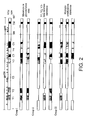
- FIG. 2 illustrates some representative structural changes that can be made to the HIV 89.6 envelope glycoprotein (GenBank serial number AAA81043, SEQ ID NO: 3).
- the arrows in FIG. 2 indicate the N-glycosylation motifs in the HIV 89.9 viral surface envelope glycoprotein as well as the V1 (amino acids 128-164 of SEQ ID NO: 3) loop, V2 (amino acids 164-194 of SEQ ID NO: 3) loop, and V3 (amino acids 298-329 of SEQ ID NO: 3) loop domains. Deletions of the loops is shown by removing the corresponding sequence in the HIV 89.6 envelope glycoprotein shown in FIG. 2 .
- glycosylation motif mutations of Asn to Gln in the V3/C3 are performed on amino acids 301, 341, and 362.
- the glycosylation motif mutations are performed on Asn in amino acid position 623 and 635.
- TM denotes the transmembrane domain (amino acids 681-7033 of SEQ ID NO: 3).
- Group I illustrates the glycosylation motif mutations in gp41, the V1 loop domains, the V2 loop domain, and the V3-C3 loop domain.
- Group II illustrates variable loop (V1, V2, and/or V3) deletion mutations, while Group III illustrates representative multiple combination mutations.
- gp41 mutations of glycosylation sites in gp41 can be performed to enhance the immunogenic properties of a VLP incorporating the HIV envelope glycoprotein.
- VLP incorporating the HIV envelope glycoprotein.
- Abs neutralizing antibodies
- mAbs (2F5, Z13, 4E10), which neutralize a broad range of primary HIV-1 isolates, are known to bind to the extracellular domain of gp41.
- the gp41 domain in the HIV-1 envelope glycoprotein contains four conserved glycosylation motifs (#22 (amino acids 608 of SEQ ID NO: 3), #23 (amino acids 613 of SEQ ID NO: 3), #24 (amino acids 622 of SEQ ID NO: 3), and #25 (amino acids 634 of SEQ ID NO: 3), and viruses with single or double mutations in these glycosylation sites replicated in both human and monkey T cell lines ( Johnson, W.E., et al., J. Virol., 75, 11426-11436, (2001 )).
- Removing the glycosylation motifs #24 (amino acid 622 of SEQ ID NO: 3) and #25 (amino acid 634 of SEQ ID NO: 3) near the neutralizing epitopes may increase the exposure of these epitopes and thus, enhance the induction of neutralizing antibodies against the gp41 domain (numbering glycosylation motifs from the N-terminus of the HIV 89.6 envelope glycoprotein).
- VLPs can help to preserve the HIV envelope glycoprotein on the surface of the VLP to retain its native configuration for more efficient exposure of neutralizing epitopes and thus the induction of neutralizing antibodies.
- structural features are common to the envelope glycoproteins of many viral families, including, but not limited to, the envelope glycoproteins of retrovirus, influenza virus, and parainfluenza virus.
- VLP treatment approach can be applied to a variety of VLP vaccines.
- V1 loop, the V2 loop, and the V3 loop can be deleted to enhance the immunogenic properties of VLPs. Deletion of individual V1 or V2 loops does not reduce the potential of the virus to replicate in PBMCs or alter the co-receptor binding of the viral surface envelope glycoprotein ( Stamatatos, L., et al., Aids Res. Hum. Retroviruses, 14, 1129-1139, (1998 )).
- HIV-1 mutants lacking the V1 and V2 loops in gp120 exhibited increased sensitivity to neutralization by antibodies directed against V3 and a CD4-induced epitope on gp120, and by sera collected from patients infected with clades B, C, D, and F HIV-1 primary isolates ( Cao, J., et al., J. Virol., 71, 9808-9812, (1997 ) and Stamatatos, L., and C. Cheng- Mayer, J. Virol. , 72, 7840-7845, (1998 )).
- These studies suggest that the V2 loop or V2 together with the V1 loop shields some important neutralization epitopes with an overall structure that appears to be conserved among different HIV-1 primary isolates.
- deleting the V1-V2 loop or V2 loop may expose hidden neutralizing epitopes.
- the V3 loop of the HIV envelope glycoprotein is highly variable and also constitutes a dominant epitope for the antibody response. Although neutralizing antibodies against this region are frequently detected, they are often strain-specific ( Sattentau, Q.J., et al., Virol., 206(1), 713-7, (1995 ) and D'Souaza, M.P., et al., Aids, 9, 867-874, (1995 )). Furthermore, deletion of the V3 loop has also been shown to increase the exposure of epitopes induced by sCD4 binding ( Sanders, R.W., et al., J. Virol., 74, 5091-5100, (2000 )). Lu et al. (Aids Res. Hum.
- Retroviruses, 14, 151-155, (1998 )) compared antibody induction by gene-gun immunization of rabbits with DNA vectors expressing HIV-1 IIIB Gp160, Gp140, Gp120 and their corresponding V1/V2/V3 triple loop deletion mutants. These results showed that deletion of variable loops induced higher ELISA antibody responses but not neutralizing antibody responses.
- Virol., 76, 4222-4232, (2002 )) reported that immunization of mice using DNA vaccines encoding HIV envelope glycoproteins with V3 loop deletions induced broader cellular immune responses to subdominant epitopes and was more effective in conferring protection against challenge with recombinant vaccinia virus expressing heterologous HIV envelope glycoproteins, indicating that deletion of the V3 loop may also be advantageous in inducing broader cellular immune response.
- the RVFV envelope glycoprotein can include, but is not limited to, a RVFV GC envelope glycoprotein (SEQ ID NO: 4) and a RVFV GN envelope glycoprotein (SEQ ID NO: 5).
- the RVFV GC and GN envelope glycoproteins can be modified to enhance the immunogenic properties of the VLP 10.
- the RVFV GC and GN envelope glycoproteins can be modified by truncating the cytoplasmic domain for the RVFV GC (amino acids 492-507 of SEQ ID NO: 4) and GN envelope glycoproteins (amino acids 458-527 of SEQ ID NO: 5).
- FIG. 3 illustrates some representative structural changes that can be made to the RVFV GN and GC envelope glycoproteins.
- the RVFV GC and GN envelope glycoproteins can be modified by truncating the cytoplasmic domain for the RVFV GC (amino acids 492-507 of SEQ ID NO: 4) and GN envelope glycoproteins (amino acids 458-527 of SEQ ID NO: 5).
- the RVFV GN envelope glycoprotein can mutated by replacing the proline residue (amino acid 537 of SEQ ID NO: 5) from the cytoplasmic domain (conserved between RVFV and PTV GN envelope glycoprotein) with a leucine residue.
- RVFV GC and GN envelope glycoproteins can be modified by replacing the transmembrane domain and/or the cytoplasmic tails of the RVFV GC and GN envelope glycoproteins with the transmembrane domain and the cytoplasmic tail of the SIV envelope glycoprotein.
- Studies on retrovirus assembly have shown that efficient incorporation of viral surface envelope glycoproteins may involve specific interaction between viral Gag proteins and the cytoplasmic domain of the viral surface envelope glycoprotein ( Cosson, P., et al., EMBO J., 15, 5783-5788, (1996 ); Vincent, M.J., et al., J.
- Tyr residue can be replaced by Cys in the attached SIV cytoplasmic domain sequence (amino acid 16 of SEQ ID NO: 8) to further augment surface expression of designed chimeric proteins.
- This design for chimeric proteins can be applied to both RVFV GN and GC envelope glycoproteins. Such modifications may increase levels of surface expression of the RVFV envelope glycoproteins and therefore increase their incorporation into VLPs. Thus, the effectiveness of the VLPs to elicit immune response against RVFV envelope glycoproteins may be enhanced, since the VLPs contain more RVFV envelope glycoproteins per unit amount.
- the adjuvant molecule 16 or at least a portion of the adjuvant molecule 16, is disposed ( e.g ., expressed) on the surface of the VLP 10.
- the adjuvant molecule 16 can interact with other molecules or cells (e.g ., mucosal surfaces having sialic acid residues disposed thereon and antigen-presenting cells such as dendritic cells and follicular dendritic cells).
- the adjuvant molecule 16 can include, but is not limited to, an influenza hemagglutine (HA) adjuvant molecule (GenBank access number J02090), a parainfluenza hemagglutine-neuraminidase (HN) adjuvant molecule (GenBank access number z26523 for human parainfluenza virus type 3 HN sequence information), a Venezuelan equine encephalitis (VEE) adjuvant molecule (GenBank access number nc001449), a fins-like tyrosine kinase ligand (Flt3) adjuvant molecule (GenBank access number NM013520), a C3d adjuvant molecule (GenBank access number nm009778 for mouse C3 sequence and access number nm000064 for human C3 sequence), a mannose receptor adjuvant molecule, and a CD40 adjuvant molecule (GenBank access number m83312 for mouse CD40).
- HA influenza hemagglutine
- the adjuvant molecule 16 sequence and the corresponding polynucleotide sequence can be found in GenBank and the access numbers can be obtained online at the NCBI.
- sequences identified for the adjuvant molecules 16 above are only illustrative examples of representative adjuvant molecules 16.
- variants that are substantially homologous to the above referenced adjuvant molecules 16 and adjuvant molecules 16 having conservative substitutions of the above referenced adjuvant molecules 16 can also be incorporated into VLPs 10 of the present invention to enhance the immunogenic characteristics of VLPs.
- Mucosal immunity is critical for prevention of infection by aerosolized virus because mucosal cells can neutralize the virus and/or blocking virus attachment of the virus to the mucosal cells with secreted antibodies.
- little success has been documented for eliciting strong mucosal immune responses by non-replicating vaccines against viruses other than influenza, which is attributed, at least in part, to the difficulty of targeting the antigens to mucosal sites.
- inactivated influenza virus has been shown to induce strong mucosal immune responses when administered mucosally, which may be the result of the strong binding affinity of the HA adjuvant molecule for sialic acid residues that are abundant at mucosal surfaces.
- HA adjuvant molecule for sialic acids may be utilized for targeting VLPs to mucosal surfaces.
- HA/SHIV VLPs are highly effective in eliciting strong mucosal immune responses against SHIV antigens when administered intranasally to mice.
- incorporating HA adjuvant molecules into VLPs may enhance the immunogenic properties of VLPs.
- Mucosal immune responses against HIV play an important role in prevention of HIV infection and transmission, as the mucosal surface is the major site for initial HIV infection. Being the first line of defense, mucosal immunity is critical for prevention of infection by neutralizing virus and/or blocking virus attachment with secreted antibodies. However, little success has been documented for eliciting strong mucosal immune responses against HIV, which is attributed at least in part to the difficulty of targeting the antigens to mucosal sites. In contrast, inactivated influenza virus has been shown to induce strong mucosal immune responses when administered mucosally, a likely result of the strong binding affinity of its HA adjuvant molecule for sialic acid residues that are abundant on mucosal surfaces. Therefore, VLPs incorporating the HA adjuvant molecule may be suited to target mucosal surfaces since the HA adjuvant molecule has an affinity for sialic acid.
- phenotypically mixed influenza HA/SHIV virus-like particles were produced and used to intranasally immunize C57B/6J mice.
- baculovirus-derived SHIV 89.6 VLPs and HA/SHIV 89.6 VLPs were produced through co-infection of insect cells with rBV SIV Gag, rBV HIV envelope glycoprotein, both with and without rBV HA adjuvant molecule.
- FIGS. 4A and 4B illustrate that both HIV envelope glycoproteins and influenza HA adjuvant molecules can be detected in HA/SHIV 89.6 VLPs by using Western Blot analysis blotting with antibody against HIV envelope glycoproteins ( FIG. 4A ) or influenza HA adjuvant molecules ( FIG. 4B ), respectively. Both HIV envelope glycoprotein and influenza HA adjuvant molecule are partially cleaved into their active state gp120 and HA1. In addition, the ability of chimeric VLPs to induce hemagglutination (HA) was examined, a functional property of influenza HA.
- HA hemagglutination
- HA titers of chimeric VLPs were determined by incubating equal volumes of serial two-fold dilutions of HA/SHIV VLPs in PBS-def (PBS deficient in Mg 2+ and Ca 2+ ) with chicken red blood cells (final concentration 0.5%) for 1 hour (h) at room temperature.
- the HA titer of HA/SHIV 89.6 chimeric VLPs were found to be as high as 1:4000, whereas SHIV 89.6 VLPs showed negative in HA titer.
- FIGS. 5A through 5B illustrate graphs measuring various characteristics of a number of VLPs that were intranasally introduced into mice.
- V represents SHIV VLPs
- HA/V represents HA/SHIV VLPs
- V+CT represents SHIV VLPs (10 ⁇ g) + cholera toxin (CT) (10 ⁇ g)
- N represents a negative control (PBS).
- the number in parentheses indicates the " ⁇ g's" of VLPs used for immunization of the mice.
- FIG. 5A is a graph measuring serum IgG levels specific to HIV envelope glycoproteins.
- FIG. 5B is a graph measuring splenocytes producing IFN- ⁇ determined by ELISPOT assay.
- FIG. 5C is a graph measuring HIV envelope glycoprotein-specific IgA in vaginal wash.
- FIG. 5D is a graph measuring HIV envelope glycoprotein-specific IgA in fecal extracts.
- FIGS. 5A through 5D systemic and mucosal antibody responses, as well as cytotoxic T cell (CTL) responses, of mice immunized with SHIV 89.6 VLPs or HA/SHIV 89.6 VLPs are shown in FIGS. 5A through 5D .
- Intranasal immunizations were given with VLPs either with or without addition of CT.
- the level of serum IgG production to HIV envelope glycoprotein was found to be highest in the group immunized with phenotypically mixed HA/SHIV 89.6 VLPs.
- mucosal IgA production was also found to be enhanced in the group immunized with HA/SHIV VLP mucosally.
- HA/SHIV VLP-immunized mice also showed significantly higher CTL responses than those observed in SHIV VLP-immunized mice.
- a MHC class I restricted T cell activation ELISPOT assay showed elevated IFN- ⁇ , IL-2, and IL-12 production in HA/SHIV VLP-immunized mice, indicating that phenotypically mixed HA/SHIV VLPs can enhance both humoral and cellular immune responses at multiple mucosal sites.
- a heterologous adjuvant molecule the HA adjuvant molecule
- the HA adjuvant molecule can be coexpressed with retrovirus proteins in infected cells resulting in its efficient incorporation into retroviral VLPs in a biologically active form.
- the resultant VLPs exhibit enhanced immunogenicity, especially when delivered by a mucosal route.
- pre-existing immunity to the influenza HA protein is a factor that should be considered in the evaluation of HA-VLP vaccines.
- preexisting antibodies would lead to production of immune complexes would enhance targeting of VLPs to follicular dendritic cells and thus result in stimulation of B cell responses.
- influenza HA adjuvant molecules from other influenza virus species to which there is no preexisting immunity in the human population.
- the 15 non-cross reactive serotypes of HA viruses and their replication are described in the following publications: Lamb, R.A. and Krug, R.M., Orthomyxoviridae, (1996 ) and Fields, B.N., et.
- VLPs can be produced containing one or more of these alternative HA adjuvant molecule subtypes, therefore avoiding a possible affect of preexisting anti-HA immunity on induction of immune responses against VLP antigens.
- influenza HA adjuvant molecules from other species may bind preferentially to sialic acid linkages not found on human cells. This property, however, can be modified by mutation of specific HA amino acids ( Vines, A., et al., J. Virol., 72, 7626-7631, (1998 )).
- HA adjuvant molecules An alternative approach to using HA adjuvant molecules is the production of VLPs containing parainfluenza virus HN adjuvant molecules. Like HA adjuvant molecules, the HN adjuvant molecules attach specifically to the sialic acid residues at mucosal surfaces. Thereore, chimeric VLPs containing HN adjuvant molecules should have similar mucosal targeting properties as the HA adjuvant molecules.
- immune responses to the proteins of human parainfluenza viruses are of relatively short duration, and reinfections with the same viral serotypes are known to occur ( Glezen, W.P., et al., J. Infect. Dis., 150, 851-857, (1984 )). Thus, as compared with HA, it is less likely that preexisting immunity to the HN adjuvant molecules of a parainfluenza virus would affect mucosal delivery of a VLP vaccine.
- HN-VLPs may be easier to produce in modified vaccinia Ankara expression systems rather than baculovirus expression systems. This is because the release of HA chimeric VLPs from mammalian cells would require addition of exogenous neuraminidase ( Bosch, V., et al., J. Gen. Virol., 82, 2485-2494, (2001 )) since sialic acid would be added to the envelope glycoproteins as a terminal sugar and lead to aggregation of VLPs at the cell surface (which does not occur in the insect cell-produced VLPs). In contrast, HN carries its own neuraminidase.
- Antigen presenting cells can be targeted by VLPs by including one or more of the following adjuvant molecules on the surface of the VLP: the VEE adjuvant molecule, the Flt3 adjuvant molecule, the mannose adjuvant molecule, the CD40 adjuvant molecule, and the Cd3 adjuvant molecule.
- the VEE adjuvant molecule, the Flt3 adjuvant molecule, the mannose adjuvant molecule, and the CD40 adjuvant molecule can be used to target dendritic cells, while the Cd3 adjuvant molecule can be used to target follicular dendritic cells.
- DCs Dendritic cells
- Antigens taken up by DCs are expressed at the cell surface in the form of peptides associated with MHC class II, which stimulates CD4 Th cells.
- MHC class 1 associated peptides are derived from endogenously synthesized proteins as well as from some exogenous antigens (e.g ., infectious agents, dying cells, proteins associated with inert particles, and immune complexes) by DC endocytosis ( Heath, W.R. and F. R. Carbone, Curr. Opin. Immunol., 11:314-318, (1999 ); Reimann, J. and R. Schirmbeck, Immunol. Rev., 172; 131-152, (1999 ); Regnault, A., et al., J. Exp.
- DCs harboring immune complexes also stimulate naive B cells ( Wykes, M., J. Immunol., 161,1313-1319, (1998 ) and Dubois, B., et al., Biol., 70, 633-641, (2001 )).
- the highly developed Ag-presenting capacity of DCs has led to their study of cellular vaccine adjuvants for the immunotherapy of cancer ( Schuler, G. and R.M. Steinman, J. Exp.
- HIV and SIV virions interact with DCs via DC-SIGN and/or CD4 receptors; however, this interaction appears to preferentially result in infection of the DCs as well as transmission to other target cells rather than potentiation of an immune response ( Geijtenbeek, T.B., et al., Cell, 100: 587-597, (2000 ) and Geijtenbeek, T.B., et al., Immunol. Lett. 79:101-107, (2001 )).
- inert particulate antigens like VLPs are very attractive target for antigen presenting cells, particularly DCs ( Bachmann, M.F., et al., Eur. J. Immunol., 26:2595-2600, (1996 ); Ruedl, C., et al., Eur. J. Immunol., 32:818-825, (2002 ) and Da Silva, D.M., et al., Int. Immunol., 13:633-641, (2001 )). Therefore, the interaction of VLPs with DCs may result in potentiating DCs to initiate T cell activation.
- Flt3 ligand (FL) adjuvant molecule (GenBank access number NM013520) is a hematopoietic growth factor that has the unique ability to expand the number of both CD8 ⁇ - and CD8 ⁇ + DC subsets ( Lyman, S.D., et al., Cell, 75:1157-1167, (1993 ); Maraskovsky, E, et al., J. Exp.
- the VLP can be produced to include the FL adjuvant molecule by PCR-amplifying and cloning the whole mouse FL gene including the signal sequence and transmembrane (TM) domain into rBV transfer vector pc/pS1.
- TM transmembrane
- Sf9 insect cells can be co-transfected with Baculogold DNA (available from PharMingen, Inc.) and the pc/pS 1 transfer vector containing the FL gene.
- the incorporation of the FL adjuvant molecule into VLPs can be enhanced by modifiying the FL adjuvant molecule.
- the extracellular coding domain of the FL gene (from the end of signal peptide to the start of the TM segment) (SEQ ID NO: 7) can be fused to the N-terminus of the SIV Env glycoprotein-41 TM domain (SEQ ID NO: 6) and the tPA signal peptide can be fused to the N-terminus of the FL-chimeric protein (SEQ ID NO: 9).
- GPI-anchored proteins preferentially associate with lipid rafts, which are used as sites for virus assembly ( Nguyen, D. H. and J.E. Hildreth; J. Virol., 74:3265-3272, (2000 )).
- VEE is a member of the family Togaviridae and is typically transmitted by mosquitoes to humans or other animals, in which it causes fever and encephalitis. Following inoculation into the footpad of mice, the virus was observed to be rapidly transported to the draining lymph nodes.
- dendritic cells in the lymph nodes are the primary target of VEE infection, and VEE replicon particles were observed to be localized in Langerhans cells, dendritic cells of the skin, following subcutaneous inoculation ( Macdonald, G. H., and Johnston, R.E., J Virol., 74(2), 914-22, (2000 )).
- VLPs incorporating VEE adjuvant molecules may be used to target dendritic cells.
- Dendritic cells use the mannose receptor (MR) as the major receptor for endocytosis of antigens ( Sallusto, F., et al., J. Exp. Med., 192(2), 389-400, (1995 )).
- This receptor is a 175 kD protein containing eight carbohydrate recognition domains with high affinity for mannose-rich glycoproteins ( Stahl, P.D., Curr Opin Immunol., 4(1), 49-52, (1992 ) and Ezekowitz, R.A., et al., J Exp. Med., 172(6), 1785-94, (1990 )).
- the MR releases its ligand at low pH and it recycles to the cell surface, thus having the capacity to interact with ligands in multiple rounds ( Stahl, P., et al.; Cell, 19(1), 207-15, (1980 )). It has been suggested that the MR may provide a mechanism for distinguishing self from non-self antigens on the basis of glycosylation patterns since, in higher eukaryotes, mannose residues are usually buried within the carbohydrate moieties of evelope glycoproteins and therefore not available for binding to MR ( Sallusto, F., et al., J. Exp. Med. 192(2), 389-400, (1995 )). Thus, it may be possible to target VLPs to dendritic cells on the basis of distinct oligosaccharide profiles.
- dendritic cells Once dendritic cells take up antigens, immature dendritic cells need to differentiate into professional antigen presenting cells in response to maturation signals. As dendritic cells mature, expression of co-stimulatory molecules and MHC-peptide complexes increase and cytokines are produced ( Banchereau, J. &I Steinman, R.M., Nature, 392, 245-52, (1998 ) and Pierre, P., Turley, et al., Nature, 388, 787-92, (1997 )). Interaction between CD40 expressed on antigen presenting cells including dendritic cells and CD40L on activated Th cells is important for T cell dependent B cell activation and isotype switching ( Rousset, F., et al., J. Exp.
- CD40 ligation with a cell line expressing CD40L activates Langerhans cell-derived dendritic cells, and induces high level expression of MHC II and accessory molecules such as CD80 and CD86 ( Caux, C., et al., J. Exp. Med., 180, 1263-1272, (1994 )).
- Cross-linking CD40 with anti-CD40 antibodies play a role in ablating the tolerogenic potential of lymphoid dendritic cells ( Grohmann U., et al., J. Immunol. 166, 277-83, (2001 )).
- FDCs Follicular dendritic cells
- the FDCs interact with components of the complement system including C3d, and it was recently demonstrated that recombinant proteins containing a segment of the C3d adjuvant molecule fused (amino acids 1024 to 1320 of SEQ ID NO: 11) to an antigen resulted in a striking increase in the efficiency of the antibody response ( Dempsey, P.W., et al., Science, 271, 348-350, (1996 )).
- Complement is a plasma protein system of innate immunity that is activated by microorganisms in the absence of antibody ( Fearon, D.T. and Austen, K.F., N. Engl. J. Med., 303, 259-263, (1980 )).
- C3d fragment Upon activation, C3d fragment binds to its receptor, CR2 (CD21) which is primarily expressed on B cells and FDCs ( Fearon, D. T. and Carter, R. H.; Annu. Rev. Immunol., 13:17-149, (1995 )).
- CR2 CD21
- FDCs Fearon, D. T. and Carter, R. H.; Annu. Rev. Immunol., 13:17-149, (1995 )
- C3d adjuvant molecules on the surfaces of the VLPs may result in their enhanced interaction with FDCs and B cells, and thus stimulation of the antibody responses to viral surface envelope glycoproteins contained in the VLP structure.
- C3d adjuvant molecule fragment which is about 300 amino acids in length
- two factors that may affect its function 1) its proper exposure for interaction with CR2 on FDC; and 2) its potential interference with the proper folding of the protein antigen.
- Two alternative approaches can be used to incorporate the C3d fragment into VLPs in order to elucidate antibody responses against viral surface glycoproteins incorporated into the VLPs.
- the C3d adjuvant molecule fragment (amino acids 1024 to 1320 of SEQ ID NO: 11) can be fused to the N-terminus of the selected viral surface envelope glycoprotein and the tPA signal peptide (SEQ ID NO: 9) can be introduced at the N-terminus of the viral surface envelope glycoprotein.
- the tPA signal peptide can be fused to the N-terminus of C3d adjuvant molecule and a membrane anchoring sequence (TM domain of viral glycoproteins, example SIV envelope TM (SEQ ID NO: 6) or the GPI-anchoring sequence (GenBank access number x52645, SEQ ID NO: 10)) can be fused to the C-terminus of the C3d adjuvant molecule.
- VLPs can be produced by in vitro cell culture expression systems such as, but not limited to, recombinant baculovirus expression system (BEVS) ( Yamshchikov, G. V., Ritter, G. D., Vey, M., and Compans, R. W. Virology, 214, 50-58, (1995 ). Assembly of SIV virus-like particles containing envelope proteins can be performed using expression systems, such as, but not limited to, a baculovirus expression system ( Yamshchikov, G. V., Ritter, G. D., Vey, M., and Compans, R.
- BEVS recombinant baculovirus expression system
- Assembly of SIV virus-like particles containing envelope proteins can be performed using expression systems, such as, but not limited to, a
- VLPs are produced using recombinant BEVS and recombinant MVA expression systems.
- VLPs can be produced by simultaneously introducing into a cell a viral protein expression vector, a viral surface envelope glycoprotein expression vector, and/or an adjuvant molecule expression vector.
- the expressed viral protein self-assembles into a VLP that incorporates the viral surface envelope glycoprotein and/or the adjuvant molecule.
- the viral surface envelope glycoprotein and/or the adjuvant molecule are expressed on the VLP surface.
- the cell produces the VLP (e.g ., chimeric and/or phenotypically mixed VLP).
- the cells can include, but are not limited to, insect cells (e.g., spodopera frugiperda Sf 9 cells and Sf21cells) and mammalian cells ( e.g ., EL4 cells and HeLa cells).
- the viral protein expression vector can be produced by operably linking a coding sequence for a viral protein of a virus to an appropriate promoter (e.g ., an early promoter, late promoter, or hybrid late/very late promoter).
- the viral protein expression vector can also be modified to form a viral protein expression construct.
- the viral surface envelope glycoprotein expression vector can be produced by operably linking a coding sequence for a viral surface envelope glycoprotein of a virus to an appropriate promoter ( e . g ., early promoter, late promoter, or hybrid late/very late promoter).
- the viral surface envelope glycoprotein expression vector can be modified to form a viral surface envelope glycoprotein expression construct.
- the adjuvant molecule expression vector can be produced by operably linking a coding sequence for an adjuvant molecule to an appropriate promoter (e.g ., early promoter, late promoter, or hybrid late/very late promoter).
- an appropriate promoter e.g ., early promoter, late promoter, or hybrid late/very late promoter.
- the adjuvant molecule expression vector can be modified to form an adjuvant molecule expression construct.
- the adjuvant molecular expression construct is not needed because the mannose molecules can be chemically added to VLPs after the VLPs are produced.
- host includes humans, mammals (e.g ., cats, dogs, horses, and cattle), and other living species that are in need of treatment.
- Hosts that are "predisposed to" condition(s) can be defined as hosts that do not exhibit overt symptoms of one or more of these conditions but that are genetically, physiologically, or otherwise at risk of developing one or more of these conditions.
- beneficial or desired clinical results include, but are not limited to, alleviation of symptoms, diminishment of extent of disease, stabilization (i.e ., not worsening) of disease, preventing spread of disease, delaying or slowing of disease progression, amelioration or palliation of the disease state, and remission (partial or total) whether detectable or undetectable.
- stabilization i.e ., not worsening
- treatment can also mean prolonging survival as compared to expected survival if not receiving treatment.
- condition and “conditions” denote a state of health that can be related to infection by a virus.
- infections that are discussed herein are to be included as conditions that can be treated by embodiments of the present invention.
- Polypeptide refers to peptides, proteins, glycoproteins, and the like, of the present invention comprising two or more amino acids joined to each other by peptide bonds or modified peptide bonds, ( i.e ., peptide isosteres).
- Polypeptide refers to both short chains, commonly referred to as peptides, oligopeptides, or oligomers, and to longer chains, generally referred to as proteins.
- Polypeptides may contain amino acids other than the 20 gene-encoded amino acids.
- Polypeptides include amino acid sequences modified either by natural processes, such as post-translational processing, or by chemical modification techniques, which are well known in the art. Such modifications are described in basic texts and in more detailed monographs, as well as in a voluminous research literature.
- Modifications may occur anywhere in the polypeptides, including the peptide backbone, the amino acid side-chains and the amino or carboxyl termini. It will be appreciated that the same type of modification may be present to the same or varying degrees at several sites in a given polypeptide. Also, a given polypeptide may contain many types of modifications. Polypeptides may be branched as a result of ubiquitination, and they may be cyclic, with or without branching. Cyclic, branched, and branched cyclic polypeptides may result from post-translation natural processes or may be made by synthetic methods.
- Modifications include acetylation, acylation, ADP-ribosylation, amidation, covalent attachment of flavin, covalent attachment of a heme moiety, covalent attachment of a nucleotide or nucleotide derivative, covalent attachment of a lipid or lipid derivative, covalent attachment of phosphotidylinositol, cross-linking, cyclization, disulfide bond formation, demethylation, formation of covalent cross-links, formation of cystine, formation of pyroglutamate, formylation, gamma-carboxylation, glycosylation, GPI anchor formation, hydroxylation, iodination, methylation, myristoylation, oxidation, proteolytic processing, phosphorylation, prenylation, racemization, selenoylation, sulfation, transfer-RNA mediated addition of amino acids to proteins such as arginylation, and ubiquitination ( Proteins-Structure and Molecular Properties,
- Variant refers to polypeptides that differ from a reference polynucleotide or polypeptide, but retains essential properties.
- a typical variant of a polypeptide differs in amino acid sequence from another, reference polypeptide. Generally, differences are limited so that the sequences of the reference polypeptide and the variant are closely similar overall and, in many regions, identical.
- a variant and reference polypeptide may differ in amino acid sequence by one or more substitutions, additions, and deletions in any combination.
- a substituted or inserted amino acid residue may or may not be one encoded by the genetic code.
- a variant of a polynucleotide or polypeptide may be a naturally occurring such as an allelic variant, or it may be a variant that is not known to occur naturally. Non-naturally occurring variants of polynucleotides and polypeptides may be made by mutagenesis techniques or by direct synthesis.
- Identity is a relationship between two or more polypeptide sequences or two or more polynucleotide sequences, as determined by comparing the sequences.
- identity also means the degree of sequence relatedness between polypeptide or polynucleotide sequences, as the case may be, as determined by the match between strings of such sequences.
- Identity and similarity can be readily calculated by known methods, including, but not limited to, those described in Computational Molecular Biology, Lesk, A. M., Ed., Oxford University Press, New York, (1988 ); Biocomputing: Informatics and Genome Projects, Smith, D.
- Preferred methods to determine identity are designed to give the largest match between the sequences tested. Methods to determine identity and similarity are codified in publicly available computer programs. The percent identity between two sequences can be determined by using analysis software (e . g ., Sequence Analysis Software Package of the Genetics Computer Group, Madison Wis.) that incorporates the Needelman and Wunsch, (J. Mol. Biol., 48, 443-453, (1970 )) algorithm (e.g ., NBLAST, and XBLAST). The default parameters are used to determine the identity for the polynucleotides and polypeptides.
- analysis software e. g ., Sequence Analysis Software Package of the Genetics Computer Group, Madison Wis.
- Needelman and Wunsch J. Mol. Biol., 48, 443-453, (1970 )
- algorithm e.g ., NBLAST, and XBLAST.
- the default parameters are used to determine the identity for the polynucleotides and polypeptides.
- the polypeptide sequences may be identical to one or more of the reference sequences described above, that is be 100% identical, or it may include up to a certain integer number of amino acid alterations as compared to the reference sequence such that the % identity is less than 100%.
- Such alterations are selected from the group consisting of at least one amino acid deletion, substitution, including conservative and non-conservative substitution, or insertion, and wherein said alterations may occur at the amino- or carboxy-terminal positions of the reference polypeptide sequence or anywhere between those terminal positions, interspersed either individually among the amino acids in the reference sequence or in one or more contiguous groups within the reference sequence.
- the number of amino acid alterations for a given % identity is determined by multiplying the total number of amino acids in the reference polypeptide by the numerical percent of the respective percent identity (divided by 100) and then subtracting that product from said total number of amino acids in the reference polypeptide.
- amino-terminal and “carboxyl-terminal” are used herein to denote positions within polypeptides. Where the context allows, these terms are used with reference to a particular sequence or portion of a polypeptide to denote proximity or relative position. For example, a certain sequence positioned carboxyl-terminal to a reference sequence within a polypeptide is located proximal to the carboxyl terminus of the reference sequence, but is not necessarily at the carboxyl terminus of the complete polypeptide.
- substantially homologous is used herein to denote polypeptides having about 50%, about 60%, about 70%, about 80%, about 90%, and preferably about 95% sequence identity to the sequences discussed above. Percent sequence identity is determined by conventional methods as discussed above.
- homologous polypeptides are characterized as having one or more amino acid substitutions, deletions, and/or additions. These changes are preferably of a minor nature (e . g ., conservative amino acid substitutions and other substitutions that do not significantly affect the activity of the polypeptide).
- embodiments include polynucleotides that encode polypeptides having one or more "conservative amino acid substitutions" of the sequences discussed above.
- Conservative amino acid substitutions can be based upon the chemical properties of the amino acids.
- Variants can be obtained that contain one or more amino acid substitutions of the sequences discussed above, in which an alkyl amino acid is substituted for an alkyl amino acid in a polypeptide, an aromatic amino acid is substituted for an aromatic amino acid in a polypeptide, a sulfur-containing amino acid is substituted for a sulfur-containing amino acid in a polypeptide, a hydroxy-containing amino acid is substituted for a hydroxy-containing amino acid in a polypeptide, an acidic amino acid is substituted for an acidic amino acid in a polypeptide, a basic amino acid is substituted for a basic amino acid in a polypeptide, or a dibasic monocarboxylic amino acid is substituted for a dibasic monocarboxylic amino acid in a polypeptide.
- a “conservative amino acid substitution” is illustrated by a substitution among amino acids within each of the following groups: (1) glycine, alanine, valine, leucine, and isoleucine, (2) phenylalanine, tyrosine, and tryptophan, (3) serine and threonine, (4) aspartate and glutamate, (5) glutamine and asparagine, and (6) lysine, arginine and histidine.
- amino acids having characteristics such as a basic pH (arginine, lysine, and histidine), an acidic pH (glutamic acid and aspartic acid), polar (glutamine and asparagine), hydrophobic (leucine, isoleucine, and valine), aromatic (phenylalanine, tryptophan, and tyrosine), and small (glycine, alanine, serine, threonine, and methionine).
- Polypeptides having conservative amino acid variants can also comprise non-naturally occurring amino acid residues.
- Non-naturally occurring amino acids include, without limitation, trans-3-methylproline, 2-4-methanoproline, cis-4-hydroxyproline, trans-4-hydroxyproline, N-methyl-glycine, allo-threonine, methylthreonine, hydroxyethylcysteine, hydroxyethylhomocysteine, nitro-glutamine, homoglutamine, pipecolic acid, thiazolidine carboxylic acid, dehydroproline, 3- and 4-methylproline, 3,3-dimethylproline, tert-leucine, norvaline, 2-azaphenyl-alanine, 3-azaphenylalanine, 4-azaphenylalanine, and 4-fluorophenylalanine.
- E . coli cells are cultured in the absence of a natural amino acid that is to be replaced (e.g ., phenylalanine) and in the presence of the desired non-naturally occurring amino acid(s) (e.g ., 2-azaphenylalanine, 3-azaphenylalanine, 4-azaphenylalanine, or 4-fluorophenylalanine).
- a natural amino acid that is to be replaced e.g ., phenylalanine
- desired non-naturally occurring amino acid(s) e.g ., 2-azaphenylalanine, 3-azaphenylalanine, 4-azaphenylalanine, or 4-fluorophenylalanine.
- non-naturally occurring amino acid is incorporated into the protein in place of its natural counterpart.
- Naturally occurring amino acid residues can be converted to non-naturally occurring species by in vitro chemical modification. Chemical modification can be combined with site-directed mutagenesis to further expand the range of substitutions ( Wynn, et al., Protein Sci., 2, 395-403, (1993 )).
- a "chimeric" VLP can be defined as a VLP having at least viral surface envelope glycoprotein incorporated into the VLP, wherein the viral protein and the viral surface envelope glycoprotein are from different viruses.
- a "phenotypically mixed" VLP can be defined as a VLP having at least one adjuvant molecule incorporated into the VLP, wherein the viral protein and the adjuvant molecule are from different viruses.
- “Expressed”, as used herein, can be defined as being a molecule disposed, or a portion of the molecule disposed, upon the surface of the VLP.
- An "expression construct” is an expression vector containing a coding sequence for a recombinant protein.
- recombinant when used with reference to a cell, or nucleic acid, or vector, indicates that the cell, or nucleic acid, or vector, has been modified by the introduction of a heterologous nucleic acid or the alteration of a native nucleic acid, or that the cell is derived from a cell so modified.
- recombinant cells express genes that are not found within the native (non-recombinant) form of the cell or express native genes that are otherwise abnormally expressed, under-expressed or not expressed at all.
- operably linked refers to the arrangement of various nucleotide sequences relative to each other such that the elements are functionally connected to and are able to interact with each other.
- Such elements may include, without limitation, one or more promoters, enhancers, polyadenylation sequences, and transgenes.
- the nucleotide sequence elements when properly oriented, or operably linked, act together to modulate the activity of one another, and ultimately may affect the level of expression of the transgene.
- the position of each element relative to other elements may be expressed in terms of the 5' terminus and the 3' terminus of each element, and the distance between any particular elements may be referenced by the number of intervening nucleotides, or base pairs, between the elements.
- a “vector” is a genetic unit (or replicon) to which or into which other DNA segments can be incorporated to effect replication, and optionally, expression of the attached segment. Examples include plasmids, cosmids, viruses, chromosomes and minichromosomes. Particularly preferred expression vectors (for expression of an attached segment) are baculovirus vectors and modified vaccinia Ankara vectors.
- a "coding sequence” is a nucleotide sequence that is transcribed into mRNA and translated into a protein, in vivo or in vitro.
- regulatory sequences are nucleotide sequences, which control transcription and/or translation of the coding sequences, which they flank.
- Processing sites are described in terms of nucleotide or amino acid sequences (in context of a coding sequence or a polypeptide).
- a processing site in a polypeptide or nascent peptide is where proteolytic cleavage occurs, where glycosylation is incorporated or where lipid groups (such as myristoylation) occurs.
- Proteolytic processing sites are where proteases act.
- VLPs are membrane-surrounded structures comprising viral envelope proteins expressed on the VLP.
- adjuvant molecules can be expressed on the VLP.
- viral core proteins are located within the membrane of the VLP.
- Additional components of VLPs, as known in the art, can be included within or disposed on the VLP.
- VLPs do not contain intact viral nucleic acids, and they are non-infectious. Desirably, there is sufficient viral surface envelope glycoprotein and/or adjuvant molecules expressed, at least in part, on the surface of the VLP so that when a VLP preparation is formulated into an immunogenic composition and administered to an animal or human, an immune response (cell-mediated or humoral) is raised.
- a "truncated" viral surface envelope glycoproteins are ones which contain less than a full length cytoplasmic domain, which retains surface antigenic determinants against which an immune response is generated, preferably a protective immune response, and it retains sufficient envelope sequence for proper precursor processing and membrane insertion.
- the skilled artisan can produce truncated virus envelope proteins using recombinant DNA technology and virus coding sequences, which are readily available to the public.
- Truncation of the viral surface envelope protein is from the carboxy terminus of the viral surface envelope glycoprotein.
- Contemplated are truncated viral surface envelope glycoproteins retaining from about 0% to about 90% of the cytoplasmic domain, where the cytoplasmic domain for a type I viral surface envelope glycoprotein is the region between the C-terminus of the transmembrane domain and the C-terminus of the entire envelope protein. Preferably from about 10% to 25% of the cytoplasmic domain is retained.
- Also encompassed by "truncated,” are all percentages and ranges, within the 5% to 90% range, including from about 15% to about 50%.
- VLPs based on cloned viral surface envelope glycoproteins, and preferably further comprising Gag proteins from the same viruses can be readily produced without the expense of undue experimentation by the ordinary skilled artisan using the teachings of the present application taken with vectors as described herein and what is well known to and readily accessible in the art.
- polyclonal and/or monoclonal antibodies capable of specifically binding to the VLP.
- the term "antibody” is used to refer both to a homogenous molecular entity, or a mixture such as a serum product made up of a plurality of different molecular entities.
- Monoclonal or polyclonal antibodies, which specifically react with the VLPs of the present invention may be made by methods known in the art. ( e . g ., Harlow and Lane (1988) Antibodies: A Laboratory Manual, Cold Spring Harbor Laboratories ; Goding (1986) Monoclonal Antibodies: Principles and Practice, 2d ed., Academic Press, New York ; and Ausubel et al. (1987)).
- recombinant immunoglobulins may be produced by methods known in the art, including but not limited to, the methods described in U.S. Pat. No. 4,816,567 .
- Antibodies specific for VLPs and viral surface envelope glycoproteins of viruses may be useful, for example, as probes for screening DNA expression libraries or for detecting the presence of the cognate virus in a test sample.
- the polypeptides and antibodies will be labeled by joining, either covalently or noncovalently, a substance that provides a detectable signal.
- Suitable labels include but are not limited to radionuclides, enzymes, substrates, cofactors, inhibitors, fluorescent agents, chemiluminescent agents, magnetic particles and the like. United States Patents describing the use of such labels include but are not limited to U.S. Pat. Nos. 3,817,837 ; 3,850,752 ; 3,939,350 ; 3,996,345 ; 4,277,437 ; 4,275,149 ; and 4,366,241 .
- Antibodies specific for VLPs and retroviral surface envelope glycoproteins may be useful in treating animals, including humans, suffering from cognate viral disease. Such antibodies can be obtained by the methods described above and subsequently screening the viral surface envelope glycoproteins-specific antibodies for their ability to inhibit virus uptake by target cells.
- compositions and immunogenic preparations comprising the VLPs of the present invention and capable of inducing protective immunity in a suitably treated host and a suitable carrier therefor are provided.
- Immunogenic compositions are those which result in specific antibody production or in cellular immunity when injected into a host.
- Such immunogenic compositions or vaccines are useful, for example, in immunizing hosts against infection and/or damage caused by viruses, including, but not limited to, HIV, human T-cell leukemia virus (HTLV) type I, SIV, FIV, bovine immunodeficiency virus, bovine leukemia virus and equine infectious anemia virus, SARS, RVFV, Filovirus, Flavivirus, Arena virus, and Bunya virus.
- viruses including, but not limited to, HIV, human T-cell leukemia virus (HTLV) type I, SIV, FIV, bovine immunodeficiency virus, bovine leukemia virus and equine infectious anemia virus, SARS, RVFV, Filovirus, Flavivirus, Arena virus
- the vaccine preparations can include an immunogenic amount of one or more VLPs, fragment(s), or subunit(s) thereof.
- Such vaccines can include one or more viral surface envelope glycoproteins and portions thereof, and adjuvant molecule and portions thereof on the surfaces of the VLPs, or in combination with another protein or other immunogen, such as one or more additional virus components naturally associated with viral particles or an epitopic peptide derived therefrom.
- immunogenic amount is meant an amount capable of eliciting the production of antibodies directed against the virus, in the host to which the vaccine has been administered. It is preferred for SIV, HIV and HTLV, among others, that the route of administration and the immunogenic composition is designed to optimize the immune response on mucosal surfaces, for example, using nasal administration (via an aerosol) of the immunogenic composition.
- Immunogenic carriers can be used to enhance the immunogenicity of the VLPs from any of the viruses discussed herein.
- Such carriers include, but are not limited to, proteins and polysaccharides, microspheres formulated using (e.g ., a biodegradable polymer such as DL-lactide-coglycolide, liposomes, and bacterial cells and membranes).
- Protein carriers may be joined to the proteinases or peptides derived therefrom to form fusion proteins by recombinant or synthetic means or by chemical coupling. Useful carriers and means of coupling such carriers to polypeptide antigens are known in the art.
- the immunogenic compositions and/or vaccines may be formulated by any of the means known in the art. They can be typically prepared as injectables or as formulations for intranasal administration, either as liquid solutions or suspensions. Solid forms suitable for solution in, or suspension in, liquid prior to injection or other administration may also be prepared. The preparation may also, for example, be emulsified, or the protein(s)/peptide(s) encapsulated in liposomes.
- the active immunogenic ingredients are often mixed with excipients or carriers, which are pharmaceutically acceptable and compatible with the active ingredient.
- excipients include but are not limited to water, saline, dextrose, glycerol, ethanol, or the like and combinations thereof.
- concentration of the immunogenic polypeptide in injectable, aerosol or nasal formulations is usually in the range of 0.2 to 5 mg/ml. Similar dosages can be administered to other mucosal surfaces.
- the vaccines may contain minor amounts of auxiliary substances such as wetting or emulsifying agents, pH buffering agents, and/or other agents, which enhance the effectiveness of the vaccine.
- agents which may be effective include, but are not limited to: aluminum hydroxide; N-acetyl-muramyl-L-threonyl-D-isoglutamine (thr-MDP); N-acetyl-nor-muramyl-L-alanyl-D-isoglutamine (CGP 11637, referred to as nor-MDP); N-acetylmuramyl-L-alanyl-D-isoglutaminyl-L-alanine-2-(1'-2'-dipalmitoyl-sn-glycero-3-hydroxyphosphoryloxy)-ethylamine (CGP 19835A, referred to as MTP-PE); and RIBI, which contains three components extracted from bacteria: monophosphoryl lipid A, trehalose dim
- the effectiveness of the auxiliary substances may be determined by measuring the amount of antibodies (especially IgG, IgM or IgA) directed against the immunogen resulting from administration of the immunogen in vaccines which comprise the adjuvant in question. Additional formulations and modes of administration may also be used.
- antibodies especially IgG, IgM or IgA
- “Pharmaceutically acceptable salts” include, but are not limited to, the acid addition salts (formed with free amino groups of the peptide) which are formed with inorganic acids (e.g ., hydrochloric acid or phosphoric acids) and organic acids (e.g ., acetic, oxalic, tartaric, or maleic acid). Salts formed with the free carboxyl groups may also be derived from inorganic bases (e.g ., sodium, potassium, ammonium, calcium, or ferric hydroxides), and organic bases (e.g ., isopropylamine, trimethylamine, 2-ethylamino-ethanol, histidine, and procaine).
- inorganic acids e.g ., hydrochloric acid or phosphoric acids
- organic acids e.g acetic, oxalic, tartaric, or maleic acid. Salts formed with the free carboxyl groups may also be derived from inorganic bases (e.g ., sodium, potassium
- the immunogenic compositions and/or vaccines can be administered in a manner compatible with the dosage formulation, and in such amount and manner as will be prophylactically and/or therapeutically effective, according to what is known to the art.
- the quantity to be administered which is generally in the range of about 1 to 1,000 micrograms of viral surface envelope glycoprotein per dose and/or adjuvant molecule per dose, more generally in the range of about 5 to 500 micrograms of glycoprotein per dose and/or adjuvant molecule per dose, depends on the subject to be treated, the capacity of the hosts immune system to synthesize antibodies, and the degree of protection desired. Precise amounts of the active ingredient required to be administered may depend on the judgment of the physician or veterinarian and may be peculiar to each individual, but such a determination is within the skill of such a practitioner.
- the vaccine or immunogenic composition may be given in a single dose; two dose schedule, for example two to eight weeks apart; or a multiple dose schedule.
- a multiple dose schedule is one in which a primary course of vaccination may include 1 to 10 or more separate doses, followed by other doses administered at subsequent time intervals as required to maintain and/or reinforce the immune response ( e . g ., at 1 to 4 months for a second dose, and if needed, a subsequent dose(s) after several months).
- Humans (or other animals) immunized with the VLPs of the present invention are protected from infection by the cognate virus.
- the vaccine or immunogenic composition can be used to boost the immunization of a host having been previously treated with a vaccine such as, but not limited to, DNA vaccine and a recombinant virus vaccine.
Landscapes
- Life Sciences & Earth Sciences (AREA)
- Chemical & Material Sciences (AREA)
- Health & Medical Sciences (AREA)
- Genetics & Genomics (AREA)
- Organic Chemistry (AREA)
- Zoology (AREA)
- Engineering & Computer Science (AREA)
- Bioinformatics & Cheminformatics (AREA)
- Wood Science & Technology (AREA)
- Virology (AREA)
- Biotechnology (AREA)
- Microbiology (AREA)
- Biomedical Technology (AREA)
- Medicinal Chemistry (AREA)
- Biochemistry (AREA)
- General Engineering & Computer Science (AREA)
- General Health & Medical Sciences (AREA)
- Immunology (AREA)
- Medicines Containing Antibodies Or Antigens For Use As Internal Diagnostic Agents (AREA)
- Micro-Organisms Or Cultivation Processes Thereof (AREA)
Claims (21)
- Virus-ähnliches Partikel (VLP), umfassend:ein virales Kernprotein, das selbst in einen VLP-Kern assemblieren kann;mindestens ein virales Oberflächen-Hüll-Glycoprotein, das auf der Oberfläche des VLP exprimiert wird; undmindestens ein Hilfsmolekül, das auf der Oberfläche des VLP exprimiert wird,wobei mindestens ein Hilfsmolekül aus einer Zelle oder einem Virus stammt, die/der unterschiedlich zum Virus ist, aus dem das virale Oberflächen-Hüll-Glycoprotein erhalten wird.
- VLP nach Anspruch 1, wobei das virale Kernprotein und das virale Oberflächen-Hüll-Glycoprotein aus unterschiedlichen Viren stammen.
- VLP nach Anspruch 1, wobei das virale Kernprotein und das virale Oberflächen-Hüll-Glycoprotein aus dem gleichen Virus stammen.
- VLP nach Anspruch 1, wobei das virale Kernprotein ausgewählt ist aus einem viralen Kernprotein HIV-Gag, einem viralen Kernprotein SIV-Gag, einem viralen Kernprotein MuLV Gag, einem viralen Kernprotein VSV M, einem viralen Kernprotein Ebola VP40, einem Coronavirus M-Protein, einem Coronavirus E-Protein, einem viralen Kernprotein Bunyavirus N-Protein und Kombinationen davon.
- VLP nach Anspruch 1, wobei das virale Oberflächen-Hüll-Glycoprotein ausgewählt ist aus einem Humanen Immundefizienz Virus (HIV), einem Simian-Humanen Immundefizienz Virus (SHIV), einem Felinen Immundefizienz Virus (FIV), einem Felinen Leukämie Virus, einem Bovinen Immundefizienz Virus, einem Bovinen Leukämie Virus, einem Equinen Infektiösen Anämievirus, einem Humanen T-Zell Leukämie Virus, einem Bunyavirus Glycoprotein, einem Lassafiebervirus Glycoprotein, einem Ebolavirus Glycoprotein, einem Coronavirus Glycoprotein, einem Arenavirus Glycoprotein, einem Filovirus Glycoprotein, einem Influenzavirus Glycoprotein, einem Paramyxovirus Glycoprotein, einem Rhabdovirus Glycoprotein, einem Alphavirus Glycoprotein, einem Flavivirus Glycoprotein und Kombinationen davon.
- VLP nach Anspruch 1, wobei das mindestens eine Hilfsmolekül ausgewählt ist aus einem Influenza HA-Hilfsmolekül, einem Parainfluenza HN-Hilfsmolekül, einem Hilfsmolekül der Venezolanischen Pferdeenzephalomyelitis, einem Flt3-Hilfsmolekül, einem C3d-Hilfsmolekül, einem Mannose-Rezeptor-Hilfsmolekül, einem CD40-Hilfsmolekül und Kombinationen davon.
- Immunogene Zusammensetzung, umfassend VLP nach Anspruch 1 und einen pharmakologisch akzeptablen Träger.
- Verwendung einer immunogenen Zusammensetzung nach Anspruch 7 zur Herstellung eines Medikaments zur Erzeugung einer immunologischen Antwort in einem Wirt.
- Verwendung einer immunogenen Zusammensetzung nach Anspruch 7 zur Herstellung eines Medikaments zur Behandlung eines Zustands in einem Wirt.
- in vitro-Verfahren zur Bestimmung einer Aussetzung eines Wirts gegenüber einem Virus, wobei das Verfahren die Schritte umfasst:Kontaktieren einer biologischen Flüssigkeit des Wirts mit dem Virus-ähnlichen Partikel (VLP) nach Anspruch 1, wobei das VLP aus dem gleichen Virus stammt, gegenüber welchem eine Aussetzung bestimmt wird, unter Bedingungen, die eine Bindung von Antikörpern in der biologischen Flüssigkeit mit dem VLP zulassen; undDetektieren der Bindung von Antikörpern innerhalb der biologischen Flüssigkeit mit dem VLP, wobei eine Aussetzung des Wirts gegenüber dem Virus durch die Detektion von an das VLP gebundenen Antikörpern bestimmt wird.
- Verfahren nach Anspruch 10, wobei Detektieren die Verwendung eines markierten zweiten Antikörpers einschließt, der spezifisch für Antikörper in der biologischen Flüssigkeit, die getestet wird, ist.
- Verwendung der immunogenen Zusammensetzung nach Anspruch 7 zur Herstellung eines Medikaments zum Anvisieren von Antigenpräsentierenden Zellen in einem Wirt, wobei das mindestens eine Hilfsmolekül ausgewählt ist aus einem Hilfsmolekül der Venezolanischen Pferdeenzephalomyelitis (VEE), einem Flt3-Hilfsmolekül, einem C3d-Hilfsmolekül, einem Mannose-Rezeptor-Hilfsmolekül, einem CD40-Hilfsmolekül und Kombinationen davon.
- Verwendung nach Anspruch 12, wobei die Antigen-präsentierende Zelle eine dendritische Zelle ist und das mindestens eine Hilfsmolekül ausgewählt ist aus einem Hilfsmolekül der Venezolanischen Pferdeenzephalomyelitis (VEE), einem Flt3-Hilfsmolekül, einem Mannose-Rezeptor-Hilfsmolekül, einem CD40-Hilfsmolekül und Kombinationen davon.
- Verwendung nach Anspruch 12, wobei die Antigen-präsentierende Zelle eine follikuläre dendritische Zelle ist und das mindestens eine Hilfsmolekül ein C3d-Hilfsmolekül ist.
- Verwendung der immunogenen Zusammensetzung nach Anspruch 7 zur Herstellung eines Medikaments zum Anvisieren von Mucosa-Oberflächen in einem Wirt, wobei das mindestens eine Hilfsmolekül ausgewählt ist aus einem Influenza HA-Hilfsmolekül, einem Parainfluenza HN-Hilfsmolekül und Kombinationen davon.
- Verwendung der immunogenen Zusammensetzung nach Anspruch 7 zur Herstellung eines Medikaments zur Herstellung humoraler und zellulärer Immunantworten in Mucosa- und systemischen Kompartimenten, wobei das mindestens eine virale Oberflächen-Hüll- Glycoprotein ausgewählt ist aus Humanem Immundefizienz Virus (HIV), und wobei das mindestens eine Hilfsmolekül ausgewählt ist aus einem Influenza HA-Hilfsmolekül, einem Parainfluenza HN-Hilfsmolekül und Kombinationen davon.
- Verfahren zur Herstellung eines Virus-ähnlichen Partikels (VLP), umfassend die Schritte:Bereitstellen eines Expressionsvektors für virales Kernprotein, wobei das virale Kernprotein fähig ist, in einem VLP-Kern selbst zu assemblieren;Bereitstellen eines Expressionsvektors für virales Oberflächen-Hüll-Glycoprotein; Bereitstellen eines Expressionsvektors für Hilfsmolekül; undEinführen des Expressionsvektors für virales Kernprotein, des Expressionsvektors für virales Oberflächen-Hüll-Glycoprotein und des Expressionsvektors für Hilfsmolekül in eine Zelle, und Erlauben der Expression des viralen Oberflächen-Hüll-Glycoproteins und des Hilfsmoleküls, wodurch das VLP durch die Zellen gebildet wird.
- Verfahren nach Anspruch 17, wobei das VLP ausgewählt ist aus Humanem Immundefizienz Virus (HIV) VLP, einem Simian-Humanen Immundefizienz Virus (SHIV) VLP, einem Felinen Immundefizienz Virus (FIV) VLP, einem Felinen Leukämie Virus VLP, einem Bovinen Immundefizienz Virus VLP, einem Bovinen Leukämie Virus VLP, einem Equinen Infektiösen Anämievirus VLP, einem Humanen T-Zell Leukämie Virus VLP, einem Bunyavirus VLP, einem Lassafiebervirus VLP, einem Ebolavirus VLP, einem Coronavirus VLP, einem Arenavirus VLP, einem Filovirus VLP, einem Influenzavirus VLP, einem Paramyxovirus VLP, einem Rhabdovirus VLP, einem Alphavirus VLP und einem Flavivirus VLP.
- Verfahren zur Herstellung eines Virus-ähnlichen Partikels (VLP), umfassend die Schritte:operatives Verknüpfen einer Kodierungssequenz für ein virales Kernprotein eines Virus an einen Promotor und Einfügen dieser in einen Expressionsvektor für virales Kernprotein; wobei das virale Kernprotein fähig ist, in einem VLP-Kern selbst zu assemblieren;operatives Verknüpfen einer Kodierungssequenz für ein virales Oberflächen-Hüll-Glycoprotein eines Virus an einen Promotor, und Einfügen dieser in einen Expressionsvektor für virales Oberflächen-Hüll-Glycoprotein;operatives Verknüpfen einer Kodierungssequenz für ein Hilfsmolekül an einen Promotor, und Einfügen dieser in einen Expressionsvektor für Hilfsmolekül;gleichzeitig Einführen des Expressionsvektors für virales Kernprotein, des Expressionsvektors für virales Oberflächen-Hüll-Glycoprotein und des Expressionsvektors für Hilfsmolekül in eine Zelle, und Erlauben der Expression des viralen Oberflächen-Hüll-Glycoproteins und des Hilfsmoleküls, wodurch das VLP durch die Zellen gebildet wird.
- Verfahren nach Anspruch 19, wobei der Promoter ausgewählt ist aus einem Baculovirus Promoter und einem rekombinanten Modifiziertem Vaccinia Ankara (MVA) Promoter, einem CMV Promoter, EF Promoter, Adenovirus Promoter, rekombinanten VSV, rekombinanten Adenovirus, rekombinanten Alphavirus und rekombinanten DNA-Expressionsvektoren.
- Verwendung der immunogenen Zusammensetzung nach Anspruch 7 zur Herstellung eines Medikaments zur Verstärkung der Immunisierung eines Wirts, der vorher mit einem Vakzin behandelt wurde.
Applications Claiming Priority (13)
| Application Number | Priority Date | Filing Date | Title |
|---|---|---|---|
| US38155702P | 2002-05-17 | 2002-05-17 | |
| US381557P | 2002-05-17 | ||
| US45411503P | 2003-03-11 | 2003-03-11 | |
| US45413903P | 2003-03-11 | 2003-03-11 | |
| US454115P | 2003-03-11 | ||
| US454139P | 2003-03-11 | ||
| US45458403P | 2003-03-14 | 2003-03-14 | |
| US454584P | 2003-03-14 | ||
| US46831803P | 2003-05-06 | 2003-05-06 | |
| US468318P | 2003-05-06 | ||
| US47124603P | 2003-05-16 | 2003-05-16 | |
| US471246P | 2003-05-16 | ||
| PCT/US2003/015930 WO2004042001A2 (en) | 2002-05-17 | 2003-05-19 | Virus-like particles, methods of preparation, and immonogenic compositions |
Publications (3)
| Publication Number | Publication Date |
|---|---|
| EP1576143A2 EP1576143A2 (de) | 2005-09-21 |
| EP1576143A4 EP1576143A4 (de) | 2007-08-08 |
| EP1576143B1 true EP1576143B1 (de) | 2010-11-24 |
Family
ID=34199380
Family Applications (1)
| Application Number | Title | Priority Date | Filing Date |
|---|---|---|---|
| EP03808386A Expired - Lifetime EP1576143B1 (de) | 2002-05-17 | 2003-05-19 | Virusähnliche partikel, verfahren zur herstellung und immunogene zusammensetzungen |
Country Status (5)
| Country | Link |
|---|---|
| EP (1) | EP1576143B1 (de) |
| AT (1) | ATE489106T1 (de) |
| AU (1) | AU2003301844A1 (de) |
| CA (1) | CA2486282C (de) |
| DE (1) | DE60335139D1 (de) |
Families Citing this family (4)
| Publication number | Priority date | Publication date | Assignee | Title |
|---|---|---|---|---|
| EP2044198A4 (de) * | 2006-07-27 | 2010-09-08 | Ligocyte Pharmaceuticals Inc | Chimärische influenza-virus-ähnliche partikel |
| CN108348596B (zh) * | 2015-07-02 | 2022-08-23 | 梅迪根股份有限公司 | 用牛免疫缺陷病毒Gag蛋白的重组病毒样颗粒 |
| CN116024269B (zh) * | 2022-11-18 | 2024-02-02 | 复百澳(苏州)生物医药科技有限公司 | 一种冠状病毒假病毒颗粒的制备方法 |
| CN119954915B (zh) * | 2025-02-13 | 2026-02-03 | 杭州恒奥科技有限公司 | 禽流感病毒快速检测试纸条及其制备方法和应用 |
-
2003
- 2003-05-19 CA CA2486282A patent/CA2486282C/en not_active Expired - Fee Related
- 2003-05-19 EP EP03808386A patent/EP1576143B1/de not_active Expired - Lifetime
- 2003-05-19 DE DE60335139T patent/DE60335139D1/de not_active Expired - Lifetime
- 2003-05-19 AT AT03808386T patent/ATE489106T1/de not_active IP Right Cessation
- 2003-05-19 AU AU2003301844A patent/AU2003301844A1/en not_active Abandoned
Also Published As
| Publication number | Publication date |
|---|---|
| CA2486282C (en) | 2012-04-10 |
| AU2003301844A1 (en) | 2004-06-07 |
| EP1576143A2 (de) | 2005-09-21 |
| EP1576143A4 (de) | 2007-08-08 |
| CA2486282A1 (en) | 2004-05-21 |
| ATE489106T1 (de) | 2010-12-15 |
| DE60335139D1 (de) | 2011-01-05 |
Similar Documents
| Publication | Publication Date | Title |
|---|---|---|
| US20060088909A1 (en) | Virus-like particles, methods of preparation, and immunogenic compositions | |
| US9957300B2 (en) | Virus-like particles, methods of preparation, and immunogenic compositions | |
| US20100047277A1 (en) | Virosomes, methods of preparation, and immunogenic compositions | |
| US20220054419A1 (en) | Novel multivalent nanoparticle-based vaccines | |
| EP2676676B1 (de) | Rekombinante virale Vektoren | |
| US11891416B2 (en) | Recombinant viral vectors | |
| KR101790187B1 (ko) | 신드비스 바이러스 외피 당단백질로 가성형태화된 렌티바이러스 벡터 | |
| WO2015066715A1 (en) | Virus-like particles and methods related thereto | |
| HU224344B1 (hu) | Rekombináns vírusok keverékét tartalmazó HIV elleni polienv vakcinák, előállításuk és alkalmazásuk | |
| US20110014221A1 (en) | Hiv combination vaccine and prime boost | |
| US10729762B2 (en) | HIV immune stimulating compositions comprising recombinantly expressed pili on bacteria and methods related thereto | |
| JP2006514549A (ja) | Il−15を発現する組換えワクチンウイルスおよびその使用方法 | |
| Collett et al. | Development of virus-like particles with inbuilt immunostimulatory properties as vaccine candidates | |
| Nardelli et al. | Cellular immune responses induced by in vivo priming with a lipid-conjugated multimeric antigen peptide | |
| EP1576143B1 (de) | Virusähnliche partikel, verfahren zur herstellung und immunogene zusammensetzungen | |
| JP2017534284A (ja) | 最適化HIV遺伝子を含有及び発現する遺伝的に安定な複製可能センダイ(Sendai)ウイルスベクター | |
| CN104169295B (zh) | 突变的慢病毒env蛋白及其用作药物的用途 | |
| JP2024509976A (ja) | 抗原をmhc-ii経路にターゲティングし、宿主におけるcd8+及びcd4+t細胞による防御免疫を誘導するレンチウイルスベクター | |
| CN112770770A (zh) | 共定位施用疫苗组分诱导针对人类免疫缺陷病毒的免疫应答的方法 | |
| JP2017512499A (ja) | モザイクhiv−1配列およびその使用 | |
| Azizi | Humoral and cellular immune responses in RNA viral infections: Immunogenicity of HIV-1, HCV and SARS-CoV candidate vaccines in animal models | |
| Parajuli | CCR7-CCL19/CCL21-Regulated Dendritic Cells Are Responsible for Effectiveness of Sublingual Vaccination | |
| Brinckmann | Polyethyleneimine as an adjuvant candidate for Env-based HIV-1 immunisation |
Legal Events
| Date | Code | Title | Description |
|---|---|---|---|
| PUAI | Public reference made under article 153(3) epc to a published international application that has entered the european phase |
Free format text: ORIGINAL CODE: 0009012 |
|
| 17P | Request for examination filed |
Effective date: 20041117 |
|
| AK | Designated contracting states |
Kind code of ref document: A2 Designated state(s): AT BE BG CH CY CZ DE DK EE ES FI FR GB GR HU IE IT LI LU MC NL PT RO SE SI SK TR |
|
| AX | Request for extension of the european patent |
Extension state: AL LT LV MK |
|
| PUAK | Availability of information related to the publication of the international search report |
Free format text: ORIGINAL CODE: 0009015 |
|
| RIC1 | Information provided on ipc code assigned before grant |
Ipc: A61K 39/12 20060101AFI20060510BHEP |
|
| A4 | Supplementary search report drawn up and despatched |
Effective date: 20070709 |
|
| 17Q | First examination report despatched |
Effective date: 20081121 |
|
| GRAP | Despatch of communication of intention to grant a patent |
Free format text: ORIGINAL CODE: EPIDOSNIGR1 |
|
| DAX | Request for extension of the european patent (deleted) | ||
| GRAS | Grant fee paid |
Free format text: ORIGINAL CODE: EPIDOSNIGR3 |
|
| GRAA | (expected) grant |
Free format text: ORIGINAL CODE: 0009210 |
|
| AK | Designated contracting states |
Kind code of ref document: B1 Designated state(s): AT BE BG CH CY CZ DE DK EE ES FI FR GB GR HU IE IT LI LU MC NL PT RO SE SI SK TR |
|
| REG | Reference to a national code |
Ref country code: GB Ref legal event code: FG4D |
|
| REG | Reference to a national code |
Ref country code: CH Ref legal event code: EP |
|
| REG | Reference to a national code |
Ref country code: CH Ref legal event code: NV Representative=s name: BOHEST AG |
|
| REG | Reference to a national code |
Ref country code: IE Ref legal event code: FG4D |
|
| REF | Corresponds to: |
Ref document number: 60335139 Country of ref document: DE Date of ref document: 20110105 Kind code of ref document: P |
|
| REG | Reference to a national code |
Ref country code: SE Ref legal event code: TRGR |
|
| REG | Reference to a national code |
Ref country code: NL Ref legal event code: T3 |
|
| PG25 | Lapsed in a contracting state [announced via postgrant information from national office to epo] |
Ref country code: CY Free format text: LAPSE BECAUSE OF FAILURE TO SUBMIT A TRANSLATION OF THE DESCRIPTION OR TO PAY THE FEE WITHIN THE PRESCRIBED TIME-LIMIT Effective date: 20101124 Ref country code: SI Free format text: LAPSE BECAUSE OF FAILURE TO SUBMIT A TRANSLATION OF THE DESCRIPTION OR TO PAY THE FEE WITHIN THE PRESCRIBED TIME-LIMIT Effective date: 20101124 Ref country code: PT Free format text: LAPSE BECAUSE OF FAILURE TO SUBMIT A TRANSLATION OF THE DESCRIPTION OR TO PAY THE FEE WITHIN THE PRESCRIBED TIME-LIMIT Effective date: 20110324 Ref country code: FI Free format text: LAPSE BECAUSE OF FAILURE TO SUBMIT A TRANSLATION OF THE DESCRIPTION OR TO PAY THE FEE WITHIN THE PRESCRIBED TIME-LIMIT Effective date: 20101124 Ref country code: AT Free format text: LAPSE BECAUSE OF FAILURE TO SUBMIT A TRANSLATION OF THE DESCRIPTION OR TO PAY THE FEE WITHIN THE PRESCRIBED TIME-LIMIT Effective date: 20101124 Ref country code: BG Free format text: LAPSE BECAUSE OF FAILURE TO SUBMIT A TRANSLATION OF THE DESCRIPTION OR TO PAY THE FEE WITHIN THE PRESCRIBED TIME-LIMIT Effective date: 20110224 |
|
| PG25 | Lapsed in a contracting state [announced via postgrant information from national office to epo] |
Ref country code: GR Free format text: LAPSE BECAUSE OF FAILURE TO SUBMIT A TRANSLATION OF THE DESCRIPTION OR TO PAY THE FEE WITHIN THE PRESCRIBED TIME-LIMIT Effective date: 20110225 |
|
| PG25 | Lapsed in a contracting state [announced via postgrant information from national office to epo] |
Ref country code: CZ Free format text: LAPSE BECAUSE OF FAILURE TO SUBMIT A TRANSLATION OF THE DESCRIPTION OR TO PAY THE FEE WITHIN THE PRESCRIBED TIME-LIMIT Effective date: 20101124 Ref country code: BE Free format text: LAPSE BECAUSE OF FAILURE TO SUBMIT A TRANSLATION OF THE DESCRIPTION OR TO PAY THE FEE WITHIN THE PRESCRIBED TIME-LIMIT Effective date: 20101124 Ref country code: ES Free format text: LAPSE BECAUSE OF FAILURE TO SUBMIT A TRANSLATION OF THE DESCRIPTION OR TO PAY THE FEE WITHIN THE PRESCRIBED TIME-LIMIT Effective date: 20110307 Ref country code: EE Free format text: LAPSE BECAUSE OF FAILURE TO SUBMIT A TRANSLATION OF THE DESCRIPTION OR TO PAY THE FEE WITHIN THE PRESCRIBED TIME-LIMIT Effective date: 20101124 |
|
| PGFP | Annual fee paid to national office [announced via postgrant information from national office to epo] |
Ref country code: IE Payment date: 20110525 Year of fee payment: 9 |
|
| PG25 | Lapsed in a contracting state [announced via postgrant information from national office to epo] |
Ref country code: DK Free format text: LAPSE BECAUSE OF FAILURE TO SUBMIT A TRANSLATION OF THE DESCRIPTION OR TO PAY THE FEE WITHIN THE PRESCRIBED TIME-LIMIT Effective date: 20101124 Ref country code: SK Free format text: LAPSE BECAUSE OF FAILURE TO SUBMIT A TRANSLATION OF THE DESCRIPTION OR TO PAY THE FEE WITHIN THE PRESCRIBED TIME-LIMIT Effective date: 20101124 Ref country code: RO Free format text: LAPSE BECAUSE OF FAILURE TO SUBMIT A TRANSLATION OF THE DESCRIPTION OR TO PAY THE FEE WITHIN THE PRESCRIBED TIME-LIMIT Effective date: 20101124 |
|
| PLBE | No opposition filed within time limit |
Free format text: ORIGINAL CODE: 0009261 |
|
| STAA | Information on the status of an ep patent application or granted ep patent |
Free format text: STATUS: NO OPPOSITION FILED WITHIN TIME LIMIT |
|
| 26N | No opposition filed |
Effective date: 20110825 |
|
| REG | Reference to a national code |
Ref country code: NL Ref legal event code: V1 Effective date: 20111201 |
|
| REG | Reference to a national code |
Ref country code: DE Ref legal event code: R097 Ref document number: 60335139 Country of ref document: DE Effective date: 20110825 |
|
| PG25 | Lapsed in a contracting state [announced via postgrant information from national office to epo] |
Ref country code: MC Free format text: LAPSE BECAUSE OF NON-PAYMENT OF DUE FEES Effective date: 20110531 |
|
| PGFP | Annual fee paid to national office [announced via postgrant information from national office to epo] |
Ref country code: IT Payment date: 20110628 Year of fee payment: 9 |
|
| REG | Reference to a national code |
Ref country code: CH Ref legal event code: PL |
|
| REG | Reference to a national code |
Ref country code: SE Ref legal event code: EUG |
|
| PG25 | Lapsed in a contracting state [announced via postgrant information from national office to epo] |
Ref country code: NL Free format text: LAPSE BECAUSE OF NON-PAYMENT OF DUE FEES Effective date: 20111201 Ref country code: LI Free format text: LAPSE BECAUSE OF NON-PAYMENT OF DUE FEES Effective date: 20110531 Ref country code: CH Free format text: LAPSE BECAUSE OF NON-PAYMENT OF DUE FEES Effective date: 20110531 |
|
| REG | Reference to a national code |
Ref country code: IE Ref legal event code: MM4A |
|
| PG25 | Lapsed in a contracting state [announced via postgrant information from national office to epo] |
Ref country code: IT Free format text: LAPSE BECAUSE OF NON-PAYMENT OF DUE FEES Effective date: 20120519 |
|
| PG25 | Lapsed in a contracting state [announced via postgrant information from national office to epo] |
Ref country code: SE Free format text: LAPSE BECAUSE OF NON-PAYMENT OF DUE FEES Effective date: 20110520 Ref country code: IE Free format text: LAPSE BECAUSE OF NON-PAYMENT OF DUE FEES Effective date: 20120519 |
|
| PG25 | Lapsed in a contracting state [announced via postgrant information from national office to epo] |
Ref country code: LU Free format text: LAPSE BECAUSE OF NON-PAYMENT OF DUE FEES Effective date: 20110519 |
|
| PG25 | Lapsed in a contracting state [announced via postgrant information from national office to epo] |
Ref country code: TR Free format text: LAPSE BECAUSE OF FAILURE TO SUBMIT A TRANSLATION OF THE DESCRIPTION OR TO PAY THE FEE WITHIN THE PRESCRIBED TIME-LIMIT Effective date: 20101124 |
|
| PG25 | Lapsed in a contracting state [announced via postgrant information from national office to epo] |
Ref country code: HU Free format text: LAPSE BECAUSE OF FAILURE TO SUBMIT A TRANSLATION OF THE DESCRIPTION OR TO PAY THE FEE WITHIN THE PRESCRIBED TIME-LIMIT Effective date: 20101124 |
|
| REG | Reference to a national code |
Ref country code: FR Ref legal event code: PLFP Year of fee payment: 13 |
|
| PGFP | Annual fee paid to national office [announced via postgrant information from national office to epo] |
Ref country code: DE Payment date: 20150528 Year of fee payment: 13 Ref country code: GB Payment date: 20150527 Year of fee payment: 13 |
|
| PGFP | Annual fee paid to national office [announced via postgrant information from national office to epo] |
Ref country code: FR Payment date: 20150519 Year of fee payment: 13 |
|
| REG | Reference to a national code |
Ref country code: DE Ref legal event code: R119 Ref document number: 60335139 Country of ref document: DE |
|
| GBPC | Gb: european patent ceased through non-payment of renewal fee |
Effective date: 20160519 |
|
| REG | Reference to a national code |
Ref country code: FR Ref legal event code: ST Effective date: 20170131 |
|
| PG25 | Lapsed in a contracting state [announced via postgrant information from national office to epo] |
Ref country code: FR Free format text: LAPSE BECAUSE OF NON-PAYMENT OF DUE FEES Effective date: 20160531 Ref country code: DE Free format text: LAPSE BECAUSE OF NON-PAYMENT OF DUE FEES Effective date: 20161201 |
|
| PG25 | Lapsed in a contracting state [announced via postgrant information from national office to epo] |
Ref country code: GB Free format text: LAPSE BECAUSE OF NON-PAYMENT OF DUE FEES Effective date: 20160519 |