EP1580549A2 - Procédé pour produire des produits chimiques et procédé de contrôle pour des substances chimiques utilisées dans ledit procédé - Google Patents
Procédé pour produire des produits chimiques et procédé de contrôle pour des substances chimiques utilisées dans ledit procédé Download PDFInfo
- Publication number
- EP1580549A2 EP1580549A2 EP05006663A EP05006663A EP1580549A2 EP 1580549 A2 EP1580549 A2 EP 1580549A2 EP 05006663 A EP05006663 A EP 05006663A EP 05006663 A EP05006663 A EP 05006663A EP 1580549 A2 EP1580549 A2 EP 1580549A2
- Authority
- EP
- European Patent Office
- Prior art keywords
- chemical
- amount
- peak
- photographic
- liquid chromatography
- Prior art date
- Legal status (The legal status is an assumption and is not a legal conclusion. Google has not performed a legal analysis and makes no representation as to the accuracy of the status listed.)
- Withdrawn
Links
- 0 Cc(cc(c(*)c1)O)c1O Chemical compound Cc(cc(c(*)c1)O)c1O 0.000 description 2
Images


Classifications
-
- G—PHYSICS
- G01—MEASURING; TESTING
- G01N—INVESTIGATING OR ANALYSING MATERIALS BY DETERMINING THEIR CHEMICAL OR PHYSICAL PROPERTIES
- G01N30/00—Investigating or analysing materials by separation into components using adsorption, absorption or similar phenomena or using ion-exchange, e.g. chromatography or field flow fractionation
- G01N30/02—Column chromatography
- G01N30/62—Detectors specially adapted therefor
- G01N30/64—Electrical detectors
-
- G—PHYSICS
- G01—MEASURING; TESTING
- G01N—INVESTIGATING OR ANALYSING MATERIALS BY DETERMINING THEIR CHEMICAL OR PHYSICAL PROPERTIES
- G01N30/00—Investigating or analysing materials by separation into components using adsorption, absorption or similar phenomena or using ion-exchange, e.g. chromatography or field flow fractionation
- G01N30/02—Column chromatography
- G01N30/62—Detectors specially adapted therefor
- G01N30/64—Electrical detectors
- G01N2030/645—Electrical detectors electrical conductivity detectors
Definitions
- the present invention relates to a process for producing a chemical product.
- the present invention also relates to a production process, an inspection process, a shipping process, and an acceptance process for a chemical.
- Silver halide photosensitive materials (hereinafter, also simply called 'photographic materials') are used in many fields in various forms, and there are a wide range of these products.
- Photographic materials employ silver halide grains as the photosensitive element regardless of whether it is a black and white photographic material or a color photographic material, and whether it is a negative type or a reversal type.
- a latent image is only formed in silver halide grains that are exposed to radiation, such as visible light
- a target image is formed by imagewise developing the latent image by an oxidation-reduction reaction using the silver halide as an oxidizing agent according to the amount of latent image formed.
- black and white photographic materials an image is formed by silver formed by the imagewise reduction of silver halide
- color photographic materials an image is formed from an image dye generated by color development or a diffusion dye that has imagewise separated from a color material.
- the photographic material may contain, in addition to image-forming materials such as a silver halide emulsion and a dye precursor (coupler) or a coloring material, a large number of additives as photographic raw materials.
- image-forming materials such as a silver halide emulsion and a dye precursor (coupler) or a coloring material
- additives are organic compounds, and according to the intended function various types are used, such as chemical sensitizers, physical sensitizers, spectral sensitizers, antifoggants, antioxidants, and stabilizers.
- the variety of photographic raw materials used increases in the order black and white photographic materials, color photographic materials, and instant color photographic materials, and a few tens of types of raw materials are used for one photographic material.
- the photographic property test is a small-scale photographic material production test, and is a traditional method in which a photographic material is produced using a test raw material by a small coater that has a narrower width than a production machine, and the photographic characteristics of the photographic material are evaluated to determine whether or not the photographic raw material has the necessary quality.
- This photographic property test is a reliable test method, but is a labor and time consuming inspection process that requires the actual production of a photosensitive material in a darkroom, development, and evaluation thereof.
- compositions are products containing various chemical materials (chemicals). When developing and producing such products, it is necessary to test the biological safety of these chemicals, for example, whether of not they cause an allergic reaction.
- a method for testing skin sensitization there is a known method (Maximization Test, Buehler Test, etc.) involving percutaneous administration of a test material to a laboratory animal and observation of a skin reaction on the administered site, or a known method involving percutaneous administration of a test material to a laboratory animal and examination of lymphocyte proliferation (Local Lymph Node Assay).
- test methods require complicated operations such as administration of a test material to a laboratory animal and skin observation or a blood test in addition to the breeding of laboratory animals, and also require time to carry out. It is therefore difficult to carry out quality assurance of a chemical for every lot that is used in practice.
- JP-A-2001-21521, JP-A-2001-50924, JP-A-2001-14721 1, JP-A-2002-189016, and JP-A-2002-310977 JP-A denotes a Japanese unexamined patent application publication
- An object of the present invention is to produce a silver halide photosensitive material using a quality assured photographic raw material without relying on the above-mentioned 'photographic property test', that is, without relying on a small-scale production test.
- Another object of the present invention is to produce a quality assured pharmaceutical, agrochemical, or cosmetic without relying on an animal test.
- One object of the present invention has been accomplished by a process for producing a chemical product from one or more chemicals, the process comprising a step of determining in advance a maximum permissible amount of an impurity peak and/or a minimum permissible amount of an effective component peak under given analytical conditions for at least one of the chemicals by means of liquid chromatography employing an electrochemical detector (ECD) having a conductive diamond electrode, and a step of determining the usability of a lot of the chemical by subjecting the lot to a measurement by liquid chromatography under the above-mentioned analytical conditions based on an amount of the impurity peak and/or an amount of the effective component peak of the lot.
- ECD electrochemical detector
- Another object of the present invention has been accomplished by a process for producing a chemical, the process comprising a step of determining in advance a maximum permissible amount of an impurity peak and/or a minimum permissible amount of an effective component peak by liquid chromatography employing an electrochemical detector having a conductive diamond electrode under given analytical conditions for the chemical, and a step of subjecting the chemical to a measurement by liquid chromatography under the above-mentioned analytical conditions, wherein a step of a synthetic reaction and/or purification of the chemical is controlled based on an amount of the impurity peak and/or an amount of the effective component peak of the chemical.
- Yet another object of the present invention has been accomplished by a quality inspection process for a chemical, the quality inspection process comprising a step of preparing a conductive diamond electrode and a counter electrode, a step of subjecting the chemical to liquid chromatography so as to separate and elute a component, a step of contacting the component eluted by liquid chromatography with the conductive diamond electrode and the counter electrode, a step of applying a voltage for causing an oxidation reaction between the conductive diamond electrode and the counter electrode, and a step of measuring a current at said voltage.
- a process for producing a photographic material is explained as an example; since a raw material whose quality has been assured without relying on a so-called coating test is used, the production efficiency is excellent, and high quality photographic raw materials and photosensitive materials are obtained in a stable manner.
- pharmaceuticals, agrochemicals, and cosmetics by use of a raw material whose quality has been assured by a test that can replace or supplement an animal test, a safe product can be provided efficiently.
- the present invention may be applied to the production of other chemical products. Furthermore, the present invention may be applied to a process for producing a chemical.
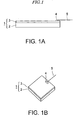
- FIG. 1A is a schematic sectional view of one structural example of a diamond electrode 1 , which comprises a substrate 2 and a conductive diamond film 3 formed on the substrate 2.
- FIG. 1 B is a schematic perspective view of the diamond electrode 1 .
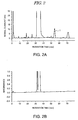
- FIG. 2A shows one example of a chromatogram obtained by an electrochemical detector (ECD) connected to a high-performance liquid chromatograph (HPLC) used in the present invention.
- FIG. 2B is a chromatogram obtained by a UV detector connected to the same HPLC as a comparative example.
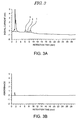
- FIG. 3A is one example of a chromatogram obtained by an electrochemical detector (ECD) connected to a high-performance liquid chromatograph (HPLC) used in the present invention.
- FIG. 3B is a chromatogram obtained by a UV detector connected to the same HPLC as a comparative example.
- FIG. 4A is one example of a chromatogram obtained by an electrochemical detector (ECD) connected to a high-performance liquid chromatograph (HPLC) used in the present invention.
- FIG. 4B is a chromatogram obtained by a UV detector connected to the same HPLC as a comparative example.
- FIG. 5A is one example of a chromatogram of a water extract (A) of UV-2 containing a component that degrades the photographic sensitivity, obtained by an electrochemical detector (ECD) connected to a high-performance liquid chromatograph (HPLC) used in the present invention.
- FIG. 5B is a chromatogram of a water extract (B) of UV-2 that does not degrade the photographic sensitivity.
- FIG. 6A is one example of a chromatogram of unpurified crystals (A) of CP-2 containing a component that degrades the photographic sensitivity, obtained by an electrochemical detector (ECD) connected to a high-performance liquid chromatograph (HPLC) used in the present invention.
- FIG. 6B is a chromatogram of standard CP-2 (B) from which the component that degrades the photographic sensitivity has been removed by purification.
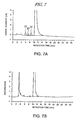
- FIG. 7A is one example of a chromatogram obtained by an electrochemical detector (ECD) connected to a high-performance liquid chromatograph (HPLC) used in the present invention.
- FIG. 7B is a chromatogram obtained by a UV detector connected to the same HPLC as a comparative example.
- the process of the present invention for producing a chemical product from one or more chemicals comprises a step of determining in advance a maximum permissible amount of an impurity peak and/or a minimum permissible amount of an effective component peak under given analytical conditions for at least one of the chemicals by means of liquid chromatography employing an electrochemical detector having a conductive diamond electrode, and a step of determining the usability of a lot of the chemical by subjecting the lot to a measurement by liquid chromatography under the above-mentioned analytical conditions based on an amount of the impurity peak and/or an amount of the effective component peak of the lot.
- the chemical product referred to in the present invention is a product that is formed from one or more chemical materials (chemicals).
- the chemical product includes pharmaceuticals and agrochemicals that contain substantially a single effective component, and cosmetics and photographic materials that are compositions of a large number of chemicals.
- the present invention relates to a process for producing a chemical product using a raw material whose quality has been inspected by liquid chromatography employing an electrochemical detector having a conductive diamond electrode.
- the present invention relates to a process for producing a silver halide photosensitive material using a photographic raw material whose quality has been inspected by liquid chromatography employing as a detector an electrochemical detector having a conductive diamond electrode.
- the present invention may also be applied to the production of pharmaceuticals, agrochemicals, and cosmetics.
- the process for producing a chemical of the present invention comprises a step of determining in advance a maximum permissible amount of an impurity peak and/or a minimum permissible amount of an effective component peak by liquid chromatography employing an electrochemical detector having a conductive diamond electrode under given analytical conditions for the chemical, and a step of subjecting the chemical to a measurement by liquid chromatography under the above-mentioned analytical conditions, wherein a step of a synthetic reaction and/or purification of the chemical is controlled based on an amount of the impurity peak and/or an amount of the effective component peak of the chemical.
- Another aspect of the present invention relates to a quality inspection process for a chemical, the quality inspection process comprising a step of preparing a conductive diamond electrode and a counter electrode, a step of subjecting a chemical to liquid chromatography so as to separate and elute a component, a step of contacting the component eluted by liquid chromatography with the conductive diamond electrode and the counter electrode, a step of applying a voltage for causing an oxidation reaction between the conductive diamond electrode and the counter electrode, and a step of measuring a current at said voltage.
- the above-mentioned quality inspection process preferably comprises a step of determining in advance a maximum permissible amount of an impurity peak and/or a minimum permissible amount of an effective component peak by liquid chromatography employing an electrochemical detector having a conductive diamond electrode under given analytical conditions for the chemical, and a step of subjecting a lot of the chemical to a measurement by liquid chromatography under the above-mentioned analytical conditions and determining the quality of the lot based on an amount of the impurity peak and/or an amount of the effective component peak of the lot.
- the chemical referred to here includes a chemical material (raw material) constituting a chemical product, as well as a raw material (reactant) prior to a reaction, the raw material being used in a step of producing a chemical product (product), and a solvent used as a reaction solvent, etc.
- the above-mentioned quality inspection includes a shipment inspection by a manufacturer of a chemical and an acceptance inspection by a producer of a chemical product using a raw material.
- the conductive diamond electrode is a diamond electrode in which conductivity is imparted to diamond, which is originally an insulator, by doping it with an appropriate conductive dopant, and can be produced by a gas-phase synthetic method and, in particular, a chemical vapor-deposition (CVD) method employing plasma.
- CVD chemical vapor-deposition
- Examples of the conductive dopant include atoms of groups III and V; B, N, P, and As are preferable; among these, nitrogen (N) and boron (B) are more preferable, and B is particularly preferable.
- a p-type semiconductor diamond or a metallic conductive diamond is obtained and can be used as an electrode.
- the conductivity may be controlled by the amount of doping, and it is preferable for the amount of the atom with which diamond is doped to be such that the resulting conductivity is on the order of 1 ⁇ 10 -2 to 10 -6 ⁇ cm.
- the diamond electrode may be formed by making a conductive diamond into an electrode without using a substrate as a support, but it is preferable to form a film of conductive diamond on a conductive substrate.
- the diamond chemical vapor-deposition method is carried out by exciting a raw material gas, which is a mixture of a carbon source and hydrogen, with an excitation source, and supplying and depositing it onto a substrate.
- a raw material gas which is a mixture of a carbon source and hydrogen
- the diamond electrode is an electrode to which conductivity is imparted by doping with a conductive atom such as boron during the course of chemical vapor-deposition (CVD).
- a conductive atom such as boron
- CVD chemical vapor-deposition
- the carbon source an organic compound such as methane or methanol is used.
- the excitation source include a heated filament, microwaves, high frequency waves, direct current arc discharge, direct current glow discharge, combustion flame, etc., and microwaves are preferable.
- the diamond film produced by the CVD method grows on the substrate in a polycrystalline state.
- the substrate include single crystal silicon, Mo, W, Nb, Ti, Fe, Au, Ni, Co, alumina, silicon carbide, and graphite, and a conductive silicon substrate may preferably be used. It is preferable for the silicon substrate to have a conductivity of about 0.1 ⁇ m or higher, and this can be obtained by doping with an appropriate conductive dopant when producing a silicon substrate.
- polishing the surface of a silicon substrate prior to the CVD step Polishing the surface of a silicon (100) plane with, for example, a fine diamond powder having an average particle size of 0.5 ⁇ m enables the nuclear growth of diamond crystals to occur easily.
- This polished surface is washed with acetone.
- As the carbon source an acetone/methanol (9:1 v/v) mixture is used, and B 2 O 3 is dissolved in this mixture as a boron source at a B/C ratio of about 1 mol %.
- a microwave CVD system a microwave plasma chemical vapor-deposition system ('ASTeX') manufactured by Applied Science and Technology, Inc. (Woburn, Massachusetts, USA), etc. may be used.
- polycrystalline diamond is deposited as a film having a thickness of about 40 ⁇ m.
- the resistance measured by a four-point probe method is 10 -3 ⁇ cm. It can be confirmed from a Raman absorption spectrum at 1200 cm -1 that boron doping has been carried out.
- the thickness of the diamond film is not particularly limited, but a thickness of 1 to 100 ⁇ m, and preferably 5 to 50 ⁇ m, may be used.
- the surface of the diamond film can be subjected to oxidation as necessary.
- an electrode is made by coating the back face of the electrode with titanium (Ti) and/or a conductive metal such as gold.
- FIG. 1 shows schematically an example of the structure of the diamond electrode.
- FIG. 1A is a sectional view of a diamond electrode 1 ; this electrode comprises a substrate 2 and a conductive diamond film 3 formed thereon, and this conductive diamond film 3 is connected to a conductor 5 via, for example, a gold coating 4.
- FIG. 1 B is a perspective view of the diamond electrode 1 , in which the conductive diamond film 3 is formed on the substrate 2, and this conductive diamond film 3 is connected to the conductor 5 via the gold coating 4 so as to provide an electrode.
- the conductive diamond electrode is a relatively newly developed electrode, as seen in the patent publications and non-patent publications cited above, and can be used in cyclic voltammetry, a rotating disc electrode, amperometric measurement, etc.
- a representative electrochemical measurement used in the present invention is the amperometric measurement.
- the chromatography preferably employs an amperometric system, in which a raw material comprising organic compounds is separated into components, including impurities, and eluted by normal liquid chromatography, and particularly preferably a high-performance liquid chromatography (HPLC) system, and the diamond electrode is used as a detector for quantifying the eluted components, thus carrying out a quantitative electrochemical analysis.
- HPLC high-performance liquid chromatography
- the diamond electrode and a counter electrode are contacted with a solution of the eluted HPLC component, a voltage that can cause an oxidation reaction between the diamond electrode and the counter electrode is applied, and the current at this voltage is measured.
- HPLC-ECD method a method in which measurement is carried out by an ECD having a diamond electrode connected to HPLC
- components are subjected to an oxidation-reduction (redox) reaction by the diamond electrode, and the change in current over time accompanying the redox reaction is detected.
- the detection results are normally recorded as a group of isolated peaks in which the abscissa is the elution time and the ordinate is the change in current accompanying oxidation-reduction of the eluted component.
- the peak area is proportional to the amount eluted, and the elution time is characteristic of the component eluted.
- Identification of a component eluted can be carried out if necessary by separately checking with the elution time of a standard sample.
- a component can be directly identified by LC-MS using a mass spectrometer as the detector.
- HPLC high-performance liquid chromatography
- a liquid chromatography high-performance liquid chromatography
- an absorptiometer an ultraviolet spectrophotometer (UV)
- UV ultraviolet spectrophotometer
- the liquid chromatograph (LC) to which the electrochemical detector used in the present invention is connected ranges from a general-purpose LC to a semimicro LC. It is preferable for a cell of the amperometric system to have a capacity of 1 to 10 ⁇ L.
- LC column a mobile phase, a column temperature, a flow rate, an injection amount, etc.
- electrochemical detector may be used by connecting it in series following a generally used ultraviolet (240 nm, etc.) or visible detector or a refractive index detector, or by replacing such a detector.
- an electrochemical detector having a conductive diamond electrode is used as the detector for the liquid chromatography.
- the electrochemical detector preferably employs an electrochemically stable electrode, and a precious metal electrode such as silver, gold, or platinum, is conventionally used in various types of analyzer.
- a precious metal electrode such as silver, gold, or platinum
- the conductive diamond electrode is superior to the conventionally used electrodes in terms of stability, detection sensitivity, and the variety of detectable impurities.
- the conductive diamond electrode is also called simply a 'diamond electrode' in the present specification.
- Quality inspection preferably employs measurement by a flow injection method using a flow cell.
- the conductive diamond electrode has high detection sensitivity and excellent reproducibility and stability compared with the conventional electrodes.
- the conductive diamond electrode enables a trace amount of impurity to be detected because of low background current, low noise, and low drift. Due to high detection sensitivity, a sub- ⁇ M sample concentration can be detected. Since the potential region (potential window) in which electrolysis of water does not occur is wide, a compound that is conventionally hard to detect can be detected. Since measurement can be carried out at a high potential, a raw material that is difficult to oxidize/reduce can be detected. For example, a sulfur compound such as a thiol or a disulfide can be detected in an aqueous solution system. Furthermore, the time taken for stabilization after starting operation until a measurement can be carried out can be shortened.
- the electrode Since an oxidation product does not adsorb on the electrode irreversibly, the electrode is stable and has good reproducibility.
- Measurement employs an amperometric system, and the electrolysis cell employs as a working electrode the conductive diamond electrode.
- the counter electrode (reference electrode) is not particularly limited, but a saturated calomel electrode (SCE) may be used, and a silver-silver chloride (Ag/AgCl) electrode is preferably used.
- SCE saturated calomel electrode
- Ag/AgCl silver-silver chloride
- platinum foil is preferably used as a control electrode.
- the conductive diamond electrode is preferably subjected to regeneration after being used for measurement a predetermined number of times. This regeneration may be carried out on-line without removing the electrode from the flow cell. Regeneration may preferably be carried out by anodization.
- an ED703 electrochemical detector manufactured by GL Sciences Inc. (Shinjuku, Tokyo, Japan) can be cited.
- a process for producing a silver halide photosensitive material is explained as a representative example of the present invention.
- a maximum permissible amount of impurity and/or a minimum permissible amount of effective component under given analytical conditions are determined by liquid chromatography employing an electrochemical detector using the conductive diamond electrode. That is, stable production can be achieved by use of a raw material in which changes in type and content of a component are restricted to predetermined ranges compared with the component content of a raw material (standard) for which normal photographic properties are guaranteed. In some cases, there might be an abnormality in the photographic properties due to an impurity component that cannot be detected in the standard sample, or the photographic properties might be degraded due to a decrease in the amount of the effective component of the standard sample.
- a raw material that does not cause an abnormality in the photographic properties can be selected by electrochemical detection.
- electrochemical detection By the use of one or more types of these normal photographic raw materials, an intended photographic material can be produced stably. Details are described below.
- One of the simplest specific examples of the photographic raw material is an organic solvent.
- methyl alcohol (methanol) is used as a solvent that can dissolve many photographic additives.
- Methanol that is used in the production of a photographic material should not contain any impurity that causes an abnormality in the photographic performance. Contamination might occur during the process of transporting distilled and purified methanol to a photographic factory by several means through a piping system from a distillation vessel. For example, when methanol is transported by tanker or carried in a drum, unexpected contaminants due to dirt from piping or a container, etc. might contaminate the methanol.
- a high quality chemical can be produced.
- a photographic raw material is preferable as the chemical.
- Photographic faults vary in their severity; examples of less severe cases include (1) a case in which there are spot faults only for a specific product, (2) a case in which an abnormality appears only under limited production conditions for a light-sensitive material (when time has elapsed after dissolution of a silver halide emulsion), and (3) a case in which it is normal for standard use but an abnormality appears in the low illumination intensity sensitivity; the causes of these quality problems are not clear, and in many cases direct countermeasures cannot be taken during production and purification steps of the raw materials.
- the fault (1) above correlates with the peak of a specific impurity in an antifoggant (AF agent), and it becomes possible to prevent the fault from happening by quantitative analysis of the impurity. It has also been found that the fault (2) above correlates with the amount of a peak due to a specific impurity contained in another AF agent.
- AF agent antifoggant
- Examples of representative compounds as photographic raw materials to which the present invention can be applied include couplers, color antifoggants, antifading agents, stabilizers/scavengers, dispersants, solvents, ultraviolet degradation inhibitors, surfactants, hardening agents, and filter dyes.
- photographic materials include color papers, color negatives, color reversal materials, materials for a diffusion transfer method, black and white light-sensitive materials, and heat-developable light sensitive materials.
- the process of the present invention can be applied to a process of inspecting, accepting, or producing at least one type of the above materials.
- the present invention can also be applied to a process for producing a photosensitive material using a raw material that has been produced, inspected, or accepted as above.
- Production specifications for a photographic material that include a conventional coating test may be changed so as to rely on a test employing the electrochemical detector of the present invention.
- a photographic raw material for which there is a possibility of contamination with an impurity having oxidation/reduction properties and consequently inhibiting the photographic properties.
- a silver halide photosensitive material is subjected to a development treatment involving selective reduction of silver halide grains having a latent image, even a trace amount of an impurity having reducing properties causes a photographic fault.
- the photographic raw material includes raw materials that cannot be dissolved in an organic solvent or a water-based organic solvent, which is a mixture of water and an organic solvent. These raw materials may be subjected to measurement by HPLC-ECD after carrying out an appropriate pretreatment to give a test sample. Examples thereof are described below.
- aqueous suspension of polymer particles it may be subjected to centrifugation and only the supernatant may be analyzed.
- a solution of a water-soluble polymer it may be subjected to ultrafiltration and the filtrate may be subjected to measurement.
- a water extract obtained by water extraction can be subjected to analysis.
- the present invention also relates to a process for producing a photographic raw material, and is characterized by controlling a synthetic reaction and/or purification step so that, in an amperometric chromatogram obtained by high-performance liquid chromatography employing an electrochemical detector using a conductive diamond electrode, the amount of an impurity peak is not greater than a predetermined level or an effective component peak is within a predetermined range.
- the present invention also relates to a production process comprising a step of determining the usability of a lot, which is a quality-assured unit of a chemical that has been synthesized and/or purified under specified conditions.
- the present invention also relates to an inspection process for a photographic raw material, and is characterized by inspecting a photographic raw material so that, in an amperometric chromatogram obtained by high-performance liquid chromatography employing an electrochemical detector using a conductive diamond electrode, the amount of a peak of an impurity that inhibits photographic properties is not greater than a predetermined level or an effective component peak is within a predetermined range.
- the present invention also relates to an acceptance process for a photographic raw material, and is characterized by accepting the photographic raw material by inspecting so that, in an amperometric chromatogram obtained by high-performance liquid chromatography employing an electrochemical detector using a conductive diamond electrode, the amount of a peak of an impurity that inhibits photographic properties is not greater than a predetermined level or an effective component peak is within a predetermined range.
- the present invention relates to a process for producing a pharmaceutical in accordance with production specifications including detection of an impurity that inhibits health or detection of an effective component by liquid chromatography employing an electrochemical detector.
- the present invention also relates to a process for producing a cosmetic in accordance with production specifications including detection of an impurity that inhibits quality or detection of an effective component by liquid chromatography employing an electrochemical detector.
- the separation columns all employed Inertsil ODS-3 with a particle size of 5 ⁇ m manufactured by GL Sciences Inc., the inner diameter was 4.6 mm, and the length was selected from 150 mm and 250 mm.
- the column temperature was 40°C.
- the eluent flow rate was always 1 mL/min.
- the electrode temperature for ECD was always 35°C.
- An antifoggant AF1 (structural formula is shown below), which is a photographic raw material, was subjected to an HPLC-ECD measurement under the conditions below.
- Test solution 25 mg of sample dissolved in 5 mL of eluent, and 5 ⁇ L thereof injected.
- ECD conditions applied voltage 1.2 V vs Ag/AgCl UV detection conditions: detection wavelength 200 nm
- a peak appearing at a retention time of 54.35 minutes in the HPLC-ECD chromatogram corresponded to an impurity that inhibited the photographic properties (spot fault in color reversal film) (see FIG. 2A).
- the UV detector could not detect this peak (see FIG. 2B).
- AF2 AF2 free of this impurity peak a normal color reversal film (ISO100) free of faults could be produced.
- FIG. 3A Three peaks appearing in a retention time range of 6.31 to 8.57 minutes observed in the HPLC-ECD chromatogram corresponded to impurities that inhibited the photographic properties (fogging fault) (see FIG. 3A).
- FIG. 3B a chromatogram from a UV detector connected to the same HPLC is shown in FIG. 3B.
- a coupler 1 (structural formula is shown below), which is used for photographic production, was subjected to an HPLC-ECD measurement under the conditions below.
- Eluent : A/B/C/D 950/50/2/2 (ratio by volume) mixed liquid
- UV-1 structural formula is shown below
- HPLC-ECD HPLC-ECD measurement
- FIG. 4 shows representative ECD (A) and UV (B) HPLC profiles of UV-1.
- the component at a retention time of 14.4 minutes in FIG. 4A is the main component, and when the ratio of the main component among components eluted after 3 minutes based on integrated area was 96% or higher in the HPLC-ECD chromatogram, good photographic performance was exhibited.
- UV-1 having a main component ratio of 96% or higher, a normal color paper free of faults could be produced.
- UV-2 structural formula is shown below, which is a photographic raw material, was subjected to a measurement under the conditions below.
- UV-2 A 5g sample of UV-2 was dissolved in 50 mL of chloroform at room temperature while stirring for about 10 minutes. At the same room temperature, 10 mL of a 0.2% aqueous solution of phosphoric acid was added to this UV-2 solution, and the mixture was stirred vigorously for 30 minutes.
- the mixture was subsequently allowed to stand at room temperature for 1 hour so as to separate into a chloroform phase and an aqueous phase, and as an HPLC analysis test sample a part was sampled from the aqueous phase, which was the upper phase, using a pipette.
- FIG. 5 shows HPLC-ECD profiles of (A) a water extract of UV-2 containing a component that degrades photographic sensitivity and (B) a water extract of UV-2 that does not affect the photographic sensitivity.
- Unpurified and purified cyan coupler CP-2 (structural formula is shown below), which is a photographic raw material, was subjected to a measurement under the conditions below.
- FIG. 6 shows HPLC-ECD profiles of (A) unpurified crystals of CP-2 containing components that degrade the photographic sensitivity and (B) a standard from which the components that degrade photographic sensitivity had been removed by purification.
- Quality inspection of the chemicals of Examples 1 to 9 could be carried out as a shipment inspection and/or an acceptance inspection. Furthermore, a step of determining the usability of the chemicals of Example 1 to 9 could be carried out in production of the chemical product as a shipment inspection by a supplier of the chemical and/or as an acceptance inspection of the chemical products by a production factory.
- a surfactant W-1 (a mixture represented by structural formulae A and B), which is a cosmetic raw material, was subjected to an HPLC-ECD measurement under the conditions below.
- R 1 alkyl group having 9 to 13 carbons
- R 2 alkyl group having 9 to 13 carbons
- UV-3 structural formula is shown below, which is a paint or cosmetic raw material, was subjected to an HPLC-ECD measurement under the conditions below.
- a skin sensitization test was carried out by the aforementioned method.
- FIG. 7 shows representative ECD (A) and UV (B) HPLC profiles of UV-3.
- the skin sensitization of the raw material could be evaluated quickly.
Landscapes
- Physics & Mathematics (AREA)
- Health & Medical Sciences (AREA)
- Life Sciences & Earth Sciences (AREA)
- Chemical & Material Sciences (AREA)
- Analytical Chemistry (AREA)
- Biochemistry (AREA)
- General Health & Medical Sciences (AREA)
- General Physics & Mathematics (AREA)
- Immunology (AREA)
- Pathology (AREA)
- Investigating Or Analyzing Materials By The Use Of Electric Means (AREA)
- Investigating Or Analyzing Non-Biological Materials By The Use Of Chemical Means (AREA)
Applications Claiming Priority (2)
| Application Number | Priority Date | Filing Date | Title |
|---|---|---|---|
| JP2004092255 | 2004-03-26 | ||
| JP2004092255 | 2004-03-26 |
Publications (2)
| Publication Number | Publication Date |
|---|---|
| EP1580549A2 true EP1580549A2 (fr) | 2005-09-28 |
| EP1580549A3 EP1580549A3 (fr) | 2005-12-21 |
Family
ID=34858508
Family Applications (1)
| Application Number | Title | Priority Date | Filing Date |
|---|---|---|---|
| EP05006663A Withdrawn EP1580549A3 (fr) | 2004-03-26 | 2005-03-24 | Procédé pour produire des produits chimiques et procédé de contrôle pour des substances chimiques utilisées dans ledit procédé |
Country Status (2)
| Country | Link |
|---|---|
| US (1) | US20050214949A1 (fr) |
| EP (1) | EP1580549A3 (fr) |
Cited By (1)
| Publication number | Priority date | Publication date | Assignee | Title |
|---|---|---|---|---|
| CN110865131A (zh) * | 2018-08-27 | 2020-03-06 | 襄阳中诚检测科技有限公司 | 一种由一种或多种化学品生产化学产品的方法 |
Families Citing this family (1)
| Publication number | Priority date | Publication date | Assignee | Title |
|---|---|---|---|---|
| US8395318B2 (en) * | 2007-02-14 | 2013-03-12 | Ritedia Corporation | Diamond insulated circuits and associated methods |
Family Cites Families (15)
| Publication number | Priority date | Publication date | Assignee | Title |
|---|---|---|---|---|
| US4343767A (en) * | 1978-01-18 | 1982-08-10 | The Dow Chemical Company | Chromatography apparatus with electrochemical detector having carbon-black containing working electrode |
| JPS62177545A (ja) * | 1986-01-31 | 1987-08-04 | Nippon Zeon Co Ltd | 現像速度が安定化された現像液 |
| JPS6319847A (ja) * | 1986-07-14 | 1988-01-27 | Oki Electric Ind Co Ltd | 半導体記憶装置 |
| JPH01255269A (ja) * | 1988-04-05 | 1989-10-12 | Oki Electric Ind Co Ltd | 半導体記憶装置 |
| JP2918307B2 (ja) * | 1990-08-07 | 1999-07-12 | 沖電気工業株式会社 | 半導体記憶素子 |
| US5399247A (en) * | 1993-12-22 | 1995-03-21 | Eastman Kodak Company | Method of electrolysis employing a doped diamond anode to oxidize solutes in wastewater |
| JPH08250673A (ja) * | 1995-03-15 | 1996-09-27 | Nec Corp | 半導体装置 |
| US5995410A (en) * | 1997-06-20 | 1999-11-30 | Micron Technology, Inc. | Multiplication of storage capacitance in memory cells by using the Miller effect |
| WO2000070682A1 (fr) * | 1999-05-14 | 2000-11-23 | Hitachi, Ltd. | Dispositif a circuit integre en semi-conducteur |
| EP1055926A3 (fr) * | 1999-05-28 | 2001-11-14 | Kabushiki Kaisha Meidensha | Analyse électrochimique utilisant une électrode à revêtement de diamant, et système d'analyse électrochimique basé sur celle-ci |
| JP2001093988A (ja) * | 1999-07-22 | 2001-04-06 | Sony Corp | 半導体記憶装置 |
| US6515195B1 (en) * | 1999-08-16 | 2003-02-04 | Johnson & Johnson Inc. | Sanitary napkin with improved liquid retention capability |
| US6452858B1 (en) * | 1999-11-05 | 2002-09-17 | Hitachi, Ltd. | Semiconductor device |
| JP2002117670A (ja) * | 2000-10-04 | 2002-04-19 | Mitsubishi Electric Corp | 半導体記憶装置 |
| US6787298B2 (en) * | 2001-10-03 | 2004-09-07 | Fuji Photo Film Co., Ltd. | Photothermographic material |
-
2005
- 2005-03-22 US US11/085,221 patent/US20050214949A1/en not_active Abandoned
- 2005-03-24 EP EP05006663A patent/EP1580549A3/fr not_active Withdrawn
Cited By (1)
| Publication number | Priority date | Publication date | Assignee | Title |
|---|---|---|---|---|
| CN110865131A (zh) * | 2018-08-27 | 2020-03-06 | 襄阳中诚检测科技有限公司 | 一种由一种或多种化学品生产化学产品的方法 |
Also Published As
| Publication number | Publication date |
|---|---|
| US20050214949A1 (en) | 2005-09-29 |
| EP1580549A3 (fr) | 2005-12-21 |
Similar Documents
| Publication | Publication Date | Title |
|---|---|---|
| Zhu et al. | Facile quantification of enantiomeric excess and concentration with indicator-displacement assays: an example in the analyses of α-hydroxyacids | |
| Nohta et al. | Highly selective fluorometric determination of polyamines based on intramolecular excimer-forming derivatization with a pyrene-labeling reagent | |
| Ryberg et al. | Chromatographic and mass spectrometric methods for quantitative determination of 3-nitrotyrosine in biological samples and their application to human samples | |
| Li et al. | Determination of adrenaline by using inhibited Ru (bpy) 32+ electrochemiluminescence | |
| Zavázalová et al. | Voltammetric and amperometric determination of mixtures of aminobiphenyls and aminonaphthalenes using boron doped diamond electrode | |
| Chen et al. | Selective fluorescence quenching of polynuclear aromatic hydrocarbons in microcolumn liquid chromatography | |
| Murtada et al. | Development of an aluminium doped TiO2 nanoparticles‐modified screen printed carbon electrode for electrochemical sensing of vanillin in food samples | |
| McLaughlin et al. | Influence of temperature on the electrochemical window of boron doped diamond: a comparison of commercially available electrodes | |
| Chotoye et al. | Development of an electrochemical surface‐enhanced Raman spectroscopic biosensor for the direct detection of glutathione | |
| Krause et al. | pH-insensitive ion selective optode: a coextraction-based sensor for potassium ions | |
| Wang et al. | Absolute quantitation of N-nitrosamines by coulometric mass spectrometry without using standards | |
| Dejmkova et al. | Voltammetric and amperometric determination of selected catecholamine metabolites using glassy carbon paste electrode | |
| Ribeiro et al. | A LC–MS/MS method for the simultaneous determination of 6‐cyanodopamine, 6‐nitrodopamine, 6‐nitrodopa, 6‐nitroadrenaline and 6‐bromodopamine in human plasma and its clinical application in patients with chronic kidney disease | |
| Murillo Pulgarín et al. | A sensitive resonance Rayleigh scattering sensor for dopamine in urine using upconversion nanoparticles | |
| EP1580549A2 (fr) | Procédé pour produire des produits chimiques et procédé de contrôle pour des substances chimiques utilisées dans ledit procédé | |
| Rageh et al. | Off-line and on-line enrichment of α-aminocephalosporins for their analysis in surface water samples using CZE coupled to LIF | |
| JP2005309391A (ja) | 化学製品の製造方法及びこれに用いる化学品の品質検査方法 | |
| Wang et al. | Hg2+‐selective ratiometric and colorimetric probe based on dansyl–rhodamine and its staining function in cell imaging | |
| Kehr | Determination of catecholamines by automated precolumn derivatization and reversed-phase column liquid chromatography with fluorescence detection | |
| Ye et al. | Indirect electrochemical detection in liquid chromatography | |
| Skrzypek | Electrochemical study of moroxydine and its voltammetric determination with a silver amalgam film electrode | |
| Micallef et al. | Quantification of 14 C-labeled amino acids by reverse-phase high performance liquid chromatography | |
| Vandeput et al. | Electrochemical studies of ethoxyquin and its determination in salmon samples by flow injection analysis with an amperometric dual detector | |
| Huang et al. | Rational design of an iminocoumarin‐based fluorescence probe for peroxynitrite with high signal‐to‐noise ratio | |
| Ohtawa et al. | An on-line heart-cutting two-dimensional liquid chromatography method for intracellular 2-hydroxyglutarate enantiomers |
Legal Events
| Date | Code | Title | Description |
|---|---|---|---|
| PUAI | Public reference made under article 153(3) epc to a published international application that has entered the european phase |
Free format text: ORIGINAL CODE: 0009012 |
|
| AK | Designated contracting states |
Kind code of ref document: A2 Designated state(s): AT BE BG CH CY CZ DE DK EE ES FI FR GB GR HU IE IS IT LI LT LU MC NL PL PT RO SE SI SK TR |
|
| AX | Request for extension of the european patent |
Extension state: AL BA HR LV MK YU |
|
| PUAL | Search report despatched |
Free format text: ORIGINAL CODE: 0009013 |
|
| AK | Designated contracting states |
Kind code of ref document: A3 Designated state(s): AT BE BG CH CY CZ DE DK EE ES FI FR GB GR HU IE IS IT LI LT LU MC NL PL PT RO SE SI SK TR |
|
| AX | Request for extension of the european patent |
Extension state: AL BA HR LV MK YU |
|
| RIC1 | Information provided on ipc code assigned before grant |
Ipc: 7C 25B 11/04 B Ipc: 7G 01N 27/30 B Ipc: 7G 01N 30/64 A |
|
| 17P | Request for examination filed |
Effective date: 20060331 |
|
| AKX | Designation fees paid |
Designated state(s): AT BE BG CH CY CZ DE DK EE ES FI FR GB GR HU IE IS IT LI LT LU MC NL PL PT RO SE SI SK TR |
|
| 17Q | First examination report despatched |
Effective date: 20061221 |
|
| RAP1 | Party data changed (applicant data changed or rights of an application transferred) |
Owner name: FUJIFILM CORPORATION |
|
| STAA | Information on the status of an ep patent application or granted ep patent |
Free format text: STATUS: THE APPLICATION IS DEEMED TO BE WITHDRAWN |
|
| 18D | Application deemed to be withdrawn |
Effective date: 20070502 |