EP1588802A1 - Tampon de polissage résistant à la délamination - Google Patents
Tampon de polissage résistant à la délamination Download PDFInfo
- Publication number
- EP1588802A1 EP1588802A1 EP04252306A EP04252306A EP1588802A1 EP 1588802 A1 EP1588802 A1 EP 1588802A1 EP 04252306 A EP04252306 A EP 04252306A EP 04252306 A EP04252306 A EP 04252306A EP 1588802 A1 EP1588802 A1 EP 1588802A1
- Authority
- EP
- European Patent Office
- Prior art keywords
- polishing
- polishing pad
- chemical mechanical
- mechanical polishing
- pressure sensitive
- Prior art date
- Legal status (The legal status is an assumption and is not a legal conclusion. Google has not performed a legal analysis and makes no representation as to the accuracy of the status listed.)
- Withdrawn
Links
- 238000005498 polishing Methods 0.000 title claims abstract description 173
- 230000032798 delamination Effects 0.000 title claims abstract description 18
- 229920001169 thermoplastic Polymers 0.000 claims abstract description 43
- 239000004416 thermosoftening plastic Substances 0.000 claims abstract description 43
- 239000004820 Pressure-sensitive adhesive Substances 0.000 claims abstract description 41
- 239000000126 substance Substances 0.000 claims abstract description 40
- 235000012431 wafers Nutrition 0.000 claims abstract description 26
- 239000002002 slurry Substances 0.000 claims abstract description 22
- 239000004065 semiconductor Substances 0.000 claims abstract description 13
- 239000000853 adhesive Substances 0.000 claims description 54
- 230000001070 adhesive effect Effects 0.000 claims description 54
- 239000006260 foam Substances 0.000 claims description 39
- 238000000034 method Methods 0.000 claims description 30
- 229920001296 polysiloxane Polymers 0.000 claims description 25
- 230000008569 process Effects 0.000 claims description 18
- 239000000203 mixture Substances 0.000 claims description 16
- 239000003795 chemical substances by application Substances 0.000 claims description 14
- 239000005038 ethylene vinyl acetate Substances 0.000 claims description 13
- 229920001200 poly(ethylene-vinyl acetate) Polymers 0.000 claims description 12
- 239000004698 Polyethylene Substances 0.000 claims description 11
- 229920000573 polyethylene Polymers 0.000 claims description 11
- NIXOWILDQLNWCW-UHFFFAOYSA-N acrylic acid group Chemical group C(C=C)(=O)O NIXOWILDQLNWCW-UHFFFAOYSA-N 0.000 claims description 9
- 229920001903 high density polyethylene Polymers 0.000 claims description 9
- 239000004700 high-density polyethylene Substances 0.000 claims description 9
- VYPSYNLAJGMNEJ-UHFFFAOYSA-N Silicium dioxide Chemical group O=[Si]=O VYPSYNLAJGMNEJ-UHFFFAOYSA-N 0.000 claims description 8
- XUIMIQQOPSSXEZ-UHFFFAOYSA-N Silicon Chemical compound [Si] XUIMIQQOPSSXEZ-UHFFFAOYSA-N 0.000 claims description 8
- 229910052710 silicon Inorganic materials 0.000 claims description 8
- 239000010703 silicon Substances 0.000 claims description 8
- DQXBYHZEEUGOBF-UHFFFAOYSA-N but-3-enoic acid;ethene Chemical compound C=C.OC(=O)CC=C DQXBYHZEEUGOBF-UHFFFAOYSA-N 0.000 claims description 7
- 239000011248 coating agent Substances 0.000 claims description 6
- 238000000576 coating method Methods 0.000 claims description 6
- 230000009977 dual effect Effects 0.000 claims description 5
- 238000010030 laminating Methods 0.000 claims description 5
- 229920000728 polyester Polymers 0.000 claims description 5
- GWEVSGVZZGPLCZ-UHFFFAOYSA-N Titan oxide Chemical compound O=[Ti]=O GWEVSGVZZGPLCZ-UHFFFAOYSA-N 0.000 claims description 4
- 238000010521 absorption reaction Methods 0.000 claims description 4
- 230000008878 coupling Effects 0.000 claims description 4
- 238000010168 coupling process Methods 0.000 claims description 4
- 238000005859 coupling reaction Methods 0.000 claims description 4
- 229920001684 low density polyethylene Polymers 0.000 claims description 4
- OGIDPMRJRNCKJF-UHFFFAOYSA-N titanium oxide Inorganic materials [Ti]=O OGIDPMRJRNCKJF-UHFFFAOYSA-N 0.000 claims description 4
- 239000000284 extract Substances 0.000 claims description 3
- 239000004702 low-density polyethylene Substances 0.000 claims description 3
- 229920001179 medium density polyethylene Polymers 0.000 claims 1
- 239000004701 medium-density polyethylene Substances 0.000 claims 1
- -1 felt Polymers 0.000 description 25
- 239000000463 material Substances 0.000 description 20
- 229920000642 polymer Polymers 0.000 description 18
- 239000000758 substrate Substances 0.000 description 15
- 239000000945 filler Substances 0.000 description 13
- 239000000376 reactant Substances 0.000 description 13
- 239000002245 particle Substances 0.000 description 11
- 238000004519 manufacturing process Methods 0.000 description 8
- 238000002474 experimental method Methods 0.000 description 7
- 125000004432 carbon atom Chemical group C* 0.000 description 6
- 238000005187 foaming Methods 0.000 description 6
- 229910052751 metal Inorganic materials 0.000 description 6
- 239000002184 metal Substances 0.000 description 6
- MHAJPDPJQMAIIY-UHFFFAOYSA-N Hydrogen peroxide Chemical compound OO MHAJPDPJQMAIIY-UHFFFAOYSA-N 0.000 description 5
- 150000001450 anions Chemical class 0.000 description 5
- 150000003839 salts Chemical class 0.000 description 5
- 229920002725 thermoplastic elastomer Polymers 0.000 description 5
- XLYOFNOQVPJJNP-UHFFFAOYSA-N water Substances O XLYOFNOQVPJJNP-UHFFFAOYSA-N 0.000 description 5
- QGZKDVFQNNGYKY-UHFFFAOYSA-N Ammonia Chemical compound N QGZKDVFQNNGYKY-UHFFFAOYSA-N 0.000 description 4
- 239000004677 Nylon Substances 0.000 description 4
- 239000004743 Polypropylene Substances 0.000 description 4
- 238000013459 approach Methods 0.000 description 4
- 239000000919 ceramic Substances 0.000 description 4
- 229920001778 nylon Polymers 0.000 description 4
- 229920003023 plastic Polymers 0.000 description 4
- 239000004033 plastic Substances 0.000 description 4
- 239000004417 polycarbonate Substances 0.000 description 4
- 229920000515 polycarbonate Polymers 0.000 description 4
- 229920001155 polypropylene Polymers 0.000 description 4
- 150000003608 titanium Chemical class 0.000 description 4
- CTQNGGLPUBDAKN-UHFFFAOYSA-N O-Xylene Chemical compound CC1=CC=CC=C1C CTQNGGLPUBDAKN-UHFFFAOYSA-N 0.000 description 3
- CBENFWSGALASAD-UHFFFAOYSA-N Ozone Chemical compound [O-][O+]=O CBENFWSGALASAD-UHFFFAOYSA-N 0.000 description 3
- 125000000217 alkyl group Chemical group 0.000 description 3
- 229920001577 copolymer Polymers 0.000 description 3
- XLYOFNOQVPJJNP-UHFFFAOYSA-M hydroxide Chemical compound [OH-] XLYOFNOQVPJJNP-UHFFFAOYSA-M 0.000 description 3
- 239000011256 inorganic filler Substances 0.000 description 3
- 229910003475 inorganic filler Inorganic materials 0.000 description 3
- 239000002198 insoluble material Substances 0.000 description 3
- 230000001590 oxidative effect Effects 0.000 description 3
- 229920000098 polyolefin Polymers 0.000 description 3
- 239000000377 silicon dioxide Substances 0.000 description 3
- 229910052715 tantalum Inorganic materials 0.000 description 3
- 238000012360 testing method Methods 0.000 description 3
- 239000010936 titanium Substances 0.000 description 3
- 229910052719 titanium Inorganic materials 0.000 description 3
- 239000008096 xylene Substances 0.000 description 3
- IJGRMHOSHXDMSA-UHFFFAOYSA-N Atomic nitrogen Chemical compound N#N IJGRMHOSHXDMSA-UHFFFAOYSA-N 0.000 description 2
- VTYYLEPIZMXCLO-UHFFFAOYSA-L Calcium carbonate Chemical compound [Ca+2].[O-]C([O-])=O VTYYLEPIZMXCLO-UHFFFAOYSA-L 0.000 description 2
- 229920002396 Polyurea Polymers 0.000 description 2
- 239000004433 Thermoplastic polyurethane Substances 0.000 description 2
- ATJFFYVFTNAWJD-UHFFFAOYSA-N Tin Chemical compound [Sn] ATJFFYVFTNAWJD-UHFFFAOYSA-N 0.000 description 2
- 239000003522 acrylic cement Substances 0.000 description 2
- 150000001298 alcohols Chemical class 0.000 description 2
- 150000004703 alkoxides Chemical class 0.000 description 2
- 125000003545 alkoxy group Chemical group 0.000 description 2
- 229910052782 aluminium Inorganic materials 0.000 description 2
- 229910021529 ammonia Inorganic materials 0.000 description 2
- 230000008859 change Effects 0.000 description 2
- 150000001875 compounds Chemical class 0.000 description 2
- 238000010276 construction Methods 0.000 description 2
- 238000004132 cross linking Methods 0.000 description 2
- 238000005520 cutting process Methods 0.000 description 2
- 230000007812 deficiency Effects 0.000 description 2
- 238000009792 diffusion process Methods 0.000 description 2
- 230000000694 effects Effects 0.000 description 2
- 150000002148 esters Chemical class 0.000 description 2
- 238000007765 extrusion coating Methods 0.000 description 2
- 239000012634 fragment Substances 0.000 description 2
- 229920001519 homopolymer Polymers 0.000 description 2
- 238000010348 incorporation Methods 0.000 description 2
- 229910052500 inorganic mineral Inorganic materials 0.000 description 2
- 238000002955 isolation Methods 0.000 description 2
- 229910052748 manganese Inorganic materials 0.000 description 2
- 239000011572 manganese Substances 0.000 description 2
- 229940071125 manganese acetate Drugs 0.000 description 2
- UOGMEBQRZBEZQT-UHFFFAOYSA-L manganese(2+);diacetate Chemical compound [Mn+2].CC([O-])=O.CC([O-])=O UOGMEBQRZBEZQT-UHFFFAOYSA-L 0.000 description 2
- 239000011707 mineral Substances 0.000 description 2
- 235000010755 mineral Nutrition 0.000 description 2
- 230000007935 neutral effect Effects 0.000 description 2
- QIQXTHQIDYTFRH-UHFFFAOYSA-N octadecanoic acid Chemical compound CCCCCCCCCCCCCCCCCC(O)=O QIQXTHQIDYTFRH-UHFFFAOYSA-N 0.000 description 2
- 229920000620 organic polymer Polymers 0.000 description 2
- 150000002902 organometallic compounds Chemical class 0.000 description 2
- 125000002524 organometallic group Chemical group 0.000 description 2
- SOQBVABWOPYFQZ-UHFFFAOYSA-N oxygen(2-);titanium(4+) Chemical class [O-2].[O-2].[Ti+4] SOQBVABWOPYFQZ-UHFFFAOYSA-N 0.000 description 2
- 229920001470 polyketone Polymers 0.000 description 2
- 229920002635 polyurethane Polymers 0.000 description 2
- 239000004814 polyurethane Substances 0.000 description 2
- 239000004800 polyvinyl chloride Substances 0.000 description 2
- 229920000915 polyvinyl chloride Polymers 0.000 description 2
- 239000000454 talc Substances 0.000 description 2
- 229910052623 talc Inorganic materials 0.000 description 2
- 229920002803 thermoplastic polyurethane Polymers 0.000 description 2
- 229910052718 tin Inorganic materials 0.000 description 2
- 229910052723 transition metal Inorganic materials 0.000 description 2
- 150000003624 transition metals Chemical class 0.000 description 2
- HYZQBNDRDQEWAN-LNTINUHCSA-N (z)-4-hydroxypent-3-en-2-one;manganese(3+) Chemical compound [Mn+3].C\C(O)=C\C(C)=O.C\C(O)=C\C(C)=O.C\C(O)=C\C(C)=O HYZQBNDRDQEWAN-LNTINUHCSA-N 0.000 description 1
- SMZOUWXMTYCWNB-UHFFFAOYSA-N 2-(2-methoxy-5-methylphenyl)ethanamine Chemical compound COC1=CC=C(C)C=C1CCN SMZOUWXMTYCWNB-UHFFFAOYSA-N 0.000 description 1
- KGIGUEBEKRSTEW-UHFFFAOYSA-N 2-vinylpyridine Chemical compound C=CC1=CC=CC=N1 KGIGUEBEKRSTEW-UHFFFAOYSA-N 0.000 description 1
- UFFRSDWQMJYQNE-UHFFFAOYSA-N 6-azaniumylhexylazanium;hexanedioate Chemical compound [NH3+]CCCCCC[NH3+].[O-]C(=O)CCCCC([O-])=O UFFRSDWQMJYQNE-UHFFFAOYSA-N 0.000 description 1
- QTBSBXVTEAMEQO-UHFFFAOYSA-M Acetate Chemical group CC([O-])=O QTBSBXVTEAMEQO-UHFFFAOYSA-M 0.000 description 1
- PNEYBMLMFCGWSK-UHFFFAOYSA-N Alumina Chemical class [O-2].[O-2].[O-2].[Al+3].[Al+3] PNEYBMLMFCGWSK-UHFFFAOYSA-N 0.000 description 1
- 239000004604 Blowing Agent Substances 0.000 description 1
- OKTJSMMVPCPJKN-UHFFFAOYSA-N Carbon Chemical compound [C] OKTJSMMVPCPJKN-UHFFFAOYSA-N 0.000 description 1
- BVKZGUZCCUSVTD-UHFFFAOYSA-L Carbonate Chemical compound [O-]C([O-])=O BVKZGUZCCUSVTD-UHFFFAOYSA-L 0.000 description 1
- 239000004593 Epoxy Substances 0.000 description 1
- 238000004566 IR spectroscopy Methods 0.000 description 1
- 229920010126 Linear Low Density Polyethylene (LLDPE) Polymers 0.000 description 1
- JLVVSXFLKOJNIY-UHFFFAOYSA-N Magnesium ion Chemical compound [Mg+2] JLVVSXFLKOJNIY-UHFFFAOYSA-N 0.000 description 1
- PWHULOQIROXLJO-UHFFFAOYSA-N Manganese Chemical compound [Mn] PWHULOQIROXLJO-UHFFFAOYSA-N 0.000 description 1
- CERQOIWHTDAKMF-UHFFFAOYSA-N Methacrylic acid Chemical compound CC(=C)C(O)=O CERQOIWHTDAKMF-UHFFFAOYSA-N 0.000 description 1
- 229920002302 Nylon 6,6 Polymers 0.000 description 1
- 239000004952 Polyamide Substances 0.000 description 1
- 229910052581 Si3N4 Inorganic materials 0.000 description 1
- 235000021355 Stearic acid Nutrition 0.000 description 1
- QAOWNCQODCNURD-UHFFFAOYSA-L Sulfate Chemical compound [O-]S([O-])(=O)=O QAOWNCQODCNURD-UHFFFAOYSA-L 0.000 description 1
- BOTDANWDWHJENH-UHFFFAOYSA-N Tetraethyl orthosilicate Chemical compound CCO[Si](OCC)(OCC)OCC BOTDANWDWHJENH-UHFFFAOYSA-N 0.000 description 1
- RTAQQCXQSZGOHL-UHFFFAOYSA-N Titanium Chemical compound [Ti] RTAQQCXQSZGOHL-UHFFFAOYSA-N 0.000 description 1
- XTXRWKRVRITETP-UHFFFAOYSA-N Vinyl acetate Chemical compound CC(=O)OC=C XTXRWKRVRITETP-UHFFFAOYSA-N 0.000 description 1
- 230000002378 acidificating effect Effects 0.000 description 1
- 125000005396 acrylic acid ester group Chemical group 0.000 description 1
- 230000009471 action Effects 0.000 description 1
- 239000000654 additive Substances 0.000 description 1
- 125000001931 aliphatic group Chemical group 0.000 description 1
- 229910052784 alkaline earth metal Inorganic materials 0.000 description 1
- 150000004808 allyl alcohols Chemical class 0.000 description 1
- 230000004075 alteration Effects 0.000 description 1
- XAGFODPZIPBFFR-UHFFFAOYSA-N aluminium Chemical compound [Al] XAGFODPZIPBFFR-UHFFFAOYSA-N 0.000 description 1
- 239000003125 aqueous solvent Substances 0.000 description 1
- 125000003118 aryl group Chemical group 0.000 description 1
- QVGXLLKOCUKJST-UHFFFAOYSA-N atomic oxygen Chemical compound [O] QVGXLLKOCUKJST-UHFFFAOYSA-N 0.000 description 1
- 230000009286 beneficial effect Effects 0.000 description 1
- 230000015572 biosynthetic process Effects 0.000 description 1
- 239000000872 buffer Substances 0.000 description 1
- 229910000019 calcium carbonate Inorganic materials 0.000 description 1
- 235000010216 calcium carbonate Nutrition 0.000 description 1
- BRPQOXSCLDDYGP-UHFFFAOYSA-N calcium oxide Chemical compound [O-2].[Ca+2] BRPQOXSCLDDYGP-UHFFFAOYSA-N 0.000 description 1
- 239000000292 calcium oxide Substances 0.000 description 1
- ODINCKMPIJJUCX-UHFFFAOYSA-N calcium oxide Inorganic materials [Ca]=O ODINCKMPIJJUCX-UHFFFAOYSA-N 0.000 description 1
- 235000012241 calcium silicate Nutrition 0.000 description 1
- 229910052799 carbon Inorganic materials 0.000 description 1
- 125000002091 cationic group Chemical group 0.000 description 1
- 239000003153 chemical reaction reagent Substances 0.000 description 1
- 238000004140 cleaning Methods 0.000 description 1
- 229910052681 coesite Inorganic materials 0.000 description 1
- 239000000356 contaminant Substances 0.000 description 1
- 238000011109 contamination Methods 0.000 description 1
- 229910052906 cristobalite Inorganic materials 0.000 description 1
- 229920003020 cross-linked polyethylene Polymers 0.000 description 1
- 239000004703 cross-linked polyethylene Substances 0.000 description 1
- 230000006378 damage Effects 0.000 description 1
- 238000007405 data analysis Methods 0.000 description 1
- 238000000354 decomposition reaction Methods 0.000 description 1
- 230000002939 deleterious effect Effects 0.000 description 1
- 239000003989 dielectric material Substances 0.000 description 1
- 230000029087 digestion Effects 0.000 description 1
- 238000004090 dissolution Methods 0.000 description 1
- 238000001035 drying Methods 0.000 description 1
- 238000005530 etching Methods 0.000 description 1
- 239000000469 ethanolic extract Substances 0.000 description 1
- BFMKFCLXZSUVPI-UHFFFAOYSA-N ethyl but-3-enoate Chemical compound CCOC(=O)CC=C BFMKFCLXZSUVPI-UHFFFAOYSA-N 0.000 description 1
- 238000000605 extraction Methods 0.000 description 1
- 239000012530 fluid Substances 0.000 description 1
- 239000011521 glass Substances 0.000 description 1
- 230000001788 irregular Effects 0.000 description 1
- 239000000314 lubricant Substances 0.000 description 1
- UEGPKNKPLBYCNK-UHFFFAOYSA-L magnesium acetate Chemical compound [Mg+2].CC([O-])=O.CC([O-])=O UEGPKNKPLBYCNK-UHFFFAOYSA-L 0.000 description 1
- 239000011654 magnesium acetate Substances 0.000 description 1
- 235000011285 magnesium acetate Nutrition 0.000 description 1
- 229940069446 magnesium acetate Drugs 0.000 description 1
- VTHJTEIRLNZDEV-UHFFFAOYSA-L magnesium dihydroxide Chemical compound [OH-].[OH-].[Mg+2] VTHJTEIRLNZDEV-UHFFFAOYSA-L 0.000 description 1
- 239000000347 magnesium hydroxide Substances 0.000 description 1
- 229910001862 magnesium hydroxide Inorganic materials 0.000 description 1
- 239000000395 magnesium oxide Substances 0.000 description 1
- CPLXHLVBOLITMK-UHFFFAOYSA-N magnesium oxide Inorganic materials [Mg]=O CPLXHLVBOLITMK-UHFFFAOYSA-N 0.000 description 1
- 239000000391 magnesium silicate Substances 0.000 description 1
- 235000012243 magnesium silicates Nutrition 0.000 description 1
- AKTIAGQCYPCKFX-FDGPNNRMSA-L magnesium;(z)-4-oxopent-2-en-2-olate Chemical compound [Mg+2].C\C([O-])=C\C(C)=O.C\C([O-])=C\C(C)=O AKTIAGQCYPCKFX-FDGPNNRMSA-L 0.000 description 1
- AXZKOIWUVFPNLO-UHFFFAOYSA-N magnesium;oxygen(2-) Chemical compound [O-2].[Mg+2] AXZKOIWUVFPNLO-UHFFFAOYSA-N 0.000 description 1
- 238000005259 measurement Methods 0.000 description 1
- 230000007246 mechanism Effects 0.000 description 1
- 229920006343 melt-processible rubber Polymers 0.000 description 1
- 239000002905 metal composite material Substances 0.000 description 1
- 229910044991 metal oxide Inorganic materials 0.000 description 1
- 150000004706 metal oxides Chemical class 0.000 description 1
- 238000001465 metallisation Methods 0.000 description 1
- 125000005395 methacrylic acid group Chemical group 0.000 description 1
- 238000002156 mixing Methods 0.000 description 1
- 150000004767 nitrides Chemical class 0.000 description 1
- 229910052757 nitrogen Inorganic materials 0.000 description 1
- 239000012299 nitrogen atmosphere Substances 0.000 description 1
- OQCDKBAXFALNLD-UHFFFAOYSA-N octadecanoic acid Natural products CCCCCCCC(C)CCCCCCCCC(O)=O OQCDKBAXFALNLD-UHFFFAOYSA-N 0.000 description 1
- 150000002894 organic compounds Chemical class 0.000 description 1
- 239000003960 organic solvent Substances 0.000 description 1
- 239000001301 oxygen Substances 0.000 description 1
- 229910052760 oxygen Inorganic materials 0.000 description 1
- 125000004430 oxygen atom Chemical group O* 0.000 description 1
- 238000007719 peel strength test Methods 0.000 description 1
- 230000000737 periodic effect Effects 0.000 description 1
- 239000000049 pigment Substances 0.000 description 1
- 238000007517 polishing process Methods 0.000 description 1
- 229920002492 poly(sulfone) Polymers 0.000 description 1
- 229920000058 polyacrylate Polymers 0.000 description 1
- 229920002647 polyamide Polymers 0.000 description 1
- 229920000768 polyamine Polymers 0.000 description 1
- 229920002689 polyvinyl acetate Polymers 0.000 description 1
- 239000011118 polyvinyl acetate Substances 0.000 description 1
- 229920001290 polyvinyl ester Polymers 0.000 description 1
- 230000002265 prevention Effects 0.000 description 1
- 238000012545 processing Methods 0.000 description 1
- 230000009467 reduction Effects 0.000 description 1
- 238000009877 rendering Methods 0.000 description 1
- 238000011160 research Methods 0.000 description 1
- 150000003335 secondary amines Chemical class 0.000 description 1
- 238000010008 shearing Methods 0.000 description 1
- 235000012239 silicon dioxide Nutrition 0.000 description 1
- LIVNPJMFVYWSIS-UHFFFAOYSA-N silicon monoxide Chemical class [Si-]#[O+] LIVNPJMFVYWSIS-UHFFFAOYSA-N 0.000 description 1
- 229910052814 silicon oxide Inorganic materials 0.000 description 1
- 239000013464 silicone adhesive Substances 0.000 description 1
- 238000002791 soaking Methods 0.000 description 1
- 235000015096 spirit Nutrition 0.000 description 1
- 229910001220 stainless steel Inorganic materials 0.000 description 1
- 239000010935 stainless steel Substances 0.000 description 1
- 239000008117 stearic acid Substances 0.000 description 1
- 229910052682 stishovite Inorganic materials 0.000 description 1
- 238000003860 storage Methods 0.000 description 1
- 238000006467 substitution reaction Methods 0.000 description 1
- 150000005846 sugar alcohols Polymers 0.000 description 1
- GUVRBAGPIYLISA-UHFFFAOYSA-N tantalum atom Chemical compound [Ta] GUVRBAGPIYLISA-UHFFFAOYSA-N 0.000 description 1
- PBCFLUZVCVVTBY-UHFFFAOYSA-N tantalum pentoxide Inorganic materials O=[Ta](=O)O[Ta](=O)=O PBCFLUZVCVVTBY-UHFFFAOYSA-N 0.000 description 1
- 239000004408 titanium dioxide Substances 0.000 description 1
- 238000012876 topography Methods 0.000 description 1
- 229920006352 transparent thermoplastic Polymers 0.000 description 1
- 229910052905 tridymite Inorganic materials 0.000 description 1
- 229910052721 tungsten Inorganic materials 0.000 description 1
- 229910001934 tungsten pentoxide Inorganic materials 0.000 description 1
- 238000009827 uniform distribution Methods 0.000 description 1
- 229920001567 vinyl ester resin Polymers 0.000 description 1
- 125000000391 vinyl group Chemical group [H]C([*])=C([H])[H] 0.000 description 1
- 230000000007 visual effect Effects 0.000 description 1
- 238000011179 visual inspection Methods 0.000 description 1
- 238000003466 welding Methods 0.000 description 1
- 150000003751 zinc Chemical class 0.000 description 1
- 235000014692 zinc oxide Nutrition 0.000 description 1
- RNWHGQJWIACOKP-UHFFFAOYSA-N zinc;oxygen(2-) Chemical class [O-2].[Zn+2] RNWHGQJWIACOKP-UHFFFAOYSA-N 0.000 description 1
- 229910052726 zirconium Inorganic materials 0.000 description 1
Images






Classifications
-
- B—PERFORMING OPERATIONS; TRANSPORTING
- B24—GRINDING; POLISHING
- B24B—MACHINES, DEVICES, OR PROCESSES FOR GRINDING OR POLISHING; DRESSING OR CONDITIONING OF ABRADING SURFACES; FEEDING OF GRINDING, POLISHING, OR LAPPING AGENTS
- B24B37/00—Lapping machines or devices; Accessories
- B24B37/11—Lapping tools
- B24B37/20—Lapping pads for working plane surfaces
- B24B37/24—Lapping pads for working plane surfaces characterised by the composition or properties of the pad materials
-
- B—PERFORMING OPERATIONS; TRANSPORTING
- B24—GRINDING; POLISHING
- B24D—TOOLS FOR GRINDING, BUFFING OR SHARPENING
- B24D3/00—Physical features of abrasive bodies, or sheets, e.g. abrasive surfaces of special nature; Abrasive bodies or sheets characterised by their constituents
- B24D3/02—Physical features of abrasive bodies, or sheets, e.g. abrasive surfaces of special nature; Abrasive bodies or sheets characterised by their constituents the constituent being used as bonding agent
- B24D3/20—Physical features of abrasive bodies, or sheets, e.g. abrasive surfaces of special nature; Abrasive bodies or sheets characterised by their constituents the constituent being used as bonding agent and being essentially organic
- B24D3/22—Rubbers synthetic or natural
- B24D3/24—Rubbers synthetic or natural for close-grained structure
Definitions
- the present invention is directed to polishing pads used for creating a smooth, ultra-flat surface on such items as glass, semiconductors, dielectric/metal composites, magnetic mass storage media and integrated circuits. More specifically, the invention is directed to adhesive materials that are suitable for adhering certain polishing pad supports to a polishing device, so as to extend the lifetime of the pad before delamination occurs.
- CMP Chemical-mechanical polishing
- STI shallow trench isolation
- large areas of field oxide must be polished to produce a planar starting wafer. Achieving acceptable planarization across the full diameter of a wafer using traditional etching processes has been largely unsuccessful.
- CMP where the wafer is polished using a mechanical polishing wheel and a slurry of chemical etchant, unwanted oxide material is removed with a high degree of planarity.
- each level in the multilevel structure contributes to irregular topography.
- Planarizing interlevel dielectric layers is often now favored in many state-of-the-art IC fabrication processes.
- High levels of planarity in the metal layers is a common objective, and this is promoted by using plug interlevel connections.
- a preferred approach to plug formation is to blanket deposit a thick metal layer, comprising, for example W, Ti, TiN, on the interlevel dielectric and into interlevel windows, and then removing the excess metal using CMP.
- CMP may also be used for polishing an oxide layers, such as SiO 2 , Ta 2 O 5 or W 2 O 5 or to polish nitride layers such as Si 3 N 4 , TaN, TiN.
- polishing pad materials There are, however, several deficiencies in conventional polishing pad materials. Various types of materials, such as polyurethane, polycarbonate, nylon, polyureas, felt, or polyester, have poor inherent polishing ability, and hence are not used as polishing pads in their virgin state. In certain instances, mechanical or chemical texturing may transform these materials, thereby rendering them useful in polishing.
- Another consideration important to preventing uneven polishing of wafers is the choice and longevity of the backing film used for attaching the polishing pad to the platen of the polishing table. The backing film cushions the wafer during polishing and compensates for thickness variations in the wafer or backing plate. Still another consideration is the adhesive used to attach the polishing pad to the platen.
- the slurries used in chemical mechanical polishing are thought to cause delamination of the polishing pad from the platen of the polishing table. Ensuing problems can range from unsatisfactory planarization of wafers producing poor quality wafers in the early stages of delamination, to total destruction of wafers and polishing equipment, when the delaminated polishing pad flies off a moving polishing table. Delamination is thought to occur when the adhesive used to fix the polishing pad to the platen of the polishing table is chemically attacked by the slurry. This, in turn, results in adhesive failure at the adhesive/platen interface, probably due to dissolution of the adhesive. The reduction in the numbers of sufficiently high quality semiconductor wafers produced because of delamination contributes significantly to the overall cost of producing integrated circuits.
- One approach to reduce losses in production due to delamination is to use an adhesive that strongly couples the polishing pad to the platen. This approach is based on the notion that if the polishing pad is tightly coupled to the platen, then the polishing slurry will less readily gain ingress between the platen and the pad to cause delamination.
- One problem with this approach is that it becomes extremely difficult to change polishing pads. Special equipment is generally required to facilitate peeling such pads off of the platen. Often residual adhesive is left on the platen surface, necessitating the use of organic solvents to clean adhesive off of the platen. These additional removal and cleaning steps add to the total time and cost of producing integrated circuits.
- the present invention provides, in one embodiment, a chemical mechanical polishing pad for polishing semiconductor wafers.
- the polishing pad includes a thermoplastic backing film and a pressure sensitive adhesive coupled to the thermoplastic backing film.
- the pressure sensitive adhesive is configured to couple the polishing pad to a polishing platen and provide an interface capable of substantially preventing delamination of the chemical mechanical polishing pad from the polishing platen for at least about 4 days exposure to a polishing slurry medium having a pH of about 4 or higher.
- the present invention provides method of manufacturing a chemical mechanical polishing pad.
- the method comprises providing a thermoplastic foam polishing body and laminating a thermoplastic backing film to the thermoplastic foam polishing body.
- the method further comprises coupling a pressure sensitive adhesive to the thermoplastic backing film.
- the pressure sensitive adhesive is configured to couple a chemical mechanical polishing pad to a polishing platen and provide an interface, as described above.
- Still another embodiment of the present invention is a chemical mechanical polishing pad for polishing semiconductor wafers produced by the above-described method.
- the present invention discloses a combination of polishing pad backings films and adhesive materials that provide superior polishing quality over a longer working life, as compared to conventional pad and adhesive combinations.
- certain combinations of adhesives and plastic backing films were found to provide surprisingly good resistance to acidic and oxidizing conditions found in slurry media, while retaining good shearing strength in the horizontal (platen) plane and low peel strength in the vertical plane (perpendicular to the platen).
- PSA pressure sensitive adhesive
- a silicon adhesive in a CMP application is contrary to the traditional view that silicone compounds from the adhesive will leach into a silicon wafer and irreversibly contaminant the wafer.
- silicone compounds from the adhesive will leach into a silicon wafer and irreversibly contaminant the wafer.
- labile monomeric components of polysiloxanes would react with the silicon wafer surface and thereby deleteriously alter the semiconductive properties of the wafer.
- the present invention avoids these problems because: the silicon based adhesive is only on the platen side; the low amounts of ingress of the slurry into the platen/adhesive interface; and the silicon based adhesive's intrinsic resistance to chemical attack by CMP slurries.
- an adhesive is defined as any material capable of bonding polishing pad materials, in particular backing films, to polishing platens by chemical or mechanical action, or both, and which may be activated by water, non-aqueous solvents, pressure, heat, cold, or other means.
- the term pressure sensitive adhesive refers to a type of adhesive that adheres to a surface at room temperature by means of a briefly applied pressure only.
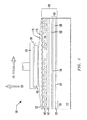
- FIGURE 1 illustrates one embodiment of the present invention, a chemical mechanical polishing pad 100 for polishing semiconductor wafers.
- the polishing pad 100 includes a thermoplastic backing film 105 and a pressure sensitive adhesive 110 coupled to the thermoplastic backing film 105.
- the pressure sensitive adhesive 110 is configured to couple a chemical mechanical polishing pad 100 to a polishing platen 115.
- the pressure sensitive adhesive 110 is also configured to provide an interface 120 capable of substantially preventing delamination of the chemical mechanical polishing pad 100 from the polishing platen 115 for at least about 4 days exposure to a polishing slurry medium 125 having a pH of about 4 or higher. More preferably, delamination is prevented for at least 14 days exposure to the polishing slurry medium 125. A substantial prevention of delamination is indicated by a slurry ingress 130 into the interface 120 of less than about 2 mm as further illustrated in the Experimental section to follow.
- Preferred embodiments of the polishing pad 100 include the pressure sensitive adhesive 110 being dual sided, having a silicone based adhesive on a first side 135 couplable to said platen 115 and an acrylic based adhesive on a second side 140 couplable to said thermoplastic backing film 105. It is desirable to have a silicone based adhesive on the first side 135 only because the polishing platen 115 generally has a high surface energy.
- the thermoplastic backing film 105 is generally comprised of a low surface energy material, such as high density polyethylene that does not adhere to the silicone based adhesive with sufficient strength to couple the polishing pad 100 to the polishing platen 115.
- the pressure sensitive adhesive 110 it is advantageous for the pressure sensitive adhesive 110 to have a low monomeric silicone content because this minimizes the possibility of contaminating semiconductor wafers to be polishing. Though not limiting the scope of the present invention by theory, it is postulated that the likely source of any such contamination is from the silicone based adhesive on a first side 135 of the pressure sensitive adhesive 110.
- the monomeric silicone content of the silicone based adhesives is ideally low enougth to be confined to the first side 135 during polishing.
- the monomeric silicone content of the pressure sensitive adhesive 110 can be reduced to satisfactory levels through conventional manufacturing processes.
- the level of monomeric silicone in the finished tape construction can be determined by any number of conventional extraction procedures well known to those skilled in the art.
- monomeric silicone can be ethanol-extracted from the pressure sensitive adhesive 110 or silicone based adhesive on a first side 135 and then re-dried under a nitrogen atmosphere.
- the residue of the extract can then be dried in nitrogen and analyzed for silicone content by measuring, for example, the absorption peak of silicone at 804 cm -1 by Infrared Spectroscopy.
- a dried sample from an ethanol extract of the silicone based adhesive has a silicone content corresponding to less than about 100 absorption units at 804 cm -1 per gram. More preferably the extract has less then about 50 and even more preferably less than about 20 absorption units at 804 cm -1 per sample weight.
- the pressure sensitive adhesive 110 further includes a carrier film 145 comprising polyester, for example, and located between the first and second side 135, 140 of the pressure sensitive adhesive.
- the carrier film 145 may also comprise other polymeric material with sufficiently high surface energy for the silicone and acrylic based adhesive to adhere to the carrier film stronger than to the platen or thermoplastic backing film, respectively. Examples of such materials are nylon, high density polyethylene (HDPE) and unplasticised polyvinyl chloride (HDPE).
- thermoplastic backing film 105 is a high density polyethylene (i.e., density greater than about 0.96 gm/cc), and more preferably, a condensed high density polyethylene.
- a high density polyethylene suitable for use as a backing film 105 are product numbers DGDA-2490 and DGDA-2480 (Dow Chemical Corp), Product numbers Paxon BA7718 and Escorene HD7845 (Exxon Corp.).
- the backing film 105 includes condensed low density polyethylene(LPDE), linear low density polyethylene (LLDPE), polypropylene (PP), ethyl vinyl acetate polyolefin co-polymers (EVAO), thermoplastic elastomers (TPE), thermoplastic rubber (TPR), polycarbonate (PC), polyamide 6,6, adipic-acid-1,6-hexanediamine polymer (PA6), and thermoplastic polyurethane (TPU).
- LPDE condensed low density polyethylene
- LLDPE linear low density polyethylene
- PP polypropylene
- EVAO ethyl vinyl acetate polyolefin co-polymers
- TPE thermoplastic elastomers
- TPR thermoplastic rubber
- PC polycarbonate
- PA6 polyamide 6,6, adipic-acid-1,6-hexanediamine polymer
- TPU thermoplastic polyurethane
- the back film 105 is between about 5 and about 50 mil thick.
- the interface 120 has high shear strength in a plane parallel to a plane of rotation of the platen 150.
- the interface 120 has a shear strength in a plane parallel to a plane of polishing platen 150 equal to at least about 10000 hrs at 1000 g at room temperature ( ⁇ 72° F), or about 10000 hrs at 500 grams at 158°F.
- the interface 120 has an intermediate peel strength in a plane perpendicular to the plane polishing 155.
- the interface 120 has a peel strength of between about 1 and about 200 oz/inch, more preferably between about 10 and about 150 oz/inch, and even more preferably between about 10 and about 50 oz/inch, after 72 hours dwell at room temperature ( ⁇ 72°F).
- the peel strength remains substantially constant for at least up to about 24 hours in the polishing slurry medium 125, for example comprising up to 10% volume / volume H 2 O 2 at pH 4.
- the polishing pad further including a thermoplastic foam polishing body 160 coupled to the thermoplastic backing film 105.
- the thermoplastic foam polishing body 160 may comprise cross-linked polyolefins, such as polyethylene, polypropylene, and combinations thereof.
- the polishing body 160 is comprised of a closed-cell foam of crosslinked homopolymer or copolymers. Examples of closed-cell foam crosslinked homopolymers comprising polyethylene (PE) include: VolaraTM and VolextraTM from Voltek (Lawrence, MA) ; AliplastTM, from JMS Plastics Supply, Inc. (Neptune, NJ); or Senflex T-CellTM (Rogers Corp., Rogers, CT).
- closed-cell foams of crosslinked copolymers comprising polyethylene and ethylene vinyl acetate include: VolaraTM and VolextraTM (from Voltek Corp.) ; Senflex EVATM (from Rogers Corp.) ; and J-foamTM (from JMS Plastics JMS Plastics Supply, Inc.) .
- the closed-cell foam of the thermoplastic foam polishing body 160 is comprised of a blend of crosslinked ethylene vinyl acetate copolymer and a low density polyethylene copolymer (i.e., preferably between about 0.1 and about 0.3 gm/cc).
- the blend has a ethylene vinyl acetate:polyethylene weight ratio between about 1:9 and about 9:1.
- the blend comprises EVA ranging from about 5 to about 45 wt%, preferably about 6 to about 25 wt% and more preferably about 12 to about 24 wt%. Such blends are thought to be conducive to the desirable production of concave cells having a small size as further discussed below.
- the blend has a ethylene vinyl acetate:polyethylene weight ratio between about 0.6:9.4 and about 1.8:8.2. In even more preferred embodiments, the blend has a ethylene vinyl acetate:polyethylene weight ratio between about 0.6:9.4 and about 1.2:8.8.
- thermoplastic foam polishing body 160 may be characterized as having at least about 85 wt% Xylene insoluble material.
- the process for measuring Xylene insoluble materials is well-known to those of ordinary skill in the art. Such processes may involve, for example, digestion of the blend in Xylene for 24 hours at 120°C followed by drying and comparing the weight of the residual insoluble material to the predigestion material.
- the thermoplastic foam polishing body 160 may further comprise up to about 25 wt% of an inorganic filler material.
- the inorganic filler may be comprised of any Group I, Group II or Transition Metal well known to those of ordinary skill in the art to impart desirable translucence, color or lubricant properties to the foam substrate.
- the inorganic filler may be selected from the group consisting of Talc, Titanium Oxides, Calcium Silicates, Calcium Carbonate, Magnesium Silicates, and Zinc salts.
- the thermoplastic foam polishing body 160 in certain preferred embodiments, is comprised of about 17 wt% Talc.
- the filler comprises silica (about 20 to about 25 wt%), zinc oxides (about 1 wt%), stearic acid (about 1 wt%), and other additives and pigments (up to about 2%) well known to those of ordinary skill in the art.
- Other conventional filler materials such as that revealed in U.S. Patent Nos. 6,419556, 6,099954, 6,425,816 and 6,425,803, incorporated by reference herein, are also within the scope of the present invention.
- the polishing body 160 comprises a thermoconductive polymer having a substrate with filler particles.
- the filler particles, containing a Group II salt are incorporated within the substrate.
- a Group II salt may be any cationic form of an element included in Group II of the Periodic Table, preferably, Magnesium(II), associated with any compatible anion, preferably, Oxide. Because such polishing bodies 160 have higher thermal conductivity as compared to conventional polishing pads, there is improved dissipation of heat generated from the friction and exothermic chemical events inherent in the polishing process.
- the selective incorporation of certain types, amounts, shapes and sizes of the filler particles may be used to control thermal management during polishing.
- the Group II salt includes an anion comprising one of sulfate, stearate or carbonate.
- the Group II salt includes an anion comprising oxide, such as Magnesium Oxide or Calcium Oxide.
- the Group II salt includes an anion comprising hydroxide, for example Magnesium Hydroxide.
- the anion is hydroxide
- the endothermic decomposition of the hydroxide to oxide plus water are thought to play a beneficial role in the thermal management and in improving wetability during the CMP process.
- the thermoconductive polymer has a thermal conductivity of greater than about 1 Watt m -1 K -1 , preferably greater than about 5 Watts m -1 K -1 , and most preferably greater than about 15 Watts m -1 K -1 to about 20 Watts m -1 K -1 .
- the polishing body 160 also preferrably is electrically neutral or nonconducting.
- the thermoconductive polymer should have an electrical volume resistivity of greater than about 1 x 10 15 ohm cm -3 at 25°C, preferably greater than about 5 x 10 15 ohm cm -3 at 25°C.
- the thermoconductive polymer is stable in the pH range of about 2 to about 12.
- the term stable as used herein means that the thermoconductive polymer, when incorporated into a polishing device, does not show visual signs of decomposing in the CMP slurry, nor fray or fragment during use. Additionally, the thermoconductive polymers are not subject to piezochromic effects.
- pressure loads associated with CMP do not substantially affect the polymer's thermoconductive properties.
- Such pressure loads may range from about 0.1 psi to about 50 psi, preferably about 0.5 to about 10 psi, more preferably about 1 psi to about 8 psi.
- the above-mentioned substrate may be any polymer used in polishing pads for CMP applications, and compatible with the incorporation of filler particles throughout.
- the substrate may be composed of polyurethane, polyolefin or polyvinyl ester.
- Alternative embodiments of the substrate include polyurea, polycarbonate, aliphatic polyketone, polysulfone, aromatic polyketone, 6,6 nylon, 6,12 nylon or polyamide.
- the substrate is a thermoplastic rubber or melt-processible rubber.
- embodiments where the substrate is composed of closed-cell polypropylene, polyethylene, crosslinked polyethylene, ethylene vinyl acetate, or polyvinylacetate are also within the scope of the present invention.
- the thermal conductivity increases in proportion to the amount of filler present.
- the filler particles comprise at least about 20 %, and more preferably about 40 to about 70% by weight, of the thermoconductive polymer.
- the size and shape of the filler particles also affect the extent of thermal conductivity of the thermoconductive polymer.
- the filler particles have a spherical shape.
- the filler particles have an average diameter ranging from about 50 ⁇ m to about 1 ⁇ m, and more preferably from about 5 ⁇ m to about 1 ⁇ m.
- the filler particles are incorporated substantially throughout the substrate so as to provide a uniform distribution of particles in the substrate.
- thermoplastic foam polishing body 160 is coupled to the thermoplastic backing film 105 via an adhesive 162, such as the pressure sensitive adhesive 110 used to couple the backing film 105 to the polishing platen 115.
- the thermoplastic foam polishing body 160 is coupled by thermally welding, or by extrusion coating a molten backing film 105 on a sheet of thermoplastic foam body 160. Coupling may also be achieved using chemical bonding processes.
- the thermoplatic foam polishing body 160 has a surface comprised of concave cells 170 and a polishing agent 175 coating an interior surface 180 of the concave cells 170.
- the thermoplastic foam polishing body 160 has cells 165 formed throughout the body.
- the cells 165 are substantially spheroidal.
- the size of the cells 165 are such that, on skiving the substrate, the open concave cells 170 at the surface of the substrate have an average size between about 100 microns and 600 microns.
- the average size of the concave cells 165 ranges from about 100 to about 350 microns, preferably about 100 to about 250 microns and more preferably about 115 to about 200 microns.
- Cell size 165 may be determined using standard protocols, developed and published by the American Society for Testing and Materials (West Conshohocken, PA), for example, such as ASTM D3576, incorporated herein by reference.
- cell size is approximately equal to the mean cell diameter.
- cell diameter is a function of the EVA content of co-polymer bend, as disclosed by Perez et al. J. Appl. Polymer Sci, vol. 68, 1998 pp 1237-1244, incorporated by reference herein.
- bulk density and cell density are inversely related.
- the density of concave cells 170 at the surface of the substrate ranges between 2.5 and about 100 cells/mm 2 , and more preferably, between about 60 and 100 cells/mm 2 .
- Cell density may be determined, for example, from visual inspection of microscopic images of the substrate's surface.
- the polishing agent 175 may comprise one or more ceramic compounds or one or more organic polymers, resulting from the grafting of the secondary reactants on the polishing body's surface, as disclosed U.S. Patent Application 09/994,407 entitled, "A METHOD OF ALTERING AND PRESERVING THE SURFACE PROPERTIES OF A POLISHING PAD AND SPECIFIC APPLICATIONS THEREFOR,” to Yaw S. Obeng and Edward M. Yokley, incorporated herein by reference.
- the ceramic polishing agent 175 may comprise an inorganic metal oxide resulting when an oxygen-containing organometallic compound is used as the secondary reactant to produce a grafted surface.
- the polishing agent 175 is an amorphous silica or titanium oxide.
- the secondary plasma mixture includes titanium.
- Other examples include the secondary plasma mixture including transition metal such as, manganese or tantalum.
- any metal element capable of forming a volatile organometallic compound, such as metal ester contain one or more oxygen atoms, and capable of being grafted to the polymer surface is suitable.
- Silicon may also be employed as the metal portion of the organometallic secondary plasma mixture.
- the organic portion of the organometallic reagent may be an ester, acetate, or alkoxy fragment.
- the polishing agent 175 is selected from a group of ceramics consisting of Silicon Oxides and Titanium Oxides, such as Silicon Dioxide and Titanium Dioxide; Tetraethoxy Silane Polymer; and Titanium Alkoxide Polymer.
- the secondary plasma reactant may include ozone, alkoxy silanes, water, ammonia, alcohols, mineral sprits or hydrogen peroxide.
- the secondary plasma reactant may be composed of titanium esters, tantalum alkoxides, including tantalum alkoxides wherein the alkoxide portion has 1-5 carbon atoms; manganese acetate solution in water; manganese alkoxide dissolved in mineral spirits; manganese acetate; manganese acetylacetonate; aluminum alkoxides; alkoxy aluminates; aluminum oxides; zirconium alkoxides, wherein the alkoxide has 1-5 carbon atoms; alkoxy zirconates; magnesium acetate; and magnesium acetylacetonate.
- Other embodiments are also contemplated for the secondary plasma reactant, for example, alkoxy silanes and ozone, alk
- the polishing agent 175 may comprise an organic polymers when organic compounds are used as the secondary plasma reactant.
- secondary reactants include: allyl alcohols; allyl amines; allyl alkylamines, where the alkyl groups contain 1-8 carbon atoms; allyl ethers; secondary amines, where the alkyl groups contain 1-8 carbon; alkyl hydrazines, where the alkyl groups contain 1-8 carbon atoms; acrylic acid; methacrylic acid; acrylic acid esters containing 1-8 carbon atoms; methacrylic esters containing 1-8 carbon atoms; or vinyl pyridine, and vinyl esters, for example, vinyl acetate.
- the polishing agent 175 is selected from a group of polymers consisting of Polyalcohols and Polyamines.
- the polishing pad 100 is depicted in FIGURE 1 in a preferred environment, a polishing apparatus 180.
- the apparatus 180 comprises a mechanically driven carrier head 185 and carrier ring 190 to secure a semiconductor wafer 195.
- the carrier head 185 is positionable against the polishing platen 115 to impart a polishing force against the polishing platen 115.
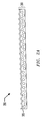
- FIGUREs 2A-2C illustrate sectional views of selected steps in yet another embodiment of the present invention, a method of manufacturing a chemical mechanical polishing pad 200.
- the method comprises providing a thermoplastic foam polishing body 205.
- the method also includes laminating a thermoplastic backing film 210 to the thermoplastic foam polishing body 205.
- Laminating is achieved via chemical bonding using conventional adhesives, such as epoxy or other materials well known to those skilled in the art, or pressure sensitive adhesives such as a dual sided material, both sides being acrylic based adhesive.
- laminating is achieved via extrusion coating of the molten backing film material onto the foam, while in still other embodiments the backing film 210 is thermally welded to the thermoplastic foam polishing body 205.
- the method further includes coupling a pressure sensitive adhesive 215 to the thermoplastic backing film 210 (FIGURE 2C).
- the pressure sensitive adhesive 215 is configured to couple a chemical mechanical polishing pad 200 to a polishing platen 220 and provide an interface 225 capable of substantially preventing delamination of the polishing pad 200 from the polishing platen 220 for at least about 4 days exposure to a polishing slurry medium having a pH of about 4 or higher.
- the pressure sensitive adhesive 215 comprises a dual sided tape having a first side 230 comprising a silicone based adhesive and a second side 235 comprising an acrylic based adhesive sandwiched between a carrier film 240.
- the acrylic based adhesive is coupled to the thermoplastic backing film 210 and the silicone based adhesive is configured to be coupled to the polishing platen 220.
- FIGURE 2C Yet another embodiment of the present invention, a chemical mechanical polishing pad for polishing semiconductor wafers produced by the above-described process, is illustrated in FIGURE 2C.
- Any of the above-described embodiments of the polishing body 205, backing film 210 and pressure sensitive adhesive 215 may be used in the method of manufacturing a chemical mechanical polishing pad 200.
- providing the thermoplastic foam polishing body 205 includes exposing cells 245 within the foam polishing body 205 to form a surface 250 comprising concave cells 255 and coating an interior surface of the concave cells with a polishing agent 260.
- the size of the closed cells 245 within the foam polishing body 205 affects the size of the concave cells 255 ultimately formed on the surface 250.
- the relative amounts of ethylene vinyl acetate copolymer and polyethylene may be controlled in order to advantageously adjust the size of cells produced during the foaming process.
- the kind of foaming process used may result in different cells sizes.
- the concave cells 255 preferably have an average size of between about 100 microns and about 600 microns and a cell density of at least about 4.5 cells/mm 2 , and more preferably a size between about 100 microns and about 200 microns and a cell density of at least about 60 cells/mm 2 .
- the foaming process may include, for example, blending polymers comprising the foam polishing body 205 in a blender.
- the foaming process may also include crosslinking (XL) polymers in the foam polishing body 205, using irradiation or chemical means to achieve crosslinking.
- the foaming process may further include forming a mixture of the foam body 205 and a blowing agent, preferably under pressure, and extruding the mixture through a conventional die to form sheets of closed-cell foams.
- Exposing cells 245 to form a surface comprising concave cells 255 may be achieved by any conventional process well known to those of ordinary skill in the art. For example, exposing may be achieved by fixing the foam polishing body 205 on a planar surface, and cutting a thin layer (i.e., between about 1200 microns and about 2000 microns) from the surface of the foam polishing body 205. In certain preferred embodiments, skiving or cutting may be performed using a skiving device, such as a those provided by Fecken-Kirfel, (Aachen, Germany).
- Coating the interior surface with a polishing agent 260 is achieved using the grafting procedure disclosed in U.S. Application 09/994,407, incorporated herein by reference.
- coating comprises exposing the concave cells interior surface 255 to an initial plasma reactant (1st plasma reactant) to produce a modified surface thereon.
- Coating may further comprise exposing the modified surface to a secondary plasma reactant (2nd plasma reactant) to create a grafted surface on the modified surface, the grafted surface comprising the polishing agent 260.
- Any of the primary and secondary reactants or procedures described in U.S. Patent Application No. 09/994,407 may be used in the grafting process to coat the polishing agent 260 on the interior surface of the concave cells 245 of the foam polishing body 205.
- the ingress of solutions having different pHs was investigated for various combinations of PSAs and backing films.
- the PSAs and backing films were coupled to each other and the pad adhered to the polishing platen of a commercial bench-top polisher.
- the assembly was flooded with a continuous flow of commercial buffers (Fisher Scientific, Pittsburgh, PA)at pHs ranging from 4 to 10 to simulate slurry flow during chemical mechanical polishing.
- the ingress of the solutions into the interface between the PSA and backing film was determined by measuring the distance traveled by the leading edge of the fluid intrusion.
- transparent thermoplastic sheets comprised of polycarbonate or high density polyethylene, were used to simulate the backing film of a polishing pad.
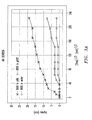
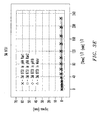
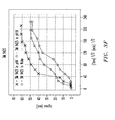
- FIGUREs 3A-3I Exemplary results showing ingress, in units of mm, as a function of the square root of the soaking time are presented in FIGUREs 3A-3I.
- the ingress data are plotted as a function of square root of time to see if ingress is diffusion limited. A straight line indicates a diffusion limited mechanism.
- Product number 9731 had substantially slower ingress rates than other PSAs. In a pH 4 solution, for example, ingress was less than about 2 mm after (80 min) 1 ⁇ 2 (about 4.4 days) , with even slower rates of ingress at neutral and alkaline pHs (about 14 days).
Landscapes
- Engineering & Computer Science (AREA)
- Mechanical Engineering (AREA)
- Finish Polishing, Edge Sharpening, And Grinding By Specific Grinding Devices (AREA)
Priority Applications (2)
| Application Number | Priority Date | Filing Date | Title |
|---|---|---|---|
| TW093110873A TW200534955A (en) | 2003-03-27 | 2004-04-19 | A polishing pad resistant to delamination |
| EP04252306A EP1588802A1 (fr) | 2004-04-20 | 2004-04-20 | Tampon de polissage résistant à la délamination |
Applications Claiming Priority (1)
| Application Number | Priority Date | Filing Date | Title |
|---|---|---|---|
| EP04252306A EP1588802A1 (fr) | 2004-04-20 | 2004-04-20 | Tampon de polissage résistant à la délamination |
Publications (1)
| Publication Number | Publication Date |
|---|---|
| EP1588802A1 true EP1588802A1 (fr) | 2005-10-26 |
Family
ID=34930259
Family Applications (1)
| Application Number | Title | Priority Date | Filing Date |
|---|---|---|---|
| EP04252306A Withdrawn EP1588802A1 (fr) | 2003-03-27 | 2004-04-20 | Tampon de polissage résistant à la délamination |
Country Status (1)
| Country | Link |
|---|---|
| EP (1) | EP1588802A1 (fr) |
Cited By (6)
| Publication number | Priority date | Publication date | Assignee | Title |
|---|---|---|---|---|
| WO2015136994A1 (fr) * | 2014-03-14 | 2015-09-17 | 東洋ゴム工業株式会社 | Tampon à polir et méthode de production de celui-ci |
| WO2016081272A1 (fr) * | 2014-11-21 | 2016-05-26 | Nexplanar Corporation | Sous-tampon compressif revêtu pour polissage chimico-mécanique |
| WO2016200833A1 (fr) * | 2015-06-08 | 2016-12-15 | Avery Dennison Corporation | Adhésifs pour applications de planarisation chimico-mécanique |
| CN108214280A (zh) * | 2016-12-09 | 2018-06-29 | 智胜科技股份有限公司 | 研磨垫及研磨方法 |
| US11060654B2 (en) | 2015-05-04 | 2021-07-13 | Avery Dennison Corporation | Tapes for insulation jacketing |
| US12076877B2 (en) | 2019-05-31 | 2024-09-03 | Applied Materials, Inc. | Polishing platens and polishing platen manufacturing methods |
Citations (3)
| Publication number | Priority date | Publication date | Assignee | Title |
|---|---|---|---|---|
| US4853286A (en) * | 1984-05-29 | 1989-08-01 | Mitsui Toatsu Chemicals, Incorporated | Wafer processing film |
| WO2003078535A1 (fr) * | 2002-03-04 | 2003-09-25 | Psiloquest Inc. | Gestion thermique a l'aide de tampons de polissage polymeres additionnes d'une charge et applications associees |
| WO2004024393A1 (fr) * | 2002-09-11 | 2004-03-25 | Psiloquest, Inc. | Support de tampon de polissage ameliorant la qualite et la longevite de polissage |
-
2004
- 2004-04-20 EP EP04252306A patent/EP1588802A1/fr not_active Withdrawn
Patent Citations (3)
| Publication number | Priority date | Publication date | Assignee | Title |
|---|---|---|---|---|
| US4853286A (en) * | 1984-05-29 | 1989-08-01 | Mitsui Toatsu Chemicals, Incorporated | Wafer processing film |
| WO2003078535A1 (fr) * | 2002-03-04 | 2003-09-25 | Psiloquest Inc. | Gestion thermique a l'aide de tampons de polissage polymeres additionnes d'une charge et applications associees |
| WO2004024393A1 (fr) * | 2002-09-11 | 2004-03-25 | Psiloquest, Inc. | Support de tampon de polissage ameliorant la qualite et la longevite de polissage |
Cited By (14)
| Publication number | Priority date | Publication date | Assignee | Title |
|---|---|---|---|---|
| JP2015174176A (ja) * | 2014-03-14 | 2015-10-05 | 東洋ゴム工業株式会社 | 研磨パッド及びその製造方法 |
| WO2015136994A1 (fr) * | 2014-03-14 | 2015-09-17 | 東洋ゴム工業株式会社 | Tampon à polir et méthode de production de celui-ci |
| WO2016081272A1 (fr) * | 2014-11-21 | 2016-05-26 | Nexplanar Corporation | Sous-tampon compressif revêtu pour polissage chimico-mécanique |
| CN107206569A (zh) * | 2014-11-21 | 2017-09-26 | 嘉柏微电子材料股份公司 | 用于化学机械抛光的经涂覆的压缩性副垫 |
| US11060654B2 (en) | 2015-05-04 | 2021-07-13 | Avery Dennison Corporation | Tapes for insulation jacketing |
| US11885456B2 (en) | 2015-05-04 | 2024-01-30 | Avery Dennison Corporation | Tape for insulation jacket and method of insulating an object |
| US11852275B2 (en) | 2015-05-04 | 2023-12-26 | Avery Dennison Corporation | Tape for insulation jacketing and method of forming securable insulation jacket |
| WO2016200833A1 (fr) * | 2015-06-08 | 2016-12-15 | Avery Dennison Corporation | Adhésifs pour applications de planarisation chimico-mécanique |
| US11661532B2 (en) | 2015-06-08 | 2023-05-30 | Avery Dennison Corporation | Adhesives for chemical mechanical planarization applications |
| CN107849404A (zh) * | 2015-06-08 | 2018-03-27 | 艾利丹尼森公司 | 用于化学机械平坦化应用的粘合剂 |
| CN108214280B (zh) * | 2016-12-09 | 2021-01-15 | 智胜科技股份有限公司 | 研磨垫及研磨方法 |
| US10518386B2 (en) | 2016-12-09 | 2019-12-31 | Iv Technologies Co., Ltd. | Polishing pad and polishing method |
| CN108214280A (zh) * | 2016-12-09 | 2018-06-29 | 智胜科技股份有限公司 | 研磨垫及研磨方法 |
| US12076877B2 (en) | 2019-05-31 | 2024-09-03 | Applied Materials, Inc. | Polishing platens and polishing platen manufacturing methods |
Similar Documents
| Publication | Publication Date | Title |
|---|---|---|
| US6838169B2 (en) | Polishing pad resistant to delamination | |
| US6706383B1 (en) | Polishing pad support that improves polishing performance and longevity | |
| JP4039214B2 (ja) | 研磨パッド | |
| CN1550288B (zh) | 研磨垫、其制法和金属模以及半导体晶片抛光方法 | |
| US6818301B2 (en) | Thermal management with filled polymeric polishing pads and applications therefor | |
| US8647173B2 (en) | Method for polishing a semiconductor wafer | |
| US6579604B2 (en) | Method of altering and preserving the surface properties of a polishing pad and specific applications therefor | |
| EP1588802A1 (fr) | Tampon de polissage résistant à la délamination | |
| US20020102924A1 (en) | Selective chemical-mechanical polishing properties of a cross-linked polymer and specific applications therefor | |
| EP1345734A1 (fr) | Tampon de polissage en poly thyl ne r ticul destin polir de fa on chimico-mecanique, appareil et proc d de polissage | |
| US20040132308A1 (en) | Corrosion retarding polishing slurry for the chemical mechanical polishing of copper surfaces | |
| US20050055885A1 (en) | Polishing pad for chemical mechanical polishing | |
| US20060154579A1 (en) | Thermoplastic chemical mechanical polishing pad and method of manufacture | |
| US20050266226A1 (en) | Chemical mechanical polishing pad and method for selective metal and barrier polishing | |
| US7059946B1 (en) | Compacted polishing pads for improved chemical mechanical polishing longevity | |
| JP2005303121A (ja) | 耐剥離性研磨パッド | |
| KR20050103399A (ko) | 내박리성 연마 패드 | |
| TW200534955A (en) | A polishing pad resistant to delamination | |
| EP1567606A1 (fr) | Pate a polir retardant la corrosion destinee a etre utilisee pour le polissage mecano-chimique de surfaces de cuivre | |
| US20050153631A1 (en) | System and method for monitoring quality control of chemical mechanical polishing pads | |
| JP2004119657A (ja) | 研磨パッド、研磨装置、およびそれを用いた研磨方法 | |
| JP2004259728A (ja) | 研磨パッド | |
| CN1684233A (zh) | 防剥离的抛光垫 | |
| US6575823B1 (en) | Polishing pad and method for in situ delivery of chemical mechanical polishing slurry modifiers and applications thereof | |
| HK1078522A (en) | A polishing pad support that improves polishing performance and longevity |
Legal Events
| Date | Code | Title | Description |
|---|---|---|---|
| PUAI | Public reference made under article 153(3) epc to a published international application that has entered the european phase |
Free format text: ORIGINAL CODE: 0009012 |
|
| AK | Designated contracting states |
Kind code of ref document: A1 Designated state(s): AT BE BG CH CY CZ DE DK EE ES FI FR GB GR HU IE IT LI LU MC NL PL PT RO SE SI SK TR |
|
| AX | Request for extension of the european patent |
Extension state: AL HR LT LV MK |
|
| 17P | Request for examination filed |
Effective date: 20060324 |
|
| AKX | Designation fees paid |
Designated state(s): AT BE BG CH CY CZ DE DK EE ES FI FR GB GR HU IE IT LI LU MC NL PL PT RO SE SI SK TR |
|
| STAA | Information on the status of an ep patent application or granted ep patent |
Free format text: STATUS: THE APPLICATION HAS BEEN WITHDRAWN |
|
| 18W | Application withdrawn |
Effective date: 20070618 |