EP1592240A2 - Appareil électronique et procédé de notification d'information. - Google Patents
Appareil électronique et procédé de notification d'information. Download PDFInfo
- Publication number
- EP1592240A2 EP1592240A2 EP05102527A EP05102527A EP1592240A2 EP 1592240 A2 EP1592240 A2 EP 1592240A2 EP 05102527 A EP05102527 A EP 05102527A EP 05102527 A EP05102527 A EP 05102527A EP 1592240 A2 EP1592240 A2 EP 1592240A2
- Authority
- EP
- European Patent Office
- Prior art keywords
- electronic apparatus
- program
- notification
- preselected
- notifying unit
- Prior art date
- Legal status (The legal status is an assumption and is not a legal conclusion. Google has not performed a legal analysis and makes no representation as to the accuracy of the status listed.)
- Withdrawn
Links
Images




Classifications
-
- H—ELECTRICITY
- H04—ELECTRIC COMMUNICATION TECHNIQUE
- H04N—PICTORIAL COMMUNICATION, e.g. TELEVISION
- H04N5/00—Details of television systems
- H04N5/76—Television signal recording
- H04N5/78—Television signal recording using magnetic recording
- H04N5/782—Television signal recording using magnetic recording on tape
-
- H—ELECTRICITY
- H04—ELECTRIC COMMUNICATION TECHNIQUE
- H04N—PICTORIAL COMMUNICATION, e.g. TELEVISION
- H04N21/00—Selective content distribution, e.g. interactive television or video on demand [VOD]
- H04N21/40—Client devices specifically adapted for the reception of or interaction with content, e.g. set-top-box [STB]; Operations thereof
- H04N21/43—Processing of content or additional data, e.g. demultiplexing additional data from a digital video stream; Elementary client operations, e.g. monitoring of home network or synchronising decoder's clock; Client middleware
- H04N21/432—Content retrieval operation from a local storage medium, e.g. hard-disk
- H04N21/4325—Content retrieval operation from a local storage medium, e.g. hard-disk by playing back content from the storage medium
-
- H—ELECTRICITY
- H04—ELECTRIC COMMUNICATION TECHNIQUE
- H04N—PICTORIAL COMMUNICATION, e.g. TELEVISION
- H04N21/00—Selective content distribution, e.g. interactive television or video on demand [VOD]
- H04N21/40—Client devices specifically adapted for the reception of or interaction with content, e.g. set-top-box [STB]; Operations thereof
- H04N21/43—Processing of content or additional data, e.g. demultiplexing additional data from a digital video stream; Elementary client operations, e.g. monitoring of home network or synchronising decoder's clock; Client middleware
- H04N21/433—Content storage operation, e.g. storage operation in response to a pause request, caching operations
- H04N21/4334—Recording operations
-
- H—ELECTRICITY
- H04—ELECTRIC COMMUNICATION TECHNIQUE
- H04N—PICTORIAL COMMUNICATION, e.g. TELEVISION
- H04N21/00—Selective content distribution, e.g. interactive television or video on demand [VOD]
- H04N21/40—Client devices specifically adapted for the reception of or interaction with content, e.g. set-top-box [STB]; Operations thereof
- H04N21/43—Processing of content or additional data, e.g. demultiplexing additional data from a digital video stream; Elementary client operations, e.g. monitoring of home network or synchronising decoder's clock; Client middleware
- H04N21/443—OS processes, e.g. booting an STB, implementing a Java virtual machine in an STB or power management in an STB
-
- H—ELECTRICITY
- H04—ELECTRIC COMMUNICATION TECHNIQUE
- H04N—PICTORIAL COMMUNICATION, e.g. TELEVISION
- H04N21/00—Selective content distribution, e.g. interactive television or video on demand [VOD]
- H04N21/40—Client devices specifically adapted for the reception of or interaction with content, e.g. set-top-box [STB]; Operations thereof
- H04N21/45—Management operations performed by the client for facilitating the reception of or the interaction with the content or administrating data related to the end-user or to the client device itself, e.g. learning user preferences for recommending movies, resolving scheduling conflicts
- H04N21/458—Scheduling content for creating a personalised stream, e.g. by combining a locally stored advertisement with an incoming stream; Updating operations, e.g. for OS modules ; time-related management operations
- H04N21/4583—Automatically resolving scheduling conflicts, e.g. when a recording by reservation has been programmed for two programmes in the same time slot
-
- H—ELECTRICITY
- H04—ELECTRIC COMMUNICATION TECHNIQUE
- H04N—PICTORIAL COMMUNICATION, e.g. TELEVISION
- H04N21/00—Selective content distribution, e.g. interactive television or video on demand [VOD]
- H04N21/40—Client devices specifically adapted for the reception of or interaction with content, e.g. set-top-box [STB]; Operations thereof
- H04N21/47—End-user applications
- H04N21/488—Data services, e.g. news ticker
- H04N21/4882—Data services, e.g. news ticker for displaying messages, e.g. warnings, reminders
-
- H—ELECTRICITY
- H04—ELECTRIC COMMUNICATION TECHNIQUE
- H04N—PICTORIAL COMMUNICATION, e.g. TELEVISION
- H04N5/00—Details of television systems
- H04N5/44—Receiver circuitry for the reception of television signals according to analogue transmission standards
- H04N5/445—Receiver circuitry for the reception of television signals according to analogue transmission standards for displaying additional information
-
- H—ELECTRICITY
- H04—ELECTRIC COMMUNICATION TECHNIQUE
- H04N—PICTORIAL COMMUNICATION, e.g. TELEVISION
- H04N21/00—Selective content distribution, e.g. interactive television or video on demand [VOD]
- H04N21/40—Client devices specifically adapted for the reception of or interaction with content, e.g. set-top-box [STB]; Operations thereof
- H04N21/41—Structure of client; Structure of client peripherals
- H04N21/414—Specialised client platforms, e.g. receiver in car or embedded in a mobile appliance
- H04N21/4143—Specialised client platforms, e.g. receiver in car or embedded in a mobile appliance embedded in a Personal Computer [PC]
-
- H—ELECTRICITY
- H04—ELECTRIC COMMUNICATION TECHNIQUE
- H04N—PICTORIAL COMMUNICATION, e.g. TELEVISION
- H04N21/00—Selective content distribution, e.g. interactive television or video on demand [VOD]
- H04N21/40—Client devices specifically adapted for the reception of or interaction with content, e.g. set-top-box [STB]; Operations thereof
- H04N21/41—Structure of client; Structure of client peripherals
- H04N21/426—Internal components of the client ; Characteristics thereof
- H04N21/42646—Internal components of the client ; Characteristics thereof for reading from or writing on a non-volatile solid state storage medium, e.g. DVD, CD-ROM
-
- H—ELECTRICITY
- H04—ELECTRIC COMMUNICATION TECHNIQUE
- H04N—PICTORIAL COMMUNICATION, e.g. TELEVISION
- H04N21/00—Selective content distribution, e.g. interactive television or video on demand [VOD]
- H04N21/40—Client devices specifically adapted for the reception of or interaction with content, e.g. set-top-box [STB]; Operations thereof
- H04N21/41—Structure of client; Structure of client peripherals
- H04N21/426—Internal components of the client ; Characteristics thereof
- H04N21/42661—Internal components of the client ; Characteristics thereof for reading from or writing on a magnetic storage medium, e.g. hard disk drive
-
- H—ELECTRICITY
- H04—ELECTRIC COMMUNICATION TECHNIQUE
- H04N—PICTORIAL COMMUNICATION, e.g. TELEVISION
- H04N21/00—Selective content distribution, e.g. interactive television or video on demand [VOD]
- H04N21/40—Client devices specifically adapted for the reception of or interaction with content, e.g. set-top-box [STB]; Operations thereof
- H04N21/47—End-user applications
- H04N21/472—End-user interface for requesting content, additional data or services; End-user interface for interacting with content, e.g. for content reservation or setting reminders, for requesting event notification, for manipulating displayed content
- H04N21/47214—End-user interface for requesting content, additional data or services; End-user interface for interacting with content, e.g. for content reservation or setting reminders, for requesting event notification, for manipulating displayed content for content reservation or setting reminders; for requesting event notification, e.g. of sport results or stock market
-
- H—ELECTRICITY
- H04—ELECTRIC COMMUNICATION TECHNIQUE
- H04N—PICTORIAL COMMUNICATION, e.g. TELEVISION
- H04N5/00—Details of television systems
- H04N5/76—Television signal recording
- H04N5/765—Interface circuits between an apparatus for recording and another apparatus
-
- H—ELECTRICITY
- H04—ELECTRIC COMMUNICATION TECHNIQUE
- H04N—PICTORIAL COMMUNICATION, e.g. TELEVISION
- H04N5/00—Details of television systems
- H04N5/76—Television signal recording
- H04N5/765—Interface circuits between an apparatus for recording and another apparatus
- H04N5/775—Interface circuits between an apparatus for recording and another apparatus between a recording apparatus and a television receiver
-
- H—ELECTRICITY
- H04—ELECTRIC COMMUNICATION TECHNIQUE
- H04N—PICTORIAL COMMUNICATION, e.g. TELEVISION
- H04N5/00—Details of television systems
- H04N5/76—Television signal recording
- H04N5/78—Television signal recording using magnetic recording
- H04N5/781—Television signal recording using magnetic recording on disks or drums
-
- H—ELECTRICITY
- H04—ELECTRIC COMMUNICATION TECHNIQUE
- H04N—PICTORIAL COMMUNICATION, e.g. TELEVISION
- H04N5/00—Details of television systems
- H04N5/76—Television signal recording
- H04N5/84—Television signal recording using optical recording
- H04N5/85—Television signal recording using optical recording on discs or drums
-
- H—ELECTRICITY
- H04—ELECTRIC COMMUNICATION TECHNIQUE
- H04N—PICTORIAL COMMUNICATION, e.g. TELEVISION
- H04N9/00—Details of colour television systems
- H04N9/79—Processing of colour television signals in connection with recording
- H04N9/80—Transformation of the television signal for recording, e.g. modulation, frequency changing; Inverse transformation for playback
- H04N9/804—Transformation of the television signal for recording, e.g. modulation, frequency changing; Inverse transformation for playback involving pulse code modulation of the colour picture signal components
- H04N9/8042—Transformation of the television signal for recording, e.g. modulation, frequency changing; Inverse transformation for playback involving pulse code modulation of the colour picture signal components involving data reduction
Definitions
- the present invention relates to an electronic apparatus having a plurality of operating systems and an information notifying method.
- Some electronic devices such as personal computers (PC) have a plurality of operating systems (OS).
- OS operating systems
- the operating systems cannot start up at once, but only one starts up.
- Jpn. Pat. Appln. KOKAI Publication No. 2001-243076 discloses a technology for automatically loading and executing one of a plurality of operating systems.
- Some of recent personal computers have a TV tuner and a DVD drive that can be preset to record TV programs. In these personal computers, the following situation can be considered.
- a user presets a DVD to record a program under the control of a first OS and shuts down the OS. Then, the user starts a specific application for playback by a second OS in order to enjoy another video content recorded on the DVD.
- the user is often likely to forget that the DVD was preset to record the program while he or she is enjoying the video content. (If one of two users presets a DVD to record a program, the other may not notice that.)
- the user continues to view the video content even after the preselected time for recording.
- the first OS does not start up; consequently, the preselected program is not recorded.
- the above problem occurs frequently if a user who starts up a first OS to preset a PC to record a program and a user who starts up a second OS to enjoy a video content are different when the PC is used by a family.
- FIG. 1 is a perspective view of the outward appearance of an electronic apparatus according to an embodiment of the present invention.
- the electronic apparatus is, for example, a personal computer (PC) and includes a main unit 101 and a display unit 102.
- the display unit 102 has a liquid crystal display (LCD) 15 to display information.
- the main unit 101 has an infrared (IR) receiving unit 26 for receiving an infrared signal from a remote control 103 under input operation.
- the main unit 101 also has a power switch 27A, a DVD switch 27B, a TV switch 27C, a sub-LCD 32 and an LED 33, which will be described later.
- the remote control 103 includes a power switch 70A, a DVD switch 70B and a TV switch 70C whose functions are the same as those of the above power switch 27A, DVD switch 27B and TV switch 27C.
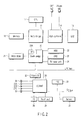
- FIG. 2 is a block diagram of the configuration of the electronic apparatus. The same components as those shown in FIG. 1 are denoted by the same reference numerals.
- a CPU 11 is a processor for controlling the entire electronic apparatus and performs various processes in accordance with different programs.
- a north bridge 12 is a bridge unit having functions of controlling a memory 13 and a VGA controller 14 as well as a function of interfacing with the CPU 11 and that of hub-interfacing with a south bridge 20.
- the memory 13 stores operating systems (OS), different programs and drivers. It corresponds to the main memory used as a work area for the CPU 11.
- OS operating systems
- drivers different programs and drivers. It corresponds to the main memory used as a work area for the CPU 11.
- the VGA controller 14 forms a video signal (normally an LVDS signal) that can be displayed on a display device (e.g., LCD 15) in response to a signal supplied from the north bridge 12, and outputs the formed video signal.
- a display device e.g., LCD 15
- An interface for supplying a video signal to a cathode ray tube (CRT) is connected to the VGA controller 14, as is an interface for outputting an S video signal.
- CTR cathode ray tube
- the LCD 15 displays on its screen information such as video in response to a signal supplied from the VGA controller 14.
- the south bridge 20 is a bridge unit having not only a function of hub-interfacing with the north bridge 12, but also functions of controlling various units connected thereto, a low pin count (LPC) bus, and a peripheral component interconnect (PCI) bus.
- the south bridge 20 includes a real time clock (RTC) 20A used for setting information such as a preselected time for recording a program acquired by a TV tuner unit 24.
- RTC real time clock
- BIOS-ROM 21 is a memory for storing a basic input/output system (BIOS).
- a hard disk drive (HDD) 22 stores operating systems, different programs, data and the like.
- An optical disk drive (ODD) 23 drives a digital versatile disk (DVD) on which, e.g., video contents are recorded.
- DVD digital versatile disk
- the TV tuner unit 24 includes a TV tuner, a national television system committee/phase alternation by line (NTSC/PAL) decoder, an MPEG2 encoder and an antenna to acquire TV video contents.
- NTSC/PAL national television system committee/phase alternation by line
- An embedded controller/keyboard controller (EC/KBC) 25 is configured by integrating an embedded controller and a keyboard controller with each other and manages the power supply and processes signals from an input device.
- the EC manages the power supply for each of the components of the electronic apparatus based on different items of information held in an embedded register.
- the EC senses the depression of the switches 27A, 27B and 27C and that of the switches 70A, 70B and 70C on the remote control 103 through the receiving unit 26, and performs a process corresponding to the sensed depression and instructs a component to do the process.
- the EC can display the status of recording programming on the sub-LCD 32 and notify a user of the status in the form of blink and lighting through the LED 33.
- the receiving unit 26 receives a signal indicative of the depression of the switches 70A, 70B and 70C on the remote control 103 and notifies the EC/KBC 25 of it.
- the power switch 27A is a switch to turn on/off the power supply of the main unit of the electronic apparatus.
- the DVD switch 27B is a switch to start/stop the playback of a DVD driven by the ODD.
- the TV switch 27C is a switch to start/stop receiving TV pictures from the TV tuner unit 24.
- a keyboard 28 and a touch pad 29 are input units to send out a signal to the KBC in accordance with an input operation.
- a power supply controller (PSC) 30 controls power to be supplied to the respective components of the electronic apparatus and is controlled by the EC through an I 2 C bus.
- a battery 31 is a rechargeable one and used when no AC power supply is used.
- FIG. 3 is a block diagram of functions for notifying a user of information about recording programming.
- the HDD 22 stores a first OS 41 and a second OS 51.
- the first OS 41 corresponds to, for example, Windows ®
- the second OS 51 corresponds to, for example, Linux. Only one of the operating systems can start up according to user's selection.
- a recording programming setting/executing unit 42 is an application that is executed under the control of the first OS 41 to preselect and record a TV program.
- the unit 42 sets information indicative of a preselected time to the RTC 20A.
- the BIOS 21A reads the information out of the RTC 20A and stores it in the memory 13 from when the electronic apparatus turns on until the hardware is completely initialized. After the initialization, for example, the second OS 51 start up. If the second OS 51 inquires of the BIOS 21A a preselected time, the BIOS 21A returns the information on the preselected time to the second OS 51 from the memory 13. If there is no information on the preselected time, the BIOS 21A returns a message to that effect.
- the started second OS 51 executes an AV playback application 52 for viewing a content including pictures.
- the present embodiment is directed to the use of the AV playback application; however, it can be replaced with other types of applications.
- the application 52 has various functions of a programming information acquiring unit 61, a notifying unit 62, a programming executing unit 63 and a setting unit 64.
- the programming information acquiring unit 61 inquires of the BIOS 21A the status of recording programming and acquires information indicating the presence or absence of the recording programming and a preselected time for recording.
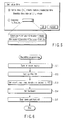
- the notifying unit 62 notifies a user of at least the above presence or absence of recording programming while the application 52 is being executed under the control of the second OS 51. If the HDD is programmed for recording, the notifying unit 62 notifies the user of it on the display screen in the form of a message or an icon a predetermined time (several minutes) before the above preselected time. In this notification, the notifying unit 62 can display information indicating a preselected time (e.g., April 1, 18:00:00) and information indicating a time interval (e.g., five minutes) between the present time and the preselected time on the screen, as shown in FIG. 4.
- a preselected time e.g., April 1, 18:00:00
- a time interval e.g., five minutes
- the notifying unit 62 can also display a confirmation as to whether a preselected program should be recorded ("Exit” button), a confirmation as to whether the notification should be made again (“Renotice” button), and a confirmation as to whether such notification should be ignored to cancel the recording programming (“Cancel” button).
- the notification can be made a plurality of number of times on the time series. It can also be made in the form of blink and lighting through the LED 33 or displayed on the sub-LCD 32.
- the programming executing unit 63 determines that the preselected program should be recorded to terminate the application 52 and shut down the second OS 51.
- the unit 63 instructs the first OS 41 to start up through the BIOS 21A.
- the setting unit 64 displays a screen for setting a time at which the above notification is to be made. This operation will be described with reference to FIG. 5.
- FIG. 5 shows an example of a screen for setting a notice time by a user.
- a notification is made “five minutes before” the preselected time and then “every one minute.”
- a stepwise notification can be selected. For example, a notification is made “ten minutes before” the preselected time and then “five minutes before,” “three minutes before,” and “one minute before.” Alternatively, a notification is made “thirty minutes before” the preselected time and then “twenty minutes before,” “ten minutes before,” and “five minutes before.”
- the BIOS 21A initializes the hardware to boot up, e.g., the first OS 41 (step S12). Then, the recording programming setting/executing unit 42 boots up as an application used for programming the hardware to record a program.
- the unit 42 sets it to the RTC 20A (step S13).
- the hardware is set such that the preselected time becomes equal to wake-up information when an interrupt occurs (step S14).
- the first OS 41 shuts down and the power supply turns off (step S15).
- BIOS 21A An example of an operation of the BIOS 21A will be described with reference to FIG. 7.
- the power supply turns on (step S21).
- the BIOS 21A reads the above preselected time (month, day, hour, minute, and second) from the RTC 20A and stores it in the memory 13 (step S22).
- the BIOS 21A initializes the hardware (step S23). Then, for example, the second OS 51 boots up (step S24).
- the AV playback application 52 starts up under the control of the second OS 51 (step S31).
- the BIOS 21A reads information from the memory 13 and sends it to the application 52 (step S32).
- the application 52 determines whether the above information represents the presence or absence of recording programming (i.e., a preselected time) (step S33). If the information represents the absence, no recording programming is made and thus the operation shifts to a normal one (step S34). If the information represents the presence, the application 52 acquires information about the present time and stands by until the present time reaches a notice time (a time when a notification should be made) (steps S35 and S36).
- the application 52 displays a message as shown in FIG. 4 (step S37) and waits for an instruction from the user.
- the application 52 When the user depresses the "Exit” button, the application 52 considers that the preselected program should be recorded. The application 52 terminates and the second OS 51 shuts down to instruct the first OS 41 to boot up through the BIOS 21A and the like (steps S38 and S39).
- step S40 and S41 determine a renotice time based on the contents preset on the screen shown in FIG. 5 (steps S40 and S41) and repeats the process from step S35.
- step S42 determines a renotice time based on the contents preset on the screen shown in FIG. 5 (steps S40 and S41) and repeats the process from step S35.
- step S42 determines that the preselected program need not be recorded and instructs the first OS 41 to clear the preselected time through the BIOS 21A (step S42).
- a user can appropriately be notified whether a preselected program is present or absent and that a preselected time is approaching.
- the recording of the program can be prevented from being cancelled against a user's will.
- some options (“Exit,” “Renotice” and “Cancel”) can be presented to the user and accordingly the apparatus can be improved in usability.
- the preselection of a program means recording programming.
- the present invention is not limited to this. It can be directed to "viewing programming" (when a preselected time reaches the present time, a channel is automatically selected to receive a program and the program is displayed on the LCD 15 such that a user can watch the program). The user can appropriately be notified whether the viewing programming is present or absent and that the preselected time is approaching. The program can thus be prevented from being cancelled against a user's will. Both “recording programming” and “viewing programming” can be adopted.
Landscapes
- Engineering & Computer Science (AREA)
- Multimedia (AREA)
- Signal Processing (AREA)
- Software Systems (AREA)
- Databases & Information Systems (AREA)
- User Interface Of Digital Computer (AREA)
- Television Signal Processing For Recording (AREA)
- Management Or Editing Of Information On Record Carriers (AREA)
- Circuits Of Receivers In General (AREA)
Applications Claiming Priority (2)
| Application Number | Priority Date | Filing Date | Title |
|---|---|---|---|
| JP2004134494A JP2005316761A (ja) | 2004-04-28 | 2004-04-28 | 電子機器及び情報通知方法 |
| JP2004134494 | 2004-04-28 |
Publications (2)
| Publication Number | Publication Date |
|---|---|
| EP1592240A2 true EP1592240A2 (fr) | 2005-11-02 |
| EP1592240A3 EP1592240A3 (fr) | 2008-12-03 |
Family
ID=34939095
Family Applications (1)
| Application Number | Title | Priority Date | Filing Date |
|---|---|---|---|
| EP05102527A Withdrawn EP1592240A3 (fr) | 2004-04-28 | 2005-03-30 | Appareil électronique et procédé de notification d'information. |
Country Status (3)
| Country | Link |
|---|---|
| US (1) | US20050246706A1 (fr) |
| EP (1) | EP1592240A3 (fr) |
| JP (1) | JP2005316761A (fr) |
Families Citing this family (10)
| Publication number | Priority date | Publication date | Assignee | Title |
|---|---|---|---|---|
| US8631130B2 (en) | 2005-03-16 | 2014-01-14 | Adaptive Computing Enterprises, Inc. | Reserving resources in an on-demand compute environment from a local compute environment |
| US20080012867A1 (en) * | 2006-07-11 | 2008-01-17 | Mediatek Inc. | System and method for representing operation information |
| JP4330605B2 (ja) * | 2006-07-25 | 2009-09-16 | シャープ株式会社 | デジタル放送受信装置 |
| JP2008152539A (ja) * | 2006-12-18 | 2008-07-03 | Hitachi Ltd | データ処理装置 |
| JP2008244764A (ja) * | 2007-03-27 | 2008-10-09 | Kyocera Corp | 携帯端末装置 |
| KR101829830B1 (ko) * | 2010-11-16 | 2018-02-19 | 엘지전자 주식회사 | 영상표시기기에서 부팅 시퀀스 조정 방법 및 그에 따른 영상표시기기 |
| JP2012134728A (ja) * | 2010-12-21 | 2012-07-12 | Sony Corp | 情報処理装置、情報処理方法及びコンピュータプログラム |
| JP5076021B1 (ja) * | 2011-11-17 | 2012-11-21 | 株式会社東芝 | 電子機器、電子機器の制御方法、電子機器の制御プログラム |
| JP5802536B2 (ja) * | 2011-12-09 | 2015-10-28 | 株式会社Nttドコモ | 情報処理装置及び操作支援方法 |
| CN104679641A (zh) * | 2013-11-27 | 2015-06-03 | 英业达科技有限公司 | 服务器系统及其读写指示灯的控制方法 |
Family Cites Families (5)
| Publication number | Priority date | Publication date | Assignee | Title |
|---|---|---|---|---|
| CA2271555C (fr) * | 1992-12-09 | 2003-11-11 | Discovery Communications, Inc. | Commande a distance pour systeme de television cable |
| GB2353123B (en) * | 1997-03-31 | 2001-07-11 | Microsoft Corp | Query-based electronic program guide |
| US6557171B1 (en) * | 1998-02-02 | 2003-04-29 | Matsushita Electric Industrial Co., Ltd. | Digital tv broadcast sending apparatus, digital tv broadcast receiving apparatus, and digital tv broadcast sending / receiving system which facilitate preselection of tv programs, and computer readable recording medium storing a program for achieving a function of the digital tv broadcast receiving apparatus |
| JP4402797B2 (ja) * | 2000-03-02 | 2010-01-20 | 株式会社日立製作所 | 情報処理装置 |
| US20050166230A1 (en) * | 2003-03-18 | 2005-07-28 | Gaydou Danny R. | Systems and methods for providing transport control |
-
2004
- 2004-04-28 JP JP2004134494A patent/JP2005316761A/ja not_active Withdrawn
-
2005
- 2005-03-30 EP EP05102527A patent/EP1592240A3/fr not_active Withdrawn
- 2005-04-26 US US11/114,085 patent/US20050246706A1/en not_active Abandoned
Also Published As
| Publication number | Publication date |
|---|---|
| JP2005316761A (ja) | 2005-11-10 |
| US20050246706A1 (en) | 2005-11-03 |
| EP1592240A3 (fr) | 2008-12-03 |
Similar Documents
| Publication | Publication Date | Title |
|---|---|---|
| US20050244131A1 (en) | Electronic apparatus and display control method | |
| US20080272984A1 (en) | Method and apparatus for controlling display monitors provided on an electronic apparatus | |
| US20100313172A1 (en) | Video display control apparatus, video display control method, and video device | |
| US7317956B2 (en) | Information processing apparatus and display control method for information processing apparatus | |
| JP2000242255A (ja) | 画像表示装置 | |
| CN100566393C (zh) | 显示装置 | |
| EP1592240A2 (fr) | Appareil électronique et procédé de notification d'information. | |
| US7982726B2 (en) | Display device and method of checking input signals | |
| JP2003202851A (ja) | 表示制御装置および画像表示装置 | |
| US20050168638A1 (en) | Information processing apparatus | |
| EP0954821B1 (fr) | Circuit de desactivation pour un systeme de traitement d'informations | |
| US20110122222A1 (en) | Active display standby mode system and method | |
| CN101223777A (zh) | 在电视上进行转换期间显示原频道的视频系统 | |
| JP2009021699A (ja) | 電子機器および制御方法 | |
| EP1765009A2 (fr) | Récepteur de télévision | |
| JP5546090B2 (ja) | 情報処理装置、表示装置、および表示システム | |
| TWI683568B (zh) | 減少顯示器中的影像滯留 | |
| JP4854055B2 (ja) | 画像表示装置 | |
| US20050259112A1 (en) | Information processing apparatus and display control method for information processing apparatus | |
| JP2009027374A (ja) | 情報処理装置および制御方法 | |
| KR100680254B1 (ko) | 모니터 및 이 장치의 디스플레이 방법 | |
| US20060125783A1 (en) | Display device with detachable housing | |
| US20010027556A1 (en) | Information processing device with a television display function and a small display device | |
| US20240098336A1 (en) | Method for fast starting up television display function and television system | |
| JP5121997B2 (ja) | 電子機器および制御方法 |
Legal Events
| Date | Code | Title | Description |
|---|---|---|---|
| PUAI | Public reference made under article 153(3) epc to a published international application that has entered the european phase |
Free format text: ORIGINAL CODE: 0009012 |
|
| 17P | Request for examination filed |
Effective date: 20050331 |
|
| AK | Designated contracting states |
Kind code of ref document: A2 Designated state(s): AT BE BG CH CY CZ DE DK EE ES FI FR GB GR HU IE IS IT LI LT LU MC NL PL PT RO SE SI SK TR |
|
| AX | Request for extension of the european patent |
Extension state: AL BA HR LV MK YU |
|
| PUAL | Search report despatched |
Free format text: ORIGINAL CODE: 0009013 |
|
| AK | Designated contracting states |
Kind code of ref document: A3 Designated state(s): AT BE BG CH CY CZ DE DK EE ES FI FR GB GR HU IE IS IT LI LT LU MC NL PL PT RO SE SI SK TR |
|
| AX | Request for extension of the european patent |
Extension state: AL BA HR LV MK YU |
|
| 17Q | First examination report despatched |
Effective date: 20090211 |
|
| AKX | Designation fees paid |
Designated state(s): DE FR GB |
|
| STAA | Information on the status of an ep patent application or granted ep patent |
Free format text: STATUS: THE APPLICATION IS DEEMED TO BE WITHDRAWN |
|
| 18D | Application deemed to be withdrawn |
Effective date: 20090623 |