EP1596594A1 - Kommunikationssystem und verfahren, vorrichtung und verfahren zur informationsverarbeitung und informationsverwaltung, aufzeichnungsmedium und programm - Google Patents
Kommunikationssystem und verfahren, vorrichtung und verfahren zur informationsverarbeitung und informationsverwaltung, aufzeichnungsmedium und programm Download PDFInfo
- Publication number
- EP1596594A1 EP1596594A1 EP03777334A EP03777334A EP1596594A1 EP 1596594 A1 EP1596594 A1 EP 1596594A1 EP 03777334 A EP03777334 A EP 03777334A EP 03777334 A EP03777334 A EP 03777334A EP 1596594 A1 EP1596594 A1 EP 1596594A1
- Authority
- EP
- European Patent Office
- Prior art keywords
- content
- playing
- time stamp
- information
- request
- Prior art date
- Legal status (The legal status is an assumption and is not a legal conclusion. Google has not performed a legal analysis and makes no representation as to the accuracy of the status listed.)
- Withdrawn
Links
Images









Classifications
-
- H—ELECTRICITY
- H04—ELECTRIC COMMUNICATION TECHNIQUE
- H04N—PICTORIAL COMMUNICATION, e.g. TELEVISION
- H04N21/00—Selective content distribution, e.g. interactive television or video on demand [VOD]
- H04N21/40—Client devices specifically adapted for the reception of or interaction with content, e.g. set-top-box [STB]; Operations thereof
- H04N21/47—End-user applications
- H04N21/472—End-user interface for requesting content, additional data or services; End-user interface for interacting with content, e.g. for content reservation or setting reminders, for requesting event notification, for manipulating displayed content
- H04N21/47217—End-user interface for requesting content, additional data or services; End-user interface for interacting with content, e.g. for content reservation or setting reminders, for requesting event notification, for manipulating displayed content for controlling playback functions for recorded or on-demand content, e.g. using progress bars, mode or play-point indicators or bookmarks
-
- H—ELECTRICITY
- H04—ELECTRIC COMMUNICATION TECHNIQUE
- H04N—PICTORIAL COMMUNICATION, e.g. TELEVISION
- H04N5/00—Details of television systems
- H04N5/76—Television signal recording
- H04N5/91—Television signal processing therefor
- H04N5/93—Regeneration of the television signal or of selected parts thereof
-
- H—ELECTRICITY
- H04—ELECTRIC COMMUNICATION TECHNIQUE
- H04N—PICTORIAL COMMUNICATION, e.g. TELEVISION
- H04N7/00—Television systems
- H04N7/16—Analogue secrecy systems; Analogue subscription systems
- H04N7/173—Analogue secrecy systems; Analogue subscription systems with two-way working, e.g. subscriber sending a programme selection signal
- H04N7/17309—Transmission or handling of upstream communications
- H04N7/17318—Direct or substantially direct transmission and handling of requests
-
- H—ELECTRICITY
- H04—ELECTRIC COMMUNICATION TECHNIQUE
- H04L—TRANSMISSION OF DIGITAL INFORMATION, e.g. TELEGRAPHIC COMMUNICATION
- H04L65/00—Network arrangements, protocols or services for supporting real-time applications in data packet communication
- H04L65/60—Network streaming of media packets
- H04L65/75—Media network packet handling
- H04L65/762—Media network packet handling at the source
-
- H—ELECTRICITY
- H04—ELECTRIC COMMUNICATION TECHNIQUE
- H04N—PICTORIAL COMMUNICATION, e.g. TELEVISION
- H04N21/00—Selective content distribution, e.g. interactive television or video on demand [VOD]
- H04N21/20—Servers specifically adapted for the distribution of content, e.g. VOD servers; Operations thereof
- H04N21/23—Processing of content or additional data; Elementary server operations; Server middleware
- H04N21/231—Content storage operation, e.g. caching movies for short term storage, replicating data over plural servers, prioritizing data for deletion
- H04N21/23106—Content storage operation, e.g. caching movies for short term storage, replicating data over plural servers, prioritizing data for deletion involving caching operations
-
- H—ELECTRICITY
- H04—ELECTRIC COMMUNICATION TECHNIQUE
- H04N—PICTORIAL COMMUNICATION, e.g. TELEVISION
- H04N21/00—Selective content distribution, e.g. interactive television or video on demand [VOD]
- H04N21/60—Network structure or processes for video distribution between server and client or between remote clients; Control signalling between clients, server and network components; Transmission of management data between server and client, e.g. sending from server to client commands for recording incoming content stream; Communication details between server and client
- H04N21/63—Control signaling related to video distribution between client, server and network components; Network processes for video distribution between server and clients or between remote clients, e.g. transmitting basic layer and enhancement layers over different transmission paths, setting up a peer-to-peer communication via Internet between remote STB's; Communication protocols; Addressing
- H04N21/643—Communication protocols
- H04N21/6437—Real-time Transport Protocol [RTP]
-
- H—ELECTRICITY
- H04—ELECTRIC COMMUNICATION TECHNIQUE
- H04N—PICTORIAL COMMUNICATION, e.g. TELEVISION
- H04N21/00—Selective content distribution, e.g. interactive television or video on demand [VOD]
- H04N21/60—Network structure or processes for video distribution between server and client or between remote clients; Control signalling between clients, server and network components; Transmission of management data between server and client, e.g. sending from server to client commands for recording incoming content stream; Communication details between server and client
- H04N21/65—Transmission of management data between client and server
- H04N21/658—Transmission by the client directed to the server
- H04N21/6587—Control parameters, e.g. trick play commands, viewpoint selection
-
- H—ELECTRICITY
- H04—ELECTRIC COMMUNICATION TECHNIQUE
- H04N—PICTORIAL COMMUNICATION, e.g. TELEVISION
- H04N21/00—Selective content distribution, e.g. interactive television or video on demand [VOD]
- H04N21/80—Generation or processing of content or additional data by content creator independently of the distribution process; Content per se
- H04N21/83—Generation or processing of protective or descriptive data associated with content; Content structuring
- H04N21/845—Structuring of content, e.g. decomposing content into time segments
- H04N21/8455—Structuring of content, e.g. decomposing content into time segments involving pointers to the content, e.g. pointers to the I-frames of the video stream
-
- H—ELECTRICITY
- H04—ELECTRIC COMMUNICATION TECHNIQUE
- H04N—PICTORIAL COMMUNICATION, e.g. TELEVISION
- H04N9/00—Details of colour television systems
- H04N9/64—Circuits for processing colour signals
- H04N9/74—Circuits for processing colour signals for obtaining special effects
- H04N9/76—Circuits for processing colour signals for obtaining special effects for mixing of colour signals
Definitions
- the present invention relates to a communications system and method, an information processing apparatus and method, an information management apparatus and method, a recording medium and a program, and in particular relates to a communications system and method, an information processing apparatus and method, an information management apparatus and method, a recording medium and a program that make it possible to efficiently and comfortably make use of contents, which are stored in one server, from a plurality of devices connected via a network.
- the present invention is made in view of such circumstances, and makes it possible to make use of contents stored in one server more efficiently and comfortably from a plurality of devices connected via a network.
- An information processing apparatus of a communications system of the present invention includes playing means that plays content provided from an information management apparatus via a network, first request means that requests the information management apparatus to store a time stamp and predetermined identification information in association when it is instructed, while the content is played by the playing means, that the time stamp representing the playing position at that moment be stored, and second request means that notifies the information management apparatus of the identification information and requests the playing of the content from the position represented by the time stamp, and is characterized in that the playing means plays the content from the position represented by the time stamp provided from the information management apparatus in accordance with the request by the second request means.
- an information management apparatus of a communications system of the present invention includes providing means that provides content to an information processing apparatus via a network, and storing means that stores a time stamp and identification information in association in accordance with a request from the information processing apparatus, and is characterized in that the providing means provides the content from the position represented by the time stamp when, from the information processing apparatus, the identification information is notified and the playing of the content from the position represented by the time stamp stored by the storing means is requested.
- a communications method of a communications system of the present invention includes a playing step of playing content provided from an information management apparatus via a network, a first request step of requesting the information management apparatus to store a time stamp and predetermined identification information in association when it is instructed, while the content is played by the process of the playing step, that the time stamp representing the playing position at that moment be stored, and a second request step of notifying the information management apparatus of the identification information and requesting the playing of the content from the position represented by the time stamp, and is characterized in that the content from the position represented by the time stamp provided from the information management apparatus in accordance with the request by the process of the second request step is played by the process of the playing step.
- a communications method of a communications system of the present invention includes a providing step of providing content to an information processing apparatus via a network, and a storing step of storing a time stamp and identification information in association in accordance with a request from the information processing apparatus, and is characterized in that the content is provided by the process of the providing step from a position represented by the time stamp when, from the information processing apparatus, the identification information is notified and the playing of the content from the position represented by the time stamp stored by the process of the storing step is requested.
- An information processing apparatus of the present invention includes playing means that plays content provided via a network from an information management apparatus that manages contents, first request means that requests the information management apparatus to store a time stamp and predetermined identification information in association when it is instructed, while the content is played by the playing means, that the time stamp representing the playing position at that moment be stored, and second request means that notifies the information management apparatus of the identification information and requests the playing of the content from the position represented by the time stamp, and is characterized in that the playing means plays the content from the position represented by the time stamp provided from the information management apparatus in accordance with the request by the second request means.
- the first request means may request the information management apparatus to stop providing the content as well as to store the time stamp.
- the identification information may be information that is allotted to each user.
- An information processing apparatus of the present invention may further include third request means that requests a viewing status information management apparatus that manages viewing status information to store viewing status information representing viewing statuses of contents.
- the second request means requests the playing of the content from the position represented by the time stamp in accordance with the viewing status represented by the viewing status information.
- An information processing method of an information processing apparatus of the present invention includes a playing step that plays content provided via a network from an information management apparatus that manages contents, a first request step that requests the information management apparatus to store a time stamp and predetermined identification information in association when it is instructed, while the content is played by the process of the playing step, that the time stamp representing the playing position at that moment be stored, and a second request step that notifies the information management apparatus of the identification information and requests the playing of the content from the position represented by the time stamp, and is characterized in that the content from the position represented by the time stamp provided from the information management apparatus in accordance with the request by the process of the second request step is played by the process of the playing step.
- a program recorded on a recording medium of the present invention as well as a program of the present invention include a playing step that plays content provided via a network from an information management apparatus that manages contents, a first request step that requests the information management apparatus to store a time stamp and predetermined identification information in association when it is instructed, while the content is played by the process of the playing step, that the time stamp representing the playing position at that moment be stored, and a second request step that notifies the information management apparatus of the identification information and requests the playing of the content from the position represented by the time stamp, and are characterized in that the content from the position represented by the time stamp provided from the information management apparatus in accordance with the request by the process of the second request step is played by the process of the playing step.
- An information management apparatus of the present invention includes providing means that provides via a network predetermined content to an information processing apparatus that is connected via the network, and storing means that stores a time stamp, which represents a playing position for the content provided by the providing means, and predetermined identification information in association in accordance with a request from the information processing apparatus, and is characterized in that the providing means provides the content from the position represented by the time stamp when, from the information processing apparatus, the identification information is notified and the playing of the content from the position represented by the time stamp stored by the storing means is requested.
- An information management apparatus of the present invention may further include viewing status information storing means that stores viewing status information, which represents the viewing status of the content, in accordance with a request from the information processing apparatus.
- viewing status information storing means that stores viewing status information, which represents the viewing status of the content, in accordance with a request from the information processing apparatus.
- the providing means provides the content from the position represented by the time stamp.
- An information management method of an information management apparatus of the present invention includes a providing step that provides via a network predetermined content to an information processing apparatus that is connected via the network, and a storing step that stores a time stamp, which represents a playing position for the content provided by the process of the providing step, and predetermined identification information in association in accordance with a request from the information processing apparatus, and is characterized in that the content is provided by the process of the providing step from a position represented by the time stamp when, from the information processing apparatus, the identification information is notified and the playing of the content from the position represented by the time stamp stored by the process of the storing step is requested.
- a program recorded on a recording medium of the present invention as well as a program of the present invention include a providing step that provides via a network predetermined content to an information processing apparatus that is connected via the network, and a storing step that stores a time stamp, which represents a playing position for the content provided by the process of the providing step, and predetermined identification information in association in accordance with a request from the information processing apparatus, and are characterized in that the content is provided by the process of the providing step from a position represented by the time stamp when, from the information processing apparatus, the identification information is notified and the playing of the content from the position represented by the time stamp stored by the process of the storing step is requested.
- a communications system and method of the present invention content provided from an information management apparatus via a network is played, and when storage of a time stamp representing the playing position at that moment is instructed while the content is being played, the information management apparatus is requested to store the time stamp and predetermined identification information in association.
- the identification information is notified to the information management apparatus, the playing of the content from the position represented by the time stamp is requested, and the content from the position represented by the time stamp provided from the information management apparatus is played.
- the content is provided to an information processing apparatus via the network, the time stamp and the identification information are stored in association in accordance with a request from the information processing apparatus, and the content is provided from the position represented by the time stamp when the identification information is notified and when the playing of the content from the position represented by the time stamp is requested.
- an information processing apparatus and method as well as a program of the present invention content provided from an information management apparatus, which manages contents, via a network is played, and when storage of a time stamp representing the playing position at that moment is instructed while the content is being played, the information management apparatus is requested to store the time stamp and predetermined identification information in association.
- the identification information is notified to the information management apparatus, the playing of the content from the position represented by the time stamp is requested, and the content from the position represented by the time stamp provided from the information management apparatus is played.
- predetermined content is provided via a network to an information processing apparatus connected via the network, and in accordance with a request from the information processing apparatus, a time stamp, which represents the playing position for the content, and predetermined identification information are stored in association.
- the identification information is notified and the playing of the content from the position represented by the time stamp is requested, the content is played from the position represented by the time stamp.
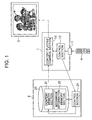
- Fig. 1 is a diagram indicating the concept of a communications system to which the present invention is applied.
- a client 1 and a server 2 are connected via, for example, a home network including a wired LAN (Local Area Network), a wireless LAN compliant with IEEE (Institute of Electrical and Electronics Engineers) 802.11a, 802.11b, or the like that is set up inside the home. Therefore, between the client 1 and the server 2, various kinds of information are transmitted and received via that home network.
- a home network including a wired LAN (Local Area Network), a wireless LAN compliant with IEEE (Institute of Electrical and Electronics Engineers) 802.11a, 802.11b, or the like that is set up inside the home. Therefore, between the client 1 and the server 2, various kinds of information are transmitted and received via that home network.
- a user operates the client 1 using a remote controller 4, and is able to output video contents and the like stored in the server 2 to a display device 3 connected to the client 1.
- a command representing as much is transmitted from the remote controller 4 to the client 1 by way of infrared rays. That command is received by a control section 12 of the client 1 via a light acceptance unit 11.
- the control section 12 that has received the command requests a control section 21 of the server 2 to play (streaming play) the content instructed by the user, and plays the content read from a memory section 22 and transmitted via the home network by controlling a content playing control section 13. Images of the content played by the content playing control section 13 are displayed on the display device 3.
- the memory section 22 of the server 2 includes not only a content memory section 31 in which contents are stored, but also a bookmark information memory section 32.
- Bookmark information including a time stamp representing, if content viewing has been stopped by the user, the stopped position is stored in this bookmark information memory section 32.
- a command representing the stopping of the content is transmitted from the remote controller 4, and is acquired by the control section 12 via the light acceptance unit 11.
- the control section 12 requests the stopping of the content and requests storage of the bookmark information representing the stopped position of the content.
- the server 2 stops streaming the content, and makes the bookmark information memory section 32 store the bookmark information including the time stamp representing the stopped position of the content.
- the server 2 refers to the time stamp representing the stopped position, and starts playing the content from the position designated by that time stamp.
- Fig. 1 for purposes of convenience, it is depicted as if communications are performed directly between the control section 12 of the client 1 and the control section 21 of the server 2, as well as between the content memory section 31 of the server 2 and the content playing control section 13 of the client 1. However, as will be described later, in reality, such communications are performed via communications control sections (a communications control section 101 of the client 1 and a communications control section 121 of the server 2) that control communications.
- communications control sections a communications control section 101 of the client 1 and a communications control section 121 of the server 2
- the contents and the bookmark information stored in the server 2 are made available to other clients (clients other than the client 1) that are connected to the home network as well.
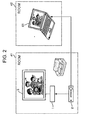
- Fig. 2 is a diagram showing a configuration example of a communications system in a case where a plurality of clients are connected to the server 2. Elements that find correspondence in Fig. 1 are designated with the same reference numerals.
- the client 1, the server 2 and the display device 3 are set up in a room 41, and a client 61, which is a laptop personal computer, is set up in a room 42.
- a client 61 which is a laptop personal computer
- the server 2 and the client 1 in Fig. 2 are connected by a wireless LAN or the like. Therefore, as in the case of client 1, using the client 61, the user is able to view on the display section thereof the contents stored in the server 2.
- the bookmark information registered in the server 2 from the client 1 is available to the client 61 as well, the user is able to view contents on the display section of the client 61 from the position at which viewing was interrupted at the display device 3. It is noted that the same content image is displayed on the display device 3 and the display section of the client 61 in Fig. 2.
- the bookmark information are included, besides the time stamp and the content identification information, identification information of the user (user ID) who uses it, identification information for identifying the group of the user (user group ID) and the like, for example.
- the bookmark information be read and having information such as the time stamp included therein be referred to on the basis of identification information inputted through a predetermined operation, the user, or group users, are able to, using a predetermined client, view contents from the position designated by the bookmark information.
- bookmark information may also be set from a client 61B, which is an audio device connected to the server 2 via a home network 81, with respect to music content stored in the server 2.
- client 61A which is a laptop personal computer connected to the server 2 via the home network 81
- the user is able to make the server 2 refer to the bookmark information set from the client 61B and listen to music content from the position at which playing was interrupted at the client 61B.
- bookmark information that is set for a predetermined web page as content may be shared among a group of users. It is noted that it may be arranged such that only contents that do not infringe upon the copyrights of another and do not cause damage to a copyright owner are made sharable.
- clients that may use the contents and the bookmark information may be, besides personal computers and audio devices, various devices such as PDAs (Personal Digital Assistants), mobile phones and the like.
- PDAs Personal Digital Assistants
- mobile phones and the like.
- the user may register as the bookmark information not only the time stamp representing a subsequent play start point, but also a time stamp representing a user's favorite point (highlight point).
- the user when, while viewing video content, there is a scene that he likes, the user operates the remote controller 4 and instructs the registration of a highlight point.
- the client 1 that has received the command transmitted from the remote controller 4 and instructing the registration of a highlight point requests the server 2 to set a highlight point, and makes it store a time stamp representing the playing position at that moment.
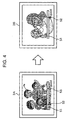
- Fig. 4 is a diagram showing an example of a screen of the display device 3 in a case where a highlight point is set for a predetermined video content.
- the image displayed on a display device 3A is an image of the predetermined video content before playing from the highlight is instructed, and the image displayed on a display device 3B shown ahead of the outline arrow is the image of the video content when playing from the highlight point is instructed.
- the playing position of the content is moved based on the time stamp designating the highlight point and the image is switched.
- the position of a pointer 52 on the display device 3A is the current playing position and the position of a pointer 53 is a highlight point
- the playing position of the content is moved (the display switches)
- the position of the pointer 52 representing the current playing position is moved to the position of the pointer 53 as shown on the display device 3B.
- a bar 51 represents the duration of the entire content.
- the displaying of the bar 51, the pointers 52 and 53 in Fig. 4 can be switched on/off.
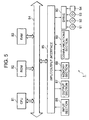
- Fig. 5 is a block diagram showing a configuration example of the client 1 in Fig. 1.
- a CPU (Central Processing Unit) 81 executes various processes in accordance with programs stored in a ROM (Read Only Memory) 82 or with programs loaded to a RAM (Random Access Memory) 83 from a memory section 88. In addition, data and the like that are necessary for the CPU 81 to execute various processes are stored in the RAM 83 as required.
- ROM Read Only Memory
- RAM Random Access Memory
- the CPU 81, the ROM 82 and the RAM 83 are interconnected via a bus 84.
- An input/output interface 85 is also connected to this bus 84.
- An input section 86 which may include a keyboard, a mouse, the light acceptance unit 11 for infrared rays emitted from the remote controller 4 and the like, an output section 87, which may include an interface for the display device 3 or a speaker and the like, the memory section 88, which may include a hard disk and the like, a communications section 89 that performs communications via a home network are connected to the input/output interface 85.
- a drive 90 is also connected to the input/output interface 85, a magnetic disk 91, an optical disc 92, a magneto-optical disc 93, a semiconductor memory 94 or the like is loaded, and a computer program read therefrom is installed in the memory section 88 as required.
- the server 2 in Fig. 1 and the client 61 in Fig. 2 essentially have a similar configuration as the client 1 shown in Fig. 5. Therefore, hereinafter, the configuration in Fig. 5 will also be cited as the configuration of the server 2 and the client 61 (other clients besides the client 1) as required.
- Fig. 6 is a block diagram showing a functional configuration example of the communications system in Fig. 1. As for elements described above, descriptions thereof will be omitted as deemed appropriate.
- Each of the functional sections of the client 1 shown in Fig. 6 is realized by having a predetermined control program executed by the CPU 81 of the client 1.
- the control section 12 controls the overall operations of the client 1.
- the communications control section 101 controls communications via the home network 81 that are performed by the communications section 89.
- content (streaming data) transmitted from the server 2 via the home network 81 is acquired by this communications control section 101 and outputted to the content playing control section 13.
- a play request section 101A which requests the server 2 to play contents
- a bookmark information setting request section 101B a request by the control section 12 to play contents is performed via the play request section 101A, and a request by the control section 12 to set bookmark information is performed via the bookmark information setting request section 101B.
- a display control section 102 controls the displaying of images on the display device 3 on the basis of data that is played by the content playing control section 13.
- a user interface (I/F) control section 103 acquires commands included in the infrared rays received at the light acceptance unit 11, and outputs them to the control section 12.
- an individual/group verification section 104 performs, as required, verification on the basis of user ID, user group ID, a predetermined password and the like with the control section 21 of the server 2.
- a device ID memory section 105 stores therein device IDs and outputs them to the control section 12 as required. These device IDs are information unique to each device, such as MAC (Media Access Control) addresses and the like, and are used in the verification process with the server 2 as required.
- MAC Media Access Control
- Each of the functional sections of the server 2 is realized by having a predetermined control program executed by the CPU 81 of the server 2.
- the control section 21 controls the overall operations of the server 2.
- the communications control section 121 controls communications with the client 1 that are performed via the home network 81.
- the content memory section 31 stores contents and provides requested contents in accordance with requests from the client 1.
- the bookmark information memory section 32 stores bookmark information and provides it to the control section 21 as required.
- Fig. 6 only the client 1 is shown as the client that uses the contents stored in the server 2, however, other clients (such as the client 61 in Fig. 2) having a configuration similar to the client 1 are also connected to the home network 81.
- Fig. 7 is a diagram showing an example of the bookmark information stored in the bookmark information memory section 32 of the server 2.
- bookmark information For example, in the bookmark information are included "bookmark number (No)" as identification information, and the ID of the content that is the subject of that bookmark information.
- bookmark information is set for each content in accordance with instructions from the user.
- the bookmark information includes information representing whether nor not, with respect to a client that has notified a valid user ID, access to the bookmark information is to be authorized (whether or not a confirmation, by user ID, of access right is necessary or not) (authorized/unauthorized), information representing whether or not, with respect to a client that has notified a valid user group ID, access to the bookmark information is to be authorized, and information representing whether or not, with respect to a client that has notified a valid device ID, access to the bookmark information is to be authorized.
- the user is able to use the bookmark information from any client that is capable of accessing the server 2 by inputting the user ID.
- the user is able to share one bookmark information among a plurality of users that know the user group ID.
- one bookmark information may be shared among users that use the client to which the device ID is allocated.
- the bookmark information includes pointer type (type as in what position the position designated by the pointer represents) and a time stamp value representing the position of that pointer.
- the bookmark number allocated to the bookmark information shown in Fig. 7 is "001," and the ID of its subject content is "777777.”
- verification by user ID is necessary, and the user ID is given as "123456.”
- the bookmark information in Fig. 7 includes a play start position for the next occasion (the position at which playing was previously stopped) and a pointer representing a play end position.
- the bookmark information in Fig. 7 represents a fact that the content is to be played from a position of a play start pointer set in a timing at which "0 hours 12 minutes and 34 seconds (0h 12m 34s)" have elapsed from the beginning of the content, and a fact that no play end pointer designating a position at which playing is to end is set and the content is to be played to its end.
- Bookmark information including such various kinds of information is set for each content and is managed by the bookmark information memory section 32.
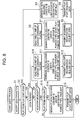
- step S1 the user interface control section 103 acquires via the light acceptance unit 11 a command transmitted from the remote controller 4 and accepts an operation by the user. A signal corresponding to the operation accepted by the user interface control section 103 is outputted to the control section 12.
- step S2 on the basis of the output from the user interface control section 103, the control section 12 determines whether or not the playing of content from a play start point registered as bookmark information is instructed by the user. If in step S2 the control section 12 determines that playing from the play start point that is set for a predetermined content is instructed, the process goes to step S3.
- step S3 the control section 12 generates play request data including the content ID of the content for which playing is requested, a user ID, a user group ID, and a command instructing playing from the play start point (point type: play start), and proceeds to step S4 to transmit it to the server 2.
- step S4 the playing of the content designated by the content ID is started from the play start point (step S52 in Fig. 10).
- step S2 determines that the playing of the content from the play start point is not instructed by the user, the process goes to step S5, and the control section 12 determines whether or not the stopping of the content currently playing is instructed.
- step S5 in a case where it is determined by the control section 12 that the stopping of the content currently playing is instructed, the process goes to step S6 and the content playing control section 13 reads the time stamp at that moment of the content currently playing.
- the time stamp value read by the content playing control section 13 is outputted to the control section 12.
- step S7 the control section 12 generates bookmark information registration request data including the content ID of the content for which playing is requested to stop, a user ID, a user group ID, a command requesting the registration of a play start pointer (a pointer representing the play start position for the next occasion) and the time stamp value read by the content playing control section 13, and the process goes to step S8 where the control section 12 transmits it to the server 2.
- bookmark information registration is performed (step S32 in Fig. 9).
- registration of the bookmark information is performed when the stopping of the content currently playing is requested. It is noted that the bookmark information may also be registered when the pausing of the content is requested, or when the playing of other contents instead of the currently playing content is instructed.
- step S5 in a case where the control section 12 determines that the stopping of the content currently playing is not instructed, the process goes to step S9 where the control section 12 determines whether or not registration of a highlight point is requested.
- step S9 in a case where it is determined that registration of a highlight point is requested, the process goes to step S10 where the content playing control section 13 reads the time stamp at that moment of the content currently playing. The time stamp value read by the content playing control section 13 is outputted to the control section 12.
- step S11 the control section 12 generates highlight point registration request data including the content ID of the content for which registration of a highlight point is requested, a user ID, a user group ID, a command representing a request to register a highlight point, and the time stamp value read by the content playing control section 13, and the process goes to step S12, where the control section 12 transmits the data to the server 2.
- step S12 where the control section 12 transmits the data to the server 2.
- step S9 it is determined that registration of a highlight point is not requested
- the process goes to step S13, where the control section 12 determines whether or not the playing of the content from a highlight point is instructed.
- the playing of the content from a highlight point may be performed by pressing the fast-forward button on the remote controller 4 twice in succession.
- step S13 in a case where the control section 12 determines that the playing of the content from a highlight point is not instructed, it recognizes that some other operation unrelated to content playing has been performed, and after executing a process corresponding thereto, terminates the process in Fig. 8
- step S13 in a case where the control section 12 determines that the playing of the content from a highlight point is instructed, the process goes to step S14 and the control section 12 generates play start request data including the content ID of the content for which playing from a highlight point is requested, a user ID, a user group ID, and a command instructing playing from the highlight point.
- step S15 the control section 12 transmits the generated play start request data to the server 2.
- the playing of the content from the highlight point is performed (step S51 in Fig. 10).
- step S31 the control section 21 of the server 2 controls the communications control section 121 and receives the bookmark information registration request data (the registration request data for the play start point for the next occasion transmitted in step S8 in Fig. 8, or the highlight point registration request data transmitted in step S12) transmitted from the client 1.
- the bookmark information registration request data received by the control section 21 is outputted to the bookmark information memory section 32.
- step S32 the bookmark information memory section 32 registers the bookmark information based on the data supplied from the control section 21.
- a list such as the one shown in Fig. 7, is created and stored.
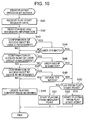
- step S41 the control section 21 of the server 2 controls the communications control section 121 and receives the play start request data transmitted from the client 1 in step S4 in Fig. 8 or the play start request data transmitted from the client 1 in step S15.
- step S42 on the basis of the content ID included in the play start request data, the control section 21 reads from the content memory section 32 the content to which that ID is allocated, and reads the bookmark information for the content from the bookmark information memory section 32.
- the content ID for the subject content is included in each bookmark information.
- step S43 the control section 21 refers to the information included in the bookmark information read in step S42, and determines whether or not a confirmation of access right by user ID is necessary.
- step S43 in a case where the control section 21 determines that a confirmation of access right by user ID is necessary, the process goes to step S44 and the control section 21 determines whether or not the user ID transmitted from the client 1 matches with the user ID included in the bookmark information that is read.
- step S43 determines in step S43 that a confirmation of access right by user ID is not necessary, as well as in a case where it determines in step S44 that the user ID transmitted from the client 1 does not match with the user ID included in the bookmark information, the process goes to step S45.
- step S45 the control section 21 determines whether or not a confirmation of access right by user group ID is necessary.
- step S45 in a case where the control section 21 determines that confirmation of access right by user group ID is necessary, the process goes to step S46 and the control section 21 determines whether or not the user group ID transmitted from the client 1 matches with the user group ID included in the bookmark information that is read.
- step S45 determines in step S45 that confirmation of access right by user group ID is not necessary, as well as in a case where it determines in step S46 that the user group ID transmitted from the client 1 does not match with the user group ID included in the bookmark information, the process goes to step S47.
- step S47 the control section 21 determines whether or not confirmation of access right by device ID is necessary.
- step S47 in a case where the control section 21 determines that confirmation of access right by device ID is necessary, the process goes to step S48 and the control section 21 determines whether or not the device ID transmitted from the client 1 matches with the device ID included in the bookmark information that is read.
- step S47 determines in step S47 that confirmation of access right by device ID is not necessary, as well as in a case where it determines in step S48 that the device ID transmitted from the client 1 does not match with the device ID included in the bookmark information.
- step S49 the control section 49 plays the content requested by the client 1 from its beginning.
- data is transmitted by the communications control section 121 to the client 1 via the home network 81 from the beginning of the content read from the content memory section 31.
- a playing process for the content transmitted from the server 2 is performed (step S62 in Fig. 11).
- step S44 it is determined that the user ID transmitted from the client 1 matches with the user ID included in the bookmark information
- step S46 it is determined that the user group ID transmitted from the client 1 matches with the user group ID included in the bookmark information
- step S48 it is determined that the device ID transmitted from the client 1 matches with the device ID included in the bookmark information
- step S50 the control section 21 determines whether or not playing from a play start point registered as bookmark information is requested by the client 1, and if it determines that playing from a play start point is not requested, that is, in a case where it determines that playing from a highlight point is being requested, the process goes to step S51.
- step S51 the control section 21 refers to a time stamp representing the position of the highlight point, and starts playing the read content from the position corresponding to the time stamp.
- data of the content from the position designated by the time stamp of the highlight point is transmitted to the client 1 via the home network 81.
- a playing process for the content transmitted from the server 2 is performed.
- step S50 in a case where the control section 21 determines that playing from a play start point is requested, the process goes to step S52, and the control section 21 refers to a time stamp included in the bookmark information and representing the position of the play start point and starts playing the content from the position of the time stamp.
- the control section 21 refers to a time stamp included in the bookmark information and representing the position of the play start point and starts playing the content from the position of the time stamp.
- data of the content from the position designated by the time stamp of the play start point is transmitted to the client 1 via the home network 81.
- a playing process for the content transmitted from the server 2 is performed.
- Such processes may be executed not only by the client 1 but also by other clients connected to the server 2 via the home network 81.
- bookmark information is allowed to a client that transmits the same user ID as the user ID registered in that bookmark information. Therefore, by setting such that verification by user ID is executed, the user is able to view contents from play start points and highlight points from various devices capable of accessing the server 2 using the bookmark information.
- bookmark information is made available not only to the client that registered that bookmark information but also to various clients connected to the server 2, and the user is able to view contents more efficiently and comfortably.
- bookmark information is allowed to a client that transmits the same user group ID as the user group ID registered in that bookmark information, and thus, the bookmark information may be shared among a plurality of users. For example, a user may register his favorite scene as a highlight point and let another user view the content from the scene.
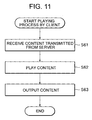
- step S61 the communications control section 101 receives content transmitted from the server 2 via the home network 81. For example, in a case where playing from a play start point is requested, data of the content from the position is transmitted from the server 2 (step S52 in Fig. 10). The content received by the communications control section 101 is outputted to the content playing control section 13.
- step S62 the content playing control section 13 plays (decodes) the content supplied from the communications control section 101, and outputs the obtained data to the display control section 102.
- step S63 the display control section 102 displays images of the content on the display device 3 on the basis of the output from the content playing control section 13.
- the client 1 and the server 2 were described as being connected by the home network 81 including a LAN and the like, but as shown in Fig. 12, the server 2 may exist outside of the home, and the client 1 and the server 2 may be connected via a router 131 and the Internet 132.
- the server 2 is connected via the Internet 132 and the like, through processes similar to those above, the user is able to use the bookmark information registered in the server 2 from a client connected to a home network within the home or from a client connected to the Internet 132.
- the server that manages contents and bookmark information (the server 2) were described as being the same device, but contents and bookmark information may also be managed by different devices.
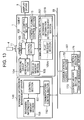
- Fig. 13 is a block diagram showing another functional configuration example of a communications system to which the present invention is applied. Elements that find correspondence in Fig. 6 are designated with the same reference numerals.
- a bookmark information management server 141 is a server managing bookmark information
- a content management server 161 is a server managing contents.
- functions of the server 2 in Fig. 6 are realized by the bookmark information management server 141 and the content management server 161.
- a control section 151 of the bookmark information management server 141 controls the overall operations of the bookmark information management server 141, and a communications control section 152 controls communications performed via the home network 81.
- a bookmark information memory section 153 stores and manages, for example, bookmark information that is set by the client 1.
- a control section 171 of the content management server 161 controls the overall operations of the content management server 161, and a communications control section 172 controls communications performed via the home network 81.
- a content memory section 173 manages contents, and provides contents requested by the client 1.
- the client 1 transmits a time stamp value representing the position that was being played at that moment and the like to the bookmark information management server 141, requests registration of bookmark information, and requests the content management server 161 to stop transmitting the content.
- the client 1 requests the bookmark information management server 141 to notify the content management server 161 of the position (time stamp) in the content designated by the bookmark information.
- requests carried out by the client 1 with respect to the bookmark information management sever 141, and requests carried out by the bookmark information management server 141 with respect to the content management server 161 also include information such as content ID and the like.
- the content transmitted from the content management server 161 is played.
- the server that manages bookmark information and the server that manages contents may each be configured as physically distinct devices.
- step S72 it is determined that playing from a play start point is instructed by user operations accepted in step S71, the process goes to step S73 and play request data, which requests the playing of content from a play start point, is generated.
- the generated play start request data is transmitted to the bookmark information management server 141 in step S74.
- the data transmitted at this point also includes information that requests the bookmark information management server 141 to notify the content management server 161 of information on the time stamp (time stamp of the play start point) registered in the bookmark information.
- the bookmark information management server 141 that has received the play start request data, for example, the bookmark information is read on the basis of the content ID, and the time stamp registered therein representing the play start point is notified to the content management server 161 (step S93 in Fig. 15).
- bookmark information registration request data that includes a time stamp read in step S76 and that requests the registration of a play start point is generated in step S77.
- the generated bookmark information registration request data is transmitted to the bookmark information management server 141 in step S78. It is noted that, in step S78, data requesting the content management server 161 to stop the playing of the content is also transmitted from the client 1.
- step S79 in a case where it is determined that registration of a highlight point is instructed, bookmark information registration request data that includes a time stamp read in step S80 and that requests the registration of a highlight point is generated in step S81.
- the generated bookmark information registration request data is transmitted to the bookmark information management server 141 in step S82.
- step S83 in a case where it is determined that the playing of the content from a highlight point is not instructed, the process is terminated.
- play start request data that requests playing from a highlight point is generated in step S84.
- the generated play start request data is transmitted to the bookmark information management server 141 in step S85.
- the play start request data transmitted at this point also includes information requesting the bookmark information management server 141 to notify the content management server 161 of information on the time stamp of the highlight point.
- the bookmark information is read on the basis of the content ID and the like, and the time stamp registered therein representing the highlight point is notified to the content management server 161 (step S93 in Fig. 15).
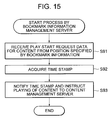
- step S91 the communications control section 152 of the bookmark information management server 141 receives the play start request data transmitted from the client 1 via the home network 81.
- the received play start request data is outputted to the control section 151.
- step S92 on the basis of the content ID and the like included in the play start request data, the control section 151 reads from the bookmark information memory section 153 the bookmark information that is set for the content for which the user requests playing, and acquires the time stamp (the time stamp of a play start point or the time stamp of a highlight point) included therein.
- step S93 the control section 151 of the bookmark information management server 141 controls the communications control section 152, notifies the content management server 161 of the time stamp acquired in step S92, and instructs the playing of the content from the position of that time stamp. For example, the content ID of the content to be played, address information of the client 1 that requests provision of the content and the like are also notified to the content management server 161.
- the time stamp of a play start point or the time stamp of a highlight point is notified to the content management server 161.
- bookmark information management server 141 the process described with reference to Fig. 9 is executed by the bookmark information management server 141, and bookmark information designating a play start point or a highlight point is registered.
- step S101 the communications control section 172 of the content management server 161 receives information, which is transmitted from the bookmark information management server 141, that is necessary in order to play a content, such as a time stamp representing the position of a play start point or a highlight point, the content ID of the content for which playing is instructed, address information of the client 1 and the like.
- the information received by the communications control section 172 is outputted to the control section 171.
- step S102 the control section 171 plays the content instructed by the user from the position of the time stamp transmitted from the bookmark information management server 141.
- data of the content from the position designated by the time stamp is transmitted to the client 1 from the content management server 161.
- the process described with reference to Fig. 11 is executed, and the content is played from the play start point or the highlight point managed by the bookmark information management server 141.
- the playing of contents is controlled on the basis of bookmark information.
- the playing of contents may also be controlled on the basis of the user's viewing status of the contents.
- Fig. 17 is a block diagram showing a functional configuration example of another communications system to which the present invention is applied. Elements that find correspondence in Fig. 13 are designated with the same reference numerals and detailed descriptions thereof are omitted where appropriate.
- a viewing status information management server 181 manages content viewing statuses (content playing statuses) by the user carried out using the client 1. Specifically, with a viewing status information memory section 193 of the viewing status information management server 181, viewing status information, which includes the viewing status of content (for example, that it is in a paused state and the like), the content ID of the content, information on the provider of the content (the content management server 161), information, for example, such as the time stamp of the paused position if the viewing status of the content is in a paused state, and the like, is stored.
- viewing status information which includes the viewing status of content (for example, that it is in a paused state and the like), the content ID of the content, information on the provider of the content (the content management server 161), information, for example, such as the time stamp of the paused position if the viewing status of the content is in a paused state, and the like, is stored.
- a request to store this viewing status information is performed by the control section 12 of the client 1 with respect to the viewing status information management server 181 via a viewing status information storage request section 101C included in the communications control section 101.
- viewing status information including a time stamp representing the paused position is transmitted to the content management server 161 from the viewing status information management server 181 via the client 1, and the playing of the content is controlled from the paused position designated by that time stamp.
- the user By having the playing of the content controlled in accordance with the viewing status of the content at the next boot, for example, the user is able to view the content efficiently.
- the viewing status information since the viewing status information is registered in association with user ID, user group ID, device ID and the like, it can be used to view contents from a client other than the client that registered the viewing status information.
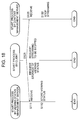
- the control section 12 of the client 1 controls the communications control section 101, and in step S121, requests the content management server 161 to stop streaming, while notifying the viewing status information management server 181 that the playing of the content is in a paused state and requesting storage thereof.
- a control section 191 of the viewing status information management server 181 controls a communications control section 192, receives the request from the client 1 in step S111, proceeds to step S112, and makes the viewing status information memory section 193 store viewing status information including a fact that the status of the content viewed at the client 1 is of a paused status, the content ID of that content, information on the provider of the content (the content management server 161), a time stamp representing the paused position, and the like.
- the viewing status information is stored in association with the user ID. Therefore, when the client 1 is booted and the user ID transmitted, at the viewing status information management server 181, the viewing status information is read on the basis of the user ID, and the playing of the content is controlled in accordance with the viewing status represented thereby.
- control section 171 of the content management server 161 that has received the request to stop streaming in step S131 proceeds to step S132, and stops the streaming of the content that was being provided to the client 1 up to that point.
- the control section 12 of the client 1 controls the communications control section 101, and requests the viewing status information management server 181 to notify viewing status information in step S151.
- This request includes, for example, the user ID of the user of the client 1 and the like.
- step S141 the request from the client 1 is received by the control section 191 of the viewing status information management server 181.
- step S142 the control section 191 reads the viewing status information for the client 1 from the viewing status information memory section 193 on the basis of the user ID transmitted from the client 1, proceeds to step S143, and notifies it to the client 1.
- step S152 the control section 12 of the client 1 receives the viewing status information transmitted from the viewing status information management server 181.
- step S153 for example, on the basis of the information included in the viewing status information and which designates the provider of the content, the control section 12 notifies the content management server 161 of the received viewing status information, and requests the playing (resumption of streaming) of the content on the basis of the viewing status information.
- step S161 the request from the client 1 is received by the control section 171 of the content management server 161 via the home network 81 and the communications control section 172.
- control section 171 From the viewing status information, the control section 171 acquires the content ID, a fact that the playing of the content is in a paused state, and the time stamp representing that paused position, and in step S162, on the basis of the content ID, reads the content stored in the content memory section 173, and starts the streaming of the content (transmission of the content) from the position designated by the time stamp.
- step S154 the content transmitted from the content management server 161 is received by the control section 12 of the client 1, and the playing thereof is performed in step S155.
- the content from the paused position is played by the content playing control section 13, and corresponding images are outputted to the display device 3.
- the user is able to view the remaining content from the paused position in a predetermined timing, such as when the client is booted, without having to perform any operations himself.
- the user since viewing status information is acquired on the basis of user ID, and the playing of the content is controlled on the basis of the acquired viewing status information, the user is able to view the content that is to be played on the basis of the viewing status information from a client other than the client 1. In this case, the user needs to set the client such that the user ID is notified to the viewing status information management server 181.
- a trigger for automatically starting the playing of the content is not to be limited to the booting of the client 1 described above.
- automatic playing of content may be carried out in a predetermined timing such as when a user ID or a password is entered by the user or when the player for the content is launched and the like.
- the configuration of the communications system shown in Fig. 17 may be altered as deemed appropriate.
- the content management server 161 may be provided on the Internet, or the content management server 161 and the viewing status information management server 181 may be physically incorporated into a single device.
- the viewing status information is transmitted to the content management server 161 from the viewing status information management server 181 via the client 1, but the information may be transmitted directly from the viewing status information management server 181 to the content management server 161.
- This recording medium may include not only packaged media, which include the magnetic disk 91 (including flexible disks), the optical disc 92 (including CD-ROM (Compact Disk-Read Only Memory) and DVD (Digital Versatile Disk)), the magneto-optical disc 93 (including MD (registered trademark) (Mini-Disk)) or the semiconductor memory 94 and the like on which programs are recorded, that are distributed separately from the apparatus itself in order to provide programs to the user, but may also include the ROM 82 in which programs are recorded, a hard disk included in the memory section 88 and the like and which are provided to the user in a state where they are pre-incorporated into the apparatus itself.
- the steps that describe the programs recorded on the recording medium naturally include processes performed chronologically in accordance with the order in which they are described, but they also include processes that are executed in parallel or individually, and not necessarily processed chronologically.
- system refers to an apparatus as a whole including a plurality of apparatuses.
- users are able to view contents stored in one information management apparatus from information processing apparatuses connected via a network.
- users are able to view contents efficiently and comfortably.
Landscapes
- Engineering & Computer Science (AREA)
- Multimedia (AREA)
- Signal Processing (AREA)
- Databases & Information Systems (AREA)
- Human Computer Interaction (AREA)
- Computer Networks & Wireless Communication (AREA)
- Information Transfer Between Computers (AREA)
- Television Signal Processing For Recording (AREA)
- Two-Way Televisions, Distribution Of Moving Picture Or The Like (AREA)
Applications Claiming Priority (3)
| Application Number | Priority Date | Filing Date | Title |
|---|---|---|---|
| JP2003015568 | 2003-01-24 | ||
| JP2003015568A JP3747910B2 (ja) | 2003-01-24 | 2003-01-24 | 通信システムおよび方法、情報処理装置および方法、情報管理装置および方法、記録媒体、並びにプログラム |
| PCT/JP2003/015648 WO2004066622A1 (ja) | 2003-01-24 | 2003-12-08 | 通信システムおよび方法、情報処理装置および方法、情報管理装置および方法、記録媒体、並びにプログラム |
Publications (2)
| Publication Number | Publication Date |
|---|---|
| EP1596594A1 true EP1596594A1 (de) | 2005-11-16 |
| EP1596594A4 EP1596594A4 (de) | 2009-05-06 |
Family
ID=32767442
Family Applications (1)
| Application Number | Title | Priority Date | Filing Date |
|---|---|---|---|
| EP03777334A Withdrawn EP1596594A4 (de) | 2003-01-24 | 2003-12-08 | Kommunikationssystem und verfahren, vorrichtung und verfahren zur informationsverarbeitung und informationsverwaltung, aufzeichnungsmedium und programm |
Country Status (7)
| Country | Link |
|---|---|
| US (3) | US8463917B2 (de) |
| EP (1) | EP1596594A4 (de) |
| JP (1) | JP3747910B2 (de) |
| KR (1) | KR100998792B1 (de) |
| CN (1) | CN1739292B (de) |
| AU (1) | AU2003289231A1 (de) |
| WO (1) | WO2004066622A1 (de) |
Cited By (11)
| Publication number | Priority date | Publication date | Assignee | Title |
|---|---|---|---|---|
| WO2007099529A1 (en) * | 2006-02-28 | 2007-09-07 | Sandisk Il Ltd | Bookmarked synchronization of files |
| WO2007130052A1 (en) * | 2006-05-08 | 2007-11-15 | Thomson Licensing | Method for resuming content reproduction across devices |
| GB2448943A (en) * | 2007-05-02 | 2008-11-05 | Film Night Ltd | Restarting video which is interrupted during streaming to mobile devices |
| EP1931146A3 (de) * | 2006-12-06 | 2011-12-21 | Samsung Electronics Co., Ltd. | Endgerät, Server und Verfahren zur Bereitstellung eines Rundfunkdienstes |
| WO2012072730A1 (en) * | 2010-12-02 | 2012-06-07 | Nagravision S.A. | Method to mark and exploit at least one sequence record of a video presentation |
| EP2341424A3 (de) * | 2010-01-05 | 2012-08-08 | Samsung Electronics Co., Ltd. | Verfahren zur Umschaltung einer Senkenvorrichtung und Vorrichtung zur Bereitstellung von Inhalten damit |
| US20130336637A1 (en) * | 2012-06-15 | 2013-12-19 | Sony Corporation | Information processing device and information processing method, computer program, and information communication system |
| US9899059B2 (en) | 2006-08-24 | 2018-02-20 | Orange | Method of management of a multimedia program, server, terminals, signal and corresponding computer programs |
| US10008241B2 (en) | 2010-12-02 | 2018-06-26 | Nagravision S.A. | Method to mark and exploit at least one sequence record of a video presentation |
| US10178399B2 (en) | 2013-02-28 | 2019-01-08 | Sonic Ip, Inc. | Systems and methods of encoding multiple video streams for adaptive bitrate streaming |
| US11025902B2 (en) | 2012-05-31 | 2021-06-01 | Nld Holdings I, Llc | Systems and methods for the reuse of encoding information in encoding alternative streams of video data |
Families Citing this family (114)
| Publication number | Priority date | Publication date | Assignee | Title |
|---|---|---|---|---|
| JP2004364227A (ja) * | 2003-06-09 | 2004-12-24 | Sony Corp | 受信装置および選局方法、ならびに、ストリーム配信システム |
| US8086752B2 (en) | 2006-11-22 | 2011-12-27 | Sonos, Inc. | Systems and methods for synchronizing operations among a plurality of independently clocked digital data processing devices that independently source digital data |
| US11106424B2 (en) | 2003-07-28 | 2021-08-31 | Sonos, Inc. | Synchronizing operations among a plurality of independently clocked digital data processing devices |
| US11650784B2 (en) | 2003-07-28 | 2023-05-16 | Sonos, Inc. | Adjusting volume levels |
| US10613817B2 (en) | 2003-07-28 | 2020-04-07 | Sonos, Inc. | Method and apparatus for displaying a list of tracks scheduled for playback by a synchrony group |
| US11106425B2 (en) | 2003-07-28 | 2021-08-31 | Sonos, Inc. | Synchronizing operations among a plurality of independently clocked digital data processing devices |
| US8290603B1 (en) | 2004-06-05 | 2012-10-16 | Sonos, Inc. | User interfaces for controlling and manipulating groupings in a multi-zone media system |
| US11294618B2 (en) | 2003-07-28 | 2022-04-05 | Sonos, Inc. | Media player system |
| US8234395B2 (en) | 2003-07-28 | 2012-07-31 | Sonos, Inc. | System and method for synchronizing operations among a plurality of independently clocked digital data processing devices |
| US8020023B2 (en) | 2003-07-28 | 2011-09-13 | Sonos, Inc. | Systems and methods for synchronizing operations among a plurality of independently clocked digital data processing devices without a voltage controlled crystal oscillator |
| US10237237B2 (en) | 2007-06-12 | 2019-03-19 | Icontrol Networks, Inc. | Communication protocols in integrated systems |
| US20170118037A1 (en) | 2008-08-11 | 2017-04-27 | Icontrol Networks, Inc. | Integrated cloud system for premises automation |
| US11244545B2 (en) | 2004-03-16 | 2022-02-08 | Icontrol Networks, Inc. | Cross-client sensor user interface in an integrated security network |
| US10721087B2 (en) | 2005-03-16 | 2020-07-21 | Icontrol Networks, Inc. | Method for networked touchscreen with integrated interfaces |
| US11368429B2 (en) | 2004-03-16 | 2022-06-21 | Icontrol Networks, Inc. | Premises management configuration and control |
| US11811845B2 (en) | 2004-03-16 | 2023-11-07 | Icontrol Networks, Inc. | Communication protocols over internet protocol (IP) networks |
| US12063220B2 (en) | 2004-03-16 | 2024-08-13 | Icontrol Networks, Inc. | Communication protocols in integrated systems |
| US11343380B2 (en) | 2004-03-16 | 2022-05-24 | Icontrol Networks, Inc. | Premises system automation |
| US9729342B2 (en) | 2010-12-20 | 2017-08-08 | Icontrol Networks, Inc. | Defining and implementing sensor triggered response rules |
| US10339791B2 (en) | 2007-06-12 | 2019-07-02 | Icontrol Networks, Inc. | Security network integrated with premise security system |
| US8635350B2 (en) | 2006-06-12 | 2014-01-21 | Icontrol Networks, Inc. | IP device discovery systems and methods |
| US11582065B2 (en) | 2007-06-12 | 2023-02-14 | Icontrol Networks, Inc. | Systems and methods for device communication |
| US11916870B2 (en) | 2004-03-16 | 2024-02-27 | Icontrol Networks, Inc. | Gateway registry methods and systems |
| JP4496808B2 (ja) * | 2004-03-16 | 2010-07-07 | ソニー株式会社 | コンテンツ提供装置、コンテンツ提供方法、コンテンツ提供方法のプログラム、コンテンツ提供方法のプログラムを記録した記録媒体及びコンテンツ提供システム |
| US8335842B2 (en) | 2004-03-16 | 2012-12-18 | Icontrol Networks, Inc. | Premises management networking |
| US9977561B2 (en) | 2004-04-01 | 2018-05-22 | Sonos, Inc. | Systems, methods, apparatus, and articles of manufacture to provide guest access |
| US8326951B1 (en) | 2004-06-05 | 2012-12-04 | Sonos, Inc. | Establishing a secure wireless network with minimum human intervention |
| US8868698B2 (en) | 2004-06-05 | 2014-10-21 | Sonos, Inc. | Establishing a secure wireless network with minimum human intervention |
| JP4496926B2 (ja) * | 2004-11-09 | 2010-07-07 | パナソニック株式会社 | コンテンツ配信システム |
| KR100652957B1 (ko) * | 2005-02-17 | 2006-12-01 | 삼성전자주식회사 | 멀티미디어 컨텐츠 이동방법 및 그 시스템 |
| WO2006090340A1 (en) * | 2005-02-28 | 2006-08-31 | Koninklijke Philips Electronics, N.V. | System and method for providing 'universal 'follow-me' functionality in a upnp av network |
| US20120324566A1 (en) | 2005-03-16 | 2012-12-20 | Marc Baum | Takeover Processes In Security Network Integrated With Premise Security System |
| US20150054947A1 (en) | 2005-03-16 | 2015-02-26 | Paul J. Dawes | Device for data routing in networks |
| US11700142B2 (en) | 2005-03-16 | 2023-07-11 | Icontrol Networks, Inc. | Security network integrating security system and network devices |
| US20110128378A1 (en) | 2005-03-16 | 2011-06-02 | Reza Raji | Modular Electronic Display Platform |
| US10999254B2 (en) | 2005-03-16 | 2021-05-04 | Icontrol Networks, Inc. | System for data routing in networks |
| US11615697B2 (en) | 2005-03-16 | 2023-03-28 | Icontrol Networks, Inc. | Premise management systems and methods |
| WO2006112176A1 (ja) * | 2005-03-31 | 2006-10-26 | Pioneer Corporation | データ記録システム、データ取得装置、データ記録装置、データ取得装置制御プログラム、およびデータ記録装置制御プログラム |
| WO2007000949A1 (ja) * | 2005-06-27 | 2007-01-04 | Nec Corporation | 再生開始位置制御付きコンテンツ再生方法および装置 |
| KR100702228B1 (ko) * | 2005-06-30 | 2007-04-03 | 주식회사 알티캐스트 | 디지털 방송을 통해 반복적으로 방송되는 프로그램의효율적 스케줄링 방법 |
| US8180731B2 (en) | 2005-08-01 | 2012-05-15 | Sony Corporation | Apparatus and method for computing evaluation values of content data stored for reproduction |
| JP4835302B2 (ja) * | 2005-08-01 | 2011-12-14 | ソニー株式会社 | 情報処理装置,通信方法,コンピュータプログラム |
| US20070157072A1 (en) * | 2005-12-29 | 2007-07-05 | Sony Ericsson Mobile Communications Ab | Portable content sharing |
| JP2007329833A (ja) * | 2006-06-09 | 2007-12-20 | Sony Corp | 情報処理システム、記録再生装置、再生端末、情報処理方法、およびプログラム |
| US12063221B2 (en) | 2006-06-12 | 2024-08-13 | Icontrol Networks, Inc. | Activation of gateway device |
| US8601162B1 (en) * | 2006-07-27 | 2013-12-03 | Aol Inc. | Sharing network addresses |
| WO2008035603A1 (en) * | 2006-09-19 | 2008-03-27 | Access Co., Ltd. | Content reproduction system, remote control device, and computer program |
| JP5011917B2 (ja) * | 2006-09-29 | 2012-08-29 | 株式会社日立製作所 | コンテンツ送信装置、再生装置およびコンテンツ再生方法 |
| JP2008085934A (ja) * | 2006-09-29 | 2008-04-10 | Hitachi Ltd | リモート映像再生システムおよびレジューム再生方法 |
| US20080126919A1 (en) * | 2006-11-08 | 2008-05-29 | General Instrument Corporation | Method, Apparatus and System for Managing Access to Multimedia Content Using Dynamic Media Bookmarks |
| US20080155615A1 (en) * | 2006-12-22 | 2008-06-26 | Guideworks, Llc | Systems and methods for supporting multi-user media content access using index points |
| US11706279B2 (en) | 2007-01-24 | 2023-07-18 | Icontrol Networks, Inc. | Methods and systems for data communication |
| US7633385B2 (en) | 2007-02-28 | 2009-12-15 | Ucontrol, Inc. | Method and system for communicating with and controlling an alarm system from a remote server |
| US8451986B2 (en) | 2007-04-23 | 2013-05-28 | Icontrol Networks, Inc. | Method and system for automatically providing alternate network access for telecommunications |
| US11601810B2 (en) | 2007-06-12 | 2023-03-07 | Icontrol Networks, Inc. | Communication protocols in integrated systems |
| US11218878B2 (en) | 2007-06-12 | 2022-01-04 | Icontrol Networks, Inc. | Communication protocols in integrated systems |
| US11212192B2 (en) | 2007-06-12 | 2021-12-28 | Icontrol Networks, Inc. | Communication protocols in integrated systems |
| US12184443B2 (en) | 2007-06-12 | 2024-12-31 | Icontrol Networks, Inc. | Controlling data routing among networks |
| US11646907B2 (en) | 2007-06-12 | 2023-05-09 | Icontrol Networks, Inc. | Communication protocols in integrated systems |
| US11237714B2 (en) | 2007-06-12 | 2022-02-01 | Control Networks, Inc. | Control system user interface |
| US11316753B2 (en) * | 2007-06-12 | 2022-04-26 | Icontrol Networks, Inc. | Communication protocols in integrated systems |
| US12003387B2 (en) | 2012-06-27 | 2024-06-04 | Comcast Cable Communications, Llc | Control system user interface |
| US12283172B2 (en) | 2007-06-12 | 2025-04-22 | Icontrol Networks, Inc. | Communication protocols in integrated systems |
| US12541237B2 (en) | 2007-08-10 | 2026-02-03 | Icontrol Networks, Inc. | Integrated security system with parallel processing architecture |
| US10223903B2 (en) | 2010-09-28 | 2019-03-05 | Icontrol Networks, Inc. | Integrated security system with parallel processing architecture |
| US11831462B2 (en) | 2007-08-24 | 2023-11-28 | Icontrol Networks, Inc. | Controlling data routing in premises management systems |
| JP5239271B2 (ja) * | 2007-09-12 | 2013-07-17 | 富士ゼロックス株式会社 | 情報処理装置及びプログラム |
| US8356324B2 (en) * | 2007-09-21 | 2013-01-15 | Broadcom Corporation | Implementing network personal video recorder for digital video settop boxes |
| KR101523622B1 (ko) * | 2007-10-17 | 2015-05-29 | 주식회사 비즈모델라인 | 동영상 동기화 재생 방법 |
| US11916928B2 (en) | 2008-01-24 | 2024-02-27 | Icontrol Networks, Inc. | Communication protocols over internet protocol (IP) networks |
| US20170185278A1 (en) | 2008-08-11 | 2017-06-29 | Icontrol Networks, Inc. | Automation system user interface |
| US11792036B2 (en) | 2008-08-11 | 2023-10-17 | Icontrol Networks, Inc. | Mobile premises automation platform |
| US11758026B2 (en) | 2008-08-11 | 2023-09-12 | Icontrol Networks, Inc. | Virtual device systems and methods |
| US11258625B2 (en) | 2008-08-11 | 2022-02-22 | Icontrol Networks, Inc. | Mobile premises automation platform |
| US10530839B2 (en) | 2008-08-11 | 2020-01-07 | Icontrol Networks, Inc. | Integrated cloud system with lightweight gateway for premises automation |
| US11729255B2 (en) | 2008-08-11 | 2023-08-15 | Icontrol Networks, Inc. | Integrated cloud system with lightweight gateway for premises automation |
| KR101466356B1 (ko) * | 2008-08-12 | 2014-11-27 | 삼성전자주식회사 | 홈 네트워크 내에서 다른 사용자와 북마크를 공유하는 장치및 방법 |
| JP5278435B2 (ja) * | 2008-09-10 | 2013-09-04 | 日本電気株式会社 | コンテンツ配信システム |
| JP5469842B2 (ja) * | 2008-10-02 | 2014-04-16 | 日立コンシューマエレクトロニクス株式会社 | コンテンツ送信装置、コンテンツ受信装置 |
| KR20100088953A (ko) * | 2009-02-02 | 2010-08-11 | 삼성전자주식회사 | 인터넷 방송 시스템에서의 컨텐츠 공유 방법 및 시스템 |
| US8638211B2 (en) | 2009-04-30 | 2014-01-28 | Icontrol Networks, Inc. | Configurable controller and interface for home SMA, phone and multimedia |
| US8959558B2 (en) * | 2009-06-30 | 2015-02-17 | Verizon Patent And Licensing Inc. | User-based media content chaptering systems and methods |
| US20110164857A1 (en) * | 2009-09-25 | 2011-07-07 | Telefonaktiebolaget L M Ericsson (Publ) | Systems and methods for network-based bookmarking |
| US8671422B2 (en) * | 2009-09-25 | 2014-03-11 | Telefonaktiebolaget L M Ericsson (Publ) | Systems and methods for handling advertisements in conjunction with network-based bookmarking |
| JP2011199586A (ja) * | 2010-03-19 | 2011-10-06 | Buffalo Inc | メディア再生システム、メディア再生装置及びプログラム |
| JP2011250153A (ja) * | 2010-05-27 | 2011-12-08 | Cri Middleware Co Ltd | 情報処理システム、情報処理装置、情報通信機器、方法、プログラムおよび記録媒体 |
| US8836467B1 (en) | 2010-09-28 | 2014-09-16 | Icontrol Networks, Inc. | Method, system and apparatus for automated reporting of account and sensor zone information to a central station |
| EP2619678A4 (de) * | 2010-10-27 | 2016-04-27 | Lg Electronics Inc | Elektronische vorrichtung und steuerungsverfahren dafür |
| US20120110424A1 (en) * | 2010-10-29 | 2012-05-03 | Lg Electronics Inc. | Electronic device and method of controlling the same |
| US8719688B2 (en) * | 2010-10-29 | 2014-05-06 | Lg Electronics Inc. | Device for processing bookmark information generated by another device and method for displaying bookmark information |
| US11750414B2 (en) | 2010-12-16 | 2023-09-05 | Icontrol Networks, Inc. | Bidirectional security sensor communication for a premises security system |
| US9147337B2 (en) | 2010-12-17 | 2015-09-29 | Icontrol Networks, Inc. | Method and system for logging security event data |
| US8689269B2 (en) * | 2011-01-27 | 2014-04-01 | Netflix, Inc. | Insertion points for streaming video autoplay |
| KR101537342B1 (ko) * | 2011-06-03 | 2015-07-20 | 주식회사 케이티 | 컨텐츠 이어보기 제공 시스템 및 방법 |
| JP2013045273A (ja) * | 2011-08-24 | 2013-03-04 | Nec Corp | キャッシュサーバ、キャッシュ対象決定方法、コンテンツ配信システム及びキャッシュ対象決定プログラム |
| CN103051952A (zh) * | 2011-10-14 | 2013-04-17 | 深圳市龙视传媒有限公司 | 交互式数字电视系统中生成书签的方法及装置 |
| KR101862799B1 (ko) * | 2011-12-12 | 2018-05-31 | 삼성전자주식회사 | 메모리 컨트롤러 및 메모리 컨트롤 방법 |
| CN102611685B (zh) * | 2011-12-16 | 2018-08-14 | 中兴通讯股份有限公司 | 一种标记流媒体的方法、装置及系统 |
| US9344292B2 (en) | 2011-12-30 | 2016-05-17 | Sonos, Inc. | Systems and methods for player setup room names |
| JP2012142969A (ja) * | 2012-02-20 | 2012-07-26 | Hitachi Ltd | コンテンツ送信装置、再生装置およびコンテンツ再生方法 |
| EP2856328A4 (de) * | 2012-05-28 | 2016-02-24 | Samsung Electronics Co Ltd | Verfahren und system zur verbesserung einer benutzererfahrung während einer laufenden inhaltsanzeigeaktivität |
| US10225300B2 (en) | 2012-06-10 | 2019-03-05 | Apple Inc. | Unified playback position |
| US9179199B2 (en) | 2013-03-14 | 2015-11-03 | Apple Inc. | Media playback across multiple devices |
| WO2015063872A1 (ja) * | 2013-10-30 | 2015-05-07 | 日立マクセル株式会社 | コンテンツ配信装置、視聴装置、ネットワーク視聴システム |
| US11405463B2 (en) | 2014-03-03 | 2022-08-02 | Icontrol Networks, Inc. | Media content management |
| KR101520788B1 (ko) * | 2015-01-26 | 2015-05-18 | 주식회사 비즈모델라인 | 동영상 동기화 재생 방법 |
| JP2016189922A (ja) * | 2015-03-31 | 2016-11-10 | 株式会社フコク | 霧化ユニット及びこの霧化ユニットに装着する霧化液充填容器、並びにこれらを組み立てた超音波霧化装置 |
| CN105430487A (zh) * | 2015-11-30 | 2016-03-23 | 小米科技有限责任公司 | 一种播放多媒体数据的方法、装置及系统 |
| US10063408B2 (en) | 2015-12-22 | 2018-08-28 | Rovi Guides, Inc. | System and methods for alerting a user consuming media to the progress of others consuming media |
| US10303422B1 (en) | 2016-01-05 | 2019-05-28 | Sonos, Inc. | Multiple-device setup |
| US10769229B2 (en) * | 2016-04-14 | 2020-09-08 | Microsoft Technology Licensing, Llc | Separation of work and personal content |
| US10638182B2 (en) * | 2017-11-09 | 2020-04-28 | Rovi Guides, Inc. | Systems and methods for simulating a sports event on a second device based on a viewer's behavior |
| JP6337193B1 (ja) * | 2017-12-14 | 2018-06-06 | 株式会社ドワンゴ | サーバおよびプログラム |
| EP4672764A3 (de) | 2020-09-25 | 2026-01-21 | Sonos, Inc. | Intelligente einrichtung für wiedergabevorrichtungen |
Family Cites Families (21)
| Publication number | Priority date | Publication date | Assignee | Title |
|---|---|---|---|---|
| US5661665A (en) | 1996-06-26 | 1997-08-26 | Microsoft Corporation | Multi-media synchronization |
| EP0978198B1 (de) * | 1997-04-21 | 2005-03-30 | Gemstar Development Corporation | Verfahren und vorrichtung zur zeitverschiebung von video und text in einem fernsehprogrammmit textverbesserung |
| JPH11143827A (ja) * | 1997-11-04 | 1999-05-28 | Toshiba Corp | 計算機資源割り当てシステム、携帯端末及び計算機資源管理方法 |
| US6064380A (en) * | 1997-11-17 | 2000-05-16 | International Business Machines Corporation | Bookmark for multi-media content |
| US6868225B1 (en) * | 1999-03-30 | 2005-03-15 | Tivo, Inc. | Multimedia program bookmarking system |
| US7484234B1 (en) * | 1999-04-29 | 2009-01-27 | Tivo Inc. | Method and apparatus for controlling at least one set-top box |
| US20020040475A1 (en) * | 2000-03-23 | 2002-04-04 | Adrian Yap | DVR system |
| US6985948B2 (en) * | 2000-03-29 | 2006-01-10 | Fujitsu Limited | User's right information and keywords input based search query generating means method and apparatus for searching a file |
| AU2001268674B2 (en) * | 2000-06-22 | 2007-04-26 | Microsoft Technology Licensing, Llc | Distributed computing services platform |
| JP2002044586A (ja) | 2000-07-26 | 2002-02-08 | Sony Corp | 画像記録再生装置および方法 |
| JP2002112201A (ja) | 2000-10-02 | 2002-04-12 | Toshiba Corp | 情報再生方法及び再生装置 |
| KR100946318B1 (ko) * | 2000-10-11 | 2010-03-09 | 유나이티드 비디오 프로퍼티즈, 인크. | 데이터의 기억 장치를 주문형 매체 배달 시스템의 서버에제공하기 위한 시스템 및 방법 |
| US20020133247A1 (en) | 2000-11-11 | 2002-09-19 | Smith Robert D. | System and method for seamlessly switching between media streams |
| JP2002196996A (ja) | 2000-12-27 | 2002-07-12 | Canon Inc | 情報処理装置、ネットワークシステム、デバイス管理方法、及び記憶媒体 |
| JP4701523B2 (ja) | 2001-03-21 | 2011-06-15 | ソニー株式会社 | リモートコントロールシステム |
| JP4383690B2 (ja) | 2001-04-27 | 2009-12-16 | 株式会社日立製作所 | デジタルコンテンツ出力方法およびシステム |
| WO2002102079A1 (en) | 2001-06-08 | 2002-12-19 | Grotuit Media, Inc. | Audio and video program recording, editing and playback systems using metadata |
| US7191233B2 (en) | 2001-09-17 | 2007-03-13 | Telecommunication Systems, Inc. | System for automated, mid-session, user-directed, device-to-device session transfer system |
| US20030073432A1 (en) | 2001-10-16 | 2003-04-17 | Meade, William K. | Mobile computing device with method and system for interrupting content performance among appliances |
| US20030122966A1 (en) * | 2001-12-06 | 2003-07-03 | Digeo, Inc. | System and method for meta data distribution to customize media content playback |
| US7539127B1 (en) | 2001-12-13 | 2009-05-26 | Cisco Technology, Inc. | System and method for recovering from endpoint failure in a communication session |
-
2003
- 2003-01-24 JP JP2003015568A patent/JP3747910B2/ja not_active Expired - Fee Related
- 2003-12-08 WO PCT/JP2003/015648 patent/WO2004066622A1/ja not_active Ceased
- 2003-12-08 AU AU2003289231A patent/AU2003289231A1/en not_active Abandoned
- 2003-12-08 EP EP03777334A patent/EP1596594A4/de not_active Withdrawn
- 2003-12-08 US US10/542,221 patent/US8463917B2/en not_active Expired - Fee Related
- 2003-12-08 CN CN2003801089968A patent/CN1739292B/zh not_active Expired - Fee Related
- 2003-12-08 KR KR1020057011736A patent/KR100998792B1/ko not_active Expired - Fee Related
-
2013
- 2013-05-07 US US13/888,665 patent/US9319744B2/en not_active Expired - Lifetime
- 2013-12-19 US US14/134,159 patent/US9451327B2/en not_active Expired - Lifetime
Cited By (24)
| Publication number | Priority date | Publication date | Assignee | Title |
|---|---|---|---|---|
| WO2007099529A1 (en) * | 2006-02-28 | 2007-09-07 | Sandisk Il Ltd | Bookmarked synchronization of files |
| US8688637B2 (en) | 2006-02-28 | 2014-04-01 | Sandisk Technologies Inc. | Bookmarked synchronization of files |
| WO2007130052A1 (en) * | 2006-05-08 | 2007-11-15 | Thomson Licensing | Method for resuming content reproduction across devices |
| EP2016587A4 (de) * | 2006-05-08 | 2009-05-27 | Thomson Licensing | Verfahren zur wiederaufnahme der inhaltswiedergabe über einrichtungen hinweg |
| CN101438348B (zh) * | 2006-05-08 | 2011-12-07 | 汤姆逊许可证公司 | 用于跨越设备来恢复内容再现的方法 |
| US8306391B2 (en) | 2006-05-08 | 2012-11-06 | Thomson Licensing | Method for resuming content reproduction across devices |
| US9899059B2 (en) | 2006-08-24 | 2018-02-20 | Orange | Method of management of a multimedia program, server, terminals, signal and corresponding computer programs |
| EP1931146A3 (de) * | 2006-12-06 | 2011-12-21 | Samsung Electronics Co., Ltd. | Endgerät, Server und Verfahren zur Bereitstellung eines Rundfunkdienstes |
| GB2448943A (en) * | 2007-05-02 | 2008-11-05 | Film Night Ltd | Restarting video which is interrupted during streaming to mobile devices |
| US8085750B2 (en) | 2007-05-02 | 2011-12-27 | Saffron Digital Limited | Streaming video data to mobile devices |
| US8331439B2 (en) | 2007-05-02 | 2012-12-11 | Saffron Digital Limited | Processing video data |
| US8363715B2 (en) | 2007-05-02 | 2013-01-29 | Saffron Digital Limited | Processing compressed video data |
| US8589988B2 (en) | 2010-01-05 | 2013-11-19 | Samsung Electronics Co., Ltd. | Method for swapping sink device and apparatus for providing contents using the same |
| EP2341424A3 (de) * | 2010-01-05 | 2012-08-08 | Samsung Electronics Co., Ltd. | Verfahren zur Umschaltung einer Senkenvorrichtung und Vorrichtung zur Bereitstellung von Inhalten damit |
| US9674557B2 (en) | 2010-01-05 | 2017-06-06 | Samsung Electronics Co., Ltd. | Method for swapping sink device and apparatus for providing contents using the same |
| US9307185B2 (en) | 2010-12-02 | 2016-04-05 | Nagravision S.A. | Method to mark and exploit at least one sequence record of a video presentation |
| US9564176B2 (en) | 2010-12-02 | 2017-02-07 | Nagravision S.A. | Method to mark and exploit at least one sequence record of a video presentation |
| US9824722B2 (en) | 2010-12-02 | 2017-11-21 | Nagravision S.A. | Method to mark and exploit at least one sequence record of a video presentation |
| WO2012072730A1 (en) * | 2010-12-02 | 2012-06-07 | Nagravision S.A. | Method to mark and exploit at least one sequence record of a video presentation |
| US10008241B2 (en) | 2010-12-02 | 2018-06-26 | Nagravision S.A. | Method to mark and exploit at least one sequence record of a video presentation |
| US11025902B2 (en) | 2012-05-31 | 2021-06-01 | Nld Holdings I, Llc | Systems and methods for the reuse of encoding information in encoding alternative streams of video data |
| US20130336637A1 (en) * | 2012-06-15 | 2013-12-19 | Sony Corporation | Information processing device and information processing method, computer program, and information communication system |
| US10178399B2 (en) | 2013-02-28 | 2019-01-08 | Sonic Ip, Inc. | Systems and methods of encoding multiple video streams for adaptive bitrate streaming |
| US10728564B2 (en) | 2013-02-28 | 2020-07-28 | Sonic Ip, Llc | Systems and methods of encoding multiple video streams for adaptive bitrate streaming |
Also Published As
| Publication number | Publication date |
|---|---|
| US20140109130A1 (en) | 2014-04-17 |
| US20130283310A1 (en) | 2013-10-24 |
| WO2004066622A1 (ja) | 2004-08-05 |
| US8463917B2 (en) | 2013-06-11 |
| KR20050095769A (ko) | 2005-09-30 |
| CN1739292A (zh) | 2006-02-22 |
| US20060161742A1 (en) | 2006-07-20 |
| CN1739292B (zh) | 2013-01-02 |
| JP2004229035A (ja) | 2004-08-12 |
| EP1596594A4 (de) | 2009-05-06 |
| KR100998792B1 (ko) | 2010-12-06 |
| JP3747910B2 (ja) | 2006-02-22 |
| US9319744B2 (en) | 2016-04-19 |
| US9451327B2 (en) | 2016-09-20 |
| AU2003289231A1 (en) | 2004-08-13 |
Similar Documents
| Publication | Publication Date | Title |
|---|---|---|
| US8463917B2 (en) | Communications system and method, information processing apparatus and method, information management apparatus and method, recording medium and program | |
| CN108174248B (zh) | 视频播放方法、视频播放控制方法、装置、及存储介质 | |
| US9767195B2 (en) | Virtualized hosting and displaying of content using a swappable media player | |
| US20090241149A1 (en) | Content reproduction system, remote control device, and computer program | |
| US20060068911A1 (en) | Game console communication with a computer | |
| US20080151702A1 (en) | Content reproducing system, electronic apparatus, reproduction control method, program, and storage medium | |
| CN102568073B (zh) | 一种由可控设备实现的方法 | |
| JP2003274213A (ja) | 映像視聴装置の制御装置、その制御方法、プログラムおよび記録媒体 | |
| US7516251B2 (en) | Content providing system, information processing device and method, output device, and method, and program | |
| US10402630B2 (en) | Maintaining privacy for multiple users when serving media to a group | |
| TWI416958B (zh) | 資訊處理設備、資訊處理方法、資訊處理系統及程式 | |
| US11283890B2 (en) | Post-engagement metadata generation | |
| JP2010028791A (ja) | 操作制御装置、コンテンツリストの表示方法、およびコンテンツ表示再生システム | |
| JP4216308B2 (ja) | 通話装置および通話プログラム | |
| JP2002244955A (ja) | コンテンツ配信システム | |
| WO2005009042A1 (ja) | 通信システム、情報記憶装置、情報処理装置、情報処理方法、並びにプログラム | |
| US20090044221A1 (en) | Information Processing Apparatus and Program Startup Control Method | |
| US20140237519A1 (en) | Control device and control method | |
| WO2005013278A1 (ja) | コンテンツ再生装置 | |
| JP2011101287A (ja) | 情報出力装置および方法、並びにプログラム | |
| US20060064525A1 (en) | Remote control unit with a computer peripheral communication port | |
| JP2008311794A (ja) | 記録制御装置、記録制御方法、プログラム、及びデータ構造 | |
| JP2007280499A (ja) | データ再生システム、データ再生装置、及び、プログラム。 | |
| JP2008311793A (ja) | 再生制御装置、再生制御方法、プログラム、及びデータ構造 | |
| JP2010268142A (ja) | 情報処理装置および方法、並びにプログラム |
Legal Events
| Date | Code | Title | Description |
|---|---|---|---|
| PUAI | Public reference made under article 153(3) epc to a published international application that has entered the european phase |
Free format text: ORIGINAL CODE: 0009012 |
|
| 17P | Request for examination filed |
Effective date: 20050707 |
|
| AK | Designated contracting states |
Kind code of ref document: A1 Designated state(s): AT BE BG CH CY CZ DE DK EE ES FI FR GB GR HU IE IT LI LU MC NL PT RO SE SI SK TR |
|
| AX | Request for extension of the european patent |
Extension state: AL LT LV MK |
|
| DAX | Request for extension of the european patent (deleted) | ||
| RBV | Designated contracting states (corrected) |
Designated state(s): DE FR GB |
|
| A4 | Supplementary search report drawn up and despatched |
Effective date: 20090408 |
|
| 17Q | First examination report despatched |
Effective date: 20090618 |
|
| RAP1 | Party data changed (applicant data changed or rights of an application transferred) |
Owner name: SATURN LICENSING LLC |
|
| RIC1 | Information provided on ipc code assigned before grant |
Ipc: H04N 21/231 20110101ALI20200205BHEP Ipc: H04N 21/845 20110101ALI20200205BHEP Ipc: H04N 7/173 20110101AFI20200205BHEP Ipc: H04N 21/6587 20110101ALI20200205BHEP |
|
| GRAP | Despatch of communication of intention to grant a patent |
Free format text: ORIGINAL CODE: EPIDOSNIGR1 |
|
| INTG | Intention to grant announced |
Effective date: 20200323 |
|
| STAA | Information on the status of an ep patent application or granted ep patent |
Free format text: STATUS: THE APPLICATION IS DEEMED TO BE WITHDRAWN |
|
| 18D | Application deemed to be withdrawn |
Effective date: 20200804 |