EP1598071A1 - Agent de decomposition d'un anion superoxyde - Google Patents
Agent de decomposition d'un anion superoxyde Download PDFInfo
- Publication number
- EP1598071A1 EP1598071A1 EP04712229A EP04712229A EP1598071A1 EP 1598071 A1 EP1598071 A1 EP 1598071A1 EP 04712229 A EP04712229 A EP 04712229A EP 04712229 A EP04712229 A EP 04712229A EP 1598071 A1 EP1598071 A1 EP 1598071A1
- Authority
- EP
- European Patent Office
- Prior art keywords
- scavenger
- platinum
- nitric oxide
- fineparticles
- superoxide anion
- Prior art date
- Legal status (The legal status is an assumption and is not a legal conclusion. Google has not performed a legal analysis and makes no representation as to the accuracy of the status listed.)
- Withdrawn
Links
Images
Classifications
-
- A—HUMAN NECESSITIES
- A61—MEDICAL OR VETERINARY SCIENCE; HYGIENE
- A61K—PREPARATIONS FOR MEDICAL, DENTAL OR TOILETRY PURPOSES
- A61K33/00—Medicinal preparations containing inorganic active ingredients
- A61K33/24—Heavy metals; Compounds thereof
- A61K33/243—Platinum; Compounds thereof
-
- A—HUMAN NECESSITIES
- A23—FOODS OR FOODSTUFFS; TREATMENT THEREOF, NOT COVERED BY OTHER CLASSES
- A23L—FOODS, FOODSTUFFS OR NON-ALCOHOLIC BEVERAGES, NOT OTHERWISE PROVIDED FOR; PREPARATION OR TREATMENT THEREOF
- A23L33/00—Modifying nutritive qualities of foods; Dietetic products; Preparation or treatment thereof
- A23L33/10—Modifying nutritive qualities of foods; Dietetic products; Preparation or treatment thereof using additives
- A23L33/16—Inorganic salts, minerals or trace elements
-
- A—HUMAN NECESSITIES
- A61—MEDICAL OR VETERINARY SCIENCE; HYGIENE
- A61K—PREPARATIONS FOR MEDICAL, DENTAL OR TOILETRY PURPOSES
- A61K33/00—Medicinal preparations containing inorganic active ingredients
-
- A—HUMAN NECESSITIES
- A61—MEDICAL OR VETERINARY SCIENCE; HYGIENE
- A61K—PREPARATIONS FOR MEDICAL, DENTAL OR TOILETRY PURPOSES
- A61K9/00—Medicinal preparations characterised by special physical form
- A61K9/10—Dispersions; Emulsions
-
- A—HUMAN NECESSITIES
- A61—MEDICAL OR VETERINARY SCIENCE; HYGIENE
- A61K—PREPARATIONS FOR MEDICAL, DENTAL OR TOILETRY PURPOSES
- A61K9/00—Medicinal preparations characterised by special physical form
- A61K9/14—Particulate form, e.g. powders, Processes for size reducing of pure drugs or the resulting products, Pure drug nanoparticles
-
- A—HUMAN NECESSITIES
- A61—MEDICAL OR VETERINARY SCIENCE; HYGIENE
- A61P—SPECIFIC THERAPEUTIC ACTIVITY OF CHEMICAL COMPOUNDS OR MEDICINAL PREPARATIONS
- A61P1/00—Drugs for disorders of the alimentary tract or the digestive system
- A61P1/04—Drugs for disorders of the alimentary tract or the digestive system for ulcers, gastritis or reflux esophagitis, e.g. antacids, inhibitors of acid secretion, mucosal protectants
-
- A—HUMAN NECESSITIES
- A61—MEDICAL OR VETERINARY SCIENCE; HYGIENE
- A61P—SPECIFIC THERAPEUTIC ACTIVITY OF CHEMICAL COMPOUNDS OR MEDICINAL PREPARATIONS
- A61P1/00—Drugs for disorders of the alimentary tract or the digestive system
- A61P1/10—Laxatives
-
- A—HUMAN NECESSITIES
- A61—MEDICAL OR VETERINARY SCIENCE; HYGIENE
- A61P—SPECIFIC THERAPEUTIC ACTIVITY OF CHEMICAL COMPOUNDS OR MEDICINAL PREPARATIONS
- A61P17/00—Drugs for dermatological disorders
-
- A—HUMAN NECESSITIES
- A61—MEDICAL OR VETERINARY SCIENCE; HYGIENE
- A61P—SPECIFIC THERAPEUTIC ACTIVITY OF CHEMICAL COMPOUNDS OR MEDICINAL PREPARATIONS
- A61P25/00—Drugs for disorders of the nervous system
-
- A—HUMAN NECESSITIES
- A61—MEDICAL OR VETERINARY SCIENCE; HYGIENE
- A61P—SPECIFIC THERAPEUTIC ACTIVITY OF CHEMICAL COMPOUNDS OR MEDICINAL PREPARATIONS
- A61P25/00—Drugs for disorders of the nervous system
- A61P25/14—Drugs for disorders of the nervous system for treating abnormal movements, e.g. chorea, dyskinesia
- A61P25/16—Anti-Parkinson drugs
-
- A—HUMAN NECESSITIES
- A61—MEDICAL OR VETERINARY SCIENCE; HYGIENE
- A61P—SPECIFIC THERAPEUTIC ACTIVITY OF CHEMICAL COMPOUNDS OR MEDICINAL PREPARATIONS
- A61P25/00—Drugs for disorders of the nervous system
- A61P25/28—Drugs for disorders of the nervous system for treating neurodegenerative disorders of the central nervous system, e.g. nootropic agents, cognition enhancers, drugs for treating Alzheimer's disease or other forms of dementia
-
- A—HUMAN NECESSITIES
- A61—MEDICAL OR VETERINARY SCIENCE; HYGIENE
- A61P—SPECIFIC THERAPEUTIC ACTIVITY OF CHEMICAL COMPOUNDS OR MEDICINAL PREPARATIONS
- A61P27/00—Drugs for disorders of the senses
- A61P27/02—Ophthalmic agents
-
- A—HUMAN NECESSITIES
- A61—MEDICAL OR VETERINARY SCIENCE; HYGIENE
- A61P—SPECIFIC THERAPEUTIC ACTIVITY OF CHEMICAL COMPOUNDS OR MEDICINAL PREPARATIONS
- A61P3/00—Drugs for disorders of the metabolism
- A61P3/06—Antihyperlipidemics
-
- A—HUMAN NECESSITIES
- A61—MEDICAL OR VETERINARY SCIENCE; HYGIENE
- A61P—SPECIFIC THERAPEUTIC ACTIVITY OF CHEMICAL COMPOUNDS OR MEDICINAL PREPARATIONS
- A61P3/00—Drugs for disorders of the metabolism
- A61P3/08—Drugs for disorders of the metabolism for glucose homeostasis
- A61P3/10—Drugs for disorders of the metabolism for glucose homeostasis for hyperglycaemia, e.g. antidiabetics
-
- A—HUMAN NECESSITIES
- A61—MEDICAL OR VETERINARY SCIENCE; HYGIENE
- A61P—SPECIFIC THERAPEUTIC ACTIVITY OF CHEMICAL COMPOUNDS OR MEDICINAL PREPARATIONS
- A61P35/00—Antineoplastic agents
-
- A—HUMAN NECESSITIES
- A61—MEDICAL OR VETERINARY SCIENCE; HYGIENE
- A61P—SPECIFIC THERAPEUTIC ACTIVITY OF CHEMICAL COMPOUNDS OR MEDICINAL PREPARATIONS
- A61P37/00—Drugs for immunological or allergic disorders
- A61P37/08—Antiallergic agents
-
- A—HUMAN NECESSITIES
- A61—MEDICAL OR VETERINARY SCIENCE; HYGIENE
- A61P—SPECIFIC THERAPEUTIC ACTIVITY OF CHEMICAL COMPOUNDS OR MEDICINAL PREPARATIONS
- A61P39/00—General protective or antinoxious agents
- A61P39/06—Free radical scavengers or antioxidants
-
- A—HUMAN NECESSITIES
- A61—MEDICAL OR VETERINARY SCIENCE; HYGIENE
- A61P—SPECIFIC THERAPEUTIC ACTIVITY OF CHEMICAL COMPOUNDS OR MEDICINAL PREPARATIONS
- A61P43/00—Drugs for specific purposes, not provided for in groups A61P1/00-A61P41/00
-
- A—HUMAN NECESSITIES
- A61—MEDICAL OR VETERINARY SCIENCE; HYGIENE
- A61P—SPECIFIC THERAPEUTIC ACTIVITY OF CHEMICAL COMPOUNDS OR MEDICINAL PREPARATIONS
- A61P9/00—Drugs for disorders of the cardiovascular system
-
- A—HUMAN NECESSITIES
- A23—FOODS OR FOODSTUFFS; TREATMENT THEREOF, NOT COVERED BY OTHER CLASSES
- A23V—INDEXING SCHEME RELATING TO FOODS, FOODSTUFFS OR NON-ALCOHOLIC BEVERAGES AND LACTIC OR PROPIONIC ACID BACTERIA USED IN FOODSTUFFS OR FOOD PREPARATION
- A23V2002/00—Food compositions, function of food ingredients or processes for food or foodstuffs
Definitions
- the present invention relates to a scavenger of superoxide anion radical which is one of the reactive oxygen species.
- the scavenger of superoxide anion radical of the present invention can be used as reduced water or medicaments.
- the present invention also relates to a scavenger of nitric oxide.
- a lot of reactive oxygen species (radicals) having high reactivity such as O 2 - (superoxide anion radical), H 2 O 2 (hydrogen peroxide), HO ⁇ (hydroxyl radical) and 1 O 2 (singlet oxygen) as an excited molecular species, are generated. It is believed that they are involved in biological regulation including immunological self-defense, biochemical reactions and the like.
- Nitric oxide (NO) is an unstable short-lived radical species. It has been revealed that this substance also has important functions in a living body as one of the reactive oxygen species (Gendai Kagaku (Chemistry Today), April, 1994, feature article).
- the amount of the generation of these reactive oxygen species is approximately 1% of the equivalent amount of the major oxidation-reduction reactions, and they are successively metabolized by catabolic enzymes and the like.
- the 95% or more of oxygen inhaled by a human by respiration is reduced to water via usual metabolic processes.
- the residue, i.e., some percents of the inhaled oxygen is left behind as reactive oxygen species oozing from the electron transport systems in mitochondria or microsomes.
- Most of the reactive oxygen species are eliminated by enzymes for antioxidation such as superoxide dismutase, catalase, and glutathione peroxidase and the like.
- Examples of diseases in which reactive oxygen species is involved include cancer, diabetes mellitus, atopic dermatitis, Alzheimer's disease, retinitis pigmentosa and the like, and it is considered that excessive state of reactive oxygen species is involved in 90% of human diseases in their certain progression stages.
- the 90% or more of inhaled oxygen is metabolized in mitochondria, which is the main organelle to generate the reactive oxygen species in a cell.
- mitochondria which is the main organelle to generate the reactive oxygen species in a cell.
- the inventors of the present invention conducted various researches to provide a means for efficient quenching of O 2 - (superoxide anion) and nitric oxide among the reactive oxygen species generated in a living body and thereby canceling an excessive state of these reactive oxygen species in vivo.
- the inventors of the present invention focused on transition metal finepowder, especially finepowder of platinum which is one of noble metals, and found that the finepowder successfully invaded into cells and also into mitochondria, and that the finepowder had the ability to scavenge superoxide anion and nitric oxide in mitochondria.
- the present invention was achieved on the basis of the aforementioned findings.
- the present invention thus provides a superoxide anion scavenger comprising finepowders of a transition metal.
- the present invention provides the aforementioned superoxide scavenger, wherein the finepowders of a transition metal is finepowders of a noble metal. This scavenger can quench superoxide anions in vivo.
- the present invention provides a nitric oxide scavenger comprising finepowders of a transition metal.
- the present invention provides the aforementioned nitric oxide scavenger, wherein the finepowders of a transition metal is finepowders of a noble metal.
- the finepowder is finepowders of platinum or finepowders of a platinum alloy; the aforementioned scavengers, which are in an aqueous form containing transition metal colloid; and the aforementioned scavengers, which is in an aqueous form containing the transition metal colloid at a ratio of 1 mM or less in 1000 ml and.
- the present invention provides a method for eliminating superoxide or nitric oxide in a living body of a mammal including human, which comprises the step of administering finepowder of a transition metal to the living body of the mammal.
- a transition metal colloid can be administered.
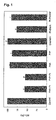
- Fig. 1 shows an action of the nitric oxide scavenger of the present invention.
- Types of the transition metal used in the scavengers of the present invention are not particularly limited.
- examples of the metal include gold, nickel, platinum, rhodium, palladium, iridium, ruthenium, osmium, and alloys thereof.
- the transition metal is a noble metal.
- Types of the noble metal are not particularly limited, and any of gold, ruthenium, rhodium, palladium, osmium, iridium, and platinum may be used.
- Preferred noble metals include ruthenium, rhodium, palladium, and platinum.
- a particularly preferred noble metal is platinum.
- the fineparticles of noble metal may comprise two or more kinds of noble metals.
- Fineparticles of an alloy containing at least one kind of noble metal, or a mixture containing fineparticles of one or more kinds of noble metals and fineparticles of one or more kinds of metals other than noble metal can also be used.
- an alloy comprising gold and platinum or the like may be used.
- platinum and an alloy of platinum are preferred, and platinum is particularly preferred.
- fineparticles of noble metal fineparticles that have a large specific surface area and can form a colloidal state that achieves superior surface reactivity are preferred.
- the sizes of the fineparticles are not particularly limited. Fineparticles having a mean particle size of 50 nm or smaller can be used, and fineparticles having a mean particle size of, preferably 20 nm or smaller, further preferably 10 nm or smaller, most preferably about 1 to 6 nm, can be used. In particular, for the invasion into the inside of mitochondria, the mean particle size is most preferably about 1 to 6 nm. It is also possible to use still finer fineparticles, and such fineparticles are preferred for enhancing uptake thereof into a living body.
- the scavengers which contain such fineparticles in a stable suspended state in an aqueous medium are also preferred.
- an organic solvent having low toxicity to a living body and miscible with water at an arbitrary ratio e.g., ethanol and ethylene glycol
- water may be preferably used.
- Various methods for producing noble metal fineparticles are known (for example, Japanese Patent Publication Nos. 57-43125, 59-120249, Japanese Patent Unexamined Publication (KOKAI) Nos. 9-225317, 10-176207, 2001-79382, 2001-122723, and the like), and those skilled in the art can easily prepare the fineparticles by referring to these methods.
- a chemical method called precipitation method or metal salt reduction method, a physical method called combustion method and the like can be used as the method for producing noble metal fineparticles.
- Fineparticles prepared by any of the methods may be used as the scavengers of the present invention. It is preferable to use fineparticles prepared by the metal salt reduction method from viewpoints of convenience of the production and quality of the fineparticles.
- an aqueous solution or organic solvent solution of a water-soluble or organic solvent-soluble noble metal salt or noble metal complex is prepared, and then a water-soluble polymer is added to the solution and pH of the solution is adjusted to 9 to 11, and further the solution can be refluxed by heating under an inert atmosphere to reduce the metal salt or metal complex to obtain metal fineparticles.
- Types of the water-soluble or organic solvent-soluble noble metal salt are not particularly limited. For example, acetate, chloride, sulfate, nitrate, sulfonate, phosphate and the like can be used, and complexes thereof may also be used.
- Types of the water-soluble polymer used for the metal salt reduction method are not particularly limited.
- polyvinylpyrrolidone, polyvinyl alcohol, polyacrylic acid, cyclodextrin, amylopectin, methylcellulose and the like can be used, and two or more kinds of these polymers may be used in combination.
- Polyvinylpyrrolidone can be preferably used, and poly(1-vinyl-2-pyrrolidone) can be more preferably used.
- surface active agents such as anionic, nonionic and lipophilic surface active agents instead of the water-soluble polymer or together with the water-soluble polymer.
- the metal finepowder prepared by the methods described above is usually obtained in a colloidal state in a solvent used as a medium, and accordingly, the product per se can be used as the superoxide anion scavenger or nitric oxide scavenger of the present invention.
- the organic solvent can be removed by heating to prepare the scavengers of the present invention in a form of metal finepowders.
- the metal finepowders obtained by dryness with heating will not lose the characteristic feature as the superoxide anion scavenger or nitric oxide scavenger.
- the scavengers of the present invention can be prepared in a form of reduced water.
- Reduced water means water that has the ability of reducing oxidized substances in vivo.
- the reduced water can be prepared that quenches superoxide anion and/or nitric oxide in a dose dependent manner of added scavenger.
- reduced water dissolving about 0.033 mM of the scavenger per 1,000 ml of water can provide sufficient reducing action, i.e., superoxide anion and/or nitric oxide scavenging action.
- the reduced water of the present invention preferably contains, for example, the aforementioned scavenger at a ratio of 1 mM or less.
- the scavengers contain metal finepowders having a particle size of a nanometer (nm) order, and after the metal finepowder is administered into a living body, the finepowder is taken up by cells and invade into mitochondria to eliminate superoxide anions generated in the mitochondria or nitric oxide. Therefore, it is expected that the scavengers of the present invention are effective for prophylactic or therapeutic treatment of the aforementioned diseases which are considered to be caused by active oxygen, especially familial amyotrophic lateral sclerosis (FALS), and the like.
- FALS familial amyotrophic lateral sclerosis
- the scavenger of the present invention provided in the form of reduced water can be used as water for drinking or isotonic drink as healthy food, and the scavengers themselves can be used as a medicament or cosmetic, or can also be used for manufacture of healthy food, medicaments, cosmetics and the like.
- nitric oxide contained in smoke of cigarette can be efficiently decomposed.
- the scavenger of the present invention can be blended as fineparticles in a solid state, for example, in a filter of cigarette together with activated charcoal or the like or instead of activated charcoal.
- the mixture was mixed with 2 ml of hexachloroplatinic acid aqueous solution obtained by dissolving hexachloroplatinic acid crystals (H 2 PtCl 6 ⁇ 6H 2 O, a reagent manufactured by Wako Pure Chemical Industries) in distilled water so as to have a concentration to 1.66 ⁇ 10 -2 M, and further stirred for 30 minutes.
- the inside of the reaction system was replaced with nitrogen gas, and the reaction mixture was added with 25 ml of special grade ethanol, and refluxed at a temperature of 100°C for 2 hours while maintaining the nitrogen gas atmosphere.
- UV absorbance of the reaction mixture was measured to confirm disappearance of the platinum ion peak and saturation of peak due to scattering peculiar to metal solid, thereby completion of the reduction was confirmed. After the solvent was removed by using an evaporator, the residue was lyophilized over 12 hours to obtain platinum finepowder (scavenger of the present invention).
- the resulting scavenger was dissolved in a sodium phosphate buffer at a concentration of 0.1 M, which was adjusted to pH 7.8 beforehand, to obtain dispersions containing the scavenger in a colloidal state at concentrations of 0.66 mM, 0.495 mM, 0.330 mM, 0.165 mM, 0.083 mM, and 0.033 mM.
- concentrations 0.66 mM, 0.495 mM, 0.330 mM, 0.165 mM, 0.083 mM, and 0.033 mM.
- O 2 - superoxide anion
- hypoxanthine/xanthine oxidase or a combination of phenazine methosulfate/NADH (reduced type of nicotinamide adenine dinucleotide)
- phenazine methosulfate/NADH reduced type of nicotinamide adenine dinucleotide
- DMPO dimethyl-1-pyrroline N-oxide, spin trap agent produced manufactured by Labtech
- 50 ⁇ l of MilliQ (purified water, Millipore) and 50 ⁇ l of each of five kinds of the aforementioned samples at different concentrations were successively added and mixed, and then added with 50 ⁇ l of xanthine oxidase (Roche) having a concentration of 0.04 U/ml.
- ESR spectra were measured by using an ESR measuring apparatus (JES-FA200 produced by JEOL Co., Ltd.).
- NO 2 /NO 3 Assay Kit-C II Dojin Chemical Laboratory
- This kit is for measuring NO 2 produced by hydrolysis of NO.
- a microplate reader BIO RAD, Model 550
- the measurement was carried out 3 times for each sample at a detection wavelength of 570 nm.
- a 96-well microplate was used.
- NOC7 Daojindo Laboratory
- the sample in a volume of 8 ⁇ L was added to each well of the microplate, mixed with 84 ⁇ L of buffer and 8 ⁇ L of NOC7, and left for 30 minutes.
- the reaction mixture was mixes with 50 ⁇ L of reagent A, left for 5 minutes, further mixed with 50 ⁇ L of reagent B, and left for 10 minutes, and then detection was performed at a detection wavelength of 570 nm by using a microplate reader. If NO 2 generated from NO might react with platinum nanocolloid, disappearance of NO cannot be observed. Therefore, spectrometry was performed by mixing NO 2 with platinum nanocolloid. As a result, it was found that no decomposition of NO 2 and the like occurred, although the absorbance slightly rose when platinum nanocolloid was contained. NO scavenging ability was analyzed for each sample. The results are shown in Fig. 1. It was proved from these results that platinum nanocolloid had NO scavenging ability.
- the superoxide anion scavenger and nitric oxide scavenger of the present invention can decompose excessive superoxide anions and/or nitric oxide in vivo when they are administered to a living body.
Landscapes
- Health & Medical Sciences (AREA)
- Chemical & Material Sciences (AREA)
- Life Sciences & Earth Sciences (AREA)
- Animal Behavior & Ethology (AREA)
- Veterinary Medicine (AREA)
- Medicinal Chemistry (AREA)
- Public Health (AREA)
- General Health & Medical Sciences (AREA)
- Pharmacology & Pharmacy (AREA)
- Engineering & Computer Science (AREA)
- Bioinformatics & Cheminformatics (AREA)
- General Chemical & Material Sciences (AREA)
- Nuclear Medicine, Radiotherapy & Molecular Imaging (AREA)
- Chemical Kinetics & Catalysis (AREA)
- Organic Chemistry (AREA)
- Epidemiology (AREA)
- Inorganic Chemistry (AREA)
- Neurology (AREA)
- Biomedical Technology (AREA)
- Neurosurgery (AREA)
- Diabetes (AREA)
- Mycology (AREA)
- Polymers & Plastics (AREA)
- Nutrition Science (AREA)
- Food Science & Technology (AREA)
- Hematology (AREA)
- Obesity (AREA)
- Pulmonology (AREA)
- Heart & Thoracic Surgery (AREA)
- Endocrinology (AREA)
- Psychology (AREA)
- Psychiatry (AREA)
- Ophthalmology & Optometry (AREA)
- Dispersion Chemistry (AREA)
- Immunology (AREA)
- Emergency Medicine (AREA)
- Dermatology (AREA)
- Hospice & Palliative Care (AREA)
- Cardiology (AREA)
- Toxicology (AREA)
Applications Claiming Priority (3)
| Application Number | Priority Date | Filing Date | Title |
|---|---|---|---|
| JP2003042452 | 2003-02-20 | ||
| JP2003042452 | 2003-02-20 | ||
| PCT/JP2004/001817 WO2004073722A1 (fr) | 2003-02-20 | 2004-02-18 | Agent de decomposition d'un anion superoxyde |
Publications (2)
| Publication Number | Publication Date |
|---|---|
| EP1598071A1 true EP1598071A1 (fr) | 2005-11-23 |
| EP1598071A4 EP1598071A4 (fr) | 2006-04-26 |
Family
ID=32905350
Family Applications (1)
| Application Number | Title | Priority Date | Filing Date |
|---|---|---|---|
| EP04712229A Withdrawn EP1598071A4 (fr) | 2003-02-20 | 2004-02-18 | Agent de decomposition d'un anion superoxyde |
Country Status (11)
| Country | Link |
|---|---|
| US (1) | US7838043B2 (fr) |
| EP (1) | EP1598071A4 (fr) |
| JP (1) | JP4058072B2 (fr) |
| KR (1) | KR20060007365A (fr) |
| CN (2) | CN1750838A (fr) |
| AU (1) | AU2004212823A1 (fr) |
| CA (1) | CA2518311A1 (fr) |
| RU (1) | RU2353372C2 (fr) |
| TW (1) | TW200418733A (fr) |
| WO (1) | WO2004073722A1 (fr) |
| ZA (2) | ZA200507289B (fr) |
Cited By (2)
| Publication number | Priority date | Publication date | Assignee | Title |
|---|---|---|---|---|
| EP1656840A1 (fr) * | 2004-11-08 | 2006-05-17 | Fuji Photo Film Co., Ltd. | Agent pour l'élimination de l'oxygène et méthode de production |
| EP1842524B1 (fr) * | 2004-12-13 | 2013-01-23 | APT Co., Ltd. | Liquide nettoyant pour cavite buccale |
Families Citing this family (8)
| Publication number | Priority date | Publication date | Assignee | Title |
|---|---|---|---|---|
| TWI329022B (en) | 2003-08-22 | 2010-08-21 | Kose Corp | Singlet oxygen quenchers and compositions comprising same |
| TWI298646B (en) * | 2005-12-28 | 2008-07-11 | Ind Tech Res Inst | Process for preparing platinum based electrode catalyst for use in direct methanol fuel cell |
| JP2009155281A (ja) * | 2007-12-27 | 2009-07-16 | Univ Of Tokyo | 細胞透過性白金微粒子 |
| JP5358030B2 (ja) * | 2012-03-07 | 2013-12-04 | 立比古 小川 | 還元パウダー及びその製造方法 |
| CN104450864A (zh) * | 2014-12-18 | 2015-03-25 | 三诺生物传感股份有限公司 | 一种组合物及其应用 |
| EP3253421A4 (fr) * | 2015-02-04 | 2018-10-17 | Eupharma Pty Ltd | Ruthénium et indium se liant à des gastrines |
| JPWO2021033590A1 (fr) | 2019-08-20 | 2021-02-25 | ||
| JP7039083B1 (ja) * | 2021-07-29 | 2022-03-22 | 株式会社東洋厚生製薬所 | Ampk活性化剤 |
Family Cites Families (30)
| Publication number | Priority date | Publication date | Assignee | Title |
|---|---|---|---|---|
| JPS53109878A (en) | 1977-03-09 | 1978-09-26 | Hidefumi Hirai | Manufacture of rare metal colloid |
| JPS59120249A (ja) | 1982-12-27 | 1984-07-11 | Agency Of Ind Science & Technol | 貴金属触媒の製造方法 |
| JPH03243638A (ja) | 1990-02-20 | 1991-10-30 | Toda Kogyo Corp | 着色フォーム |
| GB9309387D0 (en) * | 1993-05-06 | 1993-06-16 | Wellcome Found | Nitric oxide scavengers |
| JPH09225317A (ja) | 1996-02-26 | 1997-09-02 | Kemipuro Kasei Kk | ニッケル/貴金属二元金属クラスター、それよりなる触媒およびその製法 |
| JPH1068008A (ja) | 1996-08-27 | 1998-03-10 | I Betsukusu:Kk | 高活性金属微粒子の製造方法 |
| DE19640365A1 (de) * | 1996-09-30 | 1998-04-02 | Basf Ag | Polymer-Wasserstoffperoxid-Komplexe |
| DE19640364A1 (de) * | 1996-09-30 | 1998-04-02 | Basf Ag | Topische Mittel zur Prophylaxe oder Behandlung bakterieller Hautinfektionen |
| JPH10176207A (ja) | 1996-12-18 | 1998-06-30 | I Betsukusu:Kk | 高活性貴金属クラスター |
| JP3411195B2 (ja) | 1997-08-18 | 2003-05-26 | 栄一 築地 | 活性酸素除去剤 |
| JPH11240839A (ja) | 1998-02-23 | 1999-09-07 | Otsuka Yakuhin Kogyo Kk | 白金とパラジウムのコロイドを主原料とした固形剤の製造方法並びに使用方法 |
| JPH11346715A (ja) * | 1998-06-09 | 1999-12-21 | Otsuka Yakuhin Kogyo Kk | 白金族コロイド溶液を配合した食品の製造方法 |
| JP2000232865A (ja) * | 1999-02-16 | 2000-08-29 | Otsuka Yakuhin Kogyo Kk | 生命現象活性化物の製造方法 |
| JP2001010954A (ja) * | 1999-06-29 | 2001-01-16 | Otsuka Sangyo Kk | 酸化的ストレスに対する保護剤 |
| JP4505084B2 (ja) * | 1999-09-13 | 2010-07-14 | アイノベックス株式会社 | 金属コロイドの製造方法およびその方法によって製造された金属コロイド |
| JP2001114671A (ja) * | 1999-10-15 | 2001-04-24 | Otsuka Yakuhin Kogyo Kk | 貼付剤 |
| JP4926312B2 (ja) * | 1999-10-27 | 2012-05-09 | アイノベックス株式会社 | 白金コロイド含有化粧品 |
| JP3432778B2 (ja) | 1999-11-19 | 2003-08-04 | 森澤 紳勝 | 活性酸素消去剤の濃縮液、その製造方法および活性酸素消去剤パウダー |
| US20030147937A1 (en) * | 2000-04-12 | 2003-08-07 | Thomas Schwarz | Use of compatible solutes as substances having free radical scavenging properties |
| JP4903932B2 (ja) * | 2000-08-24 | 2012-03-28 | ケミプロ化成株式会社 | 二元金属粒子コロイド分散液の製造方法 |
| JP2002212102A (ja) | 2001-01-23 | 2002-07-31 | Ainobekkusu Kk | 電気化学的生理活性微粒子 |
| JP2002241288A (ja) * | 2001-02-20 | 2002-08-28 | Shiro Yamashita | 白金微粉末を配合した皮膚疾患緩和剤の製造方法 |
| RU2191592C1 (ru) * | 2001-04-26 | 2002-10-27 | Некоммерческое партнерство "АСГЛ-Исследовательские лаборатории" | Средство, обладающее антигипоксической и антиоксидантной активностью |
| CN1296290C (zh) * | 2001-06-29 | 2007-01-24 | 水株式会社 | 抗氧化方法及抗氧化机能水 |
| JP2003012523A (ja) | 2001-07-05 | 2003-01-15 | Otsuka Yakuhin Kogyo Kk | パーキンソン病患者のqol改善剤 |
| EP1283274B1 (fr) * | 2001-08-04 | 2007-10-31 | Umicore AG & Co. KG | Poudres de platine ou d'un alliage du platin exempt de chlore à surface spécifique élevée et procédé de leur préparation moyennant un bain de sels de nitrates en fusion |
| JP3569270B2 (ja) * | 2002-04-10 | 2004-09-22 | 株式会社日本トリム | コロイド含有電解還元水およびその製造方法 |
| US20050170011A1 (en) * | 2002-04-26 | 2005-08-04 | Tomoyuki Yanagihara | Method of inhibiting oxidation, water capable of inhibiting oxidation and use thereof |
| WO2004037019A1 (fr) | 2002-10-28 | 2004-05-06 | Takaoka Shoji Inc. | Compositions de metal capables de supprimer l'oxygene actif |
| TWI329022B (en) * | 2003-08-22 | 2010-08-21 | Kose Corp | Singlet oxygen quenchers and compositions comprising same |
-
2004
- 2004-02-18 RU RU2005129269/15A patent/RU2353372C2/ru not_active IP Right Cessation
- 2004-02-18 US US10/545,750 patent/US7838043B2/en not_active Expired - Fee Related
- 2004-02-18 EP EP04712229A patent/EP1598071A4/fr not_active Withdrawn
- 2004-02-18 WO PCT/JP2004/001817 patent/WO2004073722A1/fr not_active Ceased
- 2004-02-18 KR KR1020057015423A patent/KR20060007365A/ko not_active Withdrawn
- 2004-02-18 CA CA002518311A patent/CA2518311A1/fr not_active Abandoned
- 2004-02-18 ZA ZA200507289A patent/ZA200507289B/en unknown
- 2004-02-18 ZA ZA200507288A patent/ZA200507288B/xx unknown
- 2004-02-18 CN CNA200480004537XA patent/CN1750838A/zh active Pending
- 2004-02-18 AU AU2004212823A patent/AU2004212823A1/en not_active Abandoned
- 2004-02-18 JP JP2005502741A patent/JP4058072B2/ja not_active Expired - Lifetime
- 2004-02-18 CN CNB2004800045365A patent/CN100446776C/zh not_active Expired - Fee Related
- 2004-02-20 TW TW093104296A patent/TW200418733A/zh not_active IP Right Cessation
Cited By (2)
| Publication number | Priority date | Publication date | Assignee | Title |
|---|---|---|---|---|
| EP1656840A1 (fr) * | 2004-11-08 | 2006-05-17 | Fuji Photo Film Co., Ltd. | Agent pour l'élimination de l'oxygène et méthode de production |
| EP1842524B1 (fr) * | 2004-12-13 | 2013-01-23 | APT Co., Ltd. | Liquide nettoyant pour cavite buccale |
Also Published As
| Publication number | Publication date |
|---|---|
| WO2004073722A1 (fr) | 2004-09-02 |
| CN1750837A (zh) | 2006-03-22 |
| CN1750838A (zh) | 2006-03-22 |
| KR20060007365A (ko) | 2006-01-24 |
| ZA200507289B (en) | 2006-12-27 |
| CN100446776C (zh) | 2008-12-31 |
| JPWO2004073722A1 (ja) | 2006-06-01 |
| CA2518311A1 (fr) | 2004-09-02 |
| ZA200507288B (en) | 2007-03-28 |
| TWI316051B (fr) | 2009-10-21 |
| TW200418733A (en) | 2004-10-01 |
| US7838043B2 (en) | 2010-11-23 |
| RU2005129269A (ru) | 2006-03-10 |
| RU2353372C2 (ru) | 2009-04-27 |
| AU2004212823A1 (en) | 2004-09-02 |
| JP4058072B2 (ja) | 2008-03-05 |
| US20060204593A1 (en) | 2006-09-14 |
| EP1598071A4 (fr) | 2006-04-26 |
Similar Documents
| Publication | Publication Date | Title |
|---|---|---|
| US7838043B2 (en) | Superoxide anion decomposing agent | |
| Coyle et al. | Mode of anti-fungal activity of 1, 10-phenanthroline and its Cu (II), Mn (II) and Ag (I) complexes | |
| Denicola et al. | Peroxynitrite-mediated cytotoxicity to Trypanosoma cruzi | |
| Klug-Roth et al. | Pulse radiolytic studies on reactions of aqueous superoxide radicals with copper (II) complexes | |
| Kodama et al. | Metabolism of administered triethylene tetramine dihydrochloride in humans | |
| Minetti et al. | Peroxynitrite induces long-lived tyrosyl radical (s) in oxyhemoglobin of red blood cells through a reaction involving CO2 and a ferryl species | |
| Smith et al. | Toxicology of selected nitric oxide-donating xenobiotics, with particular reference to azide | |
| Chiu et al. | Free radical and oxidative damage in human blood cells | |
| Vilchez et al. | Solution studies of the antitumor complex dichloro 1, 2-propylendiaminetetraacetate ruthenium (III) and of its interactions with proteins | |
| Melnyk et al. | Redox potential of iron-bleomycin | |
| Rudkowski et al. | The activation of gold complexes by cyanide produced by polymorphonuclear leukocytes—I: The effects of aurocyanide on the oxidative burst of polymorphonuclear leukocytes | |
| Wang et al. | Functional groups effect on the toxicity of modified ZIF-90 to Photobacterium phosphoreum | |
| HK1084330A (en) | Superoxide anion decomposing agent | |
| CN109520979B (zh) | 一种血清中胆固醇的检测方法 | |
| Takahama et al. | Oxygen uptake during the mixing of saliva with ascorbic acid under acidic conditions: possibility of its occurrence in the stomach | |
| Marcon et al. | Gold (III) complexes as a new family of cytotoxic and antitumor agents | |
| KR100842070B1 (ko) | 나노 플래티늄 진세노사이드 입자 및 그의 제조 방법 | |
| JP2007176944A (ja) | 一酸化窒素分解剤 | |
| Akulinina et al. | Gold (III)-DNA interaction in aqueous solution | |
| Bamnolker et al. | Reactions of Low Valent Transition-Metal Complexes with Hydrogen Peroxide. Are they “Fenton-Like” or Not? 3. The Case of Fe (II){N (CH2CO2) 3}(H2O) 2 | |
| JP2007297281A (ja) | 体内活性酸素消去剤 | |
| Polaczek et al. | Influence of modified nano-copper oxide particles on the reaction between nitrocobalamin and ascorbic acid | |
| Singh et al. | Solution studies on trace metal ion interactions with adenine as primary ligand and 5-halouracils as secondary ligands | |
| Kowalska et al. | Nanostructures based on gold and silica as a delivery platform for enhanced l-DOPA therapy in neurodegenerative disease | |
| Choure et al. | Study of Zn (II)-coumarin complex by electrochemical method with increased anticoagulant potency |
Legal Events
| Date | Code | Title | Description |
|---|---|---|---|
| PUAI | Public reference made under article 153(3) epc to a published international application that has entered the european phase |
Free format text: ORIGINAL CODE: 0009012 |
|
| 17P | Request for examination filed |
Effective date: 20050909 |
|
| AK | Designated contracting states |
Kind code of ref document: A1 Designated state(s): AT BE BG CH CY CZ DE DK EE ES FI FR GB GR HU IE IT LI LU MC NL PT RO SE SI SK TR |
|
| AX | Request for extension of the european patent |
Extension state: AL LT LV MK |
|
| RIC1 | Information provided on ipc code assigned before grant |
Ipc: A61K 33/24 20060101AFI20040908BHEP |
|
| A4 | Supplementary search report drawn up and despatched |
Effective date: 20060309 |
|
| DAX | Request for extension of the european patent (deleted) | ||
| RAP1 | Party data changed (applicant data changed or rights of an application transferred) |
Owner name: SHETECH CO., LTD. |
|
| REG | Reference to a national code |
Ref country code: HK Ref legal event code: DE Ref document number: 1084330 Country of ref document: HK |
|
| 17Q | First examination report despatched |
Effective date: 20061205 |
|
| RIN1 | Information on inventor provided before grant (corrected) |
Inventor name: ASANO, TAKAO Inventor name: TOSHIMA, NAOKI Inventor name: MIYAMOTO, YUSEI |
|
| STAA | Information on the status of an ep patent application or granted ep patent |
Free format text: STATUS: THE APPLICATION IS DEEMED TO BE WITHDRAWN |
|
| 18D | Application deemed to be withdrawn |
Effective date: 20100603 |
|
| REG | Reference to a national code |
Ref country code: HK Ref legal event code: WD Ref document number: 1084330 Country of ref document: HK |