EP1607965A2 - Verfahren und Gerät zum Wechseln der Abspielart eines Medium - Google Patents
Verfahren und Gerät zum Wechseln der Abspielart eines Medium Download PDFInfo
- Publication number
- EP1607965A2 EP1607965A2 EP05253786A EP05253786A EP1607965A2 EP 1607965 A2 EP1607965 A2 EP 1607965A2 EP 05253786 A EP05253786 A EP 05253786A EP 05253786 A EP05253786 A EP 05253786A EP 1607965 A2 EP1607965 A2 EP 1607965A2
- Authority
- EP
- European Patent Office
- Prior art keywords
- type
- optical
- dvd
- mode
- play mode
- Prior art date
- Legal status (The legal status is an assumption and is not a legal conclusion. Google has not performed a legal analysis and makes no representation as to the accuracy of the status listed.)
- Ceased
Links
Images

Classifications
-
- G—PHYSICS
- G11—INFORMATION STORAGE
- G11B—INFORMATION STORAGE BASED ON RELATIVE MOVEMENT BETWEEN RECORD CARRIER AND TRANSDUCER
- G11B19/00—Driving, starting, stopping record carriers not specifically of filamentary or web form, or of supports therefor; Control thereof; Control of operating function ; Driving both disc and head
- G11B19/02—Control of operating function, e.g. switching from recording to reproducing
- G11B19/12—Control of operating function, e.g. switching from recording to reproducing by sensing distinguishing features of or on records, e.g. diameter end mark
- G11B19/125—Control of operating function, e.g. switching from recording to reproducing by sensing distinguishing features of or on records, e.g. diameter end mark involving the detection of carrier data format
-
- G—PHYSICS
- G11—INFORMATION STORAGE
- G11B—INFORMATION STORAGE BASED ON RELATIVE MOVEMENT BETWEEN RECORD CARRIER AND TRANSDUCER
- G11B19/00—Driving, starting, stopping record carriers not specifically of filamentary or web form, or of supports therefor; Control thereof; Control of operating function ; Driving both disc and head
- G11B19/02—Control of operating function, e.g. switching from recording to reproducing
Definitions
- Embodiments of the present invention relate generally to an optical player, and more particularly but not exclusively to a method, medium, and device operable to change a play mode according to the type of optical disc loaded in the optical player.
- optical players have been constructed to have the capacity to play at least two types of optical disc.
- One of the optical players that can play two or more types of discs may be a DVDP (Digital Versatile Disc Player). That is, a DVDP may play not only data recorded in a DVD type disc but also data recorded in a CD type disc.
- DVDP Digital Versatile Disc Player
- a compatible optical player should change a play mode for playing data recorded in the optical discs according to the type of the optical disc loaded into the optical player. Accordingly, if an optical disc is loaded, the optical player first discriminates the type of the loaded optical disc, and then sets the play mode to match the type of the discriminated optical disc.
- the optical player miscategorizes the optical disc, it will not be able to read the data recorded in the loaded disc. Accordingly, if an error occurs in the process of discriminating the type of optical disc, i.e., the optical player cannot perform a normal playback operation, it is required for the optical player to be able to change the set play mode and attempt playback with a different play mode.
- a conventional method for changing a play mode when the optical disc is miscategorized will now be explained.
- the CD type disc is miscategorized as a DVD type disc
- a conventional optical player reads information recorded in the loaded optical disc as it changes the play mode, in the order of "DVD-Single” ⁇ "DVD-Dual” ⁇ "DVD-R” ⁇ "DVE-RW". If the optical player cannot perform the playback operation after the completion of the above-described processing, the optical player then changes the present mode to the CD mode.
- the conventional optical player reads Information recorded in the loaded optical disc as it changes the play mode in the order of "CD" ⁇ "CD-R” ⁇ "CD-RW". If the optical player cannot perform the playback operation after the completion of the above-described process, the optical player changes the present mode to the DVD mode.
- the processing through the different stages requires a lot of time to properly categorize the optical disc such that the data recorded in the optical disc can be normally played.
- Embodiments of the present invention have been developed in order to address the above drawbacks and other problems associated with the conventional optical player arrangement.
- An aim of embodiments of the present invention is to provide a method, medium, and device for changing a play mode for an optical player to reduce the time required for performing a normal playback of data recorded in an optical disc if an error occurs in the process of discriminating the type of the optical disc.
- a method for reproducing data including changing a play mode for a optical player, including discriminating a type of optical disc loaded in the optical player, setting the play mode of the optical player to a mode corresponding to a first type of discriminated optical disc, where the optical disc is discriminated to be the first type of a plurality of optical discs, with different specifications, reading and reproducing data recorded In the loaded optical disc, and changing the play mode of the optical player to another mode corresponding to a second type of another plurality of optical discs, with different specifications, if the optical player is unable to reproduce the data recorded in the optical disc using the mode corresponding to the first type of the plurality of optical discs.
- the first type of the plurality of optical discs may be a CD (Compact Disc) type and the second type of the other plurality of optical discs may be a DVD (Digital Versatile Disc) type.
- the CD type optical disc may further include at least one of a CD, a CD-R (Recordable) and CD-RW (Rewritable) and the DVD type optical disc may include at least one of a DVD-SINGLE, a DVD-DUAL, a DVD ⁇ R and a DVD ⁇ RW.
- the reproducing of data may be performed whenever the play mode is changed, and the changing of the play mode may include changing the play mode to the mode corresponding to the first type of the plurality of optical discs and successively changing the play mode according to a set order of same type mode changes, until reproduction of data is possible, if the optical player is unable to reproduce the data recorded in the optical disc even after the mode has already been changed to the mode corresponding to the second type of the other plurality of optical discs from the mode corresponding to the first type of the plurality of optical discs.
- an optical player including an optical pickup to read data recorded in an optical disc, an RF (Radio Frequency) signal processing unit to adjust a gain of an RF signal of the optical pickup, and modulating the gain-adjusted RF signal to output a modulated RF signal for modulated data, a digital signal processing unit to digital-signal-process the modulated data by demodulating and error-correcting the modulated data, a playback processing unit to convert the digital-signal-processed data into reproducible playback data, and a control unit to discriminate a type of the optical disc, wherein if the optical disc is discriminated to be a first type of a plurality of optical discs, with different specifications, an optical disc play mode is set to a mode corresponding to the first type of the plurality of optical discs, and wherein if the optical player is unable to reproduce the data recorded in the optical disc in the set play mode the play mode is changed from the mode corresponding to the first type of the
- a reproducing controller to discriminate a type of medium input to a reproducing apparatus, wherein if the medium is discriminated to be a first type of a plurality of media, with different specifications, a play mode of the reproducing apparatus is assigned to a mode corresponding to the first type of the plurality of media, and wherein if the reproducing apparatus is unable to reproduce data recorded in the medium in the assigned play mode the play mode is changed from the mode corresponding to the first type of the plurality of media to a mode corresponding to a second type of another plurality of media, with different specifications.
- a method for changing a play mode for a reproducing apparatus including discriminating a type of medium loaded in the reproducing apparatus, assigning the play mode of the reproducing apparatus to a mode corresponding to a first type of discriminated media, where the medium is discriminated to be the first type of a plurality of media, with different specifications, and assigning the play mode of the reproducing apparatus to another mode corresponding to a second type of another plurality of media, with different specifcations, if the reproducing apparatus is unable to reproduce the data recorded in the medium using the mode corresponding to the first type of the plurality of media.
- Reproducing of data may be performed whenever the play mode is assigned, and the method may further include assigning the play mode to the mode corresponding to the first type of the plurality of media and successively changing the play mode according to a set order of same type mode changes, until reproduction of data is possible, if the reproducing apparatus is unable to reproduce the data recorded in the medium even after the mode has already been changed to the mode corresponding to the second type of the other plurality of media from the mode corresponding to the first type of the plurality of media.
- Embodiments of the present invention may include a medium including computer readable code impiementing aspects of the present invention.
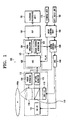
- FIG. 1 illustrates a block diagram of an optical player, according to an embodiment of the present invention
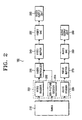
- FIG. 2 illustrates a block diagram of an internal construction of a playback processing unit, e.g., that illustrated in FIG. 1
- FIG 3 illustrates a flowchart of a method for changing a play mode if an error occurs during the process of discriminating a type of an optical disc in an optical player, e.g., that illustrated in FIG. 1.
- FIG. 1 illustrates a block diagram of an optical player, according to an embodiment of the present invention.
- the optical player 100 can include an optical pickup 110, an RF signal processing unit 120, a servo control unit 130, an APC 140, a DSP (Digital Signal Processor) 150, a playback processing unit 160, a storage unit 170, a key input unit 180 and a main control unit 190.
- an optical pickup 110 an RF signal processing unit 120
- a servo control unit 130 an APC 140
- a DSP Digital Signal Processor
- the optical player 100 may be a device that has the capability to play data recorded in two or more types of media, e.g., optical discs.
- a DVDP Digital Versatile Disc Player
- An optical disc 100a that can be played in the optical player 100 may be josified into a CD type optical disc, including a CD, a CD-R (CD-Recordable) and a CD-RW (CO-Rawritable), and a DVD type optical disc, including a DVD-Single, DVD-Dual, a DVD ⁇ R and a DVD ⁇ RW.
- the optical pickup 110 reads data recorded In the optical disc 100a by irradiating a specified light to the optical disc 100a and receiving the light reflected from the optical disc 100a.
- the optical pickup 110 can be provided with a CD LD (Laser Diode) 111 that emits infrared rays having a wavelength of about 780nm, a DVD LD 112 that emits visual rays having a wavelength of about 650nm, a beam splitter 113 for reflecting and transmitting the light emitted from the CD LD 111 or the DVD LD 112 at a predetermined rate, an object lens 114 for focusing the laser beam incident from the beam splitter 113 on a recording surface of the optical disc 100a, an optical detector 115 for detecting the light reflected from the optical disc 100a, and a focus actuator 116 for moving the object lens 114 up and down to accurately focus the light incident to the optical disc 100a on a focus position of the optical disc 100a.
- a CD LD Laser Diode
- the CD LD 111 and the DVD LD 112 are separately illustrated for the convenience in explanation.
- embodiments of the present invention are not limited thereto, and the CD LD 111 and the DVD LD 112 may be installed together, e.g., in the same case.
- the RF signal processing unit 120 Is provided with an AGC (Automatic Gain Controller) 122, a data modulator 124 and an error signal generator 126.
- AGC Automatic Gain Controller
- the AGC 122 adjusts the gain of the RF signal Input from the optical detector 115 under the control of the main control unit.
- the gain of the RF signal input from the optical detector 115 may be adjusted at different rates depending on the type of the optical disc 100a In optical player 100.
- the data modulator 124 can shape the waveform of the RF signal amplified by the AGC 122 to EFM (Eight to Fourteen Modulation) data, and modulate the waveform-shaped RF signal.
- EFM Eight to Fourteen Modulation
- the EFM data from the data modulator 124 can then be output to the DSP 150.
- the error signal generator 126 can convert the RF signal amplified by the AGC 122 Into an electric signal, and generate an FE (Focus Error) signal and a TE (Tracking Error) signal using the converted electric signal.
- the FE signal and the TE signal generated by the error signal generator 126 can be provided to the servo control unit 130.
- the servo control unit 130 provides a focus driving voltage, to the focus actuator 116, for driving the focus actuator 116 based on the FE signal generated from the error signal generator 126.
- the servo control unit 130 may also control the APC 140 to selectively turn on the CD LD 111 or the DVD LD 112.
- the APC 140 under the control of the servo control unit 130, turns on the CD LD 111 or the DVD LD 112 and detects and automatically controls the quantity of light emitted from the CD LD 111 or the DVD LD 112.
- the DSP 150 demodulates the EFM data, modulated by the data modulator 124, and removes additional data from the demodulated data by performing a descrambling operation, an error correction operation, etc.
- the digital data processed by and output from the DSP 150 is Input to the playback processing unit 160.
- the playback processing unit 160 converts the signal input from the DSP 150 into playable data.
- the playback processing unit 160 may include a DeMUX (Demultiplexer) 210, an AN (Audio/Video) decoder 220, a video synthesizer 230. a video buffer 240, a video DAC (Digital-to-Analog Converter), a video output unit 260. an audio buffer 270, an audio DAC 280, and an audio output unit 290.
- the DeMUX 210 is a data parser that divides the data input from the DSP 150 into video data, sub-picture data, and audio data.
- the A/V decoder 220 includes a video decoder 222 for decoding the video data input from the DeMUX 210, a sub-picture decoder 224 for decoding sub-picture data including the sub-picture data (for example, caption data) input from the DeMUX 210, and an audio decoder 226 for decoding the audio data input from the DeMUX 210.
- the video synthesizer 230 synthesizes the video data decoded by the video decoder 222 and the sub-picture decoded by the sub-picture decoder 224.
- the data synthesized by the video synthesizer 230 is temporarily stored in the video buffer 240, and then converted into an analog video signal through the video DAC 250.
- the analog video signal from the video DAC 250 is output to the video output unit 260.
- the audio buffer 270 buffers and outputs the audio signal decoded by the audio decoder 226.
- the buffered audio data is converted into an analog audio signal by the audio DAC 280, and then outputted to the audio output unit 190.
- the storage unit 170 may store various types of control programs required for implementing the functions provided by the optical player 100.
- the key input unit 180 may be a user interface portion that is provided with a plurality of function keys for setting or selecting desired functions in the optical player 100.
- the key Input unit 180 outputs the key input signal according to the key manipulation to the main control unit 190.
- the main control unit 190 controls the whole operation of the optical player 100, e.g., according to the key input signals received from the key input unit 180 or a remote controller (not illustrated) and the control programs stored in the storage unit 170.
- the main control unit 190 discriminates the type of the inserted optical disc 100a. The process of discriminating the type of inserted optical disc 100a will now be explained in greater detail.
- the main control unit 190 controls the servo control unit 130 to turn on the CD LD 111 or the DVD LD 112.
- the servo control unit 130 turns on the CD LD 111 or the DVD LD 112 through the APC 140, under the control of the main control unit 190.
- the main control unit 190 provides a focus driving voltage for moving up/down the focus actuator 116 to the focus actuator 116 so that the optical pickup 110 can perform a focus search.
- the object lens 114 moves up/down in the direction of an optical axis by the up/down movement of the focus actuator 116, so that the signal recording surface of the optical disc 100a enters Into the depth of focus of the object lens 114.
- the servo control unit 130 can detect a peak-to-peak (hereinafter referred to as a "peak") value of the generated FE signal.
- the peak value of the FE signal detected by the servo control unit 130 can then be provided to the main control unit 190, and the main control unit 190 can then discriminate the type of the loaded optical disc 100a based on the peak value of the FE signal detected by the servo control unit 130 and the peak value on the signal surface.
- the loaded optical disc 100a can be briefly discriminated as being of a CD type or DVD type based on the peak value on the reflecting surface of the optical disc 100a and the peak value on the signal surface, and the discrimination of the CD type optical disc and the DVD type optical disc can then be subdivided in more detail based on information about the peak value of the FE signal, the number of peaks, etc., detected while the focus search mode is performed. For example, if the optical disc is primarily discriminated as being of a CD type, it can be further discriminated as to whether the loaded optical disc 100a is a normal CD or a CD-RW by reperforming the focus search mode in a state that the CD LD 111 is turned on.
- the optical disc is primarily discriminated as being of a DVD type, it can be further discriminated as to whether the loaded optical disc 100a is a normal DVD or a DVD-RW by reperforming the focus search mode in a state that the DVD LD 112 is turned on. If it is discriminated that the optical disc is the normal DVD, it may still further be discriminated as to whether the optical disc is a DVD-Single or DVD-Dual type optical disc.
- the process of discriminating the type of the optical disc can be based on the peak value of the FE signal detected during the focus search mode.
- embodiments of the present invention are not limited thereto, and may use any other method already known and used for discriminations and/or controls of the optical disc.
- the main control unit 190 can set the play mode of the optical player 100 to a play mode corresponding to the discriminated type of optical disc 100a. For example, if it is judged that the inserted optical disc 100a is a CD-RW, the main control unit 190 can set the play mode of the optical player 100 to a CD-RW play mode.
- the setting of the play mode of the optical player 100 to the CD-RW play mode means that an input gain of the RF signal input from the optical detector 115, the gain values of the FE signal and the TE signal, etc., are set to gain values suitable for the CD-RW, and the focusing and the tracking servo is set to the servo suitable for the CD-RW play mode, for example. Because the particular setting within a determined play mode of the optical player 100 is well known, the detailed explanation thereof will be omitted.
- the main control unit 190 After setting the play mode of the optical player 100 to the play mode corresponding to the discriminated type of optical disc 100a, the main control unit 190 performs a general playback operation that reads and reproduces data recorded in the optical disc 100a. In this case, if the data recorded in the optical disc 100a cannot be properly read, the main control unit 190 can judge that the optical disc 100a has been miscategorized, and change the play mode of the optical player 100. For example, if it is judged that the data recorded in the optical disc 100a cannot be played as a result of performing the playback operation in a state where the assumption is that the optical player 100 is a DVD-S, the main control unit 190 can change the play mode of the optical player 100 to a normal CD play mode.
- the main control unit 190 can again change the play mode of the optical player 100 to the DVD play mode, and then performs the playback operation by changing the play mode in a set order (for example, in the order of DVD-Single ⁇ DVD-Dual ⁇ DVD-R ⁇ DVD-RW).
- the main control unit 190 can discriminate the type of inserted optical disc 100a based on a peak value of the FE signal detected by the servo control unit 130 (operation S310).
- the main control unit 190 sets the play mode of the optical player 100 to the play mode corresponding to the categorized type of optical disc 100a (operation S320).
- the inserted optical disc 100a may be discriminated as a normal CD (hereinafter referred to as a "CD").
- the main control unit 190 reads and reproduces data recorded in the optical disc 100a (operation S330).
- the process of reproducing the data recorded in the optical disc 100a will now be explained. If the optical pickup 110 reads and transmits the data recorded in the optical disc 100a to the RF signal processing unit 120, the AGC 122 of the RF signal processing unit 120 amplifies the RF signal, and outputs the amplified RF signal to the data modulator 124.
- the data modulator 124 shapes the waveform of the RF signal amplified by the AGC 122, modulates the waveform-shaped RF signal to the EFM data, and transmits the EFM data to the DSP 150.
- the DSP 150 demodulates the EFM data, performs an error correction of the demodulated EFM data, and transmits the error-corrected EFM data to the playback processing unit 160, the playback processing unit 160 converting the data processed through the DSP 150 into the playable data.
- the main control unit 190 judges whether the playback data recorded in the optical disc 100a can be read through the playback operation (operation S340). If it is judged that the playback data recorded in the optical disc 100a is readable in operation S340, the main control unit 190 maintains the current play mode of the optical player 100, set in operation S320, e.g., the CD-RW play mode (operation S350).
- the main control unit 190 judges that an error has occurred in the optical disc discriminating process, and changes the play mode of the optical player 100 to a play mode for playing an optical disc of a different type (operation S360). That is, because the inserted optical disc 100a was discriminated as the CD type optical disc in operation S310, the main control unit 190 next changes the play mode of the optical player 100 to the play mode for playing the DVD type optical disc.
- the main control unit changes the play mode to the play mode for playing any one of a plurality of optical discs (for example, DVD-Single, DVD-Dual, DVD ⁇ R, DVD ⁇ RW, etc.) that correspond to the DVD type.
- a plurality of optical discs for example, DVD-Single, DVD-Dual, DVD ⁇ R, DVD ⁇ RW, etc.
- the play mode of the optical player 100 is changed to the DVD-Single play mode among the plurality of play modes corresponding to the DVD type.
- embodiments of the present invention are not limited thereto.
- the main control unit 190 again performs the playback operation, after the play mode change, and judges whether the playback data recorded In the optical disc 100a is readable (operation S370). If it is judged that the playback data recorded in the optical disc 100a is readable, the main control unit 190 maintains the play mode of the optical player 100, changed in operation S360, e.g., the DVD-single play mode (operation S380).
- the main control unit 190 still again may change the play mode of the optical player 100 to the CD play mode, and then perform the playback operation by changing the play mode in the set play mode changing order (for example, in the order of CD ⁇ CD-R ⁇ CD-RW) (operation S390).
- a reason for why the main control unit changes the play mode of the optical player 100 to the play mode for playing the optical disc corresponding to the type different from that of the optical disc initially discriminated is that there is the higher probability that the CD type optical disc may be miscategorized as a DVD type optical disc or that the DVD type optical disc was miscategorized as a CD type optical disc In the process of discriminating the type of the optical disc.
- embodiments of the present invention can also be implemented through computer readable code and implemented in general-use digital computers through use of a medium, e.g., a computer readable medium, including the computer readable code.
- the medium can correspond to any medium/media permitting the storing and/or transmission of the computer readable code.
- This computer readable code can be recorded/transferred on a medium In a variety of ways.
- the media may include magnetic storage media (e.g., ROM, floppy disks, hard disks, etc.), optical recording media (e.g., CD-ROMs, or DVDs), and storage media such as carrier waves (e.g., transmission through the internet).
- the time required for performing the normal playback of the data recorded in the optical disc, if an error occurs in the process of discriminating the type of the optical disc can be reduced by changing the play mode of the optical player to the play mode for playing the optical disc the type of which is different from that of the optical disc initially set if the playback data recorded in the optical disc cannot be played in the optical disc play mode discriminated in the optical disc discriminating operation.
Landscapes
- Optical Recording Or Reproduction (AREA)
- Optical Head (AREA)
Applications Claiming Priority (2)
| Application Number | Priority Date | Filing Date | Title |
|---|---|---|---|
| KR1020040045610A KR100532612B1 (ko) | 2004-06-18 | 2004-06-18 | 광디스크 판별 오류시 재생모드 변경방법 및 장치 |
| KR2004045610 | 2004-06-18 |
Publications (2)
| Publication Number | Publication Date |
|---|---|
| EP1607965A2 true EP1607965A2 (de) | 2005-12-21 |
| EP1607965A3 EP1607965A3 (de) | 2007-05-09 |
Family
ID=34941721
Family Applications (1)
| Application Number | Title | Priority Date | Filing Date |
|---|---|---|---|
| EP05253786A Ceased EP1607965A3 (de) | 2004-06-18 | 2005-06-17 | Verfahren und Gerät zum Wechseln der Abspielart eines Medium |
Country Status (4)
| Country | Link |
|---|---|
| US (1) | US7580328B2 (de) |
| EP (1) | EP1607965A3 (de) |
| KR (1) | KR100532612B1 (de) |
| CN (1) | CN100474425C (de) |
Families Citing this family (6)
| Publication number | Priority date | Publication date | Assignee | Title |
|---|---|---|---|---|
| US20110258644A1 (en) * | 2010-04-15 | 2011-10-20 | Kaleidescape, Inc. | Utilizing a disc vault |
| US20130188736A1 (en) | 2012-01-19 | 2013-07-25 | Sharp Laboratories Of America, Inc. | High throughput significance map processing for cabac in hevc |
| US9743116B2 (en) | 2012-01-19 | 2017-08-22 | Huawei Technologies Co., Ltd. | High throughput coding for CABAC in HEVC |
| US10616581B2 (en) | 2012-01-19 | 2020-04-07 | Huawei Technologies Co., Ltd. | Modified coding for a transform skipped block for CABAC in HEVC |
| US9654139B2 (en) | 2012-01-19 | 2017-05-16 | Huawei Technologies Co., Ltd. | High throughput binarization (HTB) method for CABAC in HEVC |
| US9860527B2 (en) | 2012-01-19 | 2018-01-02 | Huawei Technologies Co., Ltd. | High throughput residual coding for a transform skipped block for CABAC in HEVC |
Citations (3)
| Publication number | Priority date | Publication date | Assignee | Title |
|---|---|---|---|---|
| EP0838818A2 (de) | 1996-10-25 | 1998-04-29 | Sony Corporation | Bestimmung des Plattentypus und Wiedergabe von Plattendaten |
| EP0840303A2 (de) | 1996-10-31 | 1998-05-06 | Kabushiki Kaisha Toshiba | Plattenunterscheidungsverfahren und -vorrichtung |
| EP1213712A2 (de) | 2000-12-01 | 2002-06-12 | Pioneer Corporation | Vorrichtung und Verfahren zur Steuerung eines Neigungsservos |
Family Cites Families (15)
| Publication number | Priority date | Publication date | Assignee | Title |
|---|---|---|---|---|
| TW453493U (en) * | 1996-02-13 | 2001-09-01 | Tokyo Shibaura Electric Co | Reproducing device of optical disk |
| KR100194040B1 (ko) * | 1996-04-19 | 1999-06-15 | 윤종용 | 광디스크 플레이어 시스템의 디스크 판별장치 |
| TW385435B (en) * | 1996-05-30 | 2000-03-21 | Hitachi Ltd | An optical disk discriminating system of optical disk apparatus |
| EP0833311B1 (de) * | 1996-09-25 | 2001-12-12 | Victor Company Of Japan, Ltd. | Vorrichtung zur Bestimmung des Typs einer Platte, Wiedergabegerät für optische Platte und Vorrichtung zur Detektion eines Spurverfolgungsfehlersignals |
| US5963705A (en) | 1996-10-04 | 1999-10-05 | Samsung Electronics Co., Ltd. | Disk detecting device and method |
| US6343182B1 (en) * | 1996-10-07 | 2002-01-29 | Samsung Electronics | Disk detecting device and method |
| JPH10214451A (ja) | 1997-01-29 | 1998-08-11 | Alpine Electron Inc | デジタルディスクプレーヤ |
| US6077084A (en) * | 1997-04-01 | 2000-06-20 | Daiichi Kosho, Co., Ltd. | Karaoke system and contents storage medium therefor |
| JPH10334570A (ja) * | 1997-05-27 | 1998-12-18 | Toshiba Corp | 光ディスク判別装置 |
| US6262954B1 (en) * | 1997-09-30 | 2001-07-17 | Kabushiki Kaisha Toshiba | Optical disk apparatus |
| KR19990050083A (ko) | 1997-12-16 | 1999-07-05 | 전주범 | 디스크 종류 판별을 위한 광디스크 및 재생 모드절환 방법 |
| JP3883088B2 (ja) | 1998-11-11 | 2007-02-21 | アルパイン株式会社 | ディスク再生装置 |
| KR100606665B1 (ko) * | 1999-04-19 | 2006-07-31 | 엘지전자 주식회사 | 광 기록매체의 종류 판별 방법 및 장치 |
| US6873584B2 (en) * | 2000-05-24 | 2005-03-29 | Matsushita Electric Industrial Co., Ltd. | Disk reproducing apparatus and disk reproducing method |
| CN1846262A (zh) | 2003-09-02 | 2006-10-11 | 皇家飞利浦电子股份有限公司 | 盘驱动器设备和识别cd和dvd的方法 |
-
2004
- 2004-06-18 KR KR1020040045610A patent/KR100532612B1/ko not_active Expired - Fee Related
-
2005
- 2005-06-17 EP EP05253786A patent/EP1607965A3/de not_active Ceased
- 2005-06-17 US US11/154,594 patent/US7580328B2/en not_active Expired - Fee Related
- 2005-06-20 CN CNB2005100783958A patent/CN100474425C/zh not_active Expired - Fee Related
Patent Citations (3)
| Publication number | Priority date | Publication date | Assignee | Title |
|---|---|---|---|---|
| EP0838818A2 (de) | 1996-10-25 | 1998-04-29 | Sony Corporation | Bestimmung des Plattentypus und Wiedergabe von Plattendaten |
| EP0840303A2 (de) | 1996-10-31 | 1998-05-06 | Kabushiki Kaisha Toshiba | Plattenunterscheidungsverfahren und -vorrichtung |
| EP1213712A2 (de) | 2000-12-01 | 2002-06-12 | Pioneer Corporation | Vorrichtung und Verfahren zur Steuerung eines Neigungsservos |
Also Published As
| Publication number | Publication date |
|---|---|
| CN100474425C (zh) | 2009-04-01 |
| US20050281166A1 (en) | 2005-12-22 |
| KR100532612B1 (ko) | 2005-12-01 |
| EP1607965A3 (de) | 2007-05-09 |
| CN1716416A (zh) | 2006-01-04 |
| US7580328B2 (en) | 2009-08-25 |
Similar Documents
| Publication | Publication Date | Title |
|---|---|---|
| EP1041553A1 (de) | Gerät zur Erkennung verschiedener Arten optischer Platten und Erkennungsverfahren dazu | |
| US6826139B1 (en) | Hybrid disc and method and apparatus for discriminating same | |
| US7512046B2 (en) | Optical disk apparatus and method for controlling the same | |
| KR100917825B1 (ko) | 디스크 판별 방법 및 장치 | |
| WO2006080350A1 (ja) | 光記録媒体および再生装置 | |
| EP1607965A2 (de) | Verfahren und Gerät zum Wechseln der Abspielart eines Medium | |
| JP2000021082A (ja) | 高密度記録ディジタルビデオディスク及びビデオディスク再生装置 | |
| KR100295476B1 (ko) | 기록매체,그재생장치,데이타재생장치및데이타재생방법 | |
| KR100577708B1 (ko) | 단일파장을 이용한 광디스크 재생방법 | |
| KR100271128B1 (ko) | 광 기록재생 장치 | |
| JP4131660B2 (ja) | 記録媒体、記録再生装置および再生装置 | |
| JP3862176B2 (ja) | 光ディスク再生装置 | |
| JP2001351321A (ja) | 光情報記録装置と光情報再生装置および光情報記録方法と光情報再生方法 | |
| JP4840272B2 (ja) | 光ディスク装置 | |
| JP2005085445A (ja) | 情報記録媒体、情報記録再生装置及び情報記録再生方法 | |
| KR20050106734A (ko) | 광 기록매체의 디스크 종류 판별 방법 | |
| KR100867119B1 (ko) | 광디스크의 버스트 커팅 영역 디코딩 장치 및 방법 | |
| JP4195620B2 (ja) | 光ディスク装置 | |
| JP4252011B2 (ja) | 情報記録再生装置、情報記録再生方法、プログラム及び記憶媒体 | |
| JP2000260108A (ja) | ディスク判別方法 | |
| US20070115793A1 (en) | Optical disk reproducing device | |
| KR20040047519A (ko) | 트랙킹 에러 신호 발생 방법 및 장치, 이에 적합한 광학저장 드라이브, 그리고 이를 이용한 리드인 제어 방법 | |
| JP2004213880A (ja) | 光ピックアップ装置および情報再生装置 | |
| JP2010287278A (ja) | 光ディスク装置 | |
| KR20050107063A (ko) | 디스크 종류 판별 방법 |
Legal Events
| Date | Code | Title | Description |
|---|---|---|---|
| PUAI | Public reference made under article 153(3) epc to a published international application that has entered the european phase |
Free format text: ORIGINAL CODE: 0009012 |
|
| AK | Designated contracting states |
Kind code of ref document: A2 Designated state(s): AT BE BG CH CY CZ DE DK EE ES FI FR GB GR HU IE IS IT LI LT LU MC NL PL PT RO SE SI SK TR |
|
| AX | Request for extension of the european patent |
Extension state: AL BA HR LV MK YU |
|
| PUAL | Search report despatched |
Free format text: ORIGINAL CODE: 0009013 |
|
| AK | Designated contracting states |
Kind code of ref document: A3 Designated state(s): AT BE BG CH CY CZ DE DK EE ES FI FR GB GR HU IE IS IT LI LT LU MC NL PL PT RO SE SI SK TR |
|
| AX | Request for extension of the european patent |
Extension state: AL BA HR LV MK YU |
|
| 17P | Request for examination filed |
Effective date: 20071008 |
|
| AKX | Designation fees paid |
Designated state(s): DE GB NL |
|
| 17Q | First examination report despatched |
Effective date: 20071227 |
|
| STAA | Information on the status of an ep patent application or granted ep patent |
Free format text: STATUS: THE APPLICATION HAS BEEN REFUSED |
|
| 18R | Application refused |
Effective date: 20090709 |