EP1609793A1 - Neuer kristall von 7-[2-(2-aminothiazol-4-yl)-2-hydroxyiminoacetamido-3-vinyl-3-cephem-4-carbonsäure(syn-isomer) und verfahren zu dessen herstellung - Google Patents
Neuer kristall von 7-[2-(2-aminothiazol-4-yl)-2-hydroxyiminoacetamido-3-vinyl-3-cephem-4-carbonsäure(syn-isomer) und verfahren zu dessen herstellung Download PDFInfo
- Publication number
- EP1609793A1 EP1609793A1 EP04721656A EP04721656A EP1609793A1 EP 1609793 A1 EP1609793 A1 EP 1609793A1 EP 04721656 A EP04721656 A EP 04721656A EP 04721656 A EP04721656 A EP 04721656A EP 1609793 A1 EP1609793 A1 EP 1609793A1
- Authority
- EP
- European Patent Office
- Prior art keywords
- cephem
- vinyl
- carboxylic acid
- hydroxyiminoacetamide
- aminothiazol
- Prior art date
- Legal status (The legal status is an assumption and is not a legal conclusion. Google has not performed a legal analysis and makes no representation as to the accuracy of the status listed.)
- Withdrawn
Links
Images



Classifications
-
- C—CHEMISTRY; METALLURGY
- C07—ORGANIC CHEMISTRY
- C07D—HETEROCYCLIC COMPOUNDS
- C07D501/00—Heterocyclic compounds containing 5-thia-1-azabicyclo [4.2.0] octane ring systems, i.e. compounds containing a ring system of the formula:, e.g. cephalosporins; Such ring systems being further condensed, e.g. 2,3-condensed with an oxygen-, nitrogen- or sulfur-containing hetero ring
- C07D501/14—Compounds having a nitrogen atom directly attached in position 7
- C07D501/16—Compounds having a nitrogen atom directly attached in position 7 with a double bond between positions 2 and 3
- C07D501/20—7-Acylaminocephalosporanic or substituted 7-acylaminocephalosporanic acids in which the acyl radicals are derived from carboxylic acids
- C07D501/22—7-Acylaminocephalosporanic or substituted 7-acylaminocephalosporanic acids in which the acyl radicals are derived from carboxylic acids with radicals containing only hydrogen and carbon atoms, attached in position 3
-
- C—CHEMISTRY; METALLURGY
- C07—ORGANIC CHEMISTRY
- C07D—HETEROCYCLIC COMPOUNDS
- C07D501/00—Heterocyclic compounds containing 5-thia-1-azabicyclo [4.2.0] octane ring systems, i.e. compounds containing a ring system of the formula:, e.g. cephalosporins; Such ring systems being further condensed, e.g. 2,3-condensed with an oxygen-, nitrogen- or sulfur-containing hetero ring
-
- A—HUMAN NECESSITIES
- A61—MEDICAL OR VETERINARY SCIENCE; HYGIENE
- A61P—SPECIFIC THERAPEUTIC ACTIVITY OF CHEMICAL COMPOUNDS OR MEDICINAL PREPARATIONS
- A61P31/00—Antiinfectives, i.e. antibiotics, antiseptics, chemotherapeutics
- A61P31/04—Antibacterial agents
Definitions
- the present invention relates to a novel crystal of 7-substituted-3-vinyl-3-cephem-4-carboxylic acid which has a wide antibacterial spectrum and is useful as a medicine such as an antibacterial agent and the like, and a method for preparation thereof. More specifically, the present invention relates to a novel crystal of 7-[2-(2-aminothiazol-4-yl)-2-hydroxyiminoacetamide]-3-vinyl -3-cephem-4-carboxylic acid (syn isomer) which is useful as a medicine such as an antibacterial agent and the like, and a method for preparation thereof.
- This compound (I) is a known compound useful as a medicine such as an antibacterial agent and the like and used as "CEPHDINYL", name of Japanese Pharmacopoeia.
- this compound (I) for example, Japanese Patent Application Publication (JP-B) No. 1-49273 already published describes a chemical structure, various properties and the like thereof, and a method for preparation thereof and the like are describes as examples, further, JP-B No. 6-74276 confirms that the compounds described here are amorphous compounds from subsequent studies of the same applicant.
- the amorphous compound (I) has high bulk, low purity, instability, and small filtration speed and poor handling from the standpoint of drug preparation and preservation, and the compound (I) of the above-mentioned A type crystal has improved these problems, however, these properties are still not sufficiently satisfactory.
- the present invention has an object of providing a compound (I) of novel crystal form which has further improved these problems, shows excellent solubility particularly in water, and requires a simple preparation process.
- the present invention essentially has the following contents.
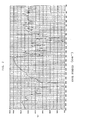
- Fig. 1 is an X ray diffraction chart of a mono-hydrate of a B type crystal of a compound (I) of the present invention
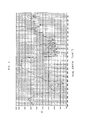
- Fig. 2 is a chart of an infrared absorption spectrum of a mono-hydrate of a B type crystal of a compound (I) of the present invention
- Fig. 3 is an X ray diffraction chart of an anhydrous form of a B type crystal of a compound (I) of the present invention
- Fig. 4 is a chart of an infrared absorption spectrum of an anhydrous form of a B type crystal of a compound (I) of the present invention.
- Fig. 1 is an X ray diffraction chart of a mono-hydrate of a B type crystal of a compound (I) of the present invention
- Fig. 2 is a chart of an infrared absorption spectrum of a mono-hydrate of a B type crystal of a compound (I) of the present invention
- Fig. 3 is an
- Fig. 5 is an X ray diffraction chart of an anhydrous form of a crystal of a compound (I) obtained in Reference Example
- Fig. 6 is a chart of an infrared absorption spectrum of an anhydrous form of a crystal of a compound (I) obtained in Reference Example.
- a B type crystal obtained by the above-mentioned preparation method of the present invention is, before its freeze drying treatment, a crystal of a mono-hydrate of a compound (I), and after its freeze drying treatment, a crystal of a 1/4-hydrate or anhydrous form of a compound (I).
- This B type crystal which is a novel crystal of a compound (I) shows characteristic peaks at diffraction angles (2 ⁇ (°)) shown in the following Table 2, in its powder X ray diffraction pattern: Diffraction Angle 2 ⁇ (°) Relative intensity approximately 11.7 100 approximately 16.1 49 approximately 18.6 94 approximately 21.2 74 approximately 22.3 79 approximately 24.4 82 approximately 26.2 95
- Such a B type crystal which is a novel crystal of a compound (I) specified by the above-mentioned X ray diffraction pattern in Table 2 has an X ray diffraction pattern and positions of peaks apparently different from those of the above-mentioned
- a powder X ray diffraction pattern of a mono-hydrate of a B type crystal of a compound (I) obtained in Example 1 described later is shown in Fig. 1 and a powder X ray diffraction pattern of an anhydrous form of a B type crystal of a compound (I) obtained in Example 2 is shown in Fig. 3.
- an infrared absorption spectrum of a mono-hydrate of a B type crystal of a compound (I) obtained in Example 1 described later is shown in Fig. 2 and an infrared absorption spectrum of an anhydrous form of a B type crystal of a compound (I) obtained in Example 2 is shown in Fig. 4.
- these spectra are only mentioned as a reference, and any crystals of a mono-hydrate or an anhydrous form of a compound (I) having infrared absorption spectra which are substantially the same as these spectra are identified as the B type crystal of a compound (I) which is a novel crystal.
- a mono-hydrate of a B type crystal of a compound (I) can be obtained by crystallizing a solution containing 7-[2-(2-aminothiazol-4-yl)-2-hydroxyiminoacetamide]-3-vinyl -3-cephem-4-carboxylic acid (compound I) at a temperature in a range from -5°C to 5°C in an acidic state.
- the solution containing the compound (I) used here include those obtained by dissolving the compound (I) in an aqueous solution of an alkali metal salt such as sodium carbonate, sodium hydrogen carbonate, potassium carbonate and the like.
- concentration of an alkali metal salt on this aqueous solution is preferably 1 to 20 wt%, further preferably 1 to 5 wt%.
- This solution of the compound (I) is, further if necessary, subjected to column chromatography with activated carbon, nonionic adsorption resin, alumina, acidic aluminum oxide and the like, then, an acidic substance such as hydrochloric acid, phosphoric acid and the like is added to control pH of the solution in an acidic range from 1 to 3, causing formation of a crystal of a mono-hydrate of the compound (I). It is necessary that this acidifying operation is conducted at a temperature in a range from -5°C to 5°C. Crystal formation conditions by this acidification include, further preferably, a pH of 1.5 to 2.5 and a temperature of 0°C to 2°C.
- mono-hydrate of a B type crystal of the compound (I) can be frozen at temperatures from -5 to -80°C, preferably -10 to -30°C, then, vacuum-dried under a reduced pressure of 0.1 to 0.001 mmHg, preferably 0.01 to 0.001 mmHg for 100 to 200 hours, to obtain a 1/4-hydrate or anhydrous form of a B type crystal of a compound (I) from which crystallization water has been stripped.
- the temperature in vacuum drying is -20 to 35°C, preferably -15 to 30°C, most preferably -15 to 25°C.
- R means "protected carboxyl group", and as suitable protected carboxyl groups R, those usually used in the field of cephalosporin compounds are mentioned, and examples thereof include esterified carboxyl groups.
- suitable protected carboxyl groups R those usually used in the field of cephalosporin compounds are mentioned, and examples thereof include esterified carboxyl groups.
- esterified carboxyl groups include ar (lower) alkoxycarbonyl groups and the like such as a benzyloxycarbonyl group, benzhydriloxycarbonyl group, trityloxycarbonyl group and the like.
- Suitable salts of a compound (I) are conventional avirulent salts such as salts with bases, acid-addition salts and the like, and examples thereof include alkali metal salts such as sodium salts, potassium salts and the like; alkaline earth metal salts such as calcium salts, magnesium salts and the like; salts with inorganic bases such as ammonium salts and the like; salts with organic bases such as organic amines such as triethylamine salts, pyridine salts, picoline salts, ethanolamine salts, triethanolamine salts, dicyclohexylamine salts, N,N'-dibenzylethylenediamine salts and the like; inorganic acid-addition salts such as hydrochloric acid salts, hydrobromic acid salts, sulfuric acid salts, phosphoric acid salts and the like; organic carboxylic acid-addition salts or organic sulfonic acid-addition salts such as formic acid salts, acetic
- a compound (IV) of the process A or salts thereof can be prepared by reacting a compound (II) or a reactive derivative on its amino group, or salts thereof with a compound (III) or a reactive derivative on its carboxy group, or salts thereof.
- a compound (II) As the reactive derivative on its amino group of a compound (II), mentioned are conventional derivatives, for example, silyl derivatives produced by reaction of a compound (II) with a silyl compound such as trimethylsilylacetamide, bis(trimethylsilyl)acetamide, bis (trimethylsilyl) urea and the like, and as the reactive derivative of a compound (III), mentioned are acid halides such as acid chlorides, acid bromies and the like, and these acid halides can be produced by reaction of diketenes and halogens.
- silyl derivatives produced by reaction of a compound (II) with a silyl compound such as trimethylsilylacetamide, bis(trimethylsilyl)acetamide, bis (trimethylsilyl) urea and the like
- acid halides such as acid chlorides, acid bromies and the like, and these acid halides can be produced by reaction of diketenes and halogens.
- salts of a compound (II) examples of the acid-addition salts for a compound (I) are mentioned as themselves, and as the salts of a compound (III), examples of the salts with bases for a compound (I) are mentioned as themselves.
- the reaction is conducted usually in a conventional solvent not exerting a reverse influence on this reaction such as water, acetone, dioxane, acetonitrile, chloroform, benzene, carbon tetrachloride, methylene chloride, ethylene chloride, tetrahydrofuran, ethyl acetate, N,N-dimethylformamide, N,N-dimethylacetamide, pyridine, hexamethylphosphoramide and the like, or a mixture thereof.
- the reaction temperature is not particularly limited, and the reaction is conducted usually under cooling or heating.
- a compound (V) in the process B can be produced by reaction of a compound (IV) or salts thereof with a nitrosotizing agent.
- the nitrosotizing agent include nitrous acid and derivatives thereof, nitrosyl halides such as nitrosyl chloride, nitrosyl bromide and the like, alkali metal nitrites such as sodium nitrite, potassium nitrite and the like, alkyl nitrites such as butyl nitrite, pentyl nitrite, isoamyl nitrite and the like.
- nitrosotizing agent it is preferable to effect the reaction in the presence of an inorganic or organic acid such as, for example, hydrochloric acid, sulfuric acid, forming acid, acetic acid and the like.
- This reaction is conducted usually in a conventional solvent not exerting a reverse influence on this reaction such as water, acetic acid, benzene, methanol, ethanol, tetrahydrofuran, methylene chloride and the like, or a mixture thereof.
- the reaction temperature is not particularly limited, and the reaction is conducted usually under cooling or heating.
- a compound (V) can also be used as a raw material of the subsequent process C without isolation and purification.
- a compound (VI) in the process C or salts thereof can be prepared by reacting a compound (V) with thiourea.
- This reaction is conducted usually in a conventional solvent not exerting a reverse influence on this reaction such as ethyl acetate, methylene chloride, chloroform, carbon tetrachloride, tetrahydrofuran, N,N-dimethylformamide, N,N-dimethylacetamide, dioxane, water, acetic acid, formic acid and the like, or a mixture thereof.
- the reaction temperature is not particularly limited, and the reaction is conducted usually under cooling or heating.
- a compound (I) in the process D or salts thereof can be prepared by subjecting a compound (VI) or salts thereof to a stripping reaction of a carboxyl protective group.
- a compound (VI) acid-addition salts exemplified for a compound (I) are mentioned as they are.
- Hydrolysis is preferably conducted in the presence of an acid.
- an acid examples include inorganic acids such as hydrochloric acid, hydrobromic acid, sulfuric acid and the like, organic acids such as formic acid, acetic acid, trifluoroacetic acid, propionic acid, methanesulfonic acid, benzenesulfonic acid, p-toluenesulfonic acid and the like, acidic ion exchange resins and the like.
- organic acids such as trifluoroacetic acid and p-toluenesulfonic acid are used among these acids, it is desirable to effect a reaction in the presence of a cation collector such as, for example, anisole and the like.
- Lewis acids such as boron trifluoride, boron trifluoride etherate, aluminum trichloride, antimony pentachloride, ferric chloride, stannic chloride, titanium tetrachloride, zinc chloride and the like can also be used, and further, also when a Lewis acid is used, the reaction can be conducted in the presence of a cation collector such as, for example, anisole and the like.
- Hydrolysis is conducted usually in a conventional solvent not exerting a reverse influence on this reaction such as methylene chloride, water, methanol, ethanol, propanol, tertiary butyl alcohol, tetrahydrofuran, N,N-dimethylformamide, N,N-dimethylacetamide, dioxane and the like, or a mixture thereof, further, also when the above-mentioned acid is liquid, it can be used as the solvent.
- the reaction temperature of this hydrolysis is not particularly limited, and the reaction is conducted usually under cooling or heating.
- Reduction is conducted by a conventional method including chemical reduction and catalytic reduction.
- Examples of the reducing agent used in chemical reduction include combinations of a metal such as tin, zinc, iron and the like or a metal compound such as chromium chloride, chromium acetate and the like with an organic or inorganic acid such as formic acid, acetic acid, propionic acid, trifluoroacetic acid, p-toluenesulfonic acid, hydrochloric acid, hydrobromic acid and the like.
- a metal such as tin, zinc, iron and the like or a metal compound such as chromium chloride, chromium acetate and the like
- an organic or inorganic acid such as formic acid, acetic acid, propionic acid, trifluoroacetic acid, p-toluenesulfonic acid, hydrochloric acid, hydrobromic acid and the like.
- catalysts such as platinum catalysts such as platinum plate, platinum sponge, platinum black, colloid platinum, platinum oxide, platinum wire and the like
- palladium catalysts such as palladium sponge, palladium black, palladium oxide, palladium carbon, colloid palladium, palladium barium sulfate, palladium barium carbonate and the like
- nickel catalysts such as reduced nickel, nickel oxide, Raney nickel and the like
- cobalt catalysts such as reduced cobalt, Raney cobalt and the like
- iron catalysts such as reduced iron, Raney iron and the like
- copper catalysts such as reduced copper, Raney copper, Ullmann copper and the like.
- Reduction is conducted usually in a conventional solvent not exerting a reverse influence on this reaction such as water, methanol, ethanol, propanol, N,N-dimethylformamide and the like, or a mixture thereof.
- a conventional solvent not exerting a reverse influence on this reaction
- the above-mentioned acid used in chemical reduction is liquid, it can be used as the solvent.
- the solvent used in catalytic reduction conventional solvents such as diethyl ether, dioxane, tetrahydrofuran and the like or mixtures thereof are mentioned, in addition to the above-mentioned solvents.
- the reaction temperature is not particularly limited, and the reaction is conducted usually under cooling or heating.
- a compound (VII) in the process E or salts thereof can be prepared by subjecting a compound (V) to a stripping reaction of a carboxy protective group.
- a compound (VII) salts with bases exemplified for a compound (I) are mentioned.
- the stripping reaction of a carboxy protective group in this reaction is conducted in the same manner as described in the process D.
- a compound (I) in the process F or salts thereof can be produced by reacting a compound (VII) or salts thereof with thiourea. This reaction is conducted in the same manner as the method described in the process C.
- a compound (I) obtained in the above-mentioned method is in isolated form, it can be converted into its salts, particularly, acid-addition salts by an ordinary method.
- the resultant compound (I) is in the form of salts, it can be converted into a free compound by an ordinary method.
- a compound (I) prepared in the above-mentioned preparation method can be converted into a mono-hydrate of a B type crystal of a compound (I) in the form of novel crystal form by applying the method for preparing a mono-hydrate of a B type crystal of a compound (I) of the present invention already described in its isolation step. Further, this mono-hydrate of a B type crystal of a compound (I) is frozen at temperatures of -5 to -80°C as described already, and vacuum-dried for 100 to 200 hours under a reduced pressure of 0.1 to 0.001 mmHg, preferably 0.01 to 0.001 mmHg. Thus, an anhydrous form or a 1/4-hydrate of a B type crystal of a compound (I) can be obtained.
- the temperature in vacuum drying is -20 to 35°C, preferably -15 to 35°C, most preferably -10 to 25°C.
- the above-mentioned preparation is a method for obtaining a B type crystal of a compound (I) in high yield, and can be conducted with extreme safety. It is also suitable for large scale preparation of a B type crystal of a compound (I).
- the anhydrous form or mono-hydrate of a B type crystal which is a novel crystal of a compound (I) of the present invention thus obtained is relatively compact and not bulky, has very high crystal purity, is extremely stable against heat, light and the like, and simultaneously, has excellent solubility in water. Therefore, while a compound (I) is originally a substance useful as an antibacterial agent, an anhydrous form or mono-hydrate of a B type crystal as its novel crystal is, because of excellent physical properties as described above, easy for preparation, suitable for use as a medical preparation, and also gives easy handing in preparation and preservation.
- the anhydrous form or mono-hydrate of a B type crystal of a compound (I) has sufficiently large filtration speed, and also has a feature that working on preparation can be conducted very efficiently. Therefore, the anhydrous form or mono-hydrate of a B type crystal of a compound (I) of the present invention is a substance which is extremely suitable also for large scale synthesis such as preparation in a factory. Further, due to easy filtration, impurities are not mixed in easily in a purification process, consequently, a B type crystal of a compound (I) of high quality can be prepared.
- the anhydrous form or mono-hydrate of a B type crystal of a compound (I) of the present invention has extremely excellent merits and is very excellent as compared with conventionally known amorphous compounds (I), and provides a simpler preparation process than an A type crystal of a compound (I) .
- a hydrochloride (26.6 kg) of a benzhydryl ester of 7-amino-3-vinyl-3-cephem-4-carboxylic acid was dissolved in N,N-dimethylacetamide (78L) and the solution was cooled down to -10°C.
- a benzhydryl ester (30.8 kg) of 7-(4-chloroacetacetamide)-3-vinyl-3-cephem-4-carboxylic acid was suspended in methylene chloride (290 L) and the suspension was cooled down to -5°C. After cooling, a 10.6 N hydrogen chloride tetrahydrofuran solution (267 ml) was added, then, isoamyl nitrite (7.1 kg) was added, then, the mixture was stirred at 0°C for 60 minutes.
- acetone (145 L) and a 5% sodium hydrogen carbonate aqueous solution (73 L) were added at 20°C, and this solution was dropped into water (290 L) over a period of 20 minutes while maintaining the temperature at 20°C.
- pH of the solution was controlled to 6 with a 5% sodium hydrogen carbonate aqueous solution, and the resulted solution was cooled to 5°C with stirring, then, allowed to stand still overnight.
- reaction liquid was concentrated under reduced pressure to obtain a residue, and diisopropyl ether (250 ml) was added to the residue to obtain a solid substance (16.5 g). This was ground and dissolved in isopropyl alcohol (80 ml) and treated with activated carbon (1.6 g), then, the solution was allowed to stand at 5°C for 3 hours. The resulted deposit was filtrated off, to obtain a colorless crystal (7.8 g) (this crystal includes one molecule of isopropyl alcohol).
- Example 2 the crystal deposited from a solution at pH 2.0 in Example 1 was filtrated, and this was preserved overnight at a temperature of -20°C to be frozen, then, dried under vacuum of a degree of vacuum of 0.01 mmHg at room temperature (20°C) for 158 hours, to obtain 21 g of a crystal of 7-[2-(2-aminothiazol-4-yl)-2-hydroxyiminoacetamide]-3-vinyl -3-cephem-4-carboxylic acid (syn isomer).
- the water content was measured by a Karl Fischer method to find a water content of 1.05%.
- an anhydrous form of a B type crystal of a compound (I) of the present invention has more excellent solubility in water as compared with a conventional A type crystal, and when used as a medicine, an effect of improving its absorption is expected.
- This crystal was applied to the X ray diffractometer under the same conditions as in Example 1, to measure the powder X ray diffraction pattern.
- a peak appended with " ⁇ mark" in the column of comparison denotes a peak corresponding to a peculiar peak of a B type crystal of a compound (I), however, no peculiar peak of a B type crystal was observed at other diffraction angles, and it is difficult to judge whether the crystal of a compound (I) prepared under this condition is a B type crystal or not.
- An anhydrous form or mono-hydrate of a B type crystal of the compound (I) of the present invention is not bulky, has very high crystal purity, extremely stable against heat, light and the like, and simultaneously, shows excellent solubility in water, therefore, formulation thereof is easy, and use as a medical preparation is suitable, and handling in preparation and preservation is also easy.
- anhydrous form or mono-hydrate of a B type crystal of a compound (I) has sufficiently large filtration speed, also has a feature that working on preparation can be conducted very efficiently, and is useful for a medical preparation.
Landscapes
- Chemical & Material Sciences (AREA)
- Organic Chemistry (AREA)
- Health & Medical Sciences (AREA)
- Communicable Diseases (AREA)
- Oncology (AREA)
- Chemical Kinetics & Catalysis (AREA)
- General Chemical & Material Sciences (AREA)
- Medicinal Chemistry (AREA)
- Nuclear Medicine, Radiotherapy & Molecular Imaging (AREA)
- Pharmacology & Pharmacy (AREA)
- Life Sciences & Earth Sciences (AREA)
- Animal Behavior & Ethology (AREA)
- General Health & Medical Sciences (AREA)
- Public Health (AREA)
- Veterinary Medicine (AREA)
- Cephalosporin Compounds (AREA)
- Pharmaceuticals Containing Other Organic And Inorganic Compounds (AREA)
Applications Claiming Priority (3)
| Application Number | Priority Date | Filing Date | Title |
|---|---|---|---|
| JP2003081273 | 2003-03-24 | ||
| JP2003081273 | 2003-03-24 | ||
| PCT/JP2004/003622 WO2004085443A1 (ja) | 2003-03-24 | 2004-03-18 | 7-[2-(2-アミノチアゾール-4-イル)-2-ヒドロキシイミノアセトアミド-3-ビニル-3-セフェム-4-カルボン酸(シン異性体)の新規結晶およびその製造方法 |
Publications (2)
| Publication Number | Publication Date |
|---|---|
| EP1609793A1 true EP1609793A1 (de) | 2005-12-28 |
| EP1609793A4 EP1609793A4 (de) | 2008-06-25 |
Family
ID=33094892
Family Applications (1)
| Application Number | Title | Priority Date | Filing Date |
|---|---|---|---|
| EP04721656A Withdrawn EP1609793A4 (de) | 2003-03-24 | 2004-03-18 | Neuer kristall von 7-¬2-(2-aminothiazol-4-yl)-2-hydroxyiminoacetamido-3-vinyl-3-cephem-4-carbonsäure(syn-isomer) und verfahren zu dessen herstellung |
Country Status (10)
| Country | Link |
|---|---|
| US (3) | US20070106073A1 (de) |
| EP (1) | EP1609793A4 (de) |
| JP (1) | JPWO2004085443A1 (de) |
| KR (1) | KR20050121209A (de) |
| CN (1) | CN100357294C (de) |
| AU (1) | AU2004224045A1 (de) |
| CA (1) | CA2520083A1 (de) |
| MX (1) | MXPA05010205A (de) |
| WO (1) | WO2004085443A1 (de) |
| ZA (1) | ZA200507748B (de) |
Cited By (5)
| Publication number | Priority date | Publication date | Assignee | Title |
|---|---|---|---|---|
| WO2006018807A1 (en) * | 2004-08-16 | 2006-02-23 | Ranbaxy Laboratories Limited | Crystalline forms of cefdinir |
| EP1795197A1 (de) * | 2005-12-07 | 2007-06-13 | Sandoz AG | Pharmazeutische Zusammensetzung mit einem Antibiotikum |
| US7250508B2 (en) | 2002-08-13 | 2007-07-31 | Sandoz Ag | Cefdinir intermediate |
| US7307072B2 (en) * | 2004-11-30 | 2007-12-11 | Astellas Pharma Inc. | Oral pharmaceutical suspension of Cefdinir crystal |
| WO2012130920A1 (en) * | 2011-04-01 | 2012-10-04 | Lonza Ltd | Preparation of 3,5-dioxo hexanoate ester |
Families Citing this family (1)
| Publication number | Priority date | Publication date | Assignee | Title |
|---|---|---|---|---|
| ITMI20020913A0 (it) * | 2002-04-29 | 2002-04-29 | Acs Dobfar Spa | Nuova forma cristallina del cefdinir |
Family Cites Families (40)
| Publication number | Priority date | Publication date | Assignee | Title |
|---|---|---|---|---|
| US4409214A (en) * | 1979-11-19 | 1983-10-11 | Fujisawa Pharmaceutical, Co., Ltd. | 7-Acylamino-3-vinylcephalosporanic acid derivatives and processes for the preparation thereof |
| GB8323034D0 (en) * | 1983-08-26 | 1983-09-28 | Fujisawo Pharmaceutical Co Ltd | 7-substituted-3-vinyl-3-cephem compounds |
| JPH0674276B2 (ja) * | 1987-08-19 | 1994-09-21 | 藤沢薬品工業株式会社 | 7−[2−(2−アミノチアゾール−4−イル)−2−ヒドロキシイミノアセトアミド−3−ビニル−3−セフェム−4−カルボン酸(シン異性体)の新規結晶 |
| ZA885709B (en) * | 1987-08-19 | 1989-04-26 | Fujisawa Pharmaceutical Co | Novel crystalline 7-(2-(2-aminothiazol-4-yl)-2-hydroxyiminoacetamido)-3-vinyl-3-cephem-4-carboxylic acid(syn isomer) |
| ATE205214T1 (de) * | 1992-02-05 | 2001-09-15 | Biochemie Gmbh | Verfahren zur reinigung eines 3-cephem-4-carboxyl säure derivates |
| US6093814A (en) * | 1995-12-27 | 2000-07-25 | Hanmi Pharmaceutical Co., Ltd. | Process for preparation of cefdinir |
| ATE216887T1 (de) * | 1996-02-29 | 2002-05-15 | Fujisawa Pharmaceutical Co | Beta-lactam-antibiotikum enthaltende tabletten und verfahren zu deren herstellung |
| AT405283B (de) * | 1997-04-04 | 1999-06-25 | Biochemie Gmbh | Neues kristallines 7-(z)-(2-(2-aminothiazol-4-yl) -2-hydroxyiminoacetamido)-3-vinyl-3-cephem-4- carbonsäure dicyclohexylammoniumsalz und verfahren zu dessen herstellung |
| PE20000879A1 (es) * | 1998-04-29 | 2000-09-23 | Dsm Nv | METODO PARA CRISTALIZAR UN ANTIBIOTICO ß-LACTAMICO |
| JP4953501B2 (ja) * | 1999-09-30 | 2012-06-13 | 大塚化学株式会社 | 3−セフェム誘導体結晶の製造方法 |
| KR20030051895A (ko) * | 2000-12-04 | 2003-06-25 | 후지사와 야꾸힝 고교 가부시키가이샤 | 아미노티아졸 유도체의 무수물의 제조 방법 |
| US6388070B1 (en) * | 2001-01-05 | 2002-05-14 | Orchid Chemicals & Pharmaceuticals Ltd. | Thioester derivatives of thiazolyl acetic acid and their use in the preparation of cephalosporin compounds |
| KR100451672B1 (ko) * | 2001-06-05 | 2004-10-08 | 한미약품 주식회사 | 결정성 세프디니르 산부가염, 이의 제조방법 및 이를이용한 세프디니르의 제조방법 |
| EP1458728A1 (de) * | 2001-12-13 | 2004-09-22 | Ranbaxy Laboratories Limited | Kristallines cefdinir kalium-dihydrat |
| CN1628118A (zh) * | 2002-04-26 | 2005-06-15 | 兰贝克赛实验室有限公司 | 制备头孢地尼的方法 |
| ITMI20020913A0 (it) * | 2002-04-29 | 2002-04-29 | Acs Dobfar Spa | Nuova forma cristallina del cefdinir |
| EP1842852A1 (de) * | 2002-08-13 | 2007-10-10 | Sandoz AG | Ein cefdinir-zwischenprodukt |
| ITMI20022076A1 (it) * | 2002-10-01 | 2004-04-02 | Antibioticos Spa | Sali di intermedi del cefdinir. |
| WO2004046154A1 (en) * | 2002-11-15 | 2004-06-03 | Orchid Chemicals & Pharmaceuticals Ltd | Novel amorphous hydrate of a cephalosporin antibiotic |
| ITMI20022724A1 (it) * | 2002-12-20 | 2004-06-21 | Antibioticos Spa | Sali cristallini del cefdinir. |
| WO2004058695A1 (en) * | 2002-12-26 | 2004-07-15 | Lupin Limited | Novel intermediates for synthesis of cephalosporins and process for preparation of such intermediates |
| US20040242556A1 (en) * | 2003-06-02 | 2004-12-02 | Ramesh Dandala | Novel crystalline form of cefdinir |
| US20050137182A1 (en) * | 2003-06-02 | 2005-06-23 | Ramesh Dandala | Novel crystalline form of cefdinir |
| US7105659B2 (en) * | 2003-06-02 | 2006-09-12 | Aurobind - Pharma Ltd. | Process for preparing cefdinir |
| US20050113355A1 (en) * | 2003-09-12 | 2005-05-26 | Duerst Richard W. | Cefdinir pyridine salt |
| US20050059819A1 (en) * | 2003-09-12 | 2005-03-17 | Duerst Richard W. | Cefdinir pyridine salt |
| US20050059818A1 (en) * | 2003-09-12 | 2005-03-17 | Duerst Richard W. | Polymorph of a pharmaceutical |
| US20050131079A1 (en) * | 2003-12-10 | 2005-06-16 | Pujara Chetan P. | Cefdinir oral suspension |
| US20060287289A1 (en) * | 2004-03-16 | 2006-12-21 | Devalina Law | Crystalline anhydrous cefdinir and crystalline cefdinir hydrates |
| US20060142261A1 (en) * | 2004-03-16 | 2006-06-29 | Devalina Law | Crystalline anhydrous cefdinir and crystalline cefdinir hydrates |
| US20050209211A1 (en) * | 2004-03-16 | 2005-09-22 | Devalina Law | Trihemihydrate, anhydrate and novel hydrate forms of Cefdinir |
| US20060211676A1 (en) * | 2004-03-16 | 2006-09-21 | Devalina Law | Crystalline anhydrous cefdinir and crystalline cefdinir hydrates |
| US20060025399A1 (en) * | 2004-03-16 | 2006-02-02 | Devalina Law | Crystalline anhydrous cefdinir and crystalline cefdinir hydrates |
| US20060142563A1 (en) * | 2004-03-16 | 2006-06-29 | Devalina Law | Crystalline anhydrous cefdinir and crystalline cefdinir hydrates |
| US20050215781A1 (en) * | 2004-03-17 | 2005-09-29 | Orchid Chemicals & Pharmaceuticals Ltd. | Novel polymorph of cefdinir |
| US20060069079A1 (en) * | 2004-09-27 | 2006-03-30 | Sever Nancy E | Stable amorphous cefdinir |
| US20060029674A1 (en) * | 2004-04-09 | 2006-02-09 | Sever Nancy E | Stable amorphous Cefdinir |
| US20050245738A1 (en) * | 2004-05-03 | 2005-11-03 | Lupin Ltd | Stable bioavailable crystalline form or cefdinir and a process for the preparation thereof |
| MX2007006018A (es) * | 2004-11-30 | 2007-06-07 | Astellas Pharma Inc | Suspension farmaceutica oral novedosa de cristal de cefdinir. |
| GB2421024A (en) * | 2004-12-07 | 2006-06-14 | Sandoz Ag | Cefdinir crystalline form C |
-
2004
- 2004-03-18 US US10/549,906 patent/US20070106073A1/en not_active Abandoned
- 2004-03-18 CN CNB2004800103869A patent/CN100357294C/zh not_active Expired - Fee Related
- 2004-03-18 ZA ZA200507748A patent/ZA200507748B/xx unknown
- 2004-03-18 MX MXPA05010205A patent/MXPA05010205A/es not_active Application Discontinuation
- 2004-03-18 JP JP2005504012A patent/JPWO2004085443A1/ja active Pending
- 2004-03-18 AU AU2004224045A patent/AU2004224045A1/en not_active Abandoned
- 2004-03-18 WO PCT/JP2004/003622 patent/WO2004085443A1/ja not_active Ceased
- 2004-03-18 KR KR1020057017725A patent/KR20050121209A/ko not_active Withdrawn
- 2004-03-18 EP EP04721656A patent/EP1609793A4/de not_active Withdrawn
- 2004-03-18 CA CA002520083A patent/CA2520083A1/en not_active Abandoned
-
2007
- 2007-07-06 US US11/774,035 patent/US20070270586A1/en not_active Abandoned
-
2008
- 2008-04-30 US US12/112,432 patent/US20080262219A1/en not_active Abandoned
Cited By (11)
| Publication number | Priority date | Publication date | Assignee | Title |
|---|---|---|---|---|
| US7250508B2 (en) | 2002-08-13 | 2007-07-31 | Sandoz Ag | Cefdinir intermediate |
| US7825241B2 (en) | 2002-08-13 | 2010-11-02 | Sandoz Ag | Cefdinir intermediate |
| WO2006018807A1 (en) * | 2004-08-16 | 2006-02-23 | Ranbaxy Laboratories Limited | Crystalline forms of cefdinir |
| US7307072B2 (en) * | 2004-11-30 | 2007-12-11 | Astellas Pharma Inc. | Oral pharmaceutical suspension of Cefdinir crystal |
| US7351419B2 (en) | 2004-11-30 | 2008-04-01 | Astellas Pharma Inc. | Oral pharmaceutical suspension of Cefdinir crystal |
| EP1795197A1 (de) * | 2005-12-07 | 2007-06-13 | Sandoz AG | Pharmazeutische Zusammensetzung mit einem Antibiotikum |
| WO2012130920A1 (en) * | 2011-04-01 | 2012-10-04 | Lonza Ltd | Preparation of 3,5-dioxo hexanoate ester |
| WO2012130919A1 (en) * | 2011-04-01 | 2012-10-04 | Lonza Ltd | Preparation of 3,5-dioxo hexanoate ester in two steps |
| US8859786B2 (en) | 2011-04-01 | 2014-10-14 | Lonza Ltd | Preparation of 3,5-dioxo hexanoate ester in two steps |
| US9296718B2 (en) | 2011-04-01 | 2016-03-29 | Lonza Ltd | Preparation of 3,5-dioxo hexanoate ester in two steps |
| EA023490B1 (ru) * | 2011-04-01 | 2016-06-30 | Лонца Лтд. | Получение 3,5-диоксогексаноата в 2 стадии |
Also Published As
| Publication number | Publication date |
|---|---|
| US20080262219A1 (en) | 2008-10-23 |
| CN100357294C (zh) | 2007-12-26 |
| EP1609793A4 (de) | 2008-06-25 |
| JPWO2004085443A1 (ja) | 2006-06-29 |
| AU2004224045A1 (en) | 2004-10-07 |
| CA2520083A1 (en) | 2004-10-07 |
| US20070106073A1 (en) | 2007-05-10 |
| ZA200507748B (en) | 2007-03-28 |
| CN1774441A (zh) | 2006-05-17 |
| WO2004085443A1 (ja) | 2004-10-07 |
| US20070270586A1 (en) | 2007-11-22 |
| MXPA05010205A (es) | 2005-11-08 |
| KR20050121209A (ko) | 2005-12-26 |
Similar Documents
| Publication | Publication Date | Title |
|---|---|---|
| US4935507A (en) | Crystalline 7-(2-(2-aminothiazol-4-yl)-2-hydroxyiminoacetamido)-3-vinyl-3-cephem-4-carboxylic acid (syn isomer) | |
| JP3948628B2 (ja) | セフディニルの製造方法 | |
| PL172835B1 (pl) | Chlorowodorek kwasu 7- ß -[(Z)-2-(2-amino-4-tiazolilo)-2-hydroksyiminoacetamido]-3-(1,2,3-triazol-4-ilo)-tiometylotio-3 -cefemo-4-karboksylowego oraz sposób jego wytwarzania, krystaliczny wodzian chlorowodorku kwasu 7- ß -(Z)-2-(2-amino-4-tiazolilo)-2-hydroksyiminoacetamido]-3-(1,2,3-triazol-4-ilo)-tiometylotio-3-ce- femo-4-karboksylowego oraz sposób jego wytwarzania PL PL PL PL PL | |
| KR20010005907A (ko) | 세프디니르의 결정성 아민 염 | |
| US20080262219A1 (en) | Novel crystal of 7-[2-[(2-aminothiazol-4-yl)-2-hydroxyiminoacetamide-3-vinyl-3-cephem-4-carboxylic acid (syn isomer) and method for preparation thereof | |
| JPH0149273B2 (de) | ||
| EP0264091B1 (de) | 3-Propenylcephemderivate, ihre Herstellung, Zwischenverbindungen, pharmazeutische Präparate und Anwendung | |
| EP0764648A1 (de) | Cephemderivate und Verfahren zu ihrer Herstellung | |
| US7045618B2 (en) | Cefpodixime proxetil | |
| CN110590812A (zh) | 一种头孢米诺钠的制备方法 | |
| KR0178280B1 (ko) | 세팔로스포린 항생제의 제조방법 | |
| AU654384B2 (en) | Preparation of a cephalosporin antibiotic using the syn-isomer of a thiazolyl intermediate | |
| KR100342600B1 (ko) | 신규한 티아졸 화합물 및 그의 제조 방법 | |
| EP0497978B1 (de) | Cephalosporinverbindungen und deren herstellung | |
| EP1812449B1 (de) | Kristalline form von cefdinir-ammoniumsalz als zwischenprodukt für die herstellung von reinem cefdinir | |
| CA1236089A (en) | Ceftazidime | |
| JPH0674276B2 (ja) | 7−[2−(2−アミノチアゾール−4−イル)−2−ヒドロキシイミノアセトアミド−3−ビニル−3−セフェム−4−カルボン酸(シン異性体)の新規結晶 | |
| EP0109294A2 (de) | Cephalosporinester | |
| CA2077780A1 (en) | Preparation of a cephalosporin antibiotic using the syn-isomer of a thiazolyl intermediate | |
| KR0174431B1 (ko) | 세프디니르의 제조방법 | |
| SU1482532A3 (ru) | Способ получени цефемовых соединений или их приемлемых с физиологической или фармацевтической точки зрени солей | |
| KR840002046B1 (ko) | 세팔로스포린의 제조방법 | |
| KR950011746B1 (ko) | 3-프로페닐세펨 유도체 | |
| JP2662414B2 (ja) | チアゾール誘導体 | |
| KR0156275B1 (ko) | 세프타지딤 펜타하이드레이트의 제조방법 |
Legal Events
| Date | Code | Title | Description |
|---|---|---|---|
| PUAI | Public reference made under article 153(3) epc to a published international application that has entered the european phase |
Free format text: ORIGINAL CODE: 0009012 |
|
| 17P | Request for examination filed |
Effective date: 20051024 |
|
| AK | Designated contracting states |
Kind code of ref document: A1 Designated state(s): AT BE BG CH CY CZ DE DK EE ES FI FR GB GR HU IE IT LI LU MC NL PL PT RO SE SI SK TR |
|
| AX | Request for extension of the european patent |
Extension state: AL LT LV MK |
|
| D17P | Request for examination filed (deleted) | ||
| R17P | Request for examination filed (corrected) |
Effective date: 20051024 |
|
| RIN1 | Information on inventor provided before grant (corrected) |
Inventor name: NIWA, HIROYUKI Inventor name: IMAI, EIJIC/O SHIONO CHEMICAL CO. LTD. JAPAN |
|
| RAP1 | Party data changed (applicant data changed or rights of an application transferred) |
Owner name: SANDOZ AG |
|
| A4 | Supplementary search report drawn up and despatched |
Effective date: 20080527 |
|
| STAA | Information on the status of an ep patent application or granted ep patent |
Free format text: STATUS: THE APPLICATION IS DEEMED TO BE WITHDRAWN |
|
| 18D | Application deemed to be withdrawn |
Effective date: 20080826 |