EP1611897A2 - Intakte oder zerstörte Insektenzellen als Antigenadjuvant - Google Patents
Intakte oder zerstörte Insektenzellen als Antigenadjuvant Download PDFInfo
- Publication number
- EP1611897A2 EP1611897A2 EP05018204A EP05018204A EP1611897A2 EP 1611897 A2 EP1611897 A2 EP 1611897A2 EP 05018204 A EP05018204 A EP 05018204A EP 05018204 A EP05018204 A EP 05018204A EP 1611897 A2 EP1611897 A2 EP 1611897A2
- Authority
- EP
- European Patent Office
- Prior art keywords
- antigen
- adjuvant
- insect
- interest
- epitope
- Prior art date
- Legal status (The legal status is an assumption and is not a legal conclusion. Google has not performed a legal analysis and makes no representation as to the accuracy of the status listed.)
- Withdrawn
Links
- 239000000427 antigen Substances 0.000 title claims abstract description 185
- 108091007433 antigens Proteins 0.000 title claims abstract description 185
- 102000036639 antigens Human genes 0.000 title claims abstract description 185
- 241000238631 Hexapoda Species 0.000 title claims abstract description 140
- 239000002671 adjuvant Substances 0.000 title claims abstract description 117
- 239000000203 mixture Substances 0.000 claims abstract description 85
- 241000701447 unidentified baculovirus Species 0.000 claims abstract description 63
- 229960005486 vaccine Drugs 0.000 claims abstract description 61
- 238000000034 method Methods 0.000 claims abstract description 42
- 230000001900 immune effect Effects 0.000 claims abstract description 32
- 230000002163 immunogen Effects 0.000 claims abstract description 28
- 241000256251 Spodoptera frugiperda Species 0.000 claims abstract description 26
- 241000894007 species Species 0.000 claims abstract description 13
- 210000004027 cell Anatomy 0.000 claims description 145
- 241000700605 Viruses Species 0.000 claims description 70
- 238000002360 preparation method Methods 0.000 claims description 24
- 208000015181 infectious disease Diseases 0.000 claims description 22
- 241001465754 Metazoa Species 0.000 claims description 21
- WSFSSNUMVMOOMR-UHFFFAOYSA-N Formaldehyde Chemical compound O=C WSFSSNUMVMOOMR-UHFFFAOYSA-N 0.000 claims description 18
- 241000282414 Homo sapiens Species 0.000 claims description 17
- 244000052769 pathogen Species 0.000 claims description 12
- 239000000126 substance Substances 0.000 claims description 12
- 230000001681 protective effect Effects 0.000 claims description 10
- 239000003599 detergent Substances 0.000 claims description 9
- 230000005847 immunogenicity Effects 0.000 claims description 9
- 108020004707 nucleic acids Proteins 0.000 claims description 9
- 102000039446 nucleic acids Human genes 0.000 claims description 9
- 150000007523 nucleic acids Chemical class 0.000 claims description 9
- 230000004044 response Effects 0.000 claims description 9
- 238000011282 treatment Methods 0.000 claims description 9
- 210000000170 cell membrane Anatomy 0.000 claims description 5
- 241001430294 unidentified retrovirus Species 0.000 claims description 4
- 206010020751 Hypersensitivity Diseases 0.000 claims description 3
- 241000204031 Mycoplasma Species 0.000 claims description 3
- 208000026935 allergic disease Diseases 0.000 claims description 3
- 230000002708 enhancing effect Effects 0.000 claims description 3
- 230000009610 hypersensitivity Effects 0.000 claims description 3
- 231100000252 nontoxic Toxicity 0.000 claims description 3
- 230000003000 nontoxic effect Effects 0.000 claims description 3
- 230000001698 pyrogenic effect Effects 0.000 claims description 3
- 230000000415 inactivating effect Effects 0.000 claims 2
- 230000000890 antigenic effect Effects 0.000 abstract description 29
- 108090000623 proteins and genes Proteins 0.000 description 43
- 102000004169 proteins and genes Human genes 0.000 description 32
- 108090000765 processed proteins & peptides Proteins 0.000 description 30
- 230000028993 immune response Effects 0.000 description 21
- 102000004196 processed proteins & peptides Human genes 0.000 description 15
- BHQCQFFYRZLCQQ-OELDTZBJSA-N cholic acid Chemical compound C([C@H]1C[C@H]2O)[C@H](O)CC[C@]1(C)[C@@H]1[C@@H]2[C@@H]2CC[C@H]([C@@H](CCC(O)=O)C)[C@@]2(C)[C@@H](O)C1 BHQCQFFYRZLCQQ-OELDTZBJSA-N 0.000 description 13
- 108020004414 DNA Proteins 0.000 description 11
- 108090000288 Glycoproteins Proteins 0.000 description 11
- 102000003886 Glycoproteins Human genes 0.000 description 11
- 229940099352 cholate Drugs 0.000 description 11
- 206010022000 influenza Diseases 0.000 description 11
- DBMJMQXJHONAFJ-UHFFFAOYSA-M Sodium laurylsulphate Chemical compound [Na+].CCCCCCCCCCCCOS([O-])(=O)=O DBMJMQXJHONAFJ-UHFFFAOYSA-M 0.000 description 10
- 230000002779 inactivation Effects 0.000 description 10
- 239000012528 membrane Substances 0.000 description 10
- 239000003053 toxin Substances 0.000 description 10
- 231100000765 toxin Toxicity 0.000 description 10
- 239000013598 vector Substances 0.000 description 10
- LOKCTEFSRHRXRJ-UHFFFAOYSA-I dipotassium trisodium dihydrogen phosphate hydrogen phosphate dichloride Chemical compound P(=O)(O)(O)[O-].[K+].P(=O)(O)([O-])[O-].[Na+].[Na+].[Cl-].[K+].[Cl-].[Na+] LOKCTEFSRHRXRJ-UHFFFAOYSA-I 0.000 description 9
- 239000002953 phosphate buffered saline Substances 0.000 description 9
- 210000001744 T-lymphocyte Anatomy 0.000 description 8
- 150000001413 amino acids Chemical class 0.000 description 8
- 230000000694 effects Effects 0.000 description 8
- VHDPPDRSCMVFAV-UHFFFAOYSA-N n,n-dimethylhexadecan-1-amine;hydrobromide Chemical compound [Br-].CCCCCCCCCCCCCCCC[NH+](C)C VHDPPDRSCMVFAV-UHFFFAOYSA-N 0.000 description 8
- 230000001717 pathogenic effect Effects 0.000 description 8
- 101710154606 Hemagglutinin Proteins 0.000 description 7
- 208000002979 Influenza in Birds Diseases 0.000 description 7
- 241000710842 Japanese encephalitis virus Species 0.000 description 7
- 241000699670 Mus sp. Species 0.000 description 7
- 101710093908 Outer capsid protein VP4 Proteins 0.000 description 7
- 101710135467 Outer capsid protein sigma-1 Proteins 0.000 description 7
- 101710176177 Protein A56 Proteins 0.000 description 7
- 230000005875 antibody response Effects 0.000 description 7
- 206010064097 avian influenza Diseases 0.000 description 7
- -1 lipopolysaccaride Chemical compound 0.000 description 7
- 241000711404 Avian avulavirus 1 Species 0.000 description 6
- 241000282412 Homo Species 0.000 description 6
- 208000016604 Lyme disease Diseases 0.000 description 6
- 108091028043 Nucleic acid sequence Proteins 0.000 description 6
- 241000700584 Simplexvirus Species 0.000 description 6
- 241000251539 Vertebrata <Metazoa> Species 0.000 description 6
- 239000013566 allergen Substances 0.000 description 6
- 238000003556 assay Methods 0.000 description 6
- 239000000185 hemagglutinin Substances 0.000 description 6
- 230000009885 systemic effect Effects 0.000 description 6
- 206010037742 Rabies Diseases 0.000 description 5
- 230000005867 T cell response Effects 0.000 description 5
- 210000000612 antigen-presenting cell Anatomy 0.000 description 5
- 239000013604 expression vector Substances 0.000 description 5
- 238000009472 formulation Methods 0.000 description 5
- 208000037797 influenza A Diseases 0.000 description 5
- 238000004519 manufacturing process Methods 0.000 description 5
- HZAXFHJVJLSVMW-UHFFFAOYSA-N 2-Aminoethan-1-ol Chemical compound NCCO HZAXFHJVJLSVMW-UHFFFAOYSA-N 0.000 description 4
- 241000589968 Borrelia Species 0.000 description 4
- 241000287828 Gallus gallus Species 0.000 description 4
- 101150039660 HA gene Proteins 0.000 description 4
- 241000725303 Human immunodeficiency virus Species 0.000 description 4
- 206010028980 Neoplasm Diseases 0.000 description 4
- 108010061100 Nucleoproteins Proteins 0.000 description 4
- 108010008281 Recombinant Fusion Proteins Proteins 0.000 description 4
- 102000007056 Recombinant Fusion Proteins Human genes 0.000 description 4
- 229940037003 alum Drugs 0.000 description 4
- 108010029566 avian influenza A virus hemagglutinin Proteins 0.000 description 4
- 210000003719 b-lymphocyte Anatomy 0.000 description 4
- 230000035931 haemagglutination Effects 0.000 description 4
- 230000003053 immunization Effects 0.000 description 4
- 238000002649 immunization Methods 0.000 description 4
- 231100000419 toxicity Toxicity 0.000 description 4
- 230000001988 toxicity Effects 0.000 description 4
- 241001529453 unidentified herpesvirus Species 0.000 description 4
- 108091032973 (ribonucleotides)n+m Proteins 0.000 description 3
- 108010042708 Acetylmuramyl-Alanyl-Isoglutamine Proteins 0.000 description 3
- 108090000695 Cytokines Proteins 0.000 description 3
- 102000004127 Cytokines Human genes 0.000 description 3
- 208000001490 Dengue Diseases 0.000 description 3
- 206010012310 Dengue fever Diseases 0.000 description 3
- 241000710831 Flavivirus Species 0.000 description 3
- 241000701024 Human betaherpesvirus 5 Species 0.000 description 3
- 206010061598 Immunodeficiency Diseases 0.000 description 3
- 208000029462 Immunodeficiency disease Diseases 0.000 description 3
- 102100034349 Integrase Human genes 0.000 description 3
- 241000124008 Mammalia Species 0.000 description 3
- 201000005505 Measles Diseases 0.000 description 3
- 241000712045 Morbillivirus Species 0.000 description 3
- 102000011931 Nucleoproteins Human genes 0.000 description 3
- 241000224016 Plasmodium Species 0.000 description 3
- 241000713311 Simian immunodeficiency virus Species 0.000 description 3
- 230000024932 T cell mediated immunity Effects 0.000 description 3
- 108091008874 T cell receptors Proteins 0.000 description 3
- 102000016266 T-Cell Antigen Receptors Human genes 0.000 description 3
- 239000000872 buffer Substances 0.000 description 3
- 229920001577 copolymer Polymers 0.000 description 3
- 208000025729 dengue disease Diseases 0.000 description 3
- 239000000839 emulsion Substances 0.000 description 3
- 244000052637 human pathogen Species 0.000 description 3
- 230000028996 humoral immune response Effects 0.000 description 3
- 210000000987 immune system Anatomy 0.000 description 3
- 230000007813 immunodeficiency Effects 0.000 description 3
- 239000007924 injection Substances 0.000 description 3
- 238000002347 injection Methods 0.000 description 3
- 238000007918 intramuscular administration Methods 0.000 description 3
- 238000013507 mapping Methods 0.000 description 3
- 239000002480 mineral oil Substances 0.000 description 3
- BSOQXXWZTUDTEL-ZUYCGGNHSA-N muramyl dipeptide Chemical compound OC(=O)CC[C@H](C(N)=O)NC(=O)[C@H](C)NC(=O)[C@@H](C)O[C@H]1[C@H](O)[C@@H](CO)O[C@@H](O)[C@@H]1NC(C)=O BSOQXXWZTUDTEL-ZUYCGGNHSA-N 0.000 description 3
- 230000003472 neutralizing effect Effects 0.000 description 3
- 239000008194 pharmaceutical composition Substances 0.000 description 3
- 239000000825 pharmaceutical preparation Substances 0.000 description 3
- 238000003752 polymerase chain reaction Methods 0.000 description 3
- 238000003259 recombinant expression Methods 0.000 description 3
- 238000007920 subcutaneous administration Methods 0.000 description 3
- 241000712461 unidentified influenza virus Species 0.000 description 3
- BHQCQFFYRZLCQQ-UHFFFAOYSA-N (3alpha,5alpha,7alpha,12alpha)-3,7,12-trihydroxy-cholan-24-oic acid Natural products OC1CC2CC(O)CCC2(C)C2C1C1CCC(C(CCC(O)=O)C)C1(C)C(O)C2 BHQCQFFYRZLCQQ-UHFFFAOYSA-N 0.000 description 2
- 108700028369 Alleles Proteins 0.000 description 2
- 241000271566 Aves Species 0.000 description 2
- 241000714266 Bovine leukemia virus Species 0.000 description 2
- 241000680578 Canid alphaherpesvirus 1 Species 0.000 description 2
- 241000701931 Canine parvovirus Species 0.000 description 2
- 239000004380 Cholic acid Substances 0.000 description 2
- 241000193449 Clostridium tetani Species 0.000 description 2
- 241000701022 Cytomegalovirus Species 0.000 description 2
- 241000725619 Dengue virus Species 0.000 description 2
- 238000002965 ELISA Methods 0.000 description 2
- 241000283073 Equus caballus Species 0.000 description 2
- 241000713800 Feline immunodeficiency virus Species 0.000 description 2
- AEMRFAOFKBGASW-UHFFFAOYSA-N Glycolic acid Chemical compound OCC(O)=O AEMRFAOFKBGASW-UHFFFAOYSA-N 0.000 description 2
- 206010018691 Granuloma Diseases 0.000 description 2
- 102000008949 Histocompatibility Antigens Class I Human genes 0.000 description 2
- 108010088652 Histocompatibility Antigens Class I Proteins 0.000 description 2
- 241000711450 Infectious bronchitis virus Species 0.000 description 2
- 241000702626 Infectious bursal disease virus Species 0.000 description 2
- JVTAAEKCZFNVCJ-UHFFFAOYSA-N Lactic Acid Natural products CC(O)C(O)=O JVTAAEKCZFNVCJ-UHFFFAOYSA-N 0.000 description 2
- 102000043129 MHC class I family Human genes 0.000 description 2
- 108091054437 MHC class I family Proteins 0.000 description 2
- 241001502481 Meleagrid alphaherpesvirus 1 Species 0.000 description 2
- 241000713869 Moloney murine leukemia virus Species 0.000 description 2
- 208000005647 Mumps Diseases 0.000 description 2
- 108700020796 Oncogene Proteins 0.000 description 2
- 102100036011 T-cell surface glycoprotein CD4 Human genes 0.000 description 2
- 102100034922 T-cell surface glycoprotein CD8 alpha chain Human genes 0.000 description 2
- 108020000999 Viral RNA Proteins 0.000 description 2
- 230000000240 adjuvant effect Effects 0.000 description 2
- 244000052616 bacterial pathogen Species 0.000 description 2
- 230000008901 benefit Effects 0.000 description 2
- 230000027455 binding Effects 0.000 description 2
- 230000015572 biosynthetic process Effects 0.000 description 2
- 210000004369 blood Anatomy 0.000 description 2
- 239000008280 blood Substances 0.000 description 2
- 238000005119 centrifugation Methods 0.000 description 2
- 239000003795 chemical substances by application Substances 0.000 description 2
- 235000019416 cholic acid Nutrition 0.000 description 2
- 229960002471 cholic acid Drugs 0.000 description 2
- 238000004925 denaturation Methods 0.000 description 2
- 230000036425 denaturation Effects 0.000 description 2
- KXGVEGMKQFWNSR-UHFFFAOYSA-N deoxycholic acid Natural products C1CC2CC(O)CCC2(C)C2C1C1CCC(C(CCC(O)=O)C)C1(C)C(O)C2 KXGVEGMKQFWNSR-UHFFFAOYSA-N 0.000 description 2
- 238000002405 diagnostic procedure Methods 0.000 description 2
- 239000002158 endotoxin Substances 0.000 description 2
- 210000003743 erythrocyte Anatomy 0.000 description 2
- 238000007429 general method Methods 0.000 description 2
- 210000004392 genitalia Anatomy 0.000 description 2
- 208000002672 hepatitis B Diseases 0.000 description 2
- 230000005745 host immune response Effects 0.000 description 2
- 210000004408 hybridoma Anatomy 0.000 description 2
- 238000000338 in vitro Methods 0.000 description 2
- 230000002458 infectious effect Effects 0.000 description 2
- 230000000670 limiting effect Effects 0.000 description 2
- GZQKNULLWNGMCW-PWQABINMSA-N lipid A (E. coli) Chemical compound O1[C@H](CO)[C@@H](OP(O)(O)=O)[C@H](OC(=O)C[C@@H](CCCCCCCCCCC)OC(=O)CCCCCCCCCCCCC)[C@@H](NC(=O)C[C@@H](CCCCCCCCCCC)OC(=O)CCCCCCCCCCC)[C@@H]1OC[C@@H]1[C@@H](O)[C@H](OC(=O)C[C@H](O)CCCCCCCCCCC)[C@@H](NC(=O)C[C@H](O)CCCCCCCCCCC)[C@@H](OP(O)(O)=O)O1 GZQKNULLWNGMCW-PWQABINMSA-N 0.000 description 2
- 229920006008 lipopolysaccharide Polymers 0.000 description 2
- 239000002502 liposome Substances 0.000 description 2
- 239000011159 matrix material Substances 0.000 description 2
- 239000004005 microsphere Substances 0.000 description 2
- 235000010446 mineral oil Nutrition 0.000 description 2
- 229940035032 monophosphoryl lipid a Drugs 0.000 description 2
- 208000010805 mumps infectious disease Diseases 0.000 description 2
- 239000003921 oil Substances 0.000 description 2
- 239000013612 plasmid Substances 0.000 description 2
- 229920001184 polypeptide Polymers 0.000 description 2
- 238000012216 screening Methods 0.000 description 2
- 239000000243 solution Substances 0.000 description 2
- 238000010561 standard procedure Methods 0.000 description 2
- 239000000725 suspension Substances 0.000 description 2
- 231100000331 toxic Toxicity 0.000 description 2
- 230000002588 toxic effect Effects 0.000 description 2
- 238000012546 transfer Methods 0.000 description 2
- 235000019786 weight gain Nutrition 0.000 description 2
- 230000004584 weight gain Effects 0.000 description 2
- 241001203868 Autographa californica Species 0.000 description 1
- 230000003844 B-cell-activation Effects 0.000 description 1
- 241000894006 Bacteria Species 0.000 description 1
- 241000589969 Borreliella burgdorferi Species 0.000 description 1
- 241001148605 Borreliella garinii Species 0.000 description 1
- 241000283690 Bos taurus Species 0.000 description 1
- 101100298998 Caenorhabditis elegans pbs-3 gene Proteins 0.000 description 1
- 241000178270 Canarypox virus Species 0.000 description 1
- 241000712083 Canine morbillivirus Species 0.000 description 1
- 201000006082 Chickenpox Diseases 0.000 description 1
- 241000710777 Classical swine fever virus Species 0.000 description 1
- 108091026890 Coding region Proteins 0.000 description 1
- 108020004705 Codon Proteins 0.000 description 1
- 102000053602 DNA Human genes 0.000 description 1
- 238000001712 DNA sequencing Methods 0.000 description 1
- 238000009007 Diagnostic Kit Methods 0.000 description 1
- 208000006586 Ectromelia Diseases 0.000 description 1
- 101710121417 Envelope glycoprotein Proteins 0.000 description 1
- 101710091045 Envelope protein Proteins 0.000 description 1
- 241000230501 Equine herpesvirus sp. Species 0.000 description 1
- 241000588724 Escherichia coli Species 0.000 description 1
- 241000701087 Felid alphaherpesvirus 1 Species 0.000 description 1
- 241000714165 Feline leukemia virus Species 0.000 description 1
- 241000700662 Fowlpox virus Species 0.000 description 1
- 241000701047 Gallid alphaherpesvirus 2 Species 0.000 description 1
- WQZGKKKJIJFFOK-GASJEMHNSA-N Glucose Natural products OC[C@H]1OC(O)[C@H](O)[C@@H](O)[C@@H]1O WQZGKKKJIJFFOK-GASJEMHNSA-N 0.000 description 1
- 241000150562 Hantaan orthohantavirus Species 0.000 description 1
- 208000007514 Herpes zoster Diseases 0.000 description 1
- 101001033280 Homo sapiens Cytokine receptor common subunit beta Proteins 0.000 description 1
- 101000807236 Human cytomegalovirus (strain AD169) Membrane glycoprotein US3 Proteins 0.000 description 1
- 108060003951 Immunoglobulin Proteins 0.000 description 1
- 102000014150 Interferons Human genes 0.000 description 1
- 108010050904 Interferons Proteins 0.000 description 1
- 108010002350 Interleukin-2 Proteins 0.000 description 1
- 108091092195 Intron Proteins 0.000 description 1
- 241000713666 Lentivirus Species 0.000 description 1
- 241000255777 Lepidoptera Species 0.000 description 1
- 206010024503 Limb reduction defect Diseases 0.000 description 1
- 206010024769 Local reaction Diseases 0.000 description 1
- 102000043131 MHC class II family Human genes 0.000 description 1
- 108091054438 MHC class II family Proteins 0.000 description 1
- 241000712079 Measles morbillivirus Species 0.000 description 1
- 108010052285 Membrane Proteins Proteins 0.000 description 1
- 102000018697 Membrane Proteins Human genes 0.000 description 1
- 108700006640 OspA Proteins 0.000 description 1
- 108700023315 OspC Proteins 0.000 description 1
- 238000012408 PCR amplification Methods 0.000 description 1
- 108091005804 Peptidases Proteins 0.000 description 1
- 102000035195 Peptidases Human genes 0.000 description 1
- 101710182846 Polyhedrin Proteins 0.000 description 1
- 101710188315 Protein X Proteins 0.000 description 1
- 241000125945 Protoparvovirus Species 0.000 description 1
- 108010092799 RNA-directed DNA polymerase Proteins 0.000 description 1
- 101900083372 Rabies virus Glycoprotein Proteins 0.000 description 1
- 206010049190 Red blood cell agglutination Diseases 0.000 description 1
- 208000006257 Rinderpest Diseases 0.000 description 1
- 241000713824 Rous-associated virus Species 0.000 description 1
- 241000256248 Spodoptera Species 0.000 description 1
- 101710172711 Structural protein Proteins 0.000 description 1
- 241000701093 Suid alphaherpesvirus 1 Species 0.000 description 1
- 241000282898 Sus scrofa Species 0.000 description 1
- 108010008038 Synthetic Vaccines Proteins 0.000 description 1
- 230000006044 T cell activation Effects 0.000 description 1
- 206010043376 Tetanus Diseases 0.000 description 1
- 108010046722 Thrombospondin 1 Proteins 0.000 description 1
- 102100036034 Thrombospondin-1 Human genes 0.000 description 1
- 206010046980 Varicella Diseases 0.000 description 1
- 208000003152 Yellow Fever Diseases 0.000 description 1
- 241000710772 Yellow fever virus Species 0.000 description 1
- UZQJVUCHXGYFLQ-AYDHOLPZSA-N [(2s,3r,4s,5r,6r)-4-[(2s,3r,4s,5r,6r)-4-[(2r,3r,4s,5r,6r)-4-[(2s,3r,4s,5r,6r)-3,5-dihydroxy-6-(hydroxymethyl)-4-[(2s,3r,4s,5s,6r)-3,4,5-trihydroxy-6-(hydroxymethyl)oxan-2-yl]oxyoxan-2-yl]oxy-3,5-dihydroxy-6-(hydroxymethyl)oxan-2-yl]oxy-3,5-dihydroxy-6-(hy Chemical compound O([C@H]1[C@H](O)[C@@H](CO)O[C@H]([C@@H]1O)O[C@H]1[C@H](O)[C@@H](CO)O[C@H]([C@@H]1O)O[C@H]1CC[C@]2(C)[C@H]3CC=C4[C@@]([C@@]3(CC[C@H]2[C@@]1(C=O)C)C)(C)CC(O)[C@]1(CCC(CC14)(C)C)C(=O)O[C@H]1[C@@H]([C@@H](O[C@H]2[C@@H]([C@@H](O[C@H]3[C@@H]([C@@H](O[C@H]4[C@@H]([C@@H](O[C@H]5[C@@H]([C@@H](O)[C@H](O)[C@@H](CO)O5)O)[C@H](O)[C@@H](CO)O4)O)[C@H](O)[C@@H](CO)O3)O)[C@H](O)[C@@H](CO)O2)O)[C@H](O)[C@@H](CO)O1)O)[C@@H]1O[C@H](CO)[C@@H](O)[C@H](O)[C@H]1O UZQJVUCHXGYFLQ-AYDHOLPZSA-N 0.000 description 1
- 230000002411 adverse Effects 0.000 description 1
- 238000007818 agglutination assay Methods 0.000 description 1
- 125000003275 alpha amino acid group Chemical group 0.000 description 1
- WNROFYMDJYEPJX-UHFFFAOYSA-K aluminium hydroxide Chemical compound [OH-].[OH-].[OH-].[Al+3] WNROFYMDJYEPJX-UHFFFAOYSA-K 0.000 description 1
- ILRRQNADMUWWFW-UHFFFAOYSA-K aluminium phosphate Chemical compound O1[Al]2OP1(=O)O2 ILRRQNADMUWWFW-UHFFFAOYSA-K 0.000 description 1
- 230000003321 amplification Effects 0.000 description 1
- 238000004458 analytical method Methods 0.000 description 1
- 238000010171 animal model Methods 0.000 description 1
- 238000013459 approach Methods 0.000 description 1
- 239000013011 aqueous formulation Substances 0.000 description 1
- 230000002238 attenuated effect Effects 0.000 description 1
- 235000021053 average weight gain Nutrition 0.000 description 1
- 230000001580 bacterial effect Effects 0.000 description 1
- WQZGKKKJIJFFOK-VFUOTHLCSA-N beta-D-glucose Chemical compound OC[C@H]1O[C@@H](O)[C@H](O)[C@@H](O)[C@@H]1O WQZGKKKJIJFFOK-VFUOTHLCSA-N 0.000 description 1
- 239000004621 biodegradable polymer Substances 0.000 description 1
- 229920002988 biodegradable polymer Polymers 0.000 description 1
- 230000004071 biological effect Effects 0.000 description 1
- 229920001400 block copolymer Polymers 0.000 description 1
- 210000001217 buttock Anatomy 0.000 description 1
- 238000010804 cDNA synthesis Methods 0.000 description 1
- 238000004587 chromatography analysis Methods 0.000 description 1
- 239000002299 complementary DNA Substances 0.000 description 1
- 150000001875 compounds Chemical class 0.000 description 1
- 230000001461 cytolytic effect Effects 0.000 description 1
- 210000000172 cytosol Anatomy 0.000 description 1
- 230000003111 delayed effect Effects 0.000 description 1
- 238000011161 development Methods 0.000 description 1
- 239000003085 diluting agent Substances 0.000 description 1
- 206010013023 diphtheria Diseases 0.000 description 1
- 231100000676 disease causative agent Toxicity 0.000 description 1
- 239000002552 dosage form Substances 0.000 description 1
- 239000012636 effector Substances 0.000 description 1
- 238000005538 encapsulation Methods 0.000 description 1
- 108700004025 env Genes Proteins 0.000 description 1
- 101150030339 env gene Proteins 0.000 description 1
- 230000007515 enzymatic degradation Effects 0.000 description 1
- 239000012634 fragment Substances 0.000 description 1
- 108020001507 fusion proteins Proteins 0.000 description 1
- 239000008103 glucose Substances 0.000 description 1
- 239000001963 growth medium Substances 0.000 description 1
- 208000006454 hepatitis Diseases 0.000 description 1
- 231100000283 hepatitis Toxicity 0.000 description 1
- 102000055647 human CSF2RB Human genes 0.000 description 1
- 102000018358 immunoglobulin Human genes 0.000 description 1
- 239000002955 immunomodulating agent Substances 0.000 description 1
- 229940121354 immunomodulator Drugs 0.000 description 1
- 230000003308 immunostimulating effect Effects 0.000 description 1
- 238000001727 in vivo Methods 0.000 description 1
- 229940031551 inactivated vaccine Drugs 0.000 description 1
- 230000028709 inflammatory response Effects 0.000 description 1
- 230000005764 inhibitory process Effects 0.000 description 1
- 238000011081 inoculation Methods 0.000 description 1
- 229910052500 inorganic mineral Inorganic materials 0.000 description 1
- 229940079322 interferon Drugs 0.000 description 1
- 238000001990 intravenous administration Methods 0.000 description 1
- 238000002955 isolation Methods 0.000 description 1
- 230000002147 killing effect Effects 0.000 description 1
- 238000009533 lab test Methods 0.000 description 1
- 208000032839 leukemia Diseases 0.000 description 1
- 239000007788 liquid Substances 0.000 description 1
- 230000007108 local immune response Effects 0.000 description 1
- 230000005923 long-lasting effect Effects 0.000 description 1
- 230000007774 longterm Effects 0.000 description 1
- 229940042470 lyme disease vaccine Drugs 0.000 description 1
- 201000004792 malaria Diseases 0.000 description 1
- 239000000463 material Substances 0.000 description 1
- 238000010297 mechanical methods and process Methods 0.000 description 1
- 230000005226 mechanical processes and functions Effects 0.000 description 1
- 230000003228 microsomal effect Effects 0.000 description 1
- 239000011707 mineral Substances 0.000 description 1
- 238000010369 molecular cloning Methods 0.000 description 1
- 238000003199 nucleic acid amplification method Methods 0.000 description 1
- 238000004806 packaging method and process Methods 0.000 description 1
- 239000008188 pellet Substances 0.000 description 1
- 239000000546 pharmaceutical excipient Substances 0.000 description 1
- 150000003904 phospholipids Chemical class 0.000 description 1
- 239000002504 physiological saline solution Substances 0.000 description 1
- 229920001983 poloxamer Polymers 0.000 description 1
- 229920000642 polymer Polymers 0.000 description 1
- 230000003389 potentiating effect Effects 0.000 description 1
- 230000008569 process Effects 0.000 description 1
- 238000000159 protein binding assay Methods 0.000 description 1
- 239000003725 proteoliposome Substances 0.000 description 1
- 229940024999 proteolytic enzymes for treatment of wounds and ulcers Drugs 0.000 description 1
- 208000009305 pseudorabies Diseases 0.000 description 1
- 239000002510 pyrogen Substances 0.000 description 1
- 239000011541 reaction mixture Substances 0.000 description 1
- 229940124551 recombinant vaccine Drugs 0.000 description 1
- 230000009467 reduction Effects 0.000 description 1
- 230000002829 reductive effect Effects 0.000 description 1
- 230000001105 regulatory effect Effects 0.000 description 1
- 230000010076 replication Effects 0.000 description 1
- 238000011160 research Methods 0.000 description 1
- 108091008146 restriction endonucleases Proteins 0.000 description 1
- 229930182490 saponin Natural products 0.000 description 1
- 150000007949 saponins Chemical class 0.000 description 1
- 235000017709 saponins Nutrition 0.000 description 1
- 210000002966 serum Anatomy 0.000 description 1
- 230000009870 specific binding Effects 0.000 description 1
- 239000008223 sterile water Substances 0.000 description 1
- 230000004936 stimulating effect Effects 0.000 description 1
- 238000003860 storage Methods 0.000 description 1
- 229940031626 subunit vaccine Drugs 0.000 description 1
- 238000013268 sustained release Methods 0.000 description 1
- 239000012730 sustained-release form Substances 0.000 description 1
- 238000003786 synthesis reaction Methods 0.000 description 1
- 229920001059 synthetic polymer Polymers 0.000 description 1
- 235000020357 syrup Nutrition 0.000 description 1
- 239000006188 syrup Substances 0.000 description 1
- 230000001225 therapeutic effect Effects 0.000 description 1
- 239000013638 trimer Substances 0.000 description 1
- 241000701366 unidentified nuclear polyhedrosis viruses Species 0.000 description 1
- 239000013603 viral vector Substances 0.000 description 1
- 210000002845 virion Anatomy 0.000 description 1
- 238000005406 washing Methods 0.000 description 1
- XLYOFNOQVPJJNP-UHFFFAOYSA-N water Chemical compound O XLYOFNOQVPJJNP-UHFFFAOYSA-N 0.000 description 1
- 229940051021 yellow-fever virus Drugs 0.000 description 1
Images

Classifications
-
- A—HUMAN NECESSITIES
- A61—MEDICAL OR VETERINARY SCIENCE; HYGIENE
- A61K—PREPARATIONS FOR MEDICAL, DENTAL OR TOILETRY PURPOSES
- A61K39/00—Medicinal preparations containing antigens or antibodies
- A61K39/12—Viral antigens
- A61K39/145—Orthomyxoviridae, e.g. influenza virus
-
- A—HUMAN NECESSITIES
- A61—MEDICAL OR VETERINARY SCIENCE; HYGIENE
- A61K—PREPARATIONS FOR MEDICAL, DENTAL OR TOILETRY PURPOSES
- A61K39/00—Medicinal preparations containing antigens or antibodies
- A61K39/12—Viral antigens
-
- A—HUMAN NECESSITIES
- A61—MEDICAL OR VETERINARY SCIENCE; HYGIENE
- A61K—PREPARATIONS FOR MEDICAL, DENTAL OR TOILETRY PURPOSES
- A61K39/00—Medicinal preparations containing antigens or antibodies
- A61K39/39—Medicinal preparations containing antigens or antibodies characterised by the immunostimulating additives, e.g. chemical adjuvants
-
- A—HUMAN NECESSITIES
- A61—MEDICAL OR VETERINARY SCIENCE; HYGIENE
- A61K—PREPARATIONS FOR MEDICAL, DENTAL OR TOILETRY PURPOSES
- A61K39/00—Medicinal preparations containing antigens or antibodies
- A61K2039/555—Medicinal preparations containing antigens or antibodies characterised by a specific combination antigen/adjuvant
- A61K2039/55588—Adjuvants of undefined constitution
-
- C—CHEMISTRY; METALLURGY
- C12—BIOCHEMISTRY; BEER; SPIRITS; WINE; VINEGAR; MICROBIOLOGY; ENZYMOLOGY; MUTATION OR GENETIC ENGINEERING
- C12N—MICROORGANISMS OR ENZYMES; COMPOSITIONS THEREOF; PROPAGATING, PRESERVING, OR MAINTAINING MICROORGANISMS; MUTATION OR GENETIC ENGINEERING; CULTURE MEDIA
- C12N2760/00—MICROORGANISMS OR ENZYMES; COMPOSITIONS THEREOF; PROPAGATING, PRESERVING, OR MAINTAINING MICROORGANISMS; MUTATION OR GENETIC ENGINEERING; CULTURE MEDIA ssRNA viruses negative-sense
- C12N2760/00011—Details
- C12N2760/16011—Orthomyxoviridae
- C12N2760/16111—Influenzavirus A, i.e. influenza A virus
- C12N2760/16134—Use of virus or viral component as vaccine, e.g. live-attenuated or inactivated virus, VLP, viral protein
Definitions
- the present invention pertains to adjuvants, such as adjuvants for at least one epitope of interest or antigen (including allergen), immunological, immunogenic, antigenic or vaccine compositions comprising the adjuvants, and methods for making and using the same. More in particular, the present invention relates to insect cells or fractions thereof as adjuvants, such as adjuvants for at least one epitope of interest or antigen (including allergen), immunological, immunogenic, antigenic or vaccine compositions comprising the adjuvants, and methods for making and using the same.
- the present invention also relates to insect cells or fractions thereof, e.g., Lepidopteran insect species insect cells or fractions thereof such as S. frugiperda insect cells or fractions thereof, preferably obtainable from infection with an insect virus such as a baculovirus, e.g., a recombinant insect virus such as a recombinant baculovirus, comprising adjuvants, such as adjuvants for at least one epitope of interest or antigen (including allergen), immunological, immunogenic, antigenic or vaccine compositions comprising the adjuvants, and methods for making and using the same.
- an insect virus such as a baculovirus, e.g., a recombinant insect virus such as a recombinant baculovirus
- adjuvants such as adjuvants for at least one epitope of interest or antigen (including allergen), immunological, immunogenic, antigenic or vaccine compositions comprising the adjuvants, and methods for making
- the at least one epitope of interest or antigen can be a recombinant protein from expression of the recombinant baculovirus.
- the invention advantageously pertains to an adjuvant comprising insect cells or fractions thereof, e.g., Lepidopteran insect species insect cells or fractions thereof such as S.
- frugiperda insect cells or fractions thereof from infection with a recombinant insect virus such as a recombinant baculovirus, for enhancing the immunogenicity of at least one epitope of interest or antigen (including allergen), to an immunological, immunogenic, antigenic or vaccine composition comprising the adjuvant and the at least one epitope of interest or antigen; wherein, advantageously the epitope of interest or antigen is from expression of at least one exogenous coding nucleic acid therefor by the recombinant virus from infection of the cells by the recombinant virus; and, to methods for making and using the same.
- a recombinant insect virus such as a recombinant baculovirus
- inventive adjuvants surprisingly favorably alter the immune response by a vertebrate, e.g., avian, mammal, to the epitope of interest or antigen combined therewith.
- a vertebrate e.g., avian, mammal
- the invention pertains to compositions, uses and methods arising from this observation.
- Immunogenicity can be significantly improved if an antigen is co-administered with an adjuvant, commonly used as .001% to 50% solution in phosphate buffered saline.
- adjuvants are substances that enhance the immune response to antigens, but are not necessarily immunogenic themselves. Adjuvants may act by retaining the antigen locally near the site of administration to produce a depot effect facilitating a slow, sustained release of antigen to cells of the immune system. Adjuvants can also attract cells of the immune system to an antigen depot and stimulate such cells to elicit immune responses.
- Immunostimulatory agents or adjuvants have been used for many years to improve the host immune response to, for example, vaccines.
- Intrinsic adjuvants such as lipopolysaccarides, normally are the components of the killed or attenuated bacteria used as vaccines.
- Extrinsic adjuvants are immunomodulators which are typically non-covalently linked to antigens and are formulated to enhance the host immune response.
- Aluminum hydroxide and aluminum phosphate are routinely used as adjuvants in human and veterinary vaccines.
- the efficacy of alum in increasing antibody responses to diphtheria and tetanus toxoids is well established and, more recently, a HBsAg vaccine has been adjuvanted with alum.
- extrinsic adjuvants can provoke potent immune responses to antigens. These include saponins complexed to membrane protein antigens (immune stimulating complexes), pluronic polymers with mineral oil, killed mycobacteria in mineral oil, Freund's complete adjuvant, bacterial products, such as muramyl dipeptide (MDP) and lipopolysaccharide (LPS), as well as lipid A, and liposomes.
- MDP muramyl dipeptide
- LPS lipopolysaccharide
- immunogens are preferably emulsified in adjuvants.
- Synthetic polymers have also been evaluated as adjuvants. These include the homo- and copolymers of lactic and glycolic acid, which have been used to produce microspheres that encapsulate antigens (see Eldridge et al., Mol. Immunol. 28:287-294 (1993)).
- Nonionic block copolymers are another synthetic adjuvant being evaluated. Adjuvant effects have also been investigated for low molecular weight copolymers in oil-based emulsions (see Hunter et al., The Theory and Practical Application of Adjuvants (Ed. Stewart-Tull, D.E.S.). John Wiley and Sons, NY, pp51-94 (1995)) and for high molecular weight copolymers in aqueous formulations (Todd et al., Vaccine 15:564-570 (1997)).
- Desirable characteristics of ideal adjuvants include any or all (preferably most and most preferably all) of:
- adjuvants such as Sponin, Quil A, and the water-in-oil adjuvant, Freund's with killed tubercle bacilli (Freund's complete) or without bacilli (Freund's incomplete), have had limited use in humans due to their toxic effects; and, concerns have been raised as to undesirable effects in animals.
- adjuvant formulations have been described but most are never accepted for routine vaccines, and few have been evaluated in humans, mainly due to their toxicity.
- the mineral oils used as adjuvants in certain animal vaccines are not readily degraded and persist at the site of injection thereby causing unacceptable granulomas; and, in general adjuvant formulations such as mineral compounds oil emulsions, liposomes and biodegradable polymer microspheres cause local reactions due to depot formation at the site of injection.
- adjuvants that act as immunostimulators such as muramyl dipeptide, lipopolysaccaride, lipid A, monophosphoryl lipid A, and cytokines such as IL-2 and IL-12 can also cause systemic side-effects (general toxicity, pyrogenicity), limiting their use.
- Insect cells from S. frugiperda and other Lepidopteran insect species have been described in the literature and their general use to support the infection and replication of baculoviruses and the production of recombinant proteins is well known (see, e.g., Smith et al., U.S. Patent No. 4,745,051 (recombinant baculovirus); Richardson, C.D. (Editor), Methods in Molecular Biology 39 , "Baculovirus Expression Protocols” Humana Press Inc. (1995)); Smith et al., "Production of Human Beta Interferon in Insect Cells Infected with a Baculovirus Expression Vector," Mol. Cell.
- insect cell or insect cell membrane fraction vaccines have been a disfavored means for delivering an epitope of interest or antigen; the thinking being that isolation of the epitope of interest or antigen therefrom being necessary for the epitope of interest or antigen to be of practical utility and not just a laboratory curiosity.
- insect cell or insect cell membrane fraction vaccines have been used in basic laboratory tests of recombinant expression products with basic laboratory animals, but for the expression products to be considered of practical utility (e.g., useful for human medical or animal veterinary applications), it was believed that the expression products needed to be isolated further from the insect cells or insect cell membrane fractions.
- insect cells or fractions thereof e.g., Lepidopteran insect species insect cells or fractions thereof such as S. frugiperda insect cells or fractions thereof, preferably obtainable from infection with an insect virus such as a baculovirus, e.g., a recombinant insect virus such as a recombinant baculovirus
- an insect virus such as a baculovirus
- a recombinant insect virus such as a recombinant baculovirus
- adjuvants such as adjuvants for at least one epitope of interest or antigen (including allergen), e.g., an epitope of interest or antigen from expression by the recombinant baculovirus.
- preparations of insect cells such as from the Lepidopteran species, e.g., Spodoptera frugiperda , preferably when infected with an insect virus such as a baculovirus, e.g., a baculovirus genetically engineered to produce an epitope of interest or antigen, for instance, by following the methods of Smith et al. (Mol. Cell Biol., 12:2156-2165 (1983)), have the unexpected property of acting as an adjuvant.
- the present invention can have any or all as an object: to provide an adjuvant, compositions comprising an adjuvant, methods for making or using an adjuvant or a composition composition comprising an adjuvant.
- the present invention provides an adjuvant comprising insect cells or a fraction thereof, advantageously cells from an insect species which is not biting and/or from an insect species wherein hypersensitivity to the insect cell antigens is low or absent in human and animal species and/or from an insect species which is non-toxic, non-pyrogenic, non-tumorgenic, contain no known retroviruses or other human or animal viruses, mycoplasma or other pathogens, for instance, Lepidopteran species, e.g., Spodoptera frugiperda such as the Sf9 cell line.
- the insect cells or fraction thereof are obtainable from infection of the cells by an insect virus, such as a baculovirus, and, preferably the insect cells or fraction thereof are from infection of the cells by an insect virus.
- the insect virus can be a recombinant virus; for instance a recombinant baculovirus.
- the recombinant insect virus can comprise at least one exogenous coding nucleic acid, e.g., DNA, for an epitope of interest or antigen.
- the invention further provides an immunogenic, immunological, antigenic or vaccine composition comprising the inventive adjuvant.
- the composition can also comprise at least one epitope of interest or antigen.
- the invention can provide an immunogenic, immunological, antigenic or vaccine composition comprising at least one epitope of interest or antigen and insect cells or a fraction thereof, as adjuvant.
- the insect cells are preferably from a Lepidopteran species, e.g., Spodoptera frugiperda ; and, are advantageously obtainable, and preferably obtained, from infection of such cells by an insect virus such as a baculovirus, e.g., a recombinant insect virus for instance a recombinant baculovirus.
- a Lepidopteran species e.g., Spodoptera frugiperda
- an insect virus such as a baculovirus, e.g., a recombinant insect virus for instance a recombinant baculovirus.
- the epitope of interest or antigen can be from any source, e.g., native expression by a pathogen, recombinant expression, etc. and combinations thereof.
- the epitope of interest or antigen can have been isolated from its source, and added to insect cells or a fraction thereof.
- the epitope of interest or antigen can be from expression by a recombinant insect virus, such as a baculovirus, used to prepare the adjuvant.
- the invention provides an immunogenic, immunological, antigenic or vaccine composition
- an immunogenic, immunological, antigenic or vaccine composition comprising at least one recombinant epitope of interest or antigen from expression of an insect virus having infected an insect cell and the insect cell or a fraction thereof as adjuvant.
- the virus is preferably a baculovirus and the insect cell is preferably from a Lepidopteran species, e.g., Spodoptera frugiperda .
- the composition can additionally contain at least one epitope of interest or antigen isolated from its source and added to the adjuvant.
- the invention comprehends multivalent or combination or "cocktail" compositions, e.g., obtainable from adding isolated epitopes or antigens to the adjuvant; or from adding at least one isolated first epitope of interest or antigen to a composition comprising at least one second epitope of interest or antigen and insect cells or a fraction thereof as adjuvant, wherein the at least one second epitope of interest or antigen is the same as or different from the first and is obtainable and preferably obtained from expression by a recombinant insect virus, e.g., expression of at least one exogenous coding nucleic acid by the recombinant insect virus, from infection of the insect cells.
- a recombinant insect virus e.g., expression of at least one exogenous coding nucleic acid by the recombinant insect virus, from infection of the insect cells.
- the invention still further provides a kit for an immunogenic, immunological, antigenic or vaccine composition
- a kit for an immunogenic, immunological, antigenic or vaccine composition comprising a insect cells or a fraction thereof as adjuvant and at least one epitope of interest or antigen, and optionally instructions for admixing or combining the adjuvant and epitope of interest or antigen and/or administering the composition.
- the adjuvant and at least one epitope of interest can be in separate containers, which containers can be packaged together.
- the kit can comprise at least one isolated first epitope of interest or antigen, and at least one second epitope of interest or antigen and insect cells or a fraction thereof as adjuvant, wherein the at least one second epitope of interest or antigen is the same as or different from the first and is obtainable and preferably obtained from expression by a recombinant insect virus, e.g., expression of at least one exogenous coding nucleic acid by the recombinant insect virus, from infection of the insect cells, and optionally instructions for admixing or combining the adjuvant and epitope of interest or antigen and/or administering the composition; and, the at least one second epitope of interest or antigen and adjuvant can be in a first container and the at least one epitope of interest can be in a second container, which containers can be packaged together.
- the invention further comprehends a method for preparing an adjuvant comprising isolating insect cells, or fractions thereof, e.g., fractions obtainable mechanical and/or chemical disruption; for instance, isolating insect cells and then isolating fractions thereof.
- the insect cells are preferably from a Lepidopteran species, e.g., Spodoptera frugiperda ; and, are advantageously obtainable, and preferably obtained, from infection of such cells by an insect virus such as a baculovirus, e.g., a recombinant insect virus for instance a recombinant baculovirus. When obtained from infection of such cells by an insect virus, it is advantageous to remove or inactivate the virus.
- the insect cells can also be fractionated into a membrane fraction comprising the at least one epitope of interest or antigen from recombinant expression, and that membrane fraction can comprise the adjuvant (as well as a composition comprising the adjuvant and at least one epitope of interest or antigen).
- the invention further comprehends a method for preparing an immunological, immunogenic, antigenic or vaccine composition
- a method for preparing an immunological, immunogenic, antigenic or vaccine composition comprising: isolating at least one epitope of interest or antigen from expression thereof by a recombinant insect virus such as a recombinant baculovirus in insect cells, preferably from a Lepidopteran species, e.g., Spodoptera frugiperda , together with the insect cells or a fraction thereof.
- the invention comprehends a method for preparing an immunological, immunogenic, antigenic or vaccine composition
- a method for preparing an immunological, immunogenic, antigenic or vaccine composition comprising admixing at least one epitope of interest or antigen with isolated insect cells or a fraction thereof, preferably from a Lepidopteran species, e.g., Spodoptera frugiperda , advantageously obtainable from infection thereof by an insect virus such as a baculovirus, and more advantageously obtainable from infection thereof by a recombinant insect virus.
- the invention even further still comprehends uses of the adjuvants and of the immunological, immunogenic, antigenic or vaccine compositions.
- use of insect cells or fractions thereof to enhance the immunogenicity of at least one epitope of interest or antigen e.g., the invention comprehends a method for enhancing the immunogenicity of at least one epitope of interest or antigen comprising administering an adjuvant comprising insect cells or fractions thereof, preferably from a Lepidopteran species, e.g., Spodoptera frugiperda , advantageously obtainable from infection thereof by an insect virus such as a baculovirus, and more advantageously obtainable from infection thereof by a recombinant insect virus.
- an adjuvant comprising insect cells or fractions thereof, preferably from a Lepidopteran species, e.g., Spodoptera frugiperda , advantageously obtainable from infection thereof by an insect virus such as a baculovirus, and more advantageously obtainable from infection thereof by a re
- the administering can be contemporaneous, e.g., the at least one epitope of interest or antigen is in the same composition as the adjuvant and the administering is of the composition.
- the adjuvant is administered "with" the epitope of interest or antigen.
- the administering can be sequential, e.g., the at least one epitope of interest or antigen is administered in such a manner either prior to or after the administration of the adjuvant so as to have immunogenicity enhanced thereby (for instance, epitope of interest or antigen administered in same manner such as subcutaneously and in the same location of the host such as arm or buttocks as adjuvant and epitope of interest or antigen administered either prior to or after the adjuvant but within such a time period that the adjuvant enhances the immunogenicity of the epitope of interest or antigen).
- the adjuvant is administered "in conjunction with" the epitope of interest or antigen.
- the invention thus further provides a method for obtaining an immunological, immunogenic, antigenic or protective response in an animal such as vertebrate host, e.g., avian, mammalian, human host, advantageously an enhanced response, comprising administering an inventive immunological, immunogenic, antigenic or vaccine composition, or an inventive adjuvant composition.
- animal includes all vertebrate species, except humans; and “vertebrate” includes all vertebrates, including animals (as “animal” is used herein) and humans.
- a subset of "animal” is "mammal", which for purposes of this specification includes all mammals, except humans.
- the present invention provides, inter alia , an adjuvant, compositions comprising the adjuvant and optionally at least one eptiope of interest or antigen, a kit comprising the adjuvant, uses for the adjuvant, the compositions, the kits, and methods for making and using the adjuvants, composition, and kits.
- the invention provides a pharmaceutical preparation for administration in vivo to effect immunization is comprised of whole insect cells, disrupted insect cells or fractions of insect cells and optionally at least one epitope of interest or antigen.
- S. frugiperda insect cells are non-toxic, non-pyrogenic, non-tumorgenic, contain no known retroviruses or other human or animal viruses, mycoplasma or other pathogens.
- the insect species from which the cells are derived are not biting and hypersensitivity to the insect cell antigens is low or absent in human and animal species.
- the present invention provides a method where the adjuvant from the insect cells is a part of a pharmaceutical composition with a selected antigen without the addition of chemicals and without the need for costly formulation steps.
- a pharmaceutical composition with a selected antigen without the addition of chemicals and without the need for costly formulation steps.
- Such an adjuvant composition allows for a reduction in the dose of epitope or antigen needed for a desired response such as a protective immunization.
- vaccines could be less expensive to produce; and thus the invention provides an economic benefit in the production of vaccines which is especially relevant to human vaccines for developing countries and for veterinary vaccines.
- the present invention also provides a method of preparing a pharmaceutical preparation comprising at least one epitope of interest or antigen and whole insect cells or disrupted insect cells or fractions of insect cells, for use as a vaccine is described.
- the at least one epitope of interest or antigen is preferably in contact with the insect cells or disrupted insect cells or fractions thereof.
- a nucleic acid molecule encoding the epitope of interest or antigen e.g., a gene is cloned into a baculovirus expression vector, such as the Autographa californica Multiple Nuclear Polyhedrosis Virus (AcMNPV) preferably under the control of a promoter such as a strong promoter, e.g., the polyhedrin promoter (Smith et al., supra ).
- AcMNPV Autographa californica Multiple Nuclear Polyhedrosis Virus
- the selected baculovirus expression vector is then used to infect insect cells that are susceptible to infection by AcMNPV, such as a cell line derived from S. frugiperda .
- the cells containing the recombinant epitope of interest or antigen are collected and used in a pharmaceutical preparation for administration of the epitope of interest or antigen.
- the insect cells containing the epitope of interest or antigen are separated from the growth medium and used in a suitable pharmaceutical formulation as an immunological, immunogenic, antigenic or vaccine composition.
- insect cells containing the epitope of interest or antigen are treated by mechanical or chemical methods or by a combination of mechanical and chemical methods that render the baculovirus non-infectious, do not destroy the adjuvant property of the insect cells, and does not denature that selected antigen.
- the insect cells containing the epitope of interest or antigen are fractionated into subcellular components, which contain the selected antigen.
- the present invention provides a method to prepare an immunological, immunogenic, antigenic or vaccine composition from S. frugiperda insect cells infected with a baculovirus that expresses the antigen, influenza hemagglutinin.
- a method for preparing a pharmaceutical immunological, immunogenic, antigenic or vaccine composition against an avian influenza that induces high levels of antibodies that neutralize an avian influenza virus is also provided.
- chemical methods are described that inactivate the recombinant baculovirus with which the S. frugiperda cells are infected for expression of the epitope of interest or antigen. For instance, formaldehyde at 0.001% to 1.0% concentration can be used to inactivate the baculovirus.
- a detergent or mixture of detergents can be used to inactivate the baculovirus, e.g., cholic acid (cholate) and/or SDS (sodium dodecyl sulfate) and/or cetyldimethylammonium bromide (CDAB) such as 1 -3% preferably 2% cholic acid and/or 0.1 - 1.0% preferably 0.5% SDS and/or 0.5 - 1.5% preferably 1% CDAB.
- cholic acid cholate
- SDS sodium dodecyl sulfate
- CDAB cetyldimethylammonium bromide
- S. frugiperda insect cells infected with a recombinant baculovirus that expresses an epitope of interest or antigen are fractionated into a membrane preparation containing the epitope of interest or antigen for use in an immunological, immunogenic, antigenic or vaccine composition.
- Other fractions of insect cells such as the cytosol, micorosomal membranes, and nuclei could also be prepared using methods well know to those skilled in the art of cell biology, without any undue experimentation.
- An inserted nucleic acid molecule e.g., the foreign gene, the heterologous or exogenous nucleic acid molecule, for instance, DNA
- an insect virus vector e.g., in a baculovirus vector
- compositions of the invention can include at least one epitope of interest or an antigen.
- An epitope of interest is an immunologically relevant region of an antigen or immunogen or immunologically active fragment thereof, e.g., from a pathogen or toxin of veterinary or human interest.
- An epitope of interest can be prepared from an antigen of a pathogen or toxin, or from another antigen or toxin which elicits a response with respect to the pathogen or toxin, such as, for instance: a Morbillivirus antigen, e.g., a canine distemper virus or measles or rinderpest antigen such as HA or F; a rabies glycoprotein, e.g., rabies glycoprotein G; an avian influenza antigen, e.g., turkey influenza HA, Chicken/Pennsylvania/1/83 influenza antigen such as a nucleoprotein (NP) or an avian influenza hemagglutinin such as influenza A/Jalisco/95 H5 hemagglutinin; a bovine leukemia virus antigen, e.g., gp51,30 envelope; a Newcastle Disease Virus (NDV) antigen, e.g., HN or F; a feline
- An epitope of interest can be from an antigen of a human pathogen or toxin, or from another antigen or toxin which elicits a response with respect to the pathogen or toxin, such as, for instance: a Morbillivirus antigen, e.g., a measles virus antigen such as HA or F; a rabies glycoprotein, e.g., rabies virus glycoprotein G; an influenza antigen, e.g., influenza virus HA or N; a Herpesvirus antigen, e.g., a glycoprotein of a herpes simplex virus (HSV), a human cytomegalovirus (HCMV), Epstein-Barr; a flavivirus antigen, a JEV, Yellow Fever virus or Dengue virus antigen; a Hepatitis virus antigen, e.g., HBsAg; an immunodeficiency virus antigen, e.g., an HIV antigen such as gp120,
- tetani antigen a mumps antigen; a pneumococcal antigen, e.g., PspA; a Borrelia antigen, e.g., OspA, OspB, OspC of Borrelia associated with Lyme disease such as Borrelia burgdorferi, Borrelia afzelli and Borrelia garinii ; a chicken pox (varicella zoster) antigen; or a Plasmodium antigen.
- PspA pneumococcal antigen
- a Borrelia antigen e.g., OspA, OspB, OspC of Borrelia associated with Lyme disease such as Borrelia burgdorferi, Borrelia afzelli and Borrelia garinii
- a chicken pox (varicella zoster) antigen a Plasmodium antigen.
- the epitope of interest can be derived from any antigen of any veterinary or human pathogen or toxin; and, to obtain an epitope of interest, one can express an antigen of any veterinary or human pathogen or toxin.
- influenza epitopes of interest and antigens e.g., HA
- antigens e.g., HA
- recombinant baculovirus expression thereof useful in the practice of the present invention, reference is made to Smith et al., U.S. applications Serial Nos. 08/120,601, filed September 13, 1993 (allowed) and 08/453,848, filed May 30, 1995.
- RNA TUMOR VIRUSES Synthetic Edition, Edited by Weiss et al., Cold Spring Harbor Laboratory 1982
- page 44 et seq . - Taxonomy of Retroviruses incorporated herein by reference.
- 5,338,683 e.g., DNA encoding Herpesvirus glycoproteins, inter alia
- U.S. Patent No. 5,494,807 e.g., DNA encoding antigens from rabies, Hepatitis B, JEV, YF, Dengue, measles, pseudorabies, Epstein-Barr, HSV, HIV, SIV, EHV, BHV, HCMV, canine parvovirus, equine influenza, FeLV, FHV, Hantaan, C. tetani, avian influenza, mumps, NDV, inter alia ); U.S. Patent No.
- 5,503,834 e.g., Morbillivirus, e.g., measles F, hemagglutinin, inter alia
- U.S. Patent No. 4,722,848 e.g., HSV tk, HSV glycoproteins, e.g., gB, gD, influenza HA, Hepatitis B, e.g., HBsAg, inter alia
- 5,514,375 e.g., flavivirus structural proteins
- WO 92/22641 e.g., Lentivirus antigens such as immunodeficiency virus antigens, inter alia
- PCT publications WO 93/03145 e.g., IBDV antigens, inter alia
- WO 94/16716 e.g., cytokine and/or tumor associated antigens, inter alia
- U.S. Patent No. 5,529,780 e.g., canine herpesvirus antigens
- PCT publication WO 96/3941 e.g., cytomegalovirus antigens
- PCT/US94/06652 Plasmodium antigens.
- antigens for use in vaccine or immunological, immunogenic or antigenic compositions reference is made to the documents cited herein and the discussion set forth herein (see, e.g., documents cited supra ) and also Stedman's Medical Dictionary (24th edition, 1982), e.g., definition of vaccine (for a list of antigens used in vaccine formulations; such antigens or epitopes of interest from those antigens can be used in the invention, as either an isolated product employed with an inventive adjuvant or an expression product of a recombinant insect virus or vector).
- epitopes of interest one skilled in the art can determine an epitope or immunodominant region of a peptide or polypeptide and ergo the coding DNA therefor from the knowledge of the amino acid and corresponding DNA sequences of the peptide or polypeptide, as well as from the nature of particular amino acids (e.g., size, charge, etc.) and the codon dictionary, without undue experimentation.
- a general method for determining which portions of a protein to use in an immunological composition focuses on the size and sequence of the antigen of interest. "In general, large proteins, because they have more potential determinants are better antigens than small ones. The more foreign an antigen, that is the less similar to self configurations which induce tolerance, the more effective it is in provoking an immune response.” Ivan Roitt, Essential Immunology (Blackwell Scientific Publications, Oxford, 1988).
- the skilled artisan can maximize the size of the protein encoded by the DNA sequence to be inserted into the viral vector (keeping in mind the packaging limitations of the vector).
- the DNA sequence can exclude introns (regions of a gene which are transcribed but which are subsequently excised from the primary RNA transcript).
- the DNA sequence can code for a peptide at least 8 or 9 amino acids long. This is the minimum length that a peptide needs to be in order to stimulate a CD8+ T cell response (which recognizes virus infected cells or cancerous cells). A minimum peptide length of 13 to 25 amino acids is useful to stimulate a CD4+ T cell response (which recognizes special antigen presenting cells which have engulfed the pathogen). See Kendrew, supra . However, as these are minimum lengths, these peptides are likely to generate an immunological response, i.e., an antibody or T cell response; but, for a protective response (as from a vaccine composition), a longer peptide is preferred.
- the DNA sequence preferably encodes at least regions of the peptide that generate an antibody response or a T cell response.
- One method to determine T and B cell epitopes involves epitope mapping.
- the protein of interest "is fragmented into overlapping peptides with proteolytic enzymes.
- the individual peptides are then tested for their ability to bind to an antibody elicited by the native protein or to induce T cell or B cell activation. This approach has been particularly useful in mapping T-cell epitopes since the T cell recognizes short linear peptides complexed with MHC molecules.
- the method is less effective for determining B-cell epitopes" since B cell epitopes are often not linear amino acid sequence but rather result from the tertiary structure of the folded three-dimensional protein. Janis Kuby, Immunology , pp. 79-80 (W.H. Freeman, July 1992).
- Another method for determining an epitope of interest is to choose the regions of the protein that are hydrophilic. Hydrophilic residues are often on the surface of the protein and are therefore often the regions of the protein which are accessible to the antibody. Janis Kuby, Immunology , p. 81 (W.H. Freeman, July 1992).
- Yet another method for determining an epitope of interest is to perform an X-ray crystallographic analysis of the antigen (full length)-antibody complex. Janis Kuby, Immunology , p.80 (W.H. Freeman, July 1992).
- Still another method for choosing an epitope of interest which can generate a T cell response is to identify from the protein sequence potential HLA anchor binding motifs which are peptide sequences which are known to be likely to bind to the MHC molecule.
- the peptide which is a putative epitope of interest, to generate a T cell response should be presented in a MHC complex.
- the peptide preferably contains appropriate anchor motifs for binding to the MHC molecules, and should bind with high enough affinity to generate an immune response.
- Factors which can be considered are: the HLA type of the patient (vertebrate, animal or human) expected to be immunized, the sequence of the protein, the presence of appropriate anchor motifs and the occurrence of the peptide sequence in other vital cells.
- T cells recognize proteins only when the protein has been cleaved into smaller peptides and is presented in a complex called the "major histocompatability complex MHC" located on another cell's surface.
- MHC complexes There are two classes of MHC complexes - class I and class II, and each class is made up of many different alleles. Different patients have different types of MHC complex alleles; they are said to have a 'different HLA type.'
- Class I MHC complexes are found on virtually every cell and present peptides from proteins produced inside the cell. Thus, Class I MHC complexes are useful for killing cells which when infected by viruses or which have become cancerous and as the result of expression of an oncogene. T cells which have a protein called CD8 on their surface, bind specifically to the MHC class I/peptide complexes via the T cell receptor. This leads to cytolytic effector activities.
- Class II MHC complexes are found only on antigen- presenting cells and are used to present peptides from circulating pathogens which have been endocytosed by the antigen- presenting cells.
- T cells which have a protein called CD4 bind to the MHC class II/peptide complexes via the T cell receptor. This leads to the synthesis of specific cytokines which stimulate an immune response.
- Peptide length - the peptide should be at least 8 or 9 amino acids long to fit into the MHC class I complex and at least 13-25 amino acids long to fit into a class II MHC complex. This length is a minimum for the peptide to bind to the MHC complex. It is preferred for the peptides to be longer than these lengths because cells may cut the expressed peptides.
- the peptide should contain an appropriate anchor motif which will enable it to bind to the various class I or class II molecules with high enough specificity to generate an immune response (See Bocchia, M.
- Another method is simply to generate or express portions of a protein of interest, generate monoclonal antibodies to those portions of the protein of interest, and then ascertain whether those antibodies inhibit growth in vitro of the pathogen from which the from which the protein was derived.
- the skilled artisan can use the other guidelines set forth in this disclosure and in the art for generating or expressing portions of a protein of interest for analysis as to whether antibodies thereto inhibit growth in vitro .
- portions of a protein of interest by: selecting 8 to 9 or 13 to 25 amino acid length portions of the protein, selecting hydrophylic regions, selecting portions shown to bind from X-ray data of the antigen (full length)-antibody complex, selecting regions which differ in sequence from other proteins, selecting potential HLA anchor binding motifs, or any combination of these methods or other methods known in the art.
- Epitopes recognized by antibodies are expressed on the surface of a protein. To determine the regions of a protein most likely to stimulate an antibody response one skilled in the art can preferably perform an epitope map, using the general methods described above, or other mapping methods known in the art.
- the present invention can be practiced for any desired epitope of interest or antigen of any human or veterinary pathogen or toxin.
- An immunological composition elicits an immunological response - local or systemic. The response can, but need not be protective.
- An immunogenic composition likewise elicits a local or systemic immunological response which can, but need not be, protective.
- An antigenic composition similarly elicits a local or systemic immunological response which can, but need not be, protective.
- a vaccine composition elicits a local or systemic protective response. Accordingly, the terms "immunological composition” and “immunogenic composition” and “antigenic composition” include a "vaccine composition” (as the three former terms can be protective compositions).
- An inventive composition may be packaged in a single dosage form for immunization by parenteral (i.e., intramuscular, intradermal or subcutaneous) administration or orifice administration, e.g., perlingual (i.e., oral), intragastric, mucosal including intraoral, intraanal, intravaginal, and the like administration.
- parenteral i.e., intramuscular, intradermal or subcutaneous
- orifice administration e.g., perlingual (i.e., oral), intragastric, mucosal including intraoral, intraanal, intravaginal, and the like administration.
- the effective dosage and route of administration are determined by the nature of the composition, e.g., immunogenic, antigenic, immunological or vaccine, as well as by the nature of the epitope of interest or antigen present, by expression level if the recombinant virus is directly used, and by known factors, such as breed or species, age, sex, weight, condition and nature of host, as well as LD 50 and other screening procedures which are known and do not require undue experimentation.
- Dosages of epitope of interest or antigen can range from a few to a few thousand, e.g., 10 to 1000 units, or a few to a few hundred micrograms, e.g., 5 to 500 ⁇ g.
- the recombinant virus or vector can be infected into insect cells in any suitable amount to achieve expression at these dosage levels. Suitable amounts can be an amount of about at least 10 3.5 pfu; e.g., about 10 4 pfu to about 10 6 pfu, about 10 4 pfu to about 10 10 pfu, for instance, about 10 5 pfu to about 10 9 pfu, or about 10 6 pfu to about 10 8 pfu.
- the administration procedure for the inventive compositions of the invention can be via a parenteral route (intradermal, intramuscular or subcutaneous). Such an administration enables a systemic immune response.
- the administration can be via a mucosal route, e.g., oral, nasal, genital, etc. Such an administration enables a local immune response.
- inventive antigenic, immunological or vaccine compositions can be prepared in accordance with techniques disclosed herein together with standard techniques well known to those skilled in the pharmaceutical, medical or veterinary arts. Such compositions can be administered in dosages and by techniques well known to those skilled in the medical or veterinary arts taking into consideration such factors as the breed or species, age, sex, weight, and condition of the particular patient, and the route of administration.
- the compositions can be administered alone, or can be co-administered or sequentially administered with other compositions of the invention or with other immunological, antigenic or vaccine or therapeutic compositions.
- Such other compositions can include purified native antigens or epitopes or antigens or epitopes from expression by a vector system; and are administered taking into account the aforementioned factors.
- compositions of the invention include liquid preparations for orifice, e.g., oral, nasal, anal, genital, e.g., vaginal, etc., administration such as suspensions, syrups or elixirs; and, preparations for parenteral, subcutaneous, intradermal, intramuscular or intravenous administration (e.g., injectable administration) such as sterile suspensions or emulsions.
- inventive adjuvant and optional epitope of interest or antigen may be in admixture with a suitable carrier, diluent, or excipient such as sterile water, physiological saline, glucose or the like.
- Antigenic, immunological or vaccine compositions typically can contain an adjuvant; and, the inventive adjuvant comprising insect cells or fractions thereof is well suited for any type of antigenic, immunological or vaccine composition.
- inventive immunogenic, antigenic, immunological or vaccine compositions can stimulate an immune or antibody response in animals.
- monoclonal antibodies can be prepared and, those monoclonal antibodies, can be employed in well known antibody binding assays, diagnostic kits or tests to determine the presence or absence of antigen(s) and therefrom the presence or absence of the natural causative agent of the epitope of interest or antigen or, to determine whether an immune response to that agent or to the epitope(s) or antigen(s) has simply been stimulated.
- Monoclonal antibodies are immunoglobulin produced by hybridoma cells.
- a monoclonal antibody reacts with a single antigenic determinant and provides greater specificity than a conventional, serum-derived antibody. Furthermore, screening a large number of monoclonal antibodies makes it possible to select an individual antibody with desired specificity, avidity and isotype.
- Hybridoma cell lines provide a constant, inexpensive source of chemically identical antibodies and preparations of such antibodies can be easily standardized.
- Methods for producing monoclonal antibodies are well known to those of ordinary skill in the art, e.g., Koprowski, H. et al., U.S. Patent No. 4,196,265, issued April 1, 1989, incorporated herein by reference. Uses of monoclonal antibodies are known.
- the present invention has numerous utilities.
- This Example illustrates an embodiment of the invention by showing the property of S. frugiperda insect cells to have adjuvant properties that favorably enhance the immune responses to a particular antigen (influenza A/Jalisco/95 H5 hemagglutinin).
- a culture of S. frugiperda insect cells was infected with a recombinant baculovirus engineered to express avian influenza A/Jalisco/95 H5 hemagglutinin (rHA).
- the viral RNA, A/Jalisco/95 (H5N2) is available and was supplied by Dr. Michael Perdue, Influenza Research, ARS, SEPRL, USDA, Athens, GA.
- the entire purified viral RNA was used as a template to make cDNA utilizing Moloney Murine Leukemia Virus (M-MuLV) reverse transcriptase.
- the primer used for cDNA synthesis was a synthetic oligonulceotide primer (5'- AGCAAAAGCAGG-3') (SEQ ID NO: 1) homologous to the end of all influenza gene virion segments.
- PCR polymerase chain reaction
- the resulting double stranded DNA products contained the entire mature HA coding sequence and was verified by DNA sequencing.
- the HA gene transfer plasmid was then subcloned by standard procedures (Maniatis et al., 1982) into a baculovirus expression vector.
- the insect cells containing the selected rHA antigen were harvested by centrifugation, 6,000 rpm for 30 minutes, and vaccine preparations were prepared according to the examples shown in Table 1.
- Preparation 1 was whole insect cells that were suspended in phosphate buffered saline (PBS).
- Preparation 2 was cells suspended in PBS disrupted by mechanical means with a PolytronTM homogenizer (Brinkmann Instruments Inc., Westbury).
- Preparations 3 and 4 were insect cells disrupted with a mixture of detergents (see abbreviations to Table 1) selected to inactivate the baculovirus without denaturing the selected antigen.
- the cells were suspended in the detergent solutions and disrupted with a PolytronTM.
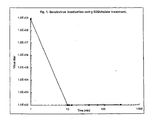
- Table 1 Each preparation in Table 1 was analyzed for the presence of infectious baculovirus using a standard baculovirus plaque assay. The hemagglutinin content was measured using a standard chicken red blood cell hemagglutination assay. Table 1. S. frugiperda Insect Cells Infected with a Baculovirus Vector Expressing Avian Influenza A/Jalisco/95 H5 hemagglutinin Disrupted with Detergents.
- influenza A/Jalisco/95 H5 rHA was expressed in S. frugiperda insect cells using the baculovirus vector and purified to >95%.
- Table 3 shows that the selected antigen, rHA, without an adjuvant (Table 3, preparation #5) produced only a very weak immune response.
- the purified rHA mixed with a Freund's complete adjuvant produced a very strong antibody response that included a high level of neutralizing antibodies (Table 3, preparation #6).
- rHA antigen When the selected rHA antigen was presented to the immune system as part of the whole or disrupted insect cell its immunogenic properties were significantly enhanced.
- Vaccine preparations of the selected antigen (rHA) in insect cells produced from 5 to 10 times the titer of anti-HA antibodies as purified rHA (Table 3).
- insect cells containing the selected rHA antigen and treated by mechanical disruption in the presence of the detergent mixture containing 2% cholate and 1% CDAB induced an average antibody titer in the mice that is equivalent to the purified antigen plus Freund's complete adjuvant (Table 3, preparation #4).
- Baculoviruses are rapidly inactivated by the detergent treatments described in Example 1 while the selected recombinant antigen rHA was not denatured as measured by the HA assay for biological activity and for the ability of the rHA vaccine to induce neutralizing antibodies (Table 3).
- S. frugiperda insect cells infected with a recombinant baculovirus were suspended in 2% cholate, 0.5% SDS containing buffer and disrupted with PolytronTM. The aliquots were taken at times indicated in Table 4 and the baculovirus titer determined by plaque assay method.
- Table 4 and Figure 2 shows that within the first 10 minutes of treatment, recombinant baculovirus infectivity was reduced to undetectable levels.
- Table 4 and Figure 1. Inactivation of Recombinant Baculovirus Using SDS/cholate Treatment of Insect Cells # Time (min) Virus titer (pfu/ml) 1 0 8.4x10 8 2 11 ⁇ 10 2 3 13 ⁇ 10 2 4 20 ⁇ 10 2 5 40 ⁇ 10 2 6 70 ⁇ 10 2 7 110 ⁇ 10 2 8 310 ⁇ 10 2
- Insect cells expressing avian influenza A/Jalisco/95 rHA were obtained as described in Example 1.
- the cells were disrupted in high ionic strength ethanolamine buffer at pH 9.5 with PolytronTM homogenizer (Brinkmann Instruments Inc., Westbury, NY) and the membrane fraction was isolated by centrifugation.
- the membrane fraction was separated from adsorbed proteins by washing with the low ionic strength ethanolamine buffer at pH 9.5. This procedure also reduces the baculovirus titer approximately 1000-fold. The remaining baculovirus can be completely inactivated by treating the pellet with 0.5% formaldehyde.
Landscapes
- Health & Medical Sciences (AREA)
- Life Sciences & Earth Sciences (AREA)
- Chemical & Material Sciences (AREA)
- Pharmacology & Pharmacy (AREA)
- Animal Behavior & Ethology (AREA)
- Medicinal Chemistry (AREA)
- Microbiology (AREA)
- Mycology (AREA)
- Virology (AREA)
- Epidemiology (AREA)
- Immunology (AREA)
- General Health & Medical Sciences (AREA)
- Public Health (AREA)
- Veterinary Medicine (AREA)
- Pulmonology (AREA)
- Chemical Kinetics & Catalysis (AREA)
- General Chemical & Material Sciences (AREA)
- Medicines Containing Antibodies Or Antigens For Use As Internal Diagnostic Agents (AREA)
- Micro-Organisms Or Cultivation Processes Thereof (AREA)
Applications Claiming Priority (2)
| Application Number | Priority Date | Filing Date | Title |
|---|---|---|---|
| US08/965,698 US6224882B1 (en) | 1997-11-07 | 1997-11-07 | Insect cells or fractions as adjuvant for antigens |
| EP98957566A EP1033995B1 (de) | 1997-11-07 | 1998-11-04 | Intakte oder zerstörte insektenzellen als antigenadjuvant |
Related Parent Applications (1)
| Application Number | Title | Priority Date | Filing Date |
|---|---|---|---|
| EP98957566A Division EP1033995B1 (de) | 1997-11-07 | 1998-11-04 | Intakte oder zerstörte insektenzellen als antigenadjuvant |
Publications (2)
| Publication Number | Publication Date |
|---|---|
| EP1611897A2 true EP1611897A2 (de) | 2006-01-04 |
| EP1611897A3 EP1611897A3 (de) | 2007-08-15 |
Family
ID=25510359
Family Applications (2)
| Application Number | Title | Priority Date | Filing Date |
|---|---|---|---|
| EP98957566A Expired - Lifetime EP1033995B1 (de) | 1997-11-07 | 1998-11-04 | Intakte oder zerstörte insektenzellen als antigenadjuvant |
| EP05018204A Withdrawn EP1611897A3 (de) | 1997-11-07 | 1998-11-04 | Intakte oder zerstörte Insektenzellen als Antigenadjuvant |
Family Applications Before (1)
| Application Number | Title | Priority Date | Filing Date |
|---|---|---|---|
| EP98957566A Expired - Lifetime EP1033995B1 (de) | 1997-11-07 | 1998-11-04 | Intakte oder zerstörte insektenzellen als antigenadjuvant |
Country Status (11)
| Country | Link |
|---|---|
| US (1) | US6224882B1 (de) |
| EP (2) | EP1033995B1 (de) |
| AT (1) | ATE304369T1 (de) |
| AU (1) | AU1379599A (de) |
| CA (1) | CA2309003C (de) |
| DE (1) | DE69831594T2 (de) |
| DK (1) | DK1033995T3 (de) |
| ES (1) | ES2248921T3 (de) |
| NZ (1) | NZ504424A (de) |
| PT (1) | PT1033995E (de) |
| WO (1) | WO1999024049A1 (de) |
Families Citing this family (38)
| Publication number | Priority date | Publication date | Assignee | Title |
|---|---|---|---|---|
| US5637566A (en) * | 1988-08-24 | 1997-06-10 | Southern Cross Biotech Pty. Ltd. | Method of improving carcass quality by administering growth hormone |
| US6342216B1 (en) * | 1999-03-17 | 2002-01-29 | The Board Of Regents, The University Of Texas System | Therapy of cancer by insect cells containing recombinant baculovirus encoding genes |
| AUPQ233799A0 (en) | 1999-08-19 | 1999-09-09 | Minister For Agriculture, Minister For Land And Water Conservation For And On Behalf Of The State Of New South Wales | Recombinant sub-unit vaccine |
| JP2003535065A (ja) * | 2000-05-31 | 2003-11-25 | ボード・オブ・リージエンツ,ザ・ユニバーシテイ・オブ・テキサス・システム | 特異的免疫の誘導のためのアジュバント調製 |
| US20060228326A1 (en) * | 2002-10-22 | 2006-10-12 | Fidler Isaiah J | Active specific immunotherapy of cancer metastasis |
| EP1606419A1 (de) | 2003-03-18 | 2005-12-21 | Quantum Genetics Ireland Limited | Systeme und methoden zur erhohung der milchproduktion in tieren |
| US7468273B2 (en) | 2003-05-01 | 2008-12-23 | Meial Limited | Canine GHRH gene, polypeptides and methods of use |
| US8541003B2 (en) | 2003-06-20 | 2013-09-24 | Protein Sciences Corporation | Vectors expressing SARS immunogens, compositions containing such vectors or expression products thereof, methods and assays for making and using |
| US8592197B2 (en) | 2003-07-11 | 2013-11-26 | Novavax, Inc. | Functional influenza virus-like particles (VLPs) |
| US8080255B2 (en) * | 2003-07-11 | 2011-12-20 | Novavax Inc. | Functional influenza virus like particles (VLPs) |
| US8992939B2 (en) | 2003-07-11 | 2015-03-31 | Novavax, Inc. | Highly efficient influenza matrix (M1) proteins |
| US8506967B2 (en) | 2003-07-11 | 2013-08-13 | Novavax, Inc. | Functional influenza virus like particles (VLPs) |
| WO2005049794A2 (en) | 2003-11-13 | 2005-06-02 | University Of Georgia Research Foundation, Inc. | Methods of characterizing infectious bursal disease virus |
| WO2005112544A2 (en) | 2004-02-19 | 2005-12-01 | The Governors Of The University Of Alberta | Leptin promoter polymorphisms and uses thereof |
| RS51324B (sr) | 2005-04-25 | 2010-12-31 | Merial Ltd. | Vakcine protiv nipah virusa |
| US20080241184A1 (en) | 2005-08-25 | 2008-10-02 | Jules Maarten Minke | Canine influenza vaccines |
| CA2621666A1 (en) * | 2005-09-09 | 2007-03-15 | Universitaet Zuerich | Antigens for vaccination against and detection of mycoplasma suis |
| US7771995B2 (en) | 2005-11-14 | 2010-08-10 | Merial Limited | Plasmid encoding human BMP-7 |
| EP3147296A1 (de) | 2005-11-14 | 2017-03-29 | Merial, Inc. | Gentherapie für nierenversagen |
| US7862821B2 (en) | 2006-06-01 | 2011-01-04 | Merial Limited | Recombinant vaccine against bluetongue virus |
| WO2008009115A1 (en) * | 2006-07-18 | 2008-01-24 | Ottawa Health Research Institute | Disparate suicide carrier cells for tumor targeting of promiscuous oncolytic viruses |
| EP3542815A1 (de) | 2008-11-28 | 2019-09-25 | Boehringer Ingelheim Animal Health USA Inc. | Rekombinanter vogelgrippeimpfstoff und verwendungen davon |
| EP2414386B1 (de) | 2009-04-03 | 2016-01-27 | Merial Limited | Vogelimpfstoffe mit newcastle-krankheit-vektor |
| EP2611460B1 (de) | 2010-08-31 | 2016-10-05 | Merial, Inc. | Auf das virus der newcastle-krankheit gerichtete herpesvirus-impfstoffe |
| WO2012090073A2 (en) | 2010-12-30 | 2012-07-05 | The Netherlands Cancer Institute | Methods and compositions for predicting chemotherapy sensitivity |
| US20140296248A1 (en) | 2011-04-04 | 2014-10-02 | Stichting het Nederlands Kanker Instiuut-Antoni van Leeuwenhoek ziekenhuis | Methods and compositions for predicting resistance to anticancer treatment |
| EP2694678A2 (de) | 2011-04-04 | 2014-02-12 | Netherland Cancer Institute | Verfahren und zusammensetzungen zur vorhersage der resistenz gegenüber einer antikrebsbehandlung |
| US9216213B2 (en) | 2011-04-20 | 2015-12-22 | Merial, Inc. | Adjuvanted rabies vaccine with improved viscosity profile |
| WO2012149038A1 (en) | 2011-04-25 | 2012-11-01 | Advanced Bioscience Laboratories, Inc. | Truncated hiv envelope proteins (env), methods and compositions related thereto |
| CA2837375C (en) | 2011-06-01 | 2019-07-16 | Merial Limited | Needle-free administration of prrsv vaccines |
| MX350096B (es) | 2011-08-12 | 2017-08-25 | Merial Inc | Preservación asistida con vacío de productos biológicos, en particular de vacunas. |
| WO2013093629A2 (en) | 2011-12-20 | 2013-06-27 | Netherlands Cancer Institute | Modular vaccines, methods and compositions related thereto |
| WO2013138776A1 (en) | 2012-03-16 | 2013-09-19 | Merial Limited | Novel methods for providing long-term protective immunity against rabies in animals, based upon administration of replication-deficient flavivirus expressing rabies g |
| HK1216006A1 (zh) | 2013-03-12 | 2016-10-07 | Boehringer Ingelheim Animal Health USA Inc. | 反向遺傳學施馬倫貝格病毒疫苗組合物,和其使用方法 |
| ES2882374T3 (es) | 2013-05-08 | 2021-12-01 | Pharmgate Biologics Inc | Vacuna para PCV2 y micoplasma |
| WO2016073410A1 (en) | 2014-11-03 | 2016-05-12 | Merial, Inc. | Methods of using microneedle vaccine formulations to elicit in animals protective immunity against rabies virus |
| ES3050936T3 (en) | 2015-06-23 | 2025-12-23 | Boehringer Ingelheim Vetmedica Gmbh | Prrsv minor protein-containing recombinant viral vectors and methods of making and use thereof |
| WO2017031120A1 (en) | 2015-08-20 | 2017-02-23 | Merial, Inc. | Fcv recombinant vaccines and uses thereof |
Citations (29)
| Publication number | Priority date | Publication date | Assignee | Title |
|---|---|---|---|---|
| US4196265A (en) | 1977-06-15 | 1980-04-01 | The Wistar Institute | Method of producing antibodies |
| US4376110A (en) | 1980-08-04 | 1983-03-08 | Hybritech, Incorporated | Immunometric assays using monoclonal antibodies |
| US4722848A (en) | 1982-12-08 | 1988-02-02 | Health Research, Incorporated | Method for immunizing animals with synthetically modified vaccinia virus |
| EP0265785A2 (de) | 1986-10-16 | 1988-05-04 | Microgenesys, Inc. | Von der Hülle des Virus des erworbenen Immunmangelsyndroms abgeleitete Polypeptide in von rekombinanten Bakuloviren infizierten Zellen |
| US4745051A (en) | 1983-05-27 | 1988-05-17 | The Texas A&M University System | Method for producing a recombinant baculovirus expression vector |
| WO1990004411A1 (en) | 1988-10-24 | 1990-05-03 | Symbicom Aktiebolag | Immunogenically active fractions of borrelia burgdorferi |
| EP0370573A2 (de) | 1988-11-21 | 1990-05-30 | Microgenesys, Inc. | Hauttest und Testkit für AIDS |
| US5019384A (en) | 1986-06-30 | 1991-05-28 | Massachusetts Institute Of Technology | Immunonodulating compositions and their use |
| WO1991009870A1 (de) | 1989-12-22 | 1991-07-11 | Mikrogen Molekularbiologische Entwicklungs-Gmbh | Immunologisch aktive proteine von borrelia burgdorferi, zusammenhängende testkits und impfstoff |
| WO1992014488A1 (en) | 1991-02-15 | 1992-09-03 | Uab Research Foundation | Structural gene of pneumococcal protein |
| WO1992022641A1 (en) | 1991-06-14 | 1992-12-23 | Virogenetics Corporation | Immunodeficiency virus recombinant poxvirus vaccine |
| US5174993A (en) | 1981-12-24 | 1992-12-29 | Health Research Inc. | Recombinant avipox virus and immunological use thereof |
| WO1993003145A1 (en) | 1991-07-26 | 1993-02-18 | Virogenetics Corporation | Infectious bursal disease virus recombinant poxvirus vaccine |
| WO1993004175A1 (en) | 1991-08-15 | 1993-03-04 | Smithkline Beecham Biologicals (S.A.) | Osp a proteins of borrelia burgdorferi subgroups, encoding genes and vaccines |
| WO1993008306A1 (en) | 1991-10-22 | 1993-04-29 | Symbicom Aktiebolag | Improvement in borrelia burgdorferi diagnosis and prophylaxis |
| WO1993008299A1 (en) | 1991-10-18 | 1993-04-29 | Connaught Laboratories Inc. | Preparation of recombinant borrelia proteins |
| WO1994016716A1 (en) | 1993-01-21 | 1994-08-04 | Virogenetics Corporation | Recombinant virus immunotherapy |
| US5338683A (en) | 1981-12-24 | 1994-08-16 | Health Research Incorporated | Vaccinia virus containing DNA sequences encoding herpesvirus glycoproteins |
| WO1994028930A1 (en) | 1993-06-11 | 1994-12-22 | Virogenetics Corporation | Malaria recombinant poxvirus vaccine |
| GB2269820B (en) | 1990-08-15 | 1995-03-29 | Virogenetics Corp | Recombinant pox virus encoding flaviviral structural proteins |
| WO1996003941A1 (en) | 1994-07-29 | 1996-02-15 | Beniamin Yudin | Back support |
| US5494807A (en) | 1991-03-07 | 1996-02-27 | Virogenetics Corporation | NYVAC vaccinia virus recombinants comprising heterologous inserts |
| WO1996006165A1 (en) | 1994-08-19 | 1996-02-29 | The General Hospital Corporation | Genetically engineered swine cells |
| US5503834A (en) | 1990-11-20 | 1996-04-02 | Virogenetics Corporation | Measles virus recombinant poxvirus vaccine |
| US5505941A (en) | 1981-12-24 | 1996-04-09 | Health Research, Inc. | Recombinant avipox virus and method to induce an immune response |
| US5514375A (en) | 1990-08-15 | 1996-05-07 | Virogenetics Corporation | Flavivirus recombinant poxvirus vaccine |
| US5529780A (en) | 1994-03-30 | 1996-06-25 | Virogenetics Corporation | Nucleotide and amino acid sequences of canine herpesvirus gB and gC |
| US8453848B2 (en) | 2004-04-13 | 2013-06-04 | Donaldson Company, Inc. | Filter cartridge for liquid filtration; assembly; and, methods |
| US12060193B2 (en) | 2014-03-21 | 2024-08-13 | Avery Dennison Corporation | Faceless labels and related systems and methods |
Family Cites Families (1)
| Publication number | Priority date | Publication date | Assignee | Title |
|---|---|---|---|---|
| JPH06166635A (ja) * | 1992-06-18 | 1994-06-14 | San Five Kk | 免疫アジュバント |
-
1997
- 1997-11-07 US US08/965,698 patent/US6224882B1/en not_active Expired - Lifetime
-
1998
- 1998-11-04 CA CA2309003A patent/CA2309003C/en not_active Expired - Lifetime
- 1998-11-04 PT PT98957566T patent/PT1033995E/pt unknown
- 1998-11-04 DE DE69831594T patent/DE69831594T2/de not_active Expired - Lifetime
- 1998-11-04 AT AT98957566T patent/ATE304369T1/de active
- 1998-11-04 EP EP98957566A patent/EP1033995B1/de not_active Expired - Lifetime
- 1998-11-04 DK DK98957566T patent/DK1033995T3/da active
- 1998-11-04 NZ NZ504424A patent/NZ504424A/en not_active IP Right Cessation
- 1998-11-04 WO PCT/US1998/023472 patent/WO1999024049A1/en not_active Ceased
- 1998-11-04 ES ES98957566T patent/ES2248921T3/es not_active Expired - Lifetime
- 1998-11-04 AU AU13795/99A patent/AU1379599A/en not_active Abandoned
- 1998-11-04 EP EP05018204A patent/EP1611897A3/de not_active Withdrawn
Patent Citations (30)
| Publication number | Priority date | Publication date | Assignee | Title |
|---|---|---|---|---|
| US4196265A (en) | 1977-06-15 | 1980-04-01 | The Wistar Institute | Method of producing antibodies |
| US4376110A (en) | 1980-08-04 | 1983-03-08 | Hybritech, Incorporated | Immunometric assays using monoclonal antibodies |
| US5505941A (en) | 1981-12-24 | 1996-04-09 | Health Research, Inc. | Recombinant avipox virus and method to induce an immune response |
| US5338683A (en) | 1981-12-24 | 1994-08-16 | Health Research Incorporated | Vaccinia virus containing DNA sequences encoding herpesvirus glycoproteins |
| US5174993A (en) | 1981-12-24 | 1992-12-29 | Health Research Inc. | Recombinant avipox virus and immunological use thereof |
| US4722848A (en) | 1982-12-08 | 1988-02-02 | Health Research, Incorporated | Method for immunizing animals with synthetically modified vaccinia virus |
| US4745051A (en) | 1983-05-27 | 1988-05-17 | The Texas A&M University System | Method for producing a recombinant baculovirus expression vector |
| US5019384A (en) | 1986-06-30 | 1991-05-28 | Massachusetts Institute Of Technology | Immunonodulating compositions and their use |
| EP0265785A2 (de) | 1986-10-16 | 1988-05-04 | Microgenesys, Inc. | Von der Hülle des Virus des erworbenen Immunmangelsyndroms abgeleitete Polypeptide in von rekombinanten Bakuloviren infizierten Zellen |
| WO1990004411A1 (en) | 1988-10-24 | 1990-05-03 | Symbicom Aktiebolag | Immunogenically active fractions of borrelia burgdorferi |
| US5523089A (en) | 1988-10-24 | 1996-06-04 | Symbicom Aktiebolag | Borrelia antigen |
| EP0370573A2 (de) | 1988-11-21 | 1990-05-30 | Microgenesys, Inc. | Hauttest und Testkit für AIDS |
| WO1991009870A1 (de) | 1989-12-22 | 1991-07-11 | Mikrogen Molekularbiologische Entwicklungs-Gmbh | Immunologisch aktive proteine von borrelia burgdorferi, zusammenhängende testkits und impfstoff |
| US5514375A (en) | 1990-08-15 | 1996-05-07 | Virogenetics Corporation | Flavivirus recombinant poxvirus vaccine |
| GB2269820B (en) | 1990-08-15 | 1995-03-29 | Virogenetics Corp | Recombinant pox virus encoding flaviviral structural proteins |
| US5503834A (en) | 1990-11-20 | 1996-04-02 | Virogenetics Corporation | Measles virus recombinant poxvirus vaccine |
| WO1992014488A1 (en) | 1991-02-15 | 1992-09-03 | Uab Research Foundation | Structural gene of pneumococcal protein |
| US5494807A (en) | 1991-03-07 | 1996-02-27 | Virogenetics Corporation | NYVAC vaccinia virus recombinants comprising heterologous inserts |
| WO1992022641A1 (en) | 1991-06-14 | 1992-12-23 | Virogenetics Corporation | Immunodeficiency virus recombinant poxvirus vaccine |
| WO1993003145A1 (en) | 1991-07-26 | 1993-02-18 | Virogenetics Corporation | Infectious bursal disease virus recombinant poxvirus vaccine |
| WO1993004175A1 (en) | 1991-08-15 | 1993-03-04 | Smithkline Beecham Biologicals (S.A.) | Osp a proteins of borrelia burgdorferi subgroups, encoding genes and vaccines |
| WO1993008299A1 (en) | 1991-10-18 | 1993-04-29 | Connaught Laboratories Inc. | Preparation of recombinant borrelia proteins |
| WO1993008306A1 (en) | 1991-10-22 | 1993-04-29 | Symbicom Aktiebolag | Improvement in borrelia burgdorferi diagnosis and prophylaxis |
| WO1994016716A1 (en) | 1993-01-21 | 1994-08-04 | Virogenetics Corporation | Recombinant virus immunotherapy |
| WO1994028930A1 (en) | 1993-06-11 | 1994-12-22 | Virogenetics Corporation | Malaria recombinant poxvirus vaccine |
| US5529780A (en) | 1994-03-30 | 1996-06-25 | Virogenetics Corporation | Nucleotide and amino acid sequences of canine herpesvirus gB and gC |
| WO1996003941A1 (en) | 1994-07-29 | 1996-02-15 | Beniamin Yudin | Back support |
| WO1996006165A1 (en) | 1994-08-19 | 1996-02-29 | The General Hospital Corporation | Genetically engineered swine cells |
| US8453848B2 (en) | 2004-04-13 | 2013-06-04 | Donaldson Company, Inc. | Filter cartridge for liquid filtration; assembly; and, methods |
| US12060193B2 (en) | 2014-03-21 | 2024-08-13 | Avery Dennison Corporation | Faceless labels and related systems and methods |
Non-Patent Citations (29)
| Title |
|---|
| "METHODS IN MOLECULAR BIOLOGY 39", 1995, HUMANA PRESS INC., article "Baculovirus Expression Protocols" |
| "MOLECULAR BIOLOGY OF TUMOR VIRUSES, RNA TUMOR VIRUSES", 1982, COLD SPRING HARBOR LABORATORY |
| "The Sixth International Conference on Lyme Borreliosis: Progress on the Development of Lyme Disease Vaccine", VACCINE, vol. 13, no. 1, 1995, pages 133 - 135 |
| BERGSTROM, MOL. MICROBIOL., vol. 3, no. 4, April 1989 (1989-04-01), pages 479 - 486 |
| BOCCHIA, M., SPECIFIC BINDING OF LEUKEMIA ONCOGENE FUSION PROTEIN PEPTIDES TO HLA CLASS I MOLECULES, vol. 85, no. 10, 15 May 1995 (1995-05-15), pages 2680 - 2684 |
| ELDRIDGE, MOL. IMMUNOL., vol. 28, 1993, pages 287 - 294 |
| ENGLEHARD, VH: "Structure of peptides associated with class I and class II MHC molecules", ANN. REV. IMMUNOL., vol. 12, 1994, pages 181 |
| GOODMAN-SNITKOFF, J. IMMUNOL., vol. 147, 1991, pages 410 - 415 |
| GUPTA; SIBER, VACCINE, vol. 13, 1995, pages 1263 - 1276 |
| HULST, J. VIROL., vol. 67, 1993, pages 5435 - 5442 |
| HUNTER: "THE THEORY AND PRACTICAL APPLICATION OF ADJUVANTS", 1995, JOHN WILEY AND SONS, pages: 51 - 94 |
| IVAN ROITT: "ESSENTIAL IMMUNOLOGY", 1988, BLACKWELL SCIENTIFIC PUBLICATIONS, article "In general, large proteins, because they have more potential determinants are be" |
| JANIS KUBY, IMMUNOLOGY, pages 79 - 80 |
| JANIS KUBY, IMMUNOLOGY, pages 80 |
| JANIS KUBY, IMMUNOLOGY, pages 81 |
| JEV. PUTNAK, AM. J. TROP. MED. HYG., vol. 45, 1991, pages 159 - 167 |
| JOHNSON, INFECT. AND IMMUN., vol. 60, 1992, pages 1845 - 1853 |
| JOHNSON, VACCINE, vol. 13, no. 12, 1995, pages 1086 - 1094 |
| KAMIYA, VIRUS RES., vol. 32, 1994, pages 375 - 379 |
| KENDREW: "THE ENCYCLOPEDIA OF MOLECULAR BIOLOGY", 1995, BLACKWELL SCIENCE LTD. |
| MCCOWN, AM. J. TROP. MED. HYG., vol. 42, 1990, pages 491 - 499 |
| MILLER, J. EXP. MED., vol. 176, 1992, pages 1739 - 1744 |
| MILSTEIN, C., SCIENTIFIC AMERICAN, vol. 243, no. 66, 1980, pages 70 |
| PENNOCK: "Strong and Regulated Expression of Escherichia coli B-Galactosidase in Infect Cells with a Baculovirus vector", MOL. CELL. BIOL., vol. 4, no. 3, 1984, pages 399 - 406 |
| SAMBROOK; FRITSCH; MANIATIS: "MOLECULAR CLONING, A LABORATORY MANUAL", 1982, COLD SPRING HARBOR LABORATORY PRESS |
| SMITH, MOL. CELL BIOL., vol. 12, 1983, pages 2156 - 2165 |
| SMITH: "Production of Human Beta Interferon in Insect Cells Infected with a Baculovirus Expression Vector", MOL. CELL. BIOL., vol. 3, no. 12, 1983, pages 2156 - 2165, XP000618644 |
| STEDMAN'S: "MEDICAL DICTIONARY", 1982 |
| TODD, VACCINE, vol. 15, 1997, pages 564 - 570 |
Also Published As
| Publication number | Publication date |
|---|---|
| DE69831594D1 (de) | 2006-01-26 |
| NZ504424A (en) | 2001-09-28 |
| EP1033995B1 (de) | 2005-09-14 |
| ATE304369T1 (de) | 2005-09-15 |
| EP1033995A1 (de) | 2000-09-13 |
| AU1379599A (en) | 1999-05-31 |
| DK1033995T3 (da) | 2006-01-30 |
| US6224882B1 (en) | 2001-05-01 |
| PT1033995E (pt) | 2005-11-30 |
| WO1999024049A1 (en) | 1999-05-20 |
| ES2248921T3 (es) | 2006-03-16 |
| CA2309003C (en) | 2012-10-02 |
| DE69831594T2 (de) | 2006-07-06 |
| WO1999024049A9 (en) | 1999-08-12 |
| EP1611897A3 (de) | 2007-08-15 |
| EP1033995A4 (de) | 2001-01-10 |
| CA2309003A1 (en) | 1999-05-20 |
Similar Documents
| Publication | Publication Date | Title |
|---|---|---|
| EP1033995B1 (de) | Intakte oder zerstörte insektenzellen als antigenadjuvant | |
| JP7731670B2 (ja) | ネコ白血病ウイルスワクチン | |
| HUT65366A (en) | Expression of specific immunogens using viral antigens | |
| JP2012510449A (ja) | ワクチン | |
| US20240398934A1 (en) | Feline leukemia virus vaccine | |
| KR100863367B1 (ko) | 보조제 배합 제형물 | |
| EP4333882A1 (de) | Sars-cov-2-untereinheit-impfstoff | |
| AU2004201797B2 (en) | Insect Cells or Fractions as Adjuvant for Antigens | |
| US9211325B2 (en) | Peptide adjuvants | |
| HK1085403A (en) | Whole or disrupted insect cells as adjuvant for antigens | |
| AU2007201024A1 (en) | Insect Cells or Fractions as Adjuvant For Antigens | |
| EP4333883A2 (de) | Sars-cov-2-untereinheit-impfstoff | |
| US9060973B2 (en) | Vaccine for enveloped viruses | |
| RU2784533C2 (ru) | Вакцина против вируса лейкоза кошачьих | |
| Kondiah | Development of a DNA vaccine for the prevention of Psittacine beak and feather disease |
Legal Events
| Date | Code | Title | Description |
|---|---|---|---|
| PUAI | Public reference made under article 153(3) epc to a published international application that has entered the european phase |
Free format text: ORIGINAL CODE: 0009012 |
|
| 17P | Request for examination filed |
Effective date: 20050822 |
|
| AC | Divisional application: reference to earlier application |
Ref document number: 1033995 Country of ref document: EP Kind code of ref document: P |
|
| AK | Designated contracting states |
Kind code of ref document: A2 Designated state(s): AT BE CH CY DE DK ES FI FR GB GR IE IT LI LU MC NL PT SE |
|
| RIN1 | Information on inventor provided before grant (corrected) |
Inventor name: DEBARTOLOMEIS, JAMES Inventor name: SMITH, GALE EUGENE,C/O NOVOVAX, INC. Inventor name: VOZNESENSKI, ANDREI IGOREVITCH |
|
| REG | Reference to a national code |
Ref country code: HK Ref legal event code: DE Ref document number: 1085403 Country of ref document: HK |
|
| PUAL | Search report despatched |
Free format text: ORIGINAL CODE: 0009013 |
|
| AK | Designated contracting states |
Kind code of ref document: A3 Designated state(s): AT BE CH CY DE DK ES FI FR GB GR IE IT LI LU MC NL PT SE |
|
| 17Q | First examination report despatched |
Effective date: 20080328 |
|
| AKX | Designation fees paid |
Designated state(s): AT BE CH CY DE DK ES FI FR GB GR IE IT LI LU MC NL PT SE |
|
| STAA | Information on the status of an ep patent application or granted ep patent |
Free format text: STATUS: THE APPLICATION IS DEEMED TO BE WITHDRAWN |
|
| 18D | Application deemed to be withdrawn |
Effective date: 20081008 |
|
| REG | Reference to a national code |
Ref country code: HK Ref legal event code: WD Ref document number: 1085403 Country of ref document: HK |